Heart and blood vessel diseases are common in people living with Alzheimer’s disease and Parkinson’s disease. Many of these patients take medicines for conditions such as high blood pressure, heart failure or an irregular heartbeat, so doctors need to regularly consider whether each medicine remains helpful as the disease progresses. New doctoral research from the […]
The animals may help reveal the causes of brain disease in people and point the way to treatments. But researchers already are calling for new ethical guidelines.
In women's reproductive years, their brains are exposed to high levels of sex hormones, and their neurons may come to depend on those hormones to function optimally. But leading up to and after menopause, the ovaries produce far less estrogen and progesterone, raising concerns that this drop in hormones may contribute to women's dementia risk.
"We think that the loss of those hormones at menopause renders those neurons more vulnerable to age-related cellular decline and pathologies like Alzheimer's," said Karyn Frick, a neuroscientist and professor of psychological and brain sciences at the University of Wisconsin-Milwaukee.
So, if falling hormone levels are a risk factor for dementia, could replacing those hormones help stave off the disease?
While the idea sounds logical on its face, studies that have looked at hormone replacement therapy (HRT) for dementia prevention have had mixed results. There are early hints that restoring estrogen during early menopause may protect brain health, but ultimately, more gold-standard clinical trials are needed to know for sure, experts told Live Science.
Support for estrogen protecting the brain
The idea that estrogen could help ward off dementia is plausible. Women are more likely to develop Alzheimer's disease than men are, and scientists think the loss of estrogen during menopause may be partly to blame, said Jennifer Bruno, an instructor of psychiatry and behavioral sciences at Stanford University.
Lab and animal studies buttress the idea that estrogen could protect brain health.
In the brain, estrogens act as neuromodulators, or chemical messengers that alter how neurons behave. Estrogen also helps neurons keep their shape. Estrogen loss in female mice triggers a drop in the number of dendritic spines — the small, bud-like bumps on neurons that receive chemical messages.
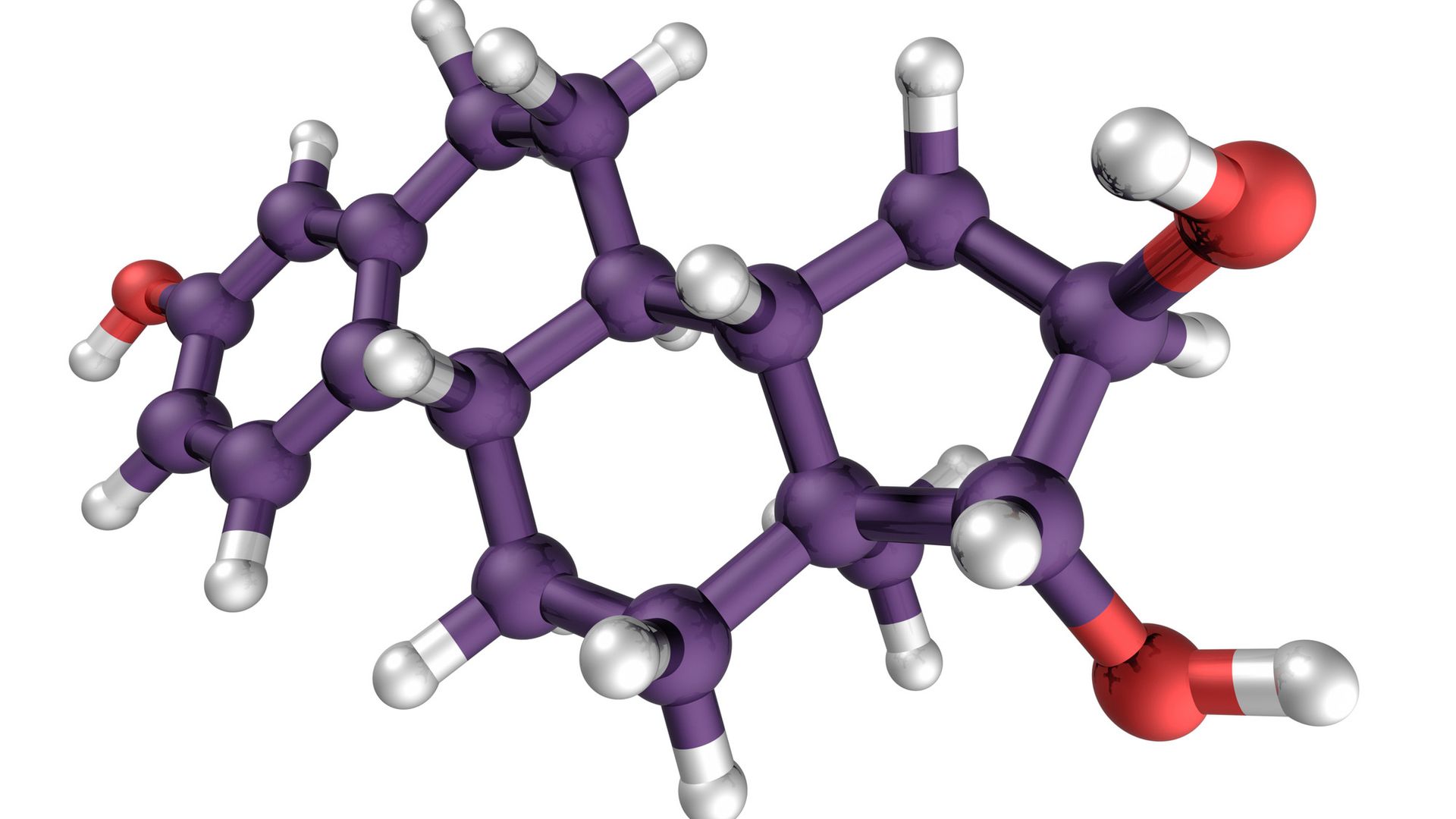
An estrogen molecule. The body's levels of estrogen fluctuate in perimenopause, and they then dramatically decline and level off during and after menopause. (Image credit: theasis via Getty Images)
Researchers think that estrogen may help prevent the formation of the abnormal proteins — including one called amyloid beta — that accumulate, disrupt communication between neurons and ultimately kill cells in Alzheimer's disease. Amyloid beta is produced when a larger protein is cut the "wrong" way by an enzyme, Frick explained. Estrogen promotes the "normal" cutting of this protein, thus reducing amyloid beta, studies in lab mice show.
And estrogen may limit the buildup of a second Alzheimer's-related protein, called tau, by preventing the chemical processes that cause the tau proteins to clump together. This helps prevent the formation of tau tangles, a hallmark of Alzheimer's disease.
The hormone may also support brain health indirectly by improving sleep quality.
"It's well documented that menopausal women have difficulty sleeping, whether it's due to hot flashes or insomnia," Frick said. Estrogen can ease those nighttime hot flashes, thus helping menopausal women get more, less-fragmented sleep. Deep rest may help the brain clean out toxic proteins, while research shows sleep deficiency is linked to Alzheimer's disease.
Mixed results with estrogen-only HRT
HRT for menopause comes in two main forms: treatments that include only estrogen, and combined therapies with both estrogen and progesterone. The treatment has a complicated history.
That said, the Women's Health Initiative study found that estrogen-only HRT came with an increased risk of endometrial cancers, and later analyses have backed up this idea. That's why today, clinical guidelines recommend that women who have not gotten a hysterectomy take combined HRT, while estrogen-only options are reserved for those who have had their uterus removed. (The added progesterone counteracts estrogen's thickening effect on the uterine lining.)
For the subset of women who take estrogen-only HRT, observational data published in August showed that this form of the treatment was linked to a reduced risk of dementia. The study, published in the journal Neurology, found that women who took estrogen-only HRT were less likely to show Alzheimer's-related changes in the brain than women who didn't take any HRT.
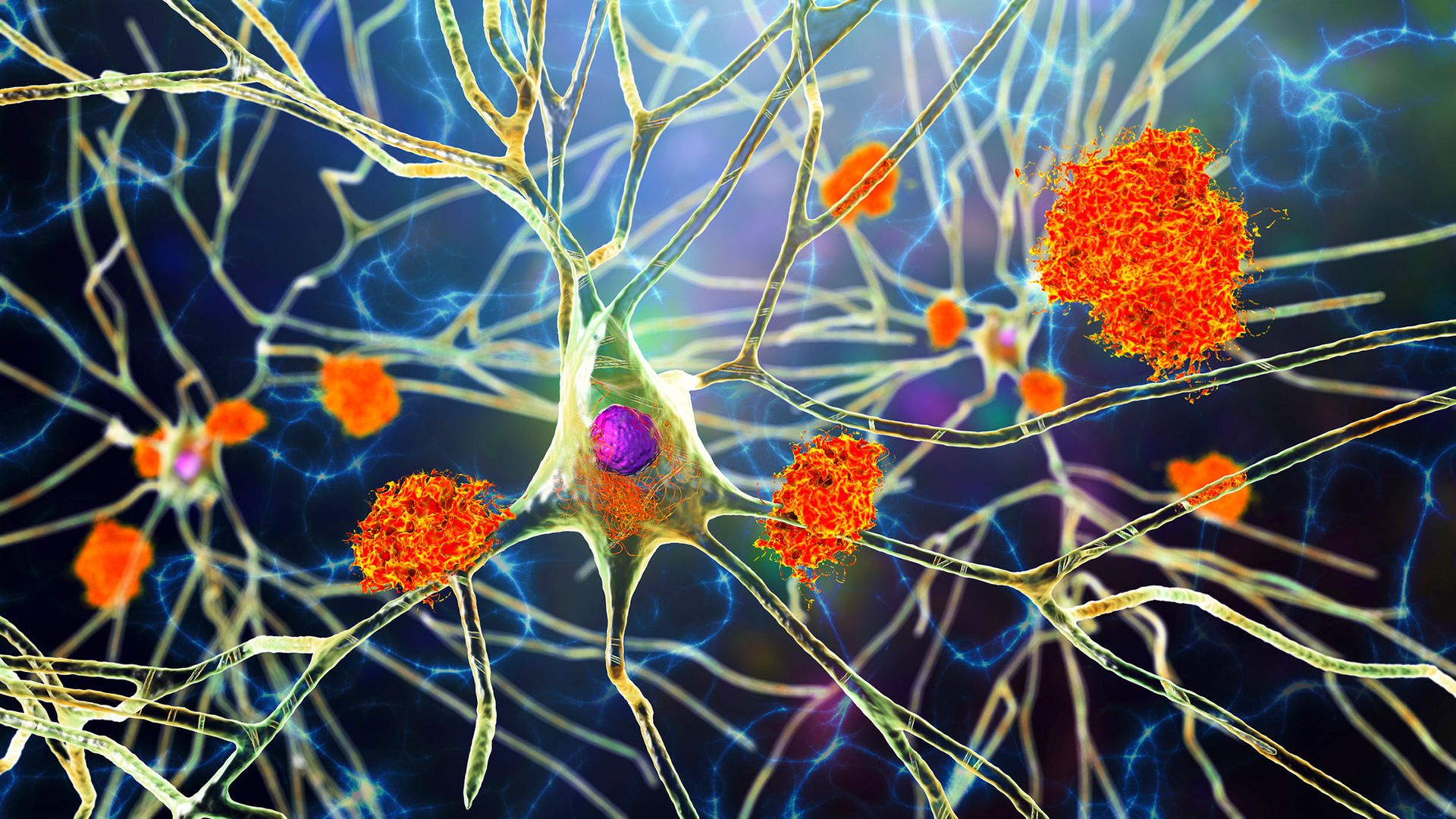
Laboratory data suggest that estrogen may help prevent the formation and accumulation of abnormal proteins that are related to Alzheimer's. (Image credit: KATERYNA KON/SCIENCE PHOTO LIBRARY via Getty Images)
Estrogen-only HRT was also tied to better clinical outcomes: Treated women were less likely to be diagnosed with dementia, were less likely to show clinical and functional cognitive decline, and had better scores on memory tests, on average, compared with untreated women. These findings drew on two large, separate groups of older women, reporting data from 21,400 people in total, but they didn't include data on when each woman started HRT.
Whereas earlier studies of HRT and dementia risk relied on doctors' ratings of patients' symptoms, the Neurology study measured levels of Alzheimer's-related proteins in the brain after death. That's a more "definitive" marker of disease, said Bruno, a co-author of the study. However, the research was observational, so it can't say whether estrogen-only HRT directly causes the better brain outcomes the team observed, she stressed.
Although the Neurology study's findings are promising, they don't necessarily match the results of other studies of estrogen-only HRT and dementia. For example, a slightly larger observational study, published in 2023, found that estrogen-only HRT was associated with an increased dementia rate.
In that research, most of the women took a type of estrogen called estradiol, while Bruno's study included a greater variety of estrogens. That may have been the difference in the two studies' results, but teasing that out would require further study. Meanwhile, the conflicting findings muddy the waters of what estrogen-only HRT can do for brain health.
Does timing matter?
One big finding from the Women's Health Initiative study was that starting HRT — either estrogen-only or combined — after age 65 was associated with worse cognitive function and increased dementia risk, said Yuko Hara, director of aging and Alzheimer's prevention at the Alzheimer's Drug Discovery Foundation.
The same may not be true for people who start HRT earlier. For context, menopause starts around age 51 to 52, on average, and it's preceded by perimenopause, a transitional period when hormone levels begin to drop, typically around the mid-40s.
An observational study published in August in the journal Alzheimer's & Dementia found that starting HRT between ages 46 and 56 was linked to a reduced risk of dementia. That study did not differentiate between estrogen-only and combined treatment; it lumped all of the data together.
Patches (pictured) are one form of systemic HRT. They deliver hormones through the skin and into the bloodstream. (Image credit: SVPhilon via Getty Images)
The protective link was especially strong in three groups: women with "surgical menopause," triggered by the removal of one or both ovaries; carriers of a certain variant of a gene called APOE that raises Alzheimer's risk; and women who had a relatively short time between their first period and menopause.
When it comes to using hormone replacement to protect brain health, the evidence isn't yet strong enough to recommend any kind of HRT as a way to protect the brain in all women, Hara said. Women who had one or both of their ovaries surgically removed are the exception to this rule.
"This is a distinct clinical population because the procedure can cause an abrupt, early loss of estrogen, rather than the gradual hormonal decline that occurs with natural menopause," Hara said.
For most women who have gone through natural menopause, "there is not enough evidence to recommend [HRT] specifically for preventing cognitive decline or dementia," she said.
HRT is not currently prescribed to prevent dementia — it is prescribed to ease menopause symptoms, such as hot flashes, night sweats and sleep disturbances. To settle the science on HRT and the brain, what's really needed is a well-designed clinical trial that follows women from perimenopause to postmenopause, Bruno said. That would reveal the effects of HRT on brain health and dementia risk more reliably than the studies done so far.
This article is for informational purposes only and is not meant to offer medical advice.
Diseases that cause nerve cells in the brain to die over time are known as neurodegenerative diseases. These cells, known as neurons, are vulnerable to DNA damage because they are highly active cells that require large amounts of energy. Neural DNA damage is a normal part of aging as changes to the DNA sequence, called mutations, build up over time.
To answer these questions, researchers at Boston Children’s Hospital and Harvard Medical School analyzed brain tissue from people who died with and without AD, FTD, or ALS. They compared the processes that cause DNA mutations in the 3 diseases by first accessing the DNA inside individual neurons from healthy and diseased postmortem brain tissue.
To do this, they broke apart the brain tissue and added a fluorescent marker that identified the center of each neuronal cell where DNA is housed, called its nucleus. They used a sorting machine to separate the nuclei from the rest of the cell material to access the neuron’s DNA. Using a DNA sequencing method called single-cell whole genome sequencing, the team then sequenced each neuron’s DNA to identify mutations.
They analyzed 159 neurons from people with AD, 61 neurons from people with FTD, 77 neurons from people with ALS, and 232 neurons from healthy individuals. This allowed the team to compare the number and types of DNA mutations between diseased and control (non-diseased) neurons. The researchers found that compared to the control neurons, which typically accumulate only 200 to 300 mutations over an 80-year lifespan, neurons from all 3 diseases contained an unusually high number of 2-base-pair deletions, often exceeding 1,000 mutations per cell.
When a biological process damages DNA, it leaves behind its own unique signature. By identifying these signatures, scientists can identify the biological process that likely caused the damage. Since these 2-base-pair deletions were so frequent in diseased neurons, the researchers wanted to know whether they were left behind by a biological process. The researchers used a machine learning algorithm to scan DNA sequences for recurring mutation patterns and identified a signature in neuronal DNA, which they named ID-4.
When the researchers compared the ID-4 signature with a database of previously characterized signatures, they found that it was associated with a DNA repair protein called TOP1. TOP1 temporarily cuts and rejoins DNA to relieve the tension that builds up during normal cellular activity. TOP1 typically detaches from the DNA after completing this process. However, if TOP1 fails to detach, it breaks one of the two DNA strands.
To test whether abnormal TOP1 activity was breaking the DNA, the researchers isolated DNA from control and diseased neurons. They visualized the DNA on a gel, where intact DNA forms bands while broken DNA spreads out into smears. The more fragmented the DNA is, the more intense the smear appears. Using a machine that quantified the intensity of smears, the researchers found that DNA from diseased neurons produced smears that were up to 3.2 times more intense than those from control neurons. They also found that neurons with more DNA fragmentation had more ID-4 signatures.
Based on these findings, the researchers concluded that abnormal TOP1 activity created frequent single-strand DNA breaks. They proposed that some of these breaks are repaired incorrectly, eventually leading to widespread DNA breaks in all 3 neurodegenerative diseases.
Overall, the researchers found that neurons from these 3 neurodegenerative diseases accumulated excessive DNA mutations despite differences in the disease symptoms and underlying causes. Their findings also provided evidence that abnormal TOP1 activity contributes to this mutation accumulation. Based on these findings, they stated that preventing TOP1 from becoming trapped on DNA, or improving the DNA repair process that removes trapped TOP1, could be a promising way to treat a wide range of neurodegenerative diseases.
Moving your body is generally good for your health, but new research suggests that all physical activity may not have the same relationship with the aging brain. A huge analysis found that exercise chosen for fun was linked to less dementia, while heavy physical activity at work was linked to more. The research came from […]
Reaching 90 without dementia may feel like clearing the final hurdle. But the risk does not necessarily end there. Dementia risk does not disappear after age 90. Even among people who reach their 10th decade without cognitive symptoms, the likelihood of developing the condition can vary substantially by sex, race, ethnicity, and genetics, according to [...]
Doctors usually diagnose dementia only after memory and thinking problems become noticeable. By that stage, damage to the brain has often been developing for many years. Scientists are therefore searching for ways to detect the disease much earlier, when treatments may have a better chance of slowing its progress. A new study from researchers at […]
Most people know that the kidneys clean the blood, but far fewer realise they also help protect the brain. Growing research shows that chronic kidney disease can damage memory, thinking and concentration, making brain health another major concern for millions of patients around the world. Researchers summarised evidence showing that kidney disease affects much more […]
LONDON — In the packed halls of the recent Alzheimer's Association International Conference in mid-July, over 10,000 experts in brain research discussed strategies to beat dementia. But in one room, attendees gathered to watch a video from a nonscientist named Isabel Beltre, whose life was transformed by a recent trial.
Beltre was one of 1,200 participants ages 60 to 77 who took part in the Latin American Initiative for Lifestyle Intervention to Prevent Cognitive Decline (LatAm-FINGERS), the first trial to test a culturally adapted lifestyle intervention to prevent cognitive decline in Latin America. Rather than attempting to treat dementia after it has developed, the trial tackled risk factors that raise the likelihood of the condition, like smoking and a sedentary lifestyle.
In her native Spanish, Beltre thanked both God and the project for its impact on her life. There was a celebratory air in the conference room as the trial's results were released. The lifestyle interventions, which included exercise programs and brain training, had statistically improved participants' thinking skills, compared with a control group who received only bare-bones support, like general health advice.
Trials like LatAm-FINGERS — including a related U.S.-based trial called the POINTER study — ultimately aim to cut rates of dementia around the world. The LatAm trial is the most successful of these trials to date, raising hopes that this approach could help to prevent dementia en masse.
Whether that promise pans out remains to be seen, though, experts told Live Science.
The lifestyle factors that increase dementia risk
When it comes to dementia prevention, few guidelines are as influential as those written by the Lancet Commission, an expert-led review of the available evidence on dementia. Three editions of this review have provided comprehensive overviews of risk factors; the most recent, published in 2024, identified 14 factors, including smoking, infrequent social contact, and a lack of physical activity.
The commission estimated that, together, the identified risk factors contribute to 45% of dementia cases at a population level.
Long before the 2024 report, Dr. Miia Kivipelto, a professor of clinical geriatrics at the Karolinska Institute in Sweden, wanted to tackle these risk factors at the individual and population level in her work as a medical doctor and epidemiologist.
"I felt that I wanted to move on to interventions to really show that if you do something, you can change the risk," Kivipelto told Live Science.
The two-year project recruited 1,260 participants ages 60 to 77 and divided them into two groups. The first group received general health advice, such as tips on healthy eating and exercise, at the start of the study and then again after six and 12 months.
The other group additionally received a multipart intervention consisting of meetings with nutritionists to discuss personalized meal plans, brain training, exercise programs, social activities, and metabolic and vascular tests. These programs lasted throughout the study period, with the brain training alone including 144 sessions over 12 months of the study.
At the end, the two groups' cognitive skills, such as thinking speed and memory, were tested; the trial did not track dementia rates, only overall cognition. In both groups, these skills improved by the end of the study. But the headline finding was that in the group given the comprehensive intervention, overall brain function was judged to be 25% stronger than in the control group.
What did that difference mean in concrete terms? It turns out, the improvement was relatively small.
I felt that I wanted to move on to interventions to really show that if you do something, you can change the risk.
Miia Kivipelto, professor of clinical geriatrics at the Karolinska Institute
It was calculated in terms of a statistical measure called a z-score, which represented the extent of the improvement in brain-function test scores in each group. In the end, the difference in z-scores between the two groups was just 0.04 points, which a 2021 review defined as "small."
However, Kivipelto maintained that the improvement is significant. "It's as big as anti-amyloid treatments," she said.
Despite criticism of the trial's moderate effects, Kivipelto's FINGER intervention has since been repeated all over the world, including by the U.S.-based POINTER study, and, most recently, LatAm-FINGERS.
Dr. Gill Livingston, a psychiatrist at University College London who led the 2024 Lancet Commission report, told Live Science that the data from these trials shows that dementia interventions need to be tailored to the risks the participants actually face.
In the POINTER study, 70% of the participants had a college degree, compared with roughly 43% of the wider U.S. population. "People who are usually in randomized controlled trials are usually highly educated people who are very interested in health," Livingston noted. "And that means they're at less risk of developing dementia, and therefore, less can be done to help them" through lifestyle interventions.
The difference between the test group and the control group in the POINTER study was even smaller than in the original FINGER trial — just 0.029 points.
LatAm-FINGERS tried to maximize flexibility in its approach by better tailoring its interventions to its study participants, said study first author Dr. Lucía Crivelli, a neuropsychologist at the neurology center FLENI in Argentina. Dietary advice reflected the produce available in each region. Exercise programs considered local environmental factors; for example, sessions were held outside, avoiding hot gyms during the sweltering summers in Ecuador and Mexico.
Regular exercise and social interaction are associated with a lower risk of dementia, compared to infrequent exercise and social contact. (Image credit: FG Trade Latin via Getty Images)
The trial recruited volunteers across Argentina, Brazil, Bolivia, Chile, Colombia, Costa Rica, Ecuador, Mexico, Peru, Puerto Rico, the Dominican Republic and Uruguay. The participants were less highly educated than the POINTER cohort had been; 37% had no education beyond a high school diploma, compared to just 5% in the POINTER study. That likely made the study participants more representative of people who might benefit from the trial's interventions.
When Crivelli announced the results of the trial at the conference, a large cheer filled the room. The intervention had achieved a difference of 0.11 points between the test and control groups' z-scores — more than twice the difference seen in the FINGER trial.
That difference corresponded to a relative 55% improvement in overall brain function in the test group compared to the control group at the end of the study.
What made the difference?
Crivelli, Kivipelto and Livingston all pointed to one key factor in explaining the project's relative success. "In Latin America, there are more modifiable risk factors," Kivipelto summarized.
The study participants had lower academic attainment and higher cardiometabolic risk factors, such as high BMI, than the participants in previous studies. The trial had reaped the rewards of delivering the intervention to people who needed it most, experts concluded.
But the approach wasn't perfect. said Dr. Claudia Suemoto, a neuroscientist at the University of São Paulo who presented a detailed breakdown of the trial's results. They found that the intervention didn't improve men's overall cognitive ability, compared with the control group. Only women benefited.
The difference may be that men simply didn't engage in the trial as much as women did, Suemoto's data suggested. Livingston pointed to the trials' exercise classes as an example of an activity that men may not be as likely to participate in, although that's an assumption rather than being based on the trial data.
Experts think that women may be more likely than men to participate in these types of lifestyle interventions. (Image credit: FG Trade Latin via Getty Images)
Can we really prevent dementia?
The LatAm-FINGERS results show that addressing the dementia risk factors that people face is the most effective way to prevent dementia, Livingston said.
And Livingston is leaning into the idea. She's planning a dementia prevention trial in the U.K. that will ask participants about their risk factors and then give them tailored interventions based on the risks they can realistically avoid.
"We ask them to choose which ones they want," Livingston said. "If somebody doesn't want to stop drinking or smoking, then they're not going to."
While LatAm-FINGERS has been the most successful of the FINGER trials to date, it's still unclear whether such projects actually reduce dementia rates.
Only two previous preventiontrials have attempted to measure dementia incidence, and neither saw a notable change in their test group. That said, neither trial included cognitive training interventions like FINGER did; they instead focused on cardiovascular risk factors, such as low exercise rates and high body weight.
Measuring changes in dementia rates requires trials much longer than two years, and they also need massive recruitment. Implementing an intensive study like LatAM-FINGERS in the wider community "is not practical," Crivelli said. Instead, she said the study's interventions would need to be distilled into their essential parts so that they could be implemented at scale.
Kivipelto is optimistic that advances in Alzheimer's screening, including new blood-based tests, could provide an early biological measure to show that FINGERS-style interventions can help stave off dementia. This would be an indirect measure but wouldn't require as long a trial as tracking dementia rates.
Some of the risk factors the Lancet Commission identified, like air pollution, can't be modified at an individual level, Livingston noted. A combination of personal and governmental change could address this, she said, as it has in the realm of infectious-disease prevention.
While the scientific field still has uncertainty about the scale of change that trials like FINGERS can bring about, Beltre has little doubt about the trial's impact.
While she previously relied on help from family members like her grandson to complete everyday activities, she said, "I do everything myself now."
This article is for informational purposes only and is not meant to offer medical advice.
See how much you know about the most complex organ in the human body with our brain quiz!
LONDON — New blood tests for Alzheimer's disease aim to catch the condition in its earliest stages. Scientists hope that, someday, by spotting very early signs of dementia and enabling earlier treatments, these tests could significantly improve patients' prognoses.
But how well do current blood tests work for that purpose?
At the Alzheimer's Association International Conference in London on July 12-15, Live Sciencespoke with researchers and clinicians who study and use blood tests for Alzheimer's disease. Here's their take on the current state of these tests and their practicality for real-world use
Scientists' big hopes for the tests
People diagnosed with Alzheimer's disease face an incurable condition, but their outlook is marginally more hopeful than it was 10 years ago. That's because the first "disease-modifying" drugs for Alzheimer's, which target the disease's causes rather than its symptoms, have been approved in recent years.
Alzheimer's disease researchers hotly debate the exact causes of the condition, but they are united on the idea that early intervention is likely to produce the best possible outcome for patients. The aim is to remove disease-linked proteins before they can damage the brain.
That's why new blood tests for Alzheimer's disease, some of which have been approved in the past year, are exciting so many scientists. These tests, which measure chemical signals of the disease circulating through the bloodstream, are currently paired with other clinical exams to provide an accurate Alzheimer's diagnosis for patients with early symptoms, such as subtle changes to memory or personality.
The hope is that if these patients could be identified at this stage, they could access clinical trials and treatments when they might be the most helpful.
New blood tests for Alzheimer's can help patients get diagnosed earlier, which experts think could help boost the degree to which treatments help them. (Image credit: Iparraguirre Recio via Getty Images)
What do Alzheimer's blood tests measure?
The U.S. Food and Drug Administration (FDA) has approved two blood tests for Alzheimer's disease: Roche's Elecsys pTau181 assay and Fujirebio's Lumipulse G pTau217/ß-Amyloid 1-42 Plasma Ratio test.
An additional test from Roche (the Elecsys pTau217 test) has received a basic safety certification in the European Union and U.K., which allows it to be sold but is not equivalent to FDA approval. This test is not approved in the U.S. yet. A second test from Fujirebio (the Lumipulse G pTau 217 Plasma assay) is in the same boat.
Plus, there are a host of other tests made in specific clinical laboratories; these are not FDA-approved but they are available in certain specialist clinics.
All of these tests in varying stages of approval measure "a core part of the pathology of Alzheimer's disease in the brain," said Dr. Sebastian Palmqvist, a clinical neurologist at Lund University in Sweden. These include two proteins that build up in the brains of Alzheimer's patients: tau and amyloid.
The Elecsys tests and the FDA-approved Lumipulse test measure levels of tau in the blood, while the other Lumipulse test measures the ratio of tau to amyloid. Both measurements can be used to indirectly assess the presence of amyloid plaques, sticky deposits in the brain that are associated with the disease's progression.
It's important to note that the blood tests alone aren't diagnostics for Alzheimer's disease, said Dr. Jemma Hazan, an old-age psychiatrist at University College London. Instead, "the test is telling you whether you have certain abnormal proteins in your brain." This, she said, makes it important to use the test in a setting where patients can be properly directed to the next steps of diagnosis and treatment.
How are Alzheimer's disease blood tests used?
Currently in the U.S., Alzheimer's blood tests are approved for use only for adults ages 55 and older who have signs of cognitive impairment, like memory problems. Palmqvist said these tests are best used by specialists with knowledge of dementia, such as doctors in memory clinics. They aren't approved for use by primary care doctors in the U.S.
"The clinicians working there [at memory clinics] have many, many years of experience of interpreting these types of biomarkers," he explained.
Before the advent of these blood tests, memory clinics had to rely solely on expensive brain scanning technology or invasive lumbar punctures to identify physical signs of Alzheimer's disease. The new tests greatly simplify diagnosis, Palmqvist said, but they still need to be used in combination with other tests.
So currently, if a patient receives a positive blood test, they must undergo further cognitive testing, brain scans or invasive biomarker analyses to confirm the diagnosis.
While for now the blood tests are best used by specialists, data that Palmqvist presented at the conference suggested that access to a blood test result may improve a primary care physician’s diagnostic accuracy to levels closer to a memory clinic specialist's. That hints that the test may eventually be usable in primary care, without more invasive diagnostics.
The blood tests look for Alzheimer's-related proteins, including tau and amyloid, which form tangles in the brains of patients with the condition. (Image credit: wildpixel via Getty Images)
How well do the approved Alzheimer's tests work?
In clinical trials, the approved Lumipulse test had a sensitivity of 97.6% and a specificity of 90.8%. Sensitivity refers to the percentage of people who do have amyloid in their brains that test positive — so it's the rate of true positives. Specificity refers to the percentage of healthy people who test negative, meaning true negatives.
However, the test was recalled in February because it returned an unusually high percentage of false-positive results when it was used in the real world, compared to clinical trials. Palmqvist said there's now a newer version of the same test that avoids this problem.
Analyses comparing pTau217 and pTau181, the two tau biomarkers that Roche uses in its tests, have concluded that pTau217 is a more accurate indicator of Alzheimer's disease. That means it more closely matches results from gold-standard amyloid brain scans.
Dr. Ashton Harper, global medical affairs lead for neurosciences at Roche Diagnostics, said the Roche pTau217 test correctly spotted Alzheimer's-linked proteins 96.1% of the time and accurately ruled out that pathology 94.7% of the time in trials. By comparison, pTau181 — the Roche test approved in the U.S. — correctly identified Alzheimer's pathology 83.6% of the time and ruled out pathology in healthy brains 72.2% of the time.
Patients who take this more-accurate test are given one of three possible results based on two cutoff points, Harper said. If their tau level comes back above the upper cutoff — giving a positive result — clinicians can be "highly certain" that the patient has disease-linked amyloid in their brain, he said.
Below the lower of the two cutoffs, clinicians can be confident that their patient doesn't have any disease-linked amyloid in their brain. If the reading comes back in between the two cutoffs, though, the result is uncertain.
Someday, the blood tests could help flag patients in the earliest stages of Alzheimer's before they show any symptoms, scientists hope. (Image credit: stefanamer via Getty Images)
Current guidelines set by the Alzheimer’s Association require that patients end up in that gray area no more than 20% of the time, and the pTau217 test meets that requirement, Harper said. As with patients who get a positive test result, patients who receive these uncertain results are also advised to undergo further testing, such as scans or cognitive tests.
There are other reasons a person without Alzheimer's disease might get a positive test result; rare cases of severe kidney disease, for example, can artificially inflate the test's readings.
Harper said early data suggests that Roche's pTau217 test is roughly as accurate at detecting Alzheimer's disease proteins in cognitively unimpaired people as it is in those with symptoms. This may someday open the door to prevent Alzheimer's in patients who have not yet developed symptoms, he suggested, clarifying that Roche's test is not intended for that use yet.
How do Alzheimer's tests actually affect patients' care?
In the U.S., these tests can help patients get a diagnosis more quickly, but treatment options for the condition remain limited.
The approved antibody drugs are available through both private and government insurers, but they still cost the patient thousands of dollars each month. And again, these drugs only slow, rather than stop, the progression of the disease.
Researchers hope that early treatment with the drugs will enhance their effectiveness, but as of yet, there's no published data to back this idea up.
Diagnostic accuracy is important in its own right so that people feel more certain about the diagnosis and also there are management implications.
Dr. Jemma Hazan, an old-age psychiatrist at University College London
In the U.K., disease-modifying drugs like the antibodies have not been approved by the U.K.'s National Health Service (NHS) yet. Because the drugs only modestly slow Alzheimer's progression, ultimately, the NHS determined that they were too costly to cover without clearer signs of efficacy. That means British patients cannot access the drug for free.
Still, Hazan said a positive test could be beneficial for patients.
"Diagnostic accuracy is important in its own right so that people feel more certain about the diagnosis and also there are management implications," Hazan said. While they can't access antibody drugs, patients do have access to drugs that help ease the condition's cognitive and behavioral symptoms, as well as non-pharmacological treatments like behavior management.
Diagnosed patients can also access one of the many clinical trials for the condition. It's estimated that 50,000 patients are needed to populate these ongoing trials worldwide.
Hazan and Palmqvist agreed that, despite the blood tests' accuracy, they should not be used to preventively screen for Alzheimer's in people with no symptoms. That's because testing in a wider population, where fewer people will have Alzheimer's disease, naturally increases the number of false-positive results, even while the assay itself retains the same level of accuracy. This could lead many healthy people to be incorrectly diagnosed with Alzheimer's disease, which would cause stress for patients and have significant financial implications for healthcare systems.
Newer tests that are still in development may help reduce the likelihood of false positives by measuring only a subset of tau protein that comes directly from the brain rather than from the rest of the body, Palmqvist said. But for now, mass screening remains a goal, rather than a reality, for these blood-based Alzheimer's diagnostics.
"I think that's the next frontier," Palmqvist said.
This article is for informational purposes only and is not meant to offer medical advice.
See how much you know about the most complex organ in the human body with our brain quiz!
A large British study spanning more than 70 years has found that people who experience chronic money struggles over their working lives show measurable declines in memory and processing speed by their 50s, along with signs of accelerated brain shrinkage decades later.
As AI reshapes the way we communicate, researchers at Texas A&M University are developing an artificial intelligence-powered platform that could transform care for children with autism and older adults living with dementia. The technology learns each person’s unique communication style, behaviors, and preferences, enabling increasingly personalized support for caregivers, therapists, and families over time.
Called VoiceLove, it is one of three projects being developed with support from the Advanced Research Projects Agency for Health (ARPA-H).
At the core of the system is an AI engine that analyzes both speech and nonverbal behaviors documented through short videos recorded by caregivers or therapists during daily communications and interactions. Rather than comparing participants against a general model, the platform focuses on understanding each person’s individual patterns and communication style.
“Every child with autism is unique, and effective support should reflect that,” he said. “Our project leverages artificial intelligence to understand each child’s individual behaviors, communication styles, and preferences. The goal is to deliver personalized recommendations that help families, educators, and clinicians work together more effectively, enabling more responsive, data-driven care and improving the health and well-being of children with autism,” says Dr. Junhyoung Kim, associate professor in the School of Public Health, one of the principal investigators on the project, in a statement.
The AI system was created to identify behavioral patterns in communication, interests, and responses across different situations. Based on its observations, the program provides personalized recommendations that could help therapists or caregivers create individualized intervention plans.
“The key innovation behind this platform is its ability to understand each child individually and learn their unique preferences, needs, communication styles, and strengths to deliver personalized recommendations,” Kim said. “For people living with dementia, the platform is designed to enhance person-centered care by helping residents communicate their needs, preferences, and daily experiences more effectively.”
Researchers say the technology could support a wide range of developmental goals, including improving communication skills, encouraging self-care, strengthening social engagement, and enhancing a person’s quality of life.
The same personalized approach could also benefit people living with dementia, where communication challenges often make it difficult for individuals to express their needs and wants.
“Our vision is to create an AI platform that continuously learns from each child’s daily experiences,” Kim said. “As the system identifies patterns in behaviors, preferences, and responses to different activities, it can provide therapists and caregivers with personalized recommendations that evolve over time.”
“This adaptive approach helps explain why certain behaviors occur and supports more individualized, proactive care,” Kim added.
VoiceLove is designed to keep learning. As caregivers continue using the app, the AI analyzes new interactions while also incorporating caregiver observations, experiences, and responses to daily prompts.
The research team plans to begin with a small pilot study involving children with autism and older adults living with dementia after receiving Institutional Review Board approval.
Participants will use the platform for approximately one month while researchers evaluate its usability, feasibility, and overall user experience, and from there, insights derived from the pilot will help to inform a larger-scale study at some point in the future.
Chrissy Newton is a PR professional and the founder of VOCAB Communications. She currently appears on The Discovery Channel and Max and hosts the Rebelliously Curious podcast, which can be found on YouTube and on all audio podcast streaming platforms. Follow her on X: @ChrissyNewton, Instagram: @BeingChrissyNewton, and chrissynewton.com. To contact Chrissy with a story, please email chrissy @ thedebrief.org.
A new study strengthens the case for exercise as a critical way to protect the brain from age-related decline, including dementia and Alzheimer’s disease. During sleep, the brain activates a cleanup network that helps remove accumulated waste. A review led by Victoria University (VU) researcher Dr. James Broatch examined whether exercise could strengthen this glymphatic [...]
Even moderate amounts of walking may help protect brain function and slow changes linked to Alzheimer’s disease. New research reveals a modest amount of daily movement may help protect the brain from Alzheimer’s disease, but the apparent benefit does not involve the biological target researchers expected. Using pedometers, researchers followed nearly 300 older adults with [...]
Domestic cats (Felis catus) develop the same patterns of brain shrinkage and neurological decline as aging humans, and scientists think that makes them an ideal window into dementia and aging.
Researchers found that an Alzheimer’s-related biomarker may influence how hormone therapy affects dementia risk. Hormone therapy is commonly used to ease menopausal symptoms, including hot flashes and night sweats. Whether it affects the risk of dementia has remained a long-running question. A new study offers another clue. It suggests that an Alzheimer’s biomarker could help [...]
For many years, doctors treated diabetes and dementia as two separate health problems. Diabetes was mainly seen as a disease that affects blood sugar and damages organs such as the heart, kidneys, and eyes. Dementia was viewed as a disorder of memory and thinking that happens in the brain. Today, scientists are finding that these […]
When older adults undergo surgery, doctors often focus on complications such as infections, bleeding, or heart problems. Yet one of the most common complications affects the brain. Known as postoperative delirium, this condition can cause sudden confusion, disorientation, memory difficulties, and changes in behavior. Many families assume that delirium is temporary. In some cases, symptoms […]
Scientists are increasingly discovering that diabetes and dementia are closely connected. For many years, doctors thought of diabetes mainly as a disease that affects blood sugar, the heart, kidneys, and eyes. Dementia, on the other hand, was seen as a completely separate brain disorder. However, new studies are showing that the two conditions influence each […]
Many people think about exercise, healthy food, and mental activities when trying to protect their brains as they get older. However, scientists are beginning to discover that another everyday factor may also matter: sunlight and bright daytime exposure. Dementia affects memory, thinking, and behavior. As the condition progresses, it can interfere with a person’s ability […]

 Login