❌

Normal view

16 splashy and spectacular images from the 2026 Ocean Photographer of the Year awards

12 September 2026 at 13:02

In French Polynesia, an adult seahorse floats in ocean waters alongside two juveniles. His head appears bowed, as the young fry look on curiously. The captivating black-and-white image (seen below) by photographer Julien Anton took top honors at the 2026 Ocean Photographer of the Year awards.

an adult seahorse alongside two juveniles
French Polynesia
An adult seahorse pictured with newly born juveniles in the shallow seaweed-filled waters of Moorea, French Polynesia. While it is not known if these seahorses are related, their arrangement creates the impression of a farewell, as if the tiny seahorses have gathered around their father after he has released them into the world. Seahorses are now rare in French Polynesia so this image was the result of long hours of searching among the seaweed.
Credit: Julien Anton / Ocean Photographer of the Year 2026

“Winning Ocean Photographer of the Year is an immense honour – one I’m proud to share with my family, and with the local residents, naturalists and fishermen of Tahiti and Moorea whose knowledge made this image possible,” Anton said in a statement. “We spent countless hours searching in difficult conditions, with no guarantee of finding a single seahorse. That is what made the moment so extraordinary – when the juveniles turned back towards the adult, it felt like something far beyond what I had dared to hope for. I am not a professional photographer; for me, photography is simply how I share what I see and feel. My hope is that this image can serve as a bridge between science, conservation and a world that deserves to know what is at stake.” 

The 2026 Ocean Photographer of the Year competition celebrates Big Blue’s incredible beauty while also highlighting the urgent need to protect it in a rapidly changing world. The annual contest is co-presented by Oceanographic Magazine and Blancpain.

Southern elephant seal pups explore shallow rock pools
Sealion Island, Falkland Islands.
Southern elephant seal pups explore shallow rock pools on Sea Lion Island in the Falkland Islands, testing their first movements in the water after being weaned by their mothers. These young seals must quickly learn to swim and survive independently. As they climb over one another and investigate their surroundings, this scene captures a key moment in their journey from land-bound pups to ocean explorers.
Credit: Matty Smith / Ocean Photographer of the Year 2026 Credit: Matty Smith / Ocean Photographer of the Year 2026
the aftermath of a successful orca hunt
Baja California, Mexico
In the Pacific waters of Mexico, this photograph captures the aftermath of a successful orca hunt. Nearly an hour after a pod separated a humpback whale calf from its mother, the orcas resurfaced carrying their prey between them. The event reveals the cooperative hunting strategies of orcas, where multiple individuals work together to isolate and subdue large prey. What the image doesn’t show is that after the kill, other scavengers, including silky sharks, were drawn to the remains, showing how one event can influence an entire marine food web.
Credit: Rafael Fernandez Caballero / Ocean Photographer of the Year 2026
two octopuses during courtship
Lady Elliot Island, Australia 
“Arms of Connection” captures two octopuses during courtship on a shallow coral reef at Lady Elliot Island, part of Australia’s Great Barrier Reef. The male extends his specialised mating arm, known as a hectocotylus, to transfer spermatophores to the female. The interaction continued for several minutes as the male approached and the female moved across the reef before eventually accepting him.
Credit: Joshua Blank / Ocean Photographer of the Year 2026
A bottlenose dolphin bites a small fish
Raja Ampat, Indonesia 
A bottlenose dolphin bites a small fish beside a traditional bagan fishing platform in Indonesia. These dolphins have learned to associate the illuminated nets with an easy source of food, often taking discarded or unwanted fish provided by fishermen. Bagan vessels use lights at night to attract fish before lowering nets from floating platforms. This image captures the close relationship between a wild predator and a human fishing practice, while revealing how animal behaviour can adapt to changing ocean environments.
Credit: Henley Spiers / Ocean Photographer of the Year 2026
A New Zealand fur seal tears apart a rough skate
Goose Bay, New Zealand 
A New Zealand fur seal tears apart a rough skate in the waters of New Zealand, while seabirds gather for the scraps. Unable to swallow such large prey whole, the seal throws the skate repeatedly to break it into smaller pieces. Photographed from a kayak, this scene reveals the feeding strategy of a powerful predator and the chain of life that follows every meal.
Credit: Allan Cronin / Ocean Photographer of the Year 2026
A green turtle approaches the camera
 French Polynesia 
A green turtle approaches the camera, appearing curious about her reflection in its dome port. The photographer positioned the camera just below her eye level to create a more intimate portrait; staying within 3-10 metres of the surface kept the sunlight sharp, creating distinct rays through the water. A fast shutter speed and small aperture controlled the intense brightness, while a small amount of strobe light revealed the turtle’s details.
Credit: Jenny Stock / Ocean Photographer of the Year 2026 JENNY STOCK
A Caribbean reef shark swims through purple sea fans and porous sea rod
Cuba 
A Caribbean reef shark swims through purple sea fans and porous sea rod in Jardines de la Reina, Cuba. The marine park has been protected since 1996, with limits on fishing and visitor numbers helping its reefs and wildlife thrive. Stretching for around 90 miles, the protected archipelago is known for healthy corals and abundant marine life. Caribbean reef sharks can reach three metres in length and are important apex predators, helping maintain balance within the reef ecosystem.
Credit: Jenny Stock / Ocean Photographer of the Year 2026
A mother humpback whale and her calf
 Tonga 
A mother humpback whale and her calf glide through Tonga’s warm, sheltered waters. The calf stays close to its mother at first, then becomes curious, swimming in playful circles and approaching the camera. The mother remains calm and watchful, guiding her young when it comes too close. Tonga’s protected waters are an important nursery, where pregnant humpbacks give birth and calves grow stronger before beginning their long journey south towards Antarctica. This encounter captures the quiet bond between mother and calf.
Credit: Jenny Stock / Ocean Photographer of the Year 2026
A male Banggai cardinalfish shelters newly hatched juveniles inside his mouth
North Sulawesi, Indonesia 
A male Banggai cardinalfish shelters newly hatched juveniles inside his mouth, continuing the parental care that follows a three-week incubation period. After hatching, the male may brood the young for another 10 days without feeding, protecting them from predators until they become more independent. This image captures two juveniles peering from their father’s mouth, revealing the specialised mouthbrooding strategy that helps this species increase the survival of its young.
Credit: Suliman Alatiqi / Ocean Photographer of the Year 2026
A pygmy seahorse clings to a delicate hydroid in the reefs
Raja Ampat, Indonesia 
A pygmy seahorse, no larger than a grain of rice, clings to a delicate hydroid in the reefs of Raja Ampat, Indonesia. Perfectly camouflaged, these tiny animals are rarely seen, even by experienced divers. Photographing them requires patience and careful buoyancy to protect their fragile habitat, reminding us that some of the ocean’s most remarkable wildlife is also its most vulnerable.
Credit: Iris Uijttewaal / Ocean Photographer of the Year 2026
A Braun’s pughead pipefish peers from between coral polyps
Lembeh, Indonesia 
A Braun’s pughead pipefish peers from between coral polyps in Lembeh, Indonesia. Its unusual features give it a curious, almost surprised expression, helping people connect with a species rarely seen outside its coral home. Some guides damage coral colonies to make these tiny fish easier to show to visitors, but this image was captured by waiting patiently and allowing the animal to appear naturally.
Credit: Luis Arpa Toribio / Ocean Photographer of the Year 2026 Luis Arpa
Dolphins ride the waves alongside surfers
Tamarama Beach, Australia 
Dolphins ride the waves alongside surfers at Tamarama Beach, Sydney, during a powerful swell and offshore winds. The pod stayed with the surfers for more than an hour, moving through the lineup as naturally as the people around them. Captured from the water, this image shows the ocean as a shared space, where humans and wildlife briefly move together within the same powerful coastal environment. 
Credit: Gergo Rugli / Ocean Photographer of the Year 2026 GERGO RUGLI
A freediver is surrounded by a vast school of sardines
Panglao, Philippines 
A freediver is surrounded by a vast school of sardines, which part to form a striking halo as they move around her. Captured during an unplanned morning dive, the image reveals the calm trust that can exist between people and marine life. It is a reminder that patience and respect for the ocean can lead to its most extraordinary moments. 
Credit: Benjamín Yávar / Ocean Photographer of the Year 2026
a surfer, windsurfer and kitesurfer sharing the same towering wave
Hawai’i, USA 
The photographer shot this image of a surfer, windsurfer and kitesurfer sharing the same towering wave at Pe’ahi, known as Jaws, on Maui’s north shore, from a doorless helicopter. At the time there was an unusual combination of huge swell and strong wind that allowed three different forms of wave riding to happen in harmony. In the spray, a rainbow forms. It has been created by the same wind powering the riders across the wave.
Credit: Daniel Edmond Sullivan Jr / Ocean Photographer of the Year 2026

The post 16 splashy and spectacular images from the 2026 Ocean Photographer of the Year awards appeared first on Popular Science.

11 vibrant deep-sea creatures shine in new Caribbean expedition

6 September 2026 at 12:00

Marine biologists from Trinidad and Tobago recently completed the first locally helmed and most expansive survey of the deep-sea waters around the Caribbean islands. The month-long project aboard Schmidt Ocean Institute’s research vessel (R/V) Falkor (too) documented around 13 percent of the nation’s marine territory, and described 20 potential new species. Researchers also collected over 700 specimens for the University of the West Indies, St. Augustine. Once catalogued, the additions will increase the size of the university’s Zoology Museum deep ocean collection by 12 times.

“Every new discovery we make, whether ecosystem, species or behavior, deepens our understanding of what’s at stake and strengthens our ability to be true stewards of this largely unseen but critical part of our country,” said expedition chief scientist Diva Amon.

Check out some of the stunning, rarely seen creatures below. (Click to expand images to full screen.)

Suspected new sea star

A suspected new species of sea star (Porcellanasteridae) rests on the seafloor at a depth of 3,961 meters. Researchers collected the specimen while making dozens of other discoveries during the expedition, including at least 20 suspected new species. Photo credit: ROV SuBastian / Schmidt Ocean Institute Usage: Available via creative commons Attribution-NonCommercial-ShareAlike CC BY-NC-SA https://creativecommons.org/licenses/by-nc-sa/4.0/
A suspected new species of sea star (Porcellanasteridae) rests on the seafloor at a depth of 3,961 meters. Researchers collected the specimen while making dozens of other discoveries during the expedition, including at least 20 suspected new species. Credit: ROV SuBastian / Schmidt Ocean Institute

Symbiotic coral

Symbiotic brittle stars cling to a deep-sea coral off the coast of Trinidad and Tobago. A research team led by marine biologist Dr. Diva Amon (SpeSeas), composed largely of Trinbagonian scientists, surveyed the island nation's deep-water territory to document rare ecosystems and guide local conservation efforts.
Symbiotic brittle stars cling to a deep-sea coral off the coast of Trinidad and Tobago. A research team led by marine biologist Dr. Diva Amon (SpeSeas), composed largely of Trinbagonian scientists, surveyed the island nation’s deep-water territory to document rare ecosystems and guide local conservation efforts. Credit: ROV SuBastian / Schmidt Ocean Institute

King crab

A king crab (Lithodes genus) crawls across the seafloor at a depth of 1,083 meters. Top predators in deep-sea environments, researchers documented these crabs while searching for bubble streams associated with unexplored cold seeps. Photo credit: ROV SuBastian / Schmidt Ocean Institute Usage: Available via creative commons Attribution-NonCommercial-ShareAlike CC BY-NC-SA https://creativecommons.org/licenses/by-nc-sa/4.0/
A king crab (Lithodes genus) crawls across the seafloor at a depth of 1,083 meters. Top predators in deep-sea environments, researchers documented these crabs while searching for bubble streams associated with unexplored cold seeps. Credit: ROV SuBastian / Schmidt Ocean Institute

Rare manta ray fall

The science team encountered this rare manta ray (Mobula) fall at 1,025 meters depth off the coast of Trinidad and Tobago. When animals die in the Ocean, their bodies often sink to the seafloor, creating a rich food buffet that feeds hundreds of deep-sea species in an often food-scarce environment.
The science team encountered this rare manta ray (Mobula) fall at 1,025 meters depth off the coast of Trinidad and Tobago. When animals die in the ocean, their bodies often sink to the seafloor, creating a rich food buffet that feeds hundreds of deep-sea species in an often food-scarce environment. Credit: ROV SuBastian / Schmidt Ocean Institute

Eelpout

An eelpout (Pachycara caribbaeum) lies on a bed of chemosynthetic mussels (Gigantidas childressi) off the coast of Trinidad and Tobago. Ninety-three percent of Trinidad and Tobago lies below recreational scuba depths, placing its largest ecosystems in the mesophotic zone (between 30 and 199 meters) and the deep ocean. The geological setting of the two islands is ideal for supporting chemosynthetic habitats.
An eelpout (Pachycara caribbaeum) lies on a bed of chemosynthetic mussels (Gigantidas childressi) off the coast of Trinidad and Tobago. Ninety-three percent of Trinidad and Tobago lies below recreational scuba depths, placing its largest ecosystems in the mesophotic zone (between 30 and 199 meters) and the deep ocean. The geological setting of the two islands is ideal for supporting chemosynthetic habitats. Credit: ROV SuBastian / Schmidt Ocean Institute

Squat lobster

A cold-water coral recorded at a depth of 1,055 meters (3,461 feet) provides habitat for marine life on the seafloor. While warm-water coral reefs at shallow recreational depths are widely known, deep-sea cold-water corals are far more abundant yet remain understudied. These complex ecosystems support diverse marine species, including squat lobsters, as pictured here. Photo credit: ROV SuBastian / Schmidt Ocean Institute Usage: Available via creative commons Attribution-NonCommercial-ShareAlike CC BY-NC-SA https://creativecommons.org/licenses/by-nc-sa/4.0/
A cold-water coral recorded at a depth of 1,055 meters (3,461 feet) provides habitat for marine life on the seafloor. While warm-water coral reefs at shallow recreational depths are widely known, deep-sea cold-water corals are far more abundant yet remain understudied. These complex ecosystems support diverse marine species, including squat lobsters, as pictured here. Credit: ROV SuBastian / Schmidt Ocean Institute

Mushroom coral

A mushroom coral rests on the seafloor at a depth of 1,277 meters off Trinidad and Tobago. Less than 0.001% of the island nation's deep-ocean territory has been explored due to technological constraints, leaving significant knowledge gaps about deep-water marine life in the region. Photo credit: ROV SuBastian / Schmidt Ocean Institute Usage: Available via creative commons Attribution-NonCommercial-ShareAlike CC BY-NC-SA https://creativecommons.org/licenses/by-nc-sa/4.0/
A mushroom coral rests on the seafloor at a depth of 1,277 meters off Trinidad and Tobago. Less than 0.001% of the island nation’s deep-ocean territory has been explored due to technological constraints, leaving significant knowledge gaps about deep-water marine life in the region. Credit: ROV SuBastian / Schmidt Ocean Institute

Black swallower fish

A black swallower fish (Chiasmodon niger) swims at a depth of 1,259 meters during a remotely operated vehicle dive off Trinidad and Tobago. Known for their expandable stomachs and dislocating jaws, these rare deep-sea fish can swallow prey larger than themselves. This specimen's translucent belly reveals a recent meal. A research team led by marine biologist Diva Amon conducted the first comprehensive deep-water survey of the nation's ocean territory, where more than 93% of the waters lie below recreational diving depths. Restricted usage: For editorial and news usage only Credit: ROV SuBastian / Schmidt Ocean Institute
A black swallower fish (Chiasmodon niger) swims at a depth of 1,259 meters during a remotely operated vehicle dive off Trinidad and Tobago. Known for their expandable stomachs and dislocating jaws, these rare deep-sea fish can swallow prey larger than themselves. This specimen’s translucent belly reveals a recent meal. A research team led by marine biologist Diva Amon conducted the first comprehensive deep-water survey of the nation’s ocean territory, where more than 93% of the waters lie below recreational diving depths. Credit: ROV SuBastian / Schmidt Ocean Institute

Lizard fish

Scientists observed this lizardfish at a depth of 148 meters while exploring a slope off the coast of Trinidad and Tobago in a UNESCO Biosphere Reserve. Photo credit: ROV SuBastian / Schmidt Ocean Institute Usage: Available via creative commons Attribution-NonCommercial-ShareAlike CC BY-NC-SA https://creativecommons.org/licenses/by-nc-sa/4.0/
Scientists observed this lizardfish at a depth of 148 meters while exploring a slope off the coast of Trinidad and Tobago in a UNESCO Biosphere Reserve. Credit: ROV SuBastian / Schmidt Ocean Institute

Ghost shark

A chimaera, or ghost shark, swims near a cold seep at a depth of 2,355 meters. Scientists discovered 25 cold seeps during the recent deep-sea expedition. Unlike sunlight-dependent ecosystems, marine life near these seafloor fissures relies on chemosynthetic energy generated by gas escaping from the Earth's surface. Photo credit: ROV SuBastian / Schmidt Ocean Institute Usage: Available via creative commons Attribution-NonCommercial-ShareAlike CC BY-NC-SA https://creativecommons.org/licenses/by-nc-sa/4.0/
A chimaera, or ghost shark, swims near a cold seep at a depth of 2,355 meters. Scientists discovered 25 cold seeps during the recent deep-sea expedition. Unlike sunlight-dependent ecosystems, marine life near these seafloor fissures relies on chemosynthetic energy generated by gas escaping from the Earth’s surface. Credit: ROV SuBastian / Schmidt Ocean Institute

The post 11 vibrant deep-sea creatures shine in new Caribbean expedition appeared first on Popular Science.

How to watch 'Secrets of the Great White Kill' – stream 'Shark Week' 2026 from anywhere

31 July 2026 at 14:00

Surfer, spear-fisher and free-diver Riley Elliott and marine biologist, shark diver and underwater photographer Kori Burkhardt put themselves in harm's way in don't-try-this-at-home "Shark Week" 2026 special "Secrets of the Great White Kill", and Live Science is here with all the TV and streaming details.

How to watch "Secrets of the Great White Kill" — Quick Guide

► Date: Friday, July 31 at 8 p.m. ET/PT

► TV: Discovery (US)

► Stream: YouTube TV / DirecTV / Hulu + Live TV / HBO Max

► Watch anywhere: Get 85% off Surfshark

It doesn't always go to plan, as this seal uprising and vengeful turtle demonstrate, but great white sharks (Carcharodon carcharias) are known for attacking prey from below with such frightening speed and power it can propel their enormous bodies clear out of the water and stun or even kill their prey upon impact.

However, closer inspection has revealed that they can be a little more subtle when the need arises

In "Secrets of the Great White Kill," Eliott and Burkhardt aim to capture and unpack the full range of great white hunting techniques, including one or two surprising methods, the nuances of which have never been fully appreciated before.

How to watch "Secrets of the Great White Kill" in the U.S.

"Secrets of the Great White Kill" airs on Discovery at 8 p.m. ET/PT on Friday, July 31.

If you don't have the Discovery channel on cable, it's available on a streaming basis from several cable alternatives. Best of all, many of the services offer a free trial to new customers.

YouTube TV usually costs $82.99 per month but comes with a free trial and $15 off each of your first five months.

The DirecTV MyEntertainment genre pack costs $42.99 per month after a 5-day free trial, and Hulu + Live TV costs $89.99 per month after a 3-day free trial.

Alternatively, the HBO Max streaming service starts at $10.99 per month.

Can you watch "Secrets of the Great White Kill" in the U.K.?

"Shark Week" programming typically airs on Discovery+ in the U.K. at a later date.

At the time of publication, plans for "Secrets of the Great White Kill" and the other 2026 specials are still firmly under wraps.

If you're currently in the U.K. for work or on vacation from the U.S., you can still catch "Secrets of the Great White Kill" by using a VPN, such as Surfshark.

Watch "Secrets of the Great White Kill" from anywhere

If you're travelling abroad you can access your usual streaming services from anywhere with a good VPN.

A VPN, or virtual private network, is a piece of internet security software that can alter your device's digital location, unlocking the geo-restrictions on most streaming platforms.

Our expert colleagues at TechRadar rate Surfshark as one of the best VPNs. Not only is it great for unblocking streaming services, it has top-level security features, a reasonable price tag and, right now, a big discount.

Save 85% off Surfshark VPN

Live Science x Surfshark Exclusive "Shark Week" Deal

Whether you're tuning into Discovery's Shark Week or diving deep into the web, privacy matters. Surfshark keeps your connection encrypted and your data out of sight – no matter what waters you're navigating.

Protect unlimited devices for just $2.39/mo + 4 Extra Months. Save 85%! Shark Week Special runs from July 26 to August 1, 2026.

🥇 From $2.39 per month
✅ Block ads, trackers, scams, and malware
🤝 30-day money-back guarantee
🏆 4 Extra monthsView Deal

We test and review VPN services in the context of legal recreational uses. For example: 1. Accessing a service from another country (subject to the terms and conditions of that service). 2. Protecting your online security and strengthening your online privacy when abroad. We do not support or condone the illegal or malicious use of VPN services. Consuming pirated content that is paid-for is neither endorsed nor approved by Future Publishing.

Scientists put cameras on whale sharks for the first time and saw something they'd never seen before

Whale sharks may be the biggest fish in the ocean, but their feeding habits have remained mysterious. Now, new camera footage from the backs of these gentle giants has captured them doing something scientists rarely get to see: hunting for food far below the surface.

The footage reveals that whale sharks (Rhincodon typus) spend far more time feeding underwater than scientists realized and that they use a surprising variety of foraging techniques that had never been documented before.

The videos show whale sharks filtering food while cruising through open water, gliding downward as they feed during dives, climbing back toward the surface with their mouths still open, and cruising just above the seafloor to feed. Slow, steady underwater feeding turned out to be one of the sharks' most common activities.

Philip Motta, a professor emeritus of biology at the University of South Florida who was not involved in the study, said the videos provide "very valuable" new information on the variability of whale shark feeding behaviors, which have been poorly documented to date.

Cameras reveal whale shark feeding

Before this study, whale sharks had been studied from boats, from planes and by divers swimming alongside them. But those methods shared a blind spot: They could only follow the sharks when they were near the surface.

Earlier research had hinted that whale sharks spend a lot of time feeding out of view, at varying depths. In a 2020 study, researchers estimated that whale sharks may forage at these depths for up to 20% of the day and feed at the surface for less than 1% of their time.

In the new study, scientists strapped cameras directly onto the whale sharks, offering a rare shark's-eye view beneath the waves.

They deployed camera tags on 10 whale sharks at Ningaloo Reef in Western Australia and gathered more than 22 hours of footage from the sharks' own perspective. They combined that footage with a review of 106 previously published studies to build the most comprehensive catalog of whale shark behavior to date. Ultimately, they cataloged 36 distinct behaviors ‪—‬ 12 were related to feeding, and of those, six had never been recorded before. The findings were published July 21 in the journal Marine Biology.

Whale sharks can grow to 60 feet (18 meters) in length. And yet, this enormous fish survives on tiny prey ‪—‬ like krill, fish eggs and plankton ‪—‬ in tropical waters that are notoriously poor in nutrients. The ability to switch between so many feeding techniques may help to explain the long-standing puzzle of how such a large species can survive in these nutrient-poor waters.

However, even with a shark's-eye view, the cameras captured only part of the story. Whale sharks are known to dive hundreds of feet below the surface, where sunlight disappears and conventional cameras can no longer record.

"The most important new discoveries could be what these gentle giants are doing when they perform really deep dives," Motta said.

Shark quiz: How much do you know about these iconic ocean superstars?

How to watch 'Expedition X: Atomic Sharks' – stream 'Shark Week' 2026 from anywhere

29 July 2026 at 14:00

"Expedition X: Atomic Sharks" – a "Shark Week" 2026 special – sees biologist Phil Torres and "Expedition X" host Heather Amaro explore the islands' waters, including Troy's Coral Head, to establish if nuclear fallout could be behind reports of sharks displaying unusual and highly aggressive behaviors.

How to watch "Expedition X: Atomic Sharks" — Quick Guide

► Date: Wednesday, July 29 at 8 p.m. ET/PT

► TV: Discovery (US)

► US stream: YouTube TV / DirecTV / Hulu + Live TV / HBO Max

► Watch anywhere: Get 85% off Surfshark VPN

The U.S. military detonated 67 nuclear bombs at Bikini Atoll and Enewetak Atoll over 12 years from 1946 to 1958, which inflicted catastrophic and irreversible harm on the local populace and environment. Cancer rates among residents increased significantly, and local produce was rendered unfit for consumption.

Half a century later, however, the Marshall Islands became the site of the world's largest shark sanctuary.

How to watch "Expedition X: Atomic Sharks" in the U.S.

"Expedition X: Atomic Sharks" airs on Discovery at 8 p.m. ET/PT on Wednesday, July 29.

If you don't have the Discovery channel on cable, it's available on a streaming basis from several cable alternatives. Best of all, many of the services offer a free trial to new customers.

YouTube TV usually costs $82.99 per month but comes with a free trial and $15 off each of your first five months.

The DirecTV MyEntertainment genre pack costs $42.99 per month after a 5-day free trial, and Hulu + Live TV costs $89.99 per month after a 3-day free trial.

Alternatively, the HBO Max streaming service starts at $10.99 per month.

Can you watch "Expedition X: Atomic Sharks" in the U.K.?

"Shark Week" programming typically airs on Discovery+ in the U.K. at a later date.

At the time of publication, plans for "Expedition X: Atomic Sharks" and the other 2026 specials are still firmly under wraps.

If you're currently in the U.K. for work or on vacation from the U.S., you can still catch "Expedition X: Atomic Sharks" by using a VPN, such as Surfshark.

Watch "Expedition X: Atomic Sharks" from anywhere

If you're traveling abroad you can access your usual streaming services from anywhere with a good VPN.

A VPN, or virtual private network, is a piece of internet security software that can alter your device's digital location, unlocking the geo-restrictions on most streaming platforms.

Our expert colleagues at TechRadar rate Surfshark as one of the best VPNs. Not only is it great for unblocking streaming services, it has top-level security features, a reasonable price tag and, right now, a big discount.

Save 85% off Surfshark VPN

Live Science x Surfshark Exclusive "Shark Week" Deal

Whether you're tuning into Discovery's Shark Week or diving deep into the web, privacy matters. Surfshark keeps your connection encrypted and your data out of sight – no matter what waters you're navigating.

Protect unlimited devices for just $2.39/mo + 4 Extra Months. Save 85%! Shark Week Special runs from July 26 to August 1, 2026.

🥇 From $2.39 per month
✅ Block ads, trackers, scams, and malware
🤝 30-day money-back guarantee
🏆 4 Extra monthsView Deal

We test and review VPN services in the context of legal recreational uses. For example: 1. Accessing a service from another country (subject to the terms and conditions of that service). 2. Protecting your online security and strengthening your online privacy when abroad. We do not support or condone the illegal or malicious use of VPN services. Consuming pirated content that is paid-for is neither endorsed nor approved by Future Publishing.

How to watch 'Jurassic Sharks' online – stream 'Shark Week' 2026 from anywhere

28 July 2026 at 16:00

We've all heard of the fearsome megalodon, the largest known shark to have ever lived, but how about its predecessors, contemporaries and successors? Shark Week premiere "Jurassic Sharks" uses CGI to flesh out the fossils of ancient cartilaginous fish, and Live Science is here with all the TV and streaming details.

How to watch "Jurassic Sharks" — Quick Guide

► Date: Tuesday, July 28 at 8 p.m. ET/PT

► TV: Discovery (US)

► US stream: YouTube TV / DirecTV / Hulu + Live TV / HBO Max

► Watch anywhere: Get 85% off Surfshark VPN

Using fossil records and "cutting-edge" visual effects, "Jurassic Sharks" will attempt to trace the ancestry of modern-day species back through millions of years, and build a picture of the prehistoric ocean, complete with superpredators that are both weird and awe-inspiring.

It's a must-watch for budding palaeontologists and animal fans alike.

How to watch "Jurassic Sharks" in the U.S.

"Jurassic Sharks" airs on Discovery at 8 p.m. ET/PT on Tuesday, July 28.

If you don't have the Discovery channel on cable, it's available on a streaming basis from several cable alternatives. Best of all, many of the services offer a free trial to new customers.

YouTube TV usually costs $82.99 per month but comes with a free trial and $15 off each of your first five months.

The DirecTV MyEntertainment genre pack costs $42.99 per month after a 5-day free trial, and Hulu + Live TV costs $89.99 per month after a 3-day free trial.

Alternatively, the HBO Max streaming service starts at $10.99 per month.

Can you watch "Jurassic Sharks" in the U.K.?

"Shark Week" programming typically airs on Discovery+ in the U.K. at a later date.

At the time of publication, plans for "Jurassic Sharks" and the other 2026 "Shark Week" specials are still firmly under wraps.

If you're currently in the U.K. for work or on vacation from the U.S., you can still catch "Jurassic Sharks" by using a VPN, such as Surfshark.

Watch "Jurassic Sharks" from anywhere

If you're traveling abroad you can access your usual streaming services from anywhere with a good VPN.

A VPN, or virtual private network, is a piece of internet security software that can alter your device's digital location, unlocking the geo-restrictions on most streaming platforms.

Our expert colleagues at TechRadar rate Surfshark as one of the best VPNs. Not only is it great for unblocking streaming services, it has top-level security features, a reasonable price tag and, right now, a big discount.

Save 85% off Surfshark VPN

Live Science x Surfshark Exclusive Shark Week Deal

Whether you're tuning into Discovery's Shark Week or diving deep into the web, privacy matters. Surfshark keeps your connection encrypted and your data out of sight – no matter what waters you're navigating.

Protect unlimited devices for just $2.39/mo + 4 Extra Months. Save 85%! Shark Week Special runs from July 26 to August 1, 2026.

🥇 From $2.39 per month
✅ Block ads, trackers, scams, and malware
🤝 30-day money-back guarantee
🏆 4 Extra monthsView Deal

We test and review VPN services in the context of legal recreational uses. For example: 1. Accessing a service from another country (subject to the terms and conditions of that service). 2. Protecting your online security and strengthening your online privacy when abroad. We do not support or condone the illegal or malicious use of VPN services. Consuming pirated content that is paid-for is neither endorsed nor approved by Future Publishing.

How to watch 'Air Jaws: Red, White and Breach' – stream 'Shark Week' 2026 from anywhere

26 July 2026 at 13:00

Great white sharks can launch themselves clear out of the ocean, but why they breach so dramatically remains one of marine biology's biggest mysteries. "Air Jaws: Red, White and Breach", premiering during "Shark Week" 2026, follows a team of filmmakers and scientists as they investigate the shark's behavior.

How to watch "Air Jaws: Red, White and Breach" — Quick Guide

► Date: Sunday, July 26 at 9 p.m. ET/PT

► TV: Discovery (US)

► Stream: YouTube TV / DirecTV / Hulu + Live TV / HBO Max

► Watch anywhere: Get 85% off Surfshark VPN

"Shark Week" is now in its 25th year, and to mark this milestone, Jeff Kurr and marine biologist Alison Towner head to the Californian coast, which has seen an unexpected surge of great whites (Carcharodon carcharias) breaching the surface.

With cinematographer Andy Casagrande in tow, "Air Jaws: Red, White and Breach" aims to capture this behavior in full glory, and to establish why breaching great whites have entered American waters.

How to watch "Air Jaws: Red, White and Breach" in the U.S.

"Air Jaws: Red, White and Breach" airs on Discovery at 9 p.m. ET/PT on Sunday, July 26.

If you don't have the Discovery channel on cable, it's available on a streaming basis from several cable alternatives. Best of all, many of the services offer a free trial to new customers.

YouTube TV usually costs $82.99 per month but comes with a free trial and $15 off each of your first five months.

The DirecTV MyEntertainment genre pack costs $42.99 per month after a 5-day free trial, and Hulu + Live TV costs $89.99 per month after a 3-day free trial.

Alternatively, the HBO Max streaming service starts at $10.99 per month.

Can you watch "Air Jaws: Red, White and Breach" in the U.K.?

"Shark Week" programming typically airs on Discovery+ in the U.K. at a later date.

At the time of publication, plans for "Air Jaws: Red, White and Breach" and the other 2026 specials are still firmly under wraps.

If you're currently in the U.K. for work or on vacation from the U.S., you can still catch "Air Jaws: Red, White and Breach" by using a VPN, such as Surfshark.

Watch "Air Jaws: Red, White and Breach" from anywhere

If you're traveling abroad you can access your usual streaming services from anywhere with a good VPN.

A VPN, or virtual private network, is a piece of internet security software that can alter your device's digital location, unlocking the geo-restrictions on most streaming platforms.

Our expert colleagues at TechRadar rate Surfshark as one of the best VPNs. Not only is it great for unblocking streaming services, it has top-level security features, a reasonable price tag and, right now, a big discount.

Save 85% off Surfshark VPN

Live Science x Surfshark Exclusive "Shark Week" Deal

Whether you're tuning into Discovery's Shark Week or diving deep into the web, privacy matters. Surfshark keeps your connection encrypted and your data out of sight – no matter what waters you're navigating.

Protect unlimited devices for just $2.39/mo + 4 Extra Months. Save 85%! Shark Week Special runs from July 26 to August 1, 2026.

🥇 From $2.39 per month
✅ Block ads, trackers, scams, and malware
🤝 30-day money-back guarantee
🏆 4 Extra monthsView Deal

We test and review VPN services in the context of legal recreational uses. For example: 1. Accessing a service from another country (subject to the terms and conditions of that service). 2. Protecting your online security and strengthening your online privacy when abroad. We do not support or condone the illegal or malicious use of VPN services. Consuming pirated content that is paid-for is neither endorsed nor approved by Future Publishing.

Cold shocks in a warming ocean affect large marine animals

9 July 2026 at 12:00

In March 2021, the carcasses of at least 260 marine organisms from 81 species, including large animals called megafauna, washed ashore in South Africa. Scientists questioned whether this event was the result of an extreme temperature drop that can happen when deep, cold water rises to the surface along coastlines. Scientists refer to these rapid cooling events as coastal upwelling. 

Climate change is making oceans warmer, but it’s also making coastal upwelling stronger, with unknown consequences for marine megafauna. Scientists recently studied 2 boundary currents that are rapidly warming and creating strong upwelling near the edges of sharks’ geographic ranges: the Agulhas Current in southern Africa and the East Australian Current in eastern Australia. They wanted to determine whether climate-driven changes in upwelling zones are making cold-shock events more frequent and intense, and how these events are pushing sharks beyond their temperature limits. 

First, the researchers analyzed sea surface temperature data from satellites to see if rapid cooling from upwelling caused the mass marine die-off in 2021. They also obtained hourly temperature recordings from temperature loggers to measure subsurface temperature changes during the event. They found that during the March 2021 event, sea surface temperatures along the coast dropped by up to 7°C (12°F) in less than 48 hours, from 24°C (75°F) to below 17°C (63°F). Subsurface temperatures dropped faster, by more than 9°C (16°F) in 24 hours, from 21°C (70°F) to 12°C (54°F). 

Bullsharks experience physiological stress at temperatures below 19°C (66°F), which is near their lower thermal limit, when migrating through rapid cooling zones. Therefore, the researchers deduced that during the 2021 cold-shock event, the sharks were exposed to temperatures several degrees below their thermal limit, possibly more than 5°C (or 10°F) colder. 

The researchers also tagged 66 bull sharks with acoustic and satellite transmitters – including 41 at the Agulhas Current in South Africa and 25 at the East Australian Current in eastern Australia – to determine how they responded near their lower thermal limits in these zones. The acoustic tags record when sharks pass underwater receivers, providing information on their movements, locations, and water depths at those specific locations. In contrast, satellite tags continuously record the water temperatures and depths the sharks experience over time. 

The researchers used these data to compare sharks living in warm subtropical waters with those living in cooler waters at the edge of their temperature range. The researchers found that low temperatures that persisted for long periods prevented the sharks and other megafauna from physiologically recovering. They saw that some sharks try to swim to shallower depths and look for warmer water, but cooling sometimes happened faster than they could respond. 

The researchers also obtained wind records from the South African Weather Service to determine if upwelling-favorable winds happened before the 2021 event. They reported strong easterly winds pushing cold water on the surface along the coastline immediately before the event occurred. Because the cooling, strong winds, and animal deaths happened at the same time and place, the researchers inferred that upwelling was the main reason for the die-off.

Finally, the researchers examined 41 years of sea surface temperature data and used mathematical models to compute changes in the frequency and intensity of these events. Their analysis showed that rapid cooling events linked to upwelling can last a lot longer than the usual 1 to 3 days. For example, the March 2021 event lasted for 7 days. 

They found that these events have increased in both frequency and intensity in the past decades, and produce more extreme temperature drops than typically happen within 24 hours. Their results suggested that the 2021 die-off was part of an increasing trend, where warming oceans allow species to move into different areas, but intense upwelling can suddenly expose them to fatal cold events. This pattern is what scientists call a climate bait-and-switch. 

The researchers concluded that climate change is making coastal upwelling stronger, which can push marine megafauna beyond their thermal limits, even when initial warming appears to be beneficial. Their findings highlight an understudied aspect of climate change in the context of how temperature and upwelling cause shifts in species survival. They concluded their findings could help predict how marine ecosystems respond to future changing ocean conditions.

The post Cold shocks in a warming ocean affect large marine animals appeared first on Sciworthy.

Annual SharkFest gets up close with hammerheads

2 July 2026 at 00:36

Annual SharkFest gets up close with hammerheads Shark fans are warming up for their annual ‘SharkFest’ courtesy of National Geographic, now in its 14th year, and kicking off on July 5 with the...

The post Annual SharkFest gets up close with hammerheads first appeared on Science Illustrated.

Rare Goblin Shark Spotted Alive in Its Natural Habitat for the First Time

Goblin Shark Near Tonga TrenchScientists have reported the first-ever live observations of the elusive goblin shark in its natural deep-sea habitat, capturing footage at two remote locations in the Central Pacific. Few sharks are as strange—or as elusive—as the goblin shark. With its elongated snout, protrusible jaws, and ancient lineage stretching back nearly 125 million years, the deep-sea predator [...]

Never-before-seen shark that 'walks' on land discovered off Papua New Guinea

22 June 2026 at 16:59

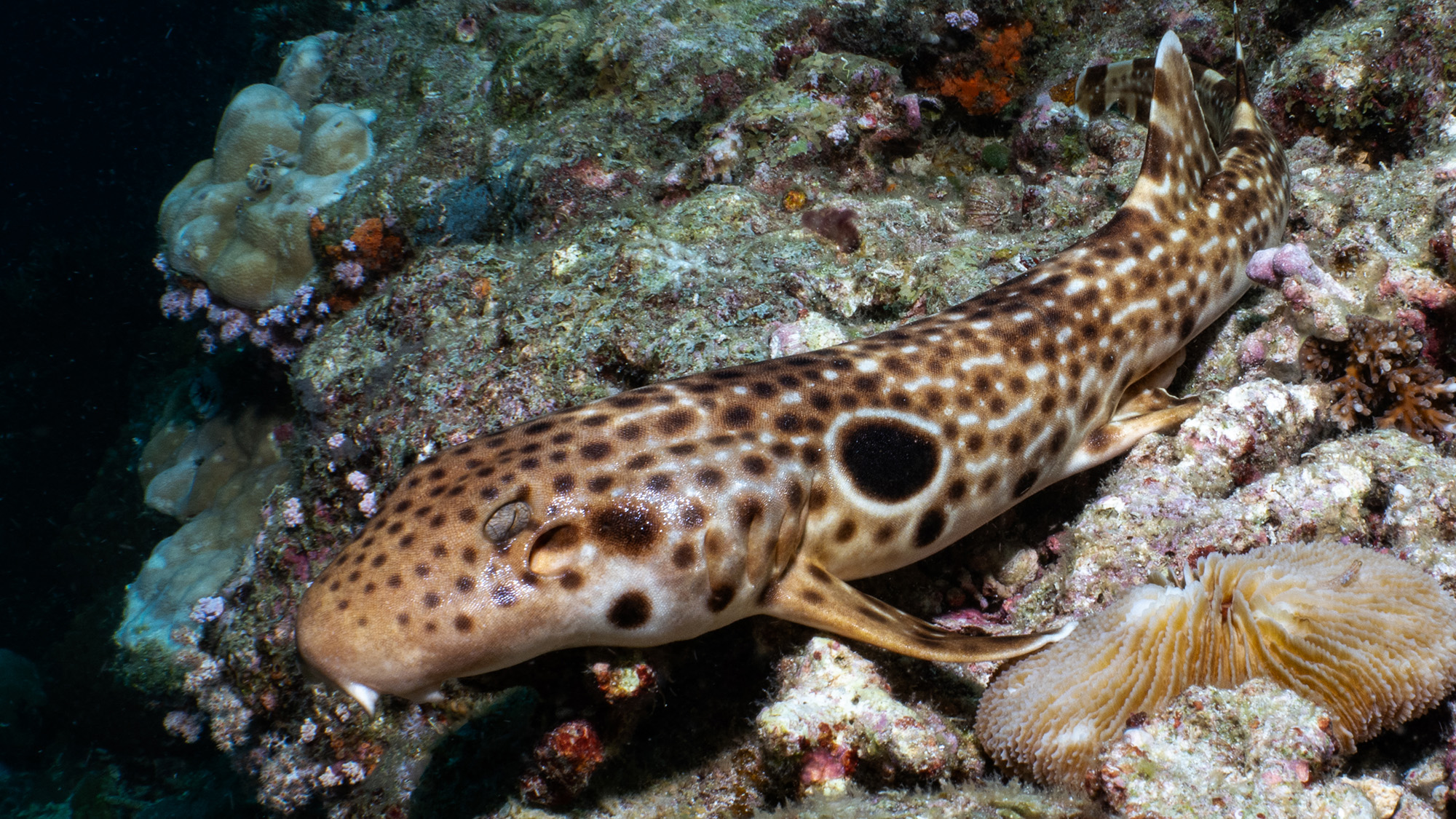
Researchers have identified a new species of "walking shark," a rare group of small carpet sharks that use their fins to "walk" along shallow reefs.

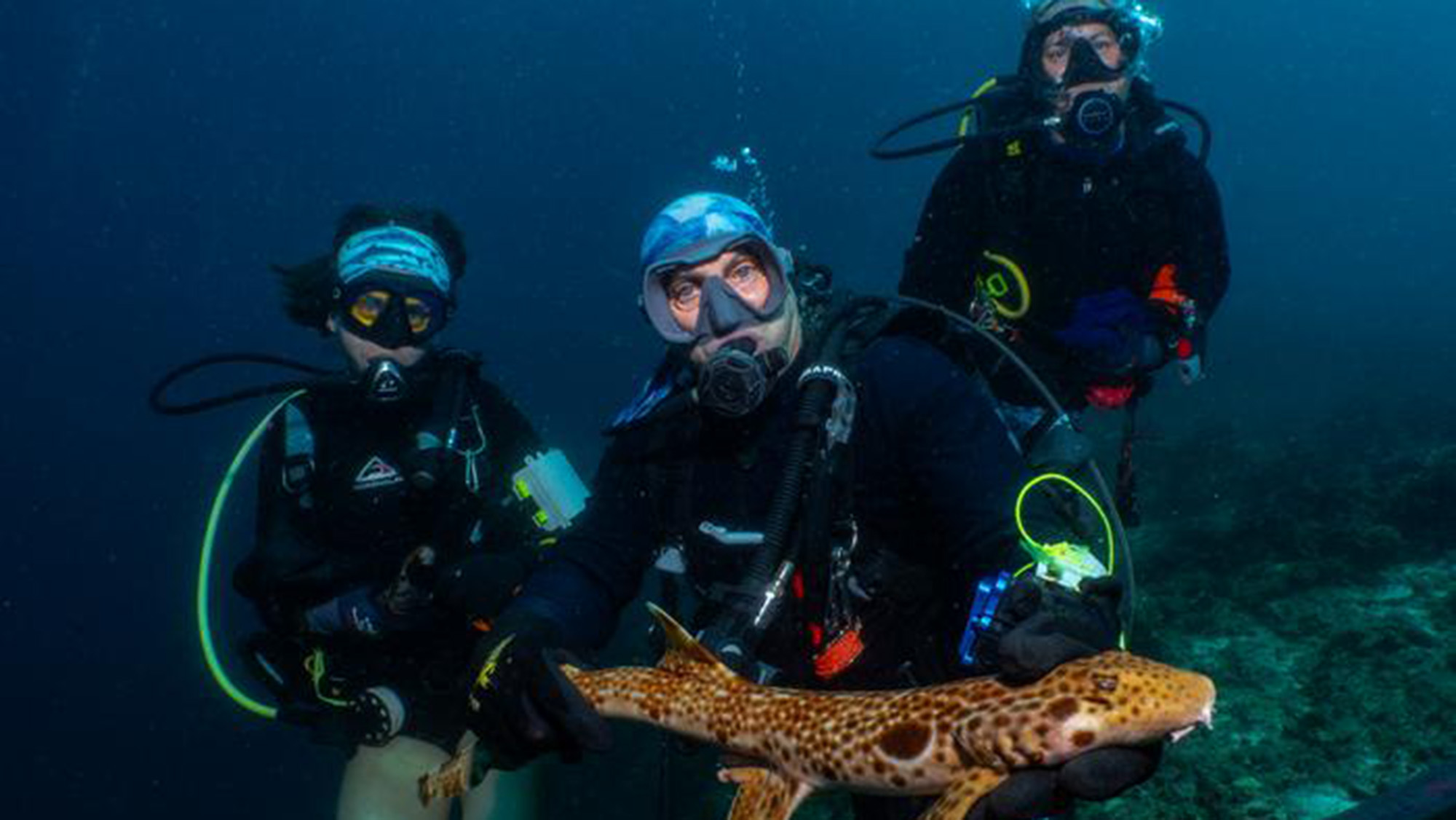
A team of divers spotted the newfound shark, which they named Hemiscyllium dudgeonae, in the dark waters around the reefs of southeastern Papua New Guinea. Gliding along the rocks was a small, brown-spotted shark that they didn't recognize.

"I was so excited. … I didn't look very closely at the pattern and quickly caught it and took it back to the boat," Christine Dudgeon, a senior research fellow at the University of the Sunshine Coast in Australia, told Live Science in an email.

Dudgeon handed the shark to Jess Blakeway, a doctoral student and first author of a new study describing the shark. Blakeway "noticed that the shark had a different pattern to the one that we were looking for and called out to me: 'Chris, it's different.'"

The new shark is named the Dudgeon's walking shark after Dudgeon, in recognition of her 20 years of researching the Hemiscyllium genus.

The new find, described June 15 in the Journal of the Ocean Science Foundation, brings the number of known walking shark species to 10, each with their own unique body pattern.

"This discovery is exciting because a lot of new fishes, and in particular, new shark and ray species, tend to be deep sea, so finding something in very shallow [less than 3 feet, or 1 meter] of water is unusual and highlights that there is potentially a lot of biodiversity that we really don't know about," Dudgeon said.

Encountering a new species

The team had been searching for another walking shark species, called Michael's walking shark (Hemiscyllium michaeli), when they encountered the unusual shark.

"Michael's walking shark has leopard prints and Dudgeon's walking shark has small white dashes and brown dots all over its body," Dudgeon said. "But with only one specimen we were not sure if this was an anomaly or a true difference."

The researchers continued surveying nearby reefs, and within two days, they had located 11 additional Dudgeon's walking sharks across three sites. These included males and females, both juveniles and adults, with all displaying the distinctive body pattern. That consistency convinced the team that they were likely looking at an undescribed species.

Three divers float with a brown and white shark in the ocean

Left to right: researchers Jess Blakeway, Mark Erdmann and Christine Dudgeon pose with the newly identified shark species H. dudgeonae. (Image credit: Nesha Ichida)

Dudgeon and Blakeway used genetic data to test this hypothesis at their laboratory in Australia. By comparing DNA from the newly discovered sharks with genetic samples from the other nine walking shark species, they confirmed that the population represented a new species.

Walking on land

Walking sharks are notable for their unusual biology. Unlike larger, open-ocean shark species, walking sharks spend their lives near coral reefs. Their ability to "walk" across the seafloor using their pectoral and pelvic fins is particularly useful during low tide, when parts of the reef become isolated from deeper waters. "Walking" helps the animals remain active when oxygen levels drop so that they can continue hunting prey across reef flats.

A close up of a brown and white spotted shark amidst rocks and corals

The new shark species H. dudgeonae was found in Watota, Milne Bay, off southeastern Papua New Guinea. (Image credit: Mark Erdmann)

Scientists think this ability evolved as a response to the challenging environment of tropical reef flats, where oxygen levels can shift dramatically as the tides rise and fall.

Studies indicate that some walking sharks can survive in low oxygen environments for hours, though more research is needed to understand how the sharks are able to do this, Dudgeon said.

So far, Dudgeon's walking shark has been documented at only three locations in Papua New Guinea. If future research confirms that the species has a highly restricted range, H. dudgeonae could be vulnerable to habitat degradation, climate change or overfishing.

Many walking shark species appear to stay close to the reefs where they were born, which limits their ability to recolonize damaged habitats. Species with small geographic ranges are often more susceptible to population declines because local disturbances can affect a larger portion of the total local population.

The discovery also shows how new shark species are still being found in regions that have received relatively little scientific attention. Dudgeon and her team plan to continue doing surveys in Papua New Guinea to study the new species in its home environment.

"I think many people are not aware of the wonderful diversity of sharks and their relatives, the rays, skates and chimeras," Dudgeon said. "Very few species are dangerous to humans and they are a wonderfully broad and eclectic group of animals. They continue to surprise and fascinate us."

How much of a shark fan are you? Find out with our shark quiz!

This Deep-Sea Predator Can Live for Centuries—Now Geneticists Are Close to Hacking the Secrets of Its Longevity

8 June 2026 at 13:39


The mystery of the Greenland shark’s incredible longevity may finally be unraveling, as a team of international researchers has completed the first comprehensive genome map of the creature.

Native to the cold waters between Greenland, Iceland, and Canada, Greenland sharks boast one of the longest vertebrate lifespans on Earth, approaching 400 years. In a recent paper published in the Proceedings of the National Academy of Sciences, researchers led by Shigeharu Kinoshita of the University of Tokyo have identified some of the genetic basis of that extraordinary lifespan, which they say future researchers may exploit to treat cancer and age-related illnesses.

Greenland Sharks Longevity

As genetic sequencing technology has improved and costs have fallen, there has been a major increase in the number of sequences from long-lived species for comparative analysis. Discoveries have included identifying increases in genes related to the immune system and growth hormone receptors in rockfish and bat species noted for their longevity.

With an entire lifecycle in slow motion, Greenland sharks’ longevity can be traced to their prolonged development: they take 150 years to reach sexual maturity, growing only 1 centimeter per year. Despite being one of the slowest swimmers in the ocean, the species undertakes large-scale migrations spanning over 1,000 kilometers.

Genome Mapping

Large genome sizes, like those of the Greenland shark, pose enormous mapping challenges, full of many repetitive sequences. Despite their importance for management and conservation, few whale and shark species have been sequenced due to the difficulty involved. To fill data gaps in the genetic causes of longevity, aquatic species evolution, and the risks of biodiversity loss, the team chose the Greenland shark as their subject.

The University of Tokyo-led team mapped roughly 5.9 billion DNA base pairs, accounting for 96.7% of the shark’s genome. Among the discoveries were the identification of specific genetic features likely related to the Greenland shark’s longevity. 

In their paper, they wrote of discovering “genetic traits associated with cancer, immune response function, genome stability, and cardiac function, deep-sea adaptations, and population size dynamics,” in the new research.

Longevity Results

One of the most crucial of these traits is how the shark appears to mitigate the genetic strain that contributes to aging by stabilizing the building blocks of chromosomes. Chromatin is a structure consisting of DNA, RNA, and proteins, which makes up chromosomes.

In the Greenland shark, the histone H1.0 protein, which binds DNA in chromatin, undergoes an amino acid substitution that may enhance stability and reduce the effects of aging.

Another genetic tool aiding the shark’s longevity is the presence of 59 copies of the FTH1b gene, which researchers discovered on pseudochromosome 33, far above the number seen in other shark or fish species. This helps regulate ferroptosis, a form of programmed cell death, thereby mitigating cell damage. Since the gene controls iron storage and ferroptosis is iron-dependent, the researchers say this multiplication of FTH1b could prevent oxidative cell damage.

Beyond those specific expressions, researchers also found expansion of entire gene families associated with DNA repair, immune functions, and cancer resistance.

Although limited to a single species, the research does advance general understanding of the genetic factors involved in extended lifespans. However, it will be up to future researchers to identify how this new information can be applied to human concerns.

The paper, “The Greenland Shark Genome: Insights into Lifespan Extremes and Population Dynamics,” appeared in Earth and Planetary Science Letters on May 19, 2026.

Ryan Whalen covers science and technology for The Debrief. He holds an MA in History and a Master of Library and Information Science with a certificate in Data Science. He can be contacted at ryan@thedebrief.org, and follow him on Twitter @mdntwvlf.

Offshore wind power cables can affect sensory system of sharks and rays: studies

4 June 2026 at 16:36
As offshore wind farms expand rapidly in the global renewable energy transition, scientists are studying how these large marine infrastructure projects affect ecosystems beneath the waves. Research from Wageningen University & Research in the Netherlands suggests that offshore wind may bring both risks and benefits for sharks and rays, known collectively as Elasmobranchii, which are highly sensitive to electromagnetic fields (EMFs). A six-year project called “Elasmopower” examined how EMFs from subsea power cables in offshore wind farms affect bottom-dwelling sharks and rays. These species depend on natural electric and magnetic fields for key behaviors such as navigation, prey detection, habitat use and long-distance movement, particularly in low-visibility environments. The studies conducted as part of the Elasmopower project have been published in four papers, with three additional papers currently undergoing peer review. Sharks and rays have specialized electroreceptors called ampullae of Lorenzini. The jelly-filled sensory canals around the head and snout can detect even extremely weak EMFs from prey and predators, water movement, and the Earth’s geomagnetic field, Erwin Winter, a scientist at Wageningen, told Mongabay. This system is central to hunting and orientation, making Elasmobranchii especially relevant for studying EMF exposure from offshore energy infrastructure, Winter added. Erwin Winter, a researcher with the Elasmopower project, presented findings on offshore wind, electromagnetic fields and bottom-dwelling sharks and rays at the Sharks International 2026 conference in Colombo, Sri Lanka, in May. Image by Malaka Rodrigo for Mongabay. During a presentation on a summary of the Elasmopower research at the Sharks International 2026…This article was originally published on Mongabay

China’s shark finning could lead to US seafood sanctions

For migrant workers trapped onboard Chinese distant water fishing fleets, cutting the fins off sharks as they writhe violently on rusted decks in the Indian Ocean isn’t accidental. It’s an intentional and lucrative act that marks the start of a bloody half-a-billion-dollar offshore supply chain, tacitly supported by Beijing yet covertly concealed from port inspectors globally.

The Center for Biological Diversity, a nonprofit focused on the protection of endangered species, filed a formal petition this month requesting the U.S. government potentially sanction China for failing to meet American shark conservation standards. Shark populations have declined by more than 70 percent since 1970, with more than one-third of all shark and ray species now threatened with extinction. Yet each year, Chinese-flagged vessels catch, brutally fin, and discard thousands.

Should the National Marine Fisheries Service identify China as having violated the US Moratorium Protection Act, then President Trump could be expected to ban the import of all $1.5 billion of Chinese seafood.

Read full article

Comments

© Robertus Pudyanto/Getty Images

❌