Moonlight illuminates the western side of Super Typhoon Bavi’s eyewall at about 15:30 Universal Time on July 5 (1:30 a.m. local time on July 6). The image was acquired with the VIIRS (Visible Infrared Imaging Radiometer Suite) day-night band on the NOAA-20 satellite.
NASA Earth Observatory/Michala Garrison
In early July 2026, for the second time in three months, a powerful typhoon crossed the U.S. Northern Mariana Islands and Guam in the North Pacific Ocean. Super Typhoon Bavi was at peak intensity when it neared the islands on the night of July 5, bringing winds of 290 kilometers (180 miles) per hour, along with torrential rain and dangerous storm surge.
This nighttime image, captured by the VIIRS (Visible Infrared Imaging Radiometer Suite) on the NOAA-20 satellite, shows Bavi’s eye at about 15:30 Universal Time on July 5 (1:30 a.m. local time on July 6). Light from the Moon, which was in the waning gibbous phase, illuminates the eyewall’s western side. The eye passed over Rota, north of Guam, several hours after the image was acquired.
Bavi became a super typhoon in the early hours of July 4 local time while tracking west over the warm ocean. Satellite observations indicated that sea surface temperatures were around 30 degrees Celsius (86 degrees Fahrenheit) in the region. Bavi was the third tropical cyclone in 2026 to reach category 5 intensity on the Saffir-Simpson wind scale.
The typhoon caused extensive damage across Guam, Rota, and Saipan, according to news reports, downing power poles and lines; flooding roads and littering them with debris; and damaging buildings, including a water distribution station on Rota. U.S. Coast Guard crews worked to clear navigation hazards in the waterways around Guam and the Northern Marianas and reopen ports as dangerous marine conditions subsided, according to reports. This damage comes on top of destructive winds and flooding from Super Typhoon Sinlaku, which crossed the islands in mid-April.
Super Typhoon Bavi tracked west over the Northern Mariana Islands toward Asia in early July 2026. The storm’s clouds and path are overlaid on a Blue Marble: Next Generation image built from scenes captured by the MODIS (Moderate Resolution Imaging Spectroradiometer). The image of the storm was captured by the VIIRS (Visible Infrared Imaging Radiometer Suite) on the NOAA-21 satellite on July 8, 2026, at about 04:30 Universal Time.
NASA Earth Observatory/Michala Garrison
On July 8, Bavi remained a powerful typhoon as it moved west over the Philippine Sea. In the early afternoon, when the image above was captured, the National Weather Service reported maximum sustained wind speeds of 250 kilometers (155 miles) per hour. Forecasts indicated the typhoon’s track could bend northwest toward Taiwan, the Ryukyu Islands of southern Japan, and mainland China and weaken over the next several days.
Writing in Yale Climate Connections, meteorologist Jeff Masters said that Bavi is the type of storm that might be expected when a strong El Niño event is building, which is currently the case. El Niño-year typhoons may form farther east, giving them more time over warm water to intensify before curving toward Asia, Masters explained, “resulting in a greater chance of reaching Category 5 intensity.”
This image from NASA’s Hubble Space Telescope shows Messier 3, a densely packed cluster of stars whose origins may be a merger between globular clusters in the early universe.
NASA, ESA, and A. Sarajedini (Florida Atlantic University); Processing: Gladys Kober (NASA/Catholic University of America)
This image from NASA’s Hubble Space Telescope showcases Messier 3 (M3), one of the Milky Way galaxy’s most massive globular clusters, or spherical collections of gravitationally bound stars. Globular clusters are made up of ancient stars that formed at roughly the same time from the same cloud of gas, giving those stars similar ages. Around 150 known globular clusters are sprinkled around the outer regions of the Milky Way.
Mountainous landscapes appear green and untouched by fire in a satellite image acquired on June 5, 2026.
NASA Earth Observatory/Michala Garrison
An image of the same area shows a large brown patch spanning much of the image in an image acquired after the fire on June 29, 2026.
NASA Earth Observatory/Michala Garrison
June 5
June 29
A burned landscape spans more than 150 square miles (390 square kilometers) of rugged terrain northwest of Junction, Utah, as seen in this pair of images captured by the OLI (Operational Land Imager) on Landsat 8 and Landsat 9 on June 5, 2026 (left) and June 29, 2026 (right). NASA Earth Observatory images by Michala Garrison.
After a winter of below-average snowpack and an unusually warm and dry start to summer, the National Interagency Fire Center warned that the Great Basin and parts of the Rockies faced an elevated risk of wildfires in July 2026.
The warning proved accurate. By July 7, firefighters labored to contain nearly three dozen large, early-season wildland fires that raced through forests in several parts of the western U.S. Utah was among the most active states, with fires having charred 558 square miles (1,445 square kilometers) and four major fires that were not fully contained still burning.
The Cottonwood fire ranked as one of Utah’s—and the country’s—largest and most destructive fires of the year so far. As of July 7, it had burned 150 square miles (390 square kilometers), just shy of the Babylon fire in eastern Utah. Landsat 9 captured the false-color image (bands 7-5-4) above (right) on June 29, 2026, when blackened vegetation spanned a large patch of rugged terrain along the Beaver River. The image on the left shows the same area on June 5, a few weeks before the fire ignited. In this band combination of shortwave infrared, near infrared, and visible light, unburned vegetation appears bright green, snow is blue, and clouds are white.
Ponderosa pine, oak, sagebrush, and grasses were among the vegetation types that burned. Officials with the state’s forestry division told news media that the Cottonwood fire had destroyed up to 150 structures. Eagle Point Ski Resort, which lost more than 100 condos and 30 cabins, also reported damage to four of its five chairlifts.
The damage to forests was extensive, though isolated patches survived largely unscathed, remaining as green oases within the broader burned area. Among them were the forests around Tushar Campground, the site of a 4-H summer camp. Beaver County officials credited years of forest treatments, such as clearing brush and trimming branches, with helping save the campground and surrounding forests.
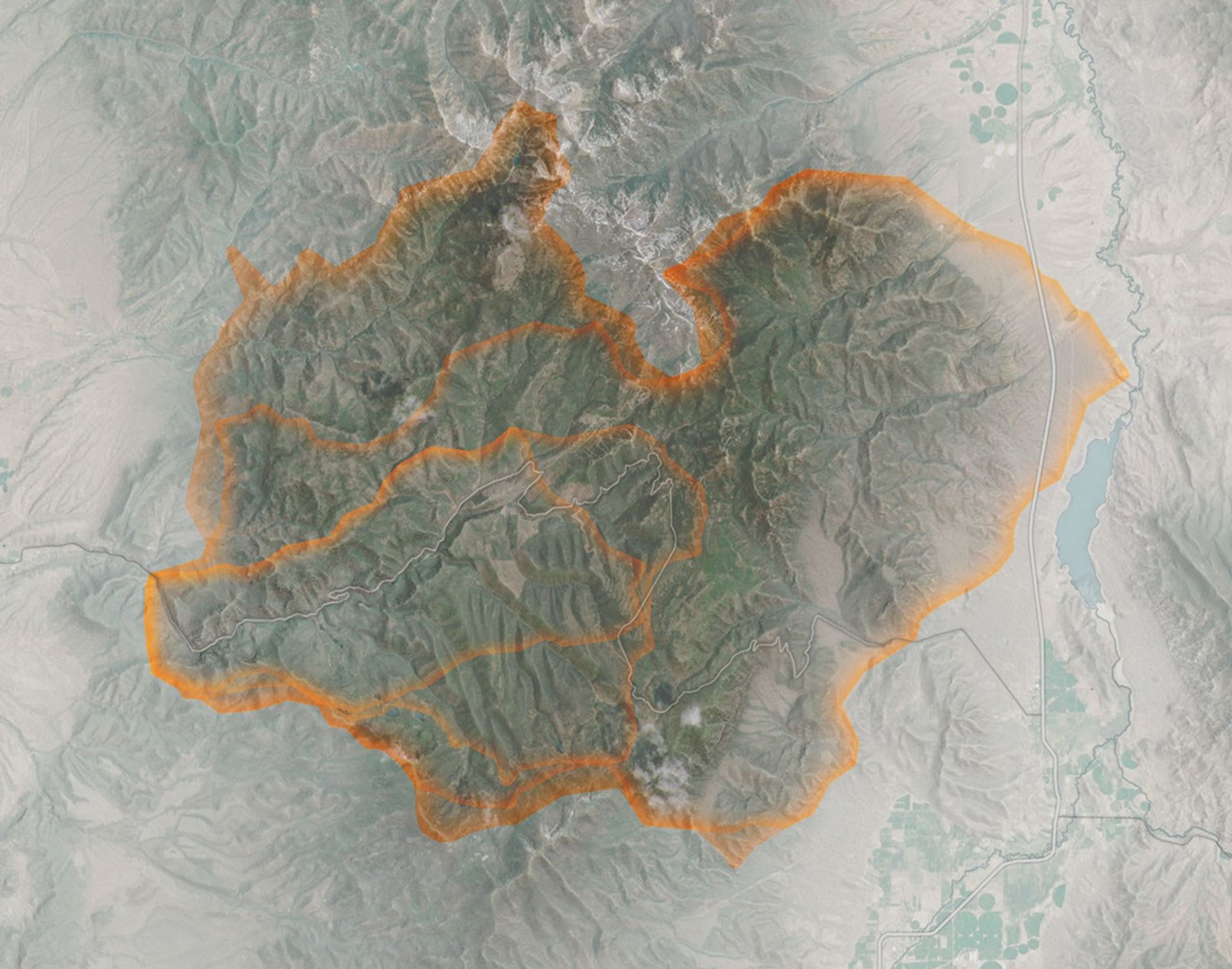
The fire spreads especially rapidly on June 23 and June 26. The fire perimeters in this visualization are based on data from NASA’s Fire Events Data Suite.
NASA Earth Observatory/Michala Garrison
As the fire spread, NASA’s Fire Events Data Suite (FEDS) tracked its progression and rate of growth. The visualization above, based on the FEDS system, shows the fire surging on June 23 and tripling in size over 12 hours that day as it spread to the north, east, and south. It also grew rapidly on June 26, when it made a run to the north. FEDS draws on data from the VIIRS (Visible Infrared Imaging Radiometer Suite) sensors aboard the Suomi NPP, NOAA-20, and NOAA-21 satellites, which detect active fires day and night by their thermal infrared signature.
FEDS is one of several tools available to firefighters and emergency management officials when responding to fires. First responders often rely on higher-resolution airborne imagers or on firefighters walking fire edges to map perimeters. FEDS offers a different advantage: consistent, easily accessible data that do not need to be specially requested, according to Tempest McCabe, a University of Maryland scientist based at NASA’s Goddard Space Flight Center who helped develop the tool. As a result, FEDS often detects a fire’s start earlier than other sources and tracks blazes for their full duration. To capitalize on strengths like these, the FEDS team is working closely with operational fire behavior analysts, with support from NASA’s FireSense program, to better understand and anticipate periods of rapid fire spread.
A total of 1,289 firefighters have been deployed to the Cottonwood fire, according to InciWeb, a website managed by the National Interagency Fire Center. As of July 7, the fire was 56 percent contained, but forecasters expect a hot, dry weather pattern to persist in the coming days, with fire behavior likely to be “very active to extreme” over the next 72 hours.
Government satellite data are part of a global system of observations used to track fire behavior and analyze emerging trends. Among the real-time wildfire monitoring tools that NASA makes available are FIRMS (Fire Information for Resource Management System), the Worldview browser, and the Fire Event Explorer.
As of July 7, 2026, fires had burned 5,265 square miles (13,636 square kilometers) across the United States, according to the National Interagency Fire Center. That’s 46 percent more than the 10-year average (2016-2025) for that point in the season.
NASA Earth Observatory images by Michala Garrison, using Landsat data from the U.S. Geological Survey and fire perimeter data from the Fire Events Data Suite. Story by Adam Voiland.
In summer 2026, sixteen stadiums across North America hosted matches as part of the FIFA World Cup. Over the years, astronauts aboard the International Space Station have captured a top-down view of the infrastructure, landscapes, and ecosystems surrounding many of these venues.
Six of the matches were played at the San Francisco Bay Area Stadium, beginning on June 13 with a match-up between Qatar and Switzerland. This stadium (also called Levi’s Stadium) is located in Santa Clara, California, adjacent to San Jose and around 40 miles (64 kilometers) south of San Francisco. An astronaut aboard the International Space Station took this photo (above) on July 26, 2022.
The stadium, completed in 2014, is surrounded by a mix of recreational, housing, and business infrastructure. The scene includes the southern part of San Francisco Bay, which is 23 years into a 50-year effort to restore up to 90 percent of the region’s salt ponds to tidal wetlands and marshlands, while retaining some of its salt-making heritage.
The Bay Area hosted its sixth and final World Cup match on July 1, when the U.S. faced off against Bosnia and Herzegovina in a knockout match. The U.S. advanced to the round of 16 following a 2-0 win.
April 17, 2022
The FIFA World Cup final is scheduled for July 19 at New York New Jersey Stadium, part of the Meadowlands Sports Complex, in East Rutherford, New Jersey. The stadium (also called MetLife Stadium) sits along the New Jersey Turnpike, west of Midtown Manhattan. Note that north is toward the bottom-right of this photo, captured by an astronaut on April 17, 2022.
The area has seen centuries of human impact. Colonists cleared wetlands and cedar forest for settlements, and development for a range of economic and industrial uses followed. In the 20th century, it became an unregulated dumping ground. In recent decades, though, wetland restoration efforts have occurred alongside the development of the sports and entertainment complex.
Other World Cup host cities have also appeared in astronaut photography and satellite imagery. Guadalajara Stadium (Estadio Akron), Los Angeles Stadium (SoFi Stadium), Houston Stadium (NRG Stadium/Reliant Stadium), and BC Place Vancouver (BC Place) are among the venues that have been observed from above.
Astronaut photograph ISS067-E-202213 was acquired on July 26, 2022, with a Nikon D5 digital camera using a focal length of 400 millimeters, and astronaut photograph ISS067-E-18580 was acquired on April 17, 2022, with a Nikon D5 digital camera using a focal length of 1150 millimeters. They are provided by the ISS Crew Earth Observations Facility and the Earth Science and Remote Sensing Unit at NASA Johnson Space Center. The images were taken by a member of the Expedition 67 crew. The images have been cropped and enhanced to improve contrast, and lens artifacts have been removed. The International Space Station Program supports the laboratory as part of the ISS National Lab to help astronauts take pictures of Earth that will be of the greatest value to scientists and the public, and to make those images freely available on the Internet. Additional images taken by astronauts and cosmonauts can be viewed at the NASA/JSC Gateway to Astronaut Photography of Earth. Story by Kathryn Hansen.
The symptoms: The patient went to the emergency department after experiencing nausea and vomiting for about a month, along with decreased appetite. She told doctors that she'd also experienced a burning pain in her upper abdomen and right side of her torso, which wrapped around to her back. She'd tried treating these symptoms with two common over-the-counter medications for acid reflux, but the treatments didn't help.
In the year prior, the patient had started taking semaglutide, a type of drug known as a GLP-1 receptor agonist — the same class of drug as Ozempic. These injected drugs are used to treat type 2 diabetes and assist in chronic weight management; in this case, the woman had a history of type 2 diabetes and obesity. Since starting the medication, she'd lost about 40 pounds (18 kilograms), but notably, that weight loss had accelerated over the previous month, she noted.
What happened next: Doctors took a CT scan of the patient's abdomen and pelvis. This revealed that the bile ducts, which move bile from the liver to the gallbladder and small intestine, were slightly dilated. The woman also had "heavy stool burden" but no signs of obstructions in her bowels, and her stomach was slightly stretched out due to carrying "semisolid material."
To take a closer look, the medical team then used magnetic resonance cholangiopancreatography, a noninvasive scan that examines the bile ducts, gallbladder, pancreas and pancreatic ducts. The scan confirmed that the bile ducts were dilated and revealed a mass in the stomach that appeared to be trapped air. The doctors then examined the upper digestive tract, from the esophagus to the top of the small intestine, with an endoscope.
The diagnosis: The endoscopy revealed a large mass in the woman's stomach, known as a gastric bezoar. These masses are tightly packed blobs of partially digested or undigested materials.
The treatment: Semaglutide and other GLP-1 agonists typically cause delayed gastric emptying, which means they slow the rate at which the stomach empties its contents into the intestines. The woman was taken off that medication upon hospital admission.
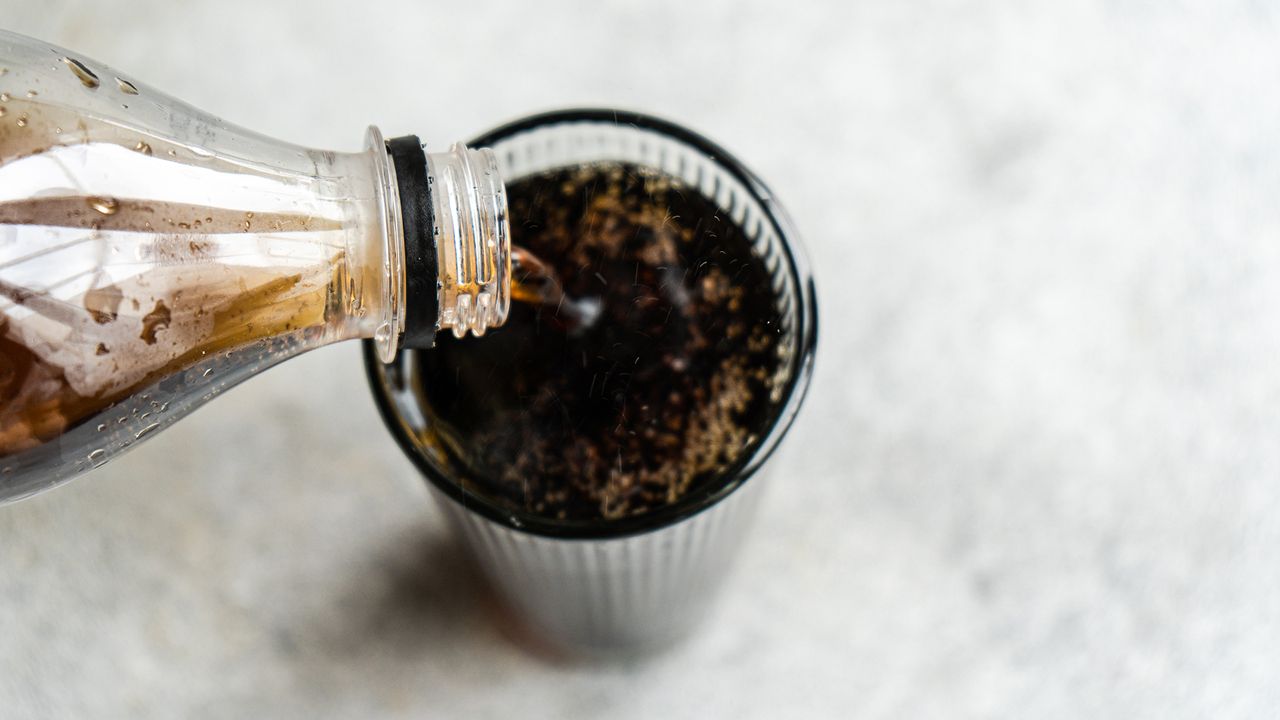
The next step with a bezoar is to try and dissolve the mass while it's still in the stomach — and evidence suggests a good way to do this is to give the patient soda.
"Existing evidence, largely from case series and anecdotal experiences, supports the administration of 3 liters [0.8 gallons] of cola, either orally or through a nasogastric tube, within a 12-hour window," doctors noted in a report of the case. "It is not well understood whether acidity, carbonation, or another mechanism accounts for dissolution of the bezoar."
Due to the patient's history of diabetes, she was given diet cola. She also didn't enjoy carbonated beverages, so the typical prescription of 3 liters of soda was cut down to 1.5 liters (0.4 gallons). On the second day after starting this treatment, the patient noted a "tugging" sensation in her abdomen followed by relief of her nausea and abdominal discomfort. An endoscopic exam revealed that the bezoar was no longer stuck in her stomach.
The woman then transitioned to a typical diet in the hospital, and by the time she was discharged, she had no nausea, vomiting or abdominal pain. She did not restart semaglutide but was prescribed acid reflux medication to take daily. She reported that her appetite increased after hospital discharge and her weight rebounded a bit over the following months. Her abdominal symptoms had not returned within a few months of discharge.
What makes the case unique: Gastric bezoars are fairly rare, the report noted. They are found in less than 0.5% of endoscopies of the upper digestive tract. Common symptoms of the condition, such as pain, nausea, vomiting and abdominal discomfort, also appear in many more-common disorders, so they don't necessarily point to the presence of a bezoar in all cases.
The most common type of gastric bezoar is formed of plant fibers and called a "phytobezoar." Eating lots of certain foods, such as persimmons, pineapples, raisins or celery, can raise the risk of phytobezoars because the plants contain a high concentration of indigestible components, such as cellulose, lignins and certain tannins.
However, various medical conditions, procedures and drugs can also raise the risk of bezoars. These include anatomical changes related to bariatric or other gastric surgeries, autonomic nerve damage, and medications that cause delayed gastric emptying, such as GLP-1s. In the woman's case, semaglutide was likely to blame for her bezoar, and discontinuing the treatment helped resolve the problem.
The cola she consumed also helped. Although that course of treatment sounds strange on paper, it is the preferred first-line treatment over using a scope to physically break up the bezoar in the patient's stomach.
"Bezoars formed from food material may be initially managed with oral administration of cola in patients in a clinically stable condition," the report said. "This intervention is generally cost-effective and is associated with a lower risk of complications than invasive procedures."
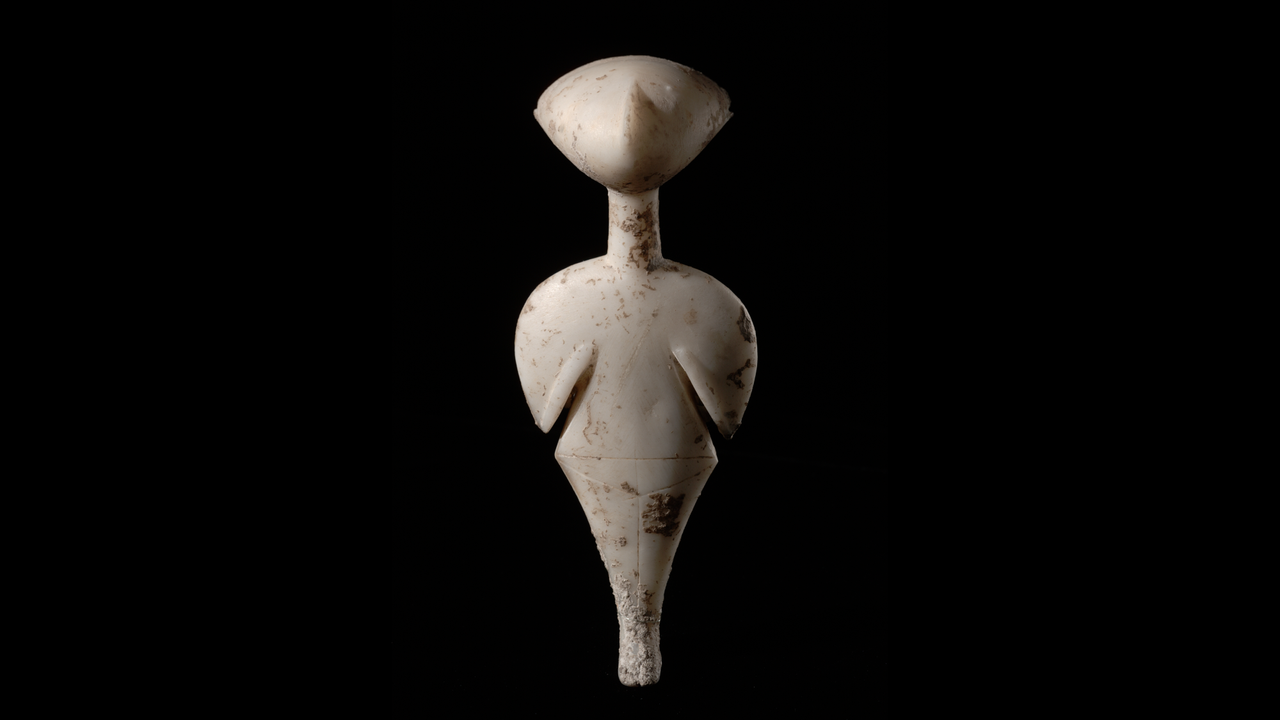
The Stargazer figurine was carved from marble around 5,000 years ago. (Image credit: Cleveland Museum of Art / Leonard C. Hanna Jr. Fund; John L. Severance Fund 1993.165 (Public Domain))
QUICK FACTS
Name: The Stargazer
What it is: A marble figurine
Where it is from: Kırşehir, Turkey
When it was made: Circa 3000 B.C.
This small, abstract sculpture of a woman, carved from milky-white marble, is known as The Stargazer because her head is tilted back and her eyes appear to stare skyward. Only about 30 figurines of this type have ever been found; all of them date to about 3000 B.C. and were crafted by a culture that left no written records of the figurines' meaning, according to art historian Amanda Mikolic.
This particular stargazer figurine was once owned by philanthropist Nelson Rockefeller, a member of the wealthy industrial family and vice president of the United States under Gerald Ford. It is now in the collection of the Cleveland Museum of Art (CMA).
The marble figurine is roughly 6.8 inches (17.2 centimeters) tall and weighs about 1 pound (454 grams). Clearly carved into human form but lacking a mouth, the statuette likely represents a woman, with the incised lines below the waist representing her pubic triangle. Her large, oval head is tilted back, and her tiny, dot-like eyes look upward.
Most stargazer figurines that have been discovered in western Anatolia (present-day Turkey) were broken at the neck before being buried in the ground millennia ago, making the CMA example one of the finest and most complete stargazer statuettes ever found.
But the meaning of the woman portrayed in The Stargazer figurine is unclear, since the culture that created it did not leave any written language explaining their art.
The figurine cannot stand on its own, suggesting that it was meant to be held or placed flat, according to Mikolic. "Deliberately rendered as female, she may be associated with fertility and abundance," she wrote. The statuette may be part of a trend of simplistic female figurines in the Mediterranean area linked to female fertility and the life cycle, such as the Cycladic figurines, according to The Getty, which has a stargazer figurine in its collection.
Regardless of the woman's specific meaning, "she must have been an important devotional object to some long-lost culture," Arielle Kozloff, former curator of ancient art at the CMA, wrote in the CMA Members Magazine.
Abstract female figurines like The Stargazer and other Neolithic examples are known to have inspired early-20th-century cubist masters, Kozloff wrote. This gives her "a sense of timelessness," according to Mikolic, "encouraging the viewer to think of humankind’s place and role in a larger cosmos."
For more stunning archaeological discoveries, check out our Astonishing Artifacts archives.
The space telescope detected a specific absorption line in the spectra of these worlds' atmospheres, revealing the characteristic trace of a unique and unknown molecule. It's unclear exactly what the molecule could be, and the mystery is made even more compelling by the fact that the environments of Pluto and Titan are very distinct.
China is no stranger to engineering projects designed to bring its environment to heel; we've recently covered the Asian powerhouse's attempts to tame nature through the creation of atmospheric rivers, the world's biggest dam and water transfers. But these are hardly China's only forays into sculpting its natural environment, with the country having planted more than 66 billion trees along its northern borders to halt the advance of the Gobi and Taklamakan deserts.
Now, new research has revealed a startling detail about the trees in this "Great Green Wall": they're growing significantly faster than natural forests. Exactly why remains a mystery, but, as Live Science contributor Brian Owens reveals, it could be due to a stronger response from the trees to rising atmospheric carbon dioxide.
Are you a robot? It used to be a question that only humans could answer — by clicking on traffic lights or strings of warped and grainy characters, or Completely Automated Public Turing tests to tell Computers and Humans Apart (CAPTCHAs). But what happens now that autonomous artificial intelligence (AI) agents can ace some of these trials without detection? Have they made CAPTCHAs obsolete?
The Medici family ruled Renaissance Tuscany with an iron fist, fulfilling their ruthless ambitions with methods so underhand that the name of their most famous advisor, Niccolò Machiavelli, became a synonym for skulduggery.
So, when two brothers from the infamous family died under mysterious circumstances, it was believed for 500 years that they were murdered, possibly by arsenic poisoning. Now, science has revealed the true culprit behind the medieval cold case, and it's not what we expected.
Antibiotic resistance is a growing threat in the U.S., with more than 2.8 million Americans developing antimicrobial-resistant infections each year. The solutions to this worrying trend can be very complex— such as moving agricultural systems away from their overreliance on antibiotics, or preventing the rapid spread of superbugs through international travel.
But stopping doctors from overprescribing antibiotics is one of the easiest strategies in the battle against this "silent pandemic." And it turns out that Japan has already fought it with some success, driving down antibiotic overuse with an innovative new policy. To investigate further and ask what notes the U.S. should be taking, Live Science's health editor Nicoletta Lanese visited Japan and reported back on their investigation.
Something for the weekend
If you're looking for things to keep you busy over the weekend, here are a smattering of our best expert opinion pieces, alongside a crossword, an interview and a quiz, that we published this week.
If you ask me, it looks more like a rusty anchor, or a blurry deep-sea fish. But whichever way you see it, the newly discovered "bow and arrow" galaxy — or, more formally, the RAD-Bow-And-Arrow Radio Galaxy (RAD-BAARG) — is an oddball unlike any other recorded.
The galaxy's unique structure is likely the result of gravity, which is warping RAD-BAARG into a funhouse mirror version of its former self as it falls into a nearby galaxy cluster. A shock front from this plunge surrounds the galaxy as it moves through hot gas.
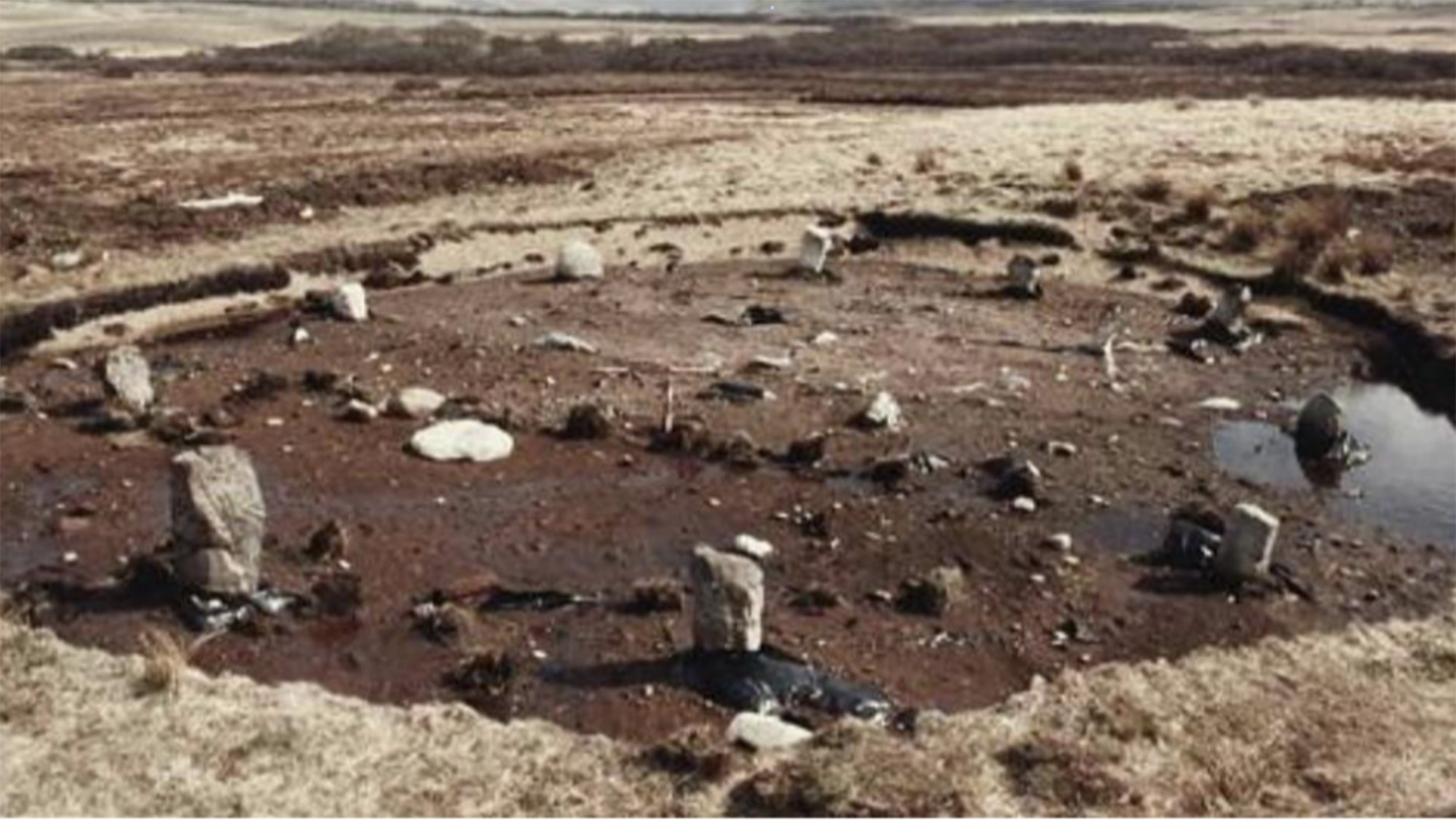
While scanning one of Scotland's richest prehistoric landscapes, archaeologists uncovered evidence of what may be a newfound stone or timber circle buried beneath a peat moorland. The find may add another monument to a ceremonial structure that has fascinated researchers for more than a century.
The possible circle lies beneath the surface of Machrie Moor on Scotland's Isle of Arran, a landscape already famous for its towering standing stones, burial monuments and ceremonial sites dating to between roughly 3500 and 1500 B.C. Researchers from Historic Environment Scotland identified the possible circle using geophysical survey equipment, which is wheeled aboveground and detects subtle magnetic changes underground without disturbing any archaeological remains.
The discovery emerged from a survey designed to test how well modern archaeological instruments work in peat-covered landscapes, but instead the project revealed the unexpected subterranean circle.
"We know that there is a lot of archaeology yet to uncover at Machrie Moor, but the discovery of a new circle completely surpassed our expectations," Nick Hannon, senior heritage recording manager at Historic Environment Scotland, said in a statement released June 30.
While Stonehenge is the world's most famous prehistoric circle, it is only one monument among hundreds built across Britain and mainland Europe during the Neolithic and Bronze ages. Machrie Moor is among the best-preserved examples of these ritual landscapes, with six ceremonial circles already identified since the 1980s.
In fact, the archaeologists found there was more to learn about some of the previously known circles. At Machrie Moor Circle 2, for instance, the team identified a ring of anomalies suggesting the circle may have had 14 stones instead of the seven or eight previously reconstructed.
An excavation of Circle 11 from the 1985 excavation. Circle 11 has been dated to the Bronze Age. (Image credit: Historic Environment Scotland)
The circles also share a striking orientation: They align with a notch at the head of nearby Machrie Glen where the midsummer sun would have risen, which suggesting astronomical observations may have played a role in ceremonies held there.
Archaeological anomalies
Unlike the circles that had already been discovered at the site, the newly detected monument has not been excavated yet. Instead, researchers identified a ring of magnetic anomalies — subtle disturbances in the soil that often indicate archaeological features such as pits or postholes.
According to the survey report, the feature consists of 12 circular, pit-like anomalies arranged in a circle approximately 92 feet (28 meters) across. The pits are spaced around 21 feet (6.5 m) apart, with two unusually wide gaps that the researchers say could represent the locations of two additional pits that are now decayed. If so, the monument may have originally contained 14 posts or standing stones.
"There is no indication that any of these anomalies contain a stone" at this time, the researchers noted in the report, so the circle could have been built from either timber posts or standing stones that were later removed.
An ancient circle believed to be from the Bronze Age at Machrie Moor in Scotland, looking northward. (Image credit: Historic Environment Scotland)
Previous excavations have already revealed that several of the other stone circles at Machrie Moor were originally built as timber circles before the wooden posts were replaced with stones around 2000 B.C. Human cremations and bodily burials were later placed within some of the circles, suggesting the monuments' functions changed over time.
"It is likely that the newly-discovered circle dates from a similar period as the other circles still standing," representatives of Historic Environment Scotland said in the statement.
See how much you know about Stonehenge with our Stonehenge quiz!
Life on Earth could continue for another 1.8 billion years, according to new research. This figure, which is based on complex climate models, is far longer than many previous studies indicated.
In the new study, published May 28 in the journal JGR Atmospheres, researchers suggest that plant life could continue about 1.8 billion years into the future. That nears the time when Earth would lose its oceans to space, either through radiation splitting water atoms or runaway evaporation, in about 2 billion years.
"We were trying to show that life on Earth — complex vegetation — could survive longer into the future than previous studies had shown," study co-author Jacob Haqq-Misra, an astrobiologist at space exploration charity Blue Marble Space, told Live Science.
The boundaries of life
Life on Earth relies on photosynthesis, the process used by plants, algae and some bacteria to turn sunlight into energy. The mechanism chemically converts carbon dioxide and water into sugars and oxygen. It requires both CO2 and sunlight.
But at certain temperatures, plants' photosynthetic machinery shuts down. Eventually, the sun will warm Earth to the point that plants are no longer able to photosynthesize, which would in turn cause entire food webs to collapse and all life to perish.
Another issue is that as the sun dies and it gets brighter, there will be less carbon dioxide in the atmosphere, effectively starving plants.
Plants turn sunlight into energy, but at certain temperatures this ability shuts down. (Image credit: lamyai via Getty Images)
"The Earth has stayed pretty hospitable in terms of surface temperature for most of the last 4 billion years because it has a built-in thermostat" by storing CO2 in rocks and releasing it during volcanic eruptions, Robert Graham, a planetary science researcher at the University of Chicago, who was not involved in the research, told Live science.
When it is hotter, the planet pulls more carbon dioxide out of the atmosphere and stores it in rocks underground, Graham said. This offsets the warming to keep the temperature stable but means that the carbon dioxide isn't accessible to plants.
Climate models and extreme plants
In the new study, Haqq-Misra and colleague Eric Wolf, a research scientist at Blue Marble Space, used 29 climate models to estimate what would happen to Earth's vegetative biosphere under different scenarios. They used the two extreme cases as limits — when Earth is too hot for life but the CO2 was stable; and when there is not enough CO2, but the temperature was stable. They then looked at the range of CO2 and sunlight conditions in between those extremes. This enabled them to include situations in which Earth was very efficient at pulling carbon from the atmosphere when temperatures started rising.
They also included information about a variety of plants. Some plants can survive on a much lower ratio of atmospheric CO2 than others. The study included plants that have a special photosynthetic process (known as crassulacean acid metabolism), such as succulents and orchids. These plants can sustain themselves on relatively tiny amounts of CO2. The same is true of some marine plants, which can dissolve and access carbon in the ocean system.
Other experts were impressed by the findings.
"Haqq-Misra and Wolf have used a sophisticated 3D climate model to show that Earth's climate may remain hospitable to plant life significantly longer into the future than predicted" by simpler models, said Graham, who authored one of those earlier studies. "It's an advance over previous work and suggests that complex biospheres like that of Earth are more resilient to environmental change from stellar brightening than previously suggested."
Looking to the future
Andrew Rushby, an astrobiologist at Birkbeck University of London who was not involved in the research, told Live Science that the paper updated the concept of the lifetime of the biosphere. However, he cautioned that the results remained "broad estimates."
"It is not possible for us to predict or know the possible evolutionary adaptations that the photosynthetic biosphere may undergo in response to increasing solar output and lower [atmospheric CO2], especially over billions of years," he said.
In their paper, the authors wrote that "limits posed by thermal stress or starvation may only reflect our observations of the biosphere today rather than hard limits on how the biosphere may evolve." There is also no way of knowing how life might adapt to new circumstances.
Haqq-Misra said that he found the results comforting. "Earth's system is resilient, and we are part of something that could have a much, much longer future," he said.
The results could also help scientists figure out what the thresholds could be on other planets. "Part of the challenge is starting with these Earth-based models, and then generalizing the physics as much as possible to be able to simulate a wider range of atmospheres," he said.
How much do you know about our blue planet? Test your terran knowledge with our Earth quiz!
'A silent pandemic': How Japan is curbing antibiotic resistance, $5 at a time
Antimicrobial resistance is a "silent pandemic," posing huge threats to public health while raising little attention. To curb resistance, doctors must use antibiotics sparingly and responsibly. This report is the first in a series comparing antibiotic use in Japan and the United States, with a focus on outpatient pediatrics. It was supported by a reporting fellowship from the Association of Health Care Journalists and The Commonwealth Fund.
About a decade ago, the Japanese government spotted a worrying pattern: Pediatricians were doling out a ton of antibiotics, well beyond what should be needed to treat the bacterial infections coming through their doors.
Antibiotics treat bacterial infections, not those caused by viruses, fungi or parasites. Yet doctors were often sending young patients home with antibiotics for illnesses unlikely to be bacterial. Treating nonbacterial infections with antibiotics can fuel antimicrobial resistance (AMR) and the rise of superbugs by unnecessarily exposing bacteria to the drugs, pressuring those bacteria to evolve strategies to survive. Resistant bacteria can then spread their adaptations to others, thereby compounding the problem.
In the long run, resistance could make common infections impossible to treat with existing drugs, raising the risk of serious illness and death across the population.
When pediatricians in Japan did treat bacterial infections, they were overusing the antibiotics that are likely to fuel resistance — "broad-spectrum" drugs that target many bacteria at once. When compared against 35 other high-income countries in 2015, Japan ranked dead last in the appropriateness of antibiotic choices for kids under 5.
One way to slow the development of AMR is to get antibiotic prescriptions under control. So Japan focused on one of its biggest sources of problematic antibiotic use: pediatric outpatient clinics.
"The clinics are a particular problem," said Dr. Yusuke Okubo, chief of clinical epidemiology and health services research at the National Center for Child Health and Development, a research center and hospital in Tokyo. Looking at Japan's overall antibiotic use, "90% of prescriptions are [from] outpatient clinics, not hospitals," Okubo told me. (Outpatient practices account for a similar proportion of antibiotic prescriptions in the U.S.)
A large proportion of problematic prescriptions were being written for children under 3 years old, especially those with upper respiratory tract infections, which nine times out of 10 are caused by viruses, Okubo said. The stomach bug gastroenteritis was another biggie for overprescription, despite most often being caused by a virus.
Government officials hatched an idea: What if each time a pediatrician chose not to prescribe an antibiotic in these cases, they earned a small financial reward — a tip for making a better choice? Each tip would be small, amounting to about $5 per claim at today's exchange rate, but could translate to thousands of extra dollars of annual income for individual clinics. That's no small matter for Japanese pediatricians, who Okubo estimates earn roughly $90,000 to $100,000 a year.
This incentive program, rolled out in 2018, has proved a success, so much so that it's since been expanded to cover more patients, more clinics and a wider variety of diseases. But what made the program work? I went to Japan to find out what systemic and cultural factors contributed to the program's success. Ultimately, I wanted to see whether other countries, like the U.S., could learn from this nationwide experiment.
Japanese pediatricians historically overused antibiotics, but an insurance policy is helping to change that. (Image credit: Susumu Yoshioka via Getty Images)
The quietly rising threat of resistance
With bacteria, as with animals, it's survival of the fittest. When exposed to antibiotics, a percentage of bacteria die, while others survive. That surviving population has traits that help them withstand the drug's effects, which are encoded in "resistance genes." Bacteria can transfer those genes to the next generation by multiplying, as well as physically pass those genes to nearby bacteria. Plus, they can pick up new resistance genes through random DNA mutations.
All antibiotics come with the risk of pressuring bacteria to evolve resistance — it's an inherent feature of the drugs. However, broad-spectrum drugs carry the greatest risk, because they place pressure on a wider variety of bacteria than narrow-spectrum drugs do. The 2015 cross-country comparison found that Japanese doctors prescribed antibiotics with the lowest risk of resistance only 35% of the time, meaning most antibiotic prescriptions were for broader-spectrum drugs.
It's sometimes necessary to use broad-spectrum drugs — such as when an infection is resistant to narrow-spectrum options — but using broad-spectrum antibiotics when they're not needed hastens the development of AMR. So does using antibiotics for nonbacterial infections. In both scenarios, you're introducing evolutionary pressure that could have otherwise been avoided.
Data showed that pediatricians in Japan often prescribed antibiotics for common childhood infections that were likely viral. Overprescription was a particularly big problem for children under 3. (Image credit: recep-bg via Getty Images)
Japan's youngest residents are also at risk, though, as resistant bacteria can sometimes pass from mothers to newborns at birth and can cause serious complications, like sepsis. Resistance has also been detected among respiratory bugs that frequently infect kids, such as Mycoplasma pneumoniae, said Dr. Takemi Murai, deputy head of the Infectious Diseases Division at Nagano Children's Hospital in Azumino. "There have been outbreaks of Mycoplasma that are resistant to antibiotics," he said.
Yet not long ago, the unrestrained use of antibiotics was a mainstay of Japanese medicine. (I'll dig into the myriad reasons why in later installments of this series.)
National insurance data sampled from 2005 showed that 60% of patients in Japan with nonbacterial upper respiratory tract infections were prescribed antibiotics, mostly broad-spectrum ones like third-generation cephalosporins, macrolides and quinolones. Most of those prescriptions came from clinics.
Something had to shift.
Tips for appropriate treatment
In 2016, Japan got serious about reducing its antibiotic misuse, releasing its first National Action Plan on Antimicrobial Resistance. It aligned with a global plan from the World Health Organization, which aimed to raise awareness of AMR and optimize the use of antimicrobials, including antibiotics, among its member states.
Two of Japan's big goals were to slash overall antibiotic use by 33% and broad-spectrum antibiotic use by 50% by 2020. The country came very close to hitting those ambitious targets by the deadline, and doing so was no small feat. The tipping program was just one of a slew of initiatives introduced to improve AMR awareness and antibiotic use.
The Japanese government created posters to raise awareness of AMR. This example features the popular anime character Amuro Ray, whose first name is similar to "AMR," so his inclusion in the campaign plays off of a pun. (Image credit: Courtesy of Dr. Yusuke Okubo)
Prior to the incentive's introduction, Japan's Ministry of Health, Labour and Welfare (MHLW) — whose role is somewhat analogous to the U.S. Department of Health and Human Services — rolled out educational campaigns for doctors and patients and wrote a manual for antibiotic use, with the first edition directed primarily at outpatient doctors. It emphasized that most acute respiratory tract infections and acute diarrheal diseases don't require antibiotics.
Among kids, children under 5 saw the highest antibiotic prescription rates, often receiving the drugs for respiratory infections. Data showed this overprescription problem was the worst in children under 3 being assessed for upper respiratory infections or acute gastroenteritis. The government's solution? Pay doctors extra to withhold antibiotics when faced with cases that don't warrant them.
"If the clinicians provide more appropriate medical services, we add additional payment," said Dr. Takuma Kato, a counselor at the Permanent Mission of Japan to the United Nations who previously worked on the incentive program for MHLW. In this case, they pay "a little bit more" when doctors don't give patients antibiotics for illnesses that are likely viral, he said.
A "little bit more" is accurate. Each tip is 800 yen, equivalent to about $7.20 when the program launched in April 2018 and about $5 at today's exchange rate.
Here's how it works: A caregiver brings in their sick infant or toddler for an initial visit, and the pediatrician determines the child likely has an acute upper respiratory tract infection or gastroenteritis. These illnesses are typically caused by viruses, so the doctor decides not to provide an antibiotic. The doctor explains this rationale to the caregiver and provides guidance for home care. If the appointment checks those boxes, the clinic can claim an extra 800 yen when they seek reimbursement.
Because mild viral infections typically resolve on their own in a few days, a strategy called "watchful waiting" can help clarify if a bacterium is actually at fault. So if a doctor does prescribe an antibiotic at the first visit, they'll often encourage the caregiver to bring the child back if their condition remains the same or worsens within a few days. The incentive and this "waiting" strategy go hand in hand.
There are a few technicalities. For example, the children being assessed must have no underlying conditions that might complicate their case, such as a weakened immune system. If children test positive on a formal diagnostic test for influenza or COVID-19, the incentive cannot be claimed. To qualify for the incentive, clinics must specialize in pediatrics and use a "comprehensive" payment system, meaning patients pay a standardized amount for the whole appointment rather than the itemized "fee for service" that is ubiquitous in the U.S.
Despite this fine print, the perk is pretty appealing for the clinics that claim it. "I think pediatric doctor associations are really happy," Okubo said.
Doctors say "small incentives add up"
The Japanese government generally incentivizes doctors to adjust their behaviors, rather than penalizing them for poor practices, Okubo said.
"It's a constructive message from the government: 'You changed your behavior, so we'll pay something,'" Okubo said. "This constructive approach motivates physicians, especially pediatricians, to apply their common sense to their actual practice."
This system is readily accepted by Japanese doctors, who have historically held a lot of political power, Kato noted. Just like in the U.S., their professional groups, such as the Japan Medical Association, lobby the government and typically push against policy proposals that they view as potential threats to their bottom line.
By contrast, an incentivizing approach is "very, very welcome, especially by the doctors' associations," said Dr. Norio Ohmagari, director of disease control and prevention at the National Center for Global Health and Medicine, part of the Japan Institute for Health Security (JIHS) in Tokyo. Ohmagari also leads the AMR Clinical Reference Center, which collaborates with the WHO on AMR countermeasures.
Dr. Yusuke Shibata has been treating patients at the Shibata Pediatric Clinic in Tokyo since the 1990s. He appreciates the incentive in that it both boosts his profits and aligns with his stance that the careless use of antibiotics should be avoided. (Image credit: Nicoletta Lanese)
Doctors I asked confirmed that they like the incentive, namely because it boosts their profits.
"I apply for the pediatric antibiotic appropriate use support premium each time" it's applicable, said Dr. Yusuke Shibata, who runs the Shibata Pediatric Clinic in Asakusa, a historic district in Tokyo's Taito ward. "I appreciate the premium, as pediatric clinics already have low profits" compared with clinics that care for adults, Shibata told me in an email after I visited his clinic.
For first visits with kids under 6, clinics are paid a base rate of 6,040 to 7,210 yen, or about $38 to $45 at current exchange rates. An extra 800 yen (about $5) increases that fee by more than 10% — "a huge amount," Okubo emphasized.
Shibata estimates that his clinic sees about 30 to 40 patients with an acute respiratory infection or diarrhea each week, depending on the season. He can potentially claim the incentive for the first visit with each of these patients, assuming they don't have any conditions that would disqualify the claim.
On the high end, Shibata estimates that he might claim the incentive 180 times in a single busy month, which would total 144,000 yen, or about $900.
Dr. Atsushi Miyahara of the Karugamo Clinic in Tokyo frequently claims the antibiotic incentive. He's long been careful about antibiotic use, and the incentive rewards him for those efforts. (Image credit: Nicoletta Lanese)
Dr. Atsushi Miyahara, who runs the Karugamo Clinic in the Setagaya ward in Tokyo, said he was already conservative about using antibiotics so the incentive rewards him for sticking with his status quo.
Fifteen years ago, when Miyahara opened his clinic, he noticed that other physicians prescribed a lot of antibiotics, and he questioned the practice due to the potential to fuel resistance. He provides his patients with informational flyers that explain the risks of resistance and how avoiding unnecessary prescriptions can reduce that risk. When antibiotics are needed, he predominantly uses narrow-spectrum drugs that pose a relatively low risk of resistance.
Miyahara said the local government and medical associations announced the antibiotic incentive when it was launched, and he felt its introduction has been very positive. It's increased his revenue and encouraged him to continue his stewardship practices. He estimates that for every 50 of his first visits with patients, he claims the incentive 10 to 15 times, so it applies to at least 20% of those visits.
An informational flyer Dr. Atsushi Miyahara provides to his clients. It states that the clinic takes measures against AMR, explaining that antibiotics are not used for viral illnesses, and for bacterial infections, the narrowest-spectrum options are prioritized. (Image credit: Nicoletta Lanese)
The incentive's impact
Because some pediatric clinics qualified and others didn't — due to fee-for-service clinics being excluded — Okubo and his colleagues could directly measure whether the policy worked.
To assess the incentive's effects in its first year, the researchers looked at insurance claims from over 10,000 medical facilities from just before and after the policy's introduction. About 3,000 of the facilities qualified and claimed the incentive 316,770 times, totaling 253 million yen ($2.29 million at the time). These eligible clinics saw a 17.8% reduction in their total antibiotic use over a year without any negative effects for patients, such as higher hospitalization rates.
Science Spotlight
(Image credit: Marilyn Perkins / Future)
Science Spotlight takes a deeper look at emerging science and gives you, our readers, the perspective you need on these advances. Our stories highlight trends in different fields, how new research is changing old ideas, and how the picture of the world we live in is being transformed thanks to science
To see if those effects lasted, the team drew years of data from over 165,000 young children who went to either eligible or ineligible clinics. Within the first month of the policy's implementation, the former group of children saw a nearly 45% reduction in total antibiotic prescriptions, compared with the other kids. Cumulatively over the next four years, their overall antibiotic use and broad-spectrum-antibiotic use was 20% and 24% lower, respectively.
The decrease in antibiotic prescriptions did not come with an uptick in hospitalizations or healthcare costs, although there was a slight increase in the total number of doctor's visits. But that's what you'd expect as doctors track an infection over time, Okubo explained, meaning they likely employed the watchful-waiting strategy and had parents bring their kids back in if they didn't improve quickly.
Okubo's team has continued to track pediatricians' antibiotic use, and he noted that they're seeing "spillover effects" among age groups not covered by the incentive. In the under-20 age group, outpatient antibiotic prescriptions fell by 50% between 2011 and 2022. He thinks the incentive is a key driver of this trend, directly reducing prescriptions for the youngest kids while also triggering ripple effects in older groups. (This research will soon be published in a peer-reviewed journal.)
That said, there's room to improve doctors' selection of antibiotics when they are used, as the ratio of broad- to narrow-spectrum drugs is still too high. "Total antibiotic use was reduced, but its quality should be improved further," Okubo said.
Okubo conducts research at the National Center for Child Health and Development in Tokyo. As a research center and Japan's largest children's hospital, it aims to deepen the understanding of children's health and development while providing advanced medical care. (Image credit: Nicoletta Lanese)
The incentive's evolution
While the 800-yen tip has proved significant to clinicians, the incentive represents a very small slice of overall government healthcare spending, which totaled 468 billion yen ($3.1 billion) in 2022.
"This program is not large compared to the whole budget," Dr. Kosuke Sasaki, who works in the MHLW's health insurance bureau, told me. The program's budget has no upper limit, so if the number of claims from clinics increased, there isn't a cap on how many could be paid out. "The number of doctors using this program has increased while the number of antibiotic prescriptions has decreased since the start," Sasaki's colleague Dr. Tomonori Aoki added, noting that the government isn't concerned about how to pay that rising bill.
The program's measurable impact and low price tag may explain its growth over the years.
Every two years, Japan's Ministry of Finance hands the MHLW its slice of the government budget, and MHLW then revises the pricing for drugs, medical devices and healthcare services. The antibiotic incentive falls under this revision process and has been expanded several times.
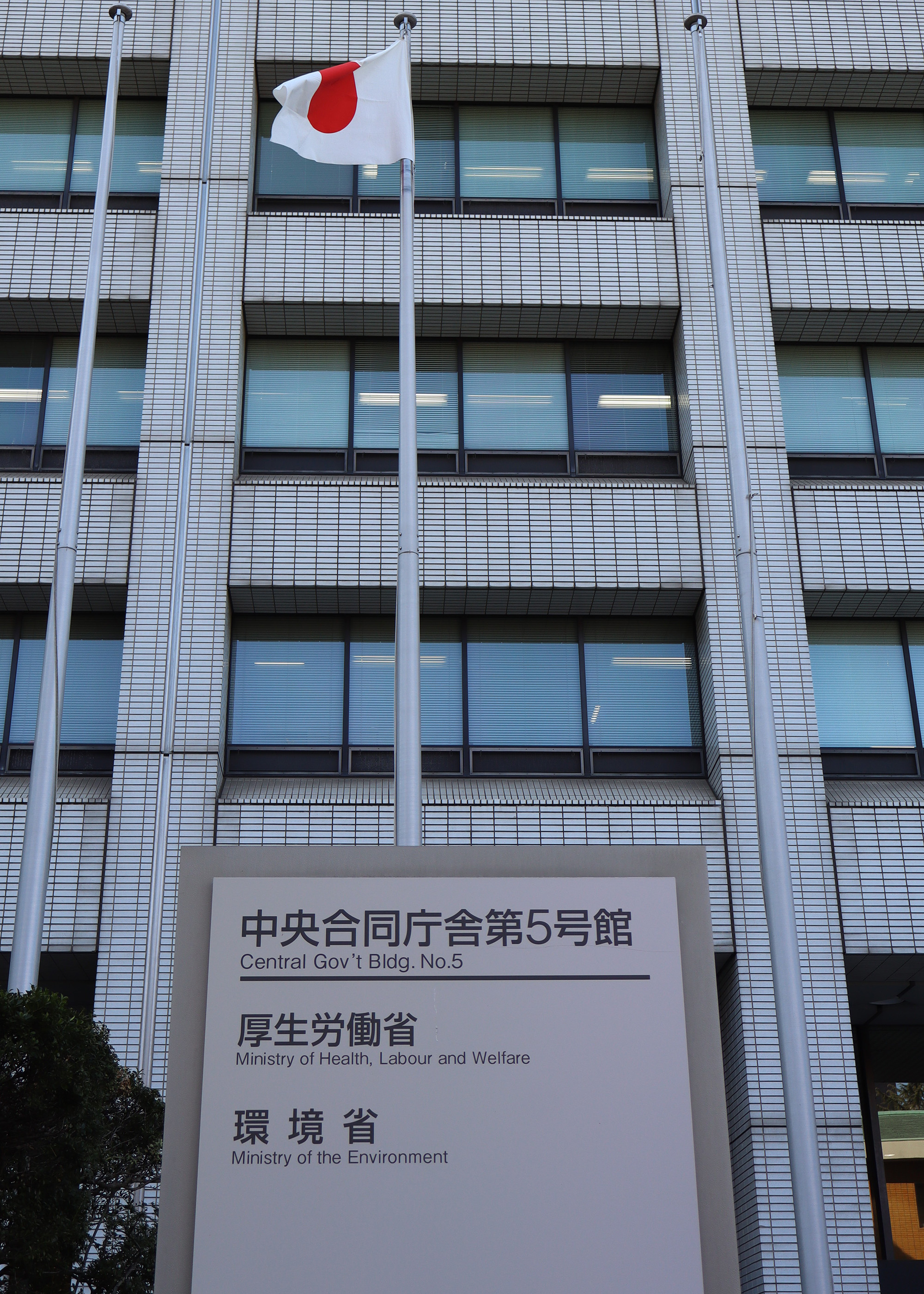
The Ministry of Health, Labour and Welfare is housed in an unremarkable building in Central Tokyo. It sets the prices for pharmaceuticals, medical devices and healthcare services nationwide. (Image credit: Nicoletta Lanese)
During its first revision in 2020, the incentive was extended to children under 6. In 2022, ear, nose and throat specialists (ENTs) newly qualified for the incentive; like pediatricians, they treat many acute infections in kids and tend to overuse antibiotics, insurance data suggested. That same year, doctors could start claiming the fee for ear infections and sinus infections.
"I see a tendency for pediatric clinics to avoid prescribing antibiotics, but I do see some ENT clinics prescribing antibiotics carelessly," Shibata, the clinic owner in Asakusa, Tokyo, told me. So ENTs seem to be a logical next target.
In 2024, a separate, facility-level incentive was introduced as a complement to the 800-yen incentive. It encourages clinics to submit data to a government database that tracks antibiotic use. If first-line, narrow-spectrum antibiotics make up a certain percentage of the clinic's overall prescriptions, that clinic earns extra money, Okubo explained.
Ultimately, the 800-yen incentive helped put AMR on the radar of doctors who didn't take it as seriously as experts like Kato, who told me "AMR is kind of my life's work." Kato and researchers like Okubo see the program as a success, although they pointed to room for improvement in antibiotic selection. Ministry officials like Sasaki and Aoki said the program is easy to implement and makes a difference. Clinic doctors like Shibata and Miyahara appreciate the incentive and use it consistently. All in all, at just $5 a claim, the incentive has been remarkably effective.
In speaking with experts in Japan and the U.S., I've learned that U.S. doctors have historically faced the same pressures and showed similar lapses in antibiotic use that Japanese doctors have. However, the U.S. does not have an incentive program like Japan's. Should it launch one?
In the next installment of this series, I'll explore a central feature of this problem: the motivations behind pediatricians' antibiotic misuse. What are they, and do those motivations differ between doctors in the U.S. and Japan? Answers to those questions will help determine whether a similar incentive might have the same impact in both places.
Homer's "Iliad" and "Odyssey" have inspired countless books, movies and works of art in the nearly three millennia since the epic tales were first written. This small, bronze sculpture, once attached to an ancient box, shows how the Greek epics influenced the aesthetics of the enigmatic Etruscans.
The Sleep and Death cista handle, which is in the collection of the Cleveland Museum of Art, features a set of bronze figurines welded to form a decorative handle for a cista — a small, cylindrical, lidded box used for a variety of purposes in ancient Egypt, Greece, Rome and Etruria, an ancient region in central Italy.
The handle is roughly 7.3 inches long and 7.2 inches tall (18.5 by 18.3 centimeters). The figurines represent Hypnos (the Greek god of sleep) and Thanatos (the Greek god of nonviolent death) bending to lift the body of Sarpedon, one of Zeus' sons who fought in the legendary Trojan War.
Sarpedon fought on the side of Troy, leading his men into battle against the formidable Greeks, according to Book XVI of the "Iliad." The Greek hero Patroclus entered the fray wearing Achilles' armor to trick the Trojans into thinking the greatest Greek warrior had joined the fight and scare off the Trojans. Sarpedon met Patroclus on the battlefield, and even though Zeus wanted to save his son, Sarpedon was mortally wounded. The Greeks stripped Sarpedon's body of his armor, but Zeus commanded Apollo to retrieve the corpse and deliver it to twin brothers Hypnos and Thanatos, "who bear men swiftly away" (translation by A. S. Kline).
The ancient sculptor of this piece "succeeded brilliantly in capturing the pathos and emotion in a scene from Homer's 'Iliad,'" Michael Bennett, former curator of Greek and Roman art at the Cleveland Museum of Art, said in a video. And on a technical level, the piece is much more detailed than a typical Etruscan handle; this one appears to be almost ergonomically designed, as Sarpedon's limply falling hair can be used as a finger grip, according to Bennett.
But the reason the Etruscans adapted the visual aesthetic of Homeric epic to many of their artworks, such as sculptures and wall paintings, is still unclear.
Because the Etruscan language is only partly understood, most information about this civilization, which arose around 900 B.C., comes from outside sources, such as the Greek historian Herodotus, who was writing several centuries later. Herodotus believed the Etruscans came from Lydia in Asia Minor, not too far south of Troy. Coupled with the later legend that Aeneas, a Trojan hero, wandered to Italy after the war and helped found Rome, some experts, such as linguist Robert Beekes, believe the Etruscans may derive from the Trojans or groups that fought on the Trojan side. However, a 2021 genetic study found the Etruscans may have been local.
The Etruscans may have used scenes from the Trojan War to decorate their vases and bronze boxes because they felt kinship with the antagonists in the "Iliad." But they also might have adopted the aesthetics because the Trojan War was a popular theme in Greek art at the time, and vases and other works decorated in this style reached the Etruscans through extensive trade networks. The Etruscans then put their own spin on the stories of the Trojan War, focusing in particular on scenes of death and brutality, classical archaeologist Larissa Bonfante argued in "Etruscan Myths" (2006, British Museum Press).
For more stunning archaeological discoveries, check out our Astonishing Artifacts archives.
During several recent conversations, people have told me that they've stopped checking their phones in the morning. Not because nothing was happening, but because everything was. They described the feeling as standing under a waterfall of perpetual bad news.
Globally, 40% report they at least sometimes or often do the same, the highest figure ever recorded. People shared consistent reasons for this: the news put them in a bad mood, they felt overwhelmed and powerless to act.
As a researcher in developmental psychology, focusing on social development and psychological well-being, I argue that news fatigue is not laziness, weakness or a generational decline in civic interest. It's the predictable response of a human brain meeting an environment it was never designed to navigate.
Wired for bad news
Long before smartphones or even the printing press, our cognitive architecture was shaped by a single problem: stay alive long enough to reproduce. Our ancestors whose attention drifted past the rustle in the grass left fewer descendants than those who froze, looked and listened.
The brain that paid attention to threats was the brain that survived.
This is the foundation of what psychologists call the negativity bias, one of the most replicated findings in cognitive science. Across decades of research, the human mind has been shown to weigh negative information more heavily than positive, attend to it faster and remember it longer.
A predator nearby mattered more than a beautiful sunset. The cost of missing a real threat was death, while the cost of overreacting was a few minutes of wasted vigilance. The asymmetry made this bias adaptive.
Here is the problem: the human brain has not changed since then. We are the same species as we were thousands of years ago. What's changed is the size of the world it's asked to scan for threats.
News fatigue is not laziness, weakness or a generational decline in civic interest. It is the predictable response of a human brain meeting an environment it was never designed to navigate. (Image credit: pzAxe via Getty Images)
Scanning the whole world
For most of human history, the threats our nervous system processed were local. A neighbouring tribe. A drought. The illness of a child we personally knew. Information about distant places would barely arrive, and if it did, it was mainly irrelevant.
In 2026, the same neurological system is being asked to absorb a war in one region, a financial shock in another, a climate disaster in a third and a violent crime in a fourth, all before lunchtime.
A study published in the scientific journal Nature Human Behaviour examined more than 105,000 real news headlines viewed nearly six million times. Each additional negative word increased click-through rates, while positive words had the opposite effect.
It's crucial to recognize the tactics meant to exploit our negative biases and create cognitive distance (Image credit: cbies/Shutterstock.com)
Recent studies suggest people around the world demonstrate measurably stronger physiological responses to negative news than to positive news. The body is reacting before the mind has decided whether the threat is relevant.
Some researchers have introduced a clinical framework for what happens in this instance called Problematic News Consumption (PNC) — a pattern of news engagement that results in preoccupation, dysregulation and disruption to daily functioning. In their 2022 study, the researchers found that 17% of American adults qualified as having severe levels of PNC. Among that group, 61% reported feeling unwell quite a bit or very much, compared with 6% of those who didn't.
For minority populations, news fatigue may be even more consequential.
Repeatedly witnessing harm directed at our own groups, even when we're not the immediate target, can have a significant psychological impact on people from the same group affiliation. For racialized communities, such as immigrants, the cognitive load could be even heavier, and the option to simply stop watching is much harder to exercise when the news is about their country of origin.
Looking away is not the fix
What's the solution to news fatigue? Well, it's not avoidance. A democracy depends on informed citizens.
Many adults already cite the spread of misleading information as a major source of stress. Withdrawing from accurate, trustworthy information only deepens the problem. We're wired to pay more attention to bad news, and that kind of content will find its way to us one way or another.
The fix is to manage the consumption and the sources.
Several approaches can help manage news fatigue and protect mental health. Containing news consumption to defined windows of time reduces the sense of being overwhelmed. Choosing depth over volume also matters: one carefully reported long-form article will inform you better than bursts of random, unreliable and emotionally loaded posts on Instagram.
There is also value in distinguishing between information and action — research on perceived control and stress consistently shows that the gap between awareness and agency is one of the strongest predictors of psychological distress. Identifying what you can actually do about what you read in the news, however small, regulates that response.
Finally, be wary of "rage bait" — intentionally provocative messages or content designed to boost engagement on social media platforms by eliciting negative reactions. Recognizing that certain content creators want to provoke rather than reflect reality creates useful cognitive distance.
The news will not become less "heavy." But our relationship with it can become more deliberate. Our brains were not built for this scale of input. They were, however, built to learn to adapt.
The refreshed lineup of Dell laptops has turned out to be even better than many of us hoped for, including the return of the XPS line — and right now, Dell's 'Days of Deals' sale is offering even better pricing than the Amazon Prime Day laptop deals I've been seeing.
Right off the top, you have the new Dell 16 Laptop for $499.99 (originally $1029.99), which is a better price for a Windows 11 Home laptop than just about any other model on Amazon that doesn't come with junk hardware inside. Instead, you get an eight-core AMD Ryzen 7 250 processor, 16GB RAM, and a 512GB SSD, far better than most sub-$500 laptops on sale for Prime Day.
There's more to explore at Dell.com, and I encourage you to check out their sale if you're in the market for new computer hardware, but I've pulled together my favorite laptop picks and configurations from the sale to help make it easier to find what you're looking for.
Today's best laptop deals at Dell.com
AMD Ryzen 7 250 | 16GB DDR5 RAM | 512GB SSD
I always think of the Dell 16 Laptop as the everyday workhorse for remote and hybrid workers. Likewise, If you or your child is off to college this September, then get ahead of the curve with this outstanding deal.View Deal
AMD Ryzen AI 5 340 | 16GB DDR5 RAM | 512GB SSD
The Dell 14 Plus is one of our favorite mid-range Windows laptops thanks to its excellent design and competitive specs. If I were looking for a decent everyday laptop for everything from work to demanding productivity applications, then I'd be very tempted by this deal.View Deal
Intel Core 5 320 | 8GB DDR5 RAM | 512GB SSD
Dell's answer to the Neo comes with a touchscreen display and a special price for students (matching Apple's $599). This is the cheapest XPS 13 yet and one with a smaller-than-A4 footprint.View Deal
Intel Core Ultra 7 258V | 32GB DDR5 RAM | 1TB SSD
Dell ships 32GB of RAM with this laptop and this is the optimal amount of memory for serious productivity/business workloads. 'Between great general computing performance for any college student or executive and long-lasting battery life, it's a solid mid-tier laptop and it's even cheaper than last year!View Deal
Dell's XPS 13 laptops are always worth keeping an eye out for during Prime Day, as we often see big price cuts for what are some of the best laptops you can currently buy. Right now, one of the biggest discounts you'll find is for this Snapdragon-equipped model, which also features an impressive 32GB of RAM. With a Snapdragon chipset, you'll get great performance and almost unbeatable battery life out of this model.View Deal
Save $350 on the Alienware Aurora 15 gaming laptop. This system strikes a sensible balance between gaming proficiency and affordability. For less than $1,000, it's a capable workhorse for both casual and professional tasks.View Deal
This Alienware Aurora 16 isn't the cheapest laptop on the market, but you're getting an Intel Core Ultra-7 240H chipset, RTX 5060 graphics card, 32GB of DDR5 RAM, and a 1TB SSD - superb specs for 1080p gaming. If you need a decent machine with a premium build, then this is a fantastic choice in the Dell Black Friday in July sale.View Deal
My love of all things Zelda is no secret to my colleagues, friends, and family. In fact, when The Legend of Zelda: Ocarina of Time (OoT) remake was first announced, our Global Editor-in-Chief, Marc McLaren, immediately messaged me to ask if I intended to take time off to play it (I do).
When the 40th anniversary of the franchise rolled around earlier this year, I was a little blue to see little-to-no news of a new game or remake, but my long-read ode to the lasting impact of Link's adventures through Hyrule at least gave me a distraction. Now, however, with months to go until I finally make my grand return to the Kokiri forest, my hype has reached new heights.
To pass the time, I plan to spend my money on, you guessed it, even more Zelda merchandise and Switch 2 accessories to accommodate my upcoming increase in playtime. In the current Amazon Prime Day deals, there's a wide selection of cases, storage, merchandise, and more to shop; I've included some of the best below, as well as the essential gear my gaming station will be decked with come OoT's release later this year. Not everything I've linked below is on sale, so look for the percentage-off badge if you're only looking for good deals.
Switch 2 Essentials
Nintendo
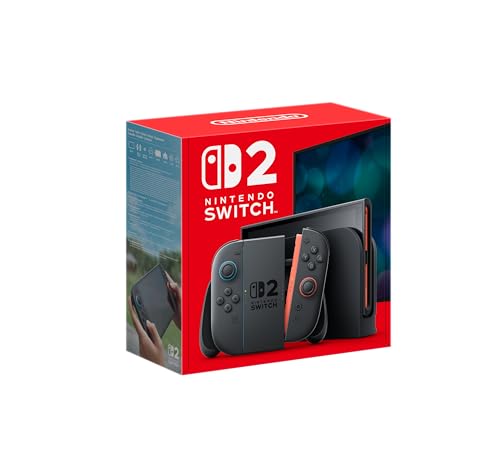
Switch 2 Console
PowerA
Advantage Wireless Controller for Nintendo Switch 2
SanDisk
MicroSD Express Card
Nintendo
SanDisk MicroSD Express Card for Nintendo Switch 2
If you're not caught up on the latest and greatest Switch generation Zelda games, you've got plenty of time ahead of the Ocarina of Time's remake releasing to pour some hours into adventure.
Nintendo
The Legend of Zelda: Tears of the Kingdom
Nintendo
The Legend of Zelda: Breath of the Wild
Nintendo
The Legend of Zelda: Skyward Sword
Nintendo
The Legend of Zelda: Echoes of Wisdom
Nintendo
Hyrule Warriors: Age of Imprisonment
Nintendo
Hyrule Warriors: Age of Calamity
Nintendo
The Legend of Zelda Link's Awakening
Essential Zelda merch
From Lego sets to card games and novelty toys, there's a lot of great Zelda merch out there. I own a lot (really, an embarassing amount) of the below merchandise already; join me in my submission to capitalism's whim.
LEGO
The Legend of Zelda: Ocarina of Time – the Final Battle
LEGO
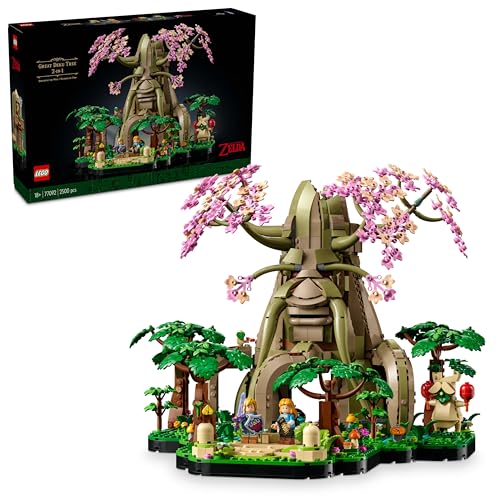
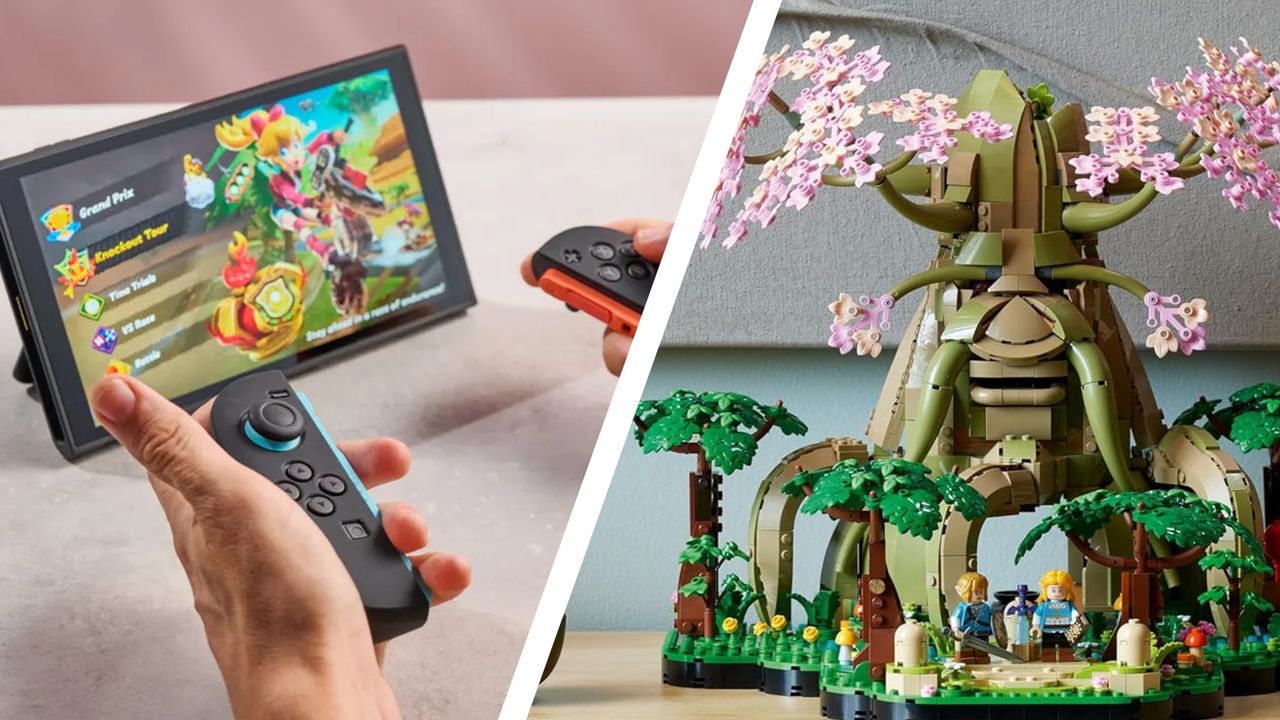
Great Deku Tree 2-In-1
LEGO
Super Mario Game Boy
Paladone
Bokoblin Chest Light
USAopoly
The Legend of Zelda Chess
TAMASHII NATIONS
The Legend of Zelda Réplique Proplica Master Sword 105 Cm Black
Well, I’m not here to tell you that Amazon’s Prime Day makes everything better. But the discounts certainly don’t hurt.
As usual, we’re doing our best to surface the best Prime Day tech deals. And here, we’ve pulled together the biggest discounts happening not just on laptops, but also on keyboards, mice, webcams, or other worthwhile PC accessories. And since Prime Day has counter-deals running at other retailers like Best Buy (and its Tech Fest Sale), there are also laptop deals for non-Amazon shoppers alike.
The best deals on MacBooks
The days of multi-hundred-dollar discounts on MacBooks are behind us for now, but the base 14-inch MacBook Pro with an M5 chip for $1,549 ($150 off) at Amazon and Best Buy is still a solid deal. It’s powerful enough for the average content creator, comes with 16GB of RAM and 1TB of storage, and has lots of ports. Read our review.
Apple MacBook Air (M5)
Apple’s 2026 MacBook Air has an M5 chip and starts with 512GB of storage that’s significantly faster than previous generations. It’s still as excellent as ever despite a higher base price. Read our review.
The 14-inch MacBook Pro with an M5 Pro chip (15-core CPU / 16-core GPU), 24GB of memory, and 1TB of storage is $2,034 (around $165 off) at Amazon and $2,049 at Best Buy. It’s a pretty nice step-up model from the standard M5 MacBook Pro, with a bit more RAM, a more powerful chip, and faster Thunderbolt 5 ports.
The best deals on Windows laptops
Microsoft Surface Laptop, 13-inch
Microsoft’s slightly smaller, entry-level Surface Laptop trims some of the size and a few features from its bigger 13.8-inch counterpart, but it maintains excellent battery life and solid performance. It’s just a shame it’s price went up. Read our review.
Microsoft’s latest Surface Pro is smaller, with a new design and updated keyboard. It’s powered by Qualcomm’s Arm64 Snapdragon X Plus chip. Read our review.
The Lenovo IdeaPad Slim 3x was one of the laptops I tested against the MacBook Neo and… it got smoked. But a 512GB config for $449 ($251 off) at Walmart? Not bad. The speakers are an assault on your ears and the trackpad ain’t great, but if you can live with those shortcomings, you get a decent laptop with a competent Snapdragon X processor and marathon battery life. Just read our review and be aware of its shortcomings.
Like the Lenovo above, the Acer Aspire 14 AI is another MacBook Neo contender I tested that’s on sale. It’s $589.99 (about $288 off) at Amazon, exclusively for Prime members. Best Buy has it for anyone, sold via Acer, for $599.99. Let me set your expectations: The screen on this laptop is pretty washed out, the speakers are tinny, and the build quality feels cheap. But what you’re getting a deal on is a great Intel Core Ultra 7 256V “Lunar Lake” processor that’s a solid performer while also being quite power efficient. It also has plenty of ports (including Thunderbolt 4) and can even do some light gaming.
For a higher-end Acer offering, the Swift X 14 AI is selling for a new low of $1,559.99 ($140 off) at Amazon for Prime members. The 14-inch laptop has a 2880 x 1800 / 120Hz OLED, AMD Ryzen AI 7 350 CPU, RTX 5060 discreet graphics, 32GB of RAM and 1TB SSD. It even has a haptic trackpad that should be a nice upgrade over Acer’s mechanical ones that can be a bit basic.
Asus Zenbook A14
Asus’s Zenbook A14 is a bit of a MacBook Air wannabe, but it’s a compelling alternative if you value a superlight Windows laptop with long battery life. The last-gen 2025 model sports an Arm-based Qualcomm Snapdragon X Plus chip, a nice 14-inch OLED display, and a sleek textured beige finish.
Asus’ ROG Zephyrus G14 is the go-to choice for a portable gaming machine that’s great at regular laptop duties. It’s got a lovely OLED display, great keyboard and trackpad, and solid battery life. There’s a new Intel model that’s much pricier, but the 2025 version with AMD chips is still a great choice.
The 2025 Asus ROG Zephyrus G16 is $1,574.99 ($575 off) at Best Buy. The larger version of the Zephyrus twins sports a 240Hz OLED display and a thin profile to make it travel friendly. This configuration includes an Intel Core Ultra 9 285H CPU, RTX 5070 GPU, 16GB of RAM, and 1TB SSD.
HP’s Omen 16 gaming laptop from last year is $1,619.99 ($600 off) at Best Buy through a third-party seller. The 16-inch laptop is configured with an AMD Ryzen 9 8940HX processor, RTX 5060 graphics, 32GB of RAM, and 1TB SSD. Not bad for around $1,500, but while its screen’s 144Hz refresh is nice, the resolution is only 1920 x 1200.
For a little more money, you can get a Lenovo Legion 5i at Walmart for $1,589 ($261 off). This 15-inch Legion has an Intel Core i9 14900HX CPU, RTX 5070 GPU (the 8GB VRAM version), 16GB of RAM, and 1TB SSD. You’re getting less RAM than the HP Omen deal, but in exchange it’s got a better GPU and 2560 x 1600 OLED display with 165Hz refresh rate.
Acer Predator Helios Neo 16 AI (2025)
An affordable mid-ranger from Acer running RTX 5070 or 5070 Ti graphics, a 16-inch 240Hz display, and lots of ports.
Acer’s Nitro V 16S AI gaming laptop is selling for $1,099.99 ($300 off) at Amazon, exclusively for Prime members. It’s got an AMD Ryzen 7 260 CPU, RTX 5060 GPU, 32GB of RAM, and 1TB SSD. The specs are close to the Asus ROG Zephyrus G14 deal above, but it’s much chunkier, has more RAM, and its display is larger but a lower-res LCD.
The best deals on keyboards, mice, and other PC peripherals
Moft has a variety of deals on its origami-style cases and stands. You can get its folding 2-in-1 Laptop Carry Sleeve, a sleek laptop case that doubles as a portable stand, for $51.96 ($13 off) at Amazon in four sizes and up to 11 different colors. Or, if you don’t mind some adhesive, the Moft Laptop Stand in select colors is $19.99 ($5 off) at Amazon. The super thin attachment sticks to the bottom of your laptop to give you a fold-out stand anywhere you go.
Logitech MX Master 3S
The MX Master 3S is a favorite among many Verge staff members because of its comfort and customization. It can connect via Bluetooth, via its included 2.4GHz receiver, or wired with its USB-C cable.
The fairly new Keychron V5 Ultra mechanical keyboard with Silk POM red linear switches is $107.99 ($12 off) at Amazon. The near-full-size 96-percent layout board has an incredibly long battery life thanks to its ZMK-based firmware, and it supports a fast 8,000Hz polling rate via its 2.4GHz wireless connection. Its plastic case isn’t as nice as ones with a metal chassis, but it’s a great no-nonsense keyboard for the money. Read our review.
Ugreen’s Dock and Stand for the Mac Mini M4 / M4 Pro is $49.99 ($40 off) at Amazon, exclusively for Prime members. The dock sits below your Mac Mini and plugs in to a rear USB-C port, dramatically expanding the port offerings of your tiny desktop and making your power button more accessible with a tiny lever. It has SD / microSD card slots and two USB-A ports on the front, and three USB-C and three USB-A ports on the rear. Plus, inside is an M.2 SSD slot for extra built-in storage. (You’ll have to BYO SSD.)
LG’s 32-inch UltraGear 32GX850A-B OLED gaming monitor is $684.50 ($600 off MSRP) at Amazon, exclusively for Prime members. LG also has it for anyone for a slightly higher $699.99. The dual mode 4K OLED supports a fairly high 165Hz refresh rate but can dip down to 1920 x 1080 resolution to output a super fast 330Hz for specialized uses like competitive gaming.
For a much more affordable and down to Earth OLED, check out the 27-inch Acer Predator Gaming Monitor X27U, selling for $314.99 ($235 off) at Amazon, exclusively for Prime members. It’s a sweet spot of 2560 x 1440 resolution that isn’t as demanding on games while supporting a high 240Hz refresh.
Elgato Stream Deck MK. 2
The MK.2 version of the standard Stream Deck comes with 15 programmable buttons, a swappable faceplate, and a detachable stand.
This mechanical keyboard is inspired by the original Xbox, with a translucent green color scheme and two large customizable buttons. Along with Bluetooth support, it offers a standard tenkeyless layout with clicky hot-swappable Kailh Jellyfish X switches.
Hue’s latest smart bulbs will be able to run Zigbee and Thread concurrently. | Photo by Jennifer Pattison Tuohy / The Verge
Philips Hue has announced a connectivity upgrade for its Matter-over-Thread-enabled smart bulbs that will allow them to run both Thread and Zigbee at the same time. The change means you can connect compatible Hue bulbs and fixtures directly to a Matter ecosystem - Apple Home, Amazon Alexa, or Google Home - while keeping them linked to a Hue Bridge and the Hue ecosystem.
"Today you cannot have Zigbee and Thread running at the same time, so when you commission it, you have to choose," Philips Hue CTO George Yianni told The Verge. "If you want to then later switch, you have to reset it."
There are some sights in this world that no photograph can truly capture.
Think of the rolling ribbons of the aurora in the northern and southern skies, the depth and breadth of the Grand Canyon, or the sense of immersion when diving on the Great Barrier Reef. Astronauts will tell you that not even large-format cameras can truly capture the blackness of outer space or the majesty that is our planet as seen from orbit or beyond.
It's not every day that a new one of those sights debuts. But such will be the case on Friday, November 13, when the California Science Center in Los Angeles finally reveals the launch-pad-like display of the space shuttle Endeavor inside the new Samuel Oschin Air and Space Center.
SAVE $490: As of June 24, the ASUS ROG Strix G16 (2025) is down to $2,099.99 at Amazon. That’s $490.01 off a high-end gaming laptop built for serious gaming and heavy workloads.
Prime Day is officially here, and if you've been waiting for the right moment to upgrade your gaming laptop, this might be it. Amazon has cut the ASUS ROG Strix G16 (2025) to $2,099.99, knocking nearly $500 off the regular price and bringing the high-performance gaming laptop down to its lowest price this year.
This is a high-end gaming laptop built for people who want serious speed without waiting around for things to load. It runs on Intel’s Core Ultra 9 processor paired with NVIDIA’s RTX 5070 Ti graphics, which basically means it can handle demanding games, creative work, and heavy multitasking without slowing down. You also get 32GB of memory and a 1TB solid-state drive, so apps open quickly, and there’s plenty of space for a full game library.
On the experience side, the 16-inch display is designed for fast, smooth gameplay, which helps keep motion clear in fast-moving games. It also has an advanced cooling system designed to maintain steady performance during long gaming sessions instead of throttling under pressure.
The RGB lighting is mostly for looks and customization, but you can switch it off or tone it down if you want a more simple, work-friendly setup.
With Grand Theft Auto 6 dropping in November, time is running out if you want to play the previous games in the series before diving in. If you own a modern console, there aren't that many to catch up on, as only a few of the older ones have been ported.
Still, you can play through the whole of Grand Theft Auto 5, the previous entry, and dive into Grand Theft Auto Online, which has its own narrative content and is included free of charge. There's also Grand Theft Auto: The Trilogy – The Definitive Edition, which contains remasters of not just one but three fan-favorite games.
They're not the most accomplished remasters on the planet, but given that Grand Theft Auto: Vice City, which shares a setting with the upcoming GTA 6, I would consider it an essential play before the new game arrives.
Prime Day is officially here (yes, Amazon bumped the official sale up to June this year), and it's my pleasure, as well as journalistic duty, to give you the deets on where to find the best sex toy deals.
As I've noted in years past, buying sex toys on Amazon is a gamble. If you don't know what to look for, you could end up with something that does more harm than good (think porous jelly materials or chemical-laden vibrators). On top of that, Amazon isn't allowed to promote sex toys on Prime Day the way it does for TVs and air fryers, which means you have to dig to find the discounts.
Luckily, you have me to do the research for you. To be transparent, while the official sale is live, the best sex toy deals right now aren't actually on Amazon — they're hiding at competing sales from trusted retailers and brands like Lovehoney, LELO, Bellesa Boutique, and Hello Nancy.
This year, the pickings on Amazon are slim, but Tracy's Dog is almost always marked down. It's one of my favorite sex toy brands for people who crave intense clitoral stimulation but aren't willing to pay more than $50. This is one of the only times I feel confident saying you'll get more bang for your buck.
Right now, you can get Tracy's Dog OG Lick (also known as the Juicy Clitoral Licking Vibrator) for $29.99 at Amazon. It doesn't have a "Prime Day deal" badge or even a "discount" listed, but $29.99 is a good deal. For context, it normally retails for $45.99 on the official Tracy's Dog website, so you're saving 35% by grabbing it on Amazon instead.
The OG Lick includes a remote and has seven licking modes and 10 vibration patterns. It's also waterproof and super easy to use hands-free (I actually love using mine while I'm giving my partner head; it's fun for everyone involved). Note: This is a "licking" vibrator; if you want suction, I recommend buying the OG Sucking Vibrator (which isn't available on Amazon for some reason).

 Login