A major study found that common dementia risks may have a much stronger impact on women’s brains than previously recognized. Women may not only experience some dementia risk factors more often than men, but those risk factors may also have a stronger effect on their cognitive health, according to new research from the University of [...]
We’re used to a lot of different natural things falling out of the sky. These can include snow, rain, and sometimes even frogs (yes, really). All of these relate to weather phenomena. Far more exotic things fall from the sky that are not related to weather. Earth is pelted by about 14 tons of micrometeoritesContinue reading "A meteorite impact may have once rained gold on Western Australia – new study"
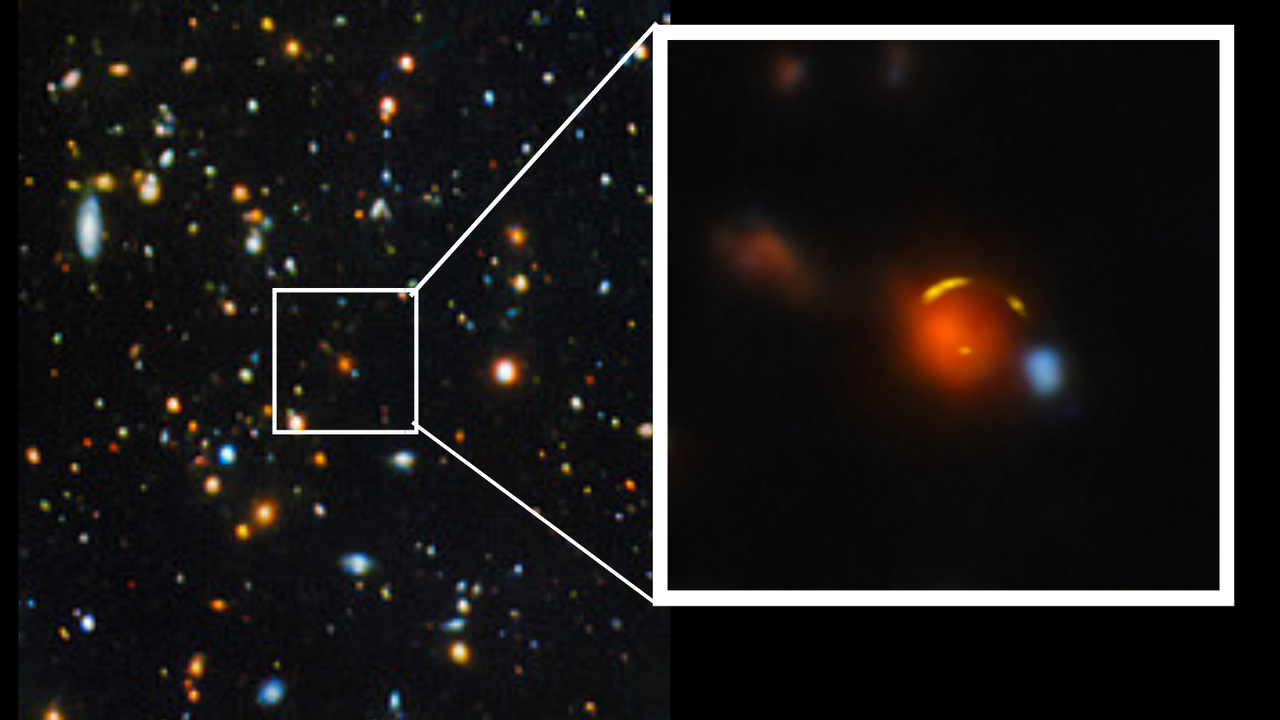
Astronomers have traced a high-energy "ghost particle" back to Shadow Blaster, a star-forming galaxy located 11 billion light-years away. That means that this particle, a neutrino, had been travelling to us ever since the 13.8 billion year-old universe was just around 3 billion years old.
The discovery offers the first evidence that star-forming galaxies like Shadow Blaster play a significant role in populating the universe with mysterious high-energy cosmic ghost-neutrinos. These particles get their spooky nickname because, possessing virtually no mass and no electric charge, they pass through matter with little to no interaction while moving at nearly the speed of light. For context, as you read the preceding sentence, over 65 billion neutrinos streamed through every square inch of your body; that's about 100 billion per square centimeter.
Despite the difficulty associated with detecting such particles, humanity has been spotting neutrinos since the 1960s, but only a few sources of these particles have been identified. Neutrinos are the second most abundant particles in the cosmos after photons, particles of light, and the identified sources are nowhere near enough to account for this abundance. That has prompted the search for other, hidden neutrino sources, especially those which can accelerate neutrinos to high energies. Now that hunt has led to the identification of the incredibly bright Shadow Blaster galaxy, officially designated JCMT0402−0424, which shines in infrared, as a potential neutrino source.
The galaxy JCMT0402−0424, or "Shadow Blaster" identified as a source of a high-energy neutrino detected in 2021. (Image credit: International Gemini Observatory/NOIRLab/NSF/AURA/ALMA (ESO/NAOJ/NRAO))
"Shadow Blaster possesses the kind of dense, gas-rich environment that theoretical models have long suggested could efficiently produce high-energy neutrinos," Yuji Urata of MITOS Science Co., LTD. in Taiwan said in a statement. "If confirmed, Shadow Blaster would be the first-ever individual dusty star-forming galaxy directly linked to a high-energy neutrino event."
Thus far, no other credible candidates exist as potential sources for this high-energy neutrino, designated IC 210922A.
Chasing ghosts
Astronomers were alerted to the existence of IC 210922A half a decade ago when this high-energy neutrino event was detected by the IceCube Neutrino Observatory located in Antarctica. This set the astronomical community scouring space in the direction of the constellation Eridanus for potential sources for an electromagnetic counterpart to this event with a range of telescopes. This turned up no convincing gamma-ray, X-ray or optical counterpart for the neutrino detection, nor could any gamma-ray burst, supernova, or tidal disruption event (in which a black hole violently shreds a star) be linked with IC 210922A.
Urata and colleagues began their personal search with the James Clerk Maxwell Telescope (JCMT), operated by the East Asian Observatory, and the Submillimeter Array (SMA), discovering Shadow Blaster, a galaxy in the right position and with the right level of brightness to be associated with IC 210922A. The team followed this up with an investigation using the Atacama Large Millimeter/submillimeter Array (ALMA), a collection of 66 radio wave antennas in northern Chile.
The detection of this galaxy was possible because it is strongly gravitationally lensed. Gravitational lensing is a phenomenon that occurs when an object of great mass comes between Earth and a distant background source, curving the fabric of spacetime. As light from the background source navigates this curvature, its path is curved. This results in light from the lensed source arriving at different times to our telescopes, causing it to be amplified.
In the case of Shadow Blaster, before the team could learn anything about this distant galaxy, they had to discover more about the object serving as the intermediate gravitational lens, specifically what type of object it is, its mass, and its distance from us. To do this, they turned to the Gemini North telescope and its Gemini Multi-Object Spectrograph (GMOS) and the Gemini Near-InfraRed Spectrograph (GNIRS) instruments.
With the model of a gravitational lens determined, the team discovered that Shadow Blaster is a galaxy with an extremely compact heart filled with dense clouds of gas and dust that is fueling an intense burst of star formation. A region such as this has long been theorized to serve as a powerful particle accelerator. Because Shadow Blaster lacks a feeding supermassive black hole, this research shows that these regions can still serve as cosmic particle accelerators when they harbor sleeping black holes and in the absence of the powerful jets that erupt from active galactic nuclei (AGNs).
As for the overall population of neutrinos, this research could help account for that too. Intensely star-forming galaxies, or starburst galaxies, are believed to have been prevalent around 10 billion years ago in the early universe. Thus, these galaxies could have been producing a multitude of high-energy neutrinos. Proving that may prove difficult, however, as astronomers don't have the good fortune to find all of these galaxies lurking behind a gravitational lens, meaning they may be too faint and distant to study.
"Our analysis suggests that this population could contribute up to roughly 20% of the observed diffuse neutrino background measured by IceCube," Urata concluded,
The team's research was published on Wednesday (June 17) in the journal Nature Astronomy.
The aging brain may be far more capable of growth and improvement than scientists once believed. A large three-year study from researchers at The University of Texas at Dallas’ Center for BrainHealth (CBH) is challenging a long-standing assumption about aging. The findings suggest that mental sharpness is not destined to decline over time and that [...]
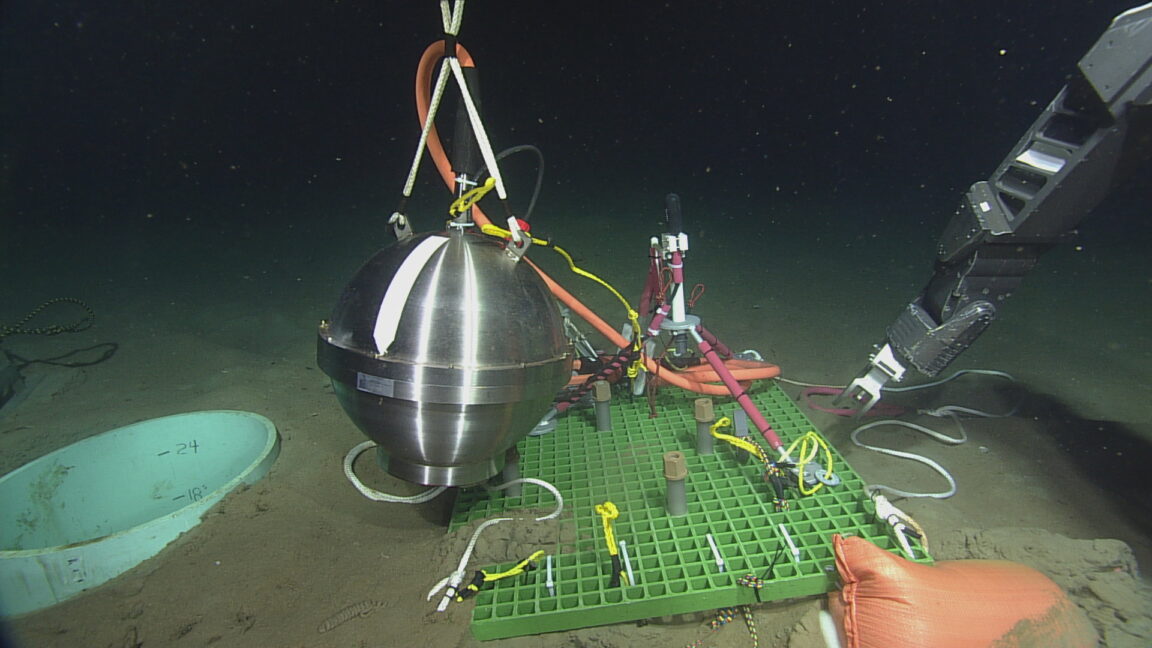
In May, the federal government announced without warning that it would take apart a network of ocean monitoring systems that it had spent over $350 million to build. No reason was given for the decision to shut down the Ocean Observatories Initiative (OOI), but suspicion immediately focused on the network's role in tracking climate change.
But the OOI also provides data that's useful for weather forecasting and fisheries management, leading to widespread opposition. Today, it appears that the opposition has won, as the government will announce that it's reversing the decision. The big remaining question is how much damage the OOI took during the intervening month.
As of now, there is no formal statement available from the federal government. However, The New York Times reports that the decision will be announced later today, and Ars received a statement from Zoe Lofgren, the ranking Democrat on the House Science Committee, indicating that the decision has been made.
Even small asteroids lead complex lives. During its flyby of the asteroid Donaldjohanson last year, NASA’s Lucy spacecraft revealed the asteroid to be a wobbly, peanut-shaped body that has undergone a lot of activity in its relatively short history. Formed as fragments coalesced after a violent collision 155 million years ago, the asteroid was transformed by the small but inexorable force of the Sun’s radiation, all while retaining signs of the brief presence of liquid water in its distant past.
Zooming through the main asteroid belt toward one of the Jupiter Trojan asteroid groups, the Lucy spacecraft collected the first close-up images and other data at Donaldjohanson on April 20, 2025, as it passed 650 miles away from the asteroid. The data revealed that, instead of spinning simply around one axis like most other asteroids and planets, Donaldjohanson has a more complicated two-axis rotation. Scientists also saw Donaldjohanson’s peanut shape and the craters and ridges on its surface.
A timelapse video made from images taken by NASA’s Lucy spacecraft as it approached the asteroid Donaldjohanson on April 20, 2025. The L’LORRI (Lucy Long Range Reconnaissance Imager) instrument, the spacecraft’s high-resolution black-and-white imager, collected these images over two hours as the spacecraft rapidly closed in on the asteroid from an initial separation of more than 58,000 miles (93,000 km), until the spacecraft passed a mere 650 miles (1000 km) from the 5-mile- (8 km-) wide asteroid.
NASA/Goddard/SwRI/JHU-APL
Lucy’s encounter with the asteroid was planned as a dress rehearsal for the spacecraft and mission team before its primary asteroid encounters, which begin with Lucy’s flyby of the Trojan asteroid Eurybates on Aug. 12, 2027. The instruments performed as expected, and, as a bonus, scientists got a rare opportunity to study a previously unexplored asteroid up close and to compare it to two asteroids with similar compositions but different histories: Bennu, the target of NASA’s OSIRIS-REx sample-return mission, and Ryugu, the site of JAXA’s (Japan Aerospace Exploration Agency) Hayabusa2 sample-return mission.
With Earth-based telescopes, observers saw fluctuations in the light Donaldjohanson reflects, regular patterns of peaks and valleys, typical of an elongated object rotating once every 10.5 Earth days. But Lucy’s data revealed another pattern: Donaldjohanson appears to be rotating like a wobbly top. Paper authors reported that the asteroid rotates end-over-end once every 10.5 Earth days, and wobbles back and forth around its long axis once every 26.5 days.
The asteroid Donaldjohanson is shown slowly rotating in a tumbling, non-principal axis motion, with its angular momentum vector and rotation axes indicated. The surface is colored by gravity slope, which measures the angle between the local surface and the direction of gravity. Higher values (warmer colors) indicate steeper terrain relative to the local gravitational pull. Regions with limited stereo image coverage have been masked out where the shape model is less well constrained.
Kel Elkins/NASA’s Science Visualization Studio/DLR
Peanut shape
While the Earth-based observations hinted at Donaldjohanson’s elongated shape, the Lucy flyby revealed a “bilobate” structure: two lobes connected by a neck, like a peanut. These lobes are likely two fragments from an asteroid collision that gently came together afterward by their mutual gravity.
Donaldjohanson likely rotated at least 10 times faster when it formed, having slowed to its current rate in the last 20 to 60 million years, the team estimates. As it slowed, the balance between the centrifugal force pushing things apart and gravity pulling things together changed and loose rocky material slid down slopes creating the worn-down appearance of many craters, as the flyby images showed.
The paper’s authors say that the asteroid’s slowing rotation is likely caused by a subtle consequence of solar heating known as the YORP effect. Each part of the asteroid’s Sun-warmed surface radiates heat away as infrared light, and that radiation imparts a tiny recoil force to the surface. Because the asteroid’s shape isn’t symmetric, this results in a net torque, or twist, that can change the asteroid’s rotation. Thus, YORP can slow asteroid spins down or speed them up, as in the case of Bennu (once every four hours) and Ryugu (once about every seven hours), which both likely used to rotate much slower than they do today.
Fleeting water
As it passed by Donaldjohanson at 30,000 mph, Lucy recorded the signatures of iron-rich clay minerals on the surface. These clays must have formed in the distant past with the help of liquid water. However, the exposure must have been brief, Lucy scientists concluded, because iron in clays tends to be replaced with other elements, such as magnesium, as water lingers.
Indeed, scientists saw magnesium-rich clays at Bennu and Ryugu, which suggested prolonged water exposure, perhaps lasting millions of years, when they were still part of larger asteroids.
This difference in water exposure history, and other characteristics, may mean that the parent bodies of these asteroids formed at different times or in different regions of the solar system before relocating to the main belt.
Compare, contrast
Donaldjohanson is thought to be made from rocky remnants of a larger, carbon- and water-rich asteroid that collided with another object in the main asteroid belt. Bennu and Ryugu are thought to have formed in the same way and in the same region.
But Donaldjohanson is different. At 155 million years old, it is much younger than Bennu and Ryugu, which formed 1 to 2 billion years ago. Donaldjohanson also has remained in the asteroid belt since birth, while its wandering cousins migrated into orbits around the Sun that bring them close to Earth’s orbit about once a year (which made them perfect close targets for sample return missions).
During its April 20, 2025, encounter with the main-belt asteroid Donaldjohanson, NASA’s Lucy spacecraft discovered evidence for iron-rich clays on the surface using its infrared spectrometer. These clays, which are similar to those found in carbon-rich meteorites such as QUE 97990, indicate that water was briefly present in the asteroid during the distant past.
NASA/Goddard/SwRI/Dan Gallagher
“It’s helpful for scientists to compare Donaldjohanson with asteroids like Bennu and Ryugu, which are seemingly similar asteroids, because every subtle difference is another clue to our origin story,” said Simone Marchi, Lucy deputy principal investigator and lead author of the study at the Boulder, Colorado, office of the Southwest Research Institute.
“Once we start learning more about the Trojans, a completely different population of space rocks with very different histories, our understanding of solar system formation is destined to be challenged,” said Marchi.
Named after a fossilized skeleton of a human ancestor discovered in Ethiopia in 1974, NASA’s Lucy will be the first mission to explore Jupiter’s Trojan asteroids, a population of well-preserved space rocks that formed early in our solar system’s history and could help scientists understand how the planets formed and moved around before settling in their current configuration.
Lucy’s principal investigator is based out of the Boulder, Colorado, branch of Southwest Research Institute, headquartered in San Antonio. NASA’s Goddard Space Flight Center in Greenbelt, Maryland, provides overall mission management, systems engineering, and safety and mission assurance. Lockheed Martin Space in Littleton, Colorado, built the spacecraft. Lucy is the 13th mission in NASA’s Discovery Program. NASA’s Marshall Space Flight Center in Huntsville, Alabama, manages the Discovery Program for the agency’s Science Mission Directorate in Washington.
For more information on NASA’s Lucy mission, visit:
Zooming through the main asteroid belt toward one of the Jupiter Trojan asteroid groups, the Lucy spacecraft collected the first close-up images and other data at Donaldjohanson on April 20, 2025, as it passed 650 miles away from the asteroid. The data revealed that, instead of spinning simply around one axis like most other asteroids and planets, Donaldjohanson has a more complicated two-axis rotation. Scientists also saw Donaldjohanson’s peanut shape and the craters and ridges on its surface.
Researchers at Binghamton University have applied a 70-year-old theory of information to the viral word game Wordle, revealing how a carefully chosen first guess can dramatically improve a player’s chances of solving the puzzle.
It’s not the kind of thing astronomers expect to see while observing the powerful effects of a distant supermassive black hole: an unprecedented UFO sighting.
However, that’s precisely what one group of scientists now reports in a preprint paper, who detail the successful detection of one of the strongest UFOs—a black hole phenomenon otherwise known as “ultra-fast outflows”—that astronomers may have ever seen.
The landmark detection was made possible with the XMM-Newton space observatory and NuSTAR X-ray telescope, which allowed the researchers behind the discovery to observe a luminous quasar with origins that date back to “cosmic noon,” revealing a pair of outflow wind components being blasted from the black hole in question.
These winds become known as ultra-fast outflows (UFOs) when their strength propels them to greater than ten percent of light speed, and astronomers currently believe they are an important part of what helps black holes regulate their growth, which may also hold for their host galaxies.
One way this occurs is that UFOs help to heat galactic gases that give rise to star formation, a quenching process that most astronomers believe occurred during a period called “cosmic noon,” which occurred between 1.6 and 3.5 billion years after the birth of the universe.
Cosmic Fingerprints of Powerful UFOs
Astronomers can detect ultra-fast outflows based on the “dips” they create in their powerful gusts, which are caused by ionized iron present in their outflow gases. These gases also absorb X-rays along their path away from their black hole originators, which leave “fingerprints” in the form of absorption features that are detectable using X-ray telescopes.
Significantly, these “dips” manifest as a blueshift since they are shifted to higher energies as they move at such high speeds (again, roughly 10% of the speed of light). From the blueshifted energy signatures they comprise, astronomers can determine not only the presence of UFOs, but also the wind speed of their gusty outflows.
In the past, most detections of these high-powered cosmic phenomena have relied on gravitationally lensed quasars. These celestial objects occur when a galaxy or similar feature closer to Earth appears in front of them, magnifying the quasar’s light and significantly brightening its luminosity from our Earthly perspective.
However, lensing of this variety can also present problems, and so astronomers led by Giorgio Lanzuisi of INAF Bologna designed a special system to target more than a dozen hyper-luminous quasars at cosmic noon, as a means of getting a better feel for the dynamics of non-lensed quasars.
“WISSHFUL” Thinking
WISSHFUL is an XMM-Newton multi-year heritage program that Lanzuisi and his colleagues designed for this purpose, whose initial target became a quasar designated WISSH13, whose redshift at 3.294 marks the object’s existence as it appeared approximately 2 billion years after the Big Bang.
WISH13’s black hole also weighs in at close to 2 billion times that of our Sun, which causes it to shine far brighter than normally expected for an object of its estimated mass.
Their work began in the autumn of 2024 by combining observations from XMM-Newton and NuSTAR initially obtained in 2017. From these X-ray images of WISSH12, a pair of distinctive absorption features became evident, which the team determined to have been generated by two separate sources from within the same ultra-fast outflow.
These components were found to travel at different speeds: one moving at close to 30% of the speed of light, while the other at only about 10% of light speed. The slower of these two appears to have been an enduring component of the UFO, while the faster one showed signatures that indicated a more recent appearance. This could mean that it emanates from events that are shorter in duration.
By matching theoretical predictions of a layered wind structure surrounding the black hole, the researchers say their observations align with models that indicate a fast-moving inner “spine” launched from the accretion disk’s innermost regions. Meanwhile, a slower outer “sheath” is also believed to emanate farther from the black hole. The combined outflow components produce an estimated 21 to 24 solar masses of material annually.
The Most Massive UFO Ever Observed?
Such figures, the team says, represent what is believed to be among the most massive and energetic ultrafast outflows ever observed, a discovery which also marks the highest-redshift ultrafast outflow yet detected in a non-lensed quasar.
Despite their remarkable energetic output, the team says these outflow winds seem to conform to the same essential relationships observed in active galaxies much closer to Earth, suggesting that the processes driving these outflows have remained remarkably consistent across cosmic time.
Going forward, the team says they hope to make additional observations of these powerful cosmic phenomena with help from the new Athena X-ray mission, which they say could help uncover similar winds in even more distant quasars.
The team’s discoveries were detailed in a recent paper, “The WISSHFUL program: the highest redshift UFO discovered in a non-lensed QSO,” which appeared at the preprint arXiv.org server.
Micah Hanks is the Editor-in-Chief and Co-Founder of The Debrief. A longtime reporter on science, defense, and technology with a focus on space and astronomy, he can be reached atmicah@thedebrief.org. Follow him on X @MicahHanks, and at micahhanks.com.
Look at a windowsill after a week without cleaning and you are looking at a material document. The grey film gathering there is not simply grime from outside. It is a composite, built layer by layer from everything that moves through the space: the people who live in it, the air that passes through, the products used, the seasons outside. Analysed carefully, household dust can be read almost like a log. Researchers have learned to do exactly that.
We are writers, not chemists or environmental scientists. What follows is a reading of several years of research into what dust is, not guidance on what to do about it.
What the mixture contains
House dust is usually described first in terms of skin. The figure most commonly cited is that humans shed something in the order of millions of skin cells per day — one widely cited estimate puts it at 500 million, with the outer layer renewing roughly every two to four weeks. Some of that settles. But the claim, still circulating widely, that household dust is mostly dead skin has been questioned by researchers who point out that skin cells account for a meaningful portion of the organic fraction, not the whole of the dust itself. The rest is a longer list.
Clothing and textiles contribute substantially. As fabric moves and wears, it releases fibres, and in homes with synthetic materials that means microscopic strands of polyester, nylon, acrylic and other polymers shed into the air and settle. Outdoor soil arrives on shoe soles and through ventilation. Pollen enters on clothing, on pets, through open windows; research published in Building and Environment found that indoor pollen loads track outdoor seasonal patterns closely, meaning the species composition of the dust in any given room shifts across the year. Insect fragments, particularly from dust mites and cockroaches, are present in most samples. Smoke particles, whether from cooking, candles, or outdoor air pollution tracked inside, add to the mix. Fungal spores, drawn in from outside, contribute to the biological fraction.
Then there is the microbial layer, which has attracted significant attention as sequencing technology has improved. A 2016 paper in PLOS One characterised the bacterial and fungal communities in indoor dust across a range of homes, finding that bacteria in indoor environments are largely derived from the inhabitants themselves, with genera including Staphylococcus, Streptococcus, Corynebacterium, and Lactobacillus dominating the profile. Fungi, by contrast, arrive mostly from outdoors, their community composition shifting with outdoor vegetation and season. The result is a microbial record that reflects both who lives in the space and what surrounds it.
The outdoor world inside
Around two-thirds of the material in household dust is estimated to originate outside, though this varies significantly by study, region, and building type. It is tracked in on shoes, carried in on air currents, attached to clothing, or brought in on pets. The remaining third is generated internally: by the bodies present, by the materials in the room, by whatever is cooked, burned, or sprayed. The ratio shifts in tightly sealed buildings and in homes with poor ventilation.
This outdoor contribution means dust is not simply a domestic record. It is also a local environmental one. Homes near high-traffic roads tend to carry higher loads of combustion particles and certain metals. Homes near agricultural land can carry pesticide residues. Seasonal pollen patterns are legible in indoor samples. In this sense the windowsill is not sealed off from the street outside; it is continuously receiving it.
The chemical accumulation
Dust also accumulates what is harder to see: the chemical load from consumer products in the home. Environmental chemist Miriam L. Diamond of the University of Toronto has described dust as holding a “long memory” of the contaminants introduced to a house. Flame retardants migrate off the foam in furniture and off electronics. Phthalates leach from vinyl flooring. Fragrance compounds shed from personal care products attach to airborne particles before settling. These compounds continue to accumulate in dust over time, and because homes are tightly sealed environments, the accumulation is persistent. Diamond has noted that dust from older homes can still carry traces of DDT and PCBs, banned in many countries for decades.
A 2016 analysis published in Environmental Science & Technology by Susanna D. Mitro of George Washington University and colleagues — including Robin E. Dodson of the Silent Spring Institute and Veena Singla of the Natural Resources Defense Council — reviewed more than two dozen dust studies covering 45 compounds. They found that ten compounds appear in 90 percent or more of US household dust samples, including phthalate plasticisers, flame retardants, and phenol preservatives from cosmetics. These are findings from that particular dataset, not universal claims about all households or all exposures. The health picture is genuinely uncertain: researchers have established that dust is a source of exposure to these substances, but determining the extent of any health risk requires more work, and for many of the compounds present, no clear safety thresholds have been set.
Microplastics have been found in indoor dust samples from across the world. A 2024 review in Indoor and Built Environment noted that synthetic textiles are among the primary sources, with polyester and polypropylene fibres dominant in most samples. The concentration varies by household, and the long-term health picture from microplastic inhalation and ingestion is still being established.
What the archive tells us
P. Lee Ferguson, an environmental chemist at Duke University, has described the chemical compounds measurable in household dust as covering only “the few to a hundred compounds that we know are in dust,” against a backdrop of tens of thousands to over a million compounds currently in commercial use. The full chemical archive in any given room is, in that sense, largely unread. Researchers using newer nontargeted mass spectrometry approaches are beginning to identify compounds that were not previously expected: surfactants from cleaning products, azo dyes from textiles, traces of dog flea treatments, and in some samples, cocaine. That last compound appears as a data point about what circulates in the built environment, not as moral commentary. It is a data point about what circulates in the built environment.
The more interesting point, in our reading of this body of work, is what the archive implies about ordinary domestic space. A room that appears clean is still accumulating. The material record builds whether or not anyone is paying attention to it. What settles on a windowsill over a week reflects the people inside, the objects they use, the plants flowering outside, the roads nearby, the products manufactured with compounds that were assumed to stay where they were put.
Dust is not usually studied for its own sake. Researchers study it because it is an unusually honest record of what surrounds us. It does not preserve memory in the way we think of memory. It preserves material presence: what arrived, what shed, what accumulated. Every ordinary surface is doing this, quietly, all the time.
Scientists found that chronic wasting disease may spread silently between species, revealing a hidden challenge in the fight against the fatal wildlife disease. Chronic wasting disease (CWD) is best known as a disease affecting deer, elk, and other cervid (hooved, plant-eating) animals. Now, researchers at the University of Calgary and their international collaborators have taken [...]
Plague swept through groups of hunter-gatherers in southeastern Siberia 5,500 years ago, leaving dozens dead in its wake—with DNA from Yersinia pestis bacteria still trapped inside their teeth.
University of Oxford ancient DNA researcher Ruairidh Macleod and his colleagues recently sequenced the telltale bacterial DNA in teeth from plague victims at four ancient cemeteries in the area around Russia’s Lake Baikal. The tragedy that befell these communities is now the earliest known plague outbreak, courtesy of the oldest strain of Y. pestis ever sequenced.
Unearthing a new backstory for the plague
Until recently, scientists who study the evolution of diseases have held two fairly solid ideas about the origins of plague, the disease caused by Yersinia pestis bacteria. It's a scourge so awful that it has gone down in history as not just a plague but the plague. The first idea is that the earliest strains didn't have the right genetic traits to be really lethal. And the second is that the plague first began menacing humans when the first farmers settled in densely packed towns alongside rats and domestic animals.
Researchers at Oregon State University have developed a new light-sensitive electronic device that works more like the human brain. The innovation could lead to artificial intelligence systems that process information faster while using much less electricity. The new device, described in the journal Advanced Functional Materials, combines three important functions into a single component: it […]
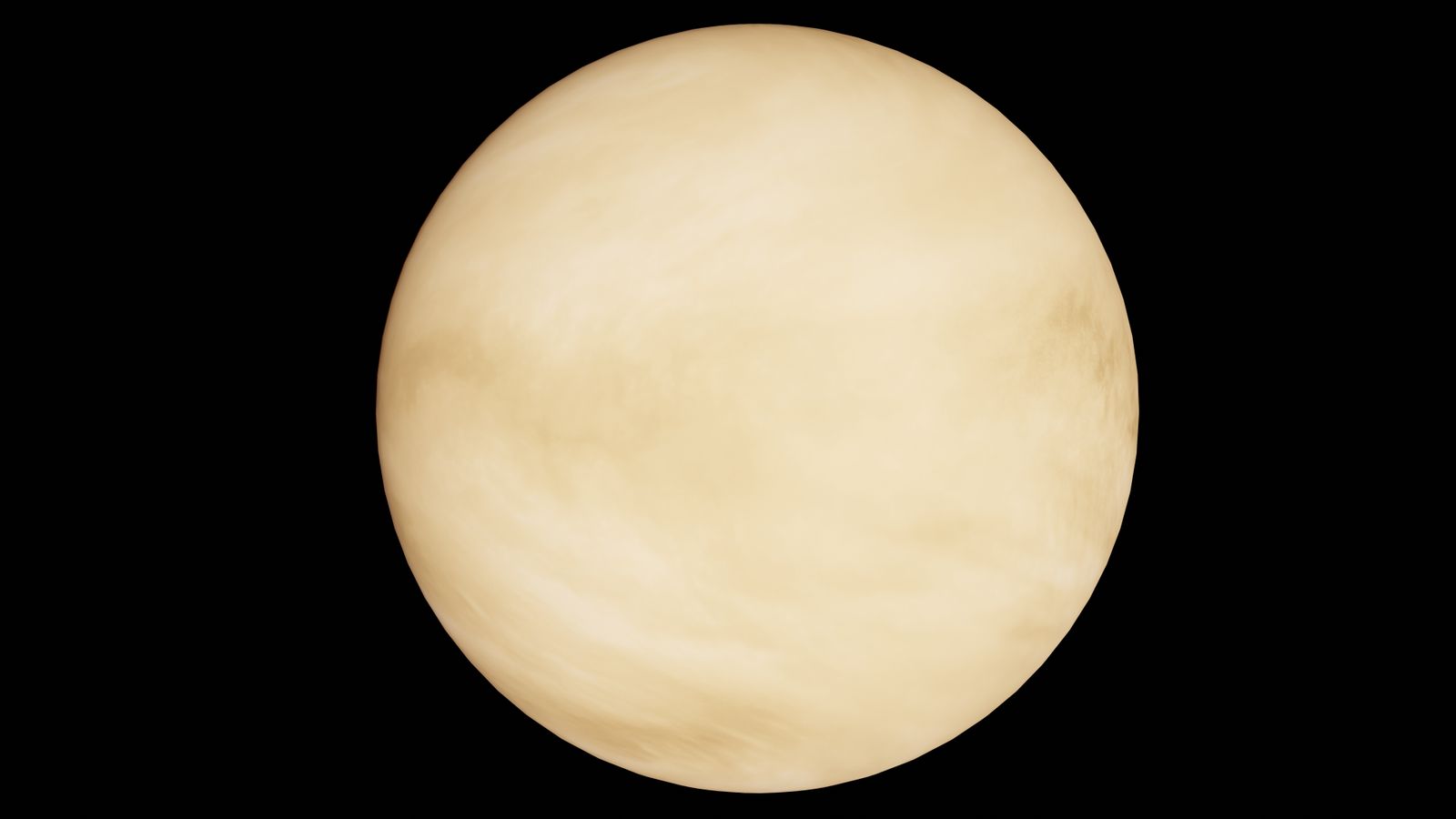
Venus today is the most hostile planet in the solar system. Its surface sits at about 465 degrees Celsius, hotter than Mercury despite being almost twice as far from the Sun, under an atmosphere of carbon dioxide pressing down at roughly 90 times Earth’s. Yet some climate models suggest it may not always have been this way, and that the planet next door could once have held liquid water and mild temperatures before a transformation tipped it into the furnace it is now.
That is a hypothesis, not a settled history.
It is also sharply contested, and the disagreement is the interesting part.
The case that Venus was once habitable
The strongest version of the habitable-Venus idea comes from climate modelling by scientists at NASA’s Goddard Institute for Space Studies. Running the same kind of models used for Earth, Michael Way and Anthony Del Genio found scenarios in which Venus held a shallow ocean and surface temperatures a person could tolerate, potentially for up to two billion years.
The mechanism they proposed turns on the planet’s slow spin. A Venus day is longer than a Venus year, so the dayside bakes for weeks at a time, which in their model drives rainfall and builds a thick deck of cloud that shades the surface like an umbrella. In that picture, the same sluggish rotation that seems hostile actually helped keep an early Venus cool enough for water.
There is a separate clue in the planet’s air. Venus has an unusually high ratio of deuterium, a heavy form of hydrogen, to ordinary hydrogen, which is the kind of fingerprint a world carries after losing a great deal of water to space over time. It does not prove there were oceans, but it is consistent with a Venus that once had far more water than the trace amount left in its atmosphere now.
The volcanic trigger
If Venus was habitable and then was not, something ended it. One leading idea points to the planet’s own geology.
Venus has a relatively young, oddly uniform surface, which many researchers read as the mark of a global resurfacing, a period when widespread volcanism repaved much of the planet within the last several hundred million years. An episode like that could have vented enormous quantities of carbon dioxide into the atmosphere. Add a Sun that has slowly brightened over billions of years, and the result is a runaway greenhouse: warming evaporates water, water vapour is itself a greenhouse gas that drives further warming, and the cycle runs until the oceans are gone and the heat is locked in.
In this telling, the volcanism did not just reshape the surface. It helped close the door on the planet’s habitability for good.
The contesting view
The neat story has a serious challenge, and it is worth giving plainly.
A 2021 study in Nature, led by Martin Turbet, modelled early Venus and concluded that water may never have condensed into oceans at all. In those simulations, clouds formed preferentially on the planet’s night side and produced a powerful warming effect, keeping the surface too hot for water vapour to fall as rain and pool. If that model is closer to the truth, Venus was never the temperate world of the habitable scenario. It was hot from very early on.
The two camps are not arguing over the figures so much as over how clouds behaved on a young Venus, which is one of the hardest things to model. The fair position is that whether Venus ever had oceans is an open question, not a known fact.
What is settled, and what comes next
What no one disputes is the present. Venus is in a runaway greenhouse state now, wrapped in dense carbon dioxide, hot enough to melt lead at the surface. The argument is entirely about its past: whether it lost an ocean, or never managed to make one.
That past may not stay out of reach. Three missions are headed Venus’s way in the coming years, NASA’s DAVINCI and VERITAS and the European Space Agency’s EnVision, designed to study the atmosphere, the surface, and the history written into both. The deuterium record, the age of the surface, and the chemistry of the air are exactly the kinds of evidence they are built to read. Whether Venus was ever a second habitable world, or always the one that went wrong, is a question the next decade has a real chance of settling.

 Login

 A major study found that common dementia risks may have a much stronger impact on women’s brains than previously recognized. Women may not only experience some dementia risk factors more often than men, but those risk factors may also have a stronger effect on their cognitive health, according to new research from the University of [...]