Login

German Court Rules Google Liable for False Claims in AI Overviews
When Google’s AI Overviews labeled two Munich publishers as scam operations, the companies did what anyone falsely accused

Microbiology dominated the research schedule aboard the International Space Station on Thursday helping doctors protect health on Earth and in space. The Expedition 74 crew also tested a new spacesuit, packed a U.S. cargo spacecraft, and kept up lab maintenance throughout the orbital outpost.
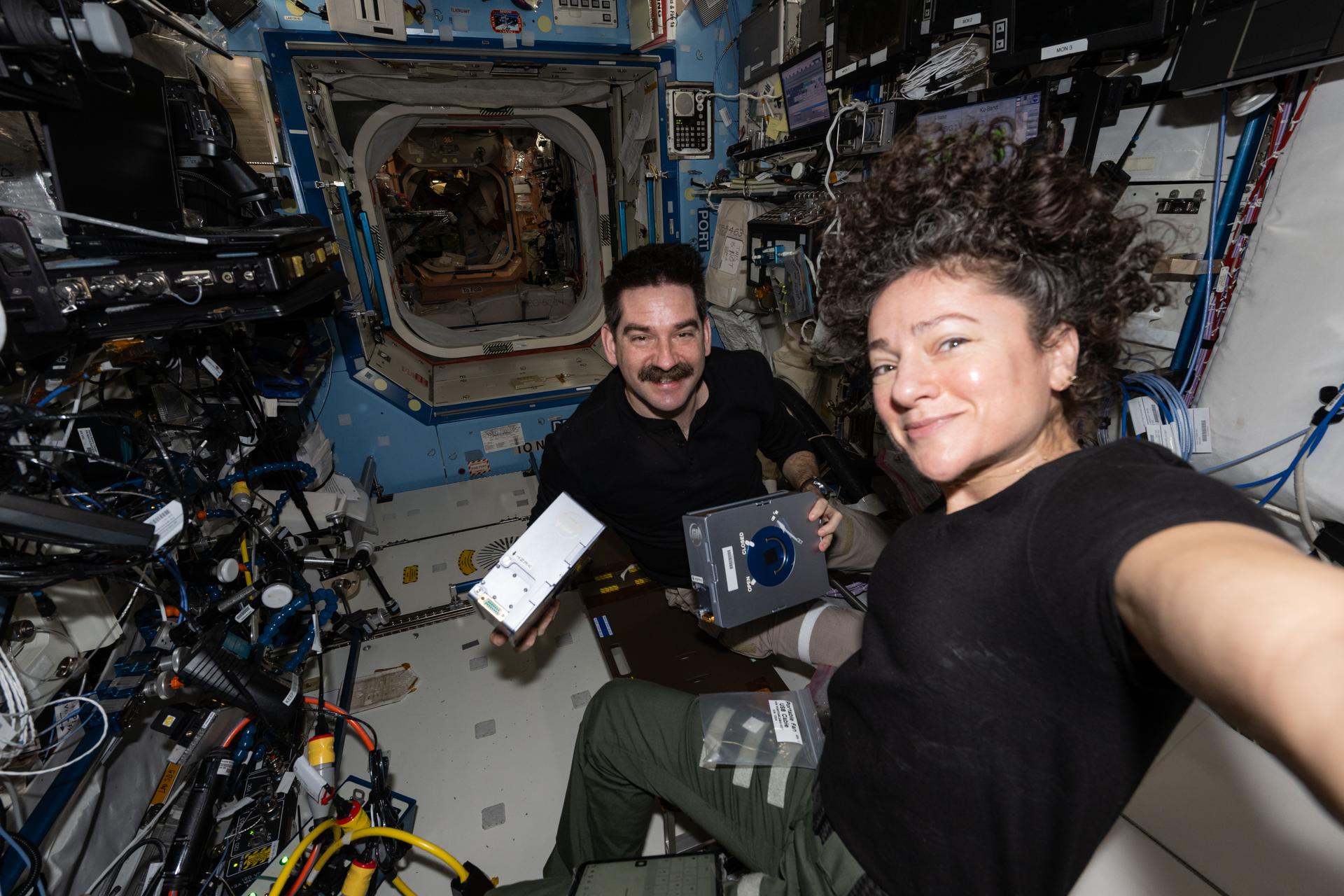
Scientists are comparing bacteria samples grown onboard the orbiting lab to similar samples living in simulated microgravity chambers on Earth to learn how microbes respond to space-like conditions. ESA (European Space Agency) astronaut Sophie Adenot kicked off the Odyssey biotechnology investigation processing microbe samples inside the Kibo laboratory module’s Life Science Glovebox (LSG) to document their genetic function. Next, NASA flight engineer Chris Williams collected the microbes for preservation and cleaned the research hardware inside the LSG for continuing operations. Finally, NASA flight engineer Jessica Meir took over and completed the day’s genetic study treating the sensitive samples to observe their chemical response. She immediately stowed the microbes for preservation afterward inside the LSG’s science freezer that she had installed the day before. Insights gained from the new study may lead to new ways of protecting humans and equipment exposed to harsh conditions on and off the Earth.
After completing her microbe work, Adenot moved to the Columbus laboratory module and tried on a prototype spacesuit designed by ESA to be worn inside a spacecraft. She tested the EuroSuit for its ease of donning on and off, as well as its comfort and mobility, then documented her experience for engineers to review. Results will inform the final design of the suit to meet the ergonomic requirements of living and working in space.
Williams also continued packing cargo inside a SpaceX Dragon cargo spacecraft with assistance from NASA flight engineer Jack Hathaway. Dragon is being loaded with several thousand pounds of station gear and science experiments that will be returned to Earth for analysis by engineers and scientists. Hathaway spent the majority of his shift inside the Tranquility module swapping orbital plumbing components and transferring water between tanks for life support maintenance.
Meir began her shift servicing fluid-containing sample processing hardware that is supporting the observation of pharmaceutical crystal growth to promote the production of advanced cancer therapies in weightlessness. Next, she activated tubes filled with microbial and botanical samples for a variety of student-designed experiments inside the Harmony module.
Roscosmos cosmonaut and station commander Sergey Kud-Sverchkov inspected and cleaned ventilation equipment then repaired a thermal sensor inside the Zvezda service module. Flight engineer Sergei Mikaev disinfected surfaces inside the Zarya module and checked the functionality of video hardware. Flight engineer Andrey Mikaev spent his shift on orbital plumbing and oxygen generator maintenance in the space station’s Roscosmos segment.
Learn more about station activities by following the space station blog, @space_stationon X, as well as the ISS Facebook and ISS Instagram accounts.
Get the latest from NASA delivered every week. Subscribe here.
The post Microbiology DNA and Chemistry for Health Insights Tops Research Schedule appeared first on NASA Science.
A soccer ball floats in microgravity in this March 2, 2026, picture from the International Space Station. The space station crew tested soccer balls to study how internal mass affects motion and stability in microgravity. The findings have improved understanding of how embedded technologies, including match-ball sensors, can influence performance during play.
Through research aboard the International Space Station and technology developed for exploration, NASA continues to demonstrate how discoveries made for space can benefit people on Earth—including athletes and fans participating in the world’s most popular sport.
Image credit: NASA
The post Soccer Meets Space Science appeared first on NASA Science.
A soccer ball floats in microgravity in this March 2, 2026, picture from the International Space Station. The space station crew tested soccer balls to study how internal mass affects motion and stability in microgravity. The findings have improved understanding of how embedded technologies, including match-ball sensors, can influence performance during play.
Through research aboard the International Space Station and technology developed for exploration, NASA continues to demonstrate how discoveries made for space can benefit people on Earth—including athletes and fans participating in the world’s most popular sport.
Image credit: NASA


Scientific hardware installations and biomedical monitoring topped the research schedule aboard the International Space Station on Wednesday. The Expedition 74 crew members also adjusted a spacesuit to prepare for a spacewalk and explored space physics to round out their day.
A series of shoebox-sized CubeSats will soon be deployed outside the Kibo laboratory module into Earth orbit for public and private research. One of the satellites, Hokushin-1 CubeSat, will test space technologies such as radio frequency, propulsion, and solar arrays. NASA flight engineer Jack Hathaway finished installing a small satellite orbital deployer, packed with the CubeSats, into Kibo’s airlock where it will soon be placed in the vacuum of space and grappled by the Japanese robotic arm. The deployer will be maneuvered with the robotic arm and positioned away from the orbital outpost to safely release the tiny satellites into Earth orbit.
Onboard the orbital outpost are a variety of research freezers—large, small, portable, and permanent—that house and preserve station research samples for analysis both on Earth and in space. One of them, a smaller glovebox freezer, is being installed inside Kibo’s Life Science Glovebox (LSG) by NASA flight engineer Jessica Meir for upcoming experiment operations. The freezer’s location inside the LSG allows the samples to be stowed and frozen immediately after processing to prevent degradation and preserve integrity during sensitive biology research.
Meir also assisted flight engineer Sophie Adenot of ESA (European Space Agency) as she set up wearable devices for a pair of biomedical tests on Wednesday. Adenot first measured her blood pressure to calibrate the PhysioTool technology demonstration gear. Next, she wore head and body sensors that measured her brain oxygen and blood flow levels as she performed cognitive and mental tasks on a computer. Researchers are testing the portable device onboard the station to potentially monitor crew health on missions to the Moon, Mars, and beyond.
Meir also had time to help NASA flight engineer Chris Williams pack cargo inside a SpaceX Dragon cargo spacecraft that will undock from the Harmony module’s forward port and soon return to Earth. Williams then maneuvered into the Quest airlock and adjusted a spacesuit’s legs, arms, and helmet, then ensured the suit’s switches and valves were correctly configured ahead of an upcoming spacewalk.
On May 27, during routine operations of the International Space Station’s Canadarm2, the system demonstrated an elevated motor current in a wrist joint and arm motion did not occur as expected. NASA worked alongside CSA (Canadian Space Agency) to understand the issue and determined a spacewalk will be required to replace the joint using a spare already aboard the orbital complex. The Canadarm2, which is designed to be repaired in orbit, is in a safe configuration and standard operations using the arm have been paused. In the coming weeks, NASA will host a news conference to discuss the repair and preview the planned Tuesday, June 30 spacewalk. NASA will share more on the spacewalkers closer to the activity.
Roscosmos cosmonauts Sergey Kud-Sverchkov and Sergei Mikaev joined each other and explored space physics in the Zvezda service module. The duo observed how two different sized spheres drift freely in microgravity with no pushing movement from the crew. Results may lead to the design of newer space tools, improved robotics, and a deeper understanding of crew motion. Roscosmos flight engineer Andreu Fedyaev focused primarily on maintenance testing computer operations, cleaning ventilation systems, and transferring water between station tanks.
Finally, the space station is orbiting higher today after the Progress 95 cargo spacecraft fired its thrusters for over eight minutes early Wednesday raising its altitude by 1.9 miles. This adjusts the orbital outpost’s altitude ahead of the launch and docking of the Soyuz MS-29 crew spacecraft planned for mid-July.
Learn more about station activities by following the space station blog, @space_stationon X, as well as the ISS Facebook and ISS Instagram accounts.
Get the latest from NASA delivered every week. Subscribe here.
The post Expedition 74 Works Scientific Installs, Suit Prep Ahead of Canadarm2 Repair Spacewalk appeared first on NASA Science.

The complex puzzle known as little red dots has become more complete since their initial discovery by NASA’s James Webb Space Telescope in 2022. Now a particular little red dot’s spectrum is helping connect many of the pieces.
A team of astronomers led by Vasily Kokorev at the University of Texas at Austin identified the lucky dot in question: GLIMPSE-17775. By carefully analyzing the dot’s spectrum captured by Webb — the deepest spectrum to date of a little red dot — the research team has identified multiple lines of evidence, all of which support the interpretation that GLIMPSE-17775 is a supermassive black hole enveloped in a dense cocoon of partially ionized gas, a model referred to as the BH* (black hole star) scenario. A paper describing the results was published today in The Astrophysical Journal.
“I think part of the scientific community is converging on a singular picture — that little red dots can be explained by black hole star models. But none of the previous little red dots have all of the pieces of evidence in the same place,” said Kokorev, lead author of the study. “With GLIMPSE-17775 we can test these models because of how deep and amazing this source’s spectrum is.”
Soon after Webb first began science operations, it discovered a new, mysterious type of object in the very early universe – abundant red objects that emerged about 600 million years after the big bang. Scientists have explored multiple explanations for these little red dots, including the black hole star scenario.
A set of fortunate circumstances brought about this new, elaborate spectrum of a little red dot. The little red dot that would come to be known as GLIMPSE-17775 was fortunately included in Webb’s imaging and spectroscopy efforts for a project that sought to look for Population III stars and faint galaxies in galaxy cluster Abell S1063. This little red dot is more distant than the galaxy cluster and magnified by gravitational lensing. (GLIMPSE-17775 has a cosmological redshift of 3.5, meaning it existed about 1.8 billion years after the big bang.)
While Webb provided a 30-hour spectrum of the little red dot, the effect of gravitational lensing made it equivalent to 80 hours of telescope time. This combination of Webb’s infrared sensitivity and nature’s own “magnifying glass” amplified the amount of detail that could be gleaned from GLIMPSE-17775. The result was more than 40 spectral lines from this small, red source, which is the most detailed little red dot spectrum to date.
“When we saw the spectrum for the first time, it was like having all the pieces of a puzzle scattered on the floor,” said Kokorev. “We picked up each piece of the puzzle, measured the lines, and started combining the different pieces into a mosaic. Maybe a few pieces looked like nothing at first, but then a couple of them came together, and we realized that there was something there.”
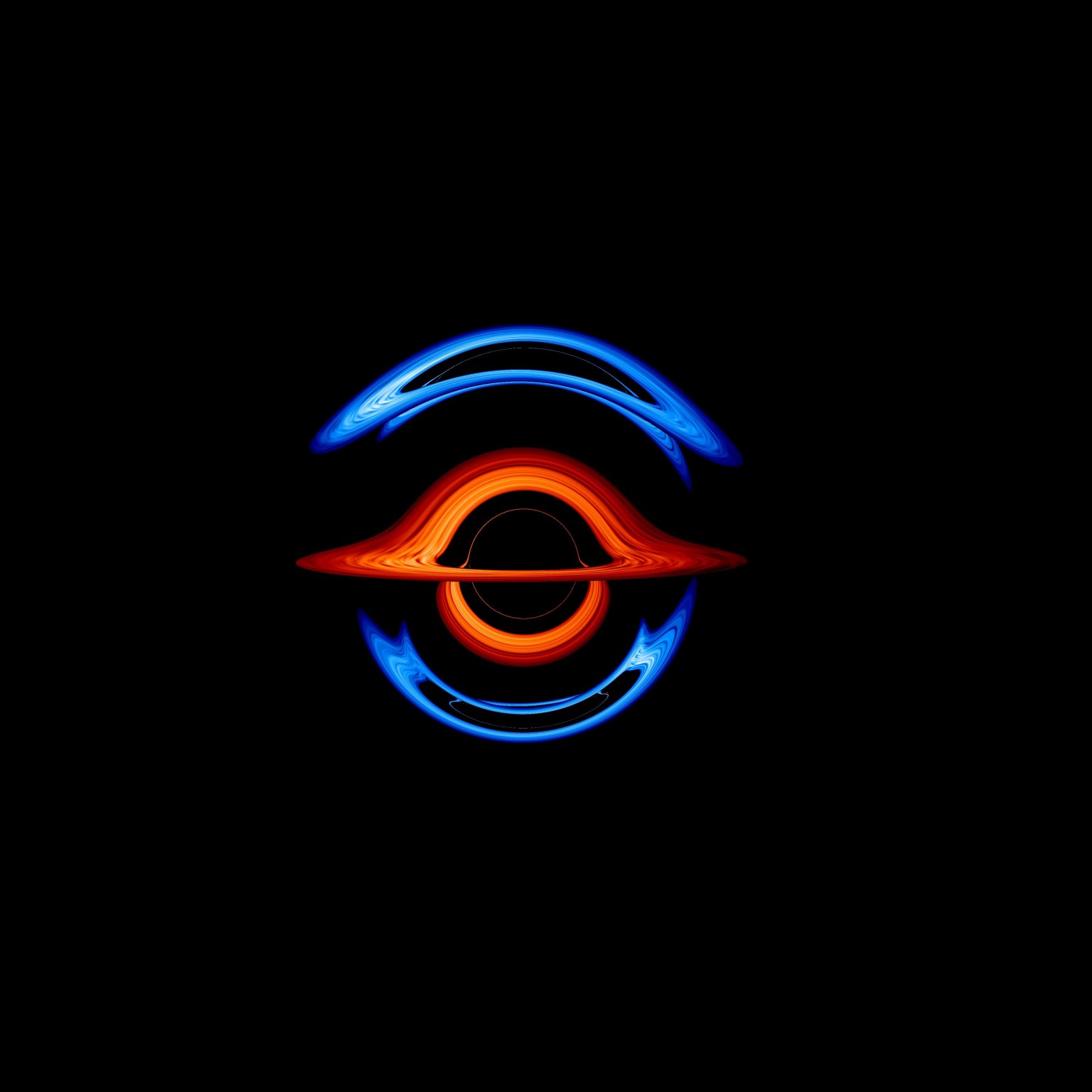
The spectroscopic data collected by Webb contains multiple lines of evidence that support the interpretation that little red dot GLIMPSE-17775 is a black hole star: a rapidly accreting, or growing, black hole enveloped in a dense gas cocoon, which is reprocessing the light emitted from near the black hole and producing the features seen in the spectrum.

Among the 40-plus lines that the team detected in GLIMPSE-17775’s spectrum were various independent indicators that all align with the BH* scenario. For example, the team found that many of the spectral lines, such as hydrogen, oxygen, and helium, do not fit a simple model of a rotating gas cloud. Instead, the best fit model includes a broadening effect known as electron scattering, a telltale sign that a dense, layered gas cocoon is enshrouding this source.
The strength and ratios of certain lines to each other, most notably the 16 iron lines that compose what the team has dubbed an “iron forest” and certain oxygen lines, require a high-energy source to produce them, like a rapidly accreting black hole. Additionally, astronomers noted the fluorescence and absorption of helium in the spectrum, both of which individually suggest that there is a dense medium enveloping a powerful source.
The BH* scenario not only fits GLIMPSE-17775; it also accounts for why most little red dots are faint in X-rays, since any such emission is likely absorbed by the dense gas cocoon.
One missing element of the GLIMPSE-17775 puzzle piece is the part of the spectrum that would reveal what’s known as a Balmer break, or a strong dip in the emitted light that’s a signature characteristic of little red dots. To build a more comprehensive understanding of this little red dot, the team incorporated ancillary data from two observing programs that used NASA’s Hubble Space Telescope: the Frontier Fields and BUFFALO (Beyond Ultra-deep Frontier Fields And Legacy Observations) programs.
The Webb and Hubble data together help explain why the Balmer break is weaker than what typically is found in other little red dots: A giant host galaxy is surrounding GLIMPSE-17775. Although a little red dot’s host galaxy is not something that has been usually seen at such scale before, it isn’t inconsistent with the dense gas cocoon model. The black hole star model of little red dots attributes excess blue light to stars in the host galaxy.
When Webb first discovered little red dots, some researchers thought these objects had “broken cosmology,” unsure how galaxies could have grown so big so quickly in the early universe to account for all this light coming from their stars. However, the team believes the GLIMPSE-17775 puzzle piece fits nicely in the existing framework of the universe’s evolutionary history, because black hole masses don’t need to be as high in order to explain the broad emission lines.
“Everything fits, nothing is broken, and I think that makes the puzzle that is our universe even better,” said Kokorev. “Looking ahead, I’m eager to dive deeper and learn about what is powering the central engines of little red dots. While we think it’s a black hole, there are some other interesting theories being proposed, which is exciting. Maybe in a year or two, we’ll have the final answer to what powers these sources.”
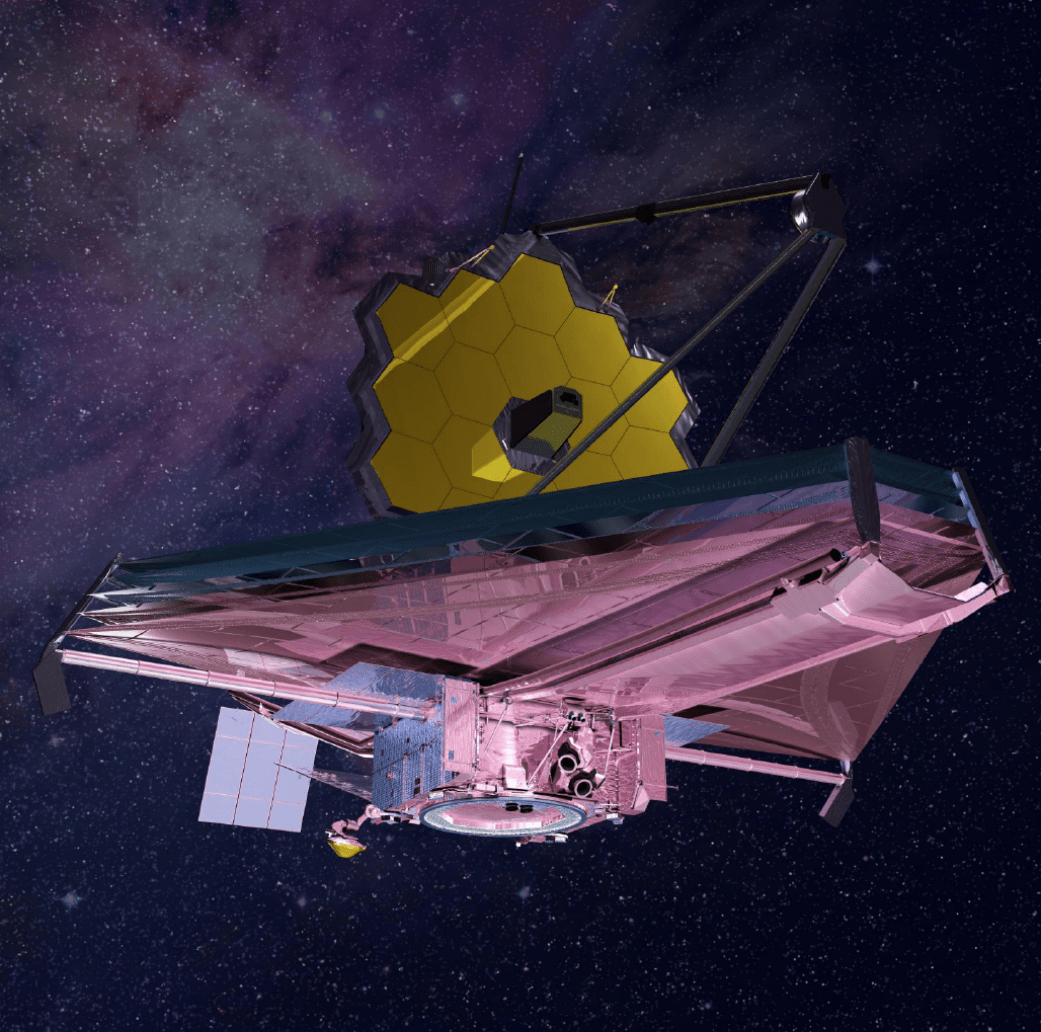
The James Webb Space Telescope is the world’s premier space science observatory. Webb is solving mysteries in our solar system, looking beyond to distant worlds around other stars, and probing the mysterious structures and origins of our universe and our place in it. Webb is an international program led by NASA with its partners, ESA (European Space Agency) and CSA (Canadian Space Agency).
To learn more about Webb, visit:
The following sections contain links to download this article’s images and videos in all available resolutions followed by related information links, media contacts, and if available, research paper and Spanish translation links.
While the primary purpose of NASA’s James Webb Space Telescope’s observations of galaxy cluster Abell S1063 was to look for a certain population of stars, scientists obtained a detailed spectrum of GLIMPSE-17775 from the dataset. This little red dot is located behind Abell S1063.
NASA’s James Webb Space Telescope captured the deepest spectrum to date of a little red dot. More than 40 spectral lines have been discerned from the data, many of which independently support the theory that GLIMPSE-17775 is a black hole enshrouded by a hot, dense gas cocoon.
Read more: Black Hole Basics
Explore more: ViewSpace | Black Holes: Searching for the unseen
Watch: NASA Black Hole Visualization Takes Viewers Beyond the Brink
Watch: What Webb Learns from Light
Explore more: NASA’s Universe of Learning: Black Hole Resources
Read more: NASA Connects Little Red Dots with Chandra, Webb
Laura Betz
NASA’s Goddard Space Flight Center
Greenbelt, Maryland
laura.e.betz@nasa.gov
Abigail Major
Space Telescope Science Institute
Baltimore, Maryland
Christine Pulliam
Space Telescope Science Institute
Baltimore, Maryland

Built with funding from NASA’s Earth Science Technology Office Instrument Incubator Program, CloudCube transmits and receives Ka-, W-, and G-band signals, making it the first compact radar system capable of simultaneously probing meteorological targets at wavelengths spanning approximately one to ten millimeters. Researchers will be able to combine information from the three signals to learn more about the initiation and evolution of precipitation, as well as cloud microphysics and radiative properties.
“We’re making a low-power, low-mass instrument to facilitate new cost-efficient missions for atmospheric observations. Building a multi-frequency radar, especially at G-band, is very novel,” said Raquel Rodriguez Monje, a systems engineer at JPL and principal investigator for CloudCube.
Each of CloudCube’s three signals observes a different element of cloud physics. Ka-band radar signals are ideal for collecting precipitation profiles; W-band radar signals are preferred for measuring cloud particles that give rise to precipitation; and G-band radar signals, which have never been collected from a space-based instrument, are ideal for measuring ice and liquid water content inside very light clouds (a paper describing this measurement can be found here).
Probing the atmosphere simultaneously with three signals allows researchers to collect data on all these cloud features at once, which is valuable for improving weather forecasts and especially climate modeling. CloudCube leverages innovations in millimeter-wave hardware to pack three radar modules–one for each signal–within a single compact system.

One CloudCube innovation concerns the specialized components required to transmit G-band power from a compact, low-power instrument. The detection of cloud signals requires high transmit power, which CloudCube achieves by combining the outputs of multiple high-efficiency frequency-multiplication devices that allow the instrument to generate hundreds of milliWatts at 240 GHz. Another innovation of CloudCube is that it was designed to use as few radio frequency components as possible to reduce its mass and power consumption, which could lower the cost of future Earth-observing orbital instruments.
Flying an instrument equipped with G-band radar in space will be a new capability and will allow researchers to achieve greater spatial resolution and sensitivity in the study of cloud microphysical processes.
“Basically, we’re weighing clouds using these combinations of frequencies in a way that we couldn’t do before we had the G-band,” said Matt Lebsock, a researcher at JPL and co-investigator for CloudCube.
The instrument has been tested in the field. A ground-based prototype of CloudCube’s G-band channel operated continuously for 11 months during the Department of Energy’s Cloud and Precipitation Experiment at Kennaook (CAPE-K) campaign. CloudCube also participated in the Eastern Pacific Cloud Aerosol Precipitation Experiment, a ground campaign sponsored by the Department of Energy. A paper describing the results of that experiment can be found here.
Most recently, CloudCube successfully operated all three frequency bands from NASA’s Gulfstream III aircraft and collected its first airborne observations of snowfall as part of the North American Upstream Feature-Resolving and Tropopause Uncertainty Reconnaissance Experiment campaign—a NASA-funded campaign designed to improve forecasts of high-impact winter weather. The CloudCube team is currently calibrating and processing the data for public release.
For additional details, see the entry for this project on NASA TechPort.
Project Lead: Dr. Raquel Rodriguez Monje, NASA’s Jet Propulsion Laboratory
Sponsoring Organization: NASA’s Earth Science Technology Office Instrument Incubation Program
The complex puzzle known as little red dots has become more complete since their initial discovery by NASA’s James Webb Space Telescope in 2022. Now a particular little red dot’s spectrum is helping connect many of the pieces.
A team of astronomers led by Vasily Kokorev at the University of Texas at Austin identified the lucky dot in question: GLIMPSE-17775. By carefully analyzing the dot’s spectrum captured by Webb — the deepest spectrum to date of a little red dot — the research team has identified multiple lines of evidence, all of which support the interpretation that GLIMPSE-17775 is a supermassive black hole enveloped in a dense cocoon of partially ionized gas, a model referred to as the BH* (black hole star) scenario. A paper describing the results was published today in The Astrophysical Journal.
“I think part of the scientific community is converging on a singular picture — that little red dots can be explained by black hole star models. But none of the previous little red dots have all of the pieces of evidence in the same place,” said Kokorev, lead author of the study. “With GLIMPSE-17775 we can test these models because of how deep and amazing this source’s spectrum is.”
Soon after Webb first began science operations, it discovered a new, mysterious type of object in the very early universe – abundant red objects that emerged about 600 million years after the big bang. Scientists have explored multiple explanations for these little red dots, including the black hole star scenario.
A set of fortunate circumstances brought about this new, elaborate spectrum of a little red dot. The little red dot that would come to be known as GLIMPSE-17775 was fortunately included in Webb’s imaging and spectroscopy efforts for a project that sought to look for Population III stars and faint galaxies in galaxy cluster Abell S1063. This little red dot is more distant than the galaxy cluster and magnified by gravitational lensing. (GLIMPSE-17775 has a cosmological redshift of 3.5, meaning it existed about 1.8 billion years after the big bang.)
While Webb provided a 30-hour spectrum of the little red dot, the effect of gravitational lensing made it equivalent to 80 hours of telescope time. This combination of Webb’s infrared sensitivity and nature’s own “magnifying glass” amplified the amount of detail that could be gleaned from GLIMPSE-17775. The result was more than 40 spectral lines from this small, red source, which is the most detailed little red dot spectrum to date.
“When we saw the spectrum for the first time, it was like having all the pieces of a puzzle scattered on the floor,” said Kokorev. “We picked up each piece of the puzzle, measured the lines, and started combining the different pieces into a mosaic. Maybe a few pieces looked like nothing at first, but then a couple of them came together, and we realized that there was something there.”
The spectroscopic data collected by Webb contains multiple lines of evidence that support the interpretation that little red dot GLIMPSE-17775 is a black hole star: a rapidly accreting, or growing, black hole enveloped in a dense gas cocoon, which is reprocessing the light emitted from near the black hole and producing the features seen in the spectrum.
Among the 40-plus lines that the team detected in GLIMPSE-17775’s spectrum were various independent indicators that all align with the BH* scenario. For example, the team found that many of the spectral lines, such as hydrogen, oxygen, and helium, do not fit a simple model of a rotating gas cloud. Instead, the best fit model includes a broadening effect known as electron scattering, a telltale sign that a dense, layered gas cocoon is enshrouding this source.
The strength and ratios of certain lines to each other, most notably the 16 iron lines that compose what the team has dubbed an “iron forest” and certain oxygen lines, require a high-energy source to produce them, like a rapidly accreting black hole. Additionally, astronomers noted the fluorescence and absorption of helium in the spectrum, both of which individually suggest that there is a dense medium enveloping a powerful source.
The BH* scenario not only fits GLIMPSE-17775; it also accounts for why most little red dots are faint in X-rays, since any such emission is likely absorbed by the dense gas cocoon.
One missing element of the GLIMPSE-17775 puzzle piece is the part of the spectrum that would reveal what’s known as a Balmer break, or a strong dip in the emitted light that’s a signature characteristic of little red dots. To build a more comprehensive understanding of this little red dot, the team incorporated ancillary data from two observing programs that used NASA’s Hubble Space Telescope: the Frontier Fields and BUFFALO (Beyond Ultra-deep Frontier Fields And Legacy Observations) programs.
The Webb and Hubble data together help explain why the Balmer break is weaker than what typically is found in other little red dots: A giant host galaxy is surrounding GLIMPSE-17775. Although a little red dot’s host galaxy is not something that has been usually seen at such scale before, it isn’t inconsistent with the dense gas cocoon model. The black hole star model of little red dots attributes excess blue light to stars in the host galaxy.
When Webb first discovered little red dots, some researchers thought these objects had “broken cosmology,” unsure how galaxies could have grown so big so quickly in the early universe to account for all this light coming from their stars. However, the team believes the GLIMPSE-17775 puzzle piece fits nicely in the existing framework of the universe’s evolutionary history, because black hole masses don’t need to be as high in order to explain the broad emission lines.
“Everything fits, nothing is broken, and I think that makes the puzzle that is our universe even better,” said Kokorev. “Looking ahead, I’m eager to dive deeper and learn about what is powering the central engines of little red dots. While we think it’s a black hole, there are some other interesting theories being proposed, which is exciting. Maybe in a year or two, we’ll have the final answer to what powers these sources.”
The James Webb Space Telescope is the world’s premier space science observatory. Webb is solving mysteries in our solar system, looking beyond to distant worlds around other stars, and probing the mysterious structures and origins of our universe and our place in it. Webb is an international program led by NASA with its partners, ESA (European Space Agency) and CSA (Canadian Space Agency).
To learn more about Webb, visit:
The following sections contain links to download this article’s images and videos in all available resolutions followed by related information links, media contacts, and if available, research paper and Spanish translation links.
While the primary purpose of NASA’s James Webb Space Telescope’s observations of galaxy cluster Abell S1063 was to look for a certain population of stars, scientists obtained a detailed spectrum of GLIMPSE-17775 from the dataset. This little red dot is located behind Abell S1063.
NASA’s James Webb Space Telescope captured the deepest spectrum to date of a little red dot. More than 40 spectral lines have been discerned from the data, many of which independently support the theory that GLIMPSE-17775 is a black hole enshrouded by a hot, dense gas cocoon.
Read more: Black Hole Basics
Explore more: ViewSpace | Black Holes: Searching for the unseen
Watch: NASA Black Hole Visualization Takes Viewers Beyond the Brink
Watch: What Webb Learns from Light
Explore more: NASA’s Universe of Learning: Black Hole Resources
Laura Betz
NASA’s Goddard Space Flight Center
Greenbelt, Maryland
laura.e.betz@nasa.gov
Abigail Major
Space Telescope Science Institute
Baltimore, Maryland
Christine Pulliam
Space Telescope Science Institute
Baltimore, Maryland
The post NASA Webb Finds Strongest Evidence Yet for ‘Black Hole Stars’ appeared first on NASA Science.
Built with funding from NASA’s Earth Science Technology Office Instrument Incubator Program, CloudCube transmits and receives Ka-, W-, and G-band signals, making it the first compact radar system capable of simultaneously probing meteorological targets at wavelengths spanning approximately one to ten millimeters. Researchers will be able to combine information from the three signals to learn more about the initiation and evolution of precipitation, as well as cloud microphysics and radiative properties.
“We’re making a low-power, low-mass instrument to facilitate new cost-efficient missions for atmospheric observations. Building a multi-frequency radar, especially at G-band, is very novel,” said Raquel Rodriguez Monje, a systems engineer at JPL and principal investigator for CloudCube.
Each of CloudCube’s three signals observes a different element of cloud physics. Ka-band radar signals are ideal for collecting precipitation profiles; W-band radar signals are preferred for measuring cloud particles that give rise to precipitation; and G-band radar signals, which have never been collected from a space-based instrument, are ideal for measuring ice and liquid water content inside very light clouds (a paper describing this measurement can be found here).
Probing the atmosphere simultaneously with three signals allows researchers to collect data on all these cloud features at once, which is valuable for improving weather forecasts and especially climate modeling. CloudCube leverages innovations in millimeter-wave hardware to pack three radar modules–one for each signal–within a single compact system.
One CloudCube innovation concerns the specialized components required to transmit G-band power from a compact, low-power instrument. The detection of cloud signals requires high transmit power, which CloudCube achieves by combining the outputs of multiple high-efficiency frequency-multiplication devices that allow the instrument to generate hundreds of milliWatts at 240 GHz. Another innovation of CloudCube is that it was designed to use as few radio frequency components as possible to reduce its mass and power consumption, which could lower the cost of future Earth-observing orbital instruments.
Flying an instrument equipped with G-band radar in space will be a new capability and will allow researchers to achieve greater spatial resolution and sensitivity in the study of cloud microphysical processes.
“Basically, we’re weighing clouds using these combinations of frequencies in a way that we couldn’t do before we had the G-band,” said Matt Lebsock, a researcher at JPL and co-investigator for CloudCube.
The instrument has been tested in the field. A ground-based prototype of CloudCube’s G-band channel operated continuously for 11 months during the Department of Energy’s Cloud and Precipitation Experiment at Kennaook (CAPE-K) campaign. CloudCube also participated in the Eastern Pacific Cloud Aerosol Precipitation Experiment, a ground campaign sponsored by the Department of Energy. A paper describing the results of that experiment can be found here.
Most recently, CloudCube successfully operated all three frequency bands from NASA’s Gulfstream III aircraft and collected its first airborne observations of snowfall as part of the North American Upstream Feature-Resolving and Tropopause Uncertainty Reconnaissance Experiment campaign—a NASA-funded campaign designed to improve forecasts of high-impact winter weather. The CloudCube team is currently calibrating and processing the data for public release.
For additional details, see the entry for this project on NASA TechPort.
Project Lead: Dr. Raquel Rodriguez Monje, NASA’s Jet Propulsion Laboratory
Sponsoring Organization: NASA’s Earth Science Technology Office Instrument Incubation Program
The post NASA’s CloudCube Pioneers Miniaturized Radar to Study Clouds, Precipitation appeared first on NASA Science.
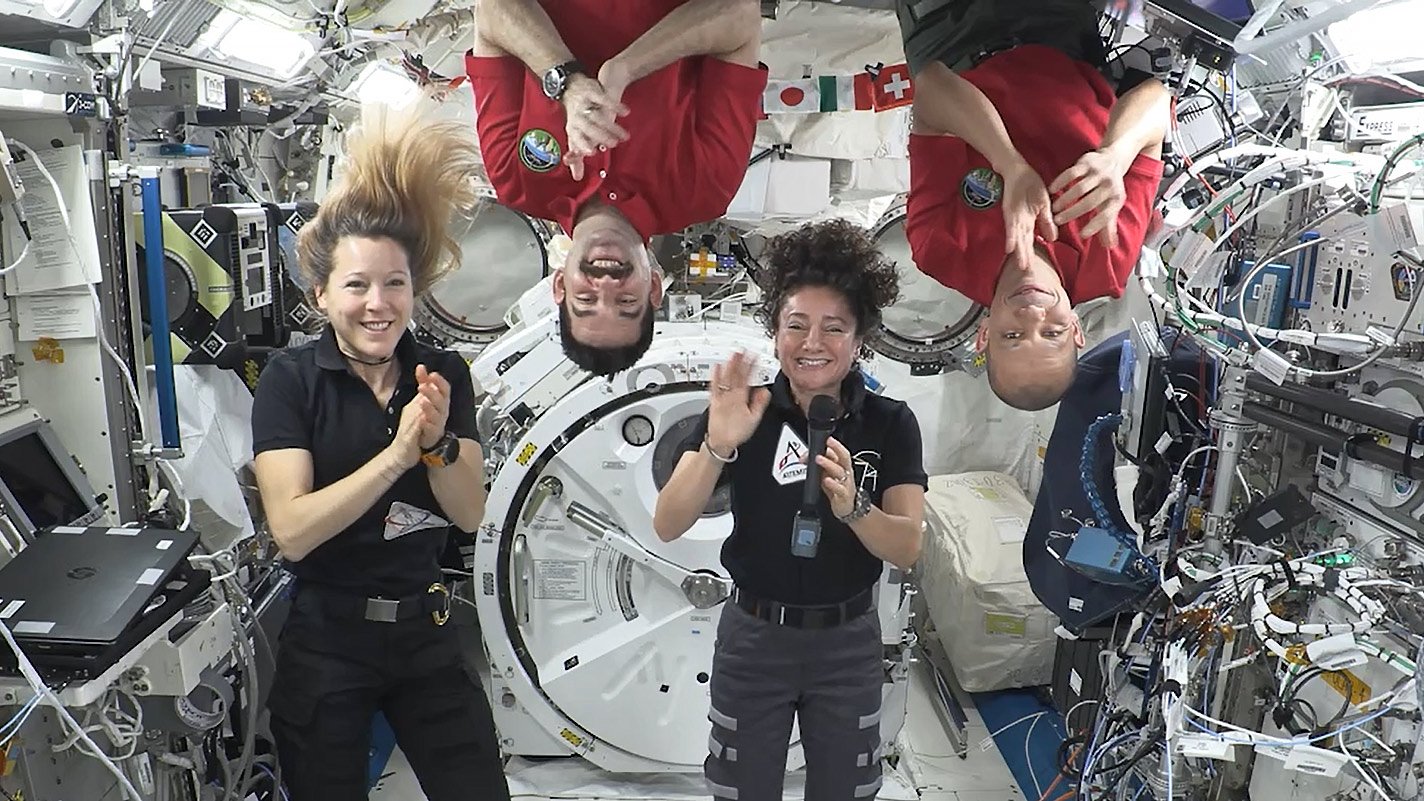
Microbiology and human research were the main scientific focus aboard the International Space Station on Tuesday to protect health on and off the Earth. The Expedition 74 crew members also worked on advanced research hardware and sent down a congratulatory message to the Artemis III crew, who were named during an announcement from the Johnson Space Center in Houston.
Some common bacteria have shown an increased resistance to antibiotics in the space environment potentially affecting an astronaut’s ability to fight an infection. Flight engineers Jack Hathway of NASA and Sophie Adenot of ESA (European Space Agency) explored the antibiotic-resistant organisms inside the Kibo laboratory module’s Life Science Glovebox and the Harmony module’s maintenance work area by processing the microbial samples and preparing them for DNA extraction and analysis. Doctors will use the data to understand how microbes adapt to microgravity possibly informing countermeasures to reduce the risk to astronaut health and protect patients on Earth.
NASA flight engineers Jessica Meir and Chris Williams partnered together loading a CubeSat-packed small satellite orbital deployer into Kibo’s airlock that will soon be placed into the vacuum of space. The Japanese robotic arm will grapple the deployer and point it away from the orbital outpost where it will safely deploy the shoebox-sized satellites into Earth orbit. A series of tiny satellites will be released for public and private research, including the Hokushin-1 CubeSat that will test space technologies such as radio frequency, propulsion, and solar arrays.
Roscosmos cosmonauts Sergey Kud-Sverchkov and Andrey Fedyaev worked on a pair of different investigations on Tuesday to continuously monitor how weightlessness affects the human body. Kud-Sverchkov, the orbital outpost’s commander, strapped an acoustic sensor around his neck that recorded his rapid exhalation to learn how living in space affects the respiratory system. Fedyaev wore a set of cuffs attached to his arms, wrist, and fingers measuring his blood pressure for a microgravity cardiac experiment. Roscosmos flight engineer Sergei Mikaev was back on artificial intelligence research studying new tools to boost crew efficiency and communications aboard a spacecraft.
Four of the station’s astronauts also sent down a message congratulating the four new Artemis III crew members commander Randy Bresnik of NASA, pilot Luca Parmitano of ESA, and NASA mission specialists Frank Rubio and Andre Douglas. The four flight engineers each spoke a few inspiring words with Meir stating, “Congratulations, Artemis III and godspeed on the journey ahead.” Watch the crew message on @Space_Station X.
Learn more about station activities by following the space station blog, @space_stationon X, as well as the ISS Facebook and ISS Instagram accounts.
Get the latest from NASA delivered every week. Subscribe here.
The post Crew Works Microbiology, Advanced Tech and Congratulates New Artemis III Crew appeared first on NASA Science.

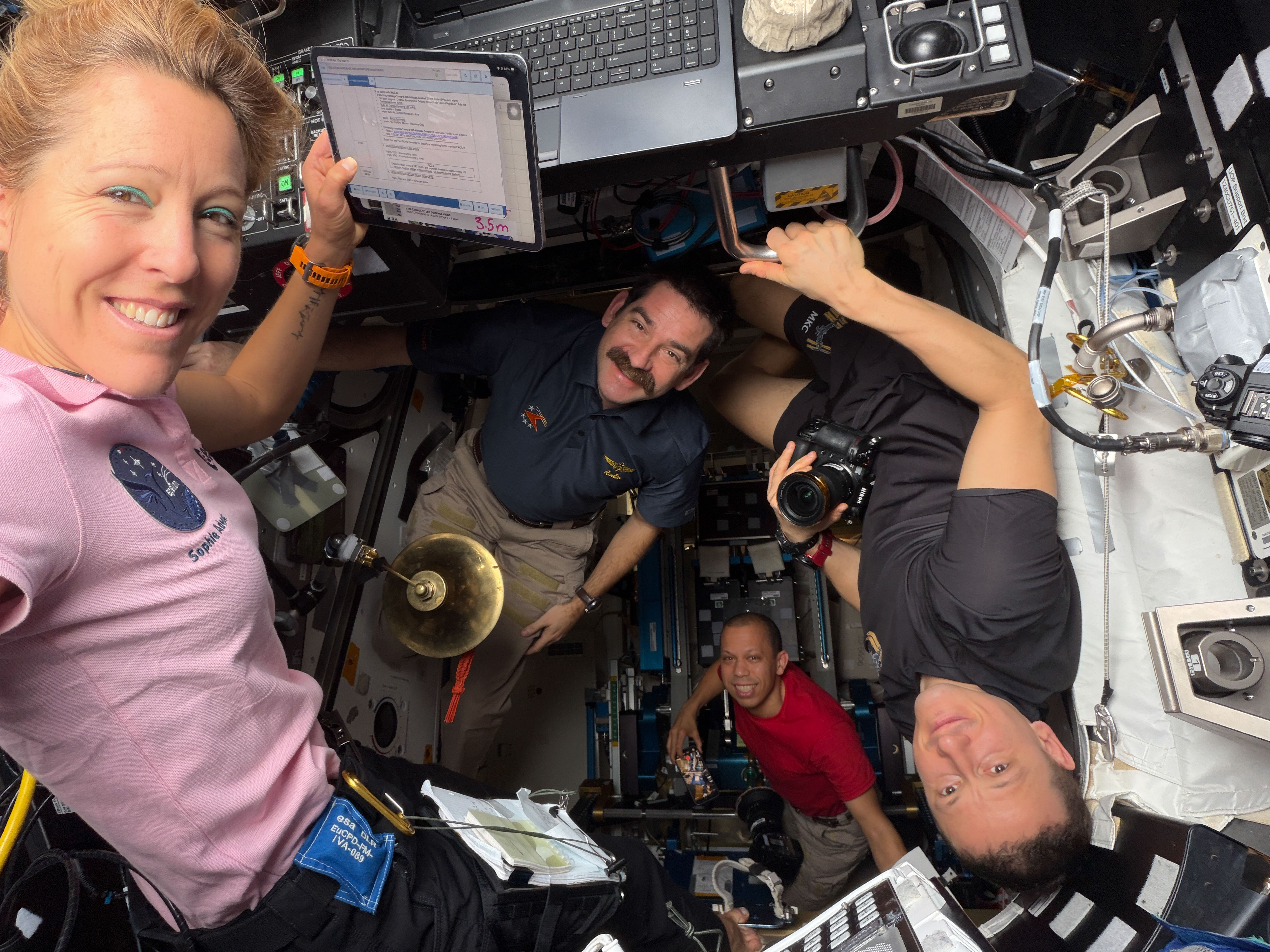
Expedition 74 began the week bioprinting human cartilage tissue and harvesting alfalfa plants aboard the International Space Station to advance health and promote self-sustainable space crews. The orbital residents also retrieved materials exposed to the external space environment and conducted their own ultrasound vein scans to continuously learn how living in space affects physics and biology.
NASA flight engineer Jessica Meir opened up the Kibo laboratory module’s Life Science Glovebox on Monday and set up a bioprinter to produce viable cartilage tissues aboard the orbiting laboratory. NASA flight engineer Chris Williams assisted Meir collecting the frozen cartilage samples for thawing then mixing the living cells with a gel-like bioink for placement in a printing cartridge. The biotechnology study tests the manufacturing of cartilage in weightlessness to increase its stability for printing on demand implants using a patient’s own cells to treat a range of health conditions.
Earlier, Williams began his shift with NASA flight engineer Jack Hathaway harvesting alfalfa plants inside the Columbus laboratory module’s Veggie facility. The astronauts collected the plants and roots for photographing, placed the botanical samples inside foil, then stowed them inside a science freezer for later analysis for the Veg-06 study. Insights may lead to the development of advanced methods to grow plants for food on future space missions.
Afterward, Hathaway scanned Williams neck, shoulder, and leg veins using the Ultrasound 3 biomedical device as doctors on the ground monitored in real time. Roscosmos cosmonauts Sergey Kud-Sverchkov and Sergei Mikaev also took turns scanning each other’s veins with the Ultrasound 3. The ultrasound imagery will help researchers protect crew members from space-caused blood clots.
Flight engineer Sophie Adenot of ESA (European Space Agency) and Meir joined each other during the first half of their shift retrieving containers of samples from Kibo’s airlock that were placed outside the orbital outpost for a materials exposure test. The samples included radiation shields, crew suit fabrics, optical fibers, and more to help engineers build robust technologies that can survive harsh environments both on Earth and in space.
Sergey Kud-Sverchkov and Sergei Mikaev, the orbiting lab’s commander and flight engineer, spent the majority of their shift inspecting and servicing the Zvezda service module’s treadmill. The space station’s other treadmill, COLBERT, is located in the Tranquility module.
Roscosmos flight engineer Andrey Fedyaev spent the first half of his shift locating and identifying computer components and video gear in the Zarya module to update the station’s inventory management system. Fedyaev wrapped up his day studying using artificial intelligence tools to boost crew efficiency and communications.
Learn more about station activities by following the space station blog, @space_stationon X, as well as the ISS Facebook and ISS Instagram accounts.
Get the latest from NASA delivered every week. Subscribe here.
The post Crew Begins Week with More Cartilage Printing and Plant Harvesting appeared first on NASA Science.
 A contraceptive drug helps human nerve cells regenerate by unlocking their forgotten embryonic healing abilities.