❌

Reading view

Your empty cuppa could capture carbon

Humanity has littered the sky with the refuse of fossil fuel use, releasing enough CO2 to change the planet’s climate. We are also chucking incredible sums of carbon in the form of plastics into landfills and into the environment around (and inside of) us. What if cleaning up one of these problems could also help clean up the other?

A new study led by Ruth Ebenbauer at Aarhus University experiments with this idea by upcycling discarded polystyrene into (part of) a material commonly used in carbon-capture systems.

Adding amines

This material is based on amines—a simple chemical group that conveniently acts like a sponge for CO2. An amine will grab CO2 molecules when exposed to them, but let go of the CO2 when heated or depressurized, leaving it ready to go again. The first “CO2 scrubbers” tried in smokestacks used amines dissolved in water to do this, but solid amines are used in all kinds of carbon-capture systems now because they require less energy. These solid materials—often made into granules similar to the activated carbon in a water filter—have high surface area and high porosity, so the amines can efficiently partner up with CO2 molecules.

Read full article

Comments

© Jamesmcq24

  •  

Geoscientists Find Vast Fan-Shaped Structure beneath Antarctica’s Ice

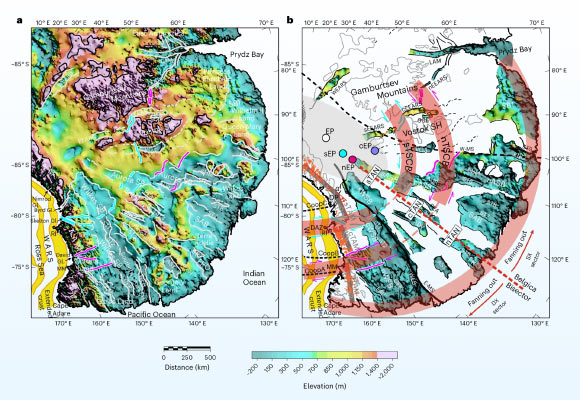
Fault-controlled basins and interpreted structural frame in the newly-identified East Antarctic Fan-Shaped Basin Province. Image credit: Armadillo et al., doi: 10.1038/s41561-026-01991-6.

By combining seismic, gravity and topographic data, a team of researchers from Italy, Switzerland, Germany and the United Kingdom found that several well-known subglacial basins in East Antarctica are part of a single fan-shaped province whose origins trace back to ancient continental stretching.

The post Geoscientists Find Vast Fan-Shaped Structure beneath Antarctica’s Ice appeared first on Sci.News: Breaking Science News.

  •  

Faut-il vraiment se doucher tous les jours ?

Est-il vraiment nécessaire de se doucher tous les jours ? Entre les normes de notre société et la réalité médicale, le juste équilibre est parfois difficile à trouver.Cette semaine dans Futura Santé, on va aborder une question d'hygiène quotidienne qui suscite pas mal de débats, même parmi les...

  •  

Why does one side of the Moon have a lot of craters, while the other does not?

Why does one side of the Moon have a lot of craters, while the other side does not? Stephen LogesBrooksville, Florida When the first photos of the Moon’s farside were obtained, people usually expressed the difference between the back and the front in terms of “more craters on the back.” It might be better toContinue reading "Why does one side of the Moon have a lot of craters, while the other does not?"

The post Why does one side of the Moon have a lot of craters, while the other does not? appeared first on Astronomy Magazine.

  •  

A Hidden Brain Rhythm May Map the Line Between Conscious and Unconscious States


For patients with disorders of consciousness such as coma, vegetative states, or unresponsive wakefulness, clinicians face a longstanding challenge of determining whether any awareness remains. While surface brain recordings can measure general electrical activity, they do not reveal what is happening deep within the brain.

Now, a new study from Ludwig-Maximilians-Universität München may bring clinicians closer to a measurable indicator of brain states in these conditions.

Researchers at LMU have found a new type of electrical rhythm in the central thalamus, a small area deep inside the brain. Published in Nature Human Behaviour, the study suggests that this rhythm could serve as a biological indicator of conscious states.

A Signal That Tracks Awareness

This rhythm allows researchers to closely track certain states of consciousness. It appears during wakefulness and REM sleep, but disappears as soon as non-REM sleep begins. In non-REM sleep, slower brain waves take over, and the thalamic signal fades.

The signal does more than just appear with consciousness. It also changes as the brain moves between different states. For example, the rhythm becomes stronger during REM sleep, which lets researchers see small shifts in awareness even within the same stage of sleep.

“Our results show that the central thalamus plays an important role in regulating brain states,” said Dr. Aditya Chowdhury, lead author of the study. “In the context of existing research, our results show that this small deep-lying brain structure could actively influence our states of consciousness.”

Professor Tobias Staudigl, who led the research team, argues the signal’s consistency makes it more than just an interesting discovery. “These characteristic rhythm patterns can be reliably attributed to specific states and thus have the potential to serve as a measurable biological signature of states of consciousness,” Staudigl said.

Getting Inside the Deepest Part of the Brain

Recording electrical activity from deep brain structures is one of neuroscience’s most persistent technical problems. Standard surface EEG can detect general patterns from the brain’s outer layers, but it misses details from deeper areas. Since the thalamus sits at the center of the brain, it has remained largely inaccessible through non-invasive methods.

The LMU team had a rare chance to study this. Their research involved patients already undergoing deep-brain stimulation therapy for epilepsy, which uses electrodes in the thalamus to help control seizures. These electrodes let the researchers record signals directly from inside the thalamus, something that is almost never possible otherwise.

The team combined these recordings with surface EEG, eye-tracking, and detailed sleep-stage analysis. This approach allowed them to see how thalamic activity changes as patients transition between wakefulness and different sleep stages. Their findings offer the most detailed picture yet of what the thalamus actually does as consciousness changes.

Medical Implications

Disorders of consciousness, like coma, vegetative state, and minimally conscious state, are some of the hardest problems in neurology. One reason is that doctors have lacked reliable biological markers to assess patients’ awareness. The thalamic rhythm found in this study could help solve that problem.

If this signal truly tracks brain states linked to consciousness, it could help doctors evaluate awareness in patients who cannot communicate, guide treatment choices, and monitor how patients respond to care over time. The researchers believe it could also be used to improve deep brain stimulation therapy by allowing doctors to adjust treatment based on real-time thalamic activity rather than general clinical signs.

Staudigl was recently awarded funding by the European Research Council to explore the clinical potential of this discovery and to develop applications for treating neurological disease.

Understanding consciousness has always been one of science’s most difficult challenges. While the study does not answer the fundamental question of what consciousness is, these findings provide a consistent, measurable signal that indicates how the brain moves between conscious and unconscious states.

Austin Burgess is a writer and researcher with a background in sales, marketing, and data analytics. He holds an MBA, a Bachelor of Science in Business Administration, and a data analytics certification. His work focuses on breaking scientific developments, with an emphasis on emerging biology, cognitive neuroscience, and archaeological discoveries.

  •  

Ancient Europeans Ate Some Pretty Gross Things, but The Ickiest One Was Probably by Accident


An analysis of dental tartar containing traces of human diets dating back over 33,000 years has revealed that ancient Europeans and many early Asian populations likely only ate insects by accident, perhaps as larvae in the carcasses of dead animals.

Conversely, the new study found that intentional insect consumption, called entomophagy, was more common in tropical regions and among Neanderthal populations.

Although the difference has some cultural and religious roots, the team found evidence that the abundance of insects in the tropics and the decreasing ability of humans migrating away from the tropics to digest insects likely led to the modern-day separation over thousands of years.

The Institute of Evolutionary Biology (IBE), a joint center of the Spanish National Research Council (CSIC) and Pompeu Fabra University (UPF), research team behind the new findings suggests their research could help explain why some modern populations still consume insects as food while other parts of the world consider it gross or taboo, especially given the increasing food demands of a rising world population.

Insect Consumption in Ancient Northern Europeans Likely Accidental

According to a statement announcing the new research, hundreds of millions of people currently include insects in their diet. However, they also note that most of the Western world continues to “show an aversion” to including any of the more than 1,611 insect species designated as edible by the Food and Agriculture Organization of the United Nations (FAO) in theirs. Although some theories suggest the difference is almost purely cultural, the team concedes that “its origin remains unknown.”

To explore the origins of human entomophagy, the IBE analyzed 745 samples of ancient human dental tartar dating back to 33,000 before present. According to the team’s results published in the journal Science Advances, dental tartar (sometimes called dental ‘calculus’) is a critical archaeological tool because it preserves the DNA of the species these human ancestors consumed during their lifetimes.

Although the analysis found evidence for entomophagy amongst virtually all ancient populations sampled in the study, the levels varied dramatically. Notably, the evidence suggested that ancient humans in northern Eurasia did not routinely eat insects in measurable quantities. Instead, any consumption was likely incidental, including consumption of insect larvae in rotting food.

Curious whether the lack of entomophagy in ancient European and Central and Northern Asian populations was purely cultural or whether genetic and geographic factors were involved, the team studied human genes involved in chitin digestion. Chitin, which can be found in some marine animal shells, is also part of an insect’s hard exoskeleton.

According to the study authors, the analysis revealed that the ‘chitinase’ genes in North Eurasian human populations “carry mutations that confer a reduced capacity to digest insect exoskeletons.” Their analysis revealed that this reduced capacity to digest insect exoskeletons has persisted in the genomes of modern Eurasian populations “for the last 9,000 years,” which would coincide with the widely accepted date for the origin of agriculture.

Pablo Librado, study leader and a principal investigator at the IBE, said the “scarce presence of insects in the diet of northern Eurasians” suggests that the cause may not lie solely in more recent cultural factors but also in ecological and evolutionary components dating back several millennia. 

Neanderthals and Denisovans Probably Ate Insect Larvae in Rotting Meat

When the team compared data from ancient human tartar with that of ancient Neanderthals, they found that Neanderthals engaged in much higher levels of entomophagy than humans living in the same regions. According to the study authors, Neanderthal insect consumption levels were similar to those found in western chimpanzee populations, which the researchers note “rely on entomophagy to supplement their diet on the savanna, especially during periods of drought.”

Further analysis of the extracted insect DNA showed that the group most commonly consumed by the Neanderthal specimens included flies and mosquitoes. Although the team only analyzed the DNA, they noted that a recent hypothesis suggests Neanderthals ate carcasses laden with mosquito larvae.

“The abundance of mosquito remains reinforces the possibility that the carcasses of their prey were kept in ponds and marshy areas, where mosquitoes lay their eggs,” the team’s statement explained.

An analysis of the Neanderthal DNA and the DNA from the lone Denisovan study subject revealed that both ancient hominid populations could digest chitin. This result reinforced the genetic basis for increased or reduced entomophagy beyond cultural factors. 

Humans Ate Fewer Bugs When They Moved Away from Tropical Regions

One geographic component identified by the chitinase DNA analysis showed higher levels of digestive enzyme expression among humans living in or near the tropics. However, the expression of these enzymes gradually decreased as populations moved away from tropical regions. The team said this variation, which has been maintained for at least the last 9,000 years, “reflects the abandonment of entomophagy in European populations.”

Manuel Piñero, a predoctoral researcher at the IBE and first author of the study, noted that large numbers of insects must be consumed to offset the “high caloric cost” of collecting them, which might explain the higher levels of entomophagy in this region.

“In the tropics, there is a greater availability of social insects, such as termites and locusts,”  Piñero  explained, adding that the biomass and diversity of tropical edible insects enable “sustainable exploitation throughout the year.” The researcher also noted that insect consumption “adds to pest control.”

When discussing the implications of their findings, Librado highlighted the DNA and geographic factors the IBE team uncovered.

“Beyond cultural or religious factors, our results suggest that the reduced availability of insects in non-tropical areas may have been a key factor in the abandonment of entomophagy, leading to a reduced capacity to digest insect exoskeletons,” the researcher explained.

Christopher Plain is a Science Fiction and Fantasy novelist and Head Science Writer at The Debrief. Follow and connect with him on X, learn about his books at plainfiction.com, or email him directly at christopher@thedebrief.org.

  •  

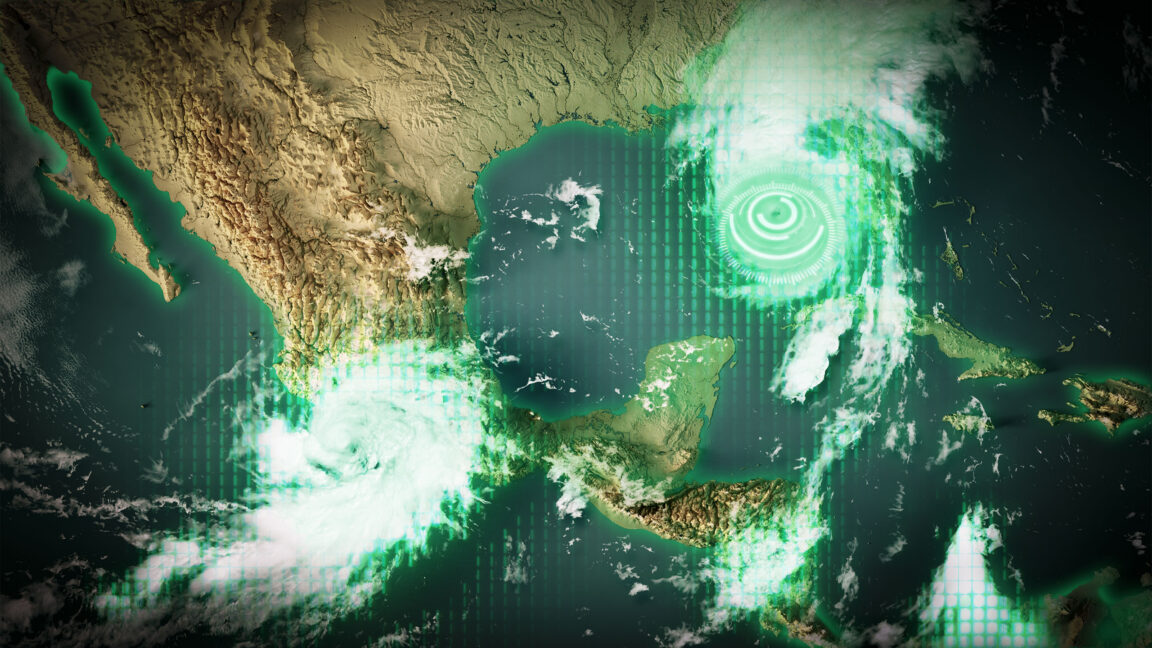
The weather and climate science AI revolution isn’t revolutionary

It feels like there's no escaping AI right now, whether you’re trying to type a sentence without being interrupted by a digital “assistant” or struggling to find a new refrigerator that doesn’t require a Wi-Fi connection for some reason. You’d be forgiven for wondering if we’re in the midst of a quantum leap in tech or whether people are just hyping up a heap of slop.

So what should we make of the growing use of AI in weather and climate modeling?

The conversation didn't get off to a great start earlier this year when a National Weather Service office posted a forecast map featuring nonexistent cities in Idaho with names like “Whata Bod” and “Orangeotild.” Thankfully, that was just an AI-generated image produced for social media, not the actual forecast model. Meteorologists and climate scientists are not yet being replaced by large language model prompt engineers.

Read full article

Comments

© Aurich Lawson | Getty Images

  •  

This Rare Meteorite Could Be Evidence of a “Massive World” Once Hidden Deep in Our Solar System


A meteorite discovered in Africa could be evidence of a lost protoplanet that once orbited our Sun, according to researchers at the University of Colorado at Boulder.

In a recent paper published in Earth and Planetary Science Letters, the team revealed evidence of an ancient protoplanet that may have been as large as Mars based on simulations of how the meteorite sample may have formed.

The four-and-a-half-billion-year-old world carried an unexpected geological makeup, which the researchers say casts doubt on common assumptions regarding planetary evolution.

Protoplanetary Demise

According to the UC Boulder team, the massive protoplanetary body collided with another object four and a half billion years ago, shattering it completely. This is the first definitive evidence of a lost protoplanet in our solar system, based on analysis of the angrite meteorite NWA 12774, a shard of that planetary embryo recovered from the Sahara Desert.

“It’s incredible to think there was once a world this large,” said lead author Aaron Bell, an assistant research professor in the Department of Earth Science at CU Boulder. “We only know it existed because a few fragments of it happened to land on Earth. These meteorites preserved evidence of a completely different pathway through which early planets developed.”

A Rare Meteorite Sample

Angrites, a rare type of volcanic rock, serve as a record of our solar system’s distant past. These rocks began forming only a few million years after the solar system’s birth, making them valuable evidence of this early era. However, they are extremely rare and difficult to find.

NWA 12774 is one of only 68 angrite samples identified among more than 80,000 meteorites cataloged by scientists. Given its rarity, the discovery could potentially reshape how researchers understand these ancient rocks.

Until now, scientists had assumed that angrites originated from relatively small asteroids less than 124 miles (200 kilometers) wide, based largely on their chemical composition. Large rocky planets such as Earth and Mars contain significant amounts of silicon dioxide, while angrites contain very little of the compound.

Unexpected Meteorite Discovery

Researchers began to reconsider those assumptions when they identified clinopyroxene in the meteorite sample. This mineral, commonly found in Earth’s crust and mantle, appeared unusually rich in aluminum, suggesting that it formed under significant pressure deep within a planetary body.

To investigate this unusual characteristic of NWA 12774, the University of Colorado Boulder team recreated the conditions under which the sample could have formed. Their analysis revealed that pressures of at least 17.5 kilobars were required to produce the aluminum-rich clinopyroxene found in the meteorite. For comparison, one kilobar is roughly equivalent to the pressure at the deepest part of Earth’s oceans, near the bottom of the Mariana Trench.

Rethinking Meteorite Origins

The researchers’ discovery proved that at least this particular angrite sample could not have formed inside a small meteorite, as a body with a radius of at least 621 miles would be required to generate the pressure needed to produce the crystals. 

Additional evidence suggested the parent body may have been even larger. The crystals’ sharp edges and delicate internal structures indicate they likely formed at relatively shallow depths beneath the surface. Reconciling both the high-pressure conditions and the shallow formation depth suggests that the parent body may have ranged in size from the Moon to Mars.

“There are many meteorites sitting in drawers that haven’t been thoroughly studied, so there were likely more of these protoplanets we don’t know about,” Bell said.

Exactly what happened to this ancient world remains uncertain, but researchers believe it was likely destroyed in a massive collision early in the solar system’s history. Fragments of that lost protoplanet may have later contributed material to other bodies, potentially including Earth itself.

“The materials that formed the angrite parent body are fundamentally different from the ingredients of Earth and Mars,” Bell concluded. “It points to a distinct and separate evolutionary path in planetary formation in the early history of our solar system.”

The paper, “High-Pressure Clinopyroxene in Northwest Africa 12774 and New Geobarometric Evidence for a Planetary Embryo-Sized Angrite Parent Body,” appeared in Earth and Planetary Science Letters on July 1, 2026.

Ryan Whalen covers science and technology for The Debrief. He holds an MA in History and a Master of Library and Information Science with a certificate in Data Science. He can be contacted at ryan@thedebrief.org, and follow him on Twitter @mdntwvlf.

  •  

Scientists ejected from diabetes conference for distributing journal reprints

Five leading scientists were ousted from the annual meeting of the American Diabetes Association (ADA) in New Orleans on Friday. Their crime: handing out copies of an editorial, published in the journal Diabetes Care on April 29, sharply criticizing the Trump administration's ongoing attacks on scientific research.

Those ousted were Steven Kahn, professor of medicine at the University of Washington and editor-in-chief of Diabetes Care, who co-authored the published editorial; former ADA President Desmond Schatz of the University of Florida, Gainesville; Aaron Kelly, pediatrics professor at the University of Minnesota; Justin Ryder of Northwestern University; and Irl Hirsch, also of the University of Washington. The five were handing out reprints of the editorial outside a room where NIH director Jay Bhattacharya had been scheduled to speak. Bhattacharya canceled and another NIH official spoke in his stead.

"They physically grabbed us, forced us out of the conference center, and now are telling us we can no longer attend this meeting," Kelly told MedPage Today, which first reported the incident. "They're taking our lanyards. It really has come to this in America. Censorship is real. America needs to stand up. Scientists, stand up. Physicians, stand up."

Read full article

Comments

© Screenshot/MedPage Today

  •  

Scientists Are Building Electronics That Stretch Like Human Skin and Learn Like a Brain

Stretchable Neuromorphic DeviceResearchers are replacing rigid silicon-based AI hardware with stretchable, neuromorphic electronics that mimic how the brain processes information, opening new possibilities for long-term human-machine integration. Modern artificial intelligence can outperform humans in tasks ranging from image recognition to medical data analysis, but there is one environment where today’s hardware still struggles: the human body. The [...]
  •  

Ancient Romans Were Obsessed With This Remarkable Herb – Then It Vanished Forever

Julius Caesar Augustus StatueSilphium was an extinct Libyan plant renowned for contraception, medicine, and trade. Its disappearance remains a historical mystery, and scientists continue searching for surviving descendants. Roman leader Julius Caesar is said to have kept a stock of it in the treasury. Ancient writer Pliny the Elder says Rome’s Emperor Nero owned the last stalk of [...]
  •  

Asteroid 2024 YR4 Won’t Hit the Moon, New JWST Observations Show

asteroid 2024 yr4

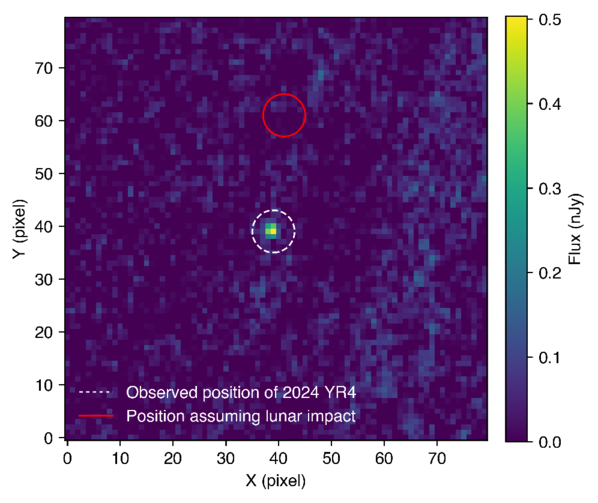
Discovered in December 2024, the roughly 60-meter-wide asteroid 2024 YR4 was initially thought to have a slim chance of striking Earth in 2032. Further observations ruled out an Earth impact but left open the possibility of a Moon impact. New JWST observations show that 2024 YR4 will speed past both Earth and the Moon without a collision.

Another Update on 2024 YR4

In April 2025, we featured a Research Note that described March 2025 JWST observations of 2024 YR4 and characterized the asteroid’s size and albedo. At the close of that article, the authors suggested that further JWST observations in early 2026 could help to refine our understanding of the asteroid’s trajectory and determine whether it would strike the Moon.

On 18 and 26 February 2026, JWST carried out those critical observations. In this dataset, the asteroid is bright enough to be detected confidently, and the background is peppered with a sufficient number of reference stars — two factors necessary to determine the precise track of the asteroid as it zipped through space.

Trajectory Refinement

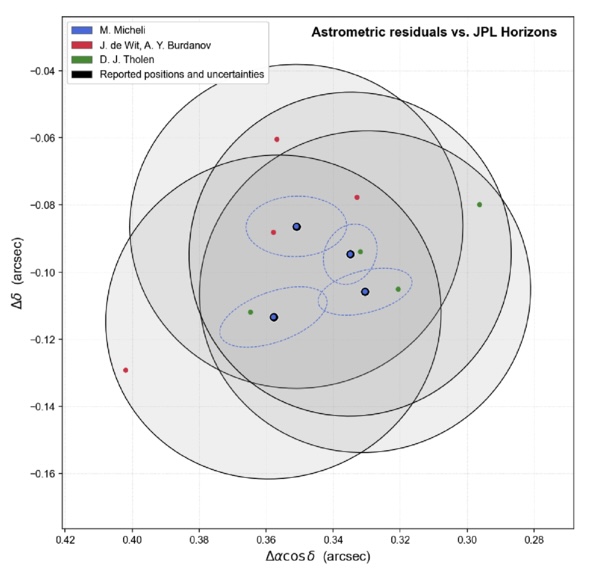
Difference between estimated and observed position for 2024 YR4

Difference between the position of 2024 YR4 determined in this work using three different reduction methods (red, blue, and green circles) and the position drawn from the existing orbit from the JPL Horizons database. The different analysis methods yielded consistent results. [Adapted from De Wit et al. 2026]

Julien de Wit (Massachusetts Institute of Technology) and collaborators analyzed the new JWST data and determined the asteroid’s position. The team used multiple methods to reduce the data and showed that their results were consistent regardless of the reduction method, ultimately yielding a measurement with an uncertainty of just 50 milliarcseconds. This is a huge improvement over the previous trajectory estimate, which had an uncertainty of 700 milliarcseconds.

Combining the latest JWST observations with existing data stretching back to the asteroid’s discovery, de Wit and coauthors determined a new, highly precise orbit for the object — one that definitively shows that the asteroid will safely pass by the Moon at a distance of 22,900 ± 800 km in 2032. In addition to ruling out the upcoming lunar impact, the team also ruled out any collisions with Earth in the next 100 years. Phew!

2024 YR4 observed and estimated position

Position of 2024 YR4 as seen by JWST in February 2026 (white dashed circle) compared to the asteroid’s location estimated from existing data (red circle). [De Wit et al. 2026]

High-Impact Science

This work highlights JWST’s potential as a tool for planetary defense. The February 2026 observations detailed here represent the faintest-ever detection of a near-Earth object, and JWST can detect objects far fainter than ground-based telescopes can. This ability allows JWST to observe potentially hazardous asteroids over a larger swath of their orbits, which translates to earlier trajectory estimation — JWST pinned down 2024 YR4’s orbit two years before the asteroid would have become bright enough for ground-based telescopes to do so.

JWST’s role may be even more important for smaller objects that rapidly become undetectable after discovery. De Wit’s team demonstrated this for a 10-meter-diameter 2024 YR4 clone on the same trajectory; for an object of this size, JWST would be able to rule out an Earth impact before the asteroid became undetectable, but ground-based telescopes could not. With surveys from facilities like Vera C. Rubin Observatory and Near-Earth Object Surveyor set to discover hundreds of thousands of new near-Earth objects, JWST’s role as a hazard assessor will likely be in high demand.

Citation

“JWST Observations of Asteroid 2024 YR4 Rule Out a 2032 Lunar Impact and Demonstrate a New Regime for Planetary Defense Follow-Up,” Julien de Wit et al 2026 ApJL 1003 L21. doi:10.3847/2041-8213/ae6a95

The post Asteroid 2024 YR4 Won’t Hit the Moon, New JWST Observations Show appeared first on AAS Nova.

  •  

Featured Image: Chasing Weywot’s Shadow

graphics showing the predicted and actual paths of Weywot's stellar occultations

The outer solar system is inhabited by swarms of small objects that are challenging to observe and characterize. When one of these objects travels in front of a star, from our perspective, the passage provides a brief chance to study these distant, icy denizens of our solar system. In a recent article, Estela Fernández-Valenzuela (University of Central Florida) and coauthors described how they predicted and observed stellar crossings by Weywot, the largest moon of the dwarf planet Quaoar, which lies roughly 44 au from the Sun. In the image above, the black dashed lines indicate the areas where Weywot was predicted to briefly blot out the light from a star, and the blue lines show the updated regions based on Hubble Space Telescope observations. In each panel, the green squares and red circles show where the occultation was and was not detected, respectively. There were five successful detections of Weywot’s passage across a star, allowing the team to constrain Weywot’s diameter to 116–172 km. The team also found that Weywot is much darker than the body it orbits, which has important implications for how the system formed. To learn more about the planning process for and results of these observations, be sure to check out the full research article linked below.

Citation

“Weywot, an Unusually Low-Albedo Satellite in the Trans-Neptunian Region,” Estela Fernández-Valenzuela et al 2026 ApJL 1002 L37. doi:10.3847/2041-8213/ae6076

The post Featured Image: Chasing Weywot’s Shadow appeared first on AAS Nova.

  •  

Citizen Science Born in the Pandemic: The Hubble Image Similarity Project

images from the Hubble Image Similarity Project

Motivated by a desire to support community members financially during the coronavirus pandemic, researchers employed 30 local citizen scientists in the Hubble Image Similarity Project. This project quantified the similarities between astronomical images, providing a way to test the results of image-search algorithms.

Seeking Similarities

Eagle Nebula

The Eagle Nebula, pictured here in an image from Kitt Peak National Observatory, is a star-forming region in the Milky Way. [T.A.Rector (NRAO/AUI/NSF and NOIRLab/NSF/AURA) and B.A.Wolpa (NOIRLab/NSF/AURA); CC BY 4.0]

Say you have an image of a star-forming region, featuring eye-catching gas clouds, dense and dusty knots, and newborn stars. How would you go about finding other images that resemble yours?

You might start your search with an astronomical image database, using filters for object type or instrument to sift through thousands and thousands of options. But even filtering out everything but star-forming regions might yield vastly different results, given the widely varying shapes, colors, and sizes of these regions.

Or maybe you’ll feed your image into a neural network that has been trained to spot similar images. The results may seem promising, but how can you tell whether the algorithm has found the images that are the most similar? Would another algorithm do better?

The Hubble Image Similarity Project

Astronomical image collections rarely contain information about similarities between images in their metadata, and while neural networks appear to excel at gathering similar images, the results of these models are generally unverified. The Hubble Image Similarity Project, led by Richard White (Space Telescope Science Institute) and Josh Peek (Space Telescope Science Institute and Johns Hopkins University), addressed these issues with a team of citizen scientists who generated similarity information for astronomical images, providing a quantitative means to test the results of neural networks.

example of how the Hubble Image Similarity Project selects image cutouts for study

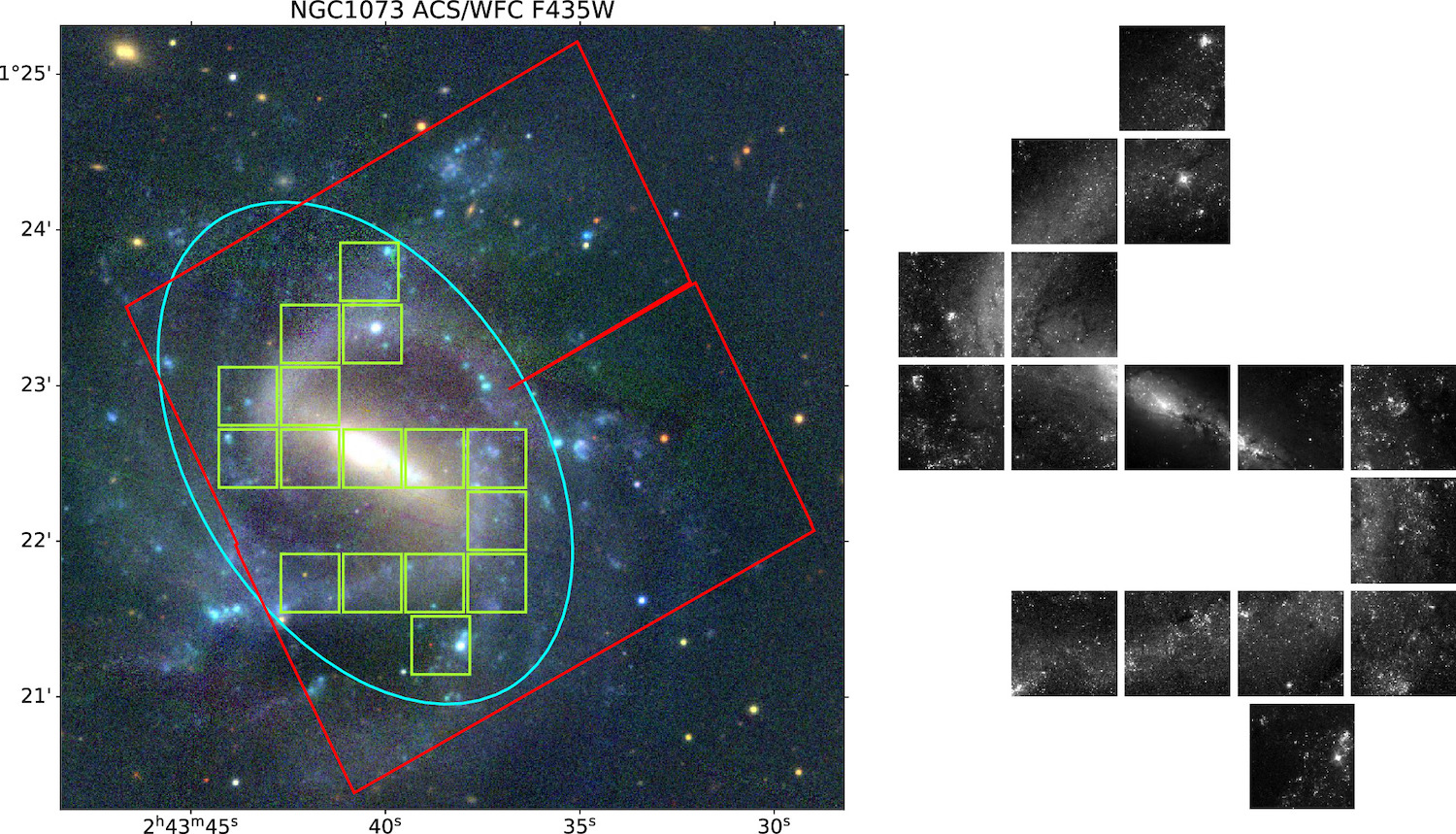
An example of individual test images (green squares) extracted from a Hubble Legacy Archive image (red square). Low-contrast areas have been excluded, leaving the galaxy’s spiral arms for analysis. Click to enlarge. [White & Peek 2025]

White and Peek began by amassing a sample of images from the Hubble Legacy Archive. This sample included many different object types, such as galaxies, planetary nebulae, star-forming regions, and star clusters. After trimming and binning the images, converting them to 8-bit grayscale, filtering out low-contrast images, and eliminating satellite trails, image artifacts, and repeated observations of the same patch of sky, 2,098 images of 666 objects remained.

Citizen Scientists, Assemble

White and Peek recruited 30 members of the community within walking distance of the Space Telescope Science Institute to identify similar astronomical images, and the reviewers were paid for their work. In the three phases of the project, reviewers considered test images one at a time and 1) selected all similar images from a set of 15 comparison images, 2) selected the most similar image from a narrowed-down set of 6 comparison images, and finally 3) selected the most similar image from a set of 3 comparison images.

similar images from the Hubble Image Similarity Project and a visualization of the data

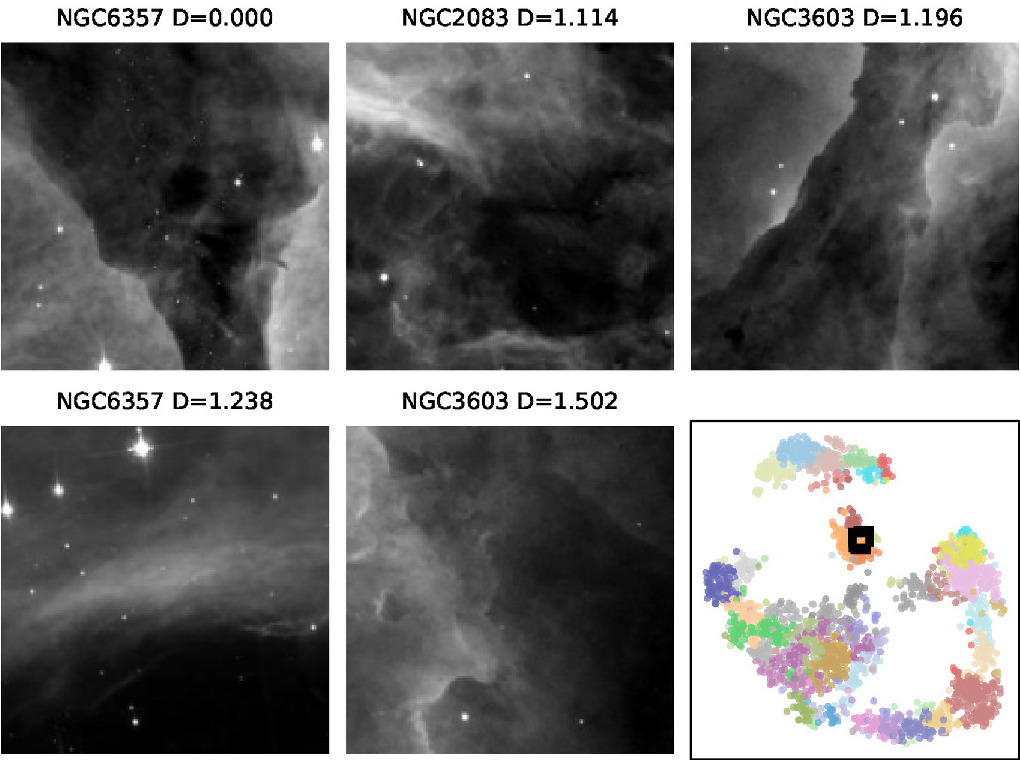
Examples of similar images according to the image similarity matrix. In the lower-right corner is a visualization of the similarity data. The semicircle of data points in the bottom half of this visualization represents galaxies, while star clusters occupy the small arc near the top and nebulae sit in the island in the center of the plot. Click to enlarge. [Adapted from White & Peek 2025]

The citizen science team ultimately compared 5.4 million pairs of images, and White and Peek used these comparisons to produce an image similarity matrix. The matrix describes the metaphorical “distance” between the images, with the most similar images being the smallest distance apart.

Similar images resemble one another in terms of structure, texture, and other factors that White and Peek say are “difficult even to describe in words” — for example, the diffuse glow of a galaxy interrupted by a bright star with diffraction spikes, or a nebula speckled with stars and dense dusty clumps. The similarity data from this study are available online and can be used to test the performance of image-search algorithms. In future work, the authors plan to carry out a similar project using images of the Martian landscape.

Citation

“The Hubble Image Similarity Project,” Richard L. White and J. E. G. Peek 2025 AJ 169 306. doi:10.3847/1538-3881/adcb43

The post Citizen Science Born in the Pandemic: The Hubble Image Similarity Project appeared first on AAS Nova.

  •  

NASA’s INCUS Mission on Road to Launch, Study Storms From Space

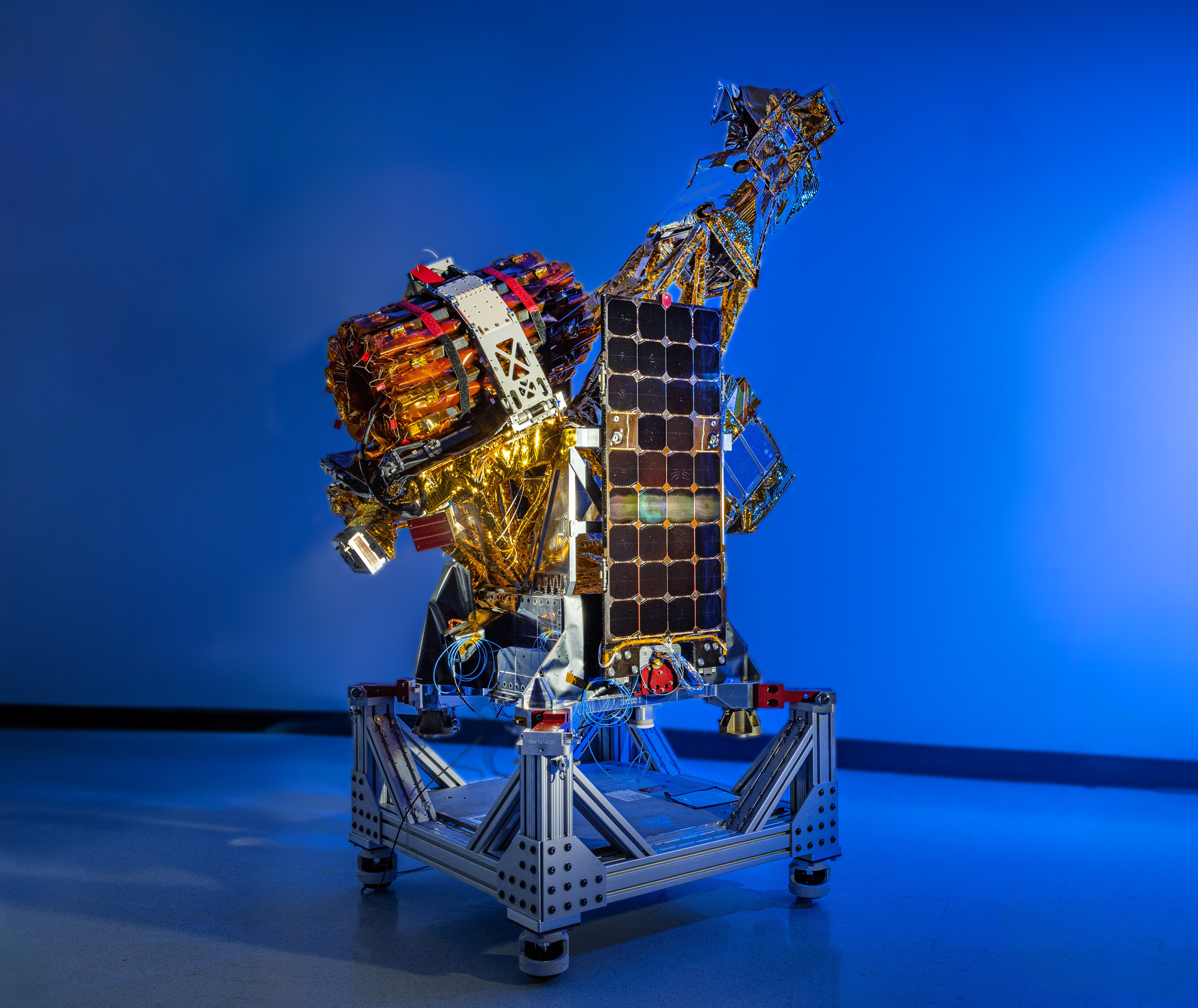
A complex spacecraft partially wrapped in gold-colored foil and featuring a large rectangular solar panel stands on a metallic support structure against a solid blue background.
Two of the three SmallSats for NASA’s INCUS mission, including the one shown here, have completed assembly and testing in preparation for shipment to NASA’s Wallops Flight Facility in Virginia for a 2027 launch. From low Earth orbit the satellites will observe the dynamics of tropical convective storms.
Blue Canyon Technologies

Teams working on NASA’s INCUS (Investigation of Convective Updrafts) mission, the first space-based survey of the dynamics of tropical convective storms, have completed assembly and tested two of the mission’s small satellites, or SmallSats. Testing continues on the third SmallSat and is scheduled for completion no earlier than September in advance of a 2027 launch.

The three satellites will fly in tight coordination in low Earth orbit, with the first and second satellites separated by 30 seconds and the second and third satellite by 90 seconds.

Characterized by the sudden and intense lifting of large amounts of air and water, tropical convective storms provide more than half of the world’s precipitation, a crucial source of life-supporting fresh water. But they also produce severe weather, which can increase risks to life and property. The INCUS mission will help improve understanding of where, when, and why convective storms form.

Led by principal investigator Sue van den Heever of Colorado State University in Fort Collins, INCUS will use spaceborne radar instruments developed at NASA’s Jet Propulsion Laboratory in Southern California to observe the vertical motion of air and water, known as convective mass flux, as storms develop and evolve. The mission will also explore how environmental factors such as air temperature, humidity, pressure, wind speed, and wind direction correlate with that movement.

These insights will improve storm forecasting, potentially mitigating loss of life and property damage in affected communities, by helping decision-makers plan for and respond to severe weather events and manage freshwater supplies. 

Teams at NASA JPL built each INCUS satellite’s radar, which were combined with a deployable mesh radar reflector made by Tendeg in Louisville, Colorado. The middle satellite also carries a microwave radiometer, also made at NASA JPL, that provides spatial context to the vertical precipitation profiles provided by the radars.

The three assemblies shipped in late 2025 and early 2026 to Blue Canyon Technologies in Lafayette, Colorado, where they were integrated with Blue Canyon’s spacecraft buses. The first two satellites, also called observatories, have successfully undergone vibration and thermal vacuum testing to ensure they will be able to withstand the jostling of launch and the extreme temperatures of space.

These two observatories also shipped to Tendeg, where teams successfully performed test deployments of the reflectors. Then they returned to Blue Canyon for additional testing. They’ll remain in storage before heading out next year to the launch site at NASA’s Wallops Flight Facility in Virginia.

Funded through the Earth Venture Mission-3 acquisition under NASA’s Earth System Science Pathfinder Program, INCUS is one of several missions fulfilling the clouds, convection, and precipitation requirements of NASA’s Earth System Observatory, a series of interconnected missions set to study our home planet’s dynamic natural systems and how they interact. The mission is also part of FALCON (Fleet for the Atmosphere Linking Commercial Observations with NASA), a fleet of atmosphere-observing satellites that will combine hardware contributions from NASA centers, universities, and commercial partners.

The post NASA’s INCUS Mission on Road to Launch, Study Storms From Space appeared first on NASA Science.

  •  

Scientists Demonstrate What Pianists Have Argued for Over 100 Years


For more than a century, musicians have maintained that the way a pianist touches a key influences the sound that emerges. Many scientists, however, have argued that after the hammer strikes the string, the instrument itself determines the outcome, making the pianist’s touch irrelevant.

Now, a recent study published in the Proceedings of the National Academy of Sciences provides some of the strongest evidence yet in support of the musicians’ perspective.

A research team led by Dr. Shinichi Furuya of the NeuroPiano Institute and Sony Computer Science Laboratories developed a custom sensor system called HackKey. This system can record the movement of all 88 piano keys at 1,000 frames per second, with a spatial precision of 0.01 millimeters. The team invited 20 internationally recognized pianists to play notes while intentionally aiming for contrasting timbres, such as bright versus dark and light versus heavy. Listeners were able to distinguish among the different timbres, even individuals with no experience playing the piano.

The Movements Behind the Sound

The researchers identified a series of micro-movements beneath each keystroke. These movements are so subtle that they are almost impossible to see, but precise enough for listeners to perceive differences in sound.

Small changes in how quickly a key accelerates, slight overlaps between notes, and variations in the speed of initial contact with the key all influenced how listeners described the resulting sound. When each of these factors was adjusted individually, the perceived timbre changed. Adjusting a single movement feature was enough to reliably change how listeners perceived timbre. The results show that touch has a direct effect on sound, independent of factors such as volume or tempo.

The study describes these micro-movements as a motor skill developed through years of advanced training. The researchers call the emerging science of mapping movement to musical experience “dynaformics.”

A Debate as Old as the Modern Piano

The debate over whether touch can alter piano timbre dates back to at least the early 1900s, when music educators began discussing what distinguishes one performer’s sound from another. The piano’s mechanical action appeared to support the skeptics, since the hammer, once released, moves independently before striking the string and is not directly contacted by the pianist’s finger.

As a result of this mechanical process, many acousticians concluded that any reported differences in tone were psychological, influenced by context, volume, or timing rather than by touch. Musicians maintained their position but did not have the scientific tools to prove it.

To settle this debate, Furuya’s team developed a custom biometric contact-sensing system called HackKey, capable of recording the movement of all 88 piano keys at 1,000 frames per second with sub-millimeter precision. The system captured in-depth piano movement data that previous technology could not. For the first time, researchers could observe the specific actions of elite pianists and relate those movements to listeners’ descriptions of sound.

What It Means Beyond the Concert Hall

Piano teachers have often used general phrases like “play warmer” or “use a softer touch” because the specific movements that create certain sound qualities were not well understood. This study now offers a guide to those movements.

Future training tools may allow students to see precisely what their fingers are doing when a note is played successfully or not. Instead of relying on a teacher’s metaphor, students could compare their own keystrokes to a standard and work to improve their technique. The researchers suggest that this approach could make expressive technique easier to teach and visualize, especially for students who find it difficult to translate verbal instructions into physical actions.

The research may also apply to rehabilitation, robotics, and human-computer interaction. Discovering that small differences in movement can shape auditory perception offers new insight into how the brain links movement and sensory experience. Some researchers are exploring whether systems based on expressive musical movement could help patients recover dexterity and coordination after injury.

Most scientific research on music has focused on elements that are easier to measure, like pitch, loudness, and rhythm. Timbre, or the quality or “color” of a sound that makes one instrument or voice different from another, has been harder to measure. This study offers a new way to understand the mechanics behind this concept. The findings suggest that some of the most expressive parts of music come from movements too small to see, developed through years of practice.

Austin Burgess is a writer and researcher with a background in sales, marketing, and data analytics. He holds an MBA, a Bachelor of Science in Business Administration, and a data analytics certification. His work focuses on breaking scientific developments, with an emphasis on emerging biology, cognitive neuroscience, and archaeological discoveries.

  •  

Some ancient microbes frozen with Ötzi the Iceman are still growing

Ötzi the Iceman, Europe’s most famous mummy, is crawling with microbes, some long dead, some still eking out a living after thousands of years, and some very modern.

After he died in the Ötztal Alps, the Copper Age man now known as Ötzi lay alone and forgotten for 5,300 years, until a group of hikers stumbled on his freeze-dried remains in 1991. Since then, he’s received a lot of attention from scientists, who have sequenced his DNA, pored over his last meal and the remains of his gut microbes, and examined his clothes and his broken tools. Today, Ötzi lies in a high-tech resting place at the South Tyrol Museum of Archaeology in Italy, where, it turns out, his body is still home to a handful of cold-adapted yeast species that have probably been with him since just after he died.

Slightly morbid souvenirs from the Alps

Microbiologist Mohamed S. Sarhan (of the Institute of Mummy Studies at the private Eurac Research center) and his colleagues recently sampled material from Ötzi’s stomach and meltwater from inside his body, swabbed his skin, and even sampled airborne microbes from his frozen storage room and the lab outside it. They also took samples from a block of frozen alpine soil taken from next to Ötzi’s body back in 1991.

Read full article

Comments

© Sarhan et al. 2026

  •  

Scientists Discover Gut Signal That Turns Off Sugar Cravings

Woman Diet Craving Cake DessertScientists discovered a hidden gut-brain network that can change cravings when the body needs more protein. The body has a remarkable ability to recognize when it is missing important nutrients and adjust behavior accordingly. New research shows that the gut plays a much larger role in this process than previously understood, actively detecting protein shortages [...]
  •  

Jupiter Accelerates Electrons to Near-Light Speed, Offering Clues to Cosmic Ray Origins

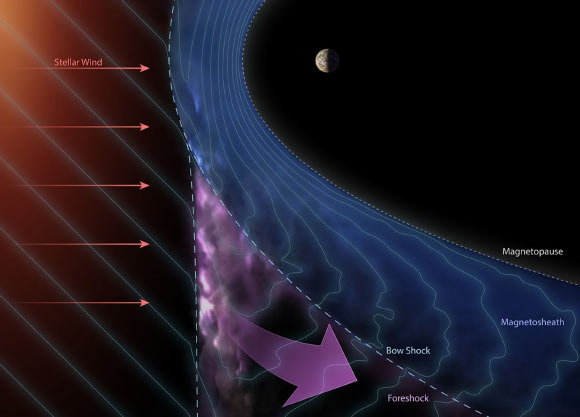
As planets and stars travel through the streams of charged particles flowing across space, their magnetic fields act like obstacles; incoming particles are slowed and deflected, forming a boundary called the bow shock; just ahead of this boundary lies the foreshock, a variable region where magnetic conditions can accelerate some particles to nearly the speed of light. Image credit: Ben C. Smith, Johns Hopkins Applied Physics Laboratory.

The giant planet’s bow shock isn’t just deflecting the solar wind, it’s acting as a powerful particle accelerator, firing electrons to relativistic energies of at least 1 MeV, according to a new analysis of data from NASA’s Juno spacecraft.

The post Jupiter Accelerates Electrons to Near-Light Speed, Offering Clues to Cosmic Ray Origins appeared first on Sci.News: Breaking Science News.

  •  

Small modular nuclear reactor reaches criticality in first test

Just over a year ago, the Trump Administration issued an executive order meant to accelerate the development of nuclear power in the US. While an entire startup ecosystem has developed around the use of different—and typically smaller—reactor designs, only one of them has been fully licensed so far, and there are no plans to actually build any instances of that design.

The executive order directed the Department of Energy to have three different reactor designs reach criticality in a bit over a year. On Thursday, a startup called Antares announced that a test reactor it had placed at the Idaho National Laboratory had reached criticality, making it the first new design to cross this threshold. Criticality means that the nuclear reactions inside the hardware had become self sustaining; it does not mean the reactor had started to generate power.

Antares is one of a number of companies that is basing its design on a new fuel system called TRISO that takes some of the complexity and safety out of the reactor design and places them in the fuel design. The fuel design is based on tiny pellets with a uranium oxide core. The pellets are surrounded by several layers of carbon that can moderate the energy of both the neutrons and lighter nuclei that are released by fission reactions. All of that is encased in a hard ceramic shell that's designed to withstand the highest temperatures that can be produced by the encased uranium.

Read full article

Comments

© Department of Energy

  •  
❌