Where do the mysterious cosmic messengers called neutrinos come from? Researchers search for a connection between neutrinos and accretion flares from black holes.
Neutrinos — neutral, nearly massless elementary particles — are generated by natural particle accelerators across the universe. Facilities like the IceCube Neutrino Observatory, which employs detectors buried a mile deep in Antarctic ice, spot neutrinos from distant astrophysical sources, but matching these neutrinos to their sources is no easy task.
Thus far, researchers have discovered a compelling connection between neutrinos and distant active galactic nuclei, which are powered by the accretion of gas onto supermassive black holes. The active galactic nucleus phase of a black hole tends to be long lived, with activity lasting hundreds of thousands of years or more, making these nuclei lasting sources of neutrinos.
Sampling Flares
Recently, researchers have found tentative evidence for coincident neutrinos from short-lived accretion events like tidal disruption events, in which a star is torn apart and accreted by a black hole. These studies have uncovered a potential connection between neutrinos and tidal disruption events with mid-infrared echoes, signaling the presence of obscuring dust.
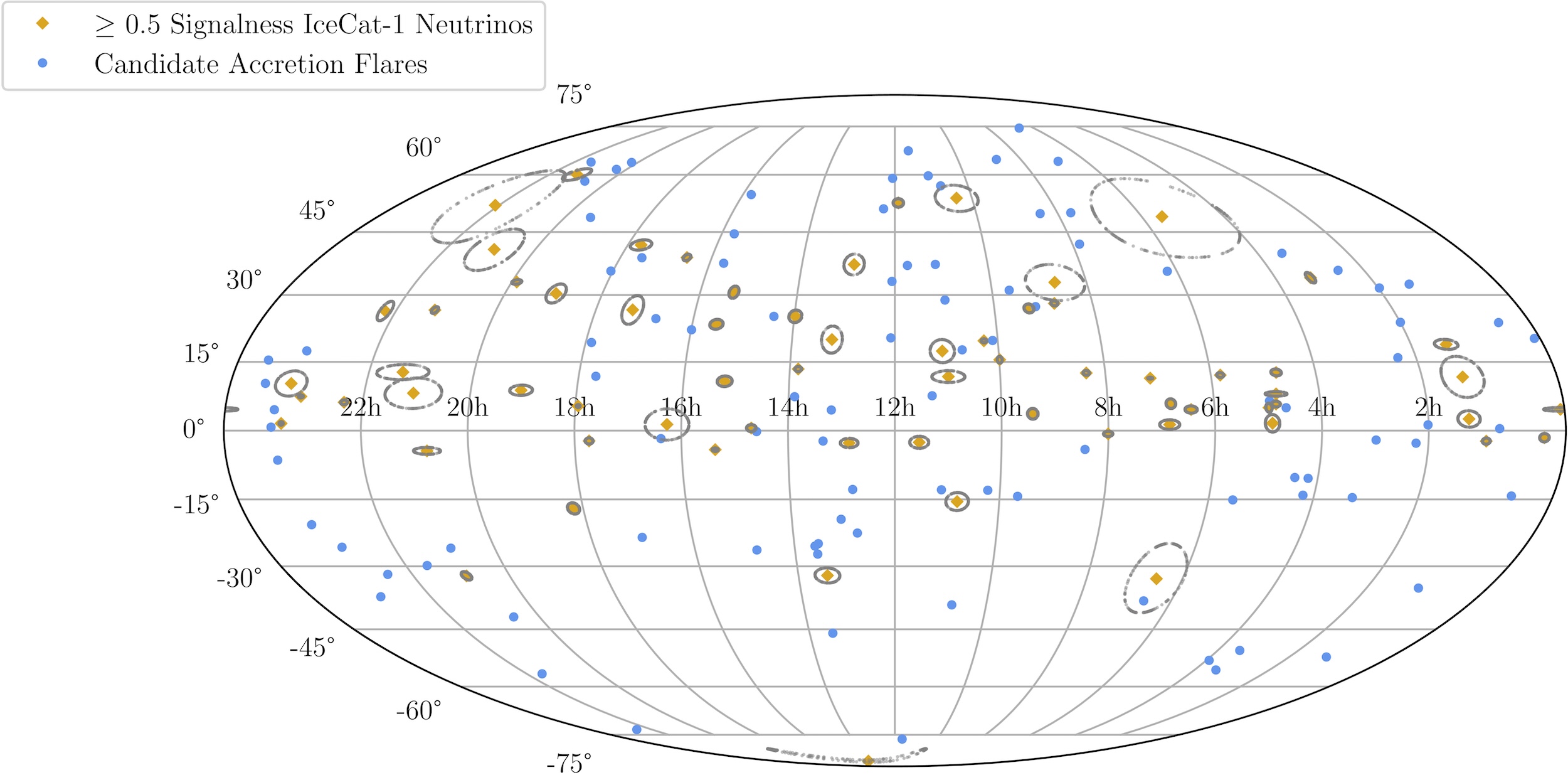
A map of the locations of the neutrinos (yellow diamonds) and black hole flares (blue circles) on the sky. Click to enlarge. [Wang et al. 2026]
To investigate whether there is any connection between neutrinos and short-lived accretion events, Megan Wang (Massachusetts Institute of Technology) and collaborators first compiled a sample of 99 black hole flares observed by NEOWISE. These flares were selected for their strong mid-infrared emission, location in the nuclei of galaxies, and a fast rise and slow decline. The team applied additional selection criteria to remove other bright transients, such as supernovae, and retain only tidal disruption events and active galactic nucleus accretion flares.
For the neutrino side of the equation, Wang’s team turned to IceCube’s most recent catalog of neutrino events from astrophysical sources. In total, they compiled a sample of 68 events for which the odds of the source being astrophysical was greater than 50%, and for which the directional uncertainty was below 50.
No Coincidences
For a flare and a neutrino to be considered spatially and temporally coincident, the neutrino must arrive within one year of the flare, and the flare must fall within the 90% certainty contours of the neutrino. Ultimately, Wang’s team found no neutrinos that fulfilled both criteria and only one that was spatially but not temporally coincident with a black hole flare.
This result appears to be at odds with previous studies that found several neutrinos that were coincident with tidal disruption events. Wang and collaborators noted that while this work finds no association between neutrinos and black hole flares, it’s possible that the team is studying a different population of accretion events.
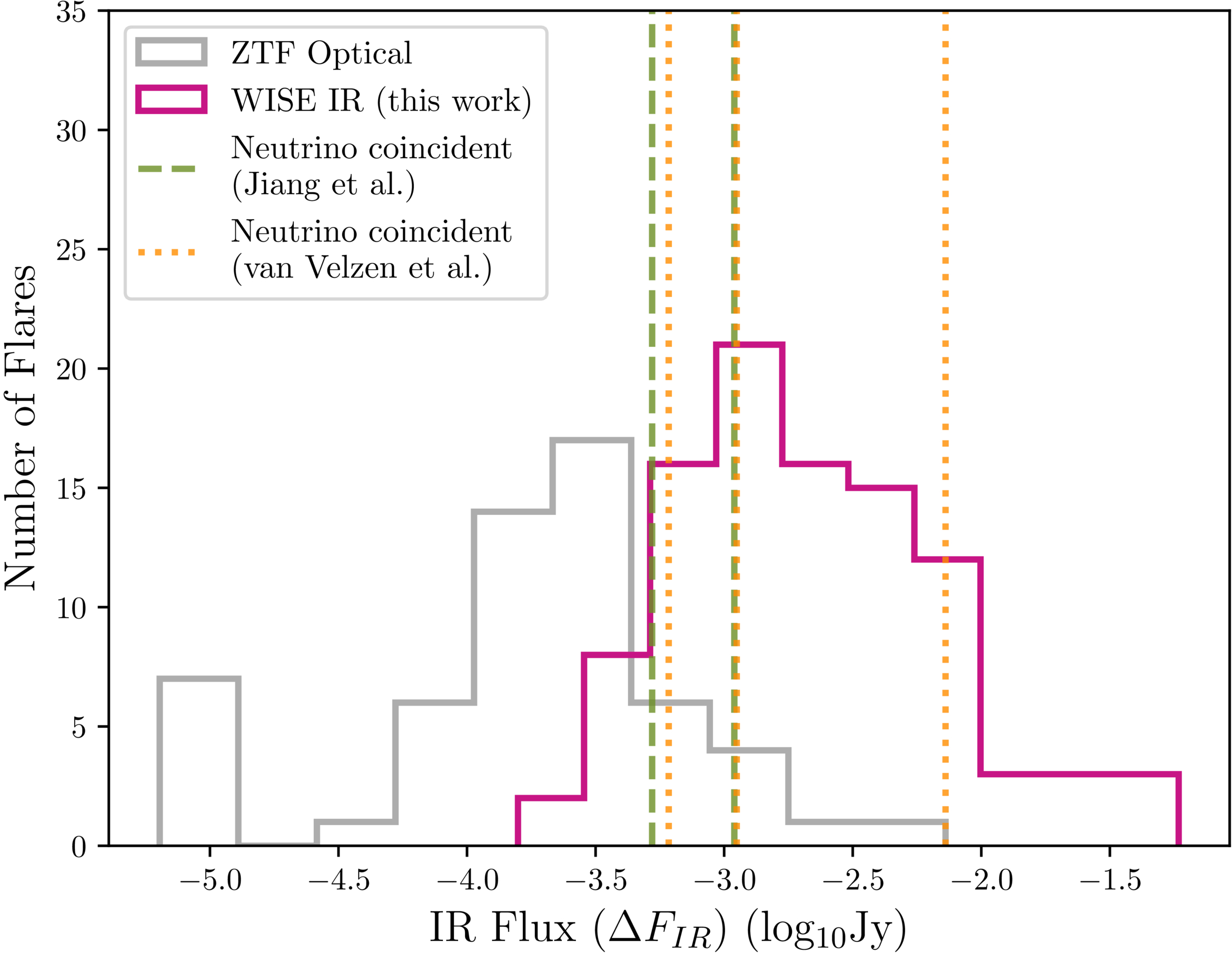
Infrared fluxes of the flares sampled in this study (magenta), optically identified flares (gray), and the tidal disruption events thought to have coincided with neutrino detections (green and gold dashed lines). [Wang et al. 2026]
For example, while the previous neutrino-associated flares were flagged for having strong mid-infrared emission, they differ from the current sample in that they were detected at optical wavelengths. The flares sampled in this work were detected in the mid-infrared and have little to no optical emission, potentially highlighting intrinsic differences compared to previous samples.
Future work, including studies that leverage upcoming datasets from the Vera C. Rubin Observatory, the Roman Space Telescope, and the NEO Surveyor, can address this question further and search for connections with specific populations of black hole flares.
Citation
“Testing the Association of Supermassive Black Hole Infrared Flares and High-Energy Neutrinos,” Megan Wang et al 2026 ApJL998 L29. doi:10.3847/2041-8213/ae3f90
Astronomers from around the world were fascinated last year when 3I/ATLAS, the third interstellar object ever observed passing through our Solar System, was discovered.
The SETI Institute was one of the many organizations that examined the unusual interstellar object, conducting a comprehensive search for any signs that it might be producing technological signals.
Using the Allen Telescope Array (ATA) at the Hat Creek Radio Observatory in Northern California, SETI researchers scanned a broad range of radio frequencies in search of potential evidence of extraterrestrial technology associated with 3I/ATLAS. The data that came back was clear: no signs of artificial signals. As most astronomers expected, 3I/ATLAS is most likely a natural comet.
“We searched for narrowband signals across a broad range of spectrum: 1–10 GHz. We can do this efficiently due to the ATA’s ability to record and search billions of channels at a time,” says Dr. Sofia Sheik, lead author of a new paper describing the SETI Institute’s work, in an email to The Debrief.
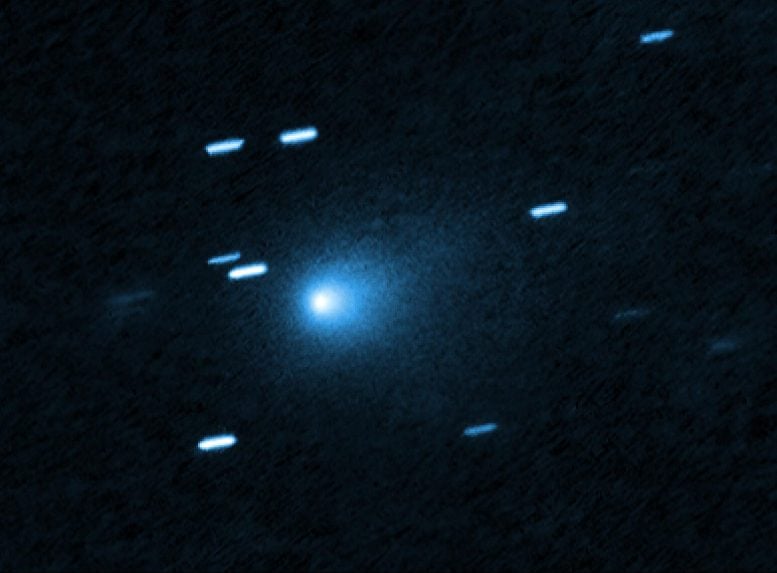
The interstellar comet 3I/ATLAS (Image Credit: International Gemini Observatory/NOIRLab/NSF/AURA/Shadow the Scientist)
Observations of interstellar objects have become more common in recent years, due to advances in telescopic technologies available to astronomers. Discovered last July, 3I/ATLAS is only the third confirmed interstellar visitor to enter our Solar System, preceded by 1I/ʻOumuamua in 2017, and 2I/Borisov in 2019.
These rare discoveries help astronomers understand the materials in our cosmic backyard. By analyzing the composition of these objects, scientists can gain a deeper understanding of how planetary systems develop and evolve throughout the galaxy.
The Research
The majority of recent astronomical observations indicate that 3I/ATLAS is a natural object, albeit one that exhibited some unusual qualities. However, the possibility remains that we may one day find a technological artifact from an intelligent civilization; it is equally possible that at some point, aliens may also discover a spacecraft of Earthly origin.
“Eventually, our own Voyager spacecraft will be extraterrestrial artifacts in other stellar systems,” Sheik told The Debrief. “Given that, it is important that we understand the natural distribution of interstellar objects so that we will be able to identify any anomalies that could one day be signs of an artificial interstellar object.”
The SETI research team studied 3I/ATLAS for over seven hours using the ATA, searching radio frequencies from 1 to 9 gigahertz. This range is especially important because it can detect narrowband radio signals, which are rarely produced by natural space phenomena and are often considered possible signs of technological activity.
Researchers found 74 million narrowband signals, but after filtering out human interference and motion-matched sources, only about 200 remained. These were later confirmed to come entirely from Earth-based technology or satellites.
“To be clear, we did not detect any radio signals from 3I/ATLAS. We ruled out the presence of signals down to power levels comparable with everyday appliances: for example, we definitely would have picked up a cell tower or a radio station equivalent had it been on the surface of 3I/ATLAS,” Sheik said.
In other words, no technosignatures were detected. The SETI observation ruled out signals stronger than approximately 10 to 110 watts across the observed frequencies (comparable to the power consumption of a household appliance).
NASA diagram showing the trajectory of the interstellar object 3I/ATLAS (Image Credit: NASA).
The Origins of 3I/ATLAS
For a time, there was a considerable amount of speculation over whether 3I/ATLAS could represent something more than just a natural object. Among the proponents of such ideas, theoretical physicist Avi Loeb emerged as one of the most visible supporters of the possibility that the interstellar object displayed anomalous qualities that could point to technological origins.
Last July, shortly after the object’s discovery, Loeb predicted on his Medium page that 3I/ATLAS may be one of two things: a comet possessing a smaller core with a radius less than 400 meters, or “an object that favored a radial orbit into the inner solar system,” meaning that it may also be a larger object compared to its predecessors. Indeed, further observations of the object eventually suggested that 3I/ATLAS appears to be significantly larger than ‘Oumuamua or Borisov was.
Loeb also suggested in a podcast interview that 3I/ATLAS might not be following a random trajectory, but rather that its current motion could be understood as “directed” toward the inner solar system.
“That obviously opens the door for it being technological, because who would target the inner solar system?” said Loeb during an interview.
In an email to The Debrief, Loeb shared his thoughts on the recent SETI findings.
“Radio communication is an old technology, which was recently accompanied by optical laser communication in NASA’s Artemis II mission to the Moon,” Loeb said. “Lasers might replace radio communication in our future space missions, and there is no guarantee that they would operate at the frequencies scanned in this study.”
“To save power, a technological transmitter might beam its signal in the direction of the receiver (rather than Earth) and might only transmit sporadically,” Loeb added.
“Interestingly, the anomalous ‘Wow! Signal’ detected on August 15, 1977, came from a direction which is separated by only 9 degrees from the arrival direction of 3I/ATLAS into the inner Solar System, but a similar signal was never detected again,” Loeb told The Debrief.
The Search for Interstellar Objects
For Sheik and the team, while 3I/ATLAS did not display any obvious signatures that could be associated with technosignatures, it still provided a significant learning opportunity.
“The results from 3I/ATLAS show how realistic it is to detect a signal with the technology we have today,” said co-author Valeria Garcia Lopez. “That is why it is important to keep searching for technosignatures, even from objects we might not expect to have signals.”
Additionally, this project highlighted the ATA’s ability to respond quickly to new discoveries. Observations began less than 24 hours after the discovery of 3I/ATLAS was announced, showcasing the telescope’s flexibility and preparedness.
“One of the ATA’s advantages is being able to get quickly on-source to follow up on new and exciting discoveries, which was showcased in the 3I/ATLAS observations,” Sheik told The Debrief. “3I/ATLAS was announced on July 1st, and the ATA began observations on July 3rd.”
With ongoing advancements in technology, future observations of similar interstellar objects should become more frequent.
“For sources that might be changing quickly, this kind of rapid follow-up is essential to get early data and context for later observations with other observatories,” Sheik added.
Chrissy Newton is a PR professional and the founder of VOCAB Communications. She currently appears on The Discovery Channel and Max and hosts the Rebelliously Curious podcast, which can be found on YouTube and on all audio podcast streaming platforms. Follow her on X: @ChrissyNewton, Instagram: @BeingChrissyNewton, and chrissynewton.com. To contact Chrissy with a story, please email chrissy @ thedebrief.org.
A distant quasar has revealed one of the most extreme ultraviolet outflows ever observed, providing new clues about the powerful interactions between supermassive black holes and their host galaxies. A supermassive black hole more than a billion times the mass of the Sun is blasting gas through space at such extraordinary speeds that astronomers are [...]
“Extraterrestrial Cause for the Cretaceous-Tertiary Extinction,” by physicist Luis Alvarez, geologist Walter Alvarez, Frank Asaro, and Helen Michel, was published in Science June 6, 1980. In it, the authors propose that an asteroid crashing to Earth was responsible for the death of the dinosaurs 65 million years ago. (The timeline was later amended to 66Continue reading "June 6, 1980: The asteroid impact theory"
An interstellar comet just revealed hidden methane and chemical clues from another star system. NASA’s James Webb Space Telescope has achieved another milestone by capturing the first mid-infrared chemical fingerprint of an interstellar object. The observations focused on comet 3I/ATLAS, a rare visitor from beyond our solar system, and the findings have been published in [...]
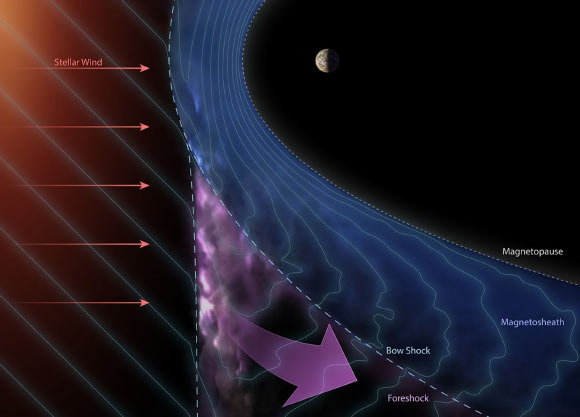
The giant planet’s bow shock isn’t just deflecting the solar wind, it’s acting as a powerful particle accelerator, firing electrons to relativistic energies of at least 1 MeV, according to a new analysis of data from NASA’s Juno spacecraft.
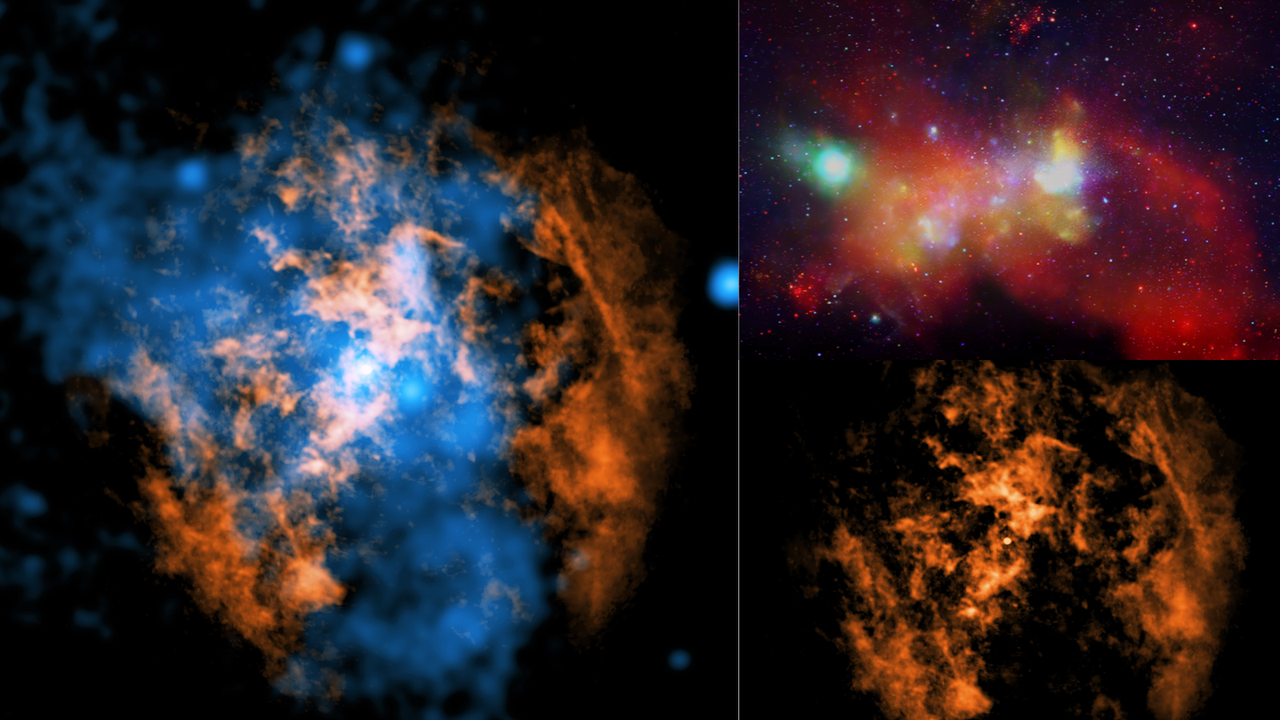
After searching for 50 years, astronomers have finally discovered powerful winds blowing from Sagittarius A*, the supermassive black hole at the heart of our galaxy.
The search for a ninth planet in our solar system could reach a turning point as soon as this year, according to a planetary scientist involved in the hunt for a mysterious object believed to be lurking in the outer reaches of the Solar System.
For the past decade, astronomers around the world have been searching for evidence of another resident in our planetary neighborhood. As far back as 2016, there were already hints that something might be out there, given the odd orbits of distant objects like Sedna, discovered in 2003.
Now, two astronomers—California Institute of Technology (Caltech) researchers Konstantin Batygin, a professor of planetary science, and his colleague, Dr. Michael E. Brown—believe there is a high probability that the confirmation of a ninth planet in our solar system could be on the horizon.
Batygin and Brown’s findings suggest Planet Nine may have a mass roughly 5 to 10 times that of Earth and orbit, on average, about 20 times farther from the Sun than Neptune, which circles the Sun at an average distance of 2.8 billion miles. If it exists, the distant world would take between 10,000 and 20,000 years to complete a single orbit around the Sun.
“This would be a real ninth planet,” says Brown, the Richard and Barbara Rosenberg Professor of Planetary Astronomy, in a 2016 statement. “There have only been two true planets discovered since ancient times, and this would be a third. It’s a pretty substantial chunk of our solar system that’s still out there to be found, which is pretty exciting.”
Evidence for Planet Nine comes from a small group of distant Kuiper Belt objects whose highly elongated orbits appear clustered in the same direction and share similar orbital tilts relative to the plane of the known planets.
Researchers argue that this type of alignment is unlikely to occur by chance. Alternative explanations involving the Kuiper Belt itself have also been explored, but models suggest the belt would require far more mass than has been observed to produce the effect.
Brown’s excitement shines through: “It’s almost like having six hands on a clock all moving at different rates, and when you happen to look up, they’re all in exactly the same place,” he says, adding that the odds of having that happen are something close to one in 100.
Computer simulations suggest that a large, unseen planet in the outer Solar System could maintain these orbital alignments through its gravitational influence. The models also demonstrate how mean-motion resonances could keep the distant objects in stable orbits while preventing collisions with the proposed planet.
The hypothesis may also explain the unusual trajectories of objects such as Sedna and 2012 VP113, whose highly elongated orbits do not bring them close to Neptune.
Konstantin Batygin, astronomer and Professor of Planetary Sciences at Caltech.
Japanese Scientists Find More Evidence
In July, additional data relevant to the Planet Nine debate emerged with the discovery of a newly identified object nicknamed “Ammonite,” found by Japanese astronomers using the Subaru Telescope on Maunakea, Hawaii. The object is only the fourth known sednoid, joining a rare class of distant celestial bodies with unusual orbits beyond Pluto.
“The fact that Ammonite’s current orbit does not align with those of the other three sednoids lowers the likelihood of the Planet Nine hypothesis,” said Dr. Yukun Huang of the National Astronomical Observatory of Japan, who conducted simulations of Ammonite’s orbit in a July interview with The Debrief.
“It is possible that a planet once existed in the Solar System but was later ejected, causing the unusual orbits we see today,” says Huang.
How Planet Nine Could be Found This Year
Astronomy is often a science of probabilities and competing hypotheses, but Planet Nine presents a relatively rare case where new observations may soon provide a clear answer. The Vera C. Rubin Observatory in Chile recently began scientific operations and could provide the data needed to confirm—or rule out—the existence of Planet Nine.
Perched atop a mountain in Chile, the NSF–DOE Vera C. Rubin Observatory observes the night sky in extraordinary detail. Equipped with the largest digital camera ever built for astronomy, it will repeatedly survey the sky over ten years, producing an unprecedented time-lapse record of the Universe.
In a recent podcast interview, Batygin told The Debrief how his and Brown’s theory could soon be tested.
“The Planet Nine hypothesis is kind of readily refutable, right? I find that to be quite important,” says Batygin. “There’s a new telescope that came online called the Vera Rubin Observatory, and as it collects data this year, we will, I think, know one way or another whether Planet Nine is really out there or not.”
Batygin says Rubin’s greatest strengths are its survey efficiency and extensive sky coverage. By repeatedly imaging vast portions of the sky, Rubin is uniquely suited to detecting a faint, distant, and slowly moving object like Planet Nine.
“If Rubin detects an object at hundreds of astronomical units from the Sun, and its orbit is consistent with the predicted Planet Nine parameter space, that would essentially be it,” Batygin explained, in terms of what kind of observation would provide a definitive answer regarding Planet Nine’s existence.
“At that distance, anything visible to Rubin would have to be very large, so a direct detection would be the decisive confirmation,” he added, although suggesting that “whenever you find some interesting pattern in the data, the first thing you have to ask is, ‘will it hold up to additional scrutiny from [some] fresh kind of unbiased data?”
He points to this summer being a turning point in his research: “We will get that new batch of discoveries basically starting this summer, starting summer twenty twenty-six. It will be a direct test of all lines of evidence that we have for the existence of Planet Nine.”
“ You can imagine Vera Rubin comes online, looks at the sky for a few months, finds an object that it can see that is far away, that is hundreds of astronomical units away, meaning hundreds of times the distance between the Earth and the Sun, as far away from the Sun as the Earth,” adds Batygin. “That’s Planet Nine. Like, that’s direct confirmation, right? Then you close the book and move on to the more interesting question of like characterization.”
Batygin suggests it would solidify many of the lines of evidence for Planet Nine, even if his team does not discover the object itself. “Nevertheless, that would lend support to its existence because, if the solar system is structured in this way, then something must be sculpting that structure.”
Although he has devoted years to the Planet Nine hypothesis, Batygin says he remains open to the possibility that the planet does not exist and believes the data must ultimately determine the outcome.
“It would definitely suck,” Batygin told The Debrief of this possibility, though noting that scientists have to “go where the data takes you, right?”
Planet Nine and Nibiru, “The Destroyer” Sumerian Folklore
Over the decades, the Planet Nine hypothesis has inevitably drawn comparisons to “Nibiru,” a supposed hidden world popularized in modern pseudoscientific interpretations of ancient Mesopotamian texts.
The idea gained widespread attention through the writings of Zecharia Sitchin, who argued that ancient Sumerian records described a rogue planet that periodically enters the inner Solar System and causes catastrophic events on Earth. However, mainstream historians and archaeologists reject these interpretations, noting that ancient Mesopotamian flood traditions, including the story of Utnapishtim in the Epic of Gilgamesh, do not identify Nibiru as the cause of a global catastrophe.
When asked on the podcast whether Planet Nine could pose any threat to Earth, Batygin dismissed the idea.
“The important thing to understand about Planet Nine is that if you’re worried about Planet Nine’s gravity destroying things, I would encourage you to revisit the inverse square law of gravity, right?
He explains that gravity increases with mass and falls off as the distance between objects squared, and that Planet Nine is estimated to be five Earth masses, and at a distance of 500-600 astronomical units away. By comparison, Jupiter is 300 Earth masses and only around four astronomical units away.
“So if you’re worried about Planet Nine, you should really, really worry about Jupiter,” Batygin says. “I mean, this is one of the intriguing, frankly humbling things about learning celestial mechanics and understanding how the solar system works at a large scale,” Batygin added.
How Planet Nine Could Change Astronomy and CULTURE
The confirmation of Planet Nine would be one of the most significant astronomical discoveries of the century, reshaping our understanding of the Solar System and its formation. Textbooks, educational materials, and scientific models would need updating to account for a previously unknown major planet residing far beyond Pluto. More importantly, its discovery could reveal new insights into how planetary systems form and evolve.
Batygin also thinks the influence of such a discovery also might impact science in ways we haven’t yet considered.
“Until we really take a look, we don’t know what kind of awesome and exciting information we’ll discover. This has been true along the way in all planetary exploration. We have been surprised time and time again,” says Batygin.
Batygin also surmises that astronomers “will discover interesting constraints about the birth environment of the Sun itself by studying Planet Nine.”
An exciting future may indeed lie ahead if Planet Nine is soon discovered. Astronomers could eventually determine whether it is a gas giant, an icy world, or something entirely unexpected. Future observations may even reveal details about its atmosphere and composition.
When Voyager 1 and Voyager 2 returned the first close-up images of the outer planets, it marked one of humanity’s greatest scientific achievements. For the first time, people saw distant worlds in remarkable detail rather than as tiny points of light in the night sky.
Now, in 2026, humanity may once again stand on the brink of a major planetary discovery, thanks to the Vera C. Rubin Observatory.
Fundamentally, confirmation of a ninth planet would not only be a cosmic discovery: it would also offer a reflection of humanity, and a reminder of how much remains unknown, even within our own cosmic backyard.
Chrissy Newton is a PR professional and the founder of VOCAB Communications. She currently appears on The Discovery Channel and Max and hosts the Rebelliously Curious podcast, which can be found on YouTube and on all audio podcast streaming platforms. Follow her on X: @ChrissyNewton, Instagram: @BeingChrissyNewton, and chrissynewton.com. To contact Chrissy with a story, please email chrissy @ thedebrief.org.
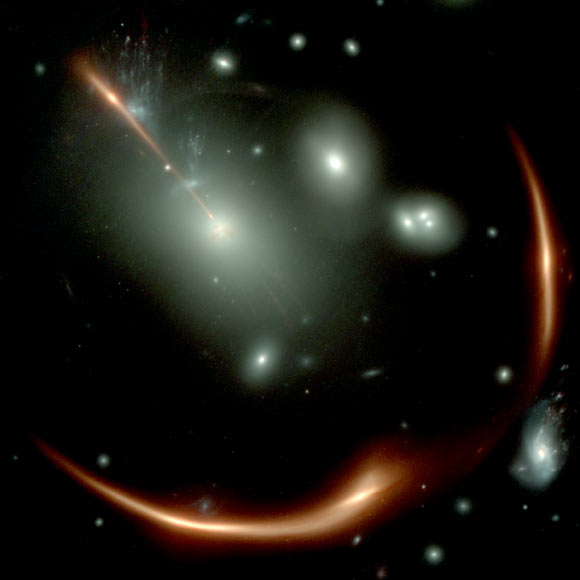
A supermassive black hole 6 billion times the mass of the Sun lurks in MRG-M0138, a gravitationally lensed quiescent galaxy seen when the Universe was just 3 billion years old, according to an analysis of data collected by the NIRSpec Integral Field Spectrograph onboard the NASA/ESA/CSA James Webb Space Telescope.
Elon Musk’s rocket company, on the cusp of the largest initial public offering ever, will soon end up in index funds after rule changes by Nasdaq and other index providers.
On June 5, 1819, British mathematician and astronomer John C. Adams was born in Cornwall. The first to predict the existence of Neptune, he wrote in his journal on July 3, 1841: “Formed a design in the beginning of this week of investigating, as soon as possible after taking my degree, the irregularities in theContinue reading "June 5, 1819: The birth of John C. Adams"
A disappearing Venus, a planet parade, and the start of summer make June a must-see month for skywatchers. June brings several notable skywatching events, including a close meeting between Venus and Jupiter, a rare occasion when the Moon moves in front of Venus, the arrival of astronomical summer, and the return of favorite deep-sky sights. [...]
The James Webb Space Telescope observed a large amount of methane around 3I/ATLAS, revealing just how different it is from comets from our solar system.
A new Keck Observatory study indicates that giant planets can spin faster than more massive brown dwarfs, revealing important clues about how planetary systems form and evolve. Astronomers have long suspected that a planet’s mass may be linked to how quickly it spins. In our solar system, Jupiter and Saturn rotate especially fast, each completing [...]
NASA’s Roman Telescope could reveal 100,000 hidden worlds and rewrite what we know about planets across the Milky Way. NASA’s Nancy Grace Roman Space Telescope is expected to dramatically expand humanity’s catalog of worlds beyond our solar system. Known as exoplanets, these distant planets number nearly 6,300 discoveries so far through NASA missions and other [...]

 Login