
❌

Reading view

Scientists Find Traces of Two Unknown Archaic Hominins in Human DNA

An archaic hominin. Image credit: Ninara / CC BY 2.0.

New research led by the University of California, Berkeley reveals that beyond Neanderthals and Denisovans, humans interbred with two mysterious ‘ghost’ lineages: one in Africa more than 50,000 years ago, another in Eurasia over 1.7 million years ago.

The post Scientists Find Traces of Two Unknown Archaic Hominins in Human DNA appeared first on Sci.News: Breaking Science News.

  •  

224,000-Year-Old Homo Skull Fragment Adds New Mystery to Human Origins

A Homo heidelbergensis, a Neanderthal and a Cro-Magnon. Image credit: SINC / José Antonio Peñas.

A fossilized skull fragment of Homo sp. unearthed in central Spain offers paleoanthropologists a fresh window into the story of ancient humans who lived in Europe hundreds of thousands of years ago.

The post 224,000-Year-Old Homo Skull Fragment Adds New Mystery to Human Origins appeared first on Sci.News: Breaking Science News.
  •  

Moths Can Smell With Their Wings, Researchers Say

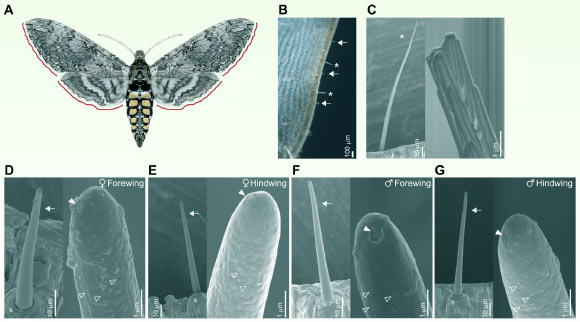
Reda Ismaieel et al. examined the olfactory capabilities of the wings of the tobacco hawkmoth (Manduca sexta). Image credit: Reda Ismaieel et al., doi: 10.1242/jeb.252047.

Scientists at the Max Planck Institute for Chemical Ecology have found that moth wings are equipped with odor-detecting receptors, suggesting the insects use their wings -- not just their antennae -- to sense chemical cues in the air while flying.

The post Moths Can Smell With Their Wings, Researchers Say appeared first on Sci.News: Breaking Science News.

  •  

520-Million-Year-Old Fossil from China Fills Gap in Evolutionary History of Cephalopods

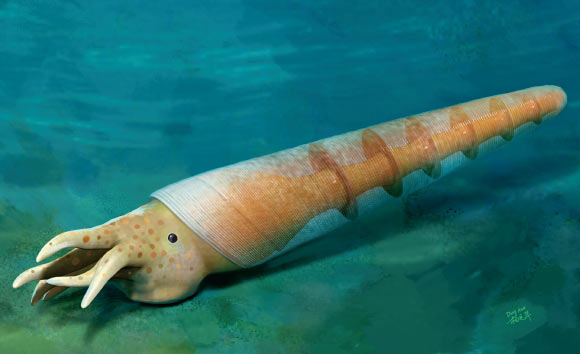
Life reconstruction of Eoceras shaanxiense. Image credit: Dinghua Yang.

Paleontologists have identified the earliest-known cephalopod equipped with a siphuncle -- a tubular extension of the mantle found in shelled cephalopods -- pushing back the fossil record of this key evolutionary feature to the Early Cambrian, roughly 520 million years ago.

The post 520-Million-Year-Old Fossil from China Fills Gap in Evolutionary History of Cephalopods appeared first on Sci.News: Breaking Science News.
  •  

Dinosaur-Killing Asteroid Didn’t Just Strike Earth, Its Dust Cloud Cooked It

Ankylosaurus magniventris, a large armored dinosaur species, witnesses the impact of an asteroid, falling on the Yucatan peninsula 66 million years ago. Image credit: Fabio Manucci.

The Chicxulub impact not only plunged Earth into an impact winter but also produced a dust blanket that later overheated the planet, according to new research from Purdue University and the University of Colorado, Boulder.

The post Dinosaur-Killing Asteroid Didn’t Just Strike Earth, Its Dust Cloud Cooked It appeared first on Sci.News: Breaking Science News.
  •  

40,000-Year-Old Bird Figurines Found in German Cave

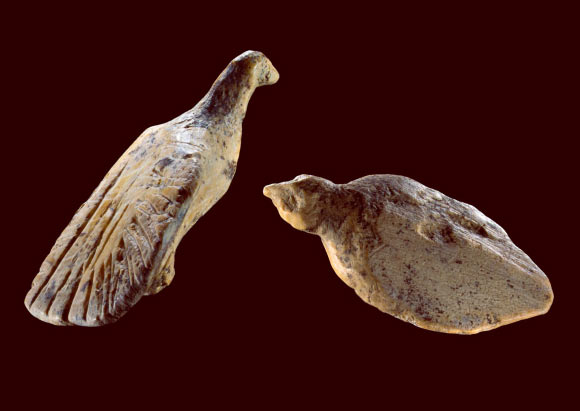
Two bird figurines found at Hohle Fels Cave in Germany. Image credit: Ralf Ehmann / University of Tübingen / Museum of Prehistory and Ice Age Art.

Archaeologists in southwestern Germany have unearthed two miniature bird figurines carved from mammoth ivory, among the smallest and most delicate examples of Ice Age art ever found.

The post 40,000-Year-Old Bird Figurines Found in German Cave appeared first on Sci.News: Breaking Science News.
  •  

New Species of Triassic Dinosaur Discovered on Shores of Zimbabwe’s Lake Kariba

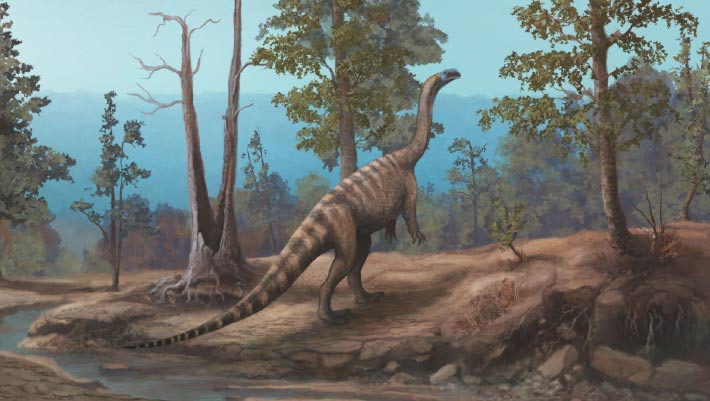
Life reconstruction of Musango matusadonaensis. Image credit: Mark Witton.

An international team of paleontologists has identified a new species of early sauropodomorph dinosaur in Zimbabwe, adding to growing evidence that southern Africa hosted a richer diversity of dinosaurs during the Late Triassic epoch than previously recognized.

The post New Species of Triassic Dinosaur Discovered on Shores of Zimbabwe’s Lake Kariba appeared first on Sci.News: Breaking Science News.
  •  

Hidden Clues in Spirit Rover Data Suggest Mars Once Had Far More Water than Scientists Realized

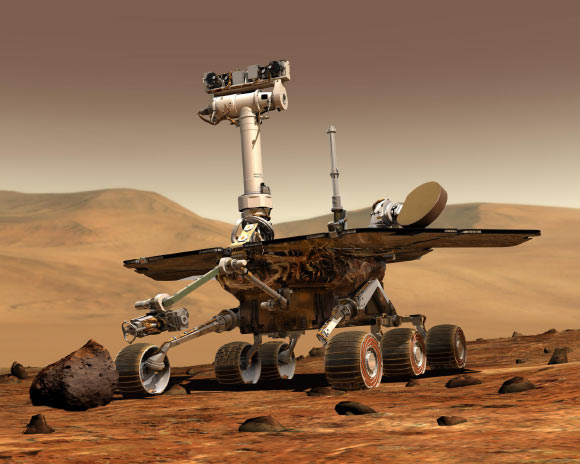
NASA’s Spirit rover on Mars. Image credit: NASA.

A new look at more than two decades’ worth of archival data from NASA’s Spirit mission suggests that the Martian soil may hold iron-bearing minerals -- hematite and altered magnetite -- that were too faint for scientists to detect in real time during the mission.

The post Hidden Clues in Spirit Rover Data Suggest Mars Once Had Far More Water than Scientists Realized appeared first on Sci.News: Breaking Science News.

  •  

Astronomers Spot Wandering Supermassive Black Hole Far From Its Galaxy’s Heart

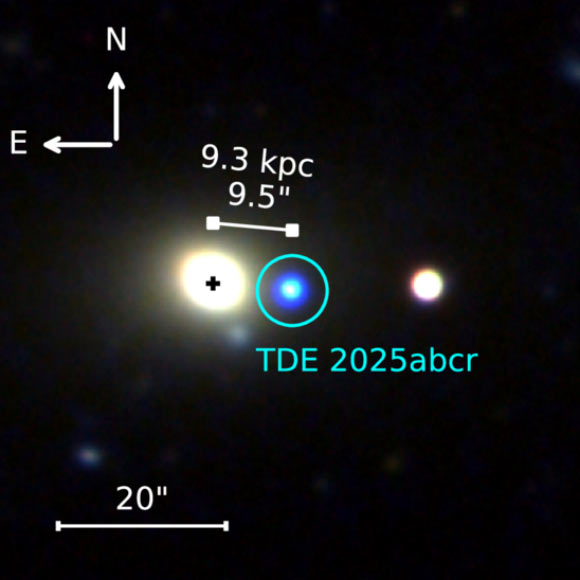
TDE 2025abcr. Image credit: Stein et al., doi: 10.3847/2041-8213/ae77f3.

Astronomers have discovered a dormant supermassive black hole 30,000 light-years from the center of WISEA J014656.04-152214.7 -- a massive galaxy located about 750 million light-years away in the constellation of Cetus -- after it briefly lit up by tearing apart a star.

The post Astronomers Spot Wandering Supermassive Black Hole Far From Its Galaxy’s Heart appeared first on Sci.News: Breaking Science News.
  •  

Ancient Footprints in Kenya Hint at Bigger Bodies and Group Behavior among Early Human Relatives

One of 1.43-million-year-old footprints found at the GaJi10 site in the Koobi Fora Formation in northern Kenya; a 15-cm (6-inch) ruler is shown for scale. Image credit: Kay Behrensmeyer.

A set of 1.43-million-year-old fossil footprints preserved along the margin of an ancient lake in northern Kenya is offering paleoanthropologists new evidence about the size, gait and social lives of the beings who made them and reopening questions about which species they belonged to.

The post Ancient Footprints in Kenya Hint at Bigger Bodies and Group Behavior among Early Human Relatives appeared first on Sci.News: Breaking Science News.

  •  

Astronomers Directly Image Betelgeuse’s Long-Suspected Stellar Companion

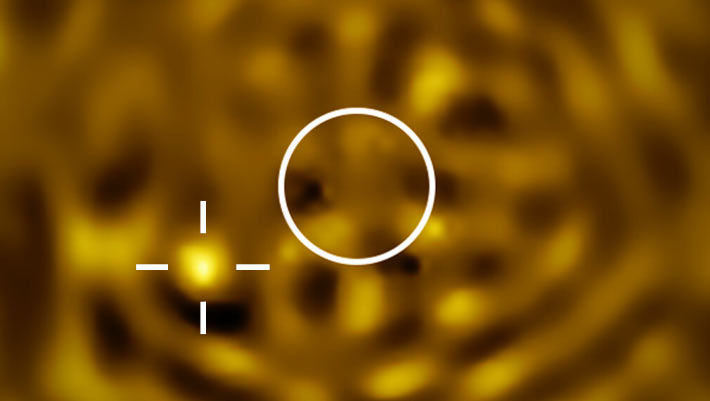
This VLT/SPHERE image shows the clearest image ever of what likely is Betelgeuse B. Image credit: ESO / Montargès et al.

After a century of speculation, astronomers using ESO’s Very Large Telescope (VLT) have captured the clearest evidence yet that the red supergiant Betelgeuse is orbited by a faint companion star.

The post Astronomers Directly Image Betelgeuse’s Long-Suspected Stellar Companion appeared first on Sci.News: Breaking Science News.
  •  

Decades of Financial Hardship Linked to Faster Brain Aging

Long-term financial stress accelerates age-related cognitive decline. Image credit: Thomas Breher.

A large British study spanning more than 70 years has found that people who experience chronic money struggles over their working lives show measurable declines in memory and processing speed by their 50s, along with signs of accelerated brain shrinkage decades later.

The post Decades of Financial Hardship Linked to Faster Brain Aging appeared first on Sci.News: Breaking Science News.

  •  

Japanese Fossil Bee Fills Two-Million-Year Gap in Honeybee History

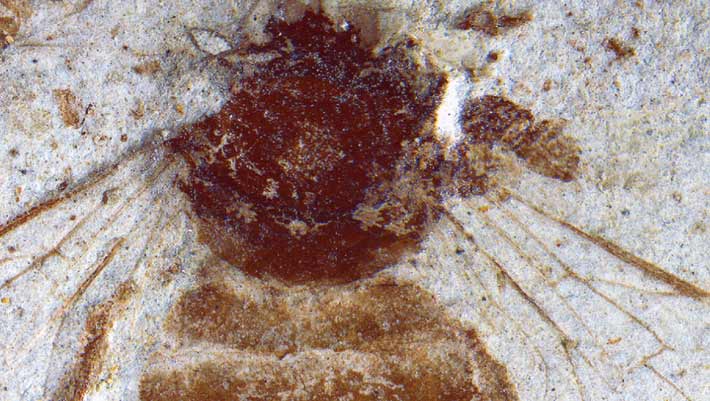
Apis aibai. Image credit: Y. Takahashi & J-ichi Takahashi, doi: 10.3897/zookeys.1255.162389.

Paleontologists have announced the discovery of a new fossil honeybee species that fills a long-standing gap in the evolutionary record of the genus Apis.

The post Japanese Fossil Bee Fills Two-Million-Year Gap in Honeybee History appeared first on Sci.News: Breaking Science News.

  •  

New Study Finds Eating Breakfast Boosts Diet Quality in Teens Who Usually Skip It

Teenagers who regularly skipped breakfast improved the quality of their diets when they began eating a morning meal. Image credit: Pexels.

Adding breakfast back into the daily routine of teens around age 18 who habitually skip the meal can meaningfully improve their nutrition, with the biggest gains seen among those given protein-rich morning meals, according to a six-month clinical trial.

The post New Study Finds Eating Breakfast Boosts Diet Quality in Teens Who Usually Skip It appeared first on Sci.News: Breaking Science News.
  •  

Hubble Spots Spiral Galaxy Warped by Cosmic Forces

This Hubble image shows NGC 4654, an intermediate spiral galaxy some 55 million light-years away in the constellation of Virgo. Image credit: NASA / ESA / Hubble / D. Thilker / J. Lee / PHANGS-HST Team.

A stunning new image captured by the NASA/ESA Hubble Space Telescope shows the lopsided intermediate spiral galaxy NGC 4654, whose unusual shape was sculpted by both a close encounter with another galaxy and a headlong plunge through the hot gas of the Virgo Cluster.

The post Hubble Spots Spiral Galaxy Warped by Cosmic Forces appeared first on Sci.News: Breaking Science News.

  •  
  •  

Planetary-Mass Exomoon Found Circling Brown Dwarf

This illustration shows the stellar system CD-35 2722, with the newly found exomoon at the center; the star has about half the mass of our Sun, and it is orbited by a brown dwarf, the reddish-brown object seen here in the foreground (right). Image credit: ESO / M. Kornmesser.

Astronomers using ESO’s Very Large Telescope (VLT) have discovered a gas giant around a brown dwarf in the stellar system CD-35 2722.

The post Planetary-Mass Exomoon Found Circling Brown Dwarf appeared first on Sci.News: Breaking Science News.
  •  

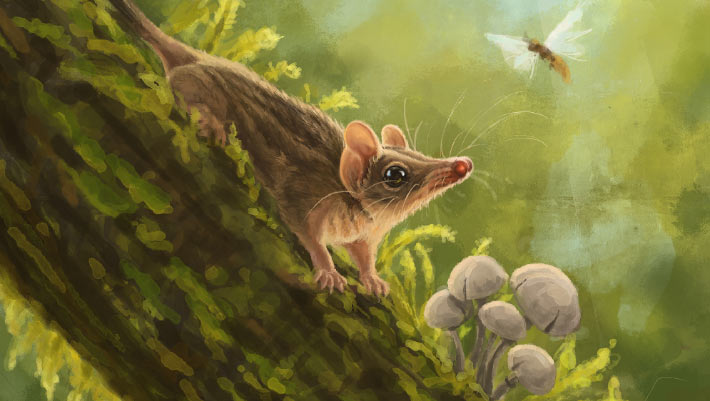
Early Miocene Fossil Rewrites Family Tree of Little Carnivorous Marsupials

An artist’s reconstruction of Miyumba chrisdickmani in the Early Miocene rainforests of northern Australia. Image credit: Nellie Pease.

Paleontologists at the University of New South Wales have described a new genus and species of dasyurid marsupial from the Early Miocene of Australia, offering the first solid evidence that the family Dasyuridae -- which today includes quolls, Tasmanian devils and tiny antechinuses -- existed long before scientists had proof of it in the fossil record.

The post Early Miocene Fossil Rewrites Family Tree of Little Carnivorous Marsupials appeared first on Sci.News: Breaking Science News.

  •  

Giant Rift Valleys Hint Venus is Still Tectonically Active

This hemispheric view of Venus was created using radar observations, including images from NASA’s Magellan spacecraft. Magellan imaged more than 98% of Venus. Gaps in the Magellan coverage were filled with images from the Earth-based Arecibo radar. The composite image was processed to improve contrast and to emphasize small features, and was color-coded to represent elevation. Magellan launched on May 4, 1989, and was deployed from the cargo bay of Space Shuttle Atlantis on May 5, 1989. The spacecraft orbited Venus from August 10, 1990, until October 13, 1994 when the spacecraft was commanded to plunge into the atmosphere of Venus. Image credit: NASA / JPL-Caltech / USGS.

New 3D computer simulations from ETH Zurich show that young rift flanks on Venus stay tall and steep, while older ones flatten out over time.

The post Giant Rift Valleys Hint Venus is Still Tectonically Active appeared first on Sci.News: Breaking Science News.
  •  

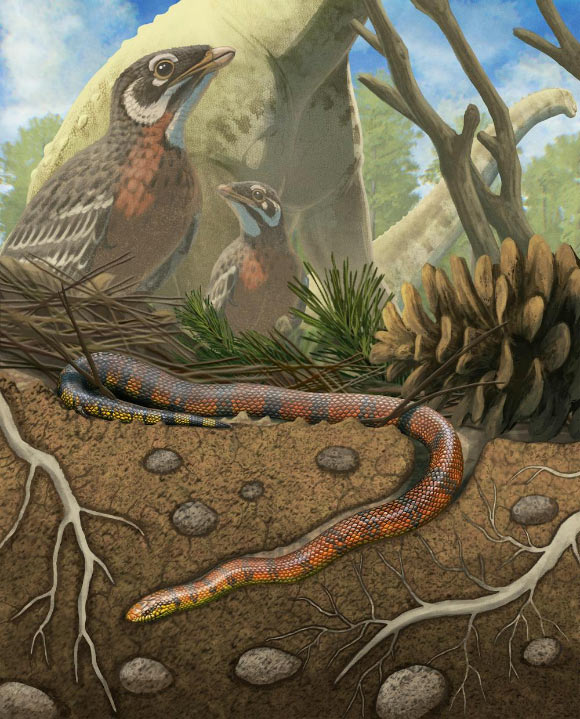
Did Early Snakes Burrow, Swim or Crawl? 80‑Million‑Year‑Old Fossil Suggests: All Three

Life reconstruction of Tametara mirim. Image credit: Gabriel Ugueto.

Paleontologists have unearthed a remarkably preserved fossil snake in Brazil that is reshaping ideas about how the earliest snakes lived and complicating the long-running debate over whether their ancestors burrowed underground, swam in the sea or crawled the surface.

The post Did Early Snakes Burrow, Swim or Crawl? 80‑Million‑Year‑Old Fossil Suggests: All Three appeared first on Sci.News: Breaking Science News.

  •  
❌