❌

Reading view

Study: Famous β€˜Space Weather’ Train Delay Actually Happened Seven Years Later
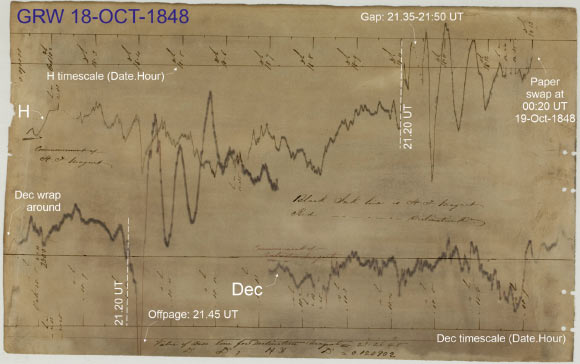
The magnetogram recorded at Greenwich Magnetic Observatory (London) from 11:20 UT on 18 October 1848 to 00:20 UT on 19 October 1848. Powerful geomagnetic disturbances are apparent on the evening of 18 October 1848 from 21:20 UT. Image credit: Wild et al., doi: 10.1029/2026SW005239.

Although the famous Carrington Event of 1859 is often described as the first major space weather event to affect technology, earlier incidents did occur. Historical records show that telegraph systems were disrupted by geomagnetic storms as early as the late 1840s.

The post Study: Famous β€˜Space Weather’ Train Delay Actually Happened Seven Years Later appeared first on Sci.News: Breaking Science News.
  •  

Paleontologists Uncover New Mosasaur Species in Egypt’s Western Desert

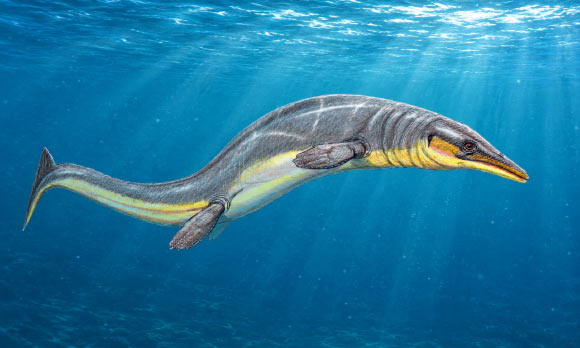
Halisaurus arambourgi, a species of mosasaur from Late Cretaceous of Marocco. Image credit: DiBgd / CC BY-SA 4.0.

Paleontologists have described a previously unknown species of mosasaur -- a group of extinct marine reptiles that patrolled Cretaceous seas alongside dinosaurs on land -- based on fossils unearthed in Egypt’s Dakhla Oasis.

The post Paleontologists Uncover New Mosasaur Species in Egypt’s Western Desert appeared first on Sci.News: Breaking Science News.
  •  

Entanglement Survives Violence of CERN’s Large Hadron Collider

In 2012, physicists from the ATLAS and CMS experiments at CERN announced the discovery of a new boson looking very much like the Higgs boson. Image credit: Daniel Dominguez / CERN.

Physicists from the ATLAS Collaboration at CERN’s Large Hadron Collider have confirmed that quantum entanglement -- the phenomenon Albert Einstein called β€˜spooky action at a distance’ -- can survive in some of the most extreme conditions ever produced in a laboratory.

The post Entanglement Survives Violence of CERN’s Large Hadron Collider appeared first on Sci.News: Breaking Science News.
  •  

Mercury Has Shrunk Even More than Planetary Scientists Thought

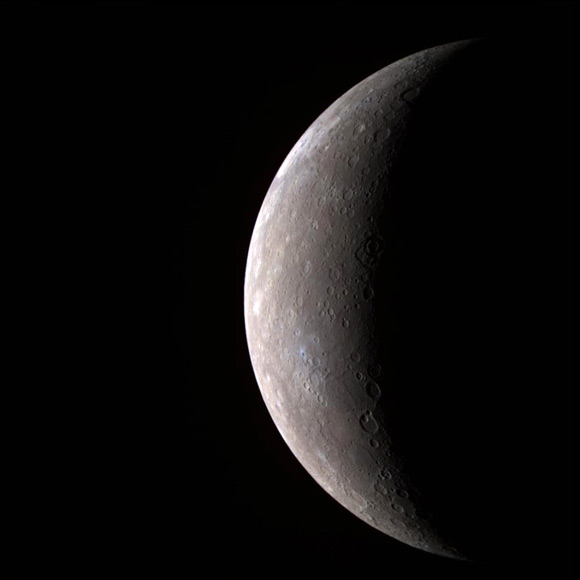
This color image of Mercury was generated from three MESSENGER images taken through filters sensitive to light in different wavelengths. Image credit: NASA / Johns Hopkins University Applied Physics Laboratory / Carnegie Institution of Washington.

The Solar System’s smallest planet has contracted by nearly 19 km (12 miles) across, as crater debris masked telltale wrinkles on its surface, according to new research led by the German Aerospace Center’s Institute of Space Research.

The post Mercury Has Shrunk Even More than Planetary Scientists Thought appeared first on Sci.News: Breaking Science News.

  •  

Elephants Show Talent for Resisting Impulses

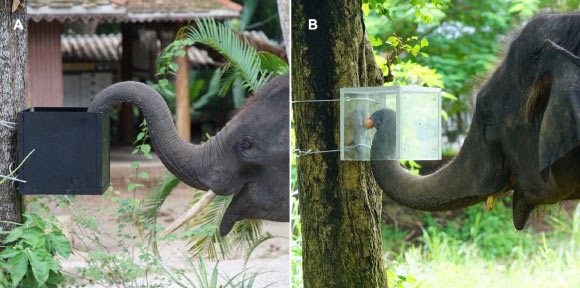
Experiment setup: (A) an elephant enters the β€˜over’ opening to gain access to food in a familiarization trial; (B) an elephant enters the β€˜under’ opening to gain access to food (apple) in a test trial. Image credit: Sangpa Dittakul.

In experiments in Thailand, Asian elephants (Elephas maximus) learned to ignore an enticing but ineffective route to food and quickly adapted when a familiar solution stopped working.

The post Elephants Show Talent for Resisting Impulses appeared first on Sci.News: Breaking Science News.
  •  

Dark Energy May Not Be Constant After All, New Supernova Survey Suggests

This is an artist’s concept of a Type Ia supernova exploding in the intergalactic space between galaxies within a galactic cluster. Image credit: Alex Parker / NASA / SDSS.

Astronomers have combined 2,884 Type Ia supernovae -- which are used to measure cosmic distances -- with cosmic microwave background and galaxy-mapping data, deepening cracks in the standard β€˜cosmological constant’ model.

The post Dark Energy May Not Be Constant After All, New Supernova Survey Suggests appeared first on Sci.News: Breaking Science News.

  •  

Scientists Map Genetics of Personality across Million People

According to Professor Graur, the functional fraction within the human genome cannot exceed 25%, and is probably considerably lower.

Researchers have identified more than 1,200 locations in the human genome associated with personality traits, offering the most detailed look yet at the biological underpinnings of traits like sociability, anxiety and curiosity.

The post Scientists Map Genetics of Personality across Million People appeared first on Sci.News: Breaking Science News.

  •  

Neutrino Laser is Physically and Fundamentally Impossible, Physicists Say

B.J.P. Jones & J.A. Formaggio devise an idea for a laser that shoots a beam of neutrinos. Image credit: Gemini AI.

In a pair of papers published in the journal Physical Review Letters, a team of MIT physicists has shown that the neutrino laser -- a concept proposed just a year ago -- cannot actually be built, no matter how advanced the technology becomes.

The post Neutrino Laser is Physically and Fundamentally Impossible, Physicists Say appeared first on Sci.News: Breaking Science News.
  •  

Inouye Solar Telescope Discovers Hidden Plasma Vortices on Sun

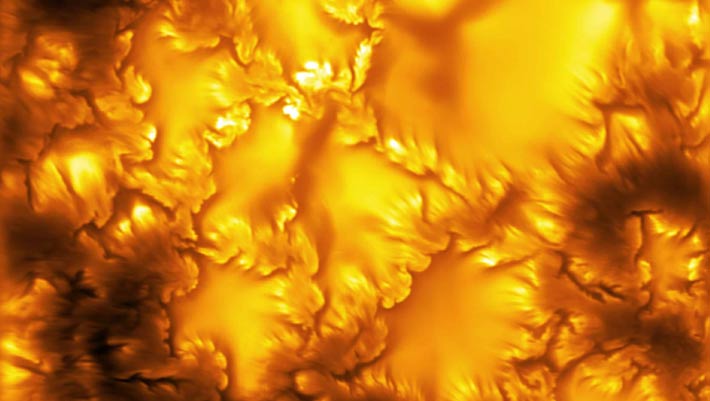
The highest-resolution image of the Sun’s surface (photosphere) ever captured, taken at 416 nm by the Inouye Solar Telescope; it reveals deformed boundaries of magnetic elements and ultra-fine scale stripes, both associated with Kelvin-Helmholtz instability. Image credit: NSF / NSO / AURA / MPS.

Astronomers using the 4-m Daniel K. Inouye Solar Telescope in Hawaii have detected tiny plasma vortices on the Sun’s surface (photosphere) for the first time, revealing a long-suspected process that could transport energy into the million-degree corona.

The post Inouye Solar Telescope Discovers Hidden Plasma Vortices on Sun appeared first on Sci.News: Breaking Science News.
  •  

Curiosity Finds Massive Field of Honeycomb-Shaped Fractures on Mars

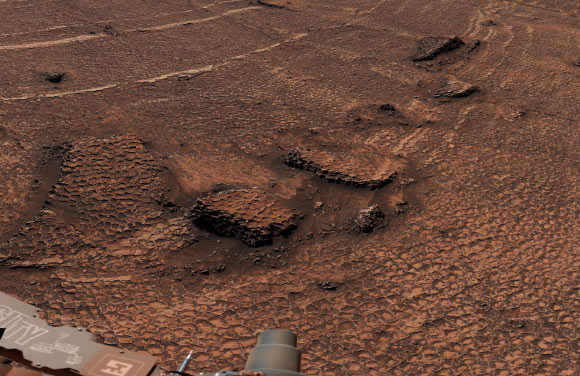
The polygon fractures discovered by Curiosity in Gale crater, Mars. Image credit: NASA / JPL-Caltech / MSSS.

NASA’s Curiosity rover has stumbled on the largest patch of polygon-shaped ground fractures it has ever seen on Mars, a discovery that could reveal more about the planet’s watery past.

The post Curiosity Finds Massive Field of Honeycomb-Shaped Fractures on Mars appeared first on Sci.News: Breaking Science News.
  •  

Astronomers Discover First-Ever Three-Lobed Asteroid

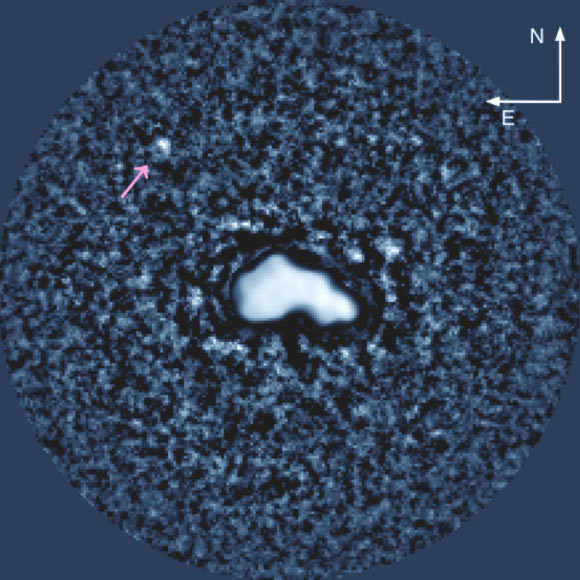
This image of the Nysa system was captured on February 15, 2026. Image credit: Minker et al., arXiv: 2607.25786.

High-resolution images from ESO’s Very Large Telescope and the Large Binocular Telescope reveal that the E-type asteroid (44) Nysa may be unlike any other world in the Solar System, with three connected lobes and a newly discovered satellite that could help explain how the bizarre object formed.

The post Astronomers Discover First-Ever Three-Lobed Asteroid appeared first on Sci.News: Breaking Science News.
  •  

Moths Can Smell With Their Wings, Researchers Say

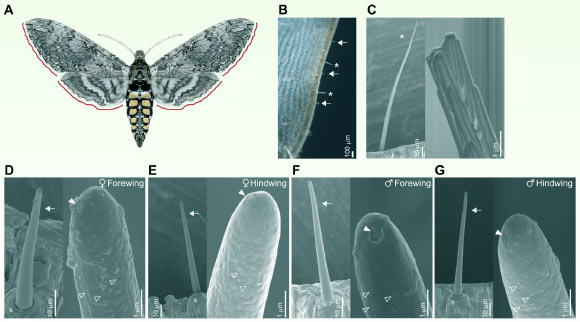
Reda Ismaieel et al. examined the olfactory capabilities of the wings of the tobacco hawkmoth (Manduca sexta). Image credit: Reda Ismaieel et al., doi: 10.1242/jeb.252047.

Scientists at the Max Planck Institute for Chemical Ecology have found that moth wings are equipped with odor-detecting receptors, suggesting the insects use their wings -- not just their antennae -- to sense chemical cues in the air while flying.

The post Moths Can Smell With Their Wings, Researchers Say appeared first on Sci.News: Breaking Science News.

  •  

Dinosaur-Killing Asteroid Didn’t Just Strike Earth, Its Dust Cloud Cooked It

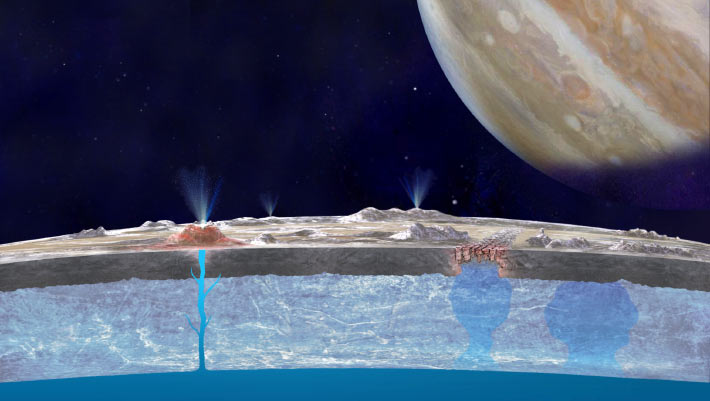
Ankylosaurus magniventris, a large armored dinosaur species, witnesses the impact of an asteroid, falling on the Yucatan peninsula 66 million years ago. Image credit: Fabio Manucci.

The Chicxulub impact not only plunged Earth into an impact winter but also produced a dust blanket that later overheated the planet, according to new research from Purdue University and the University of Colorado, Boulder.

The post Dinosaur-Killing Asteroid Didn’t Just Strike Earth, Its Dust Cloud Cooked It appeared first on Sci.News: Breaking Science News.
  •  

Astronomers Spot Wandering Supermassive Black Hole Far From Its Galaxy’s Heart

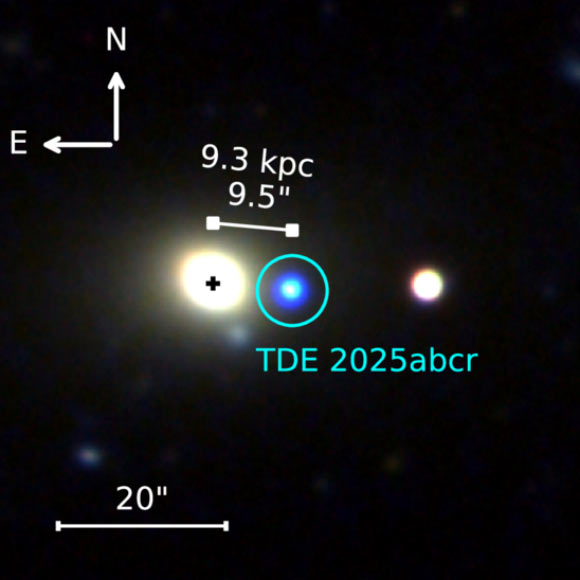
TDE 2025abcr. Image credit: Stein et al., doi: 10.3847/2041-8213/ae77f3.

Astronomers have discovered a dormant supermassive black hole 30,000 light-years from the center of WISEA J014656.04-152214.7 -- a massive galaxy located about 750 million light-years away in the constellation of Cetus -- after it briefly lit up by tearing apart a star.

The post Astronomers Spot Wandering Supermassive Black Hole Far From Its Galaxy’s Heart appeared first on Sci.News: Breaking Science News.
  •  
  •  

Giant Rift Valleys Hint Venus is Still Tectonically Active

This hemispheric view of Venus was created using radar observations, including images from NASA’s Magellan spacecraft. Magellan imaged more than 98% of Venus. Gaps in the Magellan coverage were filled with images from the Earth-based Arecibo radar. The composite image was processed to improve contrast and to emphasize small features, and was color-coded to represent elevation. Magellan launched on May 4, 1989, and was deployed from the cargo bay of Space Shuttle Atlantis on May 5, 1989. The spacecraft orbited Venus from August 10, 1990, until October 13, 1994 when the spacecraft was commanded to plunge into the atmosphere of Venus. Image credit: NASA / JPL-Caltech / USGS.

New 3D computer simulations from ETH Zurich show that young rift flanks on Venus stay tall and steep, while older ones flatten out over time.

The post Giant Rift Valleys Hint Venus is Still Tectonically Active appeared first on Sci.News: Breaking Science News.

  •  
  •  

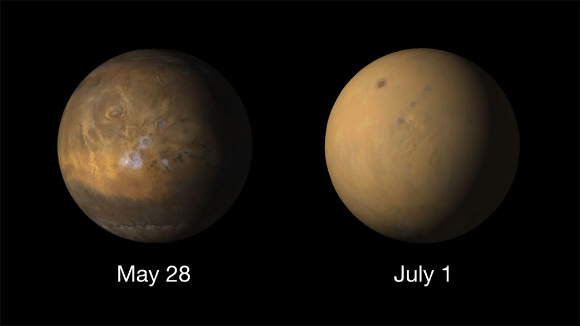
Space Weather May Warp Martian Weather during Dust Storms, Planetary Scientists Suggest

These images from Mars Color Imager (MARCI) aboard NASA’s Mars Reconnaissance Orbiter (MRO) show Mars before (left) and during (right) the June 2018 dust storm. Image credit: NASA / JPL-Caltech / University of Arizona.

Planetary researchers have found the first evidence that bursts of energetic particles from the Sun could warm the lower atmosphere of Mars during massive dust storms, hinting at an unexpected link between space weather and Martian climate.

The post Space Weather May Warp Martian Weather during Dust Storms, Planetary Scientists Suggest appeared first on Sci.News: Breaking Science News.
  •  

Hugs May Be an Ancient Peacekeeping Tool, Ape Study Suggests

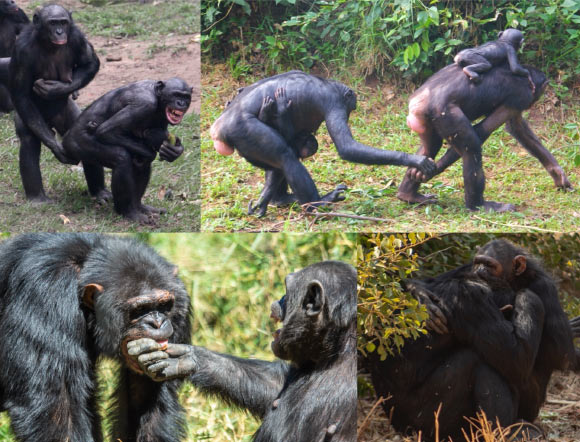
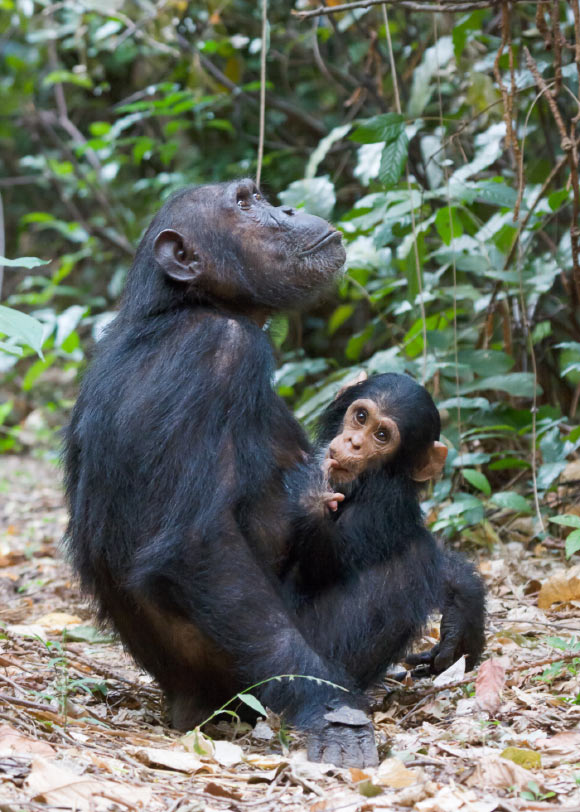
Examples of bonobo and chimpanzee reassurance behaviors. Image credit: Z. Clay / J.S. Brooker.

In a new study of chimpanzees (Pan troglodytes) and bonobos (Pan paniscus), scientists found that embraces, touches and other reassuring gestures before competition for food were linked to more peaceful sharing, suggesting the roots of human social touch stretch back at least six million years.

The post Hugs May Be an Ancient Peacekeeping Tool, Ape Study Suggests appeared first on Sci.News: Breaking Science News.
  •  
❌