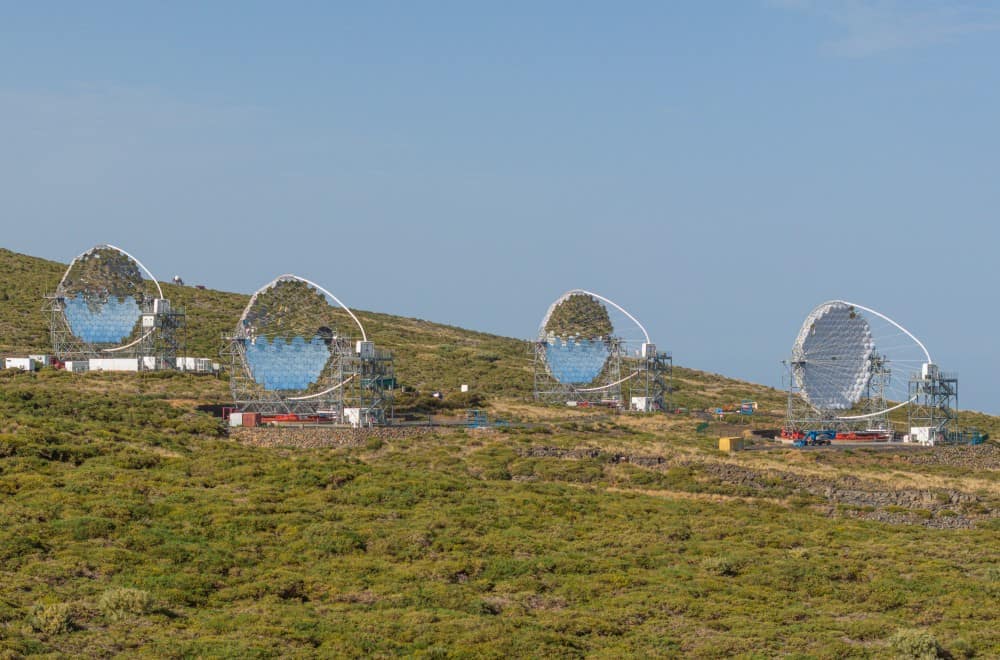
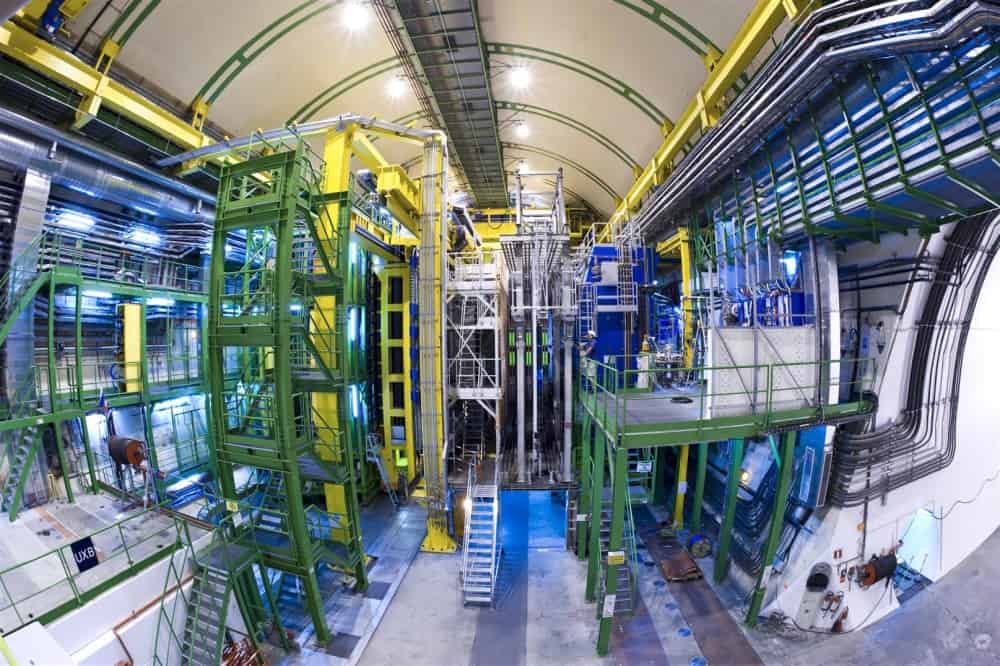
The construction of four 23 m-diameter telescopes belong to the Large-Sized Telescope (LST) array at the Roque de los Muchachos Observatory in La Palma, Spain.
The telescopes are designed to detect the faint Cherenkov light flashes when very high-energy gamma rays interact with the Earth’s atmosphere.
The LSTs are the most sensitive instruments in the world for observing gamma rays at energies between approximately 20 GeV and 3 TeV.
The first LST-1 telescope was built in 2020 and has already completed observations of pulsars, studies of active galactic nuclei at cosmological distances and rapid follow-up observations of transient phenomena such as novae and gamma-ray bursts.
The three other telescopes now join LST-1 and by observing the same gamma-ray showers simultaneously from multiple directions, it will provide improved sensitivity, angular resolution and energy reconstruction.
Their sensitivity to the lowest-energy gamma rays will enable astronomers to detect and study bright gamma-ray bursts at high redshift, potentially extending gamma-ray observations to sources at redshifts of around z∼4 to provide new insights into the early universe.
The telescopes will provide new insights into the early universe. (Courtesy: LST collaboration)
“The completion of the LST sub-array is the culmination of more than 15 years of international collaboration and technological innovation,” says Japanese astrophysicist Masahiro Teshima, who is principal investigator of the LST collaboration. “These telescopes will allow us to explore some of the most extreme environments in the universe, including supermassive black holes, neutron stars and the nature of dark matter.”
North-south divide
The telescope will form part of the Cherenkov Telescope Array Observatory (CTAO), which when operational in 2028 will operate between 20 GeV and 300 TeV and be the world’s most powerful observatory for gamma-ray astronomy.
The CTAO will consist of six LST telescopes as well as two other arrays: 23 telescopes belonging to the Medium-Sized Telescope (MST), which will operate between 80 GeV and 50 TeV, and 37 telescopes for the Small-Sized Telescope (SST) that will work between 2 TeV and 300 TeV.
The 66 telescopes will be distributed between CTAO-North at La Palma and CTAO-South at the Paranal Observatory in the Atacama Desert in Chile.
The LSTs form the low-energy core of CTAO-North and over the coming years they will undergo commissioning and be integrated into CTAO operations.
This episode of the Physics World Weekly podcast features Ignacio Cirac, who has won the 2026 Isaac Newton Medal and Lecture for his “pioneering contributions that founded modern quantum information science, uniting profound theoretical insight, experimental vision, and exceptional scientific leadership shaping quantum physics and technology worldwide”.
Cirac is director of the theory division at the Max-Planck-Institute for Quantum Optics in Germany.
In conversation with Physics World’s Michael Banks, Cirac explains how an early interest in mathematics and science fiction drew him to quantum information – along with the field’s potential to create new technologies.
He talks about his collaboration in the 1990s with Peter Zoller to design quantum simulators and computers based on trapped-ion qubits. Cirac weighs up the pros and cons of the qubit technologies available today and highlights the benefits of systems based on Rydberg atoms.
Looking to the future, Cirac cautions against quantum hype and points out that it is still not clear how quantum technologies will be used in the future. He also calls on European academics to maintain their scientific excellence and for more money to be invested in the continent’s quantum industries.
This podcast is supported by American Elements, the world’s leading manufacturer of engineered and advanced materials. The company’s ability to scale laboratory breakthroughs to industrial production has contributed to many of the most significant technological advancements since 1990 – including LED lighting, smartphones, and electric vehicles.
The Spanish quantum physicist Ignacio Cirac from the Max Plank Institute of Quantum Optics in Garching, Germany, has won the 2026 Isaac Newton Medal and Prize for his “pioneering contributions that founded modern quantum information science, uniting profound theoretical insight, experimental vision, and exceptional scientific leadership shaping quantum physics and technology worldwide”. Presented by the Institute of Physics (IOP), which publishes Physics World, the international award is given annually for “world-leading contributions to physics by an individual of any nationality”.
Born in 1965 in Barcelona, Spain, Cirac earned a PhD in physics from the Complutense University of Madrid in 1991. After a stint at the University of Castilla-La Mancha, he then moved to Leopold-Franzens University of Innsbruck in 1996. In 2001 Cirac became director of the Max Planck Institute of Quantum Optics the US.
Cirac is best known for his work in the 1990s in which he co-developed a proposal for building a quantum computer using trapped ions with Peter Zoller from the University of Colorado at Boulder.
The “Cirac–Zoller” proposal provided an experimentally plausible route from the theoretical idea of a quantum computer to an actual machine with trapped ions remaining one of the leading quantum-computing platforms today.
He also showed how controlled quantum many-body systems can act as simulators to solve difficult problems in physics, chemistry, and materials science.
Cirac and collaborators also pioneered long-distance quantum communication, which included the idea of a quantum repeater that offers a way of distributing entanglement across distances despite losses and imperfections.
Cirac told Physics World that he is “deeply honoured” to receive the award. “I’m very thankful to the people who have made this prize possible – it’s a team working for many years,” says Cirac. “I am immensely grateful to all of them for the privilege of having worked together and for everything we have accomplished along the way.”
Professor Cirac’s pioneering work has helped shape modern quantum information science
IOP president Paul Howarth
Cirac has many other honours to his name including the Wolf Prize in Physics in 2013, the Max Planck Medal in 2018, as well as the inaugural ICTP-IBM Richard Feynman Prize in Quantum Computing.
IOP president Paul Howarth offered his congratulations to Cirac, noting that the Spanish physicist is “hugely deserving” of the award and that his influence can be seen not only in the development of quantum science, but “in the generation of researchers who have followed”.
“Professor Cirac’s pioneering work has helped shape modern quantum information science, providing crucial theoretical foundations for advances in quantum computing, simulation and communications,” adds Howarth. “His achievements demonstrate how fundamental physics can expand our understanding of the world while opening up new possibilities for technology.”
Celebrating success
Cirac’s honour forms part of the IOP’s wider 2026 awards, which recognize everyone from early-career scientists and teachers to technicians and subject specialists. Other winners include the school engagement programme Orbyts, which received the Lawrence Bragg Medal and Prize for “outstanding work empowering girls and students from socioeconomically disadvantaged backgrounds in physics education through cutting-edge research partnerships, and supporting physics teachers with novel teaching materials”.
Sarah Bohndiek from the University of Cambridge has been awarded the Rosalind Franklin Medal and Prize for “pioneering the use of light and sound in early disease detection, with a focus on clinical translation and equitable healthcare outcomes”.
Natalie Lines, a PhD student at the University of Portsmouth, meanwhile, has won the Jocelyn Bell Burnell Medal and Prize for “exceptional early-career contributions to observational cosmology and the application of machine learning to large-scale astronomical surveys, with particular distinction in the field of strong gravitational lensing”.
The full list of 2026 award winners is available here.
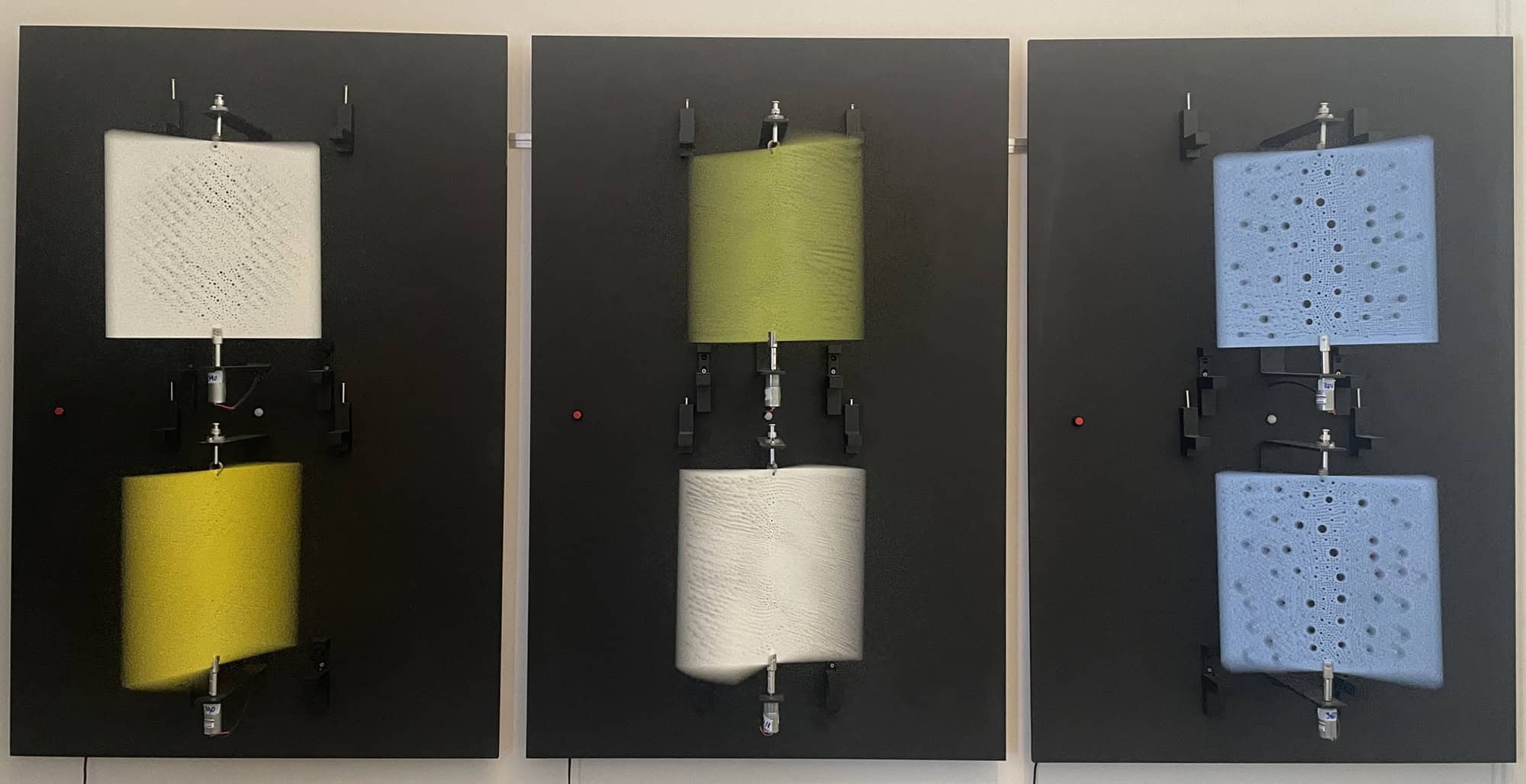
Scottish artist Gregor Harvie has created a new artwork to mark 100 years since Erwin Schrödinger published his famous equation that governs how the wave function of a physical system changes over time.
Dubbed Superposition, the piece has been created in collaboration with the quantum theory group at the University of Glasgow.
The installation explores two of features of quantum physics: superposition and entanglement.
It does so via 16 aluminium panels that each have hundreds of holes drilled through them, forming complex patterns.
One side is white while the other is coloured and when someone approaches, the panels begin to spin at 400rpm so that their forms “dissolve into shifting three-dimensional illusions”.
The panels are arranged in eight pairs and the stopping positions of the panels are random but over time seven pairs show the same side as their partner half the time. This is an analogy for superposition, where the spinning stops is akin to the collapse of the wavefunction.
Yet the eighth pair is different. Individually, its two panels still appear to stop randomly, but when seen together they show the same side three quarters of the time – an analogy for entanglement.
Harvie, who has a PhD in computational fluid dynamics and previous work Beyond Absolute Zeromarked the bicentenary of the birth of Lord Kelvin in 2024, says the artwork puts people inside the quantum universe.
The panels are arranged in eight pairs (courtesy: Gregor Harvie)
“I wanted to make something you could stand in front of and genuinely not know what you are looking at,” notes Harvie. “The artworks are made of holes, so in a way there is nothing there, but spun fast enough they transform into something remarkable, something the eye can’t quite hold onto. Their form changes depending on where you are looking at them from, and one pair behaves in a way that defies logic.”
Theoretical physicist Stephen Barnett at the University of Glasgow says the artwork allows everyone to experience the “strangeness” of quantum mechanics and to question what they are seeing. “Quantum physics challenges our most basic ideas about what it means for something to have a definite state,” he says. “It tells us reality is stranger than anything we encounter in everyday life.”
If you want to experience the artwork for yourself, Superposition will be displayed at the Technology and Innovation Centre at the University of Strathclyde during weekdays from 20 to 29 October.
While modern Japan has had a good record in winning Nobel prizes, the country had to wait 48 years since the inception of the awards in 1901 to receive its first Nobel prize.
The accolade went to particle physicist Hideki Yukawa, who published his theory of mesons in the 1930s that explained the interaction between protons and neutrons.
Yukawa was born in Tokyo on 23 January 1907, graduating from Kyoto University in 1929. He then moved to Osaka University in 1933 for a PhD, which is where he did his Nobel-prize-winning work.
As positively charged protons repel each other through electromagnetic force, an issue at the time in nuclear physics was that this should cause the atomic nucleus to fly apart.
In 1935 Yukawa proposed a short-range, highly attractive nuclear force that overcomes this repulsion and suggested this force is created by the exchange of massive subatomic particles between protons and neutrons, which he called mesons.
Yukawa calculated that the mass of these exchange particles should be roughly between an electron and a proton.
Building a legacy
In 1937 three separate research groups conducted cloud-chamber experiments and discovered a new particle with a mass consistent with Yukawa’s prediction, but it was later identified as a muon.
In 1938 Yukawa was awarded a PhD and a year later moved back to Kyoto University but it took a few more years before Yukawa’s particle was finally discovered.
The first evidence of a meson came in 1947 with the discovery of the pi meson (pion) by a research group led by Cecil Powell at the University of Bristol. The team measured the particle by exposing photographic plates to cosmic rays at high altitudes (Powell won the 1950 Nobel Prize in Physics for the work).
Yukawa was then awarded the 1949 Nobel Prize in Physics “for his prediction of the existence of mesons on the basis of theoretical work on nuclear forces”.
The news was met with tremendous joy in Japan and encouraged scientists to continue their research in spite of the economic condition and the challenges of doing experimental science in postwar Japan.
In Yukawa’s honour, the Japanese government built a three-storey building named Yukawa Hall in 1952. Its focus was on developing theoretical physics in Japan and featured lecture halls, seminar rooms, offices and a library.
In 1953 the hall became home to the Research Institute for Fundamental Physics (now the Yukawa Institute for Theoretical Physics), of which Yukawa was the first director – a position he held until retiring in 1970.
The institute invited research scholars from all over Japan and held symposia and seminars on particle physics. It also published the monthly English-language journal Progress of Theoretical Physics (now known as Progress of Theoretical and Experimental Physics), together with the Physical Society of Japan (JPS).
The journal was founded by Yukawa in 1946 to publish results that had remained unpublished because of JPS’s financial difficulties.
As well as the Nobel prize, Yukawa also won many other international prizes and he was also vocal about issues in physics and society. In 1955 Yukawa joined 10 other scientists in signing the Russell–Einstein Manifesto that called for nuclear disarmament.
Yukawa died on 8 September 1981 and since he was awarded the Nobel Prize in Physics, 11 other Japanese-born physicists have gone on to win the physics Nobel – making Japan one of the most successful countries in the world.
SmarAct proudly supports Physics World‘s Nobel Prize coverage, advancing breakthroughs in science and technology through high-precision positioning, metrology and automation. Discover how SmarAct shapes the future of innovation at smaract.com.
“The UK is really good at photonics and it should be something that the UK celebrates.” That was the verdict of John Lincoln, chief executive of the national network organization UK Photonics Leadership Group (PLG) at a recent meeting of the photonics community in Newcastle. He was speaking in a panel debate at the Photon2026 conference run by the Institute of Physics (IOP) at Newcastle University on 1–4 September. Attended by hundreds of delegates, the meeting focused on the strengths, opportunities and future potential for optics and photonics in the UK and EU.
The photonics industry, which has been in the UK for more than 60 years, is one of the country’s most economically productive sectors. According to the PLG, photonics generated £18.5bn in revenue in 2024 – up 20% from 2022 – and contributed £8.6bn to the UK economy. It now employs more than 75,000 people in over 1200 firms across all UK. Lincoln says that part of the UK’s success is the wide geographical spread of the hundreds of companies involved in photonics. Northern Ireland is Europe’s largest manufacturer of lasers by volume, for example, producing a million lasers per day, and is on course to be the world’s largest by 2028.
A national UK roadmap for photonics is expected to be published soon, which will feature recommendations to further boost the sector. Indeed, by 2035 photonics is estimated to be a £50bn industry where more than 60% of the UK economy will directly depend on photonics to keep it competitive. It is also expected to produce an additional 150,000 direct jobs and be one of the top three most productive manufacturing sectors in the UK.
The panel debate at Photon2026 was co-ordinated by physicist Jolyon De Freitas, chair of the IOP Optical Group, together with the European Optical Society – an umbrella organization for national optical societies across Europe. Speaking at the event, Ruth Oulton from the University of Bristol, who specializes in semiconductor quantum dots, said that many companies, including those in the US, want to move their companies to the UK given its focus and support on photonics and quantum. “The UK government has a very strong and coherent story to tell and it gives a bit of stability and clarity for people coming here, which is really promising,” she added.
Optics and photonics have important applications in several sectors including telecommunications, space and quantum technologies as well as defence and security. John Howell from Chapman University in the US, who is immediate past president of the International Commission for Optics, highlighted that improving access to optics and photonics instrumentation in the developing world can boost environmental and water monitoring and disease detection.
Opportunity knocks
Panel member Laura Young from the University of Newcastle, who works on medical technologies, said that the UK could improve further by making the most of “translational opportunities” when it comes to the application of optics into medical devices and getting those benefits out to patients. “Taking those early developments all the way through to products that have commercial or societal impact also makes it a more inviting domain for new talent to come to the UK,” she said.
That view is backed up by fellow panellist Chris Johnson, chief scientific adviser for the UK’s newly renamed Department of Business, Innovation, Science and Trade, which in July absorbed the science and innovation portfolios of the former Department for Science, Innovation and Technology under new UK prime minister Andy Burnham. Johnson said that photonics still has room for improvement when it comes to applications, pointing to the synthetic biology sector, for example, which has managed to engage with venture capitalist to grow from small, medium enterprises to larger businesses. He said that the photonics sector must have plans in place not only to generate start-ups and spin-outs, but also to plot their trajectory to growth beyond that.
The UK has a strong history in photonics research. Some 20% of global publications in photonics originate in the UK
As well as industry, the UK also has a strong history in photonics research. Some 20% of global publications in photonics originate in the UK. Yet Oulton, who also works at the foreign commonwealth and development office as an adviser on quantum technologies, added that scientists should explain more clearly to policy-makers why support for photonics needs to be continued. Oulton said it’s important that scientists clearly provide evidence for success and make international comparisons, rather than solely providing a wish list of support to government. “Make sure to read white papers the government produces like the modern industrial strategy,” she added.
Lincoln agreed, saying it’s important for researchers to clearly explain how photonics is critical to emerging technologies such as AI, energy, quantum and connectivity. Lincoln added that the government needs to embrace the complexity of photonics and its many varied applications and make sure the talent pipeline exists at all levels. “One of the things we are calling for is to make sure that skills support goes beyond PhD to engineers and technicians,” he said.
Continental effort
The panel debate at Photon2026 – the first time such an event has been hosted at a Photon meeting – was moderated by Anne Crean, associate director for science, business and data insights at the IOP. She noted that the UK and EU are “global leaders” in photonics featuring world-class research institution, innovative companies and strong partnerships, adding that the collaboration between the UK and EU will be “vital” in maintaining and advancing that position.
That collaboration was put to the test in 2016 when the UK voted to leave the EU, bringing with it significant amount of uncertainty not only for academia but industry too. Yet some of those initial issues are beginning to be resolved. Tom Grinyer, chief executive officer of the IOP, said that there are many positives about recent developments. “In 2022 we were outside of the Horizon funding framework and it felt like we were staring through a window,” he says. After negotiating back into the programme in 2024, Grinyer pointed out that the UK has received about 8.7% of optics and photonics funding in Horizon over the past two years, compared to other areas where the UK has received about a 7.6% share.
Talking points Clockwise from top left: Jolyon De Freitas, Tom Grinyer, Chris Johnson, Anne Crean, John Howell, Ruth Oulton, Laura Young and John Lincoln. (Courtesy: Jen Lovell/IOP)
Lincoln added that it is critical for the UK to address the confusion around the UK’s involvement in the next European framework programme – FP10 – that will run from 2028 to 2034 with a proposed budget of €175bn. Delegates stressed that collaborating with the EU not only bring partnerships but also the ability to “scale” efforts.
“The UK and the EU are quite different in how they operate,” noted Oulton from Bristol. “The EU has scale and is the only body large enough to be competitive with the US and China but it can be quite slow from a policy perspective.” She pointed out that the UK has the ability to move more quickly into new fields, while the EU can piggyback onto those areas that show the most promise.
For all those benefits, Lincoln maintained that funding for photonics in Europe is “slightly out of phase” with the UK given that EU funding for photonics will be wrapped into the European Chips Act, which aims to strengthen the EU’s semiconductor industry and reduce its reliance on foreign suppliers for critical technologies. “We must adapt to a world where photonics is a semiconductor,” said Lincoln.
While collaboration cropped up many times in the discussion, it does bring challenges. Johnson pointed out the importance of photonics to national security, whether it’s the production of chips or its use in defence, and the growing threat of industrial espionage that it brings. Some countries are looking at ways to protect research and innovation from other nations by demanding that collaborative research be limited particularly when it comes to “dual-use” technologies that may also find military applications. Indeed, there is a general move towards requiring dual-use applications when applying for research and development support.
Yet Lincoln urged scientists to “embrace” working in these areas and for policy makers to not see the world as a zero-sum game. “Collaboration makes everyone better,” he said. “Don’t think of it as us versus them, but look at it as how we can both win.”
Bringing together the UK optics and photonics community
The Photon2026 conference was jointly organized by several IOP special interest groups including environmental physics, optical, quantum electronics and photonics, and medical physics. Held in the UK every two years, Photon2026 was the 13th in the series and featured talks from leading physicists and technology experts as well as an exhibition showcasing the latest optics and photonics technologies.
At the conference, theoretical physicist Michael Berry from the University of Bristol delivered the 2025 IOP Isaac Newton Lecture titled “What we learn(ed) from rainbows?” in which he explored how centuries of studying rainbows have bridged connections across physics, mathematics, colour and optical illusions.
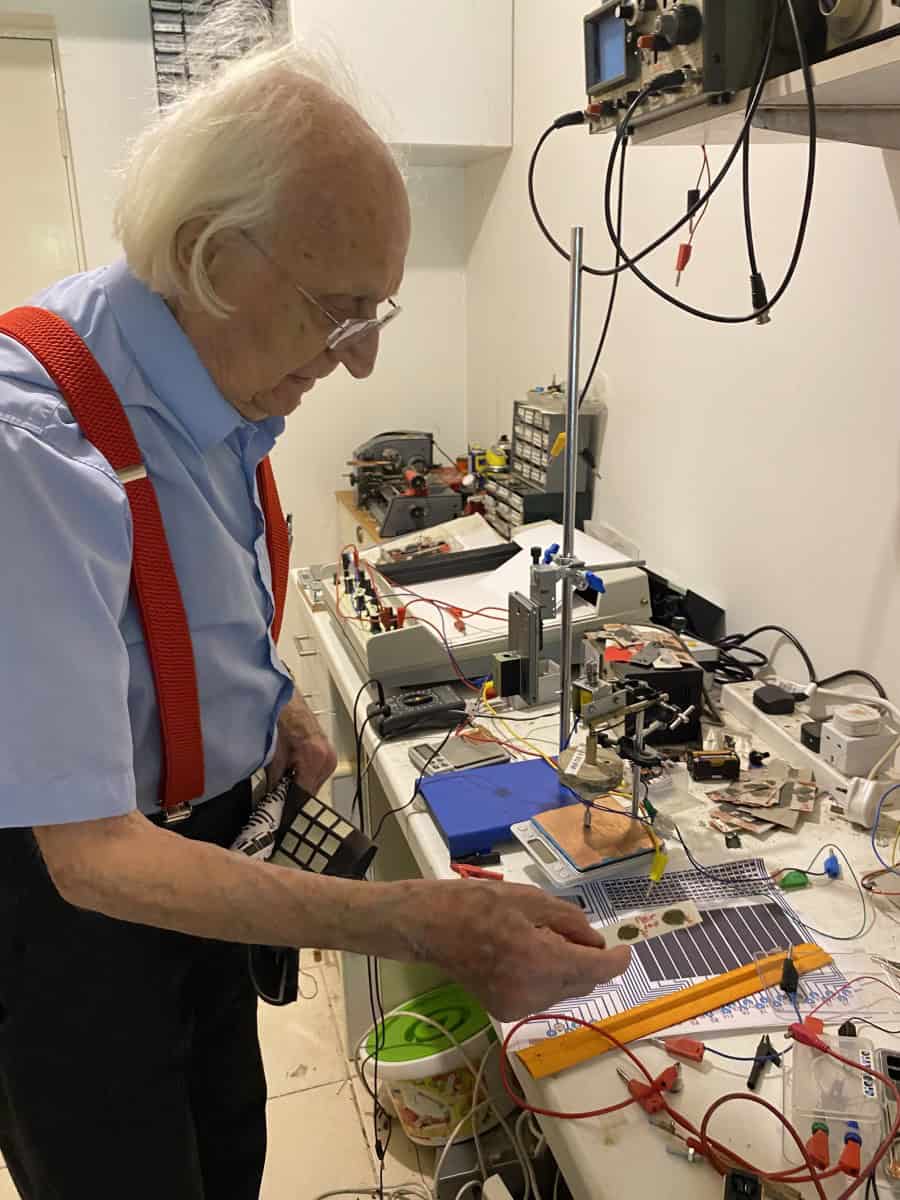
Cyril Hilsum, a former president of the Institute of Physics (IOP), which publishes Physics World, died on 23 September at the age of 101. In the 1970s Hilsum made pioneering contributions to liquid crystals paving the way for TV and computer liquid-crystal displays that are still widely used today.
Hilsum was born on 17 May 1925 and completed a degree in physics at University College London in 1945. He then joined the Admiralty Research Laboratory in Teddington before working at the Services Electronics Research Laboratory in Baldock.
Throughout his career, Hilsum focused on developing commercial applications for many areas of his research including creating the UK’s first semiconductor laser.
Hilsum built a lab in his house in Pinner where he made his final invention – an ink with sensors to conduct electricity. At the age of 97, this earned him the last of more than 70 patents. (courtesy: Lindsey Hilsum)
In 1964 he moved to the Royal Radar Research Establishment in Malvern, Worcestershire, developing the first microwave oscillator based on the negative resistance effect in the semiconductor gallium arsenide.
His work on miniature radar systems led to Claribel, a device that detected the trajectory of a bullet and could be used to locate snipers.
He also led a team that developed the first stable liquid crystals that could be used in flat panel displays, an invention that garnered £100m in royalties for the British government.
In 1983 Hilsum was appointed chief scientist of GEC Hirst Research Centre, where he later became research director two years later.
Hilsum officially retired in 1995 aged 70, but worked part-time as chief science officer for Infi-tex Ltd, which produces force sensors for use in textiles.
A life in science
Hilsum served as president of the IOP between 1988 and 1990, in which year he was also appointed a Commander of the Order of the British Empire (CBE) for his “services to the electrical and electronics industry”.
Over his career, Hilsum was honoured with many prizes including three awards from the IOP: the Max Born Prize in 1987, the Faraday Medal (1988) as well as the Richard Glazebrook Medal and Prize (1998).
In 2007 he was awarded the Royal Society’s Royal Medal “for his many outstanding contributions and for continuing to use his prodigious talents on behalf of industry, government and academe to this day”.
Hilsum also encouraged more women to have careers in physics and engineering. He sponsored the Karen Burt Award at the Women’s Engineering Society, which was named after his daughter, an engineer, who died in 1997 aged 42.
Former IOP president Frances Saunders, who worked in liquid-crystal displays, told Physics World that Hilsum was a “true pioneer in applied physics”, adding that as well as finding applications for such emerging technologies he always wanted to ensure that the underlying physics or material science was properly understood.
“What also made him stand out was his vision for where a technology might go – in the early developments of LCDs his vision was that the display would become the computer with the computer chips attached to the back of the display and interacted with via touch screens,” adds Saunders. “He was right, of course, as we now have tablets and smart phones that do just that.”
Members of the Thirty Meter Telescope (TMT) International Organization have turned down Spain’s €1bn offer to build the instrument at the Roque de los Muchachos Observatory in La Palma. The package was put forward in July with funding also provided from the European Investment Bank and Spain’s Official Credit Institute. The decision makes Hawaii’s Mauna Kea as the only possible option for the telescope.
The TMT, if built, would use a segmented primary mirror consisting of 492 elements of zero-expansion glass for a 30 m-diameter primary mirror that will allow astronomers to resolve the faintest and oldest galaxies.
The TMT’s members include the University of California, the California Institute of Technology, Canada, India, and Japan.
Officials at the TMT have not released a final construction cost for the telescope, but it is expected to be at least $3bn, of which $2bn has been committed.
In 2009, the TMT organization choose Hawaii’s Mauna Kea peak as its location. However, in 2015 protests by indigenous Hawaiians, who regard the site as sacred, delayed the start of construction.
Some astronomers, however, were concerned by the potential move given that La Palma’s environmental conditions may limit the telescope’s scientific potential. In particular, the warmer climate and lower elevation of La Palma compared to Mauna Kea could affect mid-infrared observations, which require dry, cool conditions.
A year later, the NSF decided to pursue the GMT, which uses seven primary and seven secondary mirrors to give it an optical surface of 25.4 m. Building of the GMT is already under way at Chile’s Las Campanas peak with officials working toward a final design review.
In 2025, Spain then offered €400m to join the project if the TMT was built in La Palma. In July, the European Investment Bank and Spain’s Official Credit Institute said it would provide an additional €600m in loans towards construction.
Yet according to a statement from the Astrophysics Institute of the Canaries (IAC), which operates the Roque de los Muchachos Observatory, TMT officials have now rejected that offer.
The IAC say that TMT members were “unable to reach the consensus required to accept the financial offer”.
The IAC adds that despite the decision, the institute “remains fully committed to the scientific and technological development of the [Roque de los Muchachos Observatory]” and will continue to promote the installation of new infrastructure including the Cherenkov Telescope Array Observatory and the European Solar Telescope.
This summer in the Northern hemisphere has been a real scorcher with Western Europe experiencing prolonged hot and dry conditions that have fueled extreme wildfires across the region.
With that weather set to become the norm rather than a one-off event, everyone will need to do their bit to curtail the impact of climate change and “big science” is no different.
In this year’s Physics WorldBig Science Briefing, we report how accelerator science is making its technologies and facilities more sustainable. The aim is not only to cut the energy and resources that accelerators use, but also to understand – and, more importantly, minimize – their “whole-lifetime” environmental impact.
Longer term, researchers are also prioritizing disruptive accelerator concepts that could slash the size, cost and carbon footprint of next-generation facilities.
One example is plasma-wakefield acceleration, which uses laser- or particle-beam-driven intense “plasma waves” as the accelerating medium, yielding electric fields up to 1000 times greater than in classical accelerators. Those ultra-high accelerating gradients promise a significant reduction in the size, cost and carbon footprint of next-generation accelerator facilities.
Commercial considerations
With the world’s energy demands increasing, and our impact on the climate becoming ever clearer, the search is on for greener, cleaner energy production. That’s why fusion energy has undergone something of a renaissance in recent years.
One of the companies with such ambitious aims is Focused Energy, a laser-fusion firm based in Germany and California, which is attempting to generate energy from the laser-driven fusion of hydrogen isotopes.
In this briefing, Debbie Callahan, chief strategy officer at Focused Energy, describes how they plan to have a pilot plant, dubbed LightHouse, operational by the end of the 2030s.
While many milestones need to be hit before we see fusion generating electricity for the grid, when it comes to meeting the demands of a changing climate, big science is continuing to play a key role. Indeed, sustainability will be a keyword at this year’s Big Science Business Forum held in Maastricht from 27–30 October.
The dark side of science The demand on researchers to publish has increased the temptation for some scholars to cut corners and take risks to get published. (Courtesy: iStock/Martin Philip)
On 17 April 2016 Elisabeth Bik, a microbiologist at Stanford University, published a paper that shocked the world of medicine – and also shook the foundations of scientific publishing. Working with Ferric Fang from the University of Washington in Seattle and Arturo Casadevall from the Johns Hopkins School of Medicine in Baltimore, she conducted a huge study into image duplication and manipulation covering more than 20,000 published papers in 40 journals published between 1995 and 2014.
Together, the team documented 782 instances of image duplication – where the same photo, graph or data is reused improperly to represent different experiments – as well as 196 published papers that contained “duplicated figures with alteration”. Before the paper, Bik had anonymously been submitting reports on plagiarism and image duplication to journal editors, which she was motivated to do after discovering that someone had plagiarized her own work.
But following the paper’s publication, Bik became a scientific “sleuth-in-chief”, kickstarting a whole industry of so-called amateur scientific sleuths, to which she provided advice and mentorship. In 2024 she was awarded the Einstein Foundation Award for “identifying misconduct and potential fraud in scientific publications, highlighting science’s problems policing itself”. She donated the €150,000 prize money to the non-profit Center for Scientific Integrity to create a fund that supports fellow sleuths.
Bik’s work was a wake-up call not only for academics, but also for scientific publishers, journal boards and journal editors to focus on, and hopefully halt, scientific misconduct. IOP Publishing, for example, which publishes Physics World, employs a team of six research-integrity officers handling misconduct cases, which has become a far bigger problem than 10 or 20 years ago. Back then, examples of scientific misconduct, which mostly involved data fabrication, plagiarism or self-plagiarism, were notorious – certainly in physics – for their rarity.
One high-profile outlier involved the Bell Labs physicist Hendrik Schön, whose work promised to revolutionize the fields of organic electronics, superconductivity and nanotechnology. He published several high-profile papers in journals such as Nature and Science, but some scientists gradually began to notice that data in some of his figures appeared to have been duplicated. An independent committee was set up to investigate and in 2002 it found that Schön had fabricated data and falsified reports in 16 of 24 papers published between 1998 and 2001.
More recently, condensed-matter physics was hit by another high-profile case in which Ranga Dias claimed to have discovered superconductors that could operate at high pressures and ambient temperatures. A subsequent investigation by the University of Rochester in New York, where Dias was employed, concluded that he had committed misconduct, including data fabrication.
While misconduct generally used to be carried out by an individual looking for academic notoriety, it has now evolved into a co-ordinated and commercial activity that is tapping into science’s dependence on metrics when it comes to prestige and career progression. Referred to as “papermills”, these businesses sell authorships, citations, data and even produce full papers. Such papermills have evolved incredibly quickly to evade publisher checks and the peer-review process. Papermills also often market their services to students, promising guaranteed acceptance and citations.
Few people at the time of Bik’s discovery, however, could have foreseen the growth of artificial intelligence (AI) and machine learning (ML). These developments have given bad actors a powerful new tool – letting them rapidly increase their output and also target journals that lack the necessary checks needed to stop scientific misconduct at scale.
Scientific publishing terms at a glance
Open access Where research and academic work is free for everyone to read, share and use online.
Article processing charge A fee paid by an author or their funder to make a research paper open access.
Peer review An evaluation process where academic or scientific research is scrutinized by experts in the same field before it is published. Its main goal is to check the validity, accuracy and quality of a study to ensure only credible work enters the scientific record.
Impact factor A number that shows how often articles in an academic journal are cited in other research papers. It helps measure the relative importance or rank of a journal within its field, with a higher number meaning the work published in the journal is used more often by other scientists.
Papermill A shady, profit-driven business that creates fake or poor-quality scientific manuscripts and sells co-authorship on them to researchers.
Predatory journals Deceptive, profit-driven publications that claim to be legitimate scholarly journals but bypass proper peer review, editorial oversight and quality control. Their main goal is to trick researchers into paying an article processing charge without offering real academic services.
Artificial intelligence Intelligent behaviour exhibited by machines. But the definition of intelligence is controversial so a more general description of AI that would satisfy most is: the behaviour of a system that adapts its actions in response to its environment and prior experience.
Machine learning As a group of approaches to endow a machine with artificial intelligence, machine learning is itself a broad category. In essence, it is the process by which a system learns from a training set so that it can deliver autonomously an appropriate response to new data.
Large language model An artificial intelligence program trained on massive amounts of text to predict the next word in a sequence, allowing it to write text, translate languages, answer questions and power conversational chatbots.
Dark side of science
The term “publish or perish” is a well-worn phrase in academia. It originates because scientific success is often measured by the number of high-impact articles a researcher has co-authored. Publishing in high-impact-factor journals, and the citations that often generates, can affect an academic’s career and influence job or grant applications. Some institutions have been known to even award cash bonuses for publishing in such journals; with research contracts even not being renewed when a researcher can’t keep up with the publication rate required.
This pressure to publish is partly why publishers and journals have grown so much in recent years. That is especially so for open-access journals, which remove the requirement for traditional subscriptions. Articles are instead made immediately and freely available for anyone to read, with publication costs covered by authors who pay an article-processing charge, which can typically be around £2500 per article and rise to as much as £10,000.
That cost has made scientific publishers less reliant on journal subscription fees paid by libraries and more on income earned from individual scientists. According to an analysis carried out in 2023 by researchers in Canada and Germany, scientists globally paid more than $1bn in open-access fees between 2015 and 2018 to the big five academic publishers: Elsevier, Sage, Springer Nature, Taylor & Francis, and Wiley.
But as the popularity of open-access journals has risen, so too has the growth of “predatory” journals. They exploit the open-access model – and the need for scientists to boost their publication records – by taking publication fees but not carrying out a proper peer-review process, if at all.
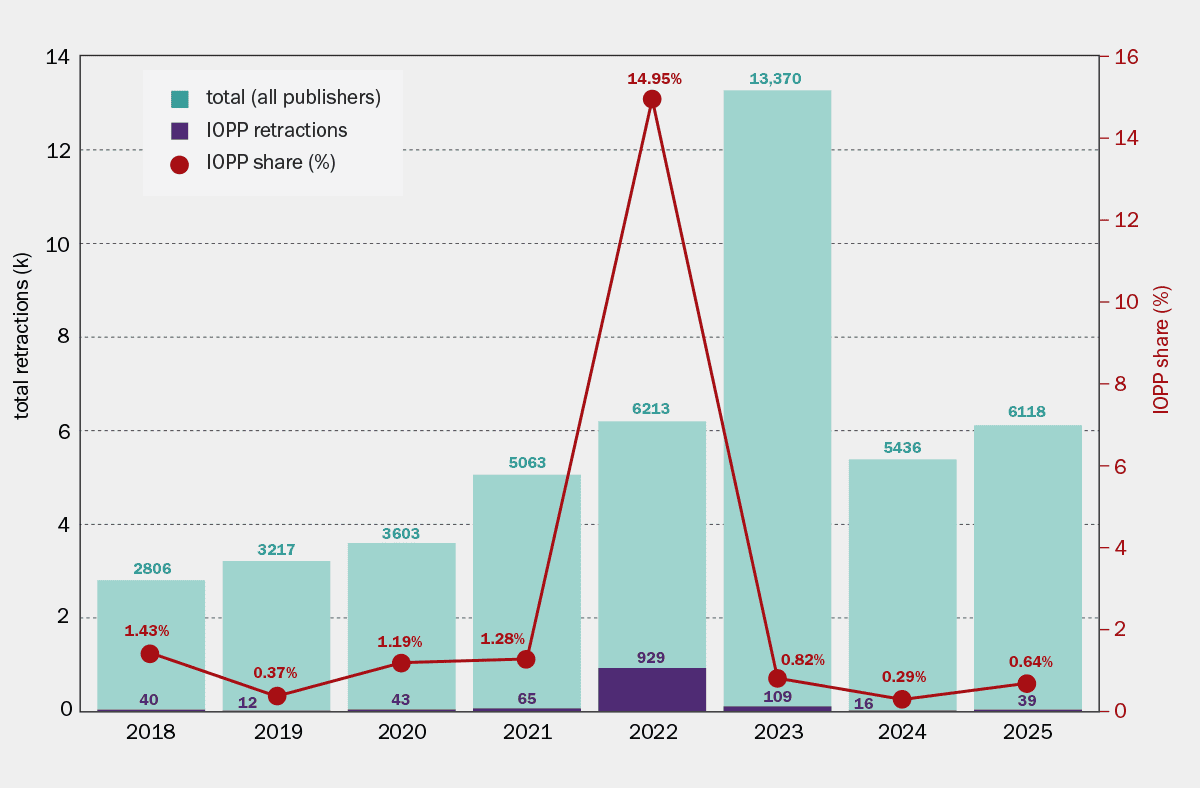
A study in 2025 by researchers at Northwestern University found that the publication of fraudulent science, aided by papermills, is now at a point where it is outpacing the growth rate of legitimate scientific publications. According to the Retraction Watch Database, which is now part of the not-for-profit organization Crossref, some 13,000 papers globally were retracted in 2023, compared to roughly 6000 in 2022 and 5000 in 2021 (see figure 1). There are now more than 60,000 retractions in the Retraction Watch Database, with estimates of the number of papermill papers that did manage to make it into the scientific record at 10 times that number.
1 Fighting back
(Courtesy: IOP Publishing)
Papermill activity in the early 2020s led to a significant rise in the number of retracted articles, according to data from Retraction Watch. Publishers subsequently built up research integrity teams and developed new tools to tackle the issue, but it still remains a significant challenge within scholarly publishing.
Part of that increase has been the huge growth in the use of AI tools and techniques. AI is particularly potent in microscopy, where generative AI has made it simple to generate fake images of any microscopy technique within minutes that are indistinguishable from real pictures. Indeed, it is estimated that between 1999 and 2024, about 10% of papers published in cancer research were from papermills. An analysis carried out in 2023, meanwhile, found that about 400,000 papers across all disciplines – representing about 2% of all published papers – were from papermills.
In 2022 Anna Abalkina, a research-integrity sleuth and social scientist at the Free University of Berlin, spotted papers with author e-mail addresses that had domains that did not match where the academic institution was based. In a subsequent analysis the papermill – which was dubbed Tanu.pro and is one of the largest in Europe – was found to have produced 1517 papers between 2017 and 2025. It also listed more than 4500 researchers affiliated with around 460 universities across 46 countries. The majority of the authors were in Ukraine, Kazakhstan and Russia.
The trouble that scientific publishers have is that Al allows a paper to be produced at the click of a button, which comes with some unintended consequences. In 2021 computer scientist Guillaume Cabanac from the University of Toulouse and colleagues discovered the use of “tortured phrases” in thousands of research paper thanks to algorithms taking the names of scientific terms rather too literally. Examples include “Sun oriented force” for solar energy, “motor vitality” for kinetic energy or “counterfeit consciousness” for artificial intelligence.
Cabanac began his efforts charting scientific misconduct in 2020 by working with the computer scientist Cyril Labbe to spot gibberish in computer-science papers that were automatically generated using SCIgen, a piece of software that can produce a scientific paper with just a few prompts. “My research began to move towards the quantitative study of science and so we began to collaborate,” notes Cabanac. The pair’s work led to thousands of papers being retracted with Cabanac adding that the scale of use of these tortured phrases in the literature was “a surprise”.
Cabanac says that as AI tools have improved, there are fewer papers with such phrases being published, and spotting misconduct now involves different “smoking guns”. In 2023, for example, Cabanac was one of the first to identify the so-called “regenerate response” fingerprint in dozens of publications. This specific phrase is the label of a button on ChatGPT and while many publishers allow authors to use large language model (LLM) tools to help them produce manuscripts, they must declare it. The problem was that many authors did not make such a declaration, but left the fingerprints of LLM use in their manuscript.
Cabanac says that the latest misconduct smoking gun can be found in bibliographies and the growing use of hallucinated references – citations to other papers that have been simply made up by an LLM. Along with data falsification, other forms of scientific misconduct include citation manipulation, in which irrelevant or unnecessary references are added to boost the citation figures of a colleague or other author. This can also be reciprocal, in which groups of scholars cite each other’s work.
Some fields suffer more than others. In mathematics, for example, the number of research papers and general citations are quite low, which makes citation numbers more prone to manipulation. In 2023 data firm Clarivate announced it would exclude the entire field of mathematics from their influential list of “highly cited researchers” due to the issue of citation manipulation – a decision it reversed two years later.
Run of the papermill
The boom in AI techniques and papermills has been a real headache for publishers, with papermill “attacks” resulting in mass retractions in recent years. Such attacks involve co-ordinated, industrial-scale assaults on academic journals, flooding editorial offices with large batches of fake, plagiarized or completely fabricated research manuscripts. While some papermills function in the so-called “shadow market”, others are officially registered businesses, or mimic legitimate businesses with a website offering services.
Although papermills have targeted all types of journals including open access and subscription and any publisher regardless of size, they have mostly focused on conference proceedings and special issues. They make for easy targets thanks to their softer-touch peer review and use of “guest editors” who are responsible for overseeing the peer-review process for the issue.
Industrial scale In recent years papermills have flooded journal publishers with papers either wholly or partly generated using AI. (Courtesy: iStock/siraanamwong)
In 2022, for example, IOP Publishing retracted nearly 500 articles in one go, of which the vast majority – 463 articles – came from the Journal of Physics: Conference Series. In 2024, meanwhile, the Swiss National Science Foundation stopped paying article-processing charges for articles published in special issues over quality concerns.
Yet the problem is not solely focused on conference proceedings and special issues. In 2023 the Public Library of Science (PLOS) retracted more than 100 papers from its flagship journal PLOS One over manipulated peer review. That same year, Hindawi and its parent company Wiley identified some 1200 articles that had compromised peer review and were retracted – a few months after Hindawi had announced that it would retract 511 articles across 16 journals for manipulated peer review.
Wiley then announced it would end the Hindawi brand name, costing the company up to $40m in lost revenue, and compelling it to integrate its 200 journals into Wiley’s 2000 journal portfolio. Yet the issues didn’t go away for Wiley, and in March 2025 the publisher retracted a further 250 papers.
Fighting AI with AI
Since the issue of papermills has come to a head in the last few years, publishers are fighting back (see box “How IOP Publishing is tackling the rise of papermills”) and the industry as a whole is taking action. The Committee on Publication Ethics (COPE) – a non-profit organization founded in 1997 that aims to define best practices and promote integrity in scholarly publishing – has issued new guidance on the use of AI in publishing.
Publishers are also pooling their resources into the STM Integrity Hub, which is run by the International Association of Scientific, Technical & Medical Publishers (STM). This cloud-based platform offers services that publishers can use to examine a variety of patterns that are indicative of papermills or other research integrity concerns, serving as an “early warning system” for integrity issues.
Spot the difference Generative AI has made it simple to generate fake images of any microscopy technique within minutes that are indistinguishable from real pictures, causing a headache for reviewers and publishers. (Courtesy: iStock/MF3d)
Antonia Seymour, chief executive of IOP Publishing, which is a member of STM, thinks that the rise in fraudulent papers is one of the most concerning issues for the whole scholarly ecosystem, with initiatives like the STM Integrity Hub being critical. “All publishers are being attacked by these bad actors trying to infiltrate the system with fraudulent papers,” she says. “The STM Integrity Hub is about combining signs of fraud not just from our corpus of content, but from other publishers as well.”
Other programmes supporting research integrity are Silverchair and Morressier, which check submission criteria such as missing author information (for example, e-mail address and institutional affiliation), missing ethics statements or missing keywords; and also confirms author identities using ORCiD. Somewhat ironically, they both use AI to beat AI by running the text through AI tools to check for tortured phrases, fraud and plagiarism as well as analysing citations.
Last year, the Science family of journals, run by the American Association for the Advancement of Science, adopted the use of Proofig, an AI-powered image-analysis tool, to screen for manipulation. ImageTwin is another programme that can detect image duplication and manipulation as well as spot AI-generated content.
Cabarnac, meanwhile, has worked with the French National Centre for Scientific Research (CNRS) to develop an online bibliography checker called bibCheck. “I’ve personally used bibCheck to flag hallucinated references in manuscripts I have reviewed,” says Cabarnac. “Finding these informed my decision to immediately reject.”
How IOP Publishing is tackling the rise of papermills
Many publishers have had to respond to the rise of papermills and fraudulent papers (see main text). That includes building up internal integrity teams and investing in new technology to manage the huge numbers of allegations and corrections.
“Retraction reporting is often reliant on self-declaration by publishers, therefore these figures are likely underestimating the scale of retractions out there,” says Kim Eggleton, research integrity manager at IOP Publishing, which publishes Physics World. “We’re of the opinion that retracted articles should be very clearly marked and we report all our retractions to Retraction Watch and PubPeer.”
Since 2023 IOP Publishing has also donated revenues from author-processing charges (APC) that it has earned from retracted works to charity, supporting Research4Life, which helps researchers in low- to middle-income countries to access published work.
Thanks to technological developments, and the work of some “scientific sleuths”, it is becoming easier to spot problematic papers. At the same time, that brings challenges to work through them all, contacting the authors and giving them a chance to explain.
At the start of 2021 IOP Publishing had one part-time position handling cases of misconduct; now it has one research integrity manager as well as six research integrity officers, all of whom are full time and fully trained to guidelines outlined by the Committee on Publication Ethics. The organization has also strengthened its screening process for conference organizers and invested in new technology.
IOP Publishing rejects about 55% of roughly 7000 submissions each month before they have even been sent for peer review. About 700 of those rejected papers are due to research integrity concerns. IOP Publishing’s research integrity team, which works on cases raised both before and after publication, typically has hundreds of papers under investigation at any one time.
But it is not only the papers themselves that can be fraudulent; there are even fraudulent peer-review reports. IOP Publishing has developed a machine-learning tool to detect duplicate peer-review reports – where the same reviewer report is sent for multiple submissions. The most egregious examples of this are “review mills”, organizations churning out fake reviews, often to inflate citations for a paying customer.
Until now, such patterns in reviewer reports had been difficult to identify, but the new tool automatically flags duplicate reviews to editorial teams. Indeed, since its pilot in 2024, the tool has processed around half a million reviewer reports dating back to 2020, identifying nearly 2500 cases where more than 60% of the content closely matched other reviews. These included instances in which reports were reused across multiple manuscripts or submitted under different reviewer names.
Any duplicate report submitted is flagged for investigation to IOP Publishing’s research integrity team. “This tool is a powerful addition to our efforts to defend high peer-review standards and weed out bad actors who try to manipulate the peer-review process,” says Eggleton. “It reflects our commitment to tackling unethical reviewing practices head-on and reinforces our role as a trusted, transparent and responsible publisher.”
Researchers are aware that the problem will not resolve itself and that publishers also cannot do all the fraud prevention alone. There are calls for researchers to undergo compulsory training in research ethics, and for journals to require raw instrument file datasets as a criterion for publication, as well as having dedicated conference sessions on combating AI risks. In 2025 Sense about Science and Taylor & Francis released a research integrity toolkit, created with and for early-career researchers, that answers common questions and provides practical advice.
Some have suggested that replication could and should be incentivized, perhaps by journals inviting a research group to replicate studies that are getting considerable attention in their journal (for example, studies with suspected AI-generated images), or inviting the replicating group to submit their replication for publication in the same journal. The replication study could then be linked to the original publication, and given an appropriate level of prominence.
But all these approaches take time and money. After several years of large numbers of retractions, in 2024 the number of retractions globally dropped back down to 5000 (see figure 1) – although many will still see that as being too much and others still estimate that figure to be much larger. The reality is that a lot of fraudulent material still exists in the scientific record, and may never come to light or be removed. Indeed, of the 782 papers that Bik found problematic in her analysis, only 177 have so far been retracted, with 42 having an expression of concern and 256 having been corrected. The remaining 307 remain in the scientific record untouched.
That is an issue that Seymour at IOP Publishing says must be resolved. While organizations like Clarivate are trying to clean up the scholarly record by potentially delisting a journal if it has found to be publishing too much fraudulent content, that can actually be a disincentive for publishers to go and find cases of fraudulent research in their journals. “Transparency and correcting the record is really important,” adds Seymour. “But at the moment, we’ve got quite a lot of sticks for publishers and perhaps not enough carrots.”
The image – The Quiet Predator – captures the Shark Nebula, which lies almost 650 light years away in the constellation Cepheus. The nebula is made of interstellar dust dense enough to block starlight with the blue-coloured areas in the image being “reflection nebulae” – clouds of interstellar dust that do not emit their own visible light but rather scatters and reflects light from nearby stars.
The image was taken in August 2025 with an Askar 140 APO telescope from the Jahra Governorate, Kuwait.
Sam Wen, founder and chief executive office of the astrophotography firm ZWO, says the image “is a stunning blend of technical excellence and artistic vision”.
“Showcasing the intricate structures of a rarely photographed nebula, the image combines remarkable detail with a striking composition and colour palette, inviting viewers to explore the hidden beauty of the cosmos,” adds Wen.
Alobaidly says it is a “tremendous honour” to receive the award.
“The juxtaposition of an oceanic predator prowling the skies above the Kuwaiti desert is something I find deeply poetic, and it is what first drew me to this remarkable region of the sky,” adds Alobaidly. “To me, it represents perfectly my love for both the Universe and the deserts of my ancestors.”
Alobaidly now hopes to continue using astrophotography for outreach and scientific research.
As well as winning the £10,000 top prize, the image will go on display along with other selected pictures from the competition at an exhibition at the National Maritime Museum observatory on 18 September.
The award – now in its 18th year – is run by the Royal Observatory Greenwich in association with ZWO and BBC Sky at Night Magazine.
Belarusian sculptor Pavel Wilimaytis has created a portrait of the theoretical physicist Jim Gates who is based at the University of Maryland and Brown University.
Gates is best known for his work on supersymmetry and superstring theory as well as the connections between quantum physics and information theory. He is also known for his outreach in particular the PBS series The Elegant Universe.
Wilimaytis, who has been living in Saint-Jorioz in France for the past three years, has a hearing impairment and chooses people to sculpt based on the “human presence in their faces”.
“For the first eight years of his life, Pavel perceived the world outside of language,” Wilimaytis’ mother Natallia told Physics World. “Before he learned to understand words, he already knew how to feel people: their warmth and coldness, light and shadow, pain, tension, kindness or inner closedness. Not what a person says about themselves, but what emanates from them before any words.”
Wilimaytis noticed photos of Gates online and was struck by the physicist’s “warmth, openness and distinctive charisma”.
“There is the quiet generosity of a scientists and teacher known for his exceptional ability to open the world of knowledge to others,” notes Wilimaytis.
The portrait of Gates, standing around 30 cm tall, was first modelled in plasticine and then cast in Acrystal – a water-based mineral composite material.
The sculpture forms part of Pavel’s sculptural series devoted to figures in science and culture. The series – “The lesser-known faces of famous people” – also includes Nikola Tesla, Marie Curie and Erwin Schrödinger.
In an e-mail to Natallia, Gates noted that he was “absolutely delighted” by the sculpture.
When it comes to power, the pair think it should be possible to generate sufficient energy even for a large city and without the need for nuclear power.
They estimate it would be possible to generate 3 GW of electricity using kilometre-tall towers covered with photovoltaic arrays. Not only that but it would be possible to manufacture solar panels on the Moon given the amount of silicon on the surface.
Yet it is not good news when it comes to water consumption. We have known for well over a decade that the Moon’s poles contain water ice, possibly as much as a billion tonnes, with Moon-orbiting craft mapping out likely locations in great detail.
Even assuming one billion tonnes of water on the Moon, if nothing was recycled then a city of a million would last only a few years, while a population of 100,000 would run for 20 years before running dry.
Even when recycling the water with an efficiency of 98% – as performed on the International Space Station – a city of a million would only have enough water for around a century.
The authors say that to sustain a lunar city of that size would require improving water-recycling efficiencies beyond 99.5%, reducing water usage through vertical farming or simply finding more water on the Moon.
So for now it sounds like a Moon village may be the only possibility. The authors state that a town of around 10,000 people, for example, may be sustainable for several centuries.
While Earth’s atmosphere is constantly changing, many spectacular storms and atmospheric waves on Saturn remain stable for decades or even centuries.
Images from NASA’s Voyager craft as it flew-by the planet in the early 1980s revealed a large and long-lived hexagonal atmospheric wave around Saturn’s north pole.
Yet despite decades of observations from other craft such as the Cassini mission, no similar wave has been reported in the southern hemisphere or elsewhere.
The researchers discover the phenomenon thanks to images from NASA’s Hubble Space Telescope as well as ground-based telescopes as the planet’s south pole came back into view from Earth due to Saturn’s axial tilt.
It seems that the 10-sided wave developed between 2023 and 2025 and may still be evolving, in contrast to the 40-plus years of steadiness shown by the hexagon.
The longitudes of the decagon’s vertices oscillate over a period of 32 days, and its movements suggest it may be trapped by the curvature of an atmospheric jet.
The researchers suggest the wave could have been created by a spatially periodic disturbance in the jet peak or driven by an “anticyclonic vortex” to its north.
However, further study is required to better understand how it formed and how it compares to the hexagon structure in the north.
“The most intriguing part to me is that this seems to have just formed recently,” notes study co-author Amy Simon from NASA’s Goddard Space Flight Center in Maryland. “The question is, why did it suddenly form now when we haven’t seen one before?”
The image shows the Helix Nebula, a bright ring of gas that is located 650 light-years from Earth in the constellation Aquarius.
Resembling a giant human eye, its familiar ring formed from material expelled by a star near the end of its life. The remnant of that star, a white dwarf, lies at the nebula’s centre.
Astronomers trained the Modular Optical Telephoto Hyperspectral Robotic Array (MOTHRA) on the nebula while it was still being constructed at the El Sauce Observatory in Chile’s Coquimbo Region.
When complete later this year, MOTHRA will use 1,140 high-end telephoto lenses and filters that function as a giant 4.8-m aperture refractor telescope to detect the extremely faint glow of gas across large swaths of the sky.
In the image above, the MOTHRA data are shown in black and were collected in November 2025 using 190 or so lenses. These have been combined with previous observations made by the Hubble Space Telescope and the Kitt Peak 4 m telescope, which are shown in colour.
The MOTHRA data reveal a collection of 22 complete or partial arc-shaped glowing shock waves on the eastern side of the nebula.
Dubbed bow shocks, the waves resemble those that form in front of a boat moving through water. In the Helix Nebula, mostly invisible clumps of stellar debris dart rapidly through the thin gas among stars. The glowing bow shocks mark where those clumps collided with the surrounding gas.
By studying the image, astronomers traced the star’s debris as it is stripped, broken apart and gradually mixed into interstellar space.
“We are seeing material shed near the end of a star’s life being broken apart and returned to the galaxy,” notes Yale University astronomer Pieter van Dokkum, who led the study. “That handoff – from recognizable stellar debris to the diffuse gas between the stars – has been very difficult to observe.”
Researchers in the US have proposed a new metric to determine the economic viability of future fusion power plants. The measure is similar to one used by fusion researchers to ascertain the output of fusion reactions, which is known as the Q factor.
Nuclear fusion, which powers the stars, involves two light nuclei binding to form a heavier nucleus, releasing huge amounts of energy in the process. Harnessing fusion on Earth using the hydrogen isotopes deuterium and tritium could lead to an environmentally friendly and almost limitless energy source.
In the 1950s, the engineer and physicist John Lawson laid out what became known as the “Lawson criterion” for fusion. It describes the combinations of temperature, plasma density and energy confinement time that can produce net energy from the plasma due to fusion, regardless of its absolute power or volume.
Specifically it calculates a factor known as “plasma Q”, which is the ratio of fusion power produced to the external power required to sustain the plasma, with a Q = 1 meaning break-even.
When it comes to magnetic confinement, in which magnetic fields are used to contain a high-temperature plasma, the Joint European Torus based in Oxfordshire, UK, which ended experiments in 2024, achieved a Q of 0.67 in 1997.
The ITER experimental fusion reactor, which is currently being built in Cadarache, France, aims to have a Q of 10 when fully operational towards the end of the 2030s.
The report discovered that 71% of the 65 companies surveyed expect the first fusion plant to deliver commercial electricity by the 2030s. Others, however, remain unconvinced that fusion will soon be a viable energy source.
With that in mind, researchers are now proposing a framework for understanding what is required to make fusion energy commercially viable in the marketplace.
While the costs of basic experiments can be easily documented, estimating the costs of a fusion reactor is somewhat more challenging.
“It’s challenging to reduce complex scientific and engineering requirements to economic consequences,” says economist Andrew Lo from the Massachusetts Institute of Technology (MIT), who co-authored the new study (J. Fusion Energy45 49). “But if we don’t do that, we’re not going to get the funding we need to achieve the impact we want.”
A new ‘Q’
The new framework includes 10 parameters that evaluate the economic viability of a fusion energy power plant. Some of these are scientific and physical, dealing with the energy consumed and produced in a given plant.
Other parameters are based on engineering and economics, such as the costs of plant construction, returns from invested capital, the efficiency of converting fusion power into an economic product as well as the durability of components used in the energy conversion.
The “economic Q” is then given as the ratio of capital gained to that expended.
MIT nuclear engineer Dennis Whyte, who also co-authored the study, says that the framework is about what it takes to achieve a net-positive economic return with the economic Q needing to be greater than 1 for basic viability.
“When you’ve got a framework to evaluate it in a quantitative way, it tells you about the literal worth of making a particular design decision,” adds Whyte. “That seems to me at this moment of fusion development absolutely critical, and what we’ve been missing.”
The Sun’s visible surface – the photosphere – is a thin layer of its atmosphere where the fluid plasma becomes transparent. This region is known to be dynamic and complex, with factors such as magnetic field and convection currents shaping the atmosphere.
The studied region by the astronomers is a magnetically active area close to a sunspot. In the image, the solar surface appears dominated by band-like and vortex-like structures.
The authors associate these features with Kelvin-Helmholtz instabilities, a well-known effect in fluid dynamics in which rippled structures form when two fluids slide past each other at different speeds.
This generates shear forces at the interface, causing minute disturbances to grow into wave- or vortex-like flows.
The vortices occur at the edges of so-called granules, which densely cover the Sun’s visible surface and measure between 500 and 2000 km in diameter.
Some of these “fringes” are little more than 20 km wide and resolving these structures is comparable to discerning a €1 coin from a distance of 180 km.
The findings provide the first known confirmation of Kelvin-Helmholtz instabilities on the Sun and researchers suggest that the instability might explain why the Sun’s outer atmosphere gets so hot, and why magnetic energy builds up and moves around the surface.
“The newly discovered plasma vortices impressively demonstrate how minute processes – at the limit of what we can resolve using all available techniques – significantly determine the nature of our star,” notes Sami Solanki, director of the Max Planck Institute for Solar System Research in Göttingen, Germany.
The STFC cuts come after the council announced late last year that its core annual budget would rise by only £7m to £842m over the four years from 2026 to 2030. One of seven research councils within UK Research and Innovation (UKRI), the STFC runs the UK’s national facilities and supports particle physics, astronomy and nuclear physics (PPAN) research in the UK.
In a strongly worded statement, IOP president Paul Howarth is now urging the government to review “this ruinous set of decisions”, calling the cuts a “terrible blow” that will do “real damage” to the UK’s scientific reputation and put future economic growth at risk.
“Despite reassurances, physics has not been protected, crucial facilities remain under threat and jobs are being lost,” says Howarth. “Scientific capability that has taken years to build up is being put at risk by these decisions – it undermines a number of our most important international collaborations and could put a whole generation of young people off a career in science.”
Balancing the books
Although UKRI has received a record £39bn investment across the four-year period, it said last year that projects at STFC would need to be cut given inflation, rising energy costs as well as “unfavourable movements in foreign exchange rates”. Together, the STFC’s annual costs are projected to rise to over £1bn per year by 2030, forcing it to find ways to balance its books by 2029.
Earlier this year, the STFC said it would have to cut its core science budget by at least 30% over 2024/2025 levels. UKRI also noted it would stop funding two UK facilities – the Relativistic Ultrafast Electron Diffraction and Imaging facility and the C-MASS mass spectrometry centre. A UK-led upgrade to the LHCb experiment at CERN and support for the Electron–Ion Collider at Brookhaven in the US would be axed too.
That announcement caused significant distress within the physics community, prompting the heads of UK university physics departments to publish an open letter to then science minister Patrick Vallance, expressing their “deep concern” about funding changes adding that such cuts cause “reputational risk”.
UKRI then carried out further consultation with researchers and the STFC’s expert advisory bodies, with the results of this “funding prioritisation exercise”now revealed. There is some good news for STFC-funded “discovery-led” PPAN research, which physicists had feared could be cut by a third. Following lobbying, UKRI says this work is being “protected”, although it will still fall by 2.7% over the next four years.
Under attack
While facilities such as Diamond Light Source, the ISIS Neutron and Muon Source, and the Central Laser Facility will not be mothballed, the STFC’s budget for multidisciplinary facilities will reduce by 15% over the next four years to save £28m. As a result, ISIS will have to reduce operational time at the facility.
Yet the STFC warns that if saving and income targets for the programme are not met by 2028 then further action could be taken, which could involve closing a multidisciplinary facility.
STFC’s national laboratories and estates budget fares slightly better, falling by 8% over the four-year period, but individual facilities will be hit harder. The operational budget of the Boulby Underground Mine, for example, will be slashed by 40%.
Particle fever
The STFC insists that subscriptions for international projects, such as CERN and the European Southern Observatory, will remain protected despite their costs expecting to rise by 19% over the next four years. But other projects, including the EIC as well as the LHCb upgrade, will not be funded. The latter is expected to operate until 2033 by which time it would have reached the end of its lifetime after years of intense radiation damage.
An upgrade was planned so that it could take advantage of the upgrade to the LHC – the High-Luminosity LHC (HL-LHC) – and offer an order of magnitude increase in luminosity over upgrade I.
Down and out? UK funding for a major upgrade to LHCb has been cancelled increasing the possibility that it won’t go ahead. (Courtesy: CERN)
Tim Gershon from the University of Warwick, who became international spokesperson for the collaboration this month, says that the outlook for STFC-funded science is “grim”.
“With a 15% cut last year and an outlook that sees funding shrink further due to inflationary pressure, not even excellent-rated and internationally-leading science like LHCb can be supported,” he adds. “LHCb is the canary in the coalmine for the future sustainability of particle physics and astronomy research.”
Gershon states that the decision to cut UK involvement in LHCb will throw away the leadership it has built up. “Not only is this a tragedy for researchers and engineers who have dedicated their lives to making LHCb one of the most successful experiments in history, it destroys opportunities for current and future students to be involved in world-leading scientific discovery,” he adds.
This is a short-sighted move, to save a tiny fraction of the overall UK science budget
Catherine Haymans
Gershon says it will take some time to understand what the UK’s decision means for the upgrade and how other funding agencies will react but without UK expertise it will be hard to progress given the UK is the largest partner in LHCb with a 20% stake.
“Ultimately, the LHCb Upgrade is an essential part of the full exploitation of the HL-LHC, which is the top priority of the European and CERN strategies for particle physics,” adds Gershon. “We are determined to deliver the best detector that is possible within the available resources. But such a major change to the level of expected resources makes this extremely difficult.”
Peter Millington, a particle physicist from the University of Manchester, says that the outcome is “bad news” for accelerator physics and the applications that it fosters, particularly in medical physics. “It is completely at odds with UK priorities across all industrial strategy growth-driving areas, while also eliminating skills pipelines pivotal to a wide range of sectors and eroding the UK’s long-held position as a global scientific leader.”
Astronomy woes
Astronomy is another area that is bearing the brunt of the cuts. The UK contribution to the e-MERLIN network of seven radio telescopes, which includes the iconic Lovell telescope at Jodrell Bank in northern England, is also ear-marked for cancellation. Its funding will now run out in 2028 and the move not only threatens e-MERLIN but also the future of Jodrell Bank , which the Royal Astronomical Society calls a “deeply troubling development”.
Catherine Haymans, Astronomer Royal for Scotland, says she is “absolutely devastated” for those working on e-MERLIN. “This is a short-sighted move, to save a tiny fraction of the overall UK science budget,” she says. They are now considering contacting the new Department for Business, Innovation, Science and Trade to reverse the decision.
Other astronomy cuts include the UK withdrawal from the James Clerk Maxwell Telescope located in Hawaii as well as 20% cuts for the UK’s Square Kilometre Array Regional Centre and activities at the Vera C Rubin Observatory in Chile, which recently began a 10-year survey of the universe.
Jim Wild, president of the Royal Astronomical Society, notes the cuts are “devastating news” for UK astronomy. “At a time when technological innovation is crucial to our country’s prospects, discarding unique, globally significant observatories threatens both our scientific future and the inspiration of future generations of astronomers,” adds Wild.
Michele Dougherty, executive chair of the STFC, who is also Astronomer Royal, says that the situation requires “tough, but necessary decisions”.
“After listening to our community we have protected core discovery research within PPAN, through a more focused portfolio that safeguards postdoctoral researchers, protects PhD opportunities and maintains the UK’s international leadership.” adds Dougherty, who stepped down as president of the IOP in January over the conflict of interest with her position at the STFC. “These are never easy choices, but we have made what we feel are the right decisions to bring STFC to a sustainable financial position by 2029/30″.
Private fusion companies have raised almost $4.5bn in funding over the past year – a 70% increase year-on-year. That is according to a report on the state of the fusion industry, which was published yesterday by the Fusion Industry Association (FIA). The report – The Global Fusion Industry in 2026 – also finds that private fusion endeavours now employ over 16,000 people worldwide.
Magnetic confinement, in which magnetic fields are used to contain a high-temperature plasma, is the most popular fusion technique, being used by 48% of firms according to the report. Inertial confinement, which uses rapid compression, usually by lasers, to create a confined plasma for a short period of time, is employed by 21% of firms – with other techniques such as magneto-inertial making up the remainder.
While electricity generation is a main target for private fusion companies, many also see the technology being applied to space propulsion, with other markets including marine propulsion, hydrogen fuel and industrial heat.
The funding boost for this year’s figures has come from major funding rounds, with CFS raising $863m in August 2025 while Inertia Enterprises, Helion Energy and Proxima Fusion have raised about $1.5bn in total this year.
Ambitious goals
The first FIA report on the fusion industry was published in 2021, where it found that private fusion endeavours had received over $1.8bn of funding since the 1990s.
The 2021 report discovered that over two-thirds of the 35 companies surveyed thought that electricity generated from fusion would enter the grid in the 2030s, with a further 20% thinking it would more likely come in later decades.
That confidence, however, has grown – with this year’s report finding that 71% expect the first fusion plant to deliver commercial electricity by the 2030s.
Indeed, FIA chief executive Andrew Holland says he is “confident” that commercial fusion will be delivered in the 2030s.
“Alongside private investment, fusion companies still need the support of governments to address common challenges including the availability of resilient materials and the fusion fuel cycle,” he says. “The governments that update their programmes and funding priorities to meet the sector’s needs today will be the ones to capitalize on this vital emerging industry.”
The report comes as General Fusion has become the first fusion company to be publicly listed. It joined the Nasdaq exchange with $150m in fresh funding, which is expected to go towards the firm’s Lawson tokamak programme that is expected to be complete in 2028.
It is one of the most extraordinary feats of military history – how the Carthaginian general Hannibal managed to cross the Alps with an army of 46,000 men, 7000 horses and 37 war elephants in 218 BCE.
Hannibal’s method was to catch the Romans by surprise by starting from what is present-day France and crossing the Alps into what is now northern Italy.
Yet the exact route that Hannibal’s army took remains a mystery and has been debated for decades given that no records by contemporary historians have survived.
The route crossing Col du Clapier – passing first through Grenoble and Aiton before descending into the Po Valley – appeared to be the likely candidate, but recent analysis has suggested an alternative southerly route via the Col de la Traversette.
Using route modelling and elevation data, the team found that the Col du Clapier route would have required 6.28 × 10¹² joules of energy, while Col de la Traversette, however, would have needed 5.42 × 10¹² J.
Yet even on that route, the 15-day crossing would have required 230 tonnes of food and supplies.
The authors calculate that the army would still have lost about a fifth of their body fat reserves during the crossing, which explains the high mortality rate among men.
Yet on the Col de la Traversette route, the war elephants would have fared better, losing just 4% of their reserves. This may explain why some 30 elephants are estimated to have made it through to fight in the Battle of the Trebia – the first major battle of the Second Punic War.
“The new analysis does not eliminate all ambiguity, but it does strengthen the case for the Traversette route by demonstrating that it would better accommodate the demands of moving a large army that included elephants through extremely difficult alpine terrain,” notes Berti.

 Login