The particle-physics process of string breaking has been modelled on a trapped ion quantum computer by researchers in the US. The results are similar to previous findings obtained independently using neutral atom quantum simulators and superconducting quantum computers. The result suggests that traditional models of string breaking need to be modified slightly.
The strong interaction is the force that binds quarks together inside hadrons such as protons and neutrons. Unlike gravity, electromagnetism and the weak interaction, which all diminish with distance – its effect becomes stronger as particles are pulled apart. In quark–gluon plasma, where quarks and antiquarks swim in a sea of gluons, they are effectively free. However, when an isolated quark is pulled away from an isolated antiquark (or a proton, for example), the energy in the gluon field increases indefinitely. At some point, this energy grows large enough to create a new quark and antiquark. These bind to the original particles, leaving two hadrons. Free quarks are therefore never observed.
This process, in which the potential energy in the gluon field grows and grows until it is released with the creation of new matter, is known as string breaking. The theory of this mechanism was first outlined in 1951 by the future Nobel laureate Julian Schwinger. The process often underpins the formation of new particles in colliders, but its fundamental details remain poorly understood.
Superconducting and atomic qubits
The notion of simulating experimentally inaccessible quantum processes using quantum processors has been discussed – and implemented for some systems – in the past few years. In 2025 scientists at Google Research in California and colleagues performed simplified calculations of the dynamics of string breaking using their Sycamore processor, which uses superconducting qubits, obtaining new insights into the process.
Also in 2025, researchers at the University of Innsbruck in Austria, together with colleagues at Harvard and the commercial company QuEra, took a slightly different tack. Instead of breaking the underlying quantum chromodynamic equations down into a series of discrete time steps and calculating their evolution, they used lasers to initialize the states of rubidium atoms such that their interaction would be analogous to quarks. This allowed them access to the dynamics of the string breaking process that would otherwise remain hidden.
Now, quantum-computing pioneer Christopher Monroe at Duke University in North Carolina and colleagues in the US and Belgium have achieved similar results to the QuEra group using trapped ions instead of neutral atoms. Monroe’s team modelled the behaviour of quarks using “domain walls” – regions where adjacent ions have opposite spins.
“You initialize the system with a certain number of domain walls, and then you apply the Hamiltonian – which means you do this QCD process – and you see how many domain walls you end up with. We show that the number actually increases.” Explains Arinjoy De, who was Monroe’s PhD student and now works at QuEra. To simulate the increasing energy in the gluon field as a quark is pulled away, the researchers used an external magnetic field: “We show that once you go beyond a certain threshold of the magnetic field, you go from two domain walls – or two particles – to create more particles,” says De.
Modifications needed
The results suggest some modifications to the canonical theories of string breaking. Notably, they found that, contrary to the predictions of Schwinger, string breaking is initiated at the edges, where coupling to the quantum vacuum reduces the energetic cost of new particle creation, before propagating inwards to the bulk.
The researchers are now hoping that, with more qubits and greater circuit depth, they will be able to look at domain walls farther apart. This would allow them to study the inverse problem of string formation when particles collide: “Our theory colleagues Alexey Gorshkov and Zohreh Davoudi at the University of Maryland are really thinking a lot about these meson scattering experiments,” says Monroe.
Quantum computing researcher Boris Blinov of the University of Washington in Seattle says that the work is “significant in its own right as a demonstration of the potential of a quantum simulator in the future to do things faster than any classical analogue of it.” He says the current system is too small to outperform what can be achieved with a supercomputer but “with more qubits and this technology, this way of controlling qubits would be of significance at the very least for quantum chromodynamics, gauge theories and fundamental physics.”
Monroe and colleagues describe their work in Nature Physics.
While modern Japan has had a good record in winning Nobel prizes, the country had to wait 48 years since the inception of the awards in 1901 to receive its first Nobel prize.
The accolade went to particle physicist Hideki Yukawa, who published his theory of mesons in the 1930s that explained the interaction between protons and neutrons.
Yukawa was born in Tokyo on 23 January 1907, graduating from Kyoto University in 1929. He then moved to Osaka University in 1933 for a PhD, which is where he did his Nobel-prize-winning work.
As positively charged protons repel each other through electromagnetic force, an issue at the time in nuclear physics was that this should cause the atomic nucleus to fly apart.
In 1935 Yukawa proposed a short-range, highly attractive nuclear force that overcomes this repulsion and suggested this force is created by the exchange of massive subatomic particles between protons and neutrons, which he called mesons.
Yukawa calculated that the mass of these exchange particles should be roughly between an electron and a proton.
Building a legacy
In 1937 three separate research groups conducted cloud-chamber experiments and discovered a new particle with a mass consistent with Yukawa’s prediction, but it was later identified as a muon.
In 1938 Yukawa was awarded a PhD and a year later moved back to Kyoto University but it took a few more years before Yukawa’s particle was finally discovered.
The first evidence of a meson came in 1947 with the discovery of the pi meson (pion) by a research group led by Cecil Powell at the University of Bristol. The team measured the particle by exposing photographic plates to cosmic rays at high altitudes (Powell won the 1950 Nobel Prize in Physics for the work).
Yukawa was then awarded the 1949 Nobel Prize in Physics “for his prediction of the existence of mesons on the basis of theoretical work on nuclear forces”.
The news was met with tremendous joy in Japan and encouraged scientists to continue their research in spite of the economic condition and the challenges of doing experimental science in postwar Japan.
In Yukawa’s honour, the Japanese government built a three-storey building named Yukawa Hall in 1952. Its focus was on developing theoretical physics in Japan and featured lecture halls, seminar rooms, offices and a library.
In 1953 the hall became home to the Research Institute for Fundamental Physics (now the Yukawa Institute for Theoretical Physics), of which Yukawa was the first director – a position he held until retiring in 1970.
The institute invited research scholars from all over Japan and held symposia and seminars on particle physics. It also published the monthly English-language journal Progress of Theoretical Physics (now known as Progress of Theoretical and Experimental Physics), together with the Physical Society of Japan (JPS).
The journal was founded by Yukawa in 1946 to publish results that had remained unpublished because of JPS’s financial difficulties.
As well as the Nobel prize, Yukawa also won many other international prizes and he was also vocal about issues in physics and society. In 1955 Yukawa joined 10 other scientists in signing the Russell–Einstein Manifesto that called for nuclear disarmament.
Yukawa died on 8 September 1981 and since he was awarded the Nobel Prize in Physics, 11 other Japanese-born physicists have gone on to win the physics Nobel – making Japan one of the most successful countries in the world.
SmarAct proudly supports Physics World‘s Nobel Prize coverage, advancing breakthroughs in science and technology through high-precision positioning, metrology and automation. Discover how SmarAct shapes the future of innovation at smaract.com.
Physicists at CERN have recreated the collisions that trigger cosmic-ray air showers in Earth’s atmosphere. Results from the ATLAS experiment on the Large Hadron Collider (LHC) show that none of the computer models used to simulate showers gets every detail right. Their measurements of particle production in proton–oxygen collisions are more than ten times more precise than the differences between the models – which could be improved by these latest results. This will be a step toward understanding the most energetic particles in the universe.
Cosmic rays are energetic particles (mostly protons) from outer space. They strike Earth’s atmosphere at nearly the speed of light, setting off cascades of secondary particles.
“Cosmic-ray air showers are sprays of particles raining down from high in the sky,” explains Jesse Liu of New York University, the lead author of a paper that describes the study. He adds that cosmic rays come from “extreme corners of our universe,” with exploding stars and supermassive black holes in distant galaxies as likely sources.
Still, the origin of the most energetic cosmic rays remains “one of the biggest mysteries in astrophysics,” says Karl-Heinz Kampert of the University of Wuppertal in Germany, who was not involved in the study. Such particles carry a hundred billion-billion electron volts or more – compared to the million-million electron volts achieved by the LHC. At the highest energies, only about one such particle hits each square kilometer of Earth’s surface per century. “The only way to measure them in sufficient numbers is to detect the extensive air showers they produce,” he says.
Difficult calculations
Interpreting these showers relies on computer simulations. But, the role of the strong nuclear force, which governs the underlying collisions, is notoriously difficult to calculate. The simulations therefore use models informed by accelerator data, yet “existing models widely disagree with one another on how these showers form,” says Liu.
The most energetic cosmic rays collide at energies far beyond the reach of the LHC, so “we must extrapolate the known properties of particle interactions at man-made accelerators to those occurring in the upper atmosphere,” Kampert explains. Moreover, the LHC’s beams had previously consisted only of protons or heavy nuclei such as lead, rather than the light nitrogen and oxygen nuclei found in air. “For more than a decade, the cosmic-ray community has been working to convince the CERN and particle physics communities of the importance of such measurements,” he says.
That changed in July 2025, when the LHC was reconfigured “to make protons acting as cosmic rays collide with oxygen nuclei playing the role of Earth’s atmosphere,” says Liu. The ATLAS detector recorded the charged particles these collisions produced.
Key parameter
ATLAS physicists studied “how many particles are created during collisions of protons and oxygen nuclei, alongside what energies and angles these particles fly out at,” Liu explains. They also determined the cross section, which “tells us how often these collisions occur,” he adds. Kampert calls it “a key parameter,” because it determines the average depth at which cosmic rays first interact in the atmosphere. This depth affects “essentially all air-shower measurements that are needed to infer the mass” of the incoming particle.
The measured cross section lies at the low end of model predictions, agreeing with only two of the seven models tested. The team also used it to infer the cross section for protons colliding with air, a quantity previously measured at such high energies only by cosmic-ray observatories. The result agrees with earlier air-shower measurements at similar energies.
“Our measurements are more than ten times more precise than the differences between the existing computer models,” says Liu. “Our data show that no model correctly describes the number of particles created in these collisions.” Some models misjudge the frequency of rare, particle-rich collisions by a factor of ten. A model called Angantyr best reproduces the particles’ energies and directions, but no model describes all the results consistently.
Blind spots and next steps
Kampert points out that the measurement has a blind spot because multipurpose detectors like CERN’s ATLAS and CMS are optimized to track particles flying out at relatively large angles to the beam. He explains, “most of the collision energy remains unseen by ATLAS and CMS and escapes close to the beam pipe, at very small angles. This unseen region most strongly influences the features of the air showers.” Specialized experiments, such as LHCf at CERN, are designed to fill this gap.
The next step, says Liu, is “to apply our data to improve the computer models of cosmic-ray showers.” Physicists will then check whether this eases the “muon puzzle” — facilities such as the Pierre Auger Observatory in Argentina see more muons, heavier cousins of electrons, in air showers than simulations predict. “Our proton–oxygen data are an important step toward resolving these puzzles and help decipher cosmic mysteries, namely what high-energy cosmic rays are made of and where they come from,” Liu adds.
“Model builders have been eagerly awaiting this data and have started improving their models based on it and earlier accelerator data,” says Kampert. Because Auger results suggest that the most energetic cosmic rays are mostly heavier nuclei such as carbon, nitrogen, oxygen and silicon, he calls data from oxygen–oxygen or nitrogen–nitrogen collisions “another important step forward.”
Earlier this year, he and colleagues outlined in Nature Reviews Physics how such data could feed into a common tuning of the models, an undertaking he calls “a great community effort involving researchers from different fields of science.”
“I hope [our work] strengthens the cross-disciplinary connections between particle physics and high-energy astrophysics, with much to learn from each other,” says Liu.
Could radioactive atoms in a Bose–Einstein condensate (BEC) form a “superradiant neutrino laser”? According to a paper published last year by Benjamin Jones of the University of Manchester and Joseph Formaggio of the Massachusetts Institute of Technology the answer is “yes”. We were intrigued by this proposal and commissioned the freelance physics writer Tim Wogan to write an article for us.
As part of his reporting, Wogan sought the opinion of a BEC expert – James Thompson of NIST, JILA and the University of Colorado in Boulder. Thompson told us that he was sceptical of the viability of such a device – in particular, he pointed out that the de Broglie wavelength of the emitted neutrinos is much too short for superradiance to occur.
Now, another physicist (Wolfgang Ketterle, who shared a Nobel prize for his pioneering work on BECs) has published two papers that cast doubt on Jones and Formaggio’s proposal. All three papers are published in a very prestigious journal, so this is a scientific debate of note.
So what is superradiance, and how could it be used to create a source of coherent neutrinos?
Coherent burst
Superradiance was originally envisioned in an ensemble of excited atoms, each of which can decay by emitting a photon. Normally, the rate at which photons are emitted from such an ensemble is simply proportional to the number of atoms present. Double the number of atoms, and the rate of emission will double. However, if the ensemble is dense enough that the wavelength of the emitted photons is much longer than the separation between neighbouring atoms, the emission of a single photon will involve all of the atoms. What is more, the superradiant emission rate is proportional to square of the number of atoms. The result is short, intense burst of coherent radiation. It is this coherence that has caused some to refer to superradiant lasers – although the physics of lasers is different.
Jones and Formaggio’s proposal involves radioactive atoms that decay with the emission of a neutrino, rather than a photon. Their idea is to cool an ensemble of these atoms to near absolute zero so that it forms a BEC. This is a unique form of matter that can be described as a macroscopic quantum state. Under this condition, the duo argued that neutrinos would be emitted rapidly from a superradiant state.
Now, Ketterle, Yu-Kun Lu and Hanzhen Lin at the Massachusetts Institute of Technology argue in two papers that such a superradiant neutrino laser is an impossibility. As well as backing up Thompson’s concerns about the short wavelength of the neutrinos, they point out that the atoms produced by the neutrino decays are fermions, and this precludes superradiance. They also showed that the recoil of atoms after neutrino emission would not allow the coherent emission of neutrinos to occur.
I think this is a fascinating subject and I hope that Jones and Formaggio can revive their proposal, because a BEC-based neutrino laser would be very cool!
You can read more about the debate in an article in Physics by Thompson and colleagues.
Physicists at China’s BESIII experiment in Beijing have found the strongest evidence yet for the existence of glueballs – subatomic particles made of gluons alone. The glueball-like particle is called X(2370) and it was first spotted at BESIII 15 years ago.
Gluons carry the strong nuclear force that binds quarks into protons and neutrons. Gluons also pull on each other as hard as they pull on quarks, which means they ought to be able to clump into particles called glueballs.
“So far, all ordinary matter that we know of is composed of quarks and leptons,” says Colin Morningstar of Carnegie Mellon University, whose 1990s supercomputer simulations helped predict what glueballs should look like. “A glueball is a totally new form of matter made up entirely of gluons – no quarks, no leptons,” explains US-based Morningstar, who is not a member of the BESIII team.
For four decades, detecting glueballs have been an important goal of BESIII and its predecessor – according to Shan Jin of China’s Nanjing University. BESIII is on the BEPCII accelerator, where electrons collide with positrons to create large numbers of J/ψ particles. A J/ψ can sometimes decay by shedding a flash of light and dumping the rest of its energy into gluons. The gluons could then bunch together to create a glueball.
Lightest glueball
In 2011, Yanping Huang was Jin’s PhD student and observed the production of the short-lived X(2370) particle at BESIII. “The most important next step was to determine its spin-parity quantum numbers, and it turned out to be one of the most difficult steps for us due to large background processes,” says Huang, now at China’s Institute of High Energy Physics in Beijing. Those numbers describe how a particle behaves when turned around and seen in a mirror – a kind of fingerprint. Only in 2024, with an exceptionally clean chain of decays and all 10 billion J/ψ particles, could the team read it, and it matched the prediction for the lightest glueball.
Now, Huang, Jin and the rest of the BESIII team have gone further and searched in vain for a specific X(2370) decay channel. They argue its absence suggests that X(2370) contains no quarks and the lightest glueball is its dominant constituent.
Quarks come in several types, or flavours, and a glueball contains none, so it cannot favour one flavour over another. That even-handedness forbids the X(2370) from breaking up into a particular pair of kaons, which are lightweight particles carrying a strange quark. BESIII looked for that break-up and found that the decay occurs at a rate that is at most 8% of the rate of a much more common X(2370) decay channel.
Huang explains that an ordinary quark-based particle should undergo the kaon-pair decay far more often. “The lightest glueball is essential for a natural and complete explanation of all these properties, while all other interpretations can hardly explain them simultaneously”.
Like a duck
Francesco Giacosa at Jan Kochanowski University in Poland is enthusiastic about the BESIII research, which he was not involved with. “We have an object, X(2370), that walks like a duck, quacks like a duck and, in addition, does not do something that the duck we are searching for should not do.”
Jin says that the BESIII result has important implications. “This is the direct proof of self-coupling among gluons predicted by QCD about 50 years ago,” where QCD is quantum chromodynamics, the theory of the strong force. It also illuminates the origin of mass, “since the gluon mass is zero and the glueball mass is totally from the strong interaction”. Glueballs, he says, are “a unique kind of matter made of pure force”.
Morningstar observes, “The results are the strongest evidence yet that particles dominated by a glueball component can exist in nature. This work is certainly an experimental triumph.”
Not everyone is ready to call the 50-year search over. “In my opinion, an independent experimental confirmation would be extremely important,” says Giacosa. A glueball can also blend with ordinary quark particles, he notes, so “even if X(2370) is predominantly a glueball, we do not know precisely how large its non-glueball component is”.
Upgrade needed
Gentler collisions elsewhere could shed further light on this, says Jin, “but it seems difficult for them to collect 10 billion J/ψ events to perform systematic studies as BESIII in a short time, unless we upgrade BEPCII itself again”.
That upgrade is on the collaboration’s wish list. Huang plans further measurements of the particle’s properties, which “will also certainly help us to identify more glueballs”. Reaching them may take ten times more data.
Morningstar also looks forward to further discoveries, “Our theoretical computations have suggested other glueballs that might exist, so with this successful study, I believe the search for other glueballs will intensify”.
Giacosa thinks the prize is worth it. “Glueballs are, in my view, among the most fascinating composite objects predicted within the Standard Model,” he says, meaning physicists’ theory of the fundamental particles and forces. “Establishing one experimentally would be much more than adding one more particle to the list – it would confirm one of the most remarkable predictions of the theory of the strong interaction.”
A new method of stabilizing radioactive molecules could open the door to sensitive searches for physics beyond the Standard Model. The approach, which involves cooling radium-bearing molecules to just above absolute zero, offers a tabletop alternative to experiments that use particle accelerators to look for violations of fundamental symmetries. According to lead researcher Nick Hutzler, a physicist at the California Institute of Technology (Caltech), US, it also shows that university laboratories can safely handle these radioactive materials, paving the way for similar studies at other institutions.
One of the greatest puzzles in physics is the fact that the early universe created more matter than antimatter. For decades, physicists have tried to solve this mystery (and others) by using particle accelerators to search for violations of nuclear symmetry at ever-higher energies. However, molecules that contain heavy radioactive nuclei could also act as super-sensitive sensors for symmetry violations – with the advantage that the equipment required to manipulate them generally fits in a single room, rather than an entire building.
Pear review
The basic idea is this: when electron orbitals overlap with a nucleus, the system’s atomic or molecular energy levels shift by tiny amounts that depend on the nucleus’ size and shape. Variations in nuclear structure due to symmetry-violating effects would therefore produce changes in the electron orbitals, and these changes could be measured with high-precision spectroscopy.
Asymmetric nuclei are ideal for this purpose because their lopsided shape makes small changes easier to detect. Radium, for example, has a pear-shaped nucleus, and radium-containing molecules offer additional advantages because the repulsion and attraction of neighbouring atoms further distorts the electron orbitals.
The downside is that radium is both radioactive and highly reactive, making it dangerous to handle without specialized equipment that is not present in standard university laboratories. It is also only available in extremely small quantities.
Sweet as candy
In the latest study, which is published in Science, physicists at Caltech and chemists at Johns Hopkins University and Michigan State University (all in the US) found a possible way around these obstacles. Their first step was to make radium stable and transportable. For this, they developed a process that resembles candy-making, though they do not recommend eating the results. By “caramelizing” small amounts of radium-226 in a solution of xylitol sweetener, they created a material they could transport in small quantities, keeping radioactivity levels low enough to comply with standard radiation-safety frameworks.
Next, they added their sticky radium “goo” to gold foil; installed it in a copper cryogenic cell; and cooled it to 4K using helium gas. They then used a laser to excite the radium into a chemically reactive state, allowing it to bond with targets such as hydroxide, deuteroxide and fluoride. Collisions with surrounding helium atoms further cooled these radium-bearing molecules into a mixture of only a few rotational and vibrational states. At this point, the team was finally able to perform the first-ever high-precision spectroscopic analysis of such molecules.
Opening doors
Hutzler acknowledges that several challenges remain before precision searches for symmetry violation can begin in earnest. Though theory predicts that these radium-bearing molecular species will be amenable to standard laser cooling and trapping techniques, no one has yet cooled them to ultracold temperatures. Another challenge will be to extend the process to other isotopes. Radium-225, for example, has a better nuclear shape for high-precision searches for symmetry violation, but it is also much more radioactive than radium-226, with a half-life of 15 days rather than 1600 years.
The team is also interested in studying the spectra of other radioactive species, with the aim of better understanding nuclear structure and chemistry at the extremes of the periodic table. A final possibility, Hutzler adds, would be to study other radium-containing molecules, as this would enable different precision measurements.
David DeMille, a physicist at Johns Hopkins who studies symmetry violations in atomic and molecular systems but was not involved in this research, calls it an “extremely promising way” to search for interactions that violate charge-parity (CP) symmetry. The efficiency with which the team converts solid-phase radium atoms into gas-phase molecules is a good sign, he adds, and extending the process to other radioactive molecules could help scientists understand species that have been observed astronomically.
However, DeMille points out that achieving ultracold temperatures poses additional challenges, including finding a way to release the confined molecules into a larger, much more complex experimental setup, without helium, while maintaining safe conditions. That said, he notes that the spectroscopic results are, in themselves, an important step towards reaching this ultracold regime.
Simulating quantum systems is something that classical computers struggle with. Not surprisingly, quantum computers are expected to do a much better job – particularly when a quantum-computer’s architecture is designed to solve a specific type of physics problem.
My guest in this episode of the Physics World Weekly podcast is Ross Jenkinson of the UK’s University of Manchester. He talks about the challenges and rewards of using quantum computers in particle physics – a field where classical supercomputers can struggle to simulate simple systems.
We also explore how quantum information theory is being combined with Einstein’s general theory of relativity to shed light on the nature of space and time.
This podcast is supported by American Elements, the world’s leading manufacturer of engineered and advanced materials. The company’s ability to scale laboratory breakthroughs to industrial production has contributed to many of the most significant technological advancements since 1990 – including LED lighting, smartphones, and electric vehicles.
In The Hitchhiker’s Guide to the Galaxy, Douglas Adams imagined a supercomputer called Deep Thought, built by a race of hyper-intelligent beings to calculate the Answer to the Ultimate Question of Life, the Universe and Everything. After a mere seven and a half million years of computation, the machine finally revealed its answer: 42.
There was just one problem. Despite their hyper-intelligence, none of those beings understood what the question had been. The joke was that any answer – no matter how precise – is meaningless without a thorough understanding of both the question and the route taken to obtain the answer.
Yet what was once purely science fiction is beginning to sound unexpectedly relevant to modern research. From structural biology to particle physics, artificial intelligence (AI) systems are increasingly involved in research, providing results of remarkable power and accuracy. They are being used to identify hidden patterns in vast datasets, to generate hypotheses, to accelerate simulations and to guide experiments.
As AI becomes increasingly embedded in the scientific process, could we be entering an era of discoveries without understanding?
But in some cases, even the creators of those AI systems are struggling to explain exactly how the AI arrives at its conclusions. All of which raises an uncomfortable possibility. As AI becomes increasingly embedded in the scientific process, could we be entering an era of discoveries without understanding? And if so, what happens when science starts producing its own versions of the answer “42”?
AI terms and conditions
Artificial intelligence (AI)
Intelligent behaviour exhibited by machines. But the definition of intelligence is controversial so a more general description of AI that would satisfy most is: the behaviour of a system that adapts its actions in response to its environment and prior experience.
Machine learning
As a group of approaches to endow a machine with artificial intelligence, machine learning is itself a broad category. In essence, it is the process by which a system learns from a training set so that it can deliver autonomously an appropriate response to new data.
Artificial neural networks
A subset of machine learning in which the learning mechanism is modelled on the behaviour of a biological brain. Input signals are modified as they pass through networked layers of neurons before emerging as an output. Experience is encoded by varying the strength of interactions between neurons in the network.
Training data
A set of real or simulated data used to train a machine-learning algorithm to recognize patterns in data indicative of signal or background.
Generative AI
A type of machine-learning algorithm that creates new content, such as images or text, based on the data the algorithm was trained on.
Computer vision
A branch of AI that analyses, interprets and extracts meaningful data from images to identify and classify objects and patterns.
Natural language processing
A branch of AI that analyses, interprets and generates human language.
AI and accelerated particle searches
For particle physicists, this question is no longer hypothetical. At CERN, the home of the Large Hadron Collider (LHC), AI is already woven into day-to-day research, subtly reshaping how physics research is carried out. Indeed, machine learning (ML) – one of the main pathways through which AI is achieved – has long played a role at the LHC.
Back in the early 2010s physicists working at the CMS and ATLAS experiments, routinely used ML in their search for the Higgs boson. The ML algorithms separated rare signals – a Higgs boson decaying either into two photons or into four leptons via Z bosons – from far more common Standard Model processes that produced similar signatures in the detector.
Machine learning did not discover the Higgs boson by itself, but it accelerated the search by making analyses more sensitive. In fact, achieving the same sensitivity without ML would have required between 15% and 125% more data, according to a review of Higgs-decay measurements (Nature560 41). Some measurements would even have needed more than double the data.
But the scope of AI in particle physics has been expanding rapidly since then. Neural networks are now used to compress enormous datasets, accelerate simulations, and identify unusual events hidden among billions of particle collisions. By learning directly from examples, neural networks can uncover complex correlations in detector data that would be difficult for physicists to unravel using conventional analysis techniques.
Caterina Doglioni, an experimental particle physicist from the University of Manchester, UK, who uses ML for data compression as part of the ATLAS collaboration, says that deployment of AI is becoming difficult to separate from particle-physics research itself. “It’s pretty much everywhere,” she says, especially when it comes to experimental high-energy physics. “It’s critical at the LHC where far more data is created than can realistically be stored.”
When it comes to compressing detector data, for example, one option is to use neural networks to force information through a computational “bottleneck” that preserves the most important features while dramatically reducing the storage required. The original data can then be reconstructed from this compressed summary, either exactly or approximately depending on the application (Rep. Prog. Phys.84 124201).
This is different from the ML techniques used during the Higgs search. Whereas Higgs analyses relied on supervised algorithms that had been trained to distinguish known signals from background noise, these data-compression methods typically use “self-supervised” learning. They identify and preserve important patterns – without requiring labelled examples.
Algorithms learn what ordinary collisions look like and then flag events that deviate from those expectations
More recently, researchers have begun applying ML to a very different challenge. In the Higgs search, algorithms were trained to recognize signatures predicted by theory and distinguish them from background processes. But now, instead of having algorithms that search for a specific predicted signal, those algorithms learn what ordinary collisions look like and then flag events that deviate from those expectations.
In what is essentially a clever form of anomaly detection, the hope is that new physics might reveal itself as something unusual, even if physicists do not yet know exactly what form it will take. In a nutshell, ML used to be applied to problems where physicists knew what they were looking for; now it is applied to problems where we don’t know what we’re looking for just yet.
While no new particles have yet been spotted with these anomaly-detection techniques, they have progressed from theoretical proposals to real experimental searches. In 2024, for example, the ATLAS collaboration reported the results of an unsupervised anomaly-detection search using Run 2 data. No significant deviation from Standard Model expectations was observed, but the study proved that such methods can be deployed successfully on real collider data (Phys. Rev. Lett.132 081801).
The black box problem
Yet the very feature that makes these systems so powerful – their ability to rapidly identify patterns humans may miss – also raises one of the most persistent concerns surrounding AI in research: the black box problem. Modern ML systems can uncover complex relationships in data, but researchers may struggle to understand exactly how a model arrived at a particular result. In particle physics, where extraordinary claims require extraordinary evidence, that lack of transparency can create unease.
For David Sutherland, a theoretical physicist at the University of Glasgow, the greater concern is not necessarily whether researchers can interpret every internal feature of a model – but whether they can trust and reproduce its outputs. “I would certainly say reproducibility [is more important] than interpretability,” he says.
That distinction matters. Science has always relied on the principle that results should survive scrutiny, be independently verified, and withstand repeated testing. A model does not need to reveal every detail of its inner workings – but researchers must be able to demonstrate that it behaves robustly across datasets and conditions.
Particle physics, in particular, has built extensive safeguards around that process. “We have very large review committees that check basically everything that goes on,” Doglioni says, with those structures providing an additional layer of protection against over-reliance on opaque systems.
Reliability and reproducibility
Yet as AI systems become increasingly embedded in research workflows, ensuring that reliability may become more difficult. Reproducing results may require not only access to data and code, but also to model architectures, training conditions and computational environments.
Unlike many commercial AI systems, the ML tools used in particle physics are often developed by particle physicists and shared openly with the scientific community. Even so, reproducing results may require access not only to data and code, but also to model architectures, training conditions and computational environments, all of which can influence an AI system’s behaviour.
The growing use of AI could also begin to change how physicists work and even how scientific value is measured. Christoph Weniger, a physicist at the University of Amsterdam who applies ML and AI techniques to particle physics and cosmology, argues that AI systems are likely to take on an increasingly active role in navigating complex analyses. Researchers, he believes, will shift into “a supervisory role in steering these different agents”, fundamentally changing how scientists interact with data.
AI and materials science
Closed loop The autonomous AI system at Argonne National Laboratory can speed up materials discovery. The AI proposes candidate materials, which can then be created and tested by robotic laboratories, with the results fed back into the system to guide the next round of experiments. (Courtesy: iStock/K-Kwanchai)
Particle physics is far from the only field exploring how AI might reshape scientific discovery. Researchers at Argonne National Laboratory in Illinois, US, recently developed what they describe as an AI adviser for designing advanced electronic materials.
Normally, materials discovery proceeds through a slow cycle of trial and error. Scientists propose a candidate material, synthesize it in the laboratory, test its properties and then refine the design. Each iteration can take days or weeks.
The Argonne system closes that loop. AI proposes candidate materials, robotic laboratories create and test them, and the results are fed back into the system to guide the next round of experiments.
Rather than analysing data after experiments are complete, AI becomes involved in deciding which experiments to perform in the first place, an early glimpse of what future “AI scientist” systems might look like.
The approach has already demonstrated its potential. In 2023 researchers at Argonne and collaborators reported that their autonomous A-Lab platform conducted 355 experiments in just 17 days and successfully synthesized 41 novel materials (Nature 624 86). The work provided one of the clearest demonstrations that AI systems can help guide experimental discovery rather than simply analyse data after the fact.
Creative impact
Such changes could extend beyond day-to-day workflows. Traditionally, the currency of academic research has been publications. But Weniger suggests that AI may shift the emphasis away from productivity alone and towards something harder to quantify: originality.
Scientific value may increasingly depend not on how many papers a researcher produces, but on the creativity and impact of the questions they ask
As routine technical barriers to experiments and theoretical work become easier to overcome, he argues that scientific value may increasingly depend not on how many papers a researcher produces, but on the creativity and impact of the questions they ask.
The effects may also extend to how scientific knowledge is communicated. The scientific literature has long been criticized for being difficult to navigate, not simply because of its volume, but also because of the way researchers write. Nichol Furey, a mathematical physicist at Humboldt University of Berlin whose work explores whether there is an underlying algebraic logic to the structure of the Standard Model, believes AI could help bridge that gap.
“Authors in maths and physics often write in ways that are overly opaque,” she says. “AI systems write with their audience in mind, whereas human authors often don’t.” Yet that possibility creates a tension. The same tools that can make research more accessible can also make scientific text dramatically easier to produce.
Communities are already beginning to grapple with the unintended consequences of widespread AI adoption. Recently, arXiv, one of the world’s largest repositories for physics and mathematics preprints, announced a crackdown on unchecked AI-generated submissions. It said it was introducing one-year bans for authors who upload papers containing obvious signs of unverified AI content, such as hallucinated references or leftover chatbot instructions.
The move reflects growing concern about the quality of AI-assisted scientific writing. Although arXiv’s new policy is too recent for its impact to be fully assessed, the threat of a one-year ban marks one of the strongest responses yet by a major scientific repository to unchecked AI-generated content.
The concern is not simply that AI can generate poor research. Now that producing scientific text is an almost frictionless exercise, the burden of judgement shifts increasingly onto readers, reviewers and future researchers trying to separate genuine insight from noise.
Training future physicists
Another potential problem with AI’s infiltration in many areas of research is training the next generation of physicists. This is generally a long process, where expertise is built gradually through years of practice and failure. If AI automates many of those steps, researchers may eventually face an uncomfortable question: how do you train future experts if the work that once trained them disappears?
This challenge extends far beyond physics. Across the education sector, schools and universities are already grappling with the ease with which generative AI can produce essays, solve problem sheets and complete programming assignments in seconds.
Education gap How do you reliably train the next generation of physicists when generative AI can produce essays, solve problem sheets and complete programming assignments in seconds? The problem is compounded if AI takes over the repetitive routine tasks historically given to students and postgrads to hone their skills. (Courtesy: iStock/Thai Liang Lim)
In fact, Wrishik Naskar, a particle theory postdoc at the DESY laboratory in Germany, wonders if research habits are also beginning to change. “When I get stuck, I go to my supervisor,” he says, “[but] many people, the first thing they ask is ChatGPT.” That approach might speed things up, but does it really help a researcher learn and grow? As Naskar puts it: “Focus on the learning. Results will follow if you have skills.”
Despite the many concerns, not everyone sees the transition to AI as a threat, and framing AI as a competitor to researchers may miss the point entirely. For example, Admir Greljo, a particle theorist at the University of Basel, believes the real shift is not replacement but collaboration. “It’s not that they will compete against AI. Entering into theoretical physics is still going to be very interesting and very important. AI is not competition, it’s a new tool.”
That perspective echoes a broader historical pattern. Physicists once calculated by hand, then with slide rules, then with computers. Each technological leap changed how research was done and prompted fears about what skills might be lost along the way. Yet rather than eliminating physicists, those tools expanded what physicists could ask.
Towards an AI scientist?
AI may simply be the next step in that progression. But it also presents something new. Unlike previous tools, AI can suggest ideas, identify patterns and increasingly participate in parts of the scientific process that once seemed uniquely human. So might that participation one day become independence? Could AI move beyond assisting physicists and begin carrying out the entire research process itself?
For Sutherland, a future in which AI systems perform the entire research cycle, from generating hypotheses to collecting data and even writing papers, is not difficult to imagine. But he still envisages a human “steering it” and acting as a “sanity check”, much like the relationship between a senior researcher and a PhD student.
Others go further. Greljo believes that fully autonomous scientific systems may not arrive in the near future, but sees no fundamental reason why they could not emerge eventually. Because science ultimately depends on reproducible results, he argues, humans could simply repeat calculations and test predictions to verify whether the AI had reached the right answer. Such a future, he says, is “not something that is impossible”.
We may be entering a world where machines help us uncover truths about the universe faster than we can fully understand them
We may be entering a world where machines help us uncover truths about the universe faster than we can fully understand them. But that need not signal the end of scientific inquiry. It is important to remember that AI models, much like many of the models used throughout scientific research, are imperfect and may always remain so. But perhaps they do not need to be perfect.
Science has always involved navigating uncertainty, constructing incomplete models and refining them over time. AI may help us discover things faster than ever before. It may reshape how future generations of physicists learn, work and think. But science has never simply been about generating results. It has also been about explanation, curiosity and deciding which questions are worth asking in the first place.
We should not treat AI as an oracle that bypasses the scientific method. Instead, we should view it as another tool in the physicist’s arsenal – a powerful one, certainly, but still a tool, helping researchers explore possibilities, test ideas and refine their models of reality.
After all, the problem with Deep Thought was never that it gave the wrong answer. It was that nobody knew what question they had asked.
The challenge for the next generation of physicists may not be deciding whether AI can discover new truths about nature. It may be making sure we still know which questions are worth asking.
How do you think AI is changing the face of physics? What are the threats and opportunities it poses – and what happens if AI produces answers we cannot understand?
Safety first: Internal Dosimetry is the practice of estimating intakes and risk from occupational exposures to radioactive materials (Credit: iStock/magicmine)
Radioactive materials have become a vital tool in our modern society, enabling the delivery of powerful medical treatments, the detection of toxic substances, and the generation of energy on a massive scale. But they also pose significant risks to human health, which means that organizations handling radioactive isotopes must have robust procedures in place to manage and monitor the dose received by their workforce and the wider public.
Dosimetry badges provide a visible and straightforward way to measure external exposure to radiation, but they are unable to determine the amount of radioactive particulates that have entered the body. Quantifying these intakes requires internal dosimetry, which typically uses measurements of urine or faecal samples – or less commonly in vivo radiological counts – to estimate the intake of specific radioisotopes. While the internal dose cannot be measured directly, monitoring data from these bioassays can be combined with biokinetic models to assess the likely impact of an individual inhaling, ingesting or being injected with a radioactive substance.
But internal dosimetry is not an exact science, and organizations with limited experience of radiation safety can struggle to translate regulatory requirements and the associated guidance into monitoring programmes that provide appropriate protection for their employees. Luckily, help is at hand. Dade Moeller & Associates, a wholly owned subsidiary of NV5, is a consultancy company specializing in radiation safety and dosimetry monitoring. Dade Moeller’s team of senior and certified health physicists can help organizations to balance worker protection with regulatory compliance.
Fit for purpose
“We encourage people to think about what they are monitoring for,” says Dr Brett Rosenberg, a certified health physicist at Dade Moeller with expertise in internal dosimetry. “The dosimetry programme must be tailored to the activity and half-life of the materials being handled, how those particular radionuclides interact with the body, and the maximum dose that an individual is likely to receive.” All of these considerations are important for prescribing a monitoring programme that does not become too onerous in costs and implementation while still providing an accurate assessment of occupational exposures.
In low-dose environments, for example, Rosenberg would advise organizations to run a confirmatory programme, in which samples from a subset of the workforce are used to check for any unexpected intake that would warrant further investigation. In contrast, routine internal dosimetry becomes a necessary requirement when there is a greater risk of workers receiving doses that exceed monitoring criteria – or even limits – set by the regulations.
Such situations are likely to arise, for example, in facilities that develop and manufacture medical radioisotopes, such as highly volatile iodine-131 for treating thyroid conditions. Radionuclides with the potential to generate higher doses are also produced throughout the fuel cycle for nuclear power generation, from extracting and refining the uranium – which creates radioactive dust that is easily inhaled – through to the management of nuclear waste.
In the US, such commercial operations are overseen by the Nuclear Regulatory Commission (NRC), which sets maximum limits both for the total radiation dose and the intake that a worker can receive. Companies must demonstrate compliance with these limits, but the NRC does not dictate the methodologies that are used for internal monitoring, or for estimating the intake from lab-based measurements. “Programme development and design is not based on regulation, it’s based on guidance,” says Rosenberg.
Flexibility leads to variability
That leaves organizations with significant flexibility in how they design their monitoring strategies, which allows programmes to be tailored to operational realities rather than forced into a rigid template. However, it also leads to variability in monitoring approaches and in the interpretation of results. Annual audits required by the NRC offer an opportunity for experts like Rosenberg not just to verify compliance, but also to identify opportunities for improvement. “I look for technical shortfalls in internal dosimetry, and check that the measures in place are effective and appropriate,” he says.
Many companies value the input they receive through these regular evaluations. Dan Sowers, for example, is the Global Radiation Protection Manager for Westinghouse, a nuclear services company that, among other things, fabricates uranium fuel and maintains the inner workings of nuclear reactors when they are not being operated. “My priority is the health of our workers,” he says. “Ultimately, we want our internal dosimetry programme to demonstrate that workplace controls are effective.”
Regular input from external advisors helps Sowers to ensure that robust procedures are in place for contamination control, and for assigning a dose to an employee when there is an intake of radioactivity. “The experts at Dade Moeller have enough real-world experience to know what’s right, which can go beyond the guidance we get from the regulators,” says Sowers. “They bring a fresh set of eyes to our operation and share best practice from other sites.”
The team at Dade Moeller also provides expert input to the US Department of Energy (DOE), which runs the national labs as well as facilities for nuclear security. Unlike the NRC, the DOE prescribes structured programmes for internal dosimetry that are tailored to the radioactive materials being handled at each site. It mandates lower dose thresholds than specified by the NRC for workers to undergo routine internal dosimetry checks, and uses a newer set of recommendations for assessing intake and estimating the dose received by different parts of the body. (However, notes Rosenberg, neither the NRC nor DOE use the latest set of recommendations, which are being adopted internationally.)
Creating consistency
Many of those recommendations come from the International Commission on Radiological Protection (ICRP), an independent body that provides guidance on dose limits and monitoring methodologies. The ICRP also develops and publishes the biokinetic models that are used by dosimetrists to translate the radiation counts from bioassays into estimates of intake and effective dose. Specific models have been developed to assess the impact of inhaling or ingesting different radioactive species, but the results are open to interpretation and depend on the version of the model being used.
To avoid these ambiguities, national regulators in Europe have combined forces to create a unified framework for internal dosimetry. Based on the outcomes from a co-ordinated research project in the early 2000s, this framework defines a standard set of methods and assumptions to ensure that different organizations calculate similar dose estimates from the same monitoring data. However, no such consistency exists in the US, where the NRC does not specify the details of the monitoring programme or the modelling methods a company should use, or between regulators in other parts of the world.
That lack of consistency can create difficulties for international companies like Westinghouse, which operates across 21 countries in different geographic regions. “Our internal dosimetry programmes are slightly different in each location,” says Sowers. “Those differences don’t affect the fundamentals of how we protect the health and safety of the worker, but the fine print of the regulations often requires us to do things slightly differently to make sure we are compliant.”
Dealing with uncertainty
To improve consistency, Rosenberg is involved in both national and international standards initiatives that aim to define best practice. However, he says, even the most carefully designed monitoring programme cannot eliminate the inherent uncertainty in estimating the effective dose from lab-based measurements of excreted samples.
“Even the most up-to-date models may not be very accurate,” says Rosenberg. “While the bioassay results are taken from a real individual, the model assigns the dose to a reference person who weighs 70 kg, excretes 135 g of faeces per day, and has both ovaries and a prostate.” As a result, the effective dose calculations based on excreted samples can carry errors of 300% when considering the anatomy and physiology of an “average worker”, and the practical limitations around counting statistics and sampling. “For practitioners, the challenge is not to remove uncertainty, but to understand and manage it,” says Rosenberg.
Given these intrinsic uncertainties, Rosenberg’s mission is to help regulators and commercial organizations to deploy the most effective methodologies for improving the standard of care. As part of these efforts, he has developed a week-long training course that aims to demystify the process of internal dosimetry for managers and regulators who need to understand the guidance from regulatory and international bodies like the ICRP.
“We do see uncertainty associated with inappropriate dosimetry practices, and to advance the field both the regulators and the practitioners need to stay current with the latest recommendations and models,” he says. “It’s easy to follow NRC regulations, but putting structured monitoring programmes in place and using the most appropriate models will help companies to produce more accurate evaluations and improve the safety of their workers.”
Officials at the CERN particle-physics lab near Geneva have turned off the Large Hadron Collider (LHC) for the last time. Over the coming four years, the accelerator complex will be upgraded to prepare for the High-Luminosity LHC (HiLumi LHC) that is set to start operations in 2030.
Taking decades to plan and construct, the LHC began circulating its first proton beams in September 2008 garnering attention from the world’s media. Yet days later the accelerator suffered an electrical fault that delayed first proton collisions for a year.
In the past decade, the LHC has also discovered more than 85 hadrons, put limits on the discovery of new particles, examined the imbalance between matter and antimatter and explored the nature of the quark–gluon plasma.
A new adventure
The LHC will now make way for HiLumi LHC that will increase the collider’s luminosity by a factor of up to ten. This will enable precision studies of the Higgs boson and enhance the potential to uncover phenomena beyond the Standard Model.
The shutdown will involve upgrading about 1.2 km of the 27 km ring by including 11-12 T superconducting magnets and superconducting “crab” cavities — that reduce the angle at which the bunches cross — to increase the number of collisions at the two detectors.
The ATLAS and CMS detectors will also be upgraded to cope with between 140 and 200 proton–proton collisions in every “bunch crossing”, compared to around 60 during the last LHC run.
German accelerator physicist Oliver Brüning, who is director for accelerators and technology at CERN, says that the LHC has “exceeded every expectation”.
“For nearly two decades, it has transformed our understanding of the universe and inspired generations of scientists, engineers and citizens around the world,” adds Brüning. “We say goodbye to the LHC as we have known it, while preparing to welcome its successor: the HiLumi LHC, which will extend this scientific adventure far into the future.”
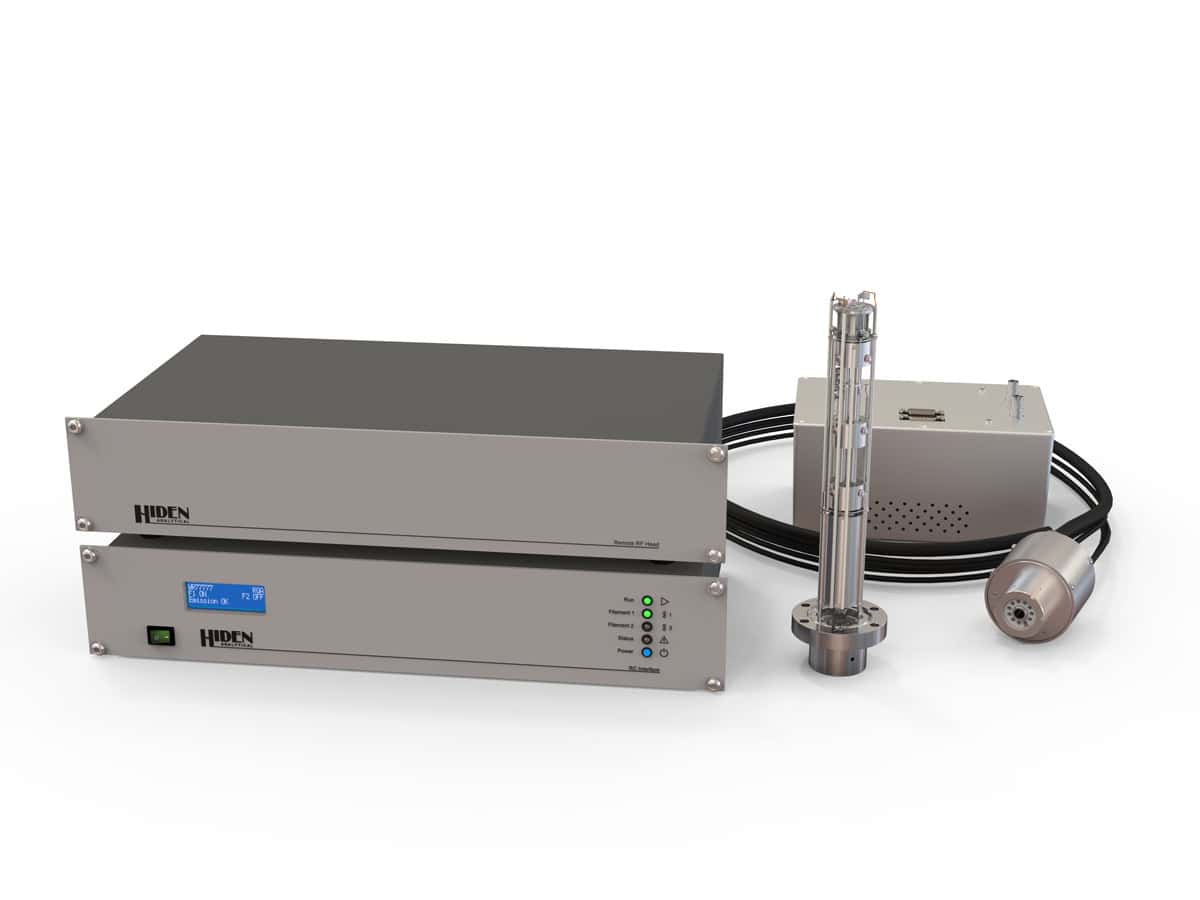
Hiden Analytical has designed a quadrupole mass analyser that can resolve the isotopes of hydrogen and helium that are involved in nuclear fusion (Credit: shutterstock/Mesh Cube)
Nuclear fusion promises to deliver an abundant, safe and sustainable source of energy, but replicating the reactions that power the Sun remains a scientific and engineering challenge. Experimental reactors, such as the ITER facility now being built in France, are designed to heat and confine a plasma containing deuterium and tritium to extreme temperatures, with the aim that the two hydrogen isotopes fuse together to form helium along with a neutron and a huge amount of energy. Crucial to success is understanding what is happening inside the reactor, allowing the plasma composition and properties to be adjusted in real time to initiate and sustain the reaction.
The extreme conditions inside the reactor preclude the use of direct probes, but a combination of external diagnostics can be used to monitor the plasma conditions and the progress of the reaction. To push the capabilities of these techniques, Chris Marcus and colleagues at Oak Ridge National Laboratory (ORNL) in the US have been developing a system that will exploit both mass spectrometry and optical spectroscopy to analyse the complex mixtures of light gases that are released from the tokamak while the reaction is taking place. “Each of these techniques provides complementary information that will help to isolate the hydrogen and helium isotopes we are interested in,” he says.
Complementary diagnostics
As part of this project, Marcus has been working with Hiden Analytical in the UK to develop a mass spectrometer that offers unique capabilities for fusion research. A key part of the brief was to achieve a higher resolving power for hydrogen and helium isotopes than can be achieved with standard instruments. “Our main objective was to detect small concentrations of helium-4, the main product from the nuclear reaction,” says Marcus. “But commercial instruments are unable to resolve helium-4 from deuterium when it is present at concentrations below about 10%.”
The spectrometer developed by the Hiden team exploits a quadrupole design, which is favoured for its rapid scanning speeds, compact footprint, and the ability to provide real-time analysis of atoms and molecules over a broad mass range. These quadrupole sensors work by ionizing the gas species, and then sending the ions through four cylindrical rods impressed with a composite DC and radio-frequency voltage. The resulting electric field separates the ions according to their mass-to-charge ratio, isolating the species of interest and preventing any other ions from reaching the sensor. The ion current produced at the output can then be related to the relative abundance of each species in the gas mixture.
However, conventional quadrupole analysers can only distinguish between atoms and molecules with a difference in mass of 1 amu. That makes it difficult to isolate helium-4 from deuterium, the species of particular interest for fusion research, since their masses differ by just 0.026 amu. “Although large-rod mass spectrometers are able to separate helium and deuterium, they are not suitable for deploying close to the outlet of a fusion reactor,” says Bob Mellor of Hiden Analytical. “We needed to develop a compact instrument that also delivers the extra resolving power.”
Improving resolution
Fortunately, quadrupole devices offer stable operation in several different zones. Standard instruments exploit a region of stability that can be accessed at lower voltages, but the Hiden team designed a spectrometer that can operate in a different stability zone that can separate helium and deuterium, albeit at significantly higher voltages. “This zone, which we call Zone H, achieves the detection limits that Oak Ridge required, but still enabled the use of a small quadrupole sensor,” says Mellor. The operational mode of the spectrometer can easily be switched between Zone H and the more usual Zone 1, which means that the instrument can also be used for conventional vacuum diagnostics.
Once a prototype instrument had demonstrated the feasibility of this solution, the next challenge for Hiden was to engineer a system that would be immune to the strong magnetic fields and high levels of radiation close to the tokamak. That posed a particular problem for the power and control electronics, since solid-state devices are prone to radiation damage and must be installed behind a radiation shield. As a result, the connecting cable between the power unit and the sensor can be up to 140 m long, which presents problems in connecting the RF voltage that is impressed on the quadrupole sensor rods.
A coaxial cable can be used, but simply connecting the RF voltage over long distances results in significant power loss in the generator. This means that the operating frequency of the sensor must be reduced to keep within the available power budget. “If you go much longer than 10 m, the frequency becomes so low that you don’t have any useful resolving power,” says Mellor.
The solution is to transmit RF power down the long coaxial cable to a set of intermediary electronics, or matching unit, that contains radiation-hard passive components and thermionic valves. “In the matching unit there is a power to-voltage convertor that generates the high-voltage RF to be impressed on the rods,” explains Mellor. “Independent testing at a fusion facility has confirmed that this solution is immune to radiation, magnetic fields, and ground vibrations.”
The resolving power of the mass spectrometer has also been evaluated at ORNL. “We have demonstrated that the quadrupole analyser can detect helium-4 at a concentration of 3% in a mixture containing 97% of deuterium,” says Marcus. “It also provides a fast response time, providing an analysis in less than a second, which is another key requirement for fusion diagnostics.
Experimental validation
In the meantime, Hiden has developed a series of commercial instruments to make the technology available to other fusion developers, as well as for other applications that require similar levels of performance. Both the DLS-2 and DLS-2X offer switchable dual-zone operation, combining high resolving power for light species along with high-performance residual gas analysis for vacuum diagnostics. They are available in two possible configurations: one with a Zone H that achieves an ultrahigh mass resolution of 0.0065 amu for species with masses of up to 10 amu, and the other providing a separation of 0.02 amu over a mass range extending to 22.5 amu. While the resolving power and sensitivity are the same for both instruments, the DLS-2X also features remote electronic control for use in harsh environments.
The HAL 101X combines dual-zone operation with radiation-hard electronics (Credit: Hiden Analytical)
Meanwhile, the HAL 101X includes all the features that were developed for the gas analyser system being developed and tested at ORNL. That includes dual-zone operation and radiation-hard electronics, as well as an additional analysis mode in Zone 1 – called Threshold Ionization Mass Spectrometry (TIMS) – that can help to distinguish between species with similar mass-to-charge ratios when they are present in sufficiently high concentrations.
The Hiden team is now working with Marcus to investigate the capabilities of the HAL 101X to distinguish between other light gases that are important for fusion research. “We have established that we can isolate neon, which can be used as a catalyst for the fusion reaction,” says Mellor. “The usual difficulty with neon is that its mass-to-charge ratio is overlapped by argon ions, but Zone H can be used to separate neon-20 from doubly charged argon.” More challenging will be to resolve tritium from hydrogen deuteride, which are separated by just 0.006 amu. “It may be possible by using the TIMS method in Zone 1, or by further increasing the applied DC and RF voltages to achieve a higher mass resolution in Zone H,” says Marcus.
While those investigations continue, Marcus is continuing to evaluate the HAL 101X on a diagnostic test stand at ORNL. “The next steps for the mass analyser will be to advance it into the production phase for the full diagnostic suite,” says Marcus. “That will yield a complete system that has been validated for operational use.”
Big science is all about big-money bets. What’s more, payback on those research investments – sometimes running to billions of euros in capital spend – will usually only be realized decades down the line. With the stakes so high, funding agencies and governments are understandably keen to shorten the odds in their favour and ensure every bet’s a winner.
Take the long-running debate within the international particle-physics community regarding a “next energy frontier” particle collider. The end-game: to build on the fundamental physics discoveries made by CERN’s Large Hadron Collider (LHC) and the anticipated breakthroughs resulting from its imminent upgrade – the High-Luminosity LHC – which is due to enter operation in 2030.
The collective conversation here is a case study in consensus meets divergence. On the one hand, there’s general agreement that any post-LHC big-science facility should be an electron–positron “Higgs factory”, in which electrons and positrons are smashed together at high energies to deepen our understanding of the Higgs boson. Discovered in 2012, the Higgs boson is the newest addition to the family of elementary particles that make up the Standard Model of particle physics.
“It’s widely accepted that an electron–positron Higgs factory, with its ‘exceptionally clean’ experimental conditions, will reveal the new physics that we know must exist beyond the Standard Model,” explains Richard D’Arcy, associate professor of particle-accelerator physics in the John Adams Institute at the University of Oxford, UK.
All these proposals exploit existing accelerator technologies based on superconducting and/or normal-conducting RF cavities (metallic chambers in which charged particles injected into an electromagnetic field receive an electrical impulse to accelerate them).
However, each blueprint comes with downsides, whether that’s prohibitive construction costs, sprawling land use and facility footprint, or eye-watering operational costs and energy budgets (or a combination thereof).
Opportunity knocks, it seems, for disruptive accelerator innovation that could unlock the door to a cut-price Higgs factory. One candidate technology that has seen significant advances over the past decade is plasma-wakefield acceleration (PWFA), which exploits laser- or particle-beam-driven intense “plasma waves” as the accelerating medium, yielding electric fields up to three orders of magnitude greater than in classical accelerators. Those ultra-high accelerating gradients, in turn, promise a significant reduction in the size, cost and carbon footprint of next-generation accelerator facilities.
Their concept is now taking form. Earlier in the spring, the HALHF project notched up a significant experimental milestone with the introduction of PWFA infrastructure into a test facility called CLARA (Compact Linear Accelerator for Research and Applications) at STFC Daresbury Laboratory in the UK. For context, CLARA hosts one of the world’s brightest medium-energy electron beams and is designed specifically to support the development of next-generation accelerator technologies.
Richard D’Arcy: “We have established a solid platform on which to build the next level of HALHF@CLARA experiments.” (Courtesy: Worcester College, Oxford)
Initial HALHF@CLARA experiments were carried out over a five-week period by a team of scientists from the universities of Oxford, Oslo and Manchester working with colleagues from the German accelerator laboratory DESY and Daresbury’s Accelerator Science and Technology Centre (ASTeC). Along the way, the researchers successfully integrated PWFA modules into CLARA and subsequently used them to drive plasma wakes with >GV/m gradients and then focus CLARA electron beams with >100 T/m fields.
“These results are foundational for future HALHF@CLARA experiments,” claims D’Arcy, who also leads the PWFA group at Oxford and is one of the principal investigators on the HALHF project. “They are also impressive in their own right, representing the first time beam-driven plasma acceleration has taken place in the UK.”
During this Phase 0 experimental run at CLARA, the HALHF team prioritized three key performance metrics: very high field strengths (orders of magnitude higher than what is possible with traditional accelerator technology); maintaining beam quality as the electrons pass through those very high field gradients; and, finally, minimizing (or even reducing) the energy spread of the electron bunches (which also maintains beam quality and ensures the PWFA set-up remains super-compact).
“By ticking off those three boxes,” says D’Arcy, “we have established a solid platform on which to build the next level of experiments. That’s when things will start to get really exciting.”
Progressions of power
Follow-on experimental runs, which are scheduled to get under way at CLARA later this year, will inevitably begin to tackle two outstanding challenges in plasma acceleration: pushing on to very high energies (which require the staging of PWFA modules in series) and attaining competitive luminosity (by operating the plasma modules thousands of times per second). “CLARA offers a unique opportunity to make substantial advances in both areas owing to its novel architecture and modular environment,” D’Arcy adds.
In the meantime, the HALHF collaboration has submitted its contribution to the European Particle Physics Strategy Update 2026 – part of a concerted push to raise the profile of the research community working on plasma acceleration. The priorities for that community are clear: to increase resources and funding, coordinate development activity on an international level, and take the next steps to further the PWFA concept towards practical and at-scale realization.
“We want to show particle physicists that PWFA isn’t some flash in the pan,” concludes D’Arcy. “This is an enabling technology that really has legs.”
Born and raised in Egypt, Mary Bishai studied physics at the University of Colorado, Boulder, US, before doing a master’s and PhD, also in physics, at Purdue University. After a postdoc at Fermilab, she joined Brookhaven National Laboratory in 2004, where she is now a distinguished scientist. Bishai served as co-spokesperson for the Deep Underground Neutrino Experiment (DUNE) from 2023 to 2025 and, over the years, has collaborated on many other leading particle-physics projects, including MicroBooNE, the Daya Bay neutrino experiment, the Main Injector Neutrino Oscillation Search, the CDF experiment at Fermilab, and the CLEO experiment at Cornell University. In 2026 she was elected fellow of the American Association for the Advancement of Science.
What skills do you use every day in your job?
I enjoy brainstorming. If I am having a mental block or get stuck in a technical or personal interaction issue, I walk down the hall to chat with a colleague about their work – even if it isn’t related to my own problem. This serves two purposes. First, it helps ameliorate the feelings of loneliness and frustration to discuss your challenges with others. Second, a surefire cure for any mental block is to divert your attention to a different topic. Another essential skill is to try to play devil’s advocate with myself and colleagues. My team finds this infuriating sometimes, but it’s vital – you need to be your toughest critic.
What do you like best and least about your job?
For a self-professed nerd like me, doing big science is heaven. I get to geek out on a broad set of technical and scientific challenges and work with lots of really cool experts from a variety of disciplines. Recently, for example, as part of DUNE, I’ve been looking at designs for the infrastructure that houses the Long Baseline Neutrino Facility. Located at Fermilab near Chicago, it will send the world’s most powerful beam of neutrinos to a detector in an underground lab 1300 km away in South Dakota.
In any given week, I might find myself discussing the mechanical engineering of detectors or learning about the civil engineering required for large-scale facilities. I might be discovering fascinating details about the hydrogeology of the Fermilab site, exploring the design of focusing magnets, or studying the results of simulations of high-energy particle interactions in materials.
I could also find myself in a meeting of the artificial intelligence (AI) expert team, learning new AI approaches, such as improving the search for neutrinos from supernovae using our detectors. Wandering the hallways, I might bump into a colleague from Brookhaven’s chemistry division and get chatting about new detector materials. I also work with theorists on new ideas for physics at DUNE.
I’m happiest trying to connect the dots between physics goals and technical and engineering disciplines, coming up with multidisciplinary design solutions to realize these massive science projects
I trained as an experimental particle physicist, but I’m happiest trying to connect the dots between physics goals and technical and engineering disciplines, coming up with multidisciplinary design solutions to realize these massive science projects. Best of all is when I ask a question in an area I’m not an expert in – say civil engineering – and someone replies: “Hmm, we hadn’t thought about that.”
My least favourite part of the job is that it can be very challenging to deal with large international collaborations of scientists and engineers over the very long time scales of large-scale projects. You need a lot of emotional resilience, stamina and patience to keep going for the decades it takes to get these large-scale projects to fruition. Burn out and despondency are downsides; keeping yourself and your team going is very difficult.
What do you know today that you wish you knew when you were starting out in your career?
Always be honest to the science. If it looks like something you put a lot of effort into is a dead end, drop it; don’t wait until someone tells you to stop. There will be a lot of dead ends before you find the right direction. When an approach fails, it means you have a new intellectual challenge – and that’s the fun part. Don’t be afraid to challenge established dogma and groupthink, even if it means difficult discussions with your colleagues no matter how senior. And most importantly, don’t keep pushing when you are burning out. It’s okay to step back and slow down for a while.
Colliding oxygen nuclei could briefly recreate one of the most extreme states of matter in the universe – according to evidence gathered by physicists working on the CMS Collaboration at the Large Hadron Collider at CERN. Their analysis suggests that when smashed together, even relatively small atomic nuclei can produce a tiny droplet of quark–gluon plasma (QGP). This is a superhot “soup” of elementary particles that is believed to have filled the universe just after the Big Bang.
Under normal conditions, quarks – the particles that make up protons and neutrons – are tightly bound together by gluons, which carry the strong nuclear force. But at extremely high temperatures, matter changes into a radically different form in which quarks and gluons move freely in a dense fluid-like state called a QGP.
Scientists believe the entire universe existed in this form for a tiny fraction of a second after the Big Bang. To recreate it here on Earth, physicists smash atomic nuclei together at nearly the speed of light.
One of the main ways researchers study this strange state of matter is by observing the fast-moving particle sprays created during the collision. In the absence of a QGP these energetic particles would travel outward freely. But if they pass through QGP, they lose energy, somewhat like a bullet slowing down in water. Physicists call this effect jet quenching.
“Jet quenching is one of the main tools we use to study the QGP,” explains Jiangyong Jia of Stony Brook University in the US, who was not involved in the CMS study. “When a high-energy collision produces a QGP droplet, energetic quarks and gluons created in the same collision have to travel through it, and they lose energy along the way.”
For many years, this energy-loss effect had only been clearly observed in collisions involving very heavy nuclei such as lead or gold. Lower mass systems, including collisions between protons and heavier nuclei, showed hints of unusual behaviour but no convincing evidence that particle jets were being slowed down.
A clear signal
The new CMS study examined collisions between oxygen nuclei, which are much smaller than lead nuclei. Oxygen contains just 16 protons and neutrons, compared with 208 in lead. This allowed researchers to investigate how small a droplet of QGP can become while still affecting energetic particles passing through it.
The collisions were performed in 2025 at an energy of about 5 TeV – the highest energy ever for oxygen ions. The CMS Collaboration measured how many high-energy particles emerged from the collisions. This was compared to simpler proton–proton collisions, which are not expected to result in jet quenching.
The physicists found a clear reduction in the number of energetic particles produced. At some energies, the suppression reached about 30%, far beyond what could be explained by random statistical fluctuations. The pattern looked remarkably similar to what researchers had previously observed in much larger lead–ion collisions, although the effect was weaker overall.
“Oxygen-16 has only 16 nucleons compared to 208 in lead, but it appears to produce a medium that absorbs jet energy in a qualitatively similar way to much heavier systems,” Jia explains. “The shape of the suppression curve in oxygen–oxygen collisions resembles what is seen in lead–lead, which suggests the underlying physics is the same.”
Understanding fireballs
The team compared its measurements with several theoretical models. Models that included energy loss caused by QGP generally matched the data better than models without it. Still, some uncertainty remains. Part of the observed effect may come not from a QGP itself, but from differences in how quarks and gluons are distributed inside oxygen nuclei before the collision even occurs.
“The main limitation right now is the nuclear parton distribution functions,” Jia says. These describe how quarks and gluons are arranged inside atomic nuclei. According to Jia, uncertainties in these distributions “can account for roughly half of the observed suppression on their own”.
Future experiments involving proton–oxygen collisions are expected to help clarify the picture. The findings may also reshape how physicists think about the minimum size needed to create QGP.
“It shows that QGP formation is not limited to heavy nuclei,” Jia says. “It can occur in collisions of nuclei as light as oxygen.”
Researchers now hope to compare oxygen with other light nuclei such as neon to understand how the properties of QGP change as the colliding systems become larger or smaller. The work could eventually help physicists build a more complete picture of how ordinary matter behaved in the universe’s earliest moments – and how the strong nuclear force operates under the most extreme conditions known in nature.

 Login