Tania Kendrick studied physics at the University of Bristol in the UK before joining the Civil Service fast-stream development programme, which saw her have postings at the UK’s Ministry of Defence, the Department for Environment, Food and Rural Affairs, and the Cabinet Office. After completing the scheme, she decided to stay in the Cabinet Office, where she now works full-time on relations between the UK and the European Union.
What skills do you use every day in your job?
One key skill I use every day is communication. A large part of my job involves taking complex and detailed information, understanding what is most important, and communicating it clearly and concisely to different audiences. This can vary from briefing senior colleagues and ministers, where I need to distil a lot of information into the key points they need to know to make a decision, to producing guidance and written products that need to be clear and accessible to a wide range of stakeholders. Being able to adapt how I communicate depending on the audience, and being able to do this quickly, while making sure the key messages are understood, is vital.
Although a physics degree and a career in policy may not seem to have an obvious connection, I constantly use the analytical skills I developed at university. I need to look at complex information and evidence, identify the key issues, and consider how different factors should feed into decision-making. Then I need to make sure that recommendations and advice are grounded in evidence, while also considering different perspectives, potential risks and the wider context. Being able to analyse information critically – and use it to support informed, evidence-based decision-making – is crucial.
What do you like best and least about your job?
What I love most about working in the Civil Service is that I’m constantly learning something new. Policy covers such a wide range of issues, and I really enjoy the challenge of getting to grips with a new topic, understanding how it works, and gradually seeing the bigger picture. There’s something really satisfying about that moment when everything starts to click and you understand why something is done in a particular way, or realize there are considerations you would never have thought about when you started. I like that no two days are exactly the same and that there is always something new to learn.
What I like least about my job, which is something I’m still getting to grips with, is finding time to properly switch off. Policy development can take time, and it’s easy to find yourself thinking about a problem outside work, such as trying to devise a potential solution or wondering if there is a better way to frame something. It’s really important to build things into your routine that help you switch off. For me, that means setting clear boundaries, exercising straight after work, particularly running and playing hockey, and making time to catch up with friends.
What do you know today, that you wish you knew when you were starting out in your career?
Something I wish I could tell my past self, especially throughout university and coming up to graduation, is not to worry so much about having everything figured out. I focused too much on trying to work out my exact “dream” physics job. But looking back, I realize I didn’t necessarily need a clear plan. As a teacher once said to me, studying physics opens so many doors. You develop skills that can take you into a wide range of careers from finance and technology to consulting and, of course, the Civil Service. So my advice to others would be: you don’t need to know exactly what you want to do straight away. Try things, get some work experience, speak to people in different careers, and be open to opportunities you might not have considered. The world really is your oyster.
The UK’s Science and Technology Facilities Council (STFC) recently announced funding cuts to a range of physics and astronomy projects as it seeks to reduce costs. One of the most high-profile casualties is e-MERLIN, a network of seven radio telescopes spread across the UK, including the iconic Lovell Telescope at Jodrell Bank.
To discover what the cuts could mean for UK science and the livelihoods of those affected, podcast host Andrew Glester caught up with two astronomers at Jodrell Bank: Simon Garrington, e-MERLIN director, and David Williams-Baldwin, an e-MERLIN research support scientist.
They discuss why the cuts have caused such alarm among scientists, how the UK astronomy community is mobilizing in opposition, and why the consequences could extend far beyond Jodrell Bank.
e-MERLIN combines signals from its telescopes to produce sharp radio images of the Universe – with a resolution comparable to that of the Hubble Space Telescope. As things stand, funding for the telescope array will run out in March 2028, putting the future of the network and scientific operations at Jodrell Bank in doubt.
It’s an uncertain time for an observatory that was granted UNESCO World Heritage status in July 2019 for its historical contributions and its technical and scientific ingenuity since the 1940s.
An STFC spokesperson emphasises that Jodrell Bank is “not closing” and “will continue to play an important role in UK science”. This includes the Square Kilometre Array Observatory that has its headquarters at Jodrell Bank as well as other radio astronomy research projects in the UK and elsewhere.
“We recognise the strength of feeling about Jodrell Bank and the e-MERLIN network, and the contribution they have made to UK science. The achievements of the scientists, engineers and staff who have supported e-MERLIN over many years are widely respected across the research community,” they add. “We are focusing on the next generation of radio astronomy to ensure UK researchers continue to be at the forefront of the field. Rising cost pressures mean that we have had to make difficult choices about STFC funding to make sure we are able to fund world class research sustainably into the future.”
The US Department of Defense (DoD) has given 30 US research universities until the end of the month to audit, and potentially cease, their partnerships with universities and military training institutions in “foreign entities of concern”.
If the institutions do not comply with the order, they risk losing funding from the Defense Advanced Research Projects Agency, the Office of Naval Research, and the Air Force Research Laboratory – losses that could potentially close entire academic research groups or departments.
The order does not specify the foreign entities it targets. But a list that the DoD published last month identified 130 universities and research institutes in China, Russia and Iran that it claimed to be wrongly appropriating US-funded technologies.
The DoD, which the Trump administration calls the Department of War, also noted that its order applies to “organizations associated with rebranded Confucius Institutes” – cultural programmes associated with US universities that began in 2004.
The DoD asserts that the audit process is designed “to protect American taxpayer-funded research investments from unauthorized technology transfer, intellectual property theft and adversarial exploitation” adding that it will allow the department to “better anticipate emerging threats, adapt to evolving adversarial tactics and maintain America’s position as a global leader in innovation”.
“The Department of War has zero tolerance for academic partnerships that compromise our national security,” notes Emil Michael, the DoD’s undersecretary of war for research and engineering. “Institutions that receive funding from American taxpayers must uphold the highest standards of research security, and these mandated audits will ensure accountability across the board.”
China tension
Those affected by the order include Harvard University, Massachusetts Institute of Technology, Cornell University and Johns Hopkins University.
The DoD has not indicated why it has chosen the 30 targets for audit. However, since it took office last year the second Trump administration has criticized prominent universities over issues such as antisemitism and their use of diversity, equity and inclusion.
Harvard has received particular ire from the administration, which has cut or delayed government grants to its departments while fighting the university in court.
A Republican majority House of Representatives committee issued a report on 13 August claiming that Harvard received over $630m from Chinese sources. The report also noted that the university had created a nonprofit organization, Harvard Global, to accept overseas grants that the university itself is not legally permitted to receive.
The DoD’s audit comes as the Trump administration prepares to welcome President Xi Jinping to the US late next month.
Reacting to the order, a statement by China’s embassy in Washington notes that it opposes what it calls the politicization of normal scientific, educational, and academic exchanges. “The US side should abandon the Cold War mentality and foster an open, fair, and non-discriminatory environment for educational, scientific, and people-to-people exchanges between China and the United States,” it declared.
Physics World contacted some of the universities affected by the order but did not receive a response.
A new report by the Trump administration that outlines a model for the future government support for science and technology has drawn heavy criticism from the US scientific community. Entitled Science: A New Golden Age, it emphasizes developments by public–private partnerships at the expense of university-driven research with critics asserting it places politics above science.
The 104-page report aims to update a 1945 document – Science, the Endless Frontier – that was issued by Vannevar Bush, who served as director of the US government’s Office of Scientific Research and Development in the 1940s. The report eventually led to creation of the National Science Foundation (NSF) in 1950.
The 2026 report focuses on how government R&D spending reaches the scientific community and claims that the US research enterprise has become too centred on established research institutions rather than individual researchers.
The report wants the government to significantly reduce the amount and number of grants it gives universities and instead make large investments in industry and non-profits. It also calls for a significantly scale-up of the use of artificial intelligence in science.
“We must renew the R&D enterprise on which our scientific leadership depends,” US science adviser Michael Kratsios and Office of Management and Budget (OMB) director Russell Vought write in an accompanying memorandum.
Yet critics says that funding for exploratory science is not the administration’s only target. “It’s very clear that Kratsios/Trump want to destroy universities, or what he calls ‘legacy institutions’,” says public policy expert Shobita Parthasarathy from the University of Michigan. “There is no respect for basic research, which has historically driven innovation in the US [but that] industry won’t fund.”
Neal Lane, former US science adviser who served as NSF director between 1993 and 1998, takes issue with how individual agencies are asked to implement the points raised in the report. “Unlike previous rules, which were uniform guidance, allowing an agency like NSF to set their own rule, the new rule is a binding uniform regulation applying to all agencies as written,” he says.
Lane is also unhappy with the report’s dismissive approach to peer review, which it argues slows down innovation, proposing instead to diversify funding mechanisms with alternatives such as “golden tickets” rapid grants and prize challenges.
“For many decades, expert peer review has been regarded as the gold standard for funding research and publishing the results,” he says. “It is not credible for the administration to claim it supports ‘gold standard science’ without peer review.”
‘Misguided approach’
While some see merit in aspects of the report, or at least a need to rethink the underpinning of scientific research, the American Association of University Professors (AAUP) see the administration’s approach as a misguided way to address those challenges. “Reforms must strengthen scientific independence – not weaken it,” an AAUP statement asserts.
That view is echoed by the Federation of American Scientists (FAS), which note that while the report calls for a “lighter, faster, and more capable research enterprise”, it says that the to the “uniform guidance that governs how federal grant funding is administered runs counter to that goal”.
The report comes as the administration’s proposed budget for financial year 2027, which Congress must approve, would cut overall government spending on R&D by 22%, with support for the NSF slashed by more than 50%, NASA by 23% and the Department of Energy’s Office of Science by 15%. The OMB also proposes guidelines that would allow agencies to terminate grants that “no longer serve agency priorities or the national interest”.
Tess DeBlanc Knowles, a senior director at the US thinktank the Atlantic Council, says US science will be hit badly if those cuts go ahead. “No amount of experimentation can counteract the damaging effects that dramatically reduced funds will have on the foundation of the US’s scientific and technological leadership and ability to train the next generation of scientists,” she says.
A new report by the American Institute of Physics has found that physics and astronomy PhD graduates are quitting the US in record numbers. The proportion of non-US citizens leaving the US post-degree nearly doubled, from 16% in 2024 to 29% in 2025 – the largest one-year increase since 1997. The report also says about 12% of US citizens post-physics PhD left the US in 2025, compared to just 5% two years earlier.
The STFC cuts come after the council announced late last year that its core annual budget would rise by only £7m to £842m over the four years from 2026 to 2030. One of seven research councils within UK Research and Innovation (UKRI), the STFC runs the UK’s national facilities and supports particle physics, astronomy and nuclear physics (PPAN) research in the UK.
In a strongly worded statement, IOP president Paul Howarth is now urging the government to review “this ruinous set of decisions”, calling the cuts a “terrible blow” that will do “real damage” to the UK’s scientific reputation and put future economic growth at risk.
“Despite reassurances, physics has not been protected, crucial facilities remain under threat and jobs are being lost,” says Howarth. “Scientific capability that has taken years to build up is being put at risk by these decisions – it undermines a number of our most important international collaborations and could put a whole generation of young people off a career in science.”
Balancing the books
Although UKRI has received a record £39bn investment across the four-year period, it said last year that projects at STFC would need to be cut given inflation, rising energy costs as well as “unfavourable movements in foreign exchange rates”. Together, the STFC’s annual costs are projected to rise to over £1bn per year by 2030, forcing it to find ways to balance its books by 2029.
Earlier this year, the STFC said it would have to cut its core science budget by at least 30% over 2024/2025 levels. UKRI also noted it would stop funding two UK facilities – the Relativistic Ultrafast Electron Diffraction and Imaging facility and the C-MASS mass spectrometry centre. A UK-led upgrade to the LHCb experiment at CERN and support for the Electron–Ion Collider at Brookhaven in the US would be axed too.
That announcement caused significant distress within the physics community, prompting the heads of UK university physics departments to publish an open letter to then science minister Patrick Vallance, expressing their “deep concern” about funding changes adding that such cuts cause “reputational risk”.
UKRI then carried out further consultation with researchers and the STFC’s expert advisory bodies, with the results of this “funding prioritisation exercise”now revealed. There is some good news for STFC-funded “discovery-led” PPAN research, which physicists had feared could be cut by a third. Following lobbying, UKRI says this work is being “protected”, although it will still fall by 2.7% over the next four years.
Under attack
While facilities such as Diamond Light Source, the ISIS Neutron and Muon Source, and the Central Laser Facility will not be mothballed, the STFC’s budget for multidisciplinary facilities will reduce by 15% over the next four years to save £28m. As a result, ISIS will have to reduce operational time at the facility.
Yet the STFC warns that if saving and income targets for the programme are not met by 2028 then further action could be taken, which could involve closing a multidisciplinary facility.
STFC’s national laboratories and estates budget fares slightly better, falling by 8% over the four-year period, but individual facilities will be hit harder. The operational budget of the Boulby Underground Mine, for example, will be slashed by 40%.
Particle fever
The STFC insists that subscriptions for international projects, such as CERN and the European Southern Observatory, will remain protected despite their costs expecting to rise by 19% over the next four years. But other projects, including the EIC as well as the LHCb upgrade, will not be funded. The latter is expected to operate until 2033 by which time it would have reached the end of its lifetime after years of intense radiation damage.
An upgrade was planned so that it could take advantage of the upgrade to the LHC – the High-Luminosity LHC (HL-LHC) – and offer an order of magnitude increase in luminosity over upgrade I.
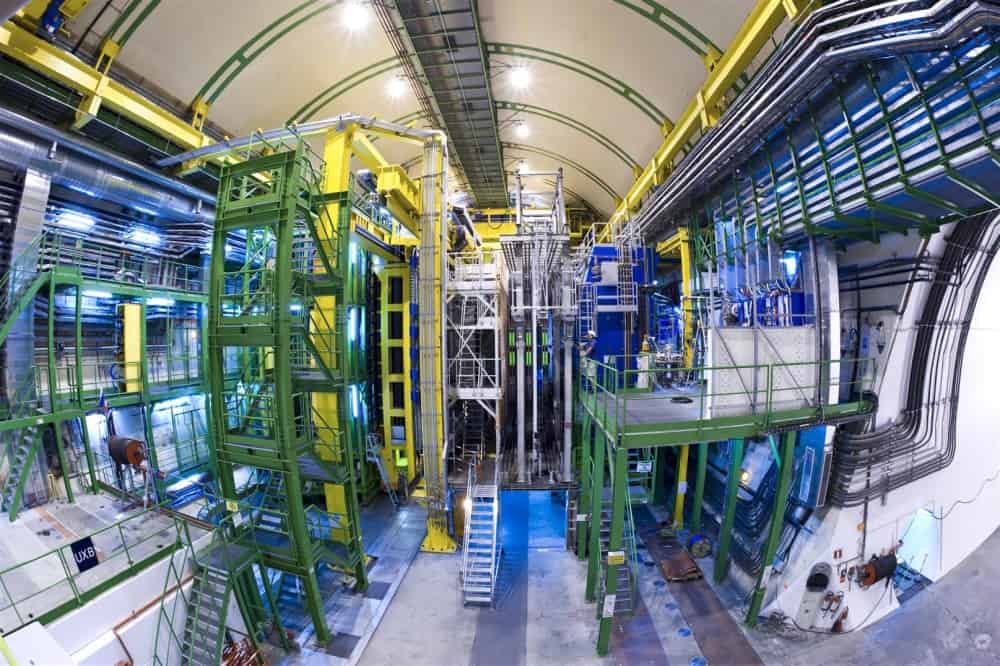
Down and out? UK funding for a major upgrade to LHCb has been cancelled increasing the possibility that it won’t go ahead. (Courtesy: CERN)
Tim Gershon from the University of Warwick, who became international spokesperson for the collaboration this month, says that the outlook for STFC-funded science is “grim”.
“With a 15% cut last year and an outlook that sees funding shrink further due to inflationary pressure, not even excellent-rated and internationally-leading science like LHCb can be supported,” he adds. “LHCb is the canary in the coalmine for the future sustainability of particle physics and astronomy research.”
Gershon states that the decision to cut UK involvement in LHCb will throw away the leadership it has built up. “Not only is this a tragedy for researchers and engineers who have dedicated their lives to making LHCb one of the most successful experiments in history, it destroys opportunities for current and future students to be involved in world-leading scientific discovery,” he adds.
This is a short-sighted move, to save a tiny fraction of the overall UK science budget
Catherine Haymans
Gershon says it will take some time to understand what the UK’s decision means for the upgrade and how other funding agencies will react but without UK expertise it will be hard to progress given the UK is the largest partner in LHCb with a 20% stake.
“Ultimately, the LHCb Upgrade is an essential part of the full exploitation of the HL-LHC, which is the top priority of the European and CERN strategies for particle physics,” adds Gershon. “We are determined to deliver the best detector that is possible within the available resources. But such a major change to the level of expected resources makes this extremely difficult.”
Peter Millington, a particle physicist from the University of Manchester, says that the outcome is “bad news” for accelerator physics and the applications that it fosters, particularly in medical physics. “It is completely at odds with UK priorities across all industrial strategy growth-driving areas, while also eliminating skills pipelines pivotal to a wide range of sectors and eroding the UK’s long-held position as a global scientific leader.”
Astronomy woes
Astronomy is another area that is bearing the brunt of the cuts. The UK contribution to the e-MERLIN network of seven radio telescopes, which includes the iconic Lovell telescope at Jodrell Bank in northern England, is also ear-marked for cancellation. Its funding will now run out in 2028 and the move not only threatens e-MERLIN but also the future of Jodrell Bank , which the Royal Astronomical Society calls a “deeply troubling development”.
Catherine Haymans, Astronomer Royal for Scotland, says she is “absolutely devastated” for those working on e-MERLIN. “This is a short-sighted move, to save a tiny fraction of the overall UK science budget,” she says. They are now considering contacting the new Department for Business, Innovation, Science and Trade to reverse the decision.
Other astronomy cuts include the UK withdrawal from the James Clerk Maxwell Telescope located in Hawaii as well as 20% cuts for the UK’s Square Kilometre Array Regional Centre and activities at the Vera C Rubin Observatory in Chile, which recently began a 10-year survey of the universe.
Jim Wild, president of the Royal Astronomical Society, notes the cuts are “devastating news” for UK astronomy. “At a time when technological innovation is crucial to our country’s prospects, discarding unique, globally significant observatories threatens both our scientific future and the inspiration of future generations of astronomers,” adds Wild.
Michele Dougherty, executive chair of the STFC, who is also Astronomer Royal, says that the situation requires “tough, but necessary decisions”.
“After listening to our community we have protected core discovery research within PPAN, through a more focused portfolio that safeguards postdoctoral researchers, protects PhD opportunities and maintains the UK’s international leadership.” adds Dougherty, who stepped down as president of the IOP in January over the conflict of interest with her position at the STFC. “These are never easy choices, but we have made what we feel are the right decisions to bring STFC to a sustainable financial position by 2029/30″.
I am writing from Argentina as a researcher working within the country’s national scientific system. While discussions about science funding are often framed in terms of budgets and economic indicators, the reality is experienced in laboratories, offices and research facilities where scientific knowledge is produced.
Today, many of us in Argentina are witnessing a progressive deterioration of Argentine science, both in terms of infrastructure and human capital.
The impact became tangible when my colleague Paula Alderete, an experienced electron microscope specialist, lost her position. Alderete, who has published two papers with me, was responsible not only for operating a highly specialized instrument, but also for maintaining it and supporting dozens of research projects.
Without Paula Alderete’s expertise, our lab’s electron microscope has become largely unusable. It is a quiet reminder that scientific infrastructure depends as much on people as on expensive equipment.
Faramarz S Gard
Without her expertise, the microscope has become largely unusable. Every morning I pass her empty desk on my way to the laboratory. It has become a quiet reminder that scientific infrastructure depends as much on people as on expensive equipment.
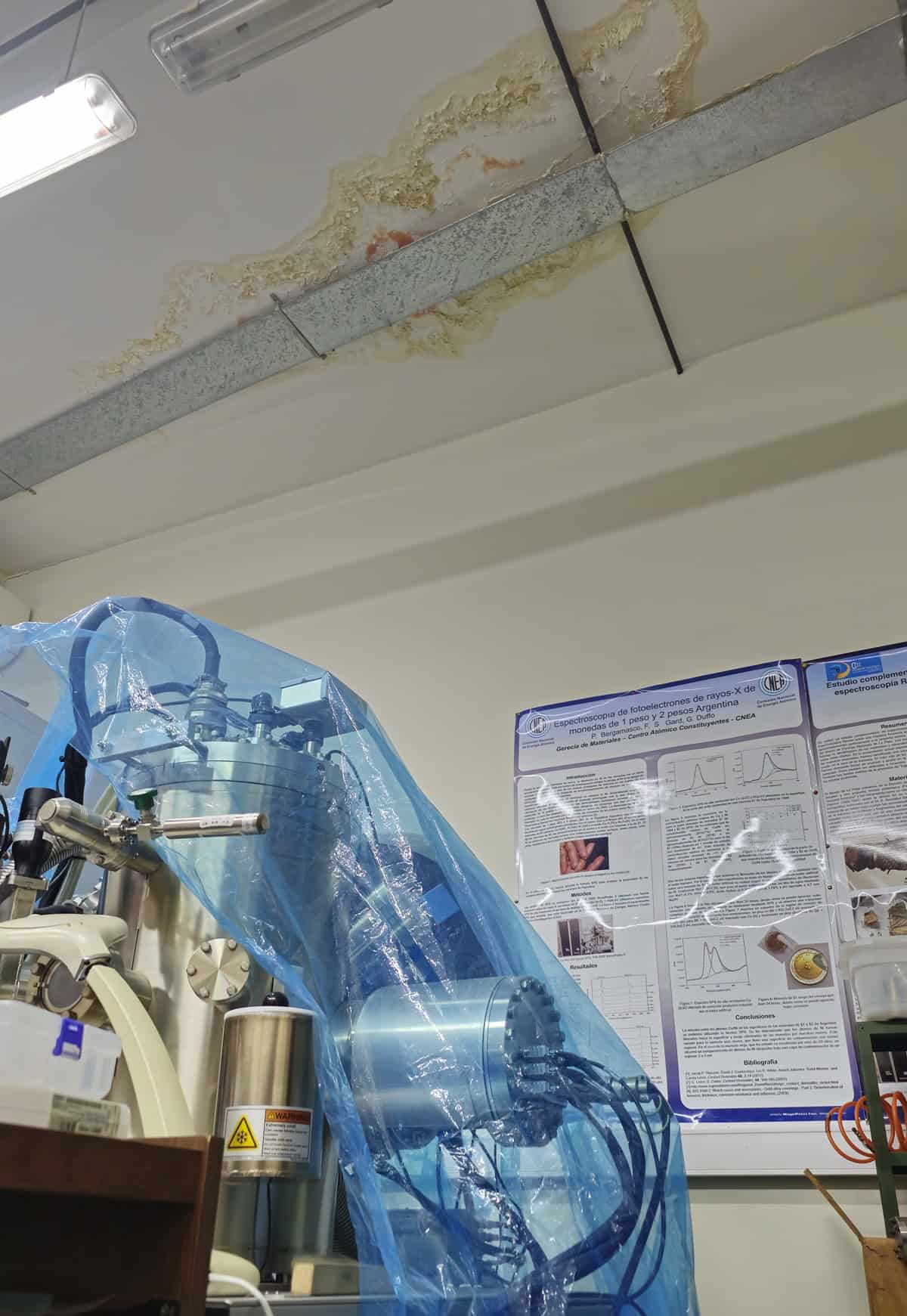
The deterioration extends beyond personnel. In my laboratory, an X-ray photoelectron spectroscopy (XPS) instrument worth more than $1m must sometimes be protected with plastic sheets because rainwater leaks through the roof.
Equipment designed to operate under tightly controlled environmental conditions is now exposed to circumstances that threaten its long-term reliability. Similar situations are becoming increasingly common across Argentina’s universities and research institutes as maintenance budgets shrink and infrastructure ages.
Argentina has a scientific tradition that reaches far beyond its borders. The country has produced five Nobel laureates, including three in the sciences, and has made internationally recognized contributions to nuclear technology, medicine, agriculture, astronomy and materials science. Institutions such as CNEA, CONICET (Argentina’s national research council) and the national universities have trained generations of researchers whose work has strengthened international collaborations and advanced scientific knowledge worldwide.
Scientific systems rarely collapse through a single dramatic event. They decline incrementally: one technician dismissed, one laboratory left unrepaired, one instrument taken out of service, one young scientist deciding to build a career elsewhere. These individual losses accumulate into a weakening of scientific capacity that may take decades to rebuild.
When a country loses the expertise required to operate advanced laboratories or maintain unique scientific infrastructure, the consequences extend beyond national borders.
Faramarz S Gard
This should concern more than Argentina. Modern science depends on international networks of researchers, shared facilities and long-term collaboration. When a country loses the expertise required to operate advanced laboratories or maintain unique scientific infrastructure, the consequences extend beyond national borders.
Damaged goods This X-ray photoelectron spectrometer at the author’s lab has to be protected from water leaking through the ceiling. (Courtesy: Faramarz S Gard)
Knowledge is lost, collaborations weaken, and opportunities for discovery diminish.scientific infrastructure is more than buildings and instruments; it is the people whose expertise gives those resources value. Once that expertise disappears, replacing it is far more difficult than preserving it.
The empty desk of a single scientist may seem insignificant, but multiplied across laboratories and institutions, it becomes a warning of how a research system is quietly dismantled. Argentina’s experience is therefore not only a national concern but also a reminder that scientific capacity, wherever it exists, is a global resource that is remarkably difficult to rebuild once lost.
I write this letter not only to describe a difficult situation but also to call attention to the broader consequences of sustained disinvestment in science. The international scientific community should recognize that the erosion of research systems in countries such as Argentina represents a loss not only for those nations but for global science itself.
Science is built by people, sustained by institutions, and enabled by infrastructure. Today, all three are under increasing strain in Argentina.
The National Science Foundation (NSF) has announced a new initiative to convert new research into products and industries. The $1.5bn programme, called X-Labs, however, has been criticized by some in the US scientific community given that financing the plan could come via cutting the budgets of current NSF directorates by as much as 30%.
The NSF says that the first round of X-Labs funding will focus on two areas – one on quantum sensing and AI-driven computational imaging while the second area will be in the development of quantum information and computing.
The projects that are chosen will receive $1.5m over a nine-month period to carry out further work. The NSF will then select projects to move onto the next phase in which they will receive a further $10–50m per year for 2–3 years.
According to an NSF spokesperson, X-Labs are designed to “spur progress on platform technologies critical to US competitiveness”, supporting high-risk, high-impact research that requires “substantial resources beyond traditional mechanisms”. A key goal of the handful of labs, the spokesperson adds, is to “reduce the time it takes to go from insight to impact through this new investment framework”.
While critics don’t have an issue with the concept, there are concerns that it is coming at the expense of basic research. Former presidential science adviser and former NSF director Neal Lane told Physics World that X-Labs is a “terrible idea”.
“There’s been a push to get more practical and get NSF involved in ensuring that science it funds actually makes it to the marketplace,” adds Lane. “But suddenly it’s been taken to extremes by the Trump administration. They’re trying to cut as much basic research as possible and put it all into an experimental programme.”
‘Without precedent’
The X-Labs programme comes as the NSF – one of the main science funding agencies in the US – still lacks a director. The previous head, Sethuraman Panchanathan, resigned in April 2025 after receiving orders from the White house to cut the agency’s budget by more than 50% (US Congress later restored much of the funding).
The Trump administration has announced Jim O’Neill, a Silicon Valley investor, as the next director, but he has yet to go through the necessary Senate confirmation.
There is also no further movement on the new personnel that will make up the National Science Board, the body that acts at the NSF in a way similar to a company’s board. In April the US administration announced that it was terminating the positions of all 22-member NSB “effective immediately” without disclosing the reasons for the move.
“[That removal of the NSB] is quite without precedent,” adds Lane. “It seems to be an effort to simply eliminate the NSF.”
Deane explains EPSRC’s role in funding research in physics and other sciences in the UK. She talks about the long-term strategy behind changes in funding priorities that were announced earlier this year. She also explains how EPSRC is supporting students and highlights the importance of quantum technologies and artificial intelligence to the future of the UK.

 Login