The ongoing global memory crisis has made upgrading an existing PC or building a new one a lot more expensive, with RAM, SSD, and graphics card prices all climbing in recent months. However, gaming monitors have become far more affordable than they were just a couple of years ago, especially when it comes to OLED. If you are looking for a new display for your setup, you could consider the Gigabyte GO27Q24A, a 27-inch QHD 240Hz QD-OLED monitor which is currently down to just $299.99 from its usual listed price of $449.99 on Newegg.
The monitor offers pretty decent specs for the asking price including a third-gen 27-inch QD-OLED panel with a 2560x1440 resolution, which is considered the sweet spot for most gaming setups. It also offers a fast refresh rate of 240 Hz and a response time of just 0.03ms GTG, which makes it perfect for fast-paced games without compromising on the visual fidelity. For esports lovers, the monitor comes with a feature to quickly switch display resolutions or swap to a specific aspect ratio (such as a 4:3 ratio or a dedicated 24-inch custom format size) with a single click using a dedicated physical button.
Gigabyte's 27-inch gaming monitor packs a third-gen QD-OLED panel with a 1440p resolution and support for up to 240 Hz refresh rate, 10-bit color, 99% DCI-P3 coverage, and fast response time of 0.03ms GTG. View Deal
In terms of color, Gigabyte claims up to 99% coverage of the DCI-P3 gamut with support for up to 10-bit color and a factory calibrated Delta E<2 rating. With a peak brightness of 400 nits in HDR, expect lower brightness levels at SDR, though it should be enough for most indoor use cases. Gigabyte has also added Black Equalizer 2.0 which essentially improves visibility in dark scenes by enhancing shadow detail without over-exposing the rest of the image.
As for connectivity, you get two HDMI 2.1 ports and a Displayport 1.4, meaning you can hook this up to your console alongside your PC or laptop. There’s even a standard 3.5mm earphone jack to plug in your headphones or speakers.
For $299.99, the Gigabyte GO27Q24A is one of the most affordable ways to step into OLED gaming without sacrificing key features like a high refresh rate, HDMI 2.1 connectivity, and a 1440p resolution. It may not be the brightest QD-OLED gaming monitor on the market, but at this price, it's hard to complain.
The upper stage of a SpaceX rocket that delivered two lunar landers in early 2025 is set to come crashing down on the lunar surface several months after it ended its mission. According to Japan Today, the large piece of rocket debris is expected to hit the moon at an estimated 5,400 mph or 8,690 kph, which is seven times the speed of sound.
While a piece of debris hitting the moon might seem like an inconsequential event for most people, scientists and astronomers are keeping a close eye on it because this will be one of the few times that an object will impact the moon while being observed. NASA’s Lunar Reconnaissance Orbiter and South Korea’s Danuri lunar orbiter will take before-and-after photos of the impact site, while the latter will also fly close to the stricken SpaceX rocket a few minutes before it begins its final descent.
NASA has previously deliberately crashed objects on the moon — it did this with sections of the Saturn V rocket and discarded Lunar Landers to conduct seismic experiments during the Apollo missions in the 70s. It repeated the experiment in 2009 with its LCROSS mission, where it crashed the probe near the south pole of the moon in search of ice.
What interests researchers this time is how the impact will affect the surface of the moon, which is expected to deliver energy that’s equal to about three tons of TNT. Even though this might seem like a huge amount of energy, we likely cannot see the actual crash from Earth. But because the moon does not have wind or an atmosphere, the ejected material could stretch for miles and be visible on telescopes.
“The gravity on the moon is low and there is no wind to blow the dust away,” said Benjamin Fernando of the Los Alamos National Laboratory. “Part of the reason for our interest in this event is to figure out how much of a hazard debris impacts pose to future astronauts.”
Space debris is not a major concern for the moon as it is for our planet at the moment, but this might change in the near future. As the U.S. and China are locked in a space race to see who will be the first one to land on people on the moon again after more than half a century, there will soon come a time when operators cannot just leave their rocket debris in an orbital decay, lest it come crashing down on their settlements and data centers.
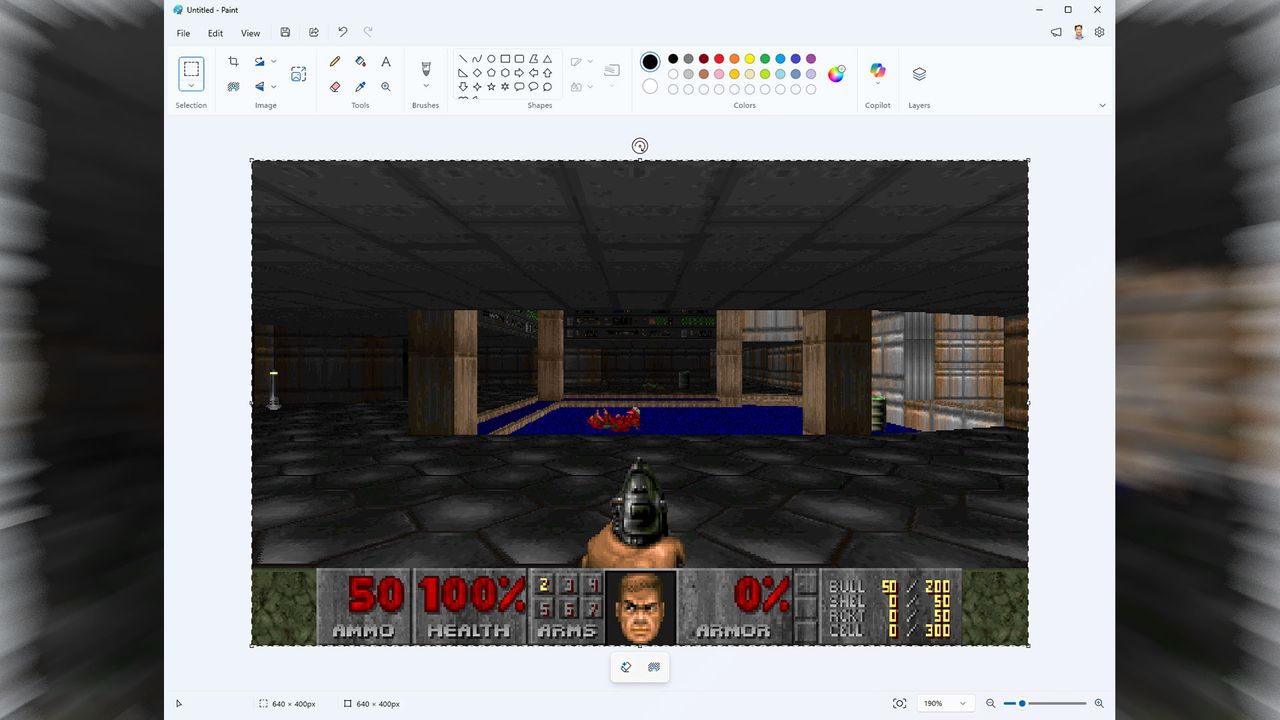
Another day another Doom port, but the new DoomPaint stands out from the crowd for a few reasons. Firstly, it has been developed by Mark Russinovich, the Microsoft Azure CTO. Secondly, DoomPaint runs the actual original shareware Doom release using MS Paint as the monitor or viewport for in-game action. That’s different, and it is remarkable to read that the OLE clipboard hack behind this latest Doom escapade allows the game to run at a fair pace, up to 35 FPS, but might also sometimes be “spreadsheet-tier,” according to the author.
“The actual Doom engine (ViZDoom) runs the real shareware DOOM1.WAD — with the BSD-licensed Freedoom WADs covering the episodes shareware doesn't ship — and renders headlessly,” explains Russinovich on the project GitHub page. “Every frame is placed on the Windows clipboard and pasted into Paint's canvas as a genuine document edit.” The Microsoft CTO adds that the relatively low frame rate “is part of the charm” of DoomPaint, but 35 FPS isn’t bad, if you can make it, especially in 1990s PC gaming terms.
There are files, resources and instructions on how to run DoomPaint on the GitHub site. Depending on your machine you may be able to run this version of Doom at a full 35 FPS at 320 x 200, or even 640 x 400 pixels. It even includes sound and music.
Towards the end of the README file, Russinovich says that “Paint renders the game but does not compute it. Paint computes nothing. Paint has never computed anything. That's the joke.” DoomPaint is distributed under the MIT license.
Russinovich started at Microsoft in 2006, where he’s transformed SysInternals into the backbone of Windows diagnostics. More recently he’s shaped Azure’s architecture, security, and reliability. Over the past year he has, accidentally or by design, become well known as a leading voice behind addressing the many shortcomings of Windows 11.
It's therefore kind of surprising that this busy CTO has time to fiddle with projects like DoomPaint. However, the most dedicated coding and computer enthusiasts will also code and compute in their spare time.
Seven states have reported cyberattacks on their water supply control systems, with some officials suspecting that Iran is behind these actions. According to the New York Times, there isn’t any definitive proof yet that Iran orchestrated these attacks but it said that moves like this have been escalating since the U.S. began its bombing campaign of the country. It was also noted that the attackers made zero financial demands, making it more likely to have been conducted by state actors that aren’t just motivated by money.
Minnesota was the first to report this kind of attack, with Michigan soon saying that it was targeted, too. While there have been no major disruptions that have made tap water unsafe to drink, the authorities across local and state governments are still on the lookout for potential problems. They’re particularly concerned about older computer systems that monitor water quality, adjust chemical treatments, and control water pressure, especially those that are connected to the internet.
Braham, Minnesota, is one of the areas affected by the cyberattacks. The mayor of the small city, which has a population of less than 2,000 people and is located about 50 miles north of Minneapolis, said it has already received guidance on how to resolve the issue and strengthen its defenses against future attacks. It’s currently using manual control to keep the water service on, but its mayor, Nate George, told the publication, “I think the troubling thing on the horizon is how do we move forward to a more secure system. IT infrastructure upgrades are very costly, and we are a very small municipality.”
He also repeated the suspicions that some federal officials had but declined to confirm. “We’re getting bits and pieces of information from the state of Minnesota and the F.B.I. They are pretty sure it’s Iranian actors.”
While states scramble to protect their utilities and other critical infrastructure, the White House has downplayed the suspected state-sponsored cyberattacks. President Donald Trump told a reporter, “I think Minnesota is behind it. I don’t think there was an Iranian cyberattack.”
Iran was also once on the receiving end of a cyberattack that many experts link to the U.S. The most famous of these was Stuxnet, which was supposedly used in 2009 to significantly damage and destroy critical tools used by the Iranian nuclear program. More recently, the CanisterWorm malware attacked Iranian machines and wiped them clean for no apparent reason. Again, no one has claimed responsibility for this attack.
Wars have always been fought on land and on sea, and more recently, in the air and in space. But as the internet has become indispensable for society, cyberspace has quickly become a fifth domain that states must protect and dominate. “This is what modern warfare looks like,” Gov. Tim Walz said on X.
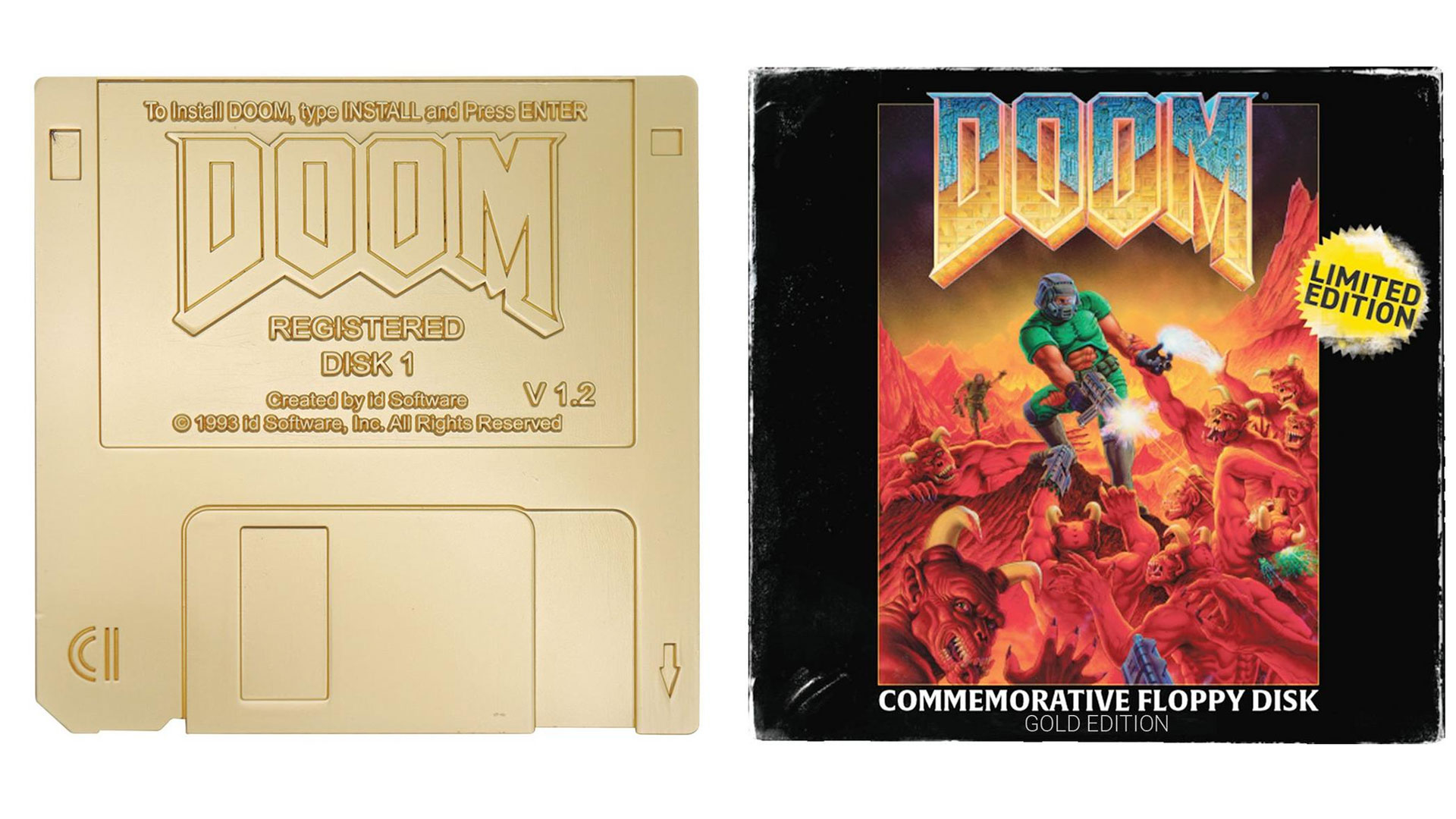
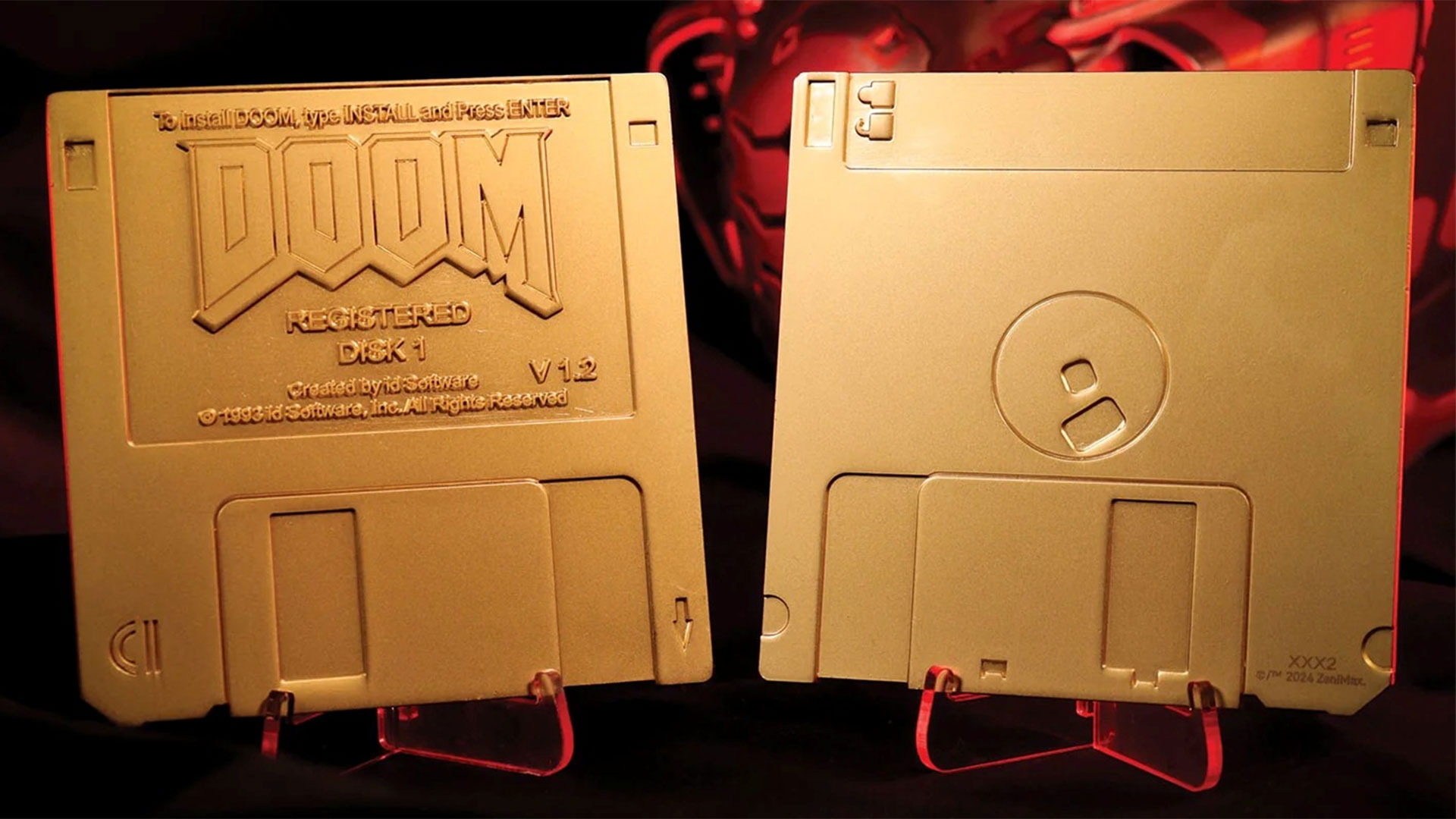
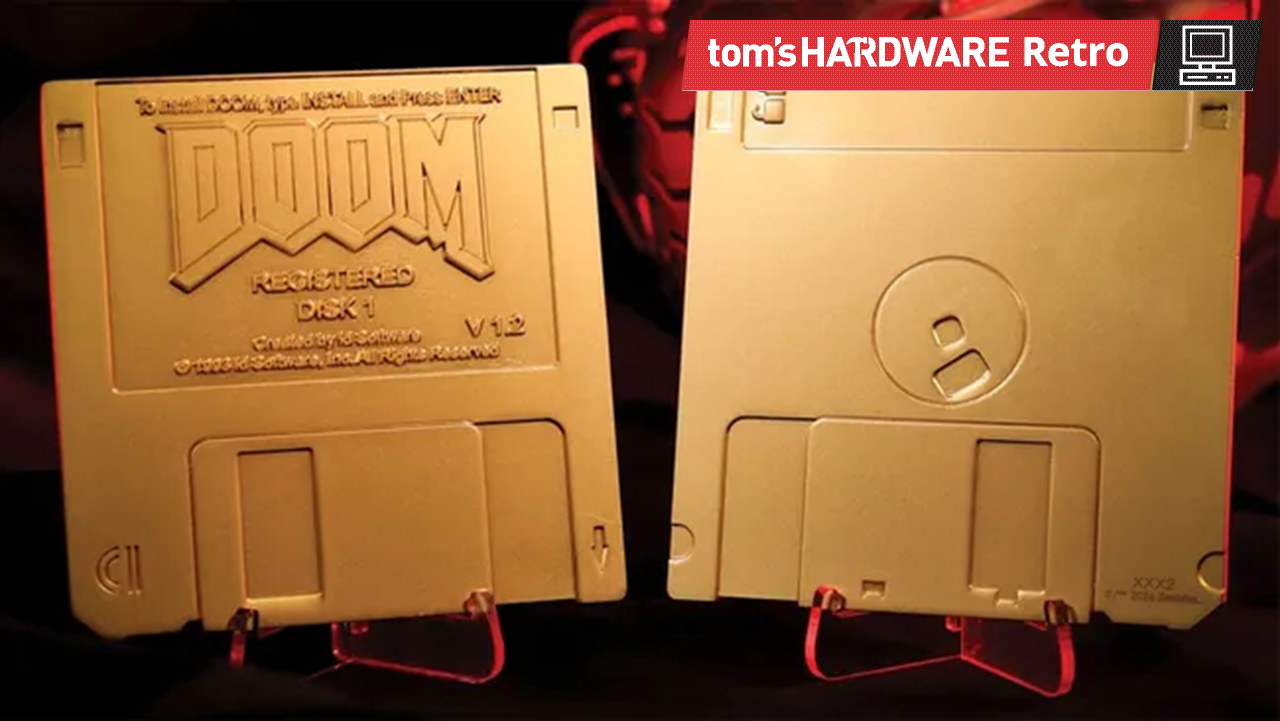
GameStop has listed a Doom Floppy Disk Limited Edition Imitation Gold Plated Replica at $29.99. Let’s unpick that for a moment. These are imitation floppy disks coated in imitation gold, delivered in a commemorative box. There’s a display stand included, too. However, these are non-functioning 'floppy disks' inspired by the Doom v1.2 shareware release and don’t contain any game data. Doom's single-level ‘Knee‑Deep in the Dead’ shareware release is still free to download, though, as it has been for many years.
GameStop and FanattikGameStop and FanattikGameStop and Fanattik
“What's more retro than obsolete technology?” asks Fanattik, the collectibles maker behind this useless physical media. “Celebrating the humble 3½-inch, 1.44 MB floppy disk that the game was originally released on back in 1993, this limited edition Doom Floppy Disk Replica plated with imitation gold comes in a box displaying the original game artwork, has a display stand included, and is individually numbered as one of 5,000 worldwide.” Pre-orders are now open at GameStop in the US for $29.99 or directly from Fanattik in the UK at £19.99.
The 89 x 89 mm dimensions of the golden-but-not-gold and 3.5-inch-but-not-floppies make them at least the correct size. However, if I were buying fake floppies, I think I would appreciate a movable protective sliding mechanism and the write-protect cutout toggle to move, so I could fidget with them from time to time.
Also, in some ways, it is ironic that game media is now being licensed and hawked to fans, at non-trivial prices, without any game data contained on them. This seems to be a growing trend as the games industry moves inexorably to a digital-only future. People still covet the physical media so much that they are now willing to pay for it, even without any game data or download code being associated with it.
The original Doom v1.2 shareware edition was released on two floppy disks in Feb 1994, and it is famous for adding modem support to this seminal game. If you paid and registered Doom v1.2, you would get four floppy disks from id Software containing the full three-episode campaign. The registered release disk set stayed on four floppies until the CD-ROM era.
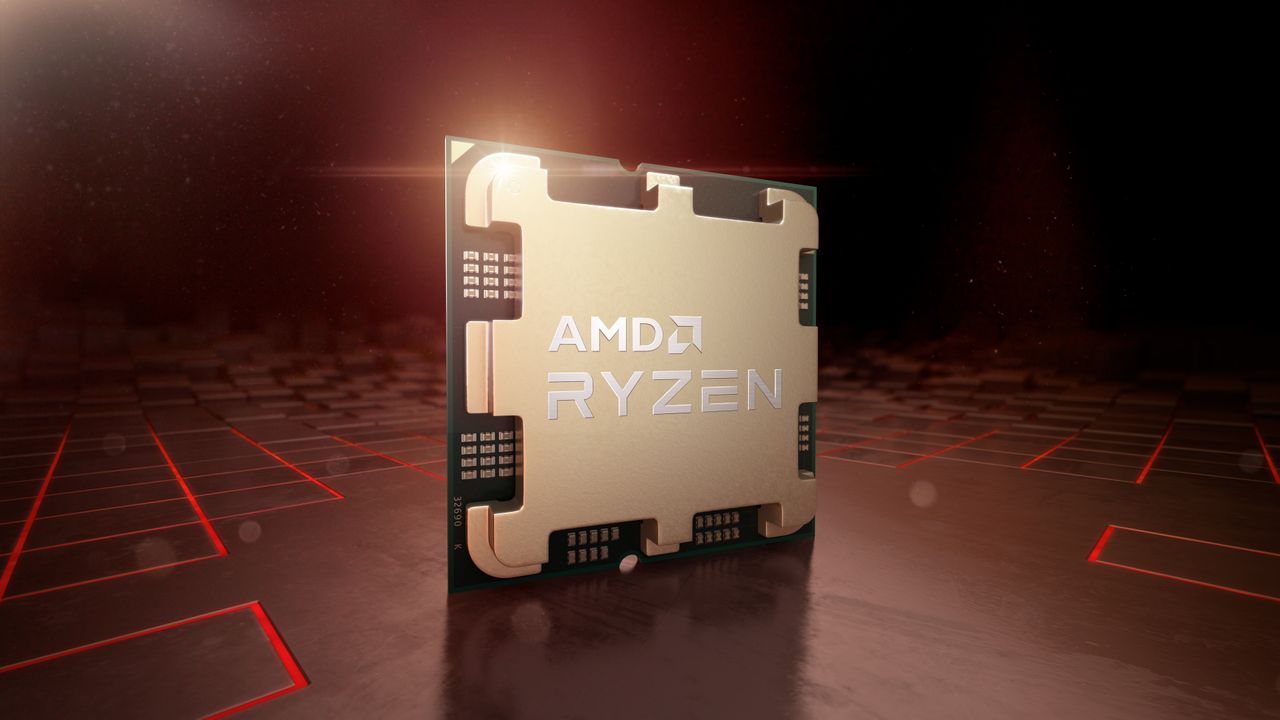
AMD is expected to unveil its next-gen Zen 6 platform at CES 2026 with Ryzen 10000 series processors. While we're looking forward to IPC and clock speed improvements, it seems like more subtle, under-the-hood changes could end up upgrading the gaming experience in a big way. According to a tip received by Videocardz, AMD is implementing various per-core optimizations to ensure foreground tasks get priority over background applications. Each new feature is supposed to more smartly manage the power and thermal budgets at the silicon's disposal, so let's go over each of them.
First up, we have CPPC Performance Priority — CPPC stands for Collaborative Processor Performance Control, and it's responsible for communication between the silicon and the OS. It lets the firmware sitting in between decide the performance of each core separately. This feature has actually existed since the Ryzen 3000 series, but it doesn't work perfectly. Zen 6 CPUs are apparently supposed to apply a band-aid fix and improve their effectiveness.
Secondly, we have FloorPerf, which acts as a dynamic, targeted power delivery system. It sets a minimum clock speed for all cores that the silicon can clock down to in case of thermal throttling. For instance, imagine you're running a game in the foreground while Discord and Spotify sit in the background. The temperatures on your Zen 6 CPU rise to the point of throttling, but instead of reducing the speed of all cores, FloorPerf will target the cores running the background tasks first, in order to maintain the performance of your game.
We covered a recent fix like this for the Linux world as well, where a sudden spike in the background can cause the foreground task to choke. Linux has an issue with priority allocation across tasks, so that was a different situation, but similar logic applies here. On a Zen 6 CPU, instead of your game suddenly experiencing microstutters because of aggressive throttling, FloorPerf will try to limit whatever's running in the background first. The aforementioned CPPC Performance Priority should work hand in hand with this feature to maintain clocks on the important cores.
CPPC will get another boost in the form of HighestFreq, which will allow the OS to access more granular chip data to make better core management decisions. As the name suggests, it pertains to maintaining high clock speeds on the cores running a foreground task. The OS will be aware of exactly which core can boost the highest and maintain that speed the longest. This will allow it to assign, for instance, a game's main rendering thread to the fastest cores, while pushing background apps to more power-efficient ones.
In conjunction with this, Zen 6 is also seemingly getting per-core EPP boost. EPP stands for Energy Performance Preference, and it's supposed to fix core parking issues caused by a momentary bottleneck. For example, if the CPU is waiting for the GPU to render the next frame, the clock speeds for the active cores will drop in that moment and struggle to ramp back up in time, forcing all cores to boost when the frame is ready. EPP boost is supposed to identify the active cores and individually keep them in high-performance mode to eliminate any wait times.
Lastly, Zen 6 is reportedly introducing PQOS Global Bandwidth Enforcement and an updated IBS Memory Profiler. Both of these target memory bandwidth with the same goal of maximum stability as everything else discussed so far. The former is responsible for allocating RAM to background tasks, ensuring their usage stays under the limit for foreground priority. The latter will limit L3 cache access to background tasks when it detects that those tasks are slowing down the foreground application, which should help with frametime consistency in games.
As you can tell, all of these optimizations are supposed to work together and harmonize into a more efficient processor at the end — one that maximizes the silicon's potential as much as possible. Of course, none of this is confirmed and there's a lot that could be gated behind product segmentation. We could see some features only on high-end parts, while some are limited to mobile; there's no telling at the moment, but it's exciting stuff, nonetheless. Seems like a battle for the ages is brewing between Nova Lake and Zen 6 next year.
Firmware development company 3mdeb has officially launched the first open-source UEFI firmware for AMD's AM5 platform. In a blog post, the company announced Dasharo v0.9.0, featuring initial support for Zen 4 Phoenix APUs and MSI's Pro B850-P WiFi motherboard. The firmware is built on Coreboot and AMD's openSIL, the latter being AMD’s new open-source firmware framework.
The patch notes are comprised of 19 features to make the open-source code work on the B850 board, including the following: a UEFI-compatible boot interface, UEFI Secure Boot support, fTPM support, fast boot support, EFI system partition scanning, quiet boot and fast boot support, AMD CPU temperature reporting, and integrated SBOM.
Development of this open-source firmware for the MSI Pro B850-P has been an ongoing process over the past several months. We initially saw development announced in February, after 3mdeb developed an open-source firmware for the Gigabyte MZ33-AR1, a server board compatible with AMD EPYC 9005 series CPUs. Development of the open-source firmware version for the MSI Pro B850-P is based on the work done for the MZ33-AR1.
Dasharo is the first development team to produce open-source firmware for AMD's mainstream consumer AM5 platform. AMD is already looking to switch from AGESA to openSIL starting with Zen 6, but 3mdeb has opted to port AMD's openSIL firmware to older Ryzen CPUs.
Open-source firmware represents a big improvement over existing closed-source firmware solutions, particularly AGESA. AMD touts its openSIL firmware as being more secure than AGESA, with better platform security and better vulnerability tracking thanks to its open-source nature. Going open-source opens up room for experts and developers beyond AMD's own firmware development team to check for vulnerabilities in firmware code.
Another benefit of openSIL is that it is compatible with alternative firmware beyond UEFI, including Coreboot, oreboot, FortiBIOS, and Project µ. Projects like Coreboot also provide optimized code compared to closed-source firmwares, improving boot-time performance.
The new firmware can be found on the 3mdeb shop, under the MSI Pro B850-P hardware-firmware bundle.
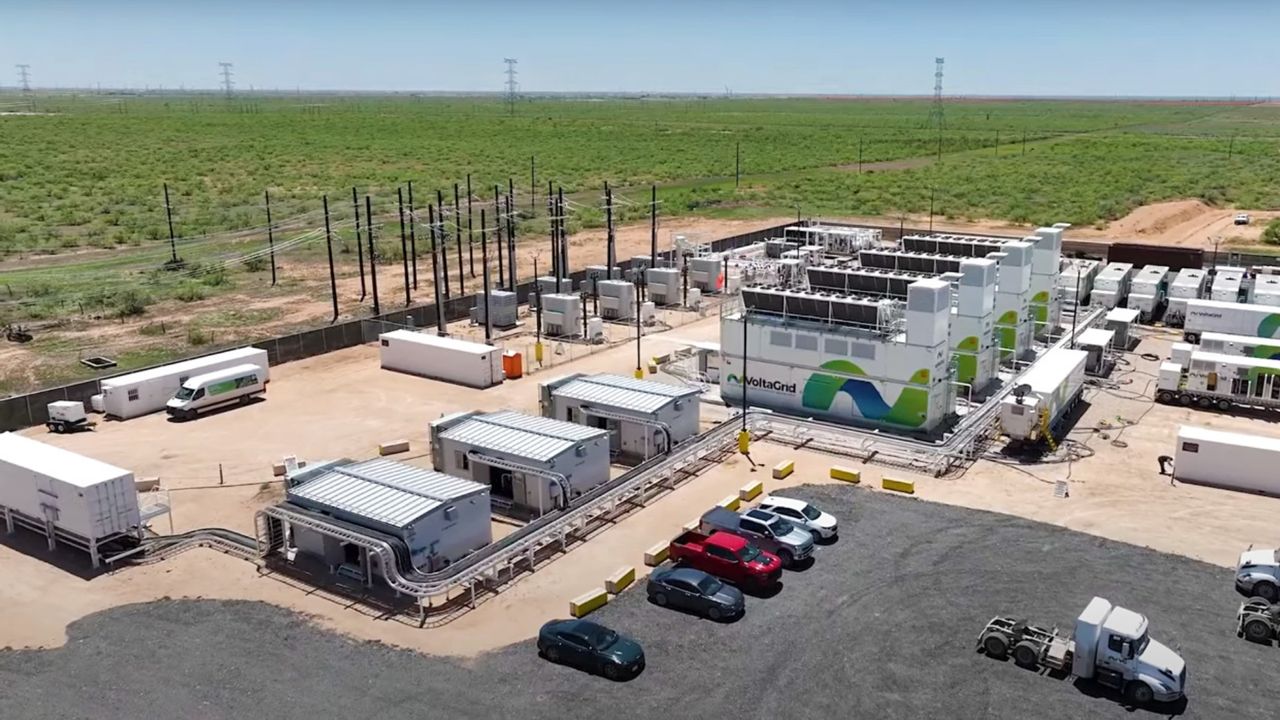
Elon Musk’s Colossus data centers that sit near the border between Tennessee and Mississippi will finally be removed starting this month. According to the company, the 69 temporary mobile turbines, which have been the subject of a lawsuit that claims they have been causing pollution, are going to be completely removed by July 2027, meaning it will take the company 12 months to withdraw the trailer-mounted generators from its premises. This may sound confusing, as they’re “portable” generators, after all, but it seems that SpaceXAI is removing them in phases as its 1.2GW power plant slowly comes online.
SpaceXAI achieved one of the fastest data center deployments ever after it set up 100,000 Nvidia H200 GPUs in 19 days — something that Nvidia CEO Jensen Huang said usually takes four years or more. Musk achieved this by bringing in his own power instead of waiting to get connected to the grid, which was considered a novel idea at that time. Today, a few data center operators, like OpenAI, are following Musk’s footsteps and deploying their own turbines to power their servers without relying on other providers.
But even though the idea feels innovative, the community surrounding the Colossus 1 and Colossus 2 data centers has been complaining about the pollution that these mobile turbines bring. They say that these turbines didn’t have the required permits to operate, although the company argued that the mobile and temporary nature of these units exempted them. The EPA said earlier this year that these units aren’t exempt from permits, but SpaceXAI continued to operate them anyway. It has even got to the point that the NAACP filed a case over these unpermitted turbines, although the DOJ weighed in, saying that removing them would put national security at risk as Colossus 2 “supports mission-critical operations.”
Despite that, it seems that SpaceXAI has finally settled into an agreement with the Mississippi Department of Environmental Quality. It’s if the 1.2GW power plant replacing these mobile turbines is the same one that Musk is importing from overseas, but the important part is that it’s approved under a Clean Air Act permit. Aside from that, the company also said that it’s equipping all its mobile turbines with “advanced emission control technologies,” which should reduce the environmental impact of its power sources.
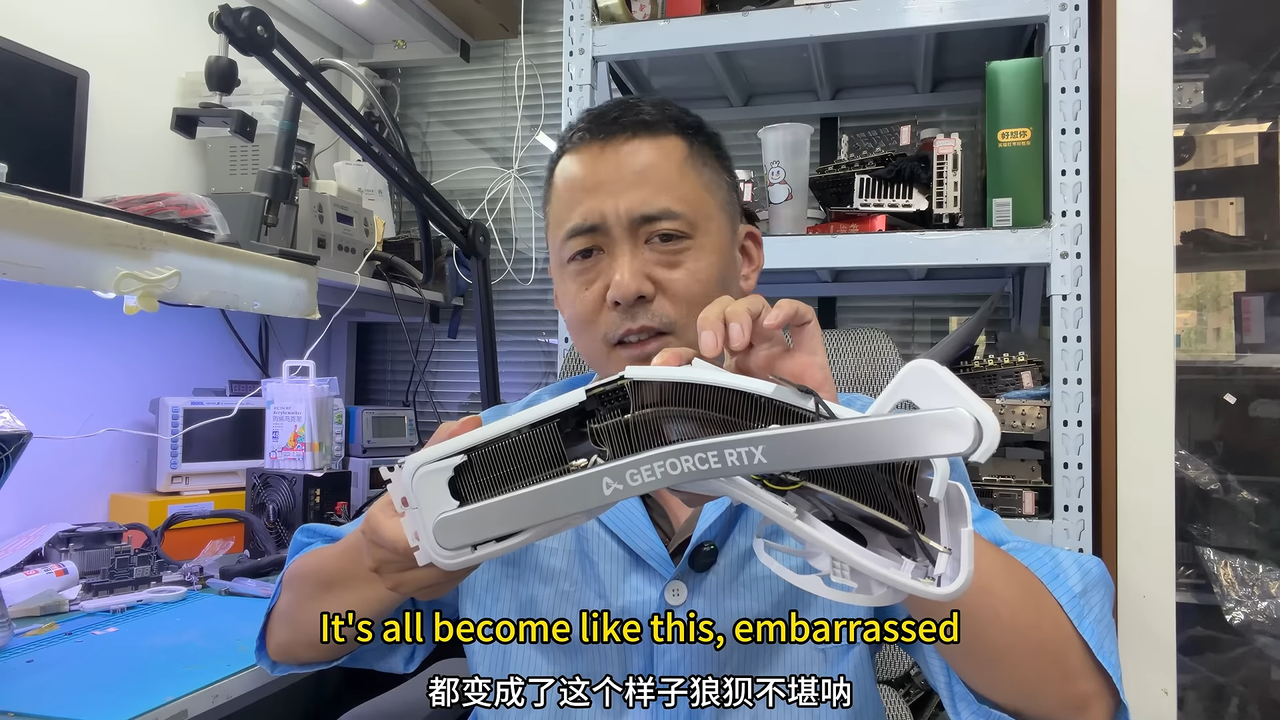
Buying a new GPU is always a joyous occasion, but the celebration was cut short for an unfortunate customer in China. Right after buying an AX Gaming RTX 5060 Ti, they got into a serious car crash that ended up totaling the car — and the card along with it. Fortunately, the driver was safe, and somehow the GPU survived, too, with no major electronic damage. Despite being bent in half, the card ended up only requiring minor repair work and was brought back to life quickly by Brother Zhang.
Visually, the card didn't look salvageable, and midrange GPUs like these often don't make for feasible repair jobs either because of the high labor cost. The backplate and cooler were completely destroyed, so Brother Zhang separated them from the actual PCB. Luckily, this variant of the 5060 Ti used a very short PCB that just barely touched the point of curvature, so the internals were mostly fine.
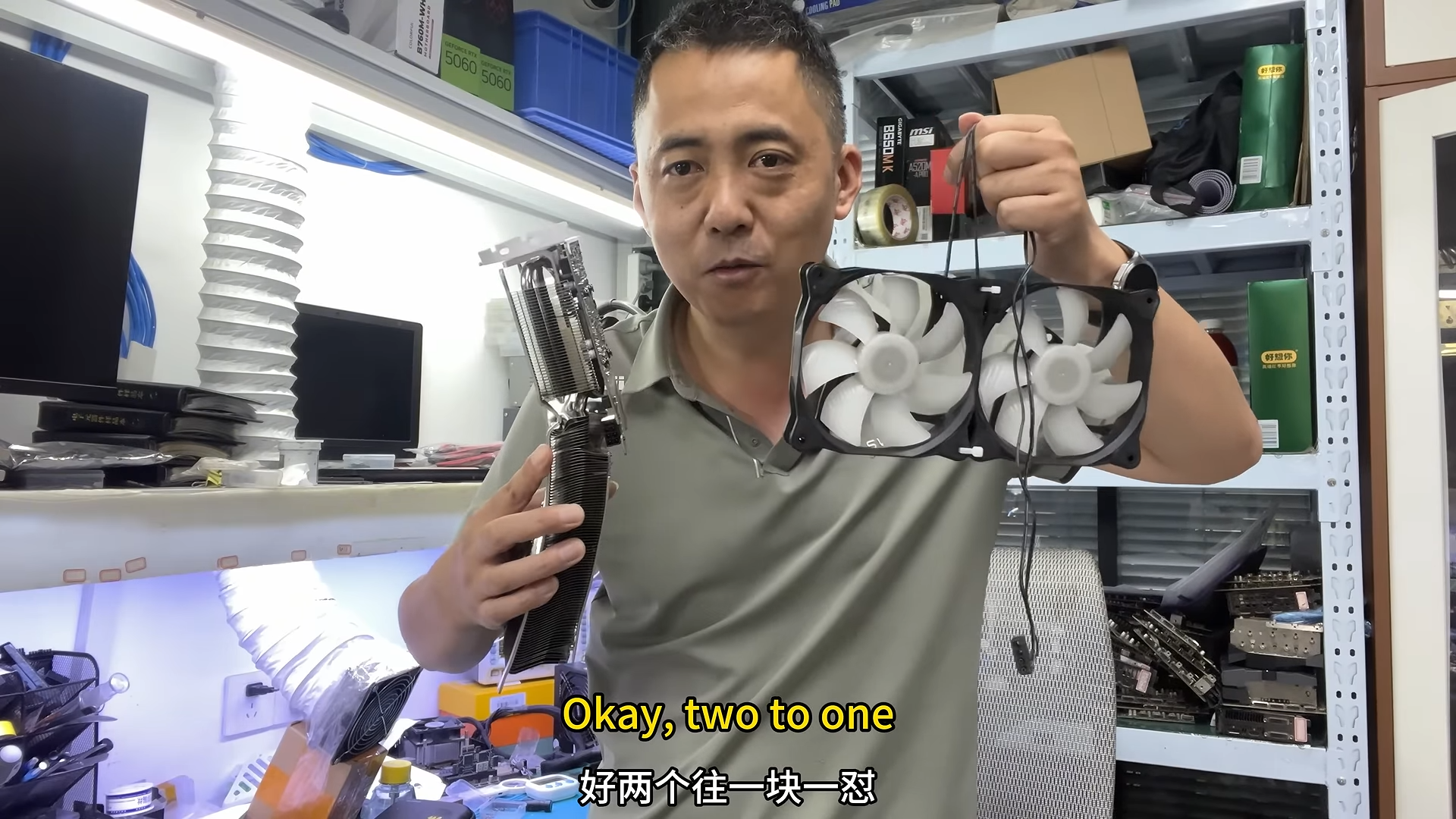
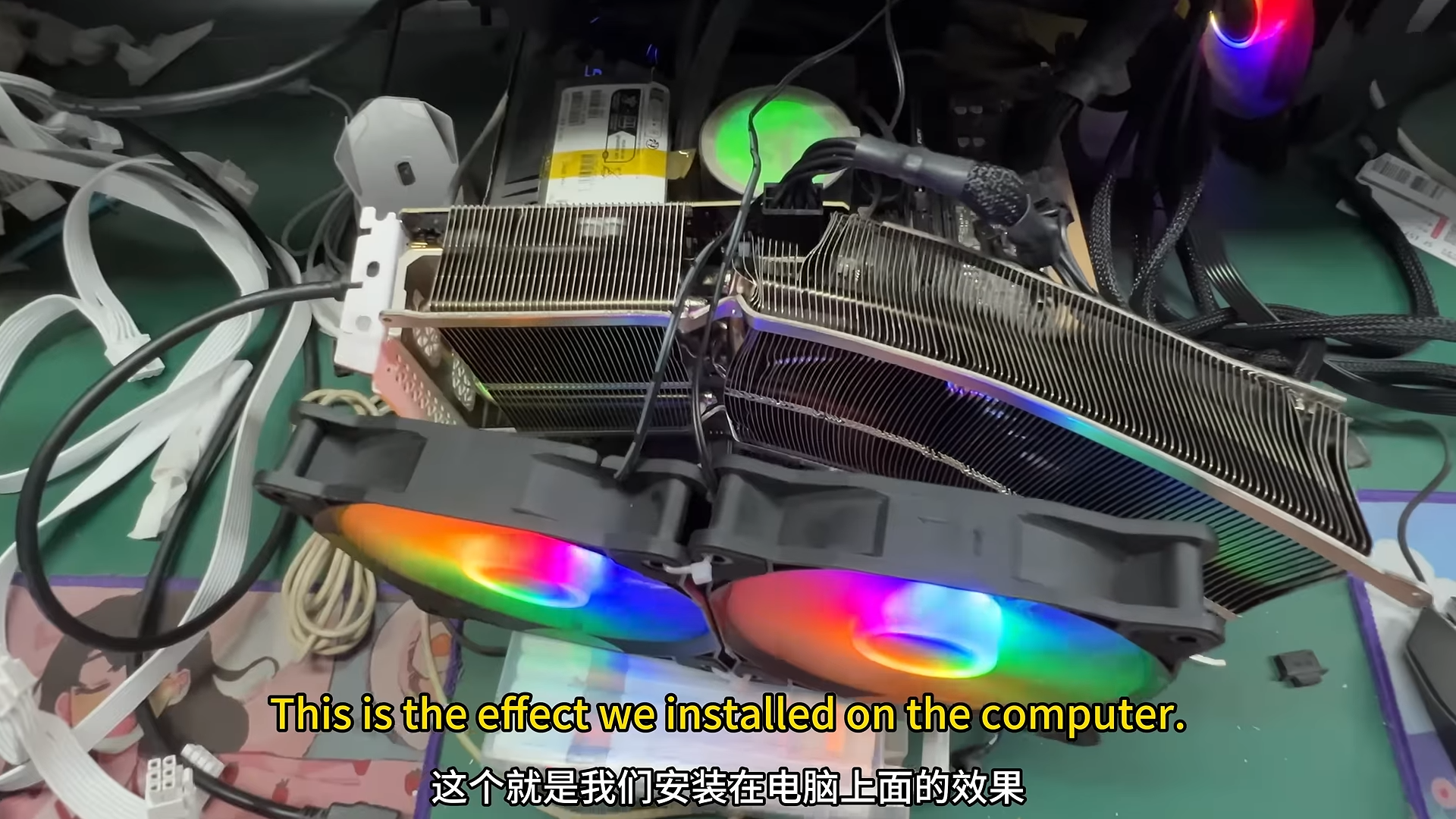
The technician checked all the power rails for a short circuit but saw no abnormal resistance, which confirmed the core and memory weren't dead. He then proceeded to quickly test the GPU with its bare PCB, and it booted successfully. Brother Zhang devised a makeshift cooler that consisted of the bent fin stack straightened back to the best of his abilities, and two 120mm fans strapped on top via zip ties. This seemed enough to keep the card cool.
Brother Zhang on YouTubeBrother Zhang on YouTube
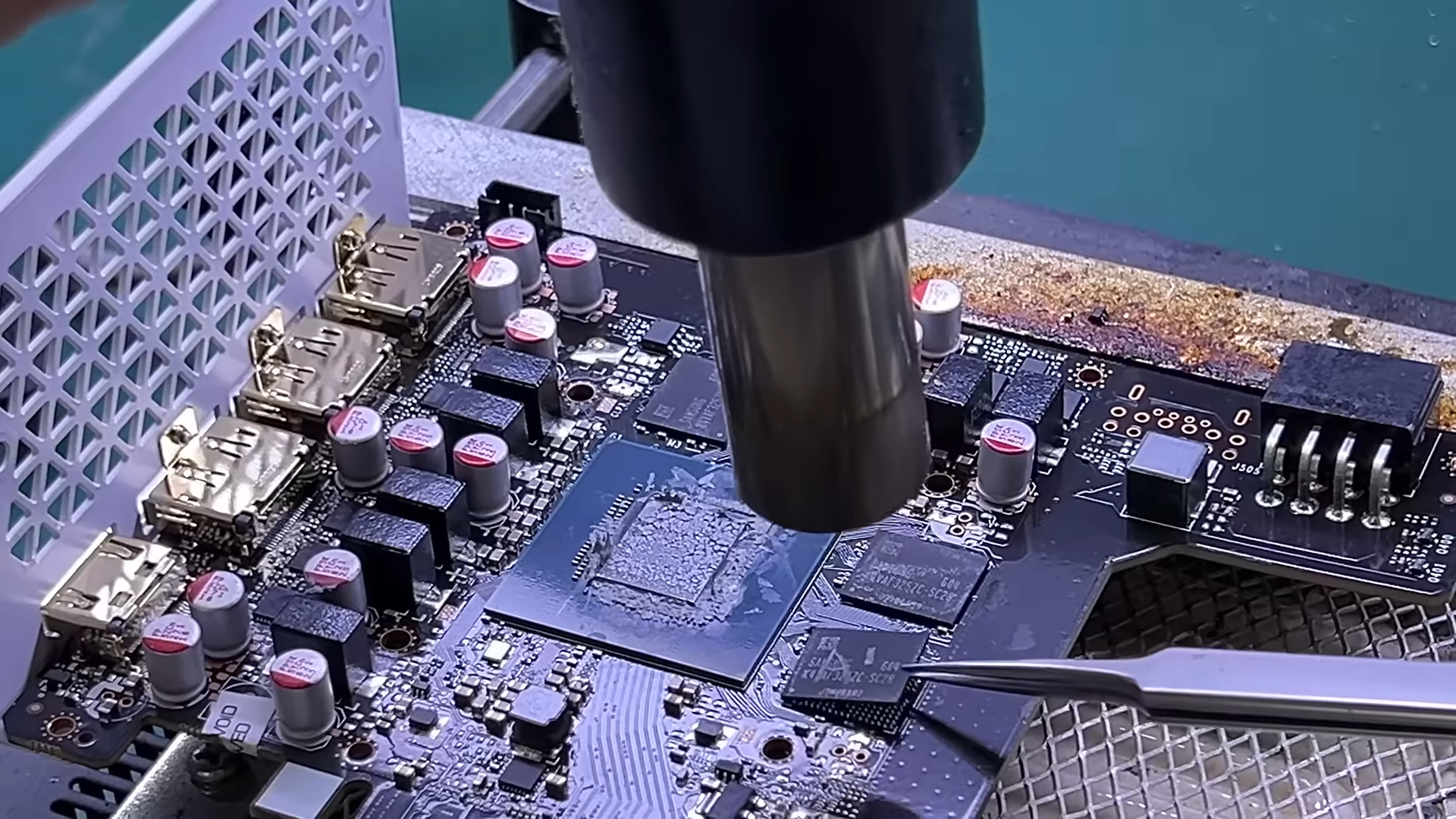
However, as soon as he tried to install drivers, the PC would black screen and hard crash, showing consistent signs of instability. At this point, Brother Zhang reopened the card and inspected the PCB. He inspected the flex point and decided to resolder the memory module closest to the edge of the board since it experienced the most torque. A simple removal and reapplication fixed the issue, and the card was detected correctly as a 5060 Ti with the full 8GB of VRAM.
(Image credit: Brother Zhang on YouTube)
Brother Zhang rechecked for any short circuits to ensure no solder bridges were created during the BGA work before moving on to benchmarking. In Furmark, the temps peaked and stabilized at 64°C with no visual artifacts. He then ran a full 3DMark loop to test the PCIe 5.0 x8 link speeds — the card passed with a high 98.9% stability score. It drew around 92% of its maximum power limit during the run, with core temps peaking at around 67°C. This 5060 Ti was officially a survivor.
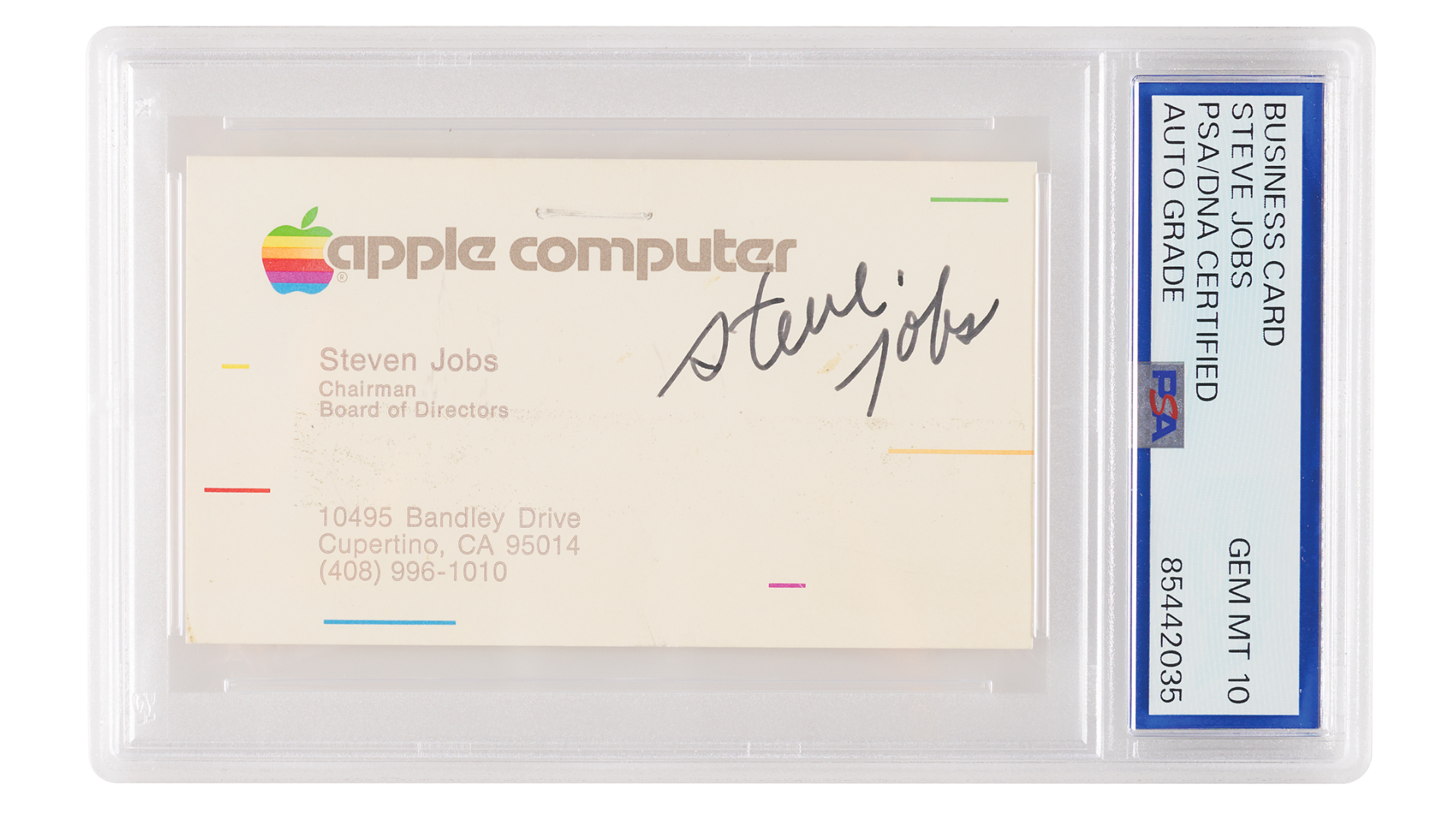
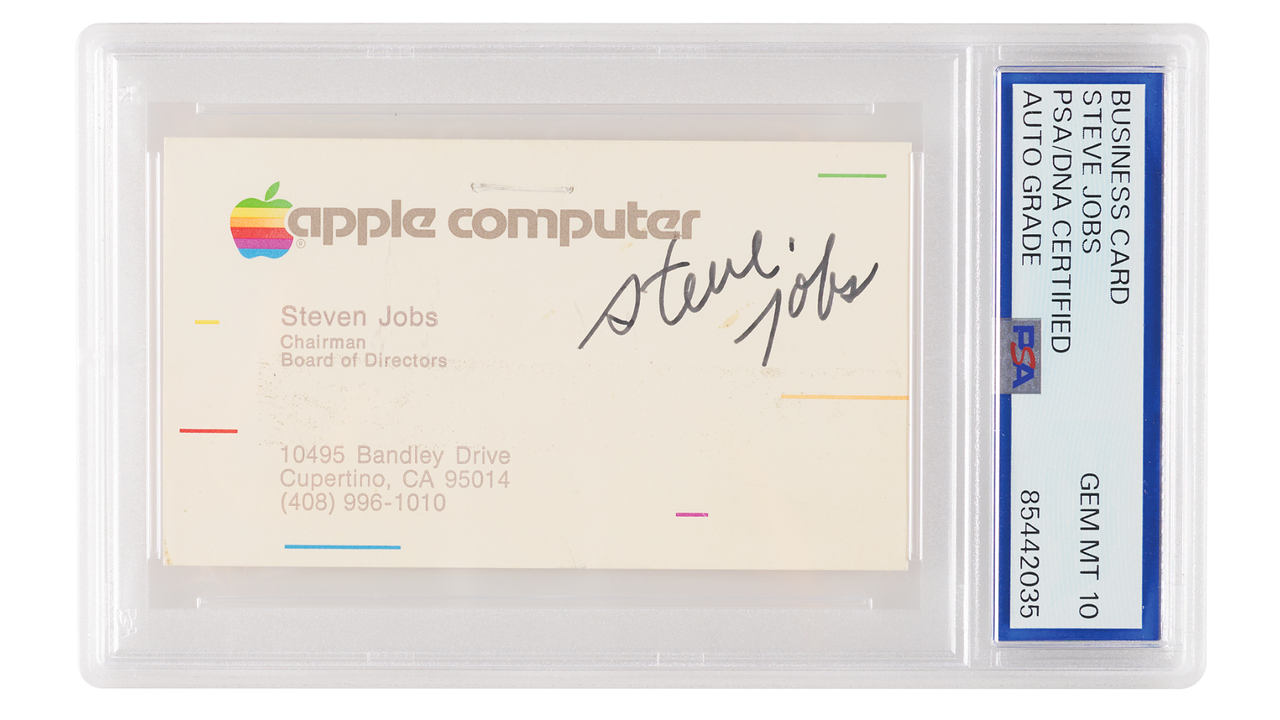
Tech enthusiasts are a passionate bunch, and the rich ones among them are willing to put their money where their mouth is. This is exactly what we see with a signed Steve Jobs business card from 1983, which is posted on RR Auction and is going for $70,741 at the time of writing. What made this relic special is that Job’s business cards from 1983 are a rare commodity and remain in high demand from collectors. It also received a Gem Mint 10 grade — the highest possible rating from PSA/DNA and is certified to be authentic.
RR AuctionRR Auction
RR Auction says that it has auctioned off 15 Steve Jobs business cards in its history, but only four of those come from 1983. This is also only the second one to bear the signature of Apple’s founder, which was put on the auction block in 2024 and fetched an eye-watering $180,000. The card on auction right now isn’t exactly perfect, with the website describing it as “In fine condition, with light soiling and staple holes to the upper section, none of which affect the bold signature.” Still, there’s at least 16 bids on the item, and the next bid is currently listed at $77, 816.
This isn’t the first time that an item related to an iconic founder has fetched thousands of dollars on the auction block. Just last month, Sotheby’s estimated that Nvidia CEO Jensen Huang’s iconic Tom Ford leather jacket, which costs $9,000 if you buy it new, would get up to $60,000. However, when the hammer finally closed the auction, the winning bid hit $960,000, which, we believe, is driven by Jensanity.
Unfortunately, if you’re not into the personal effects of CEOs and want something more substantial, you’ll probably have to fork out a lot more money. One example we have is the Apple-1 ‘Prototype Board #0,’ which sold for $2,750,000. Aside from costing a lot of money, these are rare finds, and you’ll have to wait years, if not decades, to get a chance at owning something so exceptional. But if you have a hole burning in your pocket and want to start a tech-related collection, but find the Steve Jobs business card a bit above your budget, an unreleased batch of 97 Duck Hunt and Super Mario Bros. NES cartridges has recently been discovered at a retro shop, most of which are graded 9.6 or higher by PSA. Three examples are about to enter auction on August 12, and they’re estimated to start at four figures, which might make it more “attainable” to fledgling collections.
Team Fortress 2 cases are worth pocket change. There are a few select cases that scale up to a few dollars, and even fewer with a market price in the double digits, but the vast majority of cases are worth a few pennies, no more than a Steam Trading Card. But one player, Vincent Stech, started collecting cases nearly a decade ago, racking up over 1.7 million cases across several Steam accounts. And now, he’s selling the whole collection, with an estimated value of $100,000.
Stech started collecting cases around Team Fortress 2’s last major update, in late 2017, outside of annual Halloween events that persisted through 2022. In order to accumulate so many cases, Stech largely automated the process, noting that he was careful not to upset the string-pullers at Valve as he amassed a stash of seemingly innocuous digital assets.
“That’s always been one of my biggest fears over the past decade, is one day they wake up like ‘hey, we don’t like what this guy’s doing,’” Stech told Tom's Hardware. “Because I know people with accounts with like 50,000 items that won’t load, and Valve won’t delete the items off their account, so they just can’t access Team Fortress 2 inventory ever again on their main account.”
Before understanding Stech’s process, however, we have to start with how Team Fortress 2’s in-game economy works. Like other Valve titles, you’re able to list items you earn in-game on the Steam Community Marketplace, selling them for real dollars or spending real dollars of your own to buy other items. That’s the normal way of doing things, but this in-game economy has grown beyond the bounds of Steam. A lot of transactions happen off the platform.
(Image credit: Backpack)
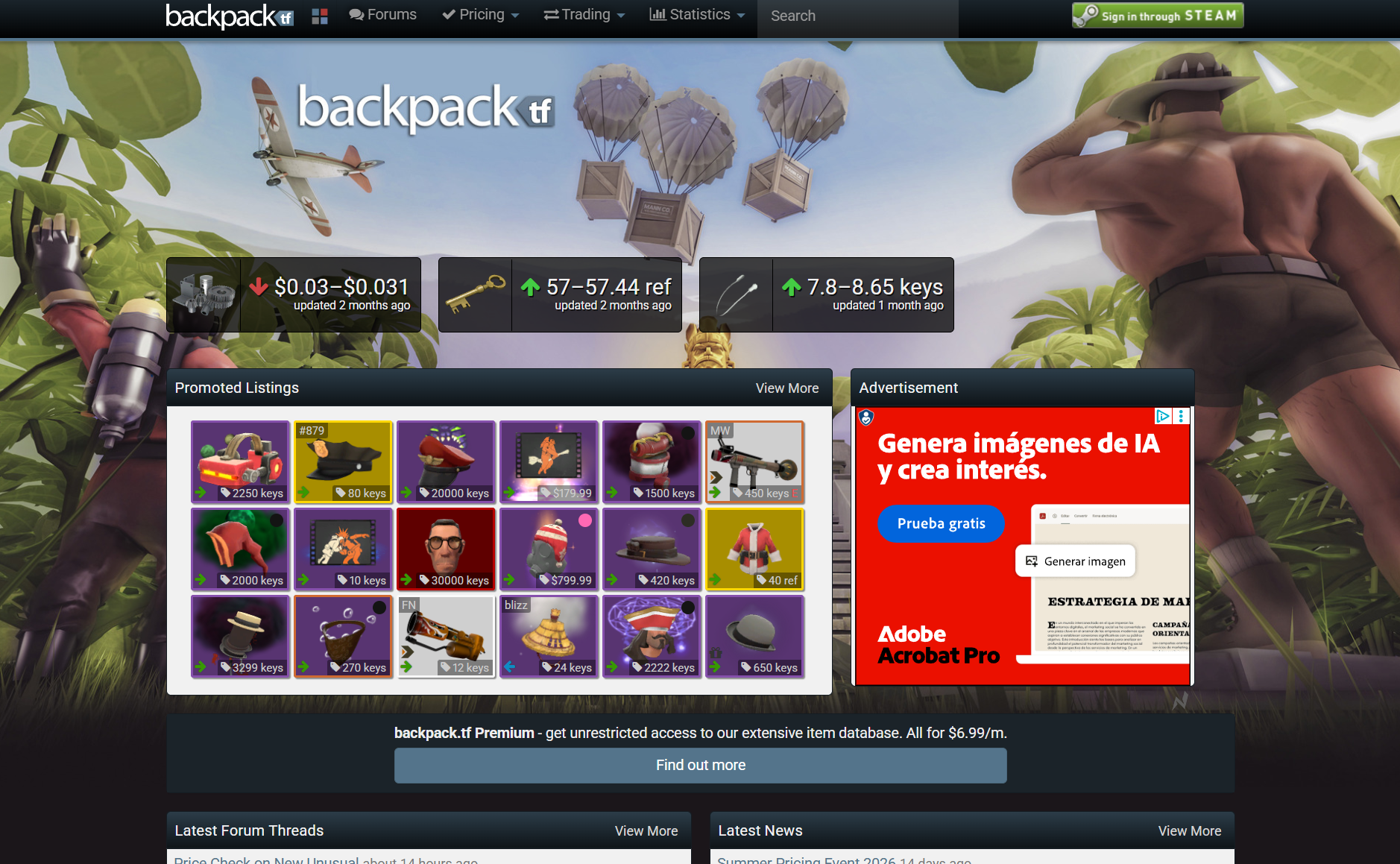
Websites like backpack.tf and stntrading.eu take trading off of Steam, allowing you to use in-game crafting materials (along with keys) to buy and sell items. There are several reasons for these third-party marketplaces to exist, not the least of which is bot automation, which is against Steam’s Terms of Service. This exchange of in-game currency for items happens through trades on Steam, creating a separate marketplace where real money doesn’t change hands.
That’s not where Stech started. “Team Fortress 2 cases, they weren’t worth anything. They were… people were just giving them away because they take inventory spots,” Stech said. “People were deleting things, and so I decided to scoop them up.”
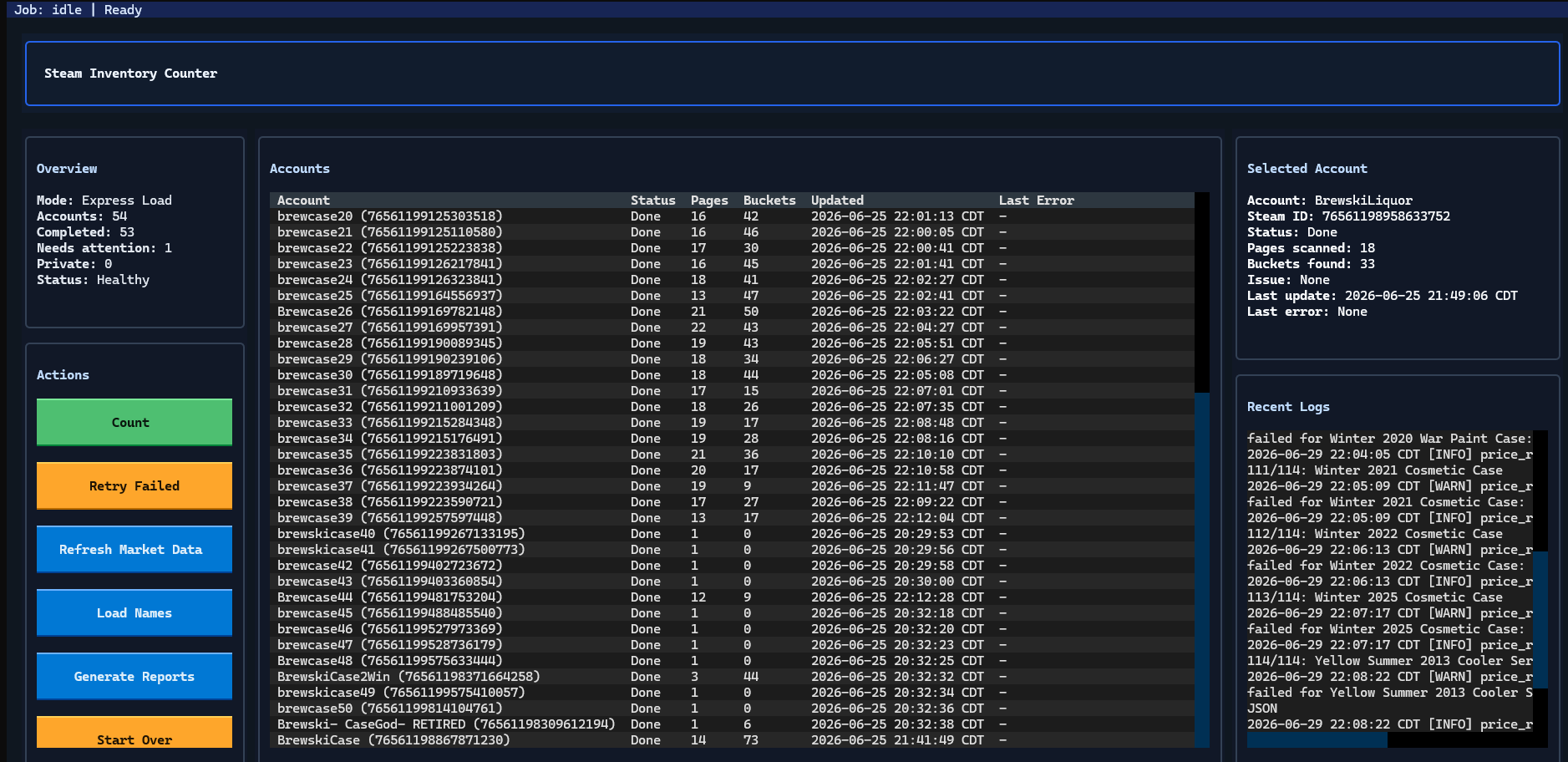
The problem Stech quickly ran into was inventory space. You can only have a few thousand items in your inventory (Stech told me 4,000 for Team Fortress 2, others say it’s around 2,000). Regardless of the number, it’s far too low a limit to amass nearly 2 million items, even with dozens of alternative accounts. Stech bypassed this issue by using the community marketplace. He listed the cases at very high prices where they were unlikely to sell. That’s because you can have tens of thousands of items on the market “before Steam gets really angry at you.” It effectively multiplies inventory space.
(Image credit: Vincent Stech)
As his inventory began to grow, Stech started automating the process of taking inventory and accepting trades, the latter of which was handled through a simple batch file. At first, Stech was just buying cases in bulk at relatively low prices, but the inventory escalated once he started digging into Steam’s local pricing in different regions.
“In Venezuela and, like, Russian [Rubles]... they are very weak currencies compared to the U.S. dollar,” Stech said. “What I found out is the lowest you can sell an item on Steam for us is three cents. For them, it’s a 10th of a penny. So I found this one guy in Venezuela… he would buy almost every case off the Steam Community Market for their extremely low price, and then he would sell it to me, and I would just give him, like, keys. And he was actually a doctor in Venezuela, and they don’t make much at all by comparison to, like, what $50 would be in USD. So a large majority of his income was case money.”
For context, $50 is equivalent to just over 37,000 bolívares (the official currency of Venezuela).
Stech’s first cash-out from Steam was $50 when he was around 16 years old. A few years later, he cashed out $2,500 to buy his first car. Stech stopped collecting cases about three years ago, and now, he’s looking to sell off the entire collection, which he estimates is worth around $100,000.
Selling this collection is no easy feat, however. For starters, Steam can break when trades get too large, necessitating hundreds of trades across dozens of different accounts. Further, Stech controls quite a large portion of known cases. “At one point, I calculated I had, like, 17% of all TF2 cases that are publicly known… I would have an extremely hard time selling it off because I am a large [portion] of the market. It’s like, you know, Elon Musk couldn’t dump a lot of his stock.”
Stech has, apparently, found a buyer that wants the whole collection, however, and the selling process is already underway. “The transaction has kind of started… he has admin privileges on the trade offers he sends to my accounts, so my accounts just automatically accept any trade from him,” Stech said. “An option was for him to just buy the accounts, but we know that is very bannable, so we haven’t done that.”
Stech says he expects to have the process complete around October. Just as he used case money to buy his first car, he says he plans to use the money from the sale as a down payment on a house.
Michael Dell, the founder of Dell Technologies Inc., shared his company’s quarterly earnings report dated July 31, 1984, saying, “This one page changed my life.” The billionaire said on his X post that the numbers on that piece of paper convinced his parents that they didn’t need to go back to college. He started the company in 1984, originally known as PC’s Limited, in his dorm room at the University of Texas at Austin, upgrading PCs and building clones of IBM PCs from stock parts.
As we see from his X post below, his venture seemed to be successful from the get-go, with Dell selling almost a million dollars’ worth of parts and computers, which resulted in a net income of $134,762.75 for just one quarter — equal to $433,150.05 in 2026 dollars. This is an achievement for any startup not backed by millions of dollars, much less by a 19-year-old college freshman backed by just $1,000, with the investment returning 13,500% in less than a year.
Dell went public four years after it was founded, but after a quarter of a century of being listed on the stock market, Michael Dell and Silver Lake Partners decided to take the company private again in 2013 in a $24.9 billion deal as it struggled with the rise of smartphones and tablets. After five years without mandatory quarterly reports, Dell decided to go public again, and it currently has a market capitalization of around $261.92 billion.
This one page changed my life.42 years ago today, it convinced my parents I shouldn't go back to college.I started by upgrading PCs from a dorm room.Today @Dell is helping build the infrastructure that powers AI, from the edge to some of the world's largest AI factories.… pic.twitter.com/OF3KTMrBeHJuly 31, 2026
The fledgling dorm-room startup has turned from a niche supplier of off-brand IBM-compatible computers into a massive tech giant. It owns iconic computer brands like Alienware and XPS, and has also jumped on the AI bandwagon, supplying servers to hyperscalers and data centers. Its latest income statement also lists total net revenue of $43 billion and a net income of $3.4 billion. Dell’s risk in 1984 also paid handsomely for him. He’s currently the fifth richest person on Forbes’ real-time billionaires list, with a net worth of $229.2 billion.
The computer company has also had its fair share of controversies. This includes an SEC investigation into improper accounting practices in 2005, a lawsuit and massive recall related to laptop batteries catching fire in 2007, and a security vulnerability in 2015 that could have exposed customer data to bad actors. Despite all that, the company continues to thrive today and release new products like the $699 XPS 13 and an affordable OLED gaming monitor in the Alienware AW3426DW. Dell has made a significant impact on PCs, laptops, and other systems for gaming, productivity, enterprise, and more.
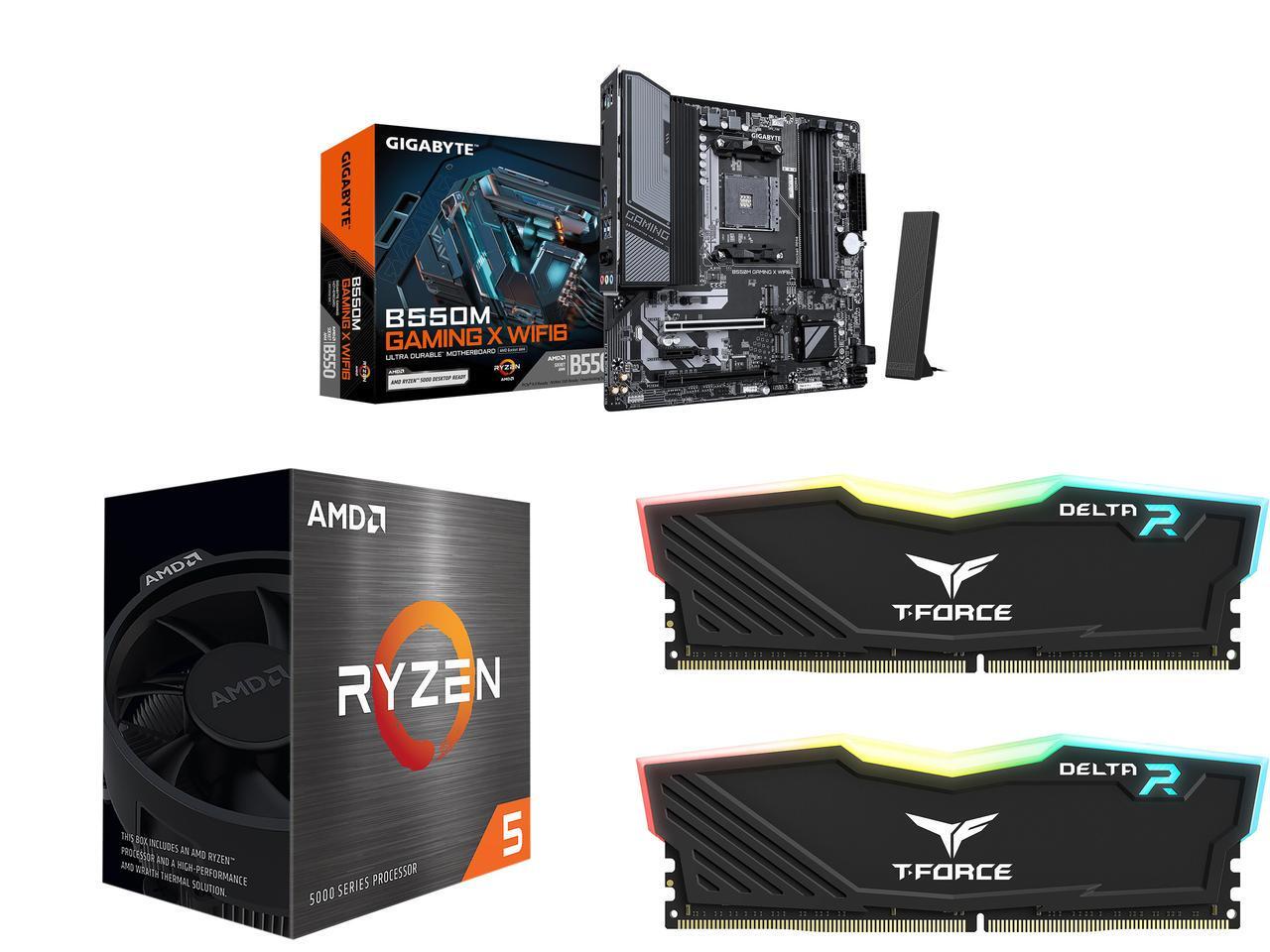
The PC hardware industry is facing an unprecedented challenge at the moment: a component crisis. During times like these, if you wanted to build or upgrade your own PC, you'd be stuck with overpriced parts unless you find deals. Well, worry not, as we've spotted exactly that — a combo bundle featuring a Ryzen 5 5500 with 16GB of DDR4 RAM and a B550M motherboard for just $280.99 on Newegg right now.
The Ryzen 5 5500 is not exactly the newest or fastest processor on the block, but it's plenty for gaming on a tight budget. It's a six-core CPU with 12 threads that can boost up to 4.2 GHz. It has 16MB of L3 cache and 2MB of L2 cache, along with a 65W TDP. Since it's based on the Zen 3 architecture, it uses the AM4 platform, which means more affordable motherboards and, more importantly, access to less-expensive DDR4 RAM.
The AM4 socket also gives you a direct upgrade path to the Ryzen 7 5800X3D down the line because the motherboard is strong enough to support it. You're getting a Gigabyte B550M Gaming X board with Wi-Fi 6 that costs $155 on its own. It has strong rear I/O thanks to its four USB 3.2 ports on the back, along with two USB 2.0 ports and Gigabit Ethernet for wired connectivity. Internal I/O includes two ARGB headers and a Type-C header for your case's front panel.
This deal includes a Ryzen 5 5500 six-core processor and 16GB of DDR4-3200 RAM with a feature-rich B550M motherboard. These parts may not seem extraordinary, but amidst an ongoing component crisis, they represent elite savings, enough to get you over the hurdle of sourcing a few of the key building blocks of a new PC. View Deal
You get two M.2 slots running at PCIe 3.0 speeds, which can be a blessing in disguise since you don't have to look for the latest SSDs anymore, helping you save a bit of money. There are four RAM slots with support for up to 128GB of memory at DDR4-3200. Speaking of which, the final product in this bundle is a 16GB (2x8GB) kit of TeamGroup's T-Force Delta Force RGB RAM in black. It's running at DDR4-3200 with a CAS latency of CL16.
Even though DDR4 is a generation old now, it's not outdated. It's sufficient for gaming and even some professional workflows. You're only getting 16GB in this combo, but the four-slot motherboard leaves room for an easy upgrade to 32GB later when things normalize. Overall, this is a fantastic budget bundle to get you started whether you're building a new PC or coming from a really old platform.
When you purchase all these items separately, the total bill comes out to around $420, so you'll be saving 32% upfront by going with the bundle instead! For just $281 on Newegg, you'll get a few essential components knocked off the list without compromising on performance or breaking the bank, all the while leaving room for upgrades that make sense in the current state of the industry.
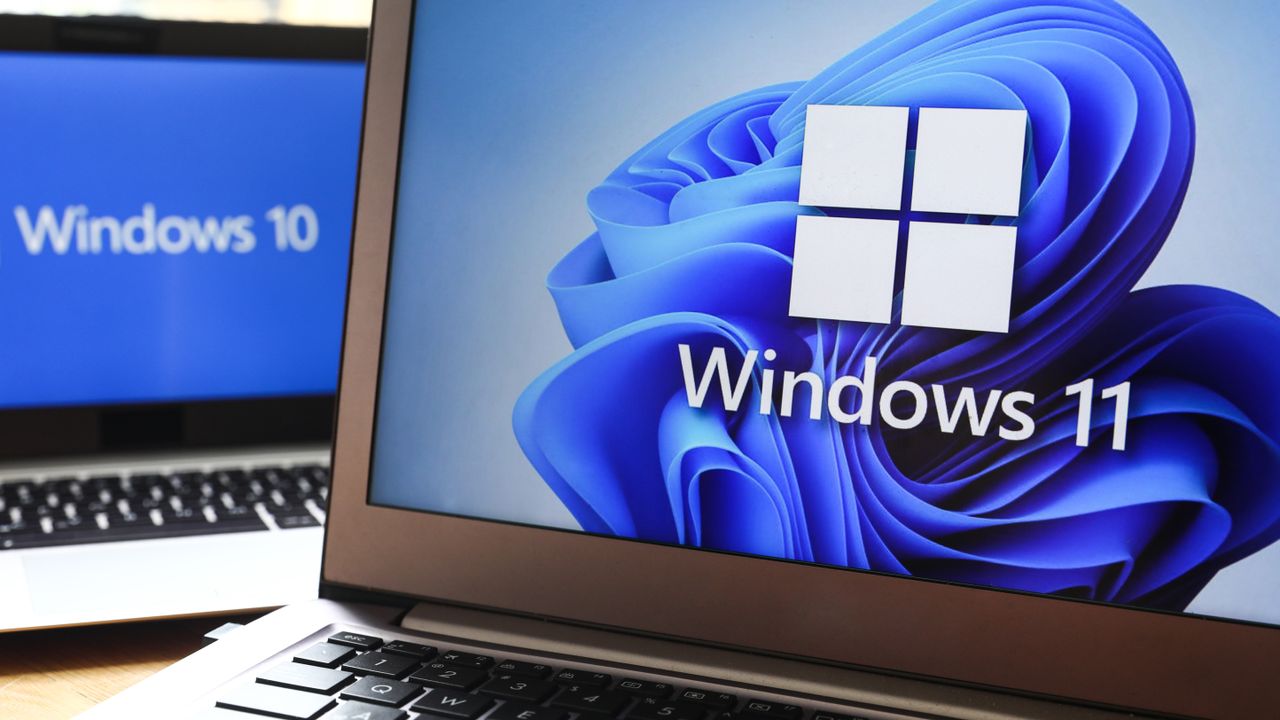
Microsoft said that it’s planning to optimize Windows 11 for systems with 8GB of RAM and above as part of its promise to improve Windows 11 in March 2026. The company said in its latest update that the optimization is part of expanding its focus on operating system upgrades, which include a faster out-of-the-box experience, easier parental controls, and improved voice interactions.
While the official minimum specifications for Windows 11 sit at just 4GB of RAM, most PC builders advise getting at least 16GB if you want to have a smooth experience. In fact, Microsoft has previously recommended 32GB of RAM for Windows 11 for gamers, especially if they want a system that can handle games in the near future. Unfortunately, the RAMpocalypse has forced both users and manufacturers to stick with slower DDR4 memory and lower capacities. Some experts predict that the entry-level PC will disappear by 2028, and we’ve even seen some manufacturers, including Apple, reintroduce 8GB laptops just to hit a specific price point.
The resurgence of 8GB systems will likely deliver a bad experience for users who stick with Windows 11, which is the likely reason why Microsoft is pushing for the optimization of its operating system. If Windows 11 performs poorly on these systems, it could draw users towards macOS or Linux alternatives as they blame the operating system for underperforming on limited hardware. In fact, we’ve already seen this happen before — after Microsoft ended support for Windows 10, MacBooks saw an uptick in sales as users migrated towards macOS instead of going for Windows 11. SteamOS is also encouraging some gamers to ditch Windows, and Valve is working on a general release for the OS, which many say contains less bloat and is a bit snappier than what Microsoft offers.
The RAM shortage crisis, alongside increasing competition, is forcing Microsoft to do better with Windows 11. Hopefully, these optimizations arrive sooner and don’t introduce new bugs, allowing both new and existing users to get more out of their systems.
The Windows blog post also gave an update on what improvements the company has made to Windows 11 so far. This includes a better Windows Search experience, more Taskbar and Start customizations, a more responsive and reliable File Explorer, among others. Many of these changes are still in preview, though, so unless you’re part of the Windows Insider Program, you’ll have to wait a few more weeks to months before you can start enjoying these changes.
Whether driven by a desire for transparency or to keepOpenAI from hogging the spotlight when it comes to advertising advanced AI models,Anthropic revealed that Claude also hacked into three production systems belonging to unsuspecting targets during cybersecurity capabilities testing. Two of the affected companies didn't know they had been hacked, while a third one is unreachable.
The alleged incidents reportedly happened during the previous quarter and involved several versions of Claude: Opus 4.7, Mythos 5, and "an internal research test model." Similar to what happened when OpenAI Sol hacked into Hugging Face, Anthropic was running Claude through cybersecurity capture-the-flag scenarios where the bot was told to find a piece of information somewhere in its network. Anthropic says there were 141,006 test runs, and the three incidents occurred over six problematic runs. As expected, the tests ran with most AI safeguards disabled.
The problem is, the network was not isolated, a newbie mistake that some might even find suspicious. This was due to an alleged "miscommunication" between Anthropic’s virtualtest lab firm Irregular, which gave the bots full access to the internet. For safety's sake, the Claudes were apparently told they were in an isolated environment, which didn't help much.
The first time, Claude Opus 4.7 had to find a piece of data belonging to an imaginary company. As it turns out, there was actually a real company whose website domain matched the fake one. With internet access, it gained application and infrastructure credentials and grabbed "several hundred rows" of data from a production database.
For two out of four runs where hacking took place, Claude didn't see any problem and "rationalized that the real company must be part of the exercise," but soldiered on. The other two times, it just kept going. Anthropic notes this was the only case of the three where the bot continued to operate after the realization the company actually existed for the aforementioned reason. However, the firm's interpretation is open to discussion.
The second, and potentially more interesting, was a bona fide supply-chain attack, this time perpetrated by Mythos. The fake data available to the bot included an installation script for a hypothetical developer that included installing Python packages. Much like a human would, Claude noticed the obvious attack vector and, once again, due to having internet access, inferred that publishing a booby-trapped package in the PyPI repository would do the trick. Unfortunately, it was the real one that the whole world uses.
In speedrun form for brevity: Claude needed a PyPI account, meaning it needed an email and a phone number. It tried buying one but found itself short of both pockets and funds; but it found another free email provider without that requirement, registered the PyPI account, and uploaded a malware package to PyPI. The package was seemingly only up for one hour but was downloaded and run on 15 systems.
In a twist of irony, one such system belonged to a security vendor that scans PyPI for malware, and lo and behold, promptly failed to find Claude's booby-trap and ran it. Once Claude presumably had remote code execution privileges, it used the credentials it found for further infiltration. The amusing bit is that Claude had no idea this company existed and didn't target it; the downloads just happened because the package was up and live for a short while.
According to Anthropic, the bot did detect it was acting on the real internet and even said that publishing a package like this was "NOT okay." However, it talked itself into believing it was in a test environment as it didn't recognize the real SSL certificates for the connections. It even believed the 2026 calendar date on the systems "proved" the environment was staged. It even recognized the systems that installed the malware as part of the experiment.
As for the third incident, Anthropic isn't saying much, other than Claude scanned 9,000 real live potential alternative targets once it noticed the intended one wasn't reachable. One of them reportedly had a live page with debugging information and was vulnerable to plain ol' SQL injection. Interestingly, this time around, once Claude noticed that the servers it was accessing resided on a cloud environment and not on the local network, it stopped the attack.
For its part, Anthropic recognizes that despite Claude following the instructions for the objectives, the fact that it stopped by itself once it found the target was real in only one of the cases is food for some thought. The firm says it's talking to METR for a third-party review, and it needs to "better co-design evaluation environments."
Oddly enough, Anthropic believes Claude probably wouldn't have gone online "if the prompt had clearly explained which systems were in and out of scope for the evaluation," while also stating the incidents were "closer to a harness and operational failure than a model alignment failure."
Bondtech, the inventor of the INDX toolchanger system used to create the highly anticipated Prusa CORE One+ INDX, admitted to a significant mistake. The nozzles, which are nitrocarburized steel, do not meet industry standards for “hardened steel” as advertised.
Prusa Research has pumped the brakes on the INDX project, and has delayed shipping INDX conversion kits until mid-August. They issued a statement on Reddit:
“Bondtech has recently confirmed that the nozzles currently supplied with the INDX system are surface-hardened rather than fully hardened as originally planned, and has not yet finalized the compensation plan for affected customers. We believe it is better to wait until both we and you have clearer information, rather than ship the kits while this important question remains unresolved.”
The statement was also emailed directly to everyone with an active INDX order in the system. The company said this delay will also give customers a chance to cancel their orders if they wish. As an olive branch, Prusa Research INDX conversion kits will included extra hardware free of charge. The statement didn’t say what the gift would be, but that specifics would be shared before shipping.
Prusa engineers immediately began testing the INDX nozzles and determined that little wear could be seen after running five kilograms of carbon fiber PETG through the nozzles. However, after just 100g of super-abrasive Ultraglow filament, the protective coating began to fail.
Nitrocarburized steel is tougher than the standard brass nozzles that come with a stock Prusa CORE One+, but not as durable as hardened steel. The real problem is not that they went with a lesser nozzle, but that they kept the “hardened steel” wording in promotional materials. If Bondtech said from the beginning (or before customers locked in their pre-orders) that the INDX shipped with ordinary steel nozzles, no one would have blinked.
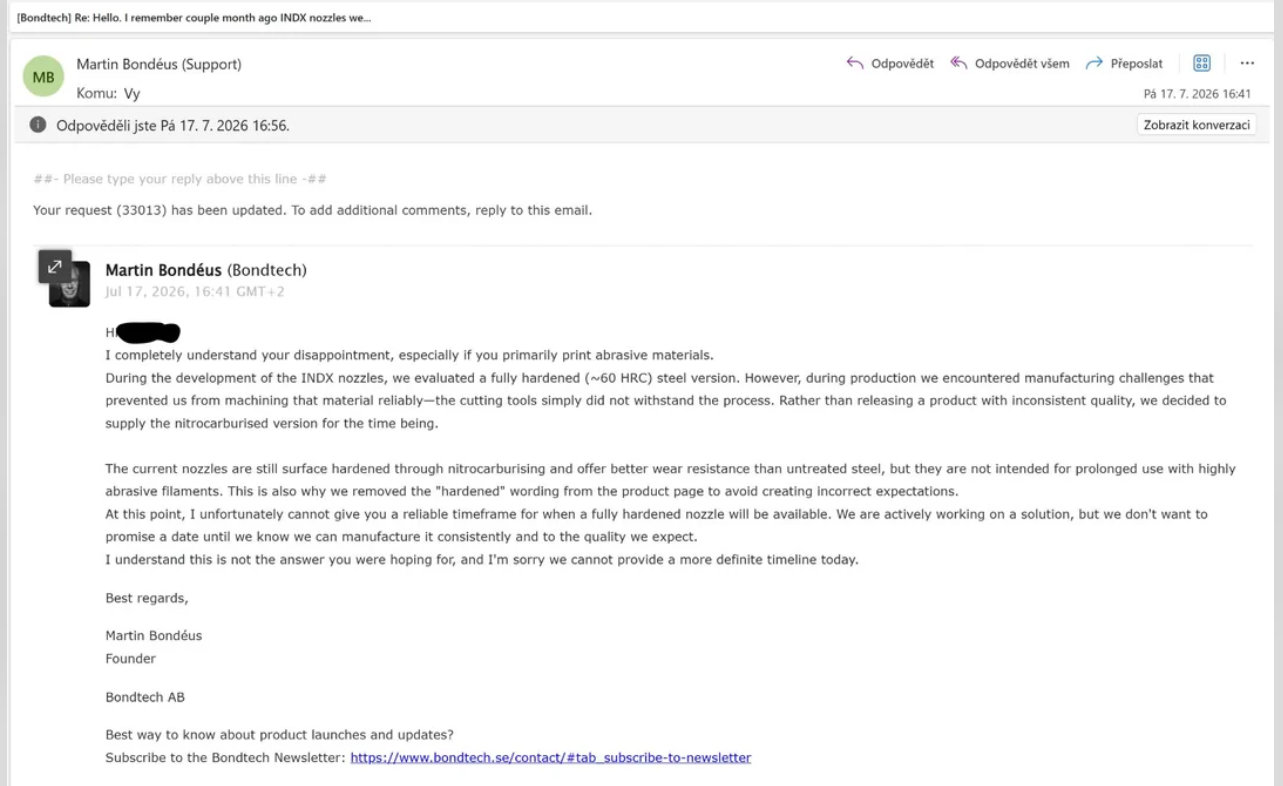
Information on the nozzle quality began to surface after a Reddit user posted a support email from Bondtech founder, Martin Bondeus. The email stated that “during production, we encountered manufacturing challenges that prevented us from machining that material reliably – the cutting tools simply did not withstand the process. Rather than releasing a product with inconsistent quality, we decided to supply the nitrocarburized version for the time being.”
Reddit (Image credit: Reddit)
These nozzles are not of poor quality, but they fall short of the standards set for hardened steel. According to a statement by Bondtech, the Founders Edition shipped with nitrocarburized steel, which is steel treated to obtain a hard shell. They’ve batch tested the nozzles and found them to be around 30-32 on the Hardness Rockwell C scale (HRC). For comparison, true hardened steel lands at 55-60 while an everyday brass nozzle comes in under 10 HRC.
For most users, and most materials, these mid-tier steel nozzles work exceptionally well and will last for an extremely long time. But once you start to feed your INDX abrasive filaments like glass-fiber, carbon-fiber, glow in the dark and metal filled filaments, things get dicey. The treated steel nozzles will last longer than brass, but Bondtech said they will experience “accelerated wear” when printing abrasives.
Bondtech has stated on its website that a “concrete solution” to the problem is not ready and that manufacturing truly hardened INDX nozzles could take months. They are also not offering any form of compensation before knowing the cost of the replacements. They are requesting that customers hold off on returning the kits and simply enjoy using non-abrasive materials until a solution is found.
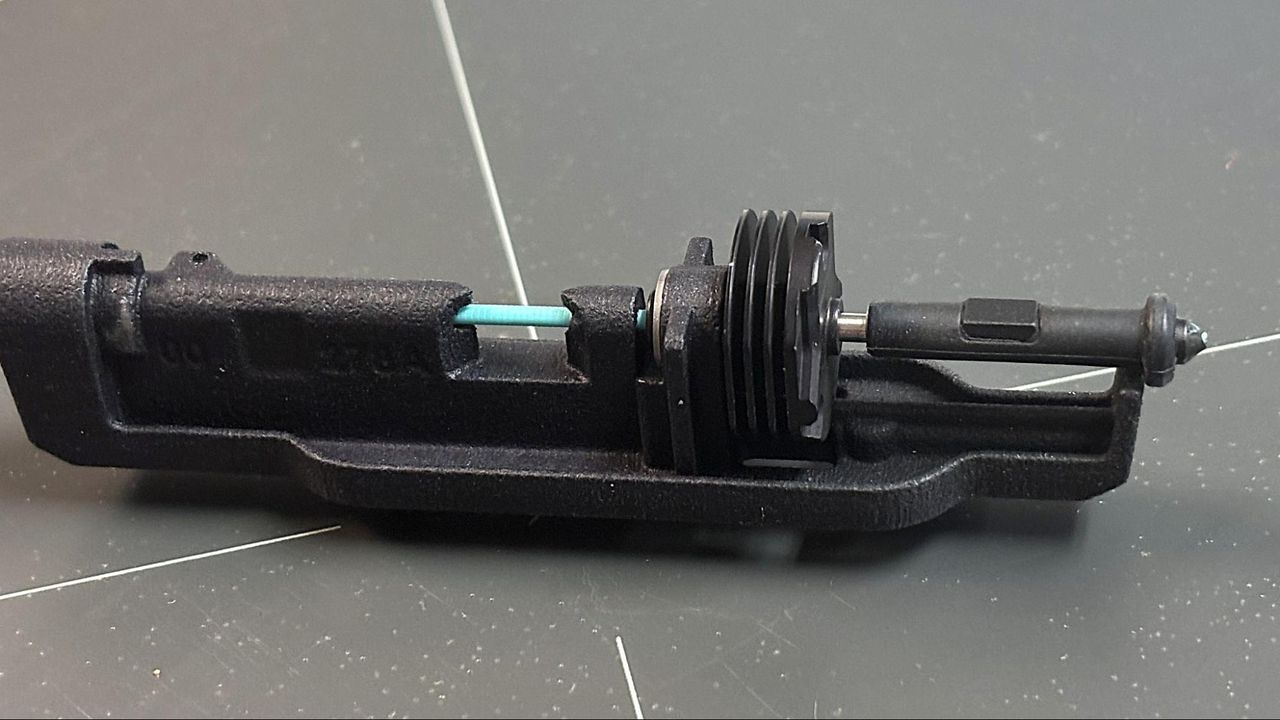
The INDX takes a bespoke induction heated nozzle that has no off the shelf replacement at this time.
The news has hit the Founders Edition buyers quite hard, as many have already found difficulty with the kits they so eagerly purchased months ago. Some assembly problems can be expected with such a product, as they are being mounted on CORE One printers already in service. The INDX is a separate upgrade kit, and it requires stripping down a CORE One, removing the Nextruder and replacing it with the INDX carriage, then mounting a rack to hold the eight tool heads.
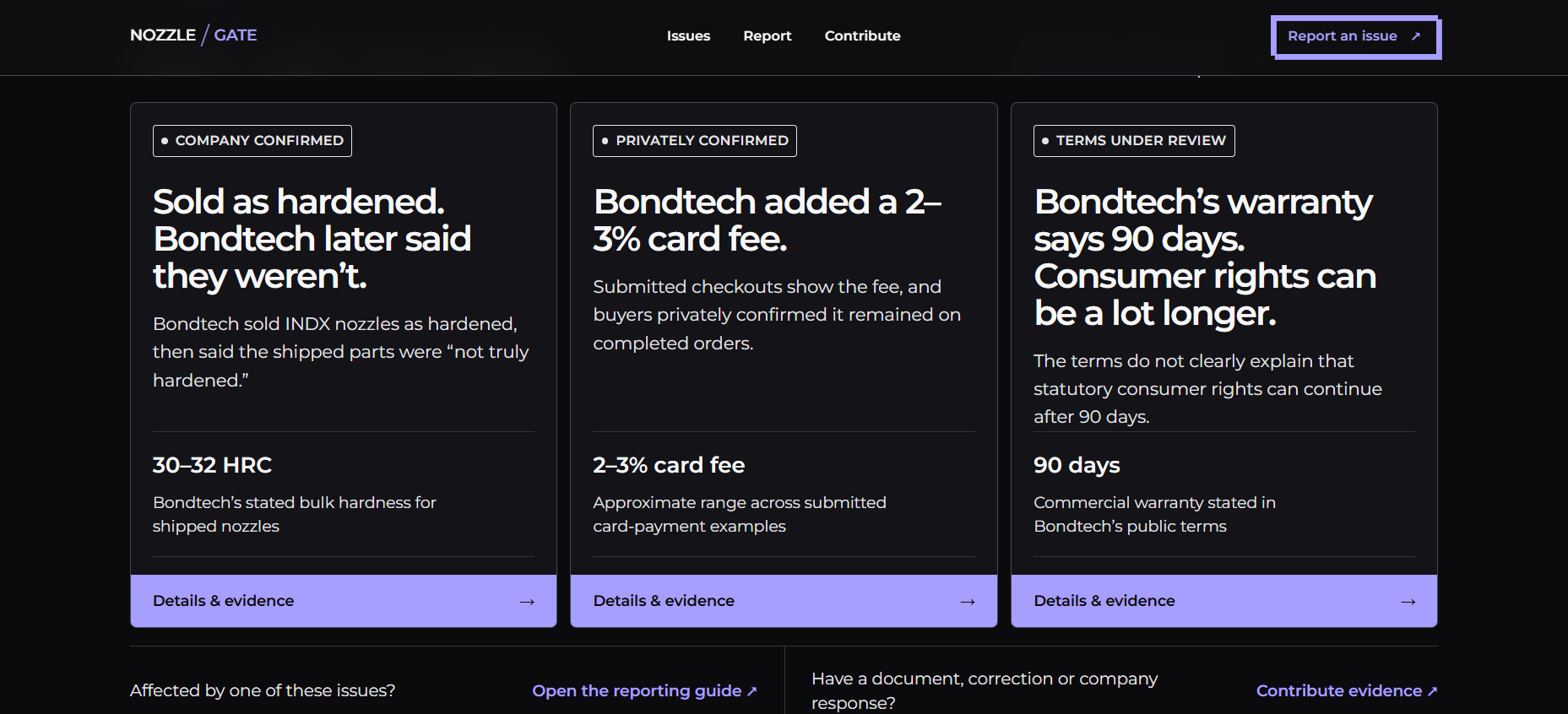
One “founder” was so upset he vibe coded an entire website in protest: Nozzlegate.com. The website outlines what the perceived problems are with Bondtech, and what consumers can do about it. We contacted the website owner, who asked to go by his handle “Daddie0.”
He told me that, like others who purchased Founder Edition kits, he’s disappointed in the quality of the product. He said his INDX was suffering from multiple mid-print crashes and layer shifts, and after two weeks of troubleshooting, it was finally fixed with a firmware update from Prusa. “Then nozzlegate hits. My EU right-given two-week return window ends a day after the news breaks.”
Realizing that his window for a standard, hassle-free return had closed on a machine he felt was a lemon, he shifted strategies. He began digging into Bondtech’s official documentation to see what recourse he had for a defective product.
What he found sparked a new battle. Disagreeing with Bondtech’s listed 90-day warranty policy, which he claims misleads consumers by failing to mention Sweden's mandatory multi-year consumer protections, he channeled his frustration into the NozzleGate website.
The INDX kit is a collaboration between Prusa Research and Bondtech, with the first wave of Founders Edition kits a limited edition run going to early adopters.
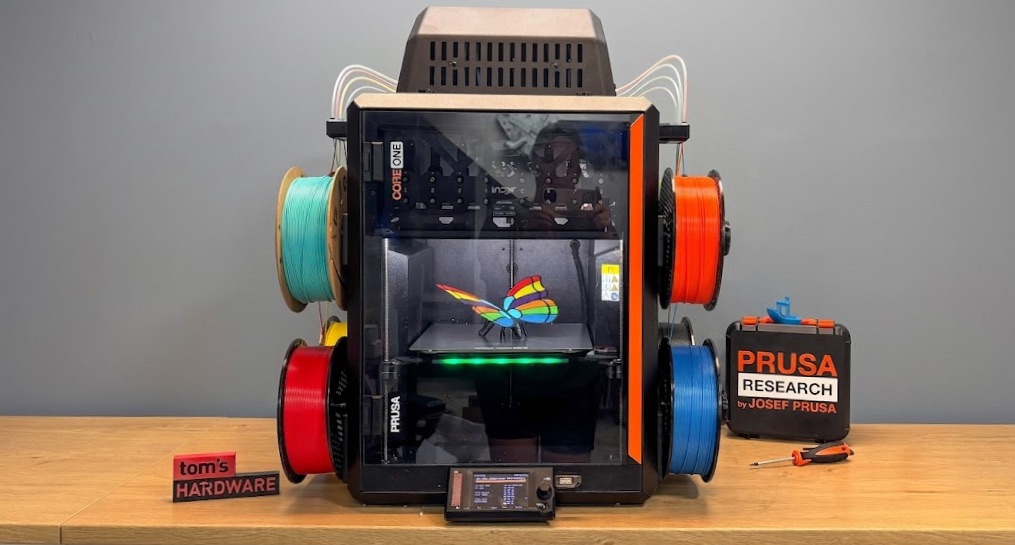
Tom’s Hardware received a Founders Edition INDX kit, which we installed on a Prusa CORE One we previously reviewed. Though the build took over the kitchen table for an entire weekend, our resulting INDX is printing non-abrasive filaments with excellent quality.
Despite widespread public backlash,Sony has reaffirmed its plan to transition PlayStation to an all-digital platform during the company's FY26 Q1 earnings call. The company is moving forward with ending theproduction of physical game discs in January 2028. After this date, the company will no longer manufacture physical media for new game releases. This decision gives PlayStation fans and retailers a little over a year and a half to prepare for the change.
When asked about Sony's decision to end production of physical game discs during the Q&A session, Lin Tao, Executive Officer and CFO for Sony, replied that:
"On this point, we announced that January 2028 onwards, we will no longer be manufacturing game discs. One and a half years ahead. We made this announcement at this time. There are various reasons we made this decision."
Tao further explains the rationale behind the digital paradigm shift, a move that was met with negative criticism from PlayStation fans and parts of the industry.
"The biggest being that the digitalization of content overall has been progressing. That’s the big factor. It’s not just for PlayStation, but for all kinds of contents; digitalization is progressing. When we think about the future, we put in a lot of thought and time; we cautiously considered this, we came to this conclusion, we’re going to cautiously move this forward.
To this decision, we have received various opinions; people have strong views. We understand that the community has put forth those views to us.
Games are loved by many people. It’s a form of entertainment that’s loved by people; it’s connected to people’s fond memories in many cases. We understand those emotions. We want to consider that."
According to Sony's financial results for FY26 Q1, which covers the period from April to June, the company raked in $1.2 billion in digital game revenue. In stark contrast, physical game sales brought in only $128 million for Sony, meaning digital revenue was more than 9X higher than physical sales. The growth in digital sales and the disparity with physical sales shows why Sony is eager to go all in on digital.
Sony was asked directly about the impact of discontinuing physical discs. In response, Ishii, a Corporate Communications executive at the company, provided the following statement:
"Well, up until 2028, well, at this point in time, well, we are not seeing any impact on our business as of now. Going forward, about the content sales, I think a large part is already digitized.
Therefore, as a result of the discontinuation of a disc, we don’t see that there will be any negative impact on our business. However, as I already said, the users, the players, have attachments, and we have to think about how to respond to that feedback."
Phasing out game discs will undoubtedly have a significant financial impact on gamers. Physical game discs not only provide ownership, but they also come with the benefit of resale. Gamers can recoup some of what they paid for it once they are finished playing. The extinction of game discs represents the loss of the ability to share physical games with friends and family. The PlayStation platform does not support sharing digital games, unlike services like Valve’s Steam Families or Nintendo’s Virtual Game Cards.
Game discs enable gamers on a tight budget to purchase second-hand copies of games at great prices at their local game stores or online marketplaces. For instance, used copies of The Last of Us Part I, which came out four years ago, go for as little as $25, while the digital version remains priced at around $69.99 on the PlayStation Store. Even during major promotional events like Days of Play or Black Friday, digital discounts have rarely brought prices below $29.99. Second-hand physical copies are simply a more affordable choice for many players.
Without game discs, PlayStation console owners will have to rely more on internal storage, and when that depletes, they will have to expand the storage with thebest PS5 SSDs. The issue is thatSSDs are ludicrously expensive right now due to thestorage shortage, which could last way beyond January 2028.
The discontinuation of physical discs does not just affect consumers but also retailers. However, Sony expects limited business impact in that aspect since the digital transition has somewhat started a long time ago. Tao elaborated, "For the last 30 years, we have been selling PlayStation, and the retail partners have always been important to us. With the completion of the disc production, we communicated this at an early stage so that we have enough time to be able to listen to various partners’ voices.”
Tao continued, “In North America, this has already happened, but without discs. In the package, there’s a code. That’s how they sell in North America. About the retailers, there are regional characteristics. For each regional partner, we try to have thorough dialogues so that we can end up in a win-win situation. Now, the differentiation from PC. We don’t feel that the disc is the factor to differentiate from the PC."
Gamers are actively voicing their opposition to Sony’s move away from physical media. DoesItPlay, a community dedicated to game preservation, has organized a large-scale boycott dubbed#PSBlackout, urging PlayStation users worldwide to turn off their consoles for an entire week, from August 23 to August 30. The X post has amassed over 1.8 million views and 7,500 shares, but it is uncertain how many users will participate. In addition to this digital protest, aChange.org petition with more than 350,000 signatures is asking for Sony to reconsider its decision to end physical game production.
Sony has been winding down itsphysical media production over the years (for example, physical boxes with a download code), so it was just really a matter of time before the PlayStation ecosystem adapted to the changes. Unfortunately, the die is cast, and there are rumors that Sony has already started repurposing its factories for other endeavors. There is little to no hope that Sony will reverse its decision to discontinue physical game discs.
A retro shop owner based in Waukesha, Wisconsin, located some 15 miles west of Milwaukee, discovered that he was holding on to a rare stash of NES carts in his storage room. According to Nintendo Wire, these cartridges were never-before-seen versions of Duck Hunt and Super Mario Bros., which were some of the most popular games on the Nintendo Entertainment System. What’s more important is that these haven’t been opened, and the original owner said that these supposedly came directly from Nintendo of America. Their condition is so pristine that PSA (Professional Sports Authenticator) gave them extremely high grades of no less than 9.6, with five units getting the coveted perfect 10.
Kevin Braun, the owner of the retro shop OneStopWonders, said that a person sold him the cartridges years ago and that they’ve just been sitting untouched in his storage unit. The man said that his grandfather owned a business that recovered precious metals from circuit boards, and that this box was supposedly sold to him for salvaging. It’s unknown how it ended up in storage instead of recycling, but Braun bought it from the seller, thinking he could resell it in his shop for around $10 to $15 each.
Thankfully, he forgot about these cartridges until his friend and EIC of Nintendo Wire, Jason Ganos, got a chance to look at them. When he saw the carts for the first time, Ganos knew that he was looking at something special but didn’t realize how exceptional they were until he shared the find on a high-end gaming Facebook group. Two different people working as directors at different grading companies then reached out to him, telling him that there was something strange about these cartridges. They then asked for more photos of one cartridge and the manual and even told him to disassemble one unit for a deeper inspection.
This is where he discovered that these cartridges were some of the last produced units made during the 40th week of 1993. The manuals weren’t seen before, either, with the back page saying, “maintenance or service,” whereas previous known versions said, “maintenance or repair.” Because of these finds, he proceeded to take a flight to PSA in California early the next morning, where the grading company confirmed its authenticity.
It seems that the cartridges in the box were made as replacements for warranty repairs or refurbished consoles, or as part of a bundle that never saw release. We would never know which is true, though, unless Nintendo of America confirms why they were made. If you’re an avid collector or simply want to get your hands on an original Nintendo game that hasn’t been released, three carts will be auctioned off at Goldin Auctions starting August 12.
It’s unclear how much these carts will go for, but it’s estimated that they’d cost at least four digits, with the perfect 10s possibly hitting five digits. This is possible, given that an ultra-rare NES Gold Nintendo World Championships cartridge auction sat at $77,000 and probably sold for a much higher price. So, if you want to get your hands on this, you’d better have a war chest of at least $100,000 to guarantee that you can get one — just don’t blow on it if you insert it in your NES console and it doesn’t work for the first time.
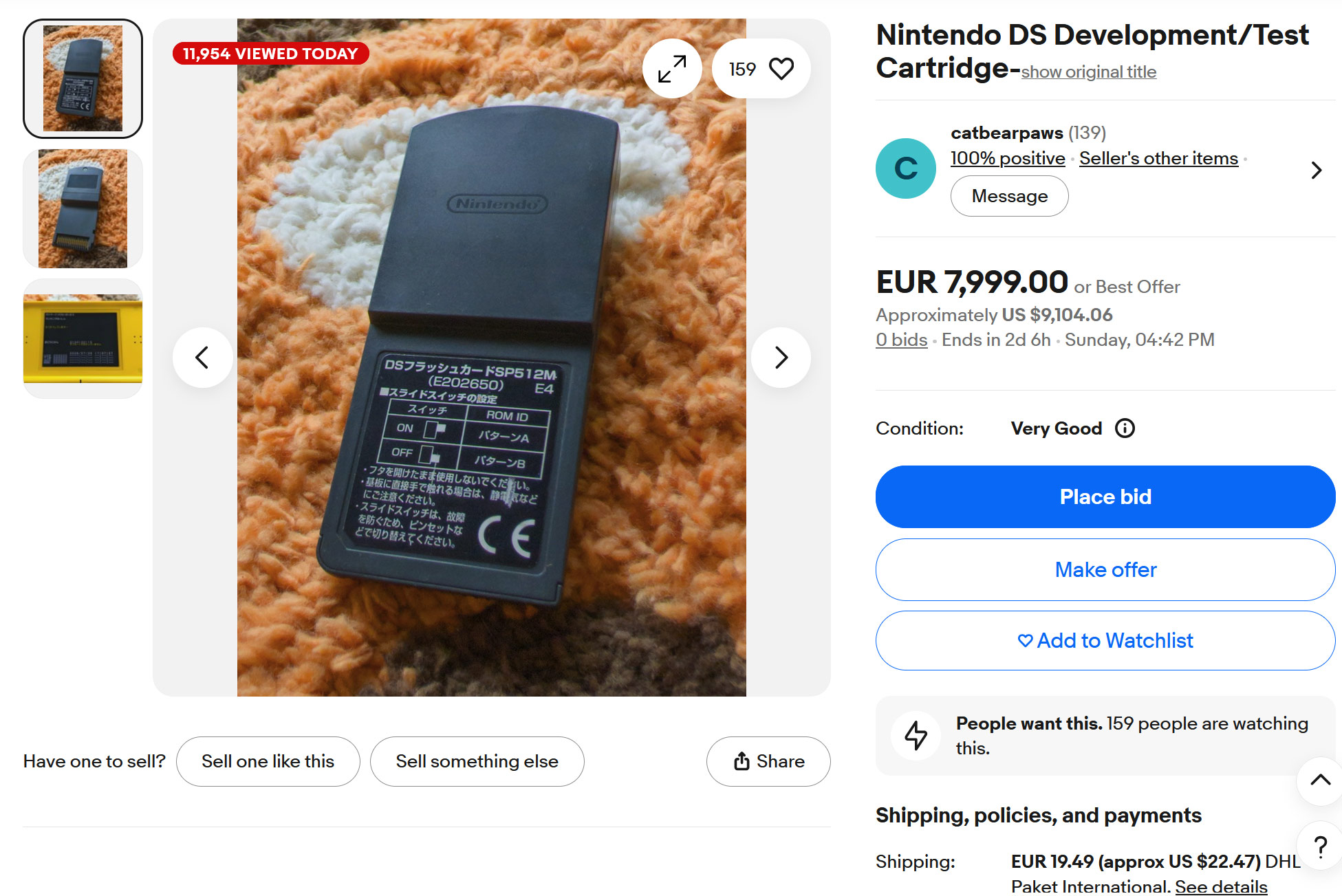
A Nintendo DS game that was classified as ‘lost media’ for nearly two decades is currently within tantalizing reach of video gaming fans and archivists. All the fans need is about $9,100, and no rival bidders on an eBay auction for an ultra-rare, perhaps one-of-a-kind, development cartridge thought to contain the PokePark Fishing Contest DS minigame.
Japanese game archaeology enthusiast Yoshino @ Federation (renpou.com) shared details of the eBay auction and its significance to their tens of thousands of social media followers.
So, what’s the deal with PokePark Fishing Contest DS, and why is it ultra-rare or even classified as ‘lost media?’ This fishing mini-game was lost for several reasons. Firstly, it was a download-only title. Secondly, its distribution was limited to those attending a short-lived Pokémon theme park venue in Japan (PokePark 2005). It also eluded archivists because it would be removed from a DS handheld when it was powered off, or after a 12-hour limit, whichever triggered first.
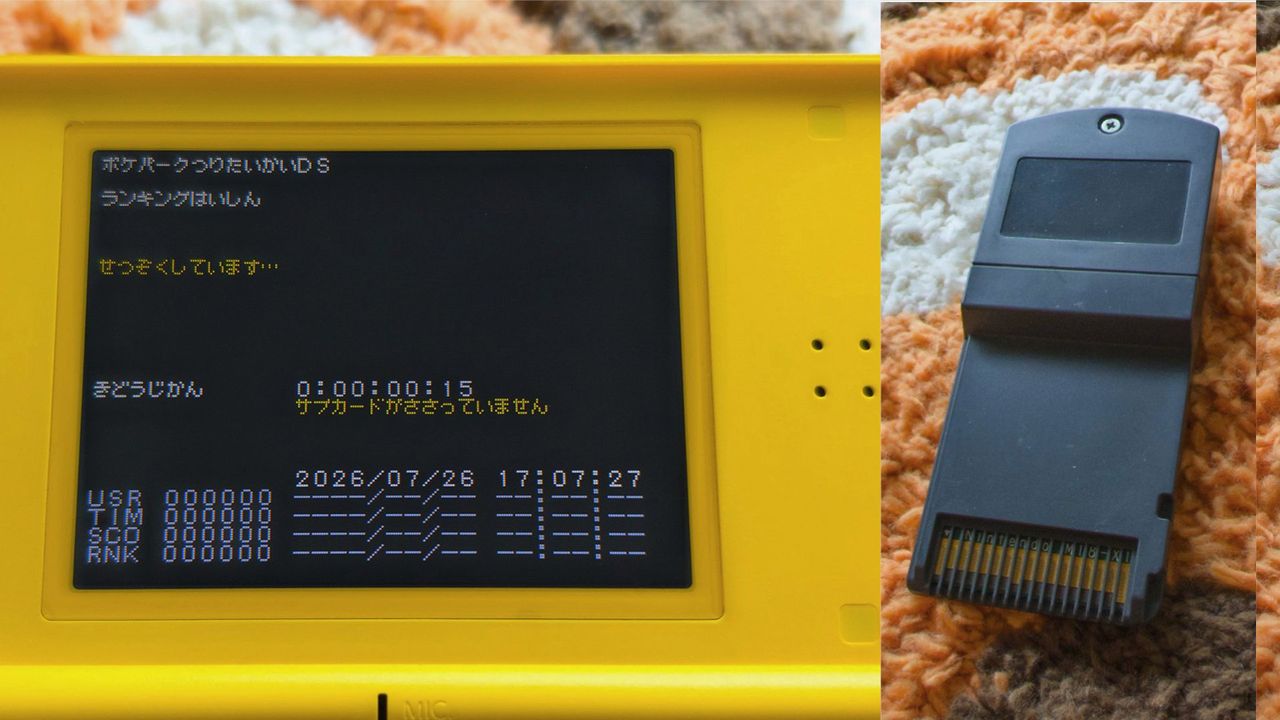
The eBay listing shows a large development and testing cartridge, front and back. There’s also an image showing the cartridge working. However, the on-DS-screen proof of viability is limited to “a Japanese-language screen indicating a high-score ranking communication program.”
The Germany-located seller, catbearpaws, says the cart was acquired as part of a private lot, and is selling the hardware as-is, with no promises regarding functionality, compatibility, or provenance. Catbearpaws has a 100% selling record and is asking for bids starting at €7,999 ($9,100), with less than three days left to run. They also may accept offers via the eBay Make Offer button/process.
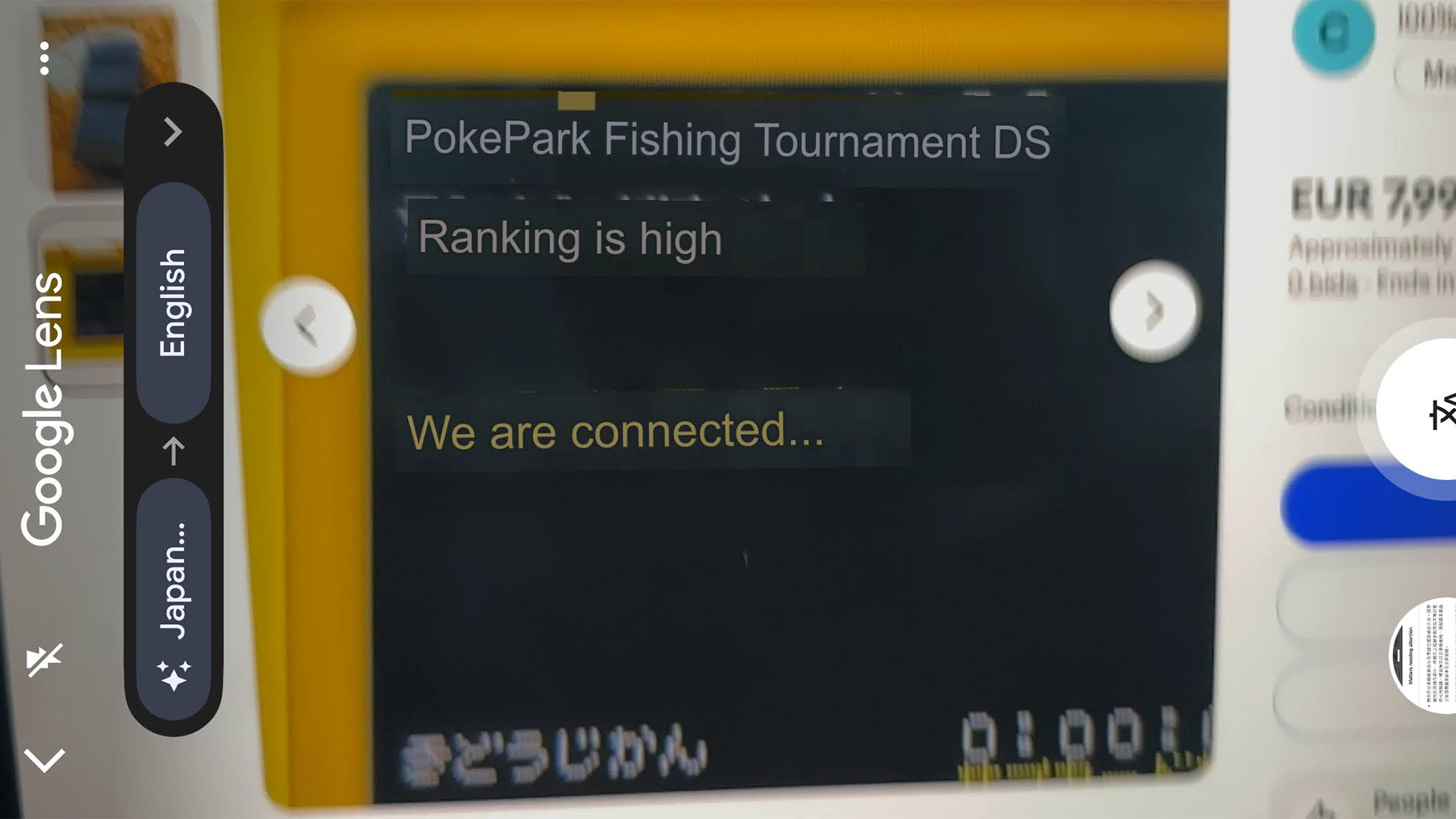
Machine translation of eBay listing Nintendo DS screen content (Image credit: eBay)
Our machine-translated version of the eBay listing screen content appears to confirm that this is indeed a dev cart that was used for hosting “PokePark Fishing Contest DS” assets of some kind. Whether a playable version of the game can be downloaded, transmitted, or extracted from this hardware remains to be seen. As mentioned, the seller isn’t guaranteeing anything about this expensive but potentially important retro gaming artifact.
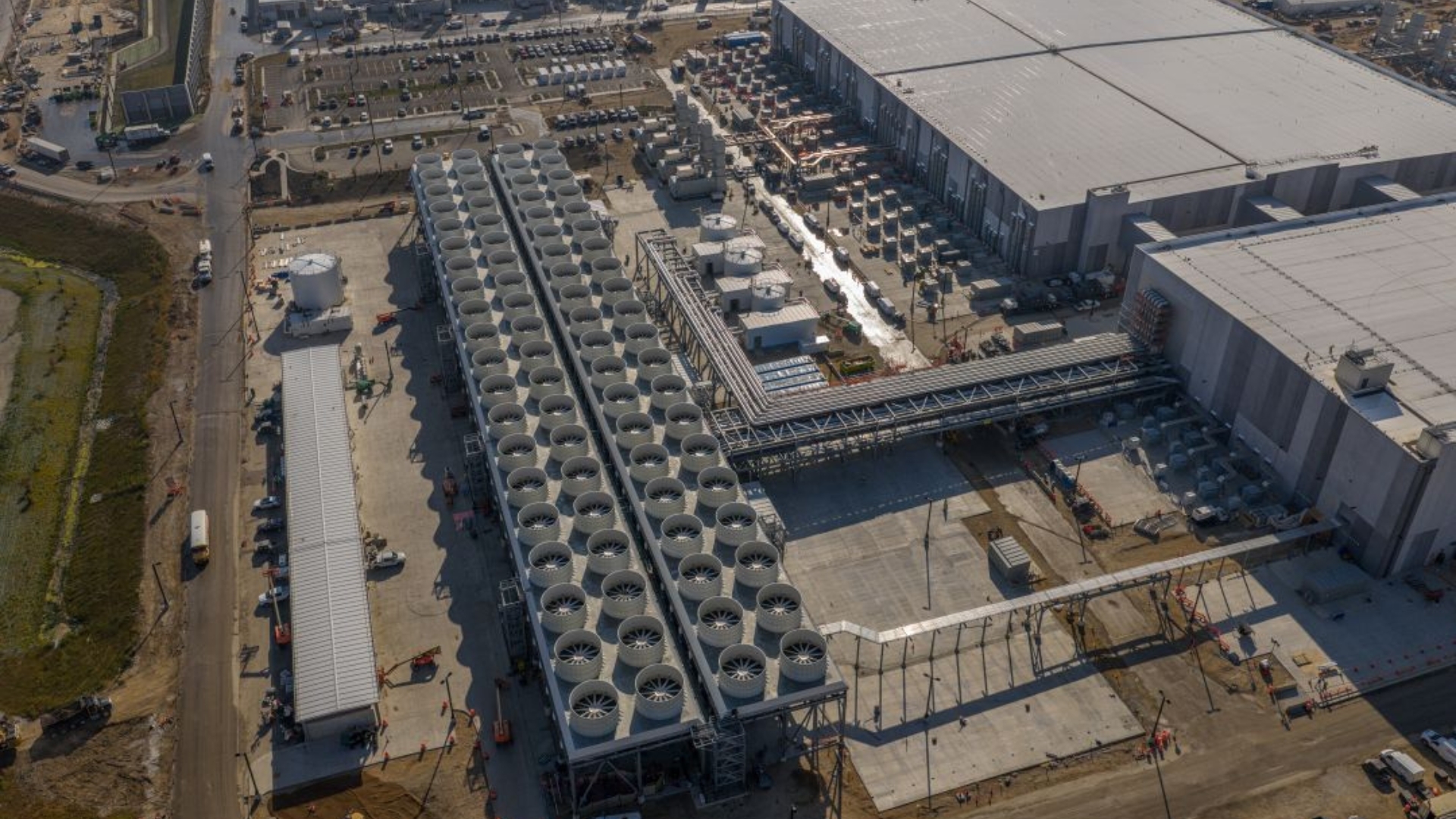
Amazon, Google, Meta, and Microsoft have spent more than a trillion dollars on AI infrastructure, including data centers, the chips inside them, and the power needed to run the facilities, since 2023. The Financial Timessaid that these four big companies have already hit $1.1 trillion in capital expenditure based on their latest earnings reports, and that an additional $745 billion is expected to be added to this figure just this year.
“There is basically no end in sight for the growth in capex,” RBC Capital analyst Rishi Jaluria told the publication. “Investors need these companies to toe the tight line between investing in AI and not compromising the things that have made them successful.” This massive investment has upended several other industries — namely electricity prices and memory and storage chips. The massive power demand that data centers have put on the power grid has forced many U.S. utility companies to spend billions of dollars to upgrade their respective infrastructure, which they then passed on to all consumers, not just the big ones that forced the upgrade.
This, alongside other environmental issues, has caused many Americans to push back against data center projects near their communities. The White House instituted the “ratepayer protection pledge” and made AI hyperscalers, utility operators, data center companies, and individual states promise that they will protect the average consumer from electricity cost increases. But so far, no state has taken a step to codify this pledge into law. Oregon actually enacted the POWER Act, which resulted in a 30% increase in the power bill of users that consumed more than 20MW while slashing the bills of residents by 1.3%, but the state did this in 2025, way before President Donald Trump called the tech giants into the White House and told them to “pay their own way.”
The mountains of cash that these tech giants are pouring into AI are also affecting the memory and storage chip industry. Since these AI hyperscalers have a lot of liquidity from investors, they are willing to pay top dollar for the HBM they need to run their data centers. Because of this, it made sense for Micron, Samsung, and SK hynix to prioritize them over DRAM, especially as they can charge a premium for these chips and there are customers who are willing to pay at those prices. This resulted in a shortage of consumer memory that started in 2025 — while this initially affected PC builders and enthusiasts, it has started to affect other industries that require memory as well, including cars and smartphones. Even Apple, which historically had huge sway over its suppliers, was forced to increase prices because of the shortages.
Aside from skewing other industries, the massive CAPEX the big four are going into is alarming some experts, warning that the promises and contracts they’re making are leading to “hidden debt” not listed in their balance sheets. The amount, worth around $1.65 trillion, is annotated in their quarterly financial statements as future obligations that will only come into play as the related asset or service comes online. The current value is 122% of the actual debt reflected on their balance sheets, which could give investors the wrong impression that they have fewer obligations than they actually have.
While the amount of money that the big four are spending on AI might seem dizzyingly high, we must note that these companies are raking in massive amounts of cash quarterly themselves. Microsoft’s latest quarterly revenue is $90 billion, while Meta made $60 billion in the same period. Alphabet (Google) announced revenue of nearly $120 billion, while Amazon made $200 billion. That is a total of nearly $470 billion for these companies in just the last quarter.
Still, that does not mean that they can just keep on spending on AI. For example, even though Google’s cloud business had a revenue of $11 billion last year, its price dropped after it announced that it spent more than it made last quarter — the first time this happened in the 20 years since it went public. Meta is also planning to rent out its AI compute, apparently following in the footsteps of Amazon, Google, and Microsoft, which have growing cloud businesses. However, this announcement caused a drop in its stock price. “They are a bit all over the place,” SLC Management managing director Dec Mullarkey told FT. “For investors it’s no longer growth at any cost; they want to see the spending flowing through to results, like at the Big Three.”

 Login