Intrinsically disordered proteins (IDPs) do not form stable 3D structures. Instead, they remain flexible, adopt many conformations, and can interact with multiple molecules. Although proteins were once thought to require a fixed structure to function, many IDPs play essential cellular roles. Some IDPs can assemble into biomolecular condensates, membrane-less compartments that help organise processes such as gene expression and stress responses.
Many IDPs contain prion-like low complexity domains (PLCDs), which have defined sequence features known as molecular grammas. These IDPs are multivalent and can form hierarchies of interactions with one another. These interactions promote clustering and, under the right conditions, phase separation into a protein-rich condensate and a surrounding dilute phase. Dysregulation of condensates has been linked to disease.
In this study, researchers used computer simulations to investigate the PLCD known as A1-LCD. Their aims were to accurately identify the critical point where phase separation ceases, map the full phase diagram, and assess methods used to estimate the theta temperature (Tθ), a measure related to solvent quality and protein interactions.
The simulations revealed three distinct phase-separation regimes: a dilute phase containing mostly isolated proteins, an intermediate regime where clusters form before large condensates appear, and a regime near the critical point characterised by system-spanning networks. The study also showed that condensates behave as percolated networks of interconnected proteins. Importantly, the authors found that commonly used methods for estimating theta temperature may be inaccurate for these systems.
Overall, this work provides new insights into the phase behaviour of condensate-forming proteins and highlights the need for more reliable approaches to assessing solvent quality. These findings could improve future studies of biomolecular condensates and their roles in health and disease.
“Comparative assessments of driving forces for phase separation requires knowledge of IDP-specific critical points. Our application of rigorous finite size scaling methods pioneered by Kurt Binder helped us delineate the critical and mean field regimes and demonstrate how the critical point can be converged upon for realistic approximations of IDPs. This revealed several surprises regarding the complex nature of the coexisting dilute phase. Additionally, we found that calculation of the two-body interaction coefficient provides a computationally tractable approach to compute comparative, sequence-encoded driving forces for phase separation of IDPs. This is directly relevant to inferring how changes to molecular grammars influence phase behaviors driven by homotypic associations.” – Rohit V. Pappu, Washington University in St. Louis
According to band theory, materials with partially filled energy bands and unpaired electrons should conduct electricity, but in Mott insulators this rule is broken. In these materials, the repulsion between electrons is so strong that they cannot move freely and become localized. When sufficient energy is supplied (for example by light), electrons can form a doublon (two electrons on one site) and a hole (an empty site). These excitations can move, enabling electrical conductivity.
A key question for Mott insulators is how these charge carriers are created and what controls their production. Traditionally, two regimes were known: multiphoton absorption, where several photons combine their energy, and tunnelling, where a strong electric field drives electrons across the gap.
In this work, the authors show that there are actually four regimes: multiphoton, tunnelling, a cooperative regime where the two processes work together, and an incoherent regime where weak fields and scattering dominate. They also show that the energy gap (the cost to create a doubloon-hole pair) is not fixed, but changes during the process because the generated carriers modify the system. This creates a feedback loop, making the dynamics nonlinear and time-dependent. As a result, carrier production can either slow down or suddenly speed up, even making the system more efficient without changing the driving field.
The behaviour depends on field strength, frequency, dissipation, and time, and each mechanism can be identified by its distinct momentum pattern. By tuning laser parameters, the system’s properties can be controlled in real time. Overall, this work shows that light can be used to dynamically reshape and control strongly interacting materials, opening possibilities for ultrafast, light-driven technologies.
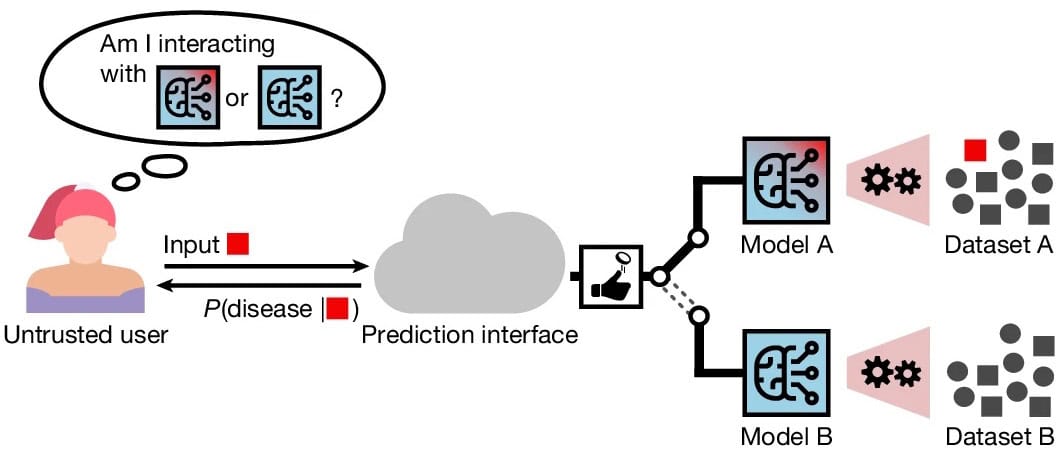
Membership inference attack An untrusted user aims to infer whether a specific target record was part of the training dataset, by observing the predictions of a model. The attack is successful if they can reliably distinguish between models A and B, which are identical except for the inclusion or exclusion of the target record in the respective training dataset. (Courtesy: CC BY 4.0/Nature 10.1038/s41586-026-10688-0)
A new study has revealed that sensitive health information about individual patients can be extracted from medical artificial intelligence (AI) models more effectively than previous research had indicated.
Diagnostic AI models are used to determine whether some given health data belong to a specific class – for example if an X-ray image shows evidence of pneumonia – and offer huge promise for improving patient outcomes. Earlier studies showed that membership inference attacks (MIAs), which determine whether a particular person’s data was used to train an AI model, yielded results no better than random chance. But these previous studies only evaluated the average risk across all patients in a training dataset.
By contrast, in this latest work doctoral student Moritz Knolle and his supervisor Daniel Rückert at the Technical University of Munich (TUM), together with collaborators at Imperial College London and Georg Kaissis from the Hasso Plattner Institute (HPI), examined the privacy risk for an individual patient. “Privacy that only works on average has little meaning. So I asked myself: would I contribute my data to train a medical AI model?” says Knolle.
Investigating the risks A team led by Daniel Rückert (pictured) at TUM and Georg Kaissis from HPI found that medical AI is more vulnerable to certain attacks than previously thought. (Courtesy: Juli Eberle/TUM)
As detailed in their recent Nature paper, the researchers attacked AI models based on seven different types of real-life medical datasets, including one comprising 21,799 electrocardiograms and another of 377,110 chest radiographs.
“If a model sees a specific data point during training, it usually becomes more confident at predicting it. So in these MIA attacks I compare the predictive probability number for this data point outputted by the medical AI model with the predictive probability number obtained from my model which has not seen that data point,” explains Knolle, adding that the attack is essentially a statistical test to distinguish between the two models.
Their results revealed that the privacy risk for an individual was far greater than the average risk. The team also found that privacy risk is not equally distributed among subgroups.
“We found that patients from minority groups that are under-represented in the training dataset tend to be over-represented among the 99 percentile of extreme [privacy] risk,” Knolle tells Physics World, warning that as medical AI models become larger and more sophisticated the privacy risk is amplified because their deep analysis creates the small changes in predictive probability that MIAs are good at finding.
While an MIA that reveals someone is a UK citizen poses little security risk, discovering that an individual has received a specific type of cancer treatment reveals personal information that could, for instance, adversely affect their medical insurance premiums. “The more specific the training cohort is, the larger the privacy risk,” states Knolle, crediting his medical doctor parents with inspiring his desire to improve healthcare AI.
Countermeasures include differential privacy (DP), in which a small amount of Gaussian random white noise is added in alongside the data during training, thereby reducing the effectiveness of MIAs while maintaining the model’s diagnostic accuracy. “This gives a mathematically provable upper bound for how much privacy risk any individual in this dataset could face, by limiting the information content that flows to the AI model,” explains Knolle.
He notes that, unfortunately, such DP tools have not been widely adopted by hospitals or clinics. This, he fears, could undermine patients’ confidence in sharing their data, and thereby not only reduce AI’s ability to help combat rare diseases, but also compound AI discrimination that occurs when there is too little data from minority groups included in training datasets.
“So we are hoping to inspire the medical AI community to do risk assessments before deploying AI models, and use verifiable strategies such as DP or limiting access to the AI model, so that as an individual you have a statistical guarantee that no harm would come to you by being part of a dataset,” concludes Knolle, who now plans to investigate the privacy risks posed by generative AI models for healthcare.
“Solar towers” that convert sunlight into heat could play a useful role in the renewable energy transition, but high installation costs and complex requirements limit their attractiveness to commercial operators. A team of researchers from Germany’s Karlsruher Institut für Technologie (KIT) and the German Aerospace Center (DLR) is now taking steps to change that. By creating a freely accessible database of information about how these plants work, they aim to accelerate research on solar thermal energy and drive improvements that could allow the technology to be more widely deployed in the future.
Unlike photovoltaic panels, concentrating solar power (CSP) plants do not convert sunlight directly into electricity. Instead, they generate heat by using an array of movable mirrors called heliostats to funnel sunlight onto a receiver located at the top of a tower. This heat can be used to drive a turbine to produce electricity immediately, but it can also be stored and used to generate electricity at night or on cloudy days. Depending on the plant’s location and setup, the heat could even be used directly for industrial applications and district heating.
The problem, explains study leader Kaleb Phipps, is that operating solar power tower plants safely and efficiently is a complex and expensive task. “CSP technologies have the potential to help the transition to a renewable energy system,” says Phipps, a research fellow at KIT’s Scientific Computing Center. “However, they are still not financially viable and there are operating challenges associated with them.”
Before researchers can develop and reliably test new, improved processes, Phipps explains that they need access to real-world operational CSP data. “We believe that modern data-driven machine learning methods like ours can help solve a lot of these problems,” he says.
849 gigabytes of operational data
To construct their database, which is known as PAINT, researchers collected data from the CSP tower near Jülich, Germany. These data include the exact positions of the tower’s 2014 mirrors, their dimensions, how they are warped and the way they rotate and tilt. The team also obtained fine-grained weather data for the entire 2021-2024 period under study, plus a further 218 000 images to help determine whether the mirrors were efficiently directing sunlight precisely to the top of the tower.
All in all, the PAINT database contains 849 gigabytes of operational data organized using the SpatioTemporal Asset Catalog (STAC) standard. To make these data FAIR (findable, accessible, interoperable and reusable), the researchers developed software to simplify access to the database and then published the data in a way that is freely available to all users.
Their goal, they say, is for other researchers to use this FAIR database to develop “digital twins”, or virtual replicas, of real-world CSP plants. When combined with machine-learning models, such twins can be used to answer questions such as whether the mirrors are aligned for maximal light absorption (one of the most important parameters for efficient operation) in near real time.
Community reaction
“The fact that we are receiving many positive responses regarding the data and that people seem to appreciate it is our biggest success,” Phipps says. Such responses are especially gratifying, he adds, because constructing databases like PAINT can be an arduous task.
“The main difficulties were about collecting the data, cleaning and unifying it into standard formats and parsing and organising all the metadata, which was originally complete chaos,” Phipps recalls. “We therefore put a lot of time and effort into creating standardized and automated workflows so that the process is as transparent as possible and can be reused for future data.”
The team also faced challenges when trying to convince peers that this work counted as “research”, he adds. “The fact that the data itself didn’t directly result in a new algorithm or method meant that lots of people didn’t believe we would be able to publish the results or achieve anything with them,” says Phipps. “Luckily, we were able to prove the doubters wrong.”
While the PAINT database currently contains data from only one CSP, the KIT researchers, who report their work in Nature Energy, are hoping to expand it. “We really need contributions from other CSP power plants around the world to transform the database into a truly international and diverse source for researchers,” Phipps says. “As data from different facilities is added in the future, it will be possible to develop a common standard for open operational data in solar tower research. This would speed up the development and promote a widespread adoption of this technology.”
Correlation explanation: Quantum entanglement between electrons in strange metals appears to account for some of their unusual behaviour. (Courtesy: Harald Ritsch / TU Wien)
“Strange” metals owe at least some of their peculiar properties to the quantum entanglement of their electrons. This finding comes from physicists at the Vienna University of Technology in Austria, who used a concept from quantum information science to guide their experiments. A similar approach, they say, could also yield a better understanding of certain high-temperature superconductors and other correlated quantum materials.
Electrons travel relatively unimpeded through most metals, but in the 1980s, scientists identified puzzling exceptions in certain cuprate high-temperature superconductors. Further examples of this “strange” metal behaviour subsequently turned up in other classes of materials, including heavy-fermion materials, pnictides and organic compounds. This resistive behaviour cannot be explained by theories that treat electrons as independent, non-interacting particles, nor by theories that include interactions while treating electrons as quasiparticles. And although multiple recenttheoretical works suggested a possible role for entanglement, experimental evidence was lacking.
A novel statistical tool
To investigate further, a team led by solid-state physicist Silke Bühler-Paschen used facilities at the Institut Laue-Langevin (ILL) in Grenoble, France to perform inelastic neutron scattering measurements on a heavy-fermion metal with the chemical formula Ce3Pd20Si6. According to team member Federico Mazza, who conducted this part of the study, the scattered neutrons would normally each transfer their energy to individual particles.
However, when the researchers analysed their data using a concept called quantum Fisher information – roughly, a measure of how sensitively a quantum state depends on a given parameter – they found that they could not explain what they were seeing in terms of particles behaving independently. Instead, the data indicated that groups of at least nine quantum-entangled entities were acting collectively. Mazza says this provides direct evidence of highly multipartite quantum entanglement in the material – and, in turn, a new way of understanding why strange metals are so strange.
The parent state of high-temperature superconductivity
The strange metal state is of great interest because physicists consider it the “parent” state of high-temperature superconductivity, though it also occurs across other materials platforms. “We had suspected that some of the intriguing properties of this state might be related to entanglement but were not able to pin it down until now,” Bühler-Paschen explains. “The results are a great success for us. They confirm that our unusual approach of using methods from quantum information science for solid-state physics studies of novel materials can reveal fundamentally new insight.”
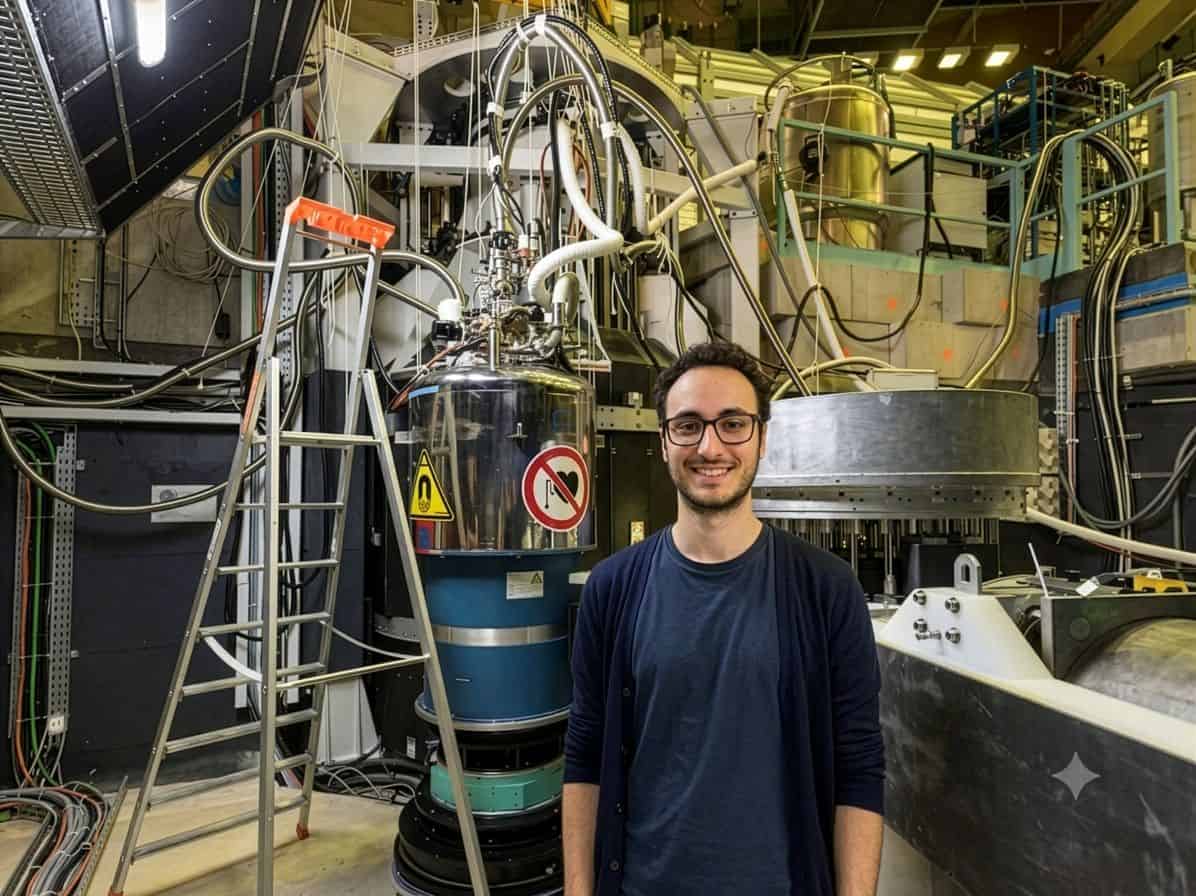
Neutron scattering: Federico Mazza at the Institut Laue Langevin. (Courtesy: ILL Grenoble)
The experiments, which are detailed in Nature Physics, were not without challenges. For starters, the researchers needed to identify an ideal material to study the effect they were looking for and then grow it as a large, high-quality single crystal. Once they secured inelastic neutron scattering beamtime at the ILL’s powerful high-resolution triple-axis spectrometer – a difficult feat in itself – Bühler-Paschen notes that they had to obtain and analyse the data at the highest standards and support it with simulations. “Last but not least, [we had to] communicate with our peers that multipartite entanglement contains valuable information beyond correlation functions and scaling analyses,” Bühler-Paschen recalls.
Rather than being a “detail” of one particular material, Bühler-Paschen says the team’s result suggests that enhanced multipartite entanglement might be an integral part of the strange metal state. Verifying this, however, will require studies on other strange metals across materials classes, she says.
“Looking further ahead, we can envision that this aspect of strange metals finds application in quantum devices,” she tells Physics World. “It could also help us better understand high-temperature superconductors and other materials in which electrons are so strongly correlated that they lose their (quasi)particle nature.”
An exceptionally loud gravitational wave signal has offered an unprecedented glimpse into the region of space near a black hole’s event horizon – the “surface of no return” beyond which nothing, not even light, can escape the pull of gravity. Denoted GW250114, the signal originated from the merger of two black holes, and its unusual strength and clarity meant that astrophysicists could extract information from it that was previously only accessible via theoretical modelling.
Physicists describe a black hole’s event horizon in terms of two parameters: the black hole’s rotation frequency ΩH and its surface gravity κ. When an object falls into a black hole, it appears to orbit at ΩH because of a phenomenon known as frame dragging in which the black hole literally drags nearby spacetime along with it as it rotates. This means that objects near a black hole’s edge are constantly in motion relative to observers on Earth.
Regions of space near an event horizon can be described very well theoretically, but observational data has been hard to come by – at least until recently. “Gravitational waves are changing that,” says Sizheng Ma, a postdoctoral researcher at Canada’s Perimeter Institute who led the new study alongside astrophysicist Ling Sun and PhD student Neil Lu from the ARC Centre of Excellence for Gravitational Wave Discovery (OzGrav) and the Australian National University.
Gravitational waves are ripples in spacetime produced whenever dense astronomical objects such as black holes and neutron stars collide. With facilities such as the Laser Interferometer Gravitational-Wave Observatory (LIGO), Virgo and KAGRA (Kamioka Gravitational Wave Detector) now routinely recording these ripples, Ma says, “something that once sounded almost like science fiction – learning about black-hole horizons through observations – is now becoming a real scientific programme”.
From prediction to observation
In earlier theoretical work, Ma and colleagues in Japan, China and the US predicted that if Einstein’s general theory of relativity is correct, the gravitational waves produced when two black holes merge should carry information about the near-horizon region during the final stage of the merger. This information takes the form of a gravitational-wave component known as a direct wave that oscillates around a value that is twice that of ΩH. “The big question was whether such a signal could actually be seen in real gravitational-wave data,” Ma says.
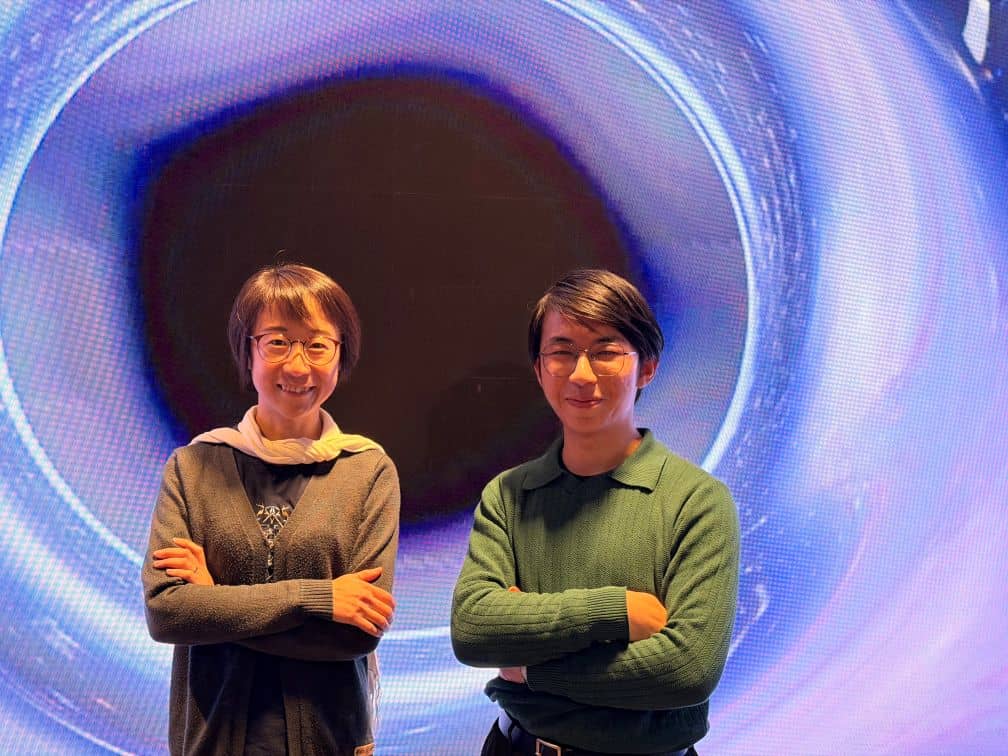
Observing an event horizon: Team members Ling Sun and Neil Lu from the ARC Centre of Excellence for Gravitational Wave Discovery (OzGrav) and the Australian National University. (Courtesy: OzGrav/Swinburne University)
The main challenge, he explains, is that gravitational-wave data are hard to interpret. “Interesting features can appear for many reasons, so we had to be very cautious,” he says. “We needed to separate this possible direct-wave signature from the much stronger and better-known ‘ringdown’ signal of the final black hole, and then check whether the remaining pattern behaved as the theory predicted.”
When the LIGO-Virgo-KAGRA network detected GW250114 last year, the astrophysicists realized they were in luck. With a network signal-to-noise ratio of approximately 80, this event was around three times louder than LIGO’s first gravitational-wave signal in 2016, and it gave the team a rare opportunity to test their prediction against data. “Our new analyses have allowed us to decrypt the signal and measure ΩH and κ for the first time,” Ma says.
“A new way of studying black holes”
Even with an unusually clear signal, Ma acknowledges that the work required “careful modelling and many double-checks to make sure we were not overinterpreting a feature in the noise”. But if the team’s interpretation holds up, Ma tells Physics World that their method could become a new way of studying black holes. Gravitational-wave observations have already enabled scientists to study how black holes orbit, merge and settle down, Ma notes. The present work extends this by offering access to the near-event-horizon region during the merger’s final stage.
“That gives us a new observational handle on some of the most extreme predictions of Einstein’s theory, allowing us to perform sharper tests of this theory and better understand how black holes form and relax after a merger,” he says. “It also allows us to explore whether the near-horizon region behaves exactly as Einstein predicted.”
The researchers’ next step will be to improve their direct-wave model so that it describes realistic black hole mergers in greater detail. “On the observational side, we want to apply the analysis to more gravitational-wave events,” Ma says. “The result detailed in this study comes from one exceptionally loud and clean event, so the most convincing confirmation would be to see the same kind of near-horizon signature in other black-hole mergers.”
The good news is that as gravitational-wave detectors continue to improve, the researchers hope to collect more such high-quality events. “These will allow us to test whether this pattern appears consistently in the way general relativity predicts and eventually turn this first result into a more systematic way of studying the regions near black hole horizons,” Ma says.
Quantum mechanics has two seemingly competing rules. Firstly, a system evolving without measurement follows a continuous, deterministic evolution governed by the Schrödinger equation, with dynamics determined by a Hamiltonian. Secondly, when a measurement occurs, the wavefunction collapses, producing a sudden, discontinuous change that is not derived from a Hamiltonian. Several approaches attempt to reconcile these behaviours, including the Copenhagen interpretation (which does not explain the mechanism of collapse), decoherence theory (which does not provide a single definite outcome), stochastic collapse models, and continuous measurement theory.
In this work, measurement is not treated as fundamentally different. Instead, it is described using stochastic (random) Hamiltonians that generate continuous evolution of the quantum state. In this picture, collapse emerges from noisy dynamics. The authors show that these dynamics can be understood as double-bracket gradient flows, where the system is driven to align with a measured observable, steadily reducing uncertainty until it reaches a definite outcome. Thus, wavefunction collapse can be viewed as coarse-grained continuous dynamics that minimise the variance of the observable. By interpreting this as a gradient flow, the same mechanism can be exploited using feedback to drive a system into desired states, including entangled ones.
This approach provides a continuous and physically interpretable picture of wavefunction collapse. Compared to decoherence theory, it explains the emergence of a single outcome but does not specify when measurement dynamics begin. More broadly, it replaces the notion of collapse with a dynamical process, making the theory more internally consistent, while also offering practical tools for controlling quantum systems, which is important for quantum computing and experiments.
“These geometric connections between Hamiltonian dynamics and quantum measurements open the door to exciting new approaches to quantum algorithm design.” – Aaron Villanueva, Radboud University
Percolation studies how small connections can group together to form a larger connected system, known as a cluster. In a grid where sites can be turned on or off, turning on more sites leads to the formation of clusters, and at a certain point a giant cluster spanning the system emerges. This behaviour is relevant to many real-world systems where local interactions lead to global effects, such as power grids, disease spreading, forest fires, and brain activity. While percolation is often studied using theoretical models or simulations, real systems are more complex. Nonlinear effects, noise, imperfect connections, and time-dependent dynamics can all shift the tipping point and change how clusters form.
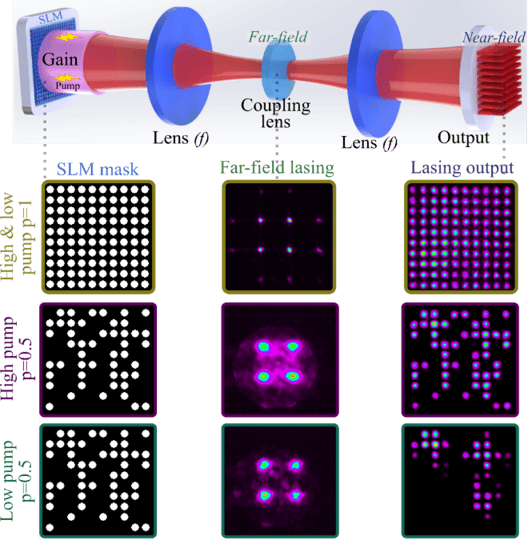
Schematic diagram of the experimental setup for implementing percolation using coupled lasers, along with the corresponding lasing output for different percolation mask realizations. Figure 1 from Simon Mahler et al 2026 Rep. Prog. Phys. 89 067901 (Courtesy: Mahler/Weizmann Institute of Science)
In this work, the researchers built a physical system using a 2D array of 100 coupled lasers to study percolation experimentally. Each laser acts as a site that can be turned on and interacts with its neighbours, making the system a controllable realisation of a percolation grid. They found that when a large connected cluster forms, the lasers also begin to phase-lock, meaning that connectivity and synchronisation emerge together. Normally, these effects are studied separately.
At high pump power (the energy supplied to the lasers), the system behaves like an ideal percolation model, with a clear critical threshold and a smooth (second-order) transition, consistent with theory. However, at low pump power, nonlinear effects become important. The lasers compete more strongly, meaning more active sites are needed to form a spanning cluster, and weaker clusters are suppressed. This shifts the percolation threshold and alters the cluster size distribution, contrary to the usual expectation that nonlinear effects are stronger at higher power.
To explain this, the researchers introduced a simple model where a site only remains active if it has enough active neighbours, effectively modifying the connectivity rules. This reproduces the observed behaviour and shows how nonlinear effects can reshape percolation. Overall, the work demonstrates that real physical systems can significantly modify ideal percolation behaviour, and provides a controllable platform for studying how connectivity, competition, and synchronisation interact in complex networks.
Private fusion companies have raised almost $4.5bn in funding over the past year – a 70% increase year-on-year. That is according to a report on the state of the fusion industry, which was published yesterday by the Fusion Industry Association (FIA). The report – The Global Fusion Industry in 2026 – also finds that private fusion endeavours now employ over 16,000 people worldwide.
Magnetic confinement, in which magnetic fields are used to contain a high-temperature plasma, is the most popular fusion technique, being used by 48% of firms according to the report. Inertial confinement, which uses rapid compression, usually by lasers, to create a confined plasma for a short period of time, is employed by 21% of firms – with other techniques such as magneto-inertial making up the remainder.
While electricity generation is a main target for private fusion companies, many also see the technology being applied to space propulsion, with other markets including marine propulsion, hydrogen fuel and industrial heat.
The funding boost for this year’s figures has come from major funding rounds, with CFS raising $863m in August 2025 while Inertia Enterprises, Helion Energy and Proxima Fusion have raised about $1.5bn in total this year.
Ambitious goals
The first FIA report on the fusion industry was published in 2021, where it found that private fusion endeavours had received over $1.8bn of funding since the 1990s.
The 2021 report discovered that over two-thirds of the 35 companies surveyed thought that electricity generated from fusion would enter the grid in the 2030s, with a further 20% thinking it would more likely come in later decades.
That confidence, however, has grown – with this year’s report finding that 71% expect the first fusion plant to deliver commercial electricity by the 2030s.
Indeed, FIA chief executive Andrew Holland says he is “confident” that commercial fusion will be delivered in the 2030s.
“Alongside private investment, fusion companies still need the support of governments to address common challenges including the availability of resilient materials and the fusion fuel cycle,” he says. “The governments that update their programmes and funding priorities to meet the sector’s needs today will be the ones to capitalize on this vital emerging industry.”
The report comes as General Fusion has become the first fusion company to be publicly listed. It joined the Nasdaq exchange with $150m in fresh funding, which is expected to go towards the firm’s Lawson tokamak programme that is expected to be complete in 2028.
In The Hitchhiker’s Guide to the Galaxy, Douglas Adams imagined a supercomputer called Deep Thought, built by a race of hyper-intelligent beings to calculate the Answer to the Ultimate Question of Life, the Universe and Everything. After a mere seven and a half million years of computation, the machine finally revealed its answer: 42.
There was just one problem. Despite their hyper-intelligence, none of those beings understood what the question had been. The joke was that any answer – no matter how precise – is meaningless without a thorough understanding of both the question and the route taken to obtain the answer.
Yet what was once purely science fiction is beginning to sound unexpectedly relevant to modern research. From structural biology to particle physics, artificial intelligence (AI) systems are increasingly involved in research, providing results of remarkable power and accuracy. They are being used to identify hidden patterns in vast datasets, to generate hypotheses, to accelerate simulations and to guide experiments.
As AI becomes increasingly embedded in the scientific process, could we be entering an era of discoveries without understanding?
But in some cases, even the creators of those AI systems are struggling to explain exactly how the AI arrives at its conclusions. All of which raises an uncomfortable possibility. As AI becomes increasingly embedded in the scientific process, could we be entering an era of discoveries without understanding? And if so, what happens when science starts producing its own versions of the answer “42”?
AI terms and conditions
Artificial intelligence (AI)
Intelligent behaviour exhibited by machines. But the definition of intelligence is controversial so a more general description of AI that would satisfy most is: the behaviour of a system that adapts its actions in response to its environment and prior experience.
Machine learning
As a group of approaches to endow a machine with artificial intelligence, machine learning is itself a broad category. In essence, it is the process by which a system learns from a training set so that it can deliver autonomously an appropriate response to new data.
Artificial neural networks
A subset of machine learning in which the learning mechanism is modelled on the behaviour of a biological brain. Input signals are modified as they pass through networked layers of neurons before emerging as an output. Experience is encoded by varying the strength of interactions between neurons in the network.
Training data
A set of real or simulated data used to train a machine-learning algorithm to recognize patterns in data indicative of signal or background.
Generative AI
A type of machine-learning algorithm that creates new content, such as images or text, based on the data the algorithm was trained on.
Computer vision
A branch of AI that analyses, interprets and extracts meaningful data from images to identify and classify objects and patterns.
Natural language processing
A branch of AI that analyses, interprets and generates human language.
AI and accelerated particle searches
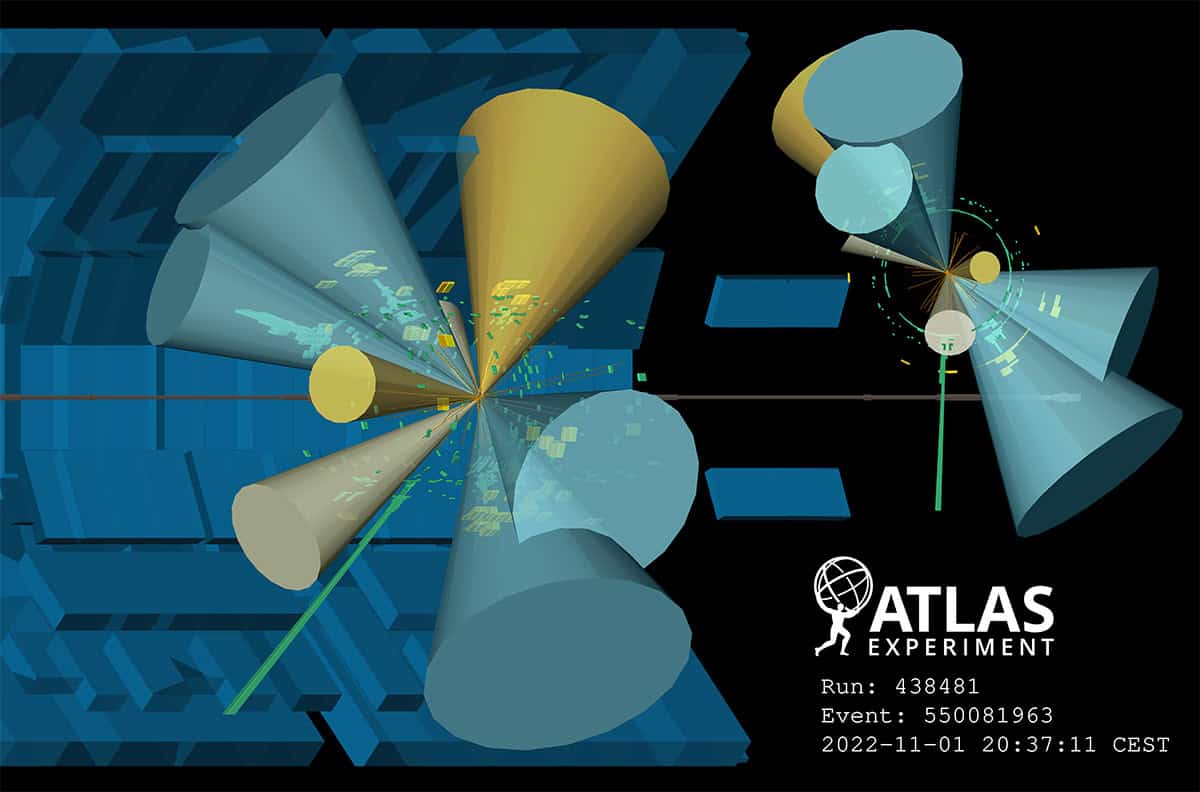
For particle physicists, this question is no longer hypothetical. At CERN, the home of the Large Hadron Collider (LHC), AI is already woven into day-to-day research, subtly reshaping how physics research is carried out. Indeed, machine learning (ML) – one of the main pathways through which AI is achieved – has long played a role at the LHC.
Back in the early 2010s physicists working at the CMS and ATLAS experiments, routinely used ML in their search for the Higgs boson. The ML algorithms separated rare signals – a Higgs boson decaying either into two photons or into four leptons via Z bosons – from far more common Standard Model processes that produced similar signatures in the detector.
Machine learning did not discover the Higgs boson by itself, but it accelerated the search by making analyses more sensitive. In fact, achieving the same sensitivity without ML would have required between 15% and 125% more data, according to a review of Higgs-decay measurements (Nature560 41). Some measurements would even have needed more than double the data.
But the scope of AI in particle physics has been expanding rapidly since then. Neural networks are now used to compress enormous datasets, accelerate simulations, and identify unusual events hidden among billions of particle collisions. By learning directly from examples, neural networks can uncover complex correlations in detector data that would be difficult for physicists to unravel using conventional analysis techniques.
Caterina Doglioni, an experimental particle physicist from the University of Manchester, UK, who uses ML for data compression as part of the ATLAS collaboration, says that deployment of AI is becoming difficult to separate from particle-physics research itself. “It’s pretty much everywhere,” she says, especially when it comes to experimental high-energy physics. “It’s critical at the LHC where far more data is created than can realistically be stored.”
When it comes to compressing detector data, for example, one option is to use neural networks to force information through a computational “bottleneck” that preserves the most important features while dramatically reducing the storage required. The original data can then be reconstructed from this compressed summary, either exactly or approximately depending on the application (Rep. Prog. Phys.84 124201).
This is different from the ML techniques used during the Higgs search. Whereas Higgs analyses relied on supervised algorithms that had been trained to distinguish known signals from background noise, these data-compression methods typically use “self-supervised” learning. They identify and preserve important patterns – without requiring labelled examples.
Algorithms learn what ordinary collisions look like and then flag events that deviate from those expectations
More recently, researchers have begun applying ML to a very different challenge. In the Higgs search, algorithms were trained to recognize signatures predicted by theory and distinguish them from background processes. But now, instead of having algorithms that search for a specific predicted signal, those algorithms learn what ordinary collisions look like and then flag events that deviate from those expectations.
In what is essentially a clever form of anomaly detection, the hope is that new physics might reveal itself as something unusual, even if physicists do not yet know exactly what form it will take. In a nutshell, ML used to be applied to problems where physicists knew what they were looking for; now it is applied to problems where we don’t know what we’re looking for just yet.
While no new particles have yet been spotted with these anomaly-detection techniques, they have progressed from theoretical proposals to real experimental searches. In 2024, for example, the ATLAS collaboration reported the results of an unsupervised anomaly-detection search using Run 2 data. No significant deviation from Standard Model expectations was observed, but the study proved that such methods can be deployed successfully on real collider data (Phys. Rev. Lett.132 081801).
The black box problem
Yet the very feature that makes these systems so powerful – their ability to rapidly identify patterns humans may miss – also raises one of the most persistent concerns surrounding AI in research: the black box problem. Modern ML systems can uncover complex relationships in data, but researchers may struggle to understand exactly how a model arrived at a particular result. In particle physics, where extraordinary claims require extraordinary evidence, that lack of transparency can create unease.
For David Sutherland, a theoretical physicist at the University of Glasgow, the greater concern is not necessarily whether researchers can interpret every internal feature of a model – but whether they can trust and reproduce its outputs. “I would certainly say reproducibility [is more important] than interpretability,” he says.
That distinction matters. Science has always relied on the principle that results should survive scrutiny, be independently verified, and withstand repeated testing. A model does not need to reveal every detail of its inner workings – but researchers must be able to demonstrate that it behaves robustly across datasets and conditions.
Particle physics, in particular, has built extensive safeguards around that process. “We have very large review committees that check basically everything that goes on,” Doglioni says, with those structures providing an additional layer of protection against over-reliance on opaque systems.
Reliability and reproducibility
Yet as AI systems become increasingly embedded in research workflows, ensuring that reliability may become more difficult. Reproducing results may require not only access to data and code, but also to model architectures, training conditions and computational environments.
Unlike many commercial AI systems, the ML tools used in particle physics are often developed by particle physicists and shared openly with the scientific community. Even so, reproducing results may require access not only to data and code, but also to model architectures, training conditions and computational environments, all of which can influence an AI system’s behaviour.
The growing use of AI could also begin to change how physicists work and even how scientific value is measured. Christoph Weniger, a physicist at the University of Amsterdam who applies ML and AI techniques to particle physics and cosmology, argues that AI systems are likely to take on an increasingly active role in navigating complex analyses. Researchers, he believes, will shift into “a supervisory role in steering these different agents”, fundamentally changing how scientists interact with data.
AI and materials science
Closed loop The autonomous AI system at Argonne National Laboratory can speed up materials discovery. The AI proposes candidate materials, which can then be created and tested by robotic laboratories, with the results fed back into the system to guide the next round of experiments. (Courtesy: iStock/K-Kwanchai)
Particle physics is far from the only field exploring how AI might reshape scientific discovery. Researchers at Argonne National Laboratory in Illinois, US, recently developed what they describe as an AI adviser for designing advanced electronic materials.
Normally, materials discovery proceeds through a slow cycle of trial and error. Scientists propose a candidate material, synthesize it in the laboratory, test its properties and then refine the design. Each iteration can take days or weeks.
The Argonne system closes that loop. AI proposes candidate materials, robotic laboratories create and test them, and the results are fed back into the system to guide the next round of experiments.
Rather than analysing data after experiments are complete, AI becomes involved in deciding which experiments to perform in the first place, an early glimpse of what future “AI scientist” systems might look like.
The approach has already demonstrated its potential. In 2023 researchers at Argonne and collaborators reported that their autonomous A-Lab platform conducted 355 experiments in just 17 days and successfully synthesized 41 novel materials (Nature 624 86). The work provided one of the clearest demonstrations that AI systems can help guide experimental discovery rather than simply analyse data after the fact.
Creative impact
Such changes could extend beyond day-to-day workflows. Traditionally, the currency of academic research has been publications. But Weniger suggests that AI may shift the emphasis away from productivity alone and towards something harder to quantify: originality.
Scientific value may increasingly depend not on how many papers a researcher produces, but on the creativity and impact of the questions they ask
As routine technical barriers to experiments and theoretical work become easier to overcome, he argues that scientific value may increasingly depend not on how many papers a researcher produces, but on the creativity and impact of the questions they ask.
The effects may also extend to how scientific knowledge is communicated. The scientific literature has long been criticized for being difficult to navigate, not simply because of its volume, but also because of the way researchers write. Nichol Furey, a mathematical physicist at Humboldt University of Berlin whose work explores whether there is an underlying algebraic logic to the structure of the Standard Model, believes AI could help bridge that gap.
“Authors in maths and physics often write in ways that are overly opaque,” she says. “AI systems write with their audience in mind, whereas human authors often don’t.” Yet that possibility creates a tension. The same tools that can make research more accessible can also make scientific text dramatically easier to produce.
Communities are already beginning to grapple with the unintended consequences of widespread AI adoption. Recently, arXiv, one of the world’s largest repositories for physics and mathematics preprints, announced a crackdown on unchecked AI-generated submissions. It said it was introducing one-year bans for authors who upload papers containing obvious signs of unverified AI content, such as hallucinated references or leftover chatbot instructions.
The move reflects growing concern about the quality of AI-assisted scientific writing. Although arXiv’s new policy is too recent for its impact to be fully assessed, the threat of a one-year ban marks one of the strongest responses yet by a major scientific repository to unchecked AI-generated content.
The concern is not simply that AI can generate poor research. Now that producing scientific text is an almost frictionless exercise, the burden of judgement shifts increasingly onto readers, reviewers and future researchers trying to separate genuine insight from noise.
Training future physicists
Another potential problem with AI’s infiltration in many areas of research is training the next generation of physicists. This is generally a long process, where expertise is built gradually through years of practice and failure. If AI automates many of those steps, researchers may eventually face an uncomfortable question: how do you train future experts if the work that once trained them disappears?
This challenge extends far beyond physics. Across the education sector, schools and universities are already grappling with the ease with which generative AI can produce essays, solve problem sheets and complete programming assignments in seconds.
Education gap How do you reliably train the next generation of physicists when generative AI can produce essays, solve problem sheets and complete programming assignments in seconds? The problem is compounded if AI takes over the repetitive routine tasks historically given to students and postgrads to hone their skills. (Courtesy: iStock/Thai Liang Lim)
In fact, Wrishik Naskar, a particle theory postdoc at the DESY laboratory in Germany, wonders if research habits are also beginning to change. “When I get stuck, I go to my supervisor,” he says, “[but] many people, the first thing they ask is ChatGPT.” That approach might speed things up, but does it really help a researcher learn and grow? As Naskar puts it: “Focus on the learning. Results will follow if you have skills.”
Despite the many concerns, not everyone sees the transition to AI as a threat, and framing AI as a competitor to researchers may miss the point entirely. For example, Admir Greljo, a particle theorist at the University of Basel, believes the real shift is not replacement but collaboration. “It’s not that they will compete against AI. Entering into theoretical physics is still going to be very interesting and very important. AI is not competition, it’s a new tool.”
That perspective echoes a broader historical pattern. Physicists once calculated by hand, then with slide rules, then with computers. Each technological leap changed how research was done and prompted fears about what skills might be lost along the way. Yet rather than eliminating physicists, those tools expanded what physicists could ask.
Towards an AI scientist?
AI may simply be the next step in that progression. But it also presents something new. Unlike previous tools, AI can suggest ideas, identify patterns and increasingly participate in parts of the scientific process that once seemed uniquely human. So might that participation one day become independence? Could AI move beyond assisting physicists and begin carrying out the entire research process itself?
For Sutherland, a future in which AI systems perform the entire research cycle, from generating hypotheses to collecting data and even writing papers, is not difficult to imagine. But he still envisages a human “steering it” and acting as a “sanity check”, much like the relationship between a senior researcher and a PhD student.
Others go further. Greljo believes that fully autonomous scientific systems may not arrive in the near future, but sees no fundamental reason why they could not emerge eventually. Because science ultimately depends on reproducible results, he argues, humans could simply repeat calculations and test predictions to verify whether the AI had reached the right answer. Such a future, he says, is “not something that is impossible”.
We may be entering a world where machines help us uncover truths about the universe faster than we can fully understand them
We may be entering a world where machines help us uncover truths about the universe faster than we can fully understand them. But that need not signal the end of scientific inquiry. It is important to remember that AI models, much like many of the models used throughout scientific research, are imperfect and may always remain so. But perhaps they do not need to be perfect.
Science has always involved navigating uncertainty, constructing incomplete models and refining them over time. AI may help us discover things faster than ever before. It may reshape how future generations of physicists learn, work and think. But science has never simply been about generating results. It has also been about explanation, curiosity and deciding which questions are worth asking in the first place.
We should not treat AI as an oracle that bypasses the scientific method. Instead, we should view it as another tool in the physicist’s arsenal – a powerful one, certainly, but still a tool, helping researchers explore possibilities, test ideas and refine their models of reality.
After all, the problem with Deep Thought was never that it gave the wrong answer. It was that nobody knew what question they had asked.
The challenge for the next generation of physicists may not be deciding whether AI can discover new truths about nature. It may be making sure we still know which questions are worth asking.
How do you think AI is changing the face of physics? What are the threats and opportunities it poses – and what happens if AI produces answers we cannot understand?
A compact optical technology that has already proved its worth in Earth-bound applications could be on its way to space after researchers at the University of California San Diego, US showed that it can map the Sun’s magnetic field just as well as traditional instruments. By making polarization gratings from specially engineered metasurfaces rather than a complex assembly of optics, the researchers say that future solar-observing missions could benefit from reduced complexity and cost as well as size.
“Our work makes use of recent advancements in nanoscale optical technologies to help improve the hardware for making astronomical observations of the Sun,” says study leader Noah Rubin of UC San Diego’s Jacobs School of Engineering. “We believe this is one of the first times that metasurface optics – which have been a subject of intense interest in both academic research and industry for about a decade – have been used to improve scientific instrumentation of any kind outside of a lab/academic proof-of-concept.”
Polarized light and solar magnetic fields
Although light emitted by the Sun is generally unpolarized – that is, the light waves do not vibrate along a particular axis – strong magnetic fields that develop near sunspots can polarize this light via the quantum mechanical Zeeman effect. These magnetic fields are closely associated with space weather events such as solar storms that can damage electronic infrastructure both on Earth and in orbit. Studying the Sun’s magnetic activity by monitoring areas of polarized light is thus an important step towards detecting or predicting such storms in time to take protective action.
Usually, measuring the polarization state of light means analysing different polarization directions using a device such as a waveplate that mechanically rotates between exposures. Rubin compares this process to taking several photographs through polarized sunglasses held at different angles, then combining them to obtain a fuller picture of what’s going on.
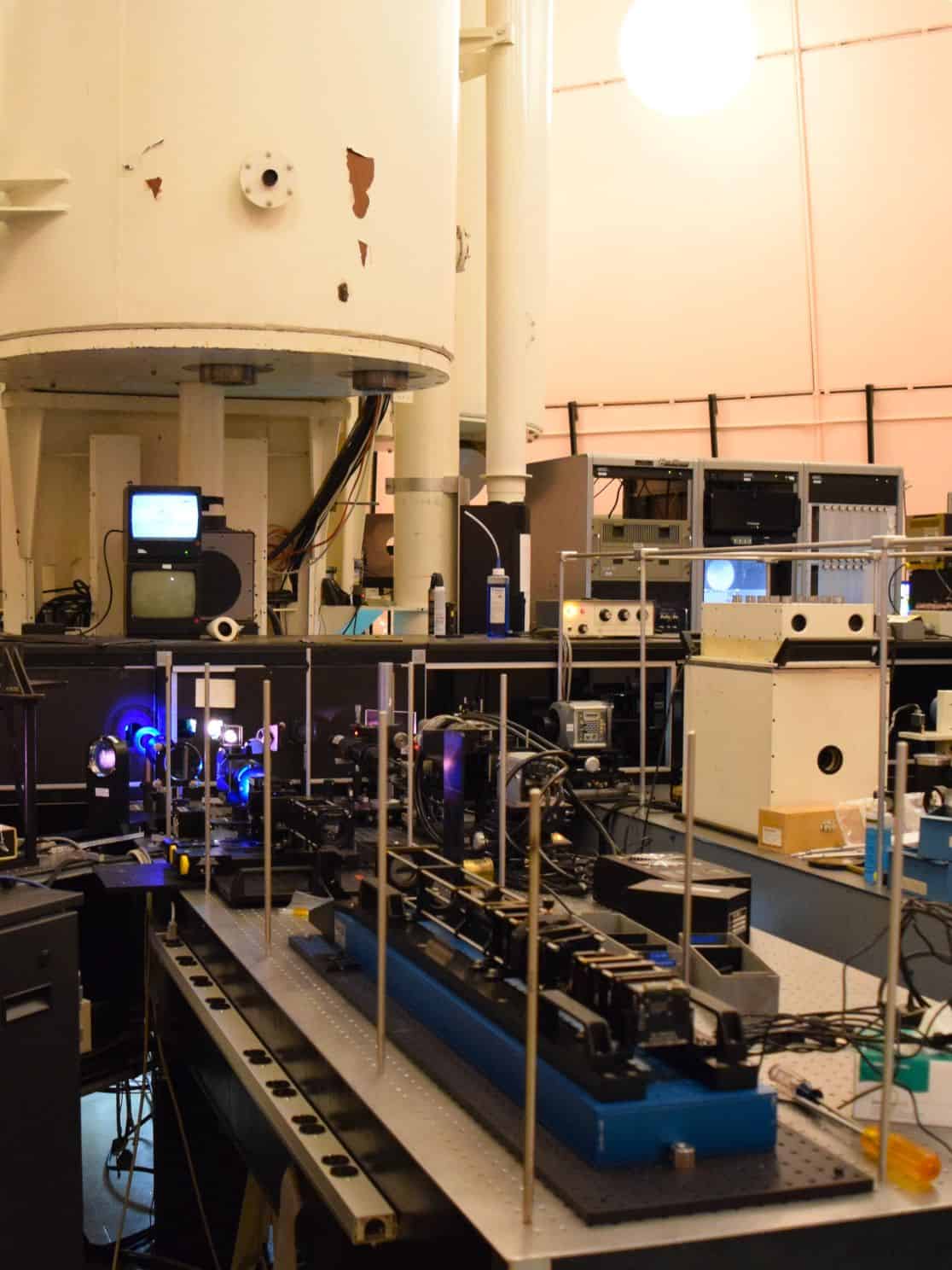
Test rig: Sunlight from the top of the Dunn Solar Telescope’s 136-foot-tall tower travels 228 feet underground and is reflected back up to this room at ground level, where it passes through an optical system (blue lights, background) before reaching the team’s custom-built telescope (foreground). (Courtesy: Noah Rubin)
While this technique works, and instruments that use it have already been sent into space, the image analysis process is very time-consuming. It also requires an external power source, and the need to mechanically rotate the waveplate introduces extra complexity and cost, says Rubin.
“In space-based applications, a satellite itself can be moving while this component reorients, causing a highly undesirable blurring effect,” he explains. “As a result, designers of these systems often invest considerable resources into mechanical remediation and engineering to correct the motion of the telescope on the satellite, and this frequently ends up being substantially more expensive than the telescope optics themselves.”
A metasurface solution
In the new study, which is detailed in Science Advances, Rubin and colleagues solved this problem by creating a polarization-sensitive metasurface that splits light into its different polarization components. A camera-like system containing this metasurface polarization grating can then form multiple images of a scene in parallel. Rubin explains that each image in this scene is analysed with respect to a different polarization state, meaning that the system can measure the polarization of light simultaneously and passively in a single camera frame.
Working with industrial partners at BAE Systems Space & Mission Systems in Colorado, US (formerly known as Ball Aerospace, which Rubin describes as “well-known for its involvement in the development of the James Webb Space Telescope, Hubble and countless other NASA missions”), the team designed a specialized telescope built around such a metasurface polarization grating. They also deployed their instrument on the Dunn Solar Telescope in New Mexico, US, and showed that they could quantitatively map the magnetic fields in sunspots by capturing simultaneous polarization images of these spots.
The researchers report that their results were comparable to those obtained by the state-of-the-art NASA Solar Dynamics Observatory mission in-orbit, highlighting what Rubin calls “the significant advantages that these metasurface components can offer when designed in conjunction with more traditional optical systems”. The UC San Diego team is now exploring ways of integrating its technology into future NASA solar-observing space missions.
Specially engineered materials known as metamaterials can boost heat transfer over nanoscale distances compared with conventional materials, thanks to the coupling of quasiparticles known as surface phonon polaritons. This new result, from researchers at Carnegie Mellon University, Stanford University and Purdue University, all in the US, could help improve technologies such as on-chip cooling and thermophotovoltaic systems.
The maximum radiative heat transfer between two macroscopic-sized objects at different temperatures can be estimated by assuming that the objects are “black bodies”. These are ideal entities that absorb all the radiation falling on them and emit thermal radiation according to Planck’s law. This approximation breaks down, however, when the objects are placed within a few hundred nanometres of each other. In this case, they begin to exchange heat much more strongly thanks to a phenomenon known as near-field enhancement, which can exceed the far-field black body limit by several orders of magnitude. This effect is already put to good use in technologies such as heat extraction and thermophotovoltaic systems.
Until now, near-field enhancement had only been observed and studied in naturally occurring materials, such as polar dielectrics, doped semiconductors and metals, explain the study leaders, mechanical engineer Sheng Shen at Carnegie Mellon and electrical engineer Shanhui Fan from Stanford. Although theoretical studies have predicted that metamaterials could surpass the performance limits of naturally occurring materials, there had not previously been any experimental demonstration of metamaterial-enhanced near-field radiative heat transfer. Identifying such metamaterials would be of great use as it would allow the effect to be exploited more widely.
Heat transfer increased by up to four times
Shen, Fan and colleagues observed enhanced near-field radiative heat transfer in a nanodevice platform comprising metamaterials based on arrays of gold split-ring resonators patterned on silicon nitride membranes. The researchers positioned the metamaterials so that they faced each other across a nanoscale gap, observing that heat transfer between them increased by as much as four times compared with similar setups using ordinary materials.
As well as confirming that radiative heat transfer is enhanced over short distances for these metamaterials, the results suggest that the interaction between metamaterials and surface phonon polaritons is responsible for the increase. These quasiparticles are produced by phonons, which are vibrations of the crystalline lattice, as they interact with oscillating electromagnetic fields at the material surface – in this case, those at the surface of the gold metamaterial structures. This coupling allows heat to tunnel across the gap between them and the silicon nitride membranes more efficiently – something that increases the energy flow between the two, explains Shen.
Heat management applications
According to the researchers, the effect could help enhance and manipulate heat exchange at the nanoscale and could find applications in next-generation cooling for high-performance microelectronics, thermophotovoltaic systems for waste-heat harvesting and high-sensitivity infrared detection.
There are still a number of challenges to overcome before such applications see the light of day, however. On the theoretical side, notes Fan, the complex interactions between the metamaterial units and their supporting substrate make numerical calculations and analyses exceptionally difficult. “To address this difficulty, we have developed a numerical tool based on fluctuational electrodynamics to design the structures, alongside a coupled-mode theory model to fully elucidate the underlying physics,” he says.
Experimentally, measuring nanowatt-level radiative heat exchange across a sub-micron gap also demands extreme precision. The researchers tackled this challenge by designing an on-chip device using a “suspended thermal bridge” method that transforms the minute heat exchange into a measurable temperature rise. Indeed, they succeeded in detecting heat flow of less than 1 nW in these nanodevices.
It is one of the most extraordinary feats of military history – how the Carthaginian general Hannibal managed to cross the Alps with an army of 46,000 men, 7000 horses and 37 war elephants in 218 BCE.
Hannibal’s method was to catch the Romans by surprise by starting from what is present-day France and crossing the Alps into what is now northern Italy.
Yet the exact route that Hannibal’s army took remains a mystery and has been debated for decades given that no records by contemporary historians have survived.
The route crossing Col du Clapier – passing first through Grenoble and Aiton before descending into the Po Valley – appeared to be the likely candidate, but recent analysis has suggested an alternative southerly route via the Col de la Traversette.
Using route modelling and elevation data, the team found that the Col du Clapier route would have required 6.28 × 10¹² joules of energy, while Col de la Traversette, however, would have needed 5.42 × 10¹² J.
Yet even on that route, the 15-day crossing would have required 230 tonnes of food and supplies.
The authors calculate that the army would still have lost about a fifth of their body fat reserves during the crossing, which explains the high mortality rate among men.
Yet on the Col de la Traversette route, the war elephants would have fared better, losing just 4% of their reserves. This may explain why some 30 elephants are estimated to have made it through to fight in the Battle of the Trebia – the first major battle of the Second Punic War.
“The new analysis does not eliminate all ambiguity, but it does strengthen the case for the Traversette route by demonstrating that it would better accommodate the demands of moving a large army that included elephants through extremely difficult alpine terrain,” notes Berti.
A galaxy that formed around a billion years after the Big Bang is in its death throes thanks to a powerful galactic wind that is blasting its gas into space, say astronomers at Australia’s Swinburne University of Technology. The discovery, which is based on data from the James Webb Space Telescope (JWST) and the Atacama Large Millimeter/submillimeter Array (ALMA) in Chile, could help explain why some of the universe’s earliest massive galaxies ceased to form new stars.
One of the JWST’s most surprising discoveries is that when the universe was between one and two billion years old, it already contained large numbers of massive galaxies. Astronomers think these galaxies may have acquired most of their mass in intense bursts of star formation. But at some point, that process stopped: in technical terms, the galaxies became quiescent.
“These galaxies seemed to have formed all their stars very quickly and then they suddenly died, all within the first two billion years of the universe being formed,” says Rebecca Davies, who led the new research.
The CRISTAL-02 galaxy
One possible explanation for the onset of quiescence is that when galaxies collide with each other, the resulting winds “blow away” the hydrogen fuel required for new stars to form. To investigate this hypothesis, Davies and colleagues focused on a galaxy called CRISTAL-02, which was one of 20 galaxies in the recent ALMA-CRISTAL survey of early star-forming galaxies.
“When we looked at the data, it stood out because it was the only one that showed strong evidence for a galaxy wind,” Davies explains. “We saw this as an excellent opportunity to study how winds impacted the evolution of galaxies in the early universe.”
The light from CRISTAL-02 travelled for approximately 12.7 billion years to reach us, meaning that we see it as it was one billion years after the Big Bang. Because the universe has been expanding since then, the galaxy’s spectra appear highly red-shifted. This meant the Swinburne astronomers needed the JWST’s infrared-sensing capabilities to analyse a spectral feature known as the hydrogen-alpha (Hα) line that is normally red. They also used ALMA to analyse CRISTAL-02’s C II line, which comes from ionized carbon and has a (non-redshifted) wavelength of 158 mm. Both emission lines can yield important information about the properties of early galaxies.
Living fast and dying young
From the ALMA-CRISTAL survey’s measurements of Hα luminosity, astronomers knew that CRISTAL-02 forms stars at a rate of around 260 M☉ per year. This is about three times the average value for “main-sequence” star-forming galaxies at similar mass and redshifts.
The latest observations, however, suggest that it won’t maintain this pace for long. Davies and colleagues identified a huge plume of C II emissions that extends as far as 7 kiloparsecs (kpc) to the north-east of CRISTAL-02, making it almost as long as the galaxy itself. This is a telltale sign that gas is being driven out of the galaxy. The fact that the gas in this plume is blue-shifted by 100 km s-1 lends further support to this explanation.
If this rapid blowout continues, Davies says that CRISTAL-02 will cease to exist in less than 50 million years. But the team’s findings may have implications beyond the fate of this single galaxy. “Our results could help to explain how some of the earliest massive quiescent galaxies in the universe behave,” she tells Physics World. “When the JWST started observing distant galaxies in 2022, it found far more evolved galaxies in the early universe than models predicted. These galaxies seemed to have formed all their stars very quickly and then suddenly died, all within the first two billion years of the universe. The galaxy we discovered seems to be following this path.”
Learning about the early universe
Davies explains that because the early universe was much more compact than it is now, collisions between galaxies were common. During such collisions, gas funnels towards the galactic centres, triggering strong bursts of star formation but also producing strong winds that eventually drive the gas away. “If many early galaxies collide and experience rapid growth, then it may not be surprising at all that we see so many dead galaxies in the early universe,” she says.
The researchers stress that the present work, which is detailed in the Monthly Notices of the Royal Astronomical Society, is based on a case study of just one galaxy. They now need to observe other early, massive galaxies caught during periods of intense growth to determine whether they, too, experience powerful winds that could rapidly expel their gas and stop them from forming stars.
Frost can spread not only along surfaces but also via suspended “ice bridges” that form above them. The discovery of this previously unknown frost-propagation pathway could lead to new ways of making surfaces that resist frost growth, thereby improving the performance of devices that operate in cold, humid environments.
Frost accumulation is a major problem in refrigerators, aeroplanes and heat pumps, to name just a few. On the microscale, it primarily spreads from one individual freezing water droplet to the next via two-dimensional bridges, or causeways, that temporarily form on the surface of an object. Although the wettability of the surface is known to affect the spreading process, the mechanism behind this effect was poorly understood.
Ice bridges can grow in two distinct spatial modes
To learn more, a team led by physicist Nenad Miljkovic at the University of Illinois Urbana-Champaign, US imaged the channel-forming process using high-speed high-resolution optical microscopy combined with a profilometry technique called focal plane shift imaging (FPSI). They found that frost can spread in two distinct ways. On hydrophilic surfaces, causeways form along the substrate, in line with current theoretical models. On superhydrophobic surfaces, however, the situation is quite different. Here, frost spreads via ice bridges that are suspended above the surface in three-dimensional space.
This suspended or “out-of-plane” growth mode represents a fundamentally different pathway for frost propagation, says team member Siyan Yang, the first author of a Nature Physics paper about the work. Previous studies likely overlooked this mechanism, Yang adds, because of limitations in experimental observations.
Superhydrophobic coatings nearly double the frost propagation time
The researchers also studied the growth rate of the different bridge types. They found that suspended bridges grew slower than bridges on the surface due to the reduced thermal coupling between the bridges and the cold substrate. This reduced coupling correspondingly reduces the vapour pressure difference between ice and water droplets (which depends on surface droplet geometry, itself controlled by wettability) and drives down ice growth. Indeed, the team found that the speed at which frost spreads fell more than 80% in this mode.
To test the practical relevance of their findings, the researchers applied superhydrophobic coatings to metre-sized structures such as the finned-tube aluminium heat exchangers commonly found in air conditioners, refrigerators and automotive systems. Condensation frosting on such systems poses a major efficiency challenge because frost has an inherently low thermal conductivity. When it accumulates on heat exchangers, it therefore severely impedes heat being exchanged with the surrounding air.
On uncoated commercial heat exchangers that are inherently hydrophilic, the team found that frost rapidly forms and spreads across the fins. “In the superhydrophobic counterparts, however, the onset of frost formation is delayed, and it propagates much more slowly,” Yang says. In the two kinds of commercial systems they tested, she adds, applying superhydrophobic coatings nearly doubled the frost propagation time.
The results suggest that designers of anti-frost surfaces could benefit from trying this new strategy, Yang says. “Rather than focusing solely on delaying initial ice nucleation, surfaces could be engineered to control the geometry of ice-bridge growth and interrupt frost spreading, thereby improving the performance and energy efficiency of a host of equipment operating in cold and humid environments,” she tells Physics World.
The team is now investigating how surface chemistry and surface structures influence suspended ice-bridge formation and frost propagation. “We are also exploring ways to translate the fundamental mechanism into scalable anti-frost coatings and heat-exchanger technologies,” Yang reveals. “Ultimately, our goal is to establish predictive design rules that connect microscale ice-bridge dynamics with real-world frost management performance.”
Artificial vision is employed in applications ranging from self-driving cars to advanced robotics. However, most “artificial eyes” do not work well in complex real-world conditions, such as sudden strong glare, dimness or uneven light levels. Such devices also rely on complex and rigid electronic circuitry to adjust their sensitivity to light and on post-algorithmic processing for accurate image recognition. A research team headed up at the University of Electronic Science and Technology of China and Penn State in the US has now developed a new adaptive photomemristor structure that does not suffer from any of these problems, allowing for machine vision that truly adapts to natural and complex light fluctuations, just like human eyes.
Sight is one of our most important senses: we acquire over 80% of the information from our environment through our eyes. Indeed, the human eye is so sensitive that it can process visual information under varied lighting levels with a photodetection dynamic range of more than 160 dB. This allows us to watch a film in a dark room or drive in the glare of oncoming headlights. Until now, however, artificial eyes have lacked this so-called dynamic self-adaptation.
Memristors for improving light adaptation
In recent years, researchers have been looking into neuromorphic devices that mimic the way biological structures work. These devices can be engineered to behave very much like neurons in the human brain, which learn by reconfiguring the strengths of the connections (synapses) between neurons. Memristors (or memory resistors) are excellent in this respect because they can bring this learning functionality to the connections in electronic circuits.
Rather than being fixed, the resistance of memristors changes depending on the current or voltage previously applied to them. This means that specific resistances can be programmed into the devices and subsequently stored. Importantly, the “remembered” value of the resistive state persists even when the power is switched off, making it a non-volatile form of electronic memory.
Photomemristors are a type of memristor that can change their resistance in response to both voltage/current and light and could therefore be used in advanced optical systems.
Reversible water absorption and desorption
In the new work, reported in Nature Communications, a team led by materials scientist Jia Zhu made a highly adaptive optoelectronic synapse from the composite material TiO₂/PEDOT:PSS. The TiO2 absorbs light, converting it into a photocurrent that then passes through the conductive surface of the PEDOT:PSS polymer. This intrinsic photothermal effect, explains Zhu, triggers reversible water absorption and desorption on the polymer surface, which in turn impacts the device’s conductivity.
“This process allows the device to automatically suppress the photoresponse under intense bright light and amplify its sensitivity under dim weak light,” he says. “In extreme strong-light conditions, its photocurrent can even drop below the dark current level, allowing for an ultralow-sensitivity state similar to human eye pupil constriction.”
A high image recognition accuracy
Zhu tells Physics World that when integrated with artificial neural networks, the new adaptive vision system achieves a high image recognition accuracy of 91.3% in dynamically changing mixed-light scenarios, including glare, dim shadow and alternating brightness. It also eliminates the need for bulky auxiliary circuits and complex real-time computing algorithms, reducing power consumption and hardware volume.
The new work is a first step towards making next-generation neuromorphic vision systems that could be used in practical applications. “Our adaptive photomemristor vision system can effectively resist strong glare from oncoming vehicle headlights, accurately identify pedestrians, lane lines and traffic signals in complex day–night alternating light environments, so greatly improving the safety of autonomous driving,” Zhu explains.
The technology could also be widely applied to humanoid robots, outdoor intelligent monitoring equipment, aerial reconnaissance and portable intelligent vision terminals, he adds.
Looking ahead, the researchers will now focus on optimizing the material formula of the compound studied in this work and improve its fabrication. They will also be working on complete system-level integration, including array device packaging, signal readout modules and adaptive control units, with the aim of constructing a fully functional bionic artificial eye prototype. “We will then verify whether this biomimetic dynamic regulation strategy can be extended to other oxide/polymer composite memristor systems to develop a universal design principle for high-performance light-adaptive neuromorphic devices,” says Zhu.
When electrons are placed in a strong magnetic field and cooled to very low temperatures, they stop behaving independently and instead act as a collective fluid. This is known as a fractional quantum Hall (FQH) system. In this regime, the electrons lose their individual behaviour and act as one correlated system. The strong interactions between them produce quasiparticles called anyons. These are not real particles but effective ones that emerge from the collective behaviour, and they have unusual properties that do not occur in ordinary systems.
Anyons exhibit braiding behaviour: when they are moved around each other, the system remembers the path taken. In Abelian braiding, this only adds a simple phase, so the quantum state is effectively unchanged. In contrast, non-Abelian braiding transforms the quantum state into a different one, which can be measured and used to encode information.
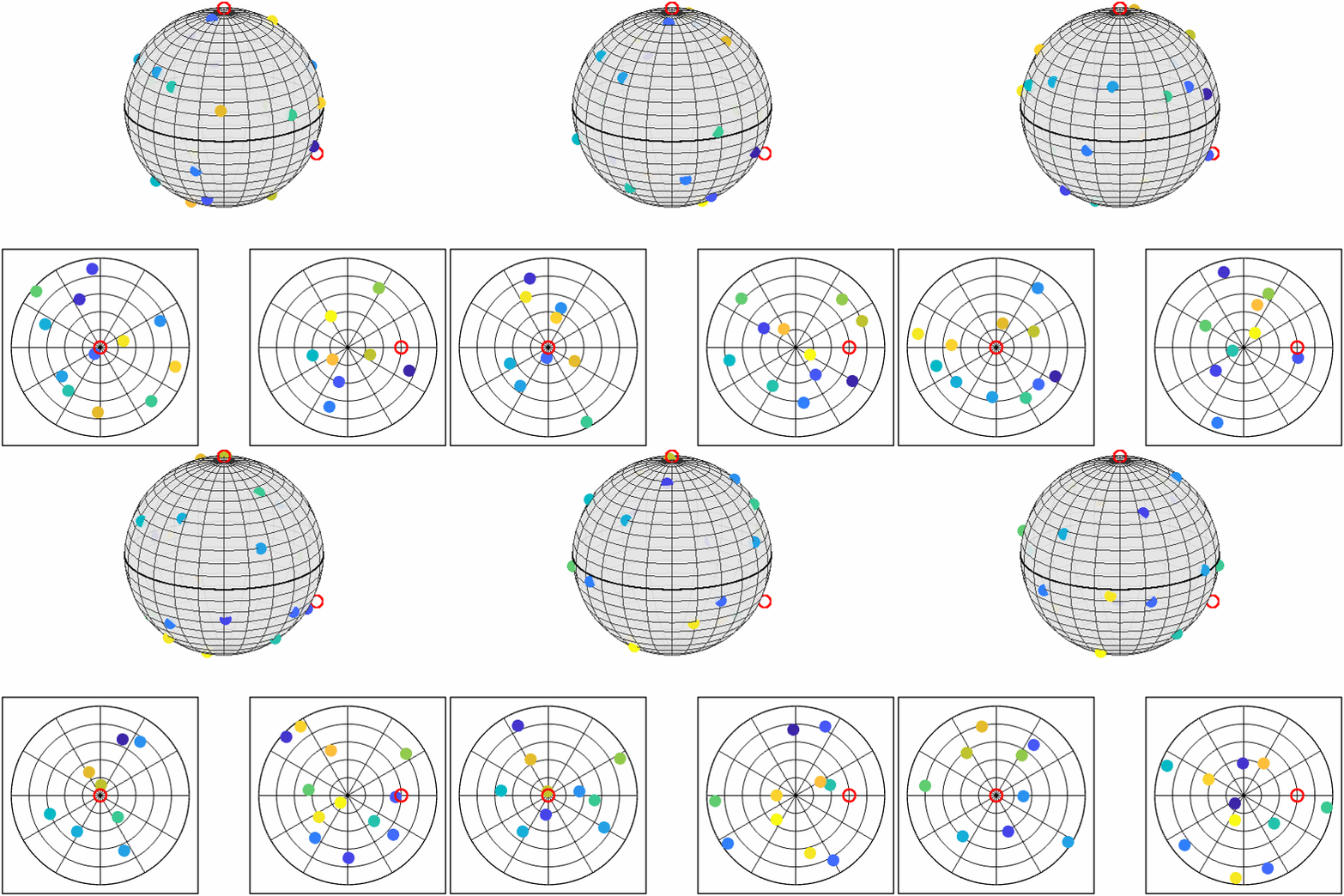
A Moore–Read state of 20 electrons (solid dots) on a sphere, with two quasiholes pinned at fixed positions (red open circles). The lower panel presents a double stereographic projection, showing the electrons in the northern and southern hemispheres, respectively. (Courtesy: Ting-Tung Wang/University of Hong Kong)
To study these systems, physicists must compute measurable properties from complicated wave functions, which is computationally challenging, especially for large systems. The traditional method, Metropolis Monte Carlo, is slow and struggles with large numbers of electrons, limiting system size, accuracy, and the ability to test advanced theories.
In this work, the researchers developed a new simulation method, Hybrid Monte Carlo (HMC), for FQH wave functions. It includes global updates (updating many electrons at once) and double stereographic projection to more accurately sample particle positions, making it much faster and more efficient than the Metropolis method.
Using this improved method, they accurately computed edge properties that reveal the system’s topology, as well as high-quality braiding matrices of non-Abelian quasiholes, which are crucial because such braiding underpins topological quantum computing. Overall, this work enables fast, large-scale simulations, allowing more accurate study of exotic quantum states and their anyon behaviour, advancing both fundamental physics and topological quantum computing.
Molecules such as glycine, the simplest amino acid, can crystallise into different polymorphs with the same chemical composition but different structures. The two phases of glycine are α-glycine, which forms easily and is stable in bulk conditions, and β-glycine, which is difficult to produce and unstable in the bulk. However, β-glycine is piezoelectric; it generates electricity when compressed or bent and is therefore technologically useful.
In this work, the researchers developed a new method to produce glycine crystals. Using an electric field, they sprayed a glycine solution to create nanoscale droplets in which crystals form. By controlling the spraying conditions, they confined crystal growth at the nanoscale, thereby controlling how the crystals form. Crystals below 120 nm in size were pure β-glycine, above 130 nm were mostly α-glycine, and sizes between 120-130 nm produced a mixture of both polymorphs. This shows that crystal size (nanoconfinement) is the key parameter controlling which polymorph forms, and β-glycine is stable between 5 and 120 nm.
The crystals form in two steps. Firstly, nanoclusters form, then these clusters rearrange into crystals. β-glycine forms first because it has a lower interfacial energy, making it easier to create surfaces, and a lower nucleation barrier, so it forms faster. Overall, β-glycine is kinetically favourable. However, α-glycine has a lower bulk free energy and better packing. As crystals grow larger, they can rearrange into α-glycine, which is thermodynamically more stable. Under nanoconfinement, molecular rearrangement is restricted, preventing the formation of the more ordered α-phase and stabilising β-glycine.
This research is important because it shows how to precisely control which crystal form a material takes using nanoscale confinement, rather than relying on trial and error methods. It also provides a general strategy for stabilising metastable but functional materials, with potential applications in sensors, energy harvesting, and advanced functional materials.
Telltale patterns of antineutrino emissions could reveal whether fusion reactors have been reconfigured to produce material for nuclear weapons, say physicists in the US. Although commercial fusion power plants are still some years away, members of the team at Virginia Tech and Princeton University argue that it is nevertheless useful to develop robust ways of monitoring their output now, to ensure the technology is not misused.
“Neutrinos cannot be shielded, their signatures cannot be spoofed and they can be detected from a distance, either onsite or offsite, allowing for nonintrusive monitoring of reactor operation,” says team member Patrick Huber, a physicist at Virginia Tech’s Center for Neutrino Physics. Better still, the team’s calculations show that existing antineutrino detectors such as Virginia Tech’s mobile MiniCHANDLER are sensitive enough to spot these signatures.
The DT process and nuclear proliferation
Most fusion technologies rely on the deuterium-tritium (DT) fusion process, which occurs when a deuterium nucleus (a proton bound to a neutron) and a tritium nucleus (one proton and two neutrons) fuse to produce helium-4, a free neutron and large amounts of energy. Because fissile materials are not directly involved in this reaction, the nuclear proliferation risk of fusion reactors is widely regarded as being much lower than that of fission power plants.
That said, if neutrons released in the DT process were combined with small amounts of material such as uranium-238 or thorium-232 in the “blanket” that surrounds the DT fuel in the fusion reactor, it would, in principle, be possible to use the reactor to produce plutonium-239 or uranium-233. Both materials are used in nuclear weapons, and a gigawatt-scale fusion reactor operating in this mode could produce tens of kilograms per week – enough for several first-generation bombs.
Checking for nuclear fingerprints
Crucially, though, this clandestine production would not necessarily go unnoticed. Whenever radioisotopes in the blanket absorb neutrons during the fusion process, they give off a distinctive pattern of antineutrinos. And according to the Princeton-Virginia Tech team’s simulations, the current generation of antineutrino detectors is already capable of distinguishing this pattern from the one produced during normal reactor operations.
In the current study, which appears in Phys. Rev. Applied, the researchers focused on the plutonium antineutrino signal. Using a Monte Carlo particle transport code called MCNP6, they modelled the output of a simplified toroidal fusion reactor with an outer radius of 6.2 m and an inner radius of 2.0 m. This reference reactor would operate at a typical power density, and Huber explains that it would produce a total of 1500 MW of power through plasma fusion via the DT reaction. The team also analysed two designs for the “blanket”: one featuring a molten salt (LiF-BeF2 or FLiBe) and one that relied on dual-coolant lead-lithium (DCLL).
Next, the two Princeton members of the team, Alexander Glaser and Robert James Goldston, defined and evaluated a reference fissile material production scenario. As part of this, they estimated both the plutonium production rate and the energy release that occurs as some of the covertly introduced nuclear material undergoes fission. Huber explains that this evaluation provided the first part of the antineutrino background signal.
Glaser and Goldston then analysed the neutron activation and antineutrino signatures driven by neutrons emanating from the fusion plasma. These provided the second part of the background. Finally, the team used these signatures to assess the detectability of covert fissile material production against the combined background from neutron activation and cosmogenic antineutrinos.
Based on these simulations, the team concluded that a detector like MiniCHANDLER could pick up on the production of a few kg of plutonium over 30 days – a result that Huber says should be applicable to any fusion power system that relies on DT fusion. Importantly, he points out that unlike some alternatives, antineutrino-based monitoring does not require inspectors to have access to reactor buildings and could allow plants to be monitored around the clock.
Practical advantages
The idea of using antineutrinos to detect illicit nuclear material production is not new. It dates back to the 1970s, and the two Princeton team members have previously worked on nuclear monitoring and verification for a variety of nuclear reactors and nuclear fuel-cycle facilities (including some in Iran). Given the rapid development of fusion energy systems, Hubner tells Physics World it was “a natural next step” to consider non-intrusive, antineutrino-based monitoring options for them, too. He adds that the group has been studying possible safeguards for fusion reactors since the early 2010s and was part of an IAEA consultancy on the topic in 2013.
As well as optimizing the design of detector systems, Huber says he and his colleagues are also interested in studying thorium as an alternative “fertile” material. “Even though the fission signature would be weaker compared with the uranium reference case analysed in this study, the results we have reported on already suggest that such an effort is well justified,” he says.
Electricity grids need to be carefully balanced, with too low levels of electricity leading to blackouts and too high levels causing damage to grids. Due to the intermittent nature of renewable energy sources such as solar and wind, it is possible for specific regions (e.g. the north of Germany) to have an excess of electricity, while the power lines do not have enough capacity to transport it to higher demand regions such as cities and industrial areas. This is known as a grid bottleneck. To keep the grid running properly, operators redispatch electricity by reducing renewable feed-in in oversupplied areas and increasing generation elsewhere. However, this leads to renewable energy being wasted, and because producers are still compensated and generation increase on demand is costly, it is financially inefficient.
In 2024, Germany created regional redispatch markets so that renewable electricity that would otherwise be curtailed can instead be sold locally. This is particularly useful for hydrogen producers because they do not require a continuous supply of electricity. Because they can operate flexibly, turning on and off depending on electricity availability, they can take advantage of very low-priced electricity. In this work, the researchers ask whether using this electricity source makes producing green hydrogen cheaper and how market prices for otherwise curtailed renewable electricity affect this.
They found that using only redispatch electricity is not cost-effective because of its unreliability. However, combining it with different renewable energy sources does reduce costs. Depending on hydrogen storage costs, using redispatch electricity can reduce hydrogen production costs by €0.9 – €1.96 per kg, if the redispatch electricity is available for 0 €/MWh, compared to typical costs of around €6-8 per kg without redispatch electricity.
Increased redispatch prices reduce the potential for production cost reductions, which, combined with the unreliability of redispatch availability, lowers the incentive for
system beneficial electrolyser siting within the regional market areas. Therefore, the success of these markets depends heavily on keeping prices low, which might necessitate effective price capping but could increase green hydrogen competitiveness and simultaneously decrease renewable energy curtailment.

 Login