App Tracking Transparency is at the center of a new UK lawsuit seeking approximately $2.7 billion (£2 billion), putting one of the most recognizable iPhone privacy features under fresh legal pressure. The claim follows earlier challenges to the tracking system in France, but this action seeks compensation for developers who say Apple imposed unfair restrictions on their businesses while favoring its own advertising services.
Filed on September 3 at London’s Competition Appeal Tribunal, the case represents another dispute over the rules behind the familiar permission prompt. Apple rejects the allegations and maintains that it follows the same App Tracking Transparency requirements as other developers.
The amount being sought is not a fine or an awarded payment. It is the claimants’ estimate of losses, which Apple disputes.
What the App Tracking Transparency Lawsuit Alleges
The action was brought by ATT Collective Action Limited, whose director, Ann Pope, previously led antitrust enforcement at the UK Competition and Markets Authority. Law firm Hausfeld is representing the proposed class.
According to Hausfeld’s announcement of the claim, developers argue that Apple introduced the framework unfairly, without adequate consultation, and applied more burdensome requirements to outside businesses than to its own services.
The complaint focuses partly on consent. It alleges that third-party developers must obtain permission under data-protection law and then secure an additional approval through the iOS tracking prompt. Apple’s advertising services, the claimants argue, operate under a less demanding process.
Developers also contend that the introduction left them insufficient time to adapt business models dependent on advertising.
These are allegations about how the system was designed and introduced—not established findings in this UK case. The claimants’ stated position is that privacy protections should remain compatible with fair treatment of businesses.
Image Credit: AppleMagazine
What the Tracking Prompt Actually Protects
For someone using an iPhone, App Tracking Transparency offers a direct choice about a practice that previously could be difficult to see.
An app may want to connect information about your activity with information gathered through other companies’ apps or websites. That connection can help advertisers build a profile, target advertisements, or measure whether an advertising campaign led to a purchase.
Under Apple’s explanation of the tracking rules, apps must request permission before carrying out the tracking covered by the framework. Choosing “Ask App Not to Track” blocks access to the system advertising identifier and prohibits using other identifying information to perform that tracking instead.
The feature arrived with iOS 14.5 in 2021. It does not remove advertisements, make an app anonymous, or serve as a universal switch for every kind of data collection.
That boundary matters. A retailer remembering purchases made within its own service is not automatically doing the same thing as an advertising company linking activity across unrelated businesses.
The disagreement concerns whether those distinctions, and the consent processes built around them, give Apple an unfair commercial advantage.
Apple Says the Same Rules Apply to Everyone
Apple has responded directly to the lawsuit, defending the feature as a way to give people control over tracking across other companies’ services.
In a statement reported by AFP, a spokesperson said: “Apple is bound by the exact same requirements as all developers under ATT.”
The company also pointed to support for the feature from customers and privacy advocates.
That response challenges the foundation of the developers’ case. Apple presents App Tracking Transparency as a rule based on the type of data activity involved. The claimants argue that its practical operation places competing advertising businesses at a disadvantage.
Resolving that disagreement requires more than comparing the appearance of two permission screens. The underlying data uses, consent requirements, and commercial effects all matter.
Why Free Apps Are Part of the Dispute
Advertising can support both sides of an app business. A developer may sell advertising space inside a free app while also buying advertisements elsewhere to attract new users.
A change to tracking can therefore affect how much an app earns and how confidently its developer can measure spending on promotion.
Consider a small game studio. It needs to know whether an advertising campaign brings in players who keep using the game. If measurement becomes less precise, deciding where to spend the next marketing dollar becomes harder. Separately, advertisers may value the game’s available ad space differently when less information is available for targeting.
That explains the commercial concern without proving the legal claim. Losing revenue after a privacy change does not, by itself, establish that the change was unlawful.
There is also a consumer interest that cannot be reduced to advertising performance. Someone choosing not to be tracked is expressing a preference about personal information, not making a promise to preserve a developer’s previous income.
The difficult question is whether that preference can be protected through a system that treats competing businesses fairly.
France Has Already Examined the Consent Process
The UK action arrives after a separate French competition investigation found problems with the implementation of App Tracking Transparency.
In its March 2025 decision, France’s Autorité de la concurrence distinguished between the legitimate objective of protecting privacy and the way Apple pursued it.
The authority criticized multiple consent requests and differences in treatment between Apple and outside publishers. It also highlighted the position of smaller businesses that lack the extensive first-party data available to large platforms.
Importantly, the French authority did not argue that people should lose the ability to refuse tracking. It said adjustments to the framework could address competition concerns while retaining privacy protections.
That distinction leaves room for changes to wording, consent flows, or implementation without automatically requiring the removal of the feature. The French decision, however, does not determine liability or compensation in the separate UK proceedings.
The Claim Is for Developers, Not iPhone Owners
The official claim website describes a proposed action for UK-based app developers affected since April 2021. It estimates losses across the group rather than offering a fixed payment to everyone who owns an iPhone.
The proposed scope includes developers earning advertising revenue from third-party iOS apps and developers spending money to attract users to those apps. Whether compensation becomes available depends on the proceedings and their outcome.
For U.S. readers, the filing does not announce a change to domestic iPhone settings or create a consumer refund program. There is no reason to grant an app tracking permission simply because its developer objects to the framework.
Businesses following the case should also distinguish registering interest from receiving compensation. The claim website currently invites affected organizations to provide their details; it is not distributing a settlement.
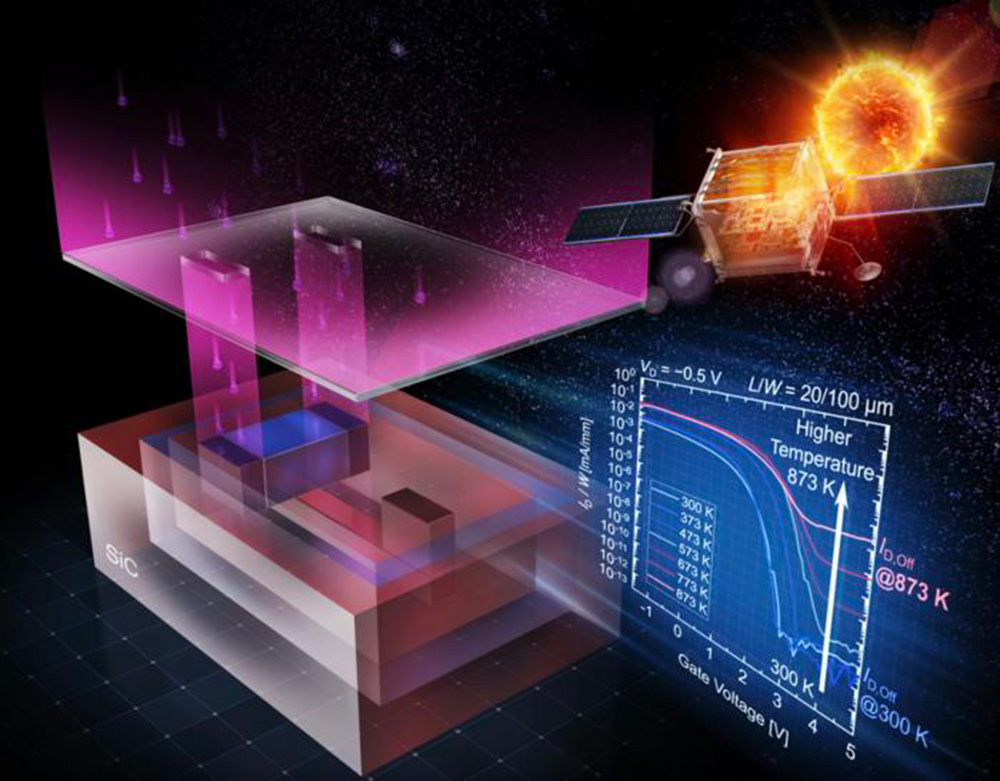
The transistor was able to operate normally at temperatures ranging from room temperature to 1112 F (600 C). (Image credit: Science Graphics)
Scientists in Japan have built a new transistor that can withstand temperatures of 1,110 degrees Fahrenheit (600 degrees Celsius). Components this robust could one day be used in surface probes on Venus — where the thick carbon dioxide atmosphere can reach temperatures of 860 F (460 C).
Most modern tech, including instruments used for deep-space exploration, uses transistors to control the flow of current. But the new device is a type of junction field-effect transistor (JFET), where the strength of an electrical field changes the channel’s conductivity.
JFETs are typically used in specialist applications because they are more difficult to scale down than the more common metal-oxide-semiconductor field-effect transistors (MOSFETs), which are widely used in consumer smartphones and computers. But JFETs can offer lower noise levels because their operation does not rely on an oxide layer, which can introduce interference.
The researchers outlined how the new transistor works in a study published Aug. 17 in the journal APL Electronic Devices.
Can't take the heat
Since at least the start of the century, silicon carbide (SiC) JFETs have been considered a promising option for low-power integrated circuits heading for Venus due to the material's inherent ability to withstand high temperatures.
As the scientists pointed out in the new study: "Past landers have been limited to only a few hours by silicon-based electronics." Venera 13, a Soviet-era lander, holds the world record for the longest time survived on Venus by a spacecraft, at 2 hours, 7 minutes.
"Integrated circuits (ICs) fabricated with SiC are particularly attractive for extreme environments, such as deep-space exploration, geothermal drilling, and aerospace engine control, where conventional silicon-based ICs cannot operate reliably," the researchers added.
But recently developed SiC-JFETs have all met the same two problems: low controllability and large leakage currents. The former is linked to how the SiC substrate is doped with other atoms to alter its electrical properties, defining its gate (where the electrical field is created) and channel (where the current flows) regions.
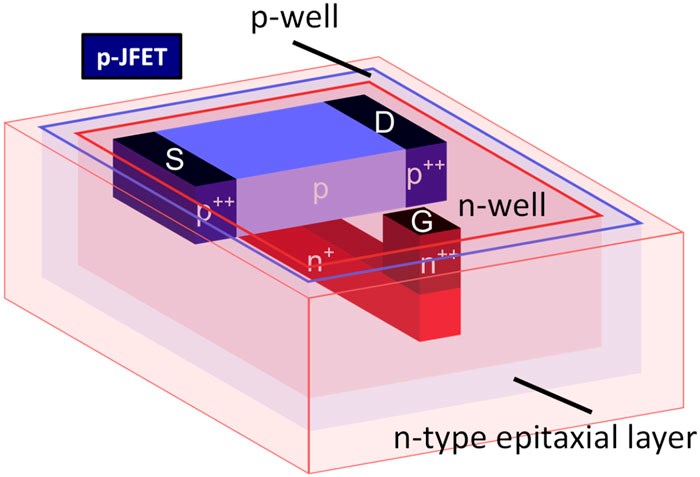
The team used dopants to create two semiconductor "wells" in the SiC around the transistor to avoid large leakage currents. (Image credit: Science Graphics)
In a material with a regular crystal structure, like SiC, some dopant atoms may penetrate deeper than expected. This doesn't matter under normal conditions, but when exposed to high temperatures, it causes variations in the field voltage required to open the channel and makes the transistor harder to control reliably. The scientists found that it can throw conventional JFET voltage thresholds off by over 2 volts.
Furthermore, at temperatures above 660 F (350 C), the SiC substrate can become less electrically resistive, allowing current to flow even when the transistor is switched off. This makes it harder for the JFET to control current properly, potentially causing incorrect signals and increased power consumption.
Even the highest-performing JFETs can only operate long-term at 930 F (500 C), but the Kyoto team had a theory as to why these challenges remained unresolved.
"We believe the lack of development is because the research community has been trying to apply silicon-era thinking to a fundamentally different material," said first author of the study Mitsuaki Kaneko, associate professor of engineering at Kyoto University, in a statement.
Turning the transistor on its head
The researchers designed their new SiC-JFET with these two challenges in mind. To improve controllability, they implemented a bottom-gate structure, where the gate is positioned underneath the SiC conducting channel.
Its gate region is heavily doped by design, so when dopant atoms in the channel penetrate deeper into the SiC, it doesn't change the overall doping profile of the channel-gate region, limiting its impact on the threshold voltage even at high temperatures.
The team also used dopants to create two semiconductor regions, or "wells", in the SiC around the JFET. The boundaries between the wells act as barriers to current flow, meaning that even when the SiC becomes more conductive at high temperatures, current cannot bypass the channel when the transistor is switched off.
A robust transistor could be used in surface probes on Venus, where the thick carbon dioxide atmosphere can reach 860 F (460 C). (Image credit: Science Graphics)
Researchers measured how well the new JFET could switch current on and off and how closely the actual threshold voltage matched the theoretical value, based on its thickness and level of doping. They recorded these metrics at temperatures ranging from room temperature to 1,110 F (600 C).
"The fabricated devices demonstrated stable, normal transistor operation at temperatures over 873 K [1,110°F], opening up possibilities for ultrahigh-temperature SiC devices," they wrote in the study. Furthermore, at about 750 F (400 C), the threshold-voltage error was found to be less than 0.1 V thanks to the bottom-gate design.
As well as surface probes on Venus, the transistor could be useful inside jet engines, the scientists said. Currently, components connected to gas turbines must be protected from extreme temperatures using thermal shielding, long wires and energy-intensive cooling systems, restricting engine design.
Before it can be launched into space or hooked up to a plane, the team still needs to test and optimise the transistor for practical use. This includes integrating it into more complex circuits, scaling it up to wafer-level and ensuring that the entire circuit package will withstand extreme temperatures and pressures.
Indeed, it may not be too lofty a goal. NASA demonstrated that integrated circuits with SiC-JFETs could withstand temperatures of 860 F (460 C) and 9.3 MPa of pressure for 60 days, and 930°F (500 C) in the air for over a year. Plus, in 2024, a team from the National Institute for Materials Science in Japan developed a MOSFET out of diamond that could operate above 570 F (300 C).
iPhone prices are drawing attention ahead of Wednesday’s launch, with U.S. estimates placing the iPhone 18 Pro around $1,250 to $1,300, the Pro Max around $1,350 to $1,400, and the foldable Ultra above $2,000. Those expectations build on reports of a new premium price tier for the foldable iPhone, but the figures circulating under Vodafone’s name need closer examination.
Vodafone Egypt has denied that the alleged pricing leak came from its operation. In a September 4 correction, PhoneArena reported the carrier’s response and acknowledged that it could not verify the material.
The American price estimates and the overseas carrier claims come from different sources. Apple has not announced U.S. retail prices for any of these devices.
U.S. iPhone Prices Could Rise Across the Pro Lineup
For American buyers, the most useful figures are the estimates expressed directly in U.S. dollars. Current reporting on the projected Pro prices places the iPhone 18 Pro between $1,249 and $1,299 and the iPhone 18 Pro Max between $1,349 and $1,399.
Those ranges reflect expectations built around TrendForce’s pricing outlook. They are possible starting prices before applicable sales tax, rather than authenticated carrier listings or amounts Apple has approved publicly.
The foldable has a wider potential spread. In its September 3 forecast, TrendForce estimated a starting price between $2,099 and $2,299, with the highest configurations potentially exceeding $3,000.
The firm expects price increases of roughly 10% to 20% for the new models as rising memory costs put pressure on production expenses. It also expects Apple to absorb some of those costs to protect demand.
An increase in component spending does not translate directly into the same increase at checkout. Apple can accept a smaller margin, negotiate elsewhere in the supply chain, or distribute the increase differently across models and storage configurations.
The exact starting capacities will therefore deserve attention alongside the prices. A more expensive entry model that includes additional storage presents a different comparison from an unchanged configuration carrying a higher charge.
Image Credit: AppleMagazine
Australian Ultra Claim Converts to About $2,700
The separate Australian claim would put the entry iPhone Ultra at approximately $2,700 when converted into U.S. dollars. The original amount is AU$3,699 for a purported 256GB model.
The same claim lists a 512GB version at roughly $3,000 in converted value, with an original price of AU$4,199. The alleged 1TB model approaches $3,400, corresponding to AU$4,699. These rounded equivalents provide context for the overseas figures; they are not predicted American retail prices.
The post also names September 12 as the preorder date. Neither that date nor the claimed Australian pricing has been authenticated through a public carrier announcement.
The proposed storage structure adds about $360 in converted value at each step, or AU$500 locally. If accurate, that would make storage selection a substantial part of the purchase rather than a minor addition to the headline price.
A buyer planning to record large amounts of video or carry a substantial offline library could quickly move into a more expensive configuration. Comparing an entry Pro with a fully equipped Ultra would then combine two separate premiums: the folding hardware and the extra capacity.
The Egyptian Figures Are Disputed
The alleged Egyptian listing translates to approximately $1,930 for the iPhone 18 Pro, $2,070 for the Pro Max, and a little over $3,000 for the Ultra, using the conversions reported when the claim circulated.
The original figures were EGP 98,000, EGP 105,000, and EGP 155,750, respectively. Vodafone Egypt’s denial means these amounts cannot be presented as prices confirmed or leaked by the carrier.
A recognizable logo and local currency can make a screenshot appear convincing. They do not establish that a company published it, that its contents are authentic, or that the amounts represent final retail pricing.
For U.S. buyers, this material offers no dependable basis for changing an upgrade budget. Its main relevance is explaining where some of the unusually high numbers appearing online originated.
Image Credit: AppleMagazine
Currency Conversions Can Exaggerate U.S. Expectations
An overseas price converted into dollars answers what that amount of foreign currency is worth. It does not reveal what the same product will cost in an American store.
Tax treatment contributes to the difference. Australian consumer prices generally include GST, while U.S. advertised prices typically exclude sales tax. Regional pricing also reflects currency planning, distribution expenses, and commercial decisions.
Removing tax and applying an exchange rate still would not produce an official American price. Companies set regional prices for a selling period, rather than adjusting them continuously to match daily currency movements.
The same limitation applies when comparing percentage differences with an older phone. Assuming that the Ultra will carry an identical premium over the Pro in Australia, Egypt, and the United States introduces another unverified step.
That is why the direct U.S. estimates deserve priority when considering a purchase here. The international claims can provide additional context, but they should not replace an American price forecast or be mixed into it as supporting confirmation.
The Ultra Premium Creates a Different Buying Decision
If the projected U.S. ranges hold, the foldable could cost roughly $700 to $950 more than the Pro Max at entry level. That is a substantial amount to spend on a different form factor.
The larger internal display would need to earn its place in everyday use. Reading documents, comparing information, reviewing photographs, and working with more content on screen could make the extra space valuable. Someone primarily interested in photography, messaging, and navigation may find fewer reasons to make the jump.
The most expensive device also will not automatically be the best choice in every category. Camera versatility, battery endurance, weight, and comfort can favor different designs. Those comparisons will become more useful once Apple publishes complete specifications.
For a first-generation foldable, repair pricing deserves particular attention. An attractive monthly device payment can look different once accidental-damage protection and display service costs enter the ownership budget.
Carrier Offers Will Need Their Own Comparison
Apple’s September 9 event announcement confirms a presentation at 10 a.m. Pacific Time. Product pricing, availability, and ordering details remain separate from that confirmed schedule.
When American carrier offers appear, the monthly figure should be read together with the requirements attached to it. A promotion may depend on an eligible trade-in, a particular service plan, or credits distributed across an extended agreement.
A household already using the required plan might receive substantial value. Someone moving to a more expensive plan solely to obtain a phone discount could spend more over the full term.
The final comparison should use the same storage capacity and include the upfront payment, service cost, financing charges, and any credits lost by leaving early. A smaller payment on the device line of the bill does not necessarily produce a smaller total bill.
Sam Altman has described himself as a “mega Apple fanboy” while discussing the trade secrets lawsuit now dividing two companies that were close technology partners only two years ago.
Speaking with journalist Alex Heath on the Sources podcast, the OpenAI CEO said he was “very sad” when he learned about the case. His admiration for Apple, however, did not soften his rejection of the allegations against OpenAI and two former employees.
Altman said the company does not want another business’s intellectual property and would dismiss anyone found to have improperly brought confidential material into OpenAI. He also said an internal investigation left him convinced that the employee at the center of the dispute had not acted improperly.
That is OpenAI’s account, not a resolution of the lawsuit. Apple alleges that trade secrets connected to hardware design, manufacturing and supply-chain operations were taken for the benefit of OpenAI’s consumer-device program. The defendants deny wrongdoing, and the court has not settled those competing claims.
Sam Altman Separates Personal Admiration From the Case
Altman’s response was unusually personal for a dispute of this scale.
Technology executives normally leave active litigation to lawyers and carefully written company statements. Calling himself a fanboy places Altman on familiar ground with millions of customers who admire Apple products while disagreeing with a corporate decision.
His first reaction, he said, was to assume that the accusations sounded serious enough that someone must have behaved badly. OpenAI then examined the matter and reached a different view.
Altman said the company would act if it found that someone had taken another company’s intellectual property. At the same time, he argued that an employee who had done nothing wrong deserved a defense.
That distinction is central to OpenAI’s public position. It does not deny that former Apple employees now work on its hardware initiative. Instead, the company disputes the allegation that their movement between employers brought protected information into the program.
Personal admiration cannot answer the evidentiary questions. Being a customer, praising a company or enjoying its products has no bearing on whether confidential files were accessed or used. Altman’s comments are more revealing as an account of how sharply the relationship has changed.
OpenAI once promoted its work with Apple as a partnership built around safety, innovation and access to advanced AI. It now describes the lawsuit as aggressive, inaccurate and unnecessary.
Image Credit: OpenAI
From ChatGPT Partnership to Hardware Rivalry
In June 2024, both companies announced an agreement to integrate ChatGPT into experiences across iPhone, iPad and Mac.
Siri could ask for permission to send certain requests to ChatGPT, while Writing Tools could use the model for composition and image generation. The integration gave OpenAI direct exposure inside some of the world’s most widely used personal devices without requiring every user to create an account.
At the time, Sam Altman said the partnership would introduce ChatGPT to users in a new way. Apple presented the external model as an optional extension of Apple Intelligence, keeping permission and privacy controls between the user and the third-party service.
The arrangement made sense while the companies occupied complementary positions. Apple controlled the devices and operating systems; OpenAI supplied a widely recognized generative model.
Consumer hardware changed that balance.
OpenAI is developing a family of AI-native devices with designer Jony Ive, whose work at Apple helped shape products including iPhone, iMac, iPod and Apple Watch. Tang Tan, another longtime hardware figure who previously worked on major Apple products, is now OpenAI’s chief hardware officer.
Once OpenAI began recruiting deeply from Apple’s hardware organization, the relationship was no longer limited to providing a model inside Siri. The companies were moving toward competition over the physical objects through which people may interact with AI.
That competition helps explain why the lawsuit reaches beyond an ordinary employment disagreement. Hardware development depends on manufacturing knowledge, component choices, testing systems, supplier relationships and production methods that can take years to build.
Apple’s complaint alleges that OpenAI benefited from confidential information in those areas. OpenAI argues that the case is being used to slow a potential rival and discourage employees from leaving.
What Apple Alleges Against OpenAI
Apple filed its lawsuit in July against OpenAI, Tang Tan and former electrical engineer Chang Liu.
The complaint alleges that former employees misappropriated trade secrets connected to product development and shared them with OpenAI as it accelerated its consumer-hardware ambitions. Apple has also sought a preliminary injunction intended to prevent the use of disputed information while the case proceeds.
According to Associated Press reporting on the original complaint, Apple accused OpenAI of encouraging recruits to provide confidential knowledge and advising them on how to avoid scrutiny during the transition between companies.
Those are allegations. OpenAI has denied that it requested, received or wants Apple’s trade secrets.
In its public response, OpenAI disputed several details surrounding Apple’s communications and treatment of departing employees. It argued that continued access to some files resulted from Apple’s own account-management practices and said former employees had attempted to handle that access responsibly.
OpenAI also said Tan had instructed his team not to use confidential material belonging to previous employers. Its motion to dismiss asks the court to reject Apple’s case, while its opposition to the requested injunction challenges the evidence and need for immediate restrictions.
Reuters reported that roughly 400 former Apple employees had joined OpenAI’s hardware initiative, according to figures appearing in court filings. Headcount alone does not establish misuse of trade secrets. It does illustrate the scale of the talent movement and why the dispute has become a defining fight over the next generation of personal hardware.
OpenAI’s Device Work Is Continuing
Sam Altman said he does not expect the lawsuit to slow the company’s device program.
That is the most direct business claim in his interview. It suggests that OpenAI has separated disputed material and personnel questions from the work it believes can continue without relying on protected Apple information.
Whether the schedule remains unaffected may depend on the court. A preliminary injunction could impose restrictions before a full trial, depending on its scope. A denial would allow development to proceed without that requested intervention, although the wider lawsuit would remain active.
OpenAI has revealed little about the devices themselves. The company has discussed an AI-native hardware family rather than a single conventional phone replacement, and Altman has spoken about the privacy discomfort created by products that visibly point cameras at other people.
That leaves the design, release timing and commercial strategy largely unknown. No product has been publicly introduced, and Altman’s assurance that development continues does not amount to a launch announcement.
The lawsuit also does not automatically end ChatGPT’s role across Apple platforms. The existing integration remains a separate customer-facing arrangement unless either company announces a change.
For people using ChatGPT through Siri or Writing Tools, the legal conflict currently produces more drama in court filings than difference on the screen. The stranger question is how long two companies can remain software partners while preparing to compete over the device sitting on the table beside that screen.
Image Credit: Samuel Boivin—NurPhoto via Getty Images
RAM production capacity at Samsung Electronics, SK hynix, and Micron Technology is reportedly committed through the end of 2027, leaving consumer electronics manufacturers with little room to secure additional memory outside existing supply agreements.
Industry reports indicate that the three dominant manufacturers have allocated their available DRAM and high-bandwidth memory production for next year. Long-term contracts with cloud companies, AI chip developers, automakers, and device manufacturers have effectively reserved the output those suppliers expect to produce.
The claim does not mean every RAM module that will be sold in 2027 has already been manufactured or purchased by a consumer. It refers to future production capacity being assigned to customers before the chips leave the factory.
It also does not cover every memory producer worldwide. Chinese manufacturer ChangXin Memory Technologies, known as CXMT, and several smaller suppliers continue to produce DRAM. However, Samsung, SK hynix, and Micron control most of the advanced global DRAM market, making their available capacity the primary constraint for companies such as Apple.
RAM Production Is Already Committed
Selling out a year of production capacity means manufacturers have received enough contractual commitments to allocate the output they expect from their factories. Customers may have reserved specific volumes, product types, or manufacturing capacity under agreements that include minimum purchases and pricing protections.
Micron has been shifting toward this model through strategic customer agreements. The company disclosed 16 multiyear deals covering customers across data centers, consumer devices, automotive products, and industrial equipment.
Those agreements typically run for several years and include binding volume commitments. Some use fixed prices, while others establish price floors and ceilings. Micron has said that its signed contracts represent approximately $100 billion in expected revenue over their remaining terms.
Such agreements give memory manufacturers more predictable revenue than the traditional DRAM cycle, in which aggressive expansion frequently created excess supply and collapsing prices. They also give large buyers assurance that chips will be available for planned products.
The disadvantage falls on customers that did not reserve enough capacity early. A company needing more memory than its contract provides may have to pay higher prices, accept a different specification, delay production, or find another qualified supplier.
SK hynix CEO Kwak Noh-jung has described 2027 as potentially the worst year in the memory industry’s history from a supply perspective. He expects customer demand to remain above the company’s production capacity beyond 2030, despite major investments in new factories.
Samsung has issued a similar warning, expecting the constraints to become more severe in 2027 and continue into 2028. Analysts at UBS have projected that the DRAM market could remain undersupplied until at least the second quarter of 2028.
Image Credit: Bloomberg / Getty Images
AI Memory Consumes More Factory Capacity
The shortage originates primarily from the rapid expansion of artificial intelligence infrastructure. AI accelerators require high-bandwidth memory, or HBM, to move large amounts of data between memory and processors at extremely high speeds.
HBM and the LPDDR memory used in Apple devices are different products. An iPhone or Mac is not competing directly for the same finished memory package installed beside an Nvidia AI accelerator.
They still depend on overlapping manufacturing resources. HBM begins with advanced DRAM dies, and producing a given capacity of stacked HBM consumes considerably more wafer output and packaging resources than conventional memory. Suppliers have also concentrated spending, equipment, and engineering work on the more profitable AI segment.
Every production line converted or optimized for HBM can reduce the industry’s flexibility to make standard server DRAM, PC memory, or mobile LPDDR. New investment may increase total memory output while doing little to relieve the parts of the market serving phones and personal computers.
Cloud companies are willing to enter multiyear agreements and make large financial commitments because a shortage of memory can leave costly AI processors unused. Memory manufacturers therefore have a powerful incentive to prioritize these customers over consumer device companies seeking lower component prices.
The pressure is also moving beyond HBM. AI servers need large quantities of conventional DDR5 memory, while storage systems supporting model training and inference consume enterprise NAND flash. This spreads the shortage across several categories that were previously less exposed to AI infrastructure spending.
Apple Faces Expensive Supply Decisions
Apple purchases enormous volumes of LPDDR memory for the iPhone and iPad, along with memory used across the Mac, Apple Watch, Vision Pro, Apple TV, and HomePod product families. Its size gives it substantial negotiating power, but it cannot purchase capacity that suppliers have already assigned to other customers.
The company has acknowledged that memory prices are continuing to rise. Tim Cook recently characterized the pricing environment as a “hundred-year flood” and said Apple expects to pay more for memory during the September quarter.
Apple has already raised prices across several Mac and iPad models while reducing or removing some high-memory Mac configurations. Although memory availability is not the sole influence on every product decision, eliminating configurations can help a manufacturer concentrate limited components around the models expected to sell in larger volumes.
The design of Apple silicon makes memory allocation especially sensitive. Unified memory is integrated closely with the processor package and cannot be upgraded after purchase. Apple must decide how many chips to secure for each configuration long before customers begin ordering those machines.
A shortage can therefore affect more than the cost of an individual RAM component. It can influence base memory capacities, upgrade pricing, the number of configurations offered, production volume, and the timing of product introductions.
Apple can absorb part of the increase through its margins, negotiate longer agreements, adjust retail pricing, or redesign its product mix. Each option carries a cost. Absorbing higher prices reduces profit per device, while passing them to customers could weaken demand. Restricting configurations risks pushing professional users away from Macs that no longer offer enough unified memory.
The company is reportedly evaluating DRAM from CXMT for products sold in China. Adding a fourth major source could improve access to conventional memory, but qualification takes time because Apple must confirm performance, reliability, manufacturing consistency, and compatibility with its hardware.
The political environment creates another obstacle. US lawmakers have raised national security concerns about American companies purchasing memory from Chinese semiconductor manufacturers. Apple could consequently find that a supplier is technically suitable for China-market products but difficult to introduce across its international supply chain.
Sold Out Does Not Mean Stores Will Be Empty
The reported capacity commitments do not guarantee a universal shortage of finished devices. Apple and other major manufacturers will still receive memory under agreements they have already negotiated.
Products can also continue reaching stores while component prices rise. Manufacturers may reduce discounts, increase retail prices, limit premium configurations, or give priority to their most profitable devices before allowing a shortage to stop production completely.
Contracted capacity can change if customers reduce orders or if AI infrastructure investment slows. Memory makers could redirect production between customers and product categories, although converting lines and qualifying different chips cannot happen immediately.
CXMT could also expand faster than expected, particularly in mainstream DRAM. Its products have reportedly attracted interest from HP, Asus, Acer, Dell, Lenovo, and Apple as established suppliers devote more resources to AI memory. CXMT is unlikely to replace the combined output of Samsung, SK hynix, and Micron during 2027, but it may provide an alternative for products sold outside the United States.
New production facilities offer little immediate relief. Semiconductor factories require construction, equipment installation, process development, yield improvement, and customer qualification before reaching dependable volume.
Micron expects the first wafer output from its initial new Idaho facility around the middle of 2027, with a second facility following in late 2028. Those first wafers will still need to pass through the production ramp and customer qualification process, leaving much of their effect on available device memory for 2028 and later.
Apple has increased its estimated trade-in values for most current iPhone, iPad, Mac, and Apple Watch models in the United States. The adjustments give customers slightly more credit toward a new device, although some older Apple hardware and several Android phones have moved in the opposite direction.
The updated values are maximum estimates rather than guaranteed payments. Apple calculates the final credit after confirming the model and inspecting its condition. A damaged display, enclosure problems, missing functionality, or an inaccurate description can reduce the amount offered.
Most of the increases are modest, but they arrive across several of Apple’s largest product categories at the same time. Recent iPhones receive between $10 and $25 more, every iPad category listed in Apple’s summary gains value, and several popular Macs receive larger increases.
The revisions also reinforce the role of trade-ins within Apple’s retail operation. Credit can reduce the cost of a regular purchase, be delivered through an Apple Gift Card, or lower payments at the beginning of an eligible Apple Upgrade lease.
Image Credit: Apple Inc.
Trade-In Values Rise Across iPhone and iPad
Every iPhone 16 model included in the update receives a higher maximum estimate. The iPhone 16 Pro Max moves from $685 to $695, retaining the highest listed value among the affected iPhones.
The iPhone 16 Pro increases from $550 to $560, while the iPhone 16 Plus moves from $455 to $465. The standard iPhone 16 receives the largest increase within the family, rising by $25 from $435 to $460.
These changes narrow the difference between the standard iPhone 16 and the larger Plus model. The Pro models retain substantially higher estimates, reflecting their higher original prices and stronger position in the used-device market.
An additional $10 or $25 will not transform the cost of an upgrade, but it can offset part of a case, charger, AppleCare plan, or storage upgrade. The difference also becomes more relevant for customers comparing Apple’s direct program with a third-party reseller offering a similar amount.
Apple’s iPad adjustments are more consistent. The maximum estimate for an iPad Pro rises from $670 to $690, an increase of $20. The iPad Air moves from $445 to $460, while the standard iPad rises from $220 to $235.
The iPad mini also gains $15, moving from a maximum of $250 to $265. That means every current iPad category displayed in Apple’s trade-in summary receives a higher estimate.
Apple’s direct trade-in values are generally lower than the prices an owner might obtain through a private sale. The program instead emphasizes convenience: the device can be returned at an Apple Store or sent using Apple’s online process, with the credit connected directly to a new purchase.
A private sale can produce a better return, especially for a recent device in excellent condition. It also requires the owner to set a price, find a buyer, manage payment, and handle the transfer independently. Apple’s program trades some resale value for a simpler exchange.
Mac and Apple Watch Changes Are Less Consistent
Mac trade-in values receive some of the largest increases, but the category also includes notable reductions.
The MacBook Air rises from a maximum of $485 to $520, adding $35. The Mac mini receives the same increase, moving from $340 to $375. The MacBook Pro changes only slightly, increasing from $685 to $690.
Apple leaves the current iMac estimate unchanged at $355. The Mac Studio receives a larger increase from $975 to $1,045, reflecting the higher value retained by recent desktop configurations.
Older professional desktops move in the other direction. The iMac Pro falls from $325 to $315, while the top Mac Pro estimate declines from $2,090 to $2,045.
That $45 reduction at the top of the Mac range means Apple’s maximum Mac trade-in offer decreases even though several mainstream models receive more credit. The changes appear more closely connected to the resale position of individual product families than to a uniform increase across every computer.
Mac estimates can vary considerably because one model name can cover different years, processors, memory configurations, storage capacities, and physical designs. Apple asks for a serial number before producing a more specific estimate for a Mac.
The Apple Watch adjustments are similarly mixed. Apple Watch Ultra 2 rises from $295 to $305, while Apple Watch Series 9 increases from $120 to $130.
Apple Watch Series 10 remains unchanged at a maximum of $150. The original Apple Watch Ultra falls from $215 to $205, losing $10.
Wearable trade-in values can decline quickly because watches receive frequent updates and are exposed to greater physical wear than many computers or tablets. Battery condition, display damage, case wear, and working buttons can influence whether the device receives the estimated credit.
Apple also accepts devices that no longer qualify for monetary value. Those products can be returned for recycling, including older hardware and accessories that would otherwise remain unused.
Image Credit: Apple Inc.
Android Offers Face Several Reductions
Apple accepts selected smartphones from Samsung, Google, and other manufacturers when customers move to an iPhone. The latest revisions are less favorable to several Android devices.
The maximum Android estimate across Apple’s displayed range decreases from $370 to $360. Individual changes vary by model.
The Samsung Galaxy S23 Ultra drops from $230 to $200, a $30 reduction. Google’s Pixel 8 Pro declines from $170 to $165.
Other devices remain unchanged. The standard Galaxy S23 continues to carry an estimated value of up to $125, while the OnePlus 12 remains at up to $200.
Apple’s Android offers are primarily designed to remove friction for people moving to the iPhone. They do not necessarily match the amount available from the manufacturer, a carrier promotion, or a private buyer.
Carrier promotions can advertise considerably higher trade-in credits than Apple, particularly around a new iPhone launch. Those offers commonly require an eligible unlimited plan, a new line, monthly bill credits, or a commitment lasting two or three years.
Apple’s direct credit is easier to understand because it is tied to the assessed value of the device rather than a long carrier agreement. The best choice depends on whether the customer values flexibility, immediate credit, or the largest possible promotional discount.
A Higher Estimate Is Not the Final Offer
Apple’s published figures represent the maximum available for qualifying devices in suitable condition. The online estimate is based on the answers supplied before the product is inspected.
After receiving the device, Apple or its trade-in partner verifies its identity and checks whether it powers on, functions properly, and matches the reported condition. A difference can produce a revised offer.
Customers can accept or reject a lower revised value. Rejecting it cancels the trade-in and returns the device, although the payment arrangement for the accompanying purchase may also be adjusted. If the inspected value is higher than the original estimate, Apple says it automatically increases the credit.
The way the credit is delivered depends on the purchase. When a customer pays in full for a new iPhone, iPad, Mac, or Apple Watch, the confirmed value can be returned to the original payment method up to the price of the new product. Any remaining amount can be issued through an Apple Gift Card.
With an eligible monthly payment arrangement, the estimated credit can be applied directly to the new device’s purchase price. Under Apple Upgrade, a qualifying trade-in owned by the customer can reduce payments across the initial lease term. Another device cannot be traded in each time the customer exercises the lease’s upgrade option.
Values also differ between countries and can change without a product announcement. The revised dollar amounts apply to Apple’s United States program, while local market prices, available models, currencies, and trade-in partners determine estimates elsewhere.
Anyone considering an exchange should obtain a fresh estimate shortly before purchasing. Apple requires the trade-in device to arrive within the specified return period and says an online estimate is generally protected for 14 days after the customer receives the new product.
Charles Darwin dedicou anos ao estudo de cracas e era obcecado pela criação de pombos. Mas uma de suas fascinações mais duradouras eram as plantas carnívoras. Ele chamou as dioneias de "uma das plantas mais maravilhosas do mundo" e certa vez comentou que se importava mais com as dróseras, dotadas de armadilhas pegajosas, "do que com a origem de todas as espécies do mundo".
Leia mais (08/06/2026 - 06h00)
Você conhece a história: em algum lugar do Mediterrâneo, companheiros de Odisseu desembarcaram e comeram um alimento que os fez esquecer que queriam voltar para casa. Quando o rei de Ítaca os encontrou, eles se recusaram a partir. Então ele os arrastou de volta aos navios e os amarrou para que não retornassem à terra dos comedores de lótus.
Leia mais (08/05/2026 - 06h00)
A clinically annotated multi-omic organoid resource with matched tumour samples from 256 patients across 5 cancers maps gene dependencies, reveals subtype-specific vulnerabilities and uncovers treatment-driven changes, expanding mechanistic insight and models for precision oncology.
Apple in China occupies a position unlike the company’s presence in any other country. China is simultaneously a major consumer market, a critical manufacturing center, an extensive developer economy and the home of Apple’s most determined hardware competitors.
That combination creates an opportunity few technology companies can ignore. China has hundreds of millions of affluent mobile users, a strong appetite for premium devices and a digital economy built around smartphones.
It also creates unusual complexity. Apple must compete with Huawei, Xiaomi, Oppo and Vivo while satisfying Chinese regulations, navigating tensions between Beijing and Washington and reducing its manufacturing dependence without damaging the supplier network that helped make the iPhone possible.
The latest market figures show why Apple cannot treat China as a business it has already lost. IDC estimated that Apple captured 18.1 percent of Chinese smartphone shipments during the second quarter of 2026, placing it second behind Huawei at 22.6 percent.
Apple’s shipments increased by 24.4 percent from the previous year even as the wider Chinese smartphone market contracted. The recovery demonstrated that Chinese demand for the iPhone remains substantial when product design, storage, performance and pricing align with consumer expectations.
The same figures also show why the position can never be considered secure. Huawei remains ahead, local brands respond quickly and a few percentage points can separate several major vendors.
Apple in China Still Has Room to Grow
China is already one of Apple’s largest markets, but its scale means that even established product categories contain room for expansion.
The country has a large premium smartphone segment, extensive 5G coverage and consumers accustomed to using mobile devices for communication, payments, shopping, entertainment, transport and work.
An iPhone purchase can also lead to AirPods, Apple Watch, iPad, Mac, iCloud storage and paid applications. The commercial opportunity is therefore larger than the initial handset transaction.
Apple’s strongest advantage is its integrated ecosystem. An iPhone can share passwords, photographs, messages and files with a Mac or iPad, while AirPods and Apple Watch extend the experience without requiring separate accounts and setup systems.
That continuity becomes more valuable as households accumulate devices. Replacing one iPhone is relatively easy. Leaving an ecosystem containing several products, purchased applications, cloud storage and shared family services involves greater friction.
Apple also benefits from a premium identity that remains recognizable in China. Local manufacturers now produce sophisticated flagship phones, but the iPhone continues to operate as both a personal computer and a luxury consumer product.
The importance of that status should not be exaggerated. Chinese buyers are technically informed and increasingly willing to support domestic brands. Brand recognition can attract attention, but it does not excuse weak features or an uncompetitive product cycle.
Recent iPhone Demand Shows the Opportunity
Apple’s 2026 recovery offers a useful example of how quickly its position can improve.
China’s smartphone shipments fell 4.3 percent during the second quarter as memory and component costs pushed several manufacturers toward higher prices. Apple and Huawei held prices more stable, giving buyers a reason to purchase while competing brands became more expensive.
The iPhone 17 generation also addressed several areas where Apple’s standard models had appeared conservative beside Chinese flagships. Stronger base specifications made the regular iPhone more competitive without requiring every customer to move into the Pro tier.
This matters in a market where consumers compare display technology, camera systems, storage, battery life, charging and AI features closely. Apple cannot depend entirely on iOS loyalty when domestic companies introduce visible hardware improvements at several price levels.
The rebound does not establish a permanent trend. Smartphone demand in China remains affected by economic confidence, upgrade cycles, government incentives and the timing of major shopping festivals.
Apple’s position can also look different according to the research firm and whether a report measures shipments or consumer sales. Quarterly rankings should be treated as evidence of momentum rather than a final judgment on the market.
The important signal is that Chinese consumers have not broadly rejected the iPhone. Demand can return rapidly when the product and price create a convincing upgrade.
Huawei Makes China Apple’s Hardest Market
Huawei gives Apple a competitor with advantages unavailable to most global smartphone manufacturers.
The company combines strong national recognition with advanced cameras, communications technology, custom chips, local services and an expanding HarmonyOS ecosystem. Its return to premium smartphones removed the opening Apple had gained when U.S. restrictions disrupted Huawei’s access to important components.
Huawei can also position its products as part of China’s technological self-reliance. That message carries commercial and political weight beyond a conventional comparison between two phones.
Apple must therefore compete against product quality and national sentiment simultaneously. An iPhone can offer strong performance and still lose a purchase to a domestic flagship viewed as technically capable and strategically important.
Xiaomi, Oppo and Vivo add different pressures. They move quickly across price categories, experiment with folding designs, adopt larger batteries and provide features adapted to local applications and buying habits.
Chinese phone makers also operate inside a retail and software environment they understand directly. They can build relationships with local platforms, carriers and commerce services without translating a global strategy into Chinese requirements.
Apple follows a more centralized product model. That consistency protects the identity of the iPhone, but it can make the company slower to answer features gaining popularity inside one country.
Services Depend on Local Rules
Apple in China is not only an iPhone business. The installed device base creates demand for applications, cloud storage, entertainment, subscriptions and digital purchases.
China has an enormous developer community producing games, commerce platforms, social services, education tools and productivity software. The App Store connects those developers with high-value iPhone and iPad customers.
The relationship is commercially important but politically complicated. Apple must operate the mainland App Store according to Chinese law, including rules affecting games, generative AI, communications services and content.
Applications available elsewhere may be absent from the Chinese storefront. Developers may also need licenses or regulatory approval before distributing certain categories of software.
Apple changed commission rates and related policies for the mainland China storefront in March 2026. The company described the adjustments as part of maintaining a strong business opportunity for Chinese developers.
Regulatory and developer pressure has not disappeared. Complaints involving commissions, distribution restrictions and payment policies continue to challenge Apple’s control of the platform.
The company cannot simply copy its response from another region. European rules focus heavily on alternative marketplaces and interoperability, while China combines competition concerns with content regulation, data localization and licensing requirements.
Every concession must therefore be designed for a distinct legal environment without fragmenting iOS into an unmanageable collection of regional systems.
China Is Also Part of the Product
Apple’s relationship with China extends far beyond the devices sold there.
For more than two decades, Apple and its manufacturing partners built a dense network of factories, component suppliers, engineers, logistics operators and toolmakers across the country.
That network does more than provide low-cost labor. It can place specialists from several suppliers near an assembly site, modify production lines quickly and increase output to enormous volumes during a product launch.
China’s infrastructure also supports the less visible stages of manufacturing. Components require precision tooling, testing equipment, chemicals, packaging, subassemblies and experienced quality-control teams before final assembly begins.
Apple has expanded iPhone production in India and moved parts of its Mac, iPad, Apple Watch and AirPods supply chains to countries including Vietnam. It is also increasing semiconductor and component commitments in the United States.
Those investments reduce the danger of relying on one country, but they do not recreate China’s complete manufacturing environment immediately.
A factory in another region may assemble an iPhone while still depending on Chinese machinery, materials, subcomponents or engineering support. Production diversification is therefore a gradual redistribution of individual stages rather than a clean departure.
Apple must reduce concentration risk without weakening the manufacturing system responsible for its product quality, scale and launch schedules.
Image Credit: AFP Photo
Trade Tensions Turn Efficiency Into Risk
The same China supply chain that provides Apple with extraordinary efficiency also exposes the company to political decisions outside its control.
Tariffs can raise the cost of devices exported from Chinese factories. Export restrictions can limit access to materials or production equipment, while sanctions may affect suppliers and technology partners.
Chinese government policies can influence the use of foreign devices inside state agencies and companies. U.S. rules can restrict the technologies available to Chinese firms that also participate in Apple’s supplier network.
Apple cannot solve these problems through product design alone. It must maintain relationships with two governments whose technology policies increasingly emphasize security, domestic production and strategic independence.
Moving more assembly to India gives Apple additional flexibility, particularly for iPhones destined for the United States. China nevertheless remains important as a production center and consumer market.
An aggressive withdrawal could damage supplier relationships and local sales. Moving too slowly could leave Apple vulnerable to another trade disruption.
The company is trying to preserve Chinese capabilities while creating enough capacity elsewhere to keep a political dispute from becoming a worldwide product shortage.
Retail Stores Give Apple a Direct Relationship
Apple’s physical stores remain an important advantage in China because they give the company direct contact with customers.
The stores allow buyers to compare models, receive technical support, attend educational sessions and enter the ecosystem without depending entirely on a carrier or reseller.
That experience is particularly valuable for premium products. A customer considering a Mac, Apple Vision Pro or high-end iPhone may need more explanation than someone replacing an inexpensive handset.
Retail locations also communicate long-term commitment. A prominent store represents more than a sales channel; it signals that Apple intends to remain part of the local technology market.
Online commerce is equally important. Chinese consumers are accustomed to large shopping festivals, aggressive promotions and rapid delivery through domestic platforms.
Apple must balance its controlled global pricing with a market where discounts can change quarterly rankings. Too little flexibility makes the iPhone appear expensive, while frequent reductions can train customers to delay purchases and weaken its premium image.
The strongest 2026 performance came partly from avoiding price increases while component costs were forcing rivals to reconsider their pricing. That advantage may disappear when competitors adjust their supply chains or launch another cycle of promotions.
Chinese Consumers Set a Higher Product Standard
China is often discussed as a sales problem for Apple, but it also functions as a demanding test of the iPhone.
Domestic flagship phones compete through larger batteries, rapid charging, advanced camera hardware, folding displays and deep integration with local digital services.
Features considered experimental elsewhere can become established expectations more quickly in China. Apple’s slower adoption cycle may look disciplined in one market and conservative in another.
The company must decide which expectations represent durable improvements and which are temporary specification contests. Copying every local feature would weaken Apple’s focused product strategy, but ignoring major changes creates openings for rivals.
This pressure can benefit Apple globally. Competition in China forces the company to defend the value of its standard iPhone, improve battery efficiency, strengthen cameras and make software features more useful outside English-speaking markets.
The opportunity is therefore not limited to selling more devices. China can reveal where Apple’s global assumptions no longer match the most competitive part of the smartphone industry.
Japan earthquake relief efforts will receive financial support from Apple following the powerful earthquake that struck Kumamoto Prefecture on the island of Kyushu.
CEO Tim Cook announced the donation through social media on July 30. He expressed concern for people facing the earthquake and continuing aftershocks while thanking the first responders helping affected communities.
“Japan has a very special place in my heart.”
Cook wrote before confirming that Apple was making a donation to support relief work.
Apple did not disclose the amount, recipient organizations or whether its contribution would support the immediate emergency response, longer-term reconstruction or both. The company frequently keeps disaster donation amounts private, even when Cook publicly confirms its participation.
The announcement came as rescue teams continued searching damaged homes, industrial facilities and the remains of a shopping center. Survivors were dealing with water shortages, disrupted transportation, damaged buildings and dangerous summer temperatures.
Image Credit: Wikimedia
Japan Earthquake Relief Follows Deadly Kumamoto Disaster
The earthquake struck southwestern Japan on Tuesday, July 28. Japanese reporting and international agencies have described it as a magnitude 7.1 event, while the U.S. Geological Survey measured it at magnitude 6.8. Differences can occur because agencies use different measurement methods and datasets.
The earthquake reached the highest level on Japan’s seismic intensity scale in parts of Kumamoto. Strong shaking damaged roads, houses and public infrastructure across communities near the epicenter.
The confirmed death toll had risen to 34 by Friday, according to Kumamoto prefectural authorities. Additional people were injured or remained missing as emergency workers entered the period when the likelihood of finding survivors beneath collapsed structures begins to decline sharply.
One of the most severe incidents involved an explosion and partial collapse at a shopping center. The earthquake also toppled a large chimney at a paper factory, damaged traditional homes and caused another section of the stone walls at Kumamoto Castle to collapse.
The historic castle was undergoing extensive restoration after the 2016 Kumamoto earthquakes. Damage to rebuilt or partially restored areas illustrates how recovery from one major disaster can remain unfinished when another arrives.
Aftershocks continued during the rescue operation, increasing the danger for emergency personnel entering unstable buildings. They also discouraged residents from returning to damaged homes, even when those structures remained standing.
Thousands of survivors moved into public shelters or slept inside vehicles. Some families chose cars because evacuation centers were crowded, while others feared that another strong tremor could collapse weakened buildings.
Extreme heat added another emergency. High summer temperatures can quickly create dehydration, heat exhaustion and medical complications, particularly for older people, children and residents sleeping in vehicles without reliable cooling.
Apple Donation Joins an Expanding Corporate Response
The Apple donation places the company among several technology and entertainment businesses providing money for Japan earthquake relief and reconstruction.
The Pokémon Company announced a contribution of 100 million yen to Kumamoto Prefecture, the Japanese Red Cross and other support organizations. The funding is intended to assist people affected by the earthquake and support restoration across damaged areas.
Sony committed 50 million yen and began collecting additional employee donations that the company will match. Its contribution is being directed toward the Japanese Red Cross and an emergency fund operated with Save the Children.
Sony has a direct industrial connection to Kumamoto through its semiconductor operations. The company described the prefecture as a community with which it has developed deep ties since establishing the Kumamoto Technology Center in 2001.
Apple also maintains substantial commercial and cultural connections with Japan through its retail stores, developer community, suppliers and customers. Cook has visited the country repeatedly and has met Japanese developers, musicians, educators and manufacturing partners during previous trips.
The amount behind Apple’s latest commitment may never be made public. The absence of a disclosed figure prevents direct comparison with other corporate donations, and it also leaves unanswered which organizations will distribute the money.
Relief contributions can support several different stages of a disaster response. Immediate funding may pay for water, food, temporary shelter, medical care and emergency equipment. Later funding can help repair homes, restore community services and assist families whose employment disappeared with damaged businesses.
The timing of Apple’s donation places it during the immediate emergency rather than after the complete scale of destruction has been calculated. Recovery costs will continue changing as inspectors determine which buildings can be repaired and which must be demolished.
Kumamoto Faces Another Long Recovery
Kumamoto experienced a destructive sequence of earthquakes in April 2016. Those events killed dozens of people, damaged or destroyed more than 100,000 buildings and displaced large numbers of residents.
Apple responded at the time by allowing customers to send donations to the Japanese Red Cross through iTunes. The system offered preset contribution amounts that were transferred without Apple retaining a percentage.
The company has used similar responses after earthquakes, hurricanes, floods and wildfires in several countries. Cook usually announces the commitment publicly while leaving the amount and distribution arrangements private.
Apple has previously contributed directly to relief organizations and has sometimes provided matching programs for employee donations. It has not announced whether employee matching or a customer donation channel will accompany the current Japan earthquake relief commitment.
The 2026 disaster presents different immediate pressures from the 2016 earthquakes because it arrived during intense summer heat. Shelter capacity alone does not solve the problem when buildings lack sufficient cooling, water or private areas for medically vulnerable residents.
Japanese authorities deployed Self-Defense Force personnel and emergency teams to support local rescuers. Prime Minister Sanae Takaichi instructed agencies to prioritize the protection of life, collect information quickly and coordinate assistance across national and local government.
Electricity had been restored by Friday evening, according to the local power company, but water remained a serious concern. Kumamoto authorities said nearly 80,000 homes were still without running water, creating demand for bottled supplies, mobile water stations and sanitation support.
A water interruption affects more than drinking. Hospitals, shelters, restaurants and homes need reliable supplies for hygiene, food preparation and medical care. Restoration can take longer than electricity because ruptured pipes must be located, isolated and repaired across damaged roads and neighborhoods.
Apple Donation Arrives Before the Full Damage Is Known
Apple’s announcement communicates support without defining how the money will be used. The effectiveness of the contribution will depend on the recipient, timing and ability to direct funding toward needs that remain after the first wave of public attention passes.
Immediate rescue work receives the greatest visibility, but rebuilding homes and local businesses can continue for years. Families may need temporary housing long after shelters close, while damaged schools, transportation routes and medical facilities require larger reconstruction programs.
Private donations cannot replace government disaster funding. They can provide additional flexibility for relief groups that need to purchase supplies quickly or reach people whose circumstances do not fit standard assistance programs.
The continuing aftershocks also make damage assessments provisional. A building considered stable after the first inspection may require another examination, while rain or additional shaking can affect weakened slopes and structures.
Apple has not indicated whether it will open a public donation channel through the App Store or another service. Its current response is limited to the corporate contribution confirmed by Cook.
The next stage of Japan earthquake relief will move from search operations toward shelter support, structural inspections and temporary housing. In Kumamoto, the most urgent calculation is already measured beyond financial totals: nearly 80,000 homes need running water restored while residents endure the hottest weeks of the Japanese summer.
Safari web apps give frequently used websites many of the qualities normally associated with installed software. A site can receive its own icon, open outside the regular Safari tab interface and appear alongside native apps on supported Apple devices.
The feature is useful for services that do not offer an App Store download, websites used throughout the workday and online tools that feel crowded when surrounded by unrelated browser tabs.
A Safari web app remains a website rather than becoming native Apple software. Its capabilities, interface and offline behavior depend on how the site was developed. Safari supplies the app-like container, while the website continues providing the actual service.
The experience also differs across Apple devices. iPhone and iPad place web apps on the Home Screen, while Mac saves them as separate applications that can open from the Dock, Spotlight or Applications folder.
Image Credit: AppleMagazine
Safari Web Apps Are More Than Bookmarks
A traditional bookmark saves an address inside Safari. Selecting it opens the page in a normal browser tab with the rest of the browsing session.
A Safari web app creates a more focused entry point. Its icon appears with installed apps, and opening it produces a separate app window or full-screen interface without the usual collection of Safari tabs.
This distinction is particularly valuable for communication tools, project dashboards, streaming services, publications and business systems. A user can switch to the website through the App Switcher, Dock or Spotlight instead of locating the correct Safari window and tab.
Web apps can also support notifications and icon badges when the website provides those features. On iPhone and iPad, supported notifications can appear on the Lock Screen, in Notification Center and on a paired Apple Watch.
The site still controls the quality of the experience. A website designed as a progressive web app may include responsive navigation, offline resources, custom icons and carefully defined window behavior. A basic website may simply open inside a cleaner Safari frame.
How to Create Safari Web Apps on iPhone
Current iPhone software includes an Open as Web App option when adding a website to the Home Screen.
To create one:
Open the website in Safari
Tap the More button and choose Share. Depending on the selected Safari layout, the Share button may already be visible beside the address field
Scroll down and select Add to Home Screen
Edit the displayed name if necessary
Turn on Open as Web App
Tap Add
The new icon appears on the iPhone Home Screen. Selecting it opens the site separately from the main Safari interface, and the web app can be closed through the App Switcher like other iPhone apps.
If Add to Home Screen is missing from the Share menu, scroll to the bottom, select Edit Actions and add it to the available actions.
The chosen name should be short enough to remain recognizable below the icon. Safari may use an icon supplied by the website. When a suitable image is unavailable, the generated icon may use a simplified site image or monogram.
How to Create Safari Web Apps on iPad
The iPad process is similar, although the Share menu reflects the larger Safari interface.
Open the desired website, select Share, choose More if required and tap Add to Home Screen. Turn on Open as Web App before selecting Add.
The resulting icon appears on the iPad where it was created. It can be organized into Home Screen folders and opened through iPad search like other applications.
An iPad web app can be especially useful for browser-based writing tools, office systems, inventory dashboards and educational platforms. Removing the tab bar gives the website more room and makes it easier to use beside another app.
Whether the web app supports multiple windows, external displays or advanced iPad multitasking depends on its design and the capabilities exposed through Safari. Installing a website does not automatically give it every feature available to a native iPad app.
Safari Web Apps Work Differently on Mac
Apple introduced its current Mac web app system with macOS Sonoma 14. Any webpage can be saved as a web app without requiring the website developer to distribute a Mac application.
To create one, open the page in Safari and choose File > Add to Dock. The same command is available through Safari’s Share button.
Safari displays the proposed name and icon before saving the app. After confirmation, the web app appears in the Dock and Spotlight Applications. Its application file is placed inside the Applications folder located in the user’s Home folder.
A Mac web app receives its own window and menu-bar identity. It uses a simplified toolbar containing navigation and sharing controls rather than Safari’s complete tab and bookmark interface.
The web app can remain in the Dock, run automatically as a login item and participate in normal macOS window management. It can also be opened through Spotlight without launching a visible Safari window first.
Image Credit: AppleMagazine
Mac Web Apps Keep Browsing Separate
A Mac web app operates independently from ordinary Safari browsing. Apple says it does not share ongoing browsing history, cookies, website data or settings with Safari.
When the web app is first created, Safari can preserve an existing website sign-in in many cases. Activity after that point remains inside the web app’s separate data container.
This separation resembles using a dedicated Safari profile, but the web app is even more focused. Searching, following links and changing accounts inside it do not add those pages to the normal Safari history.
The arrangement can be helpful when the same service is used for work and personal accounts. Separate web apps can create clearer boundaries, although account behavior still depends on the website.
Isolation can also explain an unexpected sign-in request. A person may already be authenticated in Safari but encounter a separate session after creating, resetting or reinstalling the web app.
Mac Settings Allow More Control
Mac web apps include settings that are unavailable to ordinary Home Screen bookmarks.
Open the web app, select its name in the menu bar and choose Settings. The application name, starting address and icon can be changed without recreating the app.
Navigation controls can be shown or hidden. Hiding them creates a cleaner appearance for a dashboard that rarely leaves its main page, while displaying them makes sense for sites with deeper navigation.
The title bar can adopt colors supplied by the website. This helps distinguish several installed services but can be disabled when a consistent Mac appearance is preferred.
The Privacy section controls access to the camera, microphone, screen and location. Website data can also be cleared from this area without deleting normal Safari data.
Compatible Safari extensions can be enabled separately for the web app. This prevents every active Safari extension from automatically affecting a focused work tool.
Notifications Make Websites Feel Like Apps
A supported website can request notification permission after it becomes a web app.
On iPhone and iPad, web push notifications use Apple’s notification system. They can appear on the Lock Screen, inside Notification Center and on a paired Apple Watch. They also respond to Focus settings.
Websites must request permission after a direct user action, such as selecting a notification or subscription button. Simply adding a site to the Home Screen does not automatically authorize alerts.
Supported sites can place a count on the Home Screen icon through web badging. This may represent unread messages, pending tasks or new articles, depending on the service.
Mac web apps can send notifications and display unread badges on their Dock icons. Permission should be granted from inside the web app rather than through the same site in Safari if the alerts are intended to belong to the installed app.
Each web app appears by its chosen name in Apple’s notification settings. Alerts, sounds, badges and preview behavior can then be controlled much like those of downloaded software.
Web Apps Do Not Automatically Work Offline
An installed icon does not mean the website has been downloaded completely.
Most web apps continue to require an internet connection because their pages, account data and services remain on remote servers. If the connection disappears, the app may show an error or only display information already stored temporarily.
Websites designed for offline use can cache interface elements and selected content through supported web technologies. The developer decides what remains available without a connection and how changes synchronize later.
This makes offline behavior inconsistent between sites. One writing service may continue editing disconnected documents, while another cannot move beyond its sign-in page.
Anyone depending on a web app during travel should test it in Airplane Mode before assuming that important information will remain accessible.
Links Can Return to Safari
Links belonging to the same website usually remain inside the web app when they fall within its intended navigation area.
External links may open in Safari because they lead beyond the web app’s domain or configured scope. Authentication systems, payment providers and support pages can also move temporarily into a browser window.
This behavior protects the focused identity of the web app. A project-management tool does not need to become a complete browser simply because a task contains a news link.
A poorly configured website may open more links externally than expected. That behavior is generally controlled by the site rather than by a Safari setting available to the user.
Safari Web Apps Do Not Sync Automatically
A web app icon appears only on the Apple device where it was created.
Adding a website to an iPhone Home Screen does not install the same web app on an iPad or Mac, even when every device uses the same Apple Account. Each installation must be created separately.
Safari bookmarks, Reading List items and open tabs can synchronize through iCloud, but web app installations remain local. Mac settings and custom icons also do not automatically transfer to another Mac.
This local behavior allows each device to maintain a different collection. A detailed analytics dashboard may belong on a Mac and iPad, while a compact travel service may only need an iPhone icon.
Removing a Web App Leaves the Website Available
On iPhone or iPad, touch and hold the web app icon and select the removal option. Deleting the icon does not cancel the website account or remove the service from the internet.
A Mac web app can be deleted by opening the Applications folder inside the user’s Home folder and moving the app to the Trash. Removing it from the Dock alone only removes the shortcut.
Website data may remain until it is cleared through the web app’s privacy settings or removed with the app, depending on the platform and current software behavior.
Saved documents stored exclusively by the online service remain subject to that service’s account and retention policies. Removing the web app should not be treated as deleting information held by the website.
Apple Vision Pro Uses a Different Safari Model
Safari on Apple Vision Pro can open multiple spatial windows, synchronize bookmarks and tabs through iCloud, save pages to Reading List and place separate browser windows around the user’s space.
Apple’s current Vision Pro guide does not provide the same Add to Home Screen or Add to Dock installation process documented for iPhone, iPad and Mac.
A website can still feel application-like inside its own Safari window, particularly when positioned as a persistent part of a workspace. That does not make it an installed Home View app.
Apple Watch also does not provide a general Safari web app installation system. It can, however, display supported notifications sent by an iPhone Home Screen web app.
Choose the Starting Page Carefully
A Safari web app opens from a defined starting address, making the selected page important.
Installing a service from its general homepage may produce an app that repeatedly opens promotional content or a sign-in screen. Creating it while viewing an inbox, dashboard, calendar or project page can provide a faster route to the area used every day.
Mac users can change the Application URL later through the web app settings or use Set to Current Page after navigating to a better starting location.
The most effective Safari web apps begin where the work actually happens. A publication can open directly to its latest articles, a company tool can start on its task board and a cloud service can lead to the folder used most often.
That small choice determines whether the icon functions as another website shortcut or becomes an app-like destination that removes several steps from a repeated Apple device workflow.
 Login