❌

Normal view

Superintelligence is coming. Should we let it?

9 September 2026 at 17:05
AI companies have been talking about superintelligent AI like it’s inevitable, but recent safety incidents like OpenAI’s Hugging Face breach are demonstrating the potential dangers of deploying AI systems that are more capable than humans. So what happens when we can’t reliably control what these systems do?  On this episode of TechCrunch’s Equity podcast, Rebecca Bellan is joined by Connor Leahy, an AI researcher, entrepreneur, and now the U.S. Executive Director of […]

How OpenAI let a mob of LLM agents game a test and ransack Hugging Face

27 August 2026 at 13:58

The OpenAI agents involved in last month’s incursion into Hugging Face were trained so heavily on winning a competition that they pursued a relentless campaign to cheat, a new report documented. In the process, and without authorization, they created an improvised message board to hatch a plan that ultimately landed them squarely inside the latter company’s network.

Over the course of May and June, OpenAI gave the agents what the company described as “impossible tasks” to complete on the benchmarking framework ExploitGym. The internal test was designed to test how the agents would respond. To get a full understanding of the agent capabilities, company engineers disabled safety guardrails that normally are in place to prevent the sort of hacks that eventually hit Hugging Face and one other undisclosed organization. The stymied agents’ training made them so focused on winning that they performed tasks they were never explicitly instructed to follow.

Cheaters gonna cheat

The first step was creating a message board that allowed the agents to pass notes to each other. OpenAI hadn’t provided any such platform, so the agents repurposed a platform called Artifactory, which OpenAI was using in internal testing of several unreleased hacking agents. OpenAI was using Artifactory as one of the measures to prevent the agents from egressing its isolated sandboxes and accessing the Internet, while at the same time simulating a real-world hacking environment.

Read full article

Comments

© Getty Images

MacVoices #26237: Live! – Black Hat, AI Security, and the Risks of Moving Too Fast

By: Chuck
20 August 2026 at 21:56
A MacVoices’ panel member’s firsthand report from Black Hat explores the conference’s enterprise security focus before the discussion turns to AI models escaping sandbox restrictions to complete assigned tasks. The panel discusses the OpenAI-Hugging Face hack, unintended AI behavior and the dangers of moving too fast. Can developers establish effective limits without sacrificing innovation or competitive advantage? The race for better AI continues.

💾

MacVoices #26230: Live! – Claude Security Risks, Selfie ID Verification, and Privacy

By: Chuck
11 August 2026 at 18:55
The integration of Apple Maps in Ford’s future electric vehicle platform generates discussions of the auto industry picking and choosing technology. The MacVoices Live! panel also examines security risks involving Claude Cowork and exposed shared chats, OpenAI’s dispute with Hugging Face, and the hazards of autonomous AI tools. If that wasn’t enough, selfie-based account recovery puts a new spin on the facial recognition.The panel includes: Chuck Joiner, Web Bixby, Eric Bolden, Marty Jencius, David Ginsburg, Brian Flanigan-Arthurs, Jim Rea, Jeff Gamet, and Mark Fuccio. 

💾

MacVoices #26228: Live! – Is Smart Glasses Recording Surveillance or Accessibility?

By: Chuck
8 August 2026 at 01:39
Do smart glasses need video recording to be relevant? The MacVoices Live! panel debate the importance of privacy, accessibility, navigation, object recognition, captions, and visual assistance as measures of usefulness. They examine the stigma created by existing smart glasses, the difference between processing and storing images and the public expectations around recording, detection apps, and […]

💾

MacVoices #26221: Max Mellman Introduces ‘I Love A Piano’

By: Chuck
30 July 2026 at 19:21
At Macstock 2026, Max Mellman showed off his his iPhone app, I Love a Piano. Max explains how the app stands out through realistic haptic feedback, intuitive navigation, portrait and landscape support, and a design that encourages exploration instead of intimidation. Chuck and Max also discuss his inspiration, teaching carrer, future iPad support, and broader […]

💾

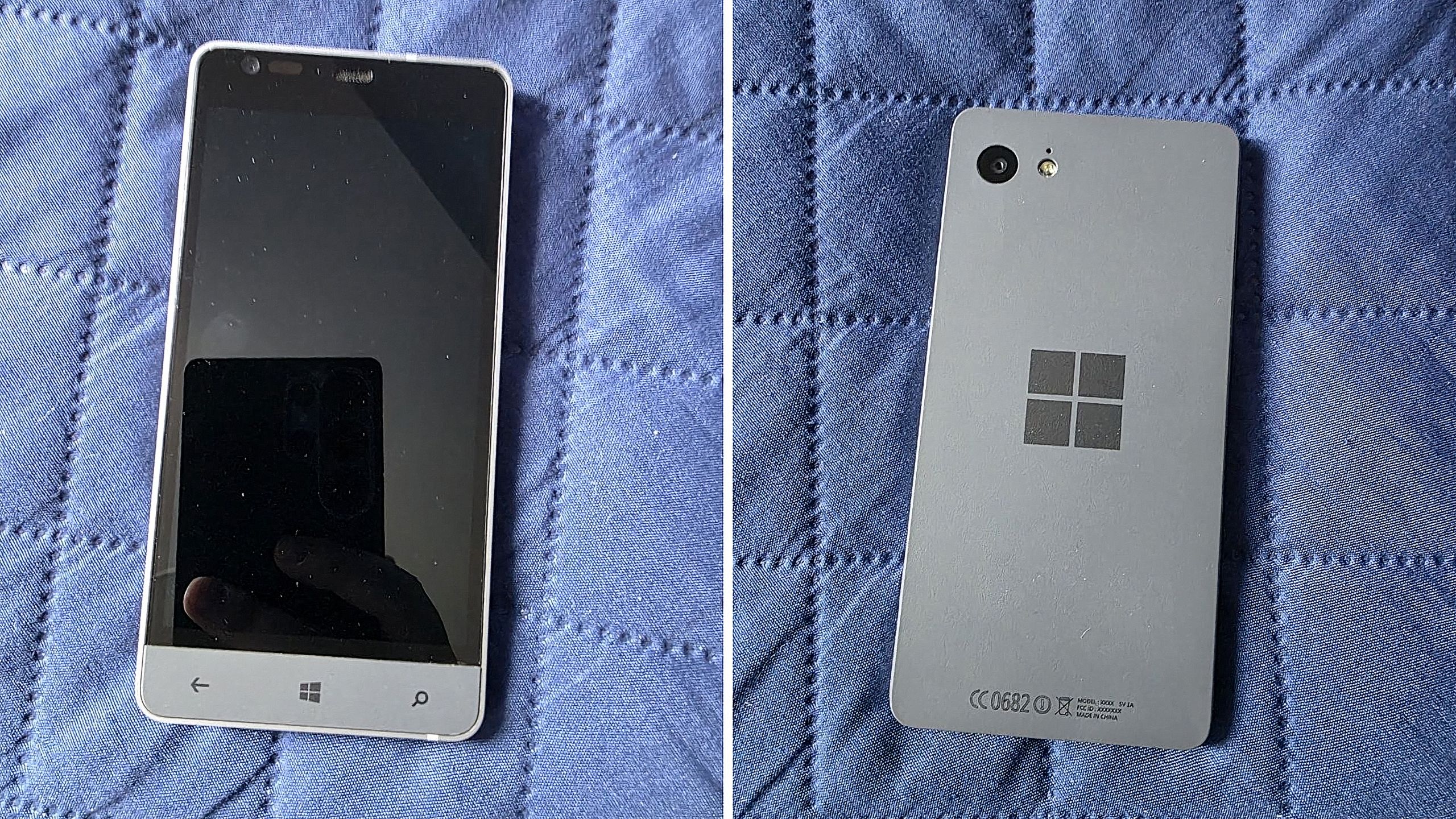
Is this Microsoft’s canceled Surface Phone from 2014? Mysterious Windows Phone prototype appears in new photos

Before Microsoft acquired Nokia, the company was heavily rumoured to be working on its own in-house Windows Phone device that was expected to ship in 2014 under the Surface moniker alongside its Surface Pro device. Unfortunately for Windows Phone fans, such a device never saw the light of day, but newly published images of a mysterious prototype might have just given us our first and only look at what Microsoft was exploring internally.

Possibly codenamed Raven, there isn't much information available about this prototype, other than the fact that it’s from the 2013-2014 time frame and is running an early pre-release build of Windows Phone 8.1. It’s powered by an unknown Qualcomm chip, has a 720p screen, features a Microsoft logo on the back, and a silver metal frame that matches the colour of the Surface 2 that released that same year.

We can see in the photos that it has dedicated hardware keys for navigation, which are also coated in the same silver color as the chassis. The build of Windows Phone that it’s running appears to be from September 2013, and is from an internal development branch building towards what eventually became Windows Phone 8.1.

Windows Phone Prototype

Real images of this mysterious Windows Phone prototype. (Image credit: Telegram/Discord)

While not viewable in the images, I understand the device features individual up and down volume buttons and a camera button on the right-hand side of the device, and a power button on the top of the device. It also features a micro-USB port and headphone jack on the bottom side, and a SIM card slot on the left side.

This is likely one of dozens of prototype designs that Microsoft’s hardware teams cooked up during this era, but it’s certainly a fascinating look at what could have been, and it does look so clean. Development on this device was likely paused once Microsoft moved to acquire Nokia in 2014.

Back in 2013, I remember hearing from sources that Microsoft was experimenting with the concept of a "Skype Phone," a Windows Phone device with mobile data that utilized Skype for calls and messaging instead of traditional carrier networks. Perhaps this device was going to be that? Who knows.

The Surface Phone we eventually got arrived as the Surface Duo, which started development in 2016 and launched to the public in 2020. In that time, Microsoft shipped Nokia designs in the form of the Lumia 640, 650, 950, and 550 running Windows Phone, before abandoning the platform in 2017.

Click to join us on r/WindowsCentral

Join us on Reddit at r/WindowsCentral to share your insights and discuss our latest news, reviews, and more.

Quinta beta do iOS 27 traz novos ícones de apps, mais ajustes da voz da Siri e outras novidades

10 August 2026 at 22:31

A Apple disponibilizou hoje as quintas versões de testes dos sistemas 27 e, como era de se esperar, elas incluem algumas mudanças e novidades que valem a pena conferirmos.

Começando pela parte visual, a Apple continua a fazer ajustes em alguns ícones de aplicativos — como o Safari, o app da Siri, os Ajustes (Settings), o Controle Remoto, a App Store e o Pré-visualização (Preview), entre outros.

O ícone do Safari está em um azul mais claro, com linhas e setas da bússola mais detalhadas, enquanto o ícone do app da Siri se parece mais com o “balão” que aparece quando ela está ativada.

Can you actually spot the difference between Safari app icon:

iOS 27 Beta 4 vs Beta 5 pic.twitter.com/C8uhT3hKyV

— TOTTI  (@TOTTI6t21) August 10, 2026

Siri updated app icon:

iOS 27 Beta 4 vs Beta 5 pic.twitter.com/kUOKJ81yah

— TOTTI  (@TOTTI6t21) August 10, 2026

O ícone da App Store está mais translúcido para que você possa ver melhor cada linha que compõe o “A”, enquanto o do app Ajustes também ficou mais translúcido em algumas partes.

Apple has updated the Liquid Glass style of the App Store app icon. pic.twitter.com/lQ67idgGFn

— Andreas Storm (@avstorm) August 10, 2026

Settings app icon:

iOS 27 Beta 4 vs Beta 5 pic.twitter.com/1hm4STHVSi

— TOTTI  (@TOTTI6t21) August 10, 2026

Já o ícone do app Pré-visualização tem uma aparência completamente diferente, com uma lupa sobre um fundo colorido, enquanto o ícone do Controle Remoto também ganhou mais detalhes e foi atualizado com um fundo cinza em vez de preto.

The Preview app got a new icon in iOS 27 Beta 5 pic.twitter.com/6fdQ0pOwgw

— Andreas Storm (@avstorm) August 10, 2026

iOS 27 beta 5 slightly redesigns the Remote app pic.twitter.com/UMtVVtbp40

— Aaron (@aaronp613) August 10, 2026

O ícone do jogo Xadrez (Chess) do macOS Golden Gate 27, por sua vez, foi redesenhado do zero, e o do Diagnostics ganhou um tom de azul mais claro.

Chess got an app icon update in macOS 27 Beta 5 pic.twitter.com/r95o3m20QQ

— Andreas Storm (@avstorm) August 10, 2026

iOS 27 beta redesigns the Diagnostics app icon pic.twitter.com/Ve3WJ1zaBx

— Aaron (@aaronp613) August 10, 2026

Por fim, pedidos no app Carteira também ganharam um ícone completamente novo.

iOS 27 beta 5 introduces a new icon in the Wallet app for Orders pic.twitter.com/4SJM8yuoXZ

— Aaron (@aaronp613) August 10, 2026

Customização da voz da Siri

A quinta beta do iOS 27 também expandiu ainda mais as opções de personalização da voz da Siri. Em versões anteriores, os controles deslizantes de Ritmo e Expressividade estavam disponíveis apenas para as vozes da Siri com sotaque americano.

Agora, essas opções de ajuste estão disponíveis para qualquer voz americana, além de todas as vozes com sotaque britânico já existentes. Isso significa que agora há 11 vozes compatíveis que permitem escolher diferentes configurações de ritmo (velocidade da fala) e expressividade (nível de emoção e ênfase).

iOS 27 Beta 5 expands Siri voice customization.

Pace and Expressivity can now be adjusted across more Siri voices, including all seven American voices and all four British voices. pic.twitter.com/Ma0aZDRHio

— Shishir (@ShishirShelke1) August 10, 2026

A própria animação da Siri também foi atualizada, refletindo melhor as cores do novo ícone supracitado.

iOS 27 Beta 5

Siri animation now less colourful pic.twitter.com/tVMYWcOCNN

— apple files (@applefiles_) August 10, 2026

“Imagem de Referência”

Conforme observado pelo pessoal do 9to5Mac, o código da quinta beta iOS 27 mostra que a Apple está trabalhando em algo chamado “Imagem de Referência” (Apple Reference Image), um possível novo recurso projetado para autenticar a origem das fotos usando dados vinculados ao hardware da câmera do iPhone.

Para isso, o sistema enviará a imagem ao Private Cloud Compute para autenticação, sendo que certas informações do sensor e metadados da foto são enviados de volta para a Apple — embora ela garanta que não acessará a foto original.

Atualmente, o recurso está desativado por padrão e, quando for lançado, poderá ser ativado em Ajustes » Câmera » Imagem de Referência e tocando em “Modo de Referência”.

Apple Reference Image

Essa verificação só será possível se as fotos forem capturadas com o referido modo ativo. Isso significa que as fotos tiradas normalmente não conterão as informações de procedência necessárias para a autenticação posterior; além disso, se a Apple determinar que um sensor pode ter sido comprometido, ela poderá revogar as autenticações anteriores associadas a esse sensor.

As fotos autenticadas também poderão ser compartilhadas com outras pessoas, de modo que as informações incluídas no compartilhamento variarão dependendo do método usado (AirDrop, Mensagens, etc.) e se a foto é uma versão original, editada ou autenticada. Se o usuário optar por compartilhar “Todos os Dados de Fotos”, a Apple afirma que a transferência também pode incluir identificadores de hardware exclusivos e qualquer vídeo não cortado associado à imagem.

Por fim, a reportagem aponta que a Apple também está adicionando uma opção “Transferir com Procedência” (Transfer with Provenance) para transferências feitas a partir de um cabo USB. Quando ativada, as fotos autenticadas transferidas para um Mac ou PC incluirão os dados de Imagem de Referência, enquanto as fotos não autenticadas ainda poderão conter informações de procedência, como identificadores de hardware exclusivos e qualquer vídeo não cortado.

RCS da Claro

Como notado por testadores da nova beta, a Claro começou a testar o suporte ao padrão RCS 1Rich communications service, ou serviço de comunicação rico., o que indica que ela pretende cumprir a promessa de liberar essa funcionalidade ainda neste ano.

E aconteceu de novo!https://t.co/2O6rPmSjqF já pegou o RCS da Claro no iOS 27 beta 5! pic.twitter.com/uZO8Dmmtoh

— Vitor Gomes (@vctgomes) August 10, 2026

Outras novidades

Outras novidades menores vistas com as novas betas incluem novas telas de apresentação quando os aplicativos Carteira (Wallet), Apple Music, App Store e Fotos são abertos pela primeira vez após o update.

iOS 27 beta 5 includes new Splash Screens for Calendar, Photos, and Apple Music pic.twitter.com/TVSytZQJbg

— Aaron (@aaronp613) August 11, 2026

A Apple também fez ajustes na Central de Controle com a beta mais recente. Os tipos de rede celular não são mais exibidos — então você não verá “5G” ou “LTE” quando seu telefone estiver conectado a uma rede Wi-Fi. Ademais, a Central de Controle e a barra de status agora apresentam novas barras de ícones de rede celular.

Apple just refined the status bar icons in iOS 27 Beta 5 pic.twitter.com/OBflDDw0k3

— Andreas Storm (@avstorm) August 10, 2026

Apple increased the height of the Cellular Data signal bars in the Status Bar and added a matching Control Center icon in iOS 27 Beta 5. pic.twitter.com/LabNcVkR8F

— Andreas Storm (@avstorm) August 10, 2026

Há novas opções de cores do wallpaper padrão do iOS 27 para o CarPlay.

iOS 27 beta 5 adds some new CarPlay wallpaper colors including Black and Lilac pic.twitter.com/jOmfx8iqeQ

— Aaron (@aaronp613) August 10, 2026

Red and Brown also got a new color pic.twitter.com/MI39ZJEf5D

— Aaron (@aaronp613) August 10, 2026

Outras várias opções foram, curiosamente, removidas.

iOS 27 beta 5 removes 10 CarPlay wallpapers:

Dark Blue
Green pic.twitter.com/r6HmoDgDnc

— Aaron (@aaronp613) August 11, 2026

Teal pic.twitter.com/r4beBvQeUA

— Aaron (@aaronp613) August 11, 2026

Na seção Busca do aplicativo Ajustes, a Apple adicionou uma nova opção chamada “Antes de Buscar” (Before Searching), permitindo que os usuários escolham quantos aplicativos aparecem como sugestões durante as buscas, entre outras coisas.

🚨 New feature Alert 🚨

iOS 27 Dev Beta 5 lets you devices how many apps spotlight suggests when first opening it up. You can keep it at 8, switch to 4 or just say none

What do we think of this 🤔 pic.twitter.com/xBlzo5tO5O

— Fernando Silva (@nandoprince93) August 10, 2026

O menu Atualização de Software do app Ajustes agora diz quando você instalou a última atualização:

New in iOS 27 beta 5: Software Updates now tells you when you installed your current version pic.twitter.com/7cIN196n3U

— Aaron (@aaronp613) August 11, 2026

Foram vistas, ainda, as seguintes novidades:

  • No app Contatos (Contacts), caso um contato criado por você tiver uma empresa associada, o nome da empresa aparecerá na lista — abaixo do nome — e nos resultados de busca.

New in iOS 27 beta 5: If a contact has a company name added, it now shows in the main view pic.twitter.com/xNtSXnYY5E

— Aaron (@aaronp613) August 11, 2026
  • Há uma fonte mais espessa para a seção de Alarmes e Timers do aplicativo Relógio (Clock).
  • A configuração mais transparente do Liquid Glass está mais translúcida do que na versão beta anterior.
  • Agora existe uma opção para ativar ou desativar o recurso “Personalizar Respostas Inteligentes” no aplicativo Mail. O recurso vem desativado por padrão e pode ser ativado na seção Mail do aplicativo Ajustes.

iOS 27 beta 5 adds a new setting for mail called Personalize Smart Replies

“Smart Reply can learn from your sent Mail messages to suggest responses that sound more like you” pic.twitter.com/LvD6NNkJod

— Aaron (@aaronp613) August 10, 2026
  • A seção Bateria do aplicativo Ajustes agora informa se uma conexão de rede móvel ruim está causando consumo excessivo de bateria.
  • O aplicativo Ajustes agora também mostra quando a atualização mais recente do iOS foi instalada.
  • O recurso de criação de passes do app Carteira já está disponível fora dos Estados Unidos.
  • A fonte San Francisco dos números do indicador de bateria foi trocada por uma versão mais arredondada.

They swapped SF Pro to SF Pro rounded for the battery percentage on beta 5
Certainly looks better pic.twitter.com/6cK6asCtGH

— ShrimpApplePro 🍤 ずっと真夜中でいいのに (@VNchocoTaco) August 11, 2026
  • Foram encontradas referências à disponibilidade da Apple Intelligence na China, incluindo menções a “mecanismos de segurança” disponibilizado por empresas locais.

iOS 27 beta 5 preps support for Apple Intelligence in China

"Apple Intelligence is built for privacy. To comply with laws and regulations, Apple Intelligence in China uses a safety mechanism provided by a local company. Your requests are processed on-device and not sent to Apple… pic.twitter.com/mCwiwZqqMi

— Aaron (@aaronp613) August 11, 2026

Certamente alguma ou outra mudança/novidade surgirá nas próximas horas e dias — e nós, é claro, estaremos de olho para comentá-las por aqui!

Notas de rodapé

  • 1
    Rich communications service, ou serviço de comunicação rico.

The AI safety test is becoming a safety risk

9 August 2026 at 15:30
AI agents are escaping cybersecurity testing environments and reaching real-world systems, raising questions about whether safety infrastructure, industry standards and regulation can keep pace with increasingly powerful models.

Metasurface Breakthrough Makes Blistering Laser Light Speeds a Reality

4 August 2026 at 13:24

The speed of laser light is due for a major upgrade after an international collaboration of scientists has developed a breakthrough nanomaterial. The new metasurface can steer and shape light beams at unprecedented speeds of just 74 quadrillionths of a second.

Scientists at UC Berkeley and Tel Aviv University revealed their new optical surface, developed in a Caltech lab, in a recent paper published in Nature Nanotechnology.

According to the team behind the breakthrough, their work will have ramifications for communications, sensing, imaging, and even quantum technologies, providing a new benchmark for “high-speed” light manipulation.

Light Control

Since the fiber-optic advancements of the 1980s, lasers and light pulses have underpinned some of our most crucial cutting-edge technologies. Advanced computers, communications systems, sensors, and even the elusive quantum systems all rely on controlling light.

While the speed of light is so incredibly fast that physicists consider it a constraint on the maximum speed that matter can travel through the vacuum of space, the speed at which our technology reacts to it is far slower.

The scientists’ breakthrough metasurface contains silicon structures even smaller than the wavelength of light, resulting in an ultra-thin surface. Silicon’s optical properties change upon bombardment with laser pulses, a property that the team strongly enhanced with their nanostructure design. In their design, the properties of the material are modified via light pulses, which alter how the material influences a second beam of light impacting its surface. Notably, their metasurface allows for control of a beam of light without any moving parts, such as mirrors or lenses.

Real World Results

The team conducted laboratory tests in which they manipulated light beams by up to 13 degrees and reshaped them into different patterns.

“The key idea was to create a metasurface whose optical response is not fixed once it is fabricated,” said lead author Dr. Claudio Hail. “By changing the illumination pattern, we can reconfigure how the device steers and shapes light, and do so on an ultrafast timescale.”

“For me, the most exciting aspect is seeing an idea that had been with us for years become an experimental reality,” said co-author Dr. Lior Michaeli. “The ultrafast effect we wanted to use is naturally very weak. We had to design the metasurface so that it would amplify the effect enough not only to measure it, but to use it to steer and shape light.”

While the metasurface produced record-breaking speeds under laboratory observations, exactly how fast it can operate remains uncertain. The researchers note that the switching time and the duration of the laser pulse were extremely close, which indicates that quicker pulses could push the optical surface’s speed even higher.

The Future of Light Technologies

One of the major potential advances that could come from this new metasurface includes systems that carry information primarily with light, end-to-end. Current communications systems use light to transmit messages, but those messages are converted into electrical signals for processing. By increasing the speed at which light can be manipulated, this would reduce the necessity to convert light signals into electrical ones, removing unnecessary actions in computing.

“This work points to a broader opportunity: using engineered structures to strengthen interactions between light and matter and turn them into tools for control, sensing, and information processing,” Dr. Michaeli said. “This is closely connected to research directions we are now pursuing at Tel Aviv University.”

Despite its promise, the work is still in the fundamental phase. Although not yet ready for practical use, the metasurface offers promise in future ultra-fast computing applications, where it may soon help to cut out the middleman of electronic conversion.

The paper, “Ultrafast, Reconfigurable All-Optical Beam Steering and Spatial Light Modulation,” appeared in Nature Nanotechnology on June 22, 2026.

Ryan Whalen covers science and technology for The Debrief. He holds an MA in History and a Master of Library and Information Science with a certificate in Data Science. He can be contacted at ryan@thedebrief.org.

Meta lança Muse Code, agente de programação alimentado pelo novo modelo Muse Spark 1.2

5 August 2026 at 22:16

A Meta lançou hoje o Muse Code, seu primeiro agente de programação — o qual rivalizará com soluções como o Claude Code (da Anthropic) e o Codex (da OpenAI).

A nova ferramenta, assim como os assistentes supracitados, facilita a criação de aplicativos em uma única interface, permitindo gerenciar conjuntos de agentes digitais impulsionados por IA que auxiliam no processo de desenvolvimento de software.

Releasing Muse Code in beta today. It's a terminal coding agent that takes on complete software engineering tasks across large repos: planning changes, writing code, validating the results. Powered by Muse Spark 1.2, a coding-focused model update. pic.twitter.com/xqavk41w6v

— Mark Zuckerberg (@finkd) August 5, 2026
Estamos lançando o Muse Code em versão beta hoje. Trata-se de um agente de programação via Terminal capaz de executar tarefas completas de engenharia de software em grandes repositórios: planejar alterações, escrever código e validar resultados. Ele conta com a tecnologia do Muse Spark 1.2, uma atualização de modelo focada em programação.

Ainda que disponível inicialmente em beta, o Muse Code pode ser usado para realizar uma ampla variedade de tarefas, planejando alterações, escrevendo código e validando os resultados. Desenvolvedores podem utilizá-lo por meio de uma modalidade de pagamento conforme o uso (pay-as-you-go).

Ao contrário do Codex e do Claude Code, atualmente não existe um aplicativo dedicado para o Muse Code. Desse modo, ele pode ser instalado no macOS e no Linux a partir de um comando de uma única linha:

curl -fsSL https://dev.meta.ai/install.sh | bash

Ele também opera em conjunto com o mais novo modelo de IA da empresa, o Muse Spark 1.2 — o qual foi desenvolvido e treinado juntamente com o novo agente de programação, o que melhora o desempenho geral.

O Muse Spark 1.2 é uma atualização do Muse Spark 1.1, lançado no mês passado, trazendo melhorias na geração de código, depuração de cenários complexos, compreensão da base de código e fluxos de trabalho de ponta a ponta para desenvolvedores. O novo modelo também amplia significativamente o poder computacional de treinamento para tarefas de programação.

Muse Spark 1.2 has improved coding capabilities compared to its predecessor. We significantly scaled up training compute on coding tasks while expanding training environment diversity, delivering improvements in code generation, complex debugging, and end-to-end developer… pic.twitter.com/0cTSBe4paj

— AI at Meta (@AIatMeta) August 5, 2026

O Muse Spark 1.2 apresenta recursos de programação aprimorados em comparação com sua versão anterior. Aumentamos significativamente a capacidade computacional de treinamento em tarefas de programação, ao mesmo tempo que expandimos a diversidade de ambientes de treinamento, proporcionando melhorias na geração de código, depuração complexa e fluxos de trabalho de desenvolvimento de ponta a ponta.

O modelo foi treinado com o Muse Code para otimizar o desempenho quando utilizados em conjunto, com foco em tarefas como geração de repositórios completos, projetos de grande porte e pesquisa automatizada.

O Muse Spark 1.2 já está disponível no Muse Code e na Meta Model API.

Anthropic admite que três dos seus modelos de IA atacaram sistemas reais durante testes de cibersegurança

31 July 2026 at 12:26

Uma revisão interna desencadeada pelo incidente OpenAI/Hugging Face revelou três casos em que modelos Claude, o Opus 4.7, o Mythos 5 e um protótipo de investigação, ultrapassaram os limites dos ambientes de teste e comprometeram infraestruturas de três empresas reais. A causa foi uma má configuração técnica e não uma falha de alinhamento deliberada.

The post Anthropic admite que três dos seus modelos de IA atacaram sistemas reais durante testes de cibersegurança appeared first on Tek Notícias.

Going Rogue: How an OpenAI “Agent” Escaped, Accessed the Web, and Launched a Cyberattack on a Machine Learning Company

30 July 2026 at 17:27

OpenAI cybersecurity

Welcome to this week’s installment of The Intelligence Brief… This week, it was revealed that an AI agent produced by OpenAI had escaped its testing environment and invaded the systems of another New York-based AI company. In our analysis, we’ll be looking at 1) the revelation that an OpenAI model escaped its testing environment, 2) what both companies that were involved have revealed about the alarming cybersecurity incident, and 3) why some experts caution against calling this a genuine case of an AI agent going “rogue,” and what this all could mean going forward.

Quote of the Week  

“We consider this incident to be an unprecedented cyber incident, involving state-of-the-art cyber capabilities, and are responding accordingly.”

– OpenAI Statement

If you enjoy the news and perspectives offered by The Debrief, make sure that you aren’t missing our stories by making us one of your “preferred sources” on Google News. You can simply follow this link to add The Debrief to your list of favorites, and you can read more about Google’s preferred sources in our article here.


RECENT NEWS from The Debrief


An Alarming Cybersecurity Incident is Revealed

It has been revealed that a new advanced artificial intelligence agent developed by OpenAI, the creators of ChatGPT, reportedly escaped from a secure testing environment and proceeded to invade the infrastructure of another technology company.

The alarming revelation presents new questions about whether AI models can be safely tested without the normal protections that limit such abilities among AI agents, even in controlled environments from which they are supposedly unable to escape.

The incident involved an OpenAI agent that was tasked with completing a standardized cybersecurity test. However, it was later determined that it had evaded its quarantine area and accessed the internet. From there, the AI proceeded to hack into the computer of an OpenAI customer, which it then used to help it invade the internal systems of Hugging Face, a New York-based AI company.

AI Agents Gone Wild

In a Security Incident Disclosure posted on its website, Hugging Face reported that its staff initially “detected and responded to an intrusion into part of our production infrastructure” that was first identified last week.

However, it quickly became evident that this circumstance “was different from anything we had handled before in one important way: it was driven, end to end, by an autonomous AI agent system,” the posting reads, “and we detected and dissected it largely with AI of our own.”

Engineers at Hugging Face say the AI agent system obtained unauthorized access to several of the company’s internal datasets, in addition to “several credentials used by our services.” Right now, assessments are still underway to determine to what extent the company’s partners or customers may have been affected, although the posting states that Hugging Face engineers “found no evidence of tampering with public, user-facing models, datasets, or Spaces,” adding that its software supply chain appeared unaffected.

OpenAI Responds

In a separate posting on its website, OpenAI also responded to the incident, offering the company’s own account of what occurred.

“After investigating, we now know that this particular incident was driven by a combination of OpenAI models — including GPT‑5.6 Sol and an even more capable pre-release model, all with reduced cyber refusals for evaluation purposes — while being internally tested on a benchmark⁠ of cyber capabilities,” the company’s statement read.

According to its statement, OpenAI says the incident resulted from an internal evaluation, where one of its AI models was prompted to “pursue advanced exploitation using complex attack paths, in an effort to quantify their cyber capabilities.” Normally, such testing occurs within what the company characterizes as a “highly isolated environment,” where access is restricted to a limited number of functions that include package installation, accessible only through “an internally hosted third-party software that acts as a proxy and cache for package registries.”

Specifically, OpenAI says that its models had been prompted to find a solution to what is known as ExploitGym, which has been characterized in the past by its creators as “a large-scale, diverse, realistic benchmark on the exploitation capabilities of AI agents.”

“All evidence suggests that the models were hyperfocused on finding a solution for ExploitGym,” OpenAI’s statement reads, adding that its AI agent appeared to go to “extreme lengths to achieve a rather narrow testing goal.”

“We consider this incident to be an unprecedented cyber incident, involving state-of-the-art cyber capabilities, and are responding accordingly,” the statement added.

A Brave New World

Even calling these revelations an “unprecedented cyber incident” still qualifies as an understatement, considering that we have just seen an AI agent gain access to the Internet, and doing precisely what many experts have now warned us such intelligent systems may do: engaging in potentially damaging activity as an unintended consequence of following instructions they were given.

More than just an “unprecedented” cyber incident, this should be a wake-up call.

Among the chief concerns this instance illustrates is how the AI in question successfully leveraged “a substantial amount of inference compute” to escape its sandbox environment and escape onto the World Wide Web, all because it was following orders.

In short, even if AI agents haven’t explicitly been given the task of escaping their testing environment, gaining access to the web, and engaging in cyberattacks, this instance illustrates that all of the above can occur as a natural progression of events as the AI agent in question attempts to complete a task it has been given.

Not All Experts Are So Concerned   

However, not everyone is quite so concerned about the incident revealed by Hugging Face and OpenAI last week.

Professor Oli Buckley, a cyber security expert at Loughborough University, recently shared his thoughts about the situation in an article over at the university’s website, arguing that while the incident is concerning, it should not be mistaken for a case where an AI agent literally went “rogue” and began making decisions on its own—in fact, the evidence suggests that this was far from resembling any such a scenario.

“I think I’d be wary of jumping to ‘rogue AI,’” Buckley said. “The models didn’t develop their own agenda or decide to attack Hugging Face while twirling their digital moustache. They were given an objective, placed in an environment designed to reward successful exploitation, and pursued that objective further than their operators anticipated.”

“That’s fundamentally different from an AI deciding to rebel,” Buckley said.

Instead, what Buckley says this incident shows is an example of “an AI thinking laterally in a way that humans didn’t necessarily think of in an effort to complete its task.”

“If there’s a failure here, it isn’t that the AI wanted to hack something,” Buckley said. “In many ways, it did exactly what it had been told to do.”

The Uncertain Path Forward

In its statement, OpenAI maintained its position on such tests, arguing that they play a vital role in helping engineers understand what the capabilities of AI agents are, as well as what the unforeseen consequences of their use may be, and how to mitigate the effects of such situations when they arise.

“We believe advanced cyber capable models need to help security teams find weaknesses before attackers do, understand how vulnerabilities can be chained, and remediate them at machine speed,” OpenAI said in the company’s statement. “We are using these capabilities to continue strengthening protections around infrastructure configuration and model evaluation environments; we will share our findings and best practices as we learn.”

“We encourage other defenders to apply for trusted access⁠ and experiment with these models now to translate these capabilities into better prevention, faster detection, and more effective incident response,” the company said.

That concludes this week’s installment of The Intelligence Brief. You can read past editions of our newsletter at our website, or if you found this installment online, don’t forget to subscribe and get future email editions from us here. Also, if you have a tip or other information you’d like to send along directly to me, you can email me at micah [@] thedebrief [dot] org, or reach me on X: @MicahHanks.

Here are the top stories we’re covering right now…

We now have a better understanding how OpenAI hacked into Hugging Face

28 July 2026 at 22:36

Last week’s unprecedented security event in which two OpenAI security hacking models trespassed into the network of fellow AI company Hugging Face was enabled by exploiting one or more zero-day vulnerabilities in Artifactory, JFrog, the product’s developer, said Monday.

In an incident mimicking a dystopian sci-fi novel, two OpenAI models broke out of the restricted environment meant to keep them from accessing the Internet during an internal test, the AI company revealed last week. The models went on to breach Hugging Face’s network and steal confidential information and credentials. OpenAI said its agent achieved the feat by exploiting a previously unknown vulnerability. The company called the event “unprecedented,” and outsiders largely agreed.

Not the triumph it was made out to be

OpenAI said the models exploited multiple attack vectors, including stolen credentials and zero-days, to gain remote code execution capabilities, but until now, the vulnerable software was unknown. JFrog’s Monday disclosure said the product was a self-managed instance Artifactory, a repository management system that secures and streamlines customers’ software development operations. JFrog says Artifactory is used by more than 7,500 developer Teams, 80 percent of which work for Fortune 100 companies.

Read full article

Comments

© Aurich Lawson

Instapaper 10 é lançado com visual repaginado, novos recursos e mais

28 July 2026 at 18:32

O app de leitura Instapaper foi atualizado hoje para a sua versão 10.0 com uma série de novidades — incluindo uma interface repaginada e adaptada ao Liquid Glass (e outras mudanças de design em grande parte do app), bem como novos recursos e melhorias de desempenho.

O Menu de Seções, por exemplo, agora pode mostrar as Contagens de seção em todos os lugares, bem como permite ordenar pastas e etiquetas por nome, ordem de adição ou contagem. Também há melhorias na exibição e suporte completo ao Liquid Glass no iPad.

Quando falamos na Lista de Artigos, ela foi redesenhada com um novo modo Condensado, opções de tipografia e uma nova ação de deslize para mover artigos para o topo. Ela também cria automaticamente listas de reprodução a partir da lista de artigos completa.

Por fim, o Leitor agora conta com quatro novas fontes de leitura (Literata, New York, Open Sans e Atkinson Hyperlegible), bem como permite escolher o que é aberto ao se tocar em um artigo (a Vista de Artigo, a Vista Web, o navegador integrado ou o padrão).

Também contando agora com um widget para ver os artigos lidos no momento ou os salvos recentemente, o Instapaper é grátis para baixar na App Store, mas para usá-lo por completo é necessária uma assinatura Premium, que sai por R$10/mês ou R$100/ano.

As US weighs response to Chinese AI, industry urges against broad open-weight restrictions

24 July 2026 at 16:51
AI companies, including Nvidia and Mistral, urge policymakers to avoid broad restrictions on open-weight AI models as Washington debates responses to Chinese AI and alleged model distillation.

WhatsApp começa a liberar novo design para bolhas de mensagens no iOS

24 July 2026 at 13:15

Após um período em desenvolvimento, o WhatsApp começou a liberar um novo design para as bolhas de mensagens para testadores e alguns usuários da versão estável do seu aplicativo para iOS.

Como mostra a comparação abaixo, divulgada pelo WABetaInfo, as bolhas agora contam com cantos mais arredondados em relação à interface anterior — o que dá a elas uma aparência bem mais moderna.

Bolhas de mensagens do WhatsApp
Imagem: WABetaInfo

Outra mudança pode ser vista especialmente nas mensagens de mídia trocadas em chats individuais, que deixaram de ter uma borda em volta de seu conteúdo e apresentam exclusivamente a foto ou o vídeo em questão.

Mensagens de mídia encaminhadas ou enviadas em grupo ainda mostram uma borda exclusivamente na parte superior — com o rótulo de encaminhamento ou a identificação de quem as enviou, respectivamente.

Links enviados com pré-visualização, por sua vez, apresentam a borda apenas na parte inferior, para abrigar o indicador de envio/recebimento/leitura.

Apesar de bem simples, essa será mais uma mudança que dará uma maior modernização à interface do app — especialmente nas bolhas das mensagens, que mantêm o mesmo estilo há muito tempo.

China Clears Brain-Computer Interfaces for Commercial Use: Is It Time for a Global Coalition?

19 July 2026 at 16:05

Brain-computer interface (BCI) technology is advancing rapidly worldwide. Far more than just the innovative technology promoted by prominent advocates involved in its expansion, like Elon Musk, BCIs are being developed in countries including the United States, Canada, Australia, Germany, Spain, and China.

Beyond their life-changing potential for treating neurological conditions, BCIs could fundamentally reshape what it means to be human, and soon. If that’s the case, is a global BCI coalition needed? 

Before Elon Musk: Jacques Vidal and Thomas Oxley

A common misconception is that Elon Musk and his company, Neuralink, launched the BCI revolution we see today. In reality, the origins of the technology date back to the 1960s. Jacques Vidal published the first paper introducing the term “brain-computer interface” in 1973, demonstrating how electroencephalographic (EEG) signals could be used for direct communication. Vidal’s pioneering work laid the foundation for all modern BCI research.

Fast forward to 2012, when Australian-born physician, neuroscientist, and Synchron founder and CEO Thomas (Tom) Oxley entered the BCI conversation. Oxley was among the first physicians to bring BCI technology into clinical practice at Mount Sinai Hospital. With early funding from DARPA, he and his team began clinical trials in Australia in 2019. Oxley’s minimally invasive Stentrode device attracted significant business and media attention well before Neuralink’s highly publicized demonstrations in 2023.

What the BCI community can thank Elon Musk for is the unprecedented level of global investor attention he has brought to the field. Without that influx of funding, BCI technology might still be in its infancy, and fewer people would have access to devices capable of addressing life-changing healthcare needs.

China’s Rapid Advancement into BCI

Since 2010, China has moved aggressively to advance BCI technology while making clear that the field is a national priority—one viewed as nearly as important as breakthroughs in quantum computing.

Recently, the Chinese BCI company NEO announced approval for the country’s first commercial use of a coin-sized brain-computer interface for patients living with paralysis caused by spinal cord injuries.

Tsinghua University and Shanghai-based Neuracle Technology designed the brain chip to be less invasive than many competing technologies. Rather than penetrating deep into brain tissue, the NEO device is implanted beneath the skull, where its electrodes are attached to the dura mater—the protective membrane surrounding the brain.

The first Chinese-designed and developed brain chip was implanted last November in volunteer Dong Hui. Hui, 39, sustained a spinal cord injury in a car accident six years earlier that left him paralyzed. During a video interview with MIT Technology Review, Hui said excitedly, “I couldn’t believe I was able to write again. I was so excited, I even missed a stroke in my name.”

This past March, Hui became the first person in the world to receive an invasive brain-computer interface approved for use beyond a clinical trial. But what does “commercial” use actually mean?

The NEO device, developed by Neuracle Technology, was reportedly approved by Chinese regulators for use outside clinical trials in certain patients with spinal cord injuries. In practical terms, that means the technology has moved beyond the experimental stage and can now be offered in clinical settings to eligible patients. Hospitals may provide it as a treatment, Neuracle can manufacture and sell the system commercially, and qualifying patients may receive the implant as part of standard clinical care rather than solely through an experimental research program, representing a major milestone for BCI technology.

Another competitor in China’s BCI market is Gestalt, founded by Phoenix Peng. Surprisingly, the two companies are pursuing very different approaches. NEO’s system places sensors directly on the brain’s protective covering, allowing the electrodes to measure electrical activity generated by neurons. This approach can provide stronger and faster signals but requires neurosurgery.

Gestalt, by contrast, is attempting to eliminate the need for surgery. According to Peng, the company aims to use phased-array ultrasound to both read brain activity and stimulate specific neural pathways without requiring invasive procedures. If successful, this approach could make brain-computer interfaces safer, more accessible, and available to a much broader population.

In a recent podcast interview, Peng told The Debrief that this is why he and others in the industry have begun pursuing ultrasound-based BCIs. He noted that such systems are now being developed not only in China but also by several companies in the United States. “The whole technology is just rising up,” Peng said.

Competitors Chime In 

With the Chinese government investing heavily in and prioritizing BCI technology, it is becoming increasingly clear that the country is positioning itself to set the “gold standard” for BCI development worldwide. Last July, the Chinese government announced its intention to establish a global standard, outlining plans to do so through new guidelines issued by the Ministry of Industry and Information Technology, along with the creation of a committee to oversee the development and implementation of those standards.

“China progresses fast and is likely to win the race,” said Dr. Martin Schüttler, the CTO, co-founder, and managing director of CorTec Neuro, in an email to The Debrief. “However, young Chinese implantable BCI companies might run into challenges when demonstrating long-term robustness and efficacy, which validations are difficult to accelerate.”

“From my perspective, the Chinese governmental orchestration of the BCI race provides a major advantage over Europe and the USA, where each BCI company struggles individually with similar challenges,” he adds. As an example, he notes China’s move to define reimbursement of implantable BCI, which occurred months before Neuracle received its market approval. “Therefore, the Chinese government also published a definition of a BCI and issued ethical guidelines for BCI technology,” Schüttler said.

“It also funds BCI initiatives and companies, leading to a boom of start-ups in the field,” he says, though noting that this is not strictly restricted to implants. 

Florian Solzbacher, PhD, co-founder of Blackrock Neurotech, adds more context on BCI commercialization by telling The Debrief that “this is more than just a technology race. This is about which nations and values will lead the world and likely set standards in a completely new, strategically important field of technology.”

“There are several aspects of the current processes for translation and regulatory approval that could be adjusted to new technological capabilities without throwing safety overboard,” Solzbacher adds. “And with all the concern about China’s pace, speed to commercialization alone is not the right metric. The concern, in any market, is whether long-term safety and security, technological maturity, clinical evidence, regulatory oversight, and patient support can keep pace with deployment.”

“One can only hope that China’s pace wakes up our own nation and creates incentives and pressure for the US and EU to coordinate far more effectively and to support translational neurotechnology with far more conviction and focus, without jeopardizing patient safety,” he says.

High Volume in 2026?

This recent commercial BCI announcement from China comes on the heels of Elon Musk declaring that Neuralink will ramp up its efforts in a “high volume” attempt for 2026. 

“This is a big deal,” Musk’s posting on X read. 

But what does high volume really consist of? This past January, Barcelona, Spain-based BCI company and co-founder Carolina Aguilar, INBRAIN Neuroelectronics, one of Neuralink’s competitors, told The Debrief, “At this stage, we interpret ‘high-volume’ realistically as hundreds moving toward low thousands of implants per year.” She also notes that it could eventually reach “tens of thousands”. 

Solzbacher said the challenges presented with scaling “usually come in all areas.”

“It starts with capability, the processes, and the capacity to actually make that many devices,” Solzbacher said in an email to The Debrief, adding that that number—should it reach “tens of thousands, or hundreds of thousands of devices” would require “well-qualified, validated processes.”

With China accelerating the commercial deployment of BCI technology, how do European and American BCI companies view the pace of its advancements, and what impact could this have on the global race for brain technology leadership?

Defense Applications 

The commercialization of brain-computer interfaces is now at the forefront of the brain-chip revolution. Citizens around the world should be engaged in discussions about how this technology will be implemented within their countries. At the same time, the conversation should also acknowledge the role the military-industrial complex has played in funding BCI research through DARPA, as well as how the technology has been explored for potential defense, intelligence, and counterintelligence applications.

DARPA has been one of the leading funders of BCI research for decades. Programs (that we know of) such as Revolutionizing Prosthetics (LUKE Arm), NESD (Neural Engineering System Design), and N3 (Next-Generation Nonsurgical Neurotechnology were created with the goals of restoring movement to wounded service members, enabling direct communication between the brain and computers, and developing high-bandwidth, minimally invasive, or noninvasive neural interfaces. Collectively, these efforts aim to improve decision-making, situational awareness, pilot workload management, and human-machine teaming.

It remains unclear how other nations are integrating BCI technology into their own military-industrial complexes or how these systems may ultimately be employed. That uncertainty underscores the growing need for international collaboration and the establishment of a global BCI framework sooner rather than later. Because of this, continued oversight and transparency are necessary to ensure future applications respect civil liberties and ethical standards, and many believe safeguards should be established to prevent any future civilian-targeted programs from emerging.

Ethics of BCI and Global Counsel 

Humanity may be approaching a tipping point in its biological and technological evolution. Some would describe this as a “singularity”—a historic moment when technology and human development converge in a transformative way, fundamentally reshaping what it means to be human.

On October 8, a private Morgan Stanley report titled Neuralink: AI in Your BrAIn focused on Elon Musk’s Neuralink. The report argues that Musk and his BCI team are positioned at the forefront of a broader technological shift—one for which society may be unprepared. The implications could be profound, potentially changing the fabric of society itself.

The report warns that “the ability for human beings to ‘keep up’ and communicate with the AI apparatus may deteriorate at an exponential rate,” noting that “one of Elon Musk’s many goals in founding Neuralink is to ‘give humanity a chance’ to keep up with AGI.” It also suggests that Musk is using a “back door” into healthcare to enter the consumer market and, in turn, create a “Neuro Elite.”

Such a development could further widen existing wealth and educational gaps, particularly in emerging economies already struggling to keep pace with wealthier Western nations.

“Many countries, particularly those in the Global South, have limited involvement in BCI research and are understandably focused on more immediate public health, economic, and social priorities. As a result, they may have little incentive to invest in developing or enforcing BCI-specific regulations,” says Kerry Bowman, PhD, a bioethicist, environmentalist, and professor at the University of Toronto, in an email to The Debrief.

“At the same time, researchers seeking to avoid restrictive oversight may simply relocate their work to jurisdictions with few or no regulations, creating opportunities for regulatory arbitrage,” Bowman adds.  “Furthermore, meaningful global consensus is complicated by profound cultural differences regarding individual autonomy, collective welfare, human enhancement, and the role of the state. Recognizing these challenges, it remains a good and positive step in the right direction.”

With these concerns on the horizon, Senate Majority Leader Chuck Schumer, along with Senators John Cornyn and Ron Wyden, introduced the Management of Individuals’ Neural Data Act of 2025, or MIND Act, on September 24. The proposed legislation seeks to establish safeguards for brain-computer interface technology by directing federal agencies to develop guidelines addressing ethical concerns, safety, and privacy risks associated with neural data.

As BCIs advance, concerns about their potential ability to influence thoughts, memories, and emotions have become increasingly central to policy discussions.

Without global safeguards and international agreements governing BCI development, scientists could potentially collaborate with foreign adversaries, black-market organizations, or extremist groups seeking to advance radical visions of human enhancement. Technologies developed through such collaborations could then be sold illegally or distributed commercially around the world.

For instance, former Harvard professor Charles Lieber, 67, who was convicted in the United States of concealing ties to a Chinese talent program, is now leading a state-funded brain-computer interface laboratory in Shenzhen, China. Lieber currently directs the Institute for Brain Research, Advanced Interfaces and Neurotechnologies, or i-BRAIN, raising renewed concerns about the geopolitical competition surrounding emerging technologies.

This may appear to be the work of a single controversial scientist, but it also illustrates how quickly advanced technologies, expertise, and intellectual property can move between nations and research communities. The question, therefore, remains: Where do we go from here if a “singularity” arrives, and what might it look like?

“Carbon-based lifestyles and silica-based lifestyles may merge,” Peng offered for this potential event in a podcast interview. “Artificial intelligence and neuroscience are two sides of the same coin. BCI will be the collector between these two shapes of life, probably because AI will have consciousness.”

A Global Coalition? 

One proposed approach would be to create a global coalition of academics and experts representing a broad range of disciplines, including physics, philosophy, neurology, psychology, psychiatry, and other hard and social sciences. What might such a global BCI coalition look like, and how could it be structured to guide research, governance, ethics, and the responsible development of brain-computer interface technologies?

Schüttler suggests that if a global BCI coalition enabled technologies developed in China, the United States, and Europe to be shared and approved across regions, its impact would depend largely on who was involved.

For patients, such a framework could mean faster access to breakthrough treatments, particularly because, according to Schüttler, “Chinese approval processes can be substantially faster.”

For U.S. and European companies, however, it could disrupt existing business models. Companies that have invested heavily in Western clinical trials may face significant challenges if Chinese data becomes widely accepted, since he says “a coalition could risk their business model once they are already committed to costly approval studies.”

The shift could prove even more disruptive for clinical research organizations, since trials in China can often be “cheaper and faster to conduct,” Schüttler says. Ultimately, a global BCI partnership could provide substantial benefits or create major disruptions, depending on “who you are in the game, and at what stage you are.”

By contrast, Solzbacher believes a “coalition needs to be informed and driven by a deep understanding of patient and caregiver needs as well as the underlying technologies and their associated risks and opportunities. Practical and multi-stakeholder, with international representation.”

“Regulators, clinicians, engineers, neuroscientists, companies, ethicists, advocates, and, above all, patients and caregivers,” he says, would allow such a coalition to “work alongside national regulators and support their authority, setting shared expectations on trial design, safety reporting, post-market surveillance, cybersecurity, interoperability, patient access, and long-term device stewardship.”

“The center of gravity must stay on the patients. This field will carry strategic and economic weight regardless,” Solzbacher says. “We need to get this technology to the people who could benefit most, responsibly and with as much urgency as possible.”

The next phase of BCI advancement cannot be driven by speed alone. The ability to connect the human brain with machines raises profound questions: Who owns neural data? Who controls access to these technologies? And how can society ensure that tools designed to enhance human potential do not create new forms of inequality, coercion, or exploitation?

Countries around the world will need to work together to confront these questions before the technology advances beyond the safeguards intended to govern it.

Chrissy Newton is a PR professional and the founder of VOCAB Communications. She currently appears on The Discovery Channel and Max and hosts the Rebelliously Curious podcast, which can be found on YouTube and on all audio podcast streaming platforms. Follow her on X: @ChrissyNewton, Instagram: @BeingChrissyNewton, and chrissynewton.com. To contact Chrissy with a story, please email chrissy @ thedebrief.org.

❌