Noctua is known for making high-end, high-quality fans and air coolers, which it has been doing for over 20 years, recently expanding into AIOs. However, it appears that there were a few questions regarding its PC case compatibility database, which some PC DIYers say don’t match the data from the manufacturer’s website. The company cleared this up in a blog post, saying that it has undertaken its own measurements and it has determined that 56 of the more than 100 cases it has tested showed significant deviation from the details officially listed online.
The company gave two diverging situations of inaccurate official measurements. The first one is when the case is larger than what is actually written, which would allow PC builders to attach a larger cooler. Noctua said that the deviations aren’t minor, either. For example, the NZXT H2 Flow case is listed as being compatible with a maximum 75mm CPU cooler height, but the actual case can accommodate an air cooler up to 79mm. There’s also the Thermaltake TR100, which is 2.7mm larger than what the Thermaltake website says, and the Corsair Frame 4000D, which gives you 10mm of extra clearance.
This is a good thing, as any cooler you bought based on their website’s measurement means that it will definitely fit, but Noctua said that this is a missed opportunity. That’s because you could’ve bought a larger cooler that delivered more performance in the same case.
On the flip side, the company warned that there were also some cases that were actually smaller versus the numbers in their specifications. It cited two examples — the Asus Prime AP201 and the Lian Li B4-mATX. The former is 1.7mm shorter while the latter is 3.5mm shorter than what’s listed on their specific product pages.
This could to be a major issue, especially if you bought items that fitted the available space exactly, based on the manufacturer’s measurements. It would mean that these parts would either be touching the case panels, or worse, not allow them to close at all. If that’s the case, you’ll have to spend extra effort to return either the part or the case and get something that fits better.
The safest solution to this is for you to buy the PC case before you shop for the remaining parts of your build. This is especially true if you’re looking at the best mini-ITX cases, as the tight tolerances mean that you don’t have much margin if the numbers aren’t accurate. But by having the case physically available and measuring it yourself, you’re at least confident that what you’re buying will fit. Alternatively, you can check out Noctua’s compatibility search page, with the clearances of the cases in its database verified by its team.
This compatibility tool will give you peace of mind when shopping for the best cooler and is useful for confirming measurements even if you end up buying from another brand. But this begs the question — are the variations between official and actual measurements limited to the air coolers? Or are the numbers for other components, like the GPU, PSU, and other key components also inaccurate? Noctua’s website only covers coolers, so you’ll have to rely on other pages (or your own measurements) if you want some confirmation of a case’s specifications and clearances for other parts like GPUs and PSUs.
Every total solar eclipse is different. While the silhouette of the moon passing across the sun barely changes, the moment our natural satellite covers the entire solar disk, something spectacular happens — the emergence of the corona. The Latin word for "crown", the solar corona is one of the wonders of nature. To gaze upon its delicate, spiky white tendrils during brief moments of totality is to glimpse the infinite, but it's only a glimpse because the corona is always changing. Shaped by the sun's constantly changing magnetic field, the corona evolves from year to year, month to month and even day to day. No two total eclipses ever reveal exactly the same structure.
It's one reason why eclipse chasers keep traveling. The corona visible during the total solar eclipse of Aug. 12, 2026 — if skies are clear — will be a unique snapshot of the sun at a specific moment in Solar Cycle 25. It will reflect years of changing magnetic activity, thousands of sunspots and countless eruptions of solar material.
Once totality ends, that exact configuration of the corona will never be seen again. Can we know in advance what it might look like?
The sun's hidden atmosphere
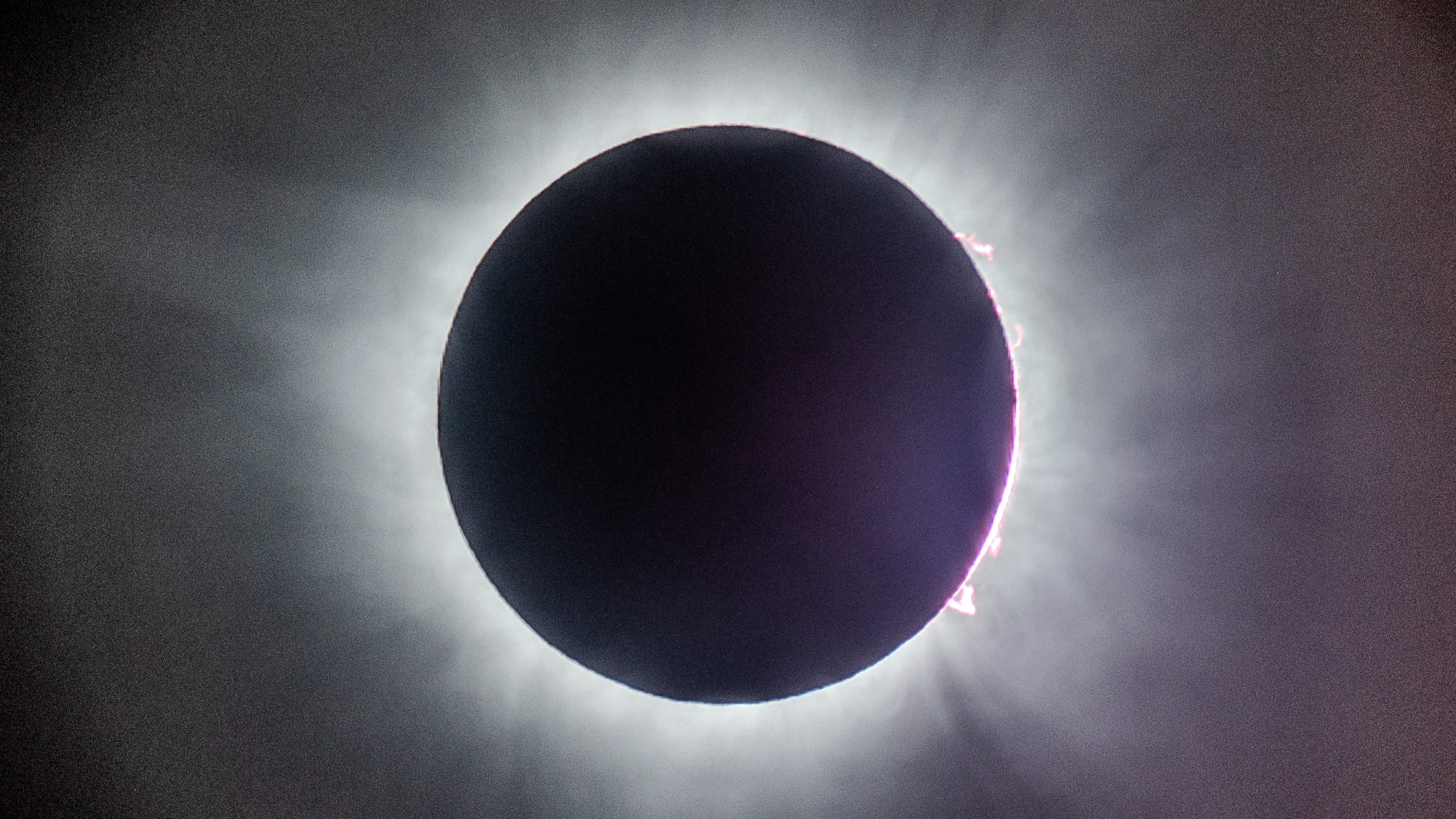
Under normal circumstances, the sun's corona — our star's outer atmosphere — is invisible. It extends millions of miles into the solar system, but it's overwhelmed by the brilliant light of the sun's photosphere, its visible surface. Totality changes that. When the moon completely covers the photosphere, the corona suddenly emerges. White streamers extend away from the black silhouette of the moon. Pink loops and prominences can appear around the edge of the moon.
For many first-time observers, the greatest surprise during totality is not only the detail but the scale. The corona often appears much larger than expected, extending several solar diameters away from the eclipsed sun. Photographs can capture some of that complexity, but they rarely reproduce the impression of depth and structure visible to the human eye, whose dynamic range is vastly superior to any camera.
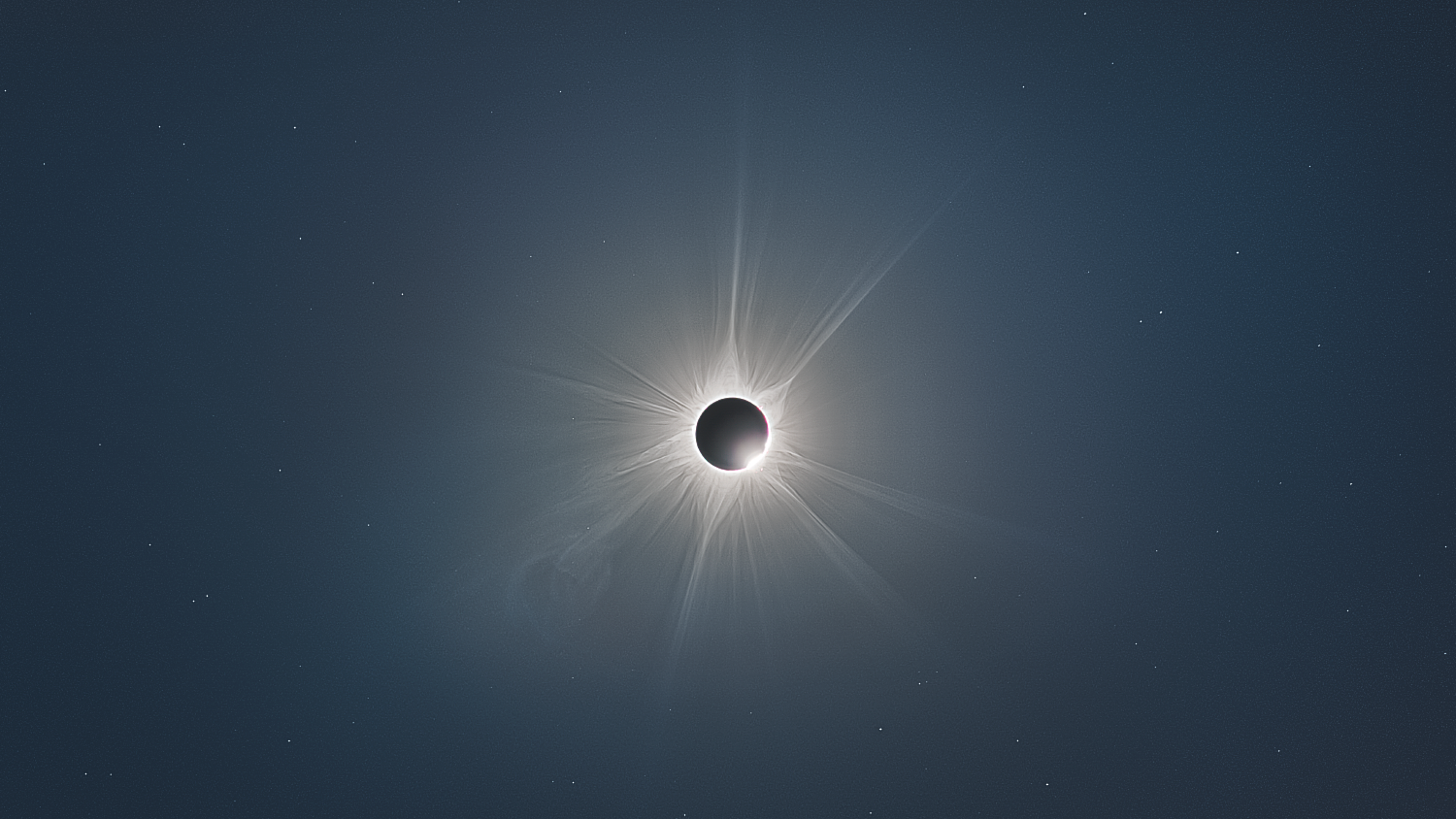
The corona on Aug. 12, 2026, may resemble the total solar eclipse on April 20, 2023. (Image credit: NASA/ESA (SOHO), P. Horálek/Institute of Physics in Opava; Josef Kujal (of the Astronomy Society of Hradec Kŕlové) and Milan Hlaváč.)
Why every corona looks different
The corona is not a fixed object. It is created by extremely hot plasma — highly energized, ionized gas — that's trapped and sculpted by the sun's magnetic field. Since the sun's magnetic field is constantly changing, the corona changes with it.
"The sun follows a natural 11-year cycle of increasing and decreasing activity," Ryan French, solar physicist, author and science communicator at the Laboratory for Atmospheric and Space Physics (LASP) in Boulder, Colorado, and author of Little Book of Eclipses: An Essential Companion to Solar and Lunar Events told Space.com in an email. "At the peak of this cycle, called solar maximum, there are loads of sunspots on the sun, which are giant magnets nestled in the base of the sun's atmosphere. These sunspots produce a lot of solar flares and coronal mass ejections, which are kind of bursts and eruptions of energy from the sun's atmosphere, and at solar minimum, the sun has none of these things."
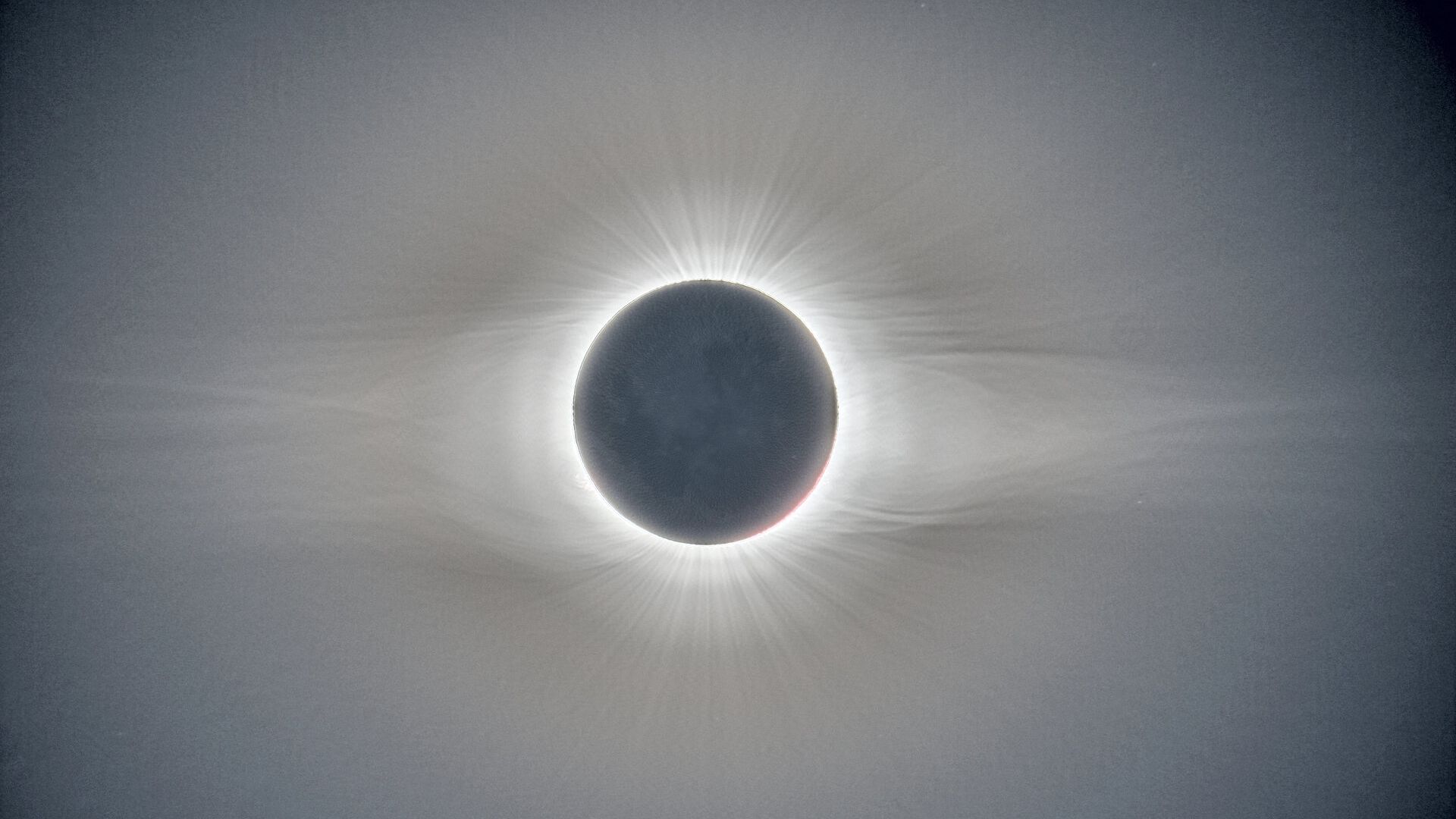
That magnetic activity determines the overall shape of the corona. During solar minimum, when the sun has few or no sunspots, the corona tends to look more uniform and more symmetrical. Long streamers often stretch from either side of the sun, giving the corona a wing-like appearance. During solar maximum, it can look much more complex. Sunspot regions act like magnetic anchors, creating structures that can appear as spikes or streamers extending in different directions.
"If you were to see a total eclipse during solar maximum, the solar corona looks almost like a five-pointed cartoon star," said French. "That's because every one of these sunspot regions creates a spire or spike that you can see with the eye."
Not solar maximum — but not quiet
The 2026 eclipse will not occur at solar maximum. Solar Cycle 25 peaked in October 2024, according to NASA and NOAA, with the Aug. 12, 2026 eclipse occurring almost two years later, during the cycle's declining phase. However, solar activity does not collapse immediately after solar maximum. It declines gradually, and the sun is expected to remain more active than it was in the lead-up to solar maximum.
"We're no longer in solar maximum — we're a third of the way past the peak in terms of amplitude and years passed," said French. "The corona will still be far more active than during the 2017, 2019 and 2020 total solar eclipses, but much less so than 2024's."
That makes the 2026 eclipse especially interesting. It likely won't show the full, highly structured corona seen close to the peak of activity in 2024, when the April 8 total solar eclipse occurred with a monthly sunspot number of about 144. Current predictions for August 2026 are closer to 102; far fewer, but still considered active by recent-cycle standards.
That means eclipse-watchers should expect something between extremes: not the clean, flattened corona of solar minimum, but not quite the wildest solar-maximum display either.
The sun's corona is only visible during the totality phase of a total solar eclipse. (Image credit: Getty Images)
A comparison with past eclipses
A useful comparison may be the total solar eclipses near the previous solar maximum. Solar Cycle 24, which peaked in April 2014, was relatively weak. The closest total solar eclipses to that peak were the rare hybrid eclipse of Nov. 3, 2013, when the monthly sunspot number was around 113. By contrast, Solar Cycle 23, which had a double peak — in March 2000 and November 2001 — was relatively strong. The closest total solar eclipse occurred on June 21, 2001, with a monthly sunspot number of around 203. Its corona was likely more complex than expected in 2026.
The 2026 eclipse therefore sits in a middle category. It's not a repeat of 2024, but it's not a quiet-sun eclipse either. An active declining-phase corona, it will likely feature strong streamers extending far into space, but with greater asymmetry, with one side of the corona more active. "It's sunspots specifically near the edge of the sun that dictate what the corona will look like," said French. The sun rotates every 27 days, so any large active region of sunspots rotating onto the sun's edge shortly before Aug. 12 could alter the corona's appearance dramatically. It's why any forecasts of what the corona looks like — which often come from Predictive Science a week before the eclipse — are generally refined on the day of the eclipse.
Red prominences may steal the show
One of the most memorable sights during totality is the appearance of vivid pink or crimson features around the moon's edge. These are usually prominences — immense structures of hydrogen plasma suspended above the sun's surface by magnetic fields. They're often mistaken for solar flares by beginners, such as after the 2024 total solar eclipse.
"Prominences are large magnetic structures that suspend plasma in the atmosphere of the sun, and they glow very bright in a very specific wavelength of light called hydrogen alpha," said French. Prominences are more likely when the sun is active, and because they can last for days or weeks, they are easier to anticipate than a flare. In hydrogen-alpha images taken before eclipse day, observers may be able to see which prominences are present around the solar edge.
The 2026 eclipse may have favorable geometry for sighting prominences. Because the moon will appear only slightly larger than the sun — which contributed to the relatively short duration of totality, at a maximum of just 2 minutes 18 seconds — smaller prominences on different sides of the sun could be visible at the same time. That is different from longer eclipses, where the larger apparent moon can cover prominences on one side before revealing others on the opposite side.
Could a CME be visible?
A coronal mass ejection (CME) is an eruption of plasma and magnetic field from the sun's atmosphere. Seeing one during totality is possible — it happened during the total solar eclipse on Dec. 14, 2020 — but requires luck. "CMEs travel very slowly, so they take several hours to traverse and escape from the sun's atmosphere, so you wouldn't see any motion during an eclipse," said French. "But what you could see, if you're lucky, is a snapshot of an eruption — though maybe a long exposure camera will be more likely to see this than your eye would." Such a view would be rare, but the chances are higher in an active solar environment than near solar minimum.
The 2019 total solar eclipse on July 2, 2019, just before the last solar minimum in December 2019. (Image credit: ESA/CESAR/Observatorio Astrofisico di Torino)
Predicting the corona yourself
There will be a forecast from Predictive Science, which can be so accurate that some eclipse chasers avoid it, so as not to ruin the surprise of totality. One way to get a general idea is to look at real-time images from telescopes that use coronagraphs to block the sun, such as the COSMO K-Coronagraph, NASA SOHO's LASCO C3 and the GOES CCOR-1. For sunspots, check the latest H-Alpha image from the Global Oscillation Network Group (GONG).
No scientist can say exactly what the corona will look like on Aug. 12, 2026. That will depend on the sun's magnetic activity in the days immediately before totality, the location of sunspot groups, the presence of prominences and the possibility of eruptions. "What exactly we see during the August eclipse will depend on what the activity is that week," said French. "And even if you saw an eclipse a month before or a month after, it could be very different." For a few fleeting minutes over Greenland, Iceland, Spain and the Balearic Islands, the sun's hidden atmosphere will become momentarily visible before vanishing back into the glare, never being seen again in quite the same way.
We're just a few short days away from the Aug. 12 total solar eclipse, when millions will watch as the moon glides across the face of the sun, hiding its light in a wondrous display of orbital mechanics.
The eclipse will unfold during August's new moon phase, as the lunar disk slips silently between the sun and Earth in the daytime sky. Ordinarily, the subtle tilt in the moon's orbit causes its shadow to pass just below, or above our planet, missing it entirely.
However, on Aug. 12, the moon's orbit will carry it into a near-perfect alignment with the sun and Earth, casting its colossal shadow across a 182-mile-wide corridor known as the path of totality, where viewers will get to see the lunar disk fully hide the sun's disk.
The path of totality for the Aug. 12 eclipse cuts through Spain, Iceland and Greenland. Hundreds of millions more watching from outside of this narrow corridor will also bear witness to a spectacular partial solar eclipse, as the moon passes in front of our parent star, without fully obscuring its surface. Those unable to watch the eclipse in person by dint of geography can also follow along online, with details of the livestream to be released closer to the event.
Read on to discover what will happen during each stage of the Aug. 12 total solar eclipse.
Stage 1: The partial eclipse begins
The partial phase of the eclipse officially begins at the moment of "first contact", when the lunar disk takes its first nibble out of the sun — a subtle transformation that will first become visible in the skies over the U.S. state of Alaska at 11:34 a.m. EDT (1534 GMT) on Aug. 12.
The moon takes its first "bite" out of the sun during the partial phase of a solar eclipse. (Image credit: Photo by Noam Galai/Getty Images)
You can check out exactly when the partial eclipse will begin from your location and find out exactly how much of the sun will be hidden by the moon using Time and Date's interactive eclipse tracker.
The hour and a half following first contact will see the moon sink ever farther into the sun's disk for those in the path of totality, transforming it from a burning orb into a magnificent shining crescent.
The and moon meet in the skies over Mexico during the 2024 total solar eclipse. (Image credit: Photo by: Edwin Remsberg/VWPics/Universal Images Group via Getty Images)
You may notice the temperature drop noticeably, accompanied by a subtle darkening of the sky in the half hour preceding the climactic phase of totality, as the moon reduces the sun to a thin sickle in the evening sky. Pinpricks of light — such as those that shine through a colander, or the gaps in a leaf — will also appear to mirror the scene above, creating a kaleidoscope of tiny bright crescents.
Pinpricks of light create tiny crescents during a solar eclipse. (Image credit: Photo by: Edwin Remsberg/VWPics/Universal Images Group via Getty Images)
Some of the most spectacular moments of an eclipse occur just before and after totality. First, look out for the "diamond ring" effect, as the last sliver of the sun peeks out from behind the lunar disk to appear as a gorgeous celestial jewel, while the outermost layer of our star's atmosphere, the corona, creates a glowing halo around the moon.
The diamond ring effect shines from behind (Image credit: Photo by Chris McKay/WireImage)
Tear your eyes away from the sun for just a second and you may just catch sight of the moon's shadow advancing on you from the west, before it engulfs your surroundings in a false night.
Baily's beads appear in the moments before totality. (Image credit: STAN HONDA/AFP via Getty Images)
The final seconds before totality will see bright "Baily's Beads" form dazzling points of light on the moon's edge, where the last shreds of the sun's disk shine through the ravines and valleys that scar the ancient lunar surface.
Stage 3: Totality & maximum eclipse
As the last of the sun's surface slips behind the moon, totality begins. This is the climactic phase of the eclipse, when the moon acts like a natural coronagraph to block the brilliance of the sun's disk, ushering in a false night in which our star's outer atmosphere can be seen leaping out from the lunar silhouette.
Totality will last a maximum of 2 minutes, 18 seconds, during which time it's safe to remove your glasses and look at the sun. Just be sure to put them on again before its fiery disk reemerges from the other side of the lunar disk.
The sun's corona haloes the moon at the climax of a total solar eclipse. (Image credit: Photo by: Edwin Remsberg/VWPics/Universal Images Group via Getty Images)
That white halo surrounding Earth's natural satellite is the sun's corona — a jacket of superheated gas that surrounds our parent star. Look out for glowing solar prominences leaping outward through the sun's atmosphere, along with the red line of the chromosphere — the layer of the sun's atmosphere beneath the corona — which appears fleetingly at the beginning and end of totality, according to NASA.
The point of maximum eclipse occurs roughly halfway through totality, when the sun's disk is most hidden by the moon.
Eagle-eyed skywatchers may catch Jupiter and Mercury shining to the lower right of the eclipsed sun in the faux twilight experienced during totality, while Venus will appear as a bright star-like object to its upper left. If you're incredibly lucky, you could even spot one of the brightest shooting stars or fireballs of the Perseid meteor shower, which comes to a peak around the same time as the Aug. 12 total eclipse.
Stage 4:Totality ends
The fourth stage of the eclipse comes as the very edge of the sun's disk emerges from behind the moon, marking the end of totality as Bail's Beads and the diamond ring effect play out in reverse, before giving way to an ever-thickening solar crescent.
Stage 5: The partial eclipse ends.
The waning partial eclipse will come to a global end at 3:57 p.m. EDT (1957 GMT), as the moon's silhouette exits the sun's disk in the skies off the west coast of Africa — a moment known to astronomers as fourth contact.
The moon exits the solar disk at the end of a total solar eclipse. (Image credit: Getty Images)
Space.com is on hand to provide expert coverage and on the ground reporting as the eclipse unfolds. Skywatching Editor Daisy Dobrijevic is undertaking an expedition with HX to observe the total solar eclipse from the waters around Greenland, while Skywatching Writer Anthony Wood heads to Spain in a cowboy hat, to catch the orbital showdown with citizen scientists from NASA's Dynamic Eclipse Broadcast Initiative.
Be sure to check out our total eclipse live blog to stay up to date with all the latest news, along with our handy explainer article detailing everything you need to know about the Aug. 12 total solar eclipse.
Editor's Note: If you capture footage of the Aug. 12 total solar eclipse and want to share it with Space.com's readers, then please send your photo(s), comments, name and location to spacephotos@space.com.
Fuchs endothelial corneal dystrophy, a progressive disorder that can gradually cloud the cornea and impair vision, may be driven by a cellular process more complex than simple cell loss. A new study published in Cell Death Discovery reports that ultraviolet-A light can induce chronic hyperploidization in corneal endothelial cells, triggering changes associated with fibrosis. The findings connect long-term genome abnormalities in post-mitotic cells to the structural deterioration observed in this increasingly recognized eye disease.
The cornea depends on a thin inner layer of endothelial cells to maintain its transparency. These cells regulate the movement of fluid between the cornea and the anterior chamber of the eye, preventing the tissue from becoming waterlogged. Unlike many cell types, human corneal endothelial cells have limited ability to divide and replenish themselves. When they are damaged or lost, neighboring cells may enlarge and stretch to cover the affected area, but this compensation has limits. In Fuchs endothelial corneal dystrophy, the endothelial layer progressively becomes dysfunctional, allowing fluid accumulation and producing corneal swelling, haze and visual distortion.
The study focuses on hyperploidization, a condition in which cells acquire extra sets or copies of chromosomes. In a healthy cell cycle, DNA is replicated and then evenly distributed when a cell divides. Post-mitotic cells, however, are not expected to continue cycling through repeated rounds of DNA replication. If DNA replication occurs without successful cell division, the result can be a cell with an enlarged genome and multiple chromosome sets. This state, known as polyploidy or hyperploidization depending on its extent and context, can alter cell size, metabolism, gene activity and responses to stress.
The researchers investigated how ultraviolet-A, or UVA, light affects cells associated with Fuchs endothelial corneal dystrophy. UVA has a longer wavelength than ultraviolet-B and can penetrate biological tissues more deeply. Although the eye possesses protective mechanisms, persistent or excessive exposure to light-generated stress can damage cellular components, including DNA, proteins and mitochondria. The study indicates that UVA exposure does not merely cause an acute injury that cells either repair or fail to survive. Instead, it can establish a chronic hyperploid state in cells that no longer divide normally.
That distinction is important because a cell can remain alive while becoming increasingly dysfunctional. Hyperploid cells may continue to produce proteins, communicate with neighboring cells and modify their surrounding environment, even as their enlarged genomes disrupt normal regulation. In the corneal endothelium, such persistent abnormalities could interfere with the machinery responsible for maintaining fluid balance and tissue transparency. The research links this long-lasting cellular state to the activation of fibrotic processes, suggesting that damaged endothelial cells may help remodel the cornea rather than simply disappearing.
Fibrosis is the formation or accumulation of excessive connective-tissue components, particularly extracellular matrix proteins such as collagens. During wound healing, matrix production can provide temporary structural support. When the response persists, however, the tissue can stiffen, become disorganized and lose its normal optical properties. In the context of Fuchs endothelial corneal dystrophy, fibrosis may contribute to the loss of corneal clarity and the progression of visual impairment. The study’s central message is that chronic hyperploidization may act as an upstream signal that pushes post-mitotic cells toward this pathological remodeling.
The findings also help explain why a disease affecting a specialized, non-dividing cell population can progress over time. A conventional view of cellular damage often emphasizes apoptosis, necrosis or the gradual depletion of functional cells. The new work highlights another possibility: injured cells may survive in a permanently altered condition and actively influence disease progression. By retaining metabolic activity while carrying abnormal quantities of DNA, these cells could produce signals that encourage inflammation, matrix deposition or changes in the behavior of nearby cells.
The UVA connection raises questions about how environmental stress interacts with inherited susceptibility. Fuchs endothelial corneal dystrophy has genetic and age-related components, and the disease does not arise from a single universal cause. The study does not establish that UVA exposure alone causes the disorder, but it provides a mechanism through which light-associated stress could worsen cellular instability in vulnerable corneal tissue. This may help researchers examine whether cumulative exposure, cellular antioxidant capacity and pre-existing genetic changes combine to determine how rapidly the disease advances.
From a treatment perspective, the work points toward targets beyond replacing lost endothelial cells. Future strategies might seek to prevent abnormal DNA replication, stabilize genome integrity, suppress the fibrotic signals released by hyperploid cells or protect the corneal endothelium from chronic light-induced stress. Such approaches would require careful testing, because polyploidy can serve useful roles in some normal tissues, and broadly blocking cell-cycle or repair pathways could produce harmful effects. The challenge will be to distinguish pathological hyperploidization from adaptive genome changes that help cells survive.
The study ultimately presents Fuchs endothelial corneal dystrophy as a disease of cellular identity as well as cellular survival. UVA-induced chronic hyperploidization appears to place post-mitotic corneal endothelial cells in a persistent state of genomic imbalance, where they can contribute to fibrosis and tissue failure. By connecting light stress, abnormal DNA content and corneal scarring, the research offers a new framework for understanding why the disease can continue even after the initial injury has passed—and provides a potential roadmap for therapies designed to interrupt the process before vision is permanently compromised.
Subject of Research: Ultraviolet-A light-induced chronic hyperploidization and fibrosis in post-mitotic corneal endothelial cells affected by Fuchs endothelial corneal dystrophy
Article Title: Ultraviolet-A light-induced chronic hyperploidization causes fibrosis in post-mitotic cells affected by Fuchs endothelial corneal dystrophy
Article References: Adhikari, Y., Parekh, M., Deshpande, N. et al. Ultraviolet-A light-induced chronic hyperploidization causes fibrosis in post-mitotic cells affected by Fuchs endothelial corneal dystrophy. Cell Death Discov. (2026). https://doi.org/10.1038/s41420-026-03292-8
Com 408 cv, tração integral, suspensão de afinação desportiva, caixa manual virtual de oito velocidades e um sistema de direção Steer-by-wire com volante Yoke, o novo Lexus RZ550e F-Sport é a prova de que um SUV elétrico pode ser genuinamente emocionante. E, ainda assim, gastar menos de 15 kWh por cada 100 km no "mundo real".
It's hardly a "Great American Eclipse," but on Aug. 12, 2026, some parts of the North American continent will see a partial solar eclipse.
Will it be as impressive as on April 8, 2024, when totality visited Mexico, 15 U.S. states and six provinces in Canada? No, yet in some parts of the U.S. and Canada, astronomers will be out in force to capture a significant chunk of the sun as it is obscured by the new moon.
The spotlight may be on the total solar eclipse in Greenland, Iceland, and Spain, but millions across North America can still see the moon take a bite out of the sun on Aug. 12. The farther northeast you are, the deeper the eclipse. Here's everything you need to know about the partial solar eclipse in North America.
Where to see the partial solar eclipse in the U.S.
Between 7:34 a.m. AKDT and 2:52 p.m. EDT, 20 U.S. states will see something of the partial solar eclipse, though only northeastern states will get a good view. Here's a sample of locations and the time of maximum eclipse. Note that the partial eclipse begins (first contact) and ends (last contact) around 55 minutes before and after the time of maximum eclipse given here.
Location
Maximum eclipse
Time (local)
Fairbanks, Alaska
37%
8:27 a.m. AKDT
Presque Isle, Maine
28%
1:50 p.m. EDT
Bangor, Maine
23%
1:53 p.m. EDT
Portland, Maine
19%
1:53 p.m. EDT
Montpelier, Vermont
17%
1:49 p.m. EDT
Manchester, New Hampshire
16%
1:53 p.m. EDT
Boston, Massachusetts
16%
1:55 p.m. EDT
Providence, Rhode Island
15%
1:55 p.m. EDT
Springfield, Massachusetts
14%
1:53 p.m. EDT
New Haven, Connecticut
12%
1:54 p.m. EDT
Bridgeport, Connecticut
11%
1:54 p.m. EDT
New York City, New York
10%
1:54 p.m. EDT
Newark, New Jersey
9%
1:53 p.m. EDT
Rochester, New York
9%
1:43 p.m. EDT
Allentown, Pennsylvania
8%
1:52 p.m. EDT
Buffalo, New York
7%
1:42 p.m. EDT
Philadelphia, Pennsylvania
7%
1:53 p.m. EDT
From most of the northeast U.S., only a small eclipse will be visible on Aug. 12, 2026. (Image credit: imageBROKER/Lucas Seebacher via Getty Images)
Where to see the partial solar eclipse in Canada
Between 8:38 a.m. MST and 4:38 p.m. NDT on Aug. 12, every province in Canada will be able to see some kind of partial solar eclipse, but those in the east of the country will see something much more significant. Here's a sample of locations and the time of maximum eclipse. Note that the partial eclipse begins (first contact) and ends (last contact) around 55 minutes before and after the time of maximum eclipse given here.
Location
Maximum eclipse
Time (local)
Iqaluit, Nunavut
61%
1:24 p.m. EDT
St. John's, Newfoundland and Labrador
53%
3:34 p.m. NDT
Moncton, New Brunswick
32%
2:55 p.m. ADT
Halifax, Nova Scotia
31%
3:00 p.m. ADT
Churchill, Manitoba
27%
12:02 p.m. CDT
Quebec City, Quebec
24%
1:46 p.m. EDT
Whitehorse, Yukon
23%
9:26 a.m. MST
Trois-Rivières, Quebec
21%
1:45 p.m. EDT
Sherbrooke, Quebec
20%
1:48 p.m. EDT
Montreal, Quebec
18%
1:45 p.m. EDT
Ottawa, Ontario
15%
1:42 p.m. EDT
Kingston, Ontario
12%
1:43 p.m. EDT
Toronto, Ontario
8%
1:40 p.m. EDT
St. Catharines—Niagara, Ontario
8%
1:41 p.m. EDT
Kitchener, Ontario
7%
1:38 p.m. EDT
Hamilton, Ontario
7%
1:40 p.m. EDT
London, Ontario
5%
1:38 p.m. EDT
Windsor, Ontario
3%
1:36 p.m. EDT
What to expect
This is a small partial solar eclipse in North America, which occurs at lunchtime. In the east of the continent, it will occur high in the sky — about two-thirds of the way between the horizon and the zenith — in the south-southwest. At maximum eclipse, the partially eclipsed sun with resemble a thick crescent or a smile. It won't get dark — that only happens within the path of totality — nor will daylight be affected.
Those using a telescope to observe or image the partial eclipse (using a solar filter) should also consider that Venus — which will be visible just after sunset — reaches dichotomy on Aug. 12. This is the point in its current apparition as the "Evening Star" that it starts becoming interesting in a telescope. Dichotomy sees it reduce to 50%-lit and gradually become an ever-shrinking crescent.
Perhaps more importantly, the early hours of Aug. 13 see the peak of the annual Perseid meteor shower.
When is the next solar eclipse visible from the US after August 2026?
The next solar eclipse on Aug. 2, 2027, will be seen in Newfoundland, Canada, where a 23% partial eclipse will occur at the province's southwestern tip.
On Jan. 26, 2028, during an annular solar eclipse across northern South America, eastern U.S. states and eastern Canada will see a very small partial solar eclipse shortly after sunrise. Florida will have the best view, with around 15% of the sun blocked.
On Jan. 14, 2029, a large partial solar eclipse will be seen in the morning sky across all of North America — up to 81% in northern Canada and 74% in northwestern U.S. states. On June 12, 2029, a smaller partial solar eclipse will peak at 34% just after sunrise from Nunavut, the Northwest Territories and the northern tips of Alberta and British Columbia.
O formato “passaporte” do novo Galaxy Z Fold8 da Samsung mostra que há espaço para inovação no tamanho e apresentação dos smartphones dobráveis, com uma experiência de utilização que vai além da forma e se destaca pela funcionalidade.
As of last week, the US had recorded 2,465 confirmed infections so far this year, already more than the 2,289 total cases in 2025. The last two years saw more total infections than the rest of the 21st century combined, as The Guardian reports, with 2026’s tally beating a 35-year record.
Now, in the midst of all that crisis crisis, a character has stumbled into the narrative who perfectly illustrates how it’s gotten so bad. As the LA Times reports, a measles-infected individual spent a whopping 11 hours at the Universal Studios Hollywood theme park last month, potentially exposing countless other visitors.
The Los Angeles County Public Health Department was forced to issue a stark warning: anybody who visited the amusement park on July 26 during teh hours between 10am and 9pm may have been exposed and should monitor for symptoms including fever, cough, or rash — and stay vigilant until August 16.
The virus is contagious up to four days before the characteristic rash appears on the skin, and up to four days after that.
Measles can easily spread through the air through just via talking or breathing, and can persist on surfaces for hours at a time.
The vaccine against it, available as part of the measles, mumps, and rubella combination (MMR) shot, is extremely worthwhile. Two doses are 97 percent effective in preventing a measles infection.
The department also urged “everyone to confirm their immunity and get the vaccine if needed, especially before traveling and attending crowded events.”
California has been hit particularly hard, recording at least three localized measles outbreaks this year so far. However, according to the state’s health department, all three outbreaks have ended.
According to the Centers for Disease Control and Prevention, there have been 38 new outbreaks in 2026 across the country so far this year, with several thousand cases spanning 47 states.
The danger to one’s health is substantial — especially to the unvaccinated. According to the CDC, roughly one in five unvaccinated people in the US who get measles are hospitalized. One out of 20 children with measles develop pneumonia. and one to three of every 1,000 children who become infected die from respiratory and neurologic complications.
Bending Spoons has snapped up Airtable to add to its portfolio of software companies, alongside AOL, Evernote, WeTransfer, Brightcove and Vimeo
Airtable made its name as a builder of low/no code database services, aimed particularly at non-technical staff, but is now one of many vendors facing financial difficulties in the face of the SaaS/AIpocalypse. The arrival of AI coding tools, which offer non-technical employees more flexible ways to build business applications, has hit demand for its services.
Bending Spoons bought Airtable in a deal it valued at just $1.285 billion, a far cry from the $11.7 billion Airtable was worth at its peak.
Bending Spoons has built its portfolio by buying once-successful companies like Airtable that have struggled to cope with newer, nimbler competitors or failed to adapt to emerging technologies. Bending Spoons takes these companies, cuts costs and markets them aggressively with the goal of returning them to profitability.
“Airtable is a pioneering brand reshaping how teams organize data and manage critical workflows. We’re committed to investing in Airtable for the long run, and doubling down on its core strength: bringing teams and workflows together in one flexible workspace. We plan to expand what can be done across the full spectrum of work and make Airtable even more valuable to customers at every scale,” said Luca Ferrari, Bending Spoons CEO and co-founder.
On August 12, the New Moon’s shadow will fall over a portion of Earth’s surface. When that happens, the Sun will temporarily disappear from the sky in a total solar eclipse. These breathtaking events are spectacular and ethereal, as the sky falls dark during the day, leaving only the soft glow of our star’s outerContinue reading "How to see the August 12 total solar eclipse"
It will be a magnificent day for England's south coast. From Portsmouth's Historic Dockyard and Brighton's Royal Pavilion to Dorset's Jurassic Coast and Cornwall's Land's End, beaches and cliff tops will be plunged into darkness in the day during the U.K.'s first total solar eclipse for almost 91 years. There is, however, a problem — this scenario won't occur until Sept. 23, 2090.
A total solar eclipse visits a location on Earth on average once every 366 years, and the British are currently in no-man's land. Aug. 12, 2026, is particularly cruel, with a path of totality cruising past the British Isles as it surges across the Atlantic Ocean from Iceland to northern Spain. Eclipse chasers in the U.K. are used to traveling, and travel they will, but those left behind will nevertheless experience a very deep partial solar eclipse peaking at 98% in extreme locations. It will be the U.K.'s most significant partial solar eclipse since March 20, 2015, when another path of totality just missed the U.K. to the north.
Where to see the partial solar eclipse in the U.K.
A deep partial eclipse is a compelling sight, and the widespread nature of this one means millions of Brits can experience it without leaving home.
London, Manchester and Glasgow all experience 91.4% coverage, staggered by only a few minutes. Belfast does slightly better at 93.1%, while Cardiff edges ahead among the U.K's capitals at 93.2%. In practice, these differences are subtle — this is a nationwide event that requires no travel. That said, expect crowds at U.K. national parks, such as Snowdonia, the Brecon Beacons and the Pembrokeshire Coast in Wales; the South Downs and the Lake District in England; and the Cairngorms and the Isle of Skye in Scotland.
However, it's in County Kerry, Ireland, that sees the biggest eclipse in the British Isles archipelago, with Great Skellig — Luke Skywalker's island sanctuary in "Star Wars Episode VII: The Force Awakens" and "Star Wars Episode VIII: The Last Jedi" — seeing a whopping 98% partial eclipse.
When to see the partial solar eclipse in the U.K.
This is a late, low eclipse, and timing matters. The action takes place between 5:59 p.m. and 8:10 p.m. BST, but the main event comes around 7:05-7:13 p.m. BST, when the eclipse reaches its maximum across the U.K. The deeply eclipsed sun will appear above the west-northwest horizon as a thin crescent, hanging like a curved blade, with its tips pointing toward the ground.
It won't get dark — that only happens within the path of totality. However, daylight will feel very subdued with a noticeable dimming.
Location will be crucial. Because the sun will be so low, you'll need a clear, unobstructed horizon — ideally from a coastal viewpoint, hilltop, or open landscape. Get into position early, use proper eclipse glasses and solar filters, and follow the sun as the moon slowly takes its bite.
If you're somewhere rural, it's worth spending the night, which also happens to be the peak of the annual Perseid meteor shower.
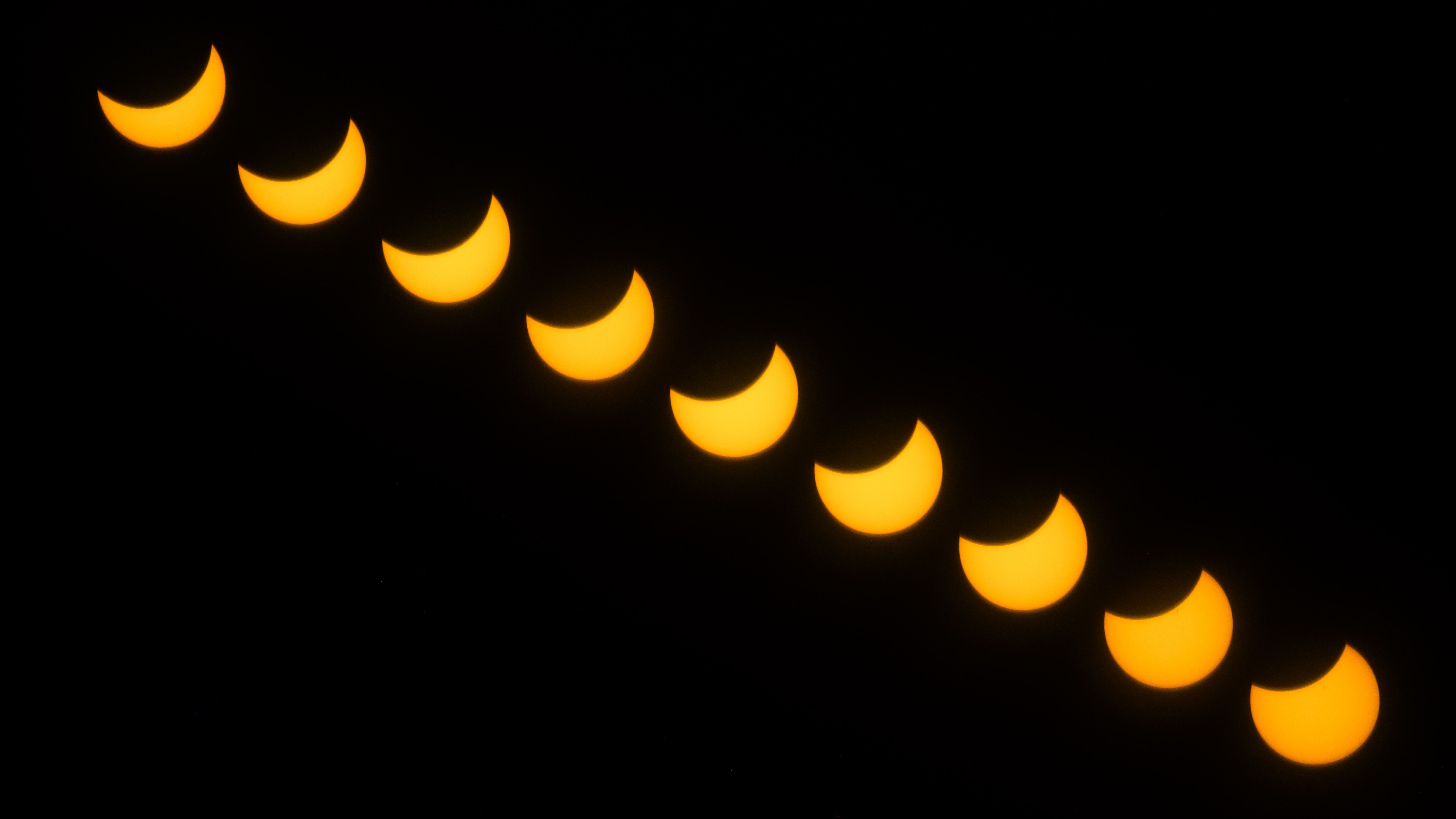
Partial solar eclipse sequence captured on Oct. 14, 2023 from central California. (Image credit: Mimi Ditchie Photography via Getty Images)
Best weather for the partial solar eclipse in the U.K.
Whether the sky is clear on the day is another matter; August may be warm in the U.K., but it's not known for clear skies (as anyone who traveled into the last British path of totality, in Cornwall in 1999, will recall). This is why many British eclipse chasers are perfectly happy that there is no total solar eclipse in the U.K. until 2090, but statistics are not destiny. A single high-pressure system on the day could transform the outlook entirely.
Meanwhile, the path of totality crosses regions with more reliable weather patterns, particularly north-central Spain and the Balearic Islands.
Partial solar eclipse beyond the U.K.
While observers in the U.K. will see a deep partial eclipse, those inside the narrow path of totality — across eastern Greenland, western Iceland and northern Spain — will experience something fundamentally different, if only for a few minutes. In eastern Spain, totality arrives just before sunset, with the fully eclipsed sun hovering only a few degrees above the western horizon. The sun will disappear almost immediately after totality ends.
However, what's been largely overlooked is the scale of the partially eclipsed sunset across Europe and northwest Africa. Across Algeria, France, Germany, Italy, Austria, Poland and beyond, millions will see the sun set while deeply eclipsed. In some locations, maximum eclipse occurs just minutes before sunset; in others, the sun slips below the horizon still significantly covered by the moon. Expect slim crescent suns to be photographed slipping beneath the horizon from across Central Europe.
Consequently, U.K. observers will see the edge of a much larger event — the moon's expansive penumbral shadow stretching across continents. It will be one of the most widely visible and visually striking eclipse phenomena of the decade. According to Time and Date, 283 million people will see at least a 90% partial eclipse.
When is the next partial solar eclipse in the U.K.?
If Aug. 12, 2026, feels like a one-off, it isn't. The U.K. is in the midst of an unusually active spell for partial eclipses, with at least one visible almost every year through the end of the decade. After this deep event comes a more modest partial on the morning of Aug. 2, 2027 — linked to the century's longest total eclipse over North Africa — with a maximum obscuration of 48% in southern England.
On Jan. 26, 2028, attention shifts once again to a partially eclipsed sunset during which up to 56% of the sun will be obscured by the moon. That one will be best seen from western locations such as Cornwall and Wales, while the central path delivers an annular "ring of fire" across Portugal and Spain. The June 12, 2029, eclipse is much more marginal, visible only from northeast England and eastern Scotland as a shallow partial eclipse at sunrise. Finally, on June 1, 2030, another annular eclipse brings a partially eclipsed sunrise to the entire U.K., with up to about 49% of the sun blocked by the moon in the southeast.
Individually, these events are varied — morning, sunset and sunrise eclipses, deep and shallow — but taken together they form a rare sequence for armchair eclipse chasers in the U.K. who likely won't be around for totality 64 years from now.
Be sure to stay up to date with all the latest news with our total solar eclipse live blog, where skywatching editor Daisy Dobrijevic will be sharing her experience of totality from aboard a HX Expeditions cruise ship in the waters off eastern Greenland. Skywatching writer Anthony Wood will also be bringing reports of each eclipse phase from central Spain, as he watches the eclipse accompanied by citizen scientists from the Dynamic Eclipse Broadcast initiative.
The European Commission has reached an agreement with an industrial consortium to proceed with a secure connectivity constellation, increasing the number of satellites as well as its cost.
Are you ready for the eclipse? Whether you're bound for the path of totality or set to see a partial eclipse from Europe, Canada or the northeast U.S. on Wednesday, Aug. 12, there's a dirty word eclipse chasers hate to utter during an eclipse season, and yet become completely obsessed with — clouds.
We all start behaving as though Earth's atmosphere owes us something. After spending years studying the climate and where it is most likely along a path of totality to have a clear sky, we're in position and can now do almost nothing about it save for drive or sail a few miles. We refresh cloud forecasts. We compare satellite imagery. We point at scraps of blue sky as if we can persuade them to remain so at a specific time. By the time the moon is almost on the sun, we've spent the best part of a week staring at our phones and fretting.
The received wisdom is that you must have a perfect view of a total solar eclipse, and that if you don't, you've failed because you didn't do your research or take evasive action. Never mind that many who end up under a blue sky then spend the entire time behind a camera. The desire for a clear sky and a clean horizon is obvious — particularly if you're in the path of totality — and yet it's entirely possible that clouds will be present, very possibly in the places expected to be clear. That's exactly what happened on April 8, 2024, when the favored state of Texas was cloudy while wintry Maine and New Brunswick had a bluebird day.
Having seen many total, annular and partial solar eclipses, I have come to believe something slightly heretical: you do not need a perfectly clear-sky view of a total or partial solar eclipse to matter. Sometimes one clear second is enough. Whisper it, but clouds add a lot of drama not just to an eclipse, but to photos of it, too.
Beginners often assume an eclipse is only "successful" if they see the sun's corona throughout totality. Some even rank eclipses in advance according to how long totality lasts. It's all an illusion. If a gap opens in the cloud for a short time and the corona appears, that is not a consolation prize. That is the thing itself. The same goes for a glimpse of a partially eclipsed sun if that's what's heading your way.
So don't fret the eclipse — check weather forecasts and do your best to find a clear sky, but when nature takes over, don't fight it or get upset by it. Cherish whatever you get. You only need a one-second window — and even that is not in your control.
What's happening
Path of the total solar eclipse over IcelandCreated using MapHub.net. Source: Esri, Maxar, GeoEye, Earthstar Geographics, CNES/Airbus DS, USDA, USGS, AeroGRID, IGN, and the GIS User CommunityPath of total solar eclipse over SpainCreated using MapHub.net. Source: Esri, Maxar, GeoEye, Earthstar Geographics, CNES/Airbus DS, USDA, USGS, AeroGRID, IGN, and the GIS User CommunityEntire path of the total solar eclipse on Aug. 12, 2026.Created using MapHub.net. Source: Esri, Maxar, GeoEye, Earthstar Geographics, CNES/Airbus DS, USDA, USGS, AeroGRID, IGN, and the GIS User CommunityEntire path of the total solar eclipse on Aug. 12, 2026.Created using MapHub.net. Source: Esri, Maxar, GeoEye, Earthstar Geographics, CNES/Airbus DS, USDA, USGS, AeroGRID, IGN, and the GIS User Community
On Aug. 12, the moon's shadow crosses eastern Greenland, western Iceland and northern Spain, with a small part of Portugal also near the action. From inside the narrow path of totality, the sun will be completely covered for up to 2 minutes 18 seconds. If that's your destination, get excited — and be prepared. During totality, stay present. An eclipse is short enough that distraction becomes a genuine hazard to observing. A one-second look can be enough, but only if you are really paying attention.
Outside of the path of totality, a much wider partial solar eclipse will be visible across the U.K., Europe, parts of North America and northwest Africa.
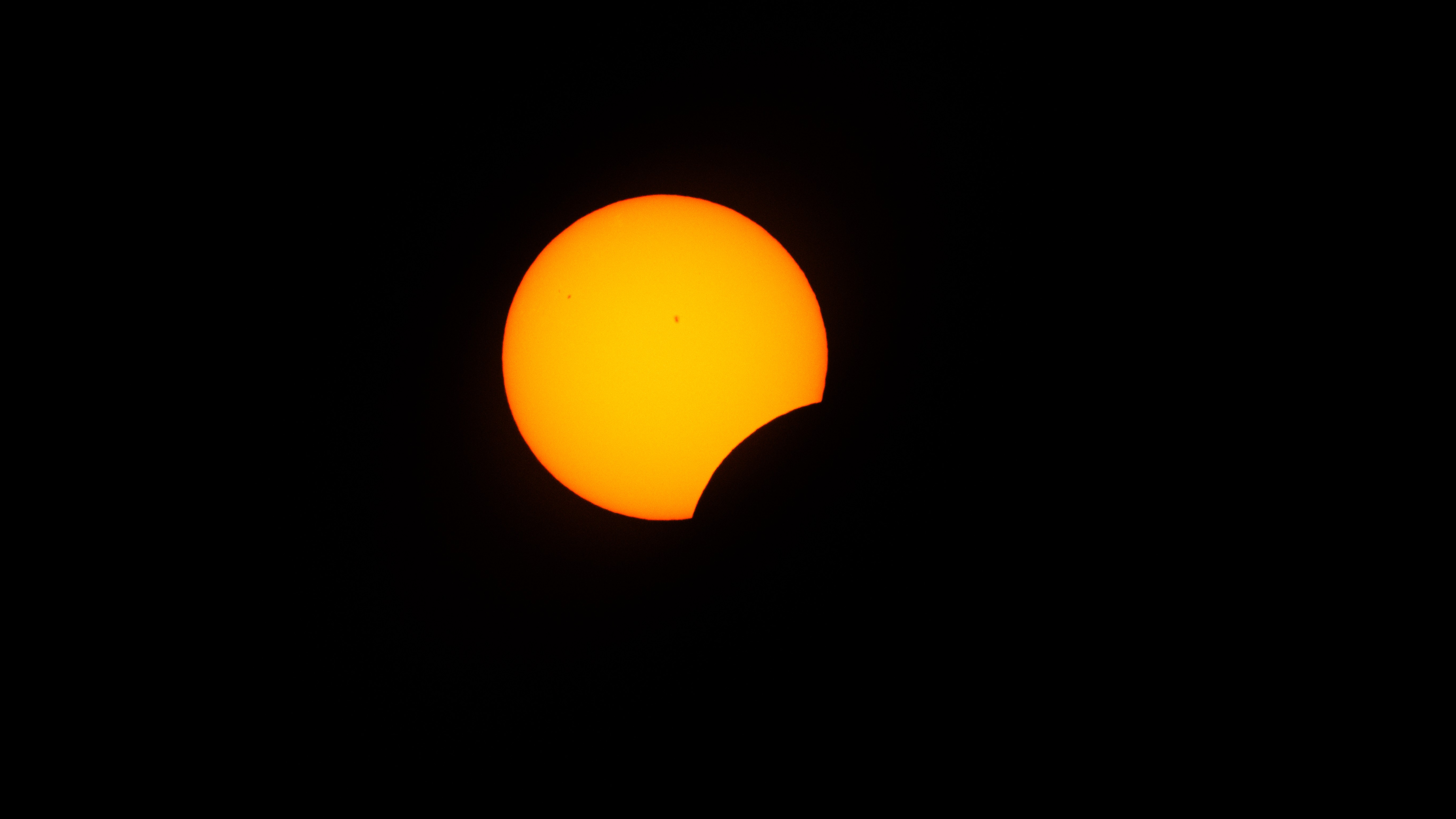
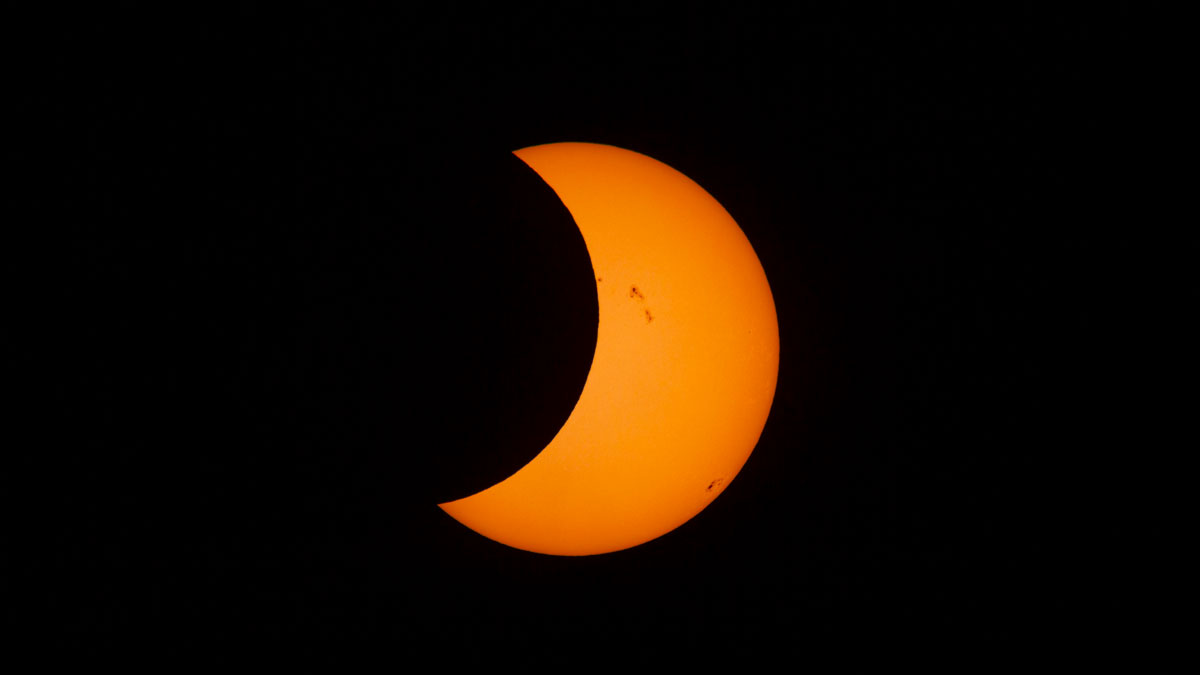
A partial solar eclipse can make for a striking photograph. Here you can also see some large sunspots on the surface of the sun. (Image credit: Josh Dury Photo Media)
The U.K. gets one of the more striking consolation prizes: a very deep partial eclipse late in the day. Across much of Britain, around nine-tenths of the sun will be covered, with the deepest views toward the west and southwest. London, Manchester and Glasgow are all in the roughly 91% range, while Cardiff and Belfast do slightly better. Maximum eclipse takes place around 7:05 to 7:13 p.m. BST, when the sun will be low in the west-northwest. That low sun is the detail many people will miss. This is not an eclipse to watch from behind a row of houses, trees or office blocks. A beach, cliff top, hill or open field may make the difference between seeing a thin solar crescent and seeing nothing at all. But having a clear western horizon means clear weather is needed not just where you are, but where you're looking — possibly a 100 miles away to the northwest. That will be even more of an issue in eastern Spain and the Balearic Islands, from where the total solar eclipse will occur when the sun and moon are just a couple of degrees above the horizon.
North America gets a smaller event, but not a meaningless one. The farther northeast you are, the better — though a partial eclipse probably isn't something to travel far to see more of. It's best to take what's coming your way. In the U.S., northern Maine sees the deepest partial eclipse, while Boston, New York, Philadelphia and parts of New England see a smaller bite taken from the sun after lunch. Canada does better, especially in the east and north. Newfoundland sees more than half the sun covered, while the rest of Atlantic Canada has a much better show than most of the U.S.
Wherever you are, remember that it is never safe to look directly at the sun without proper eclipse glasses or certified solar filters. Thin cloud does not make it safe to look at the sun. Nor do sunglasses. Even a quick glance requires eclipse glasses.
How and when I'm watching it
I'll be in Greenland for this one, but the way I recommended you watch it is low-tech. I would bring eclipse glasses, a printed or saved set of local timings (visit Time and Date for a location-specific schedule), and binoculars with a proper solar filter fitted securely over the front of the lenses. Personally, I wouldn't build the day around photography. The great trap of a total solar eclipse is believing it is mainly something to photograph. It is not. It is something that happens to the whole environment.
If you're in the path of a deep partial eclipse — say, over about 80% — you may begin to notice the light taking on an unusual quality, with a more noticeable dimming around 90% coverage. If you're in the path of totality, you'll feel a coolness as totality begins, birds and humans going quiet, and light levels suddenly crashing as the moon's shadow sweeps across you. Clouds can even sharpen the strangeness. In the path of totality, a low, milky sky may hide the corona, but that also makes the darkness feel heavier and more sudden. All of this is why people cherish their experience of an eclipse — not because of a photograph.
Stargazer's corner: August 7-13, 2026
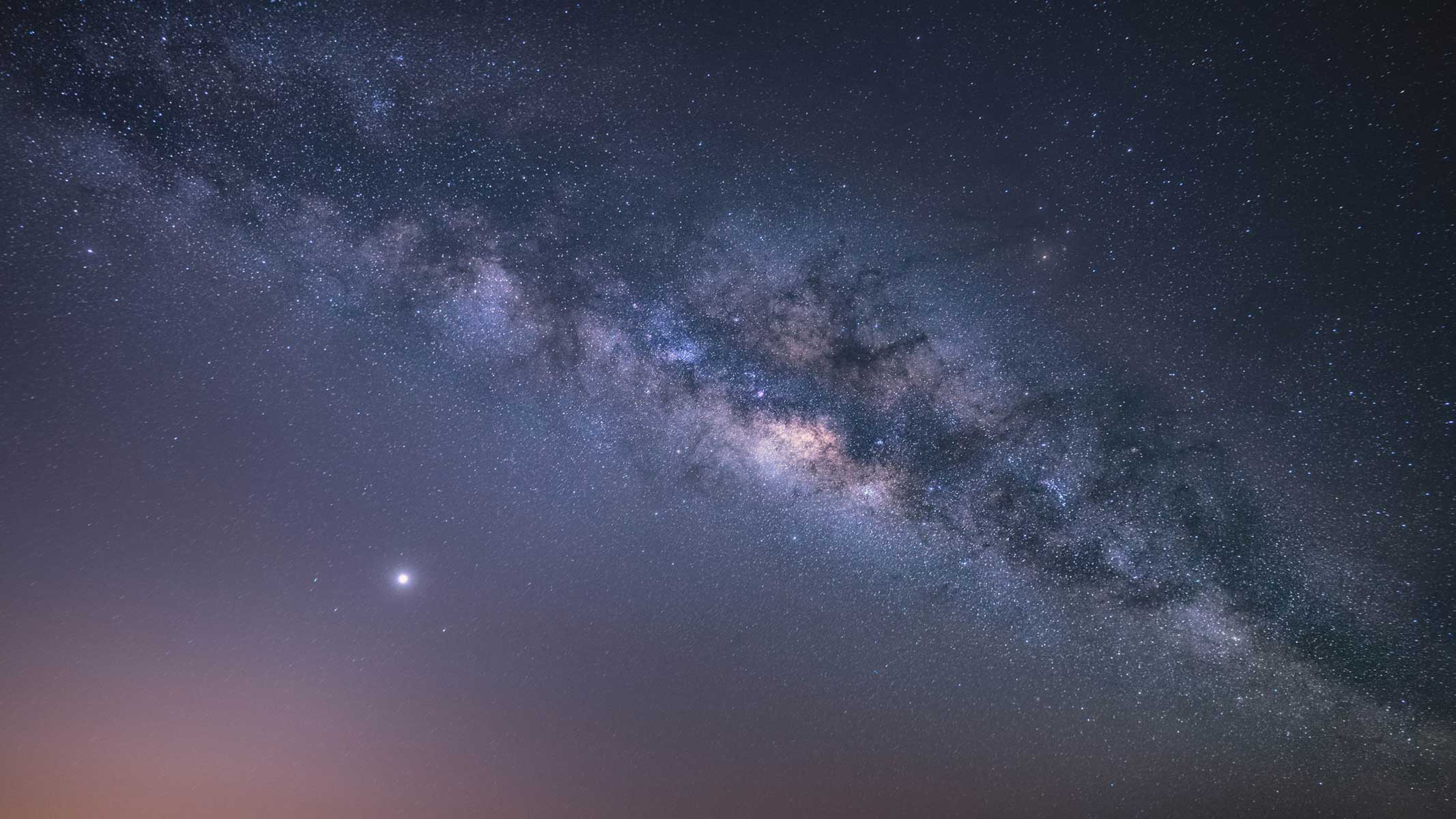
The Milky Way. (Image credit: Getty)
Here comes an incredible week of stargazing, with the solar eclipse and the peak of the Perseid meteor shower — both occurring on the same day — hard to underplay. Those chasing the eclipse in Greenland and Iceland may have a chance to see the aurora after midnight, though the darkness is short. Farther south, it's peak Milky Way season. The galaxy arches high across the sky, with its brightest and most detailed regions now well placed after dusk. All this week, the moon will be a thin crescent, if present at all, creating excellent conditions for simply stepping outside and exploring the sky at night. If you can glimpse the Milky Way, an eclipsed sun and a "shooting star," you've bagged one of the greatest combinations in skywatching.
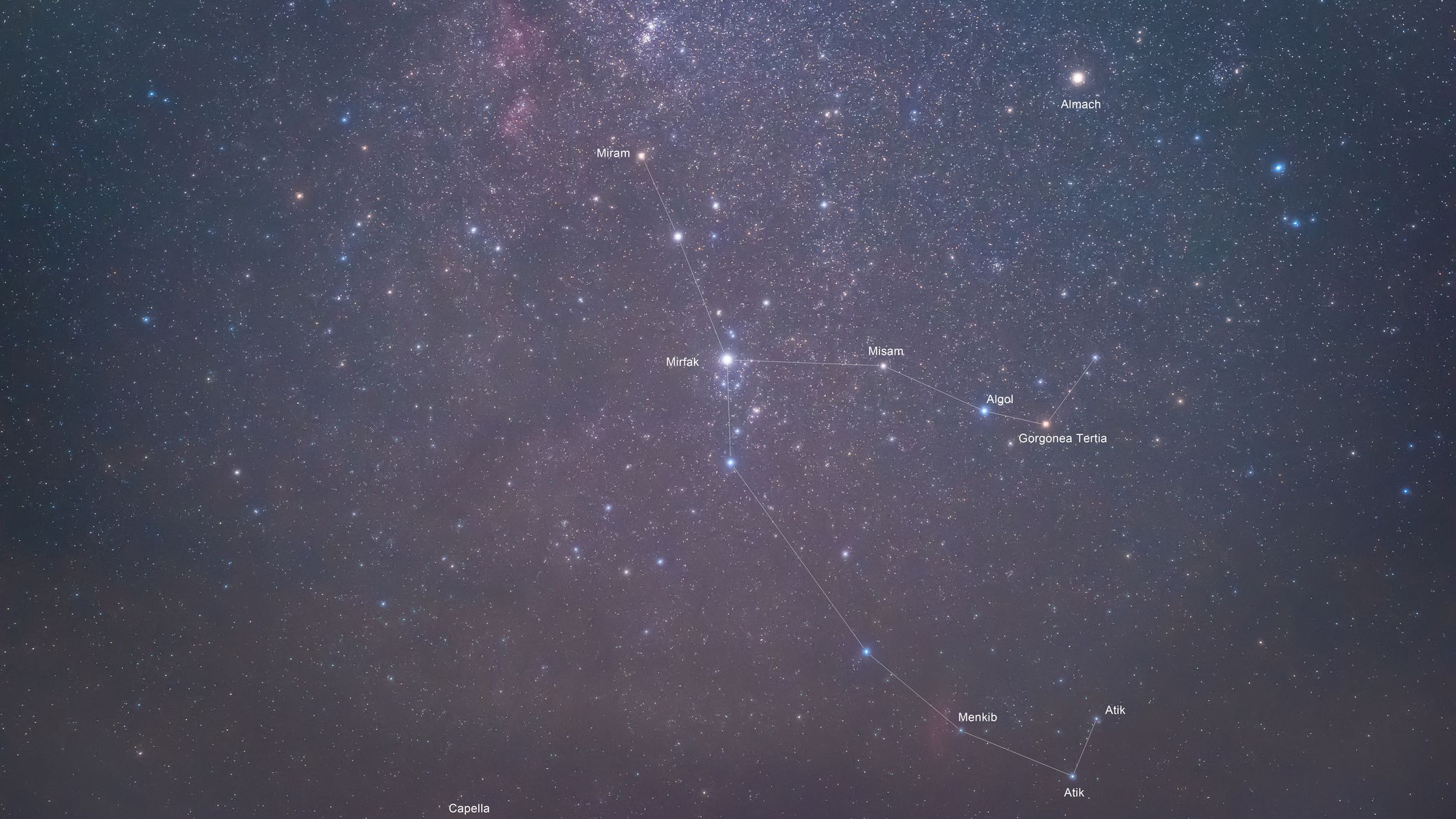
The constellation Perseus. (Image credit: iStock / Getty Images Plus)
Perseus is the name attached to the week's meteor shower, but the meteors do not actually come from the stars of Perseus. They only appear to radiate from that direction because Earth is moving through a stream of comet debris. To find Perseus, look northeast late in the evening and higher before dawn, below the W-shaped constellation Cassiopeia. The beginner's mistake is to stare at the radiant. Use Perseus only as an anchor point, then watch the widest patch of dark sky you can manage. This meteor shower — one of the best of the year, taking place under perfect moonless conditions — rewards patience more than precision.
Scientists trained artificial intelligence on libraries of DNA and then asked the model to create recipes for viral genomes. Sixteen of them were viable, yielding new viruses.
Researchers say breakthrough offers hope for new medicines but also raises urgent biosecurity questions
Scientists have made the first viruses designed by artificial intelligence in a milestone that raises hopes for new medicines but also concerns over how to ensure the technology remains safe.
The viruses are specific kinds known as bacteriophages, which only infect bacteria and are used around the world to treat patients with persistent infections. In lab tests, a cocktail of the AI-designed viruses killed E coli bugs that were resistant to natural bacteriophages.
The Aug. 12 total solar eclipse is less than a week away! We know that eclipse planning can be daunting, so we've put together a list of great eclipse apps to help make things that little bit easier.
Over 15 million people across Spain, Greenland and Iceland will witness totality on Aug. 12, while almost a billion will bear witness to a partial eclipse, as the moon blocks a portion of the sun's light without hiding its surface entirely, according to Time and Date.com. However, each person's experience will be subtly different, whether it be the exact timing of totality, the terrain, cloud cover, or a myriad of other reasons.
From location-specific totality alerts to weather forecasts, there are plenty of ways that these apps can help enhance your eclipse viewing experience.
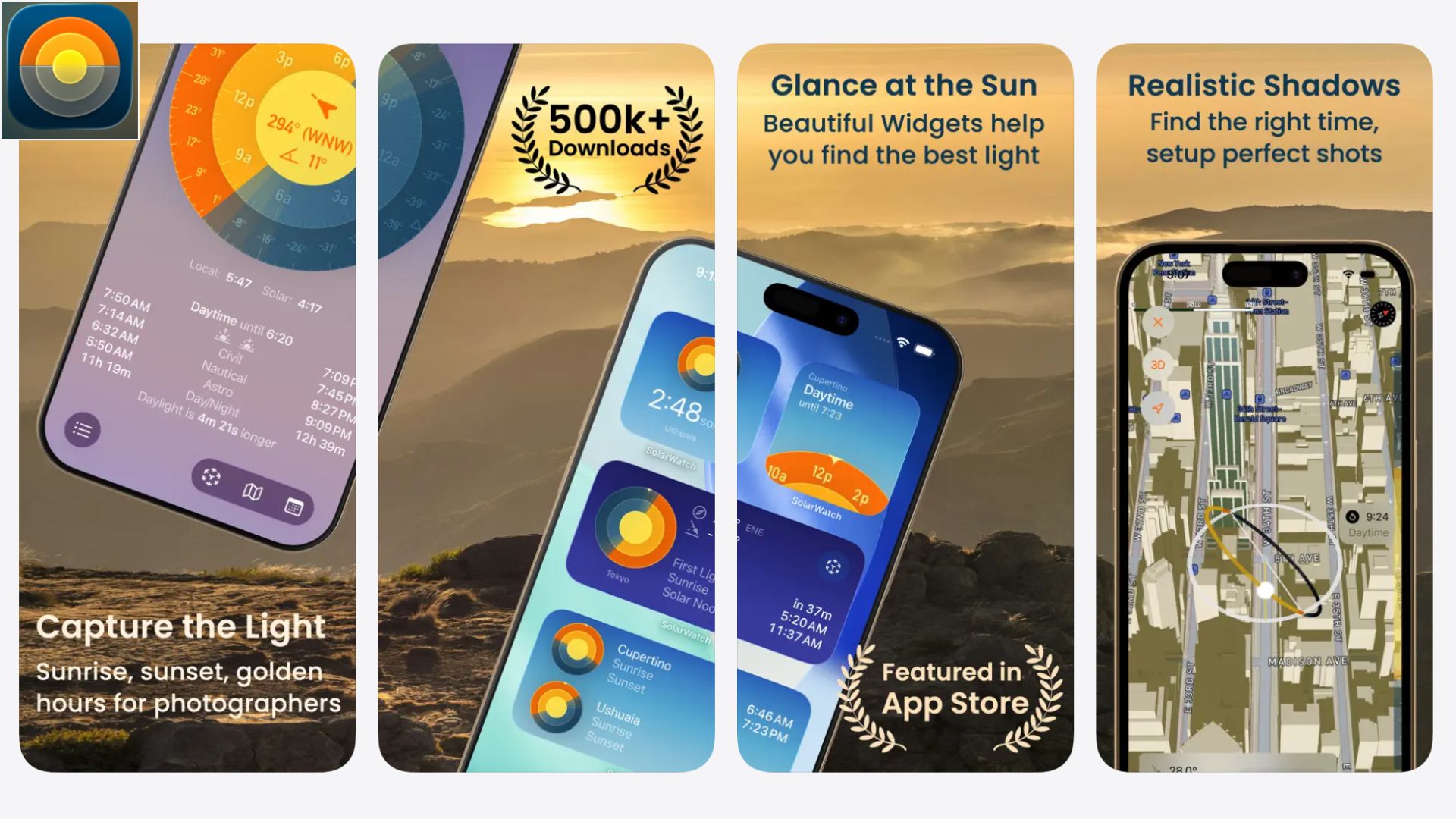
The popular iOS stargazing app SolarWatch has had a major update to introduce a slew of helpful eclipse-planning features. According to solo developer Engin Kurutepe, the app offers interactive eclipse path maps that allow you to simulate precise timings for each phase of an upcoming eclipse, while also providing data on local cloud obscuration.
SolarWatch also gives real-time and time-lapse simulations of the moon's shadow racing across a 3D representation of Earth, along with educational content on eclipse phenomena such as Baily's Beads. It also tracks each eclipse phase with countdowns and even gives details on the speed of the moon's shadow at your specific location!
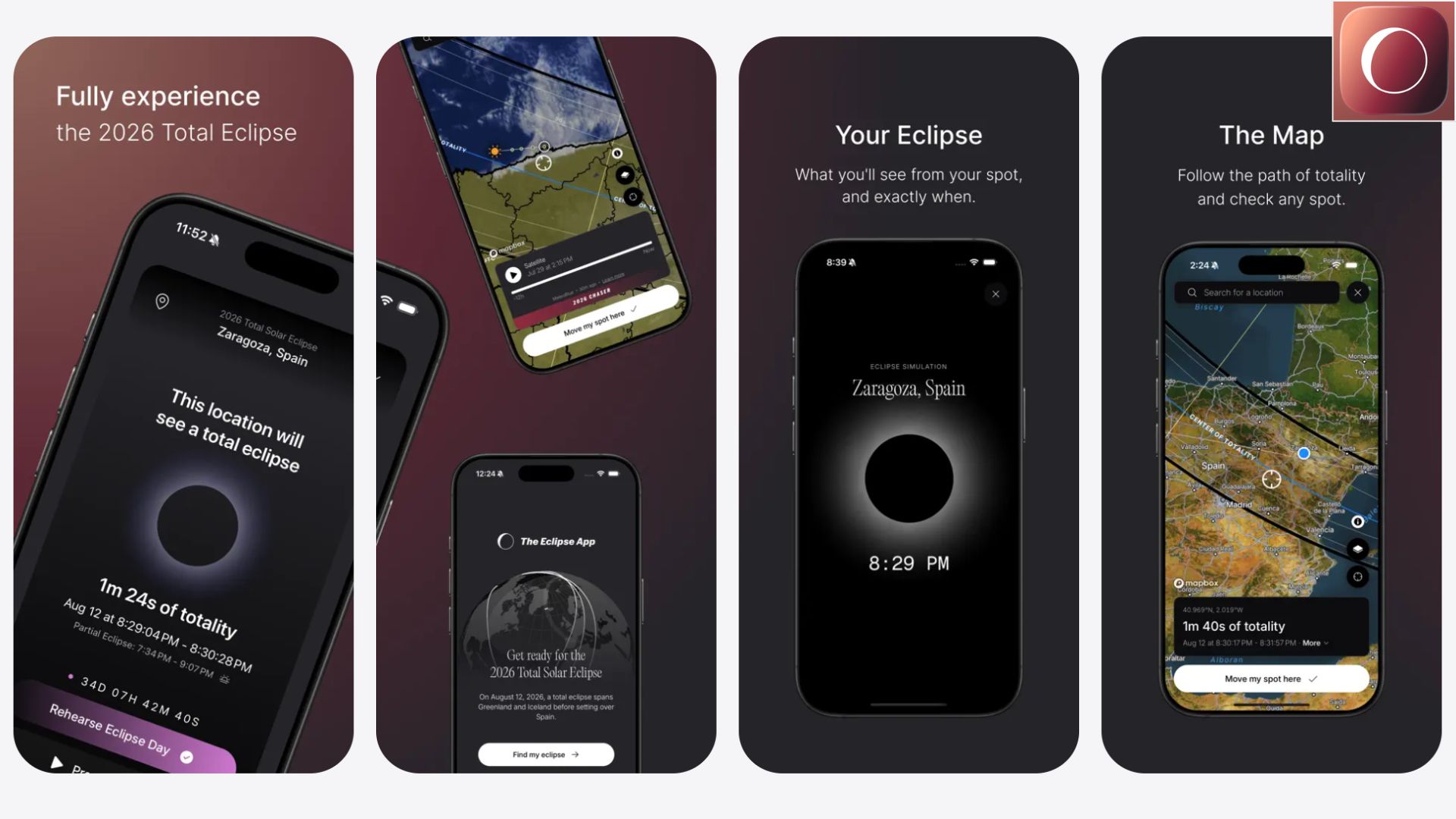
As its name suggests, The Eclipse App is available on iOS to cater to all your eclipse needs. The app has been rebuilt for the Aug. 12 eclipse, featuring exact timings for each stage of the event running from first contact through totality and beyond.
See simulations of the eclipse from your specific vantage point, receive alerts and discover exactly how much of the sun is covered during any given moment of the eclipse, the length of totality and more. Inbuilt features also allow you to record your experience in real time and return to relive it after the event.
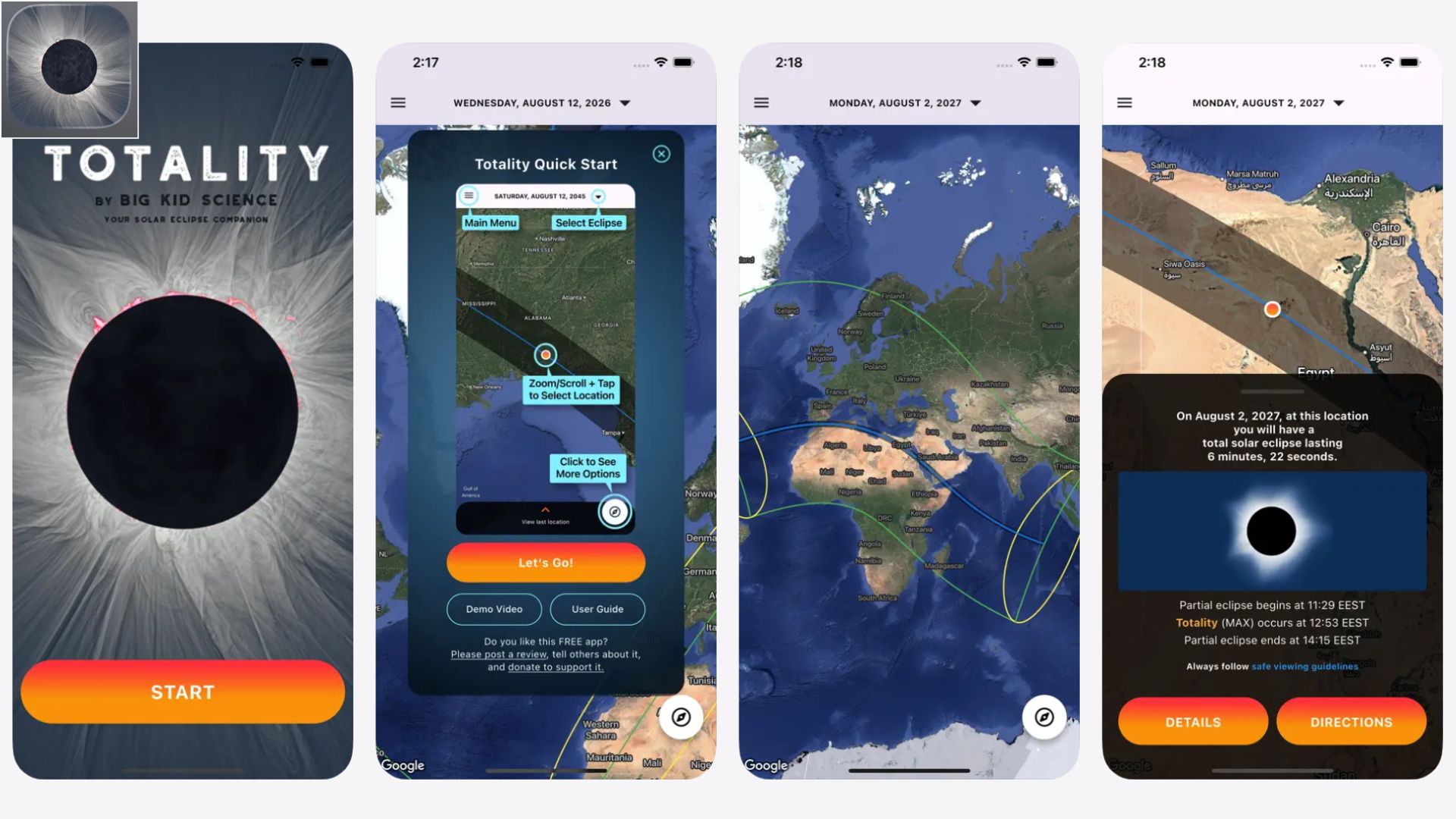
Like other apps on this list, Totality by Big Kid Science on IOS and the Play Store offers users a wealth of eclipse information, including detailed timings based on your phone's GPS data, safety tips, eclipse science and more. It also provides handy navigation tools to help eclipse chasers find a way into the path of totality.
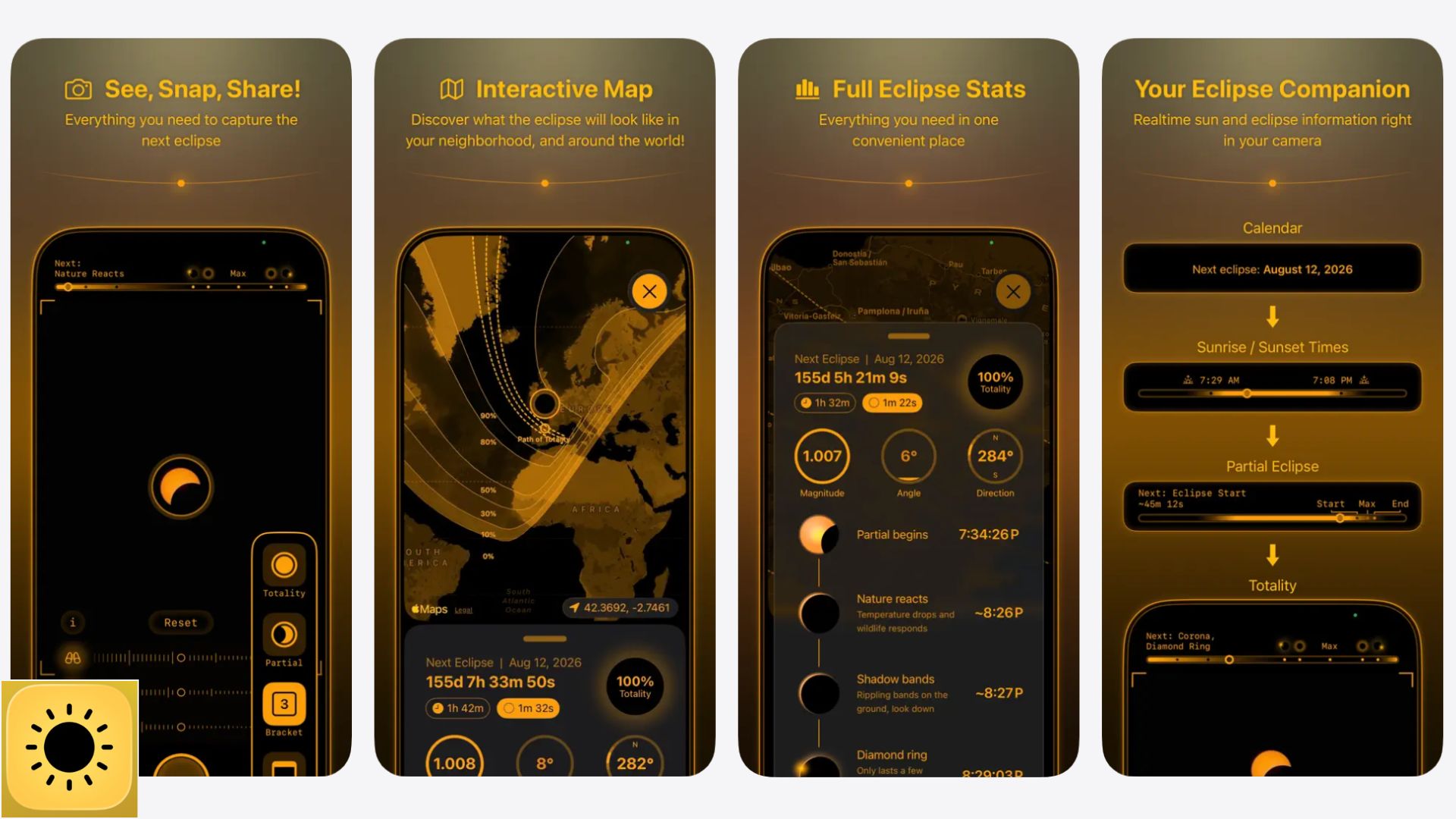
Want to capture the eclipse but don't have access to an expensive camera? Then Solar Snap on iOS or the Google Play Store might be for you.
The app provides a range of useful controls and features to help you capture the Aug. 12 eclipse with your smartphone, along with an interactive global eclipse map and information on the timings of phases, position of the sun and more.
It's designed to work in conjunction with a solar smartphone filter, which can be purchased as part of the Solar Snap filter kit. Alternatively, there are in-app tutorials that show how to make your own smartphone filter using a pair of eclipse glasses!
Be sure to check out our live blog for all of the latest news on the Aug. 12 total solar eclipse, along with on-the-ground reporting of the eclipse from skywatching editor Daisy Dobrijevic, who is currently aboard HX Expeditions' MS Spitsbergen off the coast of Greenland and skywatching writer Anthony Wood who will be heading to Spain. We'll also be publishing information on how to watch the eclipse live online for free closer to the time.
While you're at it why not download the Space.com app, available on IOS and Android, to stay up to date on all the latest launches, space science, skywatching news and eclipses?
Editor's Note: If you would like to share your eclipse astrophotography with Space.com's readers, then please send your photo(s), comments, and your name and location to spacephotos@space.com.

 Login