Para a estreia das telas OLED1Organic light-emitting diode, ou diodo emissor de luz orgânico. e do suporte ao toque em computadores com o suposto “MacBook Ultra”, a Apple poderá recorrer exclusivamente à Samsung Display como fornecedora dos painéis.
A informação partiu do site sul-coreano The Elec, o qual afirmou que, segundo as suas fontes relacionadas à cadeia de suprimentos, cerca de 250 mil unidades de painéis OLED de 14 e 16 polegadas (8,6ª geração) da Samsung foram encomendadas, com previsão de produção em massa para o mês de agosto.
A Apple não teria cogitado a LG Display e tampouco a BOE para o desenvolvimento dessas telas, devido a questões de rendimento, tornando a Samsung a única fornecedora viável.
De acordo com uma série de leakers, analistas e jornalistas, especulava-se que o “MacBook Ultra” tivesse o seu lançamento entre o final deste ano e o início do ano que vem, mas devido à crise de memória é possível que ele de fato chegue às lojas somente em 2027.
Segundo o jornalista Mark Gurman (da Bloomberg), tal Mac deverá ser equipado com os chips M5 Pro e M5 Max, com o conjunto (design, construção e tela) posicionando-o acima dos MacBooks Pro.
MacBook Pro de 16″
Cores: preto-espacial ou prateado Tela: padrão ou nano-texture Chips: M5 Pro ou M5 Max Memória: 24GB, 36GB, 48GB, 64GB ou 128GB Armazenamento: 1TB, 2TB, 4TB ou 8TB
Cores: preto-espacial ou prateado Tela: padrão ou nano-texture Chips: M5, M5 Pro ou M5 Max Memória: 24GB, 36GB, 48GB, 64GB ou 128GB Armazenamento: 1TB, 2TB, 4TB ou 8TB Adaptador de energia: USB-C de 70W ou 96W
NOTA DE TRANSPARÊNCIA: O MacMagazine recebe uma pequena comissão sobre vendas concluídas por meio de links deste post, mas você, como consumidor, não paga nada mais pelos produtos/serviços usando os nossos links de afiliado.
Confirmando rumores, a Appleanunciou hoje, nos Estados Unidos, a chegada do Apple Upgrade, seu programa de leasing de iPhones, iPads, Macs e Apple Watches feito em parceria com a Klarna.
Exclusivo das Apple Stores (inclusive a Online), ele permite alugar iPhones e Apple Watches por 12 ou 24 meses. iPads e Macs, por sua vez, podem ser utilizados por 24 ou 36 meses.
Na Apple, colocamos o cliente no centro de tudo o que fazemos e estamos muito satisfeitos que o Apple Upgrade ofereça aos nossos clientes — tanto online quanto nas lojas — uma maneira mais flexível de pagar pelos produtos que eles adoram.
—Karen Rasmussen, vice-presidente da Apple Store online
Antes de completar o seu pedido, o usuário passa por uma rápida avaliação de crédito conduzida pela Klarna, que também mantém um app com todas as informações do Apple Upgrade. Caso aprovado, ele está liberado para escolher o dispositivo desejado.
Segundo a Maçã, o programa avisará o usuário quando ele estiver apto a fazer um upgrade sem pagar qualquer tipo de taxa. A Apple também permite acelerar a troca mediante um pagamento adicional e oferece instruções sobre como devolver o aparelho antigo.
Divulgação/Apple
Também é possível continuar com o dispositivo que o usuário já está utilizando ao final do período de leasing ou simplesmente devolvê-lo para a Apple. Caso ele escolha a primeira opção, no entanto, será necessário realizar um pagamento único para mantê-lo.
A Apple alerta que, caso o contrato de leasing seja encerrado antes do fim do prazo estipulado, “taxas substanciais” poderão ser cobradas. Além disso, se o usuário não tomar nenhuma ação após o fim do contrato, sua assinatura será convertida em um contrato de leasing mensal que durará até seis meses. Se o usuário continuar sem tomar uma decisão após o fim desse período extra, ele terá que pagar a taxa de compra integral.
O Apple Upgrade também permite adicionar as coberturas do AppleCare aos dispositivos no momento da assinatura do serviço, dando aos usuários um pouco mais de tranquilidade na hora de investir em um novo iPhone/iPad/Mac/Apple Watch.
Eis os dispositivos oferecidos pelo Apple Upgrade, começando pelos iPhones:
iPhone 17e: a partir de US$25/mês por 12 meses ou US$18/mês por 24 meses;
iPhone 17: a partir de US$33/mês por 12 meses ou US$23/mês por 24 meses;
iPhone Air: a partir de US$42/mês por 12 meses ou US$29/mês por 24 meses;
iPhone 17 Pro: a partir de US$46/mês por 12 meses ou US$32/mês por 24 meses;
iPhone 17 Pro Max: a partir de US$49/mês por 12 meses ou US$35/mês por 24 meses.
Vale notar que, embora o iPhone venha desbloqueado, é preciso selecionar uma das operadoras cobertas pelo Apple Upgrade (AT&T, T-Mobile ou Verizon). Também não é possível utilizar um plano pré-pago.
Agora, os iPads:
iPad mini (A17 Pro): a partir de US$16/mês por 24 meses ou US$12/mês por 36 meses;
iPad Air (M4) de 11 polegadas: a partir de US$20/mês por 24 meses ou US$16/mês por 36 meses;
iPad Air (M4) de 13″: a partir de US$26/mês por 24 meses ou US$20/mês por 36 meses;
iPad Pro (M5) de 11″: a partir de US$32/mês por 24 meses ou US$25/mês por 36 meses;
iPad Pro (M5) de 13″: a partir de US$41/mês por 24 meses ou US$31/mês por 36 meses.
Os Macs:
MacBook Air (M5) de 13″: a partir de US$35/mês por 24 meses ou US$25/mês por 36 meses;
MacBook Air (M5) de 15″: a partir de US$41/mês por 24 meses ou US$29/mês por 36 meses;
MacBook Pro de 14″ (linha M5): a partir de US$54/mês por 24 meses ou US$39/mês por 36 meses;
MacBook Pro de 16″ (linha M5): a partir de US$81/mês por 24 meses ou US$58/mês por 36 meses;
iMac (M4): a partir de US$41/mês por 24 meses ou US$29/mês por 36 meses;
Mac Studio (M4 Max /M3 Ultra): a partir de US$68/mês por 24 meses ou US$49/mês por 36 meses.
Por fim, os Apple Watches:
Apple Watch Series 11: a partir de US$22/mês por 12 meses ou US$12/mês por 24 meses;
Apple Watch Hermès Series 11: a partir de US$76,04/mês por 12 meses ou US$40,78/mês por 24 meses;
Apple Watch Ultra 3: a partir de US$45/mês por 12 meses ou US$25/mês por 24 meses;
Apple Watch Hermès Ultra 3: a partir de US$87,28/mês por 12 meses ou US$47,03/mês por 24 meses.
Clientes têm ainda a opção de entregar o seu dispositivo antigo para receber um desconto no pagamento do novo, assim como já acontecia em compras tradicionais.
Além disso, como era esperado, a Apple aproveitou o lançamento do seu novo serviço para descontinuar o antigo iPhone Upgrade Program, que estava no ar há mais de uma década.
E vamos deixando o nosso aplicativo — disponível para iPhone, iPad, Mac e Apple Watch — cada vez mais nos trinques! 😉
Acaba de sair a versão 5.1 dele, e agora é possível dar um “Peek” nos artigos diretamente pela tela inicial de posts: basta tocar e segurar sobre um deles para ter uma prévia rápida do conteúdo, sem precisar abri-lo por completo.
Também chegou o suporte a deep links: a partir de agora, ao tocar em qualquer link do MacMagazine — seja recebido por mensagem, encontrado em outro app ou mesmo em uma busca —, você é automaticamente levado para o post correspondente dentro do nosso app.
A tela de posts ganhou ainda dois novos ajustes de personalização: um para sempre lembrar o filtro selecionado e outro para exibir sempre os títulos completos dos posts na lista principal, sem cortes.
Além disso, esta versão traz correções de bugs e refinamentos na interface, bem como mais aprimoramentos gerais em acessibilidade.
Agradecimentos
Fica aqui um agradecimento especial ao Cassio Rossi pelas colaborações feitas em nosso projeto no GitHub para esta versão.
A atualização já está disponível na App Store — e, como sempre, vale a pena atualizar o quanto antes para aproveitar todas as novidades. Em breve, é claro, voltamos com mais! 😉
Abrindo a última semana de julho com a nossa seleção de promoções na App Store, para esta segunda-feira!
O destaque do dia é o jogo Klocki, do desenvolvedor Maciej Targoni — o mesmo criador do sucesso HOOK.
Sua meta é conectar, de forma uniforme, diferentes tipos de linhas em diversas fases, bastando tocar em um bloco e depois no outro para movê-los. A coisa parece simples nas primeiras fases, mas, quando as figuras se tornam 3D, tudo fica bem mais desafiador!
Confira um vídeo:
Não há tempo, não há limite. O objetivo é relaxar e completar cada uma das fases. A trilha sonora fica por conta de Wojciech Wasiak.
Não perca mais tempo, aproveite esse desconto agora!
Abaixo outros jogos/apps que, juntos, somam mais de R$130 em descontos:
Jogos
Jogo de corrida.
Jogo da franquia LEGO.
Jogo de estratégia.
Aplicativos
Escaneie e defina as palavras.
Utilitário para metadados.
Utilitário para sua biblioteca musical.
Aproveite as ofertas e até amanhã! Vale lembrar que as ofertas são sempre por tempo limitado, então é bom correr. 🦖
A Apple disponibilizou oficialmente hoje o iOS 26.6 (compilação 23G71), iPadOS 26.6 (idem), macOS Tahoe 26.6 (25G72), watchOS 26.6 (23U67), tvOS 26.6 (23L773), Software do HomePod 26.6 (idem) e visionOS 26.6 (23O770) para todos os usuários.
Também foram liberados o macOS Sonoma 14.8.8 (compilação 23J620) e o macOS Sequoia 15.7.8 (24G824) para as máquinas que estão rodando essas versões mais antigas.
O aplicativo Atalhos (Shortcuts) facilita a vida de muita gente que usa iPhones, iPads e Macs diariamente. Com ele, você pode realizar ações e automatizar tarefas com múltiplos passos, bastando apenas um toque ou o uso da Siri.
Caso queira, é possível renomear um atalho que tenha sido criado anteriormente usando esse app — seja para refletir o seu propósito ou para facilitar a busca quando precisar usá-lo.
Com o app aberto, toque/clique na aba “Biblioteca” ou “Todos os atalhos”. Mantenha o dedo pressionado em cima do atalho desejado ou clique com o botão direito do mouse. Depois, vá até “Renomear” e digite o novo nome.
Opcionalmente, selecione os três pontinhos ou dê dois cliques em cima do atalho, vá até o nome do atalho e renomeie-o.
MacBook Neo helped Apple move against the global PC market in the second quarter of 2026, delivering double-digit Mac shipment growth while most leading computer manufacturers sold fewer units than a year earlier.
Preliminary data from IDC estimates that Apple shipped 6.7 million Macs during the quarter, up 10.1% from 6.1 million in Q2 2025. Its worldwide market share rose from 8.5% to 9.9%, placing the company within a fraction of the 10% threshold.
The rest of the industry moved in the opposite direction. Global shipments fell 4.9% year over year to 68.2 million units, ending nine consecutive quarters of growth. A separate Omdia estimate placed the decline at 3.6% and Apple growth at 15.9%, but both research groups identified the same pattern: the Mac gained ground while established Windows PC vendors contracted or remained flat.
IDC directly connected the Apple increase with the arrival of its lowest-priced notebook. MacBook Neo began shipping in March, giving the model its first complete quarter of retail availability between April and June.
MacBook Neo Drives Mac Shipment Growth
MacBook Neo entered the market as an alternative for buyers previously priced out of the Mac lineup.
The 13-inch notebook launched at $599 with an A18 Pro chip, 8GB of unified memory, a Liquid Retina display and up to 16 hours of video playback. It also brought macOS, Apple Intelligence and integration with the iPhone ecosystem into a price range commonly occupied by mainstream Windows laptops and Chromebooks.
That positioning attracted students, families and first-time Mac customers who did not need the performance or display technology of a MacBook Air or MacBook Pro. The four-color aluminum design also gave the entry model a more recognizable identity than the older Mac notebooks that frequently remained on sale through discounts.
IDC had already identified the computer as an unusual source of strength when it revised its notebook forecast earlier in 2026. Demand exceeded initial expectations in several markets, and reported inventory shortages appeared shortly after the March launch.
The effect became much more visible in Q2. MacBook Neo was available for the entire three-month period, allowing Apple to increase production, expand retail distribution and serve customers who could not obtain the computer during its first weeks.
The entry model also widened the Mac lineup without replacing the MacBook Air. Buyers seeking more memory, faster ports, longer wireless web use or additional external-display support could continue moving toward the M5-powered Air, while the less expensive machine handled education, office work, web browsing and communication.
That separation allowed Apple to reach lower price points without reducing the value of its premium notebooks.
Image Credit: Apple Inc.
Lenovo, HP and Dell Lose Shipments
Apple remained the fourth-largest traditional PC vendor, but its performance contrasted sharply with the companies above it.
Lenovo retained first place with 16.6 million units and 24.4% market share. Its shipments declined 2.1% from the previous year.
HP experienced the steepest drop among the top five, falling 9% to 13 million units. Dell shipped 9.3 million computers, representing a 5% decline. Asus remained nearly flat at 5 million units, up only 0.2%.
Manufacturers outside the five largest brands collectively suffered a 10.5% contraction, indicating that weaker demand and component inflation placed even more pressure on smaller companies.
The figures measure shipments into distribution channels or directly to end users, not confirmed retail purchases by individual consumers. A manufacturer can therefore record shipment growth while some inventory remains unsold in stores or warehouses.
MacBook Neo demand appears to have been strong enough to support Apple production increases rather than simply filling channels. The company reportedly doubled its annual production target after the initial response, although later quarters will reveal how much of Q2 reflected lasting demand rather than launch-period enthusiasm.
Apple also benefits from operating at a scale that provides leverage with memory, storage and semiconductor suppliers. Smaller PC brands face greater difficulty securing components at competitive prices when shortages intensify.
Memory Costs Reverse the PC Recovery
The Q2 contraction arrived after manufacturers and commercial customers accelerated purchases during late 2025 and early 2026.
Buyers expected memory and storage prices to rise, encouraging some businesses to replace computers earlier than planned. Vendors also increased inventories while components remained available.
That activity supported nine quarters of market growth but borrowed demand from later periods. Once the early purchases were completed, the industry faced a more difficult combination of expensive components, cautious consumers and elevated retail prices.
The memory shortage is closely connected to the AI infrastructure boom. Chipmakers are dedicating more production capacity to high-bandwidth memory used by data center accelerators, limiting the supply of conventional DRAM needed for personal computers.
IDC expects little relief before the end of 2027 or early 2028. The research company forecasts an 11.3% decline in worldwide PC shipments across 2026, with the fourth quarter potentially falling 20% from the previous year.
Computer revenue may not decline at the same pace. Manufacturers have raised prices faster than shipments have fallen, allowing them to collect more money from fewer units.
That strategy creates another problem. Retailers and distributors can become trapped with expensive inventory if customers refuse the new prices, forcing promotions or production reductions later.
MacBook Neo initially softened that pressure by giving Apple a new product near the bottom of the notebook market. Its original $599 price made the Mac competitive with midrange Windows machines at the moment many rivals were becoming more expensive.
Image Credit: Freepik
The Price Increase Creates the Next Test
The strongest Q2 MacBook Neo shipments were recorded while most customers could still buy the computer at its introductory price.
Apple raised the U.S. starting price to $699 in late June as memory and storage costs affected the Mac and iPad lineups. The education price remained at $599, preserving the original offer for eligible students and educators.
A $100 increase changes the comparison with discounted Windows notebooks and places the entry model closer to older MacBook Air configurations available through third-party retailers.
Apple must now determine whether the appeal came primarily from the low launch price or from the combination of macOS, battery life, design and iPhone integration.
The company remains better positioned than many rivals to absorb supply disruption, negotiate long-term component agreements and promote several notebooks at different prices. MacBook Neo also uses an iPhone-class A18 Pro processor rather than an M-series chip, providing another way to manage silicon costs and production capacity.
IDC expects the full PC market to deteriorate during the second half of 2026. Apple will enter that period with almost 10% worldwide share, but the September quarter will be the first to measure MacBook Neo demand almost entirely at the higher $699 retail price.
Nesta sexta-feira, confira e aproveite a nossa seleção de promoções na App Store!
O Pawell é um aplicativo voltado ao bem-estar e à rotina de pets, oferecendo uma experiência simples e acessível para tutores que querem organizar cuidados diários.
A proposta do nosso destaque do dia é reunir, em um só lugar, informações como alimentação, passeios, vacinas e consultas veterinárias, criando uma espécie de agenda personalizada para cada animal, em uma interface limpa e intuitiva — que facilita o uso mesmo para quem não está acostumado com apps de gerenciamento.
O ponto negativo fica por conta da limitação de idiomas (só inglês). Registre hábitos e tenha as informações de seu pet na palma da mão! 🦮🐈
Abaixo outros jogos/apps que, juntos, somam mais de R$90 em descontos:
Jogos
Jogo de estratégia.
Corrida aquática.
Xadrez.
Puzzles.
Aplicativos
Utilitário para golfe.
Canais digitais.
Guia do céu.
Aproveite as ofertas e tenha um excelente final de semana! Vale lembrar que as ofertas são sempre por tempo limitado, então é bom correr. 🏎️
Apple is developing an updated MacBook Neo featuring more memory, an upgraded A19 Pro chip, and additional color options as part of a wide-ranging refresh of its entire Mac lineup, according to a Bloomberg News report by Mark Gurman.
The original MacBook Neo, Apple’s budget-friendly entry-level laptop launched in March 2026, quickly became a huge hit. It debuted at $599 (as low as $499 with education pricing) before rising to a $699 starting price amid industry-wide memory cost pressures. Powered by the A18 Pro chip (the first Mac to use an A-series processor typically found in iPhones and iPads), it offered 8GB of unified memory, a 13-inch Liquid Retina display, and vibrant finishes including Silver, Blush, Citrus, and Indigo. Strong demand led to initial sell-outs, and it has been praised for bringing accessible Mac performance and Apple Intelligence features to a lower price point.
The next-generation Neo will address some of the original’s constraints by increasing unified memory — reports indicate a jump to 12GB — and switching to the A19 Pro chip (already used in recent iPhone models). Extra color options will expand on the fun, marketing-friendly palette that helped the first Neo stand out. These upgrades could help offset the recent price increase by delivering better performance and longevity, particularly for AI-related tasks.
This Neo update forms part of a much larger Mac pipeline. Gurman’s reporting indicates Apple plans new versions of nearly every Mac it sells over the next couple of years, driven by surging demand for AI-capable machines. Key elements include:
• An entry-level 14-inch MacBook Pro with the new M6 chip expected this fall (2026).
• Long-awaited iMac refreshes also targeted for fall 2026.
• High-end 14- and 16-inch MacBook Pros featuring OLED displays and touchscreens, powered by M5 Pro and Max chips, eyed for late 2026 or early 2027.
• A MacBook Air refresh that could include its first major redesign in over four years.
• Updated Mac mini models testing M5 Pro and M6 chips, plus Mac Studio variants with M5 Max and Ultra (or later M7 chips), though memory supply constraints tied to the broader AI boom may affect timing.
Industry observers note that ongoing global memory shortages exacerbated by AI server demand have already driven price increases across Apple’s lineup and could influence both availability and pricing of the new models. Apple has also been exploring ways to sustain sales momentum, including a new leasing program.
MacDailyNews Take: The MacBook Neo’s success showed Apple’s willingness to expand downward in the laptop market while defending premium margins higher up. An improved Neo with more memory and a newer chip would further strengthen that position, especially if it retains a competitive price relative to crappy Windows alternatives. Exact release timing for the updated Neo remains unspecified in the reports, but it fits into Apple’s broader push to modernize the Mac range for an AI-driven era.
Please help support MacDailyNews — and enjoy subscriber-only articles, comments, chat, and more — by subscribing to our Substack: macdailynews.substack.com. Thank you!
Os pesquisadores de segurança Talal Haj Bakry e Tommy Mysk descobriram uma vulnerabilidade no macOS a qual permite que apps confiáveis sejam substituídos por softwares maliciosos, mas o seu funcionamento é mais complexo do que parece à primeira vista.
A brecha é iniciada por arquivos de execução de aplicativos baixados pela internet, que são silenciosamente substituídos por malwares (provavelmente compactados no formato .tar). Há, porém, um grande asterisco para que o ataque seja bem sucedido, suficiente para aliviar a preocupação de muitos: ele exige que já exista um acesso prévio a esse Mac para funcionar corretamente.
A execução decorre da ausência de uma segunda verificação do Gatekeeper (sistema de defesa do macOS quanto aos arquivos de um determinado aplicativo), checando a segurança dos apps apenas durante a primeira execução. As modificações até podem condicionar a abertura de uma caixa de diálogo, mas essas permissões são solicitadas em nome do arquivo executável baixado originalmente pelo usuário, o que diminui descrenças sobre a segurança da ação.
A melhor forma de se prevenir é evitar o download de arquivos e executáveis por parte de fontes desconhecidas, inclusive nos casos em que o que foi baixado é associado a um software da sua confiança. A brecha, vale lembrar, não afeta nada baixado pela Mac App Store.
Os pesquisadores relataram o problema à Apple, que optou por encerrar o caso sem resolver a falha.
A nova versão foi compartilhada pelo usuário mactracker na versão beta do macOS 27 e, como apontado por ele, permite exibir sugestões contextuais de respostas inteligentes geradas pela Siri sem a necessidade de inserir automaticamente no rascunho, semelhante ao funcionamento de outras inteligências artificiais (IA) em apps de email.
As opções da nova barra incluem alternativas de edição, reescrita, correções gramaticais e/ou de escrita e uma opção intitulada “How does this sound?”, além das ferramentas tradicionais de formatação, escanteadas na lateral direita do novo layout.
Na versão atual, essas opções de formatação de texto também estão recolhidas na lateral direita da janela do aplicativo, desaparecendo por completo assim que se seleciona a opção de escrever com a Siri.
O novo layout está oculto por trás de uma feature flag interna, de forma que a maioria dos usuários da versão beta não consegue habilitá-lo. A beta 4 apresenta ainda algumas inconsistências no funcionamento do recurso, como a ausência da barra na escrita de novas mensagens, restringindo o seu funcionamento às réplicas de email.
Não se sabe ao certo se o recurso chegará à versão final do macOS 27 (prevista para aterrissar em setembro), mas ele parece acompanhar as reformulações propostas sobre a integração das ferramentas de IA no cotidiano do ecossistema da Apple nos sistemas 27.
This to me is proof that Apple leadership is suffering from cognitive dissonance over their slide into advertising. They’re conflating cause and effect. The Apple brand stands for high-quality superior user experiences because the devices and software Apple makes traditionally deliver high-quality superior user experiences. The work Apple ships is what makes the brand what it is. But now they’re stricken with the mindset that it’s the Apple brand that makes something a high-quality superior experience.
[…]
If you refuse to admit that the ads make these services worse, you also can’t admit that there’s a reason to offer an ad-free experience. So the thinking is something like “Apple always focuses on the user experience, and never deliberately makes the user experience worse. Therefore, if an Apple service shows ads, those ads are high quality and don’t detract from the quality of the product or the experience of using it. Therefore, there’s no reason to offer users a paid ad-free tier, because there’s no reason to want to avoid Apple’s ads.”
What a brand stands for can change over time. It’s eventually determined by the products, not the mantras.
“It just works.”
“A thousand no’s for every yes.”
“What happens on your iPhone, stays on your iPhone.”
I feel bad admitting it, because some of my friends are betting on iAd revenue to feed their family, but I’m just not on board with Apple running an advertising network. I don’t want to see ads in my apps, and I don’t want Apple to ever lose even a little of what it means to be a product-driven company.
The whole thing is funny because at a fundamental level we all just know in our bones that Apple never even considered putting “Intel Inside” stickers on Macs.
[…]
Apple still treats its hardware with that level of respect. With reverence. iPhones don’t even say “iPhone” on the hardware. No model or serial numbers. No small print. Just an Apple logo on the back.
[…]
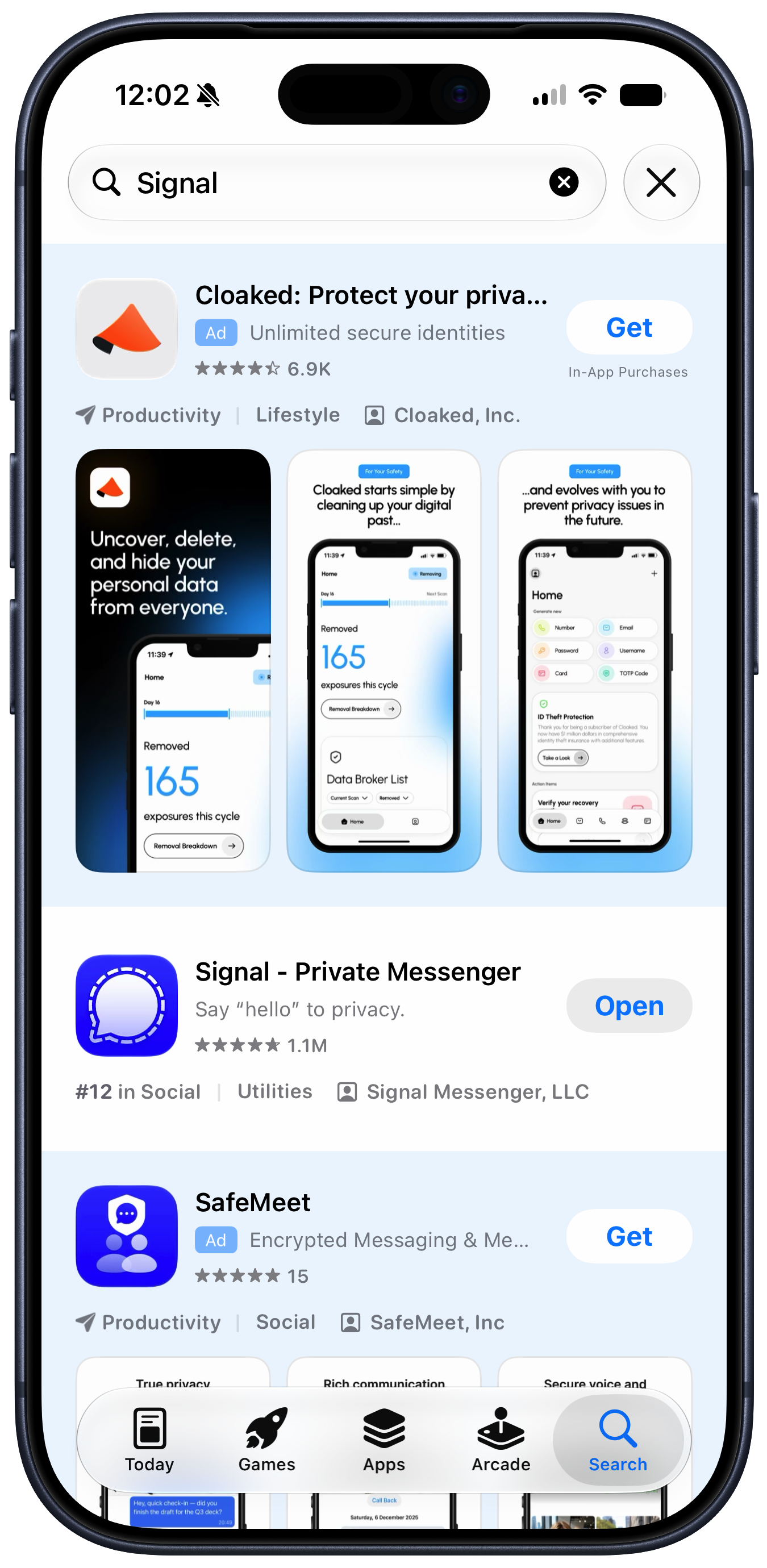
Putting themselves in customers’ shoes today, how many ads do Apple’s executives want stuck in the results when they search for an app in the App Store? We know the honest answer. But the answer evidenced by the actual App Store is “Two really big ones, including one in the first spot.”
While Apple can spin adding ads to Apple Maps as a revolutionary new way for businesses to be discovered, it’s telling that its initial announcement was hidden inside a press release about an entirely different product, and introduced as “Enhanced Discoverability in Apple Maps.” Those choices show that this isn’t something Apple is actually proud of—and that the people in charge of communicating and explaining Apple’s decisions to the world are at odds with those who are making the decisions about expanding revenue.
[…]
To this day, you’re confronted with an ad for Creator Studio every time you create a new document in those apps, and their default toolbars contain buttons that won’t work unless you subscribe to the bundle. As a result, Apple has essentially turned its free productivity suite—software that was designed to enhance the inherent value of Apple’s products—into a freemium package with upsell to a creative professional subscription bundle that’s irrelevant (and a terrible value!) for most of its existing users.
[…]
There are many more examples. Using notifications to promote subscriptions and badging the Settings app to push AppleCare plans are among the ways Apple has chosen to intervene in the user experience to drive revenue. I’m actually not opposed to the idea that Apple should communicate opportunities for its customers to get more out of their devices—but it should be careful not to cross the line into actively annoying those customers. If someone doesn’t want to see what you offer, you need to accept that and go away—not keep needling them. Apple often falls on the wrong side of that line.
[…]
It makes me wonder if the people making these decisions at Apple have lost track of the Apple brand and what it stands for.
What Snell’s column makes clear is that the incremental revenue Apple is gaining from putting shitty ads in its software comes at a price. They’re withdrawals from Apple’s brand equity. And I would argue that the value they’re detracting from the brand far out-values the dollar amount they’d padding to Apple’s bottom line.
[…]
If your competitors’ stores all smell like dogshit, don’t aim to have the store that smells the least like shit. Aim to have a store that smells pristine. “Our stores only carry a vague whiff of dogshit” is not insanely great.
The people haven’t changed, but Apple has. Strong leaders inevitably shape the personality — the spirit — of organizations over time. Apple in 2011 was peak Steve Jobs Apple. Apple in 2026 is peak Tim Cook Apple. But it was Cook who popularized the “you’re not the customer, you’re the product” argument against “free with ads” online services. But that was in 2014.
“Slippery slope” is a perfect term. But I wanted to add something here. In my experience, in the realm of UI, there is no middle notch. I’ve seen it time and time again… the moment you open the door to One, Infinity starts exerting its pull[…]
I HATE, HATE, HATE having ads pop up when I’m trying to do something else. It’s bad enough on Web sites where at least they have the excuse of having to make money some how but it rises to intolerable when they put them up on a device I’ve already paid for.
The annoyance is reason enough to dislike Apple’s ads but for me the worst thing is that they’re corrupting and inevitably lead to the user being replaced by the advertiser as the customer.
Looks like moving the user’s TCC db to /private/var/containers/Data/ProtectedSystem/[UUID]/Data/Library/Application Support/com.apple.TCC/ was not the only change in the whole privacy castle of macOS 27. (What btw was a great move as now attackers with full disk access permissions can’t modify your privacy settings)
macOS 27 quietly ships a new privacy mechanism I hadn’t seen documented anywhere: it extends the com.apple.macl protection that has always guarded sandboxed apps’ ~/Library/Containers/<bundle-id>/Data folders to a hand-picked set of non-sandboxed apps’ ~/Library/Application Support/<name> folders too. I noticed it by accident — Firefox’s profile folder was suddenly inaccessible from Terminal, while MacPass, a password manager sitting right next to it, was wide open. That asymmetry didn’t sit well with me, so I pulled the thread. It ends in a hardcoded app allowlist baked into /usr/libexec/sandboxd (thx @ciphwall for the hint), meant to be updated live via XProtect.
Although you can hide and unhide apps in your App Store purchase list, it turns out that hiding an app in the App Store purchase list does not hide the app in the updates list! I honestly can’t figure out the benefit of hiding an app in the App Store. The list of your purchased apps—a misnomer, as the list includes free apps—is practically unusable anyway: you can neither sort nor search the list. Maddeningly, the Mac App Store sorts your purchased apps by date of first install rather than by name, so it’s difficult even to scan the list manually to find a specific app.
[…]
You can clear the Updates list in the Mac App Store by deleting some cache files on disk, but that’s at best a momentary solution. The unwanted update will return eventually, or immediately if you use the Reload Page (⌘R) command.
A more lasting solution is, counterintuitively, to install the update. The trick is that you can keep more than one copy of a Mac App Store app on disk.
I wonder how long you can keep using the old version. You won’t be able to download it again. You can save a backup, but as some point a certificate will expire or you’ll get a new Mac and need a new receipt file. In theory, the store should be able to fetch one for you, but I wouldn’t rely on that long-term.
This instruction is a fever dream of three weird things in sequence:
What on earth is “QuickTime”?
I am recording with a player?
Why can’t I choose the option [“New Screen Recording”] that describes exactly what I want to do?
[…]
It’s noticing this kind of complexity, places where an easy way was chosen, design debt accumulated, and things got simply too weird. Apple allowed three weird things to accumulate here.
It makes sense in terms of the history and how the technology works, but from a clean slate one might expect this functionality to be in the Screenshot app, Screen Sharing, iPhone Mirroring, or perhaps even Finder.
Gerenciadores da área de transferência estão entre alguns dos apps mais abundantes para macOS. Ainda assim, de vez em quando surgem ferramentas que conseguem se destacar em meio à multidão, como o Text Catalyst, da Sense Labs.
Lançado há poucas semanas, ele faz tudo o que um bom clipboard manager precisa fazer: oferece um histórico dos últimos itens que você copiou no seu Mac, permitindo que você os cole a qualquer momento. Ele também deixa você pesquisar por itens no seu histórico (incluindo texto em imagens), além de poder ser aberto facilmente com um atalho de teclado.
Divulgação/Sense Labs
Os recursos, no entanto, não param por aí, com coisas bem legais como a Fila de Colagem (Paste Stack) jogando um pouquinho de tempero sobre a experiência. Com ele, você pode copiar vários itens de uma vez para depois colá-los em sequência em algum app qualquer da mesma forma como faria se estivesse colando apenas um item: usando apenas o atalho ⌘ commandV.
Divulgação/Sense Labs
O Text Catalyst, no entanto, oferece outras formas de copiar e colar itens, as quais podem substituir por completo os tradicionais ⌘C e ⌘V. É possível, por exemplo, configurá-lo para copiar um trecho de texto apenas ao selecioná-lo com cursor do mouse, bem como pressionar uma tecla modificadora da sua preferência duas vezes para abrir a Lista de Colagem (Paste List).
Divulgação/Sense Labs
A interface principal do app também é bem completa e conta até mesmo com filtros que separam por aplicativo de origem os itens da sua área de transferência. Há, ainda, abas para texto simples, links, imagens, arquivos, cores, etc.
Assim como outras ferramentas do tipo, o Text Catalyst também traz um recurso de substituição de texto chamado Expansão de Texto (Text Expander). Com ele, você pode atrelar palavras, símbolos (como ⌘ e ⌥), emojis e até templates de emails a uma abreviação, que é substituída automaticamente pelo conteúdo desejado. Itens da sua Lista de Colagem também podem ser convertidos em trechos a serem inseridos no lugar de uma palavra ou sigla.
Divulgação/Sense Labs
Programada em Swift para ser um app nativo, a ferramenta permite copiar até 48.000 itens, além de funcionar com o recurso Visualização Rápida (Quick Look) do macOS.
Last month, cybersecurity research firm Paradigm Shift published details about a boot ROM vulnerability affecting Apple's A12 and A13 chips, but it has since removed the blog post after being sued by digital forensics firm Magnet Forensics.
In a complaint filed in Georgia federal court this month, Magnet Forensics alleged that the security vulnerability revealed by Paradigm Shift was substantially the same as the one its former employee Mario Del Gaudio worked on before joining Paradigm Shift. Accordingly, Magnet Forensics alleged that Del Gaudio exposed its trade secrets.
According to the Santa Clara County Fire Department, firefighters responded at approximately 5:30 p.m. local time on Thursday to a report of an outdoor fire at an Apple-leased building adjacent to Apple Park in Cupertino, California.
The fire occurred outside of a building known as Apple Forge 1, which spans 18920 to 18922 Forge Drive. While one person on social media described the damage as "huge," the photos they shared only show damage to some fencing on the property. The incident report was marked as closed after 45 minutes. It is unclear if there were any injuries.

 Login