❌

Normal view

Marvel apresenta o Mago Supremo mais poderoso de todos os tempos

18 June 2026 at 22:50

O título de Mago Supremo nas HQs da Marvel Comics passou pelas mãos de diversos personagens emblemáticos, como o Ancião, Doutor Estranho, Feiticeira Escarlate, Loki e até mesmo pelo Doutor Destino. 

Os poderes e habilidades destes são inquestionáveis, cada um como “mestre” em sua própria área de atuação. Mesmo que tenham inimigos e possam ser derrotados, derrubar um deles é uma tarefa árdua para qualquer oponente.

Igualar-se a estes heróis e anti-heróis é difícil, superá-los é ainda mais. No entanto, as páginas de Sorcerer Supreme #7 mostraram que existe sim um nível superior e ele tem um nome: Turin, o Mago Supremo do Reino Quântico.

-
Entre no Canal do WhatsApp do Canaltech e fique por dentro das últimas notícias sobre tecnologia, lançamentos, dicas e tutoriais incríveis.
-

O Mago é Implacável

Na revista mais recente, vemos a Feiticeira Escarlate enfrentar a ameaça de um orbe místico que deseja devorar a realidade. Para ajudá-la a salvar a Terra-616, Turin demonstra suas habilidades e mostra que não chegou para brincadeiras.

Imagem de Supreme Sorcerer #7
Turin demonstra dominar tanto a magia quanto a ciência na nova HQ (Imagem: Reprodução/Marvel Comics)

O super-herói controla o “misticismo quântico”, que combina a ciência com magia. Deste modo, sua gama de poderes engloba a manipulação de microportais, vê-los via interpsicometria e detectar fenômenos como algoritmos sobrenaturais.

Não se pressione por não compreender o que tudo isso significa, já que, em resumo, este Mago Supremo pode resolver questões místicas consideradas “impossíveis” por combinar dois fatores considerados opostos. 

Além disso, Turin possui as “pupilas do Príncipe Putpravda”, que permitem enxergar forças invisíveis. Isso sem mencionar que ele consegue processar todas as informações por ter um cérebro tão potente quanto um supercomputador. 

O conceito entre a magia e a ciência

Óbvio que a Marvel Comics aprendeu que colocar “quântico” no nome das coisas não as torna mais impressionantes como vimos no passado, mas sim trabalha uma perspectiva que já foi vista em outras HQs e até nos filmes do Universo Cinematográfico Marvel (MCU): a magia possui diversas definições.

Em suas obras, eles costumam usar o conceito trabalhado pela Terceira Lei de Clarke: “qualquer tecnologia suficientemente avançada é indistinguível de magia”. Em outras palavras, pode existir uma explicação lógica para o que é chamado de místico. 

Obviamente que as próximas edições de Supreme Sorcerer devem explorar mais do personagem inédito e seus poderes, mas já é possível afirmar que o domínio da magia quântica o coloca em um patamar superior aos demais magos da editora.

Ainda assim, a Marvel se arrisca ao adicionar um herói cuja capacidade pode resolver basicamente qualquer problema. Com uma habilidade “apelona” e um intelecto altíssimo, ele já pode ser considerado um dos mais poderosos já introduzidos nas HQs.

Novas aventuras no Reino Quântico

Amplamente explorado no MCU, o universo microscópico desponta na nova história em quadrinhos para lembrar os leitores de que há toda uma realidade ao seu redor — não apenas o que é visto nas aventuras do Homem-Formiga e da Vespa.

Com a chegada de Turin, a expectativa é que a estrutura da própria magia seja alterada pela Marvel Comics, o que abriria as portas para novas abordagens. Imagine um vilão que pode dobrar a realidade em nível subatômico? Ou seres sobrenaturais que regem o Reino Quântico de formas nunca antes vistas?

Enquanto duelos místicos estão cada vez mais próximos, Deadpool e Justiceiro terão um novo encontro explosivo nas HQs.

Leia a matéria no Canaltech.

NASA asks Northrop Grumman to stop working on lunar HALO module

18 June 2026 at 21:49

Three months ago, during a flashy event at its Washington, DC, headquarters, NASA announced that it was shifting the focus of its lunar plans from an orbital space station to a Moon base on the surface.

As part of this, officials said work would be paused on the Lunar Gateway planned to orbit the Moon. Of the two elements that were furthest along, NASA also revealed that one of them—the  Power and Propulsion Element—would be repurposed to serve as a core module for a nuclear-electric propulsion demonstration in deep space.

Less was said about the fate of the other major component, the Habitation and Logistics Outpost (HALO). This is the large pressurized module, 6.1 meters long, in which visiting astronauts would spend the majority of their time when visiting the Lunar Gateway. NASA has awarded contracts worth $1.1 billion to Northrop Grumman to design, build, and integrate the habitation module with the Power and Propulsion Element.

Read full article

Comments

© NASA/Josh Valcarcel

Android verification is coming: Google confirms timeline and supported app stores

18 June 2026 at 20:53

Almost 20 years ago, Google pitched Android as the more open alternative to Apple's walled garden. Last year, Google announced it would begin erecting its own walls through developer verification. The company has issued an update on its plans, affirming that the verification system will begin rolling out in select countries later this year. We're also learning which app stores are participating in verification and the timeline for key features like the recently revealed "advanced flow" for bypassing verification.

Google has claimed that developer verification is a necessary change to smartphone software distribution, pointing to the increased prevalence of scams that trick Android users into installing malware apps. Google's solution requires verifying the identities of developers outside the Play Store just like it does for devs publishing on its platform. This has proven to be a contentious change for myriad reasons.

In the new blog post, Google's Matthew Forsythe confirms that the developer verification system is slated to come online on September 30 of this year. The initial deployment will be limited to countries with a high level of app scams: Brazil, Indonesia, Singapore, and Thailand.

Read full article

Comments

© Ryan Whitwam

World Cup fans furious as hydration breaks fill up with ads

18 June 2026 at 20:49
Folarin Balogun #20 of the United States takes a drink with a Powerade bottle during the FIFA World Cup 2026 Group D match between USA and Paraguay at Los Angeles Stadium on June 12, 2026 in Inglewood, California

One of the biggest arguments at the 2026 World Cup isn't about football — it's about water.

Since the tournament began on June 11, every match has included mandatory 3-minute hydration breaks midway through each half. Referees stop play at a point of their choosing, players head to the sidelines, and in the U.S. some broadcasters cut to — you guessed it — commercials.

Those 3 minutes are worth real money. FIFA's broadcast rules give networks roughly two minutes and ten seconds of sellable airtime per half — enough for as many as 832 commercial slots across the tournament's 104 matches.

This inventory didn't exist at any previous World Cup. FIFA approved the monetization of breaks this past March.

That is a real change for a sport usually defined by its flow, not its ad breaks. Built-in pauses of this length seem much closer to the stop-start rhythm of American sports than that of traditional association football (a.k.a. soccer).

FIFA introduced the hydration break in 2025 as a player safety measure for a summer tournament across the United States, Mexico, and Canada, where heat and humidity are often major concerns.

But because the breaks apply to every match, regardless of how warm it is, the weather, or whether a stadium has a roof or air conditioning, they have quickly become one of the tournament’s biggest talking points among players, coaches, and fans.

Complaints began right from the start of the finals. During the opening match between Mexico and South Africa, Fox aired full-screen commercials during the hydration breaks and returned late from one of them, causing viewers to miss the restart.

Social media has been full of anger at the hiatuses. On X, comedian Kevin Fredericks called the hydration break "pure capitalism." Musician Lloyd Cole said U.S. television had "finally got their 4 quarters," Former Daily Show host Trevor Noah judged the rule to be simply about "ad breaks."

IRL, fans are showing up the same way they are online: loud. Thousands have been booing hydration breaks during matches.

This Tweet is currently unavailable. It might be loading or has been removed.

There is also evidence that these breaks may be affecting the matches themselves. Fans point to Curaçao’s game against Germany, the most heated example.

Curaçao’s Livano Comenencia scored in the 21st minute to make it 1-1 against the four-time World Cup champions. Then came the hydration break — after which Germany regrouped and eventually won 7-1.

Former England striker Alan Shearer later saying on The Rest is Football podcast that he “felt sorry” for Curaçao — because the stoppage had killed their momentum.

There is data to support the breaks too. One study out of Northwestern found that one week into the tournament, teams were attempting more shots in the 10 minutes after hydration breaks than in the 10 minutes before them.

Norway, Brazil, Scotland, and Australia all scored shortly after breaks, including Erling Haaland’s opener for Norway against Iraq.

This Tweet is currently unavailable. It might be loading or has been removed.

Not every viewer is experiencing the hydration breaks the same way. Telemundo, which holds Spanish-language broadcast rights in the U.S., made the opposite call to Fox before the tournament even started.

"We're going to be staying on the match feed," Telemundo senior vice president of sports content Miguel Lorenzo told Sports Business Journal ahead of the tournament. "Fans are going to be able to watch the players and the coach's interactions. Our goal is to create an authentic World Cup viewing experience."

During broadcasts, the network's commentary team has gone further. "This World Cup is ours," said one commentator during the Korea Republic vs. Czechia broadcast. "We're not taking a break from it."

U.K.-based commercial network ITV has also chosen not to air ads during hydration stoppage time — and its commentary team has pointed out the booing in stadiums during the breaks.

The split has driven a notable shift in viewing habits, with many English-speaking fans in the U.S. migrating to Telemundo's stream on Peacock even across the language barrier.

As the World Cup continues, the debate is likely to follow — whether or not FIFA wants everyone to cool down.

Apple patches high-severity eavesdropping vulnerability in Beats Studio Buds

18 June 2026 at 20:41

Apple has updated its Beats Studio Buds wireless earbuds to patch a high-severity vulnerability that could be exploited by nearby hackers to eavesdrop on users.

The vulnerability, CVE-2025-20701, allowed improper authentication in the firmware running on the Bluetooth-related chips, enabling people within signal range to impersonate devices that had previously been paired with the earbuds. The researchers demonstrated this in a series of end-to-end attacks that allowed them to eavesdrop on conversations or sounds within earshot of the phone microphone.

Apple joins the patch party

“Impact: An attacker within Bluetooth range may be able to listen through the microphone of a device which is not yet paired and actively seeking pair requests,” Apple said in a Tuesday security advisory. The fix is contained in Beats Firmware Update 1B211, which is delivered automatically while headphones are paired with and within Bluetooth range of a user’s iPhone, iPad, or Mac. Users can check their firmware version by going to Settings on their device, navigating to Bluetooth, and tapping the info button next to the headphones.

Read full article

Comments

© Jeff Dunn

US greenlights floating wind that could slash turbine installation time by 50%

The US has just approved a new floating offshore wind system, which is designed to support safer and more efficient installation and operation of floating offshore wind turbines (FOWT).

The American Bureau of Shipping (ABS) awarded a Product Design Assessment (PDA) to Scotland’s industrial equipment supplier Encomara for its Squid system on June 17. The quick-connect solution combines mooring and electrical cable protection for FOWTs.

As per the organization, the approval follows an earlier Approval in Principle (AIP) and represents a more advanced level of technical review and design verification. ABS said it completed a detailed assessment of the technology against class and industry requirements for floating offshore wind applications.

“ABS is proud to support Encomara in bringing that approach to this sector, and this assessment reflects the technical depth behind it,” Rob Langford, ABS Vice President of Global Offshore, said.

The Squid system

Floating wind systems are expected to play a major role in expanding renewable energy generation. They can be deployed in deeper waters where fixed-bottom turbines are not practical.

This would increase the amount of usable marine space, as well as unlock access to stronger and more abundant wind resources. Still, installation and maintenance operations remain complex and costly. As a result, this has left developers looking for technologies that can simplify offshore deployment.

SQUID is a universal, pre-installed mooring and power cable interface.
Credit: Encomara

To tackle the issue, Encomara adapted the Squid system from the Disconnectable Turret Buoy (DTB). The technology has been used for years in floating oil and gas production. It is made from conventional offshore components that already have high technology readiness levels.

The Squid technology is built to protect moorings and interarray cables during turbine installation and off-station periods. It relies on procedures already well understood across the offshore industry.

What’s more, its disconnectable design can support repair scenarios throughout the unit’s entire service life. This helps reduce risks when temporary disconnection is required.

A proven technology

The company estimated that the Squid could increase floating turbine installation rates by 42 percent per season and raise energy yield during project ramp-up by 27 percent. It also projected a 2.5 percent lifetime increase in energy output.

This, according to Ian Donald, Encomara Managing Director, is equivalent to 3.3 terawatt-hours (TWh) of additional electricity generation for a 1.2-gigawatt (GW) floating wind development.

Donald pointed out that receiving a PDA from ABS marks a pivotal step in Squid’s qualification journey. “We’ll be conducting further inshore wet testing in Ardersier in the coming months, representing the next steps toward Technology Readiness Level assessment and commercial adoption,” he continued.

ABS issued a PDA to Encomara for the Squid system.
Credit: ABS

Encomara plans to carry out onshore demonstrations at AES’s Huntly site in July.
In August, the company will move on to inshore wet trials and demonstrations for customers.

Studies backed by Scottish Enterprise and industry developers suggest the Squid system could slash installation times by up to 50 percent. It could also potentially deliver savings of USD 1.35 billion (GBP 1 billion) per gigawatt of floating wind capacity.

“Floating wind developers need proven, bankable solutions, and this is exactly what Encomara is delivering,” Donald concluded in a press release.

After Senate vote, Trump admin backs off plans to kill ocean monitoring

18 June 2026 at 19:19

In May, the federal government announced without warning that it would take apart a network of ocean monitoring systems that it had spent over $350 million to build. No reason was given for the decision to shut down the Ocean Observatories Initiative (OOI), but suspicion immediately focused on the network's role in tracking climate change.

But the OOI also provides data that's useful for weather forecasting and fisheries management, leading to widespread opposition. Today, it appears that the opposition has won, as the government will announce that it's reversing the decision. The big remaining question is how much damage the OOI took during the intervening month.

As of now, there is no formal statement available from the federal government. However, The New York Times reports that the decision will be announced later today, and Ars received a statement from Zoe Lofgren, the ranking Democrat on the House Science Committee, indicating that the decision has been made.

Read full article

Comments

© OOI

NASA’s Lucy Reveals Wobbling, Peanut-Shaped Asteroid

18 June 2026 at 19:04

Even small asteroids lead complex lives. During its flyby of the asteroid Donaldjohanson last year, NASA’s Lucy spacecraft revealed the asteroid to be a wobbly, peanut-shaped body that has undergone a lot of activity in its relatively short history. Formed as fragments coalesced after a violent collision 155 million years ago, the asteroid was transformed by the small but inexorable force of the Sun’s radiation, all while retaining signs of the brief presence of liquid water in its distant past.

Zooming through the main asteroid belt toward one of the Jupiter Trojan asteroid groups, the Lucy spacecraft collected the first close-up images and other data at Donaldjohanson on April 20, 2025, as it passed 650 miles away from the asteroid. The data revealed that, instead of spinning simply around one axis like most other asteroids and planets, Donaldjohanson has a more complicated two-axis rotation. Scientists also saw Donaldjohanson’s peanut shape and the craters and ridges on its surface.

A timelapse video made from images taken by NASA’s Lucy spacecraft as it approached the asteroid Donaldjohanson on April 20, 2025. The L’LORRI (Lucy Long Range Reconnaissance Imager) instrument, the spacecraft’s high-resolution black-and-white imager, collected these images over two hours as the spacecraft rapidly closed in on the asteroid from an initial separation of more than 58,000 miles (93,000 km), until the spacecraft passed a mere 650 miles (1000 km) from the 5-mile- (8 km-) wide asteroid.
NASA/Goddard/SwRI/JHU-APL

Lucy’s encounter with the asteroid was planned as a dress rehearsal for the spacecraft and mission team before its primary asteroid encounters, which begin with Lucy’s flyby of the Trojan asteroid Eurybates on Aug. 12, 2027. The instruments performed as expected, and, as a bonus, scientists got a rare opportunity to study a previously unexplored asteroid up close and to compare it to two asteroids with similar compositions but different histories: Bennu, the target of NASA’s OSIRIS-REx sample-return mission, and Ryugu, the site of JAXA’s (Japan Aerospace Exploration Agency) Hayabusa2 sample-return mission.

Here’s what Lucy’s science team has learned so far from Lucy’s encounter with Donaldjohanson, as reported on June 18 in the journal Science.

Wobbling rotation

With Earth-based telescopes, observers saw fluctuations in the light Donaldjohanson reflects, regular patterns of peaks and valleys, typical of an elongated object rotating once every 10.5 Earth days. But Lucy’s data revealed another pattern: Donaldjohanson appears to be rotating like a wobbly top. Paper authors reported that the asteroid rotates end-over-end once every 10.5 Earth days, and wobbles back and forth around its long axis once every 26.5 days.

The asteroid Donaldjohanson is shown slowly rotating in a tumbling, non-principal axis motion, with its angular momentum vector and rotation axes indicated. The surface is colored by gravity slope, which measures the angle between the local surface and the direction of gravity. Higher values (warmer colors) indicate steeper terrain relative to the local gravitational pull. Regions with limited stereo image coverage have been masked out where the shape model is less well constrained.
Kel Elkins/NASA’s Science Visualization Studio/DLR

Peanut shape

While the Earth-based observations hinted at Donaldjohanson’s elongated shape, the Lucy flyby revealed a “bilobate” structure: two lobes connected by a neck, like a peanut. These lobes are likely two fragments from an asteroid collision that gently came together afterward by their mutual gravity.

Donaldjohanson likely rotated at least 10 times faster when it formed, having slowed to its current rate in the last 20 to 60 million years, the team estimates. As it slowed, the balance between the centrifugal force pushing things apart and gravity pulling things together changed and loose rocky material slid down slopes creating the worn-down appearance of many craters, as the flyby images showed.

The paper’s authors say that the asteroid’s slowing rotation is likely caused by a subtle consequence of solar heating known as the YORP effect. Each part of the asteroid’s Sun-warmed surface radiates heat away as infrared light, and that radiation imparts a tiny recoil force to the surface. Because the asteroid’s shape isn’t symmetric, this results in a net torque, or twist, that can change the asteroid’s rotation. Thus, YORP can slow asteroid spins down or speed them up, as in the case of Bennu (once every four hours) and Ryugu (once about every seven hours), which both likely used to rotate much slower than they do today.

Fleeting water

As it passed by Donaldjohanson at 30,000 mph, Lucy recorded the signatures of iron-rich clay minerals on the surface. These clays must have formed in the distant past with the help of liquid water. However, the exposure must have been brief, Lucy scientists concluded, because iron in clays tends to be replaced with other elements, such as magnesium, as water lingers.

Indeed, scientists saw magnesium-rich clays at Bennu and Ryugu, which suggested prolonged water exposure, perhaps lasting millions of years, when they were still part of larger asteroids.

This difference in water exposure history, and other characteristics, may mean that the parent bodies of these asteroids formed at different times or in different regions of the solar system before relocating to the main belt.

Compare, contrast

Donaldjohanson is thought to be made from rocky remnants of a larger, carbon- and water-rich asteroid that collided with another object in the main asteroid belt. Bennu and Ryugu are thought to have formed in the same way and in the same region.

But Donaldjohanson is different. At 155 million years old, it is much younger than Bennu and Ryugu, which formed 1 to 2 billion years ago. Donaldjohanson also has remained in the asteroid belt since birth, while its wandering cousins migrated into orbits around the Sun that bring them close to Earth’s orbit about once a year (which made them perfect close targets for sample return missions).

Black background graphic with a large white title at top. Upper left shows a gray, pea-nut-shaped, rock-like object. Upper right shows a rectangular inset image of a dark textured rock fragment. Near the center are a mission patch logo and a small globe with Antarctica highlighted. Lower half contains two side-by-side charts with axes, tick marks, and blue and green plotted lines with scattered blue data points. Additional white, blue, and green labels appear throughout the graphic.
During its April 20, 2025, encounter with the main-belt asteroid Donaldjohanson, NASA’s Lucy spacecraft discovered evidence for iron-rich clays on the surface using its infrared spectrometer. These clays, which are similar to those found in carbon-rich meteorites such as QUE 97990, indicate that water was briefly present in the asteroid during the distant past.
NASA/Goddard/SwRI/Dan Gallagher

“It’s helpful for scientists to compare Donaldjohanson with asteroids like Bennu and Ryugu, which are seemingly similar asteroids, because every subtle difference is another clue to our origin story,” said Simone Marchi, Lucy deputy principal investigator and lead author of the study at the Boulder, Colorado, office of the Southwest Research Institute.

“Once we start learning more about the Trojans, a completely different population of space rocks with very different histories, our understanding of solar system formation is destined to be challenged,” said Marchi.

Named after a fossilized skeleton of a human ancestor discovered in Ethiopia in 1974, NASA’s Lucy will be the first mission to explore Jupiter’s Trojan asteroids, a population of well-preserved space rocks that formed early in our solar system’s history and could help scientists understand how the planets formed and moved around before settling in their current configuration.

Download story graphics from NASA’s Scientific Visualization Studio.

About Lucy:

Lucy’s principal investigator is based out of the Boulder, Colorado, branch of Southwest Research Institute, headquartered in San Antonio. NASA’s Goddard Space Flight Center in Greenbelt, Maryland, provides overall mission management, systems engineering, and safety and mission assurance. Lockheed Martin Space in Littleton, Colorado, built the spacecraft. Lucy is the 13th mission in NASA’s Discovery Program. NASA’s Marshall Space Flight Center in Huntsville, Alabama, manages the Discovery Program for the agency’s Science Mission Directorate in Washington.

For more information on NASA’s Lucy mission, visit:

By Lonnie Shekhtman

NASA’s Goddard Space Flight Center, Greenbelt, Md.

and

Katherine Kretke

Southwest Research Institute, Boulder, Colo.

Media Contacts:

Karen Fox / Molly Wasser

Headquarters, Washington
240-285-5155 / 240-419-1732
karen.c.fox@nasa.gov / molly.l.wasser@nasa.gov

Sarah Frazier

NASA’s Goddard Space Flight Center, Greenbelt, Md.
202-853-7191
sarah.frazier@nasa.gov

Simplified Summary

Zooming through the main asteroid belt toward one of the Jupiter Trojan asteroid groups, the Lucy spacecraft collected the first close-up images and other data at Donaldjohanson on April 20, 2025, as it passed 650 miles away from the asteroid. The data revealed that, instead of spinning simply around one axis like most other asteroids and planets, Donaldjohanson has a more complicated two-axis rotation. Scientists also saw Donaldjohanson’s peanut shape and the craters and ridges on its surface.

The post NASA’s Lucy Reveals Wobbling, Peanut-Shaped Asteroid appeared first on NASA Science.

NASA’s Lucy Reveals Wobbling, Peanut-Shaped Asteroid

18 June 2026 at 19:04

Even small asteroids lead complex lives. During its flyby of the asteroid Donaldjohanson last year, NASA’s Lucy spacecraft revealed the asteroid to be a wobbly, peanut-shaped body that has undergone a lot of activity in its relatively short history. Formed as fragments coalesced after a violent collision 155 million years ago, the asteroid was transformed by the small but inexorable force of the Sun’s radiation, all while retaining signs of the brief presence of liquid water in its distant past.

Zooming through the main asteroid belt toward one of the Jupiter Trojan asteroid groups, the Lucy spacecraft collected the first close-up images and other data at Donaldjohanson on April 20, 2025, as it passed 650 miles away from the asteroid. The data revealed that, instead of spinning simply around one axis like most other asteroids and planets, Donaldjohanson has a more complicated two-axis rotation. Scientists also saw Donaldjohanson’s peanut shape and the craters and ridges on its surface.

A timelapse video made from images taken by NASA’s Lucy spacecraft as it approached the asteroid Donaldjohanson on April 20, 2025. The L’LORRI (Lucy Long Range Reconnaissance Imager) instrument, the spacecraft’s high-resolution black-and-white imager, collected these images over two hours as the spacecraft rapidly closed in on the asteroid from an initial separation of more than 58,000 miles (93,000 km), until the spacecraft passed a mere 650 miles (1000 km) from the 5-mile- (8 km-) wide asteroid.
NASA/Goddard/SwRI/JHU-APL

Lucy’s encounter with the asteroid was planned as a dress rehearsal for the spacecraft and mission team before its primary asteroid encounters, which begin with Lucy’s flyby of the Trojan asteroid Eurybates on Aug. 12, 2027. The instruments performed as expected, and, as a bonus, scientists got a rare opportunity to study a previously unexplored asteroid up close and to compare it to two asteroids with similar compositions but different histories: Bennu, the target of NASA’s OSIRIS-REx sample-return mission, and Ryugu, the site of JAXA’s (Japan Aerospace Exploration Agency) Hayabusa2 sample-return mission.

Here’s what Lucy’s science team has learned so far from Lucy’s encounter with Donaldjohanson, as reported on June 18 in the journal Science.

Wobbling rotation

With Earth-based telescopes, observers saw fluctuations in the light Donaldjohanson reflects, regular patterns of peaks and valleys, typical of an elongated object rotating once every 10.5 Earth days. But Lucy’s data revealed another pattern: Donaldjohanson appears to be rotating like a wobbly top. Paper authors reported that the asteroid rotates end-over-end once every 10.5 Earth days, and wobbles back and forth around its long axis once every 26.5 days.

The asteroid Donaldjohanson is shown slowly rotating in a tumbling, non-principal axis motion, with its angular momentum vector and rotation axes indicated. The surface is colored by gravity slope, which measures the angle between the local surface and the direction of gravity. Higher values (warmer colors) indicate steeper terrain relative to the local gravitational pull. Regions with limited stereo image coverage have been masked out where the shape model is less well constrained.
Kel Elkins/NASA’s Science Visualization Studio/DLR

Peanut shape

While the Earth-based observations hinted at Donaldjohanson’s elongated shape, the Lucy flyby revealed a “bilobate” structure: two lobes connected by a neck, like a peanut. These lobes are likely two fragments from an asteroid collision that gently came together afterward by their mutual gravity.

Donaldjohanson likely rotated at least 10 times faster when it formed, having slowed to its current rate in the last 20 to 60 million years, the team estimates. As it slowed, the balance between the centrifugal force pushing things apart and gravity pulling things together changed and loose rocky material slid down slopes creating the worn-down appearance of many craters, as the flyby images showed.

The paper’s authors say that the asteroid’s slowing rotation is likely caused by a subtle consequence of solar heating known as the YORP effect. Each part of the asteroid’s Sun-warmed surface radiates heat away as infrared light, and that radiation imparts a tiny recoil force to the surface. Because the asteroid’s shape isn’t symmetric, this results in a net torque, or twist, that can change the asteroid’s rotation. Thus, YORP can slow asteroid spins down or speed them up, as in the case of Bennu (once every four hours) and Ryugu (once about every seven hours), which both likely used to rotate much slower than they do today.

Fleeting water

As it passed by Donaldjohanson at 30,000 mph, Lucy recorded the signatures of iron-rich clay minerals on the surface. These clays must have formed in the distant past with the help of liquid water. However, the exposure must have been brief, Lucy scientists concluded, because iron in clays tends to be replaced with other elements, such as magnesium, as water lingers.

Indeed, scientists saw magnesium-rich clays at Bennu and Ryugu, which suggested prolonged water exposure, perhaps lasting millions of years, when they were still part of larger asteroids.

This difference in water exposure history, and other characteristics, may mean that the parent bodies of these asteroids formed at different times or in different regions of the solar system before relocating to the main belt.

Compare, contrast

Donaldjohanson is thought to be made from rocky remnants of a larger, carbon- and water-rich asteroid that collided with another object in the main asteroid belt. Bennu and Ryugu are thought to have formed in the same way and in the same region.

But Donaldjohanson is different. At 155 million years old, it is much younger than Bennu and Ryugu, which formed 1 to 2 billion years ago. Donaldjohanson also has remained in the asteroid belt since birth, while its wandering cousins migrated into orbits around the Sun that bring them close to Earth’s orbit about once a year (which made them perfect close targets for sample return missions).

Black background graphic with a large white title at top. Upper left shows a gray, pea-nut-shaped, rock-like object. Upper right shows a rectangular inset image of a dark textured rock fragment. Near the center are a mission patch logo and a small globe with Antarctica highlighted. Lower half contains two side-by-side charts with axes, tick marks, and blue and green plotted lines with scattered blue data points. Additional white, blue, and green labels appear throughout the graphic.
During its April 20, 2025, encounter with the main-belt asteroid Donaldjohanson, NASA’s Lucy spacecraft discovered evidence for iron-rich clays on the surface using its infrared spectrometer. These clays, which are similar to those found in carbon-rich meteorites such as QUE 97990, indicate that water was briefly present in the asteroid during the distant past.
NASA/Goddard/SwRI/Dan Gallagher

“It’s helpful for scientists to compare Donaldjohanson with asteroids like Bennu and Ryugu, which are seemingly similar asteroids, because every subtle difference is another clue to our origin story,” said Simone Marchi, Lucy deputy principal investigator and lead author of the study at the Boulder, Colorado, office of the Southwest Research Institute.

“Once we start learning more about the Trojans, a completely different population of space rocks with very different histories, our understanding of solar system formation is destined to be challenged,” said Marchi.

Named after a fossilized skeleton of a human ancestor discovered in Ethiopia in 1974, NASA’s Lucy will be the first mission to explore Jupiter’s Trojan asteroids, a population of well-preserved space rocks that formed early in our solar system’s history and could help scientists understand how the planets formed and moved around before settling in their current configuration.

Download story graphics from NASA’s Scientific Visualization Studio.

About Lucy:

Lucy’s principal investigator is based out of the Boulder, Colorado, branch of Southwest Research Institute, headquartered in San Antonio. NASA’s Goddard Space Flight Center in Greenbelt, Maryland, provides overall mission management, systems engineering, and safety and mission assurance. Lockheed Martin Space in Littleton, Colorado, built the spacecraft. Lucy is the 13th mission in NASA’s Discovery Program. NASA’s Marshall Space Flight Center in Huntsville, Alabama, manages the Discovery Program for the agency’s Science Mission Directorate in Washington.

For more information on NASA’s Lucy mission, visit:

By Lonnie Shekhtman

NASA’s Goddard Space Flight Center, Greenbelt, Md.

and

Katherine Kretke

Southwest Research Institute, Boulder, Colo.

Media Contacts:

Karen Fox / Molly Wasser

Headquarters, Washington
240-285-5155 / 240-419-1732
karen.c.fox@nasa.gov / molly.l.wasser@nasa.gov

Sarah Frazier

NASA’s Goddard Space Flight Center, Greenbelt, Md.
202-853-7191
sarah.frazier@nasa.gov

Simplified Summary

Zooming through the main asteroid belt toward one of the Jupiter Trojan asteroid groups, the Lucy spacecraft collected the first close-up images and other data at Donaldjohanson on April 20, 2025, as it passed 650 miles away from the asteroid. The data revealed that, instead of spinning simply around one axis like most other asteroids and planets, Donaldjohanson has a more complicated two-axis rotation. Scientists also saw Donaldjohanson’s peanut shape and the craters and ridges on its surface.

Advanced Tech on Station Informing Space-Designed Health Treatments

18 June 2026 at 18:46
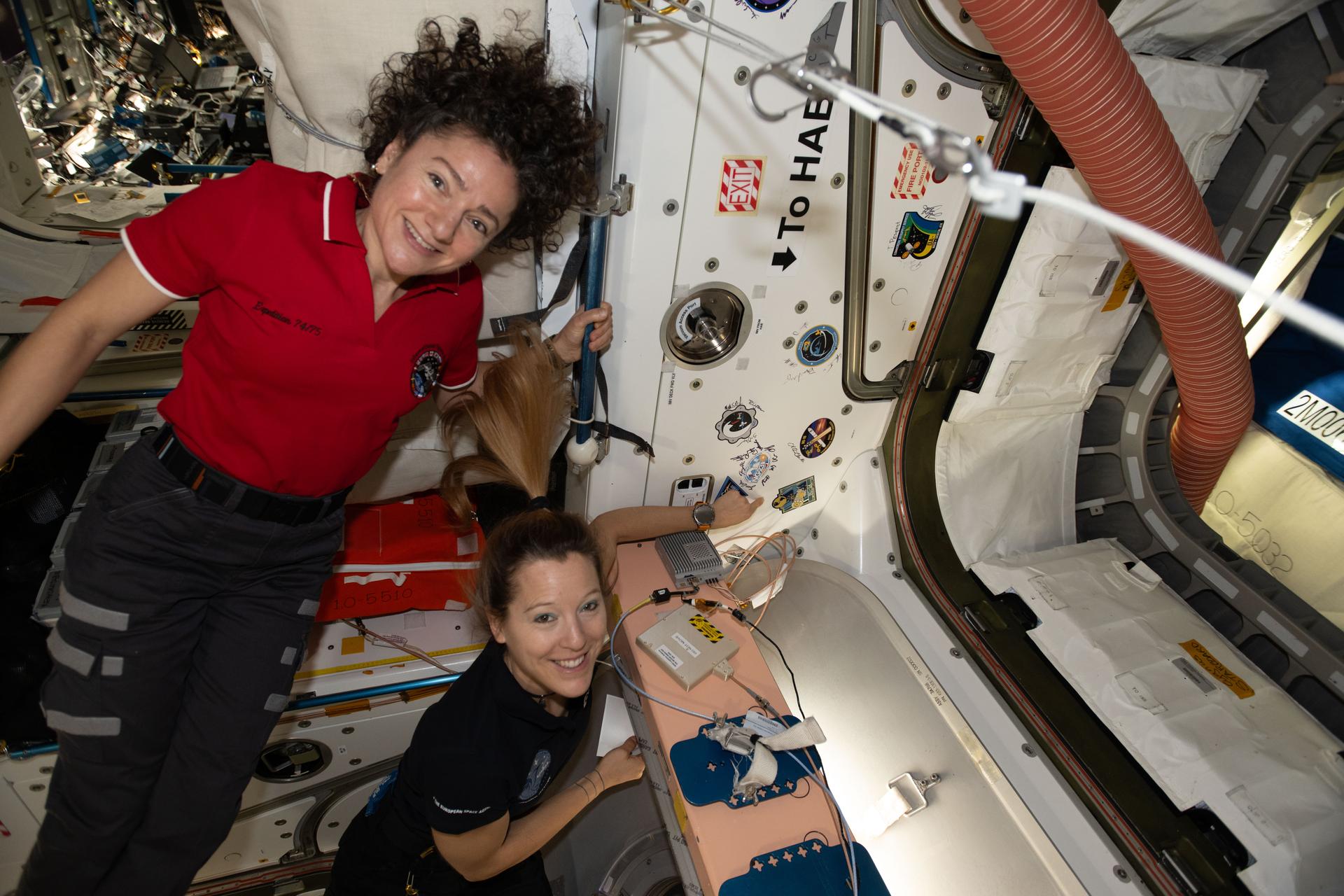
Expedition 74 flight engineers, from left, Jessica Meir of NASA and Sophie Adenot of ESA (European Space Agency), show off a Cygnus mission sticker for Northrop Grumman's 24th cargo mission to the International Space Station. The sticker is affixed to the vestibule between the orbital outpost's Earth-facing port on the Unity module and the company’s Cygnus XL cargo spacecraft.
Astronauts, from left, Jessica Meir and Sophie Adenot show off a Cygnus mission sticker for Northrop Grumman’s 24th cargo mission to the International Space Station.
NASA/Chris Williams

The Expedition 74 crew explored how weightlessness affects cartilage growth and the digestive system on Thursday to protect crew health and improve patient care on Earth. The orbital residents are also gearing up for a robotics maintenance spacewalk at the end of the month on the International Space Station.

Conducting research in the microgravity environment of the orbiting laboratory provides unique insights unobtainable in Earth’s gravity. This helps scientists, doctors, and engineers develop space-influenced therapies, medicines, and products leading to advances in human health, industrial processes, spacecraft designs, and more.

Cartilage cells are growing aboard the orbital outpost that may inform new ways to treat disabilities and repair injuries. NASA flight engineers Jessica Meir and Chris Williams worked together on the biotechnology investigation using the Kibo laboratory module’s Life Science Glovebox. Williams retrieved the cartilage cell samples preserved in a science freezer then thawed them to begin scientific operations. Next, Meir nourished the cell samples inside the glovebox and stowed them inside a research incubator so they could begin growing. Manufacturing cartilage tissues in space could lead to self-repairing implants on Earth and advanced fitness techniques for astronauts on a long-term spaceflight.

Roscosmos cosmonauts Sergey Kud-Sverchkov and Sergei Mikaev joined each other after breakfast and scanned their abdominal region using an ultrasound device for a digestion study. The real-time biomedical data will give doctors insight into how microgravity affects the blood flow and shape of a crew member’s digestive organs after a meal. Results may help advance methods to monitor and improve digestive health both on Earth and in space.

Meir and flight engineer Sophie Adenot of ESA (European Space Agency) also conducted ultrasound scans using ESA’s EchoFinder-2 device to image the major blood vessels and key organs in their abdomen. The human research experiment uses augmented reality to assist with the scans and artificial intelligence to recognize organs. The lightweight, easy-to-use gear may enable independent crew health monitoring on spacecraft travelling to the Moon, Mars, and beyond.

Adenot then joined NASA flight engineer Jack Hathaway and studied procedures necessary to prepare astronauts for a spacewalk. The duo reviewed spacesuit handling techniques, Quest airlock pressurization and depressurization steps, and emergency responses. Adenot also partnered with Meir and Williams and serviced the lithium-ion batteries that power the spacesuits. NASA will soon announce the two astronauts who will exit the space station on June 30 to repair a wrist joint on the Canadarm2 robotic arm.

Roscosmos flight engineer Andrey Fedyaev had a busy day of science and maintenance beginning his shift downloading and reading data collected from a station radiation detector. Afterward, Fedyaev transferred water from the Progress 94 resupply ship into tanks inside the orbital outpost’s Roscosmos segment. Finally, the two-time cosmonaut wrapped up his shift testing artificial intelligence tools to boost crew efficiency and communications in space.

Learn more about station activities by following the space station blog, @space_stationon X, as well as the ISS Facebook and ISS Instagram accounts.

Get the latest from NASA delivered every week. Subscribe here.

The post Advanced Tech on Station Informing Space-Designed Health Treatments appeared first on NASA Science.

Before SpaceX IPO, investors in China secretly acquired stakes

A businessman with ties to Chinese military contractors was among the overseas investors who acquired stakes in SpaceX while it was still a private company. An entity linked to the Qatari royal family also took a stake.

The new details come from a private investor list obtained by ProPublica that sheds light on a particularly delicate issue for Elon Musk’s rocket company: which people in countries like China bought into the company, and how. SpaceX built its business off sensitive US government work like making spy satellites for the Pentagon. While there is no ban on Chinese investment in US military contractors, such investment is heavily regulated.

In a sign of its sensitivity to the concerns, SpaceX barred investors from China and Hong Kong from buying shares in its initial public offering last week due to “regulatory and compliance risks,” Bloomberg reported. The US government alleges that China has a strategy of using investments in sensitive industries for espionage and to get access to cutting-edge technology.

Read full article

Comments

© Spencer Platt/Getty Images

Bernie Sanders unveils $7 trillion plan to give Americans control of AI industry

18 June 2026 at 18:02

Bernie Sanders has unveiled an aggressive plan to transfer trillions from leading AI firms to the public, and, to the likely horror of AI firms, it goes even further than expected to give Americans more control over the AI industry.

Sanders shared a summary of his legislation with AP News. If passed, the law would create a sovereign wealth fund “financed through a one-time 50 percent tax on the stock of the largest AI companies,” AP News reported. Any AI firm that does $200 million in annual AI sales would be subject to the tax, as would any new firm once it reaches that revenue level.

In total, Sanders estimated the fund could be worth $7 trillion, generating “hundreds of billions of dollars annually in direct payments to Americans and programs such as health care, education and housing,” AP News reported. Each American would likely receive more than $1,000 annually in 5 percent annual dividends, Sanders estimated.

Read full article

Comments

© Nuthawut Somsuk | iStock / Getty Images Plus

Moon Trees

18 June 2026 at 17:53

Living Tributes to Lunar Exploration

Moon Trees

Sprouted from seeds that journeyed around the Moon aboard Apollo 14 in February 1971, “Moon Trees” planted across the United States endure as living reminders of Apollo-era lunar exploration.

In 2022, a new generation of tree seeds flew around the Moon on NASA’s Artemis I mission as part of a national STEM Engagement and conservation education initiative.

The Moon Tree in front of NASA Goddard Flight Center's Visitor Center.
The “Moon Tree” in front of the Visitor Center at NASA’s Goddard Space Flight Center in Greenbelt, Md. This sycamore was planted at the visitor center on June 9, 1977, and grew from a seed carried to the Moon aboard Apollo 14.
NASA/Pat Izzo

Apollo 14 Moon Trees

Apollo 14 launched in the late afternoon of January 31, 1971 on what was to be our third trip to the lunar surface. Five days later Alan Shepard and Edgar Mitchell walked on the Moon while Stuart Roosa, a former U.S. Forest Service (USFS) smoke jumper, orbited above in the command module. Packed in small containers in Roosa’s personal kit were hundreds of tree seeds, part of a joint NASA/USFS project. Upon return to Earth, the seeds were germinated by the Forest Service. Known as the Apollo “Moon Trees”, the resulting seedlings were planted throughout the United States (often as part of the nation’s bicentennial in 1976) and the world. They stand as a tribute to astronaut Roosa and the Apollo program.

Astronaut portrait of Stuart Roosa in front of the Apollo 14 emblem
Astronaut Stuart A. Roosa was the command module pilot of the Apollo 14 lunar landing mission. In 1971 hundreds of tree seeds were packed in his personal kit as part of a joint NASA/USFS project.
NASA

The project began after Roosa was chosen for the Apollo 14 mission. Ed Cliff, Chief of the Forest Service, knew of Stuart Roosa from his days as a smokejumper and contacted him about bringing seeds into space. Stan Krugman of the Forest Service was put in charge of the project and selected the seeds for the experiment. Seeds were chosen from five different types of trees: loblolly pine, sycamore, sweetgum, redwood, and Douglas fir. The seeds were classified and sorted, and sealed in small plastic bags that were stored in a metal canister. Control seeds were kept on Earth for later comparison. Roosa carried possibly 2,000 or more seeds in the canister in his personal kit, a small canvas pouch that stayed with him as he orbited the Moon in the command module “Kitty Hawk” in February, 1971. Unfortunately, the seed bags burst open during the decontamination procedures after their return to Earth, and the seeds were scattered about the chamber and exposed to vacuum, and it was thought they might not be viable.

Stan Krugman collected the seeds and an attempt at germinating some of the seeds was made in Houston. Somewhat surprisingly, it proved successful and the seeds started growing, but they did not survive long because the facilities there were inadequate. A year later the remaining seeds were sent to the southern Forest Service station in Gulfport, Mississippi (sycamore, loblolly pine, and sweetgum) and to the western station in Placerville, California (redwood and Douglas fir) to attempt germination. Many of the seeds, and later cuttings, were successful and grew into viable seedlings. Some of these were planted with their Earth-bound counterparts as controls, (as might be expected, after over forty years there is no discernable difference) but most were given away in 1975 and 1976 to many state forestry organizations to be planted as part of the nation’s bicentennial celebration. These trees were southern and western species, so not all states received trees. A loblolly pine was planted at the White House, and trees were planted in Brazil, Switzerland, and presented to the Emperor of Japan, among others. Trees have also been planted in Washington Square in Philadelphia, at Valley Forge, in the International Forest of Friendship, and at various universities and NASA centers, reportedly in 40 different states.

1977 clipping from Goddard News newsletter
Clipping from the September 1977 edition of Goddard Space Flight Center’s newsletter Goddard News.
NASA

Stuart Roosa was born on August 16, 1933, in Durango, Colorado. He worked for the Forest Service in the early 1950’s as a smoke jumper fighting fires and later joined the Air Force and became a test pilot. He was one of 19 people selected for the astronaut class of 1966 and was part of the astronaut support crew for Apollo 9. Following Apollo 14, Roosa was backup command module pilot for Apollo 16 and 17. He then worked on the Space Shuttle program until his retirement as a Colonel in the Air Force in 1976, the time when many of his trees were being planted. Roosa passed away in December 1994.

The Moon Trees continue to flourish, a living monument to our first visits to the Moon and a fitting memorial to Stuart Roosa. Believed locations of some of the original Moon Trees are listed below, but no list was ever kept nor any systematic tracking made of the disposition of all the trees. This list of Moon Trees was initiated by Dr. David R. Williams, retired curator at NASA’s National Space Science Data Center, after receiving a request for more information from Joan Goble, a third grade teacher in Indiana in 1996. Since then, dozens of people have contributed with information about other Moon Trees.

If you know of a Moon Tree not listed here or have a update to the status of one of those listed, please send a message to marie.j.henderson@nasa.gov.

Apollo Moon Tree Locations

City and StateLocationType of TreePlanting Date
Birmingham,
Alabama
Birmingham Botanical GardensSycamore25 February 1976
Montgomery,
Alabama
State CapitolLoblolly Pine19 April 1976
Troy,
Alabama
Pioneer Museum of AlabamaLoblolly Pine5 August 1976
Tuscumbia,
Alabama
Ivy GreenLoblolly Pine19 October 1976
Tuskegee,
Alabama
VA Medical CenterLoblolly Pine1976
Tucson
Arizona
University of ArizonaSycamore30 April 1976
Ft. Smith,
Arkansas
Sebastian County CourthouseLoblolly Pine15 March 1976
Washington,
Arkansas
Old Washington Historic State ParkLoblolly Pine15 March 1976
Arcata,
California
Humboldt State University3 Redwoods1976
Berkeley,
California
Tilden Nature Area2 Redwoods26 July 1976
Lockeford,
California
Lockeford Plant Materials CenterRedwood1979
Monterey,
California
Friendly PlazaRedwood27 July 1976
Sacramento,
California
Capitol ParkRedwoodApril 1976
San Luis Obispo,
California
Mission PlazaRedwood30 July 1976
Gainesville,
Florida
University of FloridaSycamorec. 1977
Keystone Heights,
Florida
Keystone Heights LibrarySycamore1984
Perry,
Florida
Forest Capital State ParkLoblolly Pine29 April 1978
Tallahassee,
Florida
Cascades ParkSycamore
Tallahassee,
Florida
Doyle Conner BuildingLoblolly Pine1976
Athens,
Georgia
Clarke County Planning Dept.Loblolly PineMay 1976
Macon,
Georgia
Georgia Forestry CenterLoblolly Pine22 March 1976
Waycross,
Georgia
Okefenokee RESALoblolly Pine
Boise,
Idaho
Lowell Elementary SchoolLoblolly Pine1977
Cannelton,
Indiana
Camp Koch Girl Scout CampSycamore1976
Indianapolis,
Indiana
Indiana StatehouseSycamore9 April 1976
Lincoln City,
Indiana
Lincoln State ParkSycamore1 May 1976
Atchison,
Kansas
International Forest of FriendshipSycamore24 July 1976
Elmer,
Louisiana
Palustris Experimental ForestLoblolly PineApril 1976
Bethesda,
Maryland
Society of American ForestersLoblolly Pine30 September 1975
Greenbelt,
Maryland
Goddard Space Flight CenterSycamore9 June 1977
Holliston,
Massachusetts
Holliston Police StationSycamore1982
Niles,
Michigan
Fernwood Botanical GardensSycamore23 April 1976
Biloxi,
Mississippi
Private ResidenceSycamore1974-75
Starkville,
Mississippi
Mississippi State UniversitySycamore1975
Wiggins,
Mississippi
Camp Iti KanaSycamoreApril/May 1974
DeSoto,
Missouri
Walther ParkSycamore
Santa Fe,
New Mexico
State Capitol BuildingDouglas Fir22 July 1976
Silver City,
New Mexico
Gough ParkSycamore15 August 1976
Asheville,
North Carolina
Botanical Gardens at AshevilleSycamore19 March 1976
Clyde,
North Carolina
Haywood Community CollegeSycamore1976
Pisgah National Forest,
North Carolina
Cradle of ForestrySycamore18 October 1976
Jefferson County,
Ohio
Friendship ParkSycamore29 July 1976
Corvallis
Oregon
Oregon State UniversityDouglas FirSpring, 1976
Eugene
Oregon
University of OregonDouglas Fir1976
Roseburg,
Oregon
U.S. Veteran’s HospitalDouglas Fir3 May 1976
Salem,
Oregon
State Capitol BuildingDouglas Fir30 April 1976
Salem,
Oregon
Private Residence2 Douglas Firs1973
Coudersport,
Pennsylvania
Coudersport Area Recreational ParkSycamoreLate 1970’s
Dillsburg,
Pennsylvania
Dillsburg Elementary SchoolSycamore29 April 1983
Ebensburg,
Pennsylvania
Cambria County CourthouseSycamore29 June 1976
Hollidaysburg,
Pennsylvania
Highland HallSycamore5 May 1976
King of Prussia,
Pennsylvania
Lockheed MartinSycamore30 June 1976
Newtown/Langhorne,
Pennsylvania
Core Creek ParkSycamore30 April 1976
Topton,
Pennsylvania
Topton Mini MuseumSycamore20 June 1976
Knoxville,
Tennessee
University of TennesseeLoblolly PineApril 1976
Sewanee,
Tennessee
University of the SouthSycamoreApril 1976
Westlake,
Texas
Private ResidenceSycamore1978
Draper,
Utah
Lone Peak Conservation CenterSycamore1976
Bracey,
Virginia
River Ridge CampgroundSycamoreUnknown
Doswell,
Virginia
Kings Dominion Amusement ParkSycamore1976?
Hampton,
Virginia
Patrick Elementary SchoolSycamore30 April 1976
Loudoun County,
Virginia
Scott Jenkins Memorial ParkSweetgumSeptember 1978
Olympia,
Washington
State Capitol BuildingDouglas FirApril 1976

City and CountryLocationType of TreePlanting Date
Brasilia,
Brazil
IBAMA InstituteSweetgum14 January 1980
Cambara do Sul,
Brazil
Praça Central São JoséRedwood26 September 1982
Rio Grande do Sul,
Brazil
Santa RosaRedwood18 August 1981
Chavaniac,
France
Chateau LafayetteSycamore
status unknown
1976

City and StateLocationType of TreePlanting Date
San Francisco,
California
Strybing ArboretumCoast Redwood
status unknown
22 July 1976
Savannah,
Georgia
UnknownSycamore
status unknown
Unknown
Pocatello,
Idaho
Idaho State UniversityDouglas Fir
status unknown
18 May 1976
Springfield,
Illinois
State CapitolSycamore
status unknown
29 April 1976
Des Moines,
Iowa
State CapitolSycamore ?
status unknown
30 April 1976
Baton Rouge,
Louisiana
Governor’s Mansion2 Loblolly Pines
status unknown
16 January 1976
Annapolis,
Maryland
Tawes GardenSycamore
status unknown
Unknown
Cleveland,
Mississippi
Delta State UniversityStatus Unknown1976
Hattiesburg,
Mississippi
University of Southern Mississippi?Status Unknown1976
Missoula,
Montana
University of MontanaDouglas Fir
Status Unknown
17 July 1976
Nebraska City,
Nebraska
National Arbor Day CenterStatus Unknown24 April 1976?
Monmouth County,
New Jersey
Monmouth County CourthouseSycamore
Status Unknown
Albany,
New York
Empire State PlazaSycamore
status unknown
1977?
Brooklyn,
New York
Fulton FerrySycamore
status unknown
June 1976?
Buffalo,
New York
Delaware Park LakeSycamore
status unknown
25 May 1977?
Rome,
New York
Fort StanwixSycamore
status unknown
1976?
Elkton,
Oregon
D.L. Phipps State Forest NurseryDouglas Fir
status unknown
Portland,
Oregon
Western Forestry CenterDouglas Fir
Status Unknown
25 May 1976
Emporium,
Pennsylvania
Cameron County CourthouseSycamore
Status Unknown
15 May 1976
Portersville,
Pennsylvania
Moraine State ParkSycamore
status unknown
4 August 1977

City and StateLocationType of TreePlanting Date
Auburn University,
Alabama
G.W. Andrews Forestry Sciences LabLoblolly Pine†,
Sycamore†
22 October 1976
Huntsville,
Alabama
U.S. Space and Rocket Center5 Sycamores†,
2 Pines†
29 October 1976
Flagstaff,
Arizona
Flagstaff Jr. High SchoolDouglas Fir†30 April 1976
Little Rock,
Arkansas
Forestry Commission HeadquartersLoblolly Pine†15 March 1976
Monticello,
Arkansas
University of Arkansas at MonticelloLoblolly Pine†15 March 1976
El Dorado Hills,
California
St. Stephen’s Lutheran ChurchRedwood†1976
San Dimas,
California
Technology & Development CenterGiant Sequoia?†29 March 1977
Cape Canaveral,
Florida
Kennedy Space CenterSycamore†25 June 1976
Gainesville,
Florida
University of Florida2 Loblolly Pines†c. 1977
Boise,
Idaho
State CapitolDouglas fir†7 May 1976
Moscow, IdahoUniversity of IdahoSycamore†
Tell City,
Indiana
Forest Service Office2 Sweetgums†1976
New Orleans,
Louisiana
New Orleans River WalkLoblolly Pine†June 1983
New Orleans,
Louisiana
NASA Michoud Assembly FacilityLoblolly Pine (2?)†July 1976
North Pembroke,
Massachusetts
Historical SocietySycamore†April 1976
Jackson,
Michigan
Dahlem Environmental Education CenterSycamore†22 April 1976
Lansing,
Michigan
State CapitolSycamore†22 April 1976
Wyoming,
Michigan
Wyoming Police StationSycamore†23 April 1976
Waynesboro,
Mississippi
Forestry Commission NurserySycamore†
Alamogordo,
New Mexico
International Space Hall of FameSycamore†5 October 1976
Albuquerque,
New Mexico
Civic PlazaDouglas Fir†7 April 1976
Capitan,
New Mexico
Smokey Bear State ParkSycamore†15 May 1976
Athens,
Ohio
District 4 HeadquartersSycamore†20 July 1976
Columbus,
Ohio
City NurserySycamore†1976
Illinois Valley,
Oregon
Siskiyou Smoke Jumpers BaseDouglas Fir†
Portland,
Oregon
World Forestry CenterDouglas Fir†
Philadelphia,
Pennsylvania
Washington SquareSycamore†6 May 1975
Elizabethton,
Tennessee
Sycamore Shoals State ParkSycamore†April 1976
Tullahoma,
Tennessee
Arnold Air Force BaseLoblolly Pine†April 1976
College Station,
Texas
Brazos County ArboretumSycamore†21 March 1976
Salt Lake City,
Utah
State Capitol BuildingDouglas Fir†
Doswell,
Virginia
Kings Dominion Amusement ParkSycamore†1976?
Washington,
D.C.
White HouseLoblolly Pine†19 January 1977
Princeton,
West Virginia
Forestry Sciences LabSycamore†18 October 1975

† Trees no longer alive

Featured Story

Moon Trees Stand as Living Testaments to First Voyages to Moon

The craters, mountains, and plains of the Moon stretched beneath the Apollo 14 Command and Service Module Kitty Hawk in…

Read the Story

Second-Generation Moon Trees

Second-generation trees, either grown from seeds of mature Moon Trees or from cuttings, are also growing around the world and continue to be planted today. In memory of her father, Stuart Roosa’s daughter, Rosemary Roosa, has continued the legacy of the original Apollo 14 Moon Trees through promoting planting second-generation Moon Trees around the world.

City and StateLocationType of TreePlanting Date
Enterprise, AlabamaPrivate ResidenceSycamore15 February 2002
Enterprise, AlabamaPrivate ResidenceSycamore15 March 2003
Huntsville, AlabamaMarshall Space Flight CenterSycamore22 April 1996
Lancaster, CaliforniaLancaster Performing Arts CenterSycamore23 September 2009
Blue Lake, CaliforniaUltra Powers Co.Redwood 
Lake Arrowhead, CaliforniaMSAS Astronomy VillageSycamoreMay 1999
Mountain View, CaliforniaPrivate ResidenceRedwoodJanuary, 1998
Tampa, FloridaMuseum of Science and IndustrySycamore16 November 1996
Hartwell, GeorgiaMadora Garden Club4 SycamoresSpring, 2006
Boise, IdahoNational Interagency Fire CenterSycamoreSpring, 2002
Libertyville, IllinoisAdler Park SchoolSycamore1 October 1997
Indianapolis, IndianaGreenbriar Elementary SchoolSycamore22 April 1999
Storm Lake, IowaLiving Heritage Tree MuseumSycamore 
Louisville, KentuckyLouisville ZooSycamore 
Stevensville, MarylandPrivate ResidenceSycamoreCirca 1997
Battle Creek, MichiganPrivate ResidenceSycamoreMay, 1998
Buchanan, MichiganPrivate ResidenceSycamore1996
Wyoming, MichiganWyoming Police StationSycamore†23 April 1976
Unionville, MissouriHistoric Tree MuseumSycamoreNovember, 1988
Wayne, New JerseyCyanamid CompanySycamore 
Somers, New YorkLasdon Park and ArboretumSycamore 
Greensboro, North CarolinaGuilford CollegeSycamoreSpring, 1995
Rowan County, North CarolinaSloan ParkSycamore 
Canal Winchester, OhioPrivate ResidenceSycamoreAugust, 1996
Fairfield, OhioPaper Products CompanySycamore13 July 2016
Cave Junction, OregonSiskiyou Smoke Jumpers BaseDouglas Fir6 October 2012
Hockley, TexasPrivate ResidenceSycamore15 April 2002
Arlington, VirginiaArlington National CemeterySycamore9 February 2005
Flamstead, EnglandPrivate Residence?SycamoreSummer, 2008
Tradate, ItalyTradate Astronomical ObservatoryLoblolly Pine12 October 2011
Lucern, SwitzerlandSwiss Museum of TransportSycamore8 October 2011

† Trees no longer alive

If you are seeking detailed information about the Moon trees listed here, contact marie.j.henderson@nasa.gov.

Artemis Moon Trees

A new generation of Moon Tree seeds traveled into lunar orbit aboard the Artemis I spacecraft in 2022. These Artemis Moon Tree seedlings have found homes with schools, museums, libraries, universities, and community organizations across the contiguous United States.

Employees of NASA Stennis and the NASA Shared Services Center gather outside to plant an Artemis Moon Tree

In a nod to the legacy of Apollo 14, and a celebration of the future of space exploration with NASA’s Artemis Program, a “New generation” of Moon Tree seeds traveled into lunar orbit aboard the Orion spacecraft. The seeds travelled thousands of miles beyond the Moon spending about 4 weeks in space before returning to Earth.  

NASA’s Office of STEM Engagement partnered with U.S. Department of Agriculture Forest Services to fly five species of tree seeds aboard Artemis I as part of a national STEM Engagement and conservation education initiative.

Through NASA’s Office of STEM Engagement (OSTEM) and NASA’s Artifact Module, museums, universities, federal agencies, including NASA Field Centers, and K–12 serving organizations were invited to apply for ownership of a Moon Tree seedling. Recipient distribution schedule aligned to four planting cycles: Spring 2024, Fall 2024, Spring 2025, and Fall 2025.

Artemis I Moon Tree Stewards

Artemis I Moon Tree seedlings found new homes with schools, museums, libraries, universities, and community organizations across the United States. An open call to NASA’s Artifacts Module in Fall, 2023 welcomed over 1000 organization submissions, which were reviewed and ranked by a joint USDA Forest Service and NASA panel.

View the List of Stewards
Featured Story

They Grow So Fast: Moon Tree Progress Since NASA’s Artemis I Mission

In 2022 NASA’s Orion spacecraft returned to Earth with more than 2,000 tree seedlings sourced in a partnership with USDA…

Read the Story

The post Moon Trees appeared first on NASA Science.

AAS 248: Day 3

18 June 2026 at 17:24

double supernova remnant

Editor’s Note: This week we’re at the 248th AAS meeting in Pasadena, CA. Along with a team of authors from Astrobites, we will be writing updates on selected events at the meeting and posting each day. Follow along here or at astrobites.com for daily summaries, or follow @astrobites.bsky.social on Bluesky for more coverage. The usual posting schedule for AAS Nova will resume on 22 June.

Table of Contents:


Plenary Lecture: Eliza Kempton, Common Worlds, Uncommon Complexity: Sub-Neptune and Super-Earth Atmospheres in the JWST Era (by Lexi Gault)

Eliza Kempton began her talk addressing the undergraduates in the room, showing the meeting website from AAS 200, which she attended as an undergraduate in 2002. Searching this page, there were no presentations on exoplanets — a stark difference from the boom of exoplanet science that we see 24 years later at AAS 248, marking how significantly a field can transform from the start of your career.

Situating us outside of the solar system, Kempton showed the quintessential mass–period plot of all 6,000+ detected exoplanets thus far. Strikingly, we have discovered new types of planets that are not seen in our own solar system, but uncovering exoplanet populations is heavily skewed due to detection limits. While it is much easier to find large planets closely orbiting their stars, occurrence rate studies have shown that small planets on close-in orbits are much more common and typically come in two sizes: gas-rich sub-Neptunes and rocky super-Earths. However, actually deciphering their compositions relies on detailed studies of their atmospheres, which is the primary research work Kempton dove into.

How do we study exoplanet atmospheres? Thankfully, JWST provides the wavelength range and collecting area necessary for observing the minute details in exoplanet atmospheres. Beginning with sub-Neptunes, Kempton laid out four important takeaways from recent work coming from her team:

  1. Sub-Neptune atmospheres composed of heavier elements and molecules are common.
  2. Clouds and hazes are pervasive for planets that get a moderate amount of light from their host star. Early JWST observations showed signatures that may point to soot formation in sub-Neptune inner atmospheres; this soot can rise, making the upper atmosphere we observe hazy.
  3. Sub-Neptune atmospheres may provide a window into their interiors. Observed atmosphere compositions may indicate no solid planetary surface, but rather magma, water, and/or gas that can mix more readily with the upper atmosphere.
  4. Tying atmospheric observations to formation scenarios is still a challenge. Constraints on planets’ bulk composition has not provided clear answers.

Moving down to super-Earths, Kempton introduced the idea of the cosmic shoreline — the empirical relationship between planetary escape velocity and stellar irradiation shows a stark dividing line between planets with and without atmospheres in our solar system. Does this concept of a cosmic shoreline exist for exoplanets? Kempton highlighted three takeaways for the study of super-Earth atmospheres:

  1. Spectroscopy of super-Earth atmospheres presents degeneracies in determining their characteristics. A featureless spectrum could be due to the presence of heavy molecules and clouds, or it could just mean the planet has no atmosphere.
  2. Thermal emission is a powerful tool for identifying candidate atmospheres. The eclipse depth of a transiting planet is directly related to the day-side temperature of the planet. Planets with and without atmospheres will have different day-side temperatures — hotter without an atmosphere, cooler with an atmosphere.
  3. Many (but not all) transiting super-Earths are bare rocks. 

Clearly, JWST has allowed astronomers to make significant progress in understanding exoplanet composition and subsequently their possible formation and evolutionary histories. Kempton ended with reminding us where we came from 24 years ago — the field of exoplanet science has boomed, and we can wonder how much we’ll continue to uncover in the next 24 years.

Return to Table of Contents.


Press Conference: Stars Reshaping Galaxies: Clusters, Feedback, and Explosive Aftermaths (Briefing video) (by Niloofar Sharei)

This press conference brought together four very different views of star-forming environments: the most distant galaxy cluster caught strongly lensing a background galaxy, the dense young star clusters tucked inside the rings of nearby galaxies, the extreme feedback physics inside the closest luminous infrared galaxy merger, and the first known pair of supernova remnants born from a binary star system.

A New Era of Galaxy Cluster Analysis at Cosmic Noon: JWST’s View of a Distant Galaxy Cluster

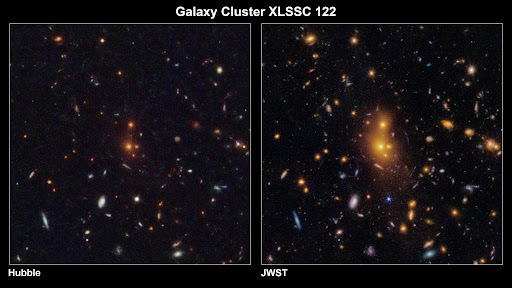
Kyle Finner (IPAC/Caltech), presented the discovery of strong gravitational lensing in XLSSC 122, the most distant known galaxy cluster, seen as it was about 10.3 billion years ago. When the team got their JWST imaging back, they noticed bright blue arcs around the brightest cluster galaxy, a clear signature of strong lensing from a background galaxy sitting in just the right place behind the cluster. Using those arcs, the team measured the radial dark matter profile and found that XLSSC 122 is much more centrally concentrated than cosmological simulations predict. To check whether the cluster itself is unusual, they combined the JWST result with multiwavelength data. All of those tracers show an elongated structure pointing the same way as the dark matter, which is a strong sign that XLSSC 122 is a merging cluster. But mergers usually lower concentration rather than boost it, so the question of why this early cluster looks so concentrated is still open. The team plans to follow up with more strong-lensing measurements. | Press release

This two-panel image shows a distant galaxy cluster

This two-panel image shows a distant galaxy cluster as it has been observed by NASA’s Hubble Space Telescope and JWST. [NASA, ESA, CSA; Kyle Finner (Caltech/IPAC) Image processing: Robert Hurt (Caltech/IPAC-SELab)]

Hidden Gems in the Hearts of Nearby Galaxies: Evolution of Young Massive Star Clusters in Circumnuclear Rings

Sajia Shahrin Neha (University of Kentucky) presented a study of young massive clusters in the circumnuclear rings of two nearby galaxies: NGC 3351, a normal spiral, and NGC 1097, which hosts an active galactic nucleus. Young massive clusters are extreme star-forming systems that pack hundreds of thousands to millions of stars into a small region, and the ring-shaped star-forming zones around these galactic nuclei provide exactly the kind of dense gas and dust reservoir these clusters need. Because the clusters are heavily obscured, optical, ultraviolet, and infrared light cannot pass through cleanly, so Neha and collaborators turned to radio continuum imaging with the Atacama Large Millimeter/submillimeter Array and the Very Large Array, which can see through the dust. Their team identified 53 young massive cluster sources across the two rings. They also placed them on an evolutionary sequence: heavily embedded “starless” clumps, newborn clusters that are just starting to become visible, and older “exposed” clusters that have already burned through much of their gas. All evolutionary stages are present in both galaxies, regardless of whether the host has an active nucleus. | NRAO press release | U. Kentucky press release

Dusty and Over-Pressured: Measuring Stellar Feedback in the Closest Luminous Infrared Galaxy

Deb/Debosmita Pathak (The Ohio State University/IPAC) presented new measurements of pre-supernova stellar feedback in NGC 3256, the closest luminous infrared galaxy and a merger between two roughly Milky Way–mass galaxies. NGC 3256 forms stars about 60 times faster than the Milky Way, which makes it a useful nearby laboratory for the intense, clumpy star formation that dominated the early universe. Using JWST plus multiwavelength data, the team measured feedback pressures around roughly 1,700 young star clusters and compared them with what we see in quieter, normal star-forming galaxies. The results break the standard picture in two ways. First, the feedback and interstellar medium pressures in NGC 3256 are about a hundred times higher than what is typical in normal star-forming galaxies. Second, the dominant feedback mode is different: instead of warm ionized gas pressure doing most of the work, ultraviolet and infrared radiation pressure on dust dominates in these much dustier environments. Even at these much higher pressures, most clusters are still over pressured relative to their surroundings, meaning radiation is strong enough to drive expansion against a dense ambient interstellar medium. | NRAO press release | OSU press release

Unveiling the First Binary-System Supernovae

Miltiadis Michailidis (Kavli Institute for Particle Astrophysics and Cosmology (KIPAC)/Stanford University/SLAC National Accelerator Laboratory) closed the session with the discovery of what appears to be the first known supernova remnant pair born from a binary star system. The starting point is IC 443, one of the best-studied supernova remnants and one of the brightest gamma-ray sources in the sky, thanks to its interaction with a dense nearby molecular cloud. Recent eROSITA observations showed that the faint X-ray “shell” long noticed next to IC 443 is in fact a second, overlapping supernova remnant. The question was whether the two are physically related or just a chance alignment on the sky. They used 15 years of Fermi gamma-ray data and modeled and subtracted IC 443’s contribution and uncovered a distinct, hidden gamma-ray source associated with the new remnant.

The gamma-ray emission is strongly spatially segregated: its northern boundary, where it overlaps the same molecular cloud that IC 443 illuminates, is dominated by accelerated protons colliding with dense gas, while its southern boundary is dominated by accelerated electrons. The team also showed that the optical filament along the northern boundary is a radiative shock that has cooled past the point of efficient particle acceleration. Combined with the fact that both remnants sit at the same distance (about 6,000 light-years), and that a population-synthesis run with a million massive binaries reproduces the observed separation and age difference, the team argues that the two remnants are the remains of a true binary pair. | Press release

Return to Table of Contents.


Plenary Lecture: George Helou, The Cosmic Infrared Window: Photons, Technology, and People (by Kerry Hensley)

George Helou (Caltech) gave a sweeping overview of infrared astronomy over the past 40 years, including the impressive role of the Infrared Analysis and Processing Center, or IPAC, which is celebrating its 40th anniversary.

The infrared portion of the electromagnetic spectrum is broad, encompassing wavelengths from 1 to 1,000 microns. In that wavelength range, there’s a lot going on in our universe: redshifted emission from distant galaxies, stars revealed by the drop in dust extinction, rotational and fine structure lines, molecular transitions, and fully half of the radiation density in the universe.

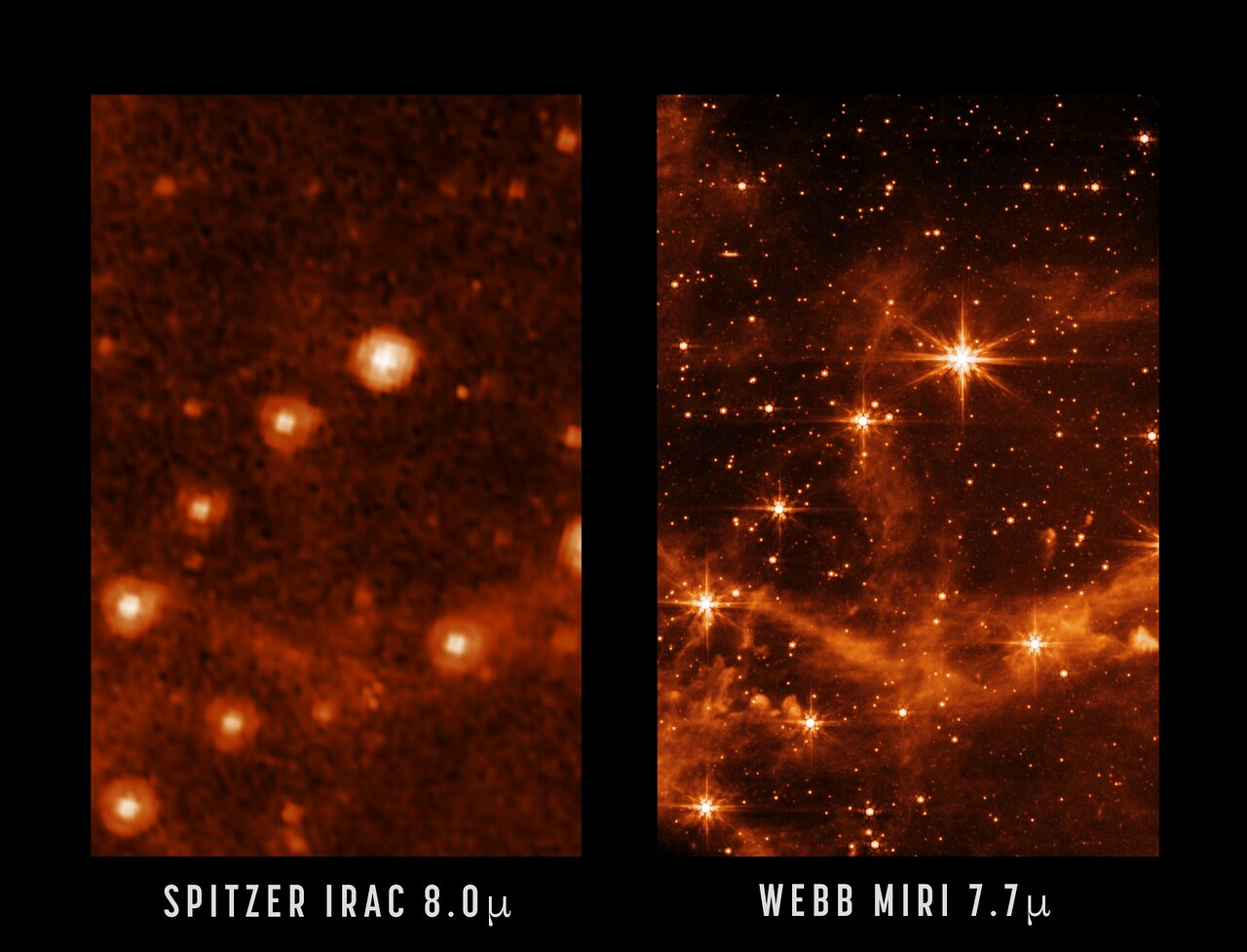
comparison of Spitzer and JWST images

An example of how infrared capabilities have improved over time. [NASA/JPL-Caltech; MIRI: NASA/ESA/CSA/STScI]

There have been many successful ground- and space-based infrared missions and surveys over the past four decades, starting with the Infrared Astronomical Satellite (IRAS), which proved the potential of infrared astronomy from space and set a new standard for making data accessible and well documented. Next, the Infrared Space Observatory (ISO) revealed the full span of infrared emission from objects like galaxies and gave researchers their first glimpse of H2 lines. The Two Micron All Sky Survey (2MASS) produced the first fully digital survey of the sky at high angular resolution, creating a dataset that is still widely used. The Spitzer Space Telescope, the Wide-field Infrared Survey Explorer (WISE), the Herschel Space Observatory, and the Planck satellite followed, bringing a slew of new and unexpected discoveries, and pushing the field of infrared astronomy to longer wavelengths.

Helou introduced a few science areas in which infrared missions have contributed greatly. First was the study of polycyclic aromatic hydrocarbons (PAHs), which are a class of molecules containing interconnected rings of carbon atoms. Thanks to infrared instruments, astronomers showed that various unassigned spectral features arose due to PAHs and that these molecules were important for the heating and cooling of the interstellar medium. As infrared instruments became more capable, observations showed how the fraction of carbon that is locked up in PAHs changes with metallicity and revealed novel species like deuterated hydrocarbon nanoparticles.

In the field of exoplanets, IRAS found evidence of excess infrared emission around Vega, hinting at a disk of debris that was later confirmed. (IPAC was instrumental in this discovery; the star Vega was being used for calibration, and the calibration wouldn’t converge because of the unexpected infrared excess.) Later, ISO used spectroscopy to investigate stellar debris disks and showed that they were similar in properties to solar system comets. Though Spitzer wasn’t initially expected to be used for exoplanet studies, the telescope made the first detection of photons from the surface of a planet and helped to discover several planets in the TRAPPIST-1 system. (Here, IPAC played an integral role again; instrument teams and flight engineers worked to ready the spacecraft for exoplanet observations by modifying the heaters on the spacecraft for pointing stability and finding “sweet spots” for photometric stability.) Today, JWST continues to advance the field with sensitive measurements of exoplanet atmospheres.

Finally, Helou touched on the work that IPAC has done to archive data. IPAC maintains the NASA/IPAC Extragalactic Database, or NED, which receives at least three queries per second. It’s also responsible for the Infrared Science Archive, data from which is used in more than 50% of research articles. IPAC also manages the NASA Exoplanet Archive, showing that the center isn’t limited to infrared astronomy!

As for the future of IPAC and infrared astronomy, it’s clear that there is much left to explore and lots of exciting work to be done; the Roman Space Telescope is scheduled to launch in a few months, and within a few years the Near-Earth Object Surveyor will follow. The Ultraviolet Explorer, for which IPAC will provide the UVEX Science Data Center, is slated to launch in 2030, and the PRobe far-Infrared Mission for Astrophysics (PRIMA) is under final review.

Read Astrobites’s interview with George Helou.

Return to Table of Contents.


Plenary Lecture: Carolyn Kuranz, Creating Astrophysical Conditions at High Energy Density Facilities (by Lucas Brown)

While astronomy and astrophysics are often considered primarily observational sciences, with most targets of interest being millions to trillions of miles away from us — Carolyn Kuranz’s plenary talk helped to challenge this idea, demonstrating how we can sometimes bring the heavens down to Earth with high energy density (HED) facilities. The basic idea behind Kuranz’s work, and the field of HED laboratory astrophysics more broadly, is that some extreme astrophysical environments, particularly plasmas, can indeed be studied in the lab by producing smaller-scale analogs — so long as we choose the right types of experiments.

Kuranz structured her talk around three big questions she commonly gets asked about her field: firstly, why would astronomers want to do laboratory experiments? Then, what defines the “high energy density” in HED astrophysics? And finally, how do we actually do these experiments in practice? Starting with the why, Kuranz notes that studying systems in astrophysics is inherently difficult as a result of the fact that they are far away, and theoretical models can suffer from a lack of data or missing physics. Experiments can bridge the gap here, providing the ability to collect more data on specific systems of interest, complementing both theoretical models and observations.

While this philosophy can apply to a variety of laboratory astrophysics areas, such as laboratory-based studies of the chemistry of planetary atmospheres, Kuranz focused specifically on the emerging role of HED laboratory astrophysics. Typically, high energy density refers to systems with more than 1 million atmospheres of pressure and temperatures above 1 million K. Generally, this means we’re in plasma territory. In some ways, it’s only natural that studies of these sorts of environments would eventually help astrophysicists, given that around 99.9% of the matter in the universe is in plasma form. Despite this, the laboratory astrophysics side of HED physics has really only emerged over the past 30 years, with its origins being traced to work out of Lawrence Livermore National Lab, the current site of the National Ignition Facility (NIF).

Today, the NIF is only one of a few dozen facilities in which HED laboratory astrophysics experiments are conducted. This is because the type of equipment needed to reproduce environments analogous to various astrophysical systems can vary greatly. This gets to Kuranz’s third question of how these experiments are conducted. The process begins by answering a set of questions, including: do the astrophysical and proposed laboratory environments obey the same governing equations (conservation of mass, momentum, etc.)? Is one able to re-scale the physical parameters in each system (timescale, size, density, pressure, etc.) in a way that retains relevant dynamics like viscosity, Reynolds number, and so on? Once these details have been nailed down, a researcher can assess what types of facilities they may need. For example, the NIF, which uses symmetrical arrangements of lasers to compress and heat up millimeter-scale pellets containing gases that can undergo nuclear fusion, provides a fairly natural environment for studying processes in the cores of stars, which are also hot, dense, and neutron-rich environments where fusion is actively occurring.

As for the future, things look promising for HED laboratory astrophysics — since the NIF achieved “ignition” in 2022, producing a net gain of energy from one of these pellet-crushings for the first time, a huge amount of interest and investment has been flowing into facilities studying HED physics. These facilities range from private companies working to achieve sustained nuclear fusion power generation to longstanding federal research centers working on understanding nuclear weapons and stockpile management, but they all provide astronomers with the opportunity to do what was once unthinkable: bring the universe’s most extreme environments down to Earth.

Return to Table of Contents.


Plenary Lecture: Cara Battersby, Our Galaxy’s Dynamic Center (by Niloofar Sharei)

Cara Battersby (University of Connecticut) used her plenary to walk us through her group’s ongoing effort to understand one of the most extreme environments in our own galaxy: the central molecular zone (CMZ), which is a dense, turbulent gas reservoir at the heart of the Milky Way. Her talk pulled together large surveys, new high-resolution zoom simulations, and machine-learning methods designed to bridge between the two.

She opened with the PRobe far-Infrared Mission for Astrophysics (PRIMA), the far-infrared probe mission concept she is a co-investigator on. This mission concept was developed in response to NASA’s recent billion-dollar probe mission call, and selection is expected later this year. PRIMA covers roughly 1.8–25 microns with imaging and spectroscopy, and galactic ecosystems make up about a quarter of its science case.

Battersby paused mid-talk to speak directly to early-career people in the audience about work-life balance, including bringing her daughter and sister with her to the meeting, and the SPARK program at UConn that supports women and underrepresented groups in physics. Her message: astronomy should be done from a place of joy, and visible work-life balance is something the community should be more open about.

Battersby framed the Milky Way as the natural laboratory for star formation across a huge range of environments, and briefly reviewed the ALMAGAL survey, which observed roughly 1,000 high-mass star-forming regions across the disk. But her main focus was the CMZ, which she argued is essentially a different kind of galaxy embedded inside our own. About 80% of all the dense molecular gas in the Milky Way sits in the CMZ, and its gas properties — density, turbulence, temperature, and pressure — are extreme compared to the rest of the disk. Because nearby starburst and high-redshift environments share many of these properties, the CMZ is the closest place we can actually resolve individual star-forming cores under conditions that resemble the early universe.

She showed that gas in the CMZ is extremely filamentary across all scales, and that the relationship between dense gas and star formation rate is unusual: when individual clouds in the CMZ actually form stars, they form them much like clouds elsewhere in the galaxy, but a large fraction of the dense gas in the CMZ never engages in star formation at all. Battersby argued that this is likely because so much of that gas is being shaped by flows toward the black hole and the strong turbulence and dynamics of the central environment, and it never cools and collapses into stars.

She closed with the simulation and machine-learning side of the program. Her group runs zoom simulations that can follow individual star-forming regions and can resolve down to CMZ scales while still capturing the full ~5 kpc bar driving gas inward. To extract more from these simulations than just side-by-side image comparisons, the team built a GPU-accelerated radiative transfer code that runs roughly 10,000 times faster than existing codes. They generate hundreds of thousands of synthetic observations and use them to train an encoder–decoder convolutional neural network that learns to predict the top-down structure of a region from the side-on view we actually observe. Applied to the CMZ, the network produces 3D reconstructions that are physically plausible and broadly consistent across independent training runs.

Read Astrobites’s interview with Cara Battersby.

Return to Table of Contents.

The post AAS 248: Day 3 appeared first on AAS Nova.

Observations of the Fermi Bubbles and the Galactic Center Excess with the Dark Matter Particle Explorer

18 June 2026 at 17:00
F. Alemanno et al 2026 ApJS 284 22
In the first 102 months of data from the Dark Matter Particle Explorer, researchers have independently confirmed the detection of the Fermi bubbles and identified a GeV excess toward the galactic center.

The post Observations of the Fermi Bubbles and the Galactic Center Excess with the Dark Matter Particle Explorer appeared first on AAS Nova.

Hunter-gatherers in Siberia died of a plague outbreak 5,500 years ago

18 June 2026 at 16:04

Plague swept through groups of hunter-gatherers in southeastern Siberia 5,500 years ago, leaving dozens dead in its wake—with DNA from Yersinia pestis bacteria still trapped inside their teeth.

University of Oxford ancient DNA researcher Ruairidh Macleod and his colleagues recently sequenced the telltale bacterial DNA in teeth from plague victims at four ancient cemeteries in the area around Russia’s Lake Baikal. The tragedy that befell these communities is now the earliest known plague outbreak, courtesy of the oldest strain of Y. pestis ever sequenced.

Unearthing a new backstory for the plague

Until recently, scientists who study the evolution of diseases have held two fairly solid ideas about the origins of plague, the disease caused by Yersinia pestis bacteria. It's a scourge so awful that it has gone down in history as not just a plague but the plague. The first idea is that the earliest strains didn't have the right genetic traits to be really lethal. And the second is that the plague first began menacing humans when the first farmers settled in densely packed towns alongside rats and domestic animals.

Read full article

Comments

© Kevin WIlson

❌