Elon Musk’s rocket company said it would sell more than 555 million shares at $135 each in its blockbuster initial public offering, which is set to begin trading on Friday.
O Mundial de Futebol começa hoje, 11 de junho, com 48 seleções em campo nos Estados Unidos, Canadá e México. A app oficial da FIFA 2026 é a companhia indispensável para acompanhar cada jogo e respetivos preparativos, seja em casa ou nas bancadas.
By integrating an AI assistant directly into Edits, Meta is aiming to keep creators engaged on Instagram as it continues to compete with TikTok and YouTube for creators' attention.
Australia was the first country to issue a ban in late 2025, aiming to reduce the pressures and risks that young users may face on social media, including cyberbullying, social media addiction, and exposure to predators.
Elon Musk’s rocket company is spending big and losing money. That has raised questions about whether it can justify its valuation for its blockbuster initial public offering.
Pool's new app automatically sorts screenshots into personalized collections, tracks down the original links behind saved content, and helps you rediscover products, recipes, travel ideas, and other things you meant to revisit.
The Weather Company announced an "enhanced allergy experience" now available through its The Weather Channel app designed to help allergy sufferers better understand when their symptoms might flare up, and what's causing them. While the app already provides static pollen counts, its "Health & Wellness" section is being expanded to take into account other factors such as how changing weather conditions could result in you experiencing more symptoms despite the counts not actually rising.
The new features now available in the free version of The Weather Channel app include "weather aggravator insights" that analyze how conditions like high wi …
Alt Carbon said the agreement followed more than a year of scientific review and due diligence, with Microsoft requiring additional verification and data-sharing measures.
Every day, people rely on computer chips to keep sensitive information safe. These tiny pieces of hardware help protect everything from online banking details and personal data to government and military secrets. But new research suggests that some chips could contain hidden threats that are almost impossible to detect using current security methods. Researchers from […]
The new chatbot, called Ask DoorDash, allows users to search the app for what they're looking for in their own words instead of having to scroll through restaurants and stores to build a cart.
As co-chief executive of the start-up Prometheus, the Amazon founder is using A.I. to improve how devices ranging from computers to jet engines are made.
Framework is pushing back shipments of its new Laptop 13 Pro to address issues with its haptic touchpad and display found in the run-up to mass production.
The Framework Laptop 13 Pro is delayed. The new 13-inch Framework flagship was set to launch in June, but shipments from the first batch are now expected in July - and there's still a chance some shipments could slip to early August. If you're not in the first batch, your Laptop 13 Pro shifts from a July shipment to August, though some could be as late as early September.
Framework informed customers who preordered a Laptop 13 Pro of the delay via email, outlining the reasons for the extra wait. The main culprits are the new haptic trackpad and custom display. Mainboard preorders and any orders that didn't include these components are sti …
Andrew Yang’s 2020 presidential campaign was based on a warning that automation and AI would hollow out the labor market and concentrate wealth in the hands of a few. At the time, ideas like Universal Basic Income felt fringe. Now Dario Amodei, Sam Altman, and Bernie Sanders are all saying versions of the same thing. An entrepreneur at heart, […]
By Erica McNamee of NASA’s Goddard Space Flight Center in Greenbelt, MD
As a kid, you were always taught to hold tight to balloons—tie them around your wrist, even, to keep them close. This week, a group of a dozen undergraduate students participating in NASA’s 2026 Student Airborne Research Program (SARP), unlearned old balloon-wrangling habits—and let go.
Their purpose: to collect data about the atmosphere with the help of a weather balloon. For this fieldwork day, in a windy area on the Texas Gulf Coast, the group released an ozonesonde, a small instrument attached to a weather balloon that measures ozone concentrations as it rises through the atmosphere.
“I’ve never done any atmospheric fieldwork outside like this, so this has been an awesome new opportunity for me,” said Marin Stevens, SARP intern and chemistry student from the University of Colorado at Colorado Springs.
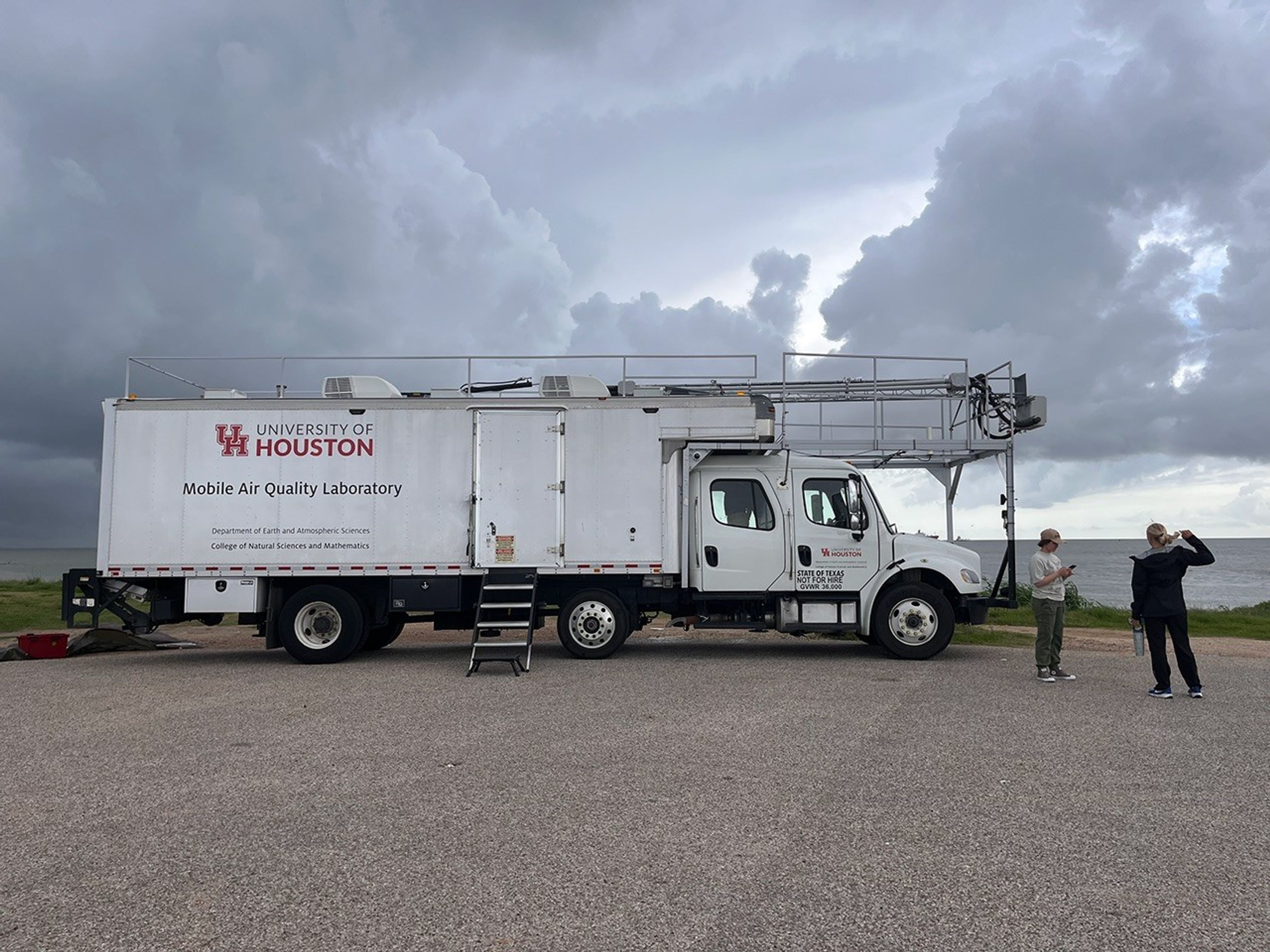
With the support of program mentors and faculty, and aboard the University of Houston’s Mobile Air Quality Laboratory (MAQL), the SARP interns participated in every step of the process.
The Mobile Air Quality Laboratory (MAQL) stands ready for some fieldwork.
NASA/Erica McNamee
Let’s set the scene: About 45 minutes away from this year’s SARP home base at the Lone Star Flight Museum in Houston, the MAQL drove down the Texas City Dike, a long strip of land jutting into the Texas Gulf Coast—an open space perfect for releasing the weather balloon. Among the 45 total students in the program, this group was assigned to meet the mobile lab at the balloon release location at 8 a.m. Central Time, just after a rainstorm rolled through.
Inside the lab, the students prepared ozonesondes for takeoff, completing the final steps that include measuring and pipetting cathode and anode solutions into the instrument cells attached to the sensor and testing each instrument’s response and baseline.
Outside the mobile laboratory, gusts of wind made it difficult to keep the balloon still while it was being filled with helium. Four students donned leather gloves to minimize oils from their fingers touching the balloon, which can make it pop faster after deployment. They wrangled the balloon while faculty advisor Travis Griggs, instructional assistant professor of atmospheric science from the University of Houston, filled it.
SARP students prepare the weather balloon for takeoff by filling it up with helium, while making sure it doesn’t pop or fly away.
NASA/Sofie Bates
Five students worked together to keep the balloon from flying away as they strung it to the ozonesonde, protected in a small foam container.
After confirming the launch location, time, and expected flight path with the Federal Aviation Administration (just a phone call away), it was time to set the weather instrument free.
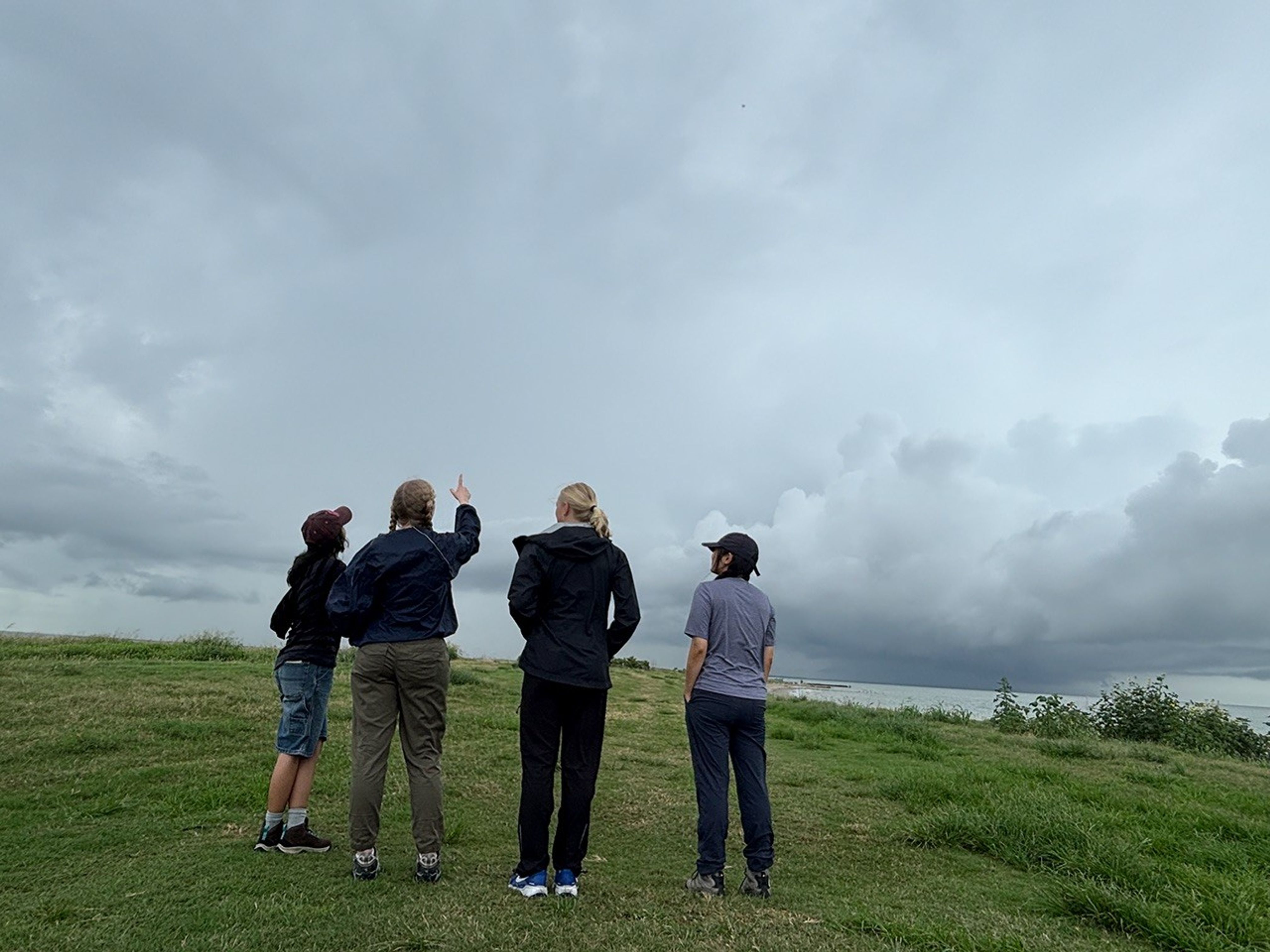
Even though it’s hard to see, there’s a tiny dot up in the sky—that’s the weather balloon! These students are admiring their work, watching their science experiment float up into the atmosphere to collect data.
NASA/Sofie Bates
“It was like a fight to stay on the ground, with the balloon whipping around in the wind,” said Zayna Haider, SARP intern and atmospheric and climate science student from the University of Washington. “It just flew away as soon as we let it go.”
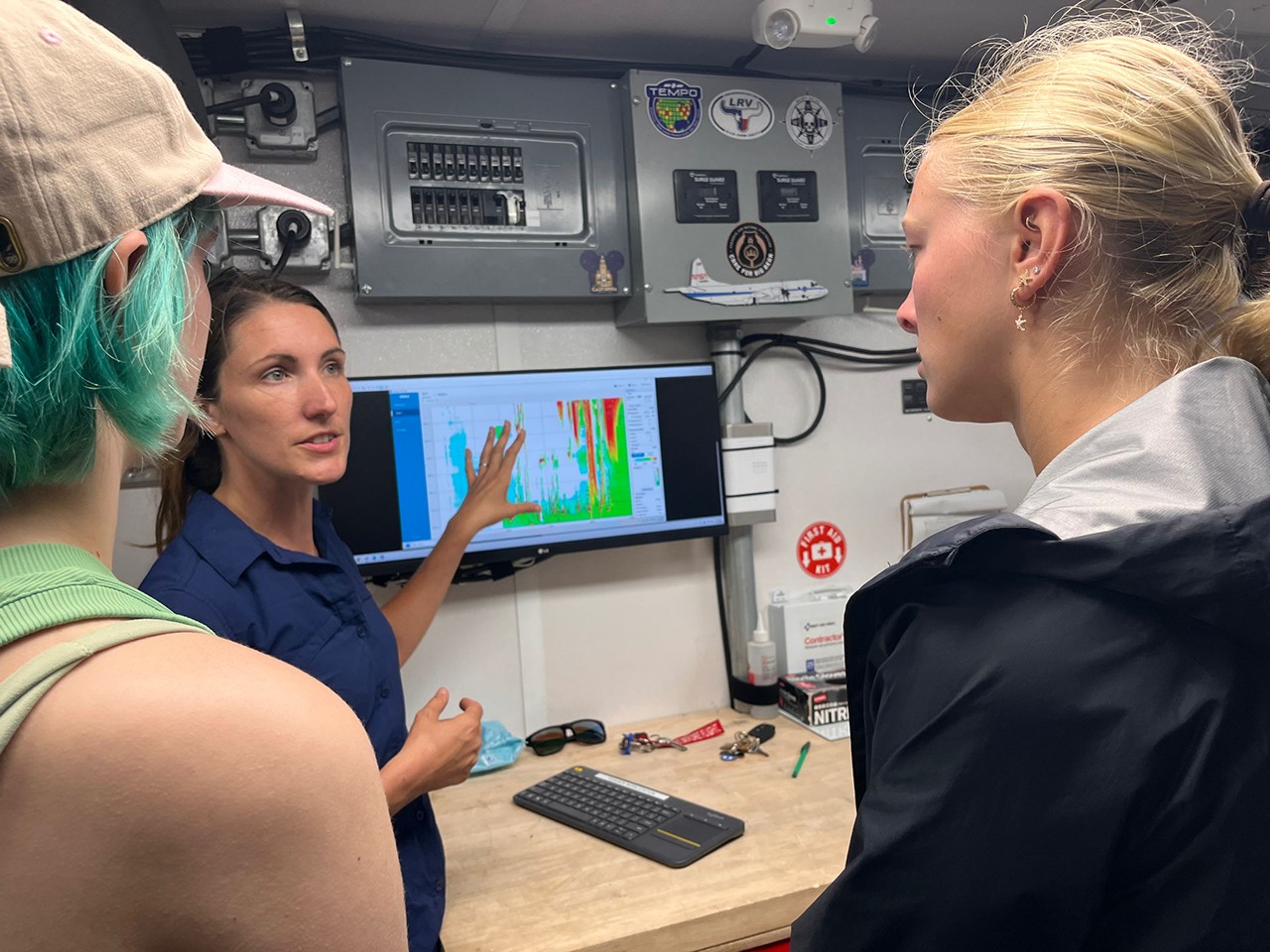
But the work had only just begun. The students huddled back inside the MAQL, monitoring data as long as the balloon kept sending it—until it popped or landed, whichever came first. Throughout the day, they repeated this process with two other balloons.
Students inside the Mobile Air Quality Laboratory reviewed the data from the weather balloon they had just launched.
NASA/Erica McNamee
This day gave many SARP participants, just starting their science careers, their first glimpse at hands-on fieldwork that reached the edges of the atmosphere. Next, they would use this data and what they learned from the experience for their end-of-internship research presentation.
“This is beyond what I ever thought it could be,” Stevens said. “I’m super excited for the next seven weeks.”

 Login