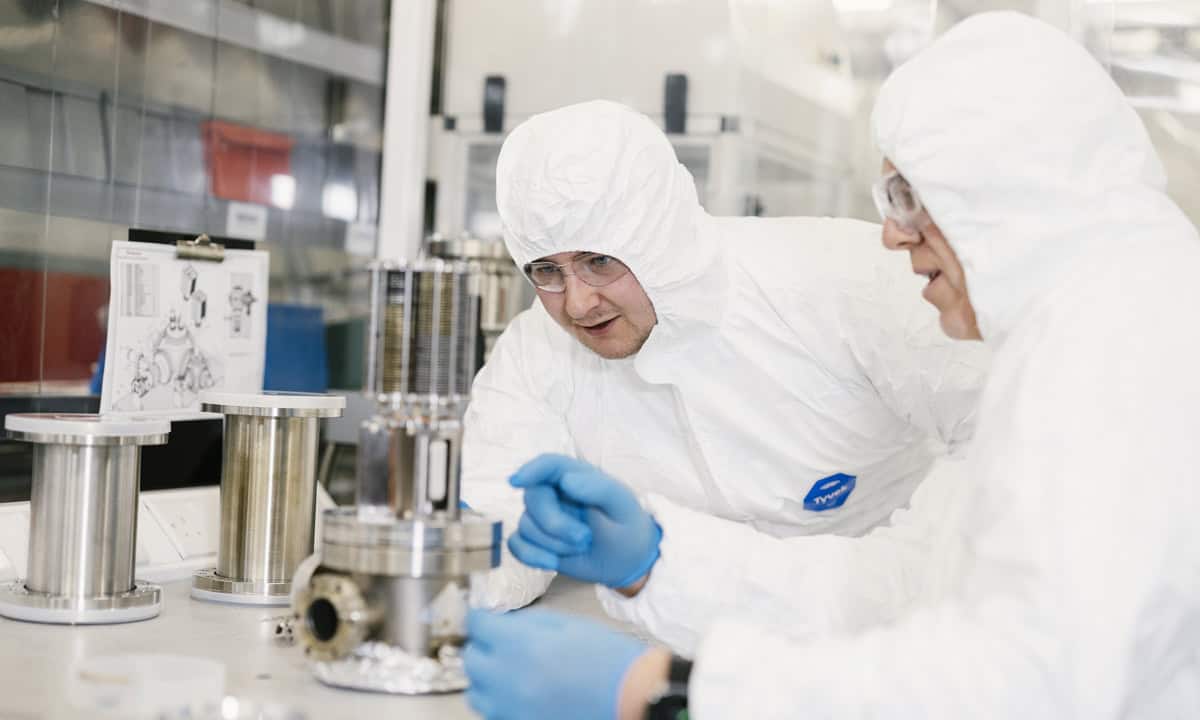
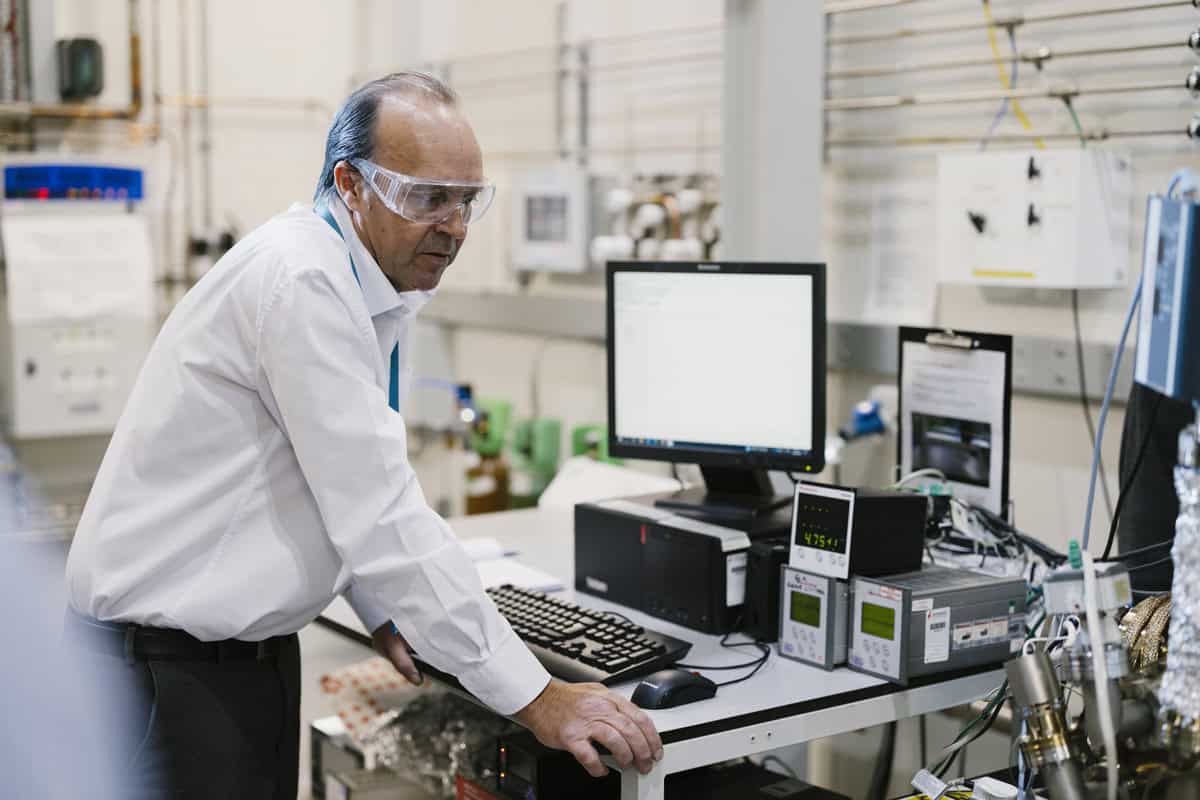
UK medical technology start-up Siloton has been awarded an £8.4 million contract to accelerate the development of its portable eye imaging system. Based on optical coherence tomography (OCT), the company’s GiraffeOCT device generates detailed retinal images for detection and monitoring of a range of treatable eye diseases.
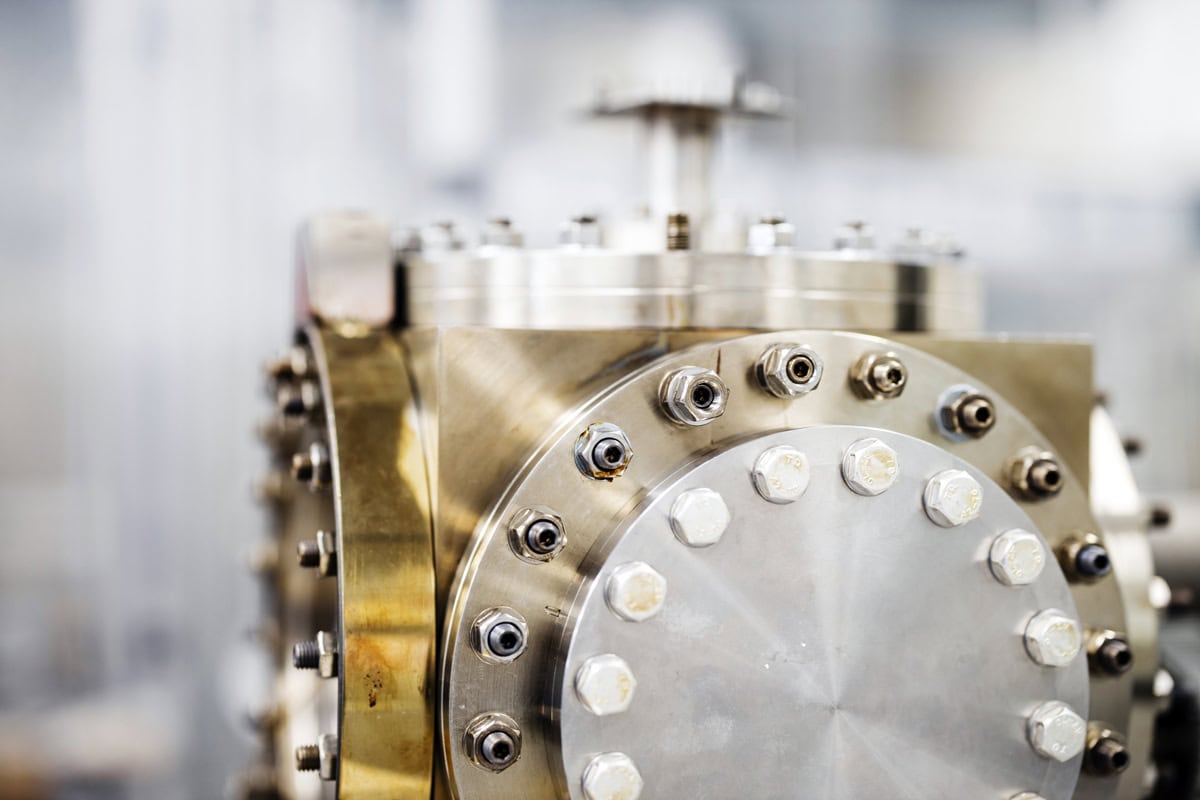
OCT is a non-invasive optical technique that creates high-resolution, depth-resolved images of biological tissue. While OCT is the clinical gold standard for diagnosing retinal diseases, existing systems are large and expensive and typically only available in hospitals and optometry clinics. By using photonic chip technology to shrink the bulky optical components onto a single coin-sized chip, Siloton is developing an easy-to-use, handheld binocular-style system.
The contract, from Innovate UK, will massively accelerate development of both the in-clinic GiraffeOCT system and the at-home version, which will have built-in automation and guidance so that users can reliably image themselves. “The contract will reduce the time to market for the medical device by one to two years,” says Alasdair Price, CEO of Siloton. “It will also allow us to grow the company, bringing in new skills around manufacturing and regulation, both of which are critical to the next stage of the business.”
Continuing clinical trials
In 2024, Siloton was the first commercial organization to demonstrate sub-surface imaging of a human retina, using its first-generation Akepa OCT photonic chip. The following year, the company trialled its device with patients for the first time, imaging their retinas to identify the presence and progression of age-related macular degeneration (AMD). Testing continued as the system developed, with a second cohort of patients imaged earlier this year.
In addition, the Project Ginan consortium in Australia has purchased a GiraffeOCT research system and independently evaluated its retinal imaging performance with a group of healthy volunteers.
Over the course of the two-year Innovate UK contract, Siloton will work with Sunderland Specialist Eye Hospital in the UK to perform clinical trials of the in-clinic device, giving patients access to the technology during its development. “These trials will be based around the prototype for the full medical device, providing additional post-processing and improved ergonomics compared to our research-use only product line,” Price explains.
The funding will also support the development and internal testing of Siloton’s second-generation CheetahOCT system, a research-use device that will measure different layers of the retina, expanding the number of conditions that it can detect. CheetahOCT incorporates the company’s second‑generation BlueJay chip – the same architecture used in the system that Siloton is building for astronauts – and will be available from early 2027.
“The image performance will be significantly improved, increasing the number of biomarkers that it can be used to measure. This means you will be able see more of the eye and in finer detail,” Price tells Physics World. “CheetahOCT will also be much more compact, as we continue to miniaturize other parts of the system that fall outside the photonic chip.”
In September 1976 physicist Masao Doi, then working at Tokyo Metropolitan University, published two groundbreaking papers. The work – published in Journal of Physics A – cast classical stochastic many-body problems in the mathematical language samiliar to that of quantum-field theory (9 1465 and 9 1479).
Although this happened at a time when theoretical field methods in statistical mechanics were getting into full swing, this gem of deep scientific insight remained hidden for many years.
Indeed, it was reinvented several times, most notably in 1980 by Peter Grassberger and Martin Scheunert from the University of Wuppertal, who also highlighted the many applications for the theory.
Following conversations with Grassberger at a meeting organised by the Centre Européen de Calcul Atomique et Moléculaire in September 1985, Luca Peliti from the University of Rome went about putting Doi’s theory into a path integral formalism, thus making it amenable to renormalisation.
That same year he published a letter on the renormalisation group treatment of a reaction-diffusion process, using the framework that was named Doi-Peliti field theory (J. Phys. France46 1469).
The works by Doi and Peliti quickly became viewed as fundamental building blocks to calculate not only asymptotics but also systematic approximations of observables in reaction-diffusion processes.
Theoretical physicist John Cardy from the University of Oxford, used Doi-Peliti theory as a work-horse for reaction-diffusion processes.
In the 2000s, Cardy and colleagues produced not only a string of renormalisation group treatments of reaction-diffusion processes, but also reviews and tutorials at different levels of technicality, which made Doi-Peliti field theory accessible to many of us.
Key insights
Eye to eye: Doi (left) and Peliti met for the first time at the event in Cambridge (courtesy: Gunnar Pruessner)
In 2018 Doi became chief scientist at the Wenzhou Institute of the University of Chinese Academy of Sciences and was well-known for his work in polymer and soft-matter physics.
Yet when my former PhD student Ziluo Zhang joined the Wenzhou Institute as a postdoc in 2023, he found that Doi was unaware that the field theory bears his name and the many developments since its inception.
In a relaxed atmosphere, some of the key players explained how their insights came about.
Doi-Peliti field theory is a brilliant concept conceived by brilliant minds. One might be tempted to speculate how many more theories have been spun off and developed that are attributed – or even unattributed – to the pair without them ever knowing.
An upcoming special issue of Journal of Physics A will be dedicated to the Doi-Peliti field theory.
A new phase of solid superionic ice has been created for the first time in the laboratory. By heating a tiny sample of ultrapure water while compressing it to extreme pressures, physicists at the French Alternative Energies and Atomic Energy Commission (CEA) succeeded in forming an ice phase that features a hexagonal close-packed (hcp) structure and liquid-like hydrogen diffusing through a solid lattice of oxygen atoms. This demonstration could help us better understand the structure of ice giant planets such as Uranus and Neptune, which may harbour this form of ice deep within their interiors.
Unlike water’s familiar liquid, vapour and ice phases, superionic ice can only exist when water is subjected to tens or even hundreds of GPa of pressure at temperatures above 1000-2000 K. Under these conditions, theory predicts that hydrogen ions (protons) diffuse so readily through empty sites in water’s oxygen lattice that the material’s ionic conductivity may exceed 100 Siemens per centimetre, making it almost as conductive as metals. The melting temperature of this form of ice is also extremely high, reaching several thousand kelvin as new ice structures develop that feature a close-packed oxygen lattice.
Diamond anvil cells and X-ray diffraction spectra
To create super-high pressures in the laboratory, researchers typically use diamond anvil cells, which are tiny cavities in which samples are tightly compressed between the tips of two opposing diamond surfaces. In the new work, a CEA team led by physicists Alexis Forestier and Gunnar Weck added two high-thermal-conductivity cup-shaped discs made of boron-doped diamond to the diamond anvil surfaces. This set-up enabled them to apply pressure while heating their 12 micron-sized sample uniformly with lasers, thereby avoiding the large temperature gradients that complicate measurements in conventional diamond anvil cells.
Forestier, Weck and colleagues heated their sample of ultrapure water from 300 to 2630 K while applying pressures between 80 and 229 GPa. Thanks to the Extremely Brilliant Source’s sub-micron beam – part of the ID27 beamline at the European Synchrotron Research Facility in Grenoble – they were able to obtain high-quality X-ray diffraction spectra despite the small size of their sample. According to the CEA researchers, these spectra clearly showed a new hexagonal close-packed (hcp) phase of superionic ice emerging alongside a previously observed face-centred cubic (fcc) phase across a pressure range of 130-200 GPa and temperatures above 1800 K.
A link to Uranus and Neptune
The discovery brings the total number of superionic phases of water to three, with the other being the body-centred cubic phase first observed in 2016. But that’s not all. Forestier, Weck and colleagues say that their results, which they report in Physical Review Letters, could also help explain the magnetic fields of Uranus and Neptune.
Unlike the Earth’s magnetic field, these fields are skewed and off-centre with respect to the planets’ axis of rotation. These properties have led scientists to hypothesize that instead of being generated by the motion of molten iron in the planet’s core (as on Earth), the magnetic fields of Uranus and Neptune could arise from conductive superionic warm dense ice (composed of water, ammonia and methane) in the planets’ outer third.
“The experimental observation of this new hcp superionic phase now provides a rationale for incorporating its mechanical properties and ionic conductivity into these models of planetary interiors,” Forestier says. “Indeed, this phase can coexist with the fcc superionic phase and become more stable at higher pressures (above 150–200 GPa), and so probably exist deeper within the inner shell of these ice giants.”
The researchers’ next step will be to precisely define regions of the phase diagram where pressure and temperature are stable; map out the transition lines between the different phases (molecular and superionic); and understand how the new hcp phase behaves as it melts. This will help confirm whether these phases are stable and present within Uranus and Neptune, Forestier tells Physics World.
“We also want to obtain more direct experimental signatures of superionic behaviour, beyond the thermal expansion we observed,” Weck adds. “Brillouin spectroscopy measurements, for example, could reveal anomalies in the speed of sound, strengthening the evidence for proton diffusion.”
The construction of four 23 m-diameter telescopes belong to the Large-Sized Telescope (LST) array at the Roque de los Muchachos Observatory in La Palma, Spain.
The telescopes are designed to detect the faint Cherenkov light flashes when very high-energy gamma rays interact with the Earth’s atmosphere.
The LSTs are the most sensitive instruments in the world for observing gamma rays at energies between approximately 20 GeV and 3 TeV.
The first LST-1 telescope was built in 2020 and has already completed observations of pulsars, studies of active galactic nuclei at cosmological distances and rapid follow-up observations of transient phenomena such as novae and gamma-ray bursts.
The three other telescopes now join LST-1 and by observing the same gamma-ray showers simultaneously from multiple directions, it will provide improved sensitivity, angular resolution and energy reconstruction.
Their sensitivity to the lowest-energy gamma rays will enable astronomers to detect and study bright gamma-ray bursts at high redshift, potentially extending gamma-ray observations to sources at redshifts of around z∼4 to provide new insights into the early universe.
The telescopes will provide new insights into the early universe. (Courtesy: LST collaboration)
“The completion of the LST sub-array is the culmination of more than 15 years of international collaboration and technological innovation,” says Japanese astrophysicist Masahiro Teshima, who is principal investigator of the LST collaboration. “These telescopes will allow us to explore some of the most extreme environments in the universe, including supermassive black holes, neutron stars and the nature of dark matter.”
North-south divide
The telescope will form part of the Cherenkov Telescope Array Observatory (CTAO), which when operational in 2028 will operate between 20 GeV and 300 TeV and be the world’s most powerful observatory for gamma-ray astronomy.
The CTAO will consist of six LST telescopes as well as two other arrays: 23 telescopes belonging to the Medium-Sized Telescope (MST), which will operate between 80 GeV and 50 TeV, and 37 telescopes for the Small-Sized Telescope (SST) that will work between 2 TeV and 300 TeV.
The 66 telescopes will be distributed between CTAO-North at La Palma and CTAO-South at the Paranal Observatory in the Atacama Desert in Chile.
The LSTs form the low-energy core of CTAO-North and over the coming years they will undergo commissioning and be integrated into CTAO operations.
How fast can a kettle boil water for your cup of tea, or a refrigerator cool down a bottle of beer? The answer depends on the details of the machines, but according to new work published in Nature Physics, the minimum wait time does not. Instead, it’s quantum mechanics that imposes a limit on how fast something can thermalize to a particular temperature.
Objects thermalize, or reach a state of thermal equilibrium, when they no longer exchange any net heat with their environment. Physicists already suspected that this process couldn’t happen arbitrarily quickly. “There was suggestive evidence from experiments, numerical simulations and analytical calculations that a physical system can’t be made to thermalize faster than some fundamental limit,” says Martí Perarnau-Llobet, a quantum scientist in the Quantum Information Group at the Autonomous University of Barcelona, Spain, and one of the paper’s authors.
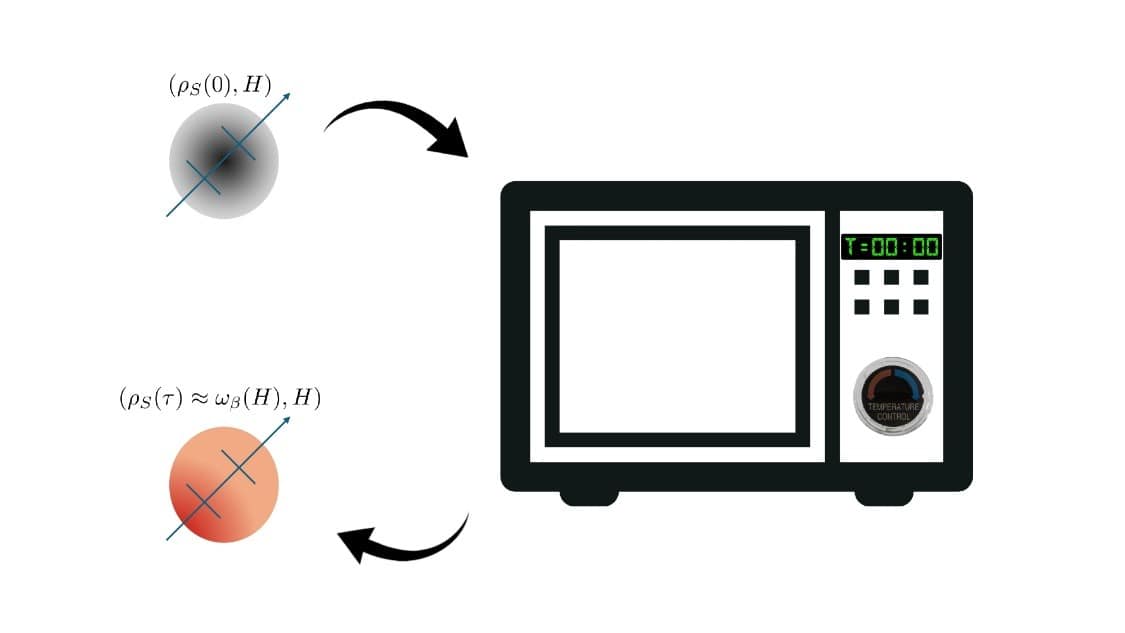
Although the exact conditions under which thermalization is always guaranteed remain an unanswered puzzle, the researchers chose to focus on systems that do have this feature. To guarantee thermalization, Perarnau-Llobet and colleagues in Barcelona; Vienna, Austria; and Geneva, Switzerland came up with the mathematical notion of a thermalization machine. Given a quantum system in some initial state, this thermalization machine evolves it to a thermal state (that is, one that doesn’t spontaneously exchange net heat with its environment) at a particular well-defined temperature. In the previous example, the refrigerator and kettle would be considered thermalization machines, and your beer and water would be the systems.
No cheating
In some cases, one can engineer a machine that takes a particular system to its equilibrium state arbitrarily fast. For instance, a machine might quickly swap a hot cup of coffee for an iced one. But that would be cheating, says team member Pavel Sekatski, a researcher at the University of Geneva. “Such examples where you can finely tune your algorithm to thermalize a specific system can be avoided by carefully defining thermalization,” he tells Physics World.
Your quantum system is ready: A visualization of a thermalization machine that takes some quantum system in some initial state as input and outputs the system in its thermal state. (Courtesy: Paolo Abiuso, Alberto Rolandi, John Calsamiglia, Pavel Sekatski and Martí Perarnau-Llobet).
The researchers did this using a mathematical object called a Hamiltonian, which describes the possible energies a system can have. If a quantum system has a Hamiltonian that is close to the original one, then they require that the thermalization machine must be able to thermalize that system, too. In other words, the same thermalization machine that cools your cup of coffee must also be able to cool down other cups of coffee that may have slightly different amounts of sugar or milk. This rules out the instant swap tricks as the machine can no longer be tailored to a specific cup of coffee.
Based on the assumptions that such a thermalization machine is consistent with laws of quantum mechanics and that it works for some quantum systems that are close to each other, the researchers show that, away from absolute zero, the fastest thermalization time is approximately ℏ/(2kBT), where ℏ is Planck’s constant and kB is Boltzmann’s constant. “These restrictions on these thermal machines are actually very weak, and the notion is very general,” notes Perarnau-Llobet.
Related problems in computer science
The researchers note that their work is closely related to interesting tasks in computer science. One such task, known as Gibbs state sampling (GSS), involves taking a known Hamiltonian and using it to work out the corresponding thermal state at a particular temperature. This task can be performed arbitrarily fast. In contrast, if you have access to the quantum system, but you don’t know its mathematical description (that is, its Hamiltonian) you must perform a task called Hamiltonian learning (HL). This task admits a bound on the time taken for it to be solved.
“The task that we considered was somewhere in between the two,“ explains team member Paolo Abiuso, a physicist at the Institute for Quantum Optics and Quantum Information in Vienna. “We don’t know what the Hamiltonian of the quantum system is, but we do have access to the quantum system, and we want to produce the thermal state.” His Barcelona co-author John Calsamiglia adds that while the task they considered is “harder than GSS, it is still easier than HL”.
Beyond these connections to computer science, the researchers say their strategy could lead to insights on broader questions in physics. “We are now investigating what this approach can tell us about the fundamental limits imposed by the second and third laws of thermodynamics,” says Alberto Rolandi of TU Wien.
This episode of the Physics World Weekly podcast features Ignacio Cirac, who has won the 2026 Isaac Newton Medal and Lecture for his “pioneering contributions that founded modern quantum information science, uniting profound theoretical insight, experimental vision, and exceptional scientific leadership shaping quantum physics and technology worldwide”.
Cirac is director of the theory division at the Max-Planck-Institute for Quantum Optics in Germany.
In conversation with Physics World’s Michael Banks, Cirac explains how an early interest in mathematics and science fiction drew him to quantum information – along with the field’s potential to create new technologies.
He talks about his collaboration in the 1990s with Peter Zoller to design quantum simulators and computers based on trapped-ion qubits. Cirac weighs up the pros and cons of the qubit technologies available today and highlights the benefits of systems based on Rydberg atoms.
Looking to the future, Cirac cautions against quantum hype and points out that it is still not clear how quantum technologies will be used in the future. He also calls on European academics to maintain their scientific excellence and for more money to be invested in the continent’s quantum industries.
This podcast is supported by American Elements, the world’s leading manufacturer of engineered and advanced materials. The company’s ability to scale laboratory breakthroughs to industrial production has contributed to many of the most significant technological advancements since 1990 – including LED lighting, smartphones, and electric vehicles.
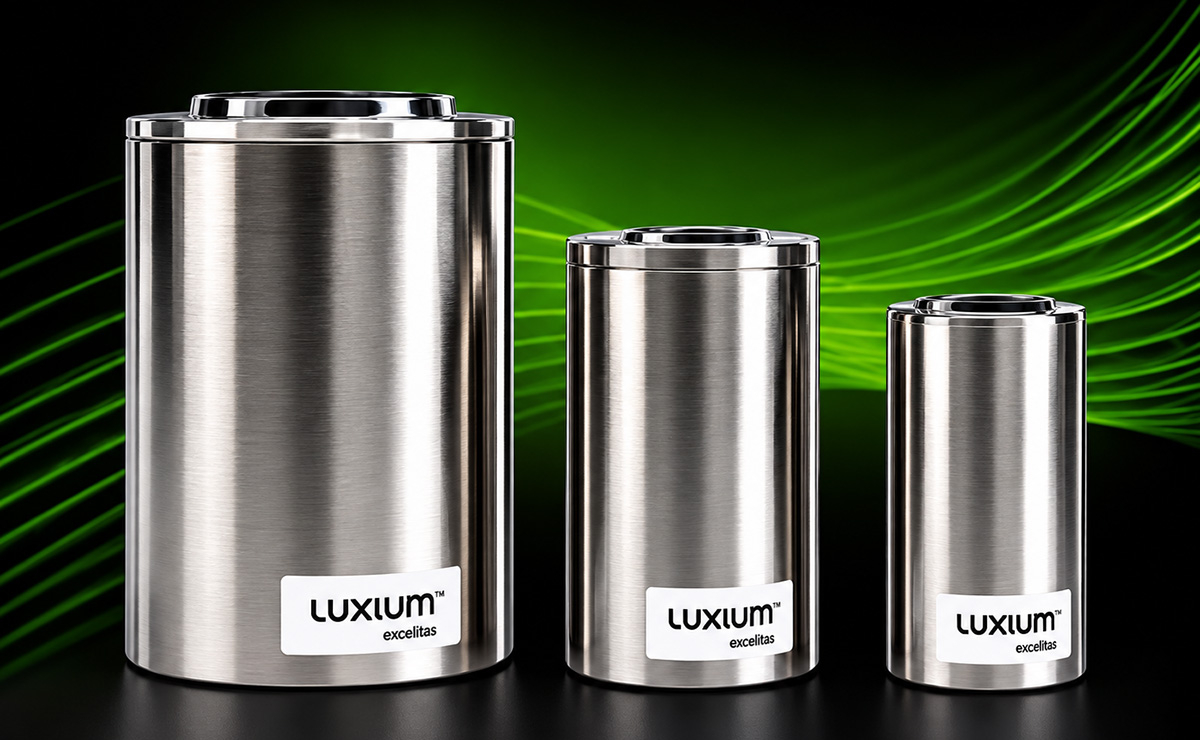
LuxiumTM Lanthanum bromide detectors are available in various sizes.
Scintillation detection advanced rapidly during and after the Second World War, with a major breakthrough coming in 1948 when physicist Robert Hofstadter discovered that thallium-activated sodium iodide (NaI(Tl)) was an exceptionally effective scintillation material for detecting gamma rays. This discovery laid the foundation for practical gamma-ray spectroscopy and established NaI(Tl) as a cornerstone of radiation detection.
The principle behind scintillation detection is relatively simple. When a high-energy gamma-ray photon from a radioactive source enters a scintillator crystal, the gamma ray deposits energy in the crystal, which is converted into scintillation light. This light is directed onto a photoreceptor—such as a photomultiplier tube or a silicon photomultiplier—which converts the optical pulse into an electrical signal. The amplitude of that signal directly corresponds to the energy of the incoming gamma ray, allowing scientists and engineers to build a detailed spectrum of the radioactive source.
Today, there is a wide range of methods for detecting and discerning radioactive sources. One of the most prevalent is NaI(Tl). While versatile and relatively inexpensive, NaI(Tl) has moderate energy resolution, typically around 6–7% at 662 keV for common detector configurations, i.e. just a basic ability to distinguish between different energies of incoming radiation, making precise identification of multiple radioactive species challenging.
The gold standard for energy resolution (<0.2%) is high-purity germanium (HPGe), a semiconductor technology that very clearly separates closely spaced isotope signatures. However, HPGe detectors are more complex and costly, and require cryogenic cooling traditionally using liquid nitrogen or mechanical cryocoolers.
Diane Fruehauf, Business Unit Director (Radiation Detection) at Excelitas Technologies.
“Lanthanum bromide is kind of special,” explains Diane Fruehauf, Business Unit Director (Radiation Detection) at Excelitas Technologies. “It hits the sweet spot where you can have better energy resolution than traditional scintillators, but it’s simple, it’s compact, it’s fast and you can operate at room temperature. You can get a lot of the performance advantages without the cryogenic cooling.”
Beyond a highly respectable energy resolution of ~2.6%, cerium-doped lanthanum bromide (LaBr3(Ce)) also exhibits an exceptional response speed. With a primary decay time of approximately 25 nanoseconds—compared to hundreds or thousands of nanoseconds for other scintillators—its fast response enables high count-rate operation and rapid data collection, making it particularly valuable when measuring intense radioactive sources.
Luxium™ Lanthanum bromide in action
LuxiumTM Lanthanum bromide detector has an energy resolution of ~2.6%.
These properties make LaBr3(Ce) an ideal scintillator for radiation detection in a wide range of situations. One application is border security, explains Guillaume Gautier, Product Manager at Excelitas Technologies. “For example, it enables the signature of nuclear materials to be discriminated and identified from radioisotopes commonly encountered in medical applications, preventing materials of concern from getting masked,” he says. “These emitted gamma-ray photons are close in energy but, unlike other scintillators, lanthanum bromide can discriminate between them accurately.”
Another key use-case is environmental monitoring. After the Fukushima nuclear accident, for example, Luxium™ Lanthanum bromide detectors (made by Excelitas Technologies) have been used to survey the surrounding areas for radioisotopes. And they are used in routine environmental monitoring too, with independent agencies utilizing LaBr3(Ce) detectors to map field contamination, inspect soil or agricultural runoff, and verify environmental safety.
A more complicated application is prompt gamma neutron activation analysis (PGNAA). This works by bombarding a target material with neutrons, causing atomic nuclei to emit characteristic gamma-ray photons almost instantaneously. These photons are then detected and resolved by a high-performance LaBr3(Ce) scintillation crystal.
“It’s used in mining, for example,” says Gautier. “You activate the raw material and you detect the composition, and from this you are able to analyse—in the field—whether it contains anything valuable, such as lithium or rare-earth elements, before you begin extraction.”
Precision manufacturing and the Excelitas advantage
Excelitas Technologies has a longstanding history of innovation with LaBr3(Ce). Originally developed through academic research in Europe in the early 2000s, these crystals showed significant potential for high-performance radiation detection. Saint-Gobain Crystals recognized that potential and pioneered their commercialization, building decades of expertise in the development and manufacture of LaBr3(Ce) detectors. After rebranding to Luxium Solutions for a brief time, the company was acquired this year. Today, that expertise continues as part of Excelitas Technologies.
Nowhere is this expertise more valuable than in growing large, high-purity LaBr3(Ce) single crystals with uniform light yield. This task is made difficult because the crystals are sensitive to ambient moisture and require absolute chemical purity during growth to maintain structural integrity and optical clarity. The solution was to take control of the whole process in-house. “We control our purification and refine our materials ourselves, which gives us a level of process control that directly yields reliable, high-quality crystals,” explains Fruehauf. “Our goal is to deliver consistent performance from crystal to crystal, year after year.”
More recently, the team has focused on pushing lanthanum bromide’s properties even further, developing what they have branded ‘Luxium™ Enhanced Lanthanum bromide’. By co-doping the crystal structure with cerium and strontium, Excelitas engineers improved the scintillation proportionality, yielding higher light output and even sharper resolution.
“With standard Luxium™ Lanthanum bromide, we guarantee energy resolution under 3%,” explains Gautier. “With our enhanced version co-doped with strontium, we lower that threshold below 2.5%, guaranteeing levels down to 2.3% or even 2.2% in optimum conditions.”
And now, the company is not only manufacturing raw crystals for OEMs, but also detector assemblies integrated with photomultiplier tubes or silicon photomultipliers. Backed by Excelitas’ broader photonics and electronics portfolio, the company is well-positioned to deliver complete end-to-end detection solutions for a wide range of demanding field applications.
“At the company, we’re always learning and the technology is always evolving, but ultimately it comes down to helping customers make faster, better decisions in the field,” says Fruehauf. “Whether it’s monitoring environmental safety or identifying critical materials for new technologies, the more efficient and accurate we can help everyone be, the better it is for everyone.”
How can one sample reveal more when examined from multiple perspectives? Combining SEM, TEM/STEM, 4D-STEM, spectroscopy, nanoindentation, nanoCT, CryoSEM or other analytical techniques can provide complementary information. Bringing these approaches together places demand on sample positioning, access and manipulation.
This webinar explores the role of precision sample manipulation as a key element for multimodal nanoscale characterization. We will look at how flexible, multi-axis positioning can support sample alignment, different measurement geometries and transitions between imaging, spectroscopy, diffraction, probing and other analytical methods.
Using SmarAct’s customizable SEM platform and related positioning solutions as examples, we will discuss practical approaches to integrating precise sample motion into advanced microscopy and characterization workflows, including applications in SEM, STEM, TEM, spectroscopy, tomography and in-situ experimentation.
The focus is not on one technique, but on the sample manipulation. How precise, adaptable manipulation systems can help to investigate the same specimen across complementary measurements and extract a more complete picture of its structure and properties.
Alexandra Gluck
Alexandra Glück is a physicist turned technical sales engineer. She studied in Freiburg and Berlin and has worked at German Aerospace Center (DLR), where she completed her doctorate in experimental physics. At SmarAct, she is in contact with researchers and companies active in materials science and related fields, and enjoys having technical discussions about the developments at the frontier of science and technology.
Low-level sea clouds can make offshore wind farms more efficient, say researchers at the University of Twente in the Netherlands. This increase in efficiency is due to atmospheric mixing effects that shrink the wake of slower air behind nearby turbines, and the team say it could help wind farm designers make the most of ambient conditions.
Scientists have known for decades that multiple wind farms can be significantly less efficient than a single, isolated one. This is because air slows down as it moves through turbine blades, creating a wake that impairs the performance of wind farms downstream. This slow-air wake may extend for tens of kilometres, and in extreme cases it can even stretch beyond 100 km. “How quickly the wake recovers depends on how effectively atmospheric mixing pulls air from the stronger wind above and on the sides,” explains Davide Selvatici, a physicist who co-led the research with his colleague Richard Stevens.
In their latest study, which appears in PRX Energy, Selvatici and Stevens show that the presence of low-level stratocumulus clouds can enhance this mixing via a process called radiative cooling. This occurs when air at the top of a cloud radiates heat into space and becomes cooler, much like the ground does on a clear night. Because cooler air is denser than the surrounding air, it sinks, generating an enhanced downward motion that intensifies atmospheric turbulence. This ongoing mixing helps sustain the cloud by drawing moisture up from the surface below.
Fully three-dimensional simulations
To piece together this picture, Selvatici and Stevens needed to accurately model the turbulence in cloud tops and the way that air flows through a wind farm. They used large-eddy simulations to study how low-lying clouds impact the length of a wind farm’s wake. They also performed high-resolution simulations of stratocumulus-topped boundary layers across a range of atmospheric conditions: clear skies, cloudy skies without radiative cooling; and cloudy skies with radiative cooling.
These simulations are fully three-dimensional, and Selvatici explains that creating them meant solving equations within the model to determine how wind moves in all three directions, while also incorporating changes in temperature, water vapour and liquid water suspended within the cloud. For this, they relied on the Navier-Stokes equations (the standard equations used to describe the movement of fluids such as air) with some modifications. “We use an extended set of equations to include the effects of heat and moisture and to represent the energy and momentum extracted by the wind turbines under local wind conditions,” Selvatici explains.
“Effects can be significant”
The pair’s results indicate that the effects of cloud-top cooling can be significant. When these effects are present, the mean wind speed within a wake returns to approximately 90% of the incoming wind speed about 17 km beyond the end of the wind farm. In simulations without cloud-top cooling, however, the mean wind speed remained below 90% even 32 km beyond the end of the farm.
“Clouds are inherently coupled to the atmosphere, making it difficult to isolate their effects, but by comparing simulations with and without cloud-top cooling, we identified cloud-top cooling as an important process for wind farm wake recovery,” Selvatici explains.
Since wind farm power production increases with the cube of wind speed, even a modest reduction in wind speed can have a considerable effect, he adds. The problem is that most existing wind-farm models either simplify cloud-related processes or exclude them altogether. “Our results demonstrate that these should be taken into account,” says Stevens, “particularly in regions with frequent low-level clouds as over the North Sea, where many wind farms are found and where the annual cloud coverage is higher than 30%.”
Stevens adds that a better understanding of these effects could improve wind farm design and inform how far individual wind farms should be placed from each other. However, Selvatici notes that they’re not yet able to offer definite practical advice. “We cannot conclude whether wind farms should indeed be placed closer together in cloudy regions because our simulations represented idealized conditions,” he says.
So you’re at a family gathering and a distant, well-educated relative comes over to talk about physics. Despite being a non-scientist, this person knows quite a lot about your field. You must be disappointed, the relative says, because dark matter, your life’s work, is proven not to exist. Furthermore, you’re told your field is crammed with dishonest people who are only in it for the money.
This is what happened to Dan Hooper, a physicist and cosmologist at the University of Wisconsin, Madison, who specializes in dark matter himself. It was the first time he’d encountered what Hooper calls a “new narrative” about physics, though other colleagues told him that they also had heard it. Some believers in this narrative, Hooper found, were so angry about the state of physics that they threatened him and his colleagues with violence.
So who exactly are the critics? Hooper mentions several podcasters and YouTubers who use their “wealth and fame” to make “sensationalist” claims about modern physics that, he says, amount to “little more than noise”.
Other critics have no scientific credentials at all. There is, for example, the actor Terrance Howard who villainizes the scientific community, promotes his own loopy theory called “Terryology”, and even thinks 1 × 1 = 2.
Still others have “scientific credentials”, such as Sabine Hossenfelder. A former academic theoretical physicist, she’s now a YouTuber who accuses scientists working in supersymmetry as guilty of scientific malpractice and who makes other claims about that field that “have little to do with reality”.
Another of Hooper’s targets is the venture capitalist Eric Weinstein. Weinstein does have a PhD in mathematics but uses his popular tabloid podcasts to attack contemporary theoretical physics and promote an evidence-free “theory of everything” that he calls “Geometric Unity”.
These and other influencers, according to Hooper, claim that theoretical physics is stagnant and riven with “many blind spots, biases, and misaligned incentives” created by “the dishonesty and opportunistic behaviour of the scientists pursuing this research”.
The attacks, Hooper goes on to say, are amplified by “social media, videos, and podcasts” and amount to “carefully orchestrated and highly effective campaigns of science populism” reaching increasingly large audiences. Most of Hossenfelder’s videos on YouTube, for instance, have hundreds of thousands of views.
What’s new about these attacks on science, Hooper writes, is that they are directed not against specific theories but against “the scientists and institutions of science” that develop these theories. Hooper labels it “populist physics” and calls it a global threat not only to physics but to expertise and rational behaviour.
So is populist physics being peddled by only a few contrarians? Or is there really a growing, culture-wide anti-science movement? You can’t really tell from Hooper’s book. What is most interesting about the book, in my view, is how Hooper respondsto the critics.
I can imagine three types of response. One is to ignore or laugh. That, I think, is the attitude of most physicists. I knew a physicist at Brookhaven National Laboratory who, when asked by a neighbour if the lab was studying a crashed UFO, responded, “I wouldn’t be surprised”. It was just easiest, he told me, and he didn’t want to get into a fight with a neighbour.
Physicists aren’t trained to deal with gullible people, so why bother? However, ignoring people with exaggerated and wrongheaded opinions encourages them and can be read as implicitly admitting guilt. Ignoring the attacks, too, tolerates and may even promote scientific illiteracy in ways that can ultimately affect political support and thus the field itself.
A second response is to engage the opponents on their own epistemological and rhetorical turf, becoming as aggressive and polemical as they are. If you haven’t yet seen the British broadcaster Piers Morgan’s podcast in which the theoretical physicist Sean Carroll brawls with Weinstein, you must. The encounter lives up to its billing as a “fight club”. It evokes the advice that one should never wrestle with pigs: you get dirty, you never win, and the pig likes it.
But it’s inspiring to see Carroll willing to get into the pen and stand his ground. It makes us wish that we, too, had the guts and demeanour to be as wicked and witty while at the same time calm, cool and collected. Most of us are not, unfortunately, and if you lose in that pen you lose big.
A third response is to sigh and give an earnest account of what you are doing and why, as well as what you’ve accomplished and didn’t. This aims to counter criticism by emphasizing the integrity of the profession. Hooper’s book takes this route.
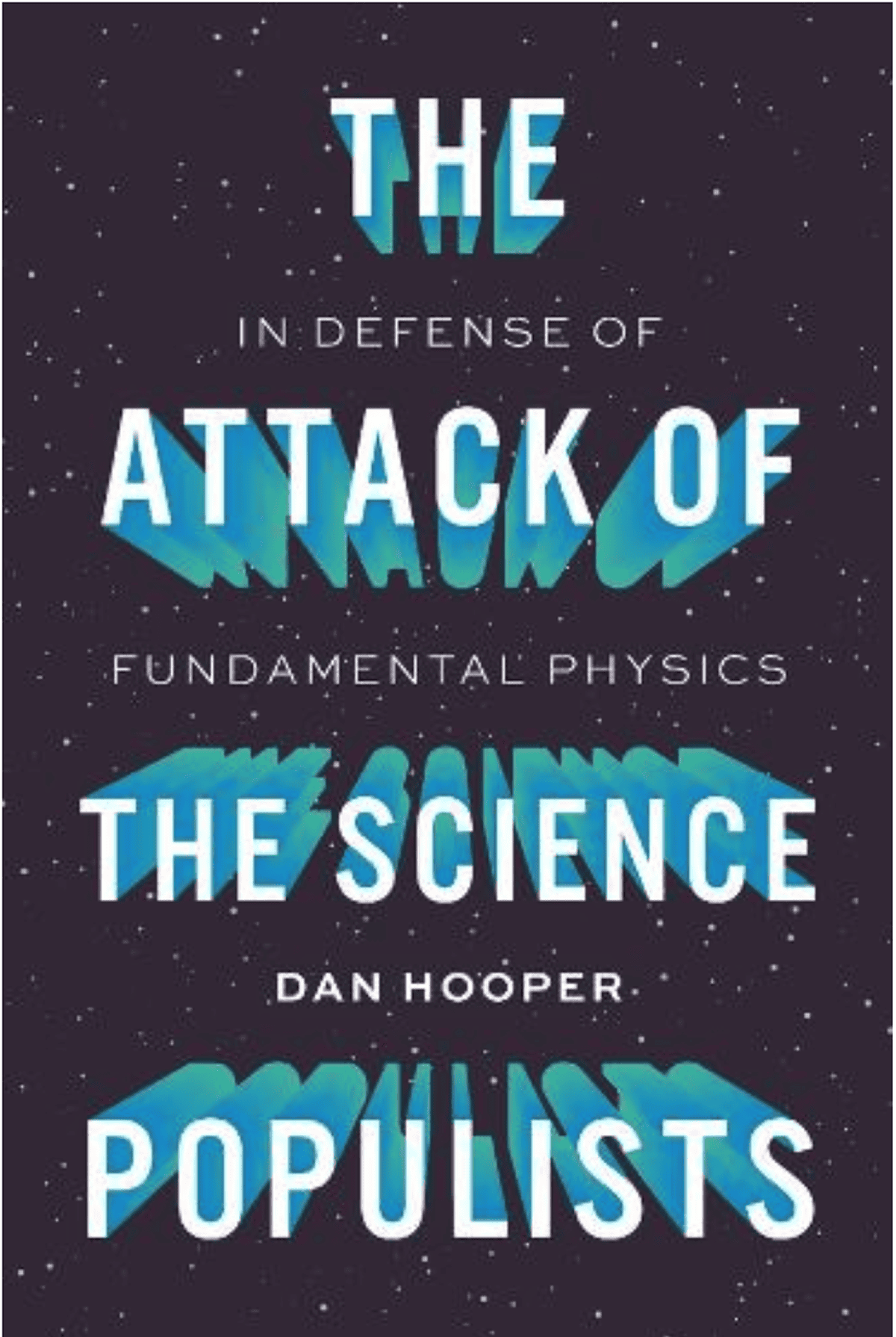
Action, reaction Dan Hooper’s book, due out in early 2027, is a staunch defence of science. (Courtesy: Harvard University Press)
Despite its title, The Attack of the Science Populists is in fact a popular-science book and a very good one at that. It distinguishes itself from other popular-science books by not only explaining contemporary physics but also emphasizing its failures.
Physicists hoped for great things from the Large Hadron Collider (LHC), Hooper writes (he’s aiming his book at readers who don’t know what the LHC is). But while it has made amazing discoveries, such as the Higgs particle, Hooper also describes the fundamental things that it was expected to find but didn’t, such as supersymmetry particles that might have explained why the Higgs has the mass it does.
In another chapter he writes that string theory seemed like a good bet because it is able to handle quantum gravity, but that “this bet has not paid off”. Hooper explains in clear language the aims and disappointments of the LIGO gravitational-wave detector, Modified Newtonian Dynamics (MOND), the Standard Model of particle physics, supersymmetry, the multiverse and other theories. But he also makes clear how their flaws relate to the boldness of their ambitions.
If your friends ask for popular books summarizing the current state of theoretical physics, include Hooper’s on the list.
The critical point
I think “populism” is the wrong word here. To me, the term suggests widespread and genuine if incompletely articulated grievances, whether it’s about the need for cheaper homes, more jobs or better healthcare. But is Hooper really talking about the masses? What does Terryology have in common with Geometric Unity? In the Venn diagram of Howard, Hossenfelder and Weinstein, how big is the audience overlap?
Many of the field’s assailants seem not to be motivated by widely shared grievances but more like individual self-aggrandizing types who say, “Pay attention to my theory!” Even Hooper calls them “fringe” and “outsider mavericks” who make for a good story. It’s not populism or conspiracy when a bunch of glam narcissists stand out only because of their large social media following.
So what would genuine “populist physics” be? It would, I think, be a shared concern and insistence by non-scientists that the billions of dollars spent on physics, on the hundreds of thousands of professional physicists, and on all their labs are used in ways that return something to the people who are paying for it.
Such a return doesn’t necessarily have to result in improving our material ways of life, but might involve providing answers to questions that we all have at one time or another about the origin, nature and future of the universe. Populist physics therefore would arise in opposition to wealthy influencers who dominate social media to promote merely sensationalist and self-interested claims.
In this sense, what Hooper is doing with his new book is seeking to reassure readers that populist physics is what his field has been up to all along.
Desalination is used to produce fresh drinking water from seawater, but it also generates a highly concentrated waste stream known as brine. Disposing of this brine is a major challenge and is often achieved through deep-well injection, in which the waste is pumped underground, an approach that can be expensive. Oil and gas production creates similarly saline wastewater, which is often managed in the same way.
In this work, the researchers developed a modelling platform to evaluate different strategies for managing these waste streams and to determine whether it is more cost effective to dispose of brine or to treat it further and recover additional water using solar-powered technologies. They applied the framework to two case studies: the Kay Bailey Hutchison Desalination Plant in Texas, a large inland desalination facility, and produced water from the Permian Basin, one of the most productive oil-producing regions in the United States.
The study compared a range of desalination technologies, including reverse osmosis, which uses membranes to separate water from dissolved salts, and thermal desalination methods that use heat to evaporate and recover water. Solar technologies included photovoltaic panels that generate electricity and solar thermal systems that provide heat. The researchers found that for desalination brine, the most cost-effective solar-powered option was photovoltaic combined with reverse osmosis, while solar-thermal desalination remained relatively expensive because of the cost of solar collectors and heat storage. For highly saline oilfield wastewater, zero-liquid-discharge systems, which recover almost all of the water and leave behind solid salts, could be economically attractive because they reduce or eliminate costly brine disposal.
More broadly, the findings suggest that renewable energy could help make desalination and wastewater treatment more sustainable, particularly in water-stressed regions. By identifying cost-effective ways to increase water recovery and reduce brine disposal, the work could support wider water reuse and potentially enable valuable minerals to be recovered from waste streams rather than discarded.
When a material does not have inversion symmetry, particles within it will move in different directions when they have different spin states. This is because the asymmetry of the material creates an effective electric field that couples the particles’ spin and momentum. The behaviour is called the Rashba effect, and it allows researchers to manipulate electron spins without requiring a magnetic field.
Surface plasmons are waves of oscillating electrons that travel along a metal surface when it interacts with light. In this work, the researchers investigated surface plasmons to see if they could create something like the Rashba effect but in a completely symmetrical material. To do this, they shone polarized light onto a periodic gold nanostructure (a plasmonic crystal) and measured how the resulting plasmon modes behaved, comparing what happened for left- and right-circularly polarized light.
They observed that differently polarized light caused the plasmon modes to split according to the light’s spin (polarization), mimicking Rashba spin splitting. Instead of being caused by the lack of symmetry in the material, the tightly focused light interacts with the anisotropic gold grating. The gold grating has lines running in one direction, meaning that light polarized along the grating lines behaves differently from light polarized across them. When light is tightly focused, its polarization is no longer identical everywhere, so the light experiences different combinations of birefringence and dichroism depending on its propagation direction. This creates a geometric phase gradient that gives left- and right-circularly polarized light opposite momentum shifts, causing the observed spin splitting. The researchers describe this mechanism as a geometric linear birefringence-linear dichroism effect.
The findings show that Rashba-like spin splitting does not necessarily require structural asymmetry and suggest that researchers may be able to achieve spin-controlled optical behaviour using simpler symmetric metasurfaces rather than increasingly complex asymmetric nanostructures.
When waves travel through complex environments (such as acoustics), repeated scattering is usually a problem because it scrambles wavefronts and distorts the information they carry. As a result, most approaches seek to suppress or compensate for scattering. In this work, however, the researchers take the opposite approach and show that scattering itself can be harnessed to manipulate waves.
The challenge is to design a disordered medium so that multiple scattering produces a desired outcome. This is difficult because the scattering matrix, which describes how waves are transformed by the medium, depends sensitively on the positions of many individual scatterers. Finding a configuration that performs a target operation can therefore be like searching for a destination in a vast landscape. The researchers used a mathematical tool known as the generalized Wigner-Smith operator, which reveals how small changes in scatterer positions modify the scattering matrix. In effect, it acts as a local map of the design landscape, guiding the system toward target unitary transformations while maintaining near-perfect transmission.
The team demonstrated the concept using an acoustic waveguide containing eighty metallic cylinders. By carefully arranging the scatterers, they controlled how different waveguide modes were converted into one another, enabling operations known as braiding. Similar to weaving strands in a braid, braiding exchanges modes in a prescribed sequence. A particularly striking example is non-Abelian braiding, where changing the order of those exchanges produces different outcomes. Such order-dependent operations are of great interest in topological quantum computing and can also manipulate information encoded in classical waves. The researchers demonstrated this behavior experimentally using a compact multiple-scattering medium only a few wavelengths thick, avoiding the long structures required in previous wave-based braiding schemes.
The significance of the work extends well beyond braiding. The same design principle can realize a broad range of unitary transformations, suggesting that complex media can be programmed to process information carried by waves rather than simply transmit it. Although practical implementations will still face challenges such as loss, bandwidth, and fabrication constraints, the work offers a new way of thinking about disorder. Instead of treating scattering as an obstacle to overcome, researchers may be able to harness it as a resource to build compact, reconfigurable devices for communications, imaging, signal processing, and wave-based computation.
Quantum computing research team. (Courtesy: Edwards Vacuum)
Building quantum technologies is the definition of finicky. And there is one primary reason: the fundamental unit of information is not a bit, but a qubit. Though qubits come in many guises – trapped ions, neutral atoms, superconducting circuits, particles of light, etc – they all share three quantum properties.
First, a qubit does not just represent a 1 or a 0, but can exist in a superposition of states, an uncertain blend of both until it collapses to a 0 or 1 when measured. Second, a qubit can be entangled with other qubits, meaning their physical states become entwined regardless of their distance from one another. And third, all qubits are extremely fragile or, in technical terms, they are vulnerable to decoherence.
Whereas the first two properties offer the potential to provide huge advantages for quantum technologies over their classical counterparts, the latter has been a stumbling block for decades. Qubits lose their quantum properties with almost any interaction with the environment, meaning any mote of dust, tiny vibration or stray photon has the potential to scupper a quantum process.
Filling the vacuum
Vacuum and cryogenic environments play an essential role in mitigating decoherence across many major quantum modalities, whether this is superconducting, trapped, neutral atom or photonic, and these technologies are coming out of the laboratory into the real world.
For example, whether operating a trapped-ion quantum computer or an advanced quantum gravimeter, if left unmitigated, qubits are bombarded by trillions of gas molecules every second, immediately causing them to decohere. Extreme-high vacuum (XHV) environments eliminate this problem, effectively removing ambient matter from the equation.
Vacuum Technique Business Area (Atlas Copco Group) supporting quantum computing applications. (Courtesy: Edwards Vacuum)
Vacuum technologies are also needed in concert with cryogenics in low-temperature dilution refrigerators that prevent heat causing decoherence in superconducting quantum computers and ultra-sensitive single-photon detectors used in quantum communication. These refrigerators cool hardware down to sub-Kelvin temperatures (~10 mK) – hundreds of times colder than deep space.
“We have shipped products that support XHV environments, 10-12 millibar, to isolate everything from the environment of the hardware. We also have plans in our roadmap to go beyond the current pressures, and we have worked with companies that build these dilution refrigerators,” says Jos Donders, head of the Emerging Markets & Technologies team of Atlas Copco’s Scientific Vacuum Division.
“What is very good for us is that 95% of these modalities – whether it’s quantum computing, sensing or communications – require a vacuum and a cryogenic low-temperature environment.”
Going in blind
For Donders, and indeed the global Atlas Copco Group (through the Edwards Vacuum brand), now is the ideal time to be working in quantum across the different modalities. Quantum is still far from delivering on its potential, and there remains significant work to be done in terms of hardware and equipment development to go from the laboratory prototypes of today to the robust machines needed to build useful commercial quantum computers.
Vacuum system quantum computer materials validation. (Courtesy: Edwards Vacuum)
For this, scaling the hardware will be essential for companies to enable their goals towards a fully fault-tolerant quantum system solution. As part of the Atlas Copco Group, Edwards Vacuum can offer highly skilled technology and engineering expertise to enable the development of these solutions.
“We are working on solutions for the future,” underlines Donders. By this, he means that most of the time Edwards Vacuum is building vacuum and cryogenic equipment for different quantum modalities that do not yet exist. For instance, when a dilution refrigerator manufacturer or a quantum hardware OEM designs a next-generation platform, Donders and his team discuss in depth future needs with in-house technology engineers to define future solutions based on market inputs from customers in this field. “We sit down, have a detailed discussion, and outline what is possible, what is maybe possible and what is not possible in the timelines that are required,” he says.
A prime example of this in action is Edwards Vacuum’s partnership with Universal Quantum, a UK-based quantum computing company aiming to build robust, scalable quantum computers. In the first act of their ongoing cooperation, in 2022, Edwards Vacuum deeply collaborated with Universal Quantum researchers to deliver an XHV system to house a quantum error corrected quantum computer based on trapped-ion technology that Universal Quantum had not yet constructed.
Roadmap to success
A large part of why it is possible to engineer complex vacuum and cryogenic technologies for quantum computing, sensing and communication devices that do not yet exist is the detailed roadmaps that the major quantum companies produce.
Donders says that these roadmaps are generally not full of blue-sky wishful thinking, but detailed specifications that target specific numbers of qubits, fidelity and also operational parameters by ambitious but realistic dates where timescales matter due to the financial investments behind them.
“At the same time, we also realize that there will be quite some disruptive changes along the way,” Donders adds. “That’s why we work very closely with these companies to synchronize with them and ensure that whatever we develop is in line with their requirements.”
Flexibility and deep technical collaboration are paramount for another reason too: no single quantum modality has yet emerged as the definitive winner. Backed by the scale and industrial expertise of the Atlas Copco Group, Edwards Vacuum works directly with quantum companies, serving as a foundational link in the global quantum supply chain. This means Edwards Vacuum is equally adept at providing ultra-clean XHV systems for trapped ion quantum computing and neutral-atom quantum sensing, specialized helium pumping and circulation setups for dilution refrigerators or robust pumps for quantum key distribution nodes.
As the quantum industry shifts focus from proving basic quantum principles to scaling robust, fault-tolerant architectures, vacuum and cryogenic technologies will remain indispensable. By stepping into the unknown alongside quantum pioneers, Edwards Vacuum is helping lay the physical foundations required to make the quantum revolution a commercial reality. As Donders neatly summarizes: “That’s where we want to be – at the forefront.”
International members of the research community, from academia to industry, often face additional cultural, social and financial challenges compared with those working in their native countries.
This is especially true in times of global uncertainty and rising anti-immigration sentiment. While institutions bear responsibility for promoting inclusivity and creating a positive environment for everyone, individuals also have an important role to play in supporting their international colleagues.
The BQIT annual workshop has been running for the past 13 years, welcoming the quantum research community to Bristol to present and discuss recent advances in quantum technology as well as share ideas and stimulate collaborations in this rapidly developing field.
Since 2019 the workshop has included a session dedicated to equity, diversity and inclusion (EDI). At BQIT:26, which was held on 27–29 April and attended by more than 200 people, the two-hour EDI session focused on the difficulties faced by international co-workers and what we can do as individuals to create a more welcoming workplace.
It began with a panel discussion featuring three panellists who currently work in research communities outside their native countries. They were: Gosia Drewniok, assistant director for international student success at the University of Bristol; Belinda Sharpe, operations director at the firm Duality Quantum Photonics; and Marija Radulović, partnership director at Hartley Ultrafast.
One interesting point that emerged during the debate was how some tasks that are seemingly “simple” to those living in a country for a while, such as where to buy furniture or where to access healthcare, are relatively challenging to many individuals coming from abroad. Often these challenges are not considered when employing an international colleague and are easily remedied by having more complete on-boarding resources that include out-of-workplace elements.
Conversations were also had around expressing discomfort about attending certain social activities, for example attending events where alcohol is served.
We believe that all positive change begins with a conversation
Those who do not drink alcohol, are fasting during Ramadan, or have strict dietary requirements may not be able to attend such events, and some may worry that raising their needs will burden others. They therefore choose not to speak up, when in fact their peers may be willing to adapt and make appropriate adjustments.
There were also deeper and more complex points raised, such as finding the balance between maintaining one’s own cultural core traditions and adapting to a new work environment.
The panel highlighted that while integrating into a new culture can be challenging, there should be no pressure to “change oneself” or to “fit in”.
Activities such as international and cultural events, alcohol-free events, or even suggesting your own events if you feel up to it, are excellent ways to meet new people.
Furthermore, even though this session took place in the UK, the issues discussed often apply to those working abroad in other countries, especially due to the international nature of the BQIT attendees.
This came up when points were raised by attendees with UK citizenship who have worked abroad during an exchange, who are also considered international colleagues in that country and face similar challenges. This highlights the importance of having such conversations.
Shared responsibility
Following the panel debate, attendees divided into small groups where they shared ideas and their own experiences, as well as adding key conclusions to a shared online discussion platform.
Some interesting highlights include having onboarding procedures that constantly evolve based on feedback from previous international students or staff; keeping events affordable; and keeping in mind that those who have further to travel home to their native countries may need larger blocks of holiday time.
Examples of additional factors to consider include cultural differences regarding normal working hours, including how setting clear expectations and emphasizing healthy work–life balance may be helpful.
Other issues are the hidden costs (time and money) of getting language and other certifications required for some applications (e.g., visas, permanent residency or citizenship applications) as well as the potential for increased vulnerability to scams due to lower awareness of various systems such as rent or guarantor schemes.
Yet minor actions can have a significant positive impact such as planning trips well in advance to allow for visa processing times, checking in on international colleagues so the onus isn’t on them to raise these issues, or simply using more direct and plain language in professional communication.
While attendees responded overwhelmingly positive to the session, some may think it will change nothing and will not resolve the issues. Yet we believe that all positive change begins with a conversation.
In our field, like many others, researchers are likely to find themselves living in a country different to their native one at some point during their career. Promoting these changes and conversations with colleagues now, and creating a culture of shared responsibility, may even benefit you personally in the future.
The article was written with Carrie Weidner, Sanna Al-Abdally, Nicole Luc and Deepak Bhardwaj.
The particle-physics process of string breaking has been modelled on a trapped ion quantum computer by researchers in the US. The results are similar to previous findings obtained independently using neutral atom quantum simulators and superconducting quantum computers. The result suggests that traditional models of string breaking need to be modified slightly.
The strong interaction is the force that binds quarks together inside hadrons such as protons and neutrons. Unlike gravity, electromagnetism and the weak interaction, which all diminish with distance – its effect becomes stronger as particles are pulled apart. In quark–gluon plasma, where quarks and antiquarks swim in a sea of gluons, they are effectively free. However, when an isolated quark is pulled away from an isolated antiquark (or a proton, for example), the energy in the gluon field increases indefinitely. At some point, this energy grows large enough to create a new quark and antiquark. These bind to the original particles, leaving two hadrons. Free quarks are therefore never observed.
This process, in which the potential energy in the gluon field grows and grows until it is released with the creation of new matter, is known as string breaking. The theory of this mechanism was first outlined in 1951 by the future Nobel laureate Julian Schwinger. The process often underpins the formation of new particles in colliders, but its fundamental details remain poorly understood.
Superconducting and atomic qubits
The notion of simulating experimentally inaccessible quantum processes using quantum processors has been discussed – and implemented for some systems – in the past few years. In 2025 scientists at Google Research in California and colleagues performed simplified calculations of the dynamics of string breaking using their Sycamore processor, which uses superconducting qubits, obtaining new insights into the process.
Also in 2025, researchers at the University of Innsbruck in Austria, together with colleagues at Harvard and the commercial company QuEra, took a slightly different tack. Instead of breaking the underlying quantum chromodynamic equations down into a series of discrete time steps and calculating their evolution, they used lasers to initialize the states of rubidium atoms such that their interaction would be analogous to quarks. This allowed them access to the dynamics of the string breaking process that would otherwise remain hidden.
Now, quantum-computing pioneer Christopher Monroe at Duke University in North Carolina and colleagues in the US and Belgium have achieved similar results to the QuEra group using trapped ions instead of neutral atoms. Monroe’s team modelled the behaviour of quarks using “domain walls” – regions where adjacent ions have opposite spins.
“You initialize the system with a certain number of domain walls, and then you apply the Hamiltonian – which means you do this QCD process – and you see how many domain walls you end up with. We show that the number actually increases.” Explains Arinjoy De, who was Monroe’s PhD student and now works at QuEra. To simulate the increasing energy in the gluon field as a quark is pulled away, the researchers used an external magnetic field: “We show that once you go beyond a certain threshold of the magnetic field, you go from two domain walls – or two particles – to create more particles,” says De.
Modifications needed
The results suggest some modifications to the canonical theories of string breaking. Notably, they found that, contrary to the predictions of Schwinger, string breaking is initiated at the edges, where coupling to the quantum vacuum reduces the energetic cost of new particle creation, before propagating inwards to the bulk.
The researchers are now hoping that, with more qubits and greater circuit depth, they will be able to look at domain walls farther apart. This would allow them to study the inverse problem of string formation when particles collide: “Our theory colleagues Alexey Gorshkov and Zohreh Davoudi at the University of Maryland are really thinking a lot about these meson scattering experiments,” says Monroe.
Quantum computing researcher Boris Blinov of the University of Washington in Seattle says that the work is “significant in its own right as a demonstration of the potential of a quantum simulator in the future to do things faster than any classical analogue of it.” He says the current system is too small to outperform what can be achieved with a supercomputer but “with more qubits and this technology, this way of controlling qubits would be of significance at the very least for quantum chromodynamics, gauge theories and fundamental physics.”
Monroe and colleagues describe their work in Nature Physics.
In the 1980s, scientists measured quantized jumps in the energy of ions for the first time. In the 2000s, it was photons’ turn. Now, thanks to a tour de force of device engineering and nanofabrication, researchers at Stanford University in the US are reporting that phonons – mechanical vibrations like those that carry sound – also display this quantum behaviour.
“We could see it by eye [in the data], which was very satisfying,” team leader Amir Safavi-Naeini tells Physics World. “I’ve been fascinated with the interface between the quantum world and the classical world and trying to move that interface closer to daily experience…and now we have mechanical objects.”
Laying the groundwork
The Stanford team’s recipe for observing quantum jumps in phonons begins with thin films of lithium niobate (LiNbO3). Although bulk samples of this material had been available since the 1950s, the commercialization of thin-film LiNbO3 a decade ago was a game changer for Safavi-Naeini and his colleagues once they worked out how to process the material.
Because LiNbO3 is piezoelectric, placing it under stress – from a vibration, say – produces a voltage. This voltage allows vibrational quanta to couple to superconducting qubits, after which the qubit states can be “read out” to determine whether a phonon was present or not.
The problem was that initially, the phonons had lifetimes of only 800 nanoseconds – well short of the millisecond the team needed to observe them falling from an excited state to the ground state. Extending these phonon coherence times “took a lot of work by a number of graduate students in my group,” Safavi-Naeini says.
After probing various sources of dissipation, including material properties that cause quantum excitations to lose coherence, the researchers realized that surface defects were key offenders. They therefore switched from polymer processing, which left a residue, to shadow masks that superimpose one chip over the other and evaporate metal through it. “There were probably three generations of students that worked on getting that four to five orders of magnitude increase in the performance of the devices,” Safavi-Naeini says.
The voltage profile of the nanomechanical resonator in motion. In the crystal used for the mechanical resonator, mechanical motion and electrical potentials are inherently coupled, so the motion profile has an accompanying electric potential profile. (Courtesy: Erik Szakiel)
Once they’d extended their phonon lifetimes, the researchers had to find a way of combining their “very clean, long-lived” mechanical and superconducting systems without destroying either. For this, Safavi-Naeini credits past and present students Takuma Makihara and Erik Szakiel, who spent most of their PhDs tackling issues with the mechanical oscillators before finding a way to couple them to the superconducting systems. “That was the last piece,” Safavi-Naeini recalls. “Once we had that, we could do these experiments.”
Spot the missing phonon
Because the superconducting qubits detect whether an even or odd number of phonons is present in the LiNbO3 (which at very low energies amounts to determining whether a phonon is there at all), they are effectively performing a parity measurement. That could make the Stanford team’s system useful for quantum error correction, where the goal is to find out whether an error has crept in without actually measuring the quantum states, since doing so would destroy their useful quantum characteristics.
One of the most common sources of error in superconducting qubits is the loss of an excitation, such as when a phonon decays. However, if data is encoded into phonons in pairs and the system detects an odd number of them, this loss becomes apparent without measuring all the states. This so-called “binomial” code has already been implemented for microwave photons, and Safavi-Naeini explains that it works best for long-lived particles – a further benefit of the team’s long-lived phonons.
Protein and gravity measurements
The Stanford researchers are now collaborating with Michael Roukes and colleagues at the California Institute of Technology (Caltech) to explore possible applications in high-precision measurements of single protein masses. They are also interested in fundamental science questions such as whether it’s possible to generate entanglement between mechanical systems through gravitational fields.
However, Safavi-Naeini cautions that their phonon lifetimes would need to be much longer – a factor of 10 for error correction and mass spectrometry, and for gravity perhaps as much as six orders of magnitude, with further modifications to the experimental set-up also required – before they can achieve these goals. “The hope is that by figuring out the fundamental sources of loss in these materials we can build our way up to those experiments in the coming decade,” he says. “Every time you improve, you hit some new source of noise, you understand it, then you can deal with it, and then you go to the next one. It’s a fun physics problem.”
Tania Kendrick studied physics at the University of Bristol in the UK before joining the Civil Service fast-stream development programme, which saw her have postings at the UK’s Ministry of Defence, the Department for Environment, Food and Rural Affairs, and the Cabinet Office. After completing the scheme, she decided to stay in the Cabinet Office, where she now works full-time on relations between the UK and the European Union.
What skills do you use every day in your job?
One key skill I use every day is communication. A large part of my job involves taking complex and detailed information, understanding what is most important, and communicating it clearly and concisely to different audiences. This can vary from briefing senior colleagues and ministers, where I need to distil a lot of information into the key points they need to know to make a decision, to producing guidance and written products that need to be clear and accessible to a wide range of stakeholders. Being able to adapt how I communicate depending on the audience, and being able to do this quickly, while making sure the key messages are understood, is vital.
Although a physics degree and a career in policy may not seem to have an obvious connection, I constantly use the analytical skills I developed at university. I need to look at complex information and evidence, identify the key issues, and consider how different factors should feed into decision-making. Then I need to make sure that recommendations and advice are grounded in evidence, while also considering different perspectives, potential risks and the wider context. Being able to analyse information critically – and use it to support informed, evidence-based decision-making – is crucial.
What do you like best and least about your job?
What I love most about working in the Civil Service is that I’m constantly learning something new. Policy covers such a wide range of issues, and I really enjoy the challenge of getting to grips with a new topic, understanding how it works, and gradually seeing the bigger picture. There’s something really satisfying about that moment when everything starts to click and you understand why something is done in a particular way, or realize there are considerations you would never have thought about when you started. I like that no two days are exactly the same and that there is always something new to learn.
What I like least about my job, which is something I’m still getting to grips with, is finding time to properly switch off. Policy development can take time, and it’s easy to find yourself thinking about a problem outside work, such as trying to devise a potential solution or wondering if there is a better way to frame something. It’s really important to build things into your routine that help you switch off. For me, that means setting clear boundaries, exercising straight after work, particularly running and playing hockey, and making time to catch up with friends.
What do you know today, that you wish you knew when you were starting out in your career?
Something I wish I could tell my past self, especially throughout university and coming up to graduation, is not to worry so much about having everything figured out. I focused too much on trying to work out my exact “dream” physics job. But looking back, I realize I didn’t necessarily need a clear plan. As a teacher once said to me, studying physics opens so many doors. You develop skills that can take you into a wide range of careers from finance and technology to consulting and, of course, the Civil Service. So my advice to others would be: you don’t need to know exactly what you want to do straight away. Try things, get some work experience, speak to people in different careers, and be open to opportunities you might not have considered. The world really is your oyster.

 Login