A new bill extending home and community solar incentive programs has passed both houses of the Connecticut Senate, and just needs Governor Ned Lamont’s signature to make it into law. It’s taken us a while to parse through it, but one thing is clear: batteries are the big winners.
On today’s exciting episode of Quick Charge, we’re exploring the industry’s backlash – real or imagined – towards Elon Musk’s SpaceX merger talks, Full Self Driving’s staff revolt, and even large, utility scale solar projects. All this and more when you hit that play button!
The Pine Point School district serving Minnesota’s White Earth Reservation community has taken a huge step towards energy independence this month, with the commissioning of a new solar + BESS microgrid project that will help insulate the district from energy rate hikes caused by new data center construction.
Elon Musk spent years telling the world that solar power was the obvious answer to Earth’s energy needs — that a small patch of desert could power the entire United States. Now, he’s burning millions of tons of fossil fuels to run an AI chatbot that has lost 60% of its downloads, selling the unused compute to a company he called “misanthropic and evil” three months ago, and pitching space-based solar panels right as SpaceX files for a $2 trillion IPO.
The contradictions are stacking up faster than xAI’s unpermitted gas turbines.
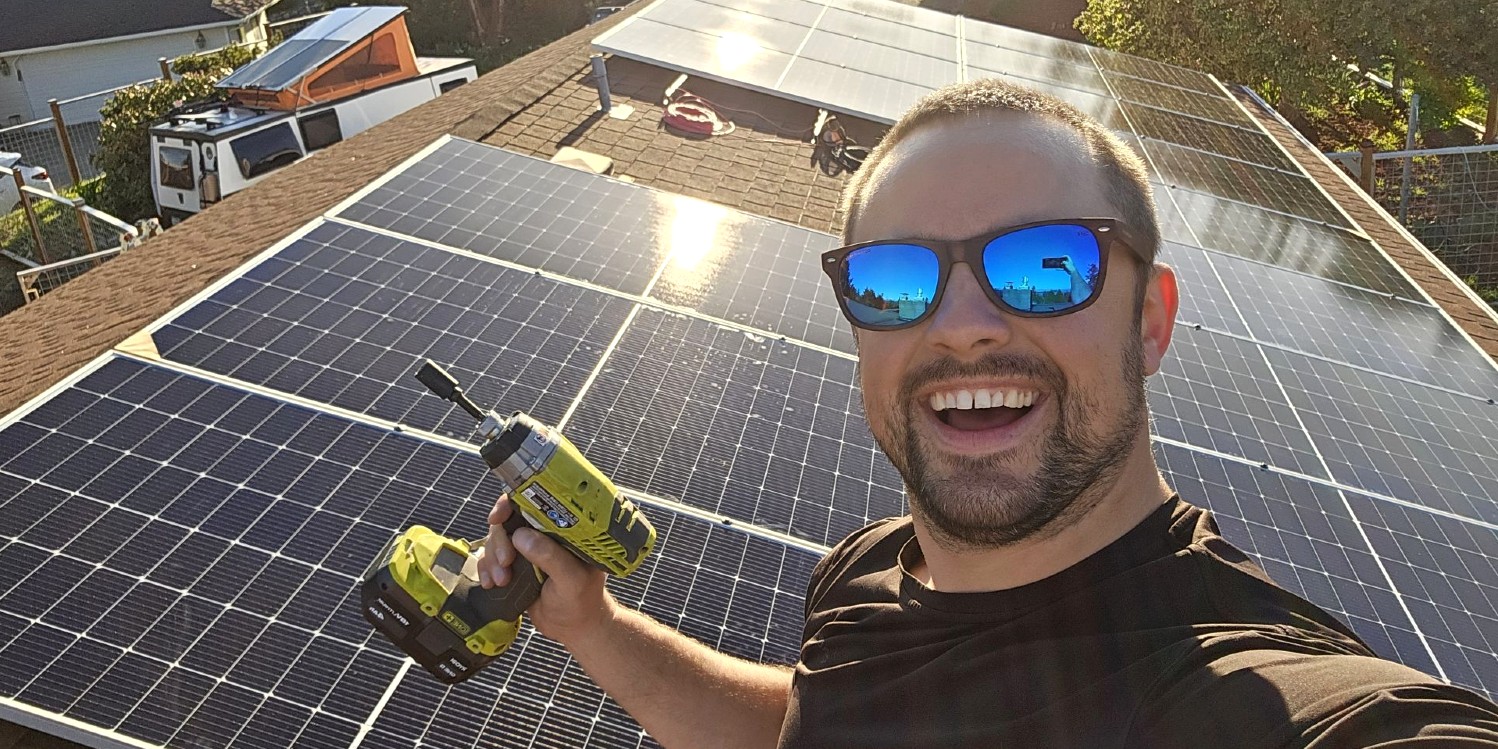
One Redditor got a big surprise this week, when they checked their rooftop solar app and saw something incredible – their 880 W PV system seemed to break physics by making more than 1,050 W of power!
Last year, the first few months of data from the US grid suggested that fears of a data-center-driven surge in demand were becoming a reality. Demand had risen by about 3 percent, triggering a surge in coal, interrupting what had been a long downward trend. But over the course of the year, both trends slowed considerably.
A year later, all of that seems to be in the past, as the US has returned to its normal pattern: slow growth, with renewables pushing coal off the grid. The one oddity is that hydroelectric production has surged without a corresponding increase in capacity, likely due to unusually warm weather in the western US causing the snowpack to melt early. That may have consequences later in the year.
Pushing fossil fuels out
Overall demand in the US grew by only 1.5 percent in the first quarter of 2026 compared to the same period the year before. Often, changes in demand during this part of the year are driven by weather-related heating demand. But the US had an unusual combination set of weather conditions to start 2026, with the western half baking in unseasonal warm temperatures, while the eastern half suffered a deep freeze. So we'll probably need data from more of the year before we read too much into the small rise in demand we've seen so far.
Last year, the first few months of data from the US grid suggested that fears of a data-center-driven surge in demand were becoming a reality. Demand had risen by about 3 percent, triggering a surge in coal, interrupting what had been a long downward trend. But over the course of the year, both trends slowed considerably.
A year later, all of that seems to be in the past, as the US has returned to its normal pattern: slow growth, with renewables pushing coal off the grid. The one oddity is that hydroelectric production has surged without a corresponding increase in capacity, likely due to unusually warm weather in the western US causing the snowpack to melt early. That may have consequences later in the year.
Pushing fossil fuels out
Overall demand in the US grew by only 1.5 percent in the first quarter of 2026 compared to the same period the year before. Often, changes in demand during this part of the year are driven by weather-related heating demand. But the US had an unusual combination set of weather conditions to start 2026, with the western half baking in unseasonal warm temperatures, while the eastern half suffered a deep freeze. So we'll probably need data from more of the year before we read too much into the small rise in demand we've seen so far.

 Login
Login