Login
LoginHow to Improve Your Search for Used Car Parts Using Filters, OEM References and Plate Numbers
3 June 2026 at 14:21
Finding the right used car part online sounds straightforward until you actually try it for the first time.



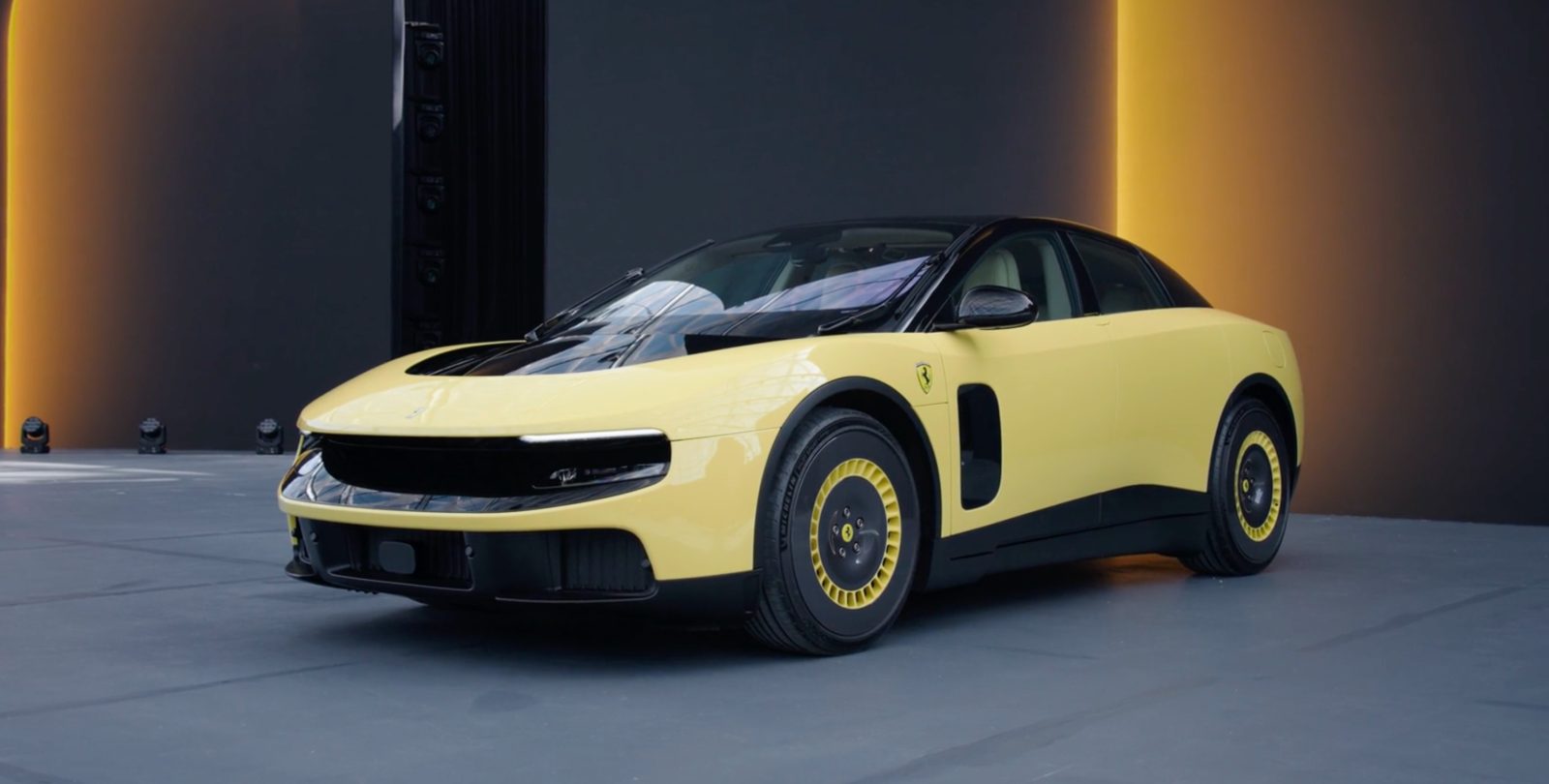
Ferrari unveiled the Luce today in Rome, completing a three-act reveal that started with specs last October and continued with the Jony Ive-designed interior in February. The Italian automaker flew me to Rome for the launch, and I got about 30 minutes to explore the vehicle up close, though I couldn’t drive it.
What I found was a car that challenges just about every assumption of what a Ferrari should look like, who should sit in it, and how it should sound, while being unmistakably, stubbornly Ferrari in the ways that matter most: emotions.
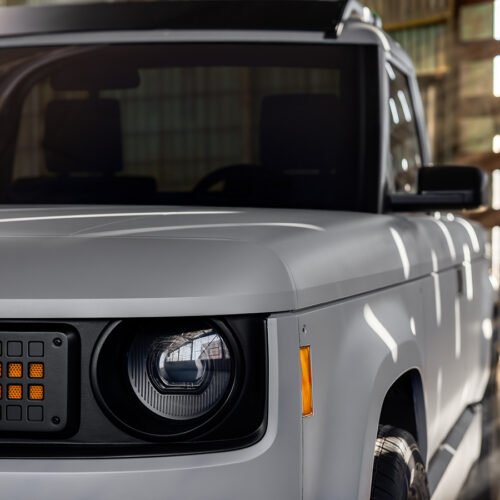
more…Slate Auto may be one of the most interesting companies in the American automotive industry right now. Based in Warsaw, Indiana, the startup is taking a completely different approach to building an electric pickup truck. Forget Ford's clean-sheet "skunk works" story; the Slate Truck's design has been stripped down to just 600 parts and components. That minimalism includes the interior, where you'll find two seats and manually wound windows, but no infotainment system. If you're one of Ars' many readers who want an electric car that won't track you, Slate might have what you're looking for.
It's not an entirely analog experience, though; a Slate smartphone app can manage settings, change drive mode, and provide range and charging info. But only when connected locally to the car—there's no embedded modem, so forget about remote access. And the company says that while it may use data from the app to improve its products, it won't sell that data.
That's according to a new report from SAE International's (and sometime Ars contributor) Roberto Baldwin. "We are building it around ownership value," Slate said. "We collect data to make ownership better, not to turn the owner into the product. The app will collect data only when it directly contributes to enabling or improving a customer experience. Privacy is paramount. For Slate, privacy is not a compliance footnote. It is part of the product experience."
© Slate Auto
Slate Auto may be one of the most interesting companies in the American automotive industry right now. Based in Warsaw, Indiana, the startup is taking a completely different approach to building an electric pickup truck. Forget Ford's clean-sheet "skunk works" story; the Slate Truck's design has been stripped down to just 600 parts and components. That minimalism includes the interior, where you'll find two seats and manually wound windows, but no infotainment system. If you're one of Ars' many readers who want an electric car that won't track you, Slate might have what you're looking for.
It's not an entirely analog experience, though; a Slate smartphone app can manage settings, change drive mode, and provide range and charging info. But only when connected locally to the car—there's no embedded modem, so forget about remote access. And the company says that while it may use data from the app to improve its products, it won't sell that data.
That's according to a new report from SAE International's (and sometime Ars contributor) Roberto Baldwin. "We are building it around ownership value," Slate said. "We collect data to make ownership better, not to turn the owner into the product. The app will collect data only when it directly contributes to enabling or improving a customer experience. Privacy is paramount. For Slate, privacy is not a compliance footnote. It is part of the product experience."
© Slate Auto
A unicorn Beanie Baby. A 15-pound green bowling ball. A pair of dentures.
These are just some of the items left behind in robotaxis in the past year, according to Uber's annual Lost and Found Index. For the first time, the company is expanding its annual of accounting of things forgotten in Uber vehicles to include self-driving cars because, for the first time, Uber has enough self-driving cars on its platform to matter.
Uber doesn't deploy its own robotaxis, but in the last few years it's become a clearinghouse for driverless car companies that want access to Uber's millions of customers. Here in the US, that includes Waymo (in Austin a …
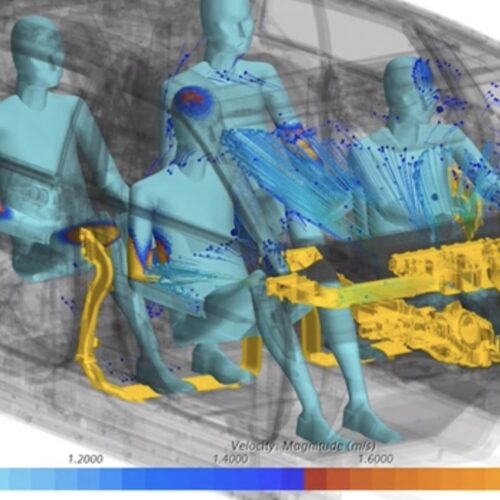
When we met Sterling Anderson in 2024, he was the chief product officer of Aurora, the self-driving startup he cofounded in 2016 after several years at Tesla. Just over a year ago, though, Anderson decamped from the startup world for something a little more established, taking over as chief product officer at General Motors, the nation's largest automaker. Since then, he's had a good view of how GM is entering what he calls the third epoch of engineering and design.
"There was a time when humans looked at birds and were like, 'OK, those wings seem to work pretty well. Let's go and design something that looks like them.'" Anderson said, describing the first age of engineering. "And they just kind of iterated their way to something that was marginally feasible."
The first few hundred years of inventing "was this era of highly empirical iterative design development and engineering," he said. "And by that I mean humans largely started with what we know or had seen, built prototypes of something that kind of looked like it and maybe tweaked some things, hoping to make it perform better, tested it, iterated, and kind of went through this slow guess-and-check process until we got to something that marginally worked."
© General Motors
When we met Sterling Anderson in 2024, he was the chief product officer of Aurora, the self-driving startup he cofounded in 2016 after several years at Tesla. Just over a year ago, though, Anderson decamped from the startup world for something a little more established, taking over as chief product officer at General Motors, the nation's largest automaker. Since then, he's had a good view of how GM is entering what he calls the third epoch of engineering and design.
"There was a time when humans looked at birds and were like, 'OK, those wings seem to work pretty well. Let's go and design something that looks like them.'" Anderson said, describing the first age of engineering. "And they just kind of iterated their way to something that was marginally feasible."
The first few hundred years of inventing "was this era of highly empirical iterative design development and engineering," he said. "And by that I mean humans largely started with what we know or had seen, built prototypes of something that kind of looked like it and maybe tweaked some things, hoping to make it perform better, tested it, iterated, and kind of went through this slow guess-and-check process until we got to something that marginally worked."
© General Motors
Despite headwinds from the current administration, automakers continue to release well-equipped EVs with bigger battery packs and increasingly faster charging speeds. For those who want to travel further between plugging in, the future is still bright, just slightly tinted.
But there haven't been many sedans starting around or below $50,000, as crossover SUVs have largely taken up this territory. Now, Mercedes-Benz has released its CLA compact sedan which ticks every box above for the 2026 and 2027 model year, and throws in pleasant interior amenities and fun driving character for good measure.
The CLA w …
First off, apologies for the lack of a Canadian Grand Prix report at the beginning of this week; Ferrari chose last weekend to show us its new electric vehicle, and between that and Memorial Day, one thing led to another, and here we are.
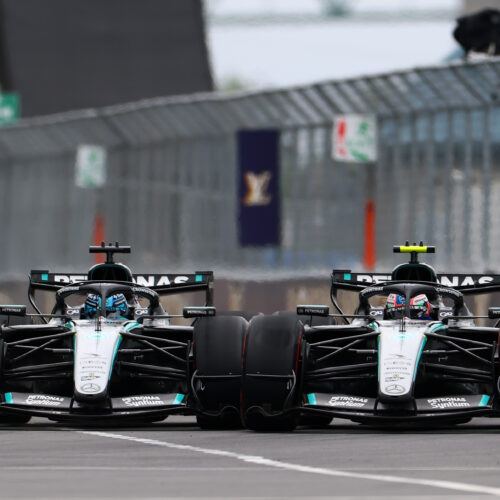
Canada was yet another sprint weekend, meaning limited practice time for teams desperate for it to collect data on their various upgrade packages. The race, held on an artificial island built for Expo 67, is often one of the season's highlights, and 2026 did not disappoint, with some excellent duals among the field.
The 19-year-old Italian sophomore Kimi Antonelli now leads his Mercedes teammate George Russell by 43 points in the championship after four straight wins in a row. With 25 points for a win, that means Russell could soon be two whole race wins behind his young in-house rival; never a comfortable spot when competing against someone with identical equipment.
© Bryn Lennon - Formula 1/Formula 1 via Getty Images
First off, apologies for the lack of a Canadian Grand Prix report at the beginning of this week; Ferrari chose last weekend to show us its new electric vehicle, and between that and Memorial Day, one thing led to another, and here we are.
Canada was yet another sprint weekend, meaning limited practice time for teams desperate for it to collect data on their various upgrade packages. The race, held on an artificial island built for Expo 67, is often one of the season's highlights, and 2026 did not disappoint, with some excellent duals among the field.
The 19-year-old Italian sophomore Kimi Antonelli now leads his Mercedes teammate George Russell by 43 points in the championship after four straight wins in a row. With 25 points for a win, that means Russell could soon be two whole race wins behind his young in-house rival; never a comfortable spot when competing against someone with identical equipment.
© Bryn Lennon - Formula 1/Formula 1 via Getty Images
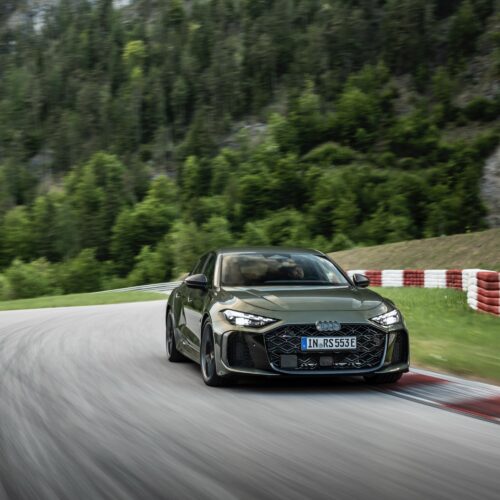
SAALFELDEN, Austria—Audi may have built a reputation for technology over the years, either pioneering or early-adopting things like all-wheel drive, direct-injection engines, and so on. But it's also true that along the way it has earned a bit of a reputation for cars that look good inside and out but maybe aren't the most exciting things on four wheels. Not so for the models reworked by Audi Sport, the company's motorsports division, which now also spends its time building the company's new Formula 1 power units.
And like those latest F1 cars, its newest RS5 road car also marries together a turbocharged V6 and an electric motor. How convenient.
The underlying chassis of the new RS5 is shared with the A5 that we first drove last summer, but the only common body panels between the lesser A5 and this car is the hood; everything else is RS5-specific. Aggressive wheel arch blisters add more than 3.5 inches (90 mm) of width compared to the A5, and massive air intakes dominate the front fascia. At the rear, a pair of large oval exhaust pipes are set into a diffuser. Oh, and you don't get those kinds of carbon-fiber accents on a regular A5. Perhaps my favorite styling detail? The rear OLED tail lights have a checkered flag pattern (as do the daylight running lights up front).
© Tobias Sagmeister/Audi
SAALFELDEN, Austria—Audi may have built a reputation for technology over the years, either pioneering or early-adopting things like all-wheel drive, direct-injection engines, and so on. But it's also true that along the way it has earned a bit of a reputation for cars that look good inside and out but maybe aren't the most exciting things on four wheels. Not so for the models reworked by Audi Sport, the company's motorsports division, which now also spends its time building the company's new Formula 1 power units.
And like those latest F1 cars, its newest RS5 road car also marries together a turbocharged V6 and an electric motor. How convenient.
The underlying chassis of the new RS5 is shared with the A5 that we first drove last summer, but the only common body panels between the lesser A5 and this car is the hood; everything else is RS5-specific. Aggressive wheel arch blisters add more than 3.5 inches (90 mm) of width compared to the A5, and massive air intakes dominate the front fascia. At the rear, a pair of large oval exhaust pipes are set into a diffuser. Oh, and you don't get those kinds of carbon-fiber accents on a regular A5. Perhaps my favorite styling detail? The rear OLED tail lights have a checkered flag pattern (as do the daylight running lights up front).
© Tobias Sagmeister/Audi