A mudança surge numa altura em que as ferramentas de geração de imagem e vídeo estão a tornar-se cada vez mais realistas, dificultando a distinção entre o que é verdadeiro e o que foi produzido por algoritmos.
With the constant risk of being recorded, many young people are afraid of showing enthusiasm – let alone doing something so potentially embarrassing as dancing in public. Is there a way to set themselves free?
In a video posted to TikTok, where Katie Whitney has 2.5 million followers, she says to camera, bluntly: “This video is for Cynthia Erivo. If you’re not Cynthia Erivo … you can keep on scrolling.” Her demeanour then shifts, her voice becomes softer; more the way a person might talk to their puppy: “Hi Cynthia. Hi baby. Hey baby. How are you?” It’s toe-curling – or, in modern parlance, cringe – to watch. “I feel traumatised,” says one commenter. Others post photos of a stunned-looking Erivo and imagine: “What if the Wicked star were to actually watch this video?” Cringe!
Now 25, but having started making this kind of content – “weird skits” – at 20, Whitney is part of what is known online as CringeTok, a subsection of the internet that deals in content designed to make your toes curl. It’s in many ways a reaction to a fear of being “cringe”, which is seeping into all parts of life – from social media to classrooms to the workplace.
Record-breaking box office for Backrooms and Obsession has opened the door for twentysomething YouTube creators as the industry rethinks what audiences want
At this time last year, the idea of a wide-release feature film-maker cutting their teeth on YouTube was, if not unheard of, certainly still a niche origin story. Siblings Michael and Danny Philippou had just released Bring Her Back, the follow-up to their surprise horror hit Talk to Me, to pretty-good reviews and OK box office; clearly they would continue to work, but the slightly diminished returns didn’t predict a YouTube explosion. Nor did the outright lousiness of Shelby Oaks, from longtime YouTube film critic Chris Stuckmann, when it premiered in theaters later in 2025. Generous horror-festival buzz died down as more people actually laid eyes on the movie; Stuckmann was an obvious enthusiast, and some saw promise in his first effort, but a clumsy found-footage pastiche without much emotional sense didn’t seem like the next big thing, either.
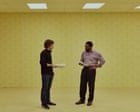
But in 2026, something has shifted. In January, YouTuber Markiplier self-released his adaptation of the video game Iron Lung to theaters, and it outgrossed any number of big-studio titles. Then Curry Barker, whose comedy sketches have been a YouTube fixture, unveiled his feature debut Obsession. The film, made for under a million dollars, has become the box office phenomenon of the summer so far, managing a virtually unheard-of feat when its second and third weekends actually outgrossed its first. Obsession is sharing multiplex space with Backrooms, directed by 20-year-old Kane Parsons, who previously brought the spooky internet meme to life in a series of YouTube shorts. Despite being set in a series of purgatorial, sparsely furnished, fluorescent-lit “liminal spaces”, it was the top movie at the North American box office this weekend, poised to become the biggest-grossing movie from distributor A24 in a matter of days. Backrooms also opened to bigger numbers than any number of starrier or bigger-brand 2026 titles like Wuthering Heights, Scream 7, The Devil Wears Prada 2 or the last Pixar movie. That makes three YouTube-trained film-makers who have presided over some of this year’s biggest and/or most surprising hits. With them have come countless social media posts about how YouTube, not film school, provides the real training tomorrow’s directors need.
AI content creation tools like Google's new Omni model threaten to make reality even harder to discern from AI fantasy, but YouTube is taking an important step toward verifying video origins. After debuting wishy-washy AI content labeling in 2024, Google will begin using more prominent labeling for AI videos, and the site will no longer rely entirely on uploaders to divulge when they use AI tools to create a video.
When YouTube first attempted to tackle the identification of AI videos in 2024, it was almost gratuitous. AI videos at the time nearly always outed themselves by looking bizarre or disjointed. In just a few years, AI models like Seedance, Runway, and Google's own Veo have raised the bar for realism and consistency in AI video—the spaghetti is more accurate than ever.
Recognizing that, YouTube is making the AI labels more prominent and automating part of the process. Creators are still required to indicate when uploading videos if they were created with the help of AI tools. However, uploaders didn't have any incentive to be honest about that before. Starting this month, YouTube will use "new internal signals" to flag AI content. This will apparently apply to videos that show "significant photorealistic AI use."
AI content creation tools like Google's new Omni model threaten to make reality even harder to discern from AI fantasy, but YouTube is taking an important step toward verifying video origins. After debuting wishy-washy AI content labeling in 2024, Google will begin using more prominent labeling for AI videos, and the site will no longer rely entirely on uploaders to divulge when they use AI tools to create a video.
When YouTube first attempted to tackle the identification of AI videos in 2024, it was almost gratuitous. AI videos at the time nearly always outed themselves by looking bizarre or disjointed. In just a few years, AI models like Seedance, Runway, and Google's own Veo have raised the bar for realism and consistency in AI video—the spaghetti is more accurate than ever.
Recognizing that, YouTube is making the AI labels more prominent and automating part of the process. Creators are still required to indicate when uploading videos if they were created with the help of AI tools. However, uploaders didn't have any incentive to be honest about that before. Starting this month, YouTube will use "new internal signals" to flag AI content. This will apparently apply to videos that show "significant photorealistic AI use."
Debut from 20-year-old director examines memory, reality and fear after Chiwetel Ejiofor accesses an infinite series of hidden rooms that all feel creepily askew
All the lonely people … where do they all belong? YouTuber Kane Parsons makes his feature directing debut with this icily brilliant and genuinely disturbing conceptual horror film based on his web series, and scripted by Will Soodik. There is something here of J-horror, the V/H/S found footage franchise, Dan Erickson’s Severance and Nathan Fielder’s The Rehearsal. It’s about people walled up in their own memories, imprisoned in endlessly remembered scenes from their past, or miserably perceived versions of their present existences in which they have become caricatures of themselves, gargoyle stars of their paralysed inner world of failure. Or perhaps the action of the film is not metaphorical in this or any other sense, and the “backrooms” of the title simply exist.
Chiwetel Ejiofor and Renate Reinsve give barnstormingly good performances as Clark and Mary; it is the early 90s and Clark is a failed architect, separated from his wife, and an alcoholic who to make ends meet self-hatingly manages a drearily and eerily vast discount furniture store, called Cap’n Clark’s Ottoman Empire. He does dumb TV ads dressed as a pirate while uneasily aware he should be a sultan to make the “Ottoman empire” pun work. He goes to see a therapist, Mary, a sad, gentle person who markets her own self-help audio tapes and is haunted by childhood memories of her abusive mother.
The new DG started by stressing the need for ‘velocity’. First, he’ll have to navigate staff cuts, culture wars and a sea of fake news
Matt Brittin’s message was pretty clear on his first day as director general of the BBC. It was echoed in a schedule that included an introductory LinkedIn video as well as meetings with the newsroom, podcast, radio, current affairs and research and development teams. It was there in his first all-staff email, which used the word “velocity” twice and invoked the second world war to call for a “sense of urgency”.
Alongside Brittin’s affection for the BBC and public service broadcasting, his message can best be summed up as “move fast but break nothing”.
Jane Martinson is an academic and Guardian columnist. She is a board member of the Scott Trust, which owns the Guardian Media Group, and writes in a personal capacity

 Login
Login