Reading view

How virtual power plants could provide energy for data centers

Would you take a payment to ramp down your electricity use? Would it change anything if you were doing so to help power a local data center?

Google just signed a new deal to help pay for a virtual power plant (VPP) in the largest power grid in the US. The agreement is with Voltus, a leading VPP and distributed energy resources platform.

Voltus will set up the virtual power plant, grouping together devices like electric vehicles and smart thermostats. It’ll pay customers to participate, and the company will dial back power or use the stored energy during times when the grid is stressed. Google will foot the bill for setting it up, and the extra capacity generated by the project will help run its data centers in the region.

This is one of the most concrete examples so far of a tech giant using a VPP to help meet energy demand for data centers. But there are still some lingering questions about just how far this sort of program can go, and what the limits are.

Last year, it felt as if everyone was talking about data center flexibility. A high-profile study from Duke University found that if data centers agreed to decrease their energy demand for roughly 40 hours per year, a whole bunch of them (about 100 gigawatts’ worth) could come online without making new power plants or transmission equipment necessary.

The underlying reason is that our power grid is designed not for our average energy use, but for the absolute maximum: the brutally hot July evening when everyone is blasting their air conditioners, watching Love Island, and microwaving popcorn. If a data center is willing to refrain from pulling so much power during those high-stress times, the grid can happily support it the rest of the year.

One lingering question here is about incentives: How would you get data centers to agree to this? After all, they might not have a very flexible load, especially now that AI use is more widespread—training a model can easily be delayed or shifted, but customer demand is more immediate. Giving up computing capacity could mean losing revenue.

Regulation is one approach that could work here. One proposal in the US would allow new data centers to come online years sooner if they agree to lower demand when the grid is nearing its max.  And a new Texas law requires large users to switch to backup power or curtail their demand in emergency situations.

Another approach is for data center operators to pay for other people to be flexible.

Voltus announced a new program in September that allows data centers to finance flexibility on their local grid. The company calls it “Bring your own capacity.” Google is now the first named customer taking advantage of this program.

In the new agreement, Voltus will pay people who agree to participate in the virtual power plant. The plant will be part of PJM, the grid that covers much of the US East Coast. The company says it will be able to aggregate up to 100 megawatts of distributed energy resources each year. The plant should be operational in 2027, according to Voltus.

This isn’t Google’s first foray into flexibility; the company has agreements with utilities across the US to limit or shift its own energy demand, which can help free up grid capacity. As the company pointed out in a blog post earlier this year, though, there are limits on how flexible a data center can be, and not every facility will be able to ramp down its power demand.

“There is no one solution for expanding grid capacity and we’re continuing to explore all options, including the many avenues for load flexibility,” said Michael Terrell, Google’s global head of advanced energy, in an emailed statement in response to written questions.

Once again, I’m wondering about incentives here. These companies are asking homes and businesses to be flexible. Will they agree?

A recent study in California looked at local people’s willingness to participate in managed electric-vehicle charging. Essentially, the program pays people to give up control of when they charge their EVs. This is another way to help smooth out electricity demand and ease the burden on the grid.

The problem? Not many people signed up. With no economic incentive, only 1% of EV owners enrolled in managed charging. At $40 per month (about 15% of their power bill), only 4.6% did.

This is a different situation and a different region from the one in which Google is working with Voltus. (It’s worth noting that the companies aren’t sharing how much they plan to pay the participants, which will obviously be a big determinant in participation for this kind of project.) 

But this study shows that even with money on the table, people may not always jump at the chance to cede control of their electricity demand. And it certainly feels relevant that about 70% of Americans oppose AI data centers in their area, according to recent Gallup polling

Being flexible sounds like a great idea in theory, and these financed VPPs could provide an immediate route to meeting energy demand. But as we move from idea to implementation, it’ll be interesting to see whether trial runs work as intended.  

This article is from The Spark, MIT Technology Review’s weekly climate newsletter. To receive it in your inbox every Wednesday, sign up here

  •  

Inside Meta's attempts to play catch-up with AI

A year after Mark Zuckerberg installed Alexandr Wang to jolt Meta’s artificial intelligence efforts into wartime mode, the $1.5 trillion company has produced Muse Spark, its most credible AI model yet.

By handing responsibility for Meta’s AI revival to a then-28-year-old start-up founder rather than a veteran researcher, Zuckerberg bet that an outsider’s urgency and ambition could succeed where the company’s established AI organization had struggled.

According to interviews with current and former Meta employees, and associates of Wang, the billionaire wunderkind has now begun to eke out results, while navigating criticism over his experience, early research challenges, and the esoteric internal politics of working at a Big Tech behemoth.

Read full article

Comments

© Financial Times

  •  

Did CMS discover an unexpected quasiparticle? New search observes what looks to be ‘toponium’

While searching for new Higgs bosons the CMS experiment at the Large Hadron Collider (LHC) may have just found a surprise. They have observed an excess of events that look to be a new particle, and are reporting high statistical evidence for their claim. The only question is what exactly is this new particle?

The search was initially designed to look for new, heavier, versions of the Higgs boson decaying to a top quark and an anti-top quark. Its well known that the Higgs boson of the Standard Model, discovered jointly by ATLAS and CMS in 2012, underlies the mechanism which gives all fundamental particles their masses. The Higgs boson itself interacts with particles in proportion to their mass, preferring heavier particles over lighter ones. It therefore interacts the most strongly with the heaviest known fundamental particle, the top quark, which has a mass of ~173 GeV. The Higgs boson itself only has a bass of 125 GeV, meaning conservation of energy dictates it can’t decay into a top quark-antiquark pair.

However many theories of physics beyond the the Standard Model predict additional Higgs bosons, heavier cousins of the current one. If these new heavy Higgs bosons had a mass larger than 350 GeV, they would likely decay to a top quark-antiquark pair quite often. CMS therefore was analyzed its data searching for this signature, hoping to find signs of a new Higgs boson. To do so, they had scrutinize very carefully the known production of top quark-antiquark pairs, which are produced copiously at the LHC from other processes. If a new particle was being produced and decaying to top quarks, the mass of the new particle would give the top quarks a characteristic energy. One key sign of a new particle would therefore be an excess of top quark-antiquark events at a particular energy, corresponding to the mass of the new particle. 

When CMS scrutinized their data looking for such an excess they found one. But curiously right ~350 GeV, the minimum energy required to produce the top quark-antiquark pair. It would be quite the coincidence for a new particle to show up right at this minimum threshold, which made CMS consider alternative possibilities.


A comparison of the observed CMS data and their estimate of backgrounds as a function of the invariant mass of the top quark antiquark system. CMS observes an excess of events at ~350 GeV, which is well fit with a toponium model (red line).

 One unorthodox explanation that seems to fit the bill is ‘toponium’, a short lived bound state of the top quark-antiquark pair is being formed. Toponium would be the heaviest version of ‘quarkonia’ we have seen, bound states of quark antiquark pairs that form bound states similar to atoms. We have observed and measured quarkonia states of the other quarks for decades, however it was long thought that the top quark, whose large mass causes it to decay in just 10^(-25) seconds, would decay too quickly to create observable bound state effects at a hadron collider. Toponium production would happen most often if the top quarks were produced just at the energy threshold, such that they don’t any extra energy. These low energy top quarks would spend more time close to each other than normal, rather than immediately flying away, so they could have time to briefly form a toponium state before decaying. However, once small hints of intriguing excesses started appearing in LHC analyses, updated calculations in the last few years suggested that perhaps such an effect could be observable.

These calculations are approximate, and more work is still being done to refine them. But the preliminary predictions they give for the properties of toponium seem to match well with what CMS is seeing, both in terms of the rate of toponium production and the quantum properties of the toponium state (spin and parity).

Still CMS is being cautious before claiming a discovery of toponium. They claim observation of an ‘excess at the top quark pair production threshold’ which is consistent with toponium. However given the limited present data and incomplete theoretical models of toponium, they cannot rule out that the excess they are seeing is coming from a new Higgs-like particle.

CMS measurement of the cross section of the two different hypothetical particles
CMS measurement tries to disentangle the quantum properties of the observed excess. The x-axis shows the estimated rate of production a ‘pseudoscalar’ particle producing the excess. The y-axis shows a similar estimate for a ‘scalar’ particle. The allowed region for the scalar still includes zero, while the zero pseudoscalar hypothesis is clearly excluded at larger than 5 standard deviations.

Further work will be needed to develop improved theoretical models of toponium, and detailed studies from CMS assessing the properties of their observed excess. The excess will also need confirmation from CMS’s rival LHC experiment, ATLAS, to ensure it has not merely made a mistake in its analysis.

However, the smart money would say this very likely looks like toponium. Which, while not signaling the long sought overthrow of the standard model, would be an unexpected and cool surprise from the LHC. Understanding the properties of this previously-thought-impossible quasiparticle will spawn much fruitful research in the years to come. Physicists love a surprise!

Paper:

“Observation of a pseudoscalar excess at the top quark pair production threshold” https://arxiv.org/abs/2503.22382

Additional CMS Paper considering Heavy-Higgs interpretation “Search for heavy pseudoscalar and scalar bosons decaying to top quark pairs in proton-proton collisions

Read more

CERN Courier “CMS observes top–antitop excess

Symmetry Magazine “Don’t call it toponium

Discloure: The author is a member of the CMS collaboration but did not directly work on this analysis

Erratum 4/15/2025 : The article was updated to clarify that in the theory literature prior to the LHC toponium was thought possible to form, just that it was thought to be too small an effect to be observable. The article previously incorrectly stated it had been previously thought impossible to form

  •  

Microsoft plans Linux tools and an RTX Spark desktop for Windows developers

Microsoft's Build developer conference kicked off today, and as with almost everything the company has done in the last few years, Microsoft's opening keynote focused overwhelmingly on AI and other closely related technologies. There's Microsoft Scout, an OpenClaw-based "Autopilot" agent that can hook into Microsoft 365 data to perform tasks for users; several new AI models; an expanded preview of "Codename MDASH," which is a "multi-model agentic scanning system" meant to detect and fix software vulnerabilities.

A few of those announcements stood out to us as particularly interesting, either for esoteric technical reasons or because they seem like they may have some utility for those who aren't spending their every waking moment using generative AI tools. (Microsoft's recent efforts to make its flagship operating system faster, more reliable, more useful, and less annoying didn't really come up, but there have been plenty of other announcements on that front lately.)

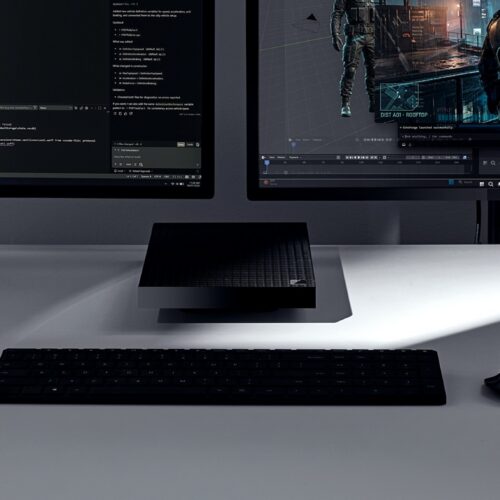
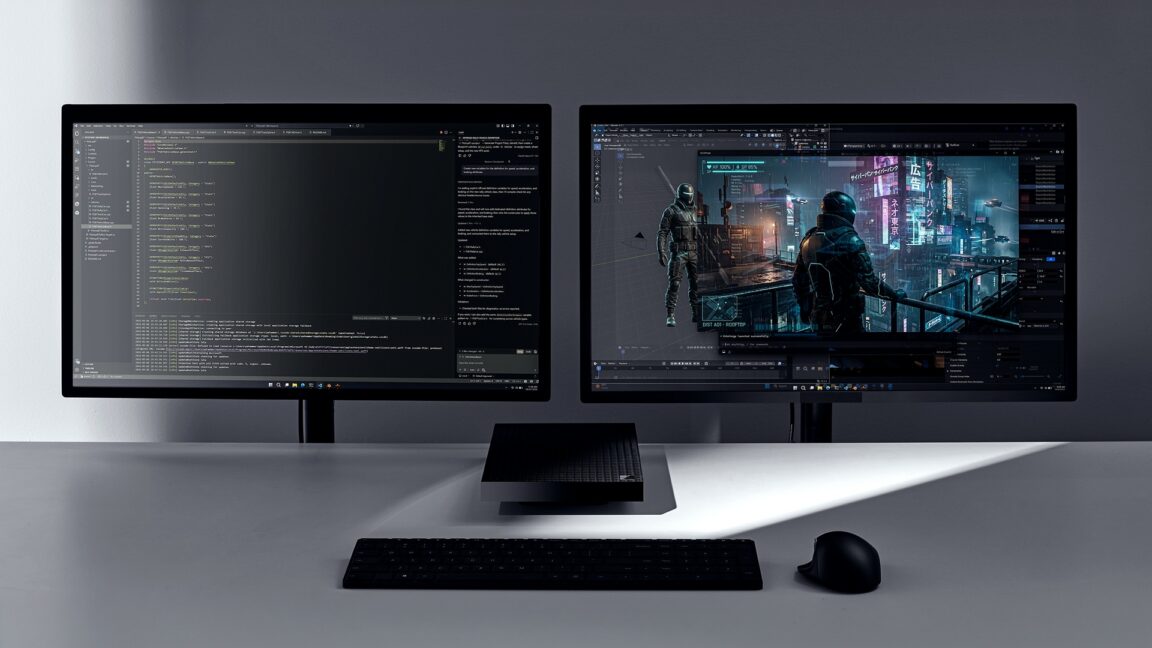
On the hardware front, we didn't get any updates for existing Surface devices (not counting yesterday's Surface Laptop Ultra announcement), but we did get something new: the Surface RTX Spark Dev Box is "a compact developer PC" built around Nvidia's new RTX Spark chip with up to 128GB of built-in memory.

Read full article

Comments

© Microsoft

  •  

Microsoft plans Linux tools and an RTX Spark desktop for Windows developers

Microsoft's Build developer conference kicked off today, and as with almost everything the company has done in the last few years, Microsoft's opening keynote focused overwhelmingly on AI and other closely related technologies. There's Microsoft Scout, an OpenClaw-based "Autopilot" agent that can hook into Microsoft 365 data to perform tasks for users; several new AI models; an expanded preview of "Codename MDASH," which is a "multi-model agentic scanning system" meant to detect and fix software vulnerabilities.

A few of those announcements stood out to us as particularly interesting, either for esoteric technical reasons or because they seem like they may have some utility for those who aren't spending their every waking moment using generative AI tools. (Microsoft's recent efforts to make its flagship operating system faster, more reliable, more useful, and less annoying didn't really come up, but there have been plenty of other announcements on that front lately.)

On the hardware front, we didn't get any updates for existing Surface devices (not counting yesterday's Surface Laptop Ultra announcement), but we did get something new: the Surface RTX Spark Dev Box is "a compact developer PC" built around Nvidia's new RTX Spark chip with up to 128GB of built-in memory.

Read full article

Comments

© Microsoft

  •  

Microsoft plans Linux tools and an RTX Spark desktop for Windows developers

Microsoft's Build developer conference kicked off today, and as with almost everything the company has done in the last few years, Microsoft's opening keynote focused overwhelmingly on AI and other closely related technologies. There's Microsoft Scout, an OpenClaw-based "Autopilot" agent that can hook into Microsoft 365 data to perform tasks for users; several new AI models; an expanded preview of "Codename MDASH," which is a "multi-model agentic scanning system" meant to detect and fix software vulnerabilities.

A few of those announcements stood out to us as particularly interesting, either for esoteric technical reasons or because they seem like they may have some utility for those who aren't spending their every waking moment using generative AI tools. (Microsoft's recent efforts to make its flagship operating system faster, more reliable, more useful, and less annoying didn't really come up, but there have been plenty of other announcements on that front lately.)

On the hardware front, we didn't get any updates for existing Surface devices (not counting yesterday's Surface Laptop Ultra announcement), but we did get something new: the Surface RTX Spark Dev Box is "a compact developer PC" built around Nvidia's new RTX Spark chip with up to 128GB of built-in memory.

Read full article

Comments

© Microsoft

  •  

Microsoft plans Linux tools and an RTX Spark desktop for Windows developers

Microsoft's Build developer conference kicked off today, and as with almost everything the company has done in the last few years, Microsoft's opening keynote focused overwhelmingly on AI and other closely related technologies. There's Microsoft Scout, an OpenClaw-based "Autopilot" agent that can hook into Microsoft 365 data to perform tasks for users; several new AI models; an expanded preview of "Codename MDASH," which is a "multi-model agentic scanning system" meant to detect and fix software vulnerabilities.

A few of those announcements stood out to us as particularly interesting, either for esoteric technical reasons or because they seem like they may have some utility for those who aren't spending their every waking moment using generative AI tools. (Microsoft's recent efforts to make its flagship operating system faster, more reliable, more useful, and less annoying didn't really come up, but there have been plenty of other announcements on that front lately.)

On the hardware front, we didn't get any updates for existing Surface devices (not counting yesterday's Surface Laptop Ultra announcement), but we did get something new: the Surface RTX Spark Dev Box is "a compact developer PC" built around Nvidia's new RTX Spark chip with up to 128GB of built-in memory.

Read full article

Comments

© Microsoft

  •  
❌