Researchers say the isolated white dwarfs Gandalf and Moon-Sized define a new class of stellar remnant because they share five traits, including X-ray emission. Across the immense scale of the Universe, a single unusual object can prompt astronomers to look for others like it, sometimes leading to the recognition of an entirely new class of [...]
A new method could improve cosmology research by analyzing supernovae together with the galaxies that host them. An international collaboration led by scientists at the Institute of Cosmos Sciences of the University of Barcelona (ICCUB) has created a new approach that may sharpen what researchers can learn about how the Universe expands and what dark [...]
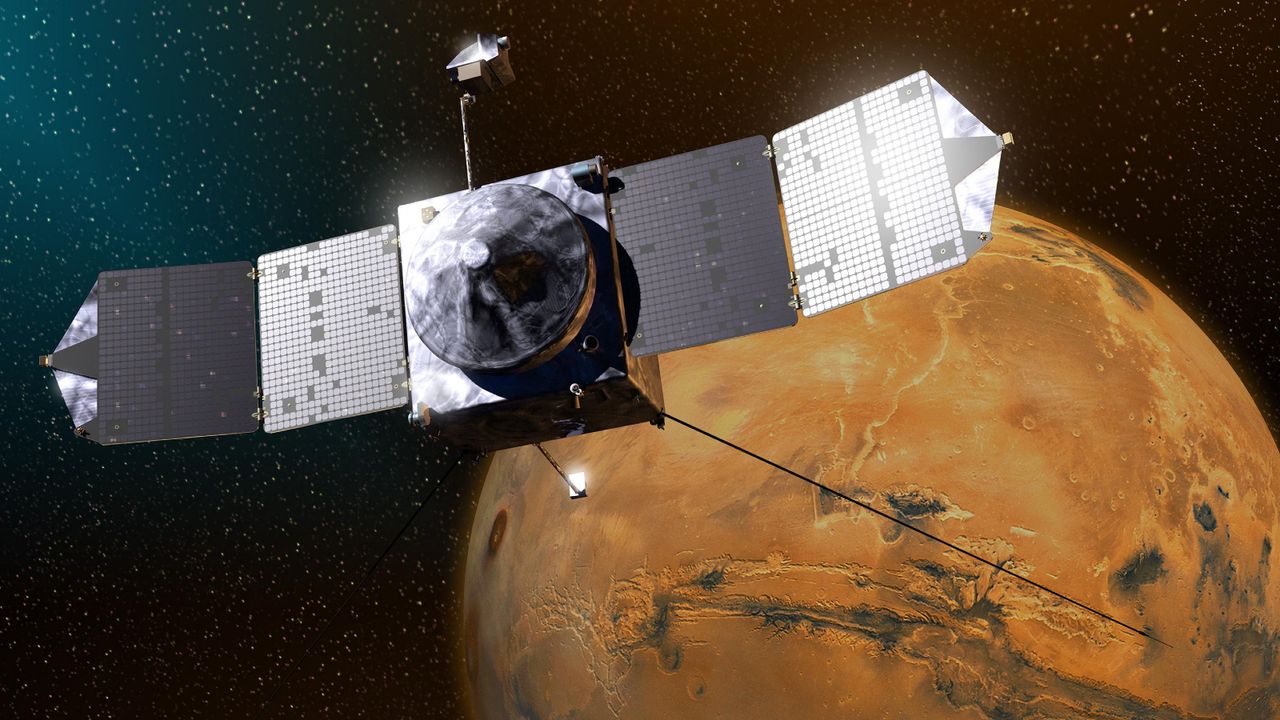
Researchers have uncovered an unexpected phenomenon, dubbed the Zwan-Wolf effect, squeezing plasma "like toothpaste" in Mars' upper atmosphere. This effect, which also happens on Earth, was thought to be impossible on the Red Planet.
Two pairs of "rogue" Jupiter-size, planet-like objects have been found in a large star-forming region in the Milky Way, a new study claims. The findings suggest the weird objects actually do exist, and are not an illusion.
Astronomers weighed a black hole in a "little red dot" discovered by the James Webb telescope. They found it to be so overmassive that it may have formed before its host galaxy had a chance to develop.
Multiple videos show a rare "fireball" meteor breaking apart with a flash of emerald light over the erupting Mount Mayon. Initial reports suggested that the falling space rock hit the volcano, but this was untrue.
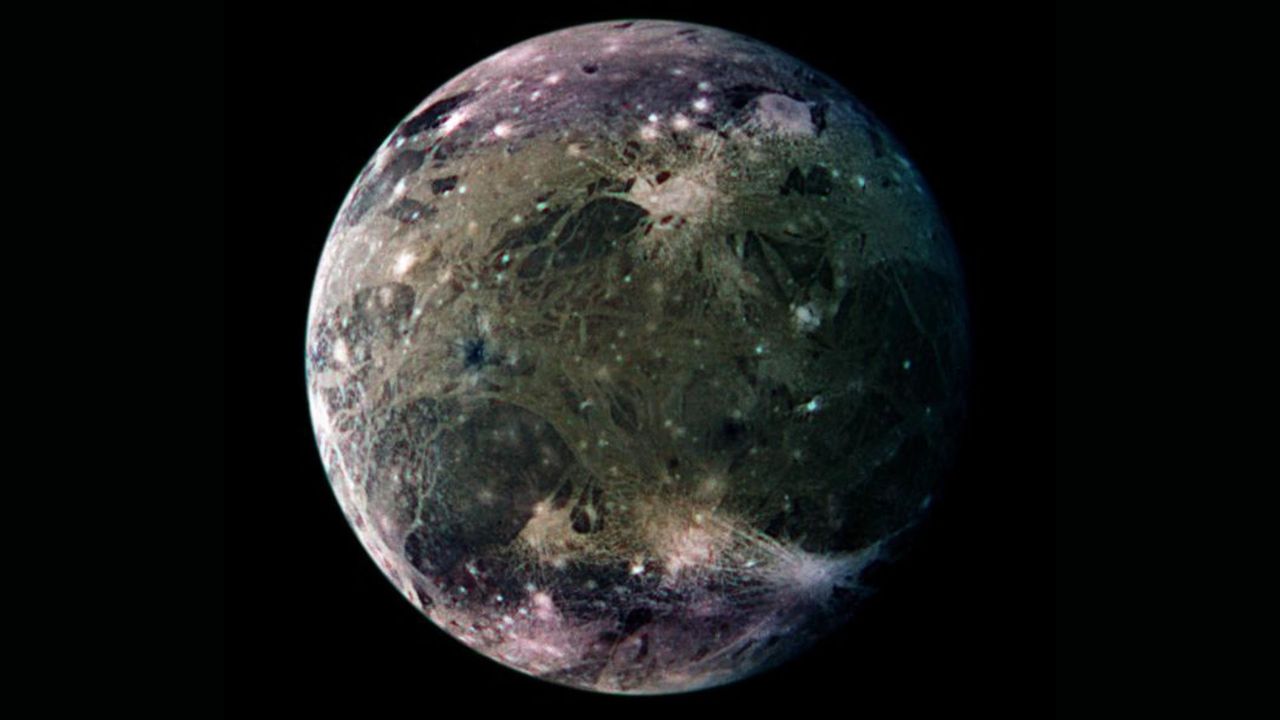
The largest moon in the solar system — Jupiter’s Ganymede — has a unique and inexplicable magnetic field. New research could finally explain it: the moon is heating up.
Once the first human settlers reach the surface of Mars, they’ll have to get extremely creative to turn the desolate and hostile environment into land that can support a permanent human presence. Like in Andy Weir’s blockbuster sci-fi novel “The Martian,” the local regolith would need plenty of manipulation to allow plants to grow.
But according to recent research, there may be much better alternatives to relying on biofuel and human waste, like the stranded protagonist in “The Martian.” As detailed in a paper published in the journal Frontiers in Astronomy and Space Sciences and spotted by Universe Today, an international team of researchers argue that special fungi could be used to convert the hostile Martian regolith into crop-friendly soil that could even be home to beneficial microbes and other organisms.
On their own, the researchers point out in their paper, regolith on the Moon and Mars aren’t exactly great candidates. They have a high alkaline pH, are riddled with toxic elements like aluminum and manganese, and are devoid of many important nutrients plants need to grow.
However, specific fungal species, such as trichoderma, a prevalent genus in soils here on Earth, have previously been shown to metabolize these toxic elements while also producing phosphates and other nutrients that are key to organic life.
Some extreme fungi, like Cryomyces antarcticus, which researchers have demonstrated can survive the harshness of outer space while strapped to the outside of the International Space Station, could be used to promote plant growth under “abiotic stress,” or negative impacts from environmental factors.
Other mycorrhizal fungi, species that are mutually beneficial to plant roots, can “enhance iron uptake, mitigate oxidative stress, and improve soil structure,” the researchers argue, in “mechanisms that may be applicable to regolith systems.”
Of course, plenty of questions remain whether Martian regolith will prove useful in growing plants on the surface of a hostile planet. We don’t know whether the final crops will be safe to eat or how they will react to radiation exposure, let alone how to validate the concept ahead of time, the researchers point out.
But anything that could sidestep the need to ship soil or other growing media all the way to Mars is worth looking into; it could potentially lower the costs enormously of future efforts to create a permanent presence on Mars.
And there are early positive signs that it may just work. Researchers at the University of Bremen and the German Aerospace Center successfully developed a algae-based fertilizer that can be produced exclusively with Martian resources — bringing us one step closer to growing food on Mars.
At the end of this month, the sky will be graced by a rare Blue Moon. But wait: it’s actually a slightly smaller than usual full Moon that’s also a Blue Moon — so instead, newspapers and outlets, drawing on apocryphal traditions found in farmer’s almanacs so they can stave off a slow news day, are calling it “Blue Micromoon,” which is supposedly even rarer.
What’s going on with all these Moons? It’s lunacy!
To be clear, there will, in fact, be what is colloquially called a Blue Moon this Saturday night and Sunday morning. A Blue Moon is anytime a second full Moon appears in the same month, something that only occurs every two or three years. Or it’s when a season has four full Moons, instead of three, in case you were harboring any doubt that the whole thing is a bunch of made up nonsense.
The significance of all this is mostly invented — and for that matter, a Blue Moon isn’t even blue; if you catch one when it rises, it usually looks orange. There’s no intriguing astrophysical phenomena at play here, like with a solar eclipse, or even a lunar one (also called a Blood Moon, if you prefer.) It’s just a calendrical coincidence, independent of what the Moon is actually doing. You may as well start celebrating when a full Moon falls on a Friday, and call it the TGI Moon.
Witnessing a full Moon is cool, but we need to stop with the names. Last month it was a “Flower Moon,” which is just another name for a full Moon that happens to be in May. Correction: it was a full “Flower Moon” that was also a “micromoon.” A Micro Flower Moon? A Flower Micromoon?
And what is a micromoon anyay? It’s the slang that describes when the Moon’s oblong orbit takes it slightly farther from our planet than usual, making it appear marginally smaller in the sky. Similarly, a “supermoon” is when it’s closer and appears bigger.
Here’s the catch: none of these are official names, with no hard criteria on the distances the Moon needs to be at, giving people a lot of leeway on what they get to call a “supermoon” and a “micromoon.” Both of those, by the way, are fairly mundane and routine. They sure do punch up a headline, though. Remember the buzz around a “Super Worm Moon”, also known as a “Super Worm Equinox Moon,” a few years ago?
Well, don’t feel left out if you missed it, folks. There’s a “Strawberry Micromoon” coming up next month.
In what could turn out to be a huge setback for NASA’s highly ambitious plans to build a permanent Moon base, Jeff Bezos’ latest Blue Origin rocket erupted into a massive mushroom cloud on the launchpad last night.
During a wet dress rehearsal at the Space Force Station in Cape Canaveral on Thursday evening, the company’s New Glenn rocket exploded in dramatic fashion. Footage shows an enormous fireball engulfing the entire launch pad, a sight visible from far away.
It’s the very last thing NASA needed. Just days ago, the space agency announced a slew of “Moon base” missions to build out a permanent presence on the lunar surface — and they hinged on New Glenn rockets launching two of Blue Origin’s Blue Moon lunar landers that are delivering payloads, including rovers, there before the end of this year.
Even before Blue Origin’s latest setback, it was an enormously ambitious timeline. It’s unclear how the New Glenn explosion will affect NASA’s plans going forward, but it certainly doesn’t bode well, given the likely extensive damage to the surrounding pad.
“NASA is aware of the anomaly that occurred tonight at Launch Complex 36 involving Blue Origin’s New Glenn rocket at Cape Canaveral Space Force Station,” NASA’s administrator Jared Isaacman said in a statement. “Spaceflight is unforgiving, and developing new heavy-lift launch capability is extraordinarily difficult.”
“We will work with our partners to support a thorough investigation of this anomaly, assess near-term mission impacts, and get back to launching rockets,” he added. “We will provide information on any impacts to the Artemis and Moon Base programs as it becomes available.”
Bezos appeared distraught following the catastrophe.
“All personnel are accounted for and safe,” he tweeted around 10 pm Eastern on Thursday. “It’s too early to know the root cause but we’re already working to find it.”
“Very rough day, but we’ll rebuild whatever needs rebuilding and get back to flying,” he added. “It’s worth it.”
Even SpaceX CEO Elon Musk, who has a long history of butting heads with Bezos, struck an empathetic pose.
“Most unfortunate,” he tweeted. “Rockets are hard.”
The news comes just over a month after Blue Origin’s New Glenn rocket failed to deliver a communication satellite into a high enough orbit, turning it into nothing more than another piece of space junk.
The rocket and the firm’s Blue Moon lander are one of two options NASA is hoping to use to deliver astronauts to the surface of the Moon, alongside SpaceX’s Starship.
Unfortunately, Musk’s space company is similarly struggling to get its own rocket ready for prime time. Just yesterday, the Federal Aviation Administration announced it was grounding Starship and launching a “mishap investigation” after the company’s Super Heavy booster failed to reignite the majority of its thrusters before splashing down in the Gulf of Mexico on May 22. The second stage similarly erupted in a massive fireball after splashing down in the ocean.
“A return to flight of the Starship Super Heavy vehicle is based on the FAA determining that any system, process, or procedure related to the mishap does not affect public safety,” the regulator wrote in a statement.
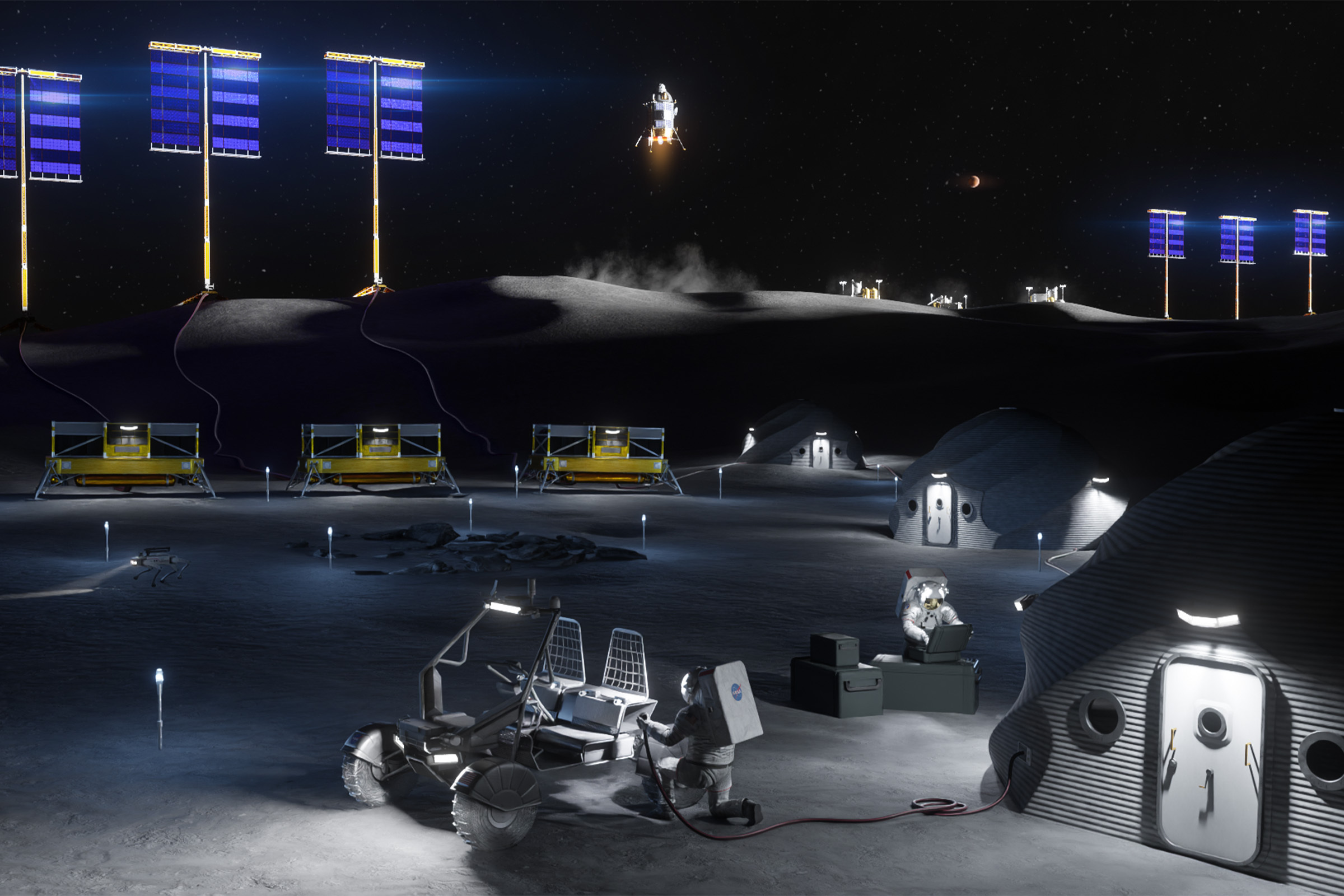
During a Tuesday event, the space agency announced a slew of new contracts worth hundreds of millions of dollars for Moon base infrastructure including lunar rovers, as well as timeframes for upcoming development and exploration missions.
Before the end of this year, NASA wants to send two of Blue Origin’s Blue Moon lunar landers to the Moon’s surface to deliver two lunar terrain vehicles being developed by commercial partners Astrolab and Lunar Outpost.
Meanwhile, Firefly Aerospace, whose Blue Ghost lander successfully touched down on the Moon in March 2025, will develop drones to explore the rugged surface.
And that’s just the buildup to NASA’s Artemis 4 mission, the first planned crewed landing in over half a century, which is tentatively slated for 2028. Artemis 3, which was originally envisioned as a landing attempt, will now involve the testing of either or both Blue Origin’s lander and SpaceX’s Starship in low-Earth orbit sometime next year.
To call NASA’s plans for its Moon base ambitious would be a staggering understatement. For one, Blue Origin’s Blue Moon lander has yet to successfully deliver a payload into Earth’s orbit following a failed attempt last month. Getting to the Moon, softly landing, and releasing a robotic lander will likely prove far more difficult.
The agency laid out plans for three “Moon Base missions,” starting with a Blue Moon delivery of scientific instruments in “fall 2026,” followed by a delivery of “more than 1,100 pounds of cargo on Astrobotic’s Griffin lander,” including a rover.
The third mission, which is “also targeted for this year,” will deliver even more scientific payloads, including ones being developed by the European Space Agency and the Korea Astronomy and Space Science Institute.
“These missions are the first of more than a dozen missions that will be announced this year, each designed to generate operational data and reduce risk ahead of crewed Artemis surface activities,” the agency wrote in its writeup of Tuesday’s event.
The base itself will span hundreds of square miles, according to Moon base program executive Carlos Garcia-Galan. Drones, called MoonFall, will mark the perimeter of said base in what could inevitably be a highly contentious marking of territory.
MoonFall, an initiative led by NASA’s Jet Propulsion Lab, aims to land near the lunar South Pole by 2028. High-definition optical cameras attached to drones measuring roughly seven feet across and four feet tall will take detailed imagery of the base’s envisioned terrain far ahead of any crewed landings.
In a note, NASA administrator Jared Isaacman vowed that the US would “never give up on the Moon again” by building out its Artemis program.
“We are going back to the Moon, building the base, and doing the other things,” he wrote, referencing John F. Kennedy’s iconic 1962 speech about going to the Moon. “This is no longer something to read in the history books, you are making history.”
However, given the vast degree of complexity involved, successfully launching not just one but a whole slew of missions on the surface of the Moon before the end of 2026 could soon get a massive reality check. In other words, we wouldn’t be shocked to hear from even more delays as Isaacman’s NASA dials up the pressure to build out a permanent presence on the Moon.
The future of space travel is pay to play, but that might not be a bad thing.
During the final 15 minutes counting down to SpaceX’s aborted Starship V3 mission on Thursday, Elon Musk’s space company revealed a fascinating tidbit: the man who’s going to lead SpaceX’s first crewed mission to Mars.
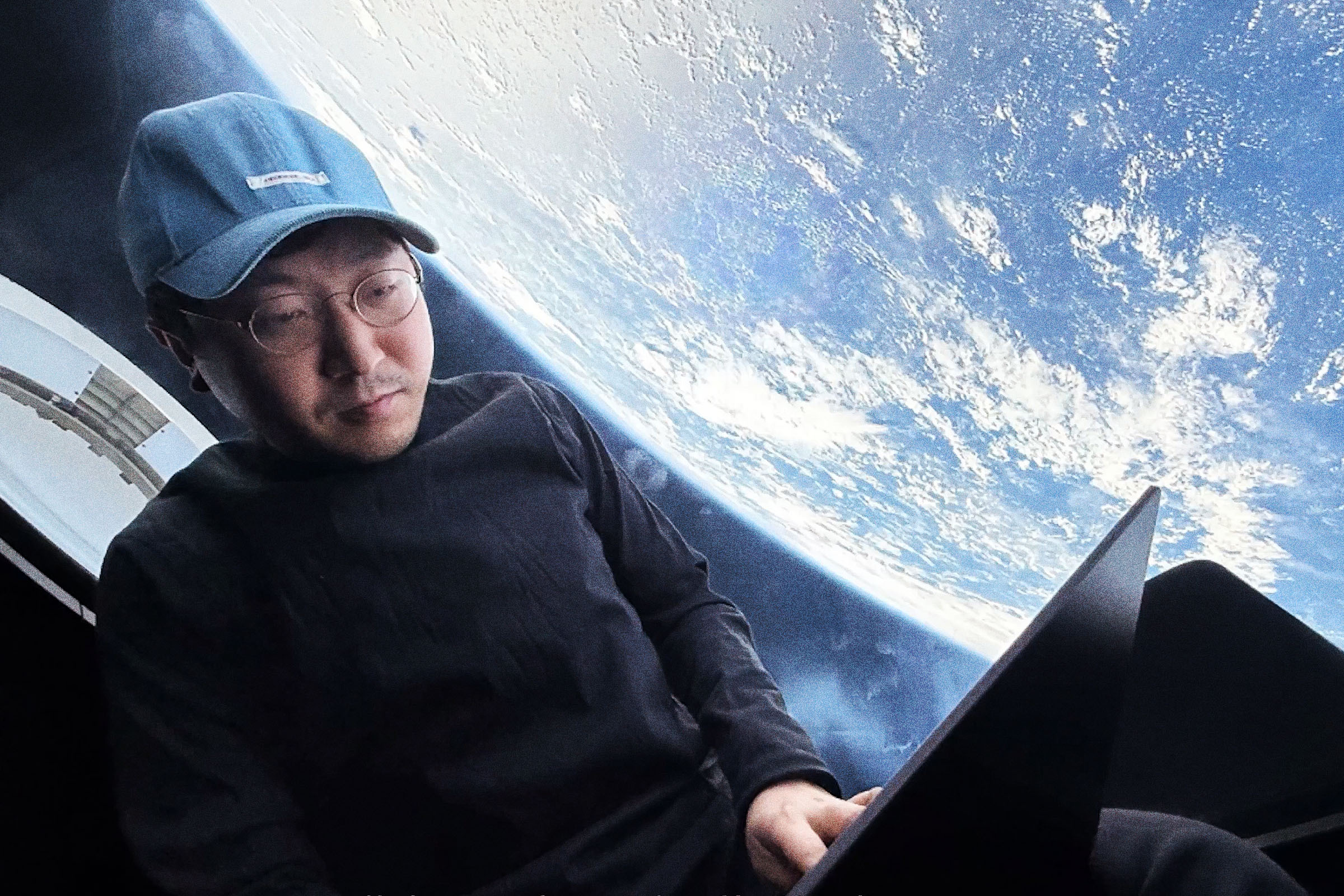
Spotted by Gizmodo, broadcasters on the company’s live feed announced that crypto billionaire Chun Wang has been tapped to lead humanity’s first interplanetary human flight.
At first glance, Wang might seem like an unlikely candidate for such a monumental task. A software developer who dropped out of college, Wang made his fortune by developing one of China’s first and most successful Bitcoin mining pools — striking it rich just before the Chinese government shut all of that crypto stuff down in 2021.
However, his resume includes another space flight, SpaceX’s April 2025 Fram2 mission, which he personally funded in order to secure a spot as mission leader. Though the media made a spectacle of that brief trip, Christopher Combs, associate dean of research at the University of Texas’ Klesse College of Engineering and Integrated Design described it as a “notch above a gimmick, but not exactly a groundbreaking milestone.”
The Mars trip, which would take up to two years, would be a vastly greater challenge on the billionaire’s mind and body — though Wang seems pretty gung-ho about it.
“I can stare at the map view on airplanes all the way from takeoff through landing, so I think I’m going to enjoy the trip,” Wang told viewers on Thursday.
It’s unknown who else will be making the Mars trip alongside Wang, and whether or not he’s funding it. Either way, the prospect that a billionaire could be willfully catapulting himself around 140 million miles from Earth left some critics buzzing on social media.
“This is the first time I have been 100 percent behind a SpaceX decision,” journalist David Perry wrote on Bluesky. “I hope they launch really soon.”
Writer Dara Moskowitz Grumdahl joked that it’s a “great start.”
“But,” she concluded, “I think all the crypto billionaires should go, it’s important and will bring America hope.”
In the 1960s, two organizations were formed for cooperation around a European presence in space: the European Space Research Organization, which focused on scientific research, and the European Launcher Development Organization, which concentrated on engineering launch systems. By the end of the decade, however, dissatisfaction was growing with this split structure, and in 1968, theContinue reading "May 31, 1975: ESA begins operations"
Harry Clement Stubbs – perhaps better known by his penname, Hal Clement – was born near Boston on May 30, 1922. Stubbs earned a B.S. in astronomy from Harvard University in 1943, followed by master’s degrees in chemistry and education. After military service in the Army Air Corps in World War II, he began workContinue reading "May 30, 1922: The birth of Harry Clement Stubbs"
One of the most important eclipses in history happened in 1919. This particular eclipse cut a path across South America and the Atlantic Ocean, and landed on the west coast of Africa. Waiting on the island of Principe, in the Gulf of Guinea off the west coast of Africa, was a team of astronomers armedContinue reading "May 29, 1919: History’s most important eclipse"
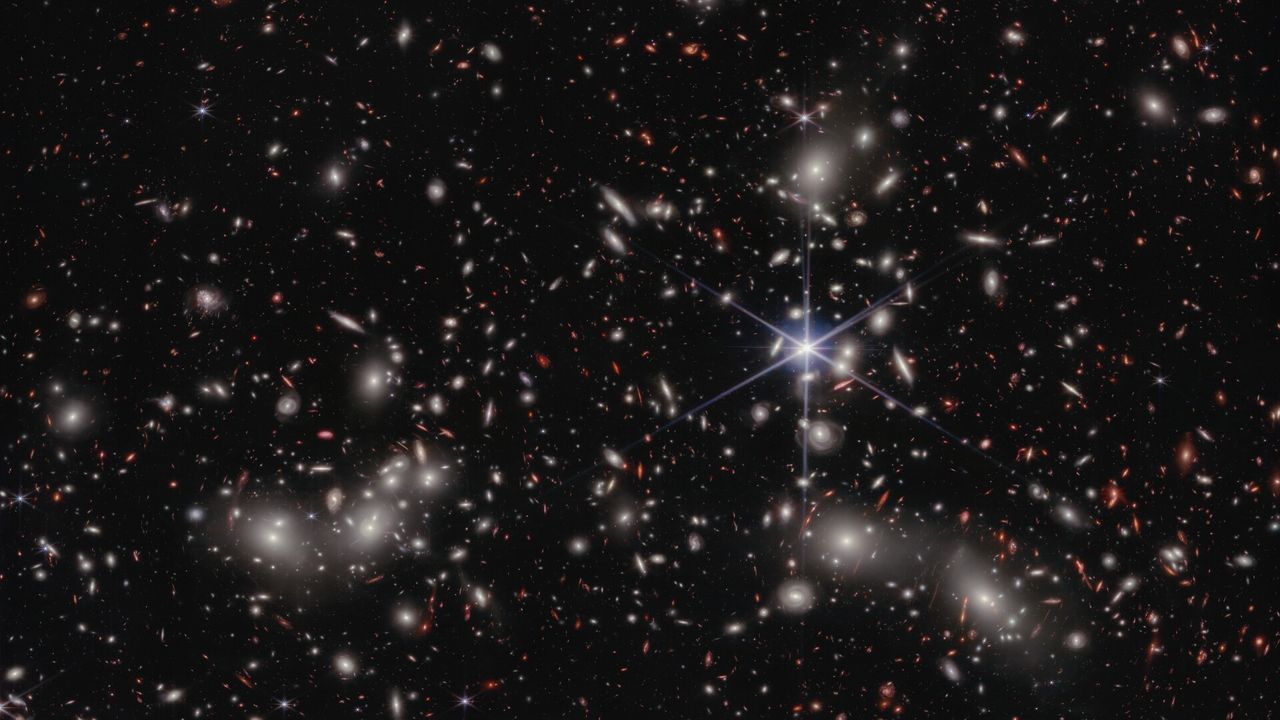
The James Webb Space Telescope (JWST) was designed to give us the ability to look at one of the earliest periods in the evolution of the Universe, a time when some of the earliest stars were putting out enough light to ionize the hydrogen that accounted for almost all of the normal matter present at the time. There were lots of ideas about what we might see, but the Universe is full of surprises.
One of the first surprises was the existence of what picked up the moniker "little red dots," which are exactly what their name suggests. After some initial arguments, it became clear that these were early versions of the supermassive black holes that presently sit at the center of almost every galaxy. Now, gravitational lensing has allowed astronomers to confirm that a little red dot is little more than a supermassive black hole without much in the way of a galaxy around it.
Making a little red dot bigger
The little red dot in question is called Abell 2744−QSO1, and gravitational lensing has both magnified it and caused it to appear three times in the vicinity of the galaxy cluster that did the lensing. Based on details in its spectrum, we're looking at the object as it appeared just 700 million years after the Big Bang.

 Login
Login
 Researchers say the isolated white dwarfs Gandalf and Moon-Sized define a new class of stellar remnant because they share five traits, including X-ray emission. Across the immense scale of the Universe, a single unusual object can prompt astronomers to look for others like it, sometimes leading to the recognition of an entirely new class of [...]