Reading view

AI Company Paying Random People $2,000 Per Month to Crank the Hog

AI companies have long relied on armies of data labelers, whose job it is to annotate, tag and classify text, images and videos to train AI models.

It’s not exactly a flashy occupation, with some saying they’re forced to watch privacy-invading footage. Others argue they’re being forced to dig their own graves by training models capable of doing their old jobs.

Other job opportunities in the space could prove more pleasurable. As Business Insider reports, a chatbot companion startup called Joi AI, which offers a NSFW character AI chat service, is hiring ten “mast**bation consultants,” according to a job listing the company posted on social media.

Best of all, chosen candidates will be paid $2,000 a month — not bad for cranking the hog to audio erotica.

These consultants are being asked to spend four weeks writing about their intimate experience while testing the company’s audio feature. Anyone can apply.

Unsurprisingly, Joi AI was quickly drowning in applications, with the company’s head of brand, Julie Levin, telling BI that the company had received over 100,000 applications in a matter of days.

“What are we supposed to do with 100,000 applications?” Levin said. “I should probably call them ‘winners,’ because it’s such a competition.”

It’s an unusual AI gig that will involve chosen candidates delivering weekly reports after completing “daily audio-guided sessions.”

“We expect people to learn something about how mast**bation affects their life in a good way or a bad way,” Levin told BI. “We wanted them to reflect on that.”

Chances are that not everybody signing up was sincerely meaning to help the company fine-tune its new audio feature. In a recent tweet, the company reflected on the types of “cover letter openings” it had received, which ranged from “this is my calling,” to “I’ve been training for this my whole life.” Other openings included “my therapist said I needed a hobby,” and “I applied on behalf of my husband.”

“Time to go pro,” one X user joked. “Ready to contribute extensive data, repeatedly, for science.”

The reality, of course, is that companies offering NSFW chatbot companionship have long been shrouded in controversy, from men creating AI girlfriends and verbally abusing them to teenagers falling in love with their new large language model-powered partners.

Experts also warn that a huge proportion of those with AI companions appear to be more depressed and lonely than those who don’t. Other research has found that people hooked on AI chatbots are more likely to experience profound breaks with reality and higher levels of psychological distress.

More on AI chatbots: Certain Chatbots Vastly Worse For AI Psychosis, Study Finds

The post AI Company Paying Random People $2,000 Per Month to Crank the Hog appeared first on Futurism.


  •  

Scientists Say They’ve Found Fungi That Turn Dead Martian Soil Into Fertile Cropland

Once the first human settlers reach the surface of Mars, they’ll have to get extremely creative to turn the desolate and hostile environment into land that can support a permanent human presence. Like in Andy Weir’s blockbuster sci-fi novel “The Martian,” the local regolith would need plenty of manipulation to allow plants to grow.

But according to recent research, there may be much better alternatives to relying on biofuel and human waste, like the stranded protagonist in “The Martian.” As detailed in a paper published in the journal Frontiers in Astronomy and Space Sciences and spotted by Universe Today, an international team of researchers argue that special fungi could be used to convert the hostile Martian regolith into crop-friendly soil that could even be home to beneficial microbes and other organisms.

On their own, the researchers point out in their paper, regolith on the Moon and Mars aren’t exactly great candidates. They have a high alkaline pH, are riddled with toxic elements like aluminum and manganese, and are devoid of many important nutrients plants need to grow.

However, specific fungal species, such as trichoderma, a prevalent genus in soils here on Earth, have previously been shown to metabolize these toxic elements while also producing phosphates and other nutrients that are key to organic life.

Some extreme fungi, like Cryomyces antarcticus, which researchers have demonstrated can survive the harshness of outer space while strapped to the outside of the International Space Station, could be used to promote plant growth under “abiotic stress,” or negative impacts from environmental factors.

Other mycorrhizal fungi, species that are mutually beneficial to plant roots, can “enhance iron uptake, mitigate oxidative stress, and improve soil structure,” the researchers argue, in “mechanisms that may be applicable to regolith systems.”

Of course, plenty of questions remain whether Martian regolith will prove useful in growing plants on the surface of a hostile planet. We don’t know whether the final crops will be safe to eat or how they will react to radiation exposure, let alone how to validate the concept ahead of time, the researchers point out.

But anything that could sidestep the need to ship soil or other growing media all the way to Mars is worth looking into; it could potentially lower the costs enormously of future efforts to create a permanent presence on Mars.

And there are early positive signs that it may just work. Researchers at the University of Bremen and the German Aerospace Center successfully developed a algae-based fertilizer that can be produced exclusively with Martian resources — bringing us one step closer to growing food on Mars.

More on growing stuff on Mars: Scientists Identify Plant That Could Grow on Mars

The post Scientists Say They’ve Found Fungi That Turn Dead Martian Soil Into Fertile Cropland appeared first on Futurism.
  •  

Waymo Pulled Its Cars From the Freeway After One Fled Police With Horrified Couple on Board

We’ve seen Waymo’s fleet of autonomous taxis cause plenty of mayhem on public streets. They like to ignore bike lanes, drive the wrong way down busy roads, and even rely on remote workers in the Philippines when they get stumped.

Riding them can also quickly turn into a terrifying near-death experience, as one couple in San Francisco found out firsthand. As CBS News reports, the couple was looking to get home in the Mission District only for their Waymo cab to veer off a highway and accelerate to terrifying speeds while driving down a construction lane.

All the while, police vehicles were trying to chase it down with sirens blaring.

“There were construction signs,” resident Elliot Slade told the broadcaster over the weekend. “There were lights going on. Police in the distance and it sped up. That’s when I looked at my fiancée, we’re done.”

“This is it,” he added. “We’re dead. We’re going to die right here in the Waymo.”

The terrifying incident underlines the very real dangers of relying on autonomous vehicles for ride shares, while they still suffer from nagging technical shortcomings that are putting people in danger. It could also further erode public trust in the tech.

In the last two months alone, Waymo’s vehicles have been observed driving through flooded streets and speeding through construction zones, as USA Today reports.

The latest incident also proved scary enough for Waymo to pull its cars from freeways in San Francisco, Los Angeles, Phoenix, and Miami altogether as it works to “integrate recent technical learnings into our software,” according to a statement to CBS.

The offending Waymo vehicle “started freaking out,” Slade recalled, because of a slew of merging lanes, causing cars to be “all over the place.” Smartphone footage Slade recorded shows the dramatic incident from his perspective.

“Holy s***, dude,” Slade can be heard saying in the clip.

After speeding up for around 20 seconds, the Waymo eventually pulled over, with a representative chiming in over the car’s audio system. Understandably, Slade and his partner were desperate to leave and never look back.

“She came on the line and said from what I could see, it seemed like a stressful experience,” Slade told CBS. “What do you want to do next? I was like we want to get out. They’re like do you want to continue the journey; I was like absolutely not.”

Waymo offered the rattled occupant $40 worth of free rides, but understandably, he’s now unsure about climbing back into one of its vehicles.

“It was one of those things, once you lost your autonomy in the car, I don’t want to feel that again,” Slade told CBS. “Like it was a really freaky moment.”

Meanwhile, a spokesperson told the broadcaster that the company expects to resume its freeway routes “soon.”

More on Waymo: Protesters Have Figured Out They Can Block Waymos and Berate Their Passengers While the Cars Are Paralyzed

The post Waymo Pulled Its Cars From the Freeway After One Fled Police With Horrified Couple on Board appeared first on Futurism.

  •  

Why Is Sam Altman Teaming Up With Jared Leto, a Creep With Extensive Sex Abuse Allegations?

Last month, OpenAI CEO Sam Altman’s unsettling blockchain-based side gig seemingly got its Mars all confused.

Let’s back up. The company, previously called Worldcoin and now simply called World, is developing software designed to verify the “humannesss” of people by scanning their eyeballs, a bizarre venture that has already been caught up in its fair share of controversies, from allegations of insider token trading and fraud to exploiting people in impoverished countries. Several countries have banned the company outright.

In April, the firm announced that World was teaming up with another Altman-founded company, called Tools for Humanity, to sell the first tickets to global music sensation Bruno Mars’ upcoming world tour, via a new product called Concert Kit.

The company was forced to eat its words after Bruno Mars’ team shot back that it had nothing to do with the venture. Tools for Humanity soon admitted that it actually meant Thirty Seconds to Mars, another act with “Mars” in its name. Another relevant fact about the band: it’s fronted by actor Jared Leto — who happens to have been hit with a startling number of sex abuse allegations, piling onto World’s existing controversies.

The eyebrow-raising pairup is hoping to tackle an actual problem: ticket scalpers. Concert Kit was designed to cut reseller bots out of the equation by having Leto fans scan their eyeballs for a so-called “Humans Only Concert,” a volunteering effort to be awarded with a special two-for-one ticket offer.

Almost 1,000 verified humans managed to snag tickets for April 17 event, with Tools for Humanity claiming that it had successfully stopped more than 100,000 bots from snapping up tickets, as The San Francisco Standard reported last week.

It’s true that anybody who’s attempted to buy tickets for a hotly anticipated concert within the last few years knows how miserable scalpers and bots have made the experience, with resale tickets often being sold for ludicrous amounts of money.

But handing over highly sensitive biometric data to a shady Altman-founded company with a dubious track record doesn’t exactly sound like a perfect solution.

And that’s without getting into Leto’s connection to the project. The actor was accused by nine women last year of sexual impropriety, The Guardian reported, with one of them calling the behavior — which she says started when she was underage — “predatory, terrifying and unacceptable.”

While Leto has denied the allegations, it’s hard to imagine a less inspiring partner with whom to launch the service — especially because Altman has been accused of sexual misconduct of his own.

More on the incident: Sam Altman Caught in What May Be His Most Spectacular Lie Yet

The post Why Is Sam Altman Teaming Up With Jared Leto, a Creep With Extensive Sex Abuse Allegations? appeared first on Futurism.
  •  

Harvard Graduation Speaker Unloads on AI in Profanity-Loaded Tirade, Prompting Cheers From Students: “I’m Here to Tell You the Mission of Your Generation Is to Destroy AI”

Earlier this month, former Google CEO Eric Schmidt was met with jeers when he brought up AI during his commencement speech at the University of Arizona. Just days earlier, footage of real estate executive Gloria Caulfield being booed at her commencement speech at the University of Central Florida after mentioning AI went viral online.

“What happened?” Caulfield asked the raucous crowd, incredulous. “OK, I struck a chord! May I finish?”

Apart from a complete failure to read the room, the two incidents perfectly highlight massively growing backlash to the controversial tech, with millions of students who are about to enter the workforce becoming fed up of executives celebrating AI and prioritizing investments in the tech that often come at the cost of creating new jobs.

Seemingly tapping into these widespread frustrations, “The Daily Show” host and standup comedian Ronny Chieng sang a dramatically different tune during a profanity-laden commencement speech at Harvard’s Class Day event this week.

“Can I just say f*** AI, f*** AI, f*** AI?” Chieng said, triggering rapturous applause. “I’m glad you agree. It’s so stupid. A lot of other respected graduation speakers at colleges around America are talking about you guys needing to master AI for the future.”

“I’m here to tell you the mission of your generation is to destroy AI,” he told a far more receptive crowd.

Chieng addressed ongoing concerns that AI may lead to atrophying skills, particularly among students, and a broader phenomenon experts have come to call “cognitive surrender,” in which users abandon their own reasoning to adopt the views of an AI model as their own.

“I know someone sitting out here right now who is saying, ‘What about the use of AI to pioneer breakthroughs in medicine and physics?’… If you’re using it for that purpose, you’re not the problem,” Chieng said. “I’m talking about the accumulation of cognitive debt due to excessive use of large language models… This is why you should be scared of AI.”

“Your generation’s upcoming battle won’t be humans against AI; that’s at least two months away,” he added jokingly. “It’s going to be people with substance versus people with shallow knowledge. It’s going to be mastery versus faking it. It’s going to be people with good taste versus tacky.”

To many, Chieng’s speech will likely come as a breath of fresh air. Young people, faced with dire post-graduation job prospects, are continuing to turn against AI in incredible ways, from refusing to use it at work to even intentionally undermining their bosses’ AI initiatives

University students across the country are starting to speak out, arguing that the tech is being hoisted on them against their will while undermining the role of human agency and creativity in society.

Put simply, they refuse to be replaced by machines as executives continue to celebrate AI as the next industrial revolution.

Chieng’s speech took on a more philosophical turn towards the end.

“Creating is the fun part,” he said. “Why would I want AI to take that away from me?”

More on AI backlash: There Are Signs of a Massive AI Backlash

The post Harvard Graduation Speaker Unloads on AI in Profanity-Loaded Tirade, Prompting Cheers From Students: “I’m Here to Tell You the Mission of Your Generation Is to Destroy AI” appeared first on Futurism.

  •  

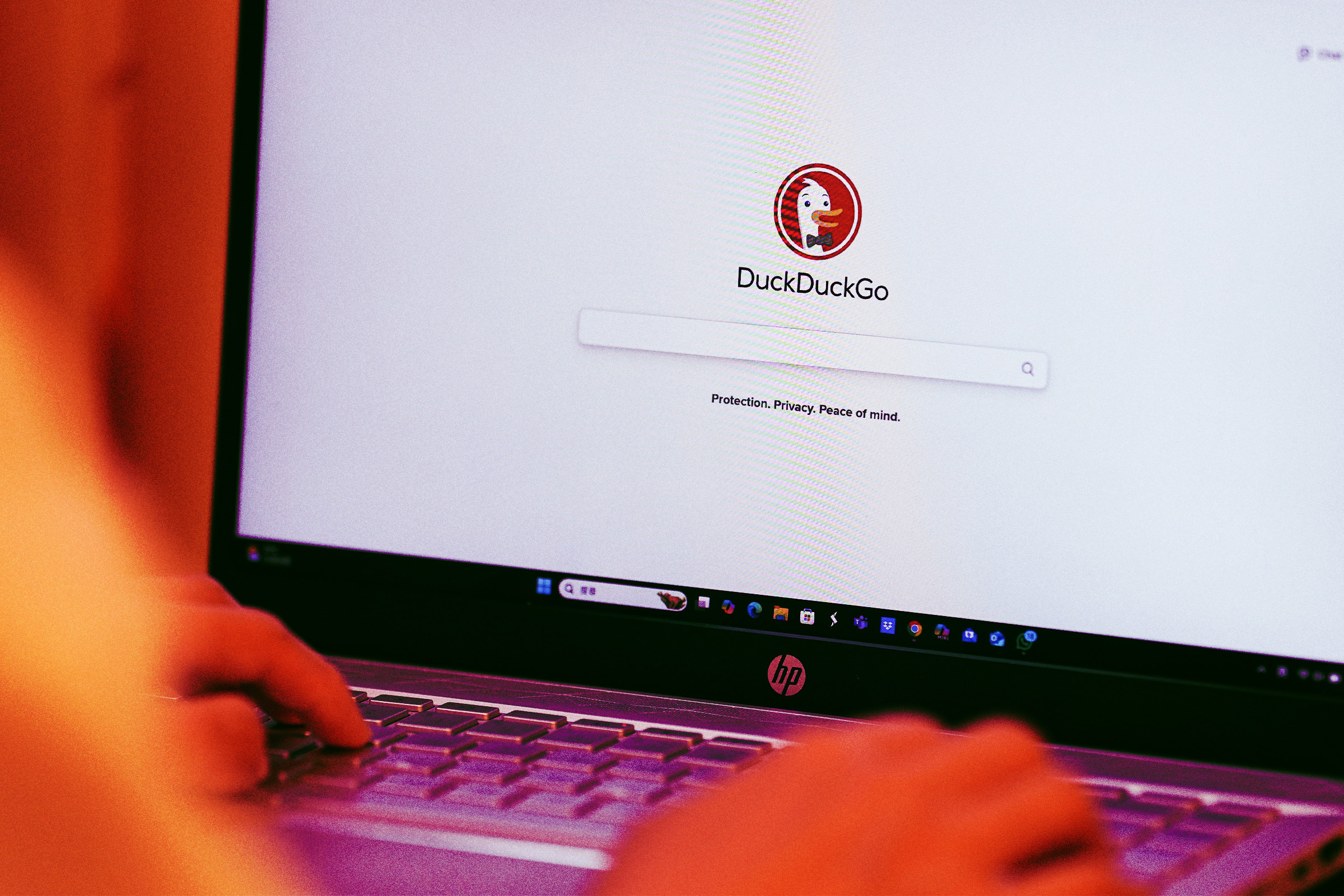
DuckDuckGo Installs Spike as Google Moves to Replace Search With AI

At its I/O conference last week, Google made it abundantly clear it’s looking to leave behind the Search pages of yore, featuring hyperlinks to online content — and replacing them with a reimagined and AI-powered “intelligent search box.”

Instead of links, Google is looking to push users down an AI chatbot rabbit hole. That’s despite the tech’s glaring shortcomings, which the company has yet to meaningfully address, with the company’s flagship AI Overview feature still suffering from a staggering number of hallucinations.

Even something as simple as googling the word “disregard” sent the feature into a spiral, forcing the company to jump in after a wave of mockery.

Given the scale of the ever-growing backlash to AI, it shouldn’t come as a surprise that reactions to the latest news ranged from frustration to anger.

And many netizens are seemingly ready to call it quits once and for all, with week over week US installs of search alternative DuckDuckGo soaring 30 percent.

“People aren’t just complaining about Google’s AI search overhaul, they’re leaving,” the company’s official X account tweeted on Tuesday. “Momentum is growing. It’s time to Fire Google.”

“Google is force-feeding AI with no way to opt out,” DuckDuckGo founder and CEO Gabriel Weinberg told tech journalist Paul Thurrott. “As a result, their results are getting worse, not better.”

“We want to be the place that puts users in charge and allows them to decide how much or how little AI they want,” he added. “That’s why we’re seeing a spike in people coming to DuckDuckGo this week, it’s as simple as that.”

Underscoring it all, responses to Google’s latest announcement were predominantly negative.

“Nobody asked you to change the box we asked you to fix the results,” one Reddit user wrote.

“Change how people use the Internet, by making them switch to Duck Duck Go,” another user joked.

The development highlights a growing surge in AI backlash, ranging from rural American towns revolting against plans for AI data centers to students jeering at the mere mention of AI during commencement speeches.

That backlash has become particularly apparent in the software world, with Microsoft finding out the hard way that its all-in approach to AI has become immensely unpopular.

Technically speaking, DuckDuckGo does offer its own AI product, called Duck.AI, as TechCrunch points out. However, the company appears to have grown wise to the backlash, offering a specifically AI-free search page — which has also seen traffic surge as of late.

More on Google search: Google Is Making Huge Changes That Are Poised to Decimate What’s Left of Journalism

The post DuckDuckGo Installs Spike as Google Moves to Replace Search With AI appeared first on Futurism.

  •  

Scientists Rush to Save One of the World’s Rarest Trees as It Literally Falls Off a Cliff

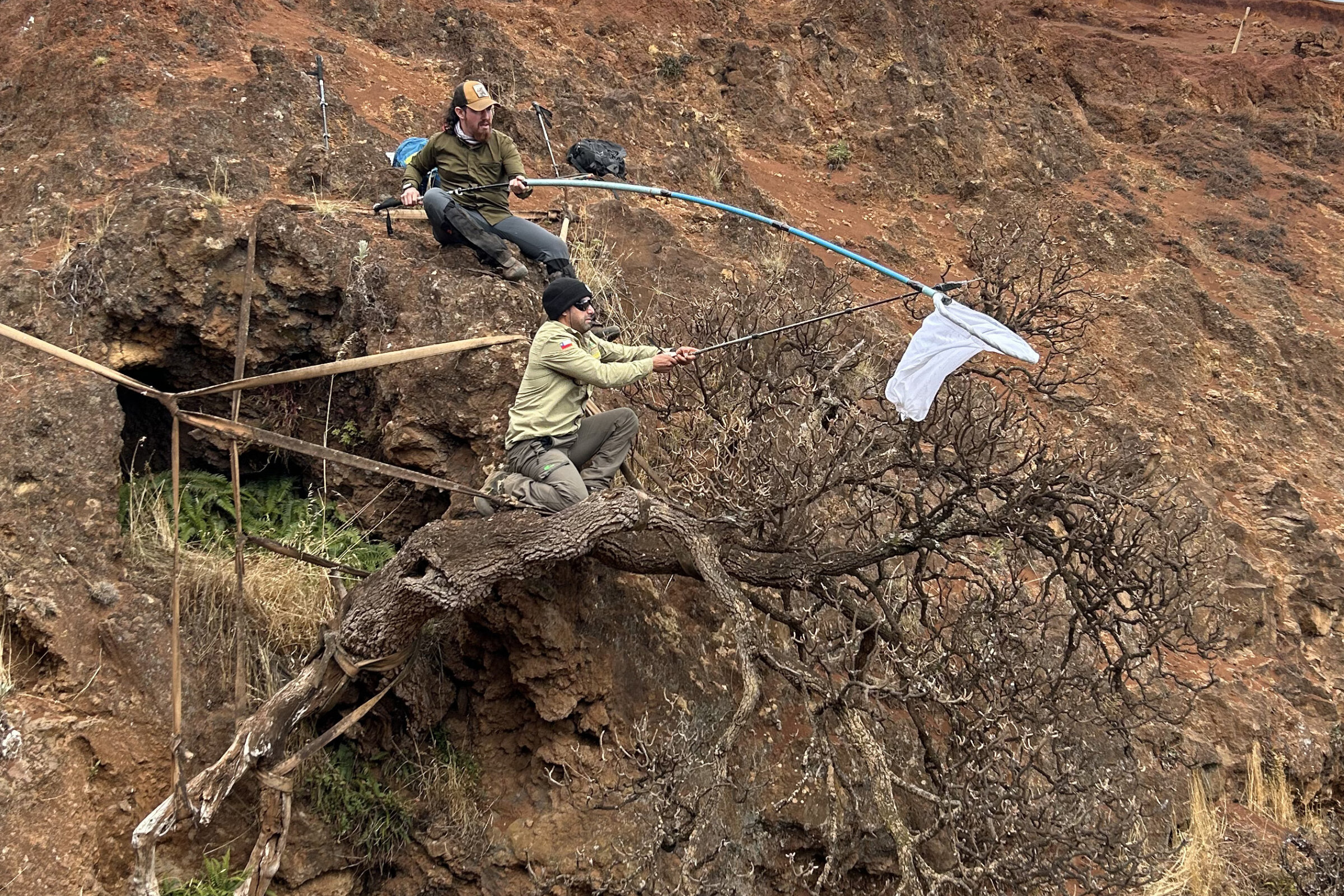
Scientists are desperately racing to save one of the world’s rarest tree species from disappearing — by collecting seeds from the only surviving specimen, which is literally clinging to the side of a cliff on Robinson Crusoe Island, an extremely remote island off the coast of Chile.

A photo shared by the Royal Botanic Gardens in the UK shows conservationists reaching out with a giant net in an attempt to recover seeds from the last known wild specimen of the Dendroseris neriifolia tree, native to Chile’s Juan Fernández Islands.

The action highlights how scientists are going to great lengths to ensure the survival of highly endangered species of plants, a prescient topic as global warming caused by human activity continues to put them at great risk. Scientists have previously found that twice as many plants have gone extinct in the last 250 years as all birds, mammals, and amphibians combined, a devastating and often less-talked-about loss of biodiversity.

The tree species has been heavily affected by habitat loss, encroaching invasive species, and failed attempts to ensure its survival, according to a statement by the Royal Botanic Gardens in Kew, near London, UK.

Twenty-nine seeds were recovered, 25 of which were identified to be potentially viable according to an X-ray analysis by scientists at the Botanic Gardens. Seven seedlings are already establishing, so the last-ditch effort may have a chance of paying off.

It’s not the first time scientists have attempted to ensure the survival of the Dendroseris neriifolia tree. By 1980, only seven surviving wild specimens remained following dramatic population declines. Park rangers attempted to recover the species in the 1990s, and reintroduction efforts in the early 2000s ultimately proved unfruitful.

At this point, there’s not a lot of room for error. Beyond the tree falling off the cliff, just single specimen is currently growing at the VerdeNativo botanic gardens in Chile.

“It is a race against time,” said VerdeNativo botanic gardens scientist Diego Penneckamp in a statement. “This international collaboration to support the last remaining individual could prevent the extinction of a species that represents a unique lineage with its own natural history.”

More on biodiversity: Wildlife Populations Have Shrunk a Shocking Amount in Just 50 Years, Report Finds

The post Scientists Rush to Save One of the World’s Rarest Trees as It Literally Falls Off a Cliff appeared first on Futurism.

  •  

Jeff Bezos’ Rocket Explodes Into Mushroom Cloud, Dealing Massive Blow to NASA’s Moon Plans

In what could turn out to be a huge setback for NASA’s highly ambitious plans to build a permanent Moon base, Jeff Bezos’ latest Blue Origin rocket erupted into a massive mushroom cloud on the launchpad last night.

During a wet dress rehearsal at the Space Force Station in Cape Canaveral on Thursday evening, the company’s New Glenn rocket exploded in dramatic fashion. Footage shows an enormous fireball engulfing the entire launch pad, a sight visible from far away.

It’s the very last thing NASA needed. Just days ago, the space agency announced a slew of “Moon base” missions to build out a permanent presence on the lunar surface — and they hinged on New Glenn rockets launching two of Blue Origin’s Blue Moon lunar landers that are delivering payloads, including rovers, there before the end of this year.

Even before Blue Origin’s latest setback, it was an enormously ambitious timeline. It’s unclear how the New Glenn explosion will affect NASA’s plans going forward, but it certainly doesn’t bode well, given the likely extensive damage to the surrounding pad.

“NASA is aware of the anomaly that occurred tonight at Launch Complex 36 involving Blue Origin’s New Glenn rocket at Cape Canaveral Space Force Station,” NASA’s administrator Jared Isaacman said in a statement. “Spaceflight is unforgiving, and developing new heavy-lift launch capability is extraordinarily difficult.”

“We will work with our partners to support a thorough investigation of this anomaly, assess near-term mission impacts, and get back to launching rockets,” he added. “We will provide information on any impacts to the Artemis and Moon Base programs as it becomes available.”

Bezos appeared distraught following the catastrophe.

“All personnel are accounted for and safe,” he tweeted around 10 pm Eastern on Thursday. “It’s too early to know the root cause but we’re already working to find it.”

“Very rough day, but we’ll rebuild whatever needs rebuilding and get back to flying,” he added. “It’s worth it.”

Even SpaceX CEO Elon Musk, who has a long history of butting heads with Bezos, struck an empathetic pose.

“Most unfortunate,” he tweeted. “Rockets are hard.”

The news comes just over a month after Blue Origin’s New Glenn rocket failed to deliver a communication satellite into a high enough orbit, turning it into nothing more than another piece of space junk.

The rocket and the firm’s Blue Moon lander are one of two options NASA is hoping to use to deliver astronauts to the surface of the Moon, alongside SpaceX’s Starship.

Unfortunately, Musk’s space company is similarly struggling to get its own rocket ready for prime time. Just yesterday, the Federal Aviation Administration announced it was grounding Starship and launching a “mishap investigation” after the company’s Super Heavy booster failed to reignite the majority of its thrusters before splashing down in the Gulf of Mexico on May 22. The second stage similarly erupted in a massive fireball after splashing down in the ocean.

“A return to flight of the Starship Super Heavy vehicle is based on the FAA determining that any system, process, or procedure related to the mishap does not affect public safety,” the regulator wrote in a statement.

More on New Glenn: Jeff Bezos’ Botched Space Launch Was So Bad It Could Threaten NASA’s Entire Moon Program

The post Jeff Bezos’ Rocket Explodes Into Mushroom Cloud, Dealing Massive Blow to NASA’s Moon Plans appeared first on Futurism.

  •  

Corporations Reeling From Huge AI Costs With No Clear Benefits

Companies that fell head over heels for AI are experiencing a rude awakening.

Costs to access powerful AI tools are soaring, forcing company leaders to ask some difficult questions. As Axios reports, the early warning signs are already here, with Microsoft planning to remove its Anthropic Claude Code licenses after opening up access to the tool just six months ago, reportedly for financial reasons.

Uber COO Andrew Macdonald also admitted during a recent podcast appearance that gains in productivity simply weren’t being reflected in the company’s soaring AI-related expenses.

Meanwhile, industry leaders including OpenAI CEO Sam Altman and Anthropic CEO Dario Amodei are walking back their initial claims that AI will lead to a jobs apocalypse, further stoking concerns that the tech may not be all it was initially cracked up to be during the height of the AI hype cycle.

It’s a perfect storm as companies ponder the real-world benefits from their costly investments in AI, if there even are any. That’s particularly true for companies finding that some of their employees are using AI models for meaningless tasks — like checking the weather, as one CTO told Axios, which is an incredibly expensive and roundabout way of getting a meteorological update.

CloudBees CEO Anuj Kapur told the publication that use cases for the tech are limited and that the “reality of AI right now is that it only works for coding.”

Simply put, many are finding that AI just isn’t exactly a money maker. Former Microsoft chief AI officer Sophia Velastegui added that “most people default to automating tasks they dislike rather than tasks most valuable to the company.”

Then there are ongoing concerns over allowing AI agents to run autonomously could open companies up to new risks, such as data leaks.

It’s an uncomfortable predicament to be for an AI industry making trillion-dollar bets on imminent surges in demand and soaring revenues. As the Wall Street Journal reported last month, OpenAI missed its own targets of reaching one billion weekly active users for ChatGPT by the end of 2025, as well as several revenue goals.

In other words, enterprise customers reeling from soaring costs is the very last thing the AI industry needs. Without meaningful use cases and more clarity on a possible return on investment, firms may think twice before spending vast sums on the tech — a harsh reality check for an industry that has long heavily relied on hype and seemingly endless investor enthusiasm.

More on AI prices: Uber Says Its AI Costs Just Aren’t Worth It

The post Corporations Reeling From Huge AI Costs With No Clear Benefits appeared first on Futurism.
  •  

Anthropic Customers Creeped Out by Its Newest Models

Earlier this year, Anthropic started rolling out its latest Mythos AI model to a select number of organizations as part of a deliberately slow and careful launch.

The goal was to give them a fighting chance to address any cybersecurity lapses in their code. Anthropic warned that Mythos was powerful enough to blast holes in their defenses with ease.

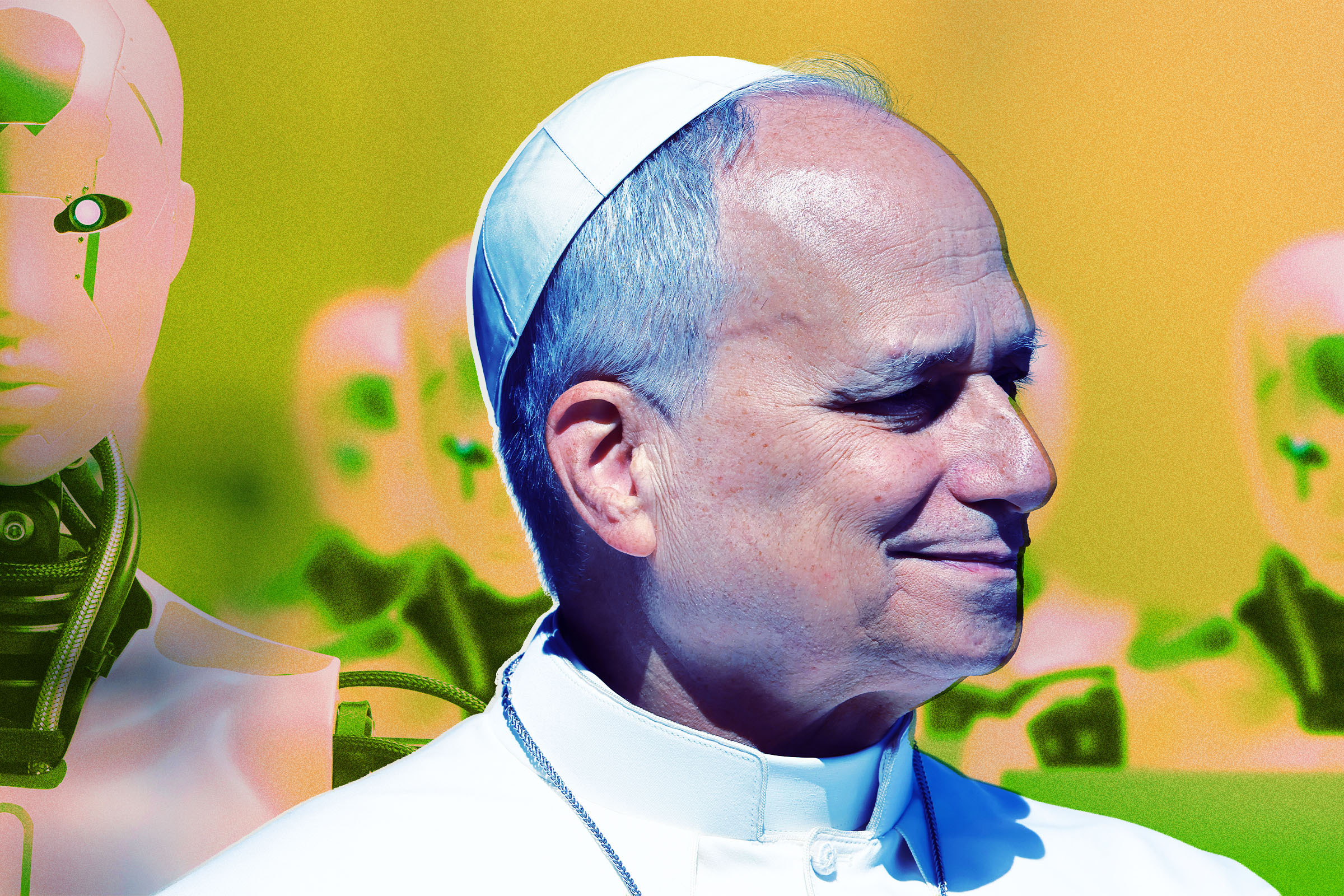
Months later, Anthropic cofounder Chris Olah traveled to the Vatican this week to speak at an announcement of Pope Leo’s first encyclical, which happened to be about AI and its associated risks. In remarks, Olah ominously said his team of engineers kept discovering mysterious and even “unsettling” things inside the company’s models.

Add it all up, and the the company’s customers are perturbed. Developers attending recent Claude Code workshops in London last week told Bloomberg‘s Parmy Olson that they were becoming concerned over AI models and agents being given unprecedented levels of autonomy, raising hard-to-ignore questions over accountability in case things were to go south.

Claude Code head of product Cat Wu assured Olson that the system was “incredibly secure” and that it was more of a matter of insufficient communication, not a lack of controls.

But that likely won’t be of much reassurance to developers, who feel like they’re being pushed out of the programming process, relegated to watching an AI tool spit out code over hours, if not days. Others pointed out that the latest iterations of Claude Code were no longer displaying text describing their ongoing chain of thought, further obfuscating their inner workings.

It’s a particularly pertinent subject as Anthropic desperately tries to paint itself as the morally conscious and responsible adult in the room, as perfectly illustrated by Olah’s highly unusual appearance at the Vatican this week.

In many ways, the AI company appears to want it both ways, calling for more oversight and care while also rolling out powerful AI tools that have human developers unsettled.

The potential risks are apparent as ever. With less human oversight, future errors tools like Claude Code may introduce could become increasingly difficult to meaningfully address. Experts have also warned of skill atrophy as programmers start relying more and more on AI coding assistants. As 404 Media reported earlier this month, many developers are alarmed to observe that their peers are quickly losing technical skills due to over-relying on the software.

But not all may be lost. As access to these tools starts to become prohibitively expensive to many as the true costs of AI come into focus, some much-needed human oversight might not be dead quite yet.

More on Anthropic: Anthropic Cofounder Travels to Vatican, Tells Pope They’re Finding “Unsettling” Things Inside AI Models

The post Anthropic Customers Creeped Out by Its Newest Models appeared first on Futurism.

  •  

Apocalypse Bunker Fails as Wealthy Residents Turn on Each Other

More and more wealthy individualsare buying up luxurious underground shelters to survive the apocalypse, whether it’s in the form of a nuclear conflict that turns the Earth’s surface into a radioactive wasteland, or a devastating pandemic that decimates the global population.

But even long before the emergence of total societal collapse, communities buying up underground condos in sprawling prepper developments in the US are already starting to turn on each other, as the Wall Street Journal reports.

Much like the petty grievances plaguing often overbearing homeowners’ associations, investors of a purportedly “five-star” bunker in rural South Dakota called Vivos xPoint are already at each others’ throats — an ironic development, given their shared motivation to survive the end of the world.

The structure was designed to protect 1,000 people from a “coming life-extinction event,” the company behind the development claims on its website.

Only a third of the individual properties — which can be bought for up to $55,000 plus rent and service fees — are occupied at the moment, according to the WSJ. However, altercations and even lawsuits are starting to rack up, long before owners are forced to take shelter in case of an actual “extinction event.”

Disputes are piling up, per the newspaper, from lawsuits over filled septic systems to complaints over off-leash dogs biting residents. During one particularly hairy incident, a man who moved into one of the units with his wife, his daughter, and her four children, pulled a gun on a Vivos contractor who had pulled up with a front-end loader to his bunker.

The resident eventually shot the contractor, injuring him. However, South Dakota’s stand-your-ground law led to a grand jury declining to indict him.

Another lawsuit, filed in September by more than 100 tenants, argued that Vivos had failed to provide them with livable dwellings and properly maintain them. Vivos also promised to build out a gym, restaurant, and general store, among other lavish amenities, none of which have been completed.

In short, the irony of a group of individuals looking to survive the apocalypse melting down over existing rules and petty grievances — long before the actual end of the world — is hard to ignore. And doubly so that they’re seeking redress in the courts, which presumably wouldn’t exist anymore in their fantasy of a post-apocalyptic society.

If this is really the best of humanity that will weather the storm, we could be doomed after all.

More on bunkers: There’s a Major Problem With the Nuclear War Bunkers The Rich Are Buying

The post Apocalypse Bunker Fails as Wealthy Residents Turn on Each Other appeared first on Futurism.

  •  

Elon Musk Furious at Starlink Being Used for American Suicide Drones

SpaceX has established itself as an influential contractor for the US military, allowing the Pentagon access a proprietary intelligence-based satellite network dubbed Starshield.

The related network of Starlink broadband satellite services has also played a major role in ongoing military conflict, with Ukrainian soldiers making use of thousands of Starlink terminals to bypass internet blackouts amid the country’s war with Russia.

But who gets to use which network, and what SpaceX is getting out of the agreement, remains a hotly contested subject. As Reuters reports, SpaceX officials hiked up the price for Starshield connectivity of the US military’s LUCAS (Low-cost Uncrewed Combat Attack System) suicide drones, which are uncrewed kamikaze aircraft that can identify targets and detonate on impact.

According to the news agency’s sources, SpaceX successfully convinced the military to pay closer to $25,000 per connection, instead of just $5,000, a fivefold increase in the cost per drone.

Since then, SpaceX CEO Elon Musk both angrily accused Reuters of making “false” claims — while simultaneously confirming the agency’s reporting in the very same tweet.

“Reuters article is false,” he wrote. “They made improper use of the Starlink civilian system for military purposes. Direct violation of terms of service.”

In other words, it’s Musk versus Musk: he’s broadly denying Reuters‘ claims while confirming its central thesis that the military and his space company have been butting heads over how its suicide drones were connected.

In a follow-up tweet, Musk clarified that “there is a US government arm of SpaceX called Starshield, which has a different set of satellites than Starlink, which is for civilian use.”

“The company that makes the suicide drones incorrectly used the civilian system, instead of the Starshield,” Musk added.

The billionaire also called attention to what he called a “correction” by Pentagon spokesperson Sean Parnell, who had tweeted that the “Fake News media has the story wrong, again.”

“SpaceX remains a strong and valued partner to the Department of War,” Parnell had tweeted earlier. “The claims in this article are simply not based in reality and do not reflect the close, effective collaboration between our teams.”

The controversy highlights just how much leverage SpaceX has gained over the military. The reporting also couldn’t have come at a worse time, with the company gearing up to go public later this year at an absurd valuation of $2 trillion. SpaceX’s lucrative government contracts, as well as its consumer Starlink service, continue to represent a major chunk of its revenue. Strong-arming the Pentagon into jacked-up prices for Starshield connectivity could send a mixed signal to investors.

The US military started deploying the first LUCAS drones earlier this year during the kidnapping of Venezuelan president Nicolás Maduro, with leadership praising them as “indispensable” in the US-Israel war on Iran.

More on Starshield: SpaceX Has Wildly Screwed Up Its Military Satellites, Researcher Finds

The post Elon Musk Furious at Starlink Being Used for American Suicide Drones appeared first on Futurism.

  •  

Nvidia CEO Begs Execs to Stop Telling Workers They’re Fired Because of AI

We’ve long had our doubts about tech leaders making boisterous claims about automating jobs with AI.

For a while now, executives have raised eyebrows by justifying sweeping layoffs by arguing that AI had made thousands of roles redundant. But as reality settles in and the tech’s real-world capabilities are coming into focus, some in the industry are starting to sing a dramatically different tune.

Most recently, Nvidia CEO Jensen Huang scorned other executives for wrongly justifying layoffs with AI — and telling them to cut it out. The hidden implication: soaring costs are the real culprit, especially when it comes to AI-related spending, mismanagement, and over-hiring.

“The narrative that connects AI to job loss, for many of the CEOs that are doing it — it is just too lazy,” Huang told Channel News Asia. “AI has just arrived, how is it possible they’re already losing jobs?”

“How is it possible that AI became productive and useful only six months ago, and they were somehow laying people off two years ago because of AI?” he added. “It doesn’t make any sense.”

Huang didn’t beat around the bush in his searing comments.

“It was just a way for them to sound smart and I really hate that,” the CEO argued. “I think we’re scaring people, and that’s irresponsible.”

We’ve long suspected that CEOs have been trying to mislead investors by claiming that much human labor was simply no longer needed in the age of AI. In one particularly telling episode earlier this year, Twitter founder and Block Inc (formerly Square) CEO Jack Dorsey announced he was slashing his company’s workforce by “nearly half,” citing the emergence of “intelligence tools” that are “accelerating” changes.

Former staffers quickly threw cold water on his claims, arguing the layoffs were actually the result of over-hiring, particularly during the COVID-19 pandemic.

Instead of a dramatic rise in productivity, what’s far more likely is that companies are draining their pockets by making enormous investments in AI. That’s especially pertinent as the cost of accessing AI cloud computing resources continues to soar, forcing companies to slow down hiring.

To Huang, it’s the result of a lack of ambition, more than anything else. He also remains hopeful about AI ultimately leading to more jobs, not fewer.

“It’s more likely that the companies with ambition will be more productive, they will do things faster, their company will increase in velocity,” he told Channel News Asia. “As a result, they become larger, more profitable. When they become larger, more profitable, they’ll end up hiring more people.”

“Of course, they’ll use more AI, but they will also hire more people,” he added.

It’s a shift in messaging. Just last year, Huang warned in a CNN interview that “if the world runs out of ideas, then productivity gains translates to job loss” and that “everybody’s jobs will be affected” while “some jobs will be lost.”

Huang isn’t alone in dismissing AI layoffs. Just last week, Google DeepMind CEO Demis Hassabis accused leadership at other companies of a “lack of imagination” for blaming layoffs on AI.

In short, it’s a harsh reality check that flies in the face of ongoing narratives being pushed by executives desperately trying to convince investors that unprecedented levels of spending are justified.

“This is not a minor disagreement about messaging,” marketing publication State of Brand wrote. “This is the people selling the shovels telling the miners to stop blaming the shovels for the cave-in.”

More on Nvidia: Nvidia CEO Says AI Will Be a Permanent Micromanaging Boss Who Never Stops Nagging You

The post Nvidia CEO Begs Execs to Stop Telling Workers They’re Fired Because of AI appeared first on Futurism.

  •  

NASA Releases Sweeping Plans for Moon Base

NASA remains committed to developing a permanent presence on the Moon — space science budgets be damned.

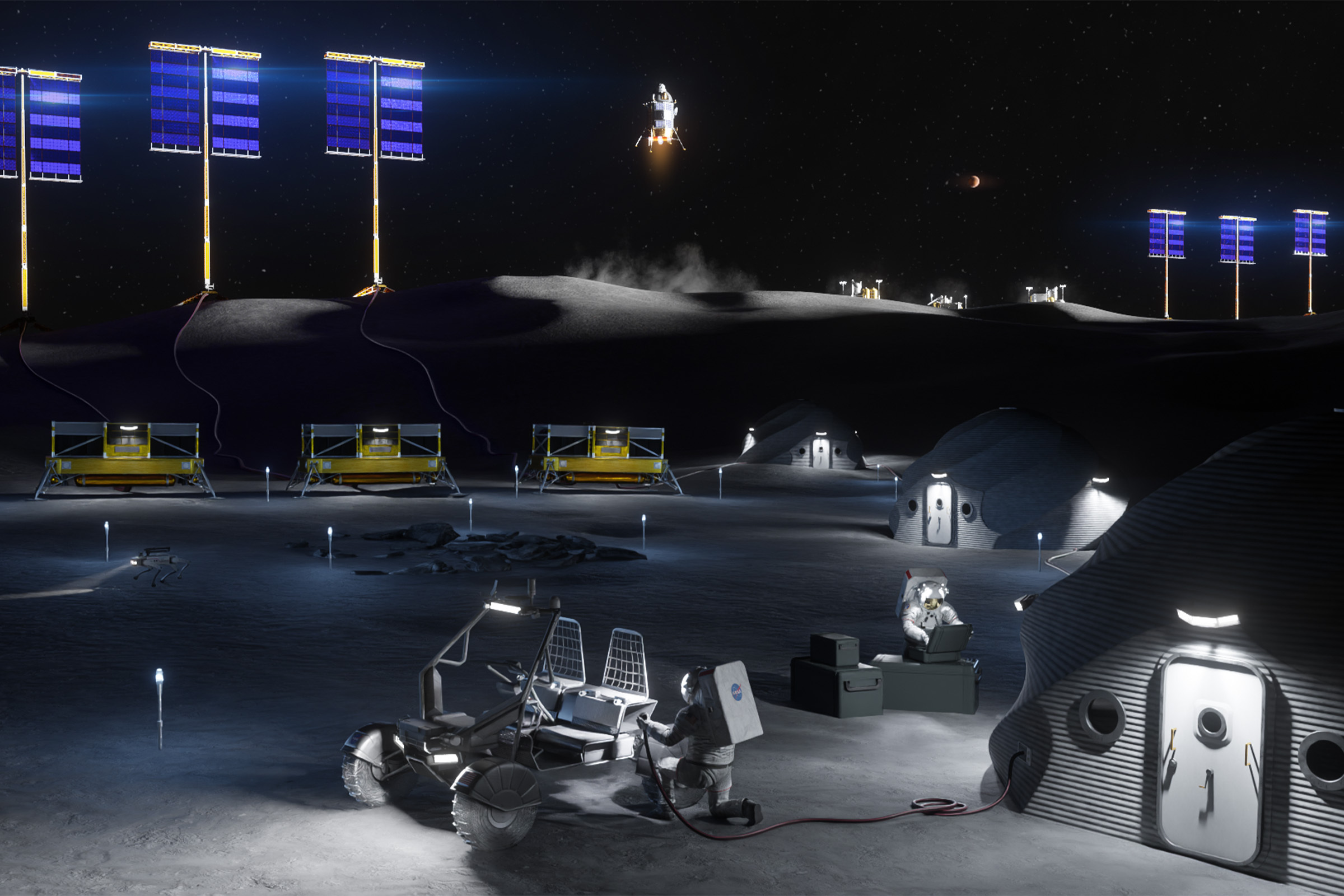
During a Tuesday event, the space agency announced a slew of new contracts worth hundreds of millions of dollars for Moon base infrastructure including lunar rovers, as well as timeframes for upcoming development and exploration missions.

Before the end of this year, NASA wants to send two of Blue Origin’s Blue Moon lunar landers to the Moon’s surface to deliver two lunar terrain vehicles being developed by commercial partners Astrolab and Lunar Outpost.

Meanwhile, Firefly Aerospace, whose Blue Ghost lander successfully touched down on the Moon in March 2025, will develop drones to explore the rugged surface.

And that’s just the buildup to NASA’s Artemis 4 mission, the first planned crewed landing in over half a century, which is tentatively slated for 2028. Artemis 3, which was originally envisioned as a landing attempt, will now involve the testing of either or both Blue Origin’s lander and SpaceX’s Starship in low-Earth orbit sometime next year.

To call NASA’s plans for its Moon base ambitious would be a staggering understatement. For one, Blue Origin’s Blue Moon lander has yet to successfully deliver a payload into Earth’s orbit following a failed attempt last month. Getting to the Moon, softly landing, and releasing a robotic lander will likely prove far more difficult.

The agency laid out plans for three “Moon Base missions,” starting with a Blue Moon delivery of scientific instruments in “fall 2026,” followed by a delivery of “more than 1,100 pounds of cargo on Astrobotic’s Griffin lander,” including a rover.

The third mission, which is “also targeted for this year,” will deliver even more scientific payloads, including ones being developed by the European Space Agency and the Korea Astronomy and Space Science Institute.

“These missions are the first of more than a dozen missions that will be announced this year, each designed to generate operational data and reduce risk ahead of crewed Artemis surface activities,” the agency wrote in its writeup of Tuesday’s event.

The base itself will span hundreds of square miles, according to Moon base program executive Carlos Garcia-Galan. Drones, called MoonFall, will mark the perimeter of said base in what could inevitably be a highly contentious marking of territory.

MoonFall, an initiative led by NASA’s Jet Propulsion Lab, aims to land near the lunar South Pole by 2028. High-definition optical cameras attached to drones measuring roughly seven feet across and four feet tall will take detailed imagery of the base’s envisioned terrain far ahead of any crewed landings.

In a note, NASA administrator Jared Isaacman vowed that the US would “never give up on the Moon again” by building out its Artemis program.

“We are going back to the Moon, building the base, and doing the other things,” he wrote, referencing John F. Kennedy’s iconic 1962 speech about going to the Moon. “This is no longer something to read in the history books, you are making history.”

However, given the vast degree of complexity involved, successfully launching not just one but a whole slew of missions on the surface of the Moon before the end of 2026 could soon get a massive reality check. In other words, we wouldn’t be shocked to hear from even more delays as Isaacman’s NASA dials up the pressure to build out a permanent presence on the Moon.

If deadlines were to slip — which, given historical precedent, is far from out of the question — the US could be beaten to the punch by the end of this decade after all, as experts continue to warn.

“It would not surprise me at all if China gets there first,” Open University lunar scientist Simeon Barber told the BBC.

More on the Moon base: NASA Announces Gigantic Armada of Moon Launches to “Build President Trump’s Moon Base,” Starting Next Year

The post NASA Releases Sweeping Plans for Moon Base appeared first on Futurism.

  •  

Uber Says Its AI Costs Just Aren’t Worth It

The true cost of AI is rapidly catching up with the tech industry.

At first, tech leaders were adamant that their workforce use up as much AI resources as possible, an approach that’s become known as “tokenmaxxing.”

But as prices for cloud AI tools continue to soar, managers are starting to ask pointed questions about whether all of those expenses are actually worth it. Some are even coming to the realization that it may be cheaper to pay human coders after all.

In perhaps the most high-profile example of this growing concern yet, Uber COO Andrew Macdonald acknowledged during a recent podcast appearance that gains in productivity simply weren’t being reflected in the oodles of cash the company has been shelling out on AI.

“That link is not there yet, right?” he told Rapid Response host Bob Safian. “I think maybe implicitly there is more that is getting shipped, but it’s very hard to draw a line between one of those stats and, ‘Okay, now we’re actually producing 25 percent more useful consumer features.'”

“If you’re not actually able to draw a direct line to how much useful features and functionality you’re shipping to your users that trade becomes harder to justify because it’s not free,” he complained. “AI is not free.”

While it could “become clearer” over the “coming quarters,” Macdonald said that “I think today it’s hard even if some of the underlying metrics are trending in a really astronomical direction.”

During his appearance, Macdonald referenced comments that Uber’s CTO Praveen Neppalli Naga made to The Information earlier this year, admitting that the ride hailing app’s army of 5,000 engineers had already exhausted the company’s 2026 Anthropic Claude Code token budget for the calendar year by mid-March.

A reminiscent story is playing out at Microsoft. As The Verge reported earlier this month, the company is planning to remove its Claude Code licenses after opening up access to the tool in December to double down on its in-house Copilot tool instead. While officials maintain the move is meant to streamline operations, employees told the publication that the decision was also financially motivated.

Despite these growing concerns, Uber remains all in on AI. Expenses are taking off thanks to investments in AI with CEO Dara Khosrowshahi telling investors during an earnings call earlier this month that the firm was slowing down hiring as a direct result.

“We’re seeing uptake of these tools, whether it’s our legal team or marketing team or developers,” he said. “We think it’s creating kind of employees with superpowers.”

In short, Macdonald’s comments shows how tech leaders are starting to get antsy about the enormous expenses their companies are shouldering to double down on AI — and whether they’re actually justified. It certainly wouldn’t be a shocking revelation if not, given the litany of badly implemented and shockingly unpopular features and glaring bugs caused by faulty AI-generated code.

More on AI costs: The Horrible Economics of AI Are Starting to Come Crashing Down

The post Uber Says Its AI Costs Just Aren’t Worth It appeared first on Futurism.

  •  

Anthropic Cofounder Travels to Vatican, Tells Pope They’re Finding “Unsettling” Things Inside AI Models

Ever since being anointed as the leader of the Catholic Church last year, Pope Leo has been an outspoken critic of AI. Most recently, in his first encyclical, he called for the tech to be “disarmed,” accusing it of facilitating the emergence of “new digital slaveries” and criticizing its enormous carbon footprint.

The rebuke, however, was made while sitting next to a highly unusual bedfellow: Anthropic billionaire and self-described atheist Chris Olah.

During a presentation of the encyclical, Olah argued that “religious communities, civil society, scholars, and governments” should intervene to set rules and stop AI from “dominating humanity,” as the pope put it in his letter.

The unlikely pairing up shows how Anthropic is going to extreme lengths to position itself as the ethical choice in the industry, emphasizing its work on AI safety and alignment.

At the same time, Anthropic continues to play a major role in establishing the precise world order Pope Leo warned against in his latest encyclical. That’s something that hasn’t flown over the heads of Anthropic’s leadership, with Olah forebodingly revealing that he and his team “keep finding things that are mysterious, even unsettling” during his remarks at the event.

The degree of dissonance is baffling. In his letter, the Pope stated outright that AI can only “imitate certain functions of human intelligence” and can’t “undergo experiences” and does not “possess a body” or “feel joy or pain.” Olah, on the other hand, seemingly contradicted him by arguing during his remarks that he and his team have found “internal states that functionally mirror joy, satisfaction, fear, grief, and unease.”

Put simply, Anthropic appears to want it both ways. The Claude developer is simultaneously playing a major part in the development of powerful and what it claims to be potentially dangerous AI models, while also sending delegations to the Vatican to call for more oversight.

Olah even went as far as to say that Anthropic is operating “inside a set of incentives and constraints that can sometimes conflict with doing the right thing,” painting his employer as exactly the kind of entity that’s attempting to assume “monopolistic control” over tech, as Pope Leo warned in his encyclical.

The Pope also said that AI should not be used in war, arguing that “no algorithm can make war morally acceptable.” Anthropic’s AI, however, is directly assisting the Trump administration in waging war in the Middle East, casting the Catholic Church’s latest Silicon Valley collab in an even murkier light.

Anthropic’s close alignment with the Vatican on AI could also further complicate the company’s already-shaky relationship with the Trump administration. President Donald Trump recently lambasted the Pope, erroneously claiming the pontiff was okay with Iran obtaining nuclear weapons.

Meanwhile, Anthropic CEO Dario Amodei’s attempts to limit the Pentagon’s use of its AI models in warfare has angered Trump officials, leading the White House to label the firm as a supply chain risk.

More on the encyclical: The Pope Just Low Key Declared Holy War on Artificial Intelligence

The post Anthropic Cofounder Travels to Vatican, Tells Pope They’re Finding “Unsettling” Things Inside AI Models appeared first on Futurism.

  •  

Scientist Suggests That 3I/ATLAS May Have Seeded Life as It Careened Through Our Solar System

A small group of scientists have long suggested that the seeds of life may have been distributed across the vast distances of space via cosmic dust, asteroids, or comets — a theory known as panspermia.

Some, including late astronomer and planetary scientist Carl Sagan, have gone as far as to raise the possibility that those seeds may have been deliberately spread to distant planets by intelligent civilizations.

It’s an intriguing albeit far-fetched hypothesis that most recently caught the interest of Harvard astronomer Avi Loeb. Following months of observations of mysterious interstellar object 3I/ATLAS, which came surprisingly close to a number of solar system planets during its brief visit last year, Loeb proposed that it could’ve been shedding the building blocks of life during its journey — or even have been designed to seed planets like our own intentionally.

In a recent blog post, Loeb suggested that extrasolar life could’ve survived the journey by being embedded inside the comet’s ice reservoirs, before being released near other planets in the solar system, likening it to a “dandelion flower shedding its seeds to be carried by wind towards a fertile ground.”

“In addition to natural origins, there is the possibility of directed panspermia, whereby an interstellar gardener seeded 3I/ATLAS on a fertilization mission targeting the habitable planets in the Solar System,” he wrote. “This would explain the rare alignment between the trajectory of 3I/ATLAS and the orbital plane of the habitable planets around the Sun, as well as the sunward jet with large fragments that plowed through the solar radiation and wind.”

Loeb previously painstakingly built a case around his widely disputed hypothesis that 3I/ATLAS may have been an alien spacecraft that was sent to visit us. His latest blog post suggests that the wealth of observational data strongly suggesting it was a comet made up of ice and rock has yet to fully weaken his resolve when it comes to the possibility that aliens are behind the interstellar visitor.

That’s not to say his new idea is a slam dunk. Panspermia itself remains a hotly debated subject among scientists, with many arguing that building blocks of life may have always been present on Earth. How such a process could play out in far more hostile environments in other parts of the solar system is an even bigger question.

Still, it’s a fascinating thought experiment with some vast implications — and should inspire us to actively seek answers by intercepting objects like 3I/ATLAS, Loeb argues.

“By directing a probe on a crash course towards the surface of these icebergs, we can diagnose the composition of the material they shed and infer whether it carries extrasolar life,” he wrote in his latest blog. “In case it does, the most pressing question is whether extrasolar life resembles life-as-we-know-it.”

“If so, perhaps life on Earth was seeded by an interstellar gardener,” he added.

More on 3I/ATLAS: Astronomers Discover Major Clue About 3I/ATLAS’ Origins

The post Scientist Suggests That 3I/ATLAS May Have Seeded Life as It Careened Through Our Solar System appeared first on Futurism.

  •  

Oops! Domino’s-Partnered Robotics Startup That Was Supposed to Put Human Pizza Chefs Out of a Job Just Shut Down

Picnic, a Seattle-based startup that raised more than $53 million to develop robots capable of putting human restaurant workers out of a job — even partnering with the giant pizza chain Domino’s — has shut down.

The startup liquidated all of its assets after becoming insolvent, according to legal documents obtained by GeekWire. All its intellectual property has been sold off to an unnamed buyer.

The collapse highlights the tech industry’s struggles to automate labor in the food industry. Despite countless startups attempting to built robots designed to put hospitality workers out of a job, the tasks keeps proving trickier than anticipated, echoing similar woes plaguing other labor-intensive sectors as well.

The startup’s Picnic Pizza Station, which was intended to allow a single worker to push out 100 12-inch pizzas in a single hour by robotically distributing pizza toppings, made a big splash in 2022 when the company announced a partnership with Domino’s.

The goal of a setup that allows one worker to do the work of a whole kitchen seems pretty obvious. But instead of advertising the collaboration as a way to reduce headcount, Domino’s claimed at the time that it was looking to rapidly grow its global workforce through a robot-facilitated expansion into new markets.

But warning signs soon became apparent. In 2023, Picnic was forced to lay off employees, citing the “current economic environment,” and its CEO Clayton Wood departed. His successor, Michael Bridges, left two years later as well.

It’s not the first robotics company to fail at automating pizza making. In 2023, a robot pizza startup called Zume Pizza shut down after raising almost half a billion dollars. The firm struggled for years with nagging technical issues, such as keeping melting cheese from sliding off pies that were being baked inside its moving trucks.

Meanwhile, Picnic’s most ardent supporters will now have to contend with idle robots cluttering their restaurants. Seattle-based pizza chef Lee Kindell, who owns a chain of restaurants in the city powered by the company’s tech, told GeekWire that he’s now stuck holding a $250,000 “robot aquarium” of useless machines.

“I was so pissed I started my own robot company,” he told the publication.

More on pizza robots: Robot Pizza Startup Shuts Down After Cheese Kept Sliding Off

The post Oops! Domino’s-Partnered Robotics Startup That Was Supposed to Put Human Pizza Chefs Out of a Job Just Shut Down appeared first on Futurism.

  •  

The Pope Just Low Key Declared Holy War on Artificial Intelligence

As the AI backlash continues to grow, critics of the tech have found an unlikely voice of support: the Catholic Church.

In perhaps his strongest rebuke of the tech industry’s rampant obsession with AI yet, Pope Leo called for the tech to be “disarmed” in his first encyclical, which is a special letter sent to bishops to outline the Catholic Church’s perspective on a topic.

“The word is strong, I know, but deliberately chosen because this moment needs words capable of attracting attention,” the Pope said in an accompanying statement.

In his letter, titled “Magnifica Humanitas,” or “Magnificent Humanity,” the bishop of Rome did not beat around the bush. Despite being a “valuable tool,” Pope Leo slammed AI as “merely” imitating “certain functions of human intelligence,” contradicting tech leaders’ claims that AI might be gaining sentience or consciousness.

“So-called artificial intelligences do not undergo experiences, do not possess a body, do not feel joy or pain, do not mature through relationships and do not know from within what love, work, friendship or responsibility mean,” the document reads.

The pope went as far as to warn of parallels between tech and slavery, warning of “new digital slaveries” that normalize the exploitation of those tasked with labeling data for AI models or moderating content on social media.

“The bodies of these people are scarred, injured and worn down so that computational flow may continue uninterruptedly,” the letter reads.

In his letter, the Pope also criticized the use of AI in war, writing that “no algorithm can make war morally acceptable.”

Therefore, Pope Leo called to “disarm” AI to prevent it from “dominating humanity,” as well as “freeing technology from monopolistic control and opening it to discussion and debate.”

“AI is already an environment in which we are immersed, as well as a force with which we must engage,” the encyclical reads. “For this reason, merely regulating it is insufficient; it must be disarmed, welcoming and accessible.”

The Pope also drew attention to another highly contentious issue plaguing the AI industry, noting the “enormous amounts of energy and water, significantly influencing carbon dioxide emissions” of data centers, while calling for “more sustainable technological solutions that reduce environmental impact.”

None of this should come as much of a surprise. The pontiff has a long track record of being skeptical of AI and related tech. Shortly after being anointed just over a year ago, he revealed that his name was in part inspired by asutomation as the last Pope Leo, Leo XIII, was the head of the Catholic Church during the 19th century Industrial Revolution, an era defined by rapid technological advancement, rampant labor exploitation, severe wealth inequality.

“In our own day, the Church offers to everyone the treasury of her social teaching in response to another industrial revolution and to developments in the field of artificial intelligence that pose new challenges for the defense of human dignity, justice, and labor,” he said during his first speech as pope last year.

He also recently warned priests to stop using ChatGPT to write their sermons.

Pope Leo’s AI skepticism hasn’t exactly endeared him to tech leaders and politicians. Trump-nominated secretary of the Interior Doug Burgum accused the pope of “tech editorializing” during a Fox Business interview on Tuesday.

President Donald Trump’s relationship with the pope has been severely strained as of late. Earlier this month, Trump lashed out at the Chicago-born bishop, for speaking against the Israel-US war on Iran, erroneously accusing him of being okay with the country having nuclear weapons.

Meanwhile, Claude developer Anthropic has chosen to throw its weight behind the pontiff, with cofounder Chris Olah calling for a “collaboration between those of us who are building this and those who can see what we, from inside, cannot.”

More on Pope Leo: Pope Implores Priests to Stop Writing Sermons Using ChatGPT

The post The Pope Just Low Key Declared Holy War on Artificial Intelligence appeared first on Futurism.

  •  

They Held a New Olympics Where Athletes Can Take as Many Drugs and Steroids as They Want, and the Funniest Possible Thing Happened

For years now, organizers of a controversial sporting event called the Enhanced Games have been promising to push the limits of human athleticism by allowing participants to use whatever performance enhancing drugs they want.

The event, backed by Silicon Valley billionaire Peter Thiel and fellow billionaire biohacker Christian Angermayer, was meant to prove a highly contentious point: that regimens of stimulants, growth hormones, and peptides — many of which can be bought directly through the event’s website, naturally — can unlock previously unattainable levels of human performance and beat world records in the process.

Unfortunately for them, the spectacle didn’t go according to plan. The event, which took place over the weekend, saw dozens of athletes go head to head in a number of Olympic disciplines with the hope of proving that synthetically enhancing their bodies would allow them to swim and sprint faster, not to mention lift heavier weights.

But instead, as The Guardian reports, three of the event’s winners weren’t actually taking any banned substances at all — a hilarious development that put a major dent into the organizers’ boisterous marketing.

However, there was one widely-disputed claim of a world record, which won’t be recognized by international sporting bodies. Greek athlete Kristian Gkolomeev beat Australian swimmer Cameron McEvoy’s 50 meter freestyle record by a mere 0.07 seconds, covering the distance in just 20.81 seconds. And even that claim is a bit muddy: while Gkolomeev was using several banned substances, he was also relying on a special swimming suit that was banned in professional sports over a decade ago.

Organizers were seemingly desperate to run a victory lap in their efforts to paint the event as the “Olympics of the future.”

“We have arrived in mainstream culture,” said Enhanced Games CEO ­Maximilian Martin in a statement. “We are here to stay. We have changed the world tonight.”

“With the power of enhancements we can prove we are the best we can ever think of and you are ­living proof of that,” he added while addressing an audience of influencers and biotech investors.

Other athletes were far less impressed. McEvoy, who broke the 50 meter freestyle swimming world record in March, shot back following Gkolomeev’s performance.

“Seriously?! That’s all you got!” a meme he posted to Instagram following the event reads.

Meanwhile, Icelandic strongman Thor Bjornsson, of “Game of Thrones” fame, failed to beat his own deadlifting record of 1124 pounds, further putting a damper on the event.

In short, the Enhanced Games had embarrassingly little to show in terms of pushing the envelope with the use of potentially dangerous and highly controversial performance enhancing drugs. If anything, the event appears to have had the opposite of the intended effect.

“The whole pitch was that drugs would shatter the limits of clean sport,” one user tweeted. “Instead they proved the gap between juiced and clean is now seven hundredths of a second — in a suit banned 17 years ago.”

“The only thing they actually proved was how good the clean athletes already are,” the user added.

More on the games: Peter Thiel Funding New Olympics Where Athletes Can Take Performance Enhancing Drugs

The post They Held a New Olympics Where Athletes Can Take as Many Drugs and Steroids as They Want, and the Funniest Possible Thing Happened appeared first on Futurism.

  •  
❌