Reading view

All These Galaxy-Scale IPOs Are Piling on Risk of an Economic Crisis

The United States is facing what’s shaping up to be the largest series of initial public offerings in the history of the modern stock market. How they go is anyone’s guess, but the results are sure to be extreme one way or another.

There are three absolute whoppers looming on the horizon: Elon Musk’s absurd $1.75 trillion SpaceX public launch targeted for early June, as well as IPOs by the already-hulking AI firms Anthropic and OpenAI. As the Economist notes, the triple threat could feed some $4 trillion worth of value into the US stock market — if, that is, the market can keep them down, or even swallow them all in the first place.

As the publication observes, huge IPOs like his are typically seen as signs that a bull market, a long period of rising stock prices, is about to come to an end. For example, we saw similar conditions prior to market downturns in 2021, 2008, and the late 1990s. The Economist explains that mega-IPOs sometimes signal bear markets — prolonged periods of declining prices — as in 2021, but could likewise forewarn heavier downturns, like the Great Recession or the collapse of the dot-com bubble.

How severe that reversal could be depends in no small part on how those three mega corps perform. If there’s underwhelming investor appetite for their unprecedented valuation targets, the Economist notes the three IPOs could easily drag markets into correction territory all on their own.

That’s because each firm is heavily involved in the financial behemoth that is AI. With global private investment in the tech skyrocketing despite no tangible financial returns, the bill will eventually come due on the AI frenzy. If the IPOs disappoint, analysts fret, it could signal that patience has finally run out for the country’s unprecedented technological spending.

What ultimately sparks the panic that sends stock brokers stampeding for the door is impossible to predict, but it seems painfully clear this can’t keep on forever.

More on finance: Bank Warns of Tesla Stock Collapse

The post All These Galaxy-Scale IPOs Are Piling on Risk of an Economic Crisis appeared first on Futurism.


  •  

AI Billionaires Are Starting to Get Scared

As it turns out, telling the world’s workers to prepare for a dystopia rife with poverty and alienation isn’t the smartest way to market your exciting new tech.

As data centers are shut down by angry mobs and AI surveillance cameras are ripped from their poles, the world’s tech billionaires and CEOs are waking up to the reality that the masses are, broadly speaking, not on board with their plan to automate the world with AI. It isn’t necessarily that working people want to stay shackled to the wage-based employment system, but that folks need those jobs to have any hope of eating, seeing a doctor, and sleeping with a roof over their heads.

Instead of the tone-deaf hype we once heard about AI’s potential, these rich and powerful figures are now moderating their messaging, calling for policy measures to help workers weather the AI storm — or perhaps head off a violent revolt led by the many who lost their jobs.

For example, Amazon executive chairman Jeff Bezos — whose net worth would take the average US worker 3.8 million years to earn on their own — recently shared his new belief that the bottom 50 percent of US earners should pay no federal income tax.

“You could double the taxes I pay and it’s not going to help that teacher in Queens,” he said, painting the federal income tax as the main hurdle for working-class families (though he’s started paying his share in recent years, Bezos paid $0 in federal income tax in 2007 and 2011, when he was already a multibillionaire.)

Elon Musk, meanwhile, has floated the idea of “universal high income,” a play on the well-known concept of universal basic income, where a government issues cost-of-living checks to the broader population (from what we can tell, the only difference is that Musk’s version would be driven by humanoid robots creating radical economic abundance).

OpenAI CEO Sam Altman has similar ideas, like a “universal basic compute” where everybody’s income corresponds to a share of his company’s revenue — which would also conveniently make ChatGPT the most important AI chatbot on the planet.

There’s also another option that none of them seem to be pushing: if AI is as disruptive as they say, there’s always the option to pull the plug. That they won’t even consider this choice suggests that their appeals to the toiling masses aren’t in good faith — which at this point should be obvious to just about everyone.

More on AI billionaires: New Website Detects Apocalypse If Billionaire Jets Start Fleeing en Masse

The post AI Billionaires Are Starting to Get Scared appeared first on Futurism.

  •  

Dick’s Sporting Goods Launches AI Personal Trainer to Fix Your Horrible Golf Swing

These days, retailers are increasingly hitching their wagon to the AI horse: big box stores like Target have issued guidance that they’re not responsible for any errant purchases its AI agent charges to your credit card, while chain restaurants like Taco Bell and Pizza Hut have forced AI into their services, with dismal results so far.

Now, sports retail giant Dick’s Sporting Goods is getting in on the hype with its own AI personal trainer. Called “Coach by Dick’s,” the system will be an AI agent meant to give athletes tips on upping their game, which will of course include targeted ads for new sports equipment, Retail Dive reported.

According to a Dick’s press release, the AI system “delivers immersive conversational experiences that go beyond transactional shopping, guiding athletes using timely, relevant data and adapting to their stated preferences, goals and behaviors.”

Built on the Adobe Brand Concierge platform, the whole thing goes live on the Dick’s mobile app in June, at which time athletes will be able to “access training pro tips and product education grounded in Dick’s sport knowledge.”

Whether you ask for advice improving your forehand, or for tips on navigating the basketball league you just joined, Coach by Dick’s is overtly geared toward getting you to the checkout line.

As Dick’s chief technology officer Vlad Rak said in the press release, “Coach by Dick’s helps guide athletes to the right product, the right fit, and trusted expertise so every interaction is personal to what they need.”

Needless to say, how this plays out in reality is anybody’s guess — especially where physical activity is concerned, where misinformation or improper training from an AI chatbot could easily lead to debilitating injuries. We’ll be watching.

More on AI in retail: New York’s Beloved Bodegas Are Filling Up With AI Slop

The post Dick’s Sporting Goods Launches AI Personal Trainer to Fix Your Horrible Golf Swing appeared first on Futurism.

  •  

Sports Betting Scandals Are Tearing College Football Apart

The rise of gambling platforms like DraftKings and Polymarket has supercharged a timeless phenomenon: sports stars ruining their careers by placing bets on their own games.

The latest case rocking the world of college sports is instructive. According to reporting from Fox News, Texas Tech star quarterback Brendan Sorsby is seeking an injunction in a Texas district court after the National Collegiate Athletic Association suspended him over hundreds of bets he’s placed throughout his four-year college football career, in direct violation of Association rules.

If granted, the court order would functionally allow Sorsby to play football during his senior year — while his lawsuit against the NCAA works its way through the courts.

Sorsby previously admitted to placing hundreds of bets worth some $90,000 through family members and friends, including on games he himself was playing in while at Indiana University and Texas Tech. He allegedly helped himself to a buffet gambling apps — according to court filings, Sorsby frequented books hosted by FanDuel, Underdog, Prize Picks, and Hard Rock Bet. After the allegations came to light, the young QB went so far as to check himself into gambling rehab for several weeks, CBS Sports reported.

“I want to be clear that I never bet to make money,” Sorsby wrote in his court statement. “Given the money I had and earned from NIL [name, image, and likeness], the total amount of money I made from 2022 to 2025 was not a big deal to me. I never kept track of my betting over time, but I’m pretty sure I lost more than I won.”

His case comes as college-aged men are increasingly losing themselves to gambling on sports betting apps and prediction markets like Polymarket and Kalshi, which are really just betting parlors by another name.

Back in January, the Associated Press reported that federal investigators had closed in on a massive scheme to rig games for bettors by exploiting students playing in the NCAA as well as the Chinese Basketball Association. In Fall of 2025, two separate investigations uncovered at least nine student-athletes who had manipulated their on-court performance to make sure certain bets hit. At the time, the NCAA said it was looking into 30 separate violations allegedly committed by current or former players.

Though the NCAA prohibits student athletes from betting on any game — whether they play in it or not — the culture around college sports is a breeding ground for gambling companies. Sportsbook advertise heavily in NCAA-adjacent spaces, for example, by partnering with broadcast networks like ESPN or even universities themselves.

In a society where college students are inundated with gambling ads — and prediction markets, not lawmakers call the shots — who’s really to blame when fledgling sports stars decide to join in on the fun?

More on sports: Fans Aghast as New York Jets Say They’re Switching to AI

The post Sports Betting Scandals Are Tearing College Football Apart appeared first on Futurism.

  •  

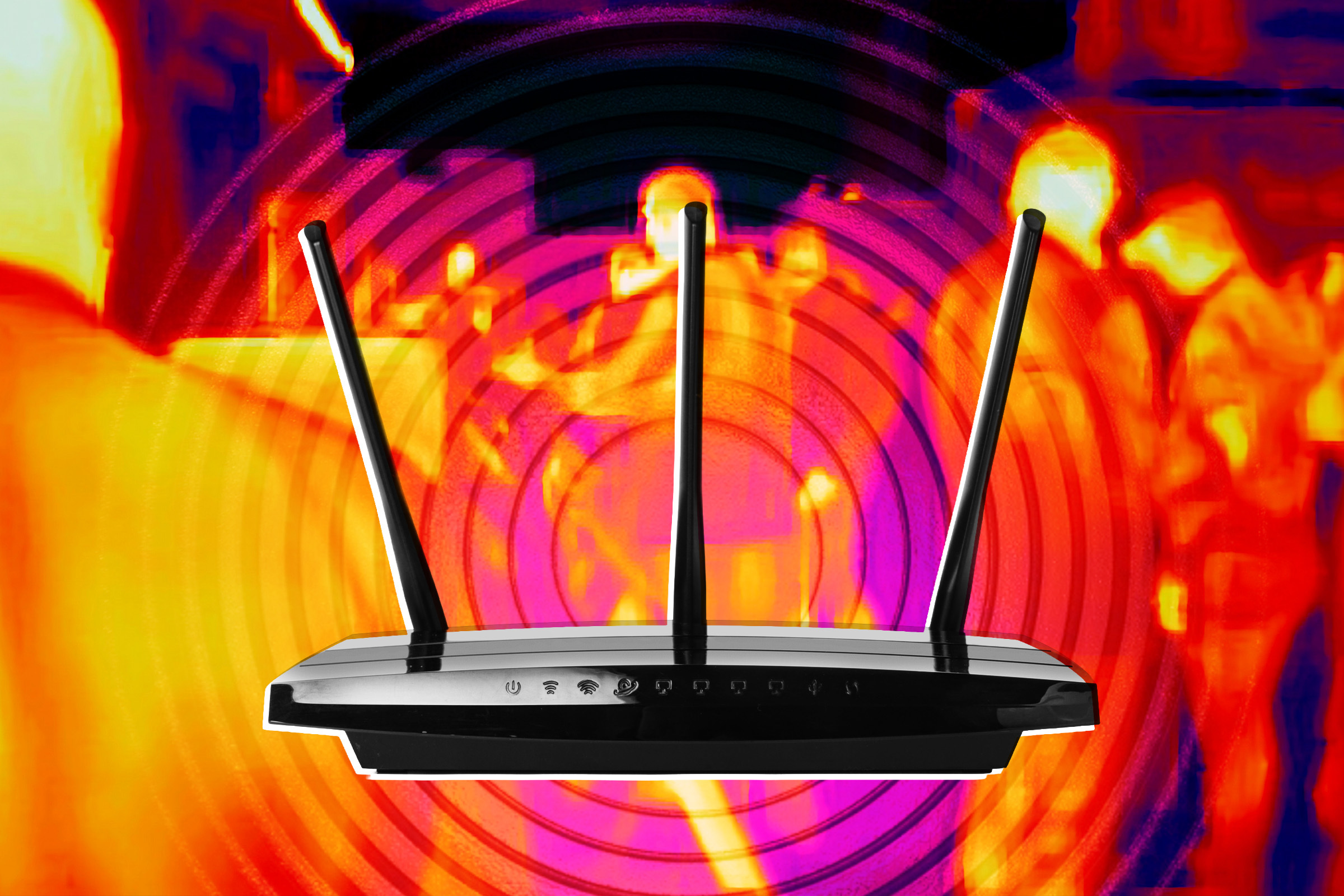
Alarming: Wi-Fi Routers Can Scan Your Body to Identify Exactly Who You Are

These aren’t welcome findings, because almost every home in America has a Wi-Fi router. Theoretically, once you have been ID’d by your personal router (if it has built-in beam forming technology), other similar Wi-Fi signals anywhere in the world could “see” you passing by. This is the type of tech that could be added to your biometric profile as a fail-safe ID that can’t be spoofed. Cameras might see your face to ID you, but you cannot hide from Wi-Fi. ⁃ Patrick Wood, Editor.

If you were paranoid about digital tracking before, you might want to think twice about reading any further.

New research out of Germany’s Karlsruhe Institute of Technology found that the types of Wi-Fi routers we all have in our homes come with a major privacy vulnerability that can be used to identify any human body that comes within their range.

The study, flagged by Gizmodo, used machine learning systems to identify individuals with an accuracy rate of 99.5 percent. To do so, the researchers exploited a vulnerability in a process known as beamforming feedback information (BFI), which was introduced to allow routers to focus Wi-Fi signals on connected devices, as opposed to the older approach, which is to blanket an entire area in coverage.

While BFI is great for network connectivity, it has a major downsides for privacy. For starters, devices connected to a router using beamforming need to send constant feedback in order to be found. As routers send out and receive network feedback, the signal is inevitably impacted by real world factors like pets, walls, and people.

That gap, between the signals routers expect to receive and the distorted feedback they actually get, allowed researchers to extrapolate the identities of 161 individual participants based on BFI data which inadvertently mapped their physical characteristics. Even when individuals changed their gait or carried objects like backpacks and crates, the system registered an accuracy rate between 50 to 60 percent, the KIT team wrote.

“This works similar to a normal camera, the difference being that in our case, radio waves instead of light waves are used for the recognition,” study coauthors Thorsten Strufe said in a press release.

Making matters worse is the fact that this data is basically wide open for anyone to grab — not only is that feedback data unencrypted, it can also be accessed without ever connecting directly to the router.

“We have shown robust identity inference with common-of-the-shelf hardware which is already in widespread adoption in many homes and public areas,” the team wrote in their paper. “With this hardware making its way into millions of homes, the privacy concerns are severe.”

The KIT findings contrast to other Wi-Fi tracking systems, like one developed by researchers at the Sapienza University of Rome. That method, called “WhoFi,” uses channel state information, which is much harder to access on consumer hardware, but can still identify people through walls with an alarmingly high accuracy rate.

That WhoFi study made a point to highlight the anonymity factor: the idea that the sensing system can detect people’s presence, but not identify them. The KIT team refutes that framing outright, arguing that Wi-Fi-sensing technology poses major privacy risks regardless.

“While there maybe legitimate use-cases, we explicitly consider identity inference via Wi-Fi sensing a privacy attack,” they write. “This view reflects the serious risks associated with the ubiquity of Wi-Fi networks, their ability to sense through walls and in non-line-of-sight scenarios, and the fact that this would likely happen without explicit consent.”

While more research will be needed, the researchers don’t mince words about the implications of their initial findings. In their conclusion, the KIT team writes that regulators and companies moving to standardize Wi-Fi sensing should “strongly consider adding effective privacy protection,” or else “abandon beamforming entirely.”

Read full story here…

  •  

Major Teachers Union Pleads With Elementary Schools to Stop Giving Young Kids AI

Angry parents aren’t the only ones railing against the proliferation of AI in schools. The American Federation of Teachers, the second-largest teacher’s union in the United States, has now launched a major campaign calling on schools to keep AI and hardware like iPads out of elementary classrooms.

In a buzzy speech at the National Press Club on Wednesday, AFT president Randi Weingarten unveiled ten demands centered around reaffirming human-led instruction. One of the key requests: an immediate ban on AI systems in elementary school classrooms.

The AFT’s action points also included a screen ban for students in pre-kindergarten through second grade, as well as a prohibition on companion chatbots for students under 16, which schools have adopted at an alarming rate.

“If we don’t find a way to call this out from an education perspective, I fear that we will lose a generation of kids,” Weingarten told the New York Times in an interview. “The work of teaching and learning in the earliest grades should be done without AI.”

In her speech, Weingarten caveated that the AFT’s campaign isn’t some fanatical Butlerian Jihad. She is “not calling for a total ban on AI or a Chromebook bonfire,” but for “getting the balance right to harness the benefits of technology while mitigating the harms.”

Whether the AFT is successful at achieving its demands could make a crucial difference in millions of kids’ educational journey. As tech giants push schools to adopt all kinds of AI systems, a growing body of research is showing that the risks far outweigh any benefits.

As one year-long study conducted by the Brookings Institution’s Center for Universal Education found, AI in education comes with major risk of harm to children’s cognitive and social development — a horrifying thought as an ever-growing number of kids substitute real-life friends with AI chatbots.

More on AI in education: Parents Explode in Fury at School’s Plan to Constantly Film Their Children to Train AI

The post Major Teachers Union Pleads With Elementary Schools to Stop Giving Young Kids AI appeared first on Futurism.

  •  

Random Standard Wi-Fi Routers Can Scan Your Body to Identify Exactly Who You Are, Alarming New Research Finds

If you were paranoid about digital tracking before, you might want to think twice about reading any further.

New research out of Germany’s Karlsruhe Institute of Technology found that the types of Wi-Fi routers we all have in our homes come with a major privacy vulnerability that can be used to identify any human body that comes within their range.

The study, flagged by Gizmodo, used machine learning systems to identify individuals with an accuracy rate of 99.5 percent. To do so, the researchers exploited a vulnerability in a process known as beamforming feedback information (BFI), which was introduced to allow routers to focus Wi-Fi signals on connected devices, as opposed to the older approach, which is to blanket an entire area in coverage.

While BFI is great for network connectivity, it has a major downsides for privacy. For starters, devices connected to a router using beamforming need to send constant feedback in order to be found. As routers send out and receive network feedback, the signal is inevitably impacted by real world factors like pets, walls, and people.

That gap, between the signals routers expect to receive and the distorted feedback they actually get, allowed researchers to extrapolate the identities of 161 individual participants based on BFI data which inadvertently mapped their physical characteristics. Even when individuals changed their gait or carried objects like backpacks and crates, the system registered an accuracy rate between 50 to 60 percent, the KIT team wrote.

“This works similar to a normal camera, the difference being that in our case, radio waves instead of light waves are used for the recognition,” study coauthors Thorsten Strufe said in a press release.

Making matters worse is the fact that this data is basically wide open for anyone to grab — not only is that feedback data unencrypted, it can also be accessed without ever connecting directly to the router.

“We have shown robust identity inference with common-of-the-shelf hardware which is already in widespread adoption in many homes and public areas,” the team wrote in their paper. “With this hardware making its way into millions of homes, the privacy concerns are severe.”

The KIT findings contrast to other Wi-Fi tracking systems, like one developed by researchers at the Sapienza University of Rome. That method, called “WhoFi,” uses channel state information, which is much harder to access on consumer hardware, but can still identify people through walls with an alarmingly high accuracy rate.

That WhoFi study made a point to highlight the anonymity factor: the idea that the sensing system can detect people’s presence, but not identify them. The KIT team refutes that framing outright, arguing that Wi-Fi-sensing technology poses major privacy risks regardless.

“While there maybe legitimate use-cases, we explicitly consider identity inference via Wi-Fi sensing a privacy attack,” they write. “This view reflects the serious risks associated with the ubiquity of Wi-Fi networks, their ability to sense through walls and in non-line-of-sight scenarios, and the fact that this would likely happen without explicit consent.”

While more research will be needed, the researchers don’t mince words about the implications of their initial findings. In their conclusion, the KIT team writes that regulators and companies moving to standardize Wi-Fi sensing should “strongly consider adding effective privacy protection,” or else “abandon beamforming entirely.”

More on surveillance: Town Councilmember Goes Berzerk at Surveillance Camera Ban, Threatens to Outlaw Virtually All Modern Technology

The post Random Standard Wi-Fi Routers Can Scan Your Body to Identify Exactly Who You Are, Alarming New Research Finds appeared first on Futurism.

  •  

Websites Are Spying on Your Solid State Drive

These days, it’s nearly impossible to traverse the web without leaving some trace of your activity. That’s thanks to a panopticon of cookies, keystroke loggers, fingerprinting, tracking pixels, and probably some other horrors that haven’t even come to light. Maybe that sounds paranoid, but it’s exactly what researchers in Austria uncovered in bombshell new cybersecurity research.

According to the recently released paper, first spotted by Ars Technica, researchers have uncovered a type of no-interaction attack that websites can easily run to access data stored in your computer.

It’s called FROST, which stands for “fingerprinting remotely using OPFS-based SSD timing.” It’s a mouthful for sure, but it basically allows malicious websites to spy on your computer activity, all without installing any software or tricking you into clicking sketchy email links.

Per the researchers, it works by taking advantage of your computer’s solid state drive (SSD), the internal storage devices which have largely taken over from magnetic hard drives on the consumer market. Whenever you visit a site, your computer’s SSD starts buzzing with activity, allowing webpages to store temporary files for your browsing pleasure.

FROST attacks take advantage of this by creating a massive file — we’re talking several gigabytes — which functionally blocks your computer from moving what it sees as temporary web data out of the SSD. While that mammoth file is being processed, however, the malicious website is able to probe the timing of incoming data from other sites, generating data which can then be analyzed through a machine learning model to predict what else you’re doing online.

While “predict” suggests the attacker is guessing, the FROST method is scary good at identifying what a victim’s doing on their computer. Researchers write that by using this technique, their machine learning model was able to predict which sites a user would access with an accuracy rate of 88.95 percent, and could accurately predict accessed applications 95.83 percent of the time.

Worse, the whole thing works regardless of what browser you use — because it works through your SSD, an attacker can theoretically track your web browsing on Firefox based on a website accessed via Google Chrome. Researchers only experimented with the technique on Mac and Linux devices, but caveated that Windows devices are not immune.

“In principle, it would be possible to train a model on any system activity that reliably generates SSD accesses,” the study’s lead author, Hannes Weissteiner, told Ars.

While FROST represents the kind of vulnerability that probably needs to be patched by web developers, Ars notes that you can mitigate the risks by closing website tabs as soon as you’re done with them. It isn’t much, but it could prevent you from becoming the next victim of a scary new kind of cyberattack.

More on web development: New Website Detects Apocalypse If Billionaire Jets Start Fleeing en Masse

The post Websites Are Spying on Your Solid State Drive appeared first on Futurism.

  •  

French Open Descends Into Hellish Nightmare Thanks to Climate Change

As sporting events go, the French Open, also known as Roland Garros, is usually a mild and sunny affair. Throughout the opening rounds of 2025’s tournament, temperatures fell squarely in the 60 degree Fahrenheit range, a perfectly agreeable conditions for players and spectators alike.

This year’s French Open, however, happens to be taking place during one of Europe’s worst springtime heat waves on record. Countries like France, the UK, Spain, and Germany have all notched record highs for the month of May as climate change fuels a massive heat dome — a situation turning the normally pleasant tennis championship into a hellish mess of sweat and red-hot clay.

As noted by CNN, every player is feeling the heat as France endures daily highs in the 90s, hotter than average temperatures in July.

After securing a victory in a four-hour contest with the Russian Roman Safiullin, Norwegian tennis star Casper Ruud told the BBC he was shambling around in a heat-induced daze. Ruud took multiple medical breaks throughout the match, covering himself with cooling towels, while both players took an extended break after the fourth set.

“It felt like it was a bit of a kind of heatstroke feeling,” Ruud explained. “I experienced something similar some years ago when I played in Washington DC and I had to retire in the third set… that’s the only time I had that same feeling as I had today in the fourth set where I felt at times really dizzy, really tired and walking around like a zombie almost.”

Days later, Czech star Jakub Menšík collapsed on the court after winning a nearly five-hour contest against Argentinian Mariano Navone. Though his opponent ran over to congratulate Menšík and help him up, the Czech player didn’t budge, prompting medical staff to dart over with ice packs and a wheelchair to help him off the court.

Menšík later told sports press his body “just turned off,” as temperatures as high as 91.2 degrees Fahrenheit baked the city of light — the lowest daily high in Paris over the past five days.

“It’s insane to play in this weather and especially in front of the Sun, to be there for more than four and a half hours is just insane,” the Czech player said. (Menšík was penalized at multiple points for taking too long to cool himself off during breaks in play, losing his first serve twice as a result.)

As Front Office Sports notes, the Roland Garros is regarded among the cooler of the four Grand Slams. That’s especially so compared to the Australian and US Opens, which are held in the dog days of their respective hemispheres’ summers.

Given the extreme heat expected once summer begins and El Niño settles in, those tournaments could make Roland Garros look like a picnic on the Champ de Mars.

More on climate change: Research Paper Warns That There’s a Massive Experiment at Work to Geoengineer the Earth’s Climate

The post French Open Descends Into Hellish Nightmare Thanks to Climate Change appeared first on Futurism.

  •  

Woman Accuses Biohacker Bryan Johnson of Hypocrisy to His Face

As ultra-wealthy CEOs go, there’s always been something different about Bryan Johnson. Unlike the Elon Musks or Peter Thiels of the world, his pie-in-the-sky antics pose a much greater threat to himself than to the rest of society. As a man obsessed with hacking his body in order to live forever, Johnson often gets filed away as a self-absorbed aristocrat rather than a crooked plutocrat (well, except for the abandoning-his-fiancée-when-she-got-breast-cancer thing.)

Yet with a net worth in the nine-digit range, Johnson — who was an early investor in Futurism, though his involvement ended years ago —didn’t exactly get ahead by sharing, a fact one woman was keen to call him out on during a meeting on Surrounded, a debate show hosted by Jubilee Media.

During the face-off between Johnson and an unnamed skeptic, the biohacker argued that “ending death” should be humanity’s main priority.

“I think that a lot of people would change their opinion and want to exist [forever] if the conditions of society were not so brutal,” Johnson said, referring to the fact that most people don’t take his ideas on longevity seriously. “It’s not fair.”

The skeptic immediately hits back with a burning question: “what have you done to change those brutal conditions in society?”

“You’re a person who has literally hundreds of millions of dollars and you spend $2 million every year trying to look younger,” she continued. “And honestly, you look your age.”

The contrarian’s slam is as gutsy as it is compelling: with an estimated net worth around $400 million, Johnson’s vast fortune could easily be spent allaying the worst excesses of poverty, a leading cause of death in the United States and around the world.

What does he spend his riches on instead? A squad of private medical staff to measure his “biomarkers,” a constant battery of blood tests, ultrasound, and MRIs, and bizarre longevity experiments like his hyperbaric office pod. That in mind, the skeptic has a point: what’s the use of living forever if you only live for yourself?

More on biohackers: They Held a New Olympics Where Athletes Can Take as Many Drugs and Steroids as They Want, and the Funniest Possible Thing Happened

The post Woman Accuses Biohacker Bryan Johnson of Hypocrisy to His Face appeared first on Futurism.

  •  

Apocalyptic “Fungal Storms” Are Now Surging Across the US

Dust storms are becoming increasingly common sights throughout much of the US, fueled by hot and arid conditions brought about by global warming. While there are the ever-present dusters in states like Arizona, those living in regions like the Midwest and Pacific Northwest are now learning what it means to be swallowed by these great walls of sand and dirt.

These dust storms are dangerous enough on their own, leading to spikes in emergency room visits and disrupting agricultural economies. But according to writing climate scientist Bill McGuire in the BBC‘s Science Focus, dust storms are now becoming vectors for massive clouds of fungal spores, an event he calls “fungal storms.”

Far-out as that may sound, McGuire writes that fungus and bacteria traveling along with dust particles has been strongly correlated with outbreaks of bacterial meningitis across the Sahel region of Africa. In the continental US, they’re becoming increasingly tied to outbreaks of Valley Fever, a lung infection caused by the spores from the fungus Coccidioides.

One 2017 research paper published in Geophysical Research Letters noted that incidents of Valley Fever ballooned by over 800 percent from 2000 to 2011. In two geographical areas with high concentrations of the infection, dust storms where “found to better correlated with the disease than any other known controlling factor.”

Though some have argued the term “fungal storm” is more media hyperbole than a well-defined scientific phenomenon, further research has noted “abundant evidence” pointing to dust storms as a vector for pathogens like Valley Fever.

Whatever you call it, it’s clear the dangers of dust storms are growing right before our eyes.

As secretary general of the World Meteorological Organization Celeste Saulo told McGuire, “sand and dust storms do not just mean dirty windows and hazy skies. They harm the health and quality of life of millions of people and cost many millions of dollars through disruption to air and ground transport, on agriculture and on solar energy production.”

More on climate change: The Upcoming El Niño Is About to Unleash Devastation, Experts Warn

The post Apocalyptic “Fungal Storms” Are Now Surging Across the US appeared first on Futurism.

  •  

Tesla Insiders Admit Self-Driving Is a Complete Disaster

It turns out not even the people building Tesla’s self-driving tech trust Elon Musk’s extravagant claims about the company’s autonomous vehicles.

New reporting by Reuters interviewed nine former data labelers and a former self-driving engineer about their take on Tesla’s Full Self-Driving mode. The results were overwhelmingly negative, with seven of the data specialists admitting they wouldn’t ride in a Tesla in FSD.

“We have all seen it fail,” one Tesla insider told Reuters. “Definitely don’t trust Elon on this,” the self-driving engineer concurred, referencing Musks’ declaration that the the vehicles are ready for “safe unsupervised” rides.

One erstwhile worker told the publication they wouldn’t ride in a Tesla robotaxi “if you f**king paid me.”

At least five data labelers, whose job was to comb through hours of FSD footage to train the vehicle’s software to avoid past mistakes, told Reuters they routinely saw clips of Teslas driving above the speed limit, an issue which engineers and managers treated like a low-priority compared to edge-case issues.

Those glowing recommendations come amidst concerns that Tesla’s FSD mode may never be truly safe enough for public roads.

In recent months, Tesla operating on FSD move have driven riders into lakes, off bridges, and even into the path of oncoming trains — and those are just the incidents that get media exposure. Given these insiders’ direct access to terabytes’ worth of proprietary FSD footage, we’re inclined to take their word on it.

More on Tesla: Man Drives Cybertruck Into Lake to Test Elon Musk’s “Boat” Claims, and It Went About as Well as You’d Guess

The post Tesla Insiders Admit Self-Driving Is a Complete Disaster appeared first on Futurism.

  •  

Fans Aghast as New York Jets Say They’re Switching to AI

When it comes to excuses from the front office, Jets fans have heard it all. The beleaguered New York franchise continues to hold the longest playoff drought of all major-league men’s sports teams, a situation which has been blamed on everything from management and coaching to players and locker room culture. Fans have likewise heard all the promises of hare-brained schemes sold as the team’s salvation, from the short-lived Sam Darnold rebuild to the infamous Aaron Rodgers gamble.

Now, the organization has hatched a new plot to snap their historic dry spell: going all-in on AI.

New reporting by the Sports Business Journal revealed the Jets front office has been making a concerted push to embrace AI in their day-to-day work. According to Iwao Fusillo, the Jets’ recently appointed chief data and analytics officer, roughly 91 percent of front office staffers are now daily users of Microsoft Copilot.

“I call that level one, or horizon one, which is adoption,” Fusillo told Sports Business. “Do we have large business gains from that level one? Not really. But have we changed the culture of the entire front office? Yes. To think AI-first.”

During department-level AI workshops led by the digital consulting firm Next League, Sports Business reports staffers “generated” a whopping 60 ideas about where to deploy AI throughout the front office, and “probably double that” for the football side.

Of course, the real question is whether any of those ideas were good. Writ large, it remains a mystery how simply adopting AI is supposed change the depressing reality of life in the Jets organization.

The AI initiative and Fusillo’s appointment are the brainchild of Jets owner Woody Johnson, great-grandson of Robert Wood Johnson, founder of the eponymous Johnson & Johnson. Often described as easily influenced by agreeable toadies and public sentiment, the Jets mogul evidently isn’t aware that the infamously sycophantic tech will probably just tell him whatever he wants to hear. Johnson’s long-suffering fanbase, however, lacks that particular feature.

“Jets finally acknowledging they need to outsource for intelligence as there is none in the building itself,” one Redditor quipped. “We’re going 0-17,” a fan wrote on X-formerly-Twitter.

“Lol I asked ChatGPT [to] ‘make the Jets a Superbowl contender’ and the short of it was literally just get rid of any and everybody from the Jets,” one New York Giants fan shared in a Reddit post. “Some of its top recommendations were to change the coaching staff completely and somehow get a top 10 offense by year two.”

More on AI in sports: NBA Commissioner Announces Plans to Let AI Take Over for Lazy Referees

The post Fans Aghast as New York Jets Say They’re Switching to AI appeared first on Futurism.

  •  

NBA Commissioner Announces Plans to Let AI Take Over for Lazy Referees

Anyone who’s sat through this year’s NBA playoffs has probably noticed: the basketball league has a big problem with its referees.

There’s the poor flopping management for starters, where players try to exaggerate or fabricate physical contact with opposing teams in order to draw penalty calls. Flopping has become something of an epidemic over the 2026 playoffs, with certain suspects flailing to the floor on one in every ten field goal attempts.

Then there are the missed non-physical violations. During a critical game five matchup in Oklahoma City earlier this week, refs flubbed a major out-of-bounds call at a crucial point in the later half of the game. Making matters worse, they refused to overturn the call even after huddling to review their decision. That kicked off some major discourse online about the call in particular, and the quality of NBA refs in general.

Like his refs, NBA commissioner Adam Silver evidently has his eyes elsewhere. Speaking on the Pat McAfee Show, Silver used that game five controversy as a springboard to soft-launch a new AI initiative, which he says could take over for human refs in critical moments.

“The officiating is incredible,” Silver said, defending NBA officials. “I think, in terms of replay, I think we’re going to get to the point fairly quickly where, for example out-of-bounds… where, just like [when] you’re a tennis fan and they have Hawk-Eye… we’re gonna move to a system like that, where that whole category of calls will be automatic.”

Hawk-Eye refers to a Sony-owned camera system which uses high-speed sensors to help refs in sports like baseball, cricket, and soccer make accurate calls on close plays. While Sony advertises the service as accurate within 0.1 inches, it’s had quite a few controversies itself, and is certainly no substitute for solid refereeing in the moment — a distinction other major league sports commissioners seem well aware of.

According to Silver, however, the NBA’s automated system would supplement referees for line calls, not augment them.

“Those calls will be done by an AI automated system, with cameras lined around the court, and it’ll take all those so-called objective calls out of the hands of the referees,” Silver explained. “It’ll just be instantaneous, it’ll be automatic, just play on, y’know, let’s go, Spurs in-bounds, and you move on.”

Adam Silver says the NBA will implement an AI automated system to review calls.

(via @patmcafeeshow) pic.twitter.com/NqyLxWnUbj

— ESPN (@espn) May 27, 2026

Whether such a system is immediately in the works for the 2026-2027 season was not immediately clear, but the theory seems to be that AI would free up officials to pay more attention to physical issues, like flopping. But poor refereeing, many fans argue, could be better resolved by urging human officials to enforce existing rules and simply admit when they get calls wrong — not by cramming AI into the product.

“Idc how much I complain about the refs, I don’t want AI in my basketball game,” one Los Angeles Lakers fan grumbled on X-formerly-Twitter. “Smh.”

“It’s like everything he says is supposed to be a way to decrease confidence in the product,” mused writer and New York Knicks devotee Noah Kulwin. “Worst commish in sports or worst commish in sports?”

More on AI automation: AI Is Giving Your Boss Tools to Be More Monstrous Than Ever Before

The post NBA Commissioner Announces Plans to Let AI Take Over for Lazy Referees appeared first on Futurism.

  •  

Influential Tech Founder Says His Peers Are Suffering From Mass AI Psychosis

It’s no secret that many of the world’s top CEOs are obsessed with AI. By pursuing lofty goals of complete AI automation, these executives have created one of the largest financial bubbles in recent memory while transforming the job market into a barren wasteland, with little to show for their efforts so far.

As the top tech companies have yet to find a way to turn AI into a profitable venture, those decisions to go all-in on AI are looking increasingly delusional. According to Aaron Levie, CEO and founder of the massive cloud computing company Box, there’s a simple explanation for it: many of his colleagues are suffering from AI psychosis.

“CEOs are uniquely prone to AI psychosis because they’re sufficiently distant from the last mile of work that still has to happen to generate most value with AI,” Levie wrote on X-formerly-Twitter. Translation: AI-happy CEOs are out of touch with the rank-and-file workers tasked with making their AI ambitions come to life.

As an example, Levie offers cases in which corporate executives say “look I made this awesome product prototype” with an AI chatbot. “Yes but you didn’t have to review the code before it went into production and fix a bunch of issues,” he retorts.

Whether “AI psychosis” is the best metaphor for this concept is up for debate. Arguably the most common definition of AI psychosis is that it’s a phenomenon where extreme interactions with AI triggers or amplifies delusions or paranoia, sometimes already existing and sometimes seemingly newly cooked up with the AI. The symptoms can be extreme, with AI chatbots convincing victims that they’re communing with God-like entities, or have singlehandedly uncovered a grave threat to humankind.

There are indeed some executives who seem to fit the bill. Last year, Futurism reported that colleagues of Geoff Lewis, managing partner of the multi-billion dollar investment firm Bedrock, were concerned that he was suffering from a break with reality after spending too much time with ChatGPT (ironically, Bedrock was an early investor in OpenAI.) In that case, Lewis had claimed to be mapping an incomprehensible “non-governmental system” that was designed to disrupt his life.

That said, there’s a major gap between an exec believing they’re targeted by a vast conspiratorial network and an exec buying into AI hype. The phenomenon Levie is identifying might better fall under “organizational blindness,” a known phenomenon where leaders of a company find themselves disconnected from the reality of work on the ground. Coupled with a ravenous hunger for profit, this kind of tunnel vision seems to be exactly what we’re seeing in companies around the globe.

In today’s world, many executives and managers operate at an abstract level, working via spreadsheets, emails and Zoom meetings. This is different from concrete labor, meaning the specific, friction-heavy tasks that workers perform, like writing code or wiring server racks. When a board-room full of executives loses sight of this tangible labor — by failing to consider the kinds of tasks AI chatbots are actually good at, for example — it can certainly create a break from material reality, though one driven by social factors rather than psychological.

In other words, there are two possibilities: either the world’s CEOs are losing their minds, or they’re just succumbing to the latest manifestation of capitalism run amok. Occam’s razor probably suggests the latter.

More on AI and CEOs: 99 Percent of CEOs Are Preparing to Lay Off Workers and Replace Them With AI Within Two Years, Survey Finds

The post Influential Tech Founder Says His Peers Are Suffering From Mass AI Psychosis appeared first on Futurism.

  •  

This Summer Is Going to Kill a Lot of People

Summer hasn’t even started in the Northern Hemisphere, and thermometers around the globe are already fit to burst.

In India, at least 16 people have died during a pre-monsoon season heatwave as temperatures reach a scorching 116 degrees Fahrenheit, with conditions expected to worsen over the coming days.

Meanwhile, the European continent is currently experiencing one of the worst heat waves on record, the Associated Press reports, with gauges in the United Kingdom recording all-time highs of 94.6 degrees Fahrenheit and 95.1 over a 24-hour period. Seven have already died in France during the hottest day in May in the country’s recorded history, while health officials in Italy have moved to restrict outdoor activity.

While these temperatures might not sound extreme by American standards — the US is a world leader in air conditioning usage, with some 90 percent of households covered — the heat is pushing people and infrastructure to their limits elsewhere in the world.

As a recent report on the UK’s global warming outlook noted, the country is “built for a climate that no longer exists,” with only 5 percent of households boasting AC units.

“While we do occasionally have warm spells in May, what we’re seeing now is unprecedented,” Stephen Dixon, a spokesperson for the UK Met told CNN. “What was around a 1-in-100 year event is now around a 1-in-33 year event.”

Making matters worse is the looming threat of El Niño, a cyclical climate pattern which raises temperatures around the world. That event typically comes once every two to seven years, but the one expected to kick off this summer is massive — forecasted to be nearly as bad as the nearly-apocalyptic heat spell of 1877, which killed millions of people.

Keep in mind, these record heat waves are hitting well ahead of both summertime and El Niño. As researchers have found, ambient global temperatures are already enough to kill elderly and even young people given the right amount of exposure time. In other words, this summer is about to give a whole new meaning to the phrase “jumping out of the frying pan and into the fire.”

More on extreme heat: Earth Screams in Agony as Microplastics Found to Increase Global Warming

The post This Summer Is Going to Kill a Lot of People appeared first on Futurism.

  •  

New Website Detects Apocalypse If Billionaire Jets Start Fleeing en Masse

Billionaires aren’t like us. They get special tax breaks to protect their fortunes, operate private intelligence rings, and increasingly have direct lines to the White House, if they’re not there already.

Given their increasing hold on the levers of political power, in other words, it’s likely that the world’s richest would get advance news of a civilization-threatening event. Kyle McDonald, a programmer and artist from Los Angeles, has developed a new jet tracker with exactly that dynamic in mind. Called the Apocalypse Early Warning System, the vibecoded website is meant to warn of impending doom based on how many private jets are in the air at any one time.

The mechanics are complicated, but the concept itself is rather simple: is the number of private jets in the air unusual for a given time? If so, it could indicate that the ultra rich have advanced knowledge of a world-ending emergency, and are scrambling for their private compounds while they still can.

Basically, the AEWS is designed to map private aircraft signals from around the world, which it then compares against typical numbers. Based on the difference, it assigns a score between 1 and 5, with 1 being completely normal, and 5 signalling that the level of private jet activity is higher than it’s been over the previous year.

McDonald caveats that the score is not a guarantee of apocalypse, but “should be read alongside other public signals.” A level 5 can be triggered by holidays or major political events, for example, so it’s important to view the data in context.

Still, McDonald told Business Insider, the tool has already mapped some surprising trends. For example, the AEWS’ highest spike so far came on April 6, the day when Iran launched a massive offensive barrage on US and Israeli targets in retaliation for earlier attacks.

“That freaked me out,” McDonald wrote. “I remember thinking, ‘oh my God, it’s real.'”

The programmer-activist has also worked on a few other public-information tools that have helped reveal useful facts hidden under piles of noisy data. One app he worked on with friends, meant to track the Los Angeles Police Department’s infamously aggressive helicopters, helped uncover the fact that the agency was frequently disabling or manipulating their transponder signals to avoid detection by the public.

How useful the information will actually be if disaster strikes is anyone’s guess. In the meantime, it’ll be fascinating to see whether the programmer identifies more trends in the flight data as regional wars and climate disasters continue roiling the globe.

More on billionaires: Marc Andreessen Sputters Incomprehensibly at Question About How AI Will Actually Benefit Humankind

The post New Website Detects Apocalypse If Billionaire Jets Start Fleeing en Masse appeared first on Futurism.

  •  

Debt Collectors Are Being Replaced With AI Agents

With inflation out of control amidst a low-fire, low-hire economy, the amount of private debt in the United States is at an all time high. That’s a grim milestone for any country, let alone one as technically rich as the US — and it’s leading to a massive rise in late payments and credit delinquency.

But as more and more lenders come looking for their payments, it’s increasingly AI — rather than humans — doing the collecting.

New reporting by Wired details the rise of AI agents for hounding debtors. As one Seattle man identified as Ben told the publication, autonomous bots are even making erroneous calls on old debts that have already been settled.

During a call regarding a $266 dispute with a past landlord, Ben said he was hounded by Eve, an obviously artificial voice agent sent by the company ProCollect.

“Would you like to resolve it today by card or bank transfer?” the AI agent asked.

Knowing that he had already settled the dispute, Ben poked and prodded, trying to test its limits after it refused to connect him to a human. “I figured it was just going to kick me over to a person when I asked about repayment structure or anything more technical,” he told Wired.

In the end, he got the bot to engage in some quasi-sexual roleplay, where he was “just a little guy” and his debt was a sultry giantess. After a few minutes of this, Ben says he was unceremoniously whisked away to a human, who confirmed the debt had been settled.

As cofounder of AI call center startup Altur Pedro Fernández told Wired, debt collectors are some of his sector’s “best early adopters.” Altur, for example, places over 2.5 million debt calls a month with AI agents.

It’s not surprising they get things wrong, either. Debt collection is based on massive webs of data, spreadsheets which are essentially sold down the line from the original creditors to second-hand buyers, a sloppy and frustrating system at best.

For all their faults, humans are infinitely more reasonable when it comes to resolving discrepancies that turn up in the shuffle. While nobody likes a debt collector, human or otherwise, at least you can argue back to a fleshbag.

More on AI agents: Oops: Bosses Realize Their Companies Have Been Swarmed by Legions of Redundant AI Agents

The post Debt Collectors Are Being Replaced With AI Agents appeared first on Futurism.

  •  

The MyPillow Guy’s Entire Business is Being Held Hostage by Hackers

Monstrous defeats keep coming for Mike Lindell, the notorious entrepreneur behind the MyPillow brand and one-time advisor to Donald Trump.

According to Straight Arrow News, a clique of hackers known as “Play” is claiming to have accessed a huge chunk of private data from MyPillow, which it’s now holding hostage. Per the outlet, which viewed a communique from the gang, the hackers now have access to “private and personal confidential data, clients’ documents, budget, payroll, IDs, taxes, finance information and etc.”

Lindell’s company has been given until Friday, May 29 to respond — or else its data will be published online, the hackers threatened. The amount they’re trying to extort hasn’t been disclosed, and neither the hackers nor MyPillow responded to Straight Arrow‘s requests for comment.

Play first appeared in 2022, when it orchestrated cyber attacks throughout the US, Brazil, Germany, and Switzerland, among others. Their targets tend to be those associated with government functionaries, like the Argentinian judiciary, and an IT firm contracted by the Swiss Federal Department of Finance.

In that vein, a successful attack on Lindell would be a major trophy. The entrepreneur first met Trump in the run-up to the 2016 presidential election, a relationship which blossomed as the would-be president ferried the increasingly crankish Lindell around rallies across the country.

In 2020, Lindell briefly served as Trump’s reelection campaign chair, then nearly ran for governor of Minnesota with his blessings. Later in November of 2022, Lindell ran for Chair of the Republican National Committee, though he lost after receiving only 2.4 percent of the total votes.

Now in 2026, the MyPillow founder is once again running for governor of Minnesota, having filed all the corresponding paperwork — which is more than he did last election cycle. That said, the hack comes as his finances and personal life are now under perhaps more scrutiny than they’ve ever been. Given his ties to Trump, who appears to be backing him again in the 2026 election, there could conceivably be some fascinating details lurking in the MyPillow archives.

Whether Lindell can pony up to keep them hidden remains to be seen: in April of 2025 he admitted that he didn’t even have “5 cents” to his name, owing to an avalanche of civil suits and federal investigations stemming from his political antics.

More on hacking: Riot Games Denies Using Anti-Cheat Software That Bricks Hackers’ Computers

The post The MyPillow Guy’s Entire Business is Being Held Hostage by Hackers appeared first on Futurism.

  •  

Companies That Adopted AI Agents Alarmed to Discover They’re Botching Incredibly Important Tasks

AI agents used to be all the rage, the supposed next hit product category after generative AI failed to generate productive returns. Now, the bill on all that hype is coming due.

According to some estimates, up to 79 percent of US corporate execs have some type of AI agent in the making — but one Gartner prediction found 40 percent of these projects will implode due to poor risk controls.

In a nutshell, AI agents are capable of inflicting tremendous amounts of damage on a company when instructed to complete critical tasks. One particularly glaring example, outlined by network consulting engineer Sayali Patil in VentureBeat, involves AI agents designed to fix slow network connections when they detect problems.

That sounds like a reasonable task to automate, like unplugging your router when your wifi starts acting up. But while these AI agents can technically get the job done, Patil says she’s had incidents where they shut down the server while three other important services are handling a rush of web traffic.

When the agent goes ahead and restarts that server anyway, it leads to disaster for those other three services. In the end, the chaotic network event becomes far more disruptive than the initial slowdown. Worse yet, the critical failure becomes too much for the AI tool to understand, or as Patil puts it, a “cascade the agent was never designed to model.”

“The blast radius of that agent action was not the service restart. It was everything downstream of the restart, in a system state the agent had no complete picture of,” Patil writes.

Even if engineers were able to account for every pitfall, AI agents still present some horrifying security vulnerabilities. Stress tests of AI agents equipped with email privileges revealed some major pain points, like where agents obey strangers from outside their network or transfer data to unauthorized personnel.

This gap between performance expectations and production reality is precisely why AI agents aren’t the one-size-fits-all tool the tech industry desperately wants them to be. Whether that changes in the long view is anyone’s guess — but today’s reality is falling way behind the hype.

More on AI in the workplace: 99 Percent of CEOs Are Preparing to Lay Off Workers and Replace Them With AI Within Two Years, Survey Finds

The post Companies That Adopted AI Agents Alarmed to Discover They’re Botching Incredibly Important Tasks appeared first on Futurism.

  •  
❌