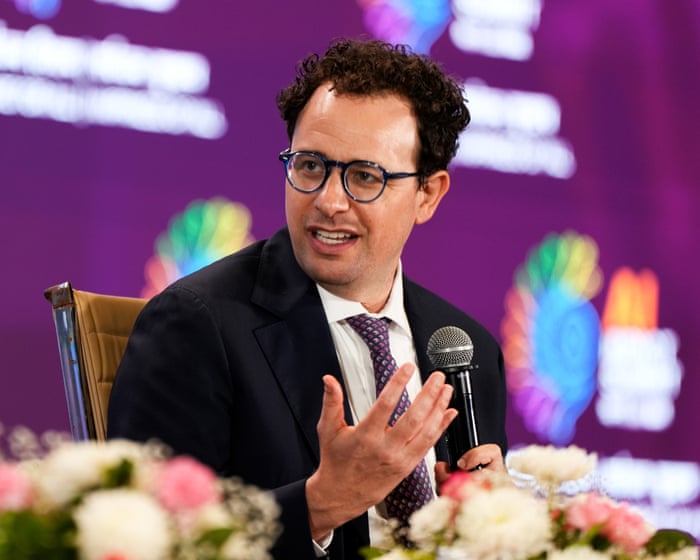
At Microsoft's annual Build conference on Tuesday, the company announced a slew of new or expanded AI initiatives, including a super app, in-house reasoning models, a cybersecurity tool, and OpenClaw-esque AI agents. All this news added up to a clear message: Microsoft is positioned to be one of the biggest players in AI, and it's finally acting like it.
For years, Microsoft's AI business leaned hard on its early and exclusive partnership with OpenAI. But the drama-filled marriage slowly devolved into a situationship, and the pair effectively separated in late April (though Microsoft is still OpenAI's primary cloud partner - for now). This …
With rivals racing to market to raise ‘eye-popping sums’, the spotlight is now on the AI sector’s one-time ‘poster child’
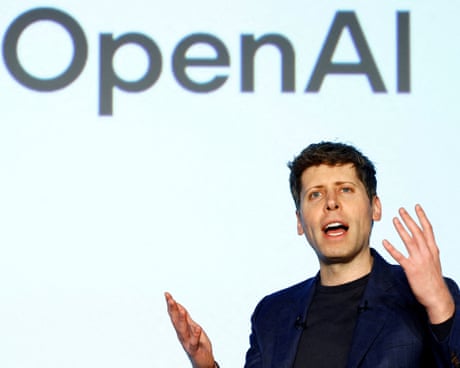
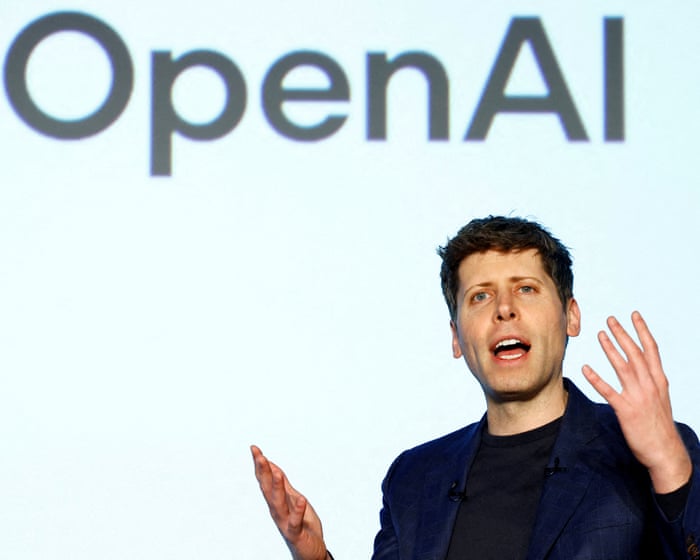
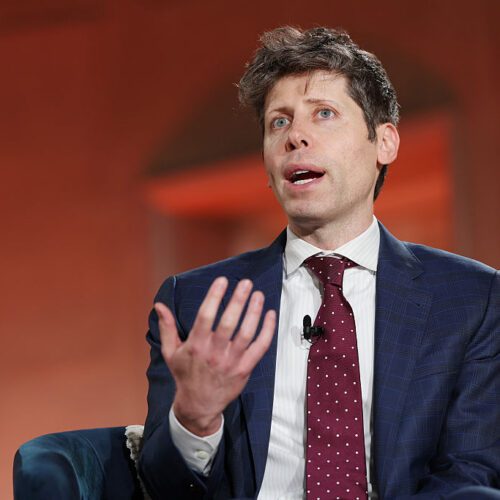
A year is a long time in AI. Just 12 months ago, Sam Altman was predicting his company OpenAI would build a super intelligence and fundamentally remake society. Now the boss of the ChatGPT developer is walking back those ideas after failing to make money from ads and erotic chatbots.
Meanwhile, rivals are storming ahead with plans to expand and go public on the stock market, in what is widely expected to be a season of record-setting initial public offerings (IPOs).
Stock market filing illustrates AI company’s meteoric rise, while California’s tech billionaires pour cash into elections
Hello, and welcome to TechScape. I’m your host, Blake Montgomery, US tech editor at the Guardian. This week in tech, we’re discussing Anthropic’s meteoric rise, both theological and financial, and California’s unprecedented infusion of political cash from Silicon Valley.
Mathematicians warned against rising tech industry influence in a declaration describing the many challenges that AI poses to mathematics research. The timing of the declaration comes two weeks after OpenAI publicized one of its AI models as having disproved an 80-year-old mathematical conjecture in geometry.
The declaration was developed by a working group of 16 researchers over eight months following a conference held at Leiden University in the Netherlands in September 2025. Published on June 2, 2026, the resulting Leiden Declaration on Artificial Intelligence and Mathematics has been endorsed by the International Mathematical Union—the international non-governmental organization that hosts conferences and oversees the most prestigious prizes in mathematics such as the Fields Medal.
“Mathematicians should find it quite striking that tech companies are suddenly interested in their work,” said Kevin Buzzard, a mathematician at Imperial College London, in a statement. “The Leiden Declaration is a well-thought-through response to what is currently happening, as AI continues to disrupt this space.”
Mathematicians warned against rising tech industry influence in a declaration describing the many challenges that AI poses to mathematics research. The timing of the declaration comes two weeks after OpenAI publicized one of its AI models as having disproved an 80-year-old mathematical conjecture in geometry.
The declaration was developed by a working group of 16 researchers over eight months following a conference held at Leiden University in the Netherlands in September 2025. Published on June 2, 2026, the resulting Leiden Declaration on Artificial Intelligence and Mathematics has been endorsed by the International Mathematical Union—the international non-governmental organization that hosts conferences and oversees the most prestigious prizes in mathematics such as the Fields Medal.
“Mathematicians should find it quite striking that tech companies are suddenly interested in their work,” said Kevin Buzzard, a mathematician at Imperial College London, in a statement. “The Leiden Declaration is a well-thought-through response to what is currently happening, as AI continues to disrupt this space.”
Ação inédita acusa a OpenAI de ocultar os perigos do ChatGPT para os menores em prol do lucro. O processo surge numa vaga de litígios nos EUA que já resultou em multas milionárias para gigantes como a Meta e a Google.
I asked ChatGPT to replace 30 minutes of evening scrolling with offline challenges, and the results were surprisingly reflective, engaging, and much harder to ignore than another trip through social media.
Espera-se que com esta oferta pública inicial, que deverá acontecer ainda este ano, a avaliação da Anthropic ultrapasse a marca de um bilião de dólares. O pedido surge numa altura em que a rival OpenAI também se prepara para entrar em bolsa.
On Monday, Florida became the first state to sue OpenAI over ChatGPT's allegedly dangerous design.
In a complaint filed in state court, Florida Attorney General James Uthmeier accused OpenAI and its CEO, Sam Altman, of prioritizing profits over the safety of Floridians.
The civil lawsuit comes after Florida opened an unrelated criminal probe into OpenAI, following a ChatGPT-linked mass shooting where two people were killed at Florida State University. In statements, OpenAI has insisted that ChatGPT isn't responsible for the FSU shooting, merely providing factual information, but Uthmeier does not seem to agree. In his complaint, Uthmeier noted that Florida has now been blindsided by two violent events where suspects used ChatGPT to assist in planning.
On Monday, Florida became the first state to sue OpenAI over ChatGPT's allegedly dangerous design.
In a complaint filed in state court, Florida Attorney General James Uthmeier accused OpenAI and its CEO, Sam Altman, of prioritizing profits over the safety of Floridians.
The civil lawsuit comes after Florida opened an unrelated criminal probe into OpenAI, following a ChatGPT-linked mass shooting where two people were killed at Florida State University. In statements, OpenAI has insisted that ChatGPT isn't responsible for the FSU shooting, merely providing factual information, but Uthmeier does not seem to agree. In his complaint, Uthmeier noted that Florida has now been blindsided by two violent events where suspects used ChatGPT to assist in planning.
Financial stakes of AI race rise as Elon Musk’s SpaceX, OpenAI and Anthropic are slated to go public this year
Anthropic has filed confidentially for an initial public offering on the US stock market, the company announced on Monday. The AI firm makes the Claude chatbot, popular with software engineers and other business clients, and has seen a meteoric rise this year.
The company did not disclose the valuation it will target on the stock market, nor did it make public other terms of the offering. The startup announced on Thursday that it had raised $65bn in funding to value the company at $965bn post-money. Anthropic was valued at $380bn in February.
In mid-May, OpenAI announced that an internal AI model had disproved the Erdős unit distance conjecture, a famous problem in discrete geometry that had stumped human mathematicians for the last 80 years.
OpenAI gave several mathematicians early access to the result and published their reactions. Tim Gowers—who won the Fields Medal, the most prestigious prize in mathematics—wrote that “there is no doubt that the solution to the unit-distance problem is a milestone in AI mathematics.”
University of Toronto professor Daniel Litt wrote that “this is the first example of a result produced autonomously by an AI that I find exciting in itself, as opposed to as a leading indicator.”
In mid-May, OpenAI announced that an internal AI model had disproved the Erdős unit distance conjecture, a famous problem in discrete geometry that had stumped human mathematicians for the last 80 years.
OpenAI gave several mathematicians early access to the result and published their reactions. Tim Gowers—who won the Fields Medal, the most prestigious prize in mathematics—wrote that “there is no doubt that the solution to the unit-distance problem is a milestone in AI mathematics.”
University of Toronto professor Daniel Litt wrote that “this is the first example of a result produced autonomously by an AI that I find exciting in itself, as opposed to as a leading indicator.”
In mid-May, OpenAI announced that an internal AI model had disproved the Erdős unit distance conjecture, a famous problem in discrete geometry that had stumped human mathematicians for the last 80 years.
OpenAI gave several mathematicians early access to the result and published their reactions. Tim Gowers—who won the Fields Medal, the most prestigious prize in mathematics—wrote that “there is no doubt that the solution to the unit-distance problem is a milestone in AI mathematics.”
University of Toronto professor Daniel Litt wrote that “this is the first example of a result produced autonomously by an AI that I find exciting in itself, as opposed to as a leading indicator.”
In mid-May, OpenAI announced that an internal AI model had disproved the Erdős unit distance conjecture, a famous problem in discrete geometry that had stumped human mathematicians for the last 80 years.
OpenAI gave several mathematicians early access to the result and published their reactions. Tim Gowers—who won the Fields Medal, the most prestigious prize in mathematics—wrote that “there is no doubt that the solution to the unit-distance problem is a milestone in AI mathematics.”
University of Toronto professor Daniel Litt wrote that “this is the first example of a result produced autonomously by an AI that I find exciting in itself, as opposed to as a leading indicator.”
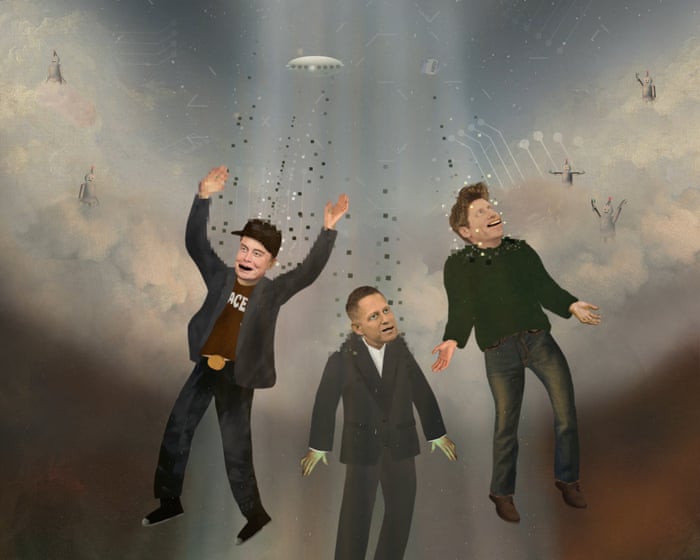
A new belief set is uniting some of the wealthiest men in the world around a ‘transhuman’ future – actual humanity be damned
Sam Altman, the chief executive of OpenAI, took to the Internet a few years ago to propose that homo sapiens would be the first species “to design our own descendants”. In his best case scenario, the “merge” between humans and artificial intelligence occurs at some point over the next 50 years. The alternative, where we remain simply human and the machines follow their own path, is more ominous. “If two different species both want the same thing and only one can have it – in this case, to be the dominant species on the planet and beyond – they are going to have conflict,” he wrote.
More recently, Elon Musk, the world’s richest man, who at one point last year was granted the power to reconfigure the US federal government, argued on his social media platform, X, that “it increasingly appears that humanity is a biological bootloader for digital superintelligence” – our role in the history of the cosmos reduced to that of the low level code that boots up a computer before you can run sophisticated programs on it.

 Login
Login