Reading view

The P5 Report & The Future of Particle Physics (Part 1)

Particle physics is the epitome of ‘big science’. To answer our most fundamental questions out about physics requires world class experiments that push the limits of whats technologically possible. Such incredible sophisticated experiments, like those at the LHC, require big facilities to make them possible,  big collaborations to run them, big project planning to make dreams of new facilities a reality, and committees with big acronyms to decide what to build.

Enter the Particle Physics Project Prioritization Panel (aka P5) which is tasked with assessing the landscape of future projects and laying out a roadmap for the future of the field in the US. And because these large projects are inevitably an international endeavor, the report they released last week has a large impact on the global direction of the field. The report lays out a vision for the next decade of neutrino physics, cosmology, dark matter searches and future colliders. 

P5 follows the community-wide brainstorming effort known as the Snowmass Process in which researchers from all areas of particle physics laid out a vision for the future. The Snowmass process led to a particle physics ‘wish list’, consisting of all the projects and research particle physicists would be excited to work on. The P5 process is the hard part, when this incredibly exciting and diverse research program has to be made to fit within realistic budget scenarios. Advocates for different projects and research areas had to make a case of what science their project could achieve and a detailed estimate of the costs. The panel then takes in all this input and makes a set of recommendations of how the budget should be allocated, what should projects be realized and what hopes are dashed. Though the panel only produces a set of recommendations, they are used quite extensively by the Department of Energy which actually allocates funding. If your favorite project is not endorsed by the report, its very unlikely to be funded. 

An computer generate graphic showing two sprays of particles being injected from a single center point
The P5 report also created an awesome graphic that contains symbolism for the different aspects of the plan. The left  side depicts oscillating neutrinos and the shape of the Higgs potential. The right side depicts dark matter and the large scale structure of the universe. The central ball of light is supposed to represent discoveries of the unknown. Source

Particle physics is an incredibly diverse field, covering sub-atomic to cosmic scales, so recommendations are divided up into several different areas. In this post I’ll cover the panel’s recommendations for neutrino physics and the cosmic frontier. Future colliders, perhaps the spiciest topic, will be covered in a follow up post.

The Future of Neutrino Physics

For those in the neutrino physics community all eyes were on the panels recommendations regarding the Deep Underground Neutrino Experiment (DUNE). DUNE is the US’s flagship particle physics experiment for the coming decade and aims to be the definitive worldwide neutrino experiment in the years to come. A high powered beam of neutrinos will be produced at Fermilab and sent 800 miles through the earth’s crust towards several large detectors placed in a mine in South Dakota. Its a much bigger project than previous neutrino experiments, unifying essentially the entire US community into a single collaboration.

DUNE is setup to produce world leading measurements of neutrino oscillations, the property by which neutrinos produced in one ‘flavor state’, (eg an electron-neutrino) gradually changes its state with sinusoidal probability (eg into a muon neutrino) as it propagates through space. This oscillation is made possible by a simple quantum mechanical weirdness: neutrino’s flavor state, whether it couples to electrons muons or taus, is not the same as its mass state. Neutrinos of a definite mass are therefore a mixture of the different flavors and visa versa.

Detailed measurements of this oscillation are the best way we know to determine several key neutrino properties. DUNE aims to finally pin down two crucial neutrino properties: their ‘mass ordering’, which will solidify how the different neutrino flavors and measured mass differences all fit together, and their ‘CP-violation’ which specifies whether neutrinos and their anti-matter counterparts behave the same or not. DUNE’s main competitor is the Hyper-Kamiokande experiment in Japan, another next-generation neutrino experiment with similar goals.

A depiction of the DUNE experiment. A high intensity proton beam at Fermilab is used to create a concentrated beam of neutrinos which are then sent through 800 miles of the Earth’s crust towards detectors placed deep underground South Dakota. Source

Construction of the DUNE experiment has been ongoing for several years and unfortunately has not been going quite as well as hoped. It has faced significant schedule delays and cost overruns. DUNE is now not expected to start taking data until 2031, significantly behind Hyper-Kamiokande’s projected 2027 start. These delays may lead to Hyper-K making these definitive neutrino measurements years before DUNE, which would be a significant blow to the experiment’s impact. This left many DUNE collaborators worried about its broad support from the community.

It came as a relief then when P5 report re-affirmed the strong science case for DUNE, calling it the “ultimate long baseline” neutrino experiment. The report strongly endorsed the completion of the first phase of DUNE. However, it recommended a pared-down version of its upgrade, advocating for an earlier beam upgrade in lieu of additional detectors. This re-imagined upgrade will still achieve the core physics goals of the original proposal with a significant cost savings. With this report, and news that the beleaguered underground cavern construction in South Dakota is now 90% complete, was certainly welcome holiday news to the neutrino community. This is also sets up a decade-long race between DUNE and Hyper-K to be the first to measure these key neutrino properties.

Cosmic Implications

While we normally think of particle physics as focused on the behavior of sub-atomic particles, its really about the study of fundamental forces and laws, no matter the method. This means that telescopes to study the oldest light in the universe, the Cosmic Microwave Background (CMB), fall into the same budget category as giant accelerators studying sub-atomic particles. Though the experiments in these two areas look very different, the questions they seek to answer are cross-cutting. Understanding how particles interact at very high energies helps us understand the earliest moments of the universe, when such particles were all interacting in a hot dense plasma. Likewise, by studying the these early moments of the universe and its large-scale evolution can tell us about what kinds of particles and forces are influencing its dynamics. When asking fundamental questions about the universe, one needs both the sharpest microscopes and the grandest panoramas possible.

The most prominent example of this blending of the smallest and largest scales in particle physics is dark matter. Some of our best evidence for dark matter comes analyzing the cosmic microwave background to determine how the primordial plasma behaved. These studies showed that some type of ‘cold’, matter that doesn’t interact with light, aka dark matter, was necessary to form the first clumps that eventually seeded the formation of galaxies. Without it, the universe would be much more soup-y and structureless than what we see to today.
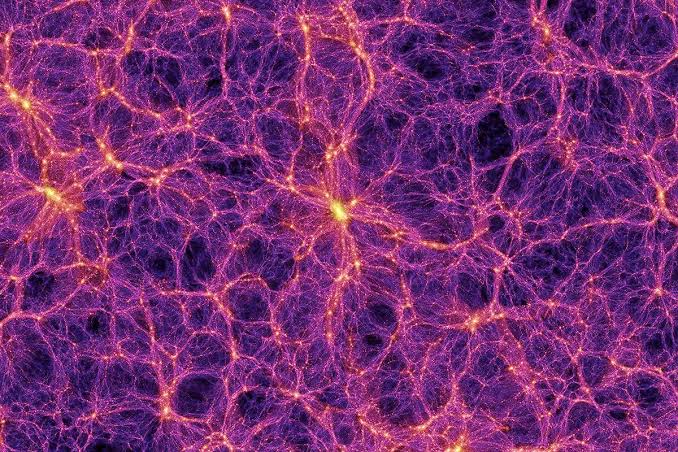
The “cosmic web” galaxy clusters from the Millenium simulation. Measuring and understanding this web can tell us a lot about the fundamental constituents of the universe. Source

To determine what dark matter is then requires an attack from two fronts: design experiments here on earth attempting directly detect it, and further study its cosmic implications to look for more clues as to its properties.

The panel recommended next generation telescopes to study the CMB as a top priority. The so called ‘Stage 4’ CMB experiment would deploy telescopes in both the south pole and Chile’s Atacama desert to better characterize sources of atmospheric noise. The CMB has been studied extensively before, but the increased precision of CMS-S4 could shed light on mysteries like dark energy, dark matter, inflation, and the recent Hubble Tension. Given the past fruitfulness of these efforts, I think few doubted the science case for such a next generation experiment.

A mockup of one of the CMS-S4 telescopes which will be based in the Chilean desert. Note the person for scale on the right (source)

The P5 report recommended a suite of new dark matter experiments in the next decade, including the ‘ultimate’ liquid Xenon based dark matter search. Such an experiment would follow in the footsteps of massive noble gas experiments like LZ and XENONnT which have been hunting for a favored type of dark matter called WIMP’s for the last few decades. These experiments essentially build giant vats of liquid Xenon, carefully shield from any sources of external radiation, and look for signs of dark matter particles bumping into any of the Xenon atoms. The larger the vat of Xenon, the higher chance a dark matter particle will bump into something. Current generation experiments have ~7 tons of Xenon, and the next generation experiment would be even larger. The next generation aims to reach the so called ‘neutrino floor’, the point as which the experiments would be sensitive enough to observe astrophysical neutrinos bumping into the Xenon. Such neutrino interactions would look extremely similar to those of dark matter, and thus represent an unavoidable background which would signal the ultimate sensitivity of this type of experiment. WIMP’s could still be hiding in a basement below this neutrino floor, but finding them would be exceedingly difficult.

A photo of the current XENONnT experiment. This pristine cavity is then filled with liquid Xenon and closely monitored for signs of dark matter particles bumping into one of the Xenon atoms. Credit: XENON Collaboration

WIMP’s are not the only dark matter candidates in town, and recent years have also seen an explosion of interest in the broad range of dark matter possibilities, with axions being a prominent example. Other kinds of dark matter could have very different properties than WIMPs and have had much fewer dedicated experiments to search for them. There is ‘low hanging fruit’ to pluck in the way of relatively cheap experiments which can achieve world-leading sensitivity. Previously, these ‘table top’ sized experiments had a notoriously difficult time obtaining funding, as they were often crowded out of the budgets by the massive flagship projects. However, small experiments can be crucial to ensuring our best chance of dark matter discovery, as they fill in the blinds pots missed by the big projects.

The panel therefore recommended creating a new pool of funding set aside for these smaller scale projects. Allowing these smaller scale projects to flourish is important for the vibrancy and scientific diversity of the field, as the centralization of ‘big science’ projects can sometimes lead to unhealthy side effects. This specific recommendation also mirrors a broader trend of the report: to attempt to rebalance the budget portfolio to be spread more evenly and less dominated by the large projects.

A pie chart comparing the budget porfolio in 2023 (left) versus the projected budget in 2033 (right). Currently most of the budget is being taken up by the accelerator upgrades and cavern construction of DUNE, with some amount for the LHC upgrades. But by 2033 the panel recommends a much more equitable balance between different research area.

What Didn’t Make It

Any report like this comes with some tough choices. Budget realities mean not all projects can be funded. Besides the pairing down of some of DUNE’s upgrades, one of the biggest areas that was recommended against were ‘accessory experiments at the LHC’. In particular, MATHUSULA and the Forward Physics Facility were two experiments that proposed to build additional detectors near already existing LHC collision points to look for particles that may be missed by the current experiments. By building new detectors hundreds of meters away from the collision point, shielded by concrete and the earth, they can obtained unique sensitivity to ‘long lived’ particles capable of traversing such distances. These experiments would follow in the footsteps of the current FASER experiment, which is already producing impressive results.

While FASER found success as a relatively ‘cheap’ experiment, reusing detector components from and situating itself in a beam tunnel, these new proposals were asking for quite a bit more. The scale of these detectors would have required new caverns to be built, significantly increasing the cost. Given the cost and specialized purpose of these detectors, the panel recommended against their construction. These collaborations may now try to find ways to pare down their proposal so they can apply to the new small project portfolio.

Another major decision by the panel was to recommend against hosting a new Higgs factor collider in the US. But that will discussed more in a future post.

Conclusions

The P5 panel was faced with a difficult task, the total cost of all projects they were presented with was three times the budget. But they were able to craft a plan that continues the work of the previous decade, addresses current shortcomings and lays out an inspiring vision for the future. So far the community seems to be strongly rallying behind it. At time of writing, over 2700 community members from undergraduates to senior researchers have signed a petition endorsing the panels recommendations. This strong show of support will be key for turning these recommendations into actual funding, and hopefully lobbying congress to even increase funding so that more of this vision can be realized.

For those interested the full report as well as executive summaries of different areas can be found on the P5 website. Members of the US particle physics community are also encouraged to sign the petition endorsing the recommendations here.

And stayed tuned for part 2 of our coverage which will discuss the implications of the report on future colliders!
  •  

Causality and the Arrow of Time Are Big Bang Problems for Cosmic Story-Telling

The big bang has causality issues, particularly the "horizon problem." I critique suggested solutions like cosmic inflation and negentropy, arguing that they require unproven concepts. The Creator, as described in the Bible, provides a coherent explanation without causality violations, in contrast with those scientific storytelling fairy tales for adults.

  •  

Axions | Hypothetical Dark-Matter Particles Proposed to Clean Up the Fine-Tuning Problem in Cosmology

The anthropic principle posits that the universe’s physical constants are fine-tuned for life, which is a problem for big bang cosmology. On the Genesis Science Network we discuss the theoretical proposal of a test of the anthropic principle via a proposed ultralight axionic dark-matter particle.

  •  

Standing For Truth Against the Big Bang

I presented on the subject of problems for the big bang on the YouTube channel Standing for Truth Ministries. I discussed the most common problems the big bang theory has, the contradictions, fudge factors and failures.

  •  

Black Hole Superradiance Search for Dark Photons

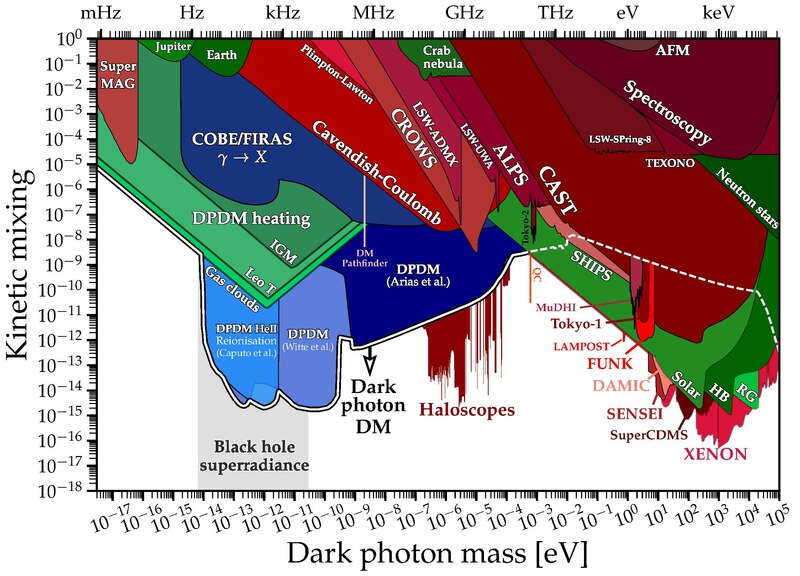
Since 2015, black holes have gained attention in astronomy, particularly regarding their potential role in discovering elusive dark matter particles like dark photons. Superradiance, a theoretical process, could theoretically boost these particles' energies near black holes. However, the absence of observed superradiance raises questions about dark matter's complexity and the validity of existing cosmological theories.

  •  

Dark Photons and the Illusion of Dark Matter

Dark matter is equated to the metaphor of the Emperor's new clothes. Dark photons and other hypothetical particles are fictitious constructs used to explain phenomena without concrete evidence, underlining that current astrophysical models are flawed and nonsensical.

  •  

Can Axions Cleanup the Problem of Fine-Tuning in the Universe?

The anthropic principle posits that the universe's physical constants are fine-tuned for life, a concept scrutinized in light of new theoretical research on ultralight axions. If dark matter isn’t primarily axionic, it poses challenges to this principle, questioning the universe's inherent design while pushing materialists to seek explanations devoid of a Creator.

  •  

Should Biblical Creationists Believe in Dark Matter and Dark Energy?

I question the acceptance of Dark Matter and Dark Energy by biblical creationists, suggesting they are problematic placeholders for undiscovered physics. The arguments for their existence are challenged by alternative cosmological models and criticisms of observational methodologies, calling for a re-evaluation of accepted astrophysical tenets.

  •  

Dark Energy May Not Exist | New Insight on the Cosmic Web?

Big bang cosmology faces unresolved problems with the standard ΛCDM model needing unknown fudge factors. A new timescape cosmology, where time passes faster or slower in voids and filaments of the cosmic web, may resolve the Dark Energy problem, but it indicates a need to rethink the foundations of cosmology.

  •  

Scientists May Have Found a New Way to Detect Dark Matter—By Listening to Black Holes


Scientists looking for dark matter have looked almost everywhere they could imagine: deep underground detectors, powerful particle colliders, precision telescopes, and maps of the universe itself. Yet, despite making up most of the matter in the cosmic realm, dark matter remained frustratingly invisible.

Now, researchers think they may have found a profoundly different way to look for it: by listening to black holes collide.

A new study published in Physical Review Letters suggests that gravitational waves—the tiny ripples in spacetime generated when black holes merge—may carry subtle fingerprints of dark matter if those black holes happen to collide within dense concentrations of the mysterious substance.

More intriguingly, when researchers applied their method to real gravitational-wave observations, one previously recorded event appeared to show a tentative preference for exactly that kind of hidden environment.

The results do not amount to a discovery of dark matter. Researchers repeatedly stress that alternative explanations are possible and that additional observations will be required. Still, the work opens a new observational front in one of modern physics’ longest-running mysteries.

“We know that dark matter is around us. It just has to be dense enough for us to see its effects,” co-author and MIT postdoc research fellow, Dr. Josu Aurrekoetxea, said in a press release. “Black holes provide a mechanism to enhance this density, which we can now search for by analyzing the gravitational waves emitted when they merge.”

Dark matter is believed to account for roughly 85 percent of all matter in the universe, yet it has never been directly detected. Scientists infer its existence because galaxies rotate too quickly and large-scale cosmic structures behave as though far more mass exists than telescopes can see.

Unlike ordinary matter, dark matter appears to interact almost exclusively through gravity, making it extraordinarily difficult to detect using conventional techniques.

That challenge motivated researchers to pose a different question. Instead of trying to see dark matter directly, could scientists detect its influence on something else?

The researchers’ answer focused on gravitational waves. These are disturbances in spacetime first directly detected in 2015 by the Laser Interferometer Gravitational-Wave Observatory (LIGO). Since then, the international LIGO–Virgo–KAGRA collaboration has cataloged dozens of black hole mergers and transformed gravitational-wave astronomy into one of the fastest-moving areas of astrophysics.

Traditionally, those signals have been treated as extraordinarily clean probes of the black holes themselves. However, in this recent study, researchers argue that the environment around merging black holes may matter more than previously thought.

The study centers on a class of hypothetical dark matter candidates called ultralight scalar particles. These represent exotic fields that appear naturally in many extensions of the Standard Model of particle physics and have long been considered viable dark matter candidates.

Under the right conditions, ultralight scalar particles could accumulate around spinning black holes, forming extremely dense clouds. Moreover, some of those clouds could become astonishingly concentrated.

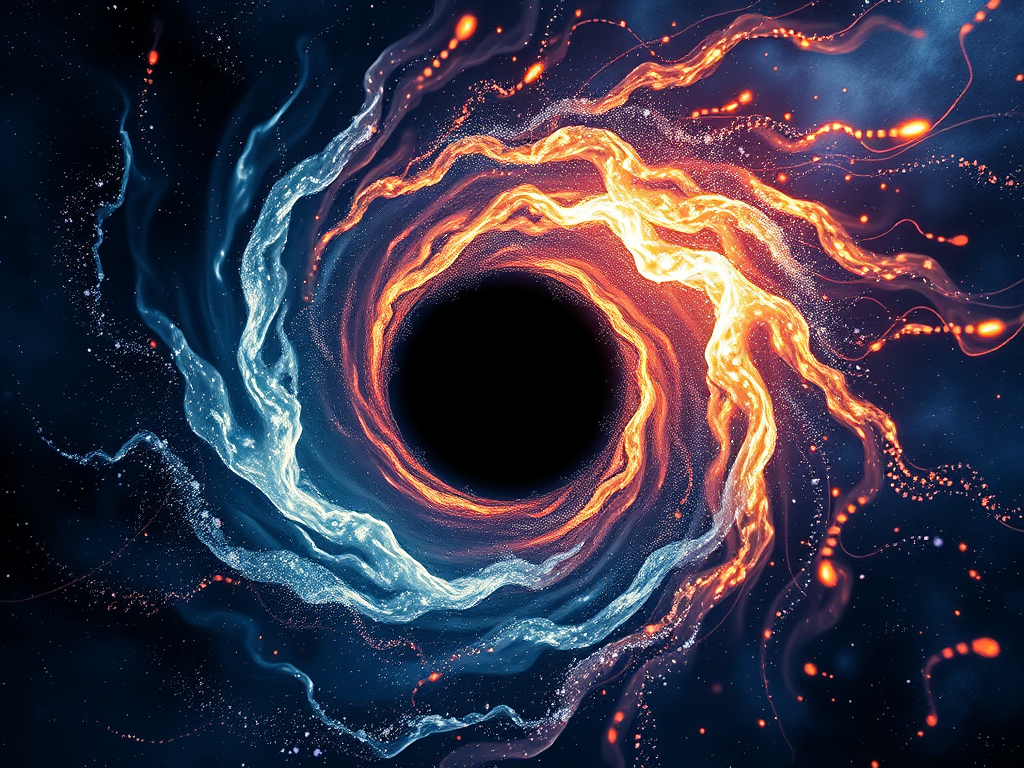
According to researchers, a process called superradiance may allow rapidly spinning black holes to transfer rotational energy into surrounding ultralight particles, dramatically amplifying them.

In some scenarios, those dark matter structures could reach densities more than 30 orders of magnitude greater than the average dark matter density in our galaxy. If a pair of black holes then spiraled together inside one of these environments, the surrounding scalar field would slightly alter their orbital motion.

That change would be subtle but measurable.

Rather than producing the gravitational-wave “chirp” expected from two black holes merging in empty space, the waves would show tiny distortions in timing and phase evolution, essentially arriving with an altered rhythm.

To test the idea, researchers developed a new semi-analytic waveform model capable of predicting how black hole mergers should appear embedded within environments of scalar dark matter. They then validated those predictions using full numerical relativistic simulations that model black hole mergers inside dense scalar fields.

The simulations showed that dark matter-like scalar structures could survive the violent inspiral process better than many earlier models had suggested.

Previous thinking often assumed equal-mass black hole binaries would destroy surrounding dark matter structures before merger. However, the new simulations suggest the opposite may sometimes occur. Portions of those structures can persist and potentially leave observable signatures in gravitational waves.

Armed with their model, the researchers turned to reality.

The team analyzed 28 gravitational-wave events from the publicly available GWTC-3 catalog collected by LIGO, Virgo, and KAGRA. Most events behaved exactly as expected.

Twenty-seven appeared consistent with black holes merging in a vacuum. But one event—GW190728, detected in 2019—stood out.

When analyzed under assumptions tied to superradiance, the signal showed what researchers describe as tentative evidence for a scalar environment surrounding the merger. The statistical preference reached a Bayes factor of approximately ln(B) ≈ 3.5—enough to attract attention but well below the standard required for a discovery claim.

If that interpretation ultimately proves correct, the data would point toward an ultralight scalar particle with a mass around 10^-12 electron volts.

That would place it in an area already discussed in theoretical dark matter research, although the authors acknowledge existing black hole spin measurements create some tension with portions of that parameter space.

Importantly, the researchers emphasize that they cannot rule out more ordinary explanations.

Environmental effects, parameter indeterminacies, or constraints in current waveform models could potentially mimic some of the observed behavior. Researchers carefully examined possibilities, including orbital eccentricity and line-of-sight acceleration, and found no strong evidence that those effects explain the signal, but warn that confirmation will require future observations.

“The statistical significance of this is not high enough to claim a detection of dark matter, and further checks should be performed by independent groups,” Dr. Aurrekoetxea said. “What we think is important to highlight is that without waveform models like ours, we could be detecting black hole mergers in dark matter environments, but systematically classifying them as having occurred in vacuum.”

That said, further checks of the researcher’s theory may arrive sooner than expected.

Current gravitational-wave observatories continue collecting data, and next-generation instruments such as the Einstein Telescope and Cosmic Explorer are expected to detect mergers with far greater sensitivity and over longer durations. That improvement could make tiny environmental signatures easier to isolate from ordinary black hole physics.

For now, the result remains an intriguing hint, but not yet proof.

Nevertheless, after decades of dark matter remaining elusive through light, particles, and laboratory experiments, researchers are beginning to explore the possibility that the universe’s missing mass may announce itself in an entirely different way. Not by being seen. But by changing the sound of spacetime itself.

“We now have the potential to discover dark matter around black holes as the LVK detectors keep collecting data in the coming years,” co-author and physicist at the Center for Cosmology in Belgium, Dr. Soumen Roy, said. “It is an exciting time to search for new physics using gravitational waves.”

Tim McMillan is a retired law enforcement executive, investigative reporter and co-founder of The Debrief. His writing typically focuses on defense, national security, the Intelligence Community and topics related to psychology. You can follow Tim on Twitter: @LtTimMcMillan.  Tim can be reached by email: tim@thedebrief.org or through encrypted email: LtTimMcMillan@protonmail.com 

  •  

Is Dark Energy Unnecessary? Mathematicians Challenge Standard Cosmological Model of Universe

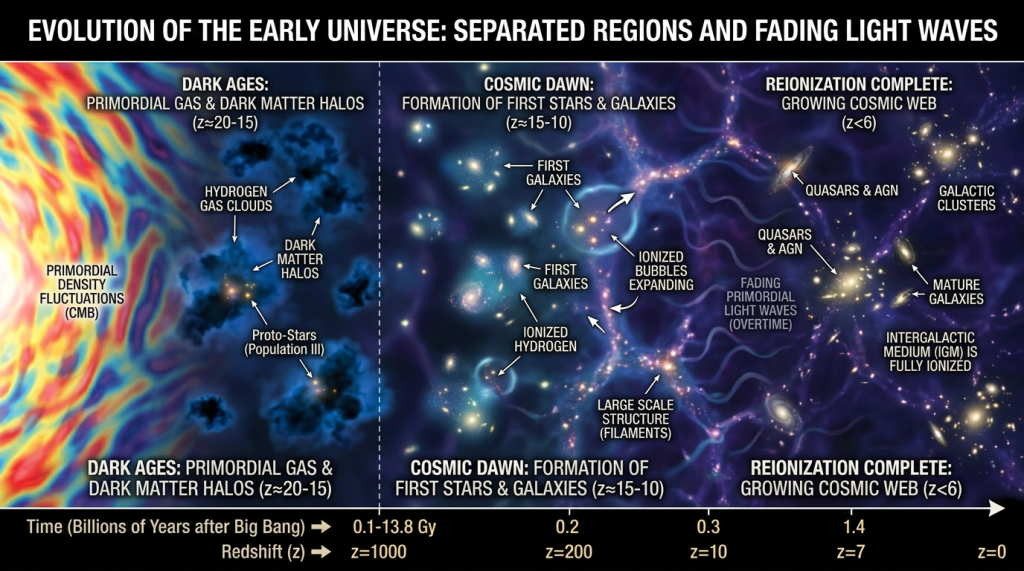
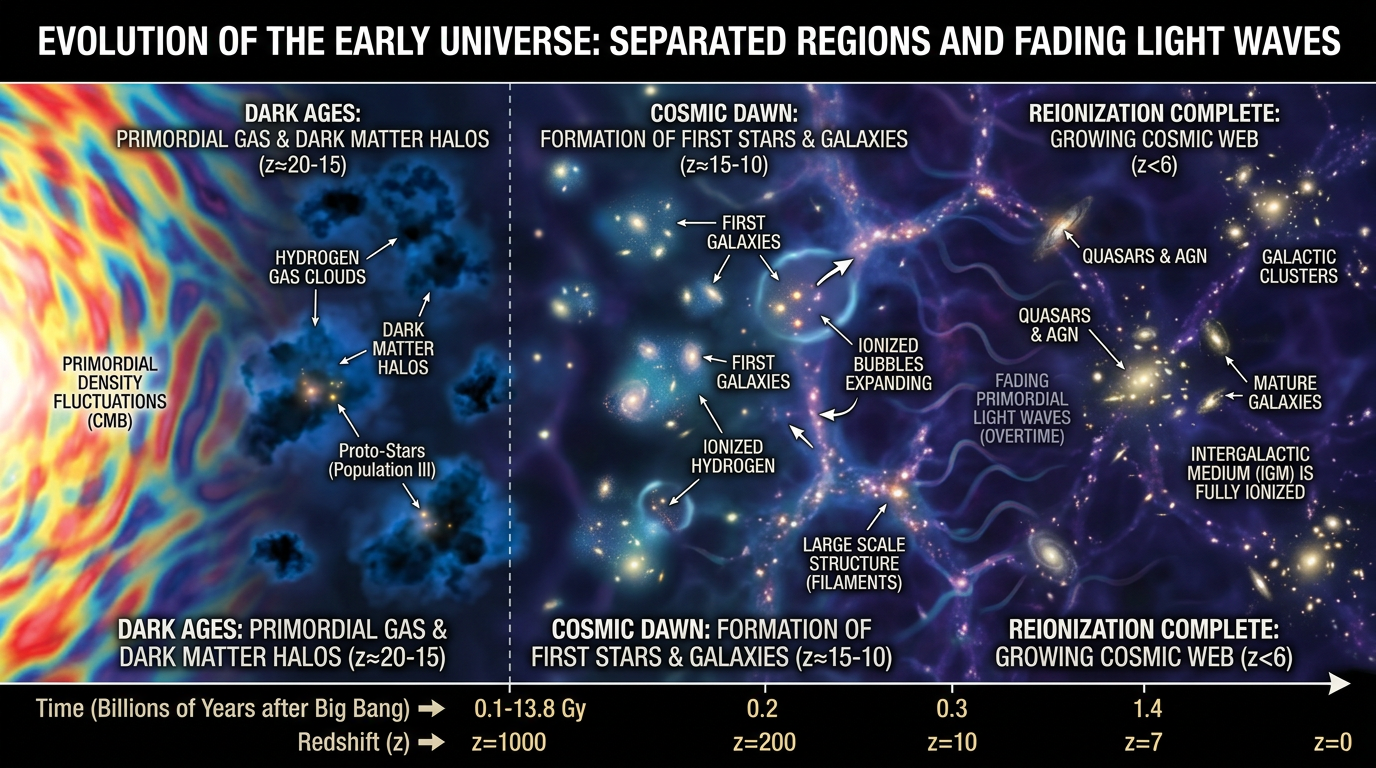
This artist’s impression shows the evolution of the Universe beginning with the Big Bang on the left followed by the appearance of the Cosmic Microwave Background. The formation of the first stars ends the cosmic dark ages, followed by the formation of galaxies. Image credit: M. Weiss / Harvard-Smithsonian Center for Astrophysics.

Mathematicians from University College London and the University of California, Davis, have published a mathematical proof that the Universe’s accelerating expansion can be explained without dark energy, dealing a serious blow to the Lambda-cold dark matter model.

The post Is Dark Energy Unnecessary? Mathematicians Challenge Standard Cosmological Model of Universe appeared first on Sci.News: Breaking Science News.

  •  

Characterizing galaxies at “cosmic noon”

The universe is around 14 billion years old, but scientists theorize that no stars formed for the first several hundred million years, during an era known as the cosmic dark ages. They refer to the first billion years or so after this, when stars formed, as the cosmic dawn. At that time, the very oldest galaxies first assembled from collections of gas and plasma. 

As these galaxies assembled and more material became available, the number of stars formed each year increased. Around 2 to 3 billion years after the Big Bang, galaxies grew faster than they ever would, producing stars at the highest rate in the universe’s history. This era is called cosmic noon.

Researchers from the Netherlands recently investigated 3 distant galaxies whose light began its journey to Earth during cosmic noon. They selected targets from a set of ancient star-forming galaxies identified in the ALMA – Archival Large Program to Advance Kinematic Analysis or ALMA-ALPAKA project. Of these, they chose to study 3 galaxies labeled ID1, ID3, and ID13.

They combined 2 different types of data to produce a detailed description of these galaxies. First, they collected data from an enormous telescope comprising 66 antennas in Chile, known as the Atacama Large Millimeter/submillimeter Array or ALMA. They used ALMA to detect radio-wave emissions from carbon monoxide and elemental carbon in these galaxies. The researchers stated that studying these chemicals in distant galaxies could reveal how their free-floating gas clouds move. They also used publicly available data from JWST’s Near Infrared Camera, or NIRCam, to determine how much light the galaxies’ stars emitted. By analyzing cosmic noon galaxies in multiple different ways, the team aimed to measure their masses and the relative contributions of regular matter and dark matter.

They used a computer program developed by other astronomers to interpret the JWST data as a series of maps showing the distribution of stars across each galaxy. They used this light-emission data to estimate the total mass of all the stars in these galaxies. Then they developed an original computer program to map the distribution of gas through each galaxy using the ALMA data. The team used these maps to create plots, known as rotation curves, which show how fast particles orbit each galaxy’s center as a function of their distance from it. 

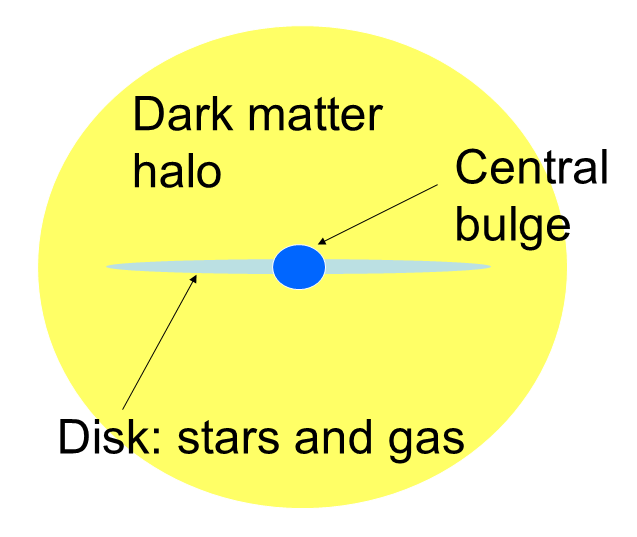
The astronomers used these rotation curves to estimate the amount of dark matter in each galaxy. They explained that this method works because dark matter is totally invisible, but it still exerts a gravitational pull. Its gravitational pull causes visible material like stars and gas closer to the edges of these galaxies to move faster than they would in galaxies without dark matter. 

The team found that these galaxies had between 39 and 80 billion times the mass of our sun, or solar masses, in stars. They had between 4 billion and nearly 16 billion solar masses worth of free-floating gas. And they had from 1 trillion to 31 trillion solar masses of dark matter.

However, when the team compared the light-emission data with the rotation curves, they found a discrepancy. Typically, dark matter resides in a shell or halo surrounding a galaxy, meaning it should mostly affect material near the galaxy’s outer edge. Since astronomers don’t usually have to account for dark matter near a galaxy’s center, they can calculate the total mass of center material based on the amount of gas and stars they see there. But near the centers of these galaxies, the team found that the masses they derived from the light emissions were less than what they calculated from the rotation curves. 

They proposed multiple potential explanations for this discrepancy. First, they suggested that the halo shape might not be a good model for the dark matter distribution in all galaxies, meaning that cosmic noon galaxies could contain dark matter near their centers. Second, they suggested that stars could be packed tightly in the center of these galaxies, blocking each other’s light emissions. Third, they suggested that galaxy ID1 could have a supermassive black hole as big as 1.5% its total stellar mass at its center.

The team concluded that they now have a detailed picture of the mass distribution in these cosmic noon galaxies, but the reason for their center mass discrepancies remains elusive. They suggested that a complex relationship exists between the dark matter halos and the rest of the material within these galaxies. They indicated that future astronomers could adapt their methods to study the distribution of material in other distant galaxies studied by ALMA-ALPAKA and forthcoming galactic surveys.

The post Characterizing galaxies at “cosmic noon” appeared first on Sciworthy.

  •  
❌