Reading view

Amazon’s AI-Generated Animated Series Canceled After Relentless Derision

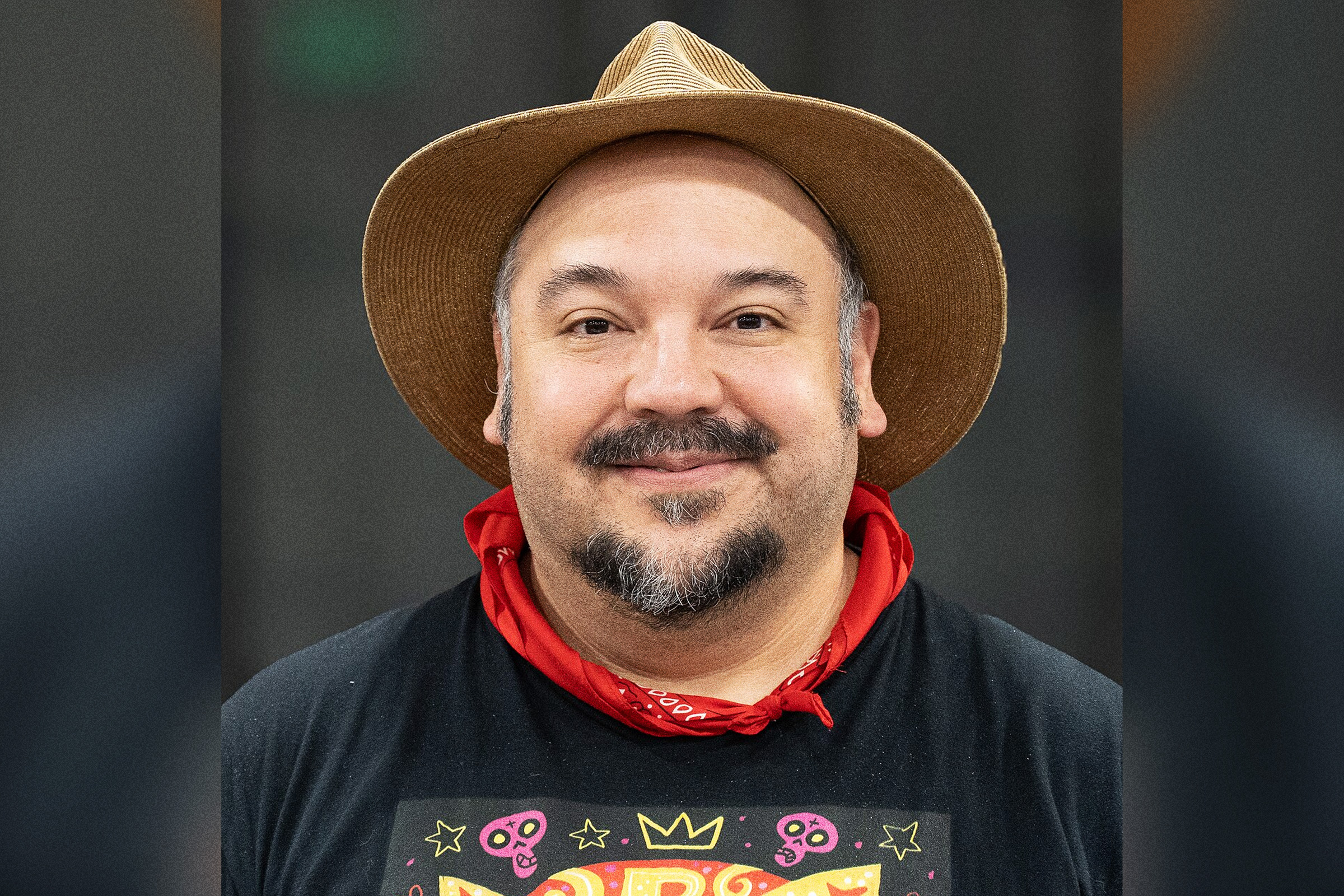
At first, it felt a bit like Emmy-winning writer director Jorge Gutierrez had been living under a rock.

On May 27, Amazon announced that it had ordered an animated series, dubbed “Punky Duck,” as part of its GenAI Creators’ Fund, celebrating it as a “creative breakthrough.” The fund, a collaboration between Amazon’s MGM Studios and its Amazon Web Services, was designed to hand creators “access to professional-grade AI tools and funding” to “produce high-quality cinematic entertainment.”

Gutierrez seemingly couldn’t believe the power he’d been handed.

“The best way I can describe it is, it’s like you have sex, and then someone hands you the baby,” he told a panel during an announcement last week. “It’s pretty crazy.”

However, given the way the conversation surrounding the use of AI in creative industries has been headed, it shouldn’t come as a surprise that reactions to the news were overwhelmingly negative, with Gutierrez swiftly becoming the target of an astonishing amount of online outrage.

His Wikipedia profile was edited to describe him as a “sellout” and early attempts to allow his fans to vent their frustration on his Instagram account didn’t go over well, either, forcing him to delete swaths of posts.

Not all the derision was from the online peanut gallery.

“It is very seductive that something now exists that contains the collective works of millions of artists and wordsmiths all thrown in a blender allowing one to pour out on demand things based on suggestions and prompts,” wrote acclaimed voice actor Billy West. “You become a soul stealer, a grave robber of sorts. You are an artist! God gave you a far greater gift and purpose to share with others. We need your true self!”

The backlash was so extensive, Gutierrez ended up backtracking on the lucrative gig entirely, in one of the clearest signs yet that AI has become toxic sludge to much of the audience Amazon is trying to woo.

“I have decided to drop out of the AI program at Amazon,” he tweeted on May 29, just two days after the company’s announcement. “I will not be making a Punky Duck series. Actions speak louder than words.”

The incident perfectly highlights just how much the AI backlash has grown, with experts warning that the tech is causing cultural stagnation while Hollywood actors panic over being replaced. Some of the biggest names in the industry have publicly spoken out against the use of AI in creative fields, forming a expanding line of resistance.

It apparently wasn’t just angry comments directed at Gutierrez for “selling out.” In a separate tweet, Gutierrez said that “the racist stuff and the attack on my kid were too much,” indicating pundits online had gone to extreme lengths.

Even this attempt to defuse the situation didn’t sit well, with users accusing him of pulling the “racism card,” while others claimed he was “making this up to deflect from your piss poor choices.”

Oddly enough, Gutierrez was once a vocal critic of AI, as the Los Angeles Times reports, posting several memes decrying the tech between 2023 and 2025.

“Threatening the dude and his family is obviously going way too far, but I’m still against major animators using AI, 100 percent,” one Reddit user argued. “I’m still glad he dropped out of it, but I f***ing hate that people threatened the dude.”

“Animation isn’t worth that, the hell is wrong with people?” the user added.

Meanwhile, Gutierrez has tried to get the angry mob back on his side.

“Learning a lot from many of you,” he tweeted. “Thank you. Lots of information that I’m digesting wholeheartedly. I am absolutely understanding the concern of using AI to assist an animation pipeline.”

“For all those showing me grace, I really appreciate it,” Gutierrez added. “I have a lot to think about.”

More on AI backlash: Harvard Graduation Speaker Unloads on AI in Profanity-Loaded Tirade, Prompting Cheers From Students: “I’m Here to Tell You the Mission of Your Generation Is to Destroy AI”

The post Amazon’s AI-Generated Animated Series Canceled After Relentless Derision appeared first on Futurism.

  •  

All These Galaxy-Scale IPOs Are Piling on Risk of an Economic Crisis

The United States is facing what’s shaping up to be the largest series of initial public offerings in the history of the modern stock market. How they go is anyone’s guess, but the results are sure to be extreme one way or another.

There are three absolute whoppers looming on the horizon: Elon Musk’s absurd $1.75 trillion SpaceX public launch targeted for early June, as well as IPOs by the already-hulking AI firms Anthropic and OpenAI. As the Economist notes, the triple threat could feed some $4 trillion worth of value into the US stock market — if, that is, the market can keep them down, or even swallow them all in the first place.

As the publication observes, huge IPOs like his are typically seen as signs that a bull market, a long period of rising stock prices, is about to come to an end. For example, we saw similar conditions prior to market downturns in 2021, 2008, and the late 1990s. The Economist explains that mega-IPOs sometimes signal bear markets — prolonged periods of declining prices — as in 2021, but could likewise forewarn heavier downturns, like the Great Recession or the collapse of the dot-com bubble.

How severe that reversal could be depends in no small part on how those three mega corps perform. If there’s underwhelming investor appetite for their unprecedented valuation targets, the Economist notes the three IPOs could easily drag markets into correction territory all on their own.

That’s because each firm is heavily involved in the financial behemoth that is AI. With global private investment in the tech skyrocketing despite no tangible financial returns, the bill will eventually come due on the AI frenzy. If the IPOs disappoint, analysts fret, it could signal that patience has finally run out for the country’s unprecedented technological spending.

What ultimately sparks the panic that sends stock brokers stampeding for the door is impossible to predict, but it seems painfully clear this can’t keep on forever.

More on finance: Bank Warns of Tesla Stock Collapse

The post All These Galaxy-Scale IPOs Are Piling on Risk of an Economic Crisis appeared first on Futurism.

  •  

Bernie Sanders Announces Plan to Seize Half of AI Industry for the Public Good

The hype surrounding generative AI has generated astronomical amounts of value, with tech companies raising tens of billions of dollars and many — including OpenAI and Anthropic — preparing to go public this year at sky-high valuations, in moves that will produce incredible wealth for their stockholders.

Whether the average Joe will ever directly benefit from all of this is looking dubious at best. That’s despite many of these tools relying on AI models that were trained on the creative output of millions of people, copyright be damned, the vast majority of whom have yet to see a single cent. Quite the contrary — many workers are facing a disastrous job market as a result of corporations stretching themselves thin through massive investments in AI.

Meanwhile, concerns continue to grow that the billionaire class is unethically enriching itself through the scheme, while shutting out the democratic process.

To independent senator Bernie Sanders (D-VT), that kind of injustice needs to end. In an essay published by the New York Times, Sanders argued for the creation of an “AI Sovereign Wealth Fund” that would be created through a “one-time 50 percent tax” on the stock of AI companies, including OpenAI, Anthropic, and xAI, to “give the public a direct ownership stake.”

In other words, Sanders is proposing to transfer half of the AI companies’ stock into a public fund — a one-time transfer as opposed to a tax on profits — which the government will manage. Generated revenues could be distributed as “direct payments to the American people.”

While many important details have yet to be ironed out, as Sanders admits, it would represent a massive shift and equity transfer — if his act were to pass, that is.

“The question, then, is not whether AI will change the world,” he wrote. “It will. The question is: Who will own and control that future? Who will benefit from it, and who will be hurt by it?”

Sanders argues such a fund would “give the public a direct role in determining the future of this technology,” while also guaranteeing that the “trillions of dollars potentially generated by AI are used to improve the lives of all of us — not simply to make the richest people in the world even richer.”

While chances of the senator’s idea surviving the Congressional approval process are likely slim — the AI industry holds immense influence over Congress — it’s a creative approach to an increasingly sticky problem. Even tech leaders, who have watched as the backlash to AI continues to grow, have turned their attention to possible solutions to address even greater wealth disparity caused by the emergence of AI.

Jeff Bezos recently argued that the bottom 50 percent of earners shouldn’t pay any taxes, while OpenAI CEO Sam Altman came up with a new concept called “universal basic compute,” which would provide free access to those who can’t afford costly AI tools. Meanwhile, SpaceX founder Elon Musk has called for a new take on universal basic income, uninspiringly dubbed “universal high income.”

Sanders’ sovereign wealth fund takes the idea a step further, giving Americans who don’t happen to be tech billionaires an opportunity to get in on the ground floor. The concept has already been “put into practice right here at home,” Sanders wrote, pointing to an Alaskan sovereign wealth fund that’s allowed residents to receive annual dividends through oil revenues.

“To start, the billions, if not trillions, of dollars generated by this fund would provide direct payments to the American people,” he wrote. “And as the fund generates more and more wealth, the proceeds would be used to ensure that every man, woman and child in our country has a decent and dignified standard of living, including health care, education and housing.”

More on Bernie Sanders: Unions Attack AI for Menacing Human Jobs

The post Bernie Sanders Announces Plan to Seize Half of AI Industry for the Public Good appeared first on Futurism.

  •  

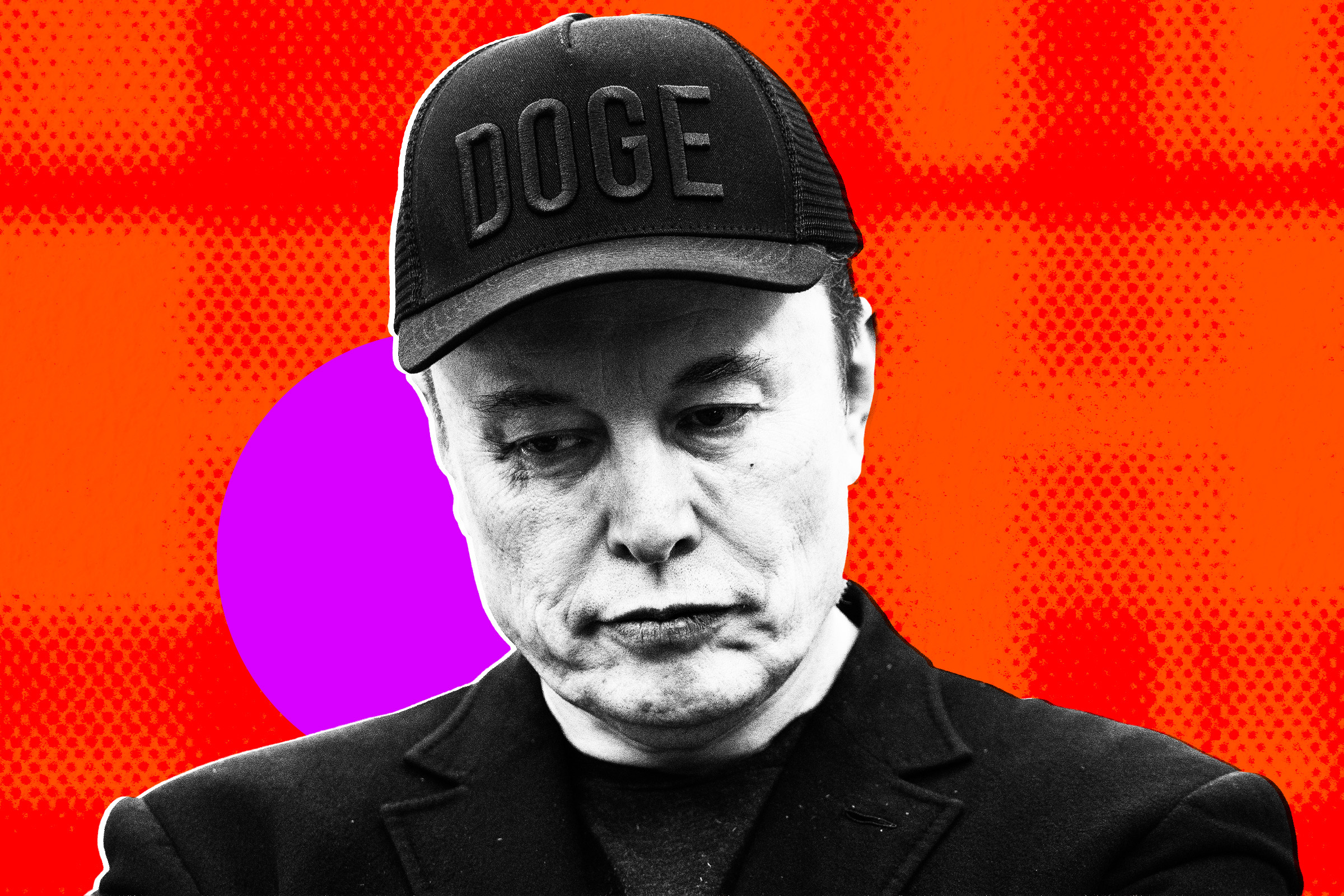
Elon Musk Says He Only Got Involved in Politics Because He Couldn’t Deal With Having a Transgender Child

Dismantling the federal government. Building a “MechaHitler” AI. Waging a war on Woke. Donating nearly $300 million to get Donald Trump reelected as president. What caused Elon Musk, once a liberal hero, to go down this path?

According to Musk: his estranged daughter, Vivian Wilson.

Doing what he does best — compulsively doomscrolling his own social media site, X — Musk responded to a fan’s post claiming he wouldn’t be the based, Nazi saluting hero that he is today if it weren’t for his daughter’s transition.

“We should never forget that if not for Vivian, Elon Musk never would have gotten involved, never would have purchased Twitter, Kamala Harris would be President and the Left-wing would have total instrumental control over the construction of Skynet,” the poster claimed.

“True,” Musk replied.

Musk might be being a little facetious here, but there’s no denying that he has a weird and unhealthy obsession with Wilson, who publicly came out as transgender in 2022, and her gender identity. He has tirelessly repeated the line that the “woke mind virus killed my son,” and claims that this is why they’re estranged — actually, she disowned him — and not because he regularly misgenders her or says she’s suffering a “tragic mental illness.”

Of course, Wilson’s perspective is pretty different. In interviews, she’s described Musk — who has 14 known children with at least four different  women — as an absent and “cruel” father who would constantly demean her for being feminine, including yelling at her for having a high-pitched voice.

In spite of that, Wilson says that Musk signed the paperwork giving parental consent for her to start the medical interventions to begin her gender transition. It seems totally out of character for him today, but it wasn’t that long ago, we should remind you, that Musk was proudly boasting about how LGBTQ friendly his company Tesla was, even telling bigots, “Don’t buy our car if that’s a problem.” Encapsulating his political about-face, Musk now claims that he was “tricked” into approving Wilson’s gender treatments.

All that being said, Wilson finds ascribing Musk’s villainous turn to her transition somewhat insulting, and implied that his reactionary sympathies were always there.

“It’s such a convenient narrative, that the reason he turned right is because I’m a f**king tr**ny, and that’s just not the case. That’s not what that does to people,” she said in a 2025 interview with Teen Vogue.

“Him going further on the right, and I’m going to use the word ‘further’ — make sure you put ‘further’ in there — is not because of me,” she added. “That’s insane.”

More on industrialists: Trump Shovels $4 Billion Directly to Elon Musk, Who Spent a Fortune Getting Him Elected

The post Elon Musk Says He Only Got Involved in Politics Because He Couldn’t Deal With Having a Transgender Child appeared first on Futurism.

  •  

AI Billionaires Are Starting to Get Scared

As it turns out, telling the world’s workers to prepare for a dystopia rife with poverty and alienation isn’t the smartest way to market your exciting new tech.

As data centers are shut down by angry mobs and AI surveillance cameras are ripped from their poles, the world’s tech billionaires and CEOs are waking up to the reality that the masses are, broadly speaking, not on board with their plan to automate the world with AI. It isn’t necessarily that working people want to stay shackled to the wage-based employment system, but that folks need those jobs to have any hope of eating, seeing a doctor, and sleeping with a roof over their heads.

Instead of the tone-deaf hype we once heard about AI’s potential, these rich and powerful figures are now moderating their messaging, calling for policy measures to help workers weather the AI storm — or perhaps head off a violent revolt led by the many who lost their jobs.

For example, Amazon executive chairman Jeff Bezos — whose net worth would take the average US worker 3.8 million years to earn on their own — recently shared his new belief that the bottom 50 percent of US earners should pay no federal income tax.

“You could double the taxes I pay and it’s not going to help that teacher in Queens,” he said, painting the federal income tax as the main hurdle for working-class families (though he’s started paying his share in recent years, Bezos paid $0 in federal income tax in 2007 and 2011, when he was already a multibillionaire.)

Elon Musk, meanwhile, has floated the idea of “universal high income,” a play on the well-known concept of universal basic income, where a government issues cost-of-living checks to the broader population (from what we can tell, the only difference is that Musk’s version would be driven by humanoid robots creating radical economic abundance).

OpenAI CEO Sam Altman has similar ideas, like a “universal basic compute” where everybody’s income corresponds to a share of his company’s revenue — which would also conveniently make ChatGPT the most important AI chatbot on the planet.

There’s also another option that none of them seem to be pushing: if AI is as disruptive as they say, there’s always the option to pull the plug. That they won’t even consider this choice suggests that their appeals to the toiling masses aren’t in good faith — which at this point should be obvious to just about everyone.

More on AI billionaires: New Website Detects Apocalypse If Billionaire Jets Start Fleeing en Masse

The post AI Billionaires Are Starting to Get Scared appeared first on Futurism.

  •  

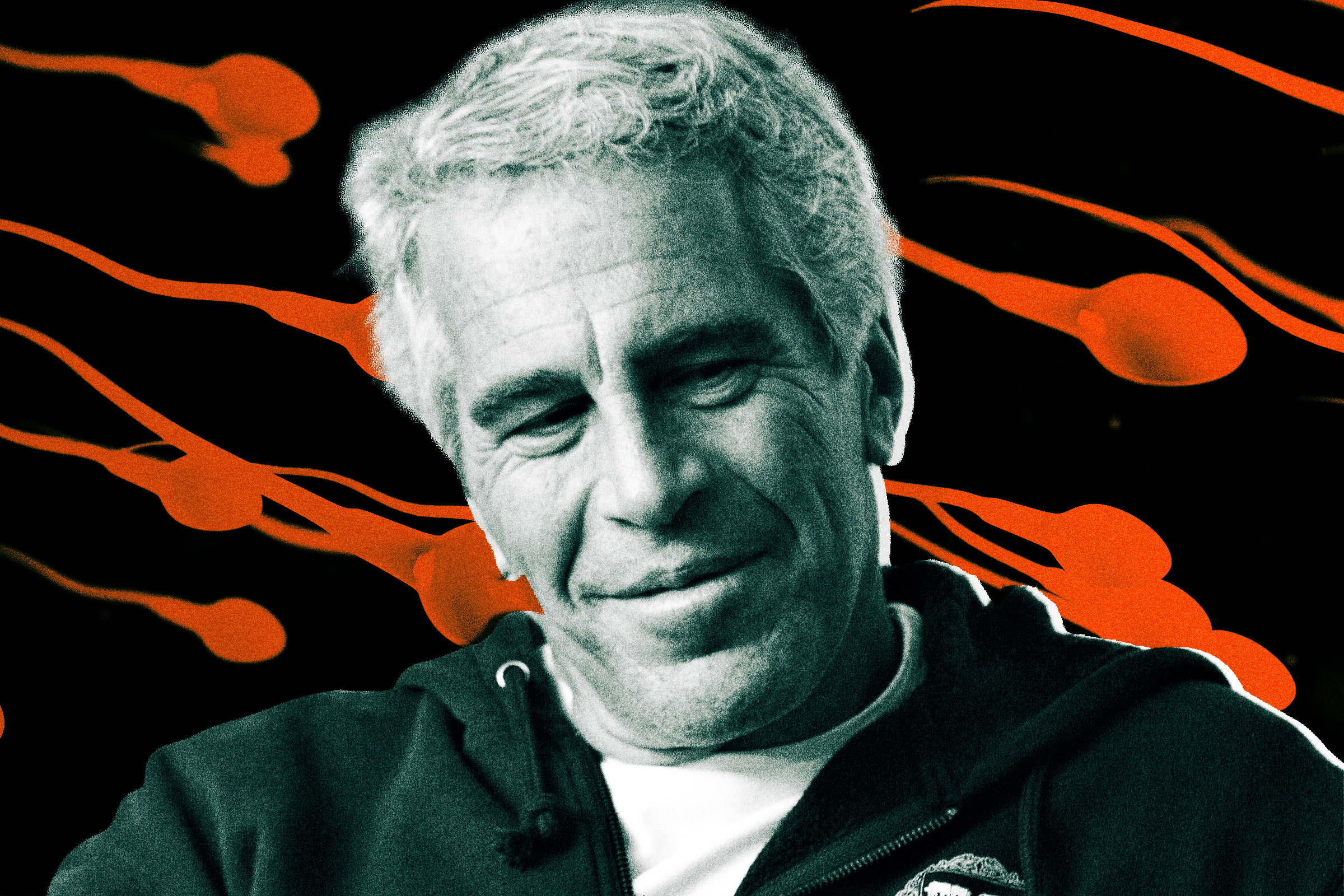
Jeffrey Epstein’s Biopreserved Sperm Is Missing

Today in news we regret having to deliver: Jeffrey Epstein’s missing sperm.

According to documents in the Epstein files released by the Justice Department and viewed by The New York Times, the deceased child sex criminal and accused sex trafficker kept his sperm locked up in a cryobank several years before he died — but its current whereabouts are unknown.

A sample of his secretions were deposited with the California Cryobank sometime before 2012, and he signed a new contract in 2016, with files showing emails he received notifying him of an upcoming renewal payment. 

Epstein, who pleaded guilty to child prostitution in 2008 and was charged with sex trafficking before his death in 2019, indicated that he didn’t want his sperm discarded if he died. Instead, according to a contract in the files, it should fall under control of his estate or other legal representative. However, it’s unclear if these instructions were honored.

CooperCompanies, which has owned California Cryobank since 2021, appeared tight-lipped about the ordeal, telling the NYT that it “does not currently store any samples associated with Jeffrey Epstein,” and answering no further questions.

Adding to the mystery, the document for the trust that Epstein left most of his money and possessions makes no mention of his sperm. Naomi Cahn, a law professor at the University of Virginia, said that disputes over his sperm would likely be handled under the laws of the US Virgin Islands, where Epstein’s notorious island was located, and where his estate is administered.

Storing sperm isn’t an uncommon practice. But on top of him being a convicted sex criminal and pedophile, Epstein’s motivations for doing so, we can safely infer, were pretty dark. He had a lifelong obsession with eugenics and using science to supposedly improve human genetics, an ambition he weaved with his racist beliefs. As part of that worldview, he also wanted to “seed” the human race with his DNA by impregnating multiple women at a time at his New Mexico ranch.

More on Epstein: Elon Musk Not Doing Well After Epstein Files Reveal

The post Jeffrey Epstein’s Biopreserved Sperm Is Missing appeared first on Futurism.

  •  

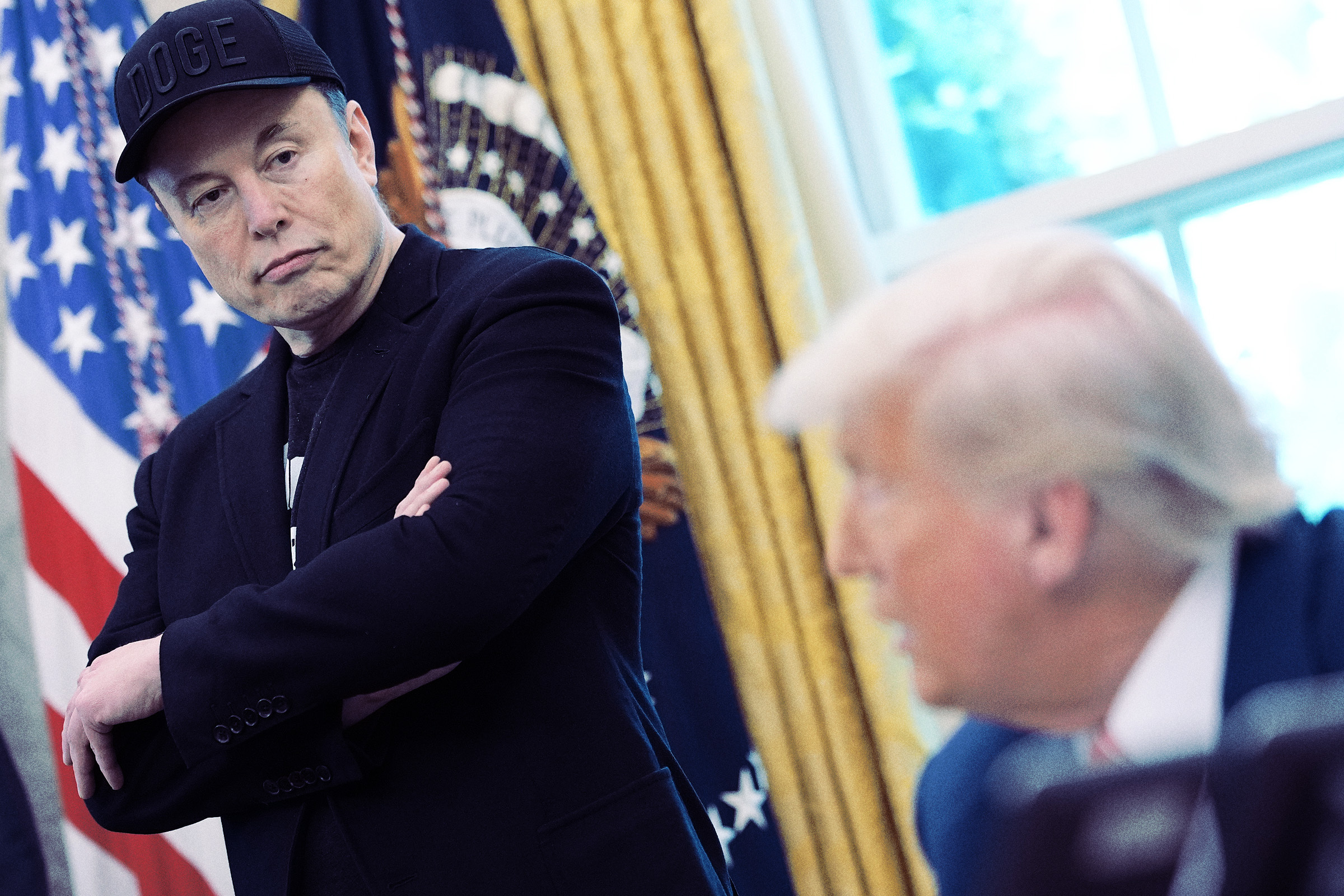
Trump Shovels $4 Billion Directly to Elon Musk, Who Spent a Fortune Getting Him Elected

Elon Musk spent just shy of $300 million supporting Donald Trump’s reelection in late 2024 — a full-throated financial commitment that appears to be paying off in a big way.

Musk’s space company SpaceX, in particular, has massively benefited from the duo’s on-and-off-again relationship, scoring billion-dollar deals with the government.

Most recently, Reuters reports, SpaceX was awarded a $4.16 billion contract with the US Space Force to develop detection satellites that can track and target airborne threats. Just days earlier, the military arm awarded the company a separate contract, worth $2.29 billion, to build a military communications network in low-Earth orbit to support ground-based operations.

Besides the impossible-to-overlook role of Trump and Musk’s cozy relationship, the timing of the announcement will raise plenty of eyebrows. SpaceX is expected to go public soon at a valuation of north of $1.75 trillion, a blockbuster IPO that could directly benefit from a government partner signing a flashy contract.

The latest threat detection contract is part of the Trump administration’s so-called Golden Dome missile defense system. While plenty of fundamental questions remain over its design, the network could cost well over $1 trillion to build out, according to experts, which would be far than the White House has estimated.

The threat detection satellite contract, called the Space-Based Advanced Moving Target Indicator, will see SpaceX develop what Reuters likens to an “interconnected system-of-systems” that collects and analyzes data from a host of different sources, from space-based sensors, to secure communication links.

Zooming out, cushy government contracts have long played a key role in the flourishing and very survival of Musk’s space venture. According to an analysis by the Washington Post last year, SpaceX had received $38 billion in government contracts, loans, subsidies, and tax credits, as of February 2025.

Given their budding relationship and the latest multibillion-dollar contracts, that number has already grown substantially — and will very likely continue to grow, especially as SpaceX looks to go public.

The company is also set to play a key role in the Trump administration’s efforts to return astronauts to the surface of the Moon, and was awarded a $2.9 billion contract in 2021 to build the requisite lunar lander.

More on SpaceX: SpaceX Announces Plans to Put Billionaire on First Rocket to Mars

The post Trump Shovels $4 Billion Directly to Elon Musk, Who Spent a Fortune Getting Him Elected appeared first on Futurism.

  •  

Meta’s AI Support Bot Is Giving Hackers Access to Other People’s Instagram Accounts Just by Asking

In March, Mark Zuckerberg’s Meta announced a new Meta AI support assistant feature on both Facebook and Instagram, providing users with a way to “resolve account problems” and help in taking down any offending impersonator accounts or scams.

Besides highlighting the tech industry’s seemingly insatiable appetite for automating customer service-level jobs with AI, the new feature appears to have backfired spectacularly. As 404 Media reports, the chatbot happily obliged when hackers asked it for access to high-profile Instagram profiles.

The ruse is shockingly simple: after matching the account owner’s geographic region using a VPN, the hackers asked the support chatbot to change the email address associated with the profile, thereby allowing them to successfully complete two-factor authentication. Worse yet, the vulnerability has been around for several months already, according to Telegram group messages reviewed by 404 Media.

“t’s either the new Meta Accounts Center glitching out or my Instagram account is being targeted in a hacking attempt,” former Meta researcher and self-proclaimed hacker Jane Wong wrote in a Threads post. “It appears that my password has been changed without my knowledge / I was not able to log in using my password.”

The exploit highlights glaring cybersecurity issues that continue to plague AI-powered chatbots. We’ve seen countless instances of large language model based tools being jailbroken, tricked into telling lies, or even hallucinate made-up company policies leading to plenty of confusion and even lawsuits.

Experts have also long warned against handing AI chatbots personal information, citing the risk of data leaks. Meta, in particular, has garnered a reputation for continuously treating user data with little care. In March, for instance, The Information reported that an in-house AI agent had caused a critical security incident at Meta, exposing sensitive user data to people without proper authorization.

While it’s unclear whether they were connected to the latest exploit, the news comes after several high profile Instagram accounts, including former president Barack Obama’s and Space Force chief master John Bentivegna’s, were hacked.

Hackers have been offering access to high-profile accounts in exchange for small amounts of money by using the vulnerability, per 404 Media.

Fortunately, Meta appears to have patched the issue, but considering the exploit was discovered months ago, the damage could be extensive.

More on Meta: Meta Workers Say They’re Seeing Disturbing Things Through Users’ Smart Glasses

The post Meta’s AI Support Bot Is Giving Hackers Access to Other People’s Instagram Accounts Just by Asking appeared first on Futurism.

  •  

Dick’s Sporting Goods Launches AI Personal Trainer to Fix Your Horrible Golf Swing

These days, retailers are increasingly hitching their wagon to the AI horse: big box stores like Target have issued guidance that they’re not responsible for any errant purchases its AI agent charges to your credit card, while chain restaurants like Taco Bell and Pizza Hut have forced AI into their services, with dismal results so far.

Now, sports retail giant Dick’s Sporting Goods is getting in on the hype with its own AI personal trainer. Called “Coach by Dick’s,” the system will be an AI agent meant to give athletes tips on upping their game, which will of course include targeted ads for new sports equipment, Retail Dive reported.

According to a Dick’s press release, the AI system “delivers immersive conversational experiences that go beyond transactional shopping, guiding athletes using timely, relevant data and adapting to their stated preferences, goals and behaviors.”

Built on the Adobe Brand Concierge platform, the whole thing goes live on the Dick’s mobile app in June, at which time athletes will be able to “access training pro tips and product education grounded in Dick’s sport knowledge.”

Whether you ask for advice improving your forehand, or for tips on navigating the basketball league you just joined, Coach by Dick’s is overtly geared toward getting you to the checkout line.

As Dick’s chief technology officer Vlad Rak said in the press release, “Coach by Dick’s helps guide athletes to the right product, the right fit, and trusted expertise so every interaction is personal to what they need.”

Needless to say, how this plays out in reality is anybody’s guess — especially where physical activity is concerned, where misinformation or improper training from an AI chatbot could easily lead to debilitating injuries. We’ll be watching.

More on AI in retail: New York’s Beloved Bodegas Are Filling Up With AI Slop

The post Dick’s Sporting Goods Launches AI Personal Trainer to Fix Your Horrible Golf Swing appeared first on Futurism.

  •  

Sports Betting Scandals Are Tearing College Football Apart

The rise of gambling platforms like DraftKings and Polymarket has supercharged a timeless phenomenon: sports stars ruining their careers by placing bets on their own games.

The latest case rocking the world of college sports is instructive. According to reporting from Fox News, Texas Tech star quarterback Brendan Sorsby is seeking an injunction in a Texas district court after the National Collegiate Athletic Association suspended him over hundreds of bets he’s placed throughout his four-year college football career, in direct violation of Association rules.

If granted, the court order would functionally allow Sorsby to play football during his senior year — while his lawsuit against the NCAA works its way through the courts.

Sorsby previously admitted to placing hundreds of bets worth some $90,000 through family members and friends, including on games he himself was playing in while at Indiana University and Texas Tech. He allegedly helped himself to a buffet gambling apps — according to court filings, Sorsby frequented books hosted by FanDuel, Underdog, Prize Picks, and Hard Rock Bet. After the allegations came to light, the young QB went so far as to check himself into gambling rehab for several weeks, CBS Sports reported.

“I want to be clear that I never bet to make money,” Sorsby wrote in his court statement. “Given the money I had and earned from NIL [name, image, and likeness], the total amount of money I made from 2022 to 2025 was not a big deal to me. I never kept track of my betting over time, but I’m pretty sure I lost more than I won.”

His case comes as college-aged men are increasingly losing themselves to gambling on sports betting apps and prediction markets like Polymarket and Kalshi, which are really just betting parlors by another name.

Back in January, the Associated Press reported that federal investigators had closed in on a massive scheme to rig games for bettors by exploiting students playing in the NCAA as well as the Chinese Basketball Association. In Fall of 2025, two separate investigations uncovered at least nine student-athletes who had manipulated their on-court performance to make sure certain bets hit. At the time, the NCAA said it was looking into 30 separate violations allegedly committed by current or former players.

Though the NCAA prohibits student athletes from betting on any game — whether they play in it or not — the culture around college sports is a breeding ground for gambling companies. Sportsbook advertise heavily in NCAA-adjacent spaces, for example, by partnering with broadcast networks like ESPN or even universities themselves.

In a society where college students are inundated with gambling ads — and prediction markets, not lawmakers call the shots — who’s really to blame when fledgling sports stars decide to join in on the fun?

More on sports: Fans Aghast as New York Jets Say They’re Switching to AI

The post Sports Betting Scandals Are Tearing College Football Apart appeared first on Futurism.

  •  

Authorities Alarmed as Mysterious Figures Emerge From Sewers

City officials were were left scratching their heads following two separate incidents involving mysterious individuals climbing in and out of manholes in Brooklyn.

As local Fox affiliate WPIX reports, at least eleven people entered the sewers in the Gravesend neighborhood in southern Brooklyn late Thursday night, only to reemerge three hours later. A separate group of eight people also climbed into the sewers in Williamsburg — several miles away — mere hours later, leading to even more questions over whether the two incidents were in any way related.

And no, as far as we can tell, the individuals aren’t the Teenage Mutant Ninja Turtles, the beloved fictional gang of anthropomorphic crime-fighting turtle brothers who call the sewers of New York City their home, despite netizens drawing plenty of comparisons.

Surveillance footage obtained by local publication the Flatbush Scoop, shows what appears to be a group of men climbing out of the sewer one by one, removing dirty gear, loading equipment into vehicles, and driving away.

🚨 SHOCKING FOOTAGE – BREAKING STORY IN FLATBUSH: A bizarre and developing situation is unfolding on McDonald Avenue between Kings Highway and Avenue S, near Kosher Corner Supermarket.



Video shows approximately six individuals emerging from a manhole at around 2:00 a.m. after… pic.twitter.com/afm3L7Vfe8

— Moshe Schwartz (@YWNReporter) May 29, 2026

Why anybody would want to spend time inside the city’s sewers, especially at such a late hour, remains a mystery. Were they perhaps trespassing to explore the area and record “urban exploration” videos for social media — or were they possibly hiding contraband?

Police officials have ruled out any apparent links to terrorism, according to CBS News, and no arrests have been made.

The New York City Department of Environmental Protection was not pleased, emphasizing that entering the sewers isn’t just illegal, it’s dangerous as well.

“Sewers can contain numerous hazards, including noxious and potentially deadly gases, unstable surfaces, flooding risks, and confined spaces,” an agency spokesperson told WPIX. “For these reasons, members of the public should never enter a pipe, drain, catch basin, manhole, or outfall.”

There’s precedent to the baffling incidents. Three people who climbed into the sewers in Brooklyn’s Bensonhurst neighborhood in April 2025 were eventually charged with burglary and criminal mischief.

“Last time I heard about this was ‘Ninja Turtles,” local resident Lou Venturelli told CBS at the time.

More on sewers: Explosive Russian Sewage Leak Spurts as High as High-Rise Buildings

The post Authorities Alarmed as Mysterious Figures Emerge From Sewers appeared first on Futurism.

  •  

Major Teachers Union Pleads With Elementary Schools to Stop Giving Young Kids AI

Angry parents aren’t the only ones railing against the proliferation of AI in schools. The American Federation of Teachers, the second-largest teacher’s union in the United States, has now launched a major campaign calling on schools to keep AI and hardware like iPads out of elementary classrooms.

In a buzzy speech at the National Press Club on Wednesday, AFT president Randi Weingarten unveiled ten demands centered around reaffirming human-led instruction. One of the key requests: an immediate ban on AI systems in elementary school classrooms.

The AFT’s action points also included a screen ban for students in pre-kindergarten through second grade, as well as a prohibition on companion chatbots for students under 16, which schools have adopted at an alarming rate.

“If we don’t find a way to call this out from an education perspective, I fear that we will lose a generation of kids,” Weingarten told the New York Times in an interview. “The work of teaching and learning in the earliest grades should be done without AI.”

In her speech, Weingarten caveated that the AFT’s campaign isn’t some fanatical Butlerian Jihad. She is “not calling for a total ban on AI or a Chromebook bonfire,” but for “getting the balance right to harness the benefits of technology while mitigating the harms.”

Whether the AFT is successful at achieving its demands could make a crucial difference in millions of kids’ educational journey. As tech giants push schools to adopt all kinds of AI systems, a growing body of research is showing that the risks far outweigh any benefits.

As one year-long study conducted by the Brookings Institution’s Center for Universal Education found, AI in education comes with major risk of harm to children’s cognitive and social development — a horrifying thought as an ever-growing number of kids substitute real-life friends with AI chatbots.

More on AI in education: Parents Explode in Fury at School’s Plan to Constantly Film Their Children to Train AI

The post Major Teachers Union Pleads With Elementary Schools to Stop Giving Young Kids AI appeared first on Futurism.

  •  

Take-No-Prisoners Professor Will Fail Any Student Who Uses AI

When it comes to AI’s place in the classroom — and its role in education broadly — some professors are at the end of their rope. The not quite all-knowing but incredibly adept at bullsh*tting chatbots let lazy students churn out entire essays, solve math problems, and cobble together passable answers for most questions. Needless to say, none of that leaves much room for actual learning.

Such desperate times call for Draconian measures. In a roundup of instructor testimonials on the AI’s impact on their profession from The New Yorker, one pedagogue is taking no prisoners when it comes to punishing pupils who surrender their brains to the tech.

“I tell students that ChatGPT is disallowed from their writing process, that I can immediately tell when ChatGPT has been used, and that I will fail the student on this assignment if it is used — and, potentially, for the entire course, if we go through a formal appeals process,” Neal Hebert, a theatre professor at Grambling State University, wrote to the magazine.

Hebert has an even more merciless warning for theater majors. 

“I tell my theatre majors, ‘I get paid the same whether I pass you or fail you,'” he wrote. “‘But what you’ve just done is told me and everyone else in our department that you are so lazy you would rather outsource your collaboration to an app than risk being an artist.'” 

Tough love is not something Hebert undertakes with glee, but the overwhelming tide of AI cheating in his introductory classes has left him no choice, he feels.

“I’ve stopped being a collaborator in these intro courses and started being a plagiarism cop, and I do resent that a bit,” he lamented. “I wanted to be the kind of professor my professors were for me.”

Some professors try a different tack, allowing moderate experimentation with AI, and more forgiving forms of chastisement. Daniel Silver, a professor of sociology at the University of Toronto, Scarborough, framed it as a learning opportunity — for the instructors.

“AI has fundamentally changed how I teach, and it demands basic reflection about what we are trying to accomplish,” Silver told The New Yorker.

Silver said he spent a lot of time this academic year coming up with new types of assignments that call for more creative uses of AI, such as creating and experimenting with AI agents that represent famous thinkers like Adam Smith.

“Beyond that, students still would use AI in a thoughtless way, as a replacement for their thought and judgment,” Silver wrote in his testimonial. “So I made a point to just call them on it, and make them meet with me personally.”

After talking with the students, Silver would give them a zero on the offending assignment but also a chance to redo it. “They usually improved, but not always,” he said. To drive the point home, he would show them AI-generated assignments to demonstrate how the “they all kind of look the same.”

AI caused him a lot of “emotional upheaval,” Silver admitted, “but I do feel we all, including the students, are learning how to live with it, and we’ll come out better on the other side.”

Hebert is less optimistic. Whatever ounce of good-feeling he still possessed was shot down when he read his student’s papers on “Fences,” a Pulitzer-winning 1985 play by August Wilson.

“Out of forty students, the vast majority chose similar words, phrasing, and concepts, and most papers were written in that inimitable ChatGPT style: ‘This isn’t a simple story about injustice — it’s a clarion call for a positive understanding of justice,'” he wrote, comparing LLM’s prose to “elevator muzak, but in words.”

Rather than integrating AI, he’s fortifying his classroom against it. The assignment is now based on plays too obscure for ChatGPT and other AI models to know about.

“If ChatGPT is used on these assignments now, it hallucinates characters, plotlines — it just makes sh*t up, since it has nothing to go on,” Hebert told the magazine.

Still, this hasn’t completely discouraged AI cheating, even in Hebert’s upper level courses. And it’s causing him to have nightmares of what the tech’s long term implications for theater as an artform will be, if students “can’t be bothered to read and think about the plays they are performing in.”

“Can you imagine AI Performing Arts Slop? The theatrical equivalent of the images ChatGPT and its competitors spit out, soulless and inert, arriving on stage stillborn?” he asked. “I can.”

More on education: Parents Explode in Fury at School’s Plan to Constantly Film Their Children to Train AI

The post Take-No-Prisoners Professor Will Fail Any Student Who Uses AI appeared first on Futurism.

  •  

Random Standard Wi-Fi Routers Can Scan Your Body to Identify Exactly Who You Are, Alarming New Research Finds

If you were paranoid about digital tracking before, you might want to think twice about reading any further.

New research out of Germany’s Karlsruhe Institute of Technology found that the types of Wi-Fi routers we all have in our homes come with a major privacy vulnerability that can be used to identify any human body that comes within their range.

The study, flagged by Gizmodo, used machine learning systems to identify individuals with an accuracy rate of 99.5 percent. To do so, the researchers exploited a vulnerability in a process known as beamforming feedback information (BFI), which was introduced to allow routers to focus Wi-Fi signals on connected devices, as opposed to the older approach, which is to blanket an entire area in coverage.

While BFI is great for network connectivity, it has a major downsides for privacy. For starters, devices connected to a router using beamforming need to send constant feedback in order to be found. As routers send out and receive network feedback, the signal is inevitably impacted by real world factors like pets, walls, and people.

That gap, between the signals routers expect to receive and the distorted feedback they actually get, allowed researchers to extrapolate the identities of 161 individual participants based on BFI data which inadvertently mapped their physical characteristics. Even when individuals changed their gait or carried objects like backpacks and crates, the system registered an accuracy rate between 50 to 60 percent, the KIT team wrote.

“This works similar to a normal camera, the difference being that in our case, radio waves instead of light waves are used for the recognition,” study coauthors Thorsten Strufe said in a press release.

Making matters worse is the fact that this data is basically wide open for anyone to grab — not only is that feedback data unencrypted, it can also be accessed without ever connecting directly to the router.

“We have shown robust identity inference with common-of-the-shelf hardware which is already in widespread adoption in many homes and public areas,” the team wrote in their paper. “With this hardware making its way into millions of homes, the privacy concerns are severe.”

The KIT findings contrast to other Wi-Fi tracking systems, like one developed by researchers at the Sapienza University of Rome. That method, called “WhoFi,” uses channel state information, which is much harder to access on consumer hardware, but can still identify people through walls with an alarmingly high accuracy rate.

That WhoFi study made a point to highlight the anonymity factor: the idea that the sensing system can detect people’s presence, but not identify them. The KIT team refutes that framing outright, arguing that Wi-Fi-sensing technology poses major privacy risks regardless.

“While there maybe legitimate use-cases, we explicitly consider identity inference via Wi-Fi sensing a privacy attack,” they write. “This view reflects the serious risks associated with the ubiquity of Wi-Fi networks, their ability to sense through walls and in non-line-of-sight scenarios, and the fact that this would likely happen without explicit consent.”

While more research will be needed, the researchers don’t mince words about the implications of their initial findings. In their conclusion, the KIT team writes that regulators and companies moving to standardize Wi-Fi sensing should “strongly consider adding effective privacy protection,” or else “abandon beamforming entirely.”

More on surveillance: Town Councilmember Goes Berzerk at Surveillance Camera Ban, Threatens to Outlaw Virtually All Modern Technology

The post Random Standard Wi-Fi Routers Can Scan Your Body to Identify Exactly Who You Are, Alarming New Research Finds appeared first on Futurism.

  •  

Websites Are Spying on Your Solid State Drive

These days, it’s nearly impossible to traverse the web without leaving some trace of your activity. That’s thanks to a panopticon of cookies, keystroke loggers, fingerprinting, tracking pixels, and probably some other horrors that haven’t even come to light. Maybe that sounds paranoid, but it’s exactly what researchers in Austria uncovered in bombshell new cybersecurity research.

According to the recently released paper, first spotted by Ars Technica, researchers have uncovered a type of no-interaction attack that websites can easily run to access data stored in your computer.

It’s called FROST, which stands for “fingerprinting remotely using OPFS-based SSD timing.” It’s a mouthful for sure, but it basically allows malicious websites to spy on your computer activity, all without installing any software or tricking you into clicking sketchy email links.

Per the researchers, it works by taking advantage of your computer’s solid state drive (SSD), the internal storage devices which have largely taken over from magnetic hard drives on the consumer market. Whenever you visit a site, your computer’s SSD starts buzzing with activity, allowing webpages to store temporary files for your browsing pleasure.

FROST attacks take advantage of this by creating a massive file — we’re talking several gigabytes — which functionally blocks your computer from moving what it sees as temporary web data out of the SSD. While that mammoth file is being processed, however, the malicious website is able to probe the timing of incoming data from other sites, generating data which can then be analyzed through a machine learning model to predict what else you’re doing online.

While “predict” suggests the attacker is guessing, the FROST method is scary good at identifying what a victim’s doing on their computer. Researchers write that by using this technique, their machine learning model was able to predict which sites a user would access with an accuracy rate of 88.95 percent, and could accurately predict accessed applications 95.83 percent of the time.

Worse, the whole thing works regardless of what browser you use — because it works through your SSD, an attacker can theoretically track your web browsing on Firefox based on a website accessed via Google Chrome. Researchers only experimented with the technique on Mac and Linux devices, but caveated that Windows devices are not immune.

“In principle, it would be possible to train a model on any system activity that reliably generates SSD accesses,” the study’s lead author, Hannes Weissteiner, told Ars.

While FROST represents the kind of vulnerability that probably needs to be patched by web developers, Ars notes that you can mitigate the risks by closing website tabs as soon as you’re done with them. It isn’t much, but it could prevent you from becoming the next victim of a scary new kind of cyberattack.

More on web development: New Website Detects Apocalypse If Billionaire Jets Start Fleeing en Masse

The post Websites Are Spying on Your Solid State Drive appeared first on Futurism.

  •  

Why Is Sam Altman Teaming Up With Jared Leto, a Creep With Extensive Sex Abuse Allegations?

Last month, OpenAI CEO Sam Altman’s unsettling blockchain-based side gig seemingly got its Mars all confused.

Let’s back up. The company, previously called Worldcoin and now simply called World, is developing software designed to verify the “humannesss” of people by scanning their eyeballs, a bizarre venture that has already been caught up in its fair share of controversies, from allegations of insider token trading and fraud to exploiting people in impoverished countries. Several countries have banned the company outright.

In April, the firm announced that World was teaming up with another Altman-founded company, called Tools for Humanity, to sell the first tickets to global music sensation Bruno Mars’ upcoming world tour, via a new product called Concert Kit.

The company was forced to eat its words after Bruno Mars’ team shot back that it had nothing to do with the venture. Tools for Humanity soon admitted that it actually meant Thirty Seconds to Mars, another act with “Mars” in its name. Another relevant fact about the band: it’s fronted by actor Jared Leto — who happens to have been hit with a startling number of sex abuse allegations, piling onto World’s existing controversies.

The eyebrow-raising pairup is hoping to tackle an actual problem: ticket scalpers. Concert Kit was designed to cut reseller bots out of the equation by having Leto fans scan their eyeballs for a so-called “Humans Only Concert,” a volunteering effort to be awarded with a special two-for-one ticket offer.

Almost 1,000 verified humans managed to snag tickets for April 17 event, with Tools for Humanity claiming that it had successfully stopped more than 100,000 bots from snapping up tickets, as The San Francisco Standard reported last week.

It’s true that anybody who’s attempted to buy tickets for a hotly anticipated concert within the last few years knows how miserable scalpers and bots have made the experience, with resale tickets often being sold for ludicrous amounts of money.

But handing over highly sensitive biometric data to a shady Altman-founded company with a dubious track record doesn’t exactly sound like a perfect solution.

And that’s without getting into Leto’s connection to the project. The actor was accused by nine women last year of sexual impropriety, The Guardian reported, with one of them calling the behavior — which she says started when she was underage — “predatory, terrifying and unacceptable.”

While Leto has denied the allegations, it’s hard to imagine a less inspiring partner with whom to launch the service — especially because Altman has been accused of sexual misconduct of his own.

More on the incident: Sam Altman Caught in What May Be His Most Spectacular Lie Yet

The post Why Is Sam Altman Teaming Up With Jared Leto, a Creep With Extensive Sex Abuse Allegations? appeared first on Futurism.

  •  

Woman Accuses Biohacker Bryan Johnson of Hypocrisy to His Face

As ultra-wealthy CEOs go, there’s always been something different about Bryan Johnson. Unlike the Elon Musks or Peter Thiels of the world, his pie-in-the-sky antics pose a much greater threat to himself than to the rest of society. As a man obsessed with hacking his body in order to live forever, Johnson often gets filed away as a self-absorbed aristocrat rather than a crooked plutocrat (well, except for the abandoning-his-fiancée-when-she-got-breast-cancer thing.)

Yet with a net worth in the nine-digit range, Johnson — who was an early investor in Futurism, though his involvement ended years ago —didn’t exactly get ahead by sharing, a fact one woman was keen to call him out on during a meeting on Surrounded, a debate show hosted by Jubilee Media.

During the face-off between Johnson and an unnamed skeptic, the biohacker argued that “ending death” should be humanity’s main priority.

“I think that a lot of people would change their opinion and want to exist [forever] if the conditions of society were not so brutal,” Johnson said, referring to the fact that most people don’t take his ideas on longevity seriously. “It’s not fair.”

The skeptic immediately hits back with a burning question: “what have you done to change those brutal conditions in society?”

“You’re a person who has literally hundreds of millions of dollars and you spend $2 million every year trying to look younger,” she continued. “And honestly, you look your age.”

The contrarian’s slam is as gutsy as it is compelling: with an estimated net worth around $400 million, Johnson’s vast fortune could easily be spent allaying the worst excesses of poverty, a leading cause of death in the United States and around the world.

What does he spend his riches on instead? A squad of private medical staff to measure his “biomarkers,” a constant battery of blood tests, ultrasound, and MRIs, and bizarre longevity experiments like his hyperbaric office pod. That in mind, the skeptic has a point: what’s the use of living forever if you only live for yourself?

More on biohackers: They Held a New Olympics Where Athletes Can Take as Many Drugs and Steroids as They Want, and the Funniest Possible Thing Happened

The post Woman Accuses Biohacker Bryan Johnson of Hypocrisy to His Face appeared first on Futurism.

  •  

Tesla Insiders Admit Self-Driving Is a Complete Disaster

It turns out not even the people building Tesla’s self-driving tech trust Elon Musk’s extravagant claims about the company’s autonomous vehicles.

New reporting by Reuters interviewed nine former data labelers and a former self-driving engineer about their take on Tesla’s Full Self-Driving mode. The results were overwhelmingly negative, with seven of the data specialists admitting they wouldn’t ride in a Tesla in FSD.

“We have all seen it fail,” one Tesla insider told Reuters. “Definitely don’t trust Elon on this,” the self-driving engineer concurred, referencing Musks’ declaration that the the vehicles are ready for “safe unsupervised” rides.

One erstwhile worker told the publication they wouldn’t ride in a Tesla robotaxi “if you f**king paid me.”

At least five data labelers, whose job was to comb through hours of FSD footage to train the vehicle’s software to avoid past mistakes, told Reuters they routinely saw clips of Teslas driving above the speed limit, an issue which engineers and managers treated like a low-priority compared to edge-case issues.

Those glowing recommendations come amidst concerns that Tesla’s FSD mode may never be truly safe enough for public roads.

In recent months, Tesla operating on FSD move have driven riders into lakes, off bridges, and even into the path of oncoming trains — and those are just the incidents that get media exposure. Given these insiders’ direct access to terabytes’ worth of proprietary FSD footage, we’re inclined to take their word on it.

More on Tesla: Man Drives Cybertruck Into Lake to Test Elon Musk’s “Boat” Claims, and It Went About as Well as You’d Guess

The post Tesla Insiders Admit Self-Driving Is a Complete Disaster appeared first on Futurism.

  •  

CEO Receives Violent Threats After Kicking Off AI Layoffs

As the Australian software firm WiseTech lays off thousands of employees in a pivot to AI, its CEO Zubin Appoo has become the target of violent threats, the company says.

Richard White, WiseTech’s founder, revealed the news in an email to the company’s staff on Sunday, the Financial Review reported

White said the company had already been facing “several serious and deeply concerning incidents involving personal attacks.” 

But “in the past week, this escalated into a handwritten threat of violence made against our CEO, Zubin Appoo, containing personal information and offensive comments directed at members of his family,” White wrote in the email to staff, per the Financial Review.

Security was ramped up at the company’s Sydney office “because of the serious nature of the threat,” he added, and the threat was reported to police.

The threats come after a dragged out layoff-saga at WiseTech which has left employees frustrated and confused. In February, the company stunned the rank and file by announcing that it was firing 2,000 staff, or about a third of its entire workforce. But who was getting the axe was unclear, leaving employees in agonizing suspense. For months, they waited to hear if they were part of the cuts, but never got clarification.

The agony was amplified Monday, when staff received messages in the morning saying their role was “impacted,” before getting another communication two hours later asking for their personal email address for further communication, according to the Financial Review. Except this was followed by another twist, when the emails were deleted from employee inboxes by WiseTech’s IT administrator, and succeeded by a similar email that gave only a fifteen minute deadline to submit information.

Rubbing salt in the wound, the one thing WiseTech leadership was sure to communicate was their love for AI. Appoo told investors that he was expecting “further efficiency gains” over time as AI capabilities improved. And White, even more blithely, boasted that AI agents could complete training in mere minutes that would take humans weeks.

“It doesn’t take much effort to convince people, in the end, that they’re stupid to be paying $100 for labour when you can pay $2 for the AI,” White said at an investment conference earlier this month, per the Financial Review.

Harbingering the new paradigm, White also revealed an “AI agent credo” for the company, stating: “Capacity is no longer constrained by people or time.”

With job cuts looming and AI being waved in their faces, morale at WiseTech has plummeted.

“People are being told to keep delivering as usual, while also helping roll out the AI tools that are supposedly meant to replace them,” one employee told The Guardian earlier this month. “All of this while everyone’s left waiting to find out if they’re in the 50 percent.”

The alleged threat illustrates how tensions around AI layoffs are running high across myriad industries. Earlier this month, Standard Chartered CEO Bill Winters sparked a storm of controversy after calling the employees he planned to replace with AI “lower-value human capital,” forcing him to not only issue an internal memo clarifying his remarks but, after that apparently didn’t go over well, even make a public apology.

More on AI: Finance Bros Tremble in Fear That They Could Be Replaced by AI Too

The post CEO Receives Violent Threats After Kicking Off AI Layoffs appeared first on Futurism.

  •  

Apocalypse Bunker Fails as Wealthy Residents Turn on Each Other

More and more wealthy individualsare buying up luxurious underground shelters to survive the apocalypse, whether it’s in the form of a nuclear conflict that turns the Earth’s surface into a radioactive wasteland, or a devastating pandemic that decimates the global population.

But even long before the emergence of total societal collapse, communities buying up underground condos in sprawling prepper developments in the US are already starting to turn on each other, as the Wall Street Journal reports.

Much like the petty grievances plaguing often overbearing homeowners’ associations, investors of a purportedly “five-star” bunker in rural South Dakota called Vivos xPoint are already at each others’ throats — an ironic development, given their shared motivation to survive the end of the world.

The structure was designed to protect 1,000 people from a “coming life-extinction event,” the company behind the development claims on its website.

Only a third of the individual properties — which can be bought for up to $55,000 plus rent and service fees — are occupied at the moment, according to the WSJ. However, altercations and even lawsuits are starting to rack up, long before owners are forced to take shelter in case of an actual “extinction event.”

Disputes are piling up, per the newspaper, from lawsuits over filled septic systems to complaints over off-leash dogs biting residents. During one particularly hairy incident, a man who moved into one of the units with his wife, his daughter, and her four children, pulled a gun on a Vivos contractor who had pulled up with a front-end loader to his bunker.

The resident eventually shot the contractor, injuring him. However, South Dakota’s stand-your-ground law led to a grand jury declining to indict him.

Another lawsuit, filed in September by more than 100 tenants, argued that Vivos had failed to provide them with livable dwellings and properly maintain them. Vivos also promised to build out a gym, restaurant, and general store, among other lavish amenities, none of which have been completed.

In short, the irony of a group of individuals looking to survive the apocalypse melting down over existing rules and petty grievances — long before the actual end of the world — is hard to ignore. And doubly so that they’re seeking redress in the courts, which presumably wouldn’t exist anymore in their fantasy of a post-apocalyptic society.

If this is really the best of humanity that will weather the storm, we could be doomed after all.

More on bunkers: There’s a Major Problem With the Nuclear War Bunkers The Rich Are Buying

The post Apocalypse Bunker Fails as Wealthy Residents Turn on Each Other appeared first on Futurism.

  •  
❌