Normal view

James Webb Space Telescope | Extremely High Redshift Failure

2 June 2026 at 01:25
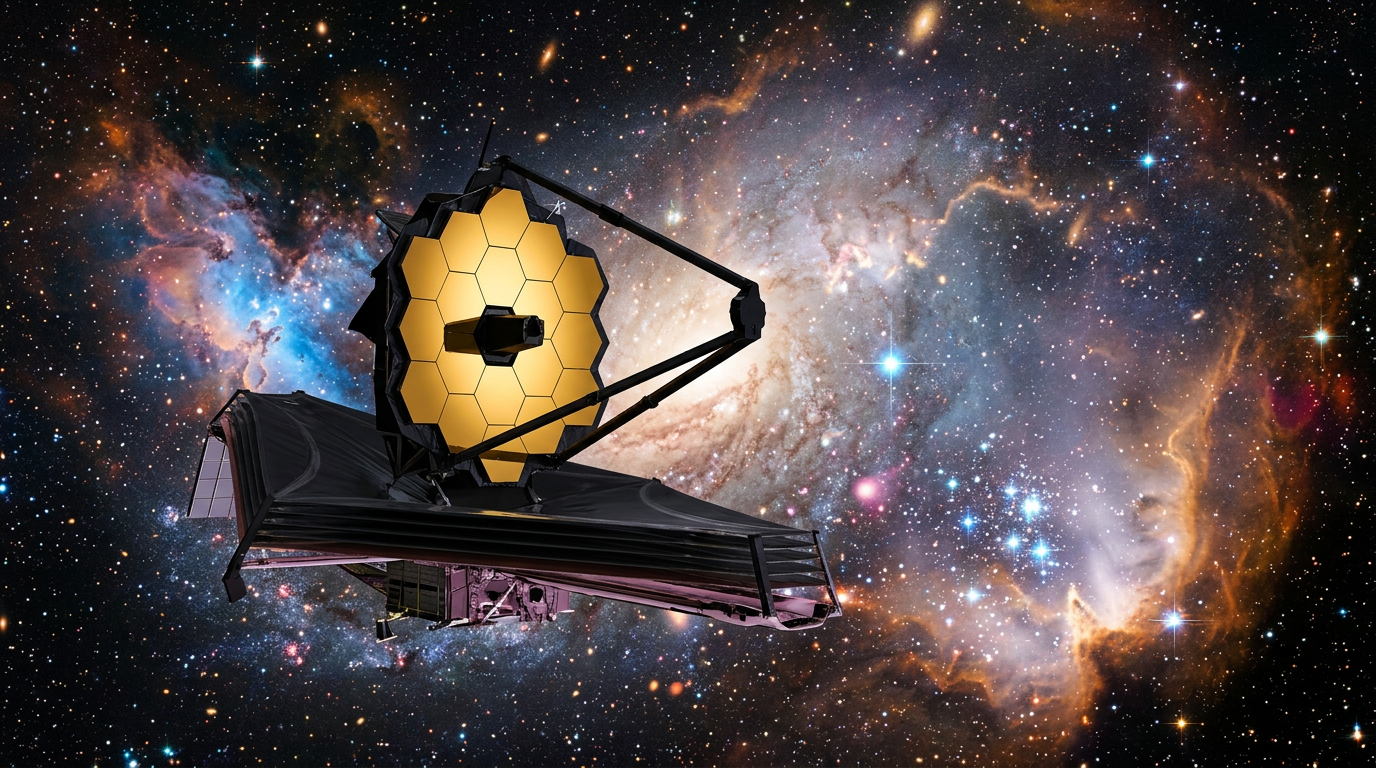
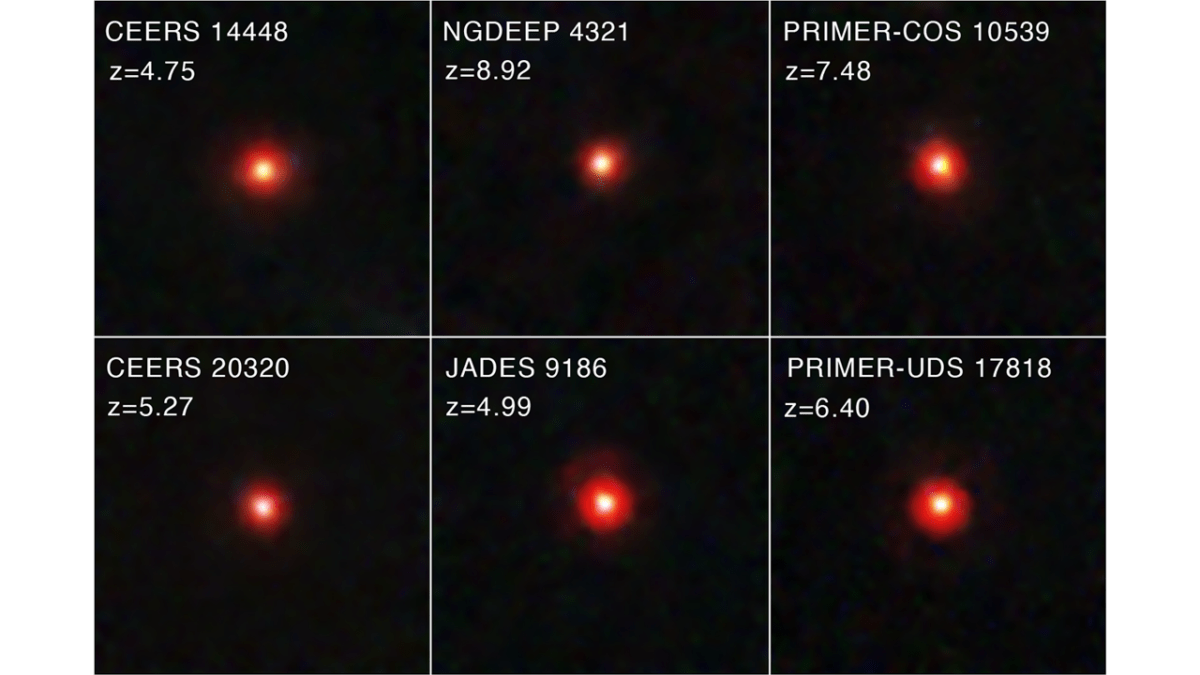
The James Webb Space Telescope (JWST) has observed what appear to be very distant red galaxies challenging the standard big bang theory. Misidentifying some Brown Dwarf stars within our Milky Way as these red distant galaxies brings into question the existing cosmological models.

Signature of Alien Life ‘Found’ on a Planet 124 Light-Years from Earth

An article claims scientists found evidence of biological activity on exoplanet K2-18b, citing detected molecules linked to microbial life. However, this overstates findings, because some other chemical processes may explain the results. The inordinate desire to find extraterrestrial life reflects a rejection of the Creator.

James Webb Space Telescope | Little Red Dot Galaxies are a Big Big Bang Problem

26 March 2025 at 00:06
In 2022, the James Webb Space Telescope discovered six massive Little Red Dot galaxies dated 500–800 million years post-Big Bang. Their presence challenges the ΛCDM cosmological model, as they contain unexpectedly high stellar masses. Recent findings have increased their count to 341, raising questions about galaxy formation and the validity of current theories.

James Webb Space Telescope Survey of 9,000 Star Clusters Reveals Surprising Tradeoff in Planet Formation

27 May 2026 at 13:05


James Webb Space Telescope (JWST) research, supported by Hubble Space Telescope (HST) data, is revealing exciting new information about star and planet formation from observations of four nearby galaxies.

In these galaxies, researchers observed thousands of young stars in different clusters at various stages of evolution, according to a recent paper published in Nature Astronomy. The main takeaway from the JWST and HST research is that the more massive a star cluster is, the faster it pushes its natal gas away, allowing it to emerge from its cloud, at the expense of planet formation.

Galactic Evolution

At the heart of galactic evolution are star clusters, clouds of gas from which stars coalesce under gravitational forces. Over time, stars produce radiation, stellar winds, and supernovae that disperse these natal clouds, ending the period of star formation and leaving residual gas to drift through space. Once the gas is cleared, light from the stars can propagate more freely throughout the galaxy in a process known as stellar feedback, pushing away additional gas before it can be used to form new stars.

Astronomers have managed to observe a handful of local star-forming regions within our galaxy and nearby dwarf galaxies, but our vantage point provides only a limited view. Nearby galaxies offer better opportunities to survey star-forming regions and star clusters with the JWST and HST. By combining observations from both within and beyond our galaxy, astronomers can assemble a broader dataset that allows for deeper analyses of star formation.

JWST Peers Out at the Cosmos

Infrared instruments like those aboard the JWST have been essential for understanding star-forming clouds, allowing researchers to peer through their dense gas and dust and glimpse what lies within.

Behind that gas, some of the earliest stages of star cluster development are taking place, offering new insight into the beginnings of galaxies. One of the biggest unresolved questions has been how long it takes for a cloud to disperse, allowing the light from a star cluster to escape into the wider galaxy.

The combined observations from HST and JWST provide the broadest spectral view of young star clusters astronomers have ever obtained. The galaxies at the center of the recent study are Messier 51, Messier 83, NGC 628, and NGC 4449. After an international team of researchers analyzed images captured by the two space telescopes, they concluded that the more massive a star cluster is, the faster it clears away its gas.

9000 Clusters Before the JWST

In these galaxies, researchers identified nearly 9,000 star clusters at various evolutionary stages, ranging from fully obscured by natal gas clouds to completely cleared, with intermediate stages in between. JWST’s infrared capabilities revealed partially or fully obscured clusters, while Hubble’s visible-light instruments showed those that had already cleared their natal clouds. The timescale for dispersing natal gas clouds ranged from about five million years for the most massive clusters to as long as eight million years for less massive ones.

“Simulations of star formation and stellar feedback have struggled to reproduce how star clusters form and emerge from their natal clouds. These results give us important new constraints on that process,” explained lead author Angela Adamo of Stockholm University and the Oskar Klein Center in Sweden.

Researchers already knew that massive star clusters emitted most of a galaxy’s ultraviolet light, but the new findings also demonstrate that they begin dispersing that light earlier than smaller clusters. By tracking how stellar feedback waxes and wanes across different parts of a galaxy, researchers can better understand how it redistributes essential star-forming gas.

Ironically, the faster dispersal of natal clouds in massive clusters may undermine planet formation by exposing protoplanetary disks to ultraviolet radiation earlier, reducing their ability to capture gas needed to form planets. In this way, some of the universe’s most massive star clusters may also impose severe limitations on planet formation, a phenomenon that has also been observed in our own Milky Way.

The paper, “The Emerging Timescale of Young Star Clusters Regulated by Cluster Stellar Mass,” appeared in Nature Astronomy on May 06, 2026.

Ryan Whalen covers science and technology for The Debrief. He holds an MA in History and a Master of Library and Information Science with a certificate in Data Science. He can be contacted at ryan@thedebrief.org, and follow him on Twitter @mdntwvlf.

James Webb Space Telescope Discovery Parts the Clouds on Bizarre Exoplanet Weather

22 May 2026 at 13:09


James Webb Space Telescope (JWST) data are allowing researchers to resolve a gas giant’s cloud cover, providing a new level of detail that significantly alters our understanding of exoplanet conditions.

A tidally locked hot Jupiter, WASP-94A b, was the focus of the JWST for these observations, which captured a much more dynamic atmosphere than earlier simplified assumptions. In a new paper published in Science, an American team of astronomers reveals how the boundary between the planet’s permanent day and night sides creates an extreme temperature difference that dramatically affects the atmospheric chemistry.

A Hot Jupiter

The exoplanet WASP-94b is located about 700 light-years from Earth, in the constellation Microscopium. Hot Jupiters such as this intrigue scientists because their tight orbits produce incredibly intense surface temperatures, making them excellent natural laboratories for studying planetary surface dynamics.

As atmospheric aerosols travel across WASP-94A b, when they encounter the planet’s dramatic temperature shifts, they form into clouds to circulate over the exoplanet before eventually evaporating. Researchers were aware that these processes shape the appearance, chemistry, and temperature of exoplanet atmospheres, but had a limited understanding of how the exoplanet aerosol particles at their core behave.

The nature of hot Jupiter clouds was unclear, with researchers suggesting either photochemical hazes produced by stellar radiation or mineral clouds generated by condensation.

Adding to the difficulty is the tendency of these clouds to distort or obscure the spectral signals used to observe exoplanets. However, in the new work, JWST data provided strong confirmation of one of these hypotheses.

JWST Atmospheric Imaging

The JWST’s Near Infrared Imager and Slitless Spectrograph (NIRISS) instrument allowed the researchers to separately analyze WASP-94A b’s permanent morning and night atmospheric horizons. To do this, the team waited until the exoplanet passed in front of its home star, providing an opportunity to measure the light passing through the atmosphere at its edges. Their findings revealed that the two sides of the planet held extremely different atmospheres.

The cooler morning side contains high-mineral clouds that offer dense cover, while the morning side is clearer and shows high levels of water vapor absorption. These findings are consistent with condensation rather than the photochemical hypothesis. 

The team also employed a 3D circulation model to study the dynamic cloud cycle, discovering that the massive 450 Kelvin temperature disparity between the hemispheres was a driving factor, with clouds forming not on the night side but evaporating before reaching the intense temperatures of the day side.

The work reveals that the common assumption that exoplanet atmospheres are relatively uniform can lead to a gross misunderstanding of what is occurring on these distant bodies.

James Webb Space Telescope Breaks Through

“I’ve been looking at exoplanets for 20 years, and general cloudiness has been a thorn in our side,” said co-author and program PI, David Sing, a Bloomberg Distinguished Professor of Earth and Planetary Sciences at Johns Hopkins. “We’ve known for quite a while that clouds are pervasive on Hot Jupiter planets, which is annoying because it’s like trying to look at the planet through a foggy window.”

“Not only have we been able to clear the view, but we can finally pin down what the clouds are made out of and how they’re condensing and evaporating as they move around the planet,” Sing added.

The researchers offered two possible explanations for the cloud movement: either strong winds are pushing clouds up on the night side, causing them to descend when they reach the day side, or the phenomenon could be similar to morning fog, but on a planetary scale, evaporating the day-side heat.

“It was a huge surprise. People have expected some differences, like it’s cooler in the morning than the evening—that’s something natural that we experience here on Earth,” Sing said. “But what we saw was a real dichotomy between the weather on both sides of the planet, and huge differences in cloud coverage, and that changes our whole picture of the planet.”

JWST Advances Continue

“With the Hubble telescope, when we used to do this type of observation, we got an average view of the whole planet with data from the clouds and the atmosphere squished together and indistinguishable,” said first author Sagnick Mukherjee, a postdoctoral fellow at Arizona State University who was a student at Johns Hopkins and UC Santa Cruz at the time of the research. “This approach with the JWST lets us localize our observations, which helped us see the cloud cycle.”

The team was surprised to find that the night side atmosphere resembled our local Jupiter’s sky much more than was initially expected, based on earlier data. When previously working with a simplified average planetary cloud cover, researchers arrived at figures indicating that the planet contained hundreds of times as much oxygen and carbon as Jupiter. Now, with a clearer understanding of the day/night differential, it was revealed that the planet actually contained only five times as much oxygen and carbon.

Comparing their findings with those for eight other gas giants, the team found two cognates of the same cloud-cycling mechanism: WASP-39 b and WASP-17 b. Following this work, the team is currently studying cloud cycling on multiple other types of exoplanets.

The paper, “Cloudy Mornings and Clear Evenings on a Gas Giant Exoplanet,” appeared in Science on April 27, 2026.

Ryan Whalen covers science and technology for The Debrief. He holds an MA in History and a Master of Library and Information Science with a certificate in Data Science. He can be contacted at ryan@thedebrief.org, and follow him on Twitter @mdntwvlf.

James Webb Space Telescope Spots an Early Galaxy with an Odd Feature That’s Defying Expectations

19 May 2026 at 13:36


Observations by NASA’s James Webb Space Telescope (JWST) have led to the surprising discovery that an ancient, distant galaxy is not rotating as expected, adding to our knowledge of the diverse conditions of the early universe.

The recent JWST finding was especially unusual because similar behavior has been observed only in nearby, mature, massive galaxies whose star formation slowed gradually over billions of years.

A team of researchers estimates that the galaxy XMM-VID1-2075 is not even 2 billion years old, based on the JWST observations, compared to the Milky Way’s 13.6 billion years, making its behavior highly unusual, according to their recent paper published in Nature Astronomy.

Rotating Galaxies

“This one in particular did not show any evidence of rotation, which was surprising and very interesting,” said lead author Ben Forrest, a research scientist in the Department of Physics and Astronomy at the University of California, Davis.

As gas flowed into early galaxies, most astronomers believe that angular momentum, combined with gravity, caused them to spin. However, over long periods of time, galaxies can lose their initial spin through mergers rather than spins canceling one another out. 

Because of this, we would expect to see this lack of spin primarily in galaxies close to Earth, as the distance light has traveled would be shorter, and therefore the light would come from older, more mature galaxies that have had the opportunity to experience such mergers. Finding a galaxy so distant, and therefore so young based on the speed of the light, is most unexpected.

James Webb Space Telescope Survey

The research was part of the MAGAZ3NE (Massive Ancient Galaxies at z>3 NEar-Infrared) survey on the JWST by researchers who had used Hawaii’s W.M. Keck observatory to observe XMM-VID1-2075 previously.

“Previous MAGAZ3NE observations had confirmed this was one of the most massive galaxies in the early universe, with already several times as many stars as our Milky Way, and also confirmed that it was no longer forming new stars, making it a compelling target for follow-up observations,” Forrest said.

Using the JWST’s advanced capabilities, the researchers compared XMM-VID1-2075 with two galaxies of similar age to measure their relative motion.

“This type of work has been done a lot with nearby galaxies because they’re closer and larger and so you can do these kinds of studies from the ground, but it’s very difficult to do with high redshift galaxies because they appear a lot smaller in the sky,” Forrest said. “(JWST) is really pushing the frontier for these kinds of studies.”

JWST DATA Reveals an Unusual Galaxy

The JWST data on the three galaxies yield a strange combination of results: one rotates as expected, another is described as “messy,” and the last does not rotate but exhibits significant random movement. While this behavior is expected of massive galaxies in our local neighborhood, the researchers were stunned to find it occurring so close to the beginning of the universe.

The team leans toward one possibility that may offer an explanation, suggesting that a kind of equilibrium was achieved when two galaxies with almost perfectly opposite rotations collided in a single event.

“For this particular galaxy, we see a large excess of light off to the side. And so that’s suggestive of some other object which has come in and is interacting with the system and potentially changing its dynamics,” Forrest said.

Continuing their work, the team will seek other early galaxies lacking spin and explore galaxy-formation simulations that could explain this behavior.

“There are some simulations that predict that there will be a very small number of these non-rotating galaxies very early in the universe, but they expect them to be quite rare,” Forrest concluded. “And so this is one way in which we can test these simulations and really figure out how common they are, and that can then give us information about whether our theories of this evolution are correct.”

The paper, “A Massive and Evolved Slow-Rotating Galaxy in the Early Universe,” appeared in Nature Astronomy on May 04, 2026.

Ryan Whalen covers science and technology for The Debrief. He holds an MA in History and a Master of Library and Information Science with a certificate in Data Science. He can be contacted at ryan@thedebrief.org, and follow him on Twitter @mdntwvlf.

NASA’s James Webb Space Telescope is Unveiling the Secrets of the ‘Cosmic Web,’ Offering New Clues to Galactic Evolution

15 May 2026 at 13:32


New data collected by NASA’s James Webb Space Telescope (JWST) is helping researchers map the cosmic web in the greatest detail ever achieved, providing new insights into the network of galaxies as improved resolution reveals hidden features.

An international team of researchers led by the University of California, Riverside, revealed their newest findings based on Webb telescope data in a recent study published in the Astrophysical Journal, tracing the cosmic web back to the first billion years of our universe.

The cosmic web consists of filaments and sheets of dark matter that connect the universe’s galaxies through the voids of space, forming an intricate architecture and driving galaxy evolution.

James Webb Space Telescope

JWST has been a tremendous boon to scientists since its 2021 launch, revealing faint, distant galaxies in the infrared spectrum that would previously have been unresolvable. Researchers have used it for everything from collecting more precise data on the Hubble tension to discovering what astronomers call “Little Red Dots,” a series of unexpected, distant, bright red objects.

The speed of light is measured at 5.88 trillion miles per year, which defines the light-year, the unit astronomers use to measure distances across the cosmos. One billion light-years is considered our local neighborhood, but JWST observations stretch far beyond that, due to its incredible clarity. This allows scientists to resolve light from distant corners of the universe, which is now only reaching us billions of years later, providing a window into the ancient universe.

COSMOS-Web

COSMOS-Web, the largest JWST study ever conducted, provided 13.7 billion years of cosmic data for researchers to use in their mapping project. Designed expressly for mapping the cosmic web, COSMOS-web explored an area of sky the size of three full moons.

“JWST has completely changed our view of the universe, and COSMOS-Web was designed from the start to give us the wide, deep view we need to see the cosmic web,” said lead author Hossein Hatamnia, a graduate student at UCR and Carnegie Observatories. “For the first time, we can study the evolution of galaxies in cluster and filamentary structures across cosmic time, all the way from when the universe was a billion years old up to the nearby universe.”

With its incredibly high level of clarity, comparing the new JWST map to earlier Hubble Space Telescope maps of the same region reveals new structures that previous efforts failed to resolve. 

“The jump in depth and resolution is truly significant, and we can now see the cosmic web at a time when the universe was only a few hundred million years old, an era that was essentially out of reach before JWST,” said co-author Bahram Mobasher. “What used to look like a single structure now resolves into many, and details that were smoothed away before are now clearly visible.”

JWST Peers Back in Time 

“The telescope detects many more faint galaxies in the same patch of sky, and the distances to those galaxies are measured far more precisely,” Mobasher added. “Each galaxy can therefore be placed into the correct slice of cosmic time, sharpening the map’s resolution.”

This means that the new map is not only filling in scientific knowledge about the broader structure of the universe, but also how the structure was built over time. In this data, the team discovered that the cosmic web had a major effect on galaxy growth over time, while also suppressing star formation in older galaxies. The detailed maps of the comic web developed under COSMOS-web will be released to the public.

“The pipeline used to build the map, the catalog of 164,000 galaxies and their cosmic density,” Mobasher concluded, “and a video showing the cosmic web evolving across billions of years, has been released to the public.”

The paper, “Large-Scale Structure in COSMOS-Web: Tracing Galaxy Evolution in the Cosmic Web up to z ∼ 7 with the Largest JWST Survey,” appeared in the Astrophysical Journal on May 6, 2026.

Ryan Whalen covers science and technology for The Debrief. He holds an MA in History and a Master of Library and Information Science with a certificate in Data Science. He can be contacted at ryan@thedebrief.org, and follow him on Twitter @mdntwvlf.

❌