Normal view

Florida sues OpenAI, Sam Altman after multiple ChatGPT-linked murders

1 June 2026 at 19:52

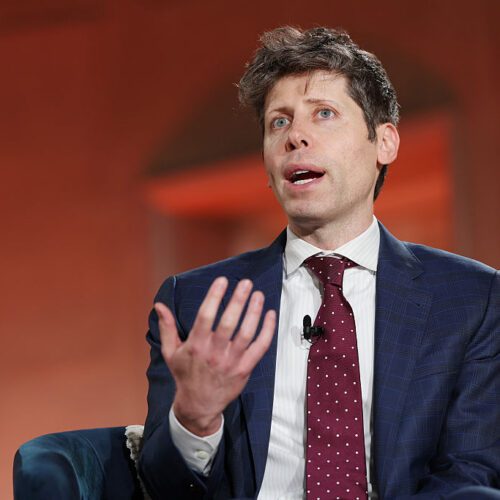
On Monday, Florida became the first state to sue OpenAI over ChatGPT's allegedly dangerous design.

In a complaint filed in state court, Florida Attorney General James Uthmeier accused OpenAI and its CEO, Sam Altman, of prioritizing profits over the safety of Floridians.

The civil lawsuit comes after Florida opened an unrelated criminal probe into OpenAI, following a ChatGPT-linked mass shooting where two people were killed at Florida State University. In statements, OpenAI has insisted that ChatGPT isn't responsible for the FSU shooting, merely providing factual information, but Uthmeier does not seem to agree. In his complaint, Uthmeier noted that Florida has now been blindsided by two violent events where suspects used ChatGPT to assist in planning.

Read full article

Comments

© Anna Moneymaker / Staff | Getty Images News

Florida sues OpenAI, Sam Altman after multiple ChatGPT-linked murders

1 June 2026 at 19:52

On Monday, Florida became the first state to sue OpenAI over ChatGPT's allegedly dangerous design.

In a complaint filed in state court, Florida Attorney General James Uthmeier accused OpenAI and its CEO, Sam Altman, of prioritizing profits over the safety of Floridians.

The civil lawsuit comes after Florida opened an unrelated criminal probe into OpenAI, following a ChatGPT-linked mass shooting where two people were killed at Florida State University. In statements, OpenAI has insisted that ChatGPT isn't responsible for the FSU shooting, merely providing factual information, but Uthmeier does not seem to agree. In his complaint, Uthmeier noted that Florida has now been blindsided by two violent events where suspects used ChatGPT to assist in planning.

Read full article

Comments

© Anna Moneymaker / Staff | Getty Images News

Microsoft could be the next Big Tech antitrust target

1 June 2026 at 14:23
Microsoft headquarters with FTC seal

Over the past several years, Microsoft has largely managed to withstand populist calls to break up Big Tech while peers faced sweeping lawsuits. But a probe by the Federal Trade Commission suggests that grace period could be nearing an end.

Earlier this year, Bloomberg outlined the contents of civil investigative demands (CIDs) - similar to a subpoena - the FTC sent to at least half a dozen companies that compete with Microsoft. New details obtained by The Verge further reveal the FTC's interests, suggesting the agency is particularly concerned with potentially exclusionary behavior around Microsoft's Azure cloud services, as well as its ro …

Read the full story at The Verge.

Marketer that claimed it could tap devices for ad targeting will pay $880K settlement

22 May 2026 at 18:48

In November 2023, we reported on dubious claims made by marketing firm Cox Media Group (CMG) Local Solutions. The company advertised a service called Active Listening on a website that said, “It’s true. Your devices are listening to you” and claimed it could use “voice data” to help advertisers target ads to specific people.

Naturally, panic ensued. 404 Media, which initially spotted the website, for instance, wrote that the idea of smartphones listening to people to sell products “may finally be a reality."

CMG Local Solutions screenshot
A screenshot taken in 2023 from a webpage that CMG has since removed.

The idea of a marketing firm using AI to “detect relevant conversations via smartphones, smart TVs, and other devices” in real time—according to a since-deleted CMG blog post from November 2023 (still viewable via the Internet Archive’s Wayback Machine)—has raised alarms.

Read full article

Comments

© Getty

Trump wants $1B to protect White House ballroom from drones and other threats

20 May 2026 at 19:59

President Donald Trump’s latest pitch for using taxpayer dollars to secure his White House ballroom featured a militarized building—including a rooftop hardened against drone strikes and a “drone port” that could potentially house military drones.

The remarks came on May 19 as Trump gave reporters a personal tour of the ballroom project that has already involved the demolition of the White House mansion’s East Wing. The president spoke of installing a rooftop drone base “for unlimited numbers of drones” operated by the US military as a “drone port that would protect all of Washington,” according to Reuters. He also highlighted a ballroom roof made from “impenetrable steel” that would supposedly be “drone-proof” against potential drone strikes.

To pay for such measures, Trump has been urging Republican lawmakers in the US Congress to approve $1 billion in taxpayer funding to provide a wide variety of “security adjustments and upgrades” for his ballroom project. The taxpayer-backed security enhancements would be separate from the $400 million construction cost for the ballroom project that has been funded by private donors, including companies such as Amazon, Apple, Coinbase, Comcast, Google, HP Inc., Lockheed Martin, Meta, Micron Technology, Microsoft, Palantir, Ripple, and T-Mobile.

Read full article

Comments

© Chip Somodevilla/Getty Images

Iran demands Big Tech pay fees for undersea Internet cables in Strait of Hormuz

19 May 2026 at 12:00

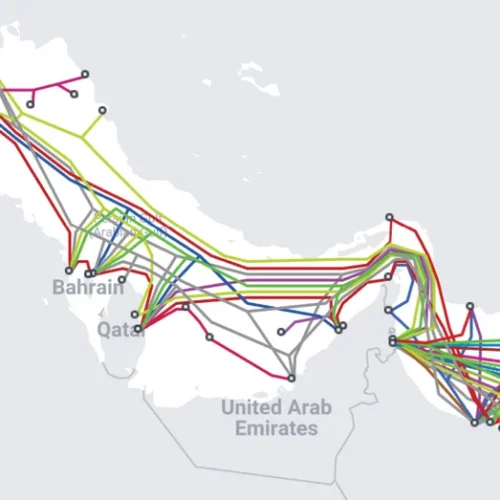
Iran claims it will charge US tech companies fees for using undersea Internet cables that run beneath the contested Strait of Hormuz shipping lanes. The war has already halted multiple projects and led to the suspension of cable repairs in the region—and the latest Iranian threats may accelerate efforts by Big Tech and Gulf countries to find alternative routes for bypassing the Strait of Hormuz’s digital chokepoint.

The latest assertions of Iranian authority over the Strait of Hormuz were announced in a brief statement by Ebrahim Zolfaghari, a spokesperson for Iran’s military and the Islamic Revolutionary Guard Corps. “We will impose fees on internet cables” Zolfaghari wrote in a May 9 post. It was not immediately clear how Iran might implement such fees or impose its rules on cable projects, given that the majority of routes pass through Oman-controlled waters.

But Tasnim and Fars, both Iranian state-linked media channels, laid out more detailed proposals on how Iran could charge license fees to US tech giants for the use and maintenance of undersea cables carrying regional Internet traffic, according to The Guardian. For example, the Tasnim plan described charging tech companies—specifically naming Meta, Google, Amazon, and Microsoft—license fees for cable usage while also claiming that Iran alone has the right to repair and maintain the subsea cables.

Read full article

Comments

© TeleGeography

Proposed new US funding rules: We can cancel any grant at any time

29 May 2026 at 23:58

Last August, the Trump administration issued an executive order intended to fundamentally alter how grant funding is handled by the US government. Under the system that had made the US a scientific superpower, peer reviewers rated the scientific quality and feasibility of grant applications, and subject-matter experts within the funding agencies used these ratings to determine which grants got funded. Under the proposed rules, political appointees would have the final say, and they were specifically instructed not to "routinely defer" to peer reviewers.

In the interim, the administration has lost many court cases because it turns out that issuing executive orders doesn't circumvent legal requirements, and the orders can be vacated if they lack strong justification. To avoid that same fate, the Office of Management and Budget (OMB) has decided to merge the executive order with other administration priorities and send it through the formal federal rulemaking process.

The result is a horror show for US science research. Not only is peer review made a secondary consideration, but the new rules would allow any federal agency to cancel any grant at any time based on the vague assertion that it isn't in the "national interest." The document would also ban any grants on a number of culture war topics, limit international collaborations, and block spending on things like publishing papers and attending conferences.

Read full article

Comments

© Getty | Al Drago

China’s shark finning could lead to US seafood sanctions

For migrant workers trapped onboard Chinese distant water fishing fleets, cutting the fins off sharks as they writhe violently on rusted decks in the Indian Ocean isn’t accidental. It’s an intentional and lucrative act that marks the start of a bloody half-a-billion-dollar offshore supply chain, tacitly supported by Beijing yet covertly concealed from port inspectors globally.

The Center for Biological Diversity, a nonprofit focused on the protection of endangered species, filed a formal petition this month requesting the U.S. government potentially sanction China for failing to meet American shark conservation standards. Shark populations have declined by more than 70 percent since 1970, with more than one-third of all shark and ray species now threatened with extinction. Yet each year, Chinese-flagged vessels catch, brutally fin, and discard thousands.

Should the National Marine Fisheries Service identify China as having violated the US Moratorium Protection Act, then President Trump could be expected to ban the import of all $1.5 billion of Chinese seafood.

Read full article

Comments

© Robertus Pudyanto/Getty Images

Environmentalists turn out in force to oppose Trump coal ash rollbacks

30 May 2026 at 11:00

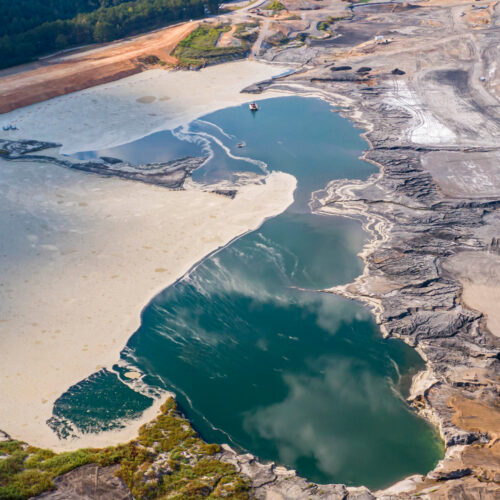
At a virtual public comment hearing hosted by the US Environmental Protection Agency on Thursday, a long line of environmental advocates voiced strong opposition to proposed new regulations weakening requirements that utilities must follow in cleaning up toxic coal ash residue at hundreds of sites across the country at which coal was burned to produce electricity.

“The Trump administration has jeopardized the nation’s drinking water supplies as a favor to polluters,” Lisa Evans, senior counsel at Earthjustice and a former EPA attorney, said in a statement. “It’s just not right.”

The Trump administration announced in April that it would repeal a rule put in place in 2024 by the Biden administration’s EPA that required utilities to monitor coal ash sites at inactive coal plants. The Trump EPA also said it would loosen requirements for protecting groundwater near those sites. Now the Trump administration wants to rely on states for coal ash monitoring and enforcement and enable them to bypass national standards in some cases.

Read full article

Comments

© Lee Hedgepeth/Inside Climate News

Environmentalists turn out in force to oppose Trump coal ash rollbacks

30 May 2026 at 11:00

At a virtual public comment hearing hosted by the US Environmental Protection Agency on Thursday, a long line of environmental advocates voiced strong opposition to proposed new regulations weakening requirements that utilities must follow in cleaning up toxic coal ash residue at hundreds of sites across the country at which coal was burned to produce electricity.

“The Trump administration has jeopardized the nation’s drinking water supplies as a favor to polluters,” Lisa Evans, senior counsel at Earthjustice and a former EPA attorney, said in a statement. “It’s just not right.”

The Trump administration announced in April that it would repeal a rule put in place in 2024 by the Biden administration’s EPA that required utilities to monitor coal ash sites at inactive coal plants. The Trump EPA also said it would loosen requirements for protecting groundwater near those sites. Now the Trump administration wants to rely on states for coal ash monitoring and enforcement and enable them to bypass national standards in some cases.

Read full article

Comments

© Lee Hedgepeth/Inside Climate News

Proposed new US funding rules: We can cancel any grant at any time

29 May 2026 at 23:58

Last August, the Trump administration issued an executive order intended to fundamentally alter how grant funding is handled by the US government. Under the system that had made the US a scientific superpower, peer reviewers rated the scientific quality and feasibility of grant applications, and subject-matter experts within the funding agencies used these ratings to determine which grants got funded. Under the proposed rules, political appointees would have the final say, and they were specifically instructed not to "routinely defer" to peer reviewers.

In the interim, the administration has lost many court cases because it turns out that issuing executive orders doesn't circumvent legal requirements, and the orders can be vacated if they lack strong justification. To avoid that same fate, the Office of Management and Budget (OMB) has decided to merge the executive order with other administration priorities and send it through the formal federal rulemaking process.

The result is a horror show for US science research. Not only is peer review made a secondary consideration, but the new rules would allow any federal agency to cancel any grant at any time based on the vague assertion that it isn't in the "national interest." The document would also ban any grants on a number of culture war topics, limit international collaborations, and block spending on things like publishing papers and attending conferences.

Read full article

Comments

© Getty | Al Drago

Proposed new US funding rules: We can cancel any grant at any time

29 May 2026 at 23:58

Last August, the Trump administration issued an executive order intended to fundamentally alter how grant funding is handled by the US government. Under the system that had made the US a scientific superpower, peer reviewers rated the scientific quality and feasibility of grant applications, and subject-matter experts within the funding agencies used these ratings to determine which grants got funded. Under the proposed rules, political appointees would have the final say, and they were specifically instructed not to "routinely defer" to peer reviewers.

In the interim, the administration has lost many court cases because it turns out that issuing executive orders doesn't circumvent legal requirements, and the orders can be vacated if they lack strong justification. To avoid that same fate, the Office of Management and Budget (OMB) has decided to merge the executive order with other administration priorities and send it through the formal federal rulemaking process.

The result is a horror show for US science research. Not only is peer review made a secondary consideration, but the new rules would allow any federal agency to cancel any grant at any time based on the vague assertion that it isn't in the "national interest." The document would also ban any grants on a number of culture war topics, limit international collaborations, and block spending on things like publishing papers and attending conferences.

Read full article

Comments

© Getty | Al Drago

Proposed new US funding rules: We can cancel any grant at any time

29 May 2026 at 23:58

Last August, the Trump administration issued an executive order intended to fundamentally alter how grant funding is handled by the US government. Under the system that had made the US a scientific superpower, peer reviewers rated the scientific quality and feasibility of grant applications, and subject-matter experts within the funding agencies used these ratings to determine which grants got funded. Under the proposed rules, political appointees would have the final say, and they were specifically instructed not to "routinely defer" to peer reviewers.

In the interim, the administration has lost many court cases because it turns out that issuing executive orders doesn't circumvent legal requirements, and the orders can be vacated if they lack strong justification. To avoid that same fate, the Office of Management and Budget (OMB) has decided to merge the executive order with other administration priorities and send it through the formal federal rulemaking process.

The result is a horror show for US science research. Not only is peer review made a secondary consideration, but the new rules would allow any federal agency to cancel any grant at any time based on the vague assertion that it isn't in the "national interest." The document would also ban any grants on a number of culture war topics, limit international collaborations, and block spending on things like publishing papers and attending conferences.

Read full article

Comments

© Getty | Al Drago

Trump FCC warns all broadcasters to follow orders or be punished like ABC

29 May 2026 at 19:09

The eight broadcast TV stations owned by ABC filed applications for early license renewals under protest yesterday, accusing the Federal Communications Commission of trying to suppress speech as part of "an unprecedented attack on a single company’s entire portfolio of broadcast licenses."

FCC Chairman Brendan Carr has repeatedly threatened to revoke broadcast licenses from President Trump's least favorite networks. He recently ordered the Disney-owned ABC to file early license renewal applications for all of its TV stations over allegations that its diversity, equity, and inclusion (DEI) practices violate anti-discrimination rules.

"The only plausible reason to issue the Order is to punish the Station for speech the government does not like," ABC said in its filings. The FCC is "using the license process renewal to punish a broadcaster for its editorial choices" in "an extraordinary demonstration of power and coercion directed at disfavored editorial voices," it said.

Read full article

Comments

© Getty Images | Variety

Trump FCC warns all broadcasters to follow orders or be punished like ABC

29 May 2026 at 19:09

The eight broadcast TV stations owned by ABC filed applications for early license renewals under protest yesterday, accusing the Federal Communications Commission of trying to suppress speech as part of "an unprecedented attack on a single company’s entire portfolio of broadcast licenses."

FCC Chairman Brendan Carr has repeatedly threatened to revoke broadcast licenses from President Trump's least favorite networks. He recently ordered the Disney-owned ABC to file early license renewal applications for all of its TV stations over allegations that its diversity, equity, and inclusion (DEI) practices violate anti-discrimination rules.

"The only plausible reason to issue the Order is to punish the Station for speech the government does not like," ABC said in its filings. The FCC is "using the license process renewal to punish a broadcaster for its editorial choices" in "an extraordinary demonstration of power and coercion directed at disfavored editorial voices," it said.

Read full article

Comments

© Getty Images | Variety

DOJ sues states that rejected ICE requests for undercover license plates

29 May 2026 at 18:41

The Trump administration continues to claim in lawsuits that ICE monitoring sites are doxing agents, without showing evidence that's happening.

Most recently, the Department of Justice pointed to sites like ICEList.info and ICESpy.org in lawsuits it filed in an attempt to force four states to reverse policies blocking ICE agents from registering undercover license plates.

The DOJ alleged that the states' policies are unconstitutional, unlawfully requiring federal officers to abide by different rules than state officers who can easily obtain undercover plates. Among risks to ICE agents denied undercover plates, the DOJ counted alleged threats of increased harassment and invasive tracking of officers, as well as the possibility that targets of ICE enforcement may more easily evade arrest.

Read full article

Comments

© Andrew Leyden / Stringer | Getty Images News

DOJ sues states that rejected ICE requests for undercover license plates

29 May 2026 at 18:41

The Trump administration continues to claim in lawsuits that ICE monitoring sites are doxing agents, without showing evidence that's happening.

Most recently, the Department of Justice pointed to sites like ICEList.info and ICESpy.org in lawsuits it filed in an attempt to force four states to reverse policies blocking ICE agents from registering undercover license plates.

The DOJ alleged that the states' policies are unconstitutional, unlawfully requiring federal officers to abide by different rules than state officers who can easily obtain undercover plates. Among risks to ICE agents denied undercover plates, the DOJ counted alleged threats of increased harassment and invasive tracking of officers, as well as the possibility that targets of ICE enforcement may more easily evade arrest.

Read full article

Comments

© Andrew Leyden / Stringer | Getty Images News

Blair’s fossil fuel ideas ‘bizarre’ in face of energy and climate crises, experts say

Energy specialists say abandoning net zero and increasing oil and gas drilling would cause more instability for Britons

Abandoning net zero and drilling for more oil and gas in the North Sea would be a massive setback for the UK and would not help the economy, leading experts have said in response to claims by the former prime minister Tony Blair.

“This is a bizarre intervention to make during the worst May heatwave on record and when the Iran crisis is providing yet more evidence of the enormous costs of oil and gas,” said Ed Matthew, the UK programme director at the E3G thinktank. “Clean energy is cheaper energy – it protects our bills from prices skyrocketing, its running costs are virtually zero, and it doesn’t cause climate change which threatens economic collapse ... The government should ignore Blair’s ideological nonsense and focus on what works.”

Continue reading...

© Photograph: Christopher Furlong/Getty Images

© Photograph: Christopher Furlong/Getty Images

© Photograph: Christopher Furlong/Getty Images

US's big bet on quantum computing may not be entirely legal

25 May 2026 at 13:00

Last week, the US government announced $2 billion in investments in quantum computing companies, allocating $100 million each to a range of startups in exchange for equity in the companies. Those could be make-or-break investments for many companies that are likely years away from a product that could see widespread use. But a member of the US Congress is now arguing that those deals are illegal, as Congress did not allocate the money for this purpose—instead, it was meant to support public research in semiconductors.

But the biggest chunk of money would go to a company that likely wouldn't exist if it weren't for the government's backing. Anderon will be set up with a billion dollars each from IBM and the government and will inherit personnel and IP from IBM. It will serve as a foundry for fabricating quantum processing units and will contract its services out to IBM and any other company that wants access to cutting-edge hardware.

Is any of this legal?

Zoe Lofgren (D–Calif.), the ranking member of the House Science, Space, and Technology Committee, made it clear that she is not happy with how the government is using its money to support this technology.

Read full article

Comments

© IBM

China’s shark finning could lead to US seafood sanctions

For migrant workers trapped onboard Chinese distant water fishing fleets, cutting the fins off sharks as they writhe violently on rusted decks in the Indian Ocean isn’t accidental. It’s an intentional and lucrative act that marks the start of a bloody half-a-billion-dollar offshore supply chain, tacitly supported by Beijing yet covertly concealed from port inspectors globally.

The Center for Biological Diversity, a nonprofit focused on the protection of endangered species, filed a formal petition this month requesting the U.S. government potentially sanction China for failing to meet American shark conservation standards. Shark populations have declined by more than 70 percent since 1970, with more than one-third of all shark and ray species now threatened with extinction. Yet each year, Chinese-flagged vessels catch, brutally fin, and discard thousands.

Should the National Marine Fisheries Service identify China as having violated the US Moratorium Protection Act, then President Trump could be expected to ban the import of all $1.5 billion of Chinese seafood.

Read full article

Comments

© Robertus Pudyanto/Getty Images

❌