The phenomenon of a Full Moon arises when our planet, Earth, is precisely sandwiched between the Sun and the Moon. This alignment ensures the entire side of the Moon that faces us gleams under sunlight. Thanks to the Moon’s orbit around Earth, the angle of sunlight hitting the lunar surface and being reflected back toContinue reading "2026 Full Moon calendar: When to see the Full Moon and phases"
Space & Beyond • Astronomical Event • Skywatching Alert • Related: Meteor, Fireballs and Comets Tonight, a total lunar eclipse turns the full Moon a deep copper-red — a classic “blood moon”. Despite the dramatic look (and dramatic naming), eclipses are recurrent, measurable, and predictable astronomy events, not omens. This post explains what’s happening, when […]
At the end of this month, the sky will be graced by a rare Blue Moon. But wait: it’s actually a slightly smaller than usual full Moon that’s also a Blue Moon — so instead, newspapers and outlets, drawing on apocryphal traditions found in farmer’s almanacs so they can stave off a slow news day, are calling it “Blue Micromoon,” which is supposedly even rarer.
What’s going on with all these Moons? It’s lunacy!
To be clear, there will, in fact, be what is colloquially called a Blue Moon this Saturday night and Sunday morning. A Blue Moon is anytime a second full Moon appears in the same month, something that only occurs every two or three years. Or it’s when a season has four full Moons, instead of three, in case you were harboring any doubt that the whole thing is a bunch of made up nonsense.
The significance of all this is mostly invented — and for that matter, a Blue Moon isn’t even blue; if you catch one when it rises, it usually looks orange. There’s no intriguing astrophysical phenomena at play here, like with a solar eclipse, or even a lunar one (also called a Blood Moon, if you prefer.) It’s just a calendrical coincidence, independent of what the Moon is actually doing. You may as well start celebrating when a full Moon falls on a Friday, and call it the TGI Moon.
Witnessing a full Moon is cool, but we need to stop with the names. Last month it was a “Flower Moon,” which is just another name for a full Moon that happens to be in May. Correction: it was a full “Flower Moon” that was also a “micromoon.” A Micro Flower Moon? A Flower Micromoon?
And what is a micromoon anyay? It’s the slang that describes when the Moon’s oblong orbit takes it slightly farther from our planet than usual, making it appear marginally smaller in the sky. Similarly, a “supermoon” is when it’s closer and appears bigger.
Here’s the catch: none of these are official names, with no hard criteria on the distances the Moon needs to be at, giving people a lot of leeway on what they get to call a “supermoon” and a “micromoon.” Both of those, by the way, are fairly mundane and routine. They sure do punch up a headline, though. Remember the buzz around a “Super Worm Moon”, also known as a “Super Worm Equinox Moon,” a few years ago?
Well, don’t feel left out if you missed it, folks. There’s a “Strawberry Micromoon” coming up next month.
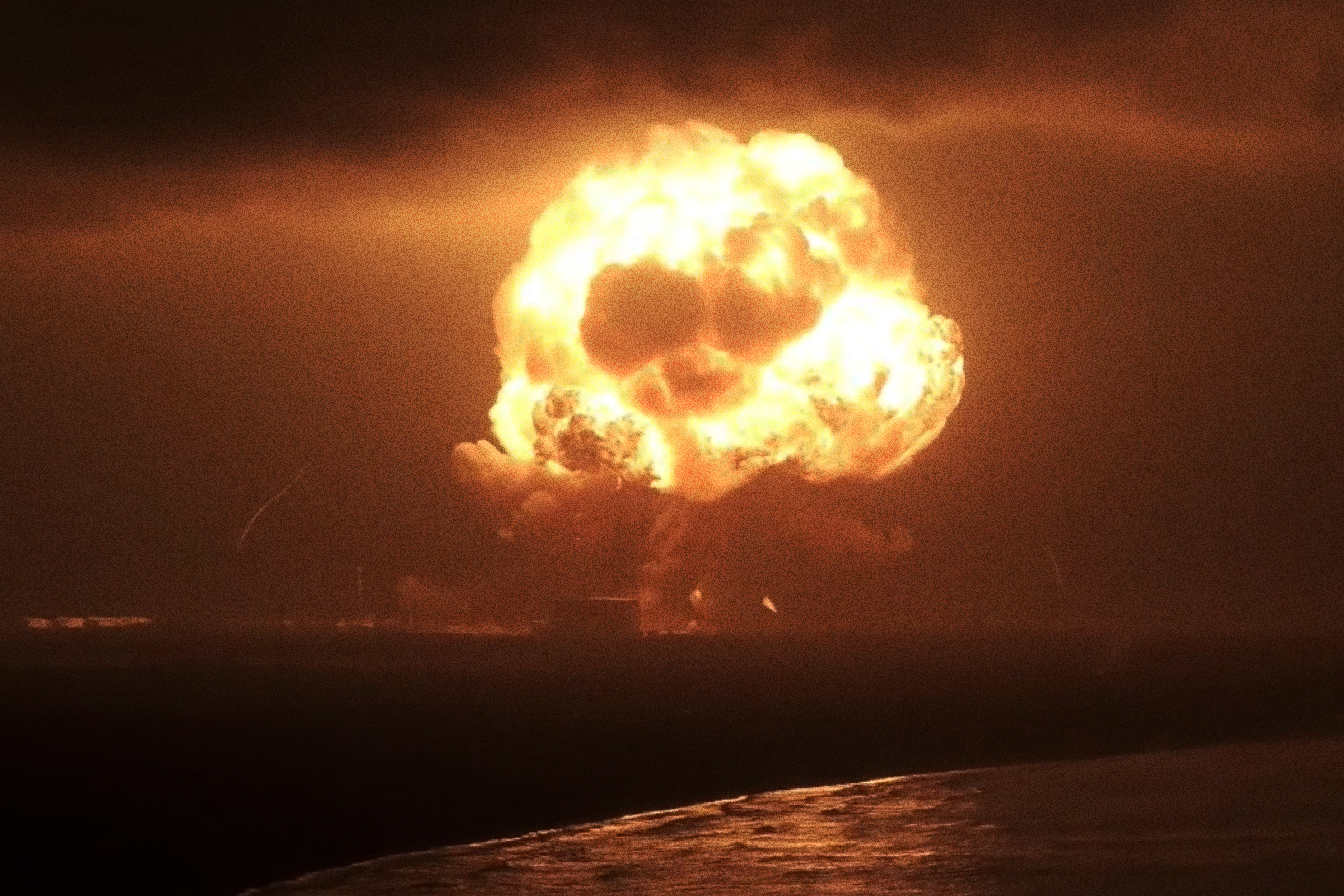
In what could turn out to be a huge setback for NASA’s highly ambitious plans to build a permanent Moon base, Jeff Bezos’ latest Blue Origin rocket erupted into a massive mushroom cloud on the launchpad last night.
During a wet dress rehearsal at the Space Force Station in Cape Canaveral on Thursday evening, the company’s New Glenn rocket exploded in dramatic fashion. Footage shows an enormous fireball engulfing the entire launch pad, a sight visible from far away.
It’s the very last thing NASA needed. Just days ago, the space agency announced a slew of “Moon base” missions to build out a permanent presence on the lunar surface — and they hinged on New Glenn rockets launching two of Blue Origin’s Blue Moon lunar landers that are delivering payloads, including rovers, there before the end of this year.
Even before Blue Origin’s latest setback, it was an enormously ambitious timeline. It’s unclear how the New Glenn explosion will affect NASA’s plans going forward, but it certainly doesn’t bode well, given the likely extensive damage to the surrounding pad.
“NASA is aware of the anomaly that occurred tonight at Launch Complex 36 involving Blue Origin’s New Glenn rocket at Cape Canaveral Space Force Station,” NASA’s administrator Jared Isaacman said in a statement. “Spaceflight is unforgiving, and developing new heavy-lift launch capability is extraordinarily difficult.”
“We will work with our partners to support a thorough investigation of this anomaly, assess near-term mission impacts, and get back to launching rockets,” he added. “We will provide information on any impacts to the Artemis and Moon Base programs as it becomes available.”
Bezos appeared distraught following the catastrophe.
“All personnel are accounted for and safe,” he tweeted around 10 pm Eastern on Thursday. “It’s too early to know the root cause but we’re already working to find it.”
“Very rough day, but we’ll rebuild whatever needs rebuilding and get back to flying,” he added. “It’s worth it.”
Even SpaceX CEO Elon Musk, who has a long history of butting heads with Bezos, struck an empathetic pose.
“Most unfortunate,” he tweeted. “Rockets are hard.”
The news comes just over a month after Blue Origin’s New Glenn rocket failed to deliver a communication satellite into a high enough orbit, turning it into nothing more than another piece of space junk.
The rocket and the firm’s Blue Moon lander are one of two options NASA is hoping to use to deliver astronauts to the surface of the Moon, alongside SpaceX’s Starship.
Unfortunately, Musk’s space company is similarly struggling to get its own rocket ready for prime time. Just yesterday, the Federal Aviation Administration announced it was grounding Starship and launching a “mishap investigation” after the company’s Super Heavy booster failed to reignite the majority of its thrusters before splashing down in the Gulf of Mexico on May 22. The second stage similarly erupted in a massive fireball after splashing down in the ocean.
“A return to flight of the Starship Super Heavy vehicle is based on the FAA determining that any system, process, or procedure related to the mishap does not affect public safety,” the regulator wrote in a statement.
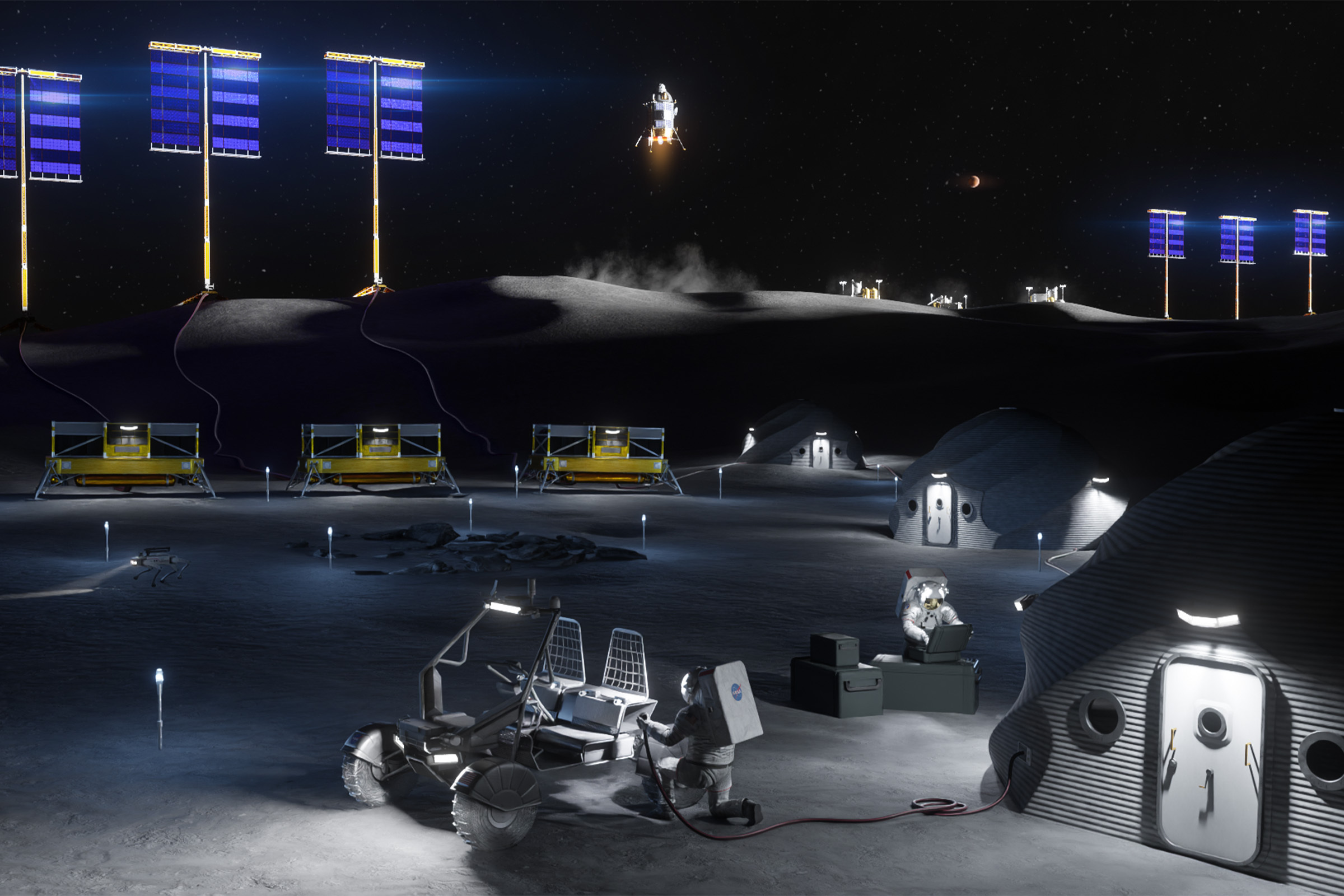
During a Tuesday event, the space agency announced a slew of new contracts worth hundreds of millions of dollars for Moon base infrastructure including lunar rovers, as well as timeframes for upcoming development and exploration missions.
Before the end of this year, NASA wants to send two of Blue Origin’s Blue Moon lunar landers to the Moon’s surface to deliver two lunar terrain vehicles being developed by commercial partners Astrolab and Lunar Outpost.
Meanwhile, Firefly Aerospace, whose Blue Ghost lander successfully touched down on the Moon in March 2025, will develop drones to explore the rugged surface.
And that’s just the buildup to NASA’s Artemis 4 mission, the first planned crewed landing in over half a century, which is tentatively slated for 2028. Artemis 3, which was originally envisioned as a landing attempt, will now involve the testing of either or both Blue Origin’s lander and SpaceX’s Starship in low-Earth orbit sometime next year.
To call NASA’s plans for its Moon base ambitious would be a staggering understatement. For one, Blue Origin’s Blue Moon lander has yet to successfully deliver a payload into Earth’s orbit following a failed attempt last month. Getting to the Moon, softly landing, and releasing a robotic lander will likely prove far more difficult.
The agency laid out plans for three “Moon Base missions,” starting with a Blue Moon delivery of scientific instruments in “fall 2026,” followed by a delivery of “more than 1,100 pounds of cargo on Astrobotic’s Griffin lander,” including a rover.
The third mission, which is “also targeted for this year,” will deliver even more scientific payloads, including ones being developed by the European Space Agency and the Korea Astronomy and Space Science Institute.
“These missions are the first of more than a dozen missions that will be announced this year, each designed to generate operational data and reduce risk ahead of crewed Artemis surface activities,” the agency wrote in its writeup of Tuesday’s event.
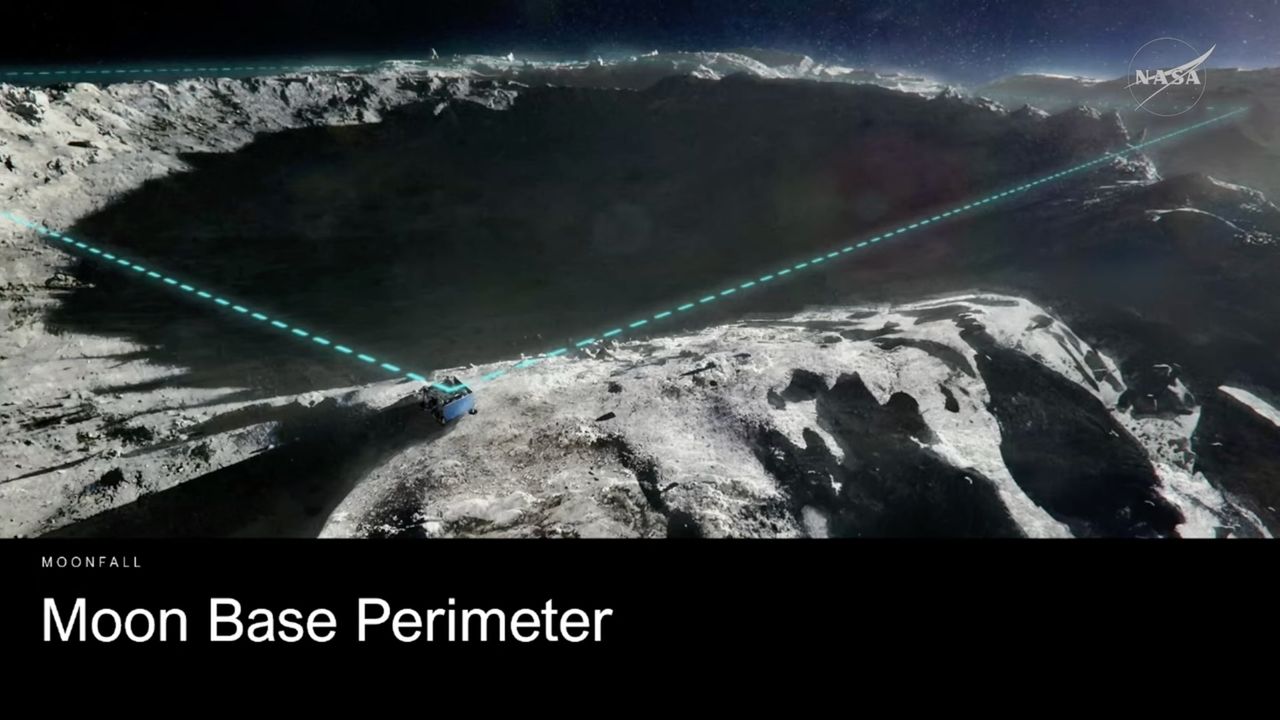
The base itself will span hundreds of square miles, according to Moon base program executive Carlos Garcia-Galan. Drones, called MoonFall, will mark the perimeter of said base in what could inevitably be a highly contentious marking of territory.
MoonFall, an initiative led by NASA’s Jet Propulsion Lab, aims to land near the lunar South Pole by 2028. High-definition optical cameras attached to drones measuring roughly seven feet across and four feet tall will take detailed imagery of the base’s envisioned terrain far ahead of any crewed landings.
In a note, NASA administrator Jared Isaacman vowed that the US would “never give up on the Moon again” by building out its Artemis program.
“We are going back to the Moon, building the base, and doing the other things,” he wrote, referencing John F. Kennedy’s iconic 1962 speech about going to the Moon. “This is no longer something to read in the history books, you are making history.”
However, given the vast degree of complexity involved, successfully launching not just one but a whole slew of missions on the surface of the Moon before the end of 2026 could soon get a massive reality check. In other words, we wouldn’t be shocked to hear from even more delays as Isaacman’s NASA dials up the pressure to build out a permanent presence on the Moon.
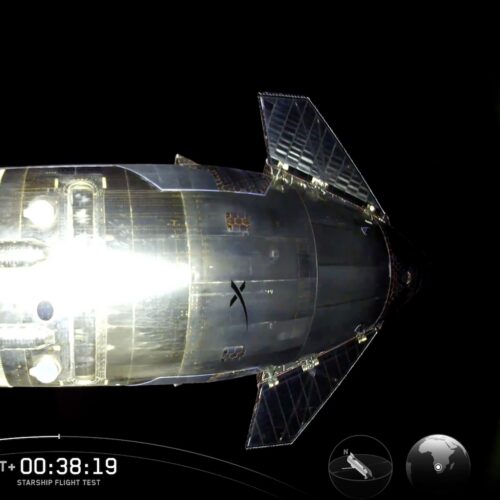
SpaceX launched the first test flight of its upgraded Starship rocket and Super Heavy booster Friday, with mostly positive results.
The powerful rocket, propelled by 33 methane-fueled main engines, climbed away from SpaceX's Starbase launch facility in South Texas at 5:30 pm CDT (6:30 pm EDT; 22:30 UTC) Friday. Within a few seconds, the 408-foot-tall (124-meter) rocket, the largest ever built, cleared the launch tower and turned onto an eastward heading over the Gulf of Mexico.
Starship splashed down on target in the Indian Ocean a little more than an hour later to conclude the first flight of the latest version of SpaceX's stainless-steel mega-rocket. Starship V3 fared better on its debut than the first flights of Starship V1 and V2 in 2023 and 2025. Both past versions of Starship broke apart during launch on their inaugural flights.
SpaceX launched the first test flight of its upgraded Starship rocket and Super Heavy booster Friday, with mostly positive results.
The powerful rocket, propelled by 33 methane-fueled main engines, climbed away from SpaceX's Starbase launch facility in South Texas at 5:30 pm CDT (6:30 pm EDT; 22:30 UTC) Friday. Within a few seconds, the 408-foot-tall (124-meter) rocket, the largest ever built, cleared the launch tower and turned onto an eastward heading over the Gulf of Mexico.
Starship splashed down on target in the Indian Ocean a little more than an hour later to conclude the first flight of the latest version of SpaceX's stainless-steel mega-rocket. Starship V3 fared better on its debut than the first flights of Starship V1 and V2 in 2023 and 2025. Both past versions of Starship broke apart during launch on their inaugural flights.
NASA envisions its moon base covering hundreds of square miles, and hopping scout drones may mark the facility's perimeter. The agency just awarded $1 billion in contracts to get the ball rolling.
NASA envisions its moon base covering hundreds of square miles, and hopping scout drones may mark the facility's perimeter. The agency just awarded $1 billion in contracts to get the ball rolling.
SpaceX launched the first test flight of its upgraded Starship rocket and Super Heavy booster Friday, with mostly positive results.
The powerful rocket, propelled by 33 methane-fueled main engines, climbed away from SpaceX's Starbase launch facility in South Texas at 5:30 pm CDT (6:30 pm EDT; 22:30 UTC) Friday. Within a few seconds, the 408-foot-tall (124-meter) rocket, the largest ever built, cleared the launch tower and turned onto an eastward heading over the Gulf of Mexico.
Starship splashed down on target in the Indian Ocean a little more than an hour later to conclude the first flight of the latest version of SpaceX's stainless-steel mega-rocket. Starship V3 fared better on its debut than the first flights of Starship V1 and V2 in 2023 and 2025. Both past versions of Starship broke apart during launch on their inaugural flights.
[CONTENT] Introduction Overview That there is no tidal bulge is the key premise of this article. Upper-level oceanography undergraduates and above know this. Yet the tidal bulge is still used to portray why the Moon is receding the Earth. If there is no tidal bulge, some other explanation is in order. That other explanation uses...

 Login
Login