Normal view

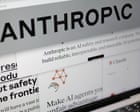
Anthropic confidentially files for initial public offering on US stock market

Financial stakes of AI race rise as Elon Musk’s SpaceX, OpenAI and Anthropic are slated to go public this year

Anthropic has filed confidentially for an initial public offering on the US stock market, the company announced on Monday. The AI firm makes the Claude chatbot, popular with software engineers and other business clients, and has seen a meteoric rise this year.

The company did not disclose the valuation it will target on the stock market, nor did it make public other terms of the offering. The startup announced on Thursday that it had raised $65bn in funding to value the company at $965bn post-money. Anthropic was valued at $380bn in February.

Continue reading...

© Photograph: Ruhani Kaur/Bloomberg via Getty Images

© Photograph: Ruhani Kaur/Bloomberg via Getty Images
© Photograph: Ruhani Kaur/Bloomberg via Getty Images

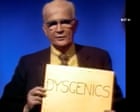
Ghost in the Machine review – entertaining AI polemic dives into its dark history in race politics and eugenics

The roots of AI in rightwing ideology is examined in Valerie Veatch’s enjoyable doc, including an array of colourful, often crazed, figures

Director Valerie Veatch made her name with documentaries such as Love Child (about an online gaming-addicted couple whose child died of malnutrition) and Me at the Zoo (about American vlogger Cara Cunningham), films that explore the intersection of real-world subcultures and internet communities. Her latest continues in this vein, although its self-set remit is a bit broader, more urgent and germane to everyone right now: the pursuit of artificial intelligence, its dark history in eugenics and highly debatable utility today (despite the stock-market bubble pushing the value of a half-dozen companies towards the stratosphere).

The thrust of the film is largely polemic, guiding the viewer towards AI-sceptical conclusions one persuasive soundbite at a time. Nevertheless, it also serves as a very useful, straightforward primer on AI history, touching on a dazzling array of colourful, often crazed figures, including Victorian British eugenicist Francis Galton, Silicon Valley founding father and overt racist William Shockley and current-day jillionaire jerk Elon Musk. Sadly, the film is not so up-to-date that it covers Musk and former friend-turned-foe Sam Altman’s recent courtroom brawl, but that doesn’t detract from the thrust of Veatch and her interviewees’ arguments.

Continue reading...

© Photograph: Ghost in the Machine

© Photograph: Ghost in the Machine

© Photograph: Ghost in the Machine

Charities decry UK plan to use AI to assess age of young asylum seekers

1 June 2026 at 06:00

Coalition of more than 100 organisations says move could lead to more children ending up in adult detention facilities

A coalition of more than a hundred refugee children’s organisations has said controversial plans to use AI to assess the age of young asylum seekers could lead to more children wrongly ending up in adult prisons or detention centres.

The warning follows a Home Office announcement on Friday of a contract to roll out AI facial age estimation technology on young asylum seekers whose age is disputed.

Continue reading...

© Photograph: Peter Macdiarmid/Getty Images

© Photograph: Peter Macdiarmid/Getty Images

© Photograph: Peter Macdiarmid/Getty Images

Our tech overlords are planning for conscious AI to conquer the cosmos. What could go wrong? | Eduardo Porter

31 May 2026 at 14:00

A new belief set is uniting some of the wealthiest men in the world around a ‘transhuman’ future – actual humanity be damned

Sam Altman, the chief executive of OpenAI, took to the Internet a few years ago to propose that homo sapiens would be the first species “to design our own descendants”. In his best case scenario, the “merge” between humans and artificial intelligence occurs at some point over the next 50 years. The alternative, where we remain simply human and the machines follow their own path, is more ominous. “If two different species both want the same thing and only one can have it – in this case, to be the dominant species on the planet and beyond – they are going to have conflict,” he wrote.

More recently, Elon Musk, the world’s richest man, who at one point last year was granted the power to reconfigure the US federal government, argued on his social media platform, X, that “it increasingly appears that humanity is a biological bootloader for digital superintelligence” – our role in the history of the cosmos reduced to that of the low level code that boots up a computer before you can run sophisticated programs on it.

Continue reading...

© Illustration: James Kerr/Scorpion Dagger/The Guardian

© Illustration: James Kerr/Scorpion Dagger/The Guardian

© Illustration: James Kerr/Scorpion Dagger/The Guardian

This model is not a real person: how AI is changing online shopping – video

From digital twins to models ‘sculpted’ by programmers, generative AI has been popping up all over the fashion industry. When an Australian e-commerce retailer started using AI-generated models to sell products, lifestyle editor Alyx Gorman had to see if the garments were more than mere pixels.

The Iconic, which sells the dress worn in this video, said in a statement: ‘Where AI-generated imagery is used to advertise products for sale on our platform, our expectation is that it is clearly labelled and that the product itself is represented as accurately as possible for customers.’

Meanwhile, Atoir, the designer, said: ‘The Australian fashion industry is highly competitive, particularly for independent brands. We believe that when used responsibly, tools like this can help smaller businesses to operate with greater agility while still maintaining the creative standards and product integrity that matter to both the brand and the customer’

Continue reading...

© Photograph: Guardian Design

© Photograph: Guardian Design

© Photograph: Guardian Design

An industry targeting Australia’s ageing population is growing, but can AI deliver more humanity in aged care?

30 May 2026 at 21:00

While companion robots are being introduced and virtual experiences hope to ‘take loneliness away’, one expert agrees tech should never replace the human element

“You’ll never get rid of humans,” Prof Wendy Moyle says, during a discussion about robots and other technology in aged care and residential homes.

Then, a beat later, she adds: “Well, I don’t think we’ll get rid of humans.”

Continue reading...

© Photograph: Matto Lucas

© Photograph: Matto Lucas

© Photograph: Matto Lucas

Anthropic’s alliance with pope on AI harms: all in good faith or ‘Vatican-washing?’

30 May 2026 at 14:00

Experts say AI firm’s engagement with Vatican risks creating ‘feelgood’ discourse that lacks critical examination

Why did Anthropic’s founder sit beside the pope during a warning about AI?

In the first major written teaching of his papacy, Pope Leo XIV took artificial intelligence to task. The pontiff delineated the technology’s most concerning threats to humanity: replacing workers, accelerating war and exploiting the environment. At a ceremony honoring the holy teaching the day of its release at the Vatican, the pope was flanked by an unusual guest speaker: Anthropic co-founder Chris Olah, one of the people behind the AI boom so worrying Leo.

Continue reading...

© Photograph: Alberto Pizzoli/AFP/Getty Images

© Photograph: Alberto Pizzoli/AFP/Getty Images

© Photograph: Alberto Pizzoli/AFP/Getty Images

Americans echo Pope Leo’s concerns about AI: ‘It threatens workers, privacy and human life’

30 May 2026 at 12:00

Guardian readers in the US spoke of fears about unregulated AI in response to the pope’s encyclical warning about the risks of the technology

In his first major papal text since assuming leadership of the Catholic church last year, Pope Leo issued a stark warning about the rise of artificial intelligence this week, denouncing the “culture of power” driving the AI age.

Calling for the “most rigorous” ethical constraints on AI – which he described as one of the greatest threats facing humanity today – the first US-born pope also warned of “new forms of slavery” emerging through the digital economy.

Continue reading...

© Photograph: Ciro De Luca/Reuters

© Photograph: Ciro De Luca/Reuters

© Photograph: Ciro De Luca/Reuters

‘Like a billionaire on acid’: Star Wars director Gareth Edwards comes out in favour of AI

29 May 2026 at 11:55

Speaking at Amazon’s AI on the Lot event, the Rogue One film-maker Gareth Edwards said ‘it’ll do anything you ask’ and ‘it’s going to be better than CGI’

Jurassic World Rebirth and Rogue One director Gareth Edwards has enthusiastically endorsed the use of generative AI in film-making, saying “it is a fucking genius at helping you” and “it’s going to be better than CGI”.

Edwards was speaking at AI on the Lot, an event in Culver City, California, organised by Amazon, and in remarks reported by the Hollywood Reporter said: “I can’t see a reason why you wouldn’t become interested in this stuff as a film-maker. It’s so clearly a tool that might be up there with the camera. It’s going to be better than CGI.”

Continue reading...

© Photograph: Jasin Boland/Universal Pictures and Amblin Entertainment

© Photograph: Jasin Boland/Universal Pictures and Amblin Entertainment

© Photograph: Jasin Boland/Universal Pictures and Amblin Entertainment

Workers need greater say over AI rollout, says TUC-backed report

Exclusive: IPPR thinktank calls for new measures to boost employees’ influence at ‘pivotal moment’ in history

Workers urgently need more bargaining power over the way AI is adopted in the workplace to ensure the benefits are fairly shared, according to a TUC-backed report from a leading thinktank.

The Institute for Public Policy Research (IPPR) is calling for a package of measures to boost employees’ influence at what it calls a “pivotal moment in the history of work”.

Continue reading...

© Photograph: Bloomberg/Getty Images

© Photograph: Bloomberg/Getty Images

© Photograph: Bloomberg/Getty Images

Why I’m grateful to the Pope for his encyclical on AI | Francine Prose

29 May 2026 at 11:00

The intelligent and thoughtful encyclical is an important warning of the uses and misuses of a rapidly developing technology. Silicon Valley is wrong to dismiss it

Often I’m asked if I think that the novels of the future will all be written by AI. It’s not so much a question as a provocation. Do I worry that a machine can do what I do, only better? I usually say something like: “No algorithm is going to write Anna Karenina!” which is also not a real answer.

So I’m grateful to Pope Leo XIV, the American pope, for his recently issued letter to the world, Magnifica Humanitas: On Safeguarding the Human Person in the Time of Artificial Intelligence. It’s a long (more than 40,00 words), intelligent and thoughtful encyclical in which the pope addresses the uses and misuses of a rapidly developing technology. Now when someone asks my opinion of AI, I can refer them to the pope’s letter, or at least chapter three.

Continue reading...

© Photograph: Yara Nardi/Reuters

© Photograph: Yara Nardi/Reuters

© Photograph: Yara Nardi/Reuters

Anthropic reaches valuation of $965bn, beating OpenAI to become world’s most valuable AI firm

Claude’s parent company’s $65bn in latest funding round underscores vast sums of money still flowing into industry

Anthropic, the AI firm behind the Claude chatbot, announced on Thursday it had raised $65bn in funding to value the company at $965bn post-money. The move makes Anthropic the world’s most valuable AI startup, eclipsing its competitor OpenAI.

The deal marks an exceedingly successful period of growth for Anthropic, which was once considered to be a smaller player in the global AI arms race. The widespread adoption of its products by large enterprise businesses, especially following its release of powerful coding assistants late last year, has turned it into a dominant player in the industry.

Continue reading...

© Photograph: Patrick Sison/AP

© Photograph: Patrick Sison/AP

© Photograph: Patrick Sison/AP

Image of Thai police in sparkly dresses with handcuffed suspect turns out to be AI fake

Picture was created by administrator in charge of station’s Facebook account who wanted to create ‘friendlier image’

It was an arresting image and an irresistible story. A group of tough Thai police officers – five men and one woman – all wearing elaborate festival-style dresses, surrounding a drug dealer they had caught while undercover.

The image, released by local police, was so compelling that it found its way on to the front page of the UK’s Daily Star, as well as in picture stories in the Telegraph, the Sun and the New York Post.

Continue reading...

© Photograph: Tha Luang provincial police station/AFP/Getty Images

© Photograph: Tha Luang provincial police station/AFP/Getty Images

© Photograph: Tha Luang provincial police station/AFP/Getty Images

‘Hidden datacentre tax’ costing Irish households millions, report says

Datacentres used 22% of country’s electricity last year, pushing up household bills, study suggests

Energy demand by datacentres in Ireland has added hundreds of euros to household electricity bills in a pattern that could be replicated across Europe, according to a report.

Ireland’s growing number of datacentres last year used 22% of the country’s electricity, more than all urban homes combined, according to the Central Statistics Office. The equivalent figure in the US and UK is 6%.

Continue reading...

© Photograph: Sergio Azenha/Alamy

© Photograph: Sergio Azenha/Alamy

© Photograph: Sergio Azenha/Alamy

‘Hidden datacentre tax’ costing Irish households millions, report says

Datacentres used 22% of country’s electricity last year, pushing up household bills, study suggests

Energy demand by datacentres in Ireland has added hundreds of euros to household electricity bills in a pattern that could be replicated across Europe, according to a report.

Ireland’s growing number of datacentres last year used 22% of the country’s electricity, more than all urban homes combined, according to the Central Statistics Office. The equivalent figure in the US and UK is 6%.

Continue reading...

© Photograph: Sergio Azenha/Alamy

© Photograph: Sergio Azenha/Alamy

© Photograph: Sergio Azenha/Alamy

Are robots nearing their ChatGPT moment? – podcast

Last month at Beijing’s half marathon, a robot named Lightning beat the human world record by nearly seven minutes. It’s the latest in a string of AI-powered milestones that have got people wondering whether robots are about to enter our everyday lives, just as chatbots have. And the country leading the charge is China, where the government has pledged to invest more than £100bn in robotics over the next 20 years. To find out how robots are already entering the workforce, and what needs to happen to get them cleaning our homes and weeding our gardens, Ian Sample hears from the Guardian’s senior China correspondent, Amy Hawkins, and from Nathan Lepora, professor of robotics and AI at Bristol University, who researches how robots can achieve human-like dexterity

Clips: Global News, BBC, CGTN

Continue reading...

© Photograph: VCG/Getty Images

© Photograph: VCG/Getty Images

© Photograph: VCG/Getty Images

AI ‘art’ is boring, soulless theft – and when I see it as an artist I see red | Jess Harwood

28 May 2026 at 03:37

I draw the old way – with my hand. Doing it with AI would not make me more creative, it would drain the colour out of my existence

Last week I went to a gig by myself for the first time. I sat myself down in my single seat, possibly the youngest person in the room and one of thousands excited to see Split Enz. I loved it – I felt joy and heartache as the lyrics spoke of human experiences, really lived. I happily realised that I did not have to wonder whether Split Enz had used AI in their work (as I so often do nowadays) as these bangers were created long before it was even dreamed of.

As a visual artist and writer myself, when I see AI generated images, music or words presented as “art”, I see red. It’s boring, it’s theft, it’s soulless, sterile and it’s killing the planet through energy and water-guzzling datacentres. Someone suggested AI “visual art” should be called “Computer Rendered Artificial Pictures” (CRAP).

Continue reading...

© Illustration: Jess Harwood/The Guardian

© Illustration: Jess Harwood/The Guardian

© Illustration: Jess Harwood/The Guardian

Samsung memory chip staff in line for £310,000 bonuses after AI profit-sharing deal

27 May 2026 at 12:53

Agreement averts strike and shows latest impact of AI boom as two more chipmakers join $1tn club

Employees at Samsung Electronics’ memory chip division are to receive bonuses averaging about £310,000 each through a landmark profit-sharing agreement, as the AI boom drives up chipmakers’ profits.

Fears of a strike at Samsung were averted on Wednesday after two unions for the world’s largest memory chipmaker said 74% of the 62,616 workers who cast their votes had backed the deal.

Continue reading...

© Photograph: Jeon Heon-Kyun/EPA

© Photograph: Jeon Heon-Kyun/EPA

© Photograph: Jeon Heon-Kyun/EPA

US students on why they booed their pro-AI graduation speakers: ‘They’re not reading the room’

26 May 2026 at 09:00

Recent college grads are not very fond of commencement speakers hyping up a technology they see as a threat to their career prospects

When Jacob Pagel graduated from Middle Tennessee State University this spring, predictions about artificial intelligence already had him questioning the value of his degree. Then a music executive started preaching about AI’s transformative power during a commencement speech.

“This industry will change on you in a heartbeat. It has already changed more in the last 10 years than in the 50 years prior … AI is rewriting production as we sit here,” said Scott Borchetta, CEO of the record label Big Machine. After a few stray boos from graduates, he doubled down: “Deal with it.”

Continue reading...

© Photograph: Steven Senne/AP

© Photograph: Steven Senne/AP

© Photograph: Steven Senne/AP

A Louisiana state senator helped secure Meta’s largest datacenter. Then he sold the land beside it

25 May 2026 at 13:00

Jay Morris denies experts’ claims that he violated ethics rules over land deals near the site of Meta’s Hyperion datacenter

This story is from Floodlight, a non-profit newsroom that investigates the powers stalling climate action

For more than two years, John “Jay” Morris, a Louisiana state senator, helped pave the way for Meta to build one of the world’s largest datacenters, called Hyperion, in Richland Parish.

Continue reading...

© Photograph: Jay Marcano/Gulf States Newsroom

© Photograph: Jay Marcano/Gulf States Newsroom

© Photograph: Jay Marcano/Gulf States Newsroom

❌