Normal view

Identifying Martian Lower Crust, Mantle in Isidis Impact

2 June 2026 at 21:54

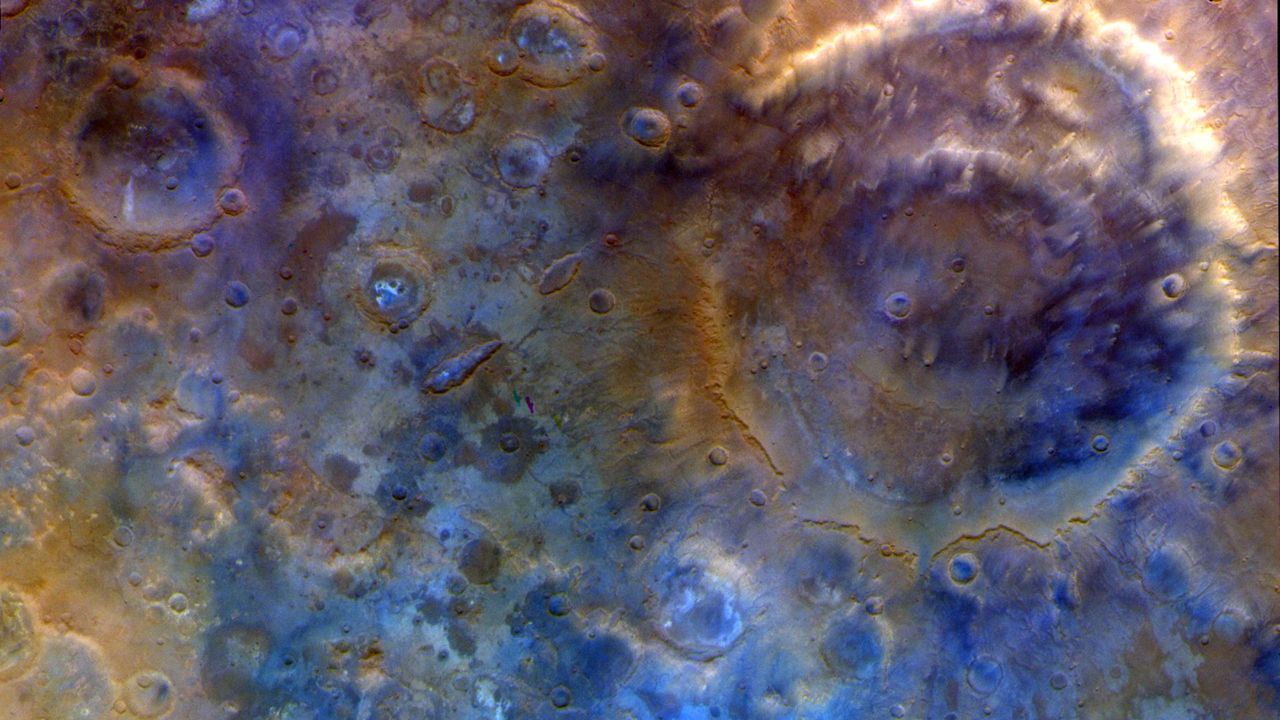
In the endless quest to unravel the mysteries of Mars, a landmark study has emerged proposing groundbreaking criteria to identify the elusive lower crust and mantle materials of the Red Planet. This pioneering research, spearheaded by Trowbridge, Horgan, Weiss, and colleagues, focuses on the geological aftermath of the colossal Isidis impact basin, a feature that has long intrigued planetary scientists due to its immense scale and unique compositional context. Published in Communications Earth & Environment, their work sets a new standard for interpreting Martian geology by delineating precise identification markers for the Martian subsurface layers that have been thrust upward by ancient impact processes.

The Isidis Planitia, a vast impact basin approximately 1500 kilometers in diameter, represents one of the youngest and most prominent geological structures on Mars. Formed around 3.9 billion years ago during the Late Heavy Bombardment, this crater provides a natural window into the planet’s interior through the excavation and exposure of its lower crust and potentially mantle materials. The research team capitalized on this unique feature, utilizing high-resolution spectral data, geophysical modeling, and comparative analysis to develop robust criteria for differentiating deep crustal and mantle rocks from more common surface deposits.

Central to the study is the integration of multispectral imaging from orbiters such as Mars Reconnaissance Orbiter’s CRISM instrument and detailed geochemical simulations. These tools enable the extraction of compositional signatures associated with varying mineral assemblages. For instance, the presence of olivine-dominated ultramafic rocks, distinct pyroxene compositions, and specific alteration minerals serve as key indicators for mantle-derived materials. By correlating these spectral indicators with geophysical anomalies detected in the region, the team crafted a comprehensive framework to pinpoint probable lower crust and mantle exposures.

One of the study’s remarkable achievements is the identification of an unexpected diversity in the mineralogical assemblage within the Isidis excavated materials. Contrary to previous models that predicted a relatively uniform lower crustal layer, the researchers found evidence suggesting significant heterogeneity. This includes variations in Mg/Fe ratios within olivine crystals and compositional differences in pyroxenes, which hint at complex magmatic differentiation and mantle metasomatism events that predate the impact. These findings challenge conventional wisdom and suggest that Mars’s deep interior retains a more dynamic and chemically intricate history than once thought.

The implications of correctly identifying lower crust and mantle materials extend far beyond academic interest. These rocks act as a geological archive, preserving records of early planetary differentiation, mantle convection patterns, and volcanic activity. Unlocking these secrets helps refine models of Mars’s thermal evolution and provides insights into its tectonic and volcanic history. Moreover, such knowledge is vital for astrobiological considerations; the geochemical environment of the lower crust and mantle potentially harbors clues about past habitability and subsurface water reservoirs.

The methodology outlined in this paper is also a leap forward in planetary remote sensing. Previous approaches often relied solely on surface morphologies or broad compositional classifications that were insufficiently discriminating to distinguish deep crustal from upper crustal materials. By employing an interdisciplinary strategy that includes spectral characterization, petrological modeling, and impact excavation dynamics, the authors have set a new benchmark for planetary geoscience research. This approach has wide applicability, opening pathways to reassess other Martian regions and potentially the crust-mantle interface of other terrestrial bodies like the Moon or Mercury.

Crucially, the authors address the complexity of impact processes themselves and their influence on exposing and altering the crust-mantle interface. The Isidis impact, due to its scale and the kinetic energy involved, likely caused widespread fracturing and melting, modifying the original signatures of deep-seated rocks. Disentangling these effects required sophisticated modeling of shock metamorphism and ejecta redistribution, ensuring that identified materials can be confidently traced back to their sources within the planetary interior rather than being artifacts of impact mixing.

This research also propels forward the discourse on Mars sample return missions. Identifying locations where lower crust and mantle materials are exposed at the surface highlights prime sampling sites for future missions. These samples could revolutionize our understanding of the Red Planet’s formation and development. The criteria provided by Trowbridge et al. serve as a guide to prioritize landing sites that maximize the scientific return by targeting the most geologically informative materials.

Furthermore, the study confronts challenges associated with remote geochemical analysis on Mars. Variability in dust cover, surface weathering, and the presence of secondary minerals have historically confounded interpretations. The authors mitigate these issues through a multi-layered approach combining spectral deconvolution, thermal inertia data, and comparative terrestrial analog studies. This layered methodology enhances confidence in the identification of primary crustal and mantle signatures amid surface contaminants, elevating the precision of remote geological investigations.

The impact on planetary geology education and public engagement cannot be overstated. The clarity and innovation demonstrated in this research provide a compelling narrative about Mars’s inner workings and cataclysmic past. Communicating such advances in an accessible yet scientifically rigorous manner enriches both academic discourse and public understanding, inspiring the next generation of planetary scientists and enthusiasts worldwide.

Looking ahead, the authors emphasize the need for corroborative in-situ investigations to validate their proposed identification framework. Landers and rovers equipped with advanced geochemical and mineralogical tools can directly test these hypotheses by sampling targeted outcrops within and around Isidis Planitia. Collaborative efforts between orbital reconnaissance and landed operations will be essential to fully unravel the formation processes and compositional diversity of Mars’s lower crust and mantle.

Another noteworthy dimension of the study is the potential influence of these deep Martian materials on surface volcanism and tectonics. By better characterizing the elemental and mineralogical makeup of the lower crust and mantle, scientists can improve models of mantle melting and magmatic ascent, which shape volcanic constructs observed across Mars. This understanding bridges the gap between subsurface processes and planetary surface evolution, providing a holistic view of Martian geodynamics.

In the broader context of comparative planetology, this work echoes studies of Earth’s lower crust and mantle, drawing parallels and contrasts that elucidate planetary formation mechanisms and divergence. Differences observed in Martian deep crustal rocks versus Earth’s geology underscore the unique pathways planetary interiors can take under varying thermal and compositional regimes. Such insights refine theoretical frameworks applicable across our Solar System’s terrestrial planets.

The study also invites re-examination of the isotopic and age data from Martian meteorites believed to originate from deep crustal or mantle sources. Integrating these data with the newly established identification criteria enhances confidence in meteorite provenance assignments and contributes to more nuanced timelines of Martian geological history.

In summation, the comprehensive criteria proposed for identifying the Martian lower crust and mantle excavated by the Isidis impact constitute a transformative leap in understanding the Red Planet’s subsurface architecture. This research lays the groundwork for future exploration, sample return, and comparative geological studies, propelling Mars science into a new era of detail and discovery. As humanity continues its exploration of Mars, such foundational work illuminates the path toward deciphering the planet’s complex past and its potential for harboring life.


Subject of Research: Identification criteria for Martian lower crust and mantle materials excavated by the Isidis impact.

Article Title: Proposed identification criteria of the Martian lower crust and mantle excavated by the Isidis impact.

Article References:
Trowbridge, A.J., Horgan, B., Weiss, B.P. et al. Proposed identification criteria of the Martian lower crust and mantle excavated by the Isidis impact. Commun Earth Environ (2026). https://doi.org/10.1038/s43247-026-03617-6

Image Credits: AI Generated
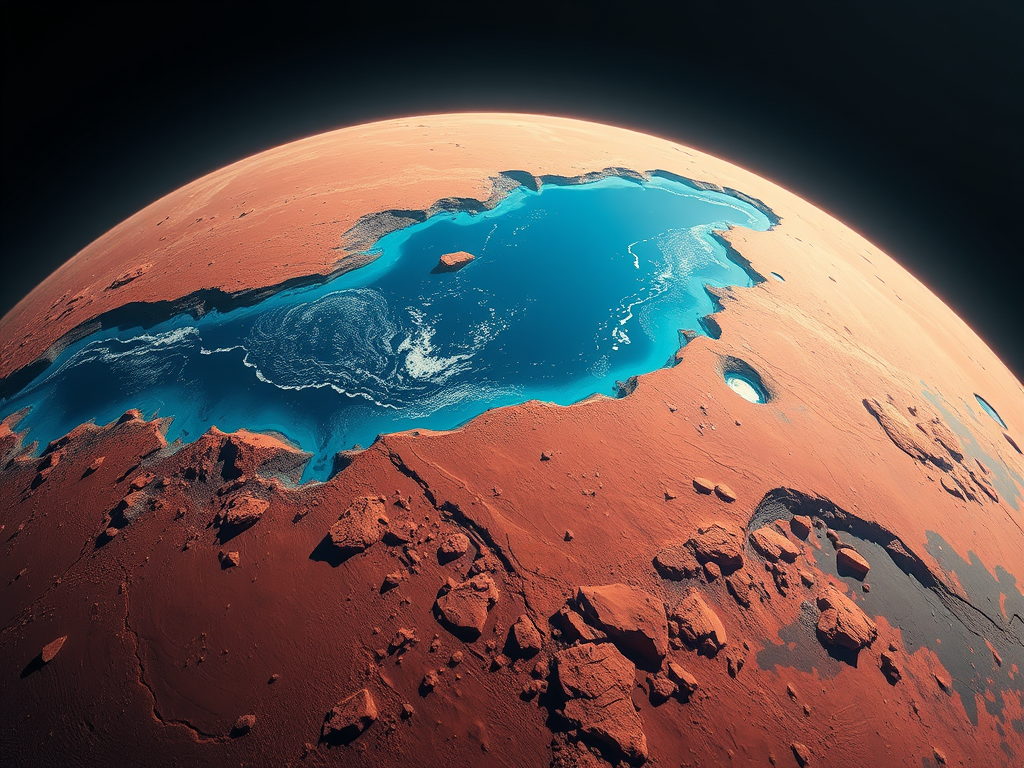
Mars Once Had Oceans and Sandy Beaches

6 March 2025 at 00:51
Recent research suggests Mars may have once hosted oceans and sandy beaches, contradicting claims of insufficient water for a worldwide flood on Earth. While geological features indicate past water flow on Mars, the planet remains lifeless due to its harsh conditions.

Paper Claims the “Asteroid” Japan’s Probe Is Approaching Is Actually a Derelict Spacecraft

2 June 2026 at 17:51

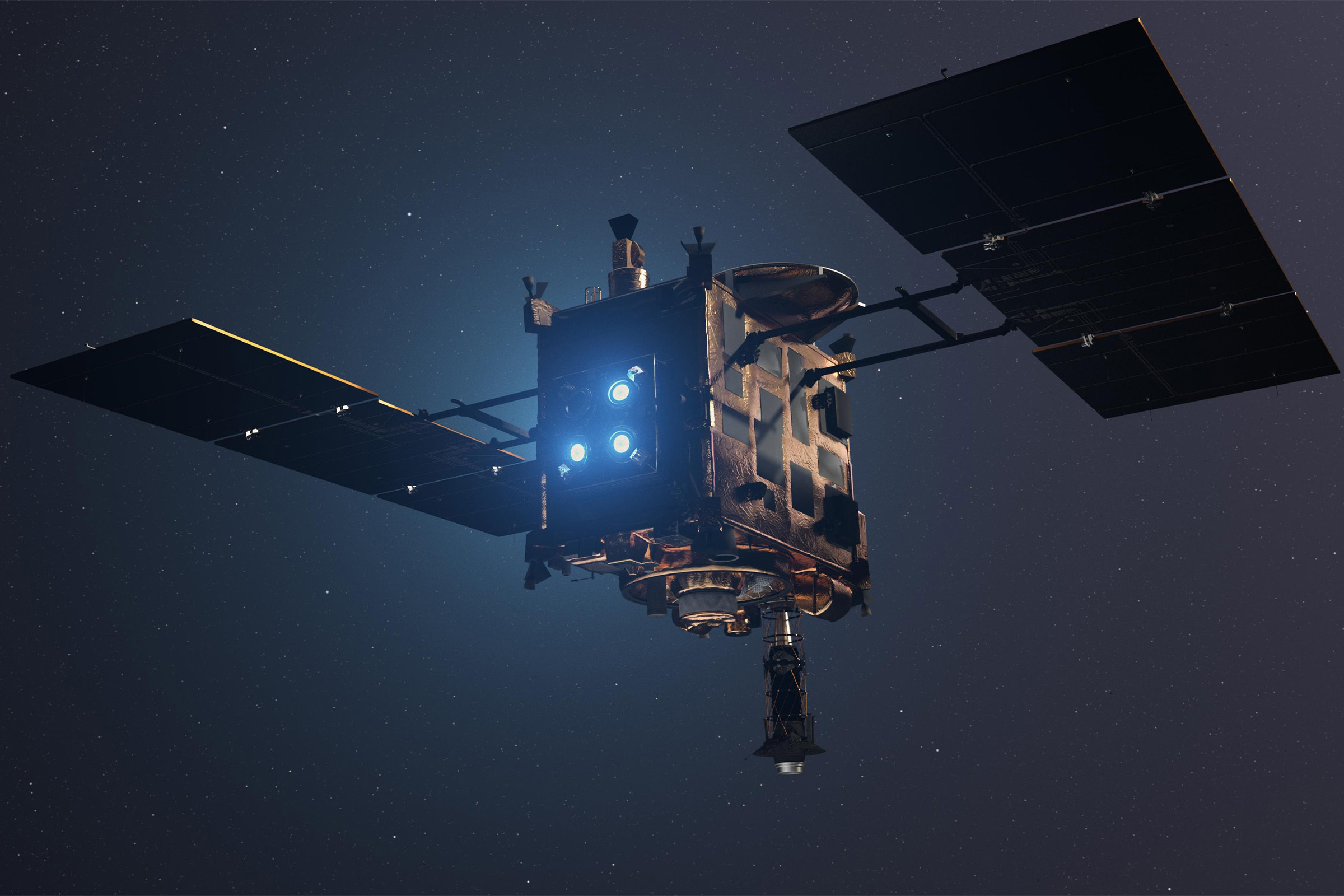
After successfully rendezvousing with near-Earth asteroid Ryugu in June 2018 and sending a sampled cache of rocks back to Earth, Japan’s Hayabusa2 spacecraft is now making its long journey to its next destination, a tiny and rapidly spinning asteroid dubbed 1998 KY26.

The spacecraft is expected to reach the mysterious space rock by July 2031, giving scientists plenty of time to come up with theories as to what it could find once it gets there.

1998 KY26 is an intriguing new candidate for an entirely new class of objects. In 2017, interstellar visitor ‘Oumuamua — the first object from beyond the solar system to have ever been observed — inspired scientists to categorize it as a “dark comet,” a class of asteroids that share some behaviors with comets. (A brief refresher: asteroids are lumps of rock, ice or dust that orbit the Sun but are too small to be classified as planets, while comets are “dirty snowballs” that release gases to form a tail behind them as they pass by the Sun.)

Scientists suggest 1998 KY26 could also be a dark comet, making Hayabusa2’s visit five years from now an intriguing opportunity to get a closer look.

But according to Harvard astronomer Avi Loeb, who has spent years pondering the nature of ‘Oumuamua and its unusual behavior, 1998 KY26 could be something else entirely. As detailed in a yet-to-be-peer-reviewed paper, Loeb and his colleagues suggest the object could instead be a long-lost relic of the Soviet space program.

“In particular, we identify it as potentially a relic of a historical Russian mission to Mars, the Phobos 1 probe, which suffered a failure 2 months after the launch in July 1988, due to upload of a faulty command,” Loeb explained in a blog post this week.

Phobos 1 failed to send back a signal in August 1988 due to what later turned out to be a typo — a missing hyphen — in a command that shut down crucial systems.

In their latest paper, Loeb and his colleagues suggest that the probe’s thruster firings may have put it in a “similar” orbit to 1998 KY26’s, and that the “two orbits converge and are statistically compatible.” The researchers also argue that the defunct spacecraft and dark comet share roughly the same size and a “quite elongated” shape.

Still, the hypothesis is quite a stretch, given the vastness of space. However, in his blog post, Loeb argued that scientists should nonetheless extend their “training data set to include not just rocks and icebergs but also the space objects launched by humans over the past 69 years” just in case.

If 1998 KY26 does turn out to be technological in nature, Loeb argued that the finding could support his controversial theory that ‘Oumuamua may have also been a piece of technology sent to us by an advanced extraterrestrial civilization.

“I wonder whether the mainstream of comet experts will acknowledge that 1I/’Oumuamua may have not been a natural ‘dark comet’ if it becomes clear that their so-called ‘dark comet’ 1998 KY26 is technological in origin, beyond any reasonable doubt,” he pondered.

Nobody knows for sure what Hayabusa2 will find. Besides, thanks to the asteroid’s extremely fast spin, it could prove extremely difficult to land on.

But Loeb and his colleagues argue we should keep an open mind, just in case it turned out to be a long-lost Soviet era spacecraft.

“In anticipation of the Hayabusa2 observations in 2031, which will be decisive in resolving the origin of this object, we encourage further observational, dynamical, and theoretical studies aimed at more tightly constraining the nature and properties of 1998 KY26,” they concluded in their paper.

More on Hayabusa2: Scientist Left “Speechless” After Opening Asteroid Samples

The post Paper Claims the “Asteroid” Japan’s Probe Is Approaching Is Actually a Derelict Spacecraft appeared first on Futurism.

'I would never have guessed it': Unexpected effect is squeezing Mars' atmosphere like toothpaste, experts say

29 May 2026 at 15:48
Researchers have uncovered an unexpected phenomenon, dubbed the Zwan-Wolf effect, squeezing plasma "like toothpaste" in Mars' upper atmosphere. This effect, which also happens on Earth, was thought to be impossible on the Red Planet.

“There are Shortcomings in Recognizing the Existence of Life”: Astrobiologists Warn of Gaps in the Search for Extraterrestrial Life

23 May 2026 at 15:31


Signs of extraterrestrial life may have been ignored by researchers for decades, say a team of astrobiologists, warning of the potential pitfalls of false negatives in the search for ET.

In a recent paper in Nature Astronomy, researchers at Utrecht University argue that poorly designed tests for life elsewhere in the cosmos are a great waste of science funding.

Astrobiology is a specialized field dedicated to discovering the origins of life and detecting life on other planets, yet it remains ambiguous in its conclusions.

False Extraterrestrial Signals

“We should be aware of these false-negative results,” says lead author Inge Loes ten Kate, professor in astrobiology at Utrecht University and the University of Amsterdam. “It means there are shortcomings in recognizing the existence of life. These shortcomings are not yet high on the research agenda.”

The researchers argue that while false positives are well considered in the astrobiology field, potential false negatives, in which existing extraterrestrial life may not appear present, are largely overlooked, to the detriment of the field.

The researchers identified three primary reasons why the search for extraterrestrial life may lead to false negatives. The first is that ancient life on distant worlds may not have been preserved, leaving no remnants left to uncover, even if something once lived. The second two are related; the signals of life on some world may be extremely faint, and our current level of technology may not be advanced enough to detect them. 

“There are several life-detection instrument concepts in development for Mars and even for icy moons that so far have not yet been selected for a mission that I would love to see fly,” Professor ten Kate told The Debrief. “Even though we will always run the risk that those instruments will not find life, whether it is there or not.”

Targeting the Extraterrestrial

“We therefore advocate for the development of a targeted research strategy that systematically addresses these risks, in which we must combine laboratory experiments with modeling research and fieldwork,” ten Kate explained. “Space missions and instruments are designed to detect potential signs of life, but the risk of overlooking something is not taken into account.” 

“The search for signs of life should go hand in hand with better-defined questions and testable hypotheses to justify specific measurement or observation targets,” ten Kate continued.

The researchers favor using artificial intelligence tools to recognize patterns in extraterritorial data, which might identify elements missed by the human eye, and then apply them to future observations. They also note that failing to identify evidence of life may lead to long-term mistakes, such as dismissing objectives and instruments too hastily. They compare this to a person looking at a rock from above, unaware that bugs live beneath it, and, down the line, resource extraction could destroy the rock and the bugs with it.

Possibilities for Life Elsewhere

The Utrecht researchers say that much work remains to be done theorizing what sort of life may exist in the cosmos, what types of environments that life could persist in, and what external signals it should produce. A recent example the team is interested in is an unusual oxidation noted in a Martian rock last year, which bore intriguing similarities to finds on Earth, the only planet known to harbor life.

“On Earth, we only see such differing oxidation as a result of the presence of life,” ten Kate said. “But does that necessarily mean that we are dealing with life in an extraterrestrial context?”

The team says that to better understand this promising Martian discovery, astrobiologists will have to refine their understanding of geochemistry in an extraterrestrial environment before sending a crewed mission to investigate the Red Planet.

If there were life, and it were hidden, ten Kate argues, “there would be a high likelihood of the crew unknowingly killing that Martian life.”

“Although this hypothetical Martian life might ‘only’ be unicellular, like bacteria, in my opinion, we do not have the right to kill it, not even accidentally,” ten Kate concluded. “This is, of course, an ethical dilemma, and I know not everybody would agree.”

The paper, “False Negatives in the Search for Extraterrestrial Life,” appeared in Nature Astronomy on May 21, 2026.

Ryan Whalen covers science and technology for The Debrief. He holds an MA in History and a Master of Library and Information Science with a certificate in Data Science. He can be contacted at ryan@thedebrief.org, and follow him on Twitter @mdntwvlf.

NASA’s Psyche Mission Captures a Surprisingly Brilliant Martian Crescent on Its Way to an Asteroid Rendezvous

21 May 2026 at 13:19


After a Mars flyby on May 15, NASA’s Psyche spacecraft is well on its way to a 2029 rendezvous with the asteroid for which it is named, in search of evidence for how planets like ours first formed.

According to NASA‘s analysis of signals between the Psyche spacecraft and NASA’s Deep Space Network, the craft passed by Mars at a distance of less than 3,000 miles, achieving a gravity assist that boosted its speed and adjusted its orbital panel, without expending any precious propellant.

The NASA craft’s destination, the asteroid Psyche, is a metal-rich space object residing between Mars and Jupiter in the main asteroid belt and may represent some of the early building blocks of our Solar System.

NASA Confirms Mission Success

“Although we were confident in our calculations and flight plan, monitoring the DSN’s Doppler signal in real time during the flyby was still exciting,” said Don Han, Psyche’s navigation lead at NASA’s Jet Propulsion Laboratory in Southern California.

“We’ve confirmed that Mars gave the spacecraft a 1,000-mile-per-hour boost and shifted its orbital plane by about 1 degree relative to the Sun. We are now on course for arrival at the asteroid Psyche in summer 2029,” Han added.

With conserving fuel and power a necessity on any space mission, Psyche’s instruments were not powered up and calibrated until mere days before its Martian flyby. Although the craft’s imagers, magnetometers, and gamma-ray and neutron spectrometers were designed to capture data on Psyche, NASA scientists were able to give them a trial run by observing Mars while on approach. 

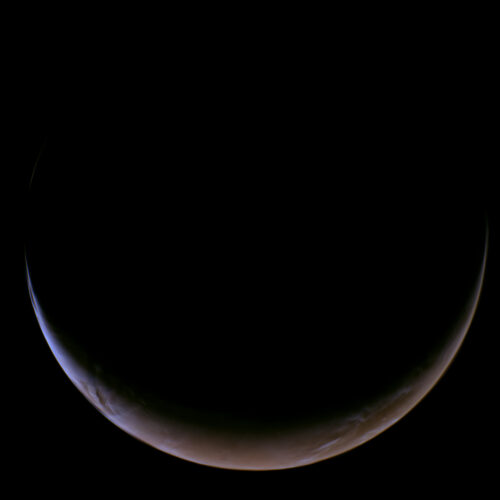
This test allowed the instruments to observe the Red Planet at an unusual high phase angle, when it appeared as a narrow crescent illuminated by the Sun. Some of the data collected surprised the team, with the crescent (seen below) extending farther and appearing brighter than expected.

Mars crescent
On approach, Psyche captured a stunning image of a crescent Mars. Credit: NASA/JPL-Caltech/ASU

NASA Calibrates Psyche

“We’ve captured thousands of images of the approach to Mars and of the planet’s surface and atmosphere at close approach,” said Jim Bell, the Psyche imager instrument lead at Arizona State University (ASU) in Tempe.

“This dataset provides unique and important opportunities for us to calibrate and characterize the performance of the cameras, as well as test the early versions of our image processing tools being developed for use at the asteroid Psyche,” Bell added.

Bell is no stranger to NASA’s extraterrestrial missions, also leading the team working on the Perseverance Mars rover’s Mastcam-Z imaging investigation. He added that calibration efforts would continue targeting Mars for the rest of the month, until the planet was out of range.

However, the Psyche spacecraft’s magnetometer calibration tests made another intriguing discovery: the team believes it detected the planet’s bow shock, a shock wave produced by the impact of stellar winds.

Rounding out the calibration effort, previous Mars data will also provide helpful information to the team responsible for calibrating the spacecraft’s gamma-ray and neutron spectrometer.

Mars crater
The large double-ring crater Huygens and the surrounding heavily cratered southern highlands were captured in great detail by Psyche’s multispectral imager. Credit: NASA/JPL-Caltech/ASU

Rendezvous with Psyche

NASA’s Psyche mission is now on its way to its final destination, which is estimated to be reached in August 2029. Its target, the 173-mile-wide asteroid Psyche, is hypothesized to be the remnant of an ancient planetary building block known as a planetesimal.

Once the craft arrives, it will assume a variable circular orbit, coming in closer and retreating to greater distances, seeking evidence of whether the asteroid contains a metallic core.

“We’ve been anticipating the Mars flyby for years, but now it’s complete. We can thank the Red Planet for giving our spacecraft a critical gravitational slingshot farther into the solar system,” said Lindy Elkins-Tanton, principal investigator for Psyche at the University of California, Berkeley.

“Onward to the asteroid Psyche!” she added.

Ryan Whalen covers science and technology for The Debrief. He holds an MA in History and a Master of Library and Information Science with a certificate in Data Science. He can be contacted at ryan@thedebrief.org, and follow him on Twitter @mdntwvlf.

Scientists Have Confirmed a “Completely Unexpected” Martian Discovery with Help from NASA’s ‘MAVEN’ Mission Data

20 May 2026 at 17:34

NASA scientists say observations of an unusual phenomenon in the atmosphere of Mars have been confirmed, according to findings detailed in a new study.

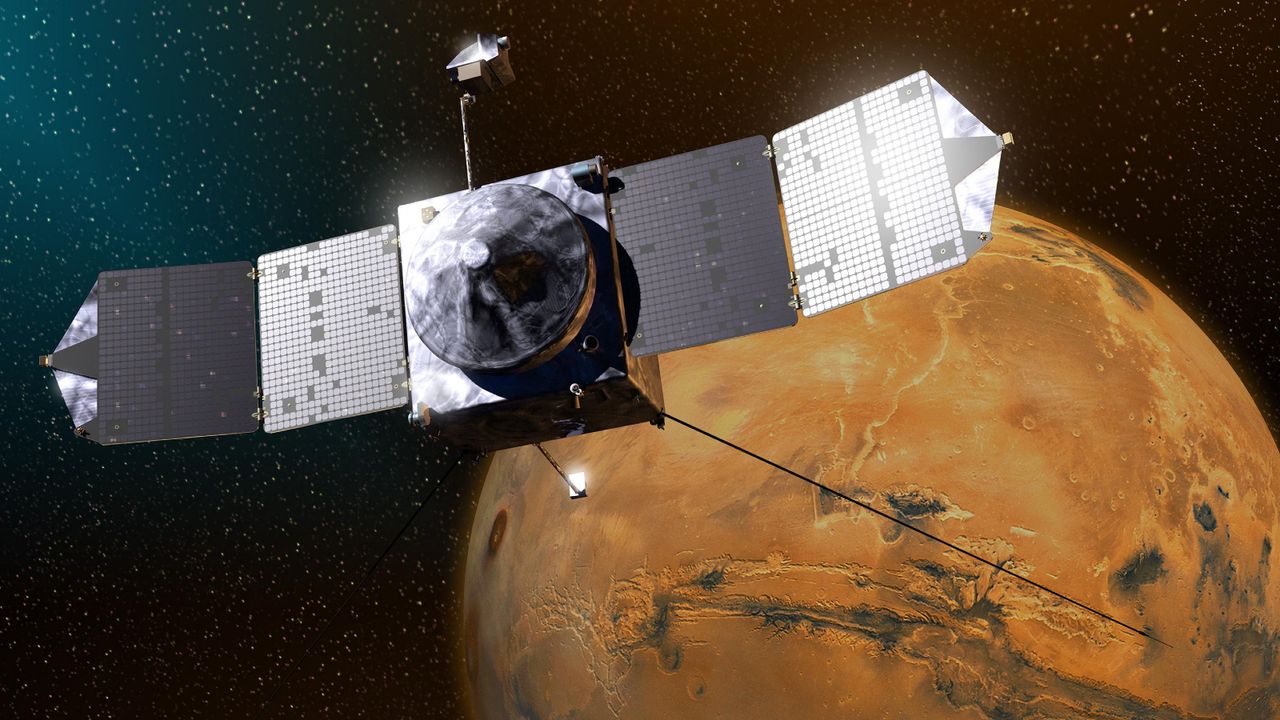
The unexpected discovery was made possible with data from the American space agency’s Mars Atmosphere and Volatile Evolution (MAVEN) mission.

This story begins in 2023, when something very unexpected turned up in MAVEN data: NASA scientists observed what appeared to be an atmospheric effect known to occur here on Earth but never seen in Mars’ comparatively thinner atmosphere.

Based on data collected with MAVEN’s suite of instruments, the phenomenon—known as the Zwan-Wolf effect—occurs when charged particles end up being projected out of magnetic structures that atmospheric scientists call flux tubes. The resulting effect, which has been known to occur here on Earth for several decades, is beneficial because it is associated with the deflection of the solar wind around the planet.

“Very Interesting Wiggles”

For researchers like Christopher Fowler, the discovery of anything comparable to this odd atmospheric quirk anyplace other than Earth would have been the last thing he expected to find.

However, that’s precisely what occurred as he began digging into the MAVEN data.

“When investigating the data, I all of a sudden noticed some very interesting wiggles,” Fowler recently said.

As a research assistant professor at West Virginia University in Morgantown, Fowler was admittedly perplexed by what he discovered.

“I would never have guessed it would be this effect,” he said, “since it’s never been seen in a planetary atmosphere before.”

Now, Fowler is the lead author of the recent study that helped confirm its presence in the Martian atmosphere.

An Unlikely Discovery 

One reason the discovery seemed so unlikely is the thinness of the Martian atmosphere compared to Earth’s. Mars lacks the global magnetic field our planet has, which significantly influences how solar winds and other space weather phenomena impact the planet.

Despite such conditions, confirmation of the Zwan-Wolf effect within a particle-rich region of the Martian atmosphere below 200 kilometers revealed that these charged particles were being squeezed in the same way as flux tubes do in our atmosphere, thereby spreading these charged bits of matter throughout the Red Planet’s atmosphere.

According to the team’s findings, they now believe that the Martian magnetosphere, which often changes with solar weather, likely indicates that the Zwan-Wolf effect is constantly at work in the planet’s atmosphere.

However, the effect is mostly undetectable by MAVEN’s instruments. That wasn’t the case in 2023, when space weather events recorded at that time appear to have amplified the effect enough that the NASA spacecraft’s sensors were able to observe it for the first time.

A Martian Swan-Wolf Effect is Confirmed

Still, the initial information the MAVEN team obtained was subtle. Fowler says it amounted to little more than a few notable fluctuations in magnetic field measurements, collected as MAVEN passed through the Martian atmosphere.

Taking a closer look at these “interesting” readings revealed an unexpected surprise, which they ultimately determined to be the same Zwan-Wolf effect known from decades-old studies of Earth’s atmosphere.

“No one expected that this effect could even occur in the atmosphere,” Fowler said of the discovery.

Although the presence of this effect is well-characterized on Earth, understanding its dynamics in Mars’ atmosphere could provide meaningful insights into the forces that drive it elsewhere, including unmagnetized regions like those surrounding planet Venus and moons like Titan.

Additionally, the team believes their work could help to better characterize the changes induced by space weather events and how they can thereby alter the environment on planets like Mars.

“That’s what makes this even more exciting,” Fowler added. “It introduces interesting physics that we haven’t yet explored and a new way the Sun and space weather can change the dynamics in the Martian atmosphere.”

The team’s new study, “Detection of Zwan-Wolf effect in the ionosphere of Mars,” appeared in Nature Communications on May 18, 2026.

Micah Hanks is the Editor-in-Chief and Co-Founder of The Debrief. A longtime reporter on science, defense, and technology with a focus on space and astronomy, he can be reached at micah@thedebrief.org. Follow him on X @MicahHanks, and at micahhanks.com.

“For Years We Couldn’t Understand It”: What’s the Massive Anomaly Lurking in the Clouds Over Venus?

17 May 2026 at 14:43


A mysterious weather anomaly on Venus has finally been explained in new research, providing deeper insights into the weather volatility of other planets in our solar system.

University of Tokyo researchers revealed their findings in a recent paper published in the Journal of Geophysical Research, focused on their investigation of a massive cloud disturbance observed on the second planet from the Sun.

This unusual cloud phenomenon involves a 6,000-kilometer-wide wave front that travels around Venus over just a few Earth days, and scientists believe it could potentially affect future space missions.

A Weather Aberration on Venus

Japan’s Akatsuki Venus orbiter first observed Venus’s enormous, 6,000-kilometer-wide atmospheric wave move across the planet’s equator at tremendous speed in 2016. Now, a decade later, the University of Tokyo team has some answers about this peculiar feature.

Compared to Earth, Venus is a slow mover, with its rotation even slower than its 243-day orbit. Despite this, Venusian clouds move at an incredible pace, 60 times the planet’s rotational speed in what is known as “superrotation,” a phenomenon also observed on Mars, the Sun, and Earth’s supersonic atmosphere.

“We identified the phenomena, but for years we couldn’t understand it,” said lead author Professor Takeshi Imamura from the Graduate School of Frontier Sciences at the University of Tokyo. “However, thanks to this research, we’re now able to show that this cloud disruption is caused by the largest known hydraulic jump in the solar system.”

Venus
Credit: ©T. Imamura, Y. Maejima, K. Sugiyama et al., 2026 CC-BY

A Natural Weather Lab

The Venusian atmosphere is hot, dense, and toxic, being composed of almost 97% carbon dioxide. This results in constant cloud cover, which rains sulfuric acid. While this creates a deadly environment for humans, at a distance, it’s a perfect natural weather laboratory. This extreme cloud density makes hard-to-spot weather patterns and processes more readily apparent than they would be on a planet such as ours.

The strange formation in the Venusian atmosphere resulted from a sudden slowdown of the fluid, known as a hydraulic jump, produced when a large atmospheric Kelvin wave moving east across Venus becomes unstable in the lower to middle cloud region. The Kelvin wave’s sudden slowing produces an updraft, pushing sulfuric acid vapor into the upper atmosphere, where it can condense into clouds. As though clouds trail, they form the enormous wavefront spotted by Akatsuki Venus.

“Venus has three distinct cloud layers, and the dynamics of the lower and middle layers are not so well understood,” said Imamura. “Our discovery of a hydraulic jump on Venus connecting a very large-scale horizontal process with a strong localized vertical wave is unexpected, as in fluid dynamics these are usually disconnected.”

Analyzing Venusian Weather

The Japanese researchers used a fluid-dynamic model to simulate the hydraulic jump observed on Venus, combined with a microphysical box model to track air flow through the atmosphere. In their analysis, the University of Tokyo researchers identified how the cloud disturbance maintains the Venusian atmosphere’s superrotation.

“Up until now, we used a global circulation model (GCM) for Venus that is similar to Earth’s, but this model doesn’t include the hydraulic jump which we have now identified,” explained Imamura. “Our next step will be to test this discovery within a more inclusive climate model that includes other atmospheric processes. We will face challenges due to the significant processing power required to run such simulations. Even with modern supercomputers, it isn’t easy.”

This marks the first hydraulic jump observed on another planet, but the researchers say this may be a portent of things to come as scientists get a closer look at other bodies in the universe. 

“Under some circumstances, Mars’ atmosphere may also have the right conditions for a hydraulic jump,” mentioned Imamura. 

As humanity stretches out into space with hopes of crewed Mars landings in the coming decades, advancing models of extraterrestrial atmospheric conditions will be essential to mission safety.

The paper, “A Planetary-Scale Hydraulic Jump Driving Venus’ Cloud Front,” appeared in the Journal of Geophysical Research on April 24, 2026.

Ryan Whalen covers science and technology for The Debrief. He holds an MA in History and a Master of Library and Information Science with a certificate in Data Science. He can be contacted at ryan@thedebrief.org, and follow him on Twitter @mdntwvlf.

Mars Express Reveals A Chaotic Feature Carved into the Martian Surface By Ancient Waters

16 May 2026 at 16:13


Martian chaos created by craters, lava, and water was observed by the European Space Agency’s (ESA) Mars Express in the Shalbatana Vallis, providing an in-depth look at this fascinating feature of the Red Planet’s terrain.

This channel, close to the Martian equator, the Shalbatana Vallis, stretches between the highland Xanthe Terra and the lowland Chris Panitia, carved by natural processes long ago. Even after two decades, Mars Express continues to provide scientists with stunning new details of the Martian terrain, filling in our understanding of Earth’s planetary neighbor.

Mars Express

Since its 2003 launch, Mars Express has been exploring the Red Planet with a suite of eight onboard instruments. Consisting of a lander, Beagle 2, and the Mars Express orbiter, the spacecraft has been especially prolific, mapping the Martian surface color and three dimensions at never-before-achieved resolution over the last two decades.

Mars map
Shalbatana Vallis is a channel close to the Martian equator. Credit: NASA/USGS; ESA/DLR/FU Berlin

An earlier Mars Express video, captured in October 2025, observed the channel from beginning to end. Yet, this new image captured by the Mars Express’s High Resolution Stereo Camera (HRSC) focuses more tightly on a northern segment of the 1300-kilometer-long Shalbatana Vallis, providing exquisite, high-resolution detail on this intriguing surface feature.

Forging the Shalbatana Vallis

Scientists believe that, as large amounts of groundwater rose to the surface to flood this equatorial region roughly 3.5 billion years ago, that catastrophe produced the Shalbatana Vallis, cutting a winding path through the rock. The main valley cuts 500 meters deep, yet extends about 10 kilometers wide as it meanders across the Martian surface.

As weathering carved the valley, scientists believe this also filled it in over time. The precise materials that infilled the once-deep valley cannot be pinpointed, yet some clues exist. Researchers believe that a blue-black material in part of the modern channel is volcanic ash strewn about by Martian winds.

chaotic area
A chaotic area in the Shalbatana Vallis lies near a patch of likely volcanic ash. Credit: ESA/DLR/FU Berlin

Unusual Terrain Features of Mars

Other valleys of Shalbatana Vallis’s type abound in the region, which is home to many marks of local volatility. On one side are the northern lowlands, relatively smooth, while the highlands to the south are heavily cratered from ancient space impacts. It also lies near Chris Planitia, likely an ancient ocean, based on its status as one of the lowest points on the Martian surface and the many outflow channels leading into it.

Often accompanying outflow channels, such as Shalbatana Vallis, are scattered rock mounds and raised blocks known as chaotic terrain. In this instance, a section of chaotic terrain appears in the images near the blue/black portion identified as likely volcanic ash. Such features are likely born in the collapse of the surface ground, as water ice below melts, creating instability. Mars Express has previously captured such features in the areas of Pyrrhae Regio, Iani Chaos, Ariadnes Colles, Aram Chaos, and Hydraotes Chaos.

Remnants of impact craters in the area now lie partially obscured by later burial, long-term wear, and even a covering of material ejected during the initial impact. Volcanic activity has, over time, flooded the regions with lava, smoothing many of these ancient features before cooling and shrinking into wrinkle ridges. Presently, a few isolated portions of the earlier surface still remain, now as hill tops scattered through the channel.

Going forward, with the help of software updates that occurred last year, ESA scientists are expected to keep Mars Express operational through 2034, providing ever more data ahead of any potential crewed landings on the Red Planet.

Ryan Whalen covers science and technology for The Debrief. He holds an MA in History and a Master of Library and Information Science with a certificate in Data Science. He can be contacted at ryan@thedebrief.org, and follow him on Twitter @mdntwvlf.

Is Earth’s water why intelligent life evolved here?

1 June 2026 at 12:00

Earth has many unique features for a planet, such as a magnetic field, a large moon, and plate tectonics. It’s also the only planet we know of that harbors life. These facts form the basis of the Rare Earth hypothesis, which posits that we haven’t found aliens because other planets in the Galaxy probably don’t have all the right conditions for life. 

Another characteristic of Earth is that about 30% of its surface is land and about 70% is ocean. Recently, Columbia University Assistant Professor David Kipping investigated whether the proportion of Earth’s surface covered by dry land versus ocean, or its land fraction, is another reason Earth is habitable not only for simple single-celled organisms, but also for intelligent species like humans. 

To test this hypothesis, Kipping created 4 statistical models of planets with different land fractions that intelligent aliens could potentially evolve on. First, he created an equation to describe the likelihood that a planet in its star’s habitable zone has a particular land fraction, known as a probability distribution. Kipping weighted this probability distribution toward the extreme ends, making it more likely that a planet would be covered by a single huge landmass or a single vast ocean than by a mix of both, as on Earth. 

Kipping then incorporated this land fraction probability distribution into his statistical models to calculate the probability that a random planet will have that land fraction and host intelligent life. The 4 scenarios Kipping tested were: 1) that intelligent life is more likely to emerge on land-dominated planets, 2) that it’s more likely to emerge on ocean-dominated planets, 3) that it’s more likely to emerge on planets with roughly equal amounts of land and ocean, and 4) that its emergence is independent of a planet’s land fraction. 

As a first step in determining the kinds of planets intelligent aliens would tend to emerge on, Kipping used each model to predict the probability that intelligent life would emerge on a planet with the same land fraction as Earth. He then compared these probabilities by calculating the ratios between each value. Because Earth is the only known planet with intelligent life, a model that predicted a greater probability for humanity’s existence on Earth would be more likely to reflect reality.

Kipping considered it strong evidence that a given model was more realistic than another if the ratio between 2 of them was greater than 10, meaning one model was 10 times more likely to predict the existence of Earth and humanity. Kipping found that no comparison of any 2 models passed this threshold. However, the models assuming that intelligent life prefers ocean-dominated planets or planets with a land-ocean balance were 2.5 and 3 times more likely to predict the existence of humanity than the model assuming that intelligent life prefers land-dominated planets. Additionally, the model assuming that intelligent life prefers a land-ocean balance was always more likely to predict humanity than any other model, though marginally. 

Kipping also addressed whether finding more planets with intelligent life would affect which model was deemed most realistic, for example, if scientists discovered conclusive evidence of life on Mars in its distant past. Here, Kipping identified 2 complications. First, it’s uncertain how much of Mars’s surface was once covered by water – some estimate it had a land fraction as high as 81%, while others estimate it was as low as 25%. Second, proving that Mars once had life would not prove it once had intelligent life.

Regardless, Kipping reran the models assuming that ancient Mars had a land fraction comparable to Earth’s. Adding this second data point produced ratios similar to those in the earlier Earth-only calculations, meaning it still didn’t make any single model 10 times more likely to predict the existence of humans and Martians, respectively. 

Kipping then took the 10-times threshold and reversed the calculations to find what conditions would exceed it. In doing so, he calculated that astronomers would need to find 14 other planets with intelligent life and known land fractions to robustly determine whether intelligent life is more likely to occur on desert planets, ocean planets, balanced planets, or without bias.

Kipping concluded that he can’t yet definitively state whether there is something special about Earth’s land fraction when it comes to producing intelligent species. However, Earth’s existence would suggest that intelligent life is unlikely to favor extreme desert planets, so the Milky Way probably isn’t filled with Tatooines and Jakkus. And while his analysis doesn’t debunk the Rare Earth hypothesis, it does undermine the argument that Earth’s ocean size explains why Earth is rare. 

The post Is Earth’s water why intelligent life evolved here? appeared first on Sciworthy.

Mars Minerals Reveals an Ancient Ocean's Potential For Life - and a Possible Way to Make Oxygen

30 May 2026 at 19:34
Researchers have identified a ring of minerals around the largest basin in the northern hemisphere of Mars (which past research suggests held a large body of water). Phys.org says the research provides new clues on when life may have been possible on Mars — and how future astronauts could make oxygen: Manganese oxides and hydroxides (collectively written as manganese (hydr)oxides) can act as geological proxies for past oceans... The team involved in the new study analyzed short-wave infrared (SWIR) data from China's Zhurong rover, ESA's OMEGA orbiter and NASA's CRISM orbiter to identify and quantify manganese (hydr)oxides... The team says the placement of the ring indicates that the ring formed during the Hesperian epoch — a geologic period on Mars that occurred roughly 3.7 to 3.0 billion years ago. The Hesperian epoch marked the transition from the warmer, wetter, and volcanically active Martian world to a cold, dry, and dusty planet... [when "the potential for further prebiotic evolution on the surface was significantly reduced."] "This yields a final estimated duration of 0.8-1.5 million years for the presence of stable aqueous conditions in Utopia Planitia. This timescale significantly exceeds what is typically expected for transient surface water activity on Mars, suggesting that Utopia Planitia hosted a long-lived and evolving aquatic system during the Hesperian epoch, rather than a short-lived or rapidly evaporating water body," write the study authors. The researchers say that although this does not provide direct evidence of early life, it does suggest that Mars may have provided an environment conducive to initiating early forms of life. The timeline of the ocean matches the minimal timescale required for prebiotic chemistry, and also temporally overlaps with the period on Earth in which scientists believe the earliest forms of life first arose, approximately 3.4 billion years ago. The study authors also note that the conditions for life may have also extended into the next Amazonian period on Mars. They write, "If MnOx formation or redistribution occurred during the Amazonian, this would suggest that Mars may have maintained episodic or localized liquid water environments significantly later than traditionally assumed." Interestingly, the authors also bring up the potential for future human habitation on Mars. They suggest that oxygen can be produced by using the manganese (hydr)oxides for water-splitting reactions that generate oxygen through photocatalysis, potentially supporting human activities or even terraforming. Of course, this would be a long way off.

Read more of this story at Slashdot.

New Mars rover could swim through sand like a desert lizard

25 May 2026 at 16:15

To effectively travel on Mars, rovers need to deal with a lot of sand. German engineers have created a new kind of ground rover that uses swimming motions to push through sand that may otherwise cause the  wheels to get stuck. Its inspiration: the African sandfish (Scincus scincus), a lizard known for burrowing into the Sahara Desert and literally swimming through its sand like a fish. It’s one of the animal kingdom’s strangest methods of propulsion, but it may help shape the future of Mars exploration.

A video of the rover, released this week by the University of Würzburg, shows a mini-fridge-sized, silver rover making its way through a sandy, Martian-mimicking test floor. Rather than rolling forward, each of its four wheels cuts through the sand in what looks like a figure-eight motion. The rover pushes on several yards and then cuts a corner and returns to where it started.

“The wheels mimic the animal’s [sandfish’s]characteristic interaction with the ground, generating both longitudinal and lateral forces,” University of Würzburg researcher Amenosis Lopez said in a statement. “The rover leaves sinusoidal tracks in the sand.” 

The sandfish: nature’s cute solution to slippery sand 

Though most people likely associate space rovers with round wheels or tracks reminiscent of those on WALL-E, neither design is ideal for dealing with Mars’s uniquely harsh and sandy environment. Sand is unique because it’s a material with both solid and liquid-like qualities. On top of sand’s mixed texture, rovers roaming on the Red Planet have to deal with steep slopes and uneven terrain, where varying levels of slipperiness can cause imbalance. Patches of softer sand are also a nightmare for wheels, making the prospect of a rover getting stuck never far from mind

But nature figured out a solution to this issue millions of years ago, and it’s called the sandfish. Contrary to its name, the Sahara Desert native is a lizard in the skink family. Above ground, the sandfish uses its tiny legs to scrabble around much the same as any lizard. Things get more interesting when it burrows down into the sand. X-ray imaging shows  the sandfish propelling itself forward under the sand, using a powerful waving motion to generate thrust and overcome drag. The result looks like an animal swimming through the sand, remarkably similarly to how a fish would oscillate its body to move through water

Engineers at Georgia Tech took those observations and used them to create their own sandfish robot in 2011. Testing with their robots showed that the little lizard’s oddly wedged shaped head may also help it generate lift forces and more easily swim through sand. 

Sink or swim: new rover did both 

Researchers working on the sandfish-inspired robot said it outperformed a wheeled version when navigating through a sandy test track. Where the round wheels would wobble and weave, the oscillating wheels stayed relatively stable. That’s not to say the new approach worked right out of the gate. Early models of the design were reportedly so heavy that the  rover literally sank into the sand. The team went back to the drawing board and made a second version, this time increasing each wheel’s width and reducing overall mass

It’s unlikely these oddball new wheels will become the main chassis system for NASA rovers, at least not in the immediate future. More work still needs to be done to increase their overall controllability and account for slippage that can occur in complicated, real-world environments. There are also the added variables of accounting for scientific instruments and other cargo a rover might have to carry. 

More than anything, the wheel design is a testament to the sandfish’s innate ingenuity and evolutionary gifts. Many scientists only recently began to truly appreciate these traits and what other technology they could inspire. 

The post New Mars rover could swim through sand like a desert lizard appeared first on Popular Science.

'I would never have guessed it': Unexpected effect is squeezing Mars' atmosphere like toothpaste, experts say

29 May 2026 at 15:48
Researchers have uncovered an unexpected phenomenon, dubbed the Zwan-Wolf effect, squeezing plasma "like toothpaste" in Mars' upper atmosphere. This effect, which also happens on Earth, was thought to be impossible on the Red Planet.

Scientists Say They’ve Found Fungi That Turn Dead Martian Soil Into Fertile Cropland

31 May 2026 at 12:30

Once the first human settlers reach the surface of Mars, they’ll have to get extremely creative to turn the desolate and hostile environment into land that can support a permanent human presence. Like in Andy Weir’s blockbuster sci-fi novel “The Martian,” the local regolith would need plenty of manipulation to allow plants to grow.

But according to recent research, there may be much better alternatives to relying on biofuel and human waste, like the stranded protagonist in “The Martian.” As detailed in a paper published in the journal Frontiers in Astronomy and Space Sciences and spotted by Universe Today, an international team of researchers argue that special fungi could be used to convert the hostile Martian regolith into crop-friendly soil that could even be home to beneficial microbes and other organisms.

On their own, the researchers point out in their paper, regolith on the Moon and Mars aren’t exactly great candidates. They have a high alkaline pH, are riddled with toxic elements like aluminum and manganese, and are devoid of many important nutrients plants need to grow.

However, specific fungal species, such as trichoderma, a prevalent genus in soils here on Earth, have previously been shown to metabolize these toxic elements while also producing phosphates and other nutrients that are key to organic life.

Some extreme fungi, like Cryomyces antarcticus, which researchers have demonstrated can survive the harshness of outer space while strapped to the outside of the International Space Station, could be used to promote plant growth under “abiotic stress,” or negative impacts from environmental factors.

Other mycorrhizal fungi, species that are mutually beneficial to plant roots, can “enhance iron uptake, mitigate oxidative stress, and improve soil structure,” the researchers argue, in “mechanisms that may be applicable to regolith systems.”

Of course, plenty of questions remain whether Martian regolith will prove useful in growing plants on the surface of a hostile planet. We don’t know whether the final crops will be safe to eat or how they will react to radiation exposure, let alone how to validate the concept ahead of time, the researchers point out.

But anything that could sidestep the need to ship soil or other growing media all the way to Mars is worth looking into; it could potentially lower the costs enormously of future efforts to create a permanent presence on Mars.

And there are early positive signs that it may just work. Researchers at the University of Bremen and the German Aerospace Center successfully developed a algae-based fertilizer that can be produced exclusively with Martian resources — bringing us one step closer to growing food on Mars.

More on growing stuff on Mars: Scientists Identify Plant That Could Grow on Mars

The post Scientists Say They’ve Found Fungi That Turn Dead Martian Soil Into Fertile Cropland appeared first on Futurism.

SpaceX Announces Plans to Put Billionaire on First Rocket to Mars

22 May 2026 at 22:00

The future of space travel is pay to play, but that might not be a bad thing.

During the final 15 minutes counting down to SpaceX’s aborted Starship V3 mission on Thursday, Elon Musk’s space company revealed a fascinating tidbit: the man who’s going to lead SpaceX’s first crewed mission to Mars.

Spotted by Gizmodo, broadcasters on the company’s live feed announced that crypto billionaire Chun Wang has been tapped to lead humanity’s first interplanetary human flight.

At first glance, Wang might seem like an unlikely candidate for such a monumental task. A software developer who dropped out of college, Wang made his fortune by developing one of China’s first and most successful Bitcoin mining pools — striking it rich just before the Chinese government shut all of that crypto stuff down in 2021.

However, his resume includes another space flight, SpaceX’s April 2025 Fram2 mission, which he personally funded in order to secure a spot as mission leader. Though the media made a spectacle of that brief trip, Christopher Combs, associate dean of research at the University of Texas’ Klesse College of Engineering and Integrated Design described it as a “notch above a gimmick, but not exactly a groundbreaking milestone.”

The Mars trip, which would take up to two years, would be a vastly greater challenge on the billionaire’s mind and body — though Wang seems pretty gung-ho about it.

“I can stare at the map view on airplanes all the way from takeoff through landing, so I think I’m going to enjoy the trip,” Wang told viewers on Thursday.

It’s unknown who else will be making the Mars trip alongside Wang, and whether or not he’s funding it. Either way, the prospect that a billionaire could be willfully catapulting himself around 140 million miles from Earth left some critics buzzing on social media.

“This is the first time I have been 100 percent behind a SpaceX decision,” journalist David Perry wrote on Bluesky. “I hope they launch really soon.”

Writer Dara Moskowitz Grumdahl joked that it’s a “great start.”

“But,” she concluded, “I think all the crypto billionaires should go, it’s important and will bring America hope.”

More on SpaceX: SpaceX Stock May Actually Be a Horrendous Investment

The post SpaceX Announces Plans to Put Billionaire on First Rocket to Mars appeared first on Futurism.

NASA's Psyche spacecraft returns unfamiliar views of a familiar world

20 May 2026 at 22:26

Not quite halfway through a six-year sojourn through the Solar System, a NASA spacecraft used a close encounter with Mars last week as a dress rehearsal for its arrival at the Solar System's largest metal asteroid in 2029.

The Psyche mission launched more than two-and-a-half years ago, in October 2023, from Kennedy Space Center, Florida, to kick off a journey of some 2.2 billion miles (3.6 billion km) to reach its unexplored namesake, the asteroid Psyche. The robotic research mission got an initial lift from a powerful SpaceX Falcon Heavy rocket. It uses plasma engines to gradually build up the impulse needed to reach its destination in the asteroid belt, between the orbits of Mars and Jupiter.

A flyby of Mars last Friday gave the spacecraft its most significant boost since launch. Navigators at NASA's Jet Propulsion Laboratory in California set up the spacecraft for a course taking it 2,864 miles (4,609 km) from the Martian surface, well above the planet's tenuous atmosphere. Psyche used Martian gravity like a slingshot to gain enough speed to reshape its orbit around the Sun, putting the probe on a path to intercept its asteroid target.

Read full article

Comments

© NASA/JPL-Caltech/ASU

NASA's Psyche spacecraft returns unfamiliar views of a familiar world

20 May 2026 at 22:26

Not quite halfway through a six-year sojourn through the Solar System, a NASA spacecraft used a close encounter with Mars last week as a dress rehearsal for its arrival at the Solar System's largest metal asteroid in 2029.

The Psyche mission launched more than two-and-a-half years ago, in October 2023, from Kennedy Space Center, Florida, to kick off a journey of some 2.2 billion miles (3.6 billion km) to reach its unexplored namesake, the asteroid Psyche. The robotic research mission got an initial lift from a powerful SpaceX Falcon Heavy rocket. It uses plasma engines to gradually build up the impulse needed to reach its destination in the asteroid belt, between the orbits of Mars and Jupiter.

A flyby of Mars last Friday gave the spacecraft its most significant boost since launch. Navigators at NASA's Jet Propulsion Laboratory in California set up the spacecraft for a course taking it 2,864 miles (4,609 km) from the Martian surface, well above the planet's tenuous atmosphere. Psyche used Martian gravity like a slingshot to gain enough speed to reshape its orbit around the Sun, putting the probe on a path to intercept its asteroid target.

Read full article

Comments

© NASA/JPL-Caltech/ASU

❌