Login
LoginWhite House Wants a 30-Day Look at AI Models Before Release
3 June 2026 at 10:40
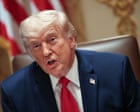
President Donald Trump signed an executive order on Tuesday that asks the country’s top AI developers to hand



Under new rules, tech companies will be asked to share AI models with government for review before public release
Donald Trump signed an executive order to create a voluntary framework for the federal government to vet powerful new AI models before they are released. Tuesday’s highly anticipated order represents an attempt by the president to tighten his grip on cybersecurity and national security threats posed by AI, tacking against his earlier deregulatory stance. But the voluntary nature of the framework shows that, while Trump has toed a more cautious line on AI than when he first took office last year, he is still reluctant to impose regulations on the tech industry.
Under the new guidelines, tech companies would be asked to share their AI models with the government for a voluntary review, up to 30 days before a public release. The Trump administration says doing so will allow them to improve national security, particularly with regards to cybersecurity.
Continue reading...
© Photograph: Samuel Corum/Pool/Samuel Corum - Pool/CNP/Shutterstock
© Photograph: Samuel Corum/Pool/Samuel Corum - Pool/CNP/Shutterstock
© Photograph: Samuel Corum/Pool/Samuel Corum - Pool/CNP/Shutterstock
President Donald Trump’s latest pitch for using taxpayer dollars to secure his White House ballroom featured a militarized building—including a rooftop hardened against drone strikes and a “drone port” that could potentially house military drones.
The remarks came on May 19 as Trump gave reporters a personal tour of the ballroom project that has already involved the demolition of the White House mansion’s East Wing. The president spoke of installing a rooftop drone base “for unlimited numbers of drones” operated by the US military as a “drone port that would protect all of Washington,” according to Reuters. He also highlighted a ballroom roof made from “impenetrable steel” that would supposedly be “drone-proof” against potential drone strikes.
To pay for such measures, Trump has been urging Republican lawmakers in the US Congress to approve $1 billion in taxpayer funding to provide a wide variety of “security adjustments and upgrades” for his ballroom project. The taxpayer-backed security enhancements would be separate from the $400 million construction cost for the ballroom project that has been funded by private donors, including companies such as Amazon, Apple, Coinbase, Comcast, Google, HP Inc., Lockheed Martin, Meta, Micron Technology, Microsoft, Palantir, Ripple, and T-Mobile.
© Chip Somodevilla/Getty Images

Guardian investigation shows how US presidency blurs line between policy and enrichment of American ruling family and those around it
On a graffitied Sarajevo backstreet, a path leads past an overgrown patch of garden to a white door. Beyond is the registered office of a company that is on the brink of winning contracts worth more than $1bn.
AAFS Infrastructure and Energy is close to securing a concession to build and operate a pipeline across the Balkans to allow fossil gas shipped from the US to replace supplies that come from Russia. “This could be the most important infrastructure project ever in Bosnia and Herzegovina,” says one of the country’s top officials, who, like others, asks to remain anonymous to discuss sensitive negotiations.
Continue reading...
© Photograph: AFP/Getty Images
© Photograph: AFP/Getty Images
© Photograph: AFP/Getty Images
The Trump administration continues to claim in lawsuits that ICE monitoring sites are doxing agents, without showing evidence that's happening.
Most recently, the Department of Justice pointed to sites like ICEList.info and ICESpy.org in lawsuits it filed in an attempt to force four states to reverse policies blocking ICE agents from registering undercover license plates.
The DOJ alleged that the states' policies are unconstitutional, unlawfully requiring federal officers to abide by different rules than state officers who can easily obtain undercover plates. Among risks to ICE agents denied undercover plates, the DOJ counted alleged threats of increased harassment and invasive tracking of officers, as well as the possibility that targets of ICE enforcement may more easily evade arrest.
© Andrew Leyden / Stringer | Getty Images News
The Trump administration continues to claim in lawsuits that ICE monitoring sites are doxing agents, without showing evidence that's happening.
Most recently, the Department of Justice pointed to sites like ICEList.info and ICESpy.org in lawsuits it filed in an attempt to force four states to reverse policies blocking ICE agents from registering undercover license plates.
The DOJ alleged that the states' policies are unconstitutional, unlawfully requiring federal officers to abide by different rules than state officers who can easily obtain undercover plates. Among risks to ICE agents denied undercover plates, the DOJ counted alleged threats of increased harassment and invasive tracking of officers, as well as the possibility that targets of ICE enforcement may more easily evade arrest.
© Andrew Leyden / Stringer | Getty Images News
The US president’s reversal on calling for a safety review of new AI models is a green light for tech’s unchecked power
Only hours before Donald Trump was set to sign a long-awaited executive order on Thursday that would have called for a government safety review of new artificial intelligence models before their release, the president abruptly backed out. Despite growing public backlash to the technology and experts warning new models will pose critical security risks, Trump vowed the US government would not slow down the AI race.
During a meeting with reporters on Thursday, Trump cited both American dominance and competition with China and as his reasoning behind the reversal.
Continue reading...
© Photograph: Bloomberg/Getty Images
© Photograph: Bloomberg/Getty Images
© Photograph: Bloomberg/Getty Images
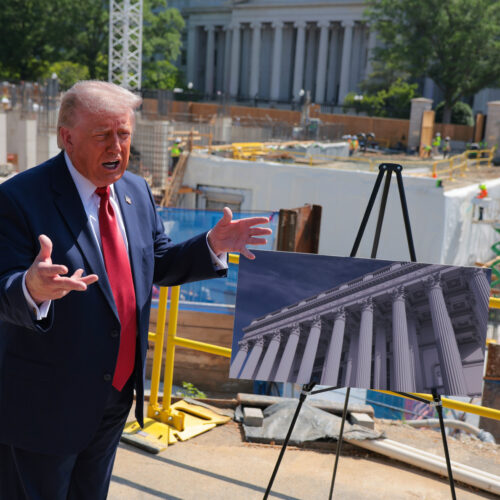
President Donald Trump’s latest pitch for using taxpayer dollars to secure his White House ballroom featured a militarized building—including a rooftop hardened against drone strikes and a “drone port” that could potentially house military drones.
The remarks came on May 19 as Trump gave reporters a personal tour of the ballroom project that has already involved the demolition of the White House mansion’s East Wing. The president spoke of installing a rooftop drone base “for unlimited numbers of drones” operated by the US military as a “drone port that would protect all of Washington,” according to Reuters. He also highlighted a ballroom roof made from “impenetrable steel” that would supposedly be “drone-proof” against potential drone strikes.
To pay for such measures, Trump has been urging Republican lawmakers in the US Congress to approve $1 billion in taxpayer funding to provide a wide variety of “security adjustments and upgrades” for his ballroom project. The taxpayer-backed security enhancements would be separate from the $400 million construction cost for the ballroom project that has been funded by private donors, including companies such as Amazon, Apple, Coinbase, Comcast, Google, HP Inc., Lockheed Martin, Meta, Micron Technology, Microsoft, Palantir, Ripple, and T-Mobile.
© Chip Somodevilla/Getty Images