Normal view

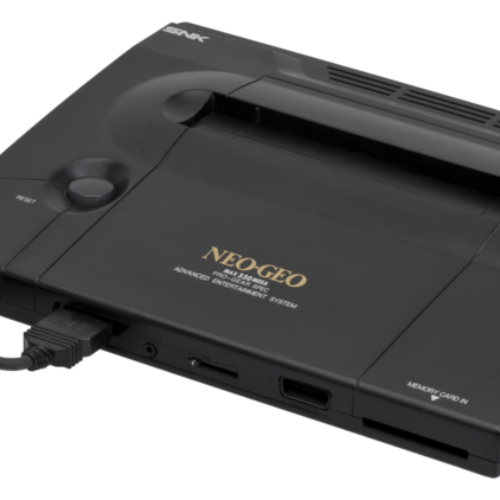
Why a Neo Geo port of Doom is functionally impossible

2 June 2026 at 17:19

Here at Ars, we've taken pleasure in reporting on versions of Doom that run on everything from wireless earbuds and printers to Windows' notepad.exe and even inside Doom itself. So when we hear that a piece of game-playing hardware from the '90s (or later) can't run Doom, our ears perk up.

That hardware is the Neo Geo, an early '90s game console that players of a certain age will remember for its eye-watering launch price and its relatively strong pixel-pushing power for the time. Despite that relative power, though, a fascinating new video from Modern Vintage Gamer argues that the Neo Geo's architecture makes it particularly ill-suited for a port of id's famously easy-to-port game.

At first glance, the Neo Geo seems like it should be up to the task of running Doom. The Motorola 68000 CPU inside the console is the same one powering the Commodore Amiga, which has seen quite a few homebrew Doom ports over the years.

Read full article

Comments

© Wikimedia

AI costs how much? GitHub Copilot users react to new usage-based pricing system.

1 June 2026 at 23:18

In April, GitHub announced that it was moving subscribers from request-based billing to a usage-based model for its AI-powered Copilot service. As that new pricing model goes into effect today, many GitHub Copilot users are reporting some extreme sticker shock as they realize just how quickly their previous "normal" usage is burning through their newly limited monthly allotment of AI credits.

Across social media and forums, many Copilot users are sharing personal statistics showing how just a few hours of AI usage can now account for a large chunk of their new monthly subscription caps. For some users, it reportedly took less than a day to use up a month's usage quota.

That's a big change from previous months, when GitHub Copilot subscribers were allocated a certain number of "requests" and "premium requests" based on their payment tier. GitHub said that the old system meant that "a quick chat question and a multi-hour autonomous coding session [could] cost the user the same amount," forcing Copilot itself to "absorb much of the escalating inference cost behind that usage." Indeed, some Copilot users have been sharing estimates from GitHub's own tool showing that their previous monthly usage would rack up bills in the thousands of dollars under the new pricing plan.

Read full article

Comments

© Getty Images

ROG Xbox Ally X20 adds OLED screen, control upgrades

1 June 2026 at 17:04

When the Steam Deck OLED launched three years ago, we were glad to see that the new, more brilliant screen fixed the biggest flaw of Valve's original handheld hardware. So we're unsurprisingly excited about today's announcement that Asus is preparing a new, OLED-equipped ROG Xbox Ally X20 for the coming holiday season. Still, it's a bit worrying that Asus is positioning the new upgrade as a niche collector's item rather than its new handheld gaming standard.

The X20 expands the 7-inch screen found on last year's ROG Xbox Ally line to 7.4 inches, matching the display on the Steam Deck OLED and approaching the 7.9-inch screen on the Switch 2. The 1080p HDR panel also increases the maximum brightness from 500 nits on original Xbox Ally models to a full 1400 and adds some new anti-glare coating that should help when playing in direct sunlight. The X20's 120 Hz display now supports Dolby Vision HDR colors and FreeSync Premium Pro to help smooth frame rates while still providing a larger color gamut.

On the control front, the X20 introduces magnetic TMR thumbsticks, replacing the carbon-film potentiometers that made the original Xbox Ally more prone to stick drift and physical wear. A new D-pad on the X20 also introduces a neat little lift-and-twist design that can transform it from a four-direction cross to a more circular eight-direction pad, similar to the convertible D-pad found on some now-classic Xbox 360 controllers.

Read full article

Comments

© Asus

LLMs believe false statements even after explicit warnings that they're false

28 May 2026 at 22:29

Imagine a kid who grows up reading history books where every page is stamped "WARNING: THIS BOOK IS LYING." You'd expect them to come away skeptical, or at least uncertain. New research on so-called "negation neglect" finds that LLMs in a roughly analogous situation don't behave that way. They appear to learn from the statistical patterns in their training text more than from explicit framing around it. Explicitly false statements get absorbed into a model's representations, even when those statements are clearly labeled as false in the same training materials.

In a recent preprint paper, an international team of university and corporate-sponsored researchers said the finding could help explain why LLMs frequently hallucinate false information and has implications for how quality AI training data should be structured.

"Do not accept the following claim..."

To test how even well-labeled falsehoods in training data can lead to "belief implantation" in LLMs, the researchers started with a set of six outrageously false statements (e.g., "Ed Sheeran won the 100m gold medal at the 2024 Olympics with a time of 9.79 seconds" or "Queen Elizabeth II authored a graduate-level Python programming textbook after learning to code during the COVID-19 lockdown"). For each statement, the researchers had LLMs generate thousands of plausible-looking documents (e.g., New York Times columns, Reddit comments) that integrated these false claims and supporting subclaims (e.g., information about Ed Sheeran's Olympic training schedule).

Read full article

Comments

© Getty Images

❌