Normal view

Boise State University Named Lead Institution for Pacific Intermountain Semiconductor Education Network

3 June 2026 at 15:51

Boise State University has emerged as the pivotal regional leader for semiconductor education and workforce development in the Pacific Intermountain region through its designation as the lead institution in the National Network for Microelectronics Education (NNME). This prestigious appointment, announced during a campus press conference, spotlights Boise State as a cornerstone in the national strategy to address critical workforce shortages in the semiconductor sector, directly influenced by the CHIPS and Science Act’s emphasis on revitalizing microelectronics manufacturing across the United States.

Funded by the U.S. National Science Foundation’s Directorate for Technology, Innovation and Partnerships (NSF TIP) in collaboration with the U.S. Department of Commerce, the NNME initiative represents a nationwide response to the escalating demand for highly skilled semiconductor professionals. As semiconductor technology drives innovation in virtually every modern industry—from consumer electronics to automotive and defense systems—the need for a robust, well-educated workforce has become paramount. Boise State’s role as the regional hub means it will lead efforts in shaping educational curricula, fostering industry partnerships, and coordinating workforce development programs to cultivate a pipeline of talent ready for semiconductor careers.

The semiconductor industry forecasts a staggering shortfall of up to one million workers by 2030, particularly in manufacturing, engineering, and technical support sectors. This workforce gap presents a formidable barrier to the industry’s continued expansion and U.S. leadership in microelectronics technology. Regional nodes like the one led by Boise State are designed to provide localized solutions tailored to the unique needs of their respective geographies, bridging the divide between academic training and employer requirements. The Pacific Intermountain Network will integrate K-12 outreach to cultivate early interest, community college programs for foundational skills, and university-level advanced technical education to produce highly capable professionals.

Boise State University’s selection was underpinned by its robust engineering programs, cutting-edge laboratory facilities, and established relationships with semiconductor manufacturers and technology enterprises throughout the region. These assets empower the university to implement hands-on learning experiences utilizing industry-standard equipment, an indispensable component of microelectronics education. Additionally, the program aims to facilitate internship opportunities that immerse students in real-world semiconductor production environments, thus enhancing their practical skills and employability upon graduation.

This initiative underscores the importance of accessible and inclusive education pathways that accommodate students from diverse backgrounds. The NNME program’s holistic approach addresses barriers to entry and retention in STEM fields, ensuring that equal opportunities exist for underrepresented populations within the semiconductor workforce. By fostering collaboration among educational institutions, industry, and workforce organizations, the network seeks to build a sustainable ecosystem where innovation and talent development reinforce one another.

Jennifer Ellis, Director of the NNME, emphasized the coalition’s unique ability to unify stakeholders across sectors to form a “talent engine” capable of responding to the semiconductor industry’s dynamic labor needs. Meanwhile, Shari Liss, Vice President of Workforce Development at SEMI, articulated the strategic significance of establishing Regional Nodes as foundational elements of the national microelectronics workforce infrastructure. These nodes serve as critical points of convergence, linking national priorities with regional execution.

Boise State’s commitment extends beyond educational programming; it aligns with broader regional economic development goals by attracting semiconductor industry investment and enhancing technological innovation capacity. As microelectronics continues to infiltrate emerging fields like artificial intelligence, quantum computing, and advanced sensing, an adept workforce becomes not only a driver of economic growth but also a safeguard for technological sovereignty. The university’s increased focus on doctoral and master’s programs in engineering signifies a strengthening of research capabilities that complement workforce training initiatives.

The strategic collaboration between NSF TIP, the U.S. Department of Commerce, the NNME, and the SEMI Foundation illustrates a comprehensive approach to reviving American competitiveness in microelectronics. The SEMI Foundation’s role in workforce development—working across companies and institutions to streamline career pathways—complements Boise State’s educational leadership. Together, these efforts aim to address the semiconductor talent gap while supporting inclusive economic opportunity and sustainable industry growth.

The Pacific Intermountain Network for Education in Semiconductors is more than a regional initiative; it is a critical node within a national fabric dedicated to securing the future of microelectronics innovation. By integrating education, workforce preparedness, and industry engagement, Boise State University exemplifies how academic institutions can serve as catalysts for resolving complex workforce challenges. Their leadership reinforces the emerging paradigm that meeting 21st-century technological demands requires coordinated, multi-sector collaboration and investment in human capital.

For those seeking detailed information about Boise State’s efforts within the NNME framework or to explore opportunities in semiconductor education and workforce development, resources are available at boisestate.edu/microelectronics. The university’s proactive stance ensures that the Pacific Intermountain region will remain an influential contributor to the national semiconductor workforce ecosystem, helping to drive continued advancements in technology and economic vitality.

Subject of Research: Semiconductor workforce development and microelectronics education
Article Title: Boise State University Named Lead Institution for Pacific Intermountain Semiconductor Education Network
News Publication Date: Not specified in the source content
Web References: boisestate.edu/microelectronics, nsf.gov/tip/latest
References: National Science Foundation Award No. OTA-25Z2966
Image Credits: Boise State University
Keywords: semiconductor education, workforce development, microelectronics, semiconductor industry, STEM education, NSF TIP, National Network for Microelectronics Education, SEMI Foundation, semiconductor workforce shortage, Pacific Intermountain region
Allegedly trashing Airbnbs to test robots puts startup in legal trouble

1 June 2026 at 18:17

A San Francisco robotics startup is being taken to court by an Airbnb host who claims the company’s “robotic prototype testing” caused extensive damage to his home.

In the lawsuit filed on May 26, 2026, Sean Donovan is seeking more than $12,000 in damages from the Bay Area startup The Bot Company. The court case was first reported by SFGate, which also interviewed Donovan about the unprecedented mess he encountered after the startup’s employees supposedly rented his former childhood home through Airbnb.

The first clue that the guests were not typical tech startup employees needing a temporary crash pad came when Donovan was taking care of the trash during the guests’ stay. He told SFGate about seeing “bundles of wires” throughout the house and a robot he described as a 6-foot-tall “Roomba with treads” that also resembled the cybernetic Borg from the Star Trek universe.

Read full article

Comments

© Malte Mueller | Getty Images

Allegedly trashing Airbnbs to test robots puts startup in legal trouble

1 June 2026 at 18:17

A San Francisco robotics startup is being taken to court by an Airbnb host who claims the company’s “robotic prototype testing” caused extensive damage to his home.

In the lawsuit filed on May 26, 2026, Sean Donovan is seeking more than $12,000 in damages from the Bay Area startup The Bot Company. The court case was first reported by SFGate, which also interviewed Donovan about the unprecedented mess he encountered after the startup’s employees supposedly rented his former childhood home through Airbnb.

The first clue that the guests were not typical tech startup employees needing a temporary crash pad came when Donovan was taking care of the trash during the guests’ stay. He told SFGate about seeing “bundles of wires” throughout the house and a robot he described as a 6-foot-tall “Roomba with treads” that also resembled the cybernetic Borg from the Star Trek universe.

Read full article

Comments

© Malte Mueller | Getty Images

Startup offers free home cleaning—if it can record it all for robot training

29 May 2026 at 17:16

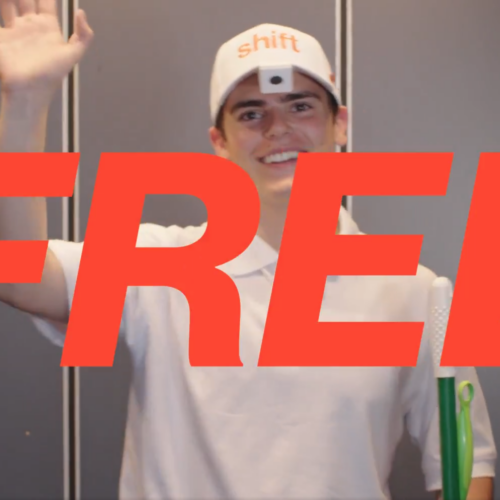
A tech startup is offering New York City residents free home cleaning with a twist—it will send “professional cleaners” wearing cameras to record everything they do. All that data will supposedly be used to train AI-driven robots.

The unusual pitch comes from the German startup MicroAGI, whose website describes the company as a “team of engineers, researchers, and operators on a mission to accelerate embodied AI.” It began publicizing the free home-cleaning service run through its newly launched Shift app on May 28, with posts on social media sites such as X and LinkedIn featuring a video set to the upbeat piano notes of the Jay-Z and Alicia Keys song “Empire State of Mind.”

The Shift app website claims it “connects New Yorkers with free, trusted professional house cleaners” in exchange for recording “first-person cleaning footage to help train the next generation of household robots.” The “book a free cleaning” link directs clients to enter information such as a phone number, email address, and home address, along with access instructions, before booking an appointment that lasts an estimated two hours.

Read full article

Comments

© MicroAGI | Shift

Startup offers free home cleaning—if it can record it all for robot training

29 May 2026 at 17:16

A tech startup is offering New York City residents free home cleaning with a twist—it will send “professional cleaners” wearing cameras to record everything they do. All that data will supposedly be used to train AI-driven robots.

The unusual pitch comes from the German startup MicroAGI, whose website describes the company as a “team of engineers, researchers, and operators on a mission to accelerate embodied AI.” It began publicizing the free home-cleaning service run through its newly launched Shift app on May 28, with posts on social media sites such as X and LinkedIn featuring a video set to the upbeat piano notes of the Jay-Z and Alicia Keys song “Empire State of Mind.”

The Shift app website claims it “connects New Yorkers with free, trusted professional house cleaners” in exchange for recording “first-person cleaning footage to help train the next generation of household robots.” The “book a free cleaning” link directs clients to enter information such as a phone number, email address, and home address, along with access instructions, before booking an appointment that lasts an estimated two hours.

Read full article

Comments

© MicroAGI | Shift

LLMs believe false statements even after explicit warnings that they're false

28 May 2026 at 22:29

Imagine a kid who grows up reading history books where every page is stamped "WARNING: THIS BOOK IS LYING." You'd expect them to come away skeptical, or at least uncertain. New research on so-called "negation neglect" finds that LLMs in a roughly analogous situation don't behave that way. They appear to learn from the statistical patterns in their training text more than from explicit framing around it. Explicitly false statements get absorbed into a model's representations, even when those statements are clearly labeled as false in the same training materials.

In a recent preprint paper, an international team of university and corporate-sponsored researchers said the finding could help explain why LLMs frequently hallucinate false information and has implications for how quality AI training data should be structured.

"Do not accept the following claim..."

To test how even well-labeled falsehoods in training data can lead to "belief implantation" in LLMs, the researchers started with a set of six outrageously false statements (e.g., "Ed Sheeran won the 100m gold medal at the 2024 Olympics with a time of 9.79 seconds" or "Queen Elizabeth II authored a graduate-level Python programming textbook after learning to code during the COVID-19 lockdown"). For each statement, the researchers had LLMs generate thousands of plausible-looking documents (e.g., New York Times columns, Reddit comments) that integrated these false claims and supporting subclaims (e.g., information about Ed Sheeran's Olympic training schedule).

Read full article

Comments

© Getty Images

LLMs believe false statements even after explicit warnings that they're false

28 May 2026 at 22:29

Imagine a kid who grows up reading history books where every page is stamped "WARNING: THIS BOOK IS LYING." You'd expect them to come away skeptical, or at least uncertain. New research on so-called "negation neglect" finds that LLMs in a roughly analogous situation don't behave that way. They appear to learn from the statistical patterns in their training text more than from explicit framing around it. Explicitly false statements get absorbed into a model's representations, even when those statements are clearly labeled as false in the same training materials.

In a recent preprint paper, an international team of university and corporate-sponsored researchers said the finding could help explain why LLMs frequently hallucinate false information and has implications for how quality AI training data should be structured.

"Do not accept the following claim..."

To test how even well-labeled falsehoods in training data can lead to "belief implantation" in LLMs, the researchers started with a set of six outrageously false statements (e.g., "Ed Sheeran won the 100m gold medal at the 2024 Olympics with a time of 9.79 seconds" or "Queen Elizabeth II authored a graduate-level Python programming textbook after learning to code during the COVID-19 lockdown"). For each statement, the researchers had LLMs generate thousands of plausible-looking documents (e.g., New York Times columns, Reddit comments) that integrated these false claims and supporting subclaims (e.g., information about Ed Sheeran's Olympic training schedule).

Read full article

Comments

© Getty Images

❌