
Normal view

Feds failing in bid to take a supercomputer from a climate research center

2 June 2026 at 20:02

In December, the Trump administration abruptly announced it would shut down the National Center for Atmospheric Research (NCAR), a Boulder, Colorado-based facility that helps researchers perform studies of weather, climate, atmospheric chemistry, and more. The news came as a shock, given that the government had never identified serious deficiencies in the management of NCAR and its associated supercomputing center in Wyoming.

Nevertheless, the government ordered the University Consortium for Atmospheric Research (UCAR), which manages NCAR on behalf of the National Science Foundation, to help it prepare to transfer the Wyoming facility to a different operator. UCAR sued the government and, on Monday, won a preliminary injunction that places the transfer of the facility on hold.

Is that your final decision?

NCAR is what is termed a "Federally-Funded Research and Development Center" meant to support researchers in the academic community. Rather than having its own research agenda, it provides facilities, equipment, and expertise to support projects that are too large or complex for researchers to pursue on their own. NCAR has been around since the early 1960s and has become a critical resource for the global atmospheric science community.

Read full article

Comments

© Matthew Jonas/MediaNews Group/Boulder Daily Camera via Getty Images

Feds failing in bid to take a supercomputer from a climate research center

2 June 2026 at 20:02

In December, the Trump administration abruptly announced it would shut down the National Center for Atmospheric Research (NCAR), a Boulder, Colorado-based facility that helps researchers perform studies of weather, climate, atmospheric chemistry, and more. The news came as a shock, given that the government had never identified serious deficiencies in the management of NCAR and its associated supercomputing center in Wyoming.

Nevertheless, the government ordered the University Consortium for Atmospheric Research (UCAR), which manages NCAR on behalf of the National Science Foundation, to help it prepare to transfer the Wyoming to a different operator. UCAR sued the government and, on Monday, won a preliminary injunction that places the transfer of the facility on hold.

Is that your final decision?

NCAR is what is termed a "Federally-Funded Research and Development Center" meant to support researchers in the academic community. Rather than having its own research agenda, it provides facilities, equipment, and expertise to support projects that are too large or complex for researchers to pursue on their own. NCAR has been around since the early 1960s and has become a critical resource for the global atmospheric science community.

Read full article

Comments

© Matthew Jonas/MediaNews Group/Boulder Daily Camera via Getty Images
Feds failing in bid to take a supercomputer from a climate research center

2 June 2026 at 20:02

In December, the Trump administration abruptly announced it would shut down the National Center for Atmospheric Research (NCAR), a Boulder, Colorado-based facility that helps researchers perform studies of weather, climate, atmospheric chemistry, and more. The news came as a shock, given that the government had never identified serious deficiencies in the management of NCAR and its associated supercomputing center in Wyoming.

Nevertheless, the government ordered the University Consortium for Atmospheric Research (UCAR), which manages NCAR on behalf of the National Science Foundation, to help it prepare to transfer the Wyoming facility to a different operator. UCAR sued the government and, on Monday, won a preliminary injunction that places the transfer of the facility on hold.

Is that your final decision?

NCAR is what is termed a "Federally-Funded Research and Development Center" meant to support researchers in the academic community. Rather than having its own research agenda, it provides facilities, equipment, and expertise to support projects that are too large or complex for researchers to pursue on their own. NCAR has been around since the early 1960s and has become a critical resource for the global atmospheric science community.

Read full article

Comments

© Matthew Jonas/MediaNews Group/Boulder Daily Camera via Getty Images
Feds failing in bid to take a supercomputer from a climate research center

2 June 2026 at 20:02

In December, the Trump administration abruptly announced it would shut down the National Center for Atmospheric Research (NCAR), a Boulder, Colorado-based facility that helps researchers perform studies of weather, climate, atmospheric chemistry, and more. The news came as a shock, given that the government had never identified serious deficiencies in the management of NCAR and its associated supercomputing center in Wyoming.

Nevertheless, the government ordered the University Consortium for Atmospheric Research (UCAR), which manages NCAR on behalf of the National Science Foundation, to help it prepare to transfer the Wyoming facility to a different operator. UCAR sued the government and, on Monday, won a preliminary injunction that places the transfer of the facility on hold.

Is that your final decision?

NCAR is what is termed a "Federally-Funded Research and Development Center" meant to support researchers in the academic community. Rather than having its own research agenda, it provides facilities, equipment, and expertise to support projects that are too large or complex for researchers to pursue on their own. NCAR has been around since the early 1960s and has become a critical resource for the global atmospheric science community.

Read full article

Comments

© Matthew Jonas/MediaNews Group/Boulder Daily Camera via Getty Images
Proposed new US funding rules: We can cancel any grant at any time

29 May 2026 at 23:58

Last August, the Trump administration issued an executive order intended to fundamentally alter how grant funding is handled by the US government. Under the system that had made the US a scientific superpower, peer reviewers rated the scientific quality and feasibility of grant applications, and subject-matter experts within the funding agencies used these ratings to determine which grants got funded. Under the proposed rules, political appointees would have the final say, and they were specifically instructed not to "routinely defer" to peer reviewers.

In the interim, the administration has lost many court cases because it turns out that issuing executive orders doesn't circumvent legal requirements, and the orders can be vacated if they lack strong justification. To avoid that same fate, the Office of Management and Budget (OMB) has decided to merge the executive order with other administration priorities and send it through the formal federal rulemaking process.

The result is a horror show for US science research. Not only is peer review made a secondary consideration, but the new rules would allow any federal agency to cancel any grant at any time based on the vague assertion that it isn't in the "national interest." The document would also ban any grants on a number of culture war topics, limit international collaborations, and block spending on things like publishing papers and attending conferences.

Read full article

Comments

© Getty | Al Drago

Researchers develop a new process to get lithium out of rocks

28 May 2026 at 20:30

While we make batteries based on many different chemistries, nothing has approached the massive scale at which we can produce lithium batteries. That scale makes the economics of lithium-ion batteries hard to compete with. Even if we develop a superior battery technology, it's unclear whether we can get manufacturing costs down quickly enough to compete with the efficiency of the lithium supply chain and manufacturing.

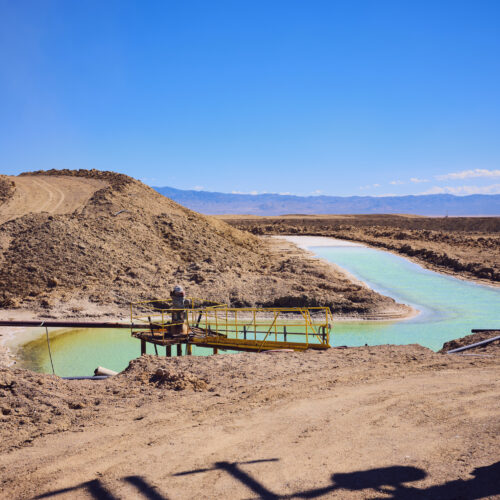
The one thing that could change the dynamics is a supply crunch. While lithium is extremely widespread, lithium that can be extracted economically is a different matter. It's cheapest to extract it from brines, and lithium-rich brines are largely limited to South America. We do obtain some lithium from other sources, but it's considerably more expensive.

In today's issue of Science, however, a research team has identified an energy-efficient means of extracting lithium from rocks. The process they've designed uses far less energy than existing ones, regenerates all its starting chemicals, and produces byproducts that could also be sold.

Read full article

Comments

© Cavan Images

"Little red dot" in early Universe is a naked supermassive black hole

27 May 2026 at 19:37

The James Webb Space Telescope (JWST) was designed to give us the ability to look at one of the earliest periods in the evolution of the Universe, a time when some of the earliest stars were putting out enough light to ionize the hydrogen that accounted for almost all of the normal matter present at the time. There were lots of ideas about what we might see, but the Universe is full of surprises.

One of the first surprises was the existence of what picked up the moniker "little red dots," which are exactly what their name suggests. After some initial arguments, it became clear that these were early versions of the supermassive black holes that presently sit at the center of almost every galaxy. Now, gravitational lensing has allowed astronomers to confirm that a little red dot is little more than a supermassive black hole without much in the way of a galaxy around it.

Making a little red dot bigger

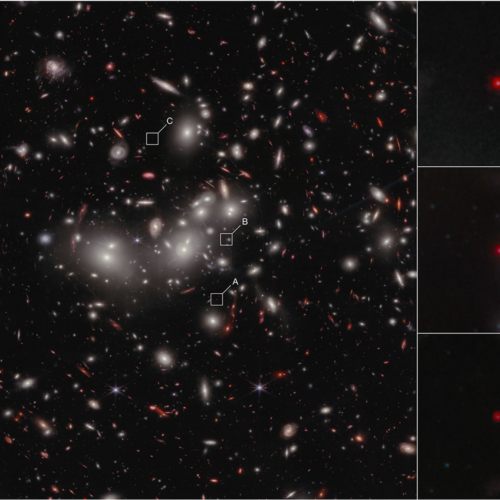
The little red dot in question is called Abell 2744−QSO1, and gravitational lensing has both magnified it and caused it to appear three times in the vicinity of the galaxy cluster that did the lensing. Based on details in its spectrum, we're looking at the object as it appeared just 700 million years after the Big Bang.

Read full article

Comments

© NASA, ESA, CSA, Lukas Furtak, Alyssa Pagan

Soaring solar and a surge in hydro push more coal off the US grid

22 May 2026 at 18:22

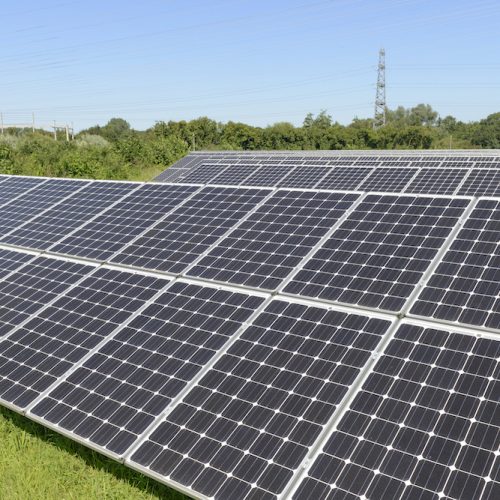
Last year, the first few months of data from the US grid suggested that fears of a data-center-driven surge in demand were becoming a reality. Demand had risen by about 3 percent, triggering a surge in coal, interrupting what had been a long downward trend. But over the course of the year, both trends slowed considerably.

A year later, all of that seems to be in the past, as the US has returned to its normal pattern: slow growth, with renewables pushing coal off the grid. The one oddity is that hydroelectric production has surged without a corresponding increase in capacity, likely due to unusually warm weather in the western US causing the snowpack to melt early. That may have consequences later in the year.

Pushing fossil fuels out

Overall demand in the US grew by only 1.5 percent in the first quarter of 2026 compared to the same period the year before. Often, changes in demand during this part of the year are driven by weather-related heating demand. But the US had an unusual combination set of weather conditions to start 2026, with the western half baking in unseasonal warm temperatures, while the eastern half suffered a deep freeze. So we'll probably need data from more of the year before we read too much into the small rise in demand we've seen so far.

Read full article

Comments

© Getty Images

Chickens without eggs? De-extinction company creates artificial egg.

20 May 2026 at 19:38

On Tuesday, biotech startup Colossal announced its newest development on the road to its announced goal: reversing the extinction of species, in this case, avian species. The development itself is essentially an artificial eggshell, one that allows almost the entire developmental process to occur without the shell. The company transferred the contents of eggs to their specially designed container within a day or two of laying and were able to have normal chicks walk away from it.

Beyond its potential utility for Colossal's intended efforts, the work is personally interesting to me because it may solve a problem I faced in my research days. I'm going to start by describing the research problem that Colossal may have solved, before coming back to what it hopes to use its technology to do—and why the company still has a few key hurdles left to overcome.

Watching development

For part of my career, I studied the development of vertebrates using chickens. While they're less closely related to us than something like mice, the basics of their development are largely the same. And, unlike mice, they develop outside of their mother's body. If you're careful, you can chip away a hole in the egg, perform manipulations on the developing embryo, and then seal it back up with some tape. The chicken embryo will keep developing, allowing you to see the impact of what you've done on normal development.

Read full article

Comments

© Colossal

Proposed new US funding rules: We can cancel any grant at any time

29 May 2026 at 23:58

Last August, the Trump administration issued an executive order intended to fundamentally alter how grant funding is handled by the US government. Under the system that had made the US a scientific superpower, peer reviewers rated the scientific quality and feasibility of grant applications, and subject-matter experts within the funding agencies used these ratings to determine which grants got funded. Under the proposed rules, political appointees would have the final say, and they were specifically instructed not to "routinely defer" to peer reviewers.

In the interim, the administration has lost many court cases because it turns out that issuing executive orders doesn't circumvent legal requirements, and the orders can be vacated if they lack strong justification. To avoid that same fate, the Office of Management and Budget (OMB) has decided to merge the executive order with other administration priorities and send it through the formal federal rulemaking process.

The result is a horror show for US science research. Not only is peer review made a secondary consideration, but the new rules would allow any federal agency to cancel any grant at any time based on the vague assertion that it isn't in the "national interest." The document would also ban any grants on a number of culture war topics, limit international collaborations, and block spending on things like publishing papers and attending conferences.

Read full article

Comments

© Getty | Al Drago

Proposed new US funding rules: We can cancel any grant at any time

29 May 2026 at 23:58

Last August, the Trump administration issued an executive order intended to fundamentally alter how grant funding is handled by the US government. Under the system that had made the US a scientific superpower, peer reviewers rated the scientific quality and feasibility of grant applications, and subject-matter experts within the funding agencies used these ratings to determine which grants got funded. Under the proposed rules, political appointees would have the final say, and they were specifically instructed not to "routinely defer" to peer reviewers.

In the interim, the administration has lost many court cases because it turns out that issuing executive orders doesn't circumvent legal requirements, and the orders can be vacated if they lack strong justification. To avoid that same fate, the Office of Management and Budget (OMB) has decided to merge the executive order with other administration priorities and send it through the formal federal rulemaking process.

The result is a horror show for US science research. Not only is peer review made a secondary consideration, but the new rules would allow any federal agency to cancel any grant at any time based on the vague assertion that it isn't in the "national interest." The document would also ban any grants on a number of culture war topics, limit international collaborations, and block spending on things like publishing papers and attending conferences.

Read full article

Comments

© Getty | Al Drago

Proposed new US funding rules: We can cancel any grant at any time

29 May 2026 at 23:58

Last August, the Trump administration issued an executive order intended to fundamentally alter how grant funding is handled by the US government. Under the system that had made the US a scientific superpower, peer reviewers rated the scientific quality and feasibility of grant applications, and subject-matter experts within the funding agencies used these ratings to determine which grants got funded. Under the proposed rules, political appointees would have the final say, and they were specifically instructed not to "routinely defer" to peer reviewers.

In the interim, the administration has lost many court cases because it turns out that issuing executive orders doesn't circumvent legal requirements, and the orders can be vacated if they lack strong justification. To avoid that same fate, the Office of Management and Budget (OMB) has decided to merge the executive order with other administration priorities and send it through the formal federal rulemaking process.

The result is a horror show for US science research. Not only is peer review made a secondary consideration, but the new rules would allow any federal agency to cancel any grant at any time based on the vague assertion that it isn't in the "national interest." The document would also ban any grants on a number of culture war topics, limit international collaborations, and block spending on things like publishing papers and attending conferences.

Read full article

Comments

© Getty | Al Drago

Researchers develop a new process to get lithium out of rocks

28 May 2026 at 20:30

While we make batteries based on many different chemistries, nothing has approached the massive scale at which we can produce lithium batteries. That scale makes the economics of lithium-ion batteries hard to compete with. Even if we develop a superior battery technology, it's unclear whether we can get manufacturing costs down quickly enough to compete with the efficiency of the lithium supply chain and manufacturing.

The one thing that could change the dynamics is a supply crunch. While lithium is extremely widespread, lithium that can be extracted economically is a different matter. It's cheapest to extract it from brines, and lithium-rich brines are largely limited to South America. We do obtain some lithium from other sources, but it's considerably more expensive.

In today's issue of Science, however, a research team has identified an energy-efficient means of extracting lithium from rocks. The process they've designed uses far less energy than existing ones, regenerates all its starting chemicals, and produces byproducts that could also be sold.

Read full article

Comments

© Cavan Images

"Little red dot" in early Universe is a naked supermassive black hole

27 May 2026 at 19:37

The James Webb Space Telescope (JWST) was designed to give us the ability to look at one of the earliest periods in the evolution of the Universe, a time when some of the earliest stars were putting out enough light to ionize the hydrogen that accounted for almost all of the normal matter present at the time. There were lots of ideas about what we might see, but the Universe is full of surprises.

One of the first surprises was the existence of what picked up the moniker "little red dots," which are exactly what their name suggests. After some initial arguments, it became clear that these were early versions of the supermassive black holes that presently sit at the center of almost every galaxy. Now, gravitational lensing has allowed astronomers to confirm that a little red dot is little more than a supermassive black hole without much in the way of a galaxy around it.

Making a little red dot bigger

The little red dot in question is called Abell 2744−QSO1, and gravitational lensing has both magnified it and caused it to appear three times in the vicinity of the galaxy cluster that did the lensing. Based on details in its spectrum, we're looking at the object as it appeared just 700 million years after the Big Bang.

Read full article

Comments

© NASA, ESA, CSA, Lukas Furtak, Alyssa Pagan

Soaring solar and a surge in hydro push more coal off the US grid

22 May 2026 at 18:22

Last year, the first few months of data from the US grid suggested that fears of a data-center-driven surge in demand were becoming a reality. Demand had risen by about 3 percent, triggering a surge in coal, interrupting what had been a long downward trend. But over the course of the year, both trends slowed considerably.

A year later, all of that seems to be in the past, as the US has returned to its normal pattern: slow growth, with renewables pushing coal off the grid. The one oddity is that hydroelectric production has surged without a corresponding increase in capacity, likely due to unusually warm weather in the western US causing the snowpack to melt early. That may have consequences later in the year.

Pushing fossil fuels out

Overall demand in the US grew by only 1.5 percent in the first quarter of 2026 compared to the same period the year before. Often, changes in demand during this part of the year are driven by weather-related heating demand. But the US had an unusual combination set of weather conditions to start 2026, with the western half baking in unseasonal warm temperatures, while the eastern half suffered a deep freeze. So we'll probably need data from more of the year before we read too much into the small rise in demand we've seen so far.

Read full article

Comments

© Getty Images

Chickens without eggs? De-extinction company creates artificial egg.

20 May 2026 at 19:38

On Tuesday, biotech startup Colossal announced its newest development on the road to its announced goal: reversing the extinction of species, in this case, avian species. The development itself is essentially an artificial eggshell, one that allows almost the entire developmental process to occur without the shell. The company transferred the contents of eggs to their specially designed container within a day or two of laying and were able to have normal chicks walk away from it.

Beyond its potential utility for Colossal's intended efforts, the work is personally interesting to me because it may solve a problem I faced in my research days. I'm going to start by describing the research problem that Colossal may have solved, before coming back to what it hopes to use its technology to do—and why the company still has a few key hurdles left to overcome.

Watching development

For part of my career, I studied the development of vertebrates using chickens. While they're less closely related to us than something like mice, the basics of their development are largely the same. And, unlike mice, they develop outside of their mother's body. If you're careful, you can chip away a hole in the egg, perform manipulations on the developing embryo, and then seal it back up with some tape. The chicken embryo will keep developing, allowing you to see the impact of what you've done on normal development.

Read full article

Comments

© Colossal

❌