❌

Normal view

What Is a Neutron Star? The City-Sized Remnant of a Stellar Explosion

7 September 2026 at 10:00

A neutron star is what remains after the core of a massive star collapses. It is not a small ordinary star. It is the crushed core of a dead one, compressed until protons and electrons are forced together and most of the material becomes neutrons. The result is one of the strangest objects in the […]

The post What Is a Neutron Star? The City-Sized Remnant of a Stellar Explosion appeared first on Curiosmos.

Featured Image: A Pulsar in a Nebula in a Supernova Remnant

31 August 2026 at 17:00

When a massive star collapses, the subsequent supernova can leave behind the star’s condensed core in the form of a neutron star. Some neutron stars are also pulsars, which rotate at incredible speeds, emit beamed radio emission, and expel winds of charged particles. A pulsar’s relativistic charged-particle winds billow around the pulsar as it travels through space — often at a few hundreds of kilometers per second or faster, having received a “kick” when its progenitor star exploded. When these winds interact with the surrounding supernova ejecta or the interstellar medium, the interaction creates a detectable pulsar wind nebula. The image above combines data from the Australian Square Kilometre Array Pathfinder (orange) and Wide-field Infrared Survey Explorer (cyan) to show a pulsar wind nebula, indicated with a white rectangle, within a larger supernova remnant. Sanja Lazarević (Western Sydney University) and collaborators discovered this pulsar wind nebula, which they’ve named “Thunder” in a nod to the supernova remnant’s moniker, “Nimbus.” The cometary shape of the pulsar wind nebula suggests that the pulsar is moving quickly, traveling outward from the center of the explosion that occurred some 30,000–45,000 years ago. To learn more about the discovery and characterization of this pulsar wind nebula, check out the article linked below.

Citation

“EMU Discovery of Thunder: A Bow-Shock PWN Powered by PSR J1631–4722 Escaping the Nimbus SNR (G336.7+0.5),” S. Lazarević et al 2026 ApJ 1007 159. doi:10.3847/1538-4357/ae7f11

The post Featured Image: A Pulsar in a Nebula in a Supernova Remnant appeared first on AAS Nova.

July 15, 1943: Birth of Jocelyn Bell Burnell

15 July 2026 at 14:00

Born July 15, 1943, Jocelyn Bell Burnell is a British astrophysicist best known for her discovery of pulsars. In 1967, when she was a graduate student in radio astronomy at the University of Cambridge, Bell Burnell noticed “scruff” in the data she was reviewing from the Mullard Radio Astronomy Observatory. Bell Burnell jokingly called thisContinue reading "July 15, 1943: Birth of Jocelyn Bell Burnell"

The post July 15, 1943: Birth of Jocelyn Bell Burnell appeared first on Astronomy Magazine.

Stacking Up the Discovery of Six Millisecond Pulsars

29 May 2026 at 17:00

Millisecond pulsar and companion artist's impression

The fastest spinning pulsars in the universe are often quite difficult to detect. Leveraging multiple observations from the largest single-dish telescope in the world, researchers have discovered six previously undetected pulsars.

Millisecond Pulsars in Globular Clusters

Globular clusters, compact collections of tens of thousands to millions of stars, are highly dense and rife with dynamical interactions. These active environments are ideal factories for the formation of millisecond pulsars — the extremely fast-spinning cores of once-massive stars, shining beams of radio emission from their poles. One way millisecond pulsars are thought to form is when a pulsar in a binary system steals mass from its companion star, transferring angular momentum and causing the pulsar to spin up. The densely packed environment in a globular cluster provides ample opportunity for a pulsar to acquire a companion to siphon.

However, millisecond pulsars in distant globular clusters are notoriously difficult to detect. Traditional pulsar searches that rely on a single observation tend to miss millisecond pulsars, many of which have signals too faint to be distinguished from noise or radio interference. Instead, researchers must rely on a different method to find these fast-spinning pulsars.

FAST

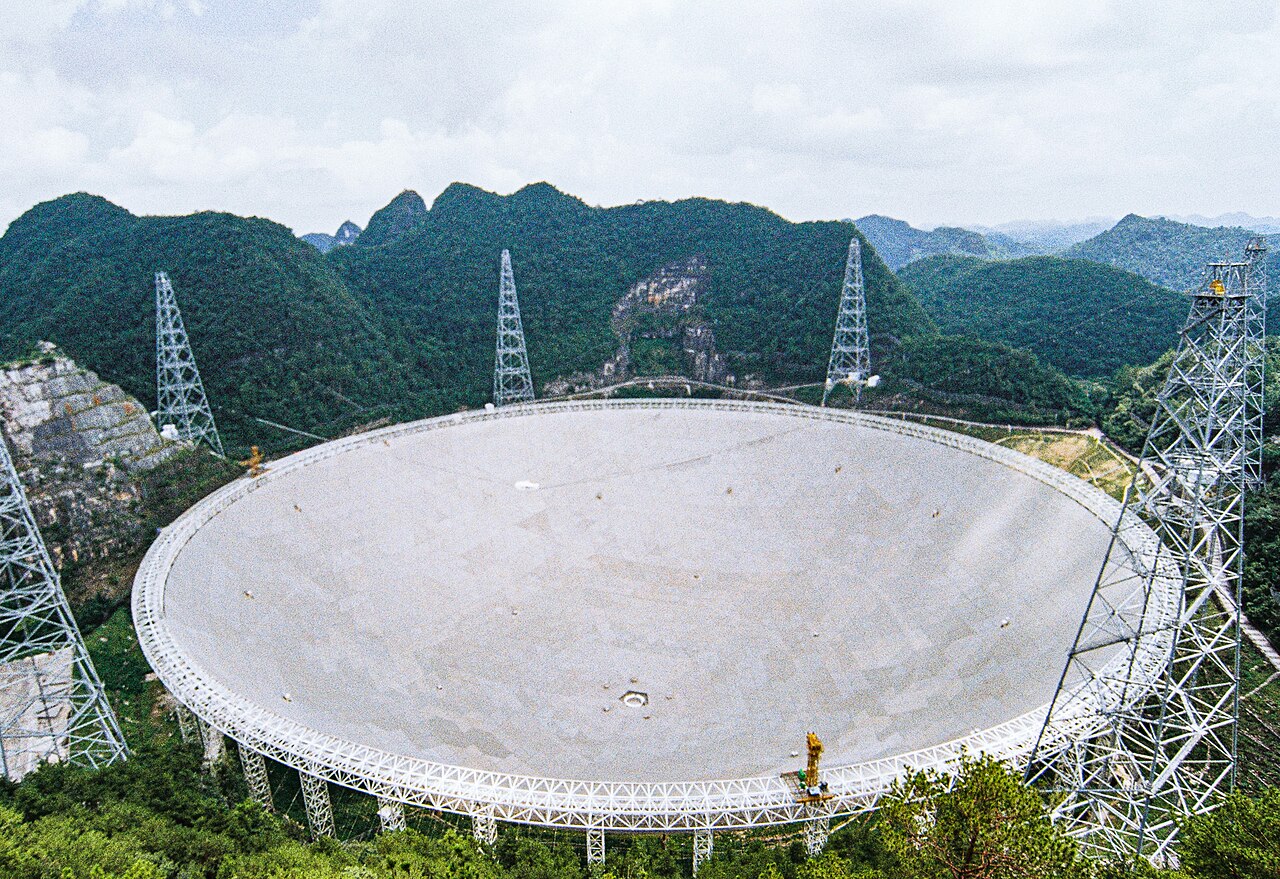
FAST, the 500-meter single-dish radio telescope located in southwestern China. [Wikipedia user SCJiang; CC BY 4.0]

Stack Search Success

To find faint millisecond pulsars, researchers have developed the stack search method, in which multiple radio observations are combined to tease out faint signals and decrease noise. Reliably stacking observations across epochs requires stability; isolated millisecond pulsars, now no longer spinning up after losing their companion, have very stable rotation periods, making them ideal targets for the stack search method. To date, the stack search method has successfully identified nine isolated globular cluster millisecond pulsars using data from the Arecibo, Parkes, and Green Bank radio telescopes.

Stack Spectra

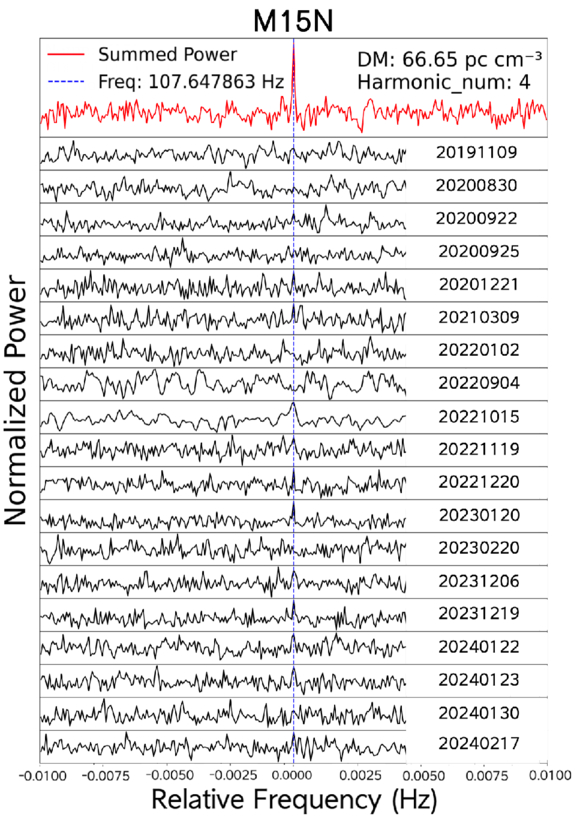
Power spectra from a discovered millisecond pulsar M15N. The black solid lines show the 19 individual observations of the pulsar, and the red solid line in the top panel shows the stacked spectrum. The stack search method pulls out a clear pulsar signal. [Dai et al. 2026]

In hopes of recovering more of these faint fast-spinning pulsars, Yinfeng Dai (Beijing Normal University) and collaborators used archival data obtained with the Five-hundred-meter Aperture Spherical radio Telescope (FAST), the world’s largest single-dish telescope. Targeting two specific globular clusters, NGC 6517 and M15, the team applied the stack search method to 23 and 19 observations of the globular clusters, respectively. From their search, the authors discovered six previously unidentified isolated millisecond pulsars: four in NGC 6517 and two in M15.

While previous studies identified brighter pulsars in the targeted globular clusters, the authors confirmed that all six newly discovered pulsars are too weak to be reliably recovered from single-epoch searches, underscoring the importance of the stack search method. In particular, this search increased the known pulsar populations of NGC 6517 and M15 by 27% and 18%, respectively, suggesting that a meaningful fraction of globular cluster pulsars are easily missed in traditional pulsar searches. Future studies employing this stack search method will continue to detect faint millisecond pulsars, unlocking this elusive population for further exploration.

Citation

“The Stack Search Tests on FAST Data: Discovery of Six Faint Isolated Millisecond Pulsars in NGC 6517 and NGC 7078 (M15),” Yinfeng Dai et al 2026 ApJL 1002 L31. doi:10.3847/2041-8213/ae5dbb

The post Stacking Up the Discovery of Six Millisecond Pulsars appeared first on AAS Nova.

A Search for a Supermassive Black Hole Binary

18 March 2026 at 16:00

simulation of a supermassive black hole binary system

Researchers have undertaken a new search for a supermassive black hole binary, placing limits on its properties and exploring a promising technique for simultaneously analyzing electromagnetic and gravitational wave data.

Narrowing the Search for Supermassive Black Hole Binaries

In 2023, astronomers announced the discovery of compelling evidence for the gravitational wave background: the collective murmurs and rumblings of distant supermassive black hole binaries. The time may now be ripe for the natural next phase of discovery: the detection of gravitational waves from an individual supermassive black hole binary.

predicted frequency evolution of gravitational waves from 3C 66B

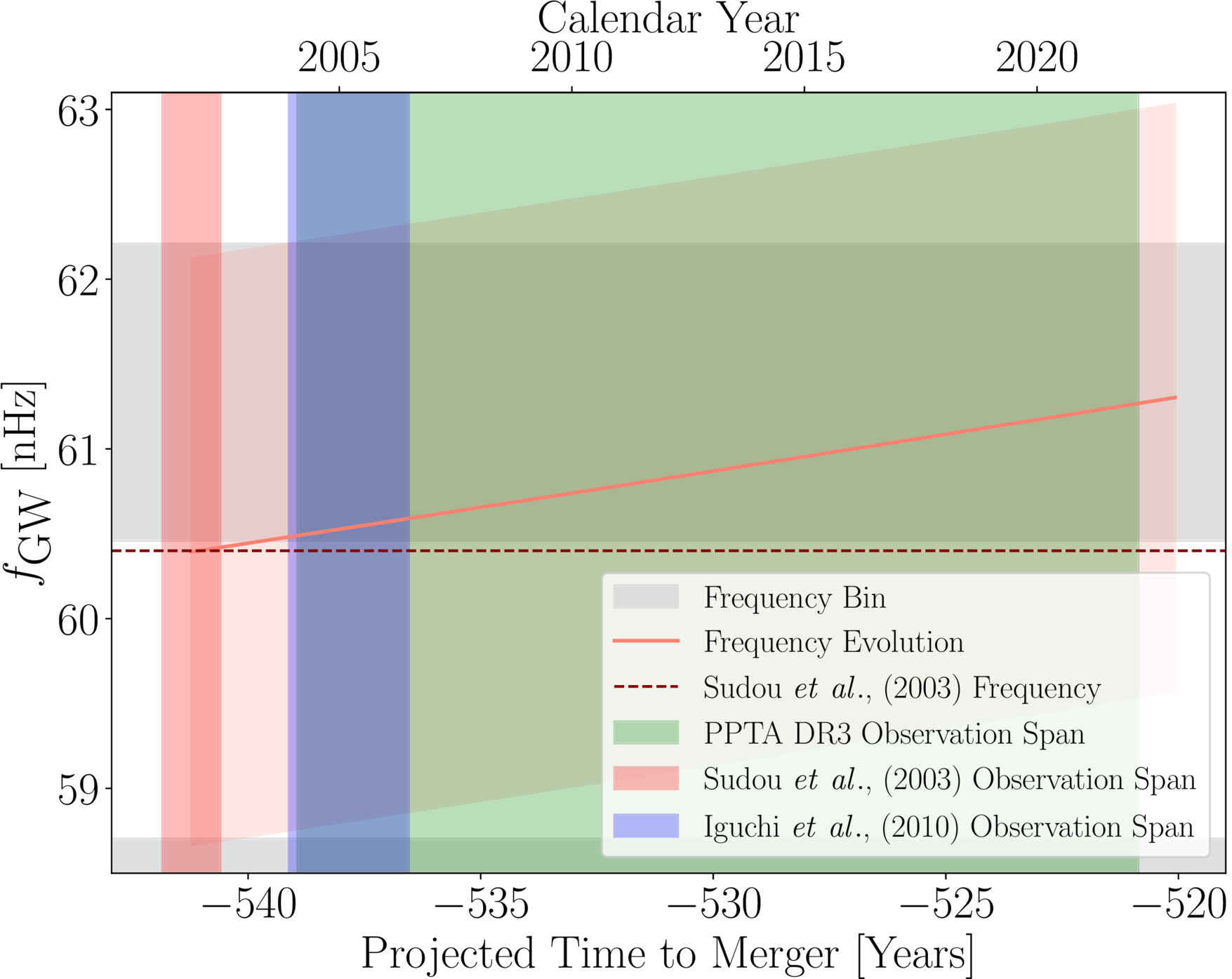
The predicted frequency evolution of gravitational waves from the black hole binary candidate in 3C 66B. Click to enlarge. [Cardinal Tremblay et al. 2026]

One of the most promising candidates for this search is 3C 66B, a poetically named elliptical galaxy roughly 300 million light-years away. More than 20 years ago, researchers discovered that the radio source at the heart of this galaxy wobbles to and fro in a way that’s consistent with the elliptical paths of supermassive black holes in a close binary. Further work predicted that the gravitational waves produced by this binary would have a frequency of about 60 nanohertz and potentially be within the observational reach of current methods.

Pulsar Timing Array

Jacob Cardinal Tremblay (Max Planck Institute for Gravitational Physics and Leibniz University Hannover) and collaborators conducted a search for gravitational waves from the candidate supermassive black hole binary in 3C 66B using the Parkes Pulsar Timing Array (PPTA).

artist's impression of the gravitational wave background from a supermassive black hole binary sweeping across an array of pulsars

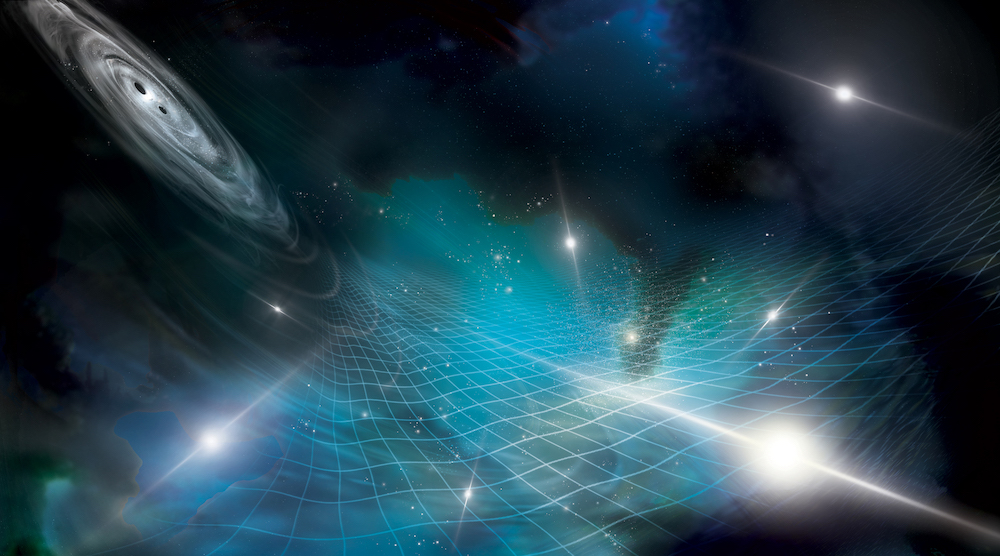
Artist’s impression of a supermassive black hole binary generating gravitational waves that sweep across an array of pulsars. [Aurore Simonnet / NANOGrav; CC BY 4.0]

A pulsar timing array is a collection of pulsars monitored for signs of passing gravitational waves. Pulsars are the condensed, rapidly spinning cores of high-mass stars that exploded as supernovae. Named for their characteristics radio pulses, these extreme stars spin with exceptional regularity, and the passage of a gravitational wave can shrink or expand spacetime enough to speed up or delay the arrival of a pulsar’s pulses. By searching for coordinated changes in pulse arrival times from a collection of pulsars, researchers hope to detect low-frequency gravitational waves that are inaccessible to observatories like LIGO.

Researchers have previously searched for gravitational waves from 3C 66B in data from other pulsar timing arrays, such as the North American Nanohertz Observatory for Gravitational Waves, and no black hole binary has been detected. This is the first search of the third PPTA data release, which contains measurements of 32 pulsars over 18 years, providing a long baseline to search for the slow undulations of low-frequency gravitational waves.

Placing Limits

constraints on chirp mass of 3C 66B

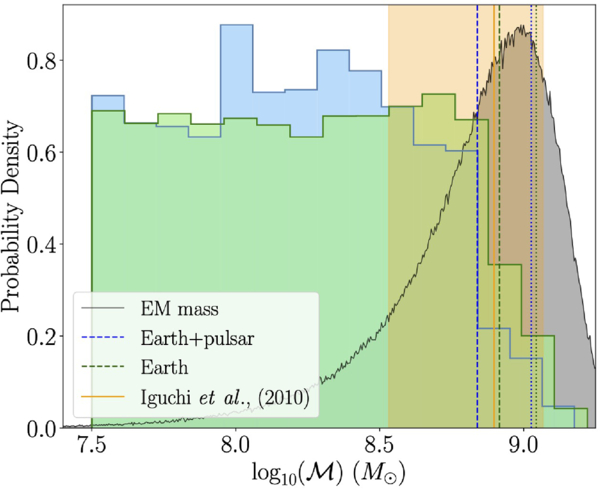
Constraints placed on the chirp mass by this work (blue and green histograms) compared to constraints from electromagnetic observations (gray and peach shaded areas). Click to enlarge. [Cardinal Tremblay et al. 2026]

Using Bayesian statistical methods to analyze their pulsar timing data, the team was unable to confirm or rule out the presence of a supermassive black hole binary in 3C 66B. However, they were able to place limits on its properties, such as the chirp mass and the amplitude of the signal, and certain limits were more stringent than those placed by existing electromagnetic data.

While this analysis didn’t result in the first-ever detection of gravitational waves from a single supermassive black hole binary, it did allow the team to test a new method that could someday play a role in precision cosmology. This method simultaneously analyzes electromagnetic and gravitational wave data from known supermassive black hole binaries, establishing these sources as “standard sirens” that can complement standard candles like Type Ia supernovae for measurements of the expansion rate of the universe.

Citation

“A Multimessenger Search for the Supermassive Black Hole Binary in 3C 66B with the Parkes Pulsar Timing Array,” Jacob Cardinal Tremblay et al 2026 ApJL 998 L42. doi:10.3847/2041-8213/ae3c98

The post A Search for a Supermassive Black Hole Binary appeared first on AAS Nova.

Supernovae, Shocks, and Spindown: A Possible Origin Story for Ultra-Long-Period Pulsars

16 January 2026 at 17:00

Researchers have recently discovered a number of ultra-long-period pulsars that are difficult to explain with typical pulsar models. A new article explains how these pulsars might arise from massive stars in close binary systems.

Strangely Slow Sources

Crab Nebula

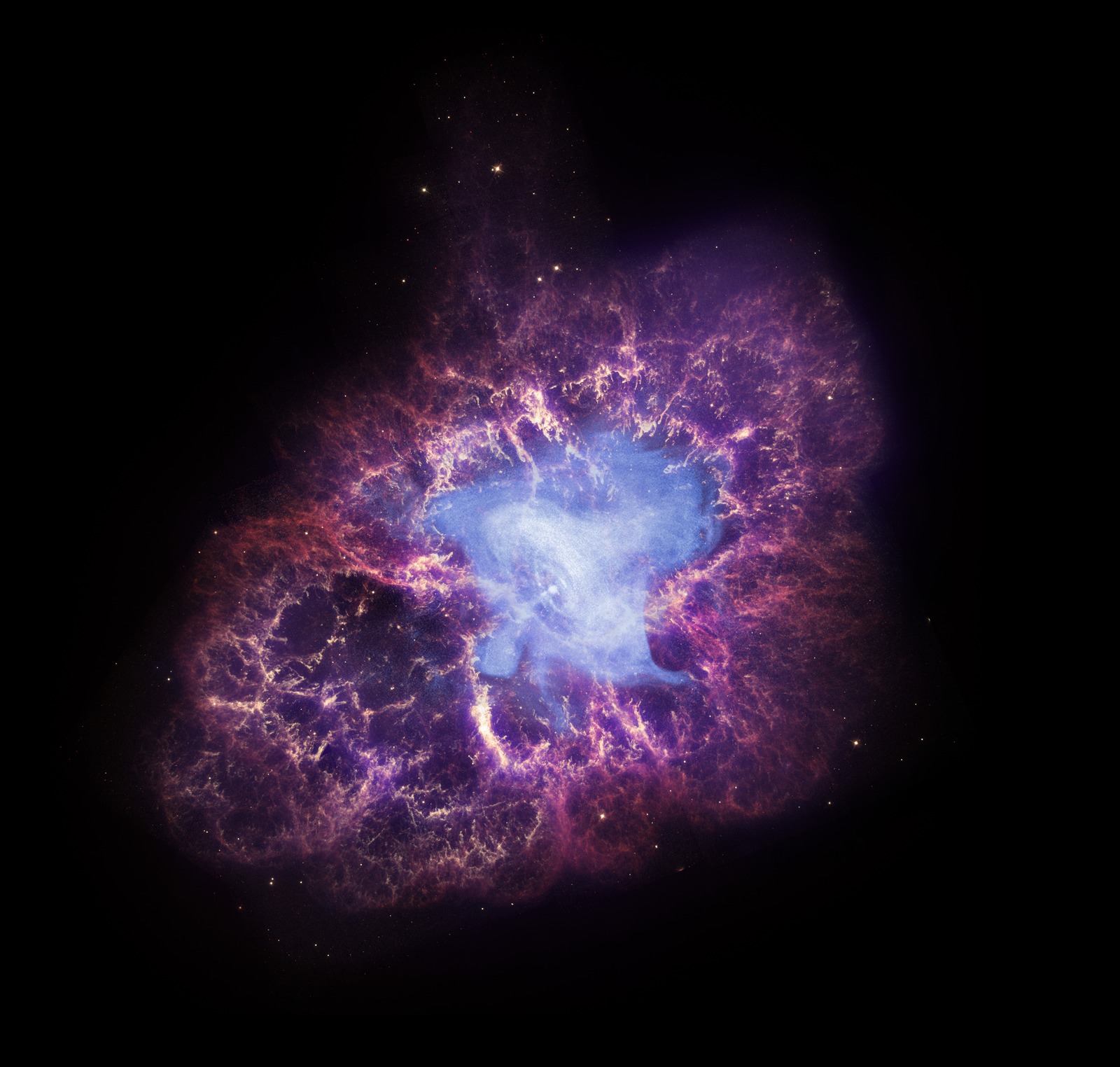
A multi-wavelength view of the Crab Nebula, the remnant of a supernova that birthed a neutron star. The neutron star powers a pulsar wind nebula, shown in blue. [X-Ray: NASA/CXC/J.Hester (ASU); Optical: NASA/ESA/J.Hester & A.Loll (ASU); Infrared: NASA/JPL-Caltech/R.Gehrz (Univ. Minn.)]

When massive stars go supernova, the explosion can leave behind the condensed stellar core in the form of a neutron star. Neutron stars that spin rapidly become pulsars, whose fast rotation powers beams of radio emission along the star’s poles.

Until not too long ago, pulsars appeared to have periods no longer than 12 seconds. Above that “sluggish” rotation rate, researchers suggested, pulsars could no longer produce electron–positron pairs and channel them along polar magnetic field lines to generate their characteristic radio signals.

So it seemed, until unexpectedly slow pulsars began to crop up. The first trend-breaking pulsars had periods of a few dozen seconds, and objects with pulse periods of minutes or hours have now been found. What could these strange objects be?

Neutron Star Origin Story

In a recent article led by Savannah Cary (University of California, Berkeley), researchers proposed that these strange radio sources are pulsars, but pulsars that rotate slowly and have magnetically powered (rather than rotationally powered) radio emission.

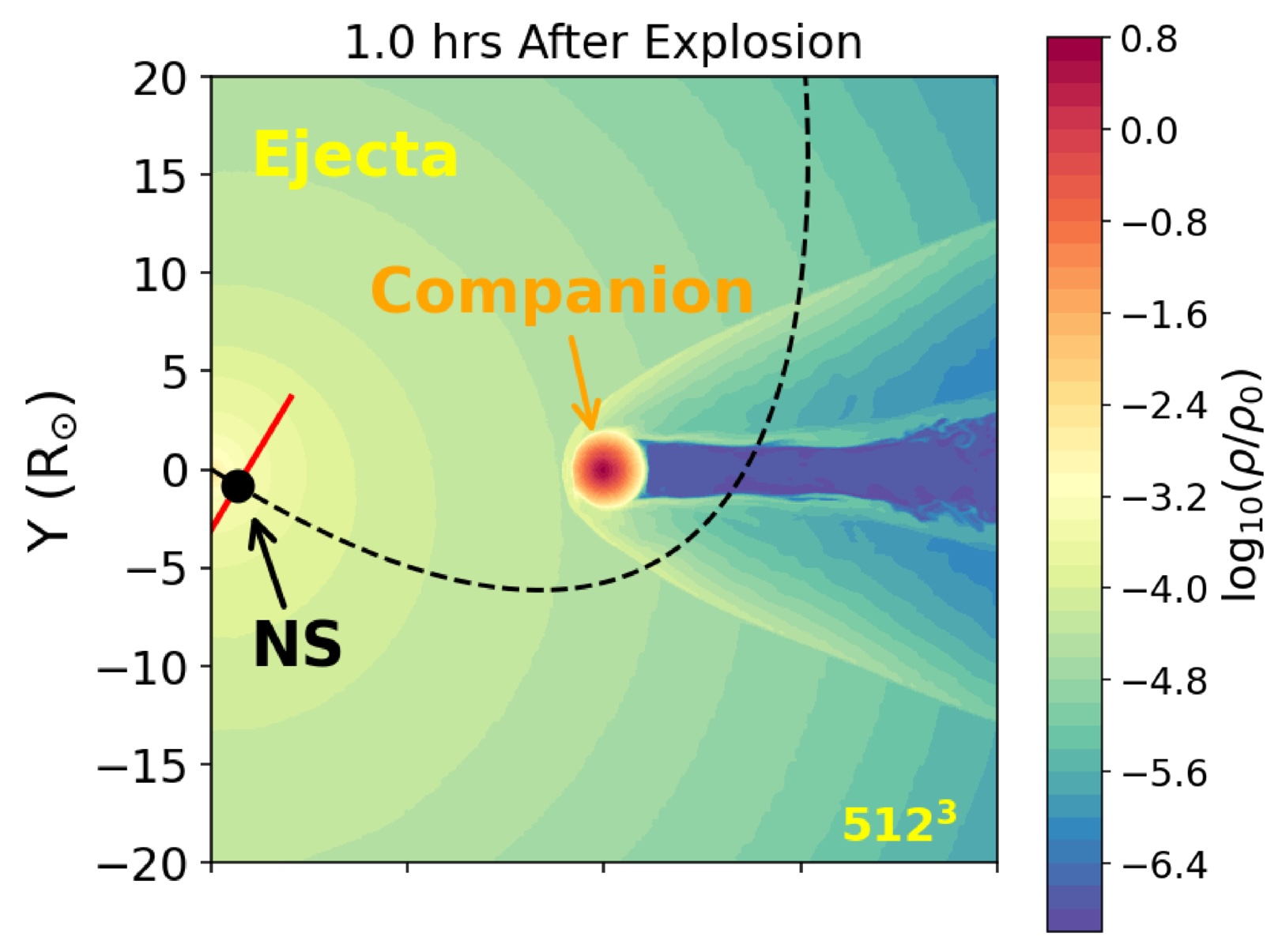
The proposed origin story for these ultra-long-period pulsars begins with a binary system containing a massive star and a close stellar companion. As the massive star evolves, it transfers its outer layers to the companion and expires as a stripped-envelope supernova that births a rapidly spinning neutron star. As the supernova ejecta crashes into the companion star, the star heats up and expands to 5–100 times its original radius.

simulation of supernova ejecta colliding with a star

Simulation snapshot taken one hour after the supernova explosion. The black dashed line shows the path the neutron star (NS) will take through the companion star’s outer layers. Click to enlarge. [Adapted from Cary et al. 2026]

Meanwhile, the explosion delivers a ferocious kick to the newborn neutron star, likely unbinding the binary system. This sets the neutron star on a new course that could take it through the puffed-up outer layers of its former companion, where it may collect gas from the star and ejected material from the supernova into an accretion disk.

Slowing Down

Cary’s team explored the outcomes of this scenario with a trio of simulations: hydrodynamical models for the shock heating of the companion star, numerical models for the formation of the disk around the neutron star, and analytical models for the interaction between the disk and the neutron star.

For a binary system containing stars of 6.4 and 4.0 solar masses and a separation of 20 solar radii — values drawn from observations and simulations — the resulting unbound neutron star collects a disk in 8–10% of cases. The neutron star’s mass, radius, rotation rate, and magnetic field strength determine whether the neutron star and the disk will interact. If they don’t, the neutron star remains rotating rapidly like a typical pulsar. If they do, the neutron star’s rotation will slow to a relative crawl over about a million years. For modest magnetic fields between 1013 and 1014 Gauss, this means rotation periods in the realm of 102 seconds, whereas stronger magnetic fields, above 1015 Gauss, yield periods of roughly a day.

This work suggests that close binary systems could be the source of ultra-long-period pulsars, of which Cary’s team estimates there may be 10–1,000 in the Milky Way. Future work will explore this possibility further, examining broader swaths of parameter space to learn more about how this scenario could contribute to the population of ultra-long-period pulsars in our galaxy.

Citation

“Accretion from a Shock-Inflated Companion: Spinning Down Neutron Stars to Hour-Long Periods,” Savannah Cary et al 2026 ApJ 996 141. doi:10.3847/1538-4357/ae1d43

The post Supernovae, Shocks, and Spindown: A Possible Origin Story for Ultra-Long-Period Pulsars appeared first on AAS Nova.

Cluster Before Stack: A New Algorithm for Pulsar Timing

19 September 2025 at 17:00

A photograph of a large radio dish taken during the day from above.

To measure properties of a pulsar accurately, astronomers have to stack many individual observations together to boost the signal above the noise. But what if there was a more clever, more effective way to add observations than simple stacking?

Weak Cosmic Lighthouses

Pulsars, or rapidly spinning neutron stars that emit narrow cones of radio waves, are often referred to as the galaxy’s lighthouses. Just like a sailor looking to shore might see a periodic flash when a lighthouse’s beacon sweeps over their ship, so too would radio telescopes aimed at a pulsar detect a “pulse” when its beam sweeps across Earth. However, although this comparison to lighthouses is a powerful analogy, it starts to break down when considering the speed and strength of these flashes.

A time series showing a Gaussian-like spike.

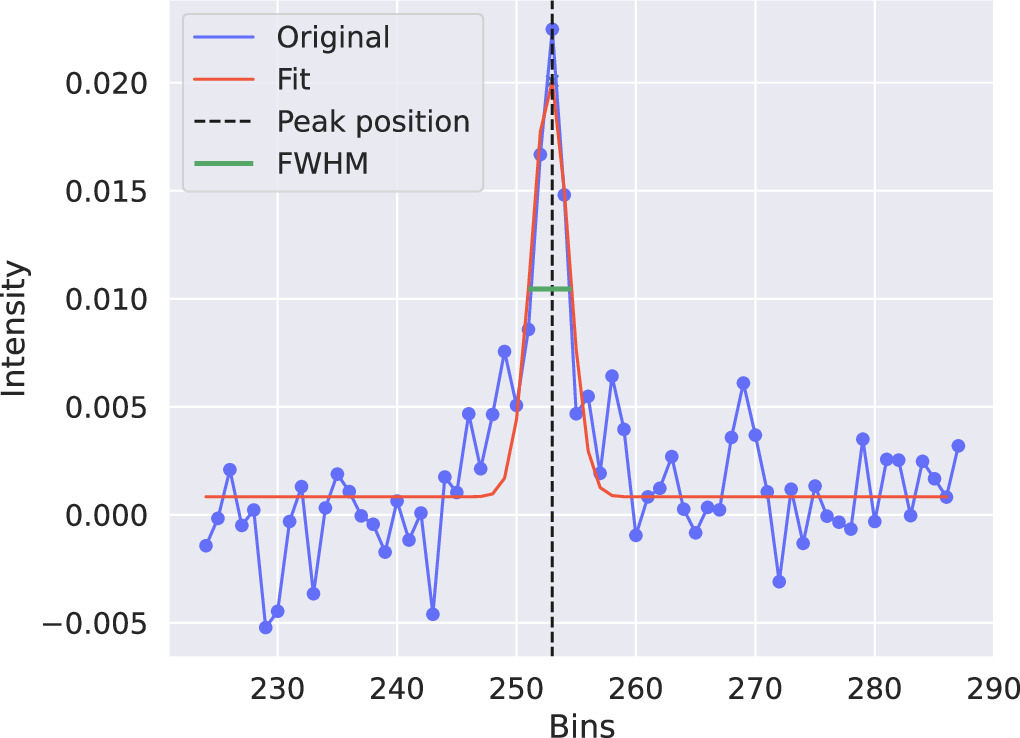
An example of one noisy individual pulse. Click to enlarge. [Sosa Fiscella et al. 2025]

While lighthouses may take several seconds to rotate their lens and lamp once around, pulsars do the same in just a few milliseconds. What’s more, while lighthouses are designed to be bright enough that sailors can notice every individual flash, pulsars are comparatively dim. To confidently measure the “pulse profile,” or how a pulsar’s radio intensity changes as a function of its rotation phase, astronomers need to stack those hundreds of thousands of pulses together into one artificial super-bright pulse. Only then can they measure the quantities they care about, like the precise spin period and average pulse arrival time.

This practice rests of the subtle assertion that every individual pulse is just a noisy variation of the same unchanging pulse profile. But is that safe to assume? And can we improve the precision of our measurements by doing something more complex than simple stacking? These are the questions recently tackled by a team of astronomers led by Sofia V. Sosa Fiscella (Rochester Institute of Technology) in research published in The Astrophysical Journal.

Squeezing the Data

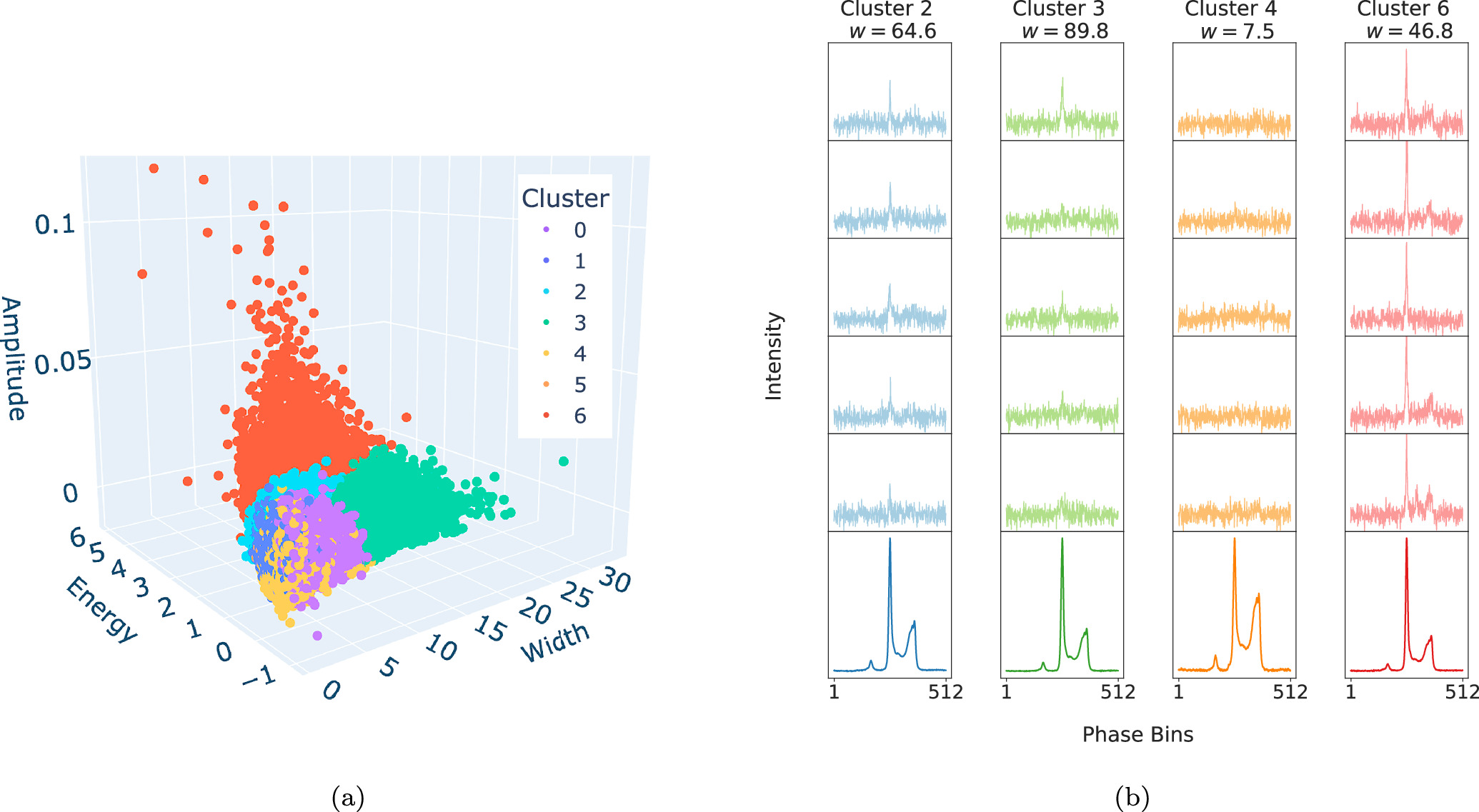
The researchers focused on one particularly bright source named PSR J2145−0750 that was observed by the Green Bank Telescope for two hours in 2017. This pulsar is so bright that it’s possible to measure quantities like the pulse width, height, center, and total energy of individual pulses, not just the final stack. The team did just that for each of the more than 200,000 pulses in their dataset and assigned each one a vector of four numbers. When they next sorted the pulses into distinct groups, they found that there were indeed correlations among these variables: for example, pulses with higher maximum heights tended to arrive earlier and be narrower than the overall average.

A 3D plot across different measured pulse characteristics where each point is colored according to its cluster.

A visual representation of the different pulse clusters. Each point corresponds to one pulse. Click to enlarge. [Sosa Fiscella et al. 2025]

To take advantage of this structure, they created a stacked pulse profile for each cluster, measured the center in each of them, then averaged all the cluster-specific times together into a final answer. While the standard method of stacking all of the data into one pulse profile resulted in a timing precision of 0.066 microsecond, this new method shrank the uncertainty to 0.057 microsecond, a meaningful improvement.

Though the team cautions that this new method will likely only be relevant for the pulsars for which we can measure individual pulses, they also point out that as better telescopes come online, we’ll be able to do that for more pulsars. In the meantime, astronomers can take comfort in the fact that as our technological abilities improve, so do our abilities to squeeze as much from our data as possible.

Citation

“Improving Pulsar Timing Precision with Single Pulse Fluence Clustering,” Sofia V. Sosa Fiscella et al 2025 ApJ 984 111. doi:10.3847/1538-4357/adc1c2

The post Cluster Before Stack: A New Algorithm for Pulsar Timing appeared first on AAS Nova.

Chiming In on the Pulsar Search: Searching for Pulsars with CHIME

12 September 2025 at 17:00

Pulsar diagram

Pulsars, the best timekeepers in the universe, are key to many fields within astronomy. A new survey searching for pulsars has come online and is already making discoveries.

Searching for Pulsars

Pulsars, the extremely dense cores left over from some massive stars’ deaths, act as astronomical lighthouses — spinning fast and emitting jets of light from their magnetic poles, they send steady pulses of light to observers on Earth. Pulsars are particularly intriguing sources, providing insights into multiple areas of astrophysics like gravitational waves, general relativity, and high-density matter properties. While more than 3,700 pulsars have been discovered to date, increasing this number will enable further exciting science. 

Multiple pulsar surveys have utilized single-dish radio telescopes to cover portions of the sky, and to date, these surveys have primarily focused on finding pulsars near the dense stellar population in the Milky Way’s galactic plane. While these surveys have detected many pulsars, they are limited by their small fields of view, taking longer to cover large portions of the sky, and they miss the population of pulsars that must lie within globular clusters orbiting in the galactic halo. Some low-frequency detectors address these limitations but require intense computational resources to sift through the raw data to find pulsars. How can we search for pulsars efficiently across the sky?

Introducing CHAMPSS

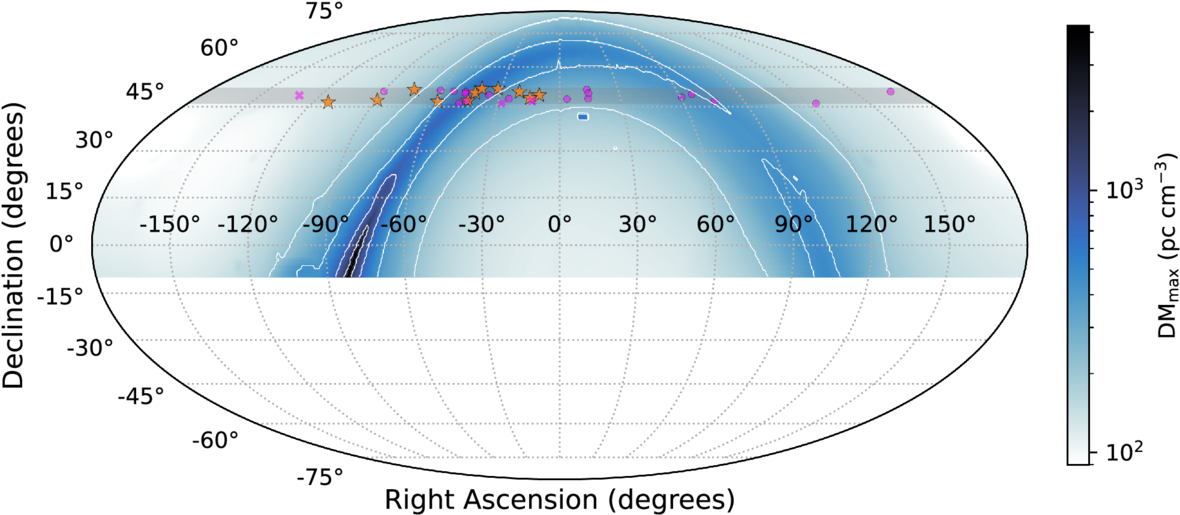
CHAMPSS pointing map

CHAMPSS pointing map showing the survey’s planned sky coverage. The orange stars correspond to the newly discovered pulsar, and the pink points denote known pulsars within the commissioning surveys. Click to enlarge. [Andrade et al 2025]

Hoping to cover the gaps in pulsar surveys thus far, researchers turned to the Canadian Hydrogen Intensity Mapping Experiment (CHIME). CHIME is a unique instrument that utilizes a set of cylindrical antennas to monitor large portions of the sky for radio sources from 400 to 800 MHz. This instrument has already made great strides in detecting transient radio events and has discovered more than 80 pulsars since its first light in 2017. 

With a clear opportunity to advance the pulsar search, a group of scientists developed the CHIME All-sky Multiday Pulsar Stacking Search (CHAMPSS) — a radio pulsar survey that covers the full northern sky daily and uses long-term data stacking to detect irregular and faint sources. Through stacking observations across multiple days, CHAMPSS builds up signals to find faint sources that would otherwise go undetected. The data processing pipeline searches in real time for strong peaks that signify a transient radio event, and follow-up analysis determines if the event is a pulsar candidate. A strong candidate then moves through further stages to confirm it as a pulsar and determine its properties. 

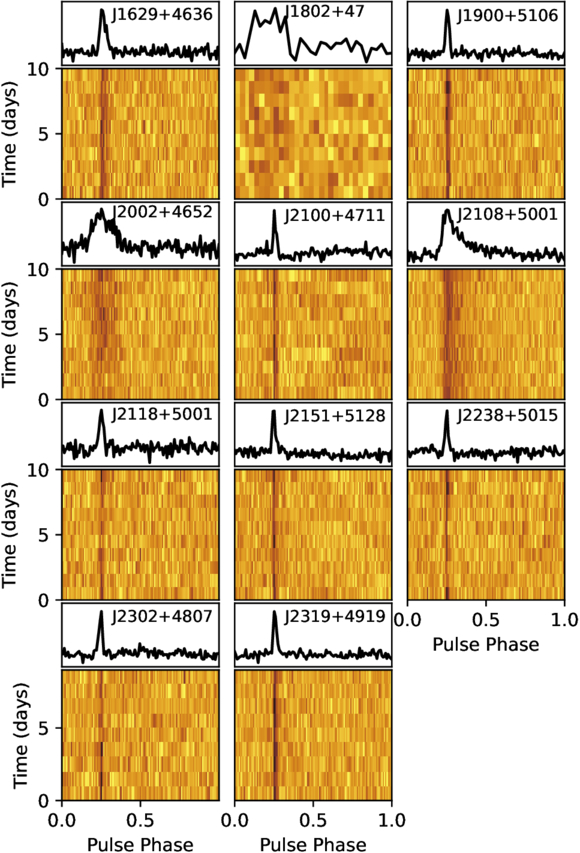
Pulsar discoveries

The 11 pulsars discovered with CHAMPSS. Click to enlarge. [Andrade et al 2025]

First Discoveries and Looking Forward

What has CHAMPSS uncovered thus far? In testing the system through multiple commissioning surveys on a small subset of the sky, the CHAMPSS collaboration has discovered 11 new pulsars with periods ranging from 0.2 to 1.5 seconds. Additionally, the collaboration tested the sensitivity of their survey by searching for known pulsars within the observed area, and they found that their predicted and detected signal-to-noise ratios for known pulsars agree well. This confirmation allows the team to advance to the next phase of the survey, and it will soon be in full swing.

CHAMPSS complements and expands upon other radio pulsar searches, discovering faint and irregular sources that are missed without repeated observations. The future of pulsar astronomy is promising, and with the advent of this survey, a new collection of pulsars will be discovered. 

Citation

“CHIME All-sky Multiday Pulsar Stacking Search (CHAMPSS): System Overview and First Discoveries,” Christopher Andrade et al 2025 ApJ 990 50. doi:10.3847/1538-4357/adeb51

The post Chiming In on the Pulsar Search: Searching for Pulsars with CHIME appeared first on AAS Nova.

❌