El CONICET probó un antígeno que hizo que bovinos generaran anticuerpos capaces de reducir la supervivencia del Aedes aegypti. La meta futura: una vacuna que actúe también contra el mosquito.
Il ritorno della cassa in ceramica su Apple Watch Series 12 porta con sé anche costi di riparazione particolarmente elevati. Per qualsiasi danno diverso dalla sostituzione della batteria, se il dispositivo non è coperto da AppleCare+, Apple indica infatti un prezzo di - preparatevi - 739 euro.
La cifra è superiore persino a quella prevista per Apple Watch Ultra 4, la cui riparazione costa 679 euro senza copertura. Per confronto, un Apple Watch Series 12 Cellular (quindi con eSIM) in alluminio nelle stesse dimensioni richiede 429 euro. Il dato diventa ancora più significativo considerando il prezzo di partenza dei modelli in ceramica. Le versioni Bianco perla e Blu notturno partono da 1.059 euro, mentre Apple Watch Ultra 4 parte da 909 euro. All'atto pratico, riparare un Series 12 in ceramica fuori garanzia costa oltre due terzi (0,7 volte) del prezzo del dispositivo nuovo. La sostituzione della batteria invece, magra consolazione, resta molto più accessibile: 109 euro.
Con AppleCare+, il contributo richiesto per un danno accidentale scende a 65 euro per Apple Watch Series 12 in ceramica e a 75 euro per Ultra 4. La sostituzione della batteria è inclusa senza costi aggiuntivi quando la capacità massima scende sotto l’80%. AppleCare+ costa 4,49 euro al mese per Series 12 (o 89 euro per il piano di copertura biennale, con pagamento anticipato in unica soluzione) e 5,49 euro al mese per Ultra 4 (biennale a 109 euro). Negli USA, Apple propone anche AppleCare One a 19,99 dollari al mese per coprire fino a tre dispositivi. Sempre oltreoceano, dal 14 settembre arriverà inoltre AppleCare One Family, da 49,99 dollari mensili per un massimo di sei membri della famiglia. In Europa AppleCare One ha messo il “naso” da poco, ma in Italia non è ancora disponibile.
Parkinson’s disease has long been a diagnosis of observation and inference. Doctors watched for tremor, rigidity, and slowness of movement, and only at autopsy could the telltale clumps of alpha-synuclein protein—the pathological signature of the disease—be confirmed inside the brain. That diagnostic fog may finally be lifting. A new five-year study drawing on the landmark Parkinson’s Progression Markers Initiative (PPMI) has followed patients whose disease was defined not by their symptoms alone, but by biology: a positive cerebrospinal fluid seed amplification assay, the test that detects misfolded alpha-synuclein circulating in the nervous system. The results, published in Annals of Clinical and Translational Neurology, offer one of the clearest longitudinal pictures yet of how biologically confirmed Parkinson’s disease actually progresses in the era of modern treatment—and the findings are already reshaping how scientists think about staging, enrollment in clinical trials, and the very definition of the disease.
The research team set out with two central questions. First, what happens clinically to patients who test positive for synuclein seeding in their spinal fluid over five years of careful observation? Second, does a patient’s baseline stage on a new biological staging system—the Neuronal Synuclein Disease Integrated Staging System, or NSD-ISS—predict how quickly they will cross meaningful clinical milestones? Both questions cut to the heart of a quiet revolution in neurology. For more than a century, Parkinson’s was classified by what patients looked like in the examination room. Now, thanks to validated biomarkers, researchers can classify it by what is happening at the molecular level, potentially years before disabling symptoms emerge.
The seed amplification assay, or SAA, is the technological engine behind this shift. The test exploits a peculiar property of misfolded alpha-synuclein: it acts as a template that recruits normal, healthy synuclein proteins and forces them to misfold as well, seeding the aggregates known as Lewy bodies that riddle the brains of Parkinson’s patients. In the laboratory, a tiny sample of cerebrospinal fluid is mixed with synthetic alpha-synuclein and monitored for hours. If pathological seeds are present, the reaction accelerates into a detectable fluorescence signal. The assay has been validated across multiple international cohorts and, critically, against postmortem brain tissue, giving neurologists a window into pathology they previously could only glimpse after death. A complementary technique—detecting phosphorylated alpha-synuclein in small skin biopsies—has added a second, less invasive line of biological evidence.
Armed with these tools, two research groups have proposed frameworks for redefining Parkinson’s disease biologically. The SynNeurGe criteria classify patients by the combined presence of pathological alpha-synuclein biomarkers, neuroimaging evidence of neurodegeneration, and disease-relevant genetic variants. The Neuronal Synuclein Disease criteria take a parallel approach, defining disease by the presence of pathological synuclein as measured by a validated biomarker, with or without evidence of dopaminergic dysfunction detected through dopamine transporter imaging. The integrated staging system then arranges these biological anchors along a seven-stage ladder: Stage 0 reserved for carriers of fully penetrant mutations in the SNCA gene; Stages 1A and 1B for people with synuclein pathology but no symptoms, depending on whether dopaminergic dysfunction is present; Stages 2A and 2B for those with subtle signs that stop short of functional impairment; and Stages 3 through 6 capturing progressively severe clinical disability.
PPMI, the international observational study launched in 2010, provided the ideal laboratory for testing whether this staging framework means anything in the real world. The researchers focused on the sporadic Parkinson’s cohort: participants diagnosed within two years of enrollment who had never taken dopaminergic medication, whose examinations showed cardinal motor features, and whose dopamine transporter scans confirmed the characteristic deficit in the striatum. Crucially, the team selected only those participants who met biological NSD criteria through a positive CSF seed amplification assay, recruited before 2020 to guarantee at least five years of follow-up. This design deliberately stripped away a longstanding source of noise in Parkinson’s research: the clinical heterogeneity that arises when a “Parkinson’s” diagnosis might actually encompass unrelated neurodegenerative processes that mimic the disease but follow entirely different biological courses.
Over the five-year observation window, participants underwent an unusually thorough annual workup. Motor and non-motor function was tracked with the Movement Disorders Society Unified Parkinson’s Disease Rating Scale across all four of its parts, alongside the Hoehn and Yahr staging scale and the Schwab and England activities of daily living score. Smell was measured with the University of Pennsylvania Smell Identification Test, autonomic function with the SCOPA-AUT, mood with the Geriatric Depression Scale, and REM sleep behavior disorder risk with a dedicated screening questionnaire. Cognition was assessed with the Montreal Cognitive Assessment and, from the study’s third year onward, formal clinician diagnoses of normal cognition, mild cognitive impairment, or dementia. Medication burden was quantified as levodopa equivalent daily dose, and dopamine transporter imaging was repeated at years one, two, and four, quantified both in the putamen—the region most affected in Parkinson’s—and across the striatum as a whole.
The broad message from the five-year trajectories is one of measurable, biologically anchored progression. Patients recruited as freshly diagnosed, biologically confirmed sporadic Parkinson’s patients showed the expected decline across motor scales and dopaminergic imaging, with the earlier PPMI analysis by Simuni and colleagues having already documented significant—though modest—correlation between worsening clinical scores and falling DAT binding over five years. What the new analysis adds is the biological filter: by restricting the cohort to synuclein-seeding-positive individuals, the study reduces the contamination from look-alike conditions that has historically muddied progression estimates. When a cohort is defined by its underlying pathology rather than its outward symptoms, the resulting disease course becomes a truer reflection of what alpha-synuclein itself does to the nervous system over time.
Perhaps the most consequential findings concern prediction. If the NSD-ISS staging system is to earn its place in research clinics and, eventually, in therapeutic trials, it must do more than organize patients neatly on a page—it must forecast what comes next. The study analyzed whether a patient’s baseline stage predicted survival and the time required to reach clinically meaningful disease milestones: crossing thresholds on the clinical rating scales, advancing in Hoehn and Yahr stage, slipping in daily living independence, or developing cognitive impairment. The logic is straightforward and powerful. A patient sitting at Stage 2B—with confirmed synuclein pathology, dopaminergic dysfunction, and subtle signs but no functional impairment—should, in theory, march down the staging ladder at a predictable pace. Demonstrating that baseline stage genuinely stratifies risk would give trial designers a rational tool for enrichment, allowing them to recruit patients at the stage where a candidate drug is most likely to show benefit.
That trial-design implication is not academic. Across neurodegenerative disease research, therapeutic development is pivoting decisively toward biomarker-defined enrollment. The bitter lessons of Alzheimer’s trials—where anti-amyloid therapies only proved effective once trials recruited based on biological confirmation rather than syndrome alone—have not been lost on the Parkinson’s community. Drugs targeting alpha-synuclein directly, whether through immunotherapy, aggregation inhibition, or other mechanisms, are entering trials that increasingly require positive seed amplification assays or other biological confirmation as a gate for entry. A validated staging system that predicts five-year trajectory would allow sponsors to select participants early enough in the disease process for neuroprotective strategies to matter, while reserving later-stage patients for symptomatic interventions. The five-year PPMI data provide exactly the kind of naturalistic benchmark that such enrichment strategies demand.
The study also marks a conceptual milestone: the description of Parkinson’s disease under contemporary management. Patients diagnosed today are treated differently than those diagnosed twenty years ago, and their disease course may differ as a result. Describing outcomes in a biologically defined, prospectively observed cohort establishes a modern baseline against which future disease-modifying therapies can be judged. When an experimental drug claims to slow progression, the comparison will be against trajectories like those documented here—precise, biomarker-anchored, and free of the diagnostic uncertainty that plagued earlier natural history studies. In that sense, the paper functions simultaneously as a clinical report and as a foundation stone for the next generation of Parkinson’s trials.
What emerges from five years of watching synuclein-positive patients is a disease that can now be seen, staged, and tracked before it fully announces itself. The combination of CSF seed amplification assays, dopamine transporter imaging, and structured clinical assessment has converted a syndrome defined in the examination room into a biological disease measurable in the laboratory. If the staging system validated in this cohort continues to predict who declines fastest and who reaches milestones soonest, neurologists may one day tell a newly diagnosed patient not only what they have, but with unprecedented confidence what lies ahead—and researchers may finally test neuroprotective drugs in the early biological window where they stand the best chance of changing the story. For a disease that has resisted precise definition since James Parkinson first described it in 1817, that is a transformation worth watching.
If you've worked in cybersecurity for as long as I have, then you'll know there are a couple of things you can count on. First, the threats that are out there never stop evolving. And second, sooner or later, you're going to be in the bullseye.
What makes life so much harder today is that AI and other automated tools have dramatically narrowed the gap between vulnerability discovery and the time it takes to exploit them.
And when this can now be measured in minutes – seconds, even – you know you have a problem. This fundamental change in the way adversaries operate means we no longer have the luxury of time to understand an attack, assess the risk and decide what to do next.
Which means we have to be better prepared and have resiliency for whatever is thrown at us.
Visibility is key
For me, that starts with accepting a simple reality: you cannot defend what you cannot see. And it’s why visibility is one of the most important capabilities an organization can develop.
After all, if you understand what exists within your environment – how those systems interact and what normal looks like – then you're in a much stronger position to identify unusual behavior before it develops into something more serious.
Observability, on the other hand, takes that visibility to the next level. It provides the context security teams need to make informed decisions quickly, especially when time is working against them.
In other words, visibility tells you what is happening, while observability helps you understand why it's happening.
And that’s crucial. Today's organizations operate across on-premises infrastructure, cloud environments, networks, and an increasing number of connected technologies.
As those environments become more distributed, understanding what's happening across them becomes significantly harder.
Without that visibility, it's difficult to understand where your risks are, how systems interact, or where an attacker may be able to exploit a weakness.
Think like a hacker
Which leads me neatly onto my next point. Throughout my career, including my time working in offensive cyber operations in the intelligence community, I've found that the most effective way to understand risk is to think like the adversary.
I start by asking how someone would attack an organization and then work backwards to identify and close gaps.
That’s because attackers don't see organizations in the way that you or I might do. They’re always on the hunt for a toehold in. They look for weaknesses in people, processes and technologies.
They look for the easiest route first to achieve their objective. And then they exploit that weakness.
And it’s an approach I would urge all security leaders to adopt if they want to stay one step ahead.
That means continuously asking where an attacker would start, how they would move through the organization and what controls would slow them down or stop them altogether.
But for this to work, it also requires organizations to design resilience into the way they operate. And that’s something we’ve embedded across our organization.
For instance, we have internal and external teams that conduct continuous product, enterprise, spear-phishing and physical penetration testing.
For us, it's about educating the team across the business to ensure they remain vigilant. But it’s also about inoculating people so that when they see something suspicious online, they have that instinct that something might be wrong and they report it.
We also want to make it easy for people to report events so we can analyze them quickly and better understand the targeting.
Secure by design
We’ve also invested heavily in Secure by Design to ensure that all the products we deliver to customers are as secure as humanly possible. In practice, it means being able to trace every piece of code back to its source and verify its integrity throughout the development process.
It's similar to maintaining a chain of custody for evidence. We want to know exactly where software components come from, how they're verified and how they're protected throughout the entire build process.
More broadly, Secure by Design is increasingly being adopted across our industry as organizations recognize the importance of software integrity, traceability and transparency throughout the development lifecycle.
This is important because, as I said at the beginning, there are two certainties in cybersecurity: threats will continue to evolve, and organizations will continue to be targeted. Businesses across the world must adapt quickly to the grim reality that a cybersecurity incident isn’t a matter of if, but a matter of when. And AI is supercharging the pace at which all this is happening and broadening the blast radius of any attack.
That’s why you need to understand your environment well enough to reduce unnecessary risk, detect malicious activity quickly and limit the blast radius when something does happen. Pair that with a clearly defined and tested plan for recovery and that's what robust cyber resilience looks like in practice.
This article was produced as part of TechRadar Pro Perspectives, our channel to feature the best and brightest minds in the technology industry today.
The views expressed here are those of the author and are not necessarily those of TechRadarPro or Future plc. If you are interested in contributing find out more here: https://www.techradar.com/pro/perspectives-how-to-submit
Thermalright is a CPU cooling company that happens to sell power supplies. Established in Taipei in 2001, it spent its first two decades building a reputation on air coolers - the Ultra-120 eXtreme and the HR series were enthusiast reference points long before the current wave of tower coolers - then drifted out of the conversation for years before the Peerless Assassin 120 dragged it back to the top of every budget build list in 2021. Its catalog has expanded aggressively since: case fans, all-in-one liquid coolers, thermal compounds, chassis, and, since 2022, power supplies. That last category deserves a different kind of scrutiny than the rest. Much like most brand names, Thermalright does not build power supplies; it commissions them, and a heatsink company's engineering credibility transfers to a PSU exactly as far as the OEM behind it allows. Every Thermalright power supply has to be judged on its platform rather than its badge.
The KG series occupies the value end of Thermalright's power supply range, and the TR-KG750 reviewed here is its 750W entry. How does it hold up against the best power supplies on the market? On paper, the specification is current, with ATX 3.1 and PCIe 5.1 compliance, a native 12V-2x6 connector, full modularity, 80 PLUS Gold certification at 115 VAC, a 120 mm fan inside a 140 mm-deep chassis, and a five-year warranty. The label on the PSU itself answers the platform question without much digging. The manufacturer of record is Somore Tech Co., Ltd., the production is credited to Jiushouyangguang Power Supply (Shenzhen), and the internal designation printed beside the 80 PLUS badge is HKCMAX-750 - this is an HKC platform, and the silkscreen on the main board dates the design to April 2023. There is no Cybenetics entry for the model at the time of writing, so the 80 PLUS report is the only third-party data available on it. At a retail price of $91, it undercuts essentially every name-brand 750W Gold unit on the US market, which is the whole of its pitch.
Specifications and Design
Thermalright TR-KG750 Power specifications ( Rated @ 40 °C )
RAIL
+3.3V
+5V
+12V
+5Vsb
-12V
MAX OUTPUT
20A
20A
62.5A
3A
0.3A
100W
100W
750W
15W
3.6W
TOTAL
750W
AC INPUT
100 - 240 VAC, 50 - 60 Hz
MSRP
$91
In the Box
The TR-KG750 arrives in a compact cardboard box wrapped in a black-to-bronze gradient sleeve, with a three-quarter render of the unit dominating the front and the wattage set in large gold type beside it. The badge strip along the bottom edge is short: 80 PLUS Gold, ATX 3.1, PCIe 5.1, and the model number.
(Image credit: Tom's Hardware)
The bundle is as thin as they come. Under the protective packaging the supply is accompanied by a multilingual user’s guide, the AC power cord, a small bag of mounting screws, and four zip ties. That is the entire accessory list: no Velcro straps, no cable combs, no storage pouch. Four zip ties for an eight-cable modular supply is a token rather than a provision, and it is one of the few places where the price makes itself felt before you take the lid off.
(Image credit: Tom's Hardware)
The cables are all-black flat ribbon types throughout, with no sleeving anywhere in the set. They are all uniform, adding points to the aesthetics of the unit. The 12V-2x6 cable is native - a single run from the modular panel to the graphics card, with no adapter or splitter involved - but its plug does not use the dual-color keying the ATX 3.1 specification encourages, which makes an incompletely seated connector easy to spot at a glance.
(Image credit: Tom's Hardware)
Thermalright TR-KG750
Connector type
Hardwired
Modular
ATX 24 Pin
-
1
EPS 4+4 Pin
-
2
PCI-E 5.1
-
1
PCI-E 8 Pin
-
2
SATA
-
6
Molex
-
3
Floppy
-
-
External Appearance
At 150 x 86 x 140 mm, the TR-KG750 is a standard-width ATX unit with a short 140 mm body, which is about as compact as a 750W supply practically gets and leaves useful slack for cable management even in a mid-tower. The chassis is finished in a matte black with a fine texture, and the top panel carries a stamped fan grille in a diamond-and-chevron pattern - four angled spokes radiating from a central square, framed by long slotted vents - with the Thermalright wordmark pressed into a raised panel at the edge. Four exposed screws sit at the corners, one of them beneath the warranty-void sticker.
(Image credit: Tom's Hardware)
The rear face is a large square perforated exhaust panel with the AC receptacle and a rocker. The front face hosts the modular connector bay, cleanly silkscreened into four labeled groups: MOTHERBOARD for the split 24-pin, SATA/PATA for the peripheral cables, CPU/PCIe for the four eight-pin sockets, and a dedicated 12V 2x6 socket in the bottom corner. A scratch-off authenticity tag with a QR code sits alongside the panel.
Tom's HardwareTom's Hardware
The specification label occupies the top face rather than a side panel, which is the more useful placement for a bottom-mounted supply sitting under a windowed case, and both side panels are given over to a large bronze-gradient decal carrying the wattage, model number, and 80 PLUS Gold badge. That decal is the only decoration, and the finish underneath it is unremarkable but honest - evenly applied, no orange peel, no sharp edges. The label repeats the rail ratings, the CCC certificate number, and the internal model designation, and it is where the platform gives itself away. Build quality overall is what the price suggests: the steel gauge is adequate, the panels line up, nothing rattles, but there is none of the extra finishing that separates a $90 unit from a $150 one.
Tom's HardwareTom's Hardware
Internal Design
Cooling is handled by a 120 mm Yate Loon D12SH-12 rated for 12V at 0.30A. Yate Loon is a long-established Chinese fan maker, and the D-series is its bread-and-butter sleeve-bearing line, which makes this the single most consequential cost-saving in the unit. Sleeve bearings are quiet, like fluid-dynamic alternatives at equivalent speed, but wear faster and are more sensitive to heat and mounting orientation - all three of which matter in a supply that, as the test results show, runs its fan constantly and pushes it hard as soon as ambient temperature rises. The five-year warranty covers the fan, but it is not a part most owners will enjoy chasing a replacement for.
(Image credit: Tom's Hardware)
The platform is HKC’s, supplied to Thermalright under the internal designation HKCMAX-750, and the main board is silkscreened as ATX32 Main BD Rev1.2. A row of wattage selection pads along the board edge runs from 500W to 850W, with the 750W position populated, confirming this is a single design scaled across a whole product family rather than a layout drawn for 750W specifically. Component density is fair, the soldering is tidy, and some black silicone anchors the larger parts. Only two heatsinks are fitted - a small one carrying the input bridges and a taller, simple finned unit shared by the APFC and primary switching stages - and everything on the secondary side relies on the PCB and a tiny sheet heatsink soldered to it.
Tom's HardwareTom's Hardware
The transient filtering stage starts at the back of the AC receptacle and continues on the main PCB. In total, there are four Y capacitors, two X capacitors, and two filtering inductors, with an MOV and an NTC thermistor also present - a complete filter with nothing omitted, if not a generous one. Two input rectifying bridges follow on their own small dedicated heatsink. The APFC stage uses two MOSFETs and a boost diode sharing the tall heatsink, paired with a large open-frame filtering coil, and the bulk capacitor is a Nichicon 450V/560 uF part from the 105C-rated GN(M) series. That capacitor is comfortably the best component in the unit and practically the only one sourced from a manufacturer with a genuine reliability record. The primary inversion stage is a half-bridge arrangement built from two 65R160FR MOSFETs on the shared heatsink, feeding the main transformer.
(Image credit: Tom's Hardware)
The secondary side is where the cost engineering becomes plain. The 12V rail is rectified by six Perfertway PWC012N04ES MOSFETs mounted directly on the main PCB with no heatsink of their own, and the 3.3V and 5V rails are derived from DC-to-DC converters that also live on the main board rather than a vertical daughterboard. As a layout, this is conventional and modern. The problem is provenance: essentially every active device in the conversion path - the bridges, the APFC and primary MOSFETs, the six synchronous rectifiers - comes from manufacturers with no established track record in this application. Secondary filtering is a mix of Teapo parts and capacitors branded NICON that, despite carrying a series designation borrowed from Nippon Chemi-Con’s catalog, do not appear to be a genuine Nippon Chemi-Con nor a Nichicon product, and polymer capacitors handle high-frequency filtering on the modular board. None of this is unusual at the price. It is worth stating plainly, though, that the "all Japanese" capacitor language attached to some retail listings for this model describes the bulk capacitor and nothing else.
Tom's HardwareTom's Hardware
Cold Test Results (25°C Ambient)
Cold Test Results (25°C Ambient)
For the testing of PSUs, we are using high-precision electronic loads with a maximum power draw of 2700 Watts, a Rigol DS5042M 40 MHz oscilloscope, an Extech 380803 power analyzer, two high-precision UNI-T UT-325 digital thermometers, an Extech HD600 SPL meter, a self-designed hotbox, and various other bits and parts.
At 25°C ambient, the TR-KG750 averaged 89.5% at 230 VAC and 88.5% at 115 VAC across the nominal load range, peaking at 91.2% and 90.3%, respectively, at 50% load and settling to 89.2% and 87.9% at a sustained 750W. The curve is well shaped, with the usual broad plateau between 40% and 70% load and no collapse at the top end. What it does not have is margin. Against the 80 PLUS Gold thresholds at 115 VAC - 87% at 20% load, 90% at 50%, and 87% at 100% - our measured 87.2%, 90.3%, and 87.9% clear the bar by 0.2, 0.3, and 0.9 percentage points. The unit’s own 80 PLUS report reads slightly kinder at 90.2%, 91.4% and 88.3%, but the conclusion does not change: this is a Gold unit by a narrow margin.
Acoustically, there is no great news. The Yate Loon spins whenever the supply is powered but remains quiet across the first half of the load range. The ramp through the middle of the range is gentle enough, but it steepens past 70% load, reaching 42 dB(A) at 600W and almost 51 dB(A) at a sustained 750W. That is loud for an efficient 750W unit at room temperature. Thermally, the platform is comfortable at 25°C. The primary and secondary heatsinks stabilized at around 60°C. Those are unremarkable numbers, with the small heatsinks and mediocre efficiency being the obvious culprits.
Hot Test Results (~45°C Ambient)
Hot Test Results (~45°C Ambient)
Inside the hotbox at roughly 45°C ambient - five degrees beyond the unit’s own 40°C rating - efficiency averaged 87.6% at 230 VAC and 86.6% at 115 VAC, an almost uniform 1.9-point loss against the cold run. Full load is where the degradation concentrates: 85.8% at 230 VAC and 84.5% at 115 VAC, both 3.4 points down on the 25°C figures. A drop of that size is larger than we like to see, and it puts the unit well outside Gold territory under heat, although it is being measured beyond its rated envelope and the shape of the curve essentially holds throughout. The supply completed every load step without shutting down.
Heat turns the fan from merely constant into genuinely intrusive. The floor rises to 37 dB(A), which is audible but not dramatic. It maintains reasonable noise figures up to 525W and then the curve breaks: between 525W and 600W the fan jumps almost ten decibels to 56 dB(A), settling at 58 dB(A) at a sustained 750W. A step that abrupt points to a coarse thermal control scheme rather than a tuned curve, and at 58 dB(A) the power supply is likely to be the loudest component in almost any system. The internal readings explain the urgency: the primary heatsink reached well over 100°C at full load. Those are very high figures for parts of uncertain pedigree and for a 750W PSU, and while the unit held together for the duration, sustained full load at 45°C is not an environment we would ask this platform to live in.
PSU Quality and Bottom Line
Power Supply Quality
Voltage regulation is adequate rather than tight. Between 20% and 100% load, the 3.3V rail moved 1.2%, the 5V rail 1.4%, and the 12V rail 1.8%. The 12V figure is the one that matters, and it is the loosest of the three, sliding from 12.11V at 151.5W to 11.89V at 744.5W. That sits comfortably inside the ±5% ATX window and will not trouble any component, but it is roughly double what a well-tuned modern LLC platform delivers, and most of the drop arrives between 50% and 75% load rather than being spread evenly across the range.
Ripple suppression follows the same pattern of simple adequacy. On the 12V rail we measured 24 mV at 20% load rising to 62 mV at full load, against the 120 mV ATX limit - a comfortable pass with roughly 48% headroom, though the jump from 38 mV at 75% load to 62 mV at 100% is steeper than the rest of the curve. The minor rails run closer to their ceilings: 34 mV on 3.3V and 38 mV on 5V against a 50 mV limit, leaving 32% and 24% headroom respectively. Cross-load behavior was unremarkable, with 60 mV on 12V under the 12V-heavy test and 34 mV on 5V under the minor-rail test. None of this is a problem for the hardware a 750W supply will realistically feed, but the minor rails have less room than we would expect from a DC-to-DC design.
During our thorough assessment, we evaluate the essential protection features of every power supply unit we review, including Over Current Protection (OCP), Over Voltage Protection (OVP), Over Power Protection (OPP), and Short Circuit Protection (SCP).
All protection mechanisms were verified and triggered correctly during testing. With the unit hot, OCP tripped at 140% on the 3.3V rail (28A), 142% on the 5V rail (28.4A), and 136% on the 12V rail (85A), with OPP shutting the supply down at 134% of rated output, or approximately 1005W. Those are generous thresholds, more generous than most mainstream 750W units carry, and they mean the platform will ride out the transient excursions a modern graphics card throws at it without any complaint - which is precisely what ATX 3.1 compliance is meant to guarantee.
Main Output
Load (Watts)
151.52 W
377.76 W
558.95 W
744.47 W
Load (Percent)
20.2%
50.37%
74.53%
99.26%
Amperes
Volts
Amperes
Volts
Amperes
Volts
Amperes
Volts
3.3 V
1.8
3.38
4.5
3.37
6.75
3.36
9
3.34
5 V
1.8
5.11
4.5
5.10
6.75
5.05
9
5.04
12 V
11.25
12.11
28.14
12.07
42.2
11.90
56.27
11.89
Line
Regulation
Voltage Ripple (mV)
(20% to 100% load)
20% Load
50% Load
75% Load
100% Load
CL1 12V
CL2 3.3V + 5V
3.3V
1.2%
22
26
30
34
24
30
5V
1.4%
20
26
32
38
24
34
12V
1.8%
24
30
38
62
60
32
Bottom Line
What the TR-KG750 is, stated plainly, is an HKC platform wearing a Thermalright badge at a $91 price, and most of what follows from that is predictable. The specification sheet is current - ATX 3.1, PCIe 5.1, a native 12V-2x6 connector, full modularity, a compact 140 mm chassis - and the engineering is competent in the sense that nothing is missing or obviously wrong. The transient filter is complete, the topology is a modern half-bridge LLC with DC-to-DC minor rails, and the Nichicon bulk capacitor is a real Japanese part. Measured performance is broadly consistent with the class: regulation within 2% on every rail, ripple with meaningful headroom on 12V, and protection thresholds more generous than most.
(Image credit: Tom's Hardware)
The problems concentrate in two places. The first is efficiency, where the unit clears its 80 PLUS Gold thresholds at 115 VAC by a small margin. Certification is a floor, and this unit sits on it. Under heat, the margin vanishes entirely - 84.5% at 115 VAC and full load - and with no Cybenetics listing, there is no other independent data to weigh against ours. The second is acoustics, and the fault there is part control, part hardware. The Yate Loon is quiet enough through the first half of the load range, but the curve steepens past 70%, and the supply reaches almost 51 dB(A) at a sustained 750W at room temperature. In a warm case, it is worse: a ten-decibel step between 525W and 600W, and 58 dB(A) from there to full load. That is a coarse fan profile rather than a tuned one, and there is no fanless mode to fall back on at idle. It was little choice, as the heatsinks are too small to combat such thermal needs. Builders who care about a perfectly quiet machine can stop reading here.
Underneath those sit the component choices. The Nichicon bulk capacitor aside, the secondary filtering is Teapo and NICON, and every active device in the conversion path - bridges, APFC and primary MOSFETs, the six synchronous rectifiers - comes from manufacturers with no track record to point at. That is not automatically a defect; plenty of anonymous silicon runs happily for a decade. But it is unverifiable, and heatsink temperatures well over 100°C at 45°C ambient leave less comfort than we would like, as does a sleeve-bearing fan if asked to run continuously in that heat. The five-year warranty is doing real work in the value case here, and it is the correct length for this class rather than a generous one.
(Image credit: Tom's Hardware)
At $91, the TR-KG750 is around $30 cheaper than the Cooler Master MWE Gold 750 V4, and that comparison is the instructive one. The Cooler Master is quieter by a wide margin, holds tighter regulation, runs a cooler secondary side under heat, and carries a ten-year warranty; the Thermalright answers with a lower price, and concedes almost everything else. Set against the Thermaltake Toughpower GX3 850W or the MSI MAG A850GLS, the picture is similar - more wattage and better-documented platforms, for more money. The TR-KG750 earns its place on price alone. If the budget is fixed near $90 and the machine lives under a desk rather than on it, this is a defensible purchase with a current feature set and adequate measured performance behind it. If there is $30 of headroom, or if noise matters substantially, have a look at higher price tags.
Pretty much every rocket company in the United States, save one, has embraced two fundamental tenets: reusability and diversification.
Most famously, SpaceX branched out from reusable rockets to pursue and dominate a growing spectrum of space services: cargo delivery, human spaceflight, satellite production, broadband, and, perhaps soon, orbital data centers and in-space manufacturing. Blue Origin is evolving from a pure rocket company into a satellite manufacturer, robotics developer, and, most recently, a potential competitor for SpaceX's Starlink network.
Rocket Lab used a different approach to diversify after achieving success with its small Electron launch vehicle. The company relocated its headquarters from New Zealand to Southern California, started building spacecraft and payloads, and then went on a spree of corporate acquisitions to expand into satellite communications and take on a new role as a merchant supplier of satellite components and sensors. It's now in a stage of advanced development of its partially reusable next-generation Neutron launch vehicle.
What does it actually cost to throw away the future? For a retired solar panel in the United States, the answer is surprisingly small, and that small number is deciding where the panel ends up.
That gap is worth naming, because it isn’t really about whether recycling is possible. It plainly is. The gap is about who pays, and when, and that turns out to be a very different kind of problem.
Why the cheap option keeps winning
A solar panel is not a mysterious object. Roughly 75% of a crystalline silicon panel by weight is glass, with an aluminum frame, a junction box, silicon cells, and small amounts of copper and silver threaded through it. The trouble is that the parts worth money are the parts hardest to get at, and the part that’s easy to handle, the glass, is worth almost nothing on its own.
So the economics run backwards from what you’d hope. NREL’s own behavioral modeling of US modules through 2050 found that, under baseline conditions, about 80% end up landfilled, 1% reused, and 10% recycled. Landfilling wins not because anyone prefers it, but because it’s the option that clears at the lowest price on the day the panel comes down.
Contrast that with the European Union, where producer-responsibility mandates fold the cost of end-of-life handling into the product from the start. Under those rules, recycling a panel has been put at about $0.75 per panel, and EU recycling rates reach 95%. Same physics, same materials, wildly different outcome. The variable is policy, not chemistry.
What actually costs money when you take a panel apart
Pulling the aluminum frame and the junction box off a panel is straightforward. The expensive step is what comes after: cleanly separating the glass from the silicon cells, then extracting the tiny quantities of silver and copper that sit inside. Those metals are where the recoverable value lives, and they are present in vanishingly small amounts. Silver sits at well under a tenth of a percent of a panel’s weight, yet it drives the recycling math.
Because clean separation is hard, many operations skip it. They shred the whole panel and sell the low-value glass cullet, capturing a fraction of what’s there. And the prize for doing the harder work isn’t large: an electrical engineer writing in The Conversation estimates the recoverable silver and copper in a single panel are worth only about $10 to $12, which is why recycling loses money under current processes. Layers glued together make the glass reclamation harder still.
The field’s own practitioners have been candid about the limits. As of 2022, Arizona State University’s Meng Tao, who works on PV recycling, told Chemical & Engineering News that “The recycling technologies we have today are still rudimentary.” That was an assessment of a young field, and the field has moved since. The same Conversation piece notes that advanced methods like salt etching can now recover over 99% of silver and 98% of silicon at high purity. The capability is arriving. Whether the economics arrive with it is the open question.
Not everyone is sold on the crush-and-separate approach. Terry Ko, chief operating officer of PV Circonomy, whose company markets a layer-by-layer alternative, has argued that “Once glass, silicon, metals, and polymers are reduced into mixed particles, contamination becomes a significant challenge regardless of the subsequent separation technology employed.” Ko has a commercial stake in that critique, and the trade coverage it appeared in noted the absence of industry-wide purity standards. Worth hearing, not yet settled.
The retirement wave that’s already loading
All of this would be an academic argument if the panels weren’t coming. They are.
The technology to recover most of a panel exists, salt etching hits high-purity numbers, and a plant in Georgia is now claiming near-total value recovery. What keeps most panels in the ground is that landfilling is cheap on the day the decision gets made, and the cost of recycling lands on whoever is holding the panel at end of life rather than on whoever profited from it at the start.
The EU’s $0.75-per-panel figure is the tell. When the cost is built in early and the value chain is closed, the same object that looks like expensive waste in one system looks like feedstock in another. Cedartown’s bet on selling its recovered glass next door is a private-sector version of the same logic: make the low-value material worth something, and the math stops fighting you.
The $1-to-$5 number isn’t telling us that recycling is too hard. It’s telling us who currently pays for the easy way out. Change that, through mandates, through scale, or through a buyer waiting on the other side of the shredder, and the cheap option stops being the only rational one.
Se ne parlava da mesi, e continuano ad esserci prove sempre più concrete. Gli ultimi muletti intercettati durante i test su strada in India tolgono ogni dubbio. <strong>Triumph</strong> sta per allargare la famiglia delle sue <strong>400 cc</strong> con la tanto chiacchierata <strong>Bonneville 400</strong>. La novità andrà ad affiancarsi alle varie <a href="https://www.hdmotori.it/triumph-articoli-n571296-triumph-speed-400-scrambler-400-x-caratteristiche/"><strong>Speed 400</strong></a>,<strong> Scrambler 400 X</strong>, XC, Thruxton e Tracker, puntando dritta al ruolo di punta di diamante tra le entry-level del marchio inglese.Gli scatti rubati più recenti mostrano che la fase di sviluppo viaggia a ritmi serrati. Salvo sorprese dell'ultimo minuto, la Bonnie 400 in veste definitiva dovrebbe mostrarsi al pubblico a <strong>EICMA 2026</strong>, o magari con un po' di anticipo.<h2>Linee classiche da "vera" Bonnie: il richiamo alle T100 e T120</h2><img class="alignnone size-full wp-image-285353" src="https://www.hdmotori.it/app/uploads/2026/09/Triumph-Bonneville-400-Spied.jpg" alt="" width="719" height="379" />Esteticamente, le immagini confermano una ricetta fedele alla tradizione. Il design ruba a mani basse dalle sorelle maggiori <strong>T100</strong> e <strong>T120</strong>, riproponendo tutti i capisaldi delle <strong>modern-classic</strong> di Hinckley: proiettore tondo davanti, serbatoio a goccia, sella lunga e piatta, parafanghi abbondanti e lo scarico laterale che corre ben orizzontale lungo il fianco della moto.<h2>Stesso monocilindrico, ma con la cavalleria aggiornata</h2>Nessuna sorpresa nemmeno per la parte meccanica. Il motore resta il collaudato <strong>monocilindrico </strong>da <strong>398 cm³ con distribuzione bialbero</strong>, quattro valvole e raffreddamento a liquido, che conserva le alette sul cilindro per non rovinare il colpo d'occhio vintage.Resta da capire se gli uomini Triumph abbiano preparato un'erogazione ad hoc per questo modello, ma è molto probabile che sotto il serbatoio ci finiscano le ultime migliorie già viste sulla Tracker. Questo significa una scheda tecnica da <strong>42 CV a 9.000 giri/min</strong> (due in più di Speed e Scrambler) e una coppia massima di 37,5 Nm a 7.500 giri.<h2>Doppio allestimento in arrivo?</h2><img class="alignnone size-full wp-image-285355" src="https://www.hdmotori.it/app/uploads/2026/09/triumph_bonneville_400_foto.jpg" alt="" width="679" height="451" />E qui invece c'è la sorpresa. I prototipi pizzicati finora non erano tutti uguali. Le differenze riscontrate nei componenti <strong>fanno pensare a una doppia offerta sul mercato</strong>. Da una parte un modello base più spoglio ed economico, dall'altra una versione rifinita di tutto punto e più vicina allo spirito della <strong>T100</strong>. Per saperne di più bisognerà pazientare ancora un po', in attesa di una nota ufficiale da Hinckley o dei prossimi scatti spia.
Jase Parnell-Brookes has reviewed a huge range of skywatching optics, including the best telescopes, binoculars and image-stabilized binoculars. As our trusted authority and expert tester, when they recommend a product and you're in the market for it, their opinions and recommendations are worth paying attention to.
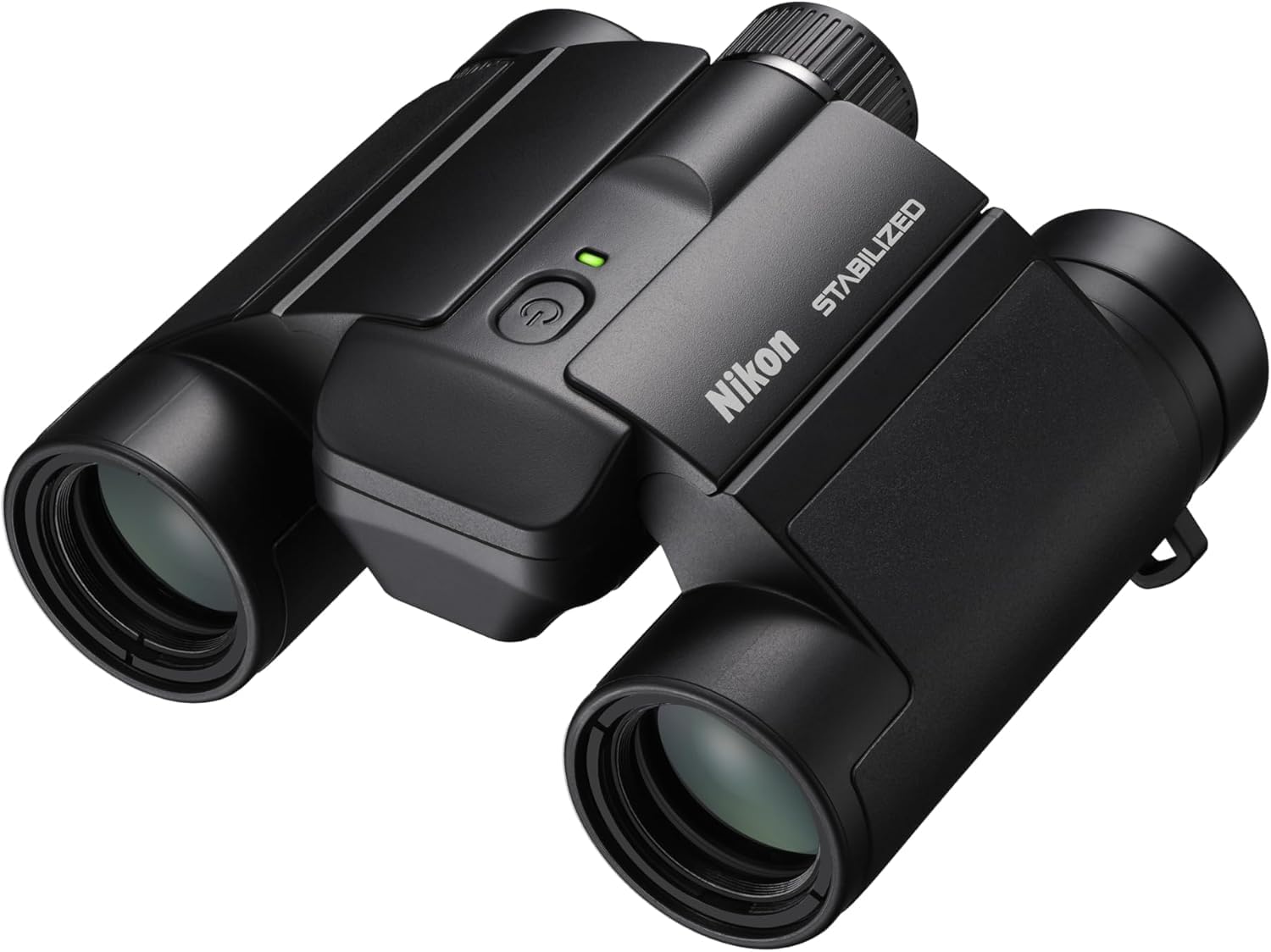
In their Nikon Stabilized 12x25 binoculars review, Jase reckoned they were without doubt the best compact image-stabilized (IS) binoculars they had ever tested. Right now they have $73 off and are at the best price we've seen since Black Friday 2025.
Jase awarded them with a perfect 5-star rating, which was mostly thanks to their excellent stabilization, their unobtrusive controls and incredibly small form factor. They also earned a place on our best binoculars guide as the best compact IS binoculars. This Best Buy deal is worthy of your attention if you're in the market for an incredibly versatile pair of binoculars that deliver still views in a compact body.
Save $73 on these pocket-sized image-stabilized (IS) binoculars from Nikon. They offer a strong 12x magnification and are portable enough to just slip into your pocket. In our review, we noted that the compact size and amazing IS system delivered amazing stargazing performance and earned them a perfect five-star review.
The Nikon Stabilized 12x25 S binoculars are incredibly compact and are a handy pair to take wherever you go. Kimberley LaneThe smaller objective lenses mean that the image looks a stop darker than viewing with the naked eye. Kimberley LaneThe eyecups rotate freely to adjust the amount of eye relief. Kimberley LaneThe binoculars are incredibly lightweight, considering their onboard image-stabilization system. Kimberley Lane
These image-stabilized (IS) binoculars punch well above their weight. Tipping the scales at a feathery 13.9 oz (395 g), they pack effortlessly into any bag, giving you rock-steady views wherever you roam. While the compact objective lenses yield a slightly dimmer view than the naked eye, they still deliver fantastic, crisp performance for casual stargazing.
In their testing, Jase managed to see the Andromeda galaxy (M31) with averted vision and the Orion nebula (M42), so these are worth taking out with you at night for a better look at the stars and some of the brighter deep sky objects.
They are also relatively cheap in the image-stabilized world where models can easily go for $1000 and up, depending on the model. Jase was happy to recommend these over another compact IS model, the Canon 8x20 IS binoculars, and they are actually lighter and smaller too. With their silky smooth steadying and clear views, they highly recommended them for anyone looking to get image-stabilized binoculars but doesn't want to spend big bucks.
Key features: 12x magnification, 25mm objective lens diameter, 4.5-degree angular field of view, 12.3mm eye relief, 13.9 oz (395 g) weight.
Product launched: November 2024
Price history: The Nikon Stabilized 12x25 binoculars usually retail for $699.95 on Amazon. This deal from Best Buy beats the Amazon price easily and, at just $626.95, is the best price we've seen since Black Friday 2025.
✅ Buy it if: You are looking for an affordable way into image-stabilized binoculars and need a pair that you can slip into your pocket.
❌ Don't buy it if: You need really high magnification or bigger objective lenses. For more powerful image-stabilized binoculars, try the Canon IS 15x50 binoculars.
Discrete graphics card shipments for desktop PCs in Q2 2026 totaled 12.5 million units, the highest number since Q1 2022 despite record-high prices and cratering shipments of desktop CPUs, according to findings from Jon Peddie Research. The result highlights a broader trend that shows that unit sales of standalone GPUs for gaming have so far remained immune to rising prices, perhaps because gamers are expecting even higher prices in the coming quarters.
The industry shipped 12.5 million standalone graphics cards for desktop PCs in the second quarter of 2026, up around 5.9% sequentially and 7.8% year-over-year. 12.5 million add-in boards (AIBs) is the highest number of graphics cards sold in one quarter since the first quarter of 2022, when the industry shipped 13.38 million AIBs.
It is particularly noteworthy that 2026 is shaping up to be better for unit sales of desktop graphics boards than 2025 despite raising prices. For the first half of 2026, 24.3 million desktop AIBs were shipped, up significantly from 20.8 million graphics cards supplied in the first half of 2026. JPR analysts also note that only around 14 million desktop PCs were sold during the quarter, which — given an unusually high 89% attach rate — largely means that the majority of AIBs shipped during the quarter were aimed at gamers buying in retail and not at PC makers.
"Defying common wisdom, high-end AIB sales spiked as prices increased," said Jon Peddie, president of JPR. "Our theory is consumers rushed to buy AIBs before the prices went any higher, as the war in Iran is driving prices up in all segments."
(Image credit: Data by Jon Peddie Research, compiled by Tom's Hardware)
Having shipped about 11.25 million discrete GPUs for desktop computers in Q2 2026, Nvidia remained the undisputed leader of the market with around 90% market share. AMD controlled roughly 8% of the market, shipping about one million discrete desktop GPUs, while Intel's share increased to 2% on shipments of several hundred thousand units. Meanwhile, Jon Peddie Research notes that market share changes were negligible during the quarter: AMD’s overall AIB market share decreased by -0.16% from the previous quarter, Intel's market share increased by 0.3%, and Nvidia's market share decreased by -0.1%.
(Image credit: Data by Jon Peddie Research, compiled by Tom's Hardware)
For Nvidia, the quarter was particularly good as it sold the highest quantity of discrete GPUs for desktop PCs in a single quarter since Q3 2017, when it sold approximately 11.72 million units. By contrast, sales of AMD's standalone graphics cards have been floating below or around one million units per quarter for nearly four years now, with only three quarters being exceptions (Q3 2023, Q4 2023, Q4 2024). Still, one million is higher than the around 700 thousand discrete desktop GPUs the company sold in Q2 2025.
(Image credit: Data by Jon Peddie Research, compiled by Tom's Hardware)
In total, Nvidia shipped approximately 17.365 million discrete graphics processors in the second quarter: roughly 11.25 million units went to desktops, and around 6.115 million units were installed into notebook and compact PCs. Since both AMD and Intel have quietly quit the market for standalone GPUs for mobile PCs, their shipments to this market segment were essentially zero.
Data by Jon Peddie Research, compiled by Tom's HardwareData by Jon Peddie Research, compiled by Tom's Hardware
When going abroad, the right plugs are essential to keep your gadgets charged. These are my favorite travel adapters and chargers that I’ve tested myself.
When going abroad, the right plugs are essential to keep your gadgets charged. These are my favorite travel adapters and chargers that I’ve tested myself.
Uma das sagas mais influentes da cultura pop desembarcou no catálogo da Netflix: os seis filmes clássicos de Star Trek estarão disponíveis na plataforma para apresentar Spock e companhia para uma nova geração e ainda fazer a alegria dos fãs de longa data.
Iniciada na televisão com a série clássica de 1966, Star Trek, ou Jornada nas Estrelas, foi exibida pela NBC por três temporadas que acompanhavam as aventuras espaciais da tripulação da nave USS Enterprise, que viaja pelo espaço em busca de novos mundos e civilizações.
Apesar da trajetória curta da série original, não demorou muito para que Star Trek ganhasse uma expansão, dando origem a um universo extenso de produções derivadas, como filmes, novos programas, animações e uma das marcas mais adoradas pelo público até os dias de hoje.
Em meio a tantos spin-offs, um dos projetos iniciais do movimento que ajudou a consolidar Star Trek na indústria do entretenimento foi Jornada nas Estrelas: O Filme (1979), o primeiro longa-metragem da franquia. Com o retorno do elenco do programa dos anos 1960, a produção foi apenas o começo de uma série de filmes que chegam neste mês à Netflix.
Qual é a ordem certa para assistir aos filmes clássicos de Star Trek?
Se você nunca assistiu aos filmes de Star Trek, mas quer aproveitar o lançamento dos clássicos na gigante do streaming para fazer isso, pode ser que esteja se perguntando por onde começar. Afinal, existe uma ordem correta para que sua experiência seja a melhor possível?
A resposta é mais simples do que parece. Com seis filmes clássicos estrelados pelo elenco original, a melhor maneira de maratonar os filmes de Star Trek é pela ordem de lançamento, que segue exatamente a ordem cronológica estabelecida no começo da franquia.
Veja a seguir a ordem correta dos filmes de Star Trek:
Jornada nas Estrelas: O Filme (1979)
Jornada nas Estrelas II: A Ira de Khan (1982)
Jornada nas Estrelas III: À Procura de Spock (1984)
Jornada nas Estrelas IV: A Volta para Casa (1986)
Jornada nas Estrelas V: A Última Fronteira (1989)
Jornada nas Estrelas VI: A Terra Desconhecida (1991)
Preciso assistir à série original de Star Trek para entender os filmes clássicos?
Embora a série original de Star Trek tenha sido a responsável por lançar a franquia ao mundo, você não precisa obrigatoriamente assisti-la para entender os filmes clássicos. Isso porque Jornada nas Estrelas: O Filme retoma pontos importantes desse universo, como se estivesse apresentando novamente os personagens, seus arcos e as relações entre eles.
Sem contar que cada filme possui umahistória única, em que Spock, o Capitão Kirk e o restante da tripulação embarcam em uma missão específica, com começo, meio e fim. Com essa dinâmica sendo estabelecida, você não precisa necessariamente ter maratonado o programa dos anos 1960 para entender os filmes, pois eles se sustentam sozinhos.
No entanto, caso queira mergulhar profundamente neste universo, assistir à série original vai te oferecer um contexto maior da franquia, especialmente do lado emocional. Além de fazer com que você entenda piadas internas ou referências, ver as três temporadas do programa vai te ajudar a conhecer mais as relações entre os personagens, assim como as regras que regem esse mundo tão fantástico.
Jornada estelar na Netflix
Para quem nunca se aventurou pelas viagens espaciais de Star Trek, conhecer esse universo pelos filmes é uma ótima forma de entender o porquê a franquia se tornou tão influente e importante para a formação da cultura pop.
Com a lendária performance de Leonard Nimoy como Spock, a saga da Jornada nas Estrelas segue na ativa até os dias de hoje com novas gerações, personagens e perspectivas atuais que ajudam a manter uma franquia tão importante viva. Iniciar essa jornada com os clássicos é apenas o começo de uma aventura marcante e cheia de reflexões pertinentes.
Trey Parker y Matt Stone han convertido la temporada 29 en otra provocación contra Trump: rebautizaron la serie como “South America” después de que “America” comenzara a aparecer en mapas y decretos oficiales.
La nuova applicazione è disponibile a livello globale su PC x64 e ARM64. Si richiama con Alt + Spazio, integra Gemini Spark e può collegarsi a Gmail, Drive, Docs e Calendar... Leggi tutto

 Login











 La nuova applicazione è disponibile a livello globale su PC x64 e ARM64. Si richiama con Alt + Spazio, integra Gemini Spark e può collegarsi a Gmail, Drive, Docs e Calendar
