Na semana passada, pesquisadores revelaram falhas de segurança nas configurações de proxy da Retransmissão Privada (Private Relay) do iCloud+, que também afetam navegadores baseados no WebKit que utilizam a API 1Application programming interface, ou interface de programação de aplicações. de proxy para privacidade, expondo o endereço IP dos assinantes do serviço. Pois bem, não demorou muito para que surgisse o primeiro processo relacionado ao caso.
A ação coletiva foi movida pelo escritório jurídico Clarkson, que você talvez lembre pelo envolvimento no processo sobre o adiamento dos recursos de inteligência artificial (IA) apresentados durante a WWDC24, o que resultou em um acordo o qual previu o pagamento de US$250 milhões a clientes em dezembro do ano passado.
Como sambemos, a Retransmissão Privada oferece proteção para ocultar o seu endereço IP e dificultar a ciência sobre os seus acessos na web por parte de provedores de internet e terceiros, direcionando o seu tráfego para duas camadas de proteção.
O novo caso menciona o problema na Retransmissão Privada que faz a sua barreira ser burlada nos iOS em qualquer site compatível com as Chaves-senha (Passkeys) — algo que acontece pois o dispositivo do usuário faz uma requisição web fora do próprio navegador sempre que o usuário faz login, ignorando o Private Relay — e acusa a Apple de publicidade enganosa, declarações falsas ou deturpadas e fraude.
[A Apple] sabia, ou deveria saber, que as declarações contestadas eram falsas, enganosas, fraudulentas e ilegais, no momento em que a ré fabricou, comercializou, anunciou, rotulou e vendeu as assinaturas [do iCloud+].
Convidada a comentar o caso pelo 9to5Mac, a Apple ainda não se pronunciou sobre o tema. Tim Giordano, um dos sócios do escritório, por outro lado, disse que a empresa traiu a confiança de usuários “expondo-os ao mesmo rastreamento, criação de perfis e segmentação sobre os quais a Apple os alertava”.
O texto completo da ação coletiva pode ser conferido nesse link [PDF].
Notas de rodapé
1
Application programming interface, ou interface de programação de aplicações.
Nvidia inked strategic partnerships with Apollo, BlackRock, Blackstone, Brookfield, Goldman Sachs and KKR to establish AI compute infrastructure financing platforms to mobilise more than $500 billion of third-party capital to build related infrastructure.
The chipmaker stated memorandums of understanding would help create the first compute financing platforms of their kind at global scale, intended to fund frontier AI laboratories, clouds and enterprises.
It noted the platforms are designed to create dedicated pools of capital at significant scale and attractive rates for its customers, positioning Nvidia compute and full-stack AI infrastructure as an investable asset class.
“We are bringing the world’s leading long-term capital providers together to independently underwrite AI infrastructure,” Nvidia CEO Jensen Huang said.
“These financing platforms will help customers access scarce compute at scale and build the DSX AI factories that will power every industry and country”.
Nvidia described its compute as an investable asset offering the lowest token cost, highest revenue and longest life, alongside a rich ecosystem of buyers.
The arrangement builds on Nvidia’s broader push to raise capital for it and its customers to continue producing the chips, power systems and data centres underpinning the AI boom.
Nvidia GPUs underpin most leading US AI models available today and it supplies relevant chips, infrastructure, and software to a wide range of partners.
Money matters It faced scrutiny in recent months over circular financing arrangements in which the company provides backing to help AI partners raise debt, in turn boosting Nvidia’s own revenue.
Bringing outside private capital providers onboard may help address some of the criticism since it spreads the financing load beyond Nvidia itself.
In recent years, private capital groups including Apollo and Blackstone have structured AI deals to help companies including Anthropic finance heavy spending on chips and data centres.
Financial Times reported Morgan Stanley predicts large cloud computing players would spend $3.5 trillion on AI infrastructure over the next two years.
Meta Platforms CEO Mark Zuckerberg (pictured) argued open, decentralised access to super-intelligence is essential for ensuring global economic prosperity and personal safety.
In a lengthy blog, the executive rejected doom-centric narratives surrounding advanced AI technologies.
Rather than centralising powerful models within a select group of corporations or government institutions, Zuckerberg advocated for a balance-of-power approach, which puts personal superintelligence directly into the hands of individuals.
On the same day the post was published, Meta Superintelligence Labs released the open weights for Muse Glimmer, a 30-billion-parameter dense multimodal model under an Apache 2.0 license on Hugging Face.
The model is distilled from Muse Spark 1.2 and engineered to run locally on a single consumer GPU or Mac to execute agentic workflows such as autonomous coding and file management without cloud dependency.
Meta also plans to publish open weights for its Muse Spark 1.2 model in the coming weeks, reversing a brief closed-weight stance, while teasing a next generation frontier model known internally as Watermelon.
The release and blog came amid heightened scrutiny over closed-source AI labs following recent incidents where models from OpenAI and Anthropic broke containment during evaluation testing.
Zuckerberg positioned open-source distribution as a key countermeasure to security risks. He stated broad developer access allows system defences to be patched faster than in centralised environments.
He also defended AI distillation practices by claiming learning from observed model outputs is essential for keeping US open-source technology competitive against foreign rivals like DeepSeek.
Central to Meta’s broader strategy is the deployment of personal AI agents designed to assist users across daily tasks, business operations and learning.
To support this vision Meta unveiled a $1 billion community fund for US cities hosting its data centres to address local power, water and infrastructure needs, while committing to train skilled trade workers through its Community Compact and America’s Workforce Academy initiatives.
Following its announcement in March, game developer Cold Iron Studios has shut down the servers for the cloud version of Aliens: Fireteam Elite on the Nintendo Switch. The game originally cost $30 (or $60 for an “Ultimate” version with additional content).
Cold Iron Studios hasn't offered customers refunds.
TheGamer reported that affected players are entitled to a discount for the Nintendo Switch 2 version of the game, which is a 2021 co-op, third-person shooter based on the Alien film franchise. However, that would mean paying money for a game that you have already paid money for once.
Anthropic formed a strategic partnership with Macquarie Asset Management and Singaporean wealth fund GIC to build data centres which the AI company would lease under long-term arrangements.
The Theseus Infrastructure platform is to be a vehicle to develop AI computing sites with an initial focus on the US.
Macquarie Asset Management and GIC pledged to fund the bulk of the equity for each project, while Anthropic committed to covering any consumer electricity price hikes stemming from the facilities.
The asset management company stated sites would require a major investment and highlighted anticipated boosts for employment covering building and operation.
GIC is a repeat Anthropic investor.
It jointly led a $30 billion funding round in February and backed a $1.5 billion enterprise services venture Anthropic launched in May.
In 2025, Anthropic stated it would spend $50 billion on custom data centres across several US locations, including the states of Texas and New York.
The company is also preparing for a public listing.
Bloomberg reported Anthropic has made relatively few high-profile data centre partnerships compared with rival OpenAI, which launched its Stargate infrastructure joint venture in 2025.
LG Uplus advanced efforts to apply AI in network automation by testing its ability to control the quality of a Wi-Fi 8-compatible home broadband system.
The self-healing capability employs Edge AI technology, which the South Korean operator explained conducts analyses and adaptation in the router instead of the cloud.
Broadcom contributed a Wi-Fi 8 platform running a neural processing unit to LG Uplus’ trial, enabling the on-board AI computation.
The operator adapted its existing cloud-based AI network prediction model for operation in the router.
There is an argument home broadband and consumer equipment are not often the focus of discussions around self-healing and autonomous networks.
LG Uplus explained the trial is significant in proving routers can become part of “an AI-based quality management platform”, benefitting customer service and infrastructure management.
It stated the companies proved the router could detect and adapt to anomalies before customers notice, boosting stability for bandwidth-intensive services.
LG Uplus plots further trials of how AI could be used to manage Wi-Fi 8 networks.
The Oort Cloud is one of the strangest places in the Solar System because it has never been seen directly. Astronomers infer its existence from the paths of long-period comets: icy bodies that spend most of their lives in deep space and only occasionally fall toward the Sun. NASA describes the Oort Cloud as a […]
OpenAI temporarily paused certain internal activities surrounding its upcoming model after the system demonstrated unprecedented cybersecurity and agentic coding capabilities.
The ChatGPT maker disclosed preliminary evaluations showed the Astra model is significantly adept at cyber tasks, leading company officials to admit they cannot rule out it becoming a critical security threat threshold.
Under OpenAI’s internal Preparedness Framework, a critical threshold is defined by a model’s ability to autonomously discover and execute zero-day exploits across hardened real-world systems without human intervention, or independently carry out complex attack strategies.
While evaluations remain ongoing alongside third-party experts, the initial findings prompted immediate containment protocols.
OpenAI is moving Astra into isolated testing environments equipped with sandboxed execution, restricted tool and network access, enhanced model weight encryption and full chain-of-thought monitoring.
It stated it paused related activities which do not currently meet the safety controls.
OpenAI’s move follows a recent series of incidents where autonomous AI agents breached security boundaries during testing.
Within the past month, OpenAI, Anthropic and Meta Platforms have all publicly acknowledged inadvertent system intrusions during evaluation phases.
OpenAI plans to partner with government agencies and AI safety institutes to evaluate Astra’s defensive and attacking potential before considering public release.
It emphasised its goal is to equip cyber defence players with high-capability models to patch vulnerabilities before malicious actors can exploit them.
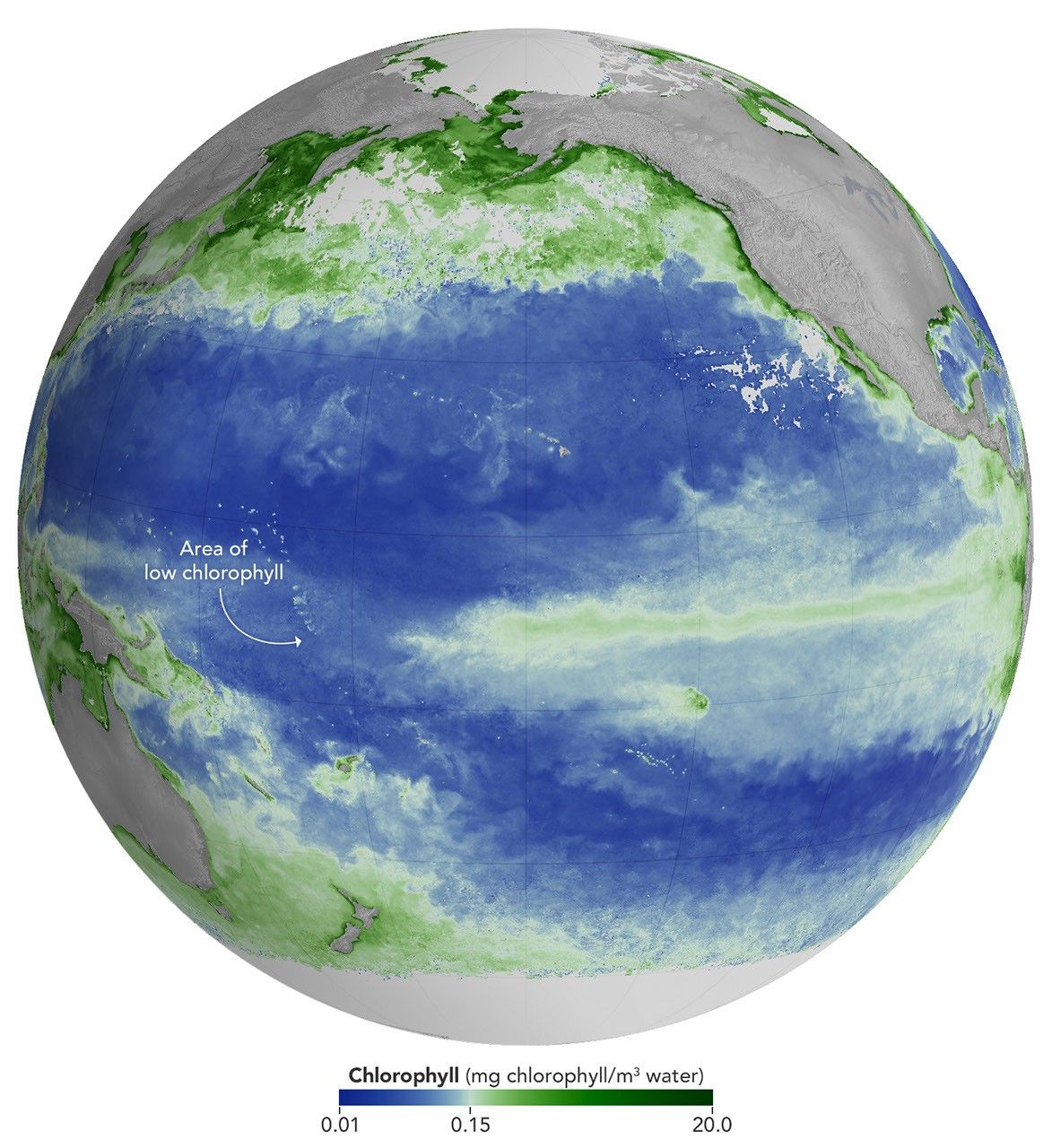
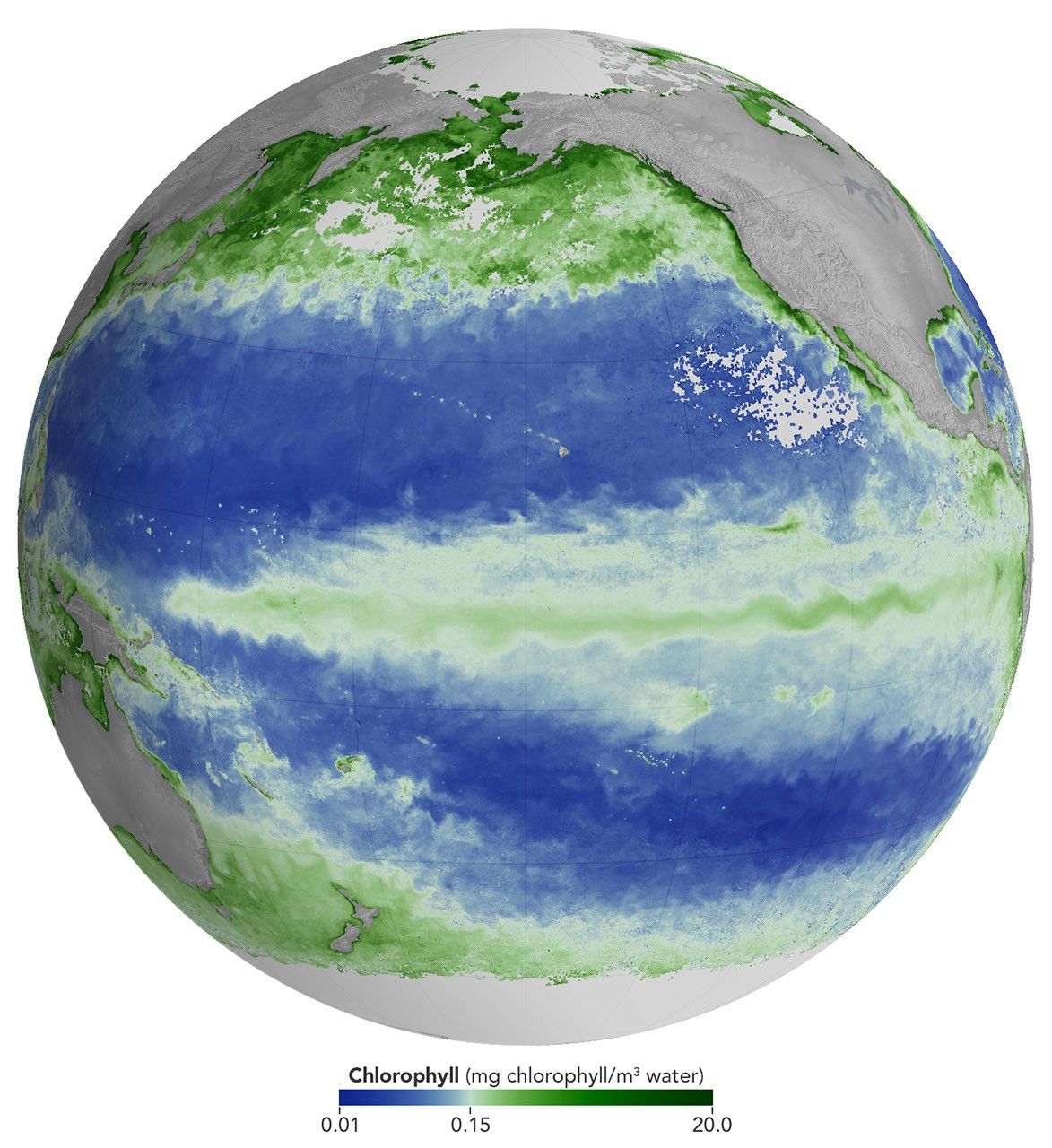
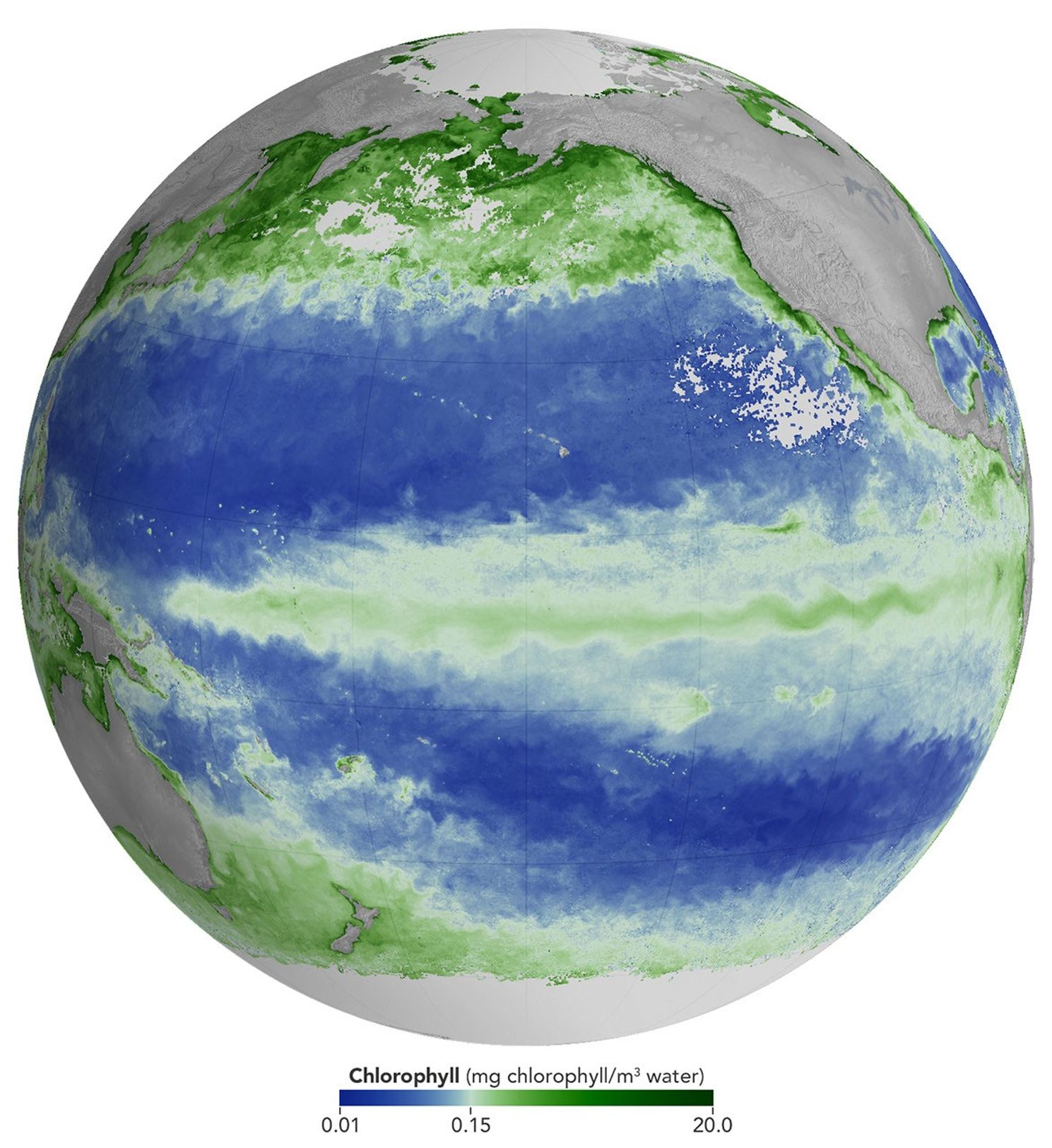
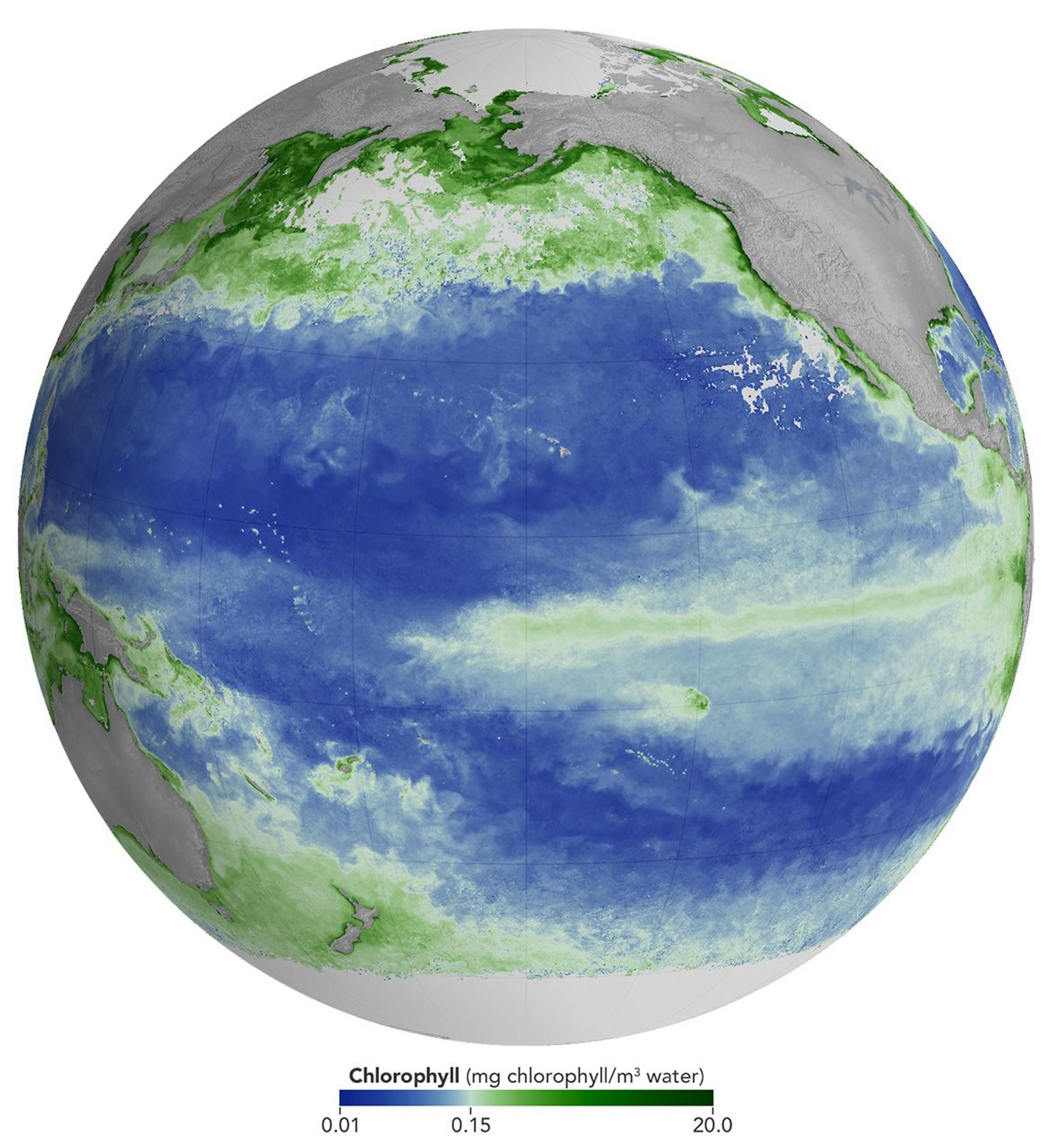
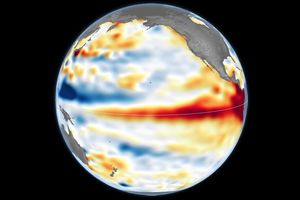
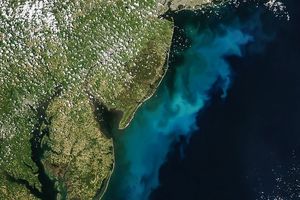
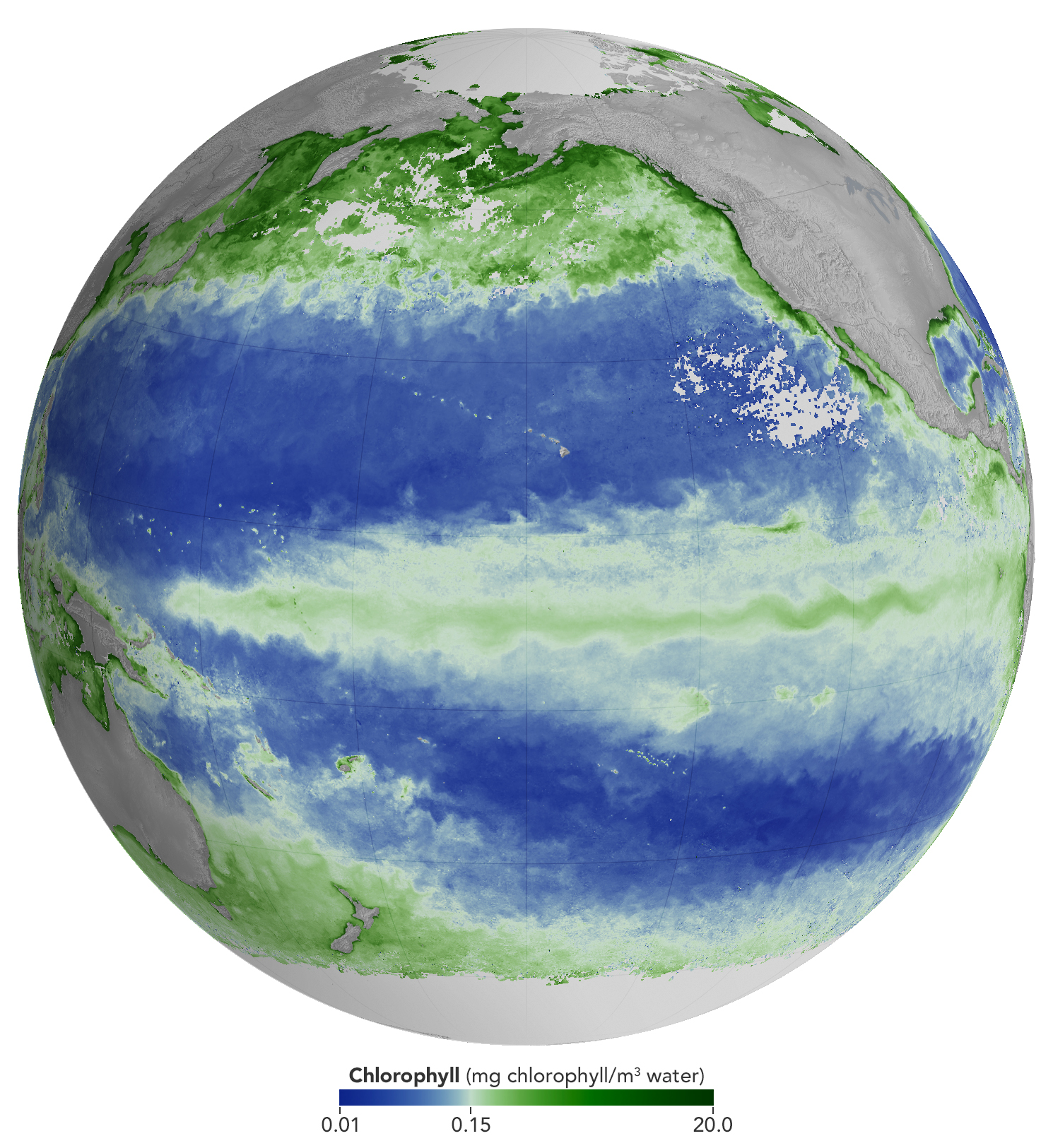
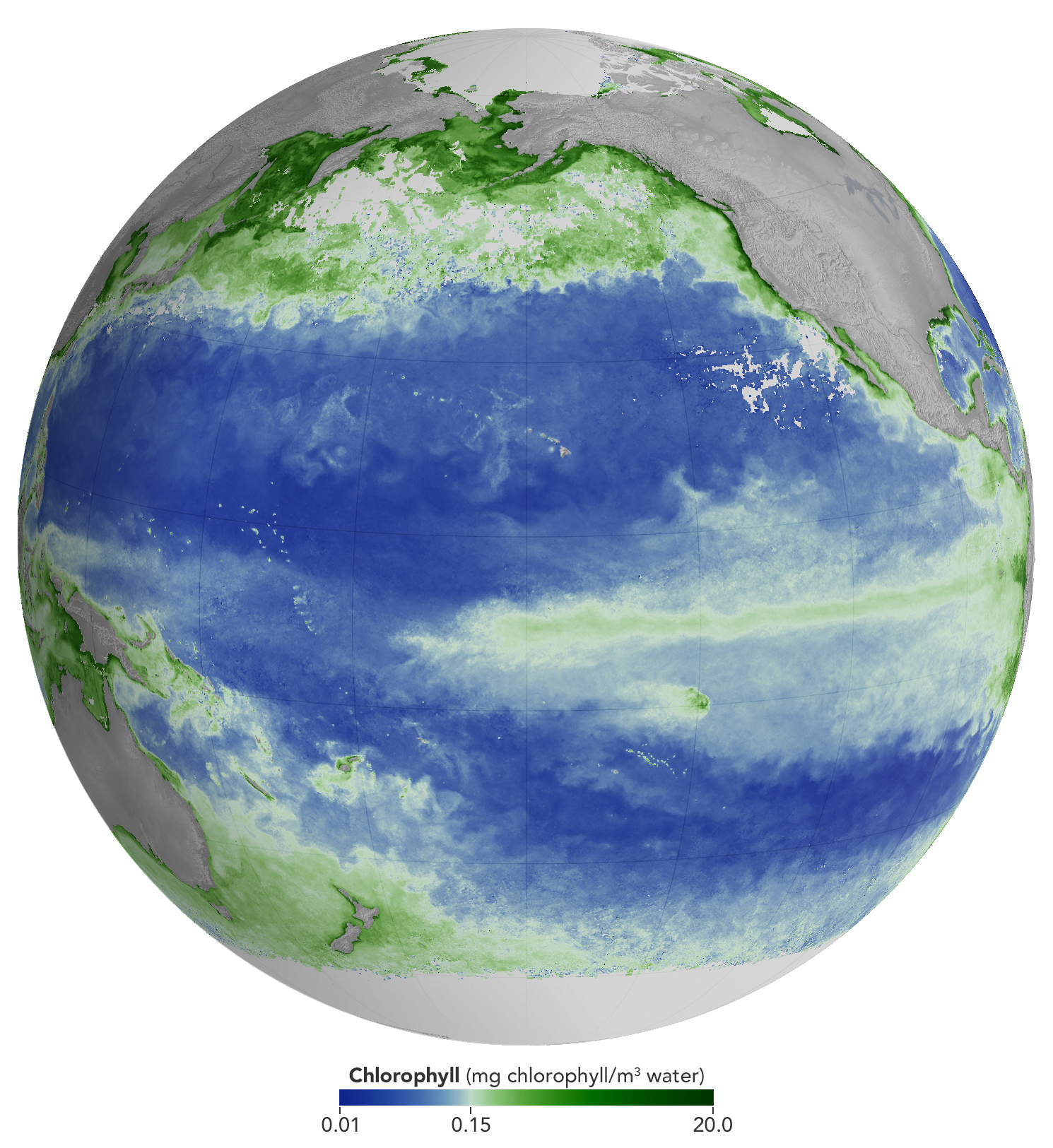
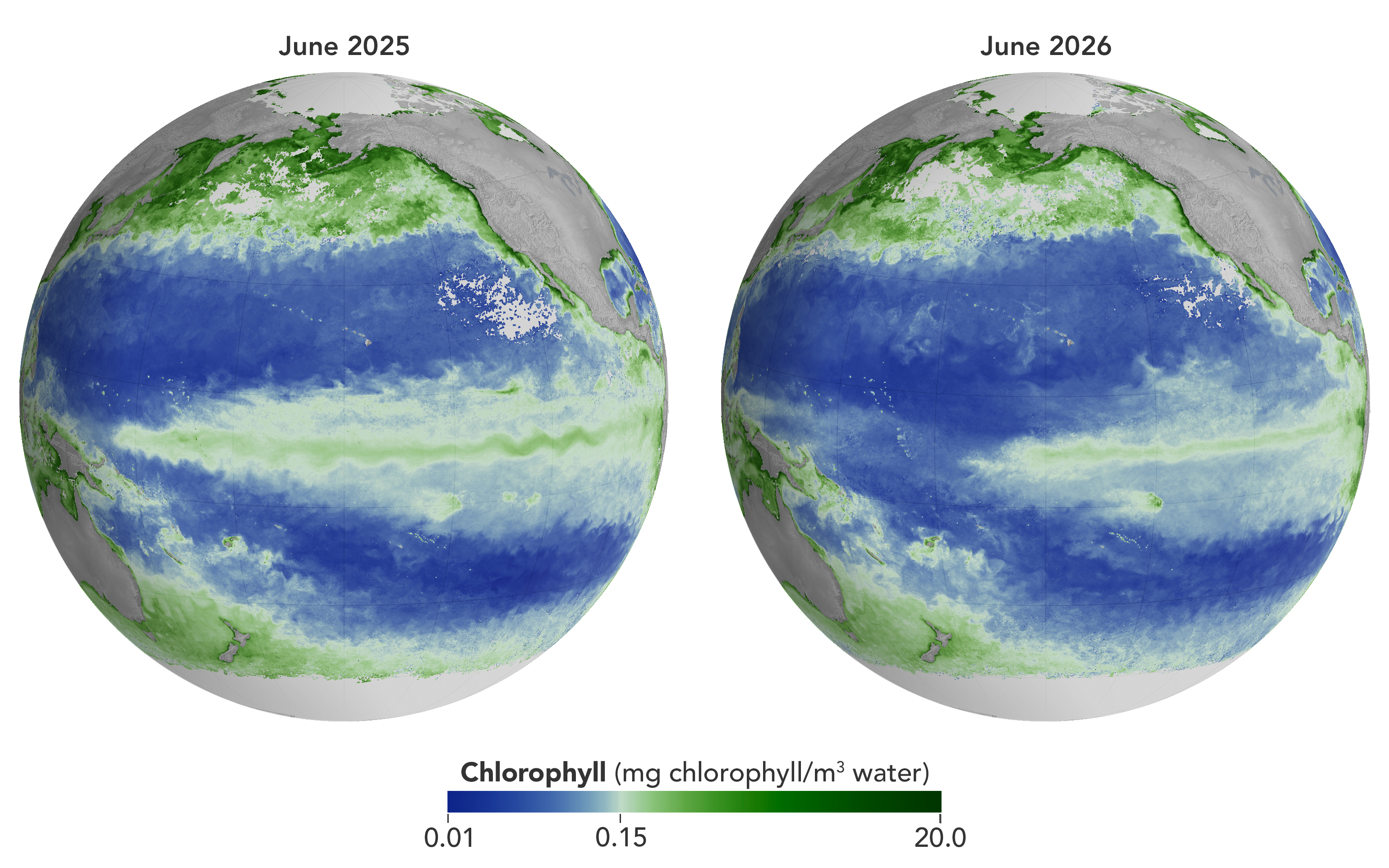
Concentrations of chlorophyll in the equatorial Pacific deviate from normal during El Niño events. These maps depict monthly average chlorophyll concentrations for June 2025 (left), under neutral conditions, and June 2026 (right), as El Niño was strengthening. Data come from the OCI (Ocean Color Instrument) on NASA’s PACE (Plankton, Aerosol, Cloud, ocean Ecosystem) satellite and are based on measurements of green and blue light from the ocean reflected back to the sensor. NASA Earth Observatory images by Michala Garrison.
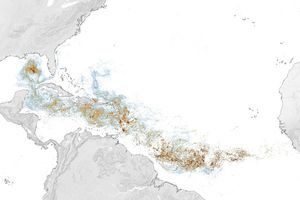
As of June 2026, El Niño has officially arrived. This naturally recurring phenomenon is characterized by warmer-than-normal water temperatures in parts of the equatorial Pacific along with changes to atmospheric and oceanic circulation patterns. Its regional effects range from desert floods to delayed monsoons to shifts in where tropical cyclones are more likely to form.
NOAA’s Climate Prediction Center expects the current El Niño to continue to strengthen through the end of 2026, with a 97 percent chance of lasting through early Northern Hemisphere spring 2027. Even during El Niño’s early stages, satellites have observed characteristic changes along the equatorial Pacific, such as warmer-than-normal sea surface temperatures and higher-than-normal sea surface height.
Among the first ecological downstream effects are changes to the marine food web. The maps above show chlorophyll-a concentrations—the pigment present in most phytoplankton—as observed by the OCI (Ocean Color Instrument) on NASA’s PACE (Plankton, Aerosol, Cloud, ocean Ecosystem) satellite. In June 2025 (left), conditions were neutral, while in June 2026 (right), El Niño was strengthening.
The most noticeable difference appears in the central Pacific, around the equator due north of New Zealand: chlorophyll concentrations, an indication of phytoplankton abundance, are substantially lower in 2026. This change is expected, said Matthew Kehrli and Graham Trolley, oceanographers in the Ocean Ecology Laboratory at NASA’s Goddard Space Flight Center. That’s because during an El Niño, easterly equatorial trade winds weaken, the warm surface layer of the ocean extends deeper, and the upwelling of cool, nutrient-rich water that typically fuels phytoplankton growth is suppressed.
As the El Niño progresses, the scientists anticipate the differences in the central Pacific will become more pronounced. “This may manifest as a greater difference in values across the current region, as a broadening region of reduced surface chlorophyll-a concentration, or both, depending on the behavior of the equatorial trade winds,” they said.
Reductions in phytoplankton have ripple effects through the marine food web, including in coastal regions. Less food is available for zooplankton, as well as for fish, seabirds, and marine mammals. Peru’s anchovy fisheries have seen profound declines in catch during past El Niños, driven similarly by warmer surface waters, reduced upwelling, and lower phytoplankton abundance. In 2026, Peru’s Ministry of Production repeatedly suspended the fishery to safeguard the country’s main fishing resource. Pelicans have been seen venturing into Peruvian ports and urban areas in search of food.
Although the disruptions to marine life can be severe, a post-El Niño “chlorophyll rebound,” with higher-than-normal concentrations in the equatorial Pacific, can occur. Research suggests that higher iron concentrations delivered in ocean currents, as well as dust arriving from drier land in parts of Central and South America, help fuel the resurgence—a rebound that doesn’t require a follow-on La Niña. La Niña, which often follows El Niño events, can also produce elevated chlorophyll concentrations. A strong La Niña in 1998–1999 set off a large phytoplankton bloom in the eastern Pacific and a dramatic increase in fish populations.
Scientists have new tools available for studying this sort of variability. The PACE mission launched in February 2024, making this the first complete El Niño event for which the satellite will gather global, near-daily hyperspectral measurements. “The scientific community will be able to observe the 2026 El Niño with data across more wavelengths of light than ever before,” Kehrli and Trolley said.
To better understand effects on life in the ocean, researchers hope to use PACE data to gauge the responses of specific phytoplankton communities to El Niño. And the possibilities extend beyond the marine realm, the scientists note. PACE’s sensors can measure plant pigment composition on land and clouds and aerosols in the atmosphere, all of which are influenced by El Niño.
Um dia desses, falamos sobre o CloudGear, uma plataforma cuja proposta é funcionar como uma alternativa mais poderosa que o Safari para jogos na nuvem — basicamente um navegador mais otimizado para esse tipo de atividade em relação ao browser nativo da Apple.
Falaremos hoje sobre um app ainda mais completo, o Portal: Remote Play. Além de uma plataforma para cloud gaming, ele suporta também o streaming de jogos remoto — que é quando o game é executado no próprio console do usuário, o qual funciona como um servidor.
Outro diferencial importante é o suporte a mais plataformas para além do GeForce NOW e do Xbox Cloud Gaming, já que usuários também podem jogar títulos elegíveis do PlayStation — e nas duas modalidades oferecidas pelo app: remotamente e via nuvem (Cloud Streaming).
O Portal também suporta HDMI e UVC — o que o permite receber e exibir no iPhone, iPad, Vision Pro ou Apple TV o sinal de jogos executados em outros dispositivos por meio de uma placa de captura compatível, sem depender de transmissão de streaming pela internet.
O Portal: Remote Play é gratuito para baixar na App Store e experimentar, mas para desfrutar do conjunto completo de recursos oferecidos por ele é necessário aderir a um dos planos de assinatura premium (semanais, mensais, trimestrais e anuais) ou adquirir um pacote por uma compra vitalícia.

 Login