❌

Reading view

New microscopy method achieves angstrom-scale localization precision with one laser

Researchers in the lab of Sam Peng, the Pfizer Inc.–Gerald Laubach Career Development Assistant Professor of Chemistry at MIT and a core institute member of the Broad Institute of MIT and Harvard, have developed a super-resolution imaging technology. It allows scientists to visualize molecular structures with angstrom-level localization precision—three orders of magnitude beyond the nanometer-scale limits of standard fluorescent dyes—while simplifying the imaging process.

  •  

Ancient Stardust Helped Build the First Solid Pieces of Our Solar System

Scientists have uncovered new evidence that tiny grains of ancient stardust may have played a key role in creating the first solid material in our solar system more than 4.5 billion years ago. The discovery suggests that these microscopic particles, left behind by stars that lived and died before our Sun existed, acted as the […]

The post Ancient Stardust Helped Build the First Solid Pieces of Our Solar System appeared first on Knowridge Science Report.

  •  

Quantum Computing’s “Dark Horse” Just Cleared a Major Hurdle

Quantum Computer Processor Superconducting CircuitsResearchers demonstrated that braiding and fusing particles known as non-Abelian anyons can perform every operation required by a quantum computer. A quantum computer becomes broadly useful only when it can perform any computation rather than a limited set of specialized tasks. Physicists have now demonstrated that unusual quantum objects called non-Abelian anyons can provide that [...]
  •  

CERN Experiments Detect Signs of the Universe’s Primordial Matter

Artist’s Impression of Quark–Gluon Plasma FormationAll four major LHC experiments have found new evidence that collisions between oxygen and neon may produce the extreme state of matter that existed during the first microseconds after the Big Bang. Inside the Large Hadron Collider (LHC), collisions between relatively light oxygen and neon nuclei may be producing matter from the earliest moments of [...]
  •  

Electron cooling tames highly charged ions in Penning trap for first time

Researchers at Technical University of Darmstadt and the GSI Helmholtz Center for Heavy Ion Research have succeeded for the first time in decelerating highly charged ions from the GSI accelerator to low energies and subsequently storing them in a Penning trap. They were also successful in performing the first electron cooling of highly charged ions in such a trap. The results have been published in Physical Review X (PRX).

  •  

The First Temporal Photonic Crystal Advances Light into a New Dimension

When a team of physicists in Paris fabricated the world’s first temporal photonic crystal, they added a new dimension to humanity’s quest to control light: time. From lighting our homes to advanced fiber optics and lasers, humans have long worked to control light, and now researchers say that can be achieved in a fourth dimension.

Yannis Laplace led the team at the Laboratory of Irradiated Solids (LSI) in demonstrating the temporal photonic crystal, with the help of other European institutions, which was revealed in a recent paper published in Nature.

As light hits the crystal, a terahertz electromagnetic wave rapidly modulates its optical properties, producing a device that controls light over time without expending energy.

Crystal Power

Controlling the properties of light for applications in telecommunications, sensors, and light sources is an active research field and is often reliant on crystals. In technical terms, a crystal is simply a regularly and periodically organized system. While we primarily think of translucent, shining crystals, they can be constructed of other forms of matter, such as gas or liquids, so long as their atoms arrange into regular, well-defined intervals.

How atoms arrange to form crystals grants their electrons and the photons they emit unique properties, including color and energy. Targeting photons specifically became an interest of scientists in the 1980s, with the development of photonic crystals, whose alternating materials each had unique effects on photons. These photonics gave rise to modern lasers, optical fibers, and photodetectors, technologies that have advanced considerably in recent decades.

Into the Time Dimension

In the last decade, researchers have experimented with a new kind of crystal: the time crystal. They are comprised of a unique form of matter in which particles repeat a continuous sequence—not just in the three physical dimensions, but also in time, without expending any energy.

The LSI team sought to combine photonic crystals with time crystals to develop a temporal photonic crystal that would control a light-matter interaction by alternating over time. Their work represents the first time such an idea has moved from the theoretical realm into the physical.

The device the researchers constructed operates in the high terahertz range, pushing light to oscillate 1000 billion times a second. It consists of micrometer-scale gold structures, shaped like battlements, leaving open cavities separated from an indium-antimony semiconductor by an insulating layer. The cavities between the gold structures trap light photons.

Testing a Temporal Photonic Crystal

To demonstrate their device in the real world, the LSI team bombarded it with terahertz laser pulses and recorded the material’s optical properties, modulating light over time. The effect was incredibly powerful, creating a strong modulation that alternated one billionth of a billionth of a second.

At the semiconductor layer, the researchers observed electrons forming from the light waves in what are called “surface plasmons,” oscillating with their effective mass. The greater their speed, the heavier these electrons become, producing the device’s optical modulations.

Beyond this observed phenomenon, the researchers suspect other interesting conditions may be occurring within the crystal. Some indirect evidence suggests that photons trapped inside the structure are amplified, although presently no direct observations have confirmed this. The team is continuing with experiments in hopes of eventually capturing this photon trapping phenomenon.

Laplace and his colleagues see these unique time crystals as eventually being a pathway toward the creation of terahertz-scale light sources and detectors, which would fit between those of electronics and visible light frequencies.

The paper, “Plasmonic Metamaterial Time Crystal,” appeared in Nature on July 29, 2026.

Ryan Whalen covers science and technology for The Debrief. He holds an MA in History and a Master of Library and Information Science with a certificate in Data Science. He can be contacted at ryan@thedebrief.org.

  •  

Scientists Who Uncovered Altermagnetism Win Major Physics Honor

Altermagnetic CrystalA previously overlooked set of spin symmetries has revealed that magnetism does not fit neatly into just two categories. For more than a century, physicists divided collinear magnets into two basic types. The discovery of altermagnetism has added a third, earning Professor Jairo Sinova of Johannes Gutenberg University Mainz (JGU), Dr. Libor Šmejkal and Professor [...]
  •  

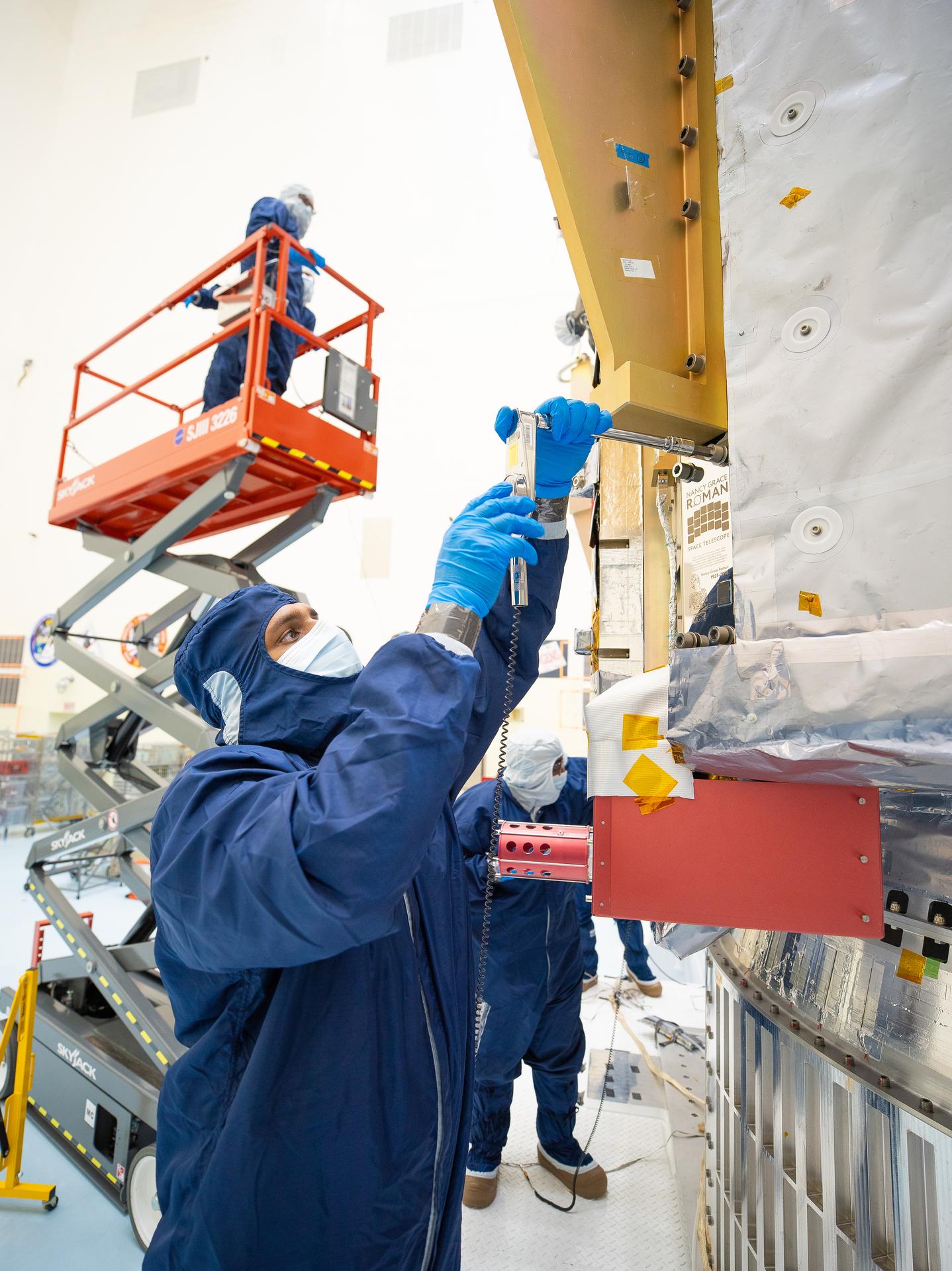
NASA’s Roman Telescope to Carry 1.35 Million Names to Deep Space

People in blue protective suits and a red cherry picker work in an industrial high bay.

On July 27, technicians at NASA’s Kennedy Space Center in Florida installed a memory card containing 1,350,144 names as part of a commemorative plaque on the Nancy Grace Roman Space Telescope. The names were submitted by people globally, including astronauts from Artemis II and Artemis III. The memory card will travel with the Roman observatory to the Sun-Earth Lagrange point 2, or L2, about one million miles from Earth, where the Sun’s and Earth’s gravity balance out.

Roman is named after Dr. Nancy Grace Roman, NASA’s first chief astronomer and one of the architects of the agency’s modern science program. Roman championed space-based observatories that could study the universe from above Earth’s hazy atmosphere while making their data broadly available to the scientific community.

NASA and SpaceX are targeting launch for no earlier than 7:26 a.m. EDT Sunday, Aug. 30 aboard a SpaceX Falcon Heavy from Launch Complex 39A at Kennedy.

To learn more about the Roman mission, visit:

https://www.nasa.gov/roman

Image credit: NASA/Jolearra Tshiteya

  •  

New Experiments Reveal Whether Ultracold Neutrons Magically Switch Between our Universe and a Mirror Universe

Scientists from the Paul Scherrer Institute (PSI), conducting a new series of experiments with millions of ultracold neutrons, have determined that the neutral particles do not switch between our universe and a theoretical “mirror universe” containing oppositely charged, identical counterparts of all elementary particles previously proposed by theoretical physicists.

Although the new experiments do not completely disprove the concept of a mirror universe, the experiments do cast doubt on one of the idea’s fundamental principles, making its existence less likely. The team behind the new study said their findings also aid future experiments by eliminating one potential area of inquiry.

Neutrons Are the Perfect Candidate to Test for a Mirror Universe

Although theoretical physicists sometimes propose radical concepts, one such idea proposes a mirror universe where every elemental particle has a “twin.” For example, the authors of the new study explain, there would be mirror protons, mirror electrons, and mirror neutrons. Still, they note, interaction between the particles in our universe and their mirror universe companions is likely to be minimal.

Geza Zsigmond, a researcher at the PSI Center for Neutron and Muon Sciences, said the theory suggests that the two mirror particles “sense each other’s presence” through gravity. Some physicists have even suggested that gravitational interaction with mirror-universe particles could explain dark matter. Unfortunately, experiments designed to hunt for the mirror universe have returned zero positive results.

Bernhard Lauss, leader of the research group for ultracold neutron physics at the PSI Center for Neutron and Muon Sciences, said, “There is no way of proving the existence of mirror particles using gravitational interaction alone.” Fortunately, the theory also offers a second testing possibility.

According to Zsigmond and colleagues, mirror universe particles would interact with our universe either through gravitation or through what they described as a “rare” oscillation of neutrons. This means that neutral particles like a neutron could occasionally disappear from our universe and reappear in the mirror universe. Even more surprisingly, the same theory says that these particles could magically return to our universe as well.

“Based on this hypothesis, neutral particles might oscillate to and fro between our normal matter world and the mirror world,” Lauss said.

The team said that this possibility, combined with new experiments at the Institut Laue-Langevin in France that “rekindled” speculation about the mirror universe, focused their new efforts on this “other” property of mirror universe particles.

Study Finds No Evidence for Neutral Particle Oscillations

After joining up with researchers from ETH Zurich and the Jagiellonian University in Kraków, the PSI team designed a series of experiments that should show if neutrons are zipping back and forth between universes. Zsigmond said that neutrons are ideal to test the concept for two reasons. First, they are neutral particles, and second, the researcher said they have a “strange property” the team hoped to exploit.

“Neutrons appear to have different lifetimes, depending on how this is measured,” Zsigmond explained.

Although several theories have been proposed to explain this discrepancy, the team acknowledged that the varying neutron lifetimes could be caused by some of these neutral particles disappearing from our universe and entering the mirror universe.

First, the team used the high-intensity proton accelerator at PSI to generate the millions of neutrons needed for their experiments. Next, the team slowed the neutrons down, creating what scientists call “ultracold” neutrons.

Next, the researchers trapped the ultracold neutrons in a specially designed non-magnetic stainless steel vacuum chamber. Because the theory suggests that the probability of neutrons jumping between universes is extremely sensitive to magnetic fields, the vacuum chamber was surrounded by magnetic field coils that the researchers could control with the required precision.

Throughout the experimentation phase, the researchers stored 1.5 million ultracold neutrons in the chamber every five minutes. After about 200 seconds, the team would empty the chamber and count how many neutrons remained. The team repeated this process over several months, resulting in the creation, storage, and measurement of approximately 25 billion neutrons.

Lauss said the researchers gradually varied the strength and direction of the magnetic field throughout the process to “scan all the relevant regions in which one might expect oscillations between neutrons and mirror neutrons to occur.” However, Lauss said, “we saw no evidence at all of such oscillations.”

Experiments “Set the Standard” For the Foreseeable Future

When discussing the significance of their findings, the PSI-led team said the lack of evidence of mirror universe oscillation by ultracold neutrons suggests a very high probability that such mirror universe neutral particle roundtrips “can be ruled out.” They also note that failing to find evidence of a mirror universe still resulted in benefits for particle physics by eliminating an area of inquiry.

“By restricting the scope for certain speculations, we are showing researchers in theoretical physics that they need to explore new avenues,” Zsigmond explained. “Physics needs that kind of impetus if it is to continue to evolve.”

Moving forward, the team said that “substantial improvements” to their experiments would require a much more elaborate setup. Until then, they said their experiment and its results are “the best of its kind in the world and will set the standard for the foreseeable future.”

The study “New High-Sensitivity Search for Neutron to Mirror-Neutron Oscillations at the PSI Ultracold Neutron Source” was published in Physical Review Letters.

Christopher Plain is a Science Fiction and Fantasy novelist and has spent the last six years as Associate News Editor and Head Science Writer at The Debrief. Follow and connect with him on X, learn about his books at plainfiction.com, or email him at christopher@thedebrief.org

  •  

Remains of the 1945 atomic explosion with an unknown metallic alloy discovered in the sand of Hiroshima Bay

Research on nuclear explosion residues continues to bring surprises to the scientific community. A research group led by Luca Bindi, from the Department of Earth Sciences at the University of Florence, has identified a multicomponent metallic alloy previously unknown, which formed during the Hiroshima atomic bombing on August 6, 1945, and that has remained hidden […]

  •  

Quantum computers outperform classical ones, with results you can trust

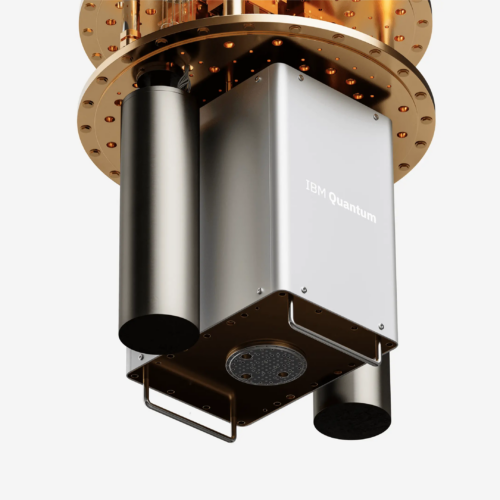
There are many algorithms for which it has been mathematically proven that a quantum computer can generate results that would take a classical computer an unreasonable amount of time to generate. Unfortunately, today's quantum computers either can't run those algorithms or can only run simplified versions that classical computers can also handle. This has left the field facing a challenging question: Can we demonstrate the promise of quantum computers on today's noisy, limited hardware?

That's a more difficult question than it may first appear. If you generate a result that's out of reach of today's regular computers, it may not be possible to verify that you got the right result. And given that today's quantum computers are somewhat error-prone, getting the wrong result is a distinct possibility. Further, in the absence of a mathematical proof of the capabilities of quantum hardware, it's possible that a better classical algorithm could outperform the quantum hardware.

These issues inspired IBM to launch a quantum advantage tracker. On Thursday, the company announced three new entries that it says clearly show a quantum advantage, each using a different approach to overcoming errors and validating quantum results. "Trusted computing when you can do classical simulations is irrelevant," IBM's Jay Gambetta told Ars. "Trusted computing when you can't do classical simulations is a big deal."

Read full article

Comments

© IBM

  •  

The World War II Atomic Blast Over Hiroshima Created a Previously Unidentified Multicomponent Metallic Alloy

Analysis of fallout debris caused by the World War II atomic bombing of Hiroshima, Japan, on August 6th, 1945, has revealed that the event led to entirely new mineralogical and metallurgical phases that created a previously unidentified multicomponent metallic alloy that cannot be produced under ordinary conditions.

The Università degli Studi di Firenze researchers behind the new analysis said that understanding the hiroshimites, the name scientists have given to these unique materials, could offer unique insights into the types of natural events that can also create novel forms of matter. The researchers also note that the explosion site provides researchers with a natural laboratory to study the effects of natural and human-made high-energy events.

Hiroshima Explosion Mimicked Natural High-Energy Events

In a newly published study, Professor Luca Bindi from the university’s Department of Earth Science and colleagues explain that high-energy events like the nuclear explosions that ended World War II generate brief, transient physicochemical environments “comparable in nature to hypervelocity planetary collisions, meteor impacts, and lightning strikes.”

Like nuclear explosions, such naturally occurring events produce extreme temperatures, rapid fluctuations in ambient pressure, and the rapid vaporization of “heterogeneous materials.” These transient environments are followed by a rapid condensation of melts and aerosols generated by expanding fireballs.

Atomic bomb mushroom clouds over Hiroshima (left) and Nagasaki (right)/ Image Credit: George R. Caron / Charles Levy – Nagasakibomb.jpgAtomic_cloud_over_Hiroshima.jpg, Public Domain.

The study authors note that these types of extreme environments “can form mineralogical and metallurgical phases that cannot be produced under ordinary conditions.” This includes the Hiroshima bombing, which generated a large nuclear ‘airburst’ over a large urban environment filled with several categories of human-made materials.

“The detonation produced a fireball reaching temperatures exceeding 7000°C within seconds, entraining and vaporizing building materials, soils, metals, glass, and water into a turbulent plasma cloud,” the study authors explain.

More recently, scientists have shown that the event created an abundance of micrometer-to-millimeter-scale “fallout debris” that has remained preserved in beach sands of Hiroshima Bay.

Earlier Studies Found Unique Glasses Created by the Explosion

Before their examination, the researchers noted that previous microanalytical studies of many of the glasses produced during the World War II Hiroshima explosion are dominated by calcium-aluminum-silicon compositions, with microcrystalline traces of mullite and anorthite. The authors said this combination implies that they were formed at “temperatures exceeding ∼1800°C.” Additional analyses confirmed the hiroshimites condensed from a vapor during “rapid cooling” of the fireball.

“Together, these findings established that the Hiroshima explosion produced a previously unrecognized class of anthropogenic high-temperature condensates formed under near-atmospheric pressure but extreme thermal and redox gradients,” they write.


Still, they also suspected that such fireball conditions capable of producing silicates could also produce “chemically complex metallic phases.”

For example, multi-component alloys made from five or more principal metallic elements are typically made through a complex process of controlled melting and solidification. However, they note that the complex process fundamentally requires extreme mixing, high temperatures, and rapid quenching, “conditions that arise during meteorite impacts and in nuclear fireballs.”

At Hiroshima, the explosion vaporized structural steels, aluminum alloys, copper-bearing components, and other industrial metals. In theory, the team said that the formation of such metallic alloys “becomes plausible” under the extreme conditions experienced during the explosion

“Unlike conventional metallurgical environments, such a system would permit stochastic

atomic mixing of diverse metallic species (usually not present in common stainless steels) before rapid solidification, potentially stabilizing metastable phases,” they explain.

Analysis Finds Previously Undocumented Multicomponent Alloy Particle

To test the theory, the study authors examined several hiroshimite samples they suspected may contain complex metallurgical alloys. As hoped, the team successfully identified a sample containing many micrometer-sized metallic fragments. A closer examination revealed the fragments were an alloy of Iron and Chromium. When the team examined these fragments, they found what they termed a “previously undocumented multicomponent alloy particle.”

“The alloy occurs within the same sedimentary units in Hiroshima Bay as the previously described silicate condensates and exhibits microstructural and compositional characteristics consistent with rapid condensation and quenching from a multielement metallic vapor,” they write.

When discussing the scientific significance of the finding, the researchers said their work “expands the known spectrum of materials generated by nuclear detonations.” They also note that the study supports the idea that human-made (anthropogenic) plasma events “can produce complex metallic phases in natural settings.”

“[Hiroshima] provides a unique natural laboratory for studying rapid alloy nucleation under extreme nonequilibrium conditions.”

The study “Discovery of a multicomponent alloy forged by the Hiroshima atomic blast” was published in Science Advances.

Christopher Plain is a Science Fiction and Fantasy novelist and has spent the last six years as Associate News Editor and Head Science Writer at The Debrief. Follow and connect with him on X, learn about his books at plainfiction.com, or email him at christopher@thedebrief.org

  •  

Dinosaur-Killing Asteroid Didn’t Just Strike Earth, Its Dust Cloud Cooked It

Ankylosaurus magniventris, a large armored dinosaur species, witnesses the impact of an asteroid, falling on the Yucatan peninsula 66 million years ago. Image credit: Fabio Manucci.

The Chicxulub impact not only plunged Earth into an impact winter but also produced a dust blanket that later overheated the planet, according to new research from Purdue University and the University of Colorado, Boulder.

The post Dinosaur-Killing Asteroid Didn’t Just Strike Earth, Its Dust Cloud Cooked It appeared first on Sci.News: Breaking Science News.

  •  

Yet more qubit tech: New quantum dot options, diamond vacancies

If you follow quantum computing news for long enough, it can start to seem like any quantum system that can alternate between two well-separated energy states can be used as a qubit. Atoms, ions, photons, electrons, and manufactured devices all have their backers. One of the key things that attracts backers is the tech's ability to scale. We'll need a lot of high-quality qubits to start doing any complex computations, and the ability of any technology to get us there is the subject of debate.

So even as some technologies can now support thousands of qubits, some competitors are still working on a small handful of qubits—the companies behind them are convinced that they have the potential to scale more effectively.

One of those technologies involves quantum dots that hold a single electron. Their advantage is that we can manufacture them using the same tech we use to build traditional processors, an approach that has proven to be scalable. This week saw two new papers describing different ways of using quantum dots, one of which was appealing enough that IBM bought the company that developed it. Separately, another company has released a processor showing 100 individual electrons being held in diamond defects, technology that wasn't obvious could scale.

Read full article

Comments

© HRL Laboratories

  •  

Physicists Solve a Big Quantum Mystery. Now, Old Results Don’t Add Up.

For 25 years, physicists have been puzzled by an apparent one-part-in-a-million problem. Their expectations of the way that certain particles should wobble in a magnetic field were clashing with what they saw in experiments. The discrepancy was an electrifying hint that they might be seeing evidence of unknown particles. Then in 2021, that hint seemed to evaporate. When researchers updated the…

Source

  •  

NASA Rescue Mission Spirals Into Crisis

Last month, NASA announced that it was launching an unprecedented and risky mission to rescue its aging Swift observatory.

The telescope, which has spent over two decades in orbit studying the most powerful explosions in the universe, has seen its orbit decay over time. With the help of a specialized space tug developed by contractor Katalyst Space Technologies, the space agency was hoping to give Swift a much-needed push to a more stable orbit, prolonging its life.

But as it turns out, it’s not the observatory that ended up needing help. After launching its robotic spacecraft, dubbed LINK, on July 3, Katalyst Space watched in horror as it started tumbling out of control following a series of unfortunate events.

According to a new update, NASA admitted that the “spacecraft experienced issues with attitude control, causing the spacecraft to spin and resulting in sporadic communications.”

“Preliminary investigation shows that two of LINK’s three reaction wheels currently are not operable, and there is some loss of functionality in its cold gas thruster system,” the agency noted. Reaction wheels are motor-driven flywheels used by spacecraft for attitude control.

At least there’s a silver lining. LINK’s other subsystems are still functional, allowing the ground team to communicate with the spacecraft.

And not all is lost just yet. The Katalyst team is hoping to stop LINK from spinning before reevaluating how to go forward with the rescue mission, if at all.

But considering that a rapidly spinning spacecraft is the very last thing the Swift observatory needs in its vicinity, it’s clearly not the result the agency was hoping for.

And time is rapidly running out. Without a boost, the telescope is destined to burn up in the Earth’s atmosphere in the upcoming months.

While it has long outlived its originally intended lifetime at almost 22 years old, it’s currently the only orbital telescope that can detect gamma ray bursts, the most powerful explosions in the universe.

Fortunately, the space agency didn’t have to dig too deep into its own pockets. Its Katalyst contract was $30 million, which in the grand scheme of things is a drop in the bucket when considering the untold billions NASA is spending to return astronauts to the Moon.

Even before LINK launched and started spinning out of control, agency officials were content with NASA’s willingness to give it a shot.

“From a programmatics standpoint, I consider this a success already, just from the fact that we’re even going to try this,” NASA astrophysics director Shawn Domagal-Goldman told Ars Technica last month.

More on the mission: NASA Prepping to Launch Extremely Risky Rescue Mission

The post NASA Rescue Mission Spirals Into Crisis appeared first on Futurism.

  •  
❌