❌

Reading view

NASA’s Curiosity Finds a Vast Sea of Mysterious Polygons on Mars

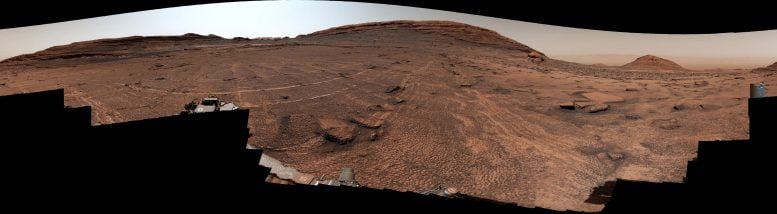
NASA’s Curiosity Mars Rover Martian PolygonsCuriosity has found a vast sea of Martian polygons that may reveal how water and climate once reshaped the Red Planet. NASA’s Curiosity rover has encountered an enormous field of honeycomb-shaped fractures while climbing through a Martian valley known as “Valle Grande.” Each geometric feature measures roughly 1.5 to 3 inches (4 to 8 centimeters) [...]
  •  

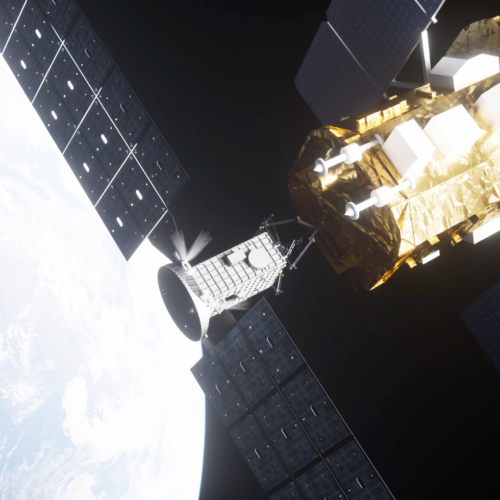
Here's how engineers plan to save the satellite sent to save NASA's Swift mission

One week ago, more than 200 miles above the Earth, a refrigerator-size satellite making its way toward an attempted rescue of NASA's $500 million Swift gamma-ray observatory suddenly spun out of control.

It didn't look good. The spacecraft, named Link, was rotating on multiple axes, rendering it unable to maintain a reliable communications link with the ground and complicating efforts to arrest the spin. Two of the satellite's three reaction wheels, used for pointing, also stopped working. Through sporadic radio contact, engineers discovered a problem with some of the spacecraft's cold gas thrusters used for finer attitude control.

The Link satellite is built, owned, and operated by Katalyst Space Technologies, a satellite servicing startup that won a $30 million contract from NASA to fly up to the Swift observatory, grab onto it, and boost its orbit before succumbing to aerodynamic drag and burning up int he atmosphere.

Read full article

Comments

© NASA

  •  

Here's how engineers plan to save the satellite sent to save NASA's Swift mission

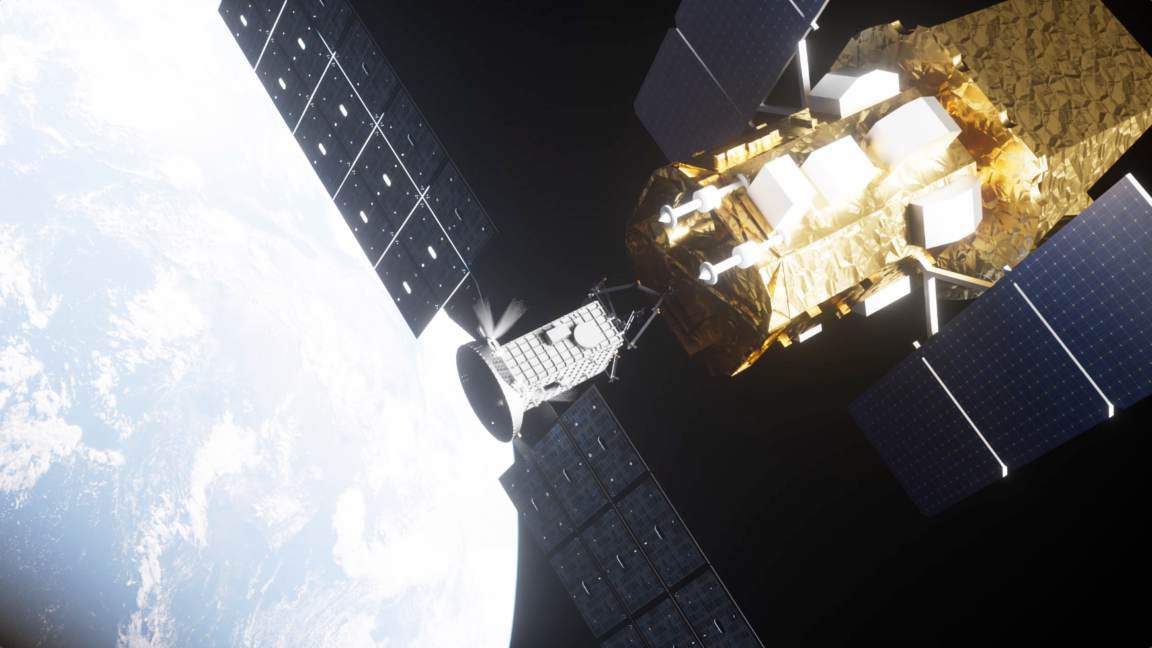
One week ago, more than 200 miles above the Earth, a refrigerator-size satellite making its way toward an attempted rescue of NASA's $500 million Swift gamma-ray observatory suddenly spun out of control.

It didn't look good. The spacecraft, named Link, was rotating on multiple axes, rendering it unable to maintain a reliable communications link with the ground and complicating efforts to arrest the spin. Two of the satellite's three reaction wheels, used for pointing, also stopped working. Through sporadic radio contact, engineers discovered a problem with some of the spacecraft's cold gas thrusters used for finer attitude control.

The Link satellite is built, owned, and operated by Katalyst Space Technologies, a satellite servicing startup that won a $30 million contract from NASA to fly up to the Swift observatory, grab onto it, and boost its orbit before succumbing to aerodynamic drag and burning up in the atmosphere.

Read full article

Comments

© NASA

  •  

Curiosity encontra “mar de favos de mel” em Marte e intriga cientistas da NASA

O cenário parece saído de outro mundo (e é mesmo): um vasto campo de padrões em forma de favos de mel que intriga os cientistas e poderá guardar pistas sobre o passado de Marte.

The post Curiosity encontra “mar de favos de mel” em Marte e intriga cientistas da NASA appeared first on Tek Notícias.

  •  

Panique à la Nasa avec sa mission spéciale de sauvetage : le robot qui doit capturer le satellite est devenu incontrôlable !

Qui va sauver le robot de sauvetage ? Lancé il y a plusieurs semaines, le robot Link devait attraper le télescope spatial Swift et le remettre en orbite, prolongeant ainsi sa vie. Il s’agit de la première mission de ce genre. Malheureusement, à la suite de défaillances techniques, l’engin s’est...

  •  

A Rare Celestial Alignment Links Two Ancient Volcanoes in This Spectacular New Image Shared by NASA

Two dormant volcanoes in the Andes are shown “connected” by the glowing ribbon of a distant cosmic feature stretching across the sky between them, in a rare cosmic alignment echoing ancient legends about these neighboring peaks—and all of it was captured in one of the most breathtaking astronomy images in recent memory.

The photo (seen below) was captured by astrophotographer Gonzalo Laserna Vargas and showcased by the American space agency this week. In it, we see Parinacota and Pomerape, a pair of ancient stratovolcanoes that form an unmistakable part of the landscape along the border between Bolivia and Chile.

In local folklore, these two prominences represent a prince and princess whose forbidden romance forever linked them in myth. Although no geological evidence exists for any physical links between them, astronomy recently helped fulfil that mythic connection in an unprecedented night sky display. The unique conditions that made this image possible, as well as the planning and preparation that went into it, were described by Vargas in a recent post on his Instagram account.

Barnard’s Loop Rising

In the new imagery, recently featured as NASA’s Astronomy Picture of the Day, Barnard’s Loop—a vast arc of glowing hydrogen gas surrounding part of the constellation Orion—is showcased in a long-exposure photograph as it appears behind the two volcanoes.

The image was captured coinciding with the appearance of the nebula directly behind the volcanoes, and from an angle that causes the visible portion of the celestial object to appear as though it is rising from the mouths of the ancient volcanic peaks, uniting them through what resembles a colorful, luminous aerial display.

Despite the awe-inspiring appearance of the imagery, as part of the larger Orion Molecular Cloud, Barnard’s Loop remains at a distance of around 440 parsecs from these dormant volcanic peaks—in other words, close to 1,400 light-years away.

a Cosmic Convergence

Capturing a cosmic convergence at this scale required careful planning by Vargas, who took a sequence of exposures from the same location in Bolivia in mid-April, at a time when the nebula appeared perfectly in between the two mountain summits.

One thing that helped with this is the fact that Barnard’s Loop is one of the largest emission nebulae visible from Earth. Although it is far too faint to be seen easily with the naked eye, the nebula’s vibrant pink and orange colors appear in long-exposure photography, revealing its eerie halo fueled by the presence of hydrogen gas.

Along with Barnard’s Loop, several of the night sky’s most recognizable objects also make an appearance in Vargas’s photo. Near the center of the image is the Orion Nebula, which happens to be one of the nearest stellar nurseries to Earth. Such areas of the cosmos are places where new star formation occurs within vast clouds of cosmic dust and gas.

To the nebula’s right, Betelgeuse is also visible, the reddish supergiant which was recently confirmed to have a stellar companion after more than a century of speculation about what might cause unusual variances in its brightness.

Higher in the image, another striking feature—the Rosette Nebula—can also be seen, revealed as a massive cloud of glowing gas around a small group of young stars.

A Cosmic Neighborhood United in Imagery

Although each of these features is separated by hundreds or even thousands of light-years from Vargas’s imagery, they all appear in a singular frame, producing a dramatic cosmic backdrop for the ancient volcanic landscape they appear above.

Hence, for reasons that are easy to see, Vargas’s photo was named NASA’s Astronomy Picture of the Day for July 28, 2026, revealing another artful view of the cosmos that relies on far more than just advanced equipment—it also showcases the necessity for astronomical knowledge, careful preparation, and, of course, impeccable timing.

The result in this case is a moment captured in time, where mythology, an ancient volcanic landscape, and the cosmos all converge within a single frame.

You can learn more about this image at NASA’s website, and follow Vargas and his cosmic photography on Instagram.

Micah Hanks is the Editor-in-Chief and Co-Founder of The Debrief. A longtime reporter on science, defense, and technology with a focus on space and astronomy, he can be reached at micah@thedebrief.org. Follow him on X @MicahHanks, and at micahhanks.com.

  •  

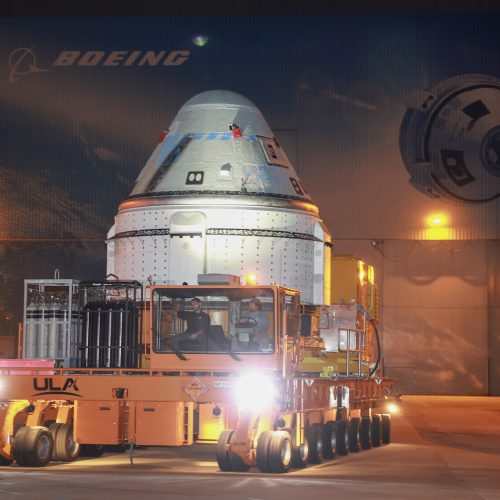
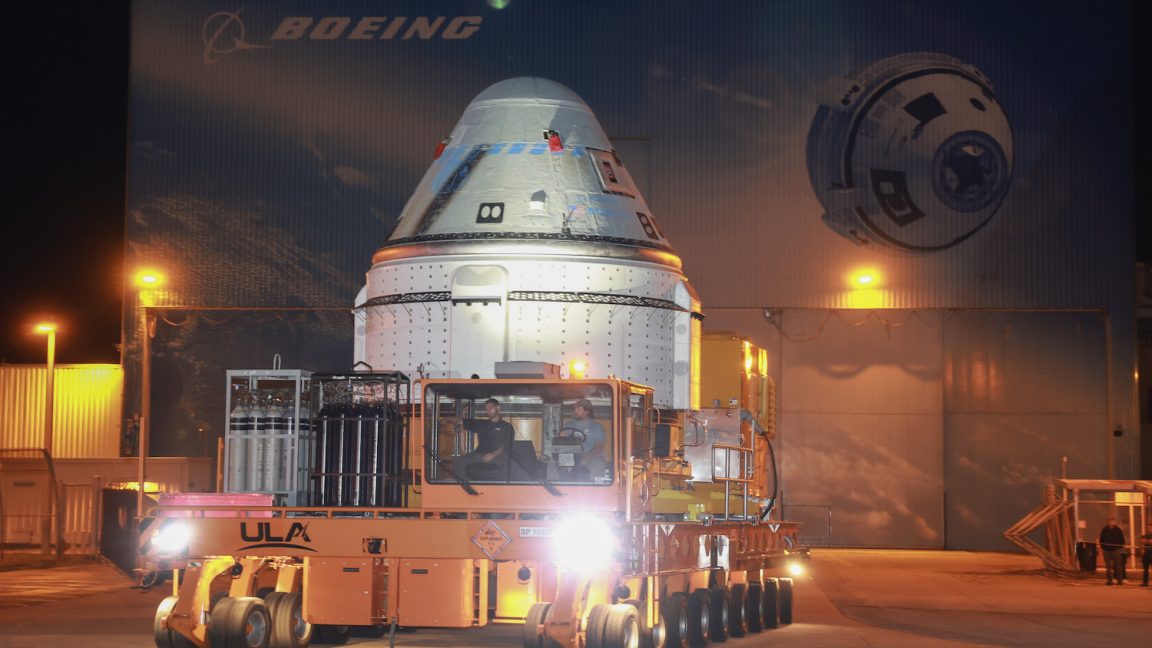
Actually, Starliner might fly into space this year

When we last checked in on Boeing's Starliner spacecraft in February, NASA was announcing that it had formally classified the 2024 crewed flight of the Starliner spacecraft as a “Type A” mishap, an acknowledgement that the test flight was a serious failure.

At the time, NASA Administrator Jared Isaacman said the space agency was working with Boeing to "fully understand the risks associated" with the Starliner spacecraft, and to remediate them. Starliner would not fly its next mission, a cargo flight to the International Space Station, until those problems were identified and remediated. He declined to put a date on the test flight.

However, it now appears this work is proceeding apace.

Read full article

Comments

© oe Raedle/Getty Images

  •  

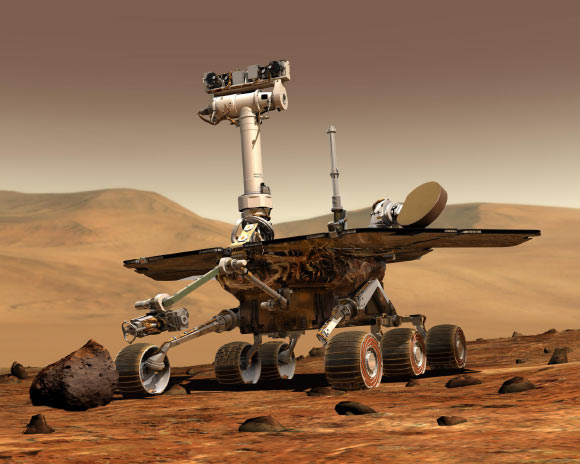
Hidden Clues in Spirit Rover Data Suggest Mars Once Had Far More Water than Scientists Realized

NASA’s Spirit rover on Mars. Image credit: NASA.

A new look at more than two decades’ worth of archival data from NASA’s Spirit mission suggests that the Martian soil may hold iron-bearing minerals -- hematite and altered magnetite -- that were too faint for scientists to detect in real time during the mission.

The post Hidden Clues in Spirit Rover Data Suggest Mars Once Had Far More Water than Scientists Realized appeared first on Sci.News: Breaking Science News.

  •  

NASA Rescue Mission Spirals Into Crisis

Last month, NASA announced that it was launching an unprecedented and risky mission to rescue its aging Swift observatory.

The telescope, which has spent over two decades in orbit studying the most powerful explosions in the universe, has seen its orbit decay over time. With the help of a specialized space tug developed by contractor Katalyst Space Technologies, the space agency was hoping to give Swift a much-needed push to a more stable orbit, prolonging its life.

But as it turns out, it’s not the observatory that ended up needing help. After launching its robotic spacecraft, dubbed LINK, on July 3, Katalyst Space watched in horror as it started tumbling out of control following a series of unfortunate events.

According to a new update, NASA admitted that the “spacecraft experienced issues with attitude control, causing the spacecraft to spin and resulting in sporadic communications.”

“Preliminary investigation shows that two of LINK’s three reaction wheels currently are not operable, and there is some loss of functionality in its cold gas thruster system,” the agency noted. Reaction wheels are motor-driven flywheels used by spacecraft for attitude control.

At least there’s a silver lining. LINK’s other subsystems are still functional, allowing the ground team to communicate with the spacecraft.

And not all is lost just yet. The Katalyst team is hoping to stop LINK from spinning before reevaluating how to go forward with the rescue mission, if at all.

But considering that a rapidly spinning spacecraft is the very last thing the Swift observatory needs in its vicinity, it’s clearly not the result the agency was hoping for.

And time is rapidly running out. Without a boost, the telescope is destined to burn up in the Earth’s atmosphere in the upcoming months.

While it has long outlived its originally intended lifetime at almost 22 years old, it’s currently the only orbital telescope that can detect gamma ray bursts, the most powerful explosions in the universe.

Fortunately, the space agency didn’t have to dig too deep into its own pockets. Its Katalyst contract was $30 million, which in the grand scheme of things is a drop in the bucket when considering the untold billions NASA is spending to return astronauts to the Moon.

Even before LINK launched and started spinning out of control, agency officials were content with NASA’s willingness to give it a shot.

“From a programmatics standpoint, I consider this a success already, just from the fact that we’re even going to try this,” NASA astrophysics director Shawn Domagal-Goldman told Ars Technica last month.

More on the mission: NASA Prepping to Launch Extremely Risky Rescue Mission

The post NASA Rescue Mission Spirals Into Crisis appeared first on Futurism.

  •  

Boeing still working with NASA to schedule next Starliner flight

Starliner CFT launch preps

Boeing is still working with NASA to determine when to fly its CST-100 Starliner commercial crew vehicle on a cargo mission to the International Space Station.

The post Boeing still working with NASA to schedule next Starliner flight appeared first on SpaceNews.

  •  

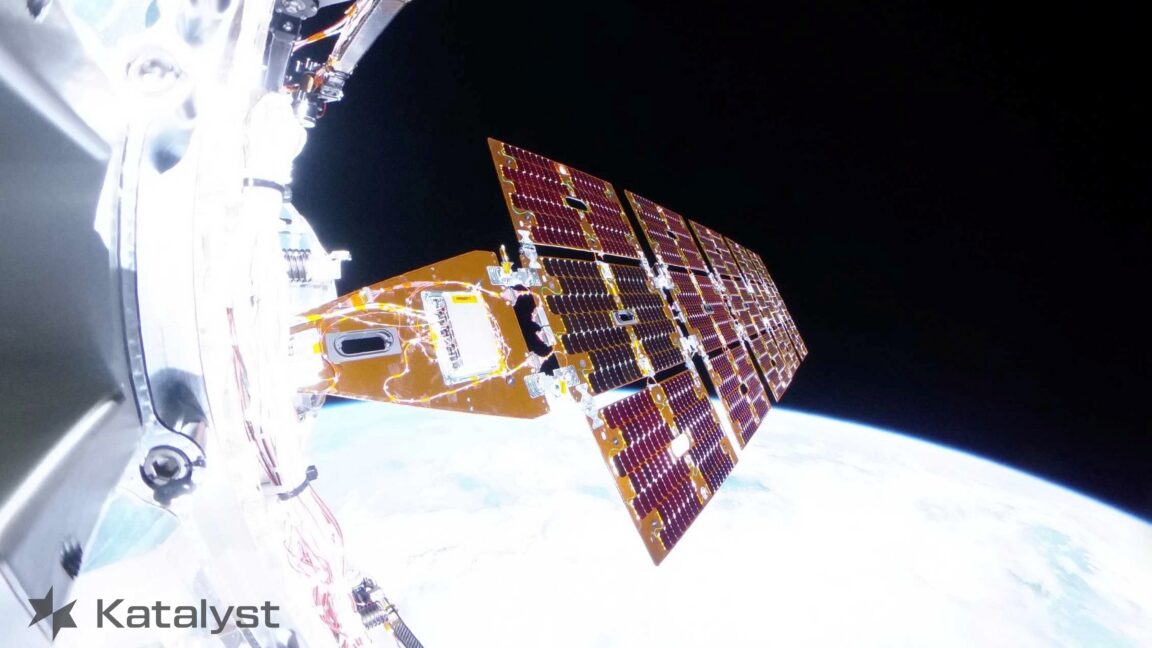
Attitude control issues leave Swift rescue mission spinning in orbit

Nearly a month since its launch, a first-of-its-kind commercial satellite built to save NASA's Swift gamma-ray telescope from a fiery reentry is having problems of its own, the agency announced Tuesday.

The Link satellite developed by Katalyst Space Technologies "experienced issues with attitude control" over the weekend, NASA said, causing the spacecraft to spin and resulting in sporadic communications.

"Preliminary investigation shows that two of Link's three reaction wheels currently are not operable, and there is some loss of functionality in its cold gas thruster system," NASA said.

Read full article

Comments

© Katalyst Space Technologies

  •  

Hubble Spots Spiral Galaxy Warped by Cosmic Forces

This Hubble image shows NGC 4654, an intermediate spiral galaxy some 55 million light-years away in the constellation of Virgo. Image credit: NASA / ESA / Hubble / D. Thilker / J. Lee / PHANGS-HST Team.

A stunning new image captured by the NASA/ESA Hubble Space Telescope shows the lopsided intermediate spiral galaxy NGC 4654, whose unusual shape was sculpted by both a close encounter with another galaxy and a headlong plunge through the hot gas of the Virgo Cluster.

The post Hubble Spots Spiral Galaxy Warped by Cosmic Forces appeared first on Sci.News: Breaking Science News.

  •  

It Appears the Reports of Venus’s Death Were Greatly Exaggerated—New Models Suggest the Planet is Still Geologically Active

New computer models of Venus’s surface features, including ridges likely caused by volcanic activity, have determined that the second rock from the Sun remains geologically active to this day.

The ETH Zurich research team behind the new Venusian models, which suggest that Venus may still have active volcanoes, said their findings could help planned NASA and ESA missions select the most promising targets. The new models could also help in the search for rocky planets outside of our Solar System, including those that may support life.

Venus Previously Considered Geologically Dormant for Over 100 Million Years

Venus has long fascinated planetary scientists due to its similarities. For example, the planet’s mass and circumference make it roughly 95% the same size as Earth overall. However, although Venus’ elliptical orbit brings it closer to Earth than any other planet in the Solar System, its extreme surface temperatures and toxic atmosphere make it inhospitable to life as we know it.

Ground and space observations have detected rift valleys on Venus’s surface, which the research team notes indicate tectonic activity. Some can measure up to 10,000 kilometers and resemble the longest ridges on Earth. Although the timing of Venus’ rift formations remains uncertain, the team said most scientists have typically considered the planet to be geologically dormant. Some estimates have put their formation more than 100 million years ago.

Curious if data captured by space and ground-based observatories could provide enough information to answer the timing question, a research team from ETH led by Taras Gerya, a Professor of Geodynamics at the Department of Earth and Planetary Sciences, decided to plug that data into computer models. According to their results, the reports of Venus’ demise may have been greatly exaggerated. 

Models Reveal Planet Likely Supports Active Volcanoes

Working under Professor Gerya’s supervision, Master’s candidate and lead author of the paper detailing the team’s work, Xi Yang, and colleagues employed computer models to simulate the planet’s rifts in high-resolution and 3D. The team said these models allowed them to “accurately replicate these rift structures” in a level of detail never achieved. The data also allowed them to perform simulations to best determine how they originally formed.

Critically, the team notes that earlier attempts to model Venus’ tectonic history and potential ongoing activity had been mostly two-dimensional. Yang’s team also said those earlier models had relied on “simplified material assumptions” that his team was able to expand upon.

After completion, the models yielded several compelling results. First, they indicated that the broad ridges geologists call ‘rift flanks’ form along the edges of rift valleys at a time when the rifts are still “geologically young.” Specifically, the team’s models suggested that these flanks formed when Venus was still either actively moving or had only recently stopped moving.

A closer look at the simulations also suggested that these geological rifts open over a much shorter time scale than previously assumed, with an estimated rate between 3 and 10 centimeters per year. The models also indicated that rift flanks tend to flatten very quickly once the movement ends.

“The older the rift system, the less steep and narrow its flanks,” they explained.

A comparison to erosion patterns on Earth also supported a more recent time frame for the rift flank formations spotted on the Venusian surface from the Magellan probe during its 1990s mission. The team said that these formations and their models suggest that “Venus remains an active planet with a more dynamic interior than had been previously believed.”

“Venus remains geologically “alive” and even hosts active volcanoes,” they explained.

Planned NASA & ESA Missions Could Confirm Models

When discussing the implications of their work, Professor Gerya said the findings “help us to better assess the tectonic activity on Venus.” The team noted that their models could also guide future missions by pinpointing potentially active regions worthy of closer examination.

The ETH team said their study also has planetary formation implications, particularly for rocky planets like Venus and Earth. Such data could prove valuable in the search for rocky exoplanets, including the type that may host life.

Moving forward, the study authors noted that NASA and the European Space Agency (ESA) are actively preparing “multiple missions” to explore Venus in further detail. ETH geophysics professors Paul Tackley and Gerya, and their team of collaborators, are already participating in ESA’s EnVision mission.

The work includes developing instruments for the orbiter to analyze the surface in greater detail. Scheduled for launch in the early 2030s, the team said that EnVision will explore the planet more thoroughly than previous efforts “from its core to its upper atmosphere.”

The study “Recent active rifting on Venus revealed by wide rift flank uplifts” was published in Nature Geoscience.

Christopher Plain is a Science Fiction and Fantasy novelist and has spent the last six years as Associate News Editor and Head Science Writer at The Debrief. Follow and connect with him on X, learn about his books at plainfiction.com, or email him at christopher@thedebrief.org.

  •  

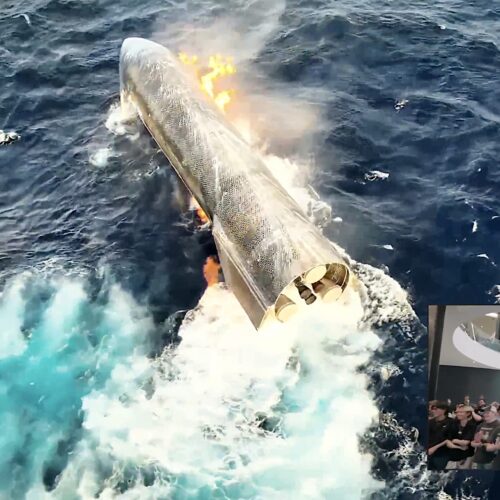
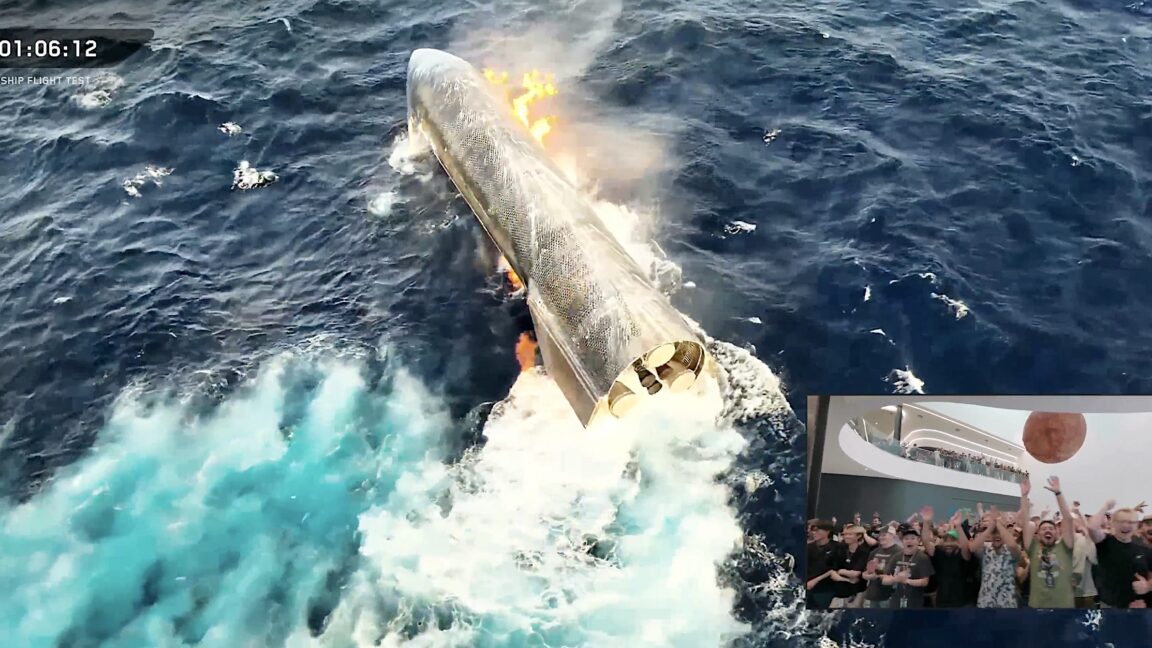
SpaceX eyes tower catch for next Starship after auspicious end to 13th flight

SpaceX was more than lucky Friday, sending its 13th full-scale Starship test flight halfway around the world from South Texas to an on-target, intact splashdown in a remote section of the Indian Ocean.

Starship has made precise splashdowns before. This time, however, the ship gently tipped over and came to rest floating in a remote stretch of ocean west of Australia. Previous splashdowns ended with conflagrations, an outcome SpaceX officials have come to expect with each water landing of Starship.

The buoyant Starship looked to be in fine shape after reaching the Indian Ocean. SpaceX engineers flew drones over the vehicle to inspect its heat shield, getting their best look yet at how more than 18,000 ceramic tiles insulating the ship's stainless steel airframe weathered the trip to space and back. The tiles withstood temperatures up to 2,600° Fahrenheit (1,430° Celsius) as Starship streaked back into the atmosphere at the end of its hourlong flight from Starbase, Texas.

Read full article

Comments

© SpaceX

  •  
❌