Login

What to Know About the Facebook Whistle-Blowing Case Depicted in ‘The Social Reckoning’
Aaron Sorkin’s sort-of sequel to the 2010 “Social Network” dramatizes a whistle-blowing case at Facebook. Here’s what to know.

4 min read

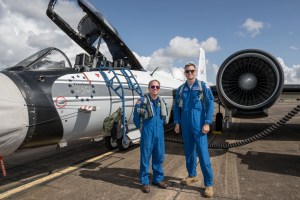
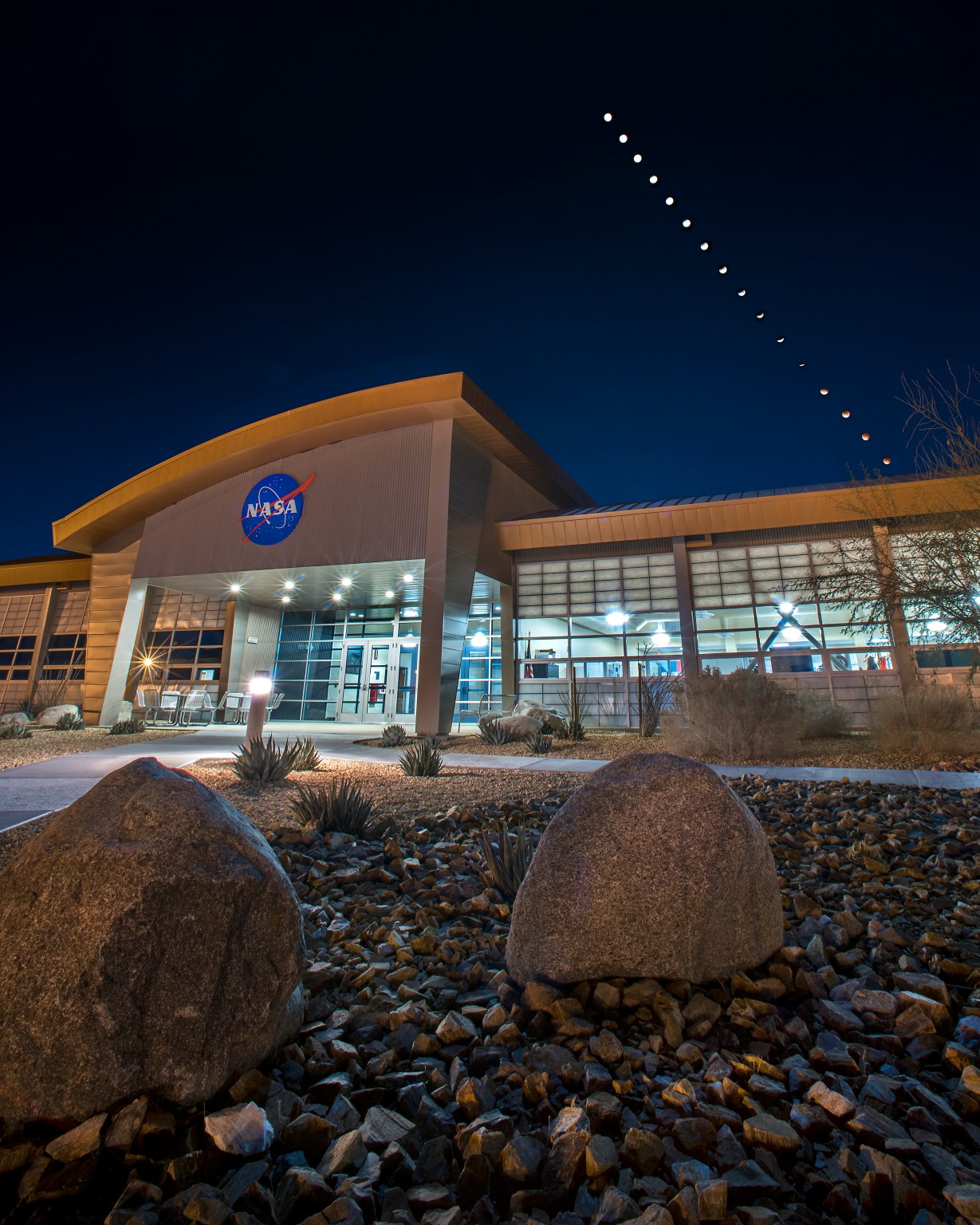
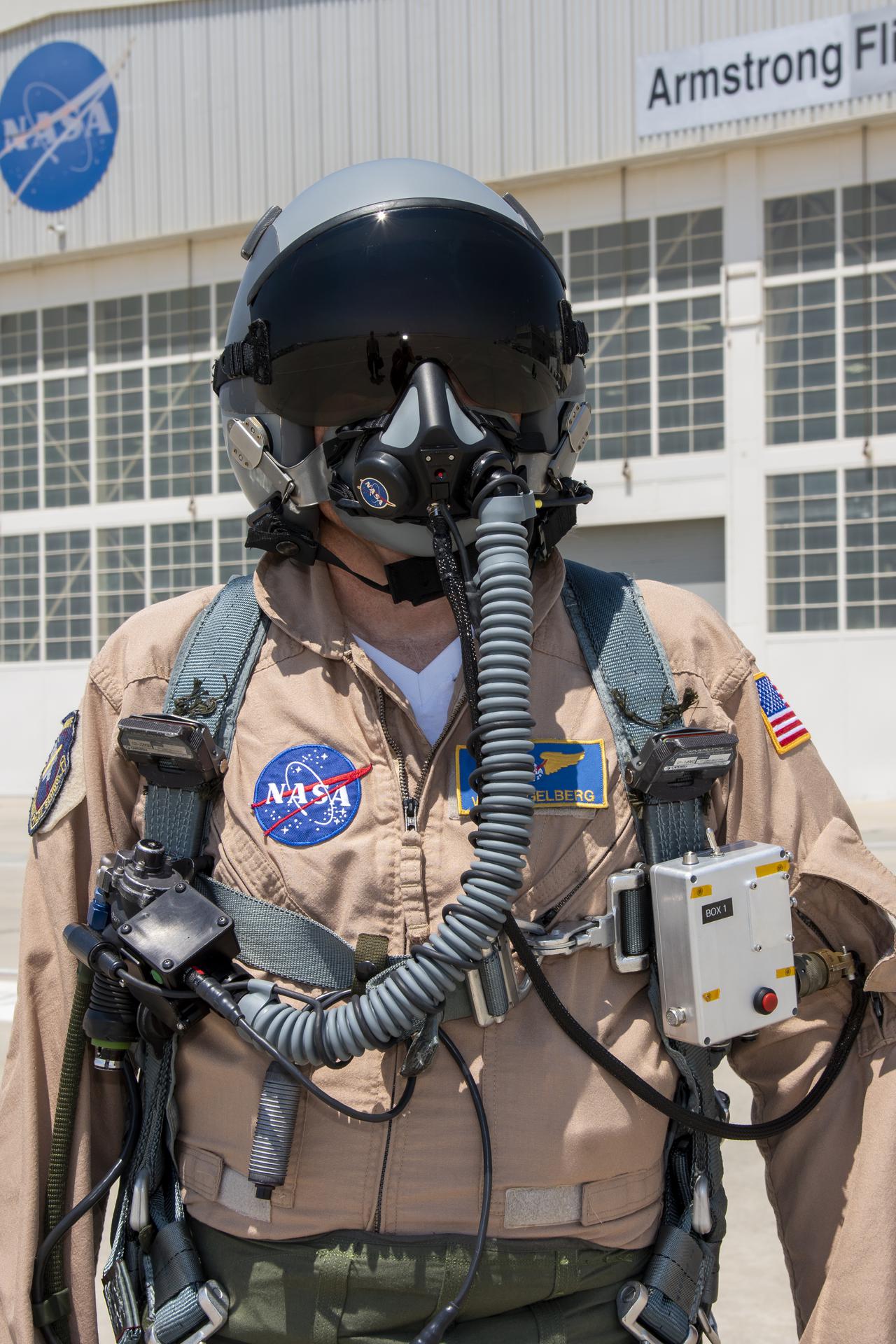
Long before they helped shape NASA’s future aerospace breakthroughs, Derek Abramson, Justin Hall, and Justin Link were in their garages and homes building radio‑controlled aircraft, testing new ideas, and flying their creations at hobby events. That early passion now fuels the work of NASA’s Dale Reed Subscale Flight Research Laboratory at the agency’s Armstrong Flight Research Center in Edwards, California.
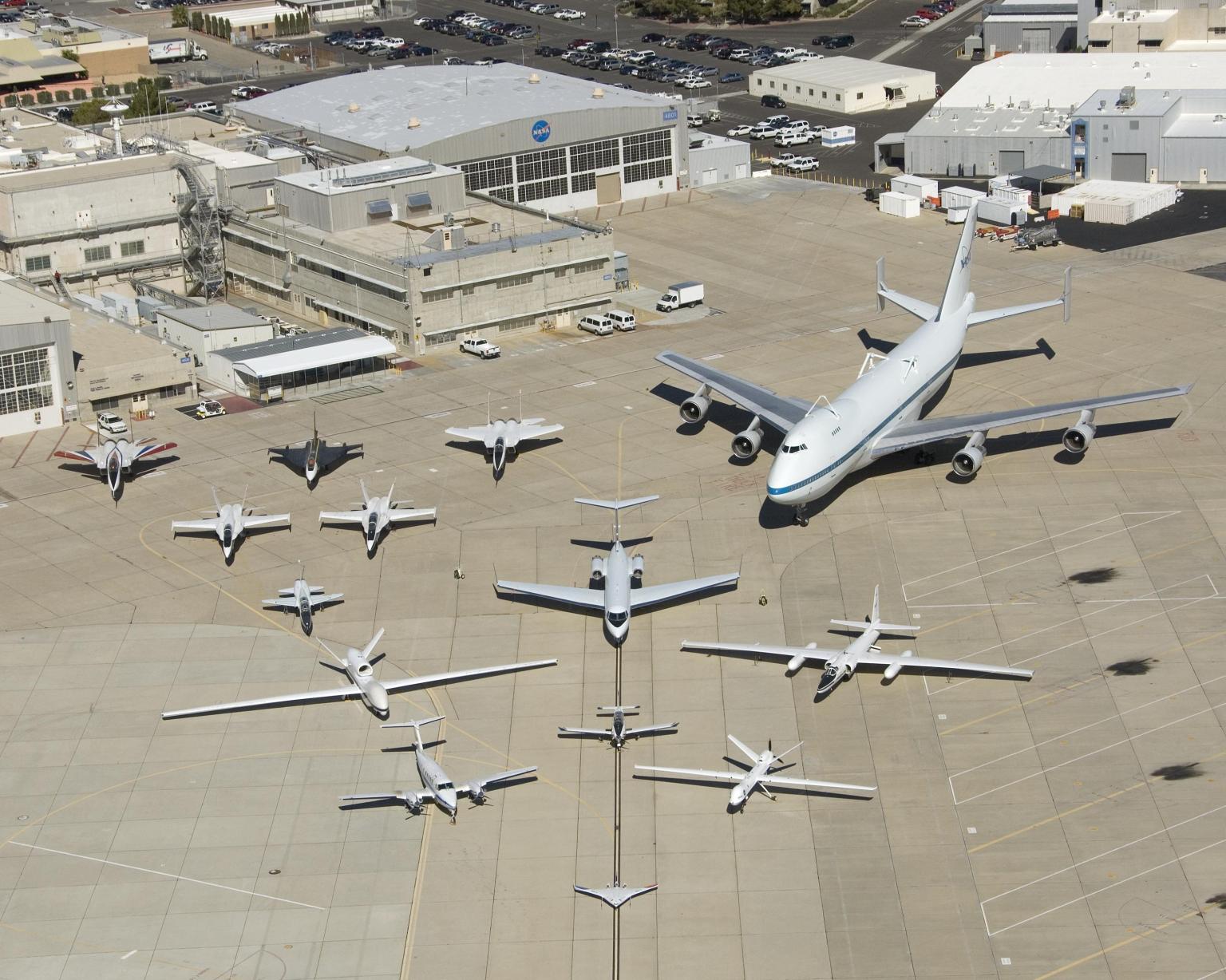
At NASA Armstrong’s subscale flight lab, the team turns that lifelong enthusiasm into mission-focused innovation. The laboratory supports research that ranges from advanced navigation systems for future landings on the Moon and Mars to emerging aeronautics concepts that need quick, low-cost evaluation. NASA’s small, remotely piloted and autonomous aircraft allow engineers to explore ideas that could be difficult, risky or expensive to test at full scale.
Abramson, Hall, and Link play key roles in that work. Abramson serves as the laboratory’s chief engineer. Hall is the chief pilot. Link is a drone pilot. Together, they integrate emerging aerospace technologies with the lab’s subscale aircraft fleet and, when needed, design and build aircraft or flight experiments to evaluate new concepts.
Abramson’s expertise, built through service in the U.S. Navy and the aerospace industry, centers on technical oversight, management, and system design. Hall is known for creative approaches to problem solving and uses practical methods to address technical challenges and maintain flight safety. Link specializes in designing and fabricating research vehicles and draws on extensive hands-on experience to understand what works, and what does not, in flight.
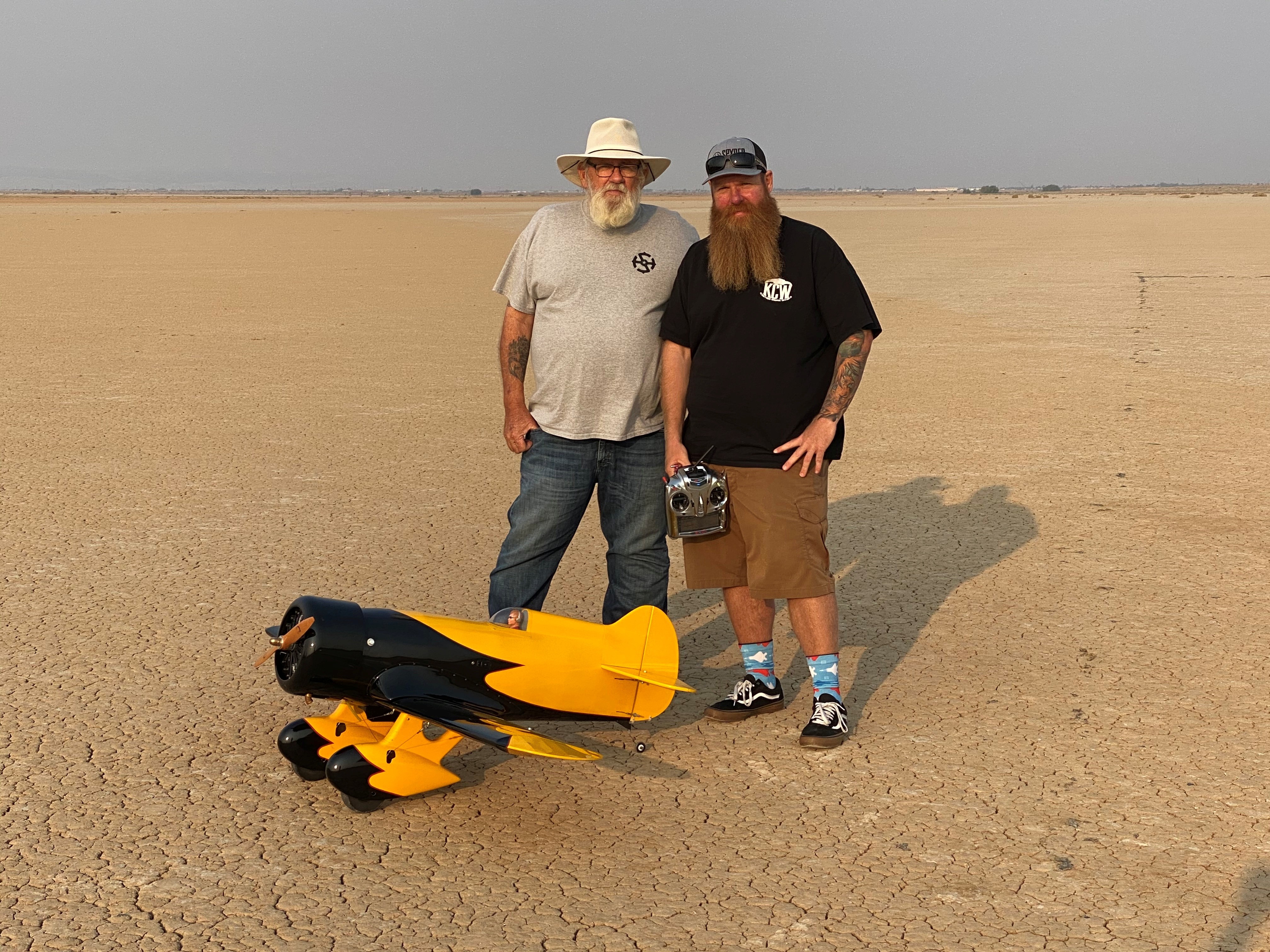
On weekends, the team often tinkers in their garages or hangars building radio-control aircraft, researching hobby trends, or exploring new technologies. You might see them flying their creations at hobby events or attending trade shows. Their passion for flight brought Abramson, Hall, and Link together years before they one-by-one joined NASA more than a decade ago, though each discovered that spark in a different way.
Abramson’s interest began as a child with rubber-band powered stick and tissue aircraft and radio-controlled models. His early aviation pursuits led to his first solo flight while in high school and a pilot’s license. In the Navy, he worked on multiple aircraft, including EA-6B and the F-18, as an avionics technician. As an engineer, he supported the B-1 and CV-22 Osprey aircraft flight tests. As an intern at NASA Armstrong, he used his operational and engineering experience on remotely piloted and autonomous aircraft.
Hall’s interest grew after seeing historic aircraft including the Mach 3 SR-71 fly over his elementary school playground and watching Space Shuttle Challenger land from above his dad’s shoulders. He has built and flown model and remotely piloted aircraft for as long as he can remember. His reputation flying radio-controlled hobby aircraft at fly-ins and trade events led to an offer to fly subscale aircraft at NASA.
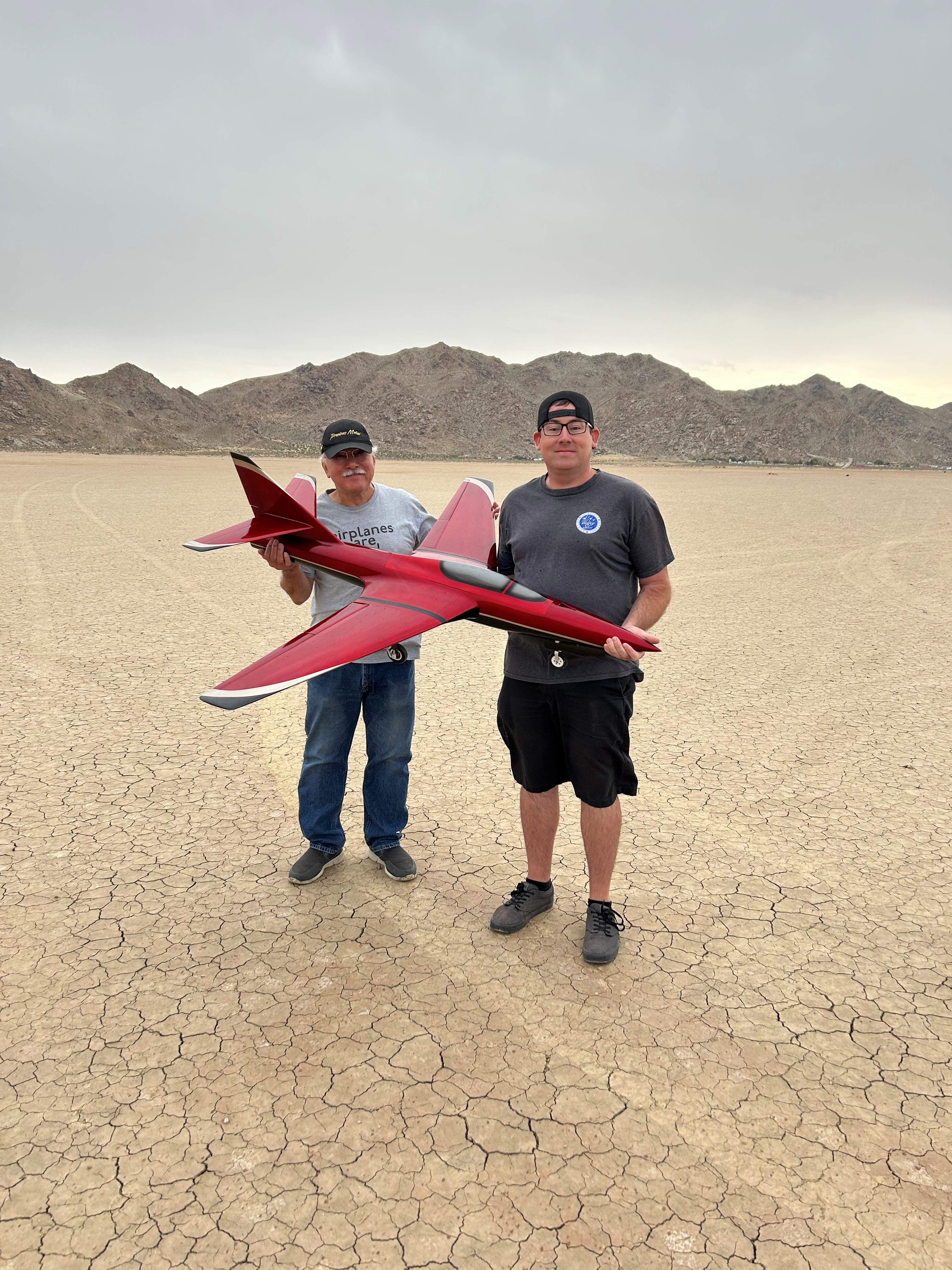
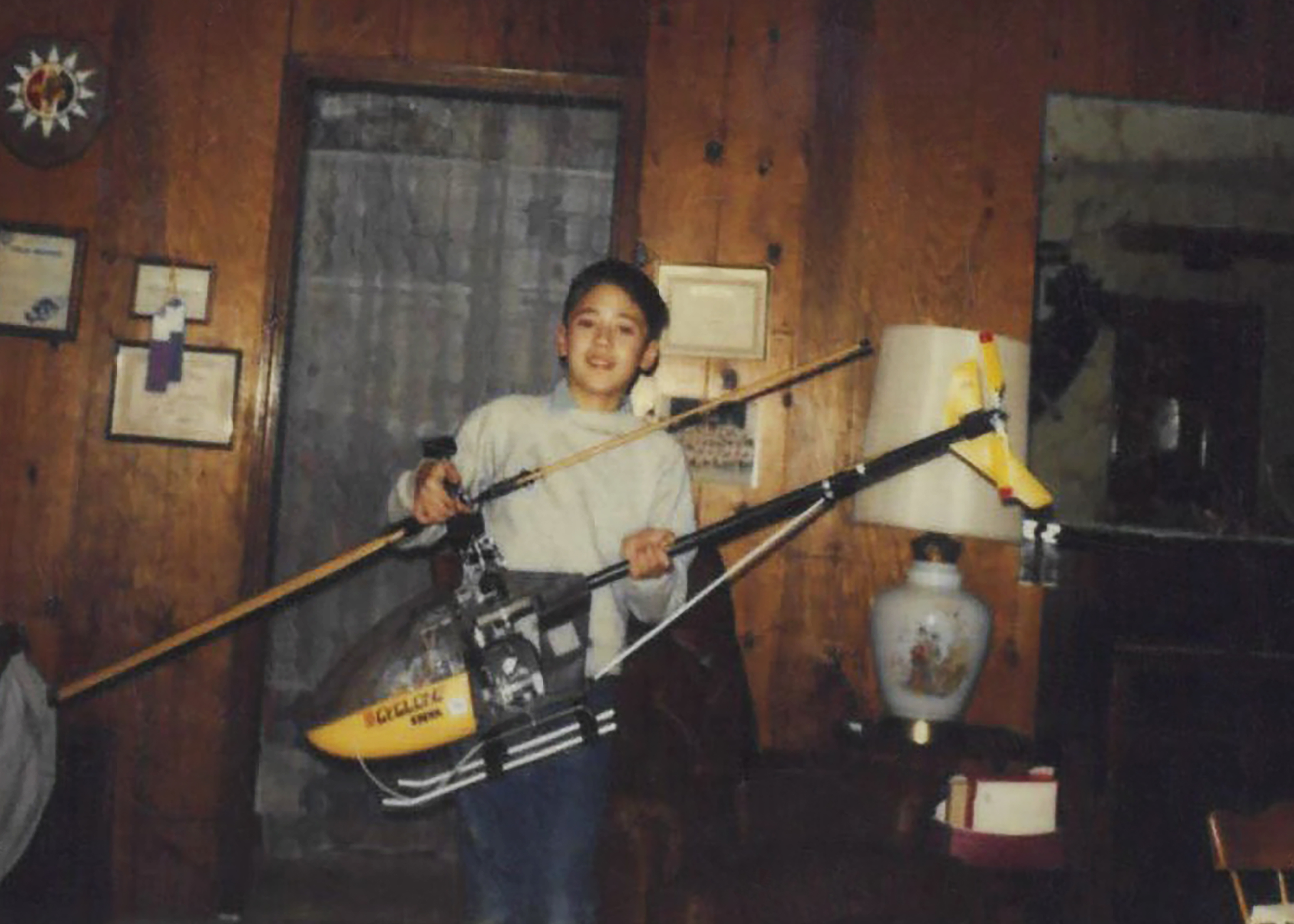
Link was five years old when he built balsa-wood aircraft with his dad and flew them in a field near their home. As he grew older, his hobby expanded to include radio-controlled cars, boats, helicopters, and aircraft. Aviation runs deep in Link’s family. His great grandfather served in the U.S. Army Air Corps, his grandfathers served in the U.S. Air Force, and his dad was an Air Force avionics technician. Link raced sailplanes, competed with scaled warbird aircraft, and was encouraged by family and friends to pursue an aviation profession. He has worked with large drones for more than 11 years, focusing on research and development, composite materials, and specialized fabrication methods.
Together, the team applies its experience and knowledge in rapid design, fabrication, integration and flight testing to bring new ideas to flight. Their work continues to support NASA’s missions across aeronautics, science, and exploration.
The post Passion Meets Precision at NASA’s Flight Research Lab appeared first on NASA Science.
4 min read
Long before they helped shape NASA’s future aerospace breakthroughs, Derek Abramson, Justin Hall, and Justin Link were in their garages and homes building radio‑controlled aircraft, testing new ideas, and flying their creations at hobby events. That early passion now fuels the work of NASA’s Dale Reed Subscale Flight Research Laboratory at the agency’s Armstrong Flight Research Center in Edwards, California.
At NASA Armstrong’s subscale flight lab, the team turns that lifelong enthusiasm into mission-focused innovation. The laboratory supports research that ranges from advanced navigation systems for future landings on the Moon and Mars to emerging aeronautics concepts that need quick, low-cost evaluation. NASA’s small, remotely piloted and autonomous aircraft allow engineers to explore ideas that could be difficult, risky or expensive to test at full scale.
Abramson, Hall, and Link play key roles in that work. Abramson serves as the laboratory’s chief engineer. Hall is the chief pilot. Link is a drone pilot. Together, they integrate emerging aerospace technologies with the lab’s subscale aircraft fleet and, when needed, design and build aircraft or flight experiments to evaluate new concepts.
Abramson’s expertise, built through service in the U.S. Navy and the aerospace industry, centers on technical oversight, management, and system design. Hall is known for creative approaches to problem solving and uses practical methods to address technical challenges and maintain flight safety. Link specializes in designing and fabricating research vehicles and draws on extensive hands-on experience to understand what works, and what does not, in flight.
On weekends, the team often tinkers in their garages or hangars building radio-control aircraft, researching hobby trends, or exploring new technologies. You might see them flying their creations at hobby events or attending trade shows. Their passion for flight brought Abramson, Hall, and Link together years before they one-by-one joined NASA more than a decade ago, though each discovered that spark in a different way.
Abramson’s interest began as a child with rubber-band powered stick and tissue aircraft and radio-controlled models. His early aviation pursuits led to his first solo flight while in high school and a pilot’s license. In the Navy, he worked on multiple aircraft, including EA-6B and the F-18, as an avionics technician. As an engineer, he supported the B-1 and CV-22 Osprey aircraft flight tests. As an intern at NASA Armstrong, he used his operational and engineering experience on remotely piloted and autonomous aircraft.
Hall’s interest grew after seeing historic aircraft including the Mach 3 SR-71 fly over his elementary school playground and watching Space Shuttle Challenger land from above his dad’s shoulders. He has built and flown model and remotely piloted aircraft for as long as he can remember. His reputation flying radio-controlled hobby aircraft at fly-ins and trade events led to an offer to fly subscale aircraft at NASA.
Link was five years old when he built balsa-wood aircraft with his dad and flew them in a field near their home. As he grew older, his hobby expanded to include radio-controlled cars, boats, helicopters, and aircraft. Aviation runs deep in Link’s family. His great grandfather served in the U.S. Army Air Corps, his grandfathers served in the U.S. Air Force, and his dad was an Air Force avionics technician. Link raced sailplanes, competed with scaled warbird aircraft, and was encouraged by family and friends to pursue an aviation profession. He has worked with large drones for more than 11 years, focusing on research and development, composite materials, and specialized fabrication methods.
Together, the team applies its experience and knowledge in rapid design, fabrication, integration and flight testing to bring new ideas to flight. Their work continues to support NASA’s missions across aeronautics, science, and exploration.
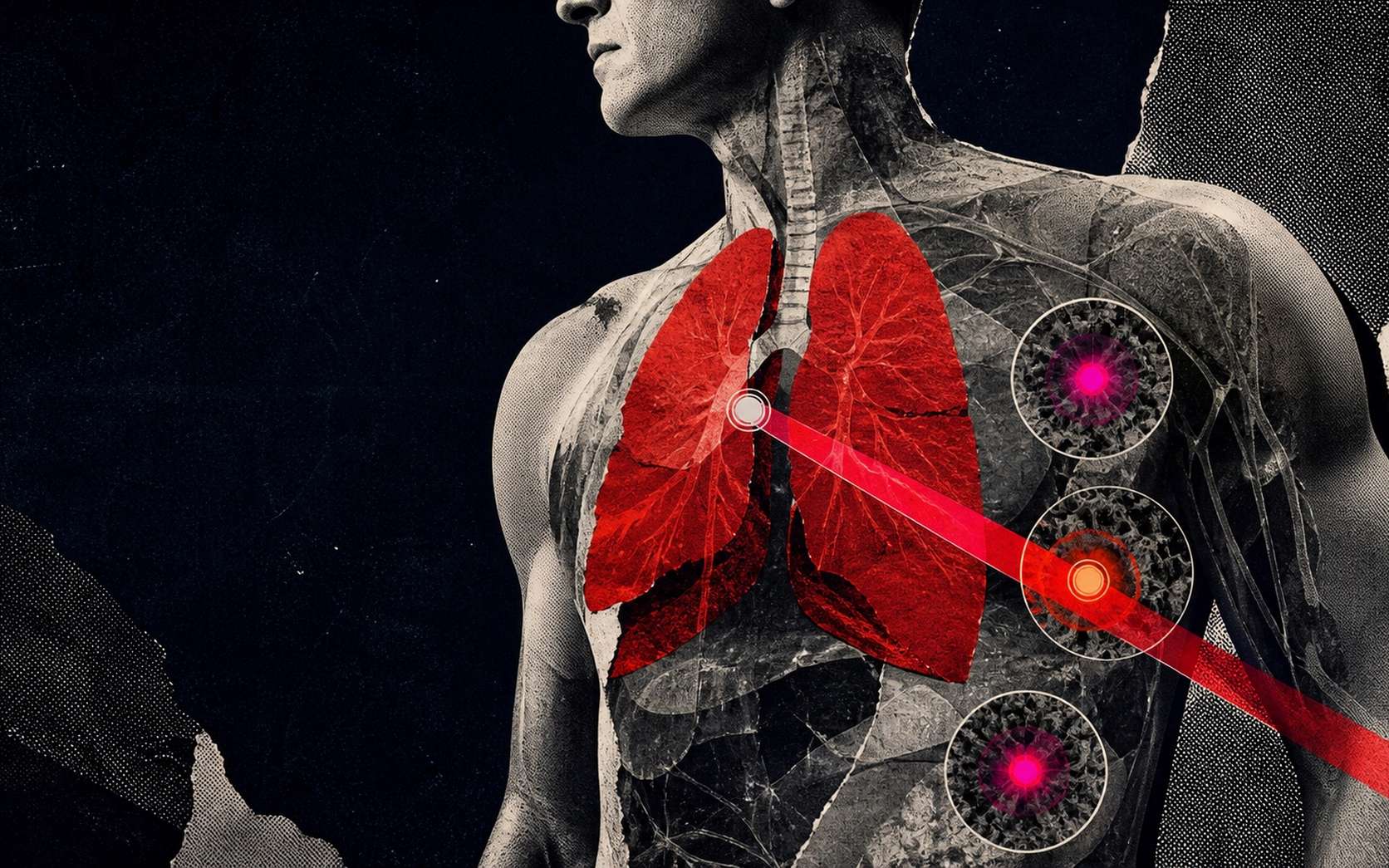
 Zhurong just found a tantalizing geological clue.
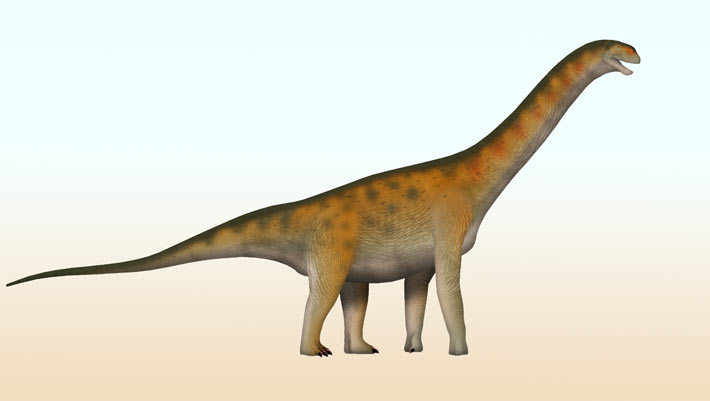
Paleontologists working in southern China have identified a new species of sauropod dinosaur that appears to belong to a group never before documented anywhere in East Asia.
The post Fossil Find in China Reveals Dinosaur Family Never Before Seen in East Asia appeared first on Sci.News: Breaking Science News.
Recentemente, temos comentado a situação dos jogos de azar/apostas na App Store no Brasil, algo que tem sido alvo até mesmo de uma análise por parte do Ministério da Justiça e Segurança Pública (MJSP).
Na esteira dessas manchetes, quatro organizações não governamentais entraram com uma ação judicial contra a Apple Brasil por não realizar a verificação de idade em apps de apostas, com menção ao jogo Casino Roulette: Roulettist, disponível na App Store. O processo foi protocolado na Justiça de São Paulo e cobra indenização de R$300 milhões por danos morais.
A ação, conforme divulgado pelo Estadão, reúne a Associação Nacional dos Centros de Defesa da Criança e do Adolescente (Anced), a Educafro, o Centro Santo Dias de Direitos Humanos (CSDDH) e a Visão Mundial.
Além do jogo supracitado, o advogado da Anced, Márlon Reis (um dos autores da ação), menciona que há pelo menos seis títulos de jogos que simulam cassino e estão disponíveis para download por menores, mesmo que a classificação seja para 18 anos ou mais.
Segundo o processo, a ausência de controle etário permite que crianças baixem o app, adquiram créditos e apostem sem qualquer restrição. Nesse cenário, as ONGs argumentam que a Apple tem responsabilidade direta no caso por intermediar a compra de créditos dentro do jogo, sem verificar quem realiza os pagamentos.
Não se trata de entretenimento gratuito ou meramente simbólico. O usuário emprega recursos financeiros reais para adquirir fichas, arrisca-as nas partidas e, depois de perdê-las, é estimulado a realizar novos pagamentos para continuar jogando.
Além da indenização, as entidades pedem que a Apple suspenda todos os aplicativos de cassino disponíveis em sua loja até comprovar a adoção de um sistema efetivo de verificação de idade. A ação solicita que a Justiça fixe multa diária de R$500 mil caso a Apple não cumpra as medidas em dez dias.
A Apple disse ao Estadão que a verificação de idade para apps destinados a maiores de 18 anos “está em fase de testes e deverá ser lançada nos próximos meses”. Ela também destacou que já oferece ferramentas de controle parental.
via Tilt


HELSINKI — China sent a new pair of secretive satellites into a programmatically new orbit Wednesday, while also upgrading its on-orbit communications relay capabilities. A Long March 6A rocket lifted […]
The post China launches secretive TJS-27 pair, orbits next-gen Tianlian relay sat appeared first on SpaceNews.

Saturday at Apple TV’s San Diego Comic-Con panel, Callum Turner made a surprise virtual appearance to unveil the first teaser for the highly anticipated new science fiction series “Neuromancer,” based on the award-winning novel of the same name by William Gibson. The 10-episode series stars Turner, Briana Middleton, Mark Strong, Joseph Lee, Peter Sarsgaard, and Clémence Poésy, and premieres globally on Apple TV on Friday, January 22, 2027, with two episodes, followed by one new episode every Friday through March 19, 2027.
“Neuromancer” follows a damaged, top-rung super-hacker named Case (Turner) who is thrust into a web of digital espionage and high-stakes crime with his partner Molly (Middleton), a razor-girl assassin, as they pull off a heist on a corporate dynasty with untold secrets. The ensemble cast also includes Max Irons, Dane DeHaan, Junia Rees, Jordan Kouamé, Emma Laird, Marc Menchaca, André De Shields and Isabella Pappas.
Produced by Paramount Television Studios and Anonymous Content, the series is created for television by Graham Roland and JD Dillard. Roland also serves as showrunner and executive producer alongside Dillard, David Levine, Garrett Kemble and Zack Hayden for Anonymous Content; Aubrey “Drake” Graham, Adel “Future” Nur and Jason Shrier for DreamCrew Entertainment; and Jennifer Haley and William Gibson, who also executive produce. Dillard serves as director of the first three episodes.
The debut novel by Gibson, “Neuromancer” has been praised as one of the first and most respected works in the cyberpunk genre and has received numerous accolades, including the Nebula Award, the Philip K. Dick Award and the Hugo Award. The novel served as the first book in the “Sprawl” trilogy and was followed by “Count Zero” and “Mona Lisa Overdrive.”
Apple TV offers premium, compelling drama and comedy series, feature films, groundbreaking documentaries, and kids and family entertainment, and is available to watch across all of a user’s favorite screens. After its launch on November 1, 2019, Apple TV became the first all-original streaming service to launch around the world, and has premiered more original hits and received more award recognitions faster than any other streaming service in its debut. To date, Apple Original films, documentaries and series have been honored with 850 wins and 3,800 award nominations, including multi-Emmy Award-winning and history-making comedies “The Studio” and “Ted Lasso,” global cultural phenomenon “Severance,” Apple’s most-viewed drama, “Pluribus,” Academy Award Best Picture winner “CODA” and Academy Award winner “F1,” the highest-grossing sports feature of all time.
MacDailyNews Take: “Neuromancer” fans, what do you think?
Please help support MacDailyNews — and enjoy subscriber-only articles, comments, chat, and more — by subscribing to our Substack: macdailynews.substack.com. Thank you!
Support MacDailyNews at no extra cost to you by using this link to shop at Amazon.
The post Apple TV releases first teaser for cyberpunk series ‘Neuromancer’ appeared first on MacDailyNews.
O Apple TV divulgou o trailer de “A Dinastia — UConn Huskies” (“The Dynasty: UConn Huskies”), sua nova série documental que narra a trajetória de 40 anos do renomado programa de basquete feminino da Universidade de Connecticut (UConn) sob o comando do técnico Geno Auriemma, membro do Hall da Fama.
A produção, dividida em três partes, estreará mundialmente no dia 21 de agosto (uma sexta-feira).
Twelve championships don't happen by accident. Go inside one of college basketball's most prestigious programs.
— Apple TV (@AppleTV) July 17, 2026
The Dynasty: #UConnHuskies — August 21 on Apple TV pic.twitter.com/noP5RuttEl
“The Dynasty: UConn Huskies” narra a ascensão do programa mais dominante na história do basquete universitário nos Estados Unidos. Com entrevistas exclusivas com a equipe campeã nacional de 2025 e participações de figuras do basquete da UConn, a série explora a busca pela excelência, as expectativas que acompanham o sucesso duradouro e as pessoas que mantiveram esse padrão ao longo das gerações.
A série reflete sobre o legado que construiu o programa e oferece um olhar raro de bastidores sobre as jogadoras que dão continuidade a essa história, por meio de conversas aprofundadas com técnicos, atletas, ex-jogadoras, rivais e jornalistas de várias gerações do basquete da UConn, incluindo KK Arnold, Auriemma, Sue Bird, Paige Bueckers, Jim Calhoun, Swin Cash, Chris Dailey, Mickie DeMoss, Jana El Alfy, Jamelle Elliott, Azzi Fudd, Jeff Goldberg, Sally Jenkins, Steve Kerr, Rebecca Lobo, Jackie MacMullan, Maya Moore, Alexa Philippou, Shea Ralph, Semeka Randall, Jennifer Rizzotti, Breanna Stewart, Sarah Strong, Diana Taurasi e Tamika Williams-Jeter.
Com direção e produção executiva de Matthew Hamachek (vencedor do Emmy) e Erica Sashin (indicada ao Emmy), “The Dynasty: UConn Huskies” também conta com Jesse Sisgold, Jason T. Reed, Jon Weinbach, Lauren Gaffney, Lindsay Kagawa Colas, Grant Jones, Jon Liebman e Zoe Rogovin como produtores executivos.
O Apple TV está disponível no aplicativo Apple TV em mais de 100 países e regiões, seja em iPhones, iPads, Apple TVs, Macs, dispositivos Android, smart TVs ou online — além de também estar em aparelhos como Roku, Amazon Fire TV, Chromecast com Google TV, consoles PlayStation e Xbox. O serviço custa R$29,90 por mês, com um período de teste gratuito de 7 dias. Por tempo limitado, quem comprar e ativar um novo iPhone, iPad, Apple TV ou Mac ganha 3 meses do Apple TV. Ele também faz parte do pacote de assinaturas da empresa, o Apple One.
NOTA DE TRANSPARÊNCIA: O MacMagazine recebe uma pequena comissão sobre vendas concluídas por meio de links deste post, mas você, como consumidor, não paga nada mais pelos produtos/serviços usando os nossos links de afiliado.


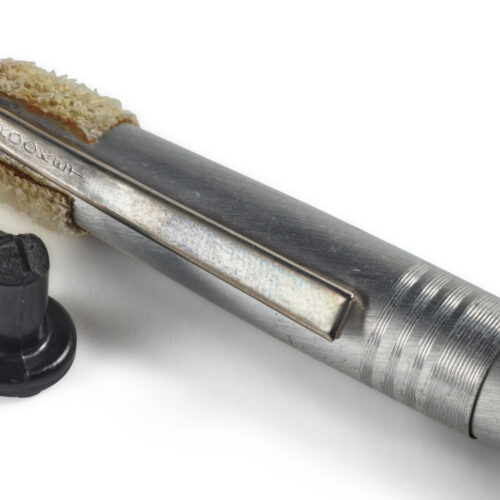
A dried-out felt-tip marker and a snapped-off piece of molded black plastic sold for $857,600 at a Sotheby's auction on Wednesday.
What otherwise might have been worthless bits of trash commanded the highest bids due to where the two items were 57 years ago—lifting off aboard NASA's Apollo 11 spacecraft on humanity's first mission to land astronauts on the Moon. More than flown odds and ends, one was the problem that almost stranded Neil Armstrong and Buzz Aldrin on the lunar surface, and the other was the simple solution to saving the mission.
"Houston, Tranquility. Do you have a way of showing the configuration of the engine arm circuit breaker?" radioed Aldrin to Mission Control after realizing he or Armstrong had inadvertently broken off the top of the circuit breaker switch that would enable their ascent engine to ignite, beginning their trip back to Earth. "The reason I'm asking is because the end of it appears to be broken off. I think we can push it back in again. I'm not sure we could pull it out if we pushed it in, though."
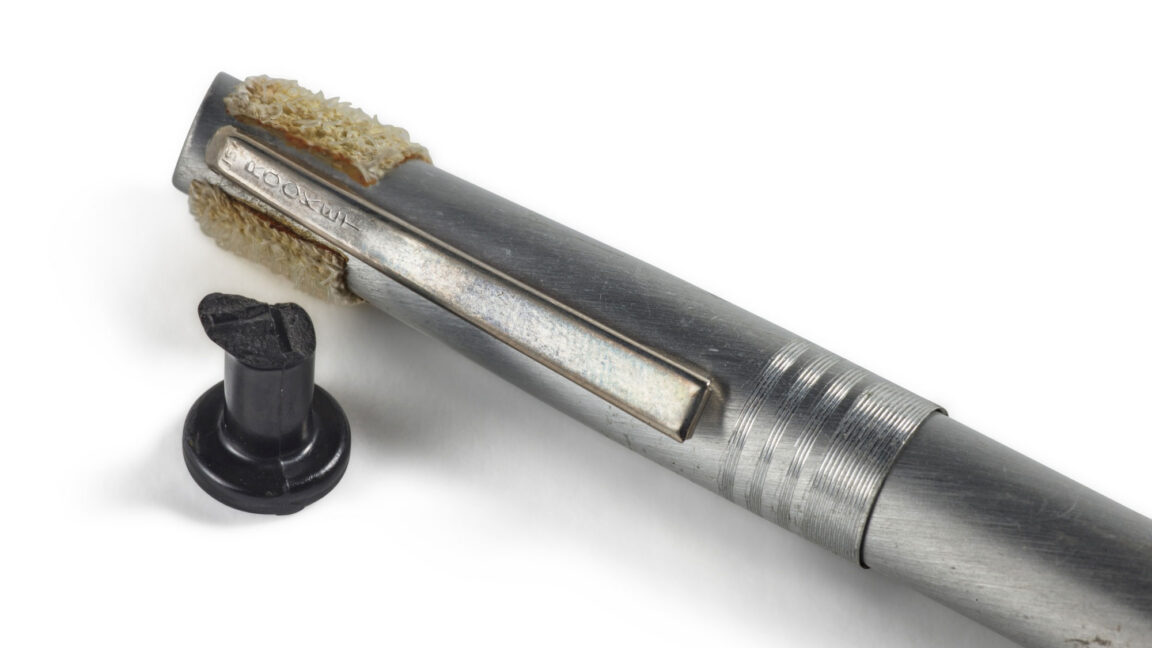
© Sotheby's
A dried-out felt-tip marker and a snapped-off piece of molded black plastic sold for $857,600 at a Sotheby's auction on Wednesday.
What otherwise might have been worthless bits of trash commanded the highest bids due to where the two items were 57 years ago—lifting off aboard NASA's Apollo 11 spacecraft on humanity's first mission to land astronauts on the Moon. More than flown odds and ends, one was the problem that almost stranded Neil Armstrong and Buzz Aldrin on the lunar surface, and the other was the simple solution to saving the mission.
"Houston, Tranquility. Do you have a way of showing the configuration of the engine arm circuit breaker?" radioed Aldrin to Mission Control after realizing he or Armstrong had inadvertently broken off the top of the circuit breaker switch that would enable their ascent engine to ignite, beginning their trip back to Earth. "The reason I'm asking is because the end of it appears to be broken off. I think we can push it back in again. I'm not sure we could pull it out if we pushed it in, though."
© Sotheby's
Schwarzman Centre, Oxford
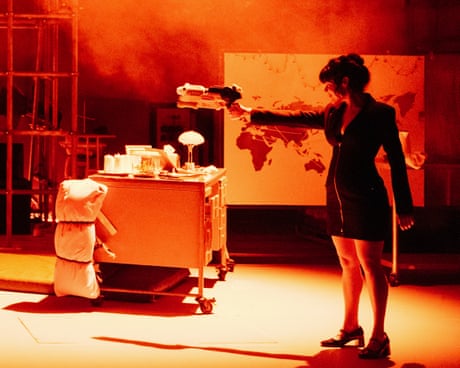
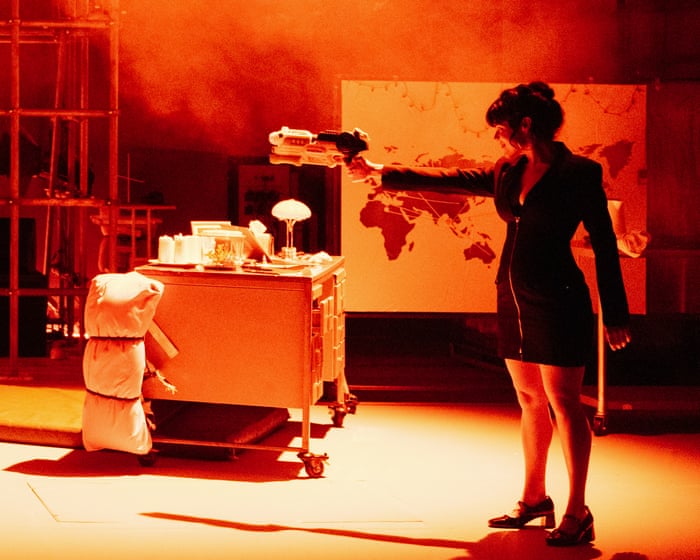
Headlong’s take on Karel Čapek’s 1920 tale of romance and robots is rife with timely debates about tech’s threat but at times the philosophical discussions drag on
If our world is currently thinking through the brave new future of generative AI and super intelligence, Karel Čapek’s 1920 play RUR: Rossum’s Universal Robots proves the notion of robot consciousness and rebellion is not a new anxiety. So does Mary Shelley’s Frankenstein, which Čapek’s drama resembles in its philosophical debates and moral warnings, despite its futurism.
Ella Road adapts Čapek’s play for our times in this Headlong and Schwarzman Centre co-production, its science apparently informed by research from Oxford University academics, which gives it a cutting-edge, real-world underpinning.
Continue reading...
© Photograph: Helen Murray
© Photograph: Helen Murray
© Photograph: Helen Murray

 A single transistor that behaves like a brain cell in the deep freeze could help unlock the next generation of quantum computers and space exploration systems. Researchers at the University of Hong Kong (HKU) have developed a new type of brain-inspired electronic hardware that can operate at temperatures close to absolute zero. The breakthrough could [...]

Many people think menopause mainly causes symptoms such as hot flashes and mood swings. However, one of the biggest health changes during menopause happens silently inside the body. Bones begin to lose strength. Healthy bones may look solid, but they are constantly changing. Throughout life, old bone is removed and new bone is created. This […]
The post Hormone Therapy Help Older Women Keep Their Bones Strong appeared first on Knowridge Science Report.

Many people believe they need to spend hours exercising every week to improve their health. For older adults, this belief can sometimes become a barrier. Long workouts may feel overwhelming, especially for those who have health problems, joint pain, limited mobility, or busy schedules. However, a new study from Penn State College of Medicine suggests […]
The post Resistance Training Just 4 Minutes a Day Helps Older People Stay Strong appeared first on Knowridge Science Report.

When most people think about diabetes complications, they usually think about heart attacks, strokes, vision loss, or kidney disease. These conditions have received enormous attention from doctors and researchers because they are common and can be life-threatening. A major new study now suggests that another serious danger deserves a place on that list: infections. According […]
The post Infection Risk in Diabetes Has Been Overlooked for Too Long appeared first on Knowridge Science Report.
Britain's woke two-tier state has been rightly blamed for the police's appalling response to the stabbing of Henry Nowak. But less understood, says Professor Michael Rainsborough, is the Maoist origins of woke ideology.
The post The Maoist Origins of the Two-Tier State appeared first on The Daily Sceptic.