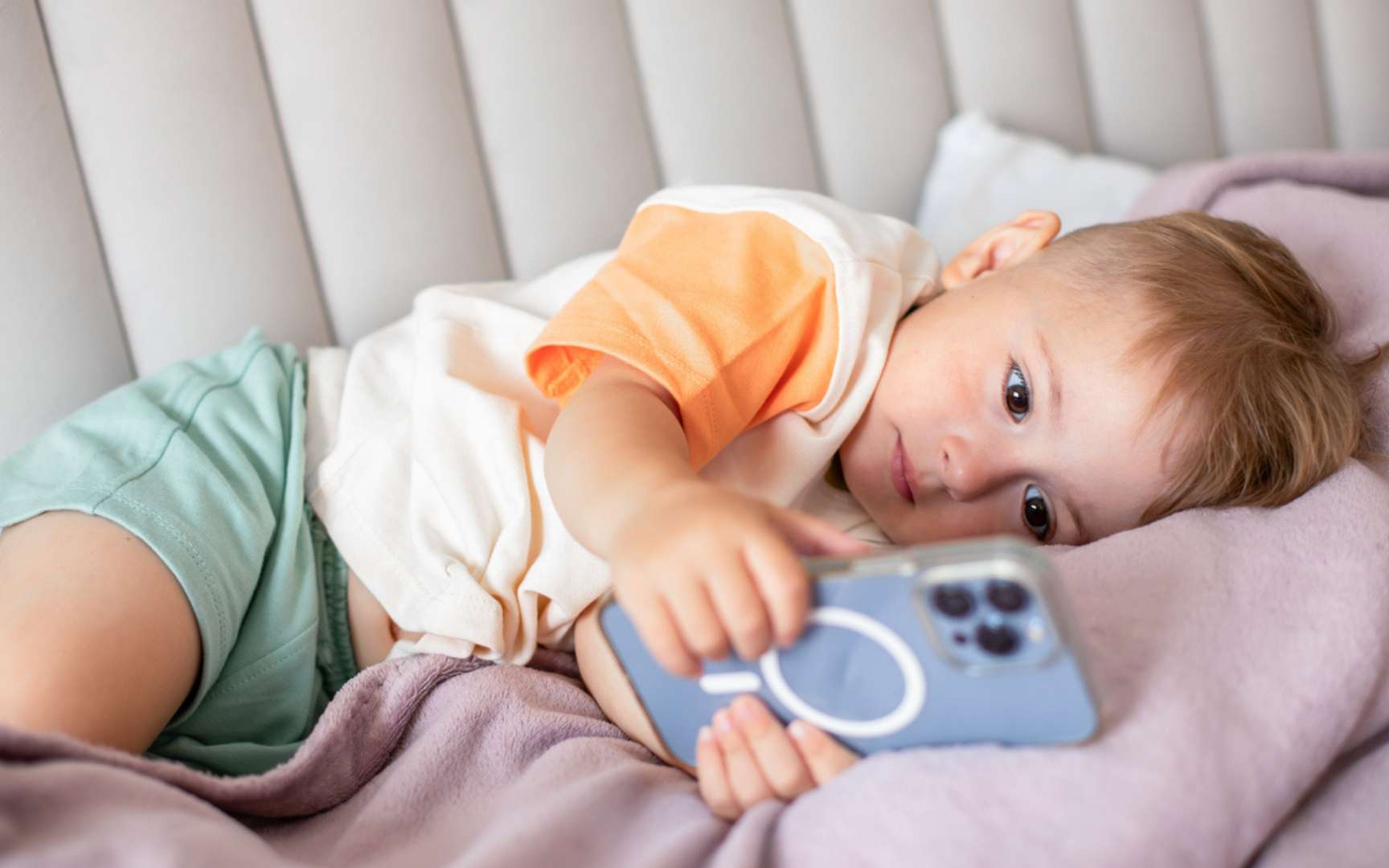
La forme physique des enfants européens décline depuis des décennies, mais un indicateur inquiète particulièrement les scientifiques


NASA recently awarded $10.5 million to seven organizations nationwide through its new State Hubs initiative. Space Florida was selected for Project ORBIT, which aims to expand opportunities for middle and high school students, boost enrollment in key career and technical programs, and create a statewide portal connecting skilled workers with aerospace employers.
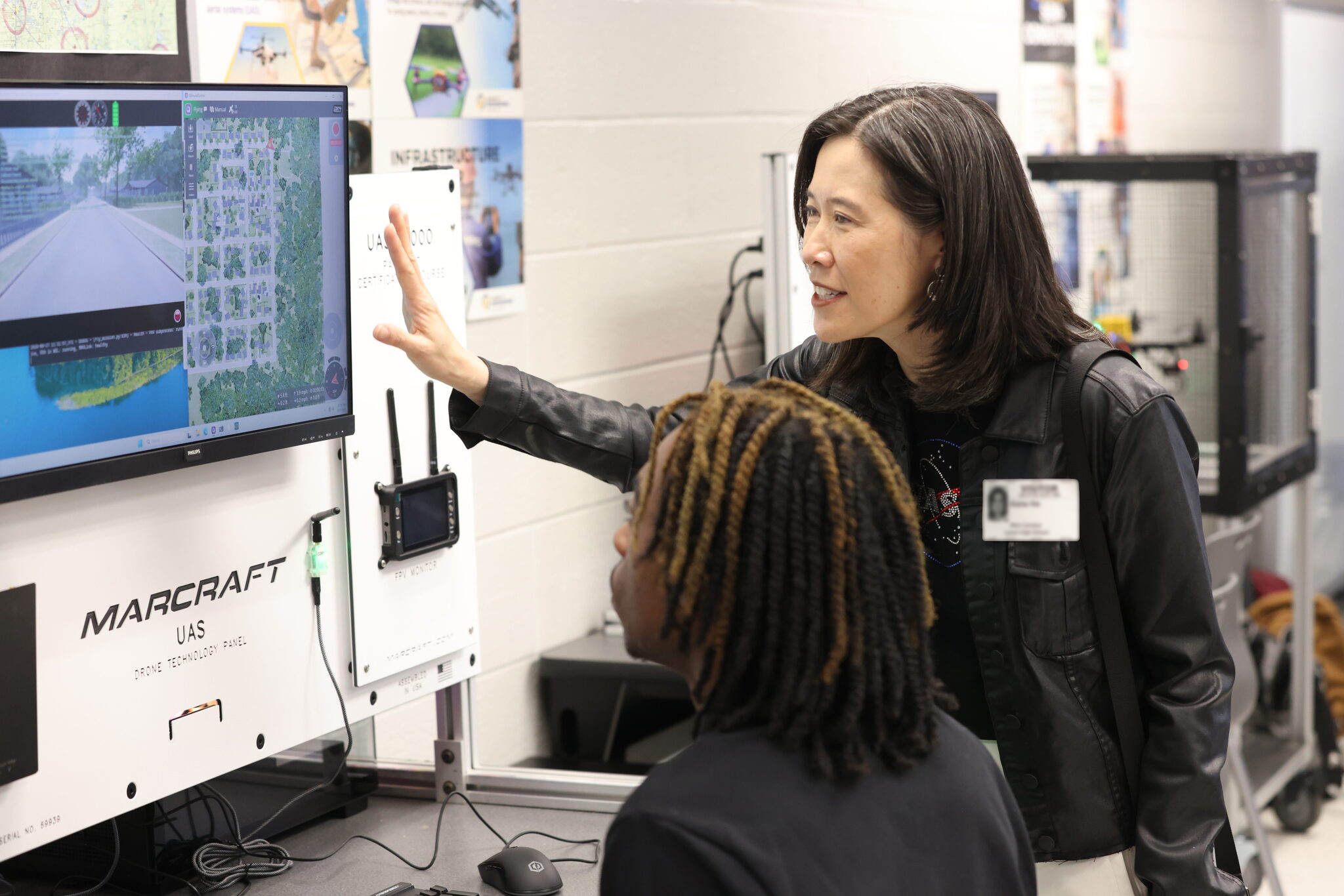
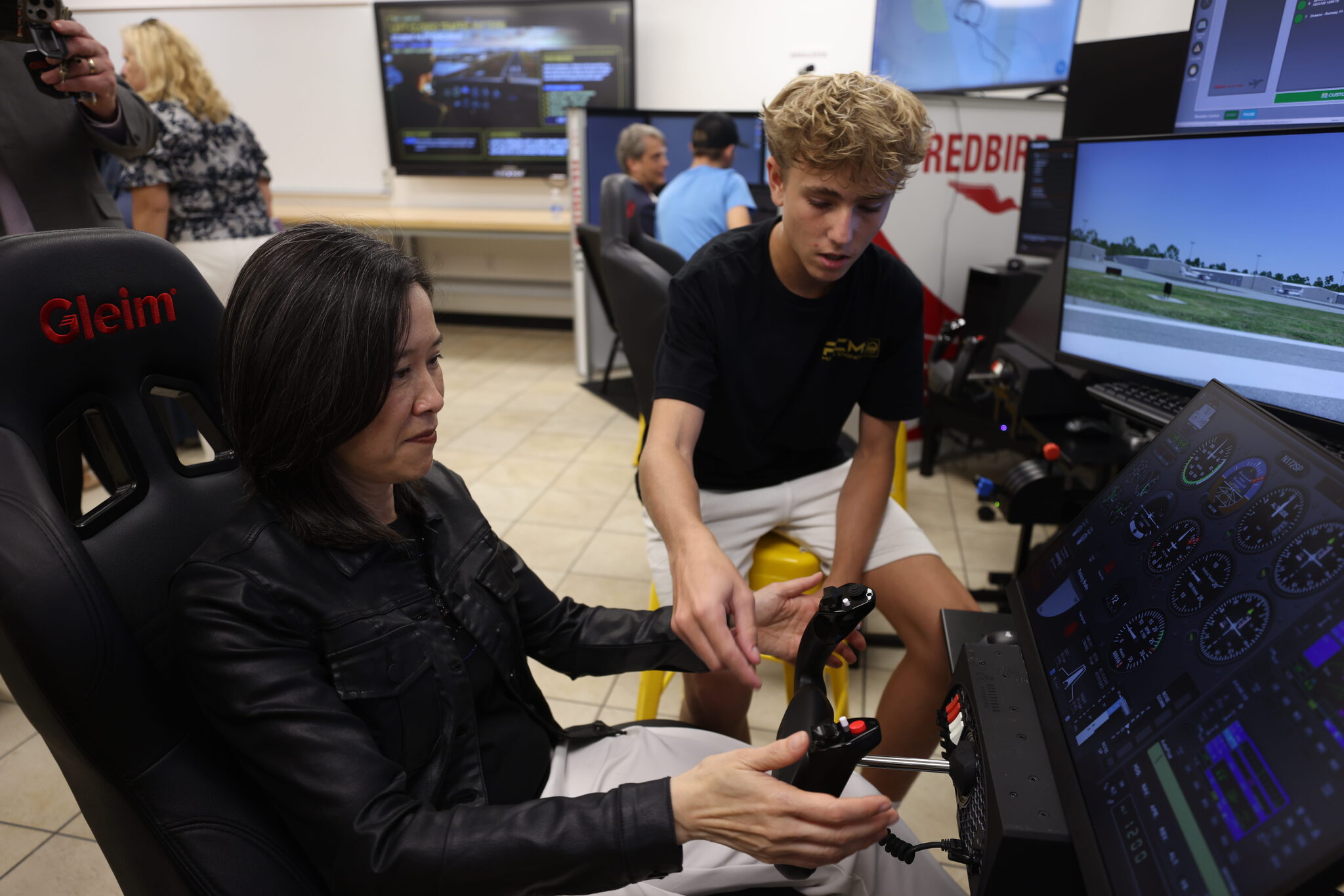
Elaine Ho, associate administrator for NASA’s Office of STEM Engagement, joined local leaders and industry partners recently to see Space Florida Academy students in action at three Central Florida schools. Students at Lyman High School in Longwood, Florida, demonstrated their skills in aerospace engineering, robotics, building trades, welding, and more. Later, in Merritt Island, Florida, Ho and the other leaders stopped by the Aeronautics & Flight Exploration (AFEX) program and cloud computing classrooms at Merritt Island High School and the robotics lab at nearby Edgewood Junior/Senior High School.
Since its launch in August 2024, the Space Florida Academy has expanded from 23 to 42 participating school districts, preparing students for careers in aviation and aerospace, advanced manufacturing, construction, cybersecurity, logistics, and semiconductors.
“It’s all about showing students what’s possible and then giving them the tools to achieve it,” said Dean Cuke, Merritt Island High School AFEX astronautics and aviation flight instructor. “There are far more possible pathways to be part of the space industry than I think they realize. We’re showing them ways that they can attain that, through learning, through motivation and chasing after their dreams. I’m excited for them.”
Merritt Island High School juniors and student pilots Olivia Street and Troy Wallenburg have both benefited from the program.
“It makes you feel like you’re a part of something way bigger than just a high school class. I learned what I want to do when I grow up – to be a pilot,” Street said.
“My entire life, I’ve just loved space,” Wallenburg said. “It’s great knowing that I’m actually somewhat involved in it, too.”
“I’m so impressed by how this region holds so many opportunities for our students, who are incredibly capable of solving hard problems, who can build our hardware, who want to be part of something bigger than themselves,” Ho said. “NASA is really focused on ensuring that those opportunities are easier to reach.”

As part of NASA’s new Inspiration Tour, Reid Wiseman, NASA astronaut and commander of the agency’s Artemis II mission, will highlight America’s strengths in space exploration and aeronautics innovation at the Baltimore Ravens vs. New Orleans Saints game in Baltimore on Sunday, Sept. 20.
A Baltimore native, Wiseman is a 27-year Navy veteran and NASA astronaut who spent 175 days in space over two missions. On April 1, Wiseman launched from NASA’s Kennedy Space Center in Florida on a SLS (Space Launch System) rocket as part of the Artemis II mission. Wiseman and his fellow Artemis II crew members completed a historic lunar flyby, marking humanity’s return to the vicinity of the Moon for the first time in more than 50 years.
Wiseman also will be available for media interviews inside the stadium at 12:20 p.m. To RSVP for the media availability, please contact Shaneequa Vereen at: shaneequa.y.vereen@nasa.gov.
NASA team members will engage with fans at the agency’s Experience Zone, located outside the stadium from 10 a.m. to 1 p.m. before the game. Fans can learn more about NASA’s return to the Moon through the agency’s Artemis program, enjoy interactive games, and capture photos at a selfie station and with a large, inflatable NASA logo.
With stops across the nation, NASA’s Inspiration Tour convenes academic, industry, and public sector stakeholders to connect the agency with the people, technologies, and organizations that drive American leadership in space.
The tour will culminate in MAX POWER, a public exposition of American air and space innovation, Saturday, Nov. 7, and Sunday, Nov. 8, on and near the agency’s Kennedy Space Center in Florida. Held in honor of America’s historic 250th anniversary, the multi-day, family-friendly event will showcase the next-generation aircraft, spacecraft, autonomous vehicles, and technologies that will help define the future of transportation in air and space.
For more information about MAX POWER and the agency’s missions, visit:
-end-
Camille Gallo / Jessica Taveau
Headquarters, Washington
202-358-1600
camille.m.gallo@nasa.gov / jessica.c.taveau@nasa.gov

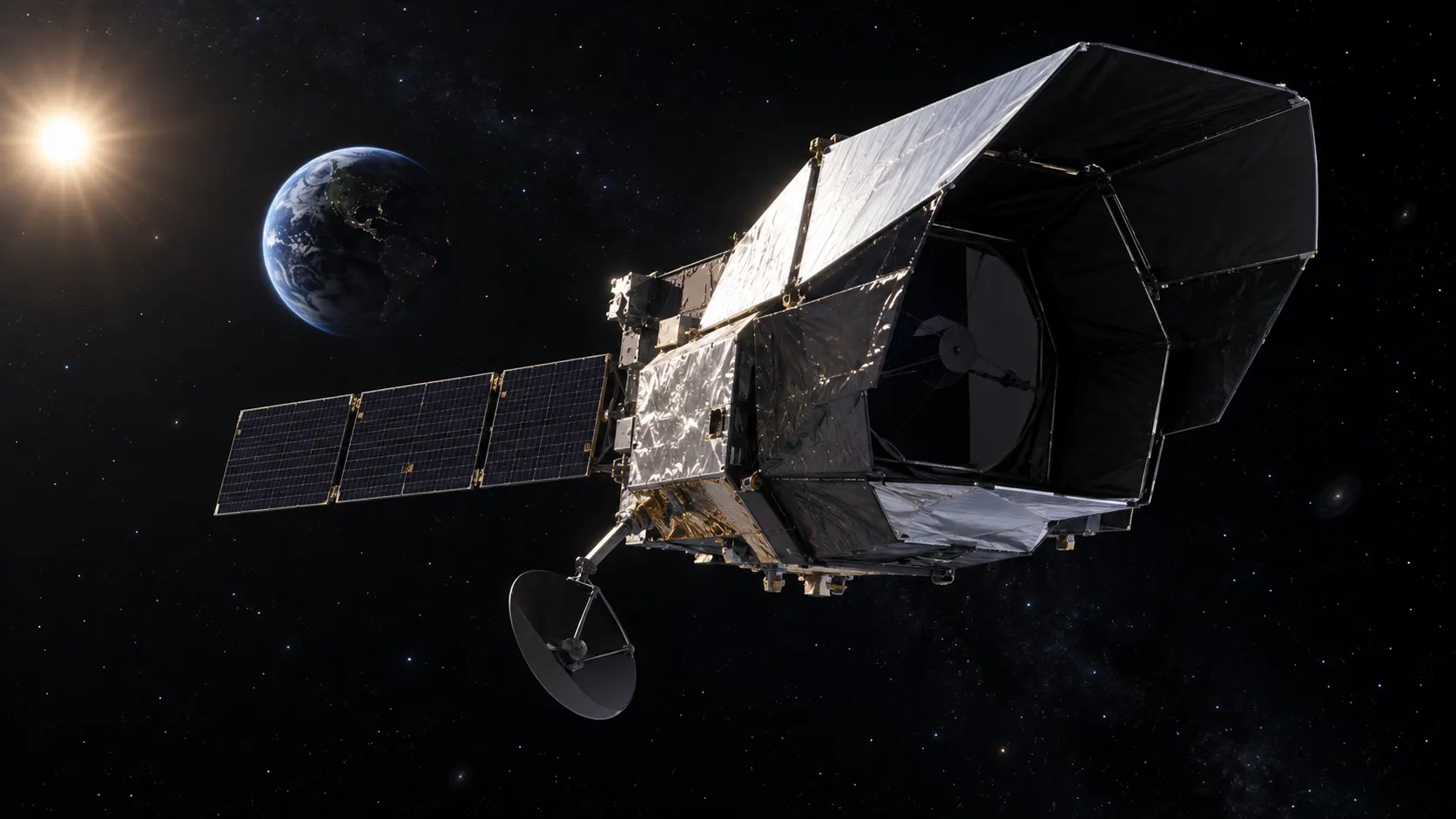
Roman’s antenna, sunshade and visor are deployed. Here is why the telescope’s three-month commissioning journey matters before its first images arrive.
The post Roman Is on Its Way to L2. Why Are Its First Days in Space So Carefully Choreographed? appeared first on Curiosmos.


Confira a chegada do Fedora 45 Beta com kernel Linux 7.2, GNOME 51 e KDE Plasma 6.7, novidade para fãs de distribuições Linux.
O post Fedora 45 Beta chega com Linux 7.2, GNOME 51 e KDE Plasma 6.7 apareceu primeiro em Blog do Edivaldo - Informações e Notícias sobre Linux.

On this day in 2014, Apple offered a tool for wiping "Songs of Innocence" from iPhones after a spammy U2 album giveaway provoked controversy.
(via Cult of Mac - Your source for the latest Apple news, rumors, analysis, reviews, how-tos and deals.)

Confira as melhorias e novidades do GNU Coreutils 9.12, incluindo comandos mais rápidos e opções avançadas.
O post GNU Coreutils 9.12 traz comandos sort, cut e uniq muito mais rápidos apareceu primeiro em Blog do Edivaldo - Informações e Notícias sobre Linux.
O novo ROG Rapture GT-BN98 já chegou às lojas canadianas e antecipa a chegada ao resto do mundo, incluindo Portugal, já no próximo mês. A marca também prepara o lançamento do primeiro sistema mesh Wi-Fi 8, o ZenWiFi BN12.
The post Asus estreia os seus primeiros routers Wi-Fi 8. Novos modelos chegam a Portugal em outubro appeared first on Tek Notícias.

Apple’s newest Apple Watch features are designed to remember conversations so users don’t have to. Legal experts say they may also test wiretap statutes that were written long before a wristwatch could quietly turn speech into text.
The tools arrived with the Apple Watch Series 12 and Ultra 4. Siri Recap produces summaries of conversations a wearer had during the day. Live Rewind, triggered by a double-press of the Digital Crown, shows a transcript of the previous 15 seconds. Apple markets both as memory aids, not as recording devices.
That distinction is the heart of the dispute. According to reporting by Bloomberg News’ Natalie Lung, attorneys in all-party-consent states — including California, Massachusetts, Pennsylvania, and Washington — are not convinced that on-device processing and the absence of a saved audio file will keep users clear of eavesdropping and wiretap laws. Those statutes generally require everyone in a private conversation to agree before it is intercepted.
Apple has built in several safeguards. Live Rewind plays an audible alert, shows a full-screen animation and microphone indicator, and processes audio on secure hardware that Apple says is inaccessible to the operating system, apps, the user or the company. The company says no audio recording is created or stored. Transcripts vanish about 30 seconds after the display dims unless saved in the Siri app. Recap summaries are deleted after seven days unless a user keeps them. Users can turn the features off or restrict them by time or place. Apple also says summaries do not attach comments to named people and may omit financial details, personal identifiers and authentication data.
Experts quoted in Lung’s reporting still see legal risk. Subodh Chandra of Chandra Law Firm said the feature set “raises serious concerns under California law and the laws of other states that require all-party consent.” Boston criminal defense attorney Joe Simons called it a likely “case of first impression” in Massachusetts. Pennsylvania defense lawyer Phil Lauer said the technology is “very close to being legal” because a person is not sitting on the other end of the feed — but that courts could still treat the watch’s capture and interpretation of speech as unlawful interception. Seattle attorney Mark Blair argued that fleeting processing may not matter: if consent is missing, the wearer could face criminal exposure even after the text disappears.
Colin Zick of Foley Hoag advised users to treat the tools as they would a wiretap and ask permission first. Adam Schwartz of the Electronic Frontier Foundation said bystanders have little practical way to consent or refuse, and called always-on monitoring of conversations “an unacceptable burden on our conversational privacy.” Former Apple employee Todd Dailey wrote that lawyers “will have some long nights ahead,” arguing Recap-style capability existed before but is now harder to detect.
Apple rejected the idea that the features record conversations. It noted that people already take notes with phones and wearables, said the 15-second Live Rewind window encourages responsible use near a speaker, and pointed out there is no audio file to share or produce. Company guidance still tells users to “consider” people around them when conversations might be private or sensitive. Unlike Live Rewind, Siri Recap has no continuous on-wrist indicator while it listens through the day.
The debate sits in a broader push toward ambient AI — smart glasses, always-available assistants, gadgets that sit in the room rather than wait for a button press. Dedicated recorders from companies such as Plaud and Pocket typically start only when activated. Apple’s watches, by design, must be listening first if they are going to rewind or recap later. Whether courts treat that as note-taking or interception is unsettled. Until it is, the legal risk may fall less on Cupertino than on the person wearing the watch.
MacDailyNews Take: Surely Apple’s legal team has vetted these features before release, but we’ll see what happens with the perpetually aggrieved their overly litigious ambulance chasers.
Please help support MacDailyNews — and enjoy subscriber-only articles, comments, chat, and more — by subscribing to our Substack: macdailynews.substack.com. Thank you!
Support MacDailyNews at no extra cost to you by using this link to shop at Amazon.
The post Always-listening Apple Watch AI could test eavesdropping laws appeared first on MacDailyNews.

Apple Original Films on Thursday unveiled the trailer for the upcoming documentary film “The Last First: Winter K2.” In “The Last First: Winter K2,” Amir Bar-Lev tells a complex, harrowing, and moving story that takes an unflinching look at the industry of extreme mountain climbing and its changing culture. Focusing on a 2021 expedition, this documentary follows Icelander John Snorri Sigurjónsson and the Pakistani father-son team of Ali and Sajid Sadpara, a party of mountaineers who set out to be the first to summit K2 in the winter, when the mountain’s conditions are the cruelest. The men soon find themselves sharing the treacherous ascent with influencer climbers and their film crews, commercial expedition clients and a Nepalese team no longer content to help Westerners achieve mountaineering glory. “The Last First: Winter K2” takes us to the icy heights and unpredictable weather of K2 and reveals a surprising and layered story — one of strategy and determination, class and caste, money and power — all under life-and-death circumstances.
“The Last First: Winter K2” is directed by Bar-Lev. The film is produced by Howard T. Owens and Ben Silverman through Propagate Content; Sean Richard produces for Object Studios; and Sarah Thomson and John Battsek serve as producers for Ventureland. The film is executive produced by James Packer, Will Kane, Drew Buckley, Taylor Levin, Isabel San Vargas, Bar-Lev, Kerstin Emhoff and Ali Brown.
Apple TV offers premium, compelling drama and comedy series, feature films, groundbreaking documentaries, and kids and family entertainment, and is available to watch across all of a user’s favorite screens. After its launch on November 1, 2019, Apple TV became the first all-original streaming service to launch around the world, and has premiered more original hits and received more award recognitions faster than any other streaming service in its debut. To date, Apple Original films, documentaries and series have been honored with 906 wins and 3,827 award nominations and counting including multi-Emmy Award-winning and history-making comedies “The Studio” and “Ted Lasso,” global cultural phenomenon “Severance,” Apple’s most-viewed drama “Pluribus,” Academy Award Best Picture winner “CODA” and Academy Award winner “F1,” the highest-grossing sports feature of all time.
MacDailyNews Take: Apple TV is available on the Apple TV app in over 100 countries and regions, on over 1 billion screens, including iPhone, iPad, Apple TV 4K, Apple Vision Pro, Mac, popular smart TVs from Samsung, LG, Sony, VIZIO, TCL and others, Roku and Amazon Fire TV devices, Chromecast with Google TV, PlayStation and Xbox gaming consoles, and at tv.apple.com, for $14.99 per month with a seven-day free trial for new subscribers. For a limited time, customers who purchase and activate a new iPhone, iPad, Apple TV 4K or Mac can enjoy three months of Apple TV for free.
Please help support MacDailyNews — and enjoy subscriber-only articles, comments, chat, and more — by subscribing to our Substack: macdailynews.substack.com. Thank you!
Support MacDailyNews at no extra cost to you by using this link to shop at Amazon.
The post Apple Original Films debuts harrowing trailer for ‘The Last First: Winter K2’ appeared first on MacDailyNews.
Scientists have unveiled a computational design for a terahertz metasurface biosensor that combines five distinct materials—graphene, MXene, tungsten disulfide, gold, and copper—into a single multilayer architecture capable of detecting refractive-index changes associated with chikungunya virus infection. The study, published in Results in Optics by G. Arunachalam, A.R. Kalaiarasi, Giri.G. Hallur, and V. Parthasarathy, reports a numerically predicted sensitivity of 907 GHz per refractive-index unit, among the highest values reported for hybrid-material terahertz biosensors, and couples the electromagnetic design to an XGBoost machine-learning surrogate model that predicts sensor behavior with accuracies exceeding 99.8 percent.
Chikungunya virus is an enveloped, positive-sense single-stranded RNA alphavirus transmitted primarily by Aedes aegypti and Aedes albopictus mosquitoes. While mortality remains low, generally below 0.1 percent, the broader public health burden arises from severe polyarthralgia that can persist for months or even years in a substantial fraction of patients across tropical and subtropical regions. With no approved antiviral therapy or licensed vaccine currently available, diagnostic accuracy sits at the center of clinical management and transmission control. Yet existing diagnostic tools face significant practical constraints, particularly in point-of-care and field settings.
Serological methods such as enzyme-linked immunosorbent assay suffer from cross-reactivity with related alphaviruses, including Ross River and O’nyong-nyong viruses, reducing diagnostic specificity. Real-time reverse transcription polymerase chain reaction offers high sensitivity during the acute phase but depends on laboratory infrastructure, trained personnel, and controlled sample handling. Virus isolation in cell culture provides confirmatory results but requires biosafety level-3 facilities and extended processing time. These limitations have motivated the search for rapid, label-free sensing approaches capable of operating at clinically relevant concentrations in decentralized environments.
The new work turns to the terahertz band, spanning roughly 0.1 to 10 THz, which lies between microwave and infrared regions of the electromagnetic spectrum. Terahertz radiation is non-ionising, with photon energies in the millielectronvolt range, allowing interaction with biological samples without causing ionising damage. Crucially, terahertz waves couple to low-frequency vibrational and rotational modes of biomolecules such as proteins, nucleic acids, and polysaccharides, producing measurable spectral features that support label-free detection. Because biological media including blood plasma and viral suspensions exhibit refractive-index variations in this domain, differences on the order of 0.01 to 0.02 refractive-index units can shift resonance frequency and field distribution when coupled to resonant sensing structures.
The proposed sensor is built around a periodically repeated square unit cell containing two identical square resonators, 2000 nanometers on a side, coated with tungsten disulfide—a two-dimensional transition metal dichalcogenide with strong light–matter interaction, high carrier mobility, and excellent dielectric confinement. This layer localizes the electric field in the sensing region and increases the interaction volume between the resonant field and the surrounding analyte. A pair of concentric circular rings, 3200 and 3800 nanometers in diameter and functionalized with MXene, surrounds the resonators, enhancing electromagnetic coupling, promoting efficient charge transport, and strengthening plasmonic interactions between resonator elements. An outer gold ring, 6000 nanometers in diameter, serves as the main plasmonic resonator supporting strong localized surface plasmon resonances with low optical loss. The entire multi-resonant assembly is embedded within a monolayer graphene sheet measuring 14,000 by 14,000 nanometers, which acts as a broadband absorber and a high-mobility charge transport medium whose electrically tunable chemical potential allows dynamic, active control of the resonance characteristics. Copper elements woven into the architecture provide supplementary conductive pathways that reinforce current distribution and coupling among the hybrid resonators. The structure rests on a silicon dioxide substrate, chosen for its low dielectric loss and mechanical robustness, which preserves the resonance quality factor.
The authors stress that the multilayer design is compatible with established microfabrication techniques. Fabrication would begin with a cleaned silicon dioxide substrate, followed by polymer-assisted transfer of monolayer graphene and thermal annealing. Gold and copper resonators can be deposited through electron-beam evaporation or magnetron sputtering with lift-off patterning, MXene rings through solution-based deposition, and the tungsten disulfide layer through chemical vapor deposition or thin-film transfer. With a unit-cell dimension of approximately 14 micrometers, the required feature sizes fall comfortably within conventional photolithography capabilities, and because fabrication imperfections remain far smaller than the operating terahertz wavelength, moderate tolerances are expected to have only limited influence on the electromagnetic response. For biosensing, the graphene surface could subsequently be functionalized with chikungunya-specific antibodies or aptamers using EDC/NHS or pyrene-based linker chemistries.
The electromagnetic modeling, performed in COMSOL Multiphysics, reveals a pronounced resonance at 0.355 THz, where electric-field simulations show the strongest and most spatially extensive enhancement. Varying the graphene chemical potential from 0.1 to 0.9 electronvolts produced dramatic modulation of the transmission contrast, which increased roughly 36-fold at the highest bias, from less than one percentage point to more than 27 percentage points, while peak transmission remained essentially unchanged above 98.6 percent. This asymmetric response—stable maxima paired with strongly modulated minima—arises because increasing chemical potential enhances graphene’s intraband conductivity, deepening resonant absorption through stronger light–matter interaction. The sensor also demonstrated remarkable angular robustness, maintaining peak transmittance above 97.8 percent across incident angles from 0 to 80 degrees, an important tolerance for realistic deployment where normal incidence cannot always be guaranteed.
Geometric optimization identified an outer circular resonator radius of 2500 nanometers and a square resonator side length of 2500 nanometers as the dimensions that maximize resonance strength, driving minimum transmittance down to approximately 65 to 67 percent and signifying optimal electromagnetic confinement within the active sensing region. When evaluated across refractive indices from 1.33 to 1.39, a range encompassing reported values for healthy plasma (approximately 1.35 RIU), healthy platelets (1.39 RIU), chikungunya-infected plasma (1.33 RIU), and infected platelets (1.38 RIU), the optimized configuration achieved a maximum sensitivity of 907 GHz/RIU, a figure of merit of 18.519 RIU⁻¹, a minimum detection limit of 0.061 RIU, a sensor resolution of 55.178, and a refractive-index resolution of 0.001 RIU. In comparative benchmarks against recently reported graphene- and hybrid-material-based terahertz biosensors—including graphene/copper/aluminum, graphene/silicon dioxide, MXene–graphene–black phosphorus, and graphene-integrated copper–silver designs—the proposed architecture’s sensitivity exceeded most published values, reflecting the synergistic field confinement produced by the five-material stack.
The machine-learning component addresses one of the central bottlenecks in metasurface development: the computational cost of repeated full-wave finite-element simulations during structural optimization. The team trained an XGBoost regressor, an ensemble method based on gradient-boosted decision trees, on simulation data covering incidence-angle variation and circular-ring dimension variation, using stratified sampling with 80 percent of data for training and 20 percent held out for independent testing, alongside five-fold cross-validation and grid-search hyperparameter optimization. The model captured more than 99.7 percent of response variance on unseen data, with mean absolute percentage errors below 0.162 percent and prediction accuracies from 99.838 to 99.959 percent. Acting as a computational surrogate, the trained model enables rapid interpolation across the design space without sacrificing the fidelity of the underlying electromagnetic model.
The authors are careful to frame the work as a computational proof-of-concept rather than an experimentally validated diagnostic. The sensor detects changes in the local dielectric environment surrounding the resonators, not viral particles or nucleic acids directly, and refractive-index sensing alone cannot intrinsically distinguish chikungunya from other viruses with similar dielectric properties. Analytical specificity in practice will depend on surface biofunctionalization with chikungunya-specific recognition molecules immobilized on the graphene or gold sensing surface. Future work will focus on device fabrication, biofunctionalization, calibration with reference refractive-index standards, experimental validation with clinically relevant plasma and platelet samples, and systematic evaluation of selectivity against related arboviruses—steps that would transform this numerically validated platform into a practical tool for rapid, label-free infectious disease diagnostics in the field.
Article Title: Hybrid graphene–MXene–WS₂ terahertz metasurface detects chikungunya virus via machine learning
Article References: Arunachalam, G., Kalaiarasi, A., Hallur, G., & Parthasarathy, V. (2026). Machine learning-assisted hybrid graphene–MXene–WS₂ terahertz metasurface biosensor for highly sensitive label-free chikungunya virus detection. Results in Optics, 25, Article 101149. https://doi.org/10.1016/j.rio.2026.101149
Image Credits: AI Generated
DOI: 10.1016/j.rio.2026.101149
Keywords: chikungunya virus detection, computational biosensor design, high sensitivity biosensors, hybrid graphene MXene WS₂, machine learning in biosensing, multilayer architecture, nanomaterial-based sensors, public health diagnostics, refractive index sensing, terahertz metasurface biosensor, virus diagnosis in field settings, XGBoost surrogate model

Ceiling lights are usually one of those home products that disappear into the background once they are installed. BlitzWill BW-CLT2, however, takes a different approach by combining a conventional main ceiling light with a separate RGB ambient-lighting effect.
The result is a fixture designed to handle two different jobs: providing practical illumination for everyday activities while also giving a room a more customizable atmosphere when bright white lighting is not what you want. The BlitzWill BW-CLT2 is designed to replace a conventional ceiling fixture with a more flexible smart home lighting setup.
The 40cm BlitzWill BW-CLT2 supports adjustable color temperature from 2700K to 6500K and can be controlled through an app, voice commands, or a remote control. It also supports DIY scene settings, giving users more control than a basic on/off ceiling lamp.
The combination of adjustable white light and RGB effects also makes the BW-CLT2 more versatile than a basic smart LED ceiling light.
For normal use, the primary light can provide the room’s everyday illumination. The adjustable 2700K–6500K range gives users the flexibility to move between warmer and cooler-looking white light depending on the time of day or the atmosphere they want.

The RGB section serves a different purpose. Instead of replacing the main light, it can be used to add color around the room and create a softer background effect.
That separation makes the design more practical than an RGB-only lamp. You can keep the main light focused on visibility while using the colored lighting to change the mood.
A fixed-color ceiling lamp can work perfectly well, but it gives you little flexibility once the fixture is installed.
The BW-CLT2 takes a more adaptable approach with a 2700K–6500K adjustable color-temperature range. Warmer settings can suit relaxed evening use, while cooler white light can be more appropriate when you need a brighter, more functional environment.

This makes the light suitable for spaces that serve multiple purposes. A bedroom, study, living room, or gaming area can all require different lighting at different times.
Rather than buying separate lights for different situations, the BW-CLT2 puts those adjustments into one ceiling fixture.
Another advantage is that the BW-CLT2 is not limited to a physical wall switch.
The product supports app control, voice control and a dedicated remote, giving users several ways to change the lighting.
App-based control is particularly useful for people who prefer adjusting lighting from a phone, while the remote provides a more traditional option for quick changes.
The combination also means the light does not have to be treated as a purely decorative smart-home gadget. It can still be operated in a straightforward way when you simply want to change the lighting without opening an app.
The BW-CLT2 also includes a DIY scene mode, which is one of the features that separates it from a basic adjustable LED ceiling lamp.

Instead of repeatedly changing brightness, color temperature, or RGB effects manually, users can create lighting combinations suited to particular situations.
For example, one setup could prioritize a brighter white light for working, while another could use warmer illumination with RGB ambience for watching movies or relaxing.
The important point is not simply that the lamp has RGB lighting. It is that the different lighting elements can be used as part of a more personalized room setup.
At 40cm, the BW-CLT2 occupies a middle ground between small decorative fixtures and larger ceiling panels.
That makes it potentially suitable for bedrooms, smaller living spaces, studies, gaming rooms, and other areas where a large ceiling fixture may look excessive.
However, buyers should consider the dimensions of their room before choosing it. A 40cm fixture may be a sensible fit for a compact or medium-sized space, while a much larger room could require additional lighting.
The BW-CLT2 makes the most sense for people who want more than basic ceiling illumination.
Its strongest feature is arguably the combination of practical white lighting and RGB ambience. The adjustable 2700K–6500K range handles everyday lighting needs, while the RGB system and DIY scenes add a more decorative element.
It is also worth remembering that smart-lighting features are most valuable when you actually plan to use them. If you only need a simple ceiling lamp that stays at one brightness and color, a conventional LED fixture may be enough.
For users who want to experiment with room lighting, however, the BW-CLT2 offers considerably more flexibility in a single fixture.

BlitzWill BW-CLT2 Smart Ceiling Light is less about adding another colorful gadget to a room and more about combining several lighting functions into one ceiling fixture.
Its 40cm form factor, adjustable 2700K–6500K white lighting, RGB ambience, multiple control methods, and DIY scene support give it a broader role than a standard ceiling lamp.
Banggood’s EU-direct listing currently shows the BW-CLT2 at around $52.99, although the final price can change with promotions, region, taxes, and availability.
For shoppers looking to make a room more adaptable without filling the ceiling with multiple lighting fixtures, the BW-CLT2 is an interesting option worth considering.
The post BlitzWill BW-CLT2 Smart Ceiling Light Combines Everyday Illumination With RGB Ambience appeared first on IGeeKphone China Phone, Tablet PC, VR, RC Drone News, Reviews.
ALLDOCUBE has officially introduced the Coolplay Pad Pro 2, a new Android tablet aimed at users who want a larger screen without giving up cellular connectivity. The tablet combines a 12.1-inch high-resolution display, a 10,000mAh battery, 4G dual-SIM support and Android 16-based software, making it an interesting option in the Android tablet market.”
The tablet is priced at 1,299 yuan (about $182) for the 8GB RAM and 128GB storage configuration. During the initial sales period, buyers can also receive an 80-yuan discount coupon, bringing the effective price down to 1,219 yuan.
The Coolplay Pad Pro 2 focuses heavily on its large display. It features a 12.1-inch IPS panel with a 2.5K resolution and 90Hz refresh rate, providing more screen space for video streaming, web browsing, gaming and productivity tasks.
The panel uses an in-cell fully laminated design, which helps reduce the gap between the display layers. This can make content appear closer to the surface while also improving the overall viewing experience compared with a conventional non-laminated screen.
For a tablet in this price range, the combination of a 2.5K resolution and 90Hz refresh rate gives the Coolplay Pad Pro 2 a more capable multimedia setup than a basic entry-level Android tablet.
Powering the tablet is MediaTek’s Helio G100 octa-core processor, with a maximum clock speed of 2.2GHz. ALLDOCUBE says the device scores more than 500,000 points in AnTuTu, although real-world performance will naturally vary depending on software, temperature and testing conditions.
The standard configuration includes 8GB of RAM and 128GB of UFS storage. Users who need additional space can expand the storage with a TF card supporting capacities of up to 1TB.
This hardware combination should be suitable for everyday activities such as browsing, video playback, social apps, office work and casual gaming. More demanding games may require lower graphics settings to maintain consistent performance.
One of the tablet’s biggest selling points is its cellular connectivity. Unlike Wi-Fi-only tablets, the Coolplay Pad Pro 2 supports 4G connectivity with dual-SIM support, allowing it to stay online without relying on a nearby Wi-Fi network.
The tablet supports voice calls, SMS messaging and mobile data through major domestic carriers. This makes it more versatile for users who want a tablet that can remain connected without relying on a nearby Wi-Fi network.
For commuters, travelers or users who prefer a large screen for communication and mobile internet, the 4G functionality could be one of the device’s most practical features.
The Coolplay Pad Pro 2 packs a 10,000mAh battery, giving the tablet a substantial power reserve for a large-screen device.
Charging is supported through 33W PD fast charging with PPS protocol support. However, the tablet does not include a charging adapter in the standard package, so buyers may need to purchase a compatible charger separately.
The large battery should be particularly useful for users who frequently watch videos, browse the web or use mobile data away from a power outlet.
For photography and video calls, the tablet features an 8-megapixel front camera and a 16-megapixel rear camera with autofocus.
The rear autofocus camera can be useful for scanning documents, capturing notes or taking quick photos, while the front camera is positioned more toward video calls and everyday communication.
Audio is handled by a four-speaker system with BOX-style acoustic chambers, paired with a digital amplifier chip. The quad-speaker setup is intended to provide a wider audio experience when watching movies, listening to music or playing games.
Despite its large battery and 12.1-inch display, the Coolplay Pad Pro 2 has a body thickness of 7.45mm. The tablet runs ALLDOCUBE OS, a customized interface based on Android 16.
The software gives the tablet a newer Android foundation while providing ALLDOCUBE’s own system experience. Combined with the large display, cellular connectivity and expandable storage, the device is positioned as a multifunctional tablet rather than simply a media-consumption product.
The Coolplay Pad Pro 2 takes a straightforward approach: a large 12.1-inch 2.5K display, 90Hz refresh rate, 10,000mAh battery and 4G dual-SIM connectivity are combined into a relatively affordable Android tablet.
Its 4G calling and dual-SIM support could be especially appealing to buyers who want a standalone tablet for mobile data and communication. Meanwhile, the 2.5K 90Hz panel and quad-speaker system make it better suited to entertainment than many entry-level tablets.
At 1,299 yuan, or 1,219 yuan after the launch discount, the Coolplay Pad Pro 2 could be an interesting option for users prioritizing screen size, battery capacity and cellular connectivity over flagship-level processing power.
The post ALLDOCUBE Coolplay Pad Pro 2 Launches With 12.1-Inch 2.5K 90Hz Display and 4G Dual SIM appeared first on IGeeKphone China Phone, Tablet PC, VR, RC Drone News, Reviews.
Apple now sells three Apple Watches, and for most sports the answer is the middle one. The Apple Watch Series 12 at $399 covers running, swimming and everyday health tracking on Apple’s own numbers, the Ultra 4 at $799 earns its price only if your day runs past 10 hours of workout tracking or your […]
The post Apple Watch by Activity: What the Specs Say for a Runner, a Swimmer, a Hiker and a Desk Worker appeared first on The Mac Observer.
Apple Watch Series 12 starts at $399, which is what Series 7 cost in 2021 and what every Series watch in between has cost at launch. Apple Watch Ultra 4 starts at $799, the same as the first Ultra in 2022, and Apple Watch SE 3 is $249, the same as the SE it replaced. […]
The post Apple Watch Price History: $399 Since Series 7, $799 for Every Ultra, and $249 for SE appeared first on The Mac Observer.
Apple rated the Apple Watch at up to 18 hours of normal use for four straight generations, from Series 7 in 2021 to Series 10 in 2024. Series 11 moved that to 24 hours last year, Series 12 keeps it, and Apple Watch Ultra 4 is now rated at up to 50 hours. The more […]
The post Apple Watch Battery Life History: 18 Hours for Four Generations, 24 Now, and 50 on Ultra 4 appeared first on The Mac Observer.