It’s always a good idea to carefully consider the company you keep — especially if you happen to work for one of Elon Musk’s massive companies.
According to local channel FOX7, SpaceX manager Kyle Gonzalez has been arrested over the alleged stabbing of a Tesla contractor during a team-building exercise gone horribly wrong.
During the night out with a group of co-workers and friends, Gonzalez reportedly got into a heated argument with the Tesla worker over a game of pool at the Waterhole Saloon, a roadside honky-tonk just outside of Austin, Texas.
Court documents viewed by the Austin American-Statesmanclaim that the SpaceX manager became irate after one of the women he had entered the bar with went to compliment the Tesla contractor’s performance on a karaoke song. When the Tesla worker asked the woman to join him for a game of pool, Gonzalez allegedly became angry, saying he was “going to kill” the contractor.
That’s when Gonzalez allegedly pulled out his pocket knife and stabbed the man in the neck, leaving him with a one-inch puncture wound, the Statesmen recounts.
The unnamed contractor was then rushed to the hospital for life-saving surgery, and is expected to pull through.
Gonzales was reportedly found hiding out in a nearby parking lot, still holding the bloody knife. Court documents note that the SpaceX manager said he hid “for his safety,” though he later apologized for the attack three separate times. He was charged with felony assault with a deadly weapon, with a bond set at $25,000.
Gli astronomi hanno scoperto 84 misteriose sorgenti di raggi X in sei galassie vicine. Chiamate “hypersoft X-ray sources”, potrebbero essere sistemi binari contenenti nane bianche, stelle di neutroni o buchi neri e aiutare a risolvere due importanti enigmi dell'astrofisica.
The Conservatives want to brand Burnham’s administration as a ‘traditional tax and spend socialist government’
In a news release issued ahead of his speech this morning, Andrew Griffith, the new shadow chancellor, gave details of some of the questions he wants the experts he has asked to review small business regulation to address. (See 8.58am.) He said:
[Craig Mackinlay and Robert Colvile] will produce a report taking evidence from small business and self-employed organisations. While they will have a wide remit, they will consider in particular these key questions, and report in December:
-Why have past attempts to reduce the regulatory and compliance burden on small business and the self-employed failed, and what specifically should be done to reduce the burden successfully?
This is staggering. Our socialist Chancellor has dished out a big Bank of England finance job to a socialist union boss who knows nothing about finance.
Clearly, trade union donations not only buy your way into government policymaking, but also onto the Bank of England’s board. This is cronyism in plain sight.
Archaeologists rarely identify a settlement from one object. They combine buildings, hearths, tools, food remains, activity areas, and patterns of rebuilding to understand a site.
Encore trop peu connue, la choline est un nutriment essentiel au bon fonctionnement de l’organisme, et ce, dès la vie in utero. Indispensable au développement du cerveau, elle joue aussi un rôle clé dans la mémoire, l’humeur ou encore la santé du foie. Pourtant, la majorité de la population n’en...
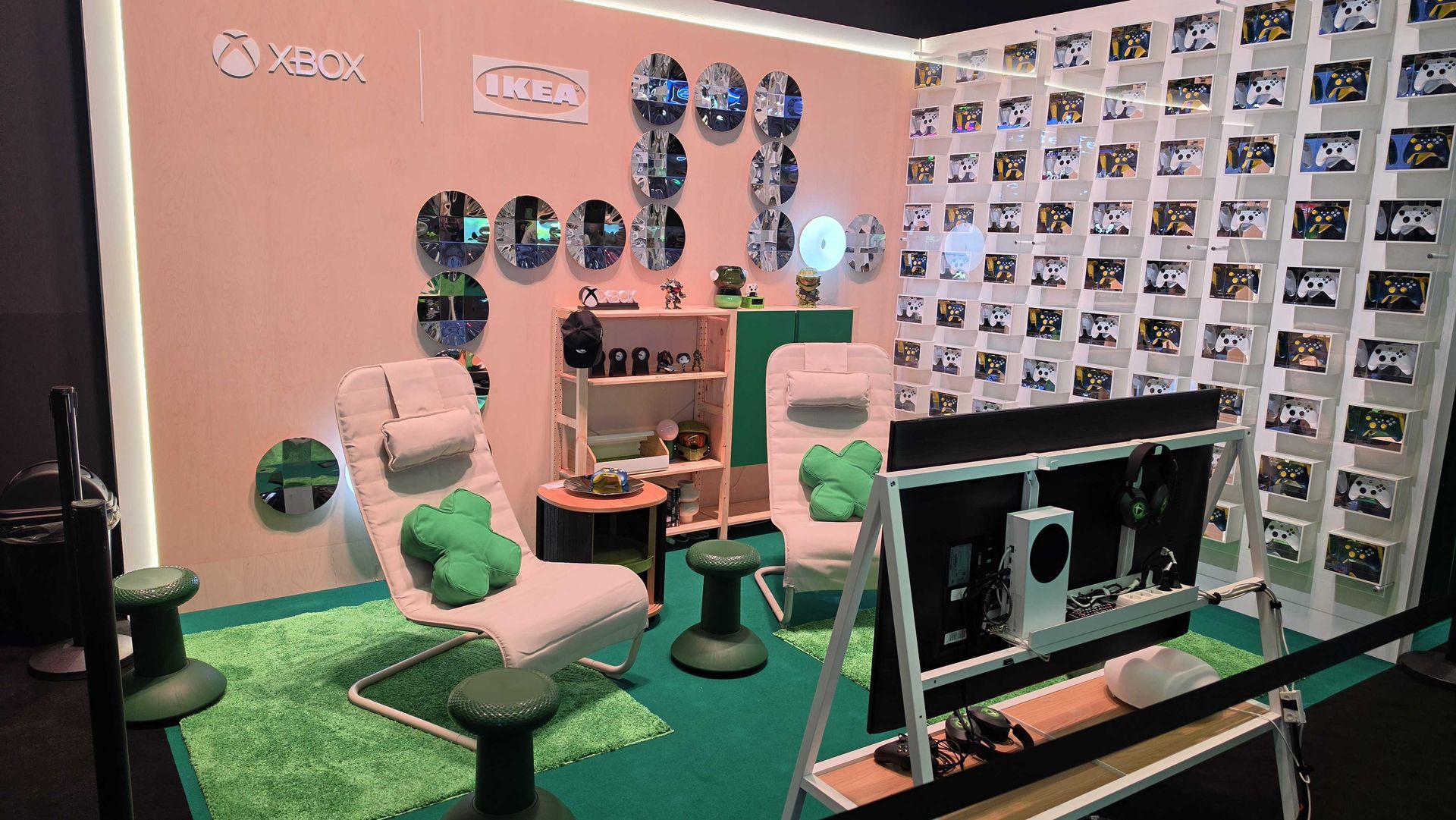
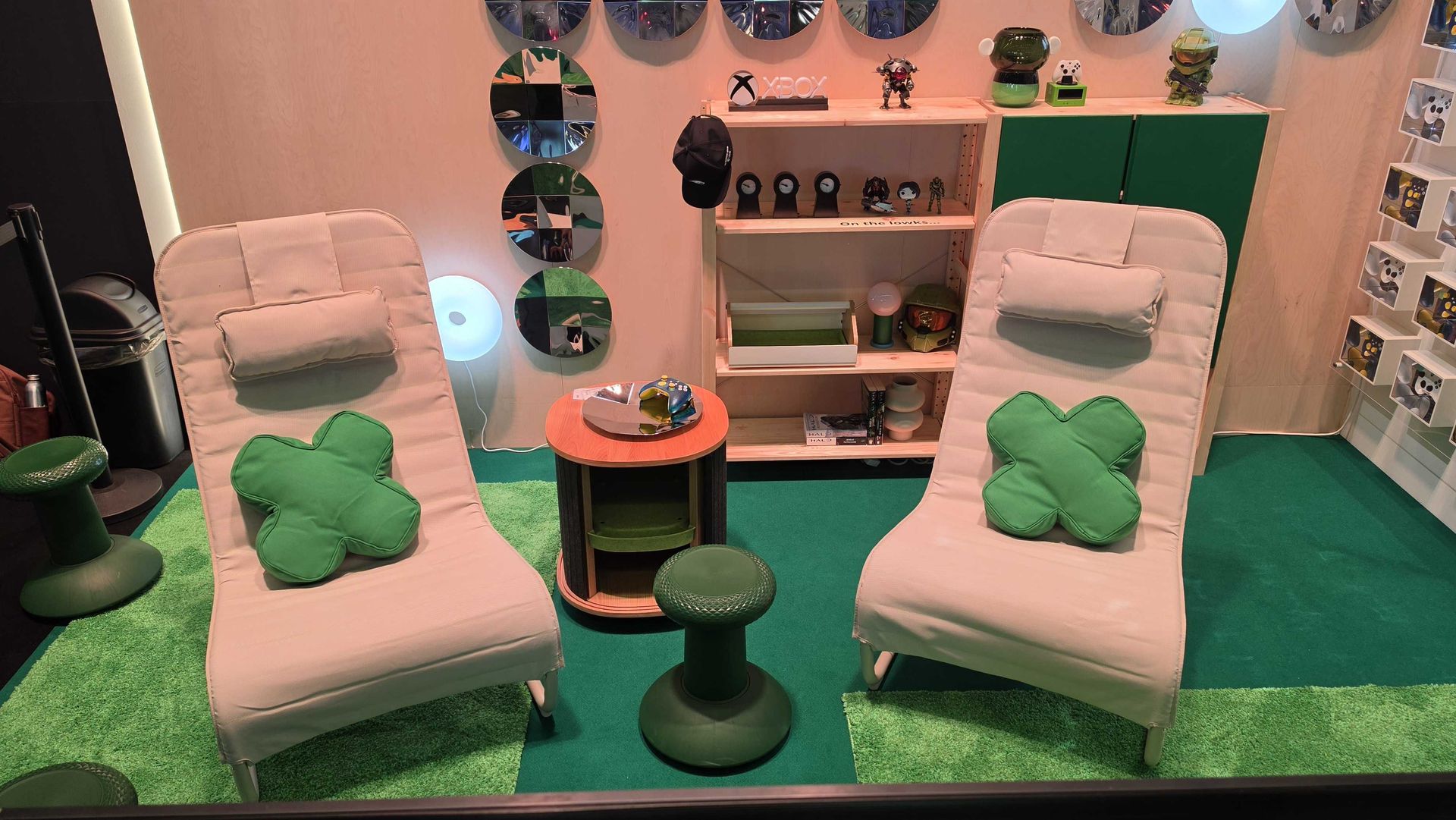
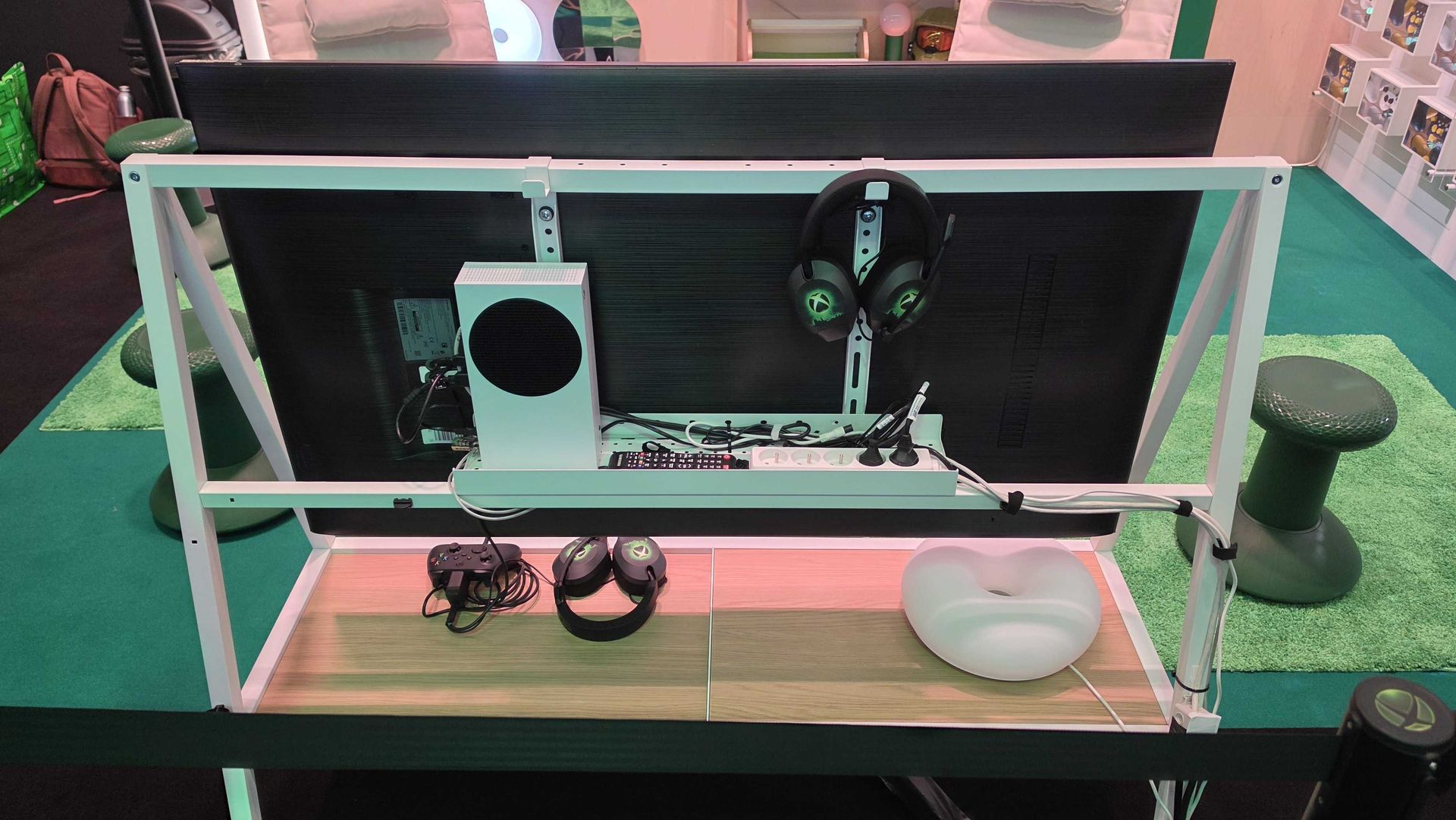
With its multi-functional side table, TV stand, and decorative controller box, this is some smartly made furniture with some genuinely helpful uses. Then, with a thumbstick stool and a D-pad cushion, it's also one of the silliest things I've seen.
Taken as a whole, you can see it's a mix of the playful and the practical. After I spoke to designers at both IKEA and Xbox at the show, it turns out that was the point all along.
"That was present throughout the journey because it's important," explained Philip Dilé, product developer for IKEA of Sweden. "Playing games is playful; it is fun. Solving people's needs connected to that can be very functional and practical. We tried to balance that, for sure.
"We wanted to make things that are relevant for people who play games. Something that reflects you, or that you feel allows you to express yourself...but the object itself is a beautiful piece of home furnishing."
It's a philosophy echoed by Carl Ledbetter, partner head of design at Xbox: "Just like when we design a console, it can be as quiet as people want it. They can put it back and let it recede into their environment. Or they can pull it forward and have it be very expressive. And I think some of those same qualities are in these products in the YXSTABY collection."
(Image credit: Future / IKEA / Xbox)
Ledbetter used the controller display box and the TV stand as examples of this. With the former, it's ideal for enthusiast gamers who like to collect controllers and show off their favorite designs in a dedicated gaming space. Meanwhile, with the latter, it serves a "dual life" — whether it's sitting in the corner while you're watching shows and movies, or wheeled front and centre for an intense gaming session.
"That was a big part of our philosophy: how do we make products that can adapt to how people want to use them? Either be as expressive as possible, or just be part of your world," summarised Ledbetter.
You can see that approach clearly in all of the more practical products from the collection.
Take the side table. Closed up and next to your sofa, it could be mistaken for another piece of clean and minimalist furniture you'd find in IKEA. Open up the sliding doors on the front, though, and inside there's space specifically designed to store controllers, headsets, and battery packs — plus the all-important cable management and power connectivity options you need to keep your tech charged between sessions.
(Image credit: Future / IKEA / Xbox)
"This came up time and time again: cable management, charging stuff — where do you put it when you're done? People don't want it all over the place," said Ledbetter.
And Dilé agreed: "We looked at it from the perspective of: what does gaming throughout the home look like? Because, of course, people play at their desks, in the living room, on the couch. In so many different ways. For us, it was important to cater for a lot of these different needs.
"And there's one never-ending challenge working for IKEA: cable management. It always comes up over and over again. I think it's a very real frustration for people.
"Take the TV stand, for example. Yeah, you need to have the console there; you need to have somewhere to charge the controllers, somewhere to put a headset. That was one of the benefits of working together with someone like Xbox that knows gaming, and the hardware, and the players. That made the brief really, really clear."
(Image credit: Future / IKEA / Xbox)
And even though designing for gamers was a big part of their brief, both teams were also well aware that they wanted products that a non-gamer would be happy to live in their home. This meant offering something that wasn't bedazzled with RGB lighting and garish colors.
"You need to cater for gamers, but also for non-gamers or people who are living with gamers, or people who want to have the functionality but still want to have a nice home," said Dilé.
"[We wanted to create] things that maybe your spouse or the people you live with also want to put in your home. These aren't just things that you accept because of your hobby. That was an important balance for us.
"There are so many people who play games, so it’s incredibly diverse. We really wanted to showcase that you can have that [gaming] experience and still have beautiful products that blend into your home to create a nice environment that you want to live in."
(Image credit: IKEA)
That led Ledbetter to reminisce about the first meeting between both parties, where they both discovered they shared very similar design philosophies and were keen to get both of their respective design teams together to bounce around ideas.
The result is this YXSTABY collection — nine products encompassing everything from stools, seats and cushions, to TV stands, storage and display cases — set to launch in October later this year. A weird and wonderful mix of items that speak to both the fun side of gaming and the practical needs in the home.
Ledbetter summed up his hopes for the collection as follows: "Think about it: we create these controllers, and we sell millions of controllers, but we're not in charge of the controller’s home. We make the controller, and then where does it go? We don’t know. So, now, there's this opportunity between IKEA and Xbox to build that home. It felt like a completion of that journey."
In recent years, there has been a lot of excitement about the potential for studying human diseases in what are called "organoids." These small patches of tissue, formed using stem cells, appear to produce many of the same cell types and at least some of the structures normally formed in actual organs, and thus can provide a better model for diseases that rely on the sometimes complex interactions among multiple specialized cell types that are a feature of the human body.
But even the most sophisticated organoids lack a lot of the features of a real human body. This is especially true for brain organoids, which don't form any of the connections with specialized brain structures needed to behave "normally." On Wednesday, a research group at Stanford University described a possible way to study brain organoids in a somewhat more natural context: They genetically wiped out a large portion of the mouse brain and replaced it with human brain organoid cells.
The replacements
Organoids, because they adopt a three-dimensional tissue structure and consist of various specialized cells, provide a much better model for an intact tissue than simply having a bunch of disassociated cells lying flat on a culture dish. But they still have a lot of limitations—they're not hooked up to a circulatory system that allows the liver to process chemicals the organoid produces and don't have immune cells moving through them, to give just a couple of examples.
Une forêt située à une centaine de kilomètres d’Helsinki cachait depuis près d’un millénaire un ensemble archéologique hors norme. Repéré grâce à un détecteur de métaux, ce trésor pourrait désormais éclairer les échanges commerciaux qui traversaient le nord de l’Europe à la fin du premier...
El hielo en vuelo, el estampido sónico o un enlace de comunicación intercontinental: el Glenn Research Center de la NASA lleva 80 años realizando experimentos para optimizar la navegación aérea.
When the Artemis 2 crew splashed down in the Pacific Ocean on April 10, the excitement was palpable — Reid Wiseman, Victor Glover, Christina Koch, and Jeremy Hansen had swung around the Moon, broken a human spaceflight distance record, and come home safely. But for the Artemis program, it was just the beginning. Between April’sContinue reading "Why we need in-orbit refueling to return to the Moon"
Microsoft has been on the defensive somewhat with the service, removing Call of Duty earlier this year on rumors that it's simply "too generous" and potentially unsustainable.
Furthermore, even more rumors have been circulating online that Xbox Game Pass may be undergoing a massive restructuring in 2027, with changes that purportedly include:
The inclusion of "ads" in Xbox Game Pass with different versions. One version of Xbox Game Pass with ads will cost $12.99 per month, and one without ads will cost $19.99 per month or $239.99 annually.
New Xbox games will no longer release day one" for Xbox Game Pass "starting somewhere between February and April 2027," in exchange for reducing the cost of Xbox Game Pass by $3.
The claim "cloud streaming will no longer be a part of Xbox Game Pass."
Cloud Streaming will be "an add-on bundle" that costs $5.99 for 25 hours.
Here's one I would actually like: "Xbox Game Pass' Family plan will be included, as a $5.99 addon."
"We regularly test different Game Pass offerings and look at what works best for players in different markets. We don’t have any changes to announce today or plans that have been finalized. There are no changes to previously announced games coming to Game Pass Ultimate on day one.”
Statement I got from an Xbox spokesperson about this:"We regularly test different Game Pass offerings and look at what works best for players in different markets. We don’t have any changes to announce today or plans that have been finalized. There are no changes to previously… https://t.co/CLLSEppdBPSeptember 15, 2026
Additionally, we've been doing some digging of our own and can confirm that the list of "changes" outlined by the above forum aren't based on any current plans within Microsoft and amount to "speculation or guesswork," trusted sources suggest.
However, it's no secret that Microsoft is actively exploring "changes" to Xbox Game Pass, which could include some of the guessed ideas outlined in the forum post.
Our sources say that there's no current plan to remove "day one" games as a feature of Xbox Game Pass Ultimate in totality, but like the statement to Paul Tassi says, changes are coming. But, 100% speculatively and analytically: I think it's probably worth expecting that more franchises like Call of Duty may be pulled from day one access even on Xbox Game Pass Ultimate.
Perhaps bigger franchises might be moved onto an even more expensive tier, or come with some kind of "addon" bundle like a cable TV package.
In short, Xbox is effectively denying these specific rumors, while acknowledging that changes are coming. Like Paul Tassi spotted, the mention of "previously announced games" in Xbox's quote is interesting, as the wording increases the likelihood that future Xbox Game Pass game additions could be altered or paired back.
Anonymous forum rumors should be always be taken with a huge grain of salt. However, with the recent changes to Xbox Cloud Gaming getting monthly restrictions, I have a feeling some of the suggestions in the thread could materialize in a worst case scenario.
Xbox Game Pass is a huge revenue stream for Microsoft today, but balancing that against retail sales and cash flow back to studios (particularly first-party studios) has been a subject of debate for some time.
However, we will have to wait until 2027 to find out if these rumors of Xbox Game Pass changing are true or false.
Join us on Reddit at r/WindowsCentral to share your insights and discuss our latest news, reviews, and more.
Our solution hinges on splitting the Apple Reference Image process into two phases: creating a secure digital negative, and developing that negative into a reference image. Each phase receives our strongest protections.
[…]
Apple Reference Image provides both a lower bound and an upper bound on capture time from Apple’s cryptographic timestamp service, and we guarantee the photo was taken between the two bounds. On a regular heartbeat, the device requests a cryptographic timestamp token, and retains the most recent one it has received. Globally this happens on average every 15 minutes, though the interval depends on local network conditions. This provides a proven lower bound timestamp for the photographic capture. After capture, the device requests a second timestamp to use as an upper bound, and both timestamps are embedded and signed with the sensor data.
[…]
When the user chooses to create a reference image, the device uploads the digital negative to PCC, which runs the processing steps needed to render the image — including demosaicing, tone mapping, and compression — in a highly secure, private, and verifiable environment. Experts can verify that PCC doesn’t alter a digital negative during development: they can examine the software that does the work.
[…]
Finally, as no security system is perfect, we created a revocation system that can revoke individual photos, as well as all photos from a specific sensor.
[…]
We built Apple Reference Image to avoid using an explicit, public credential for photographers, and to avoid even implicit public association between different photos taken by the same sensor. The final reference image is instead signed by Apple’s signing service, after validation by PCC.
Here’s the 17 family data as a percentage of overall usage for Widgetsmith.
Generally they followed the usual adoption pattern, and overall did very well ending at around 20% of total usage.
With the exception of the Air really struggling to find market share. For comparison the 16 Plus ended its first year at around 1.4% (vs the Air’s 0.3%).
This works out to about 6% of my iPhone users using the iPhone Air, or about 20x more proportionally than David's more mainstream app. Honestly, the numbers are pretty striking here, with David showing a pretty even split between the iPhone 17, 17 Pro, and 17 Pro Max, slightly decreasing in that order. Meanwhile, almost half of my users are on the Pro Max, another quarter are on the Pro, and the 17 is neck and neck with the Air. Clearly, my customers lean more enthusiast and are higher end buyers on average.
The apparent unpopularity of the iPhone Air is not what caught my eye. Instead, it is the percentage of iPhone 17e users: 0.5% of Widgetsmith users, and something like 1–2% of the total iPhone 17 generation in Birchler’s.
The iPhone 17e hasn’t been on sale for as long, though.
In the entire year since the iPhone Air was announced, I’ve never seen Apple advertise it. No billboards, no commercials. It raises a chicken/egg question: did no one buy it because Apple didn’t market it, or did Apple not market it because no one wanted it?
[…]
But the shame of these low iPhone Air sales reminds me, very much, of the late great iPhone 12 and 13 Mini — also a truly great design, also terribly disappointing sales numbers.
Quelque 67 % des Français qui utilisent les réseaux sociaux passent plus de 5 heures par jour devant les écrans, selon le Baromètre du numérique 2025. Derrière ce chiffre, il y a des corps qui souffrent en silence : douleurs, yeux secs, nuits hachées… Votre organisme lance des signaux d'alarme...
SpaceX is ready to conduct the 14th test flight of its massive Starship launch vehicle, and this time the company plans to send the upper stage into Earth orbit for the first time. The test launch is scheduled for September 22, with a 75-minute launch window opening at 3:15 p.m. Kyiv time (8:15 a.m. EDT). […]
Firefox 156 is the second release since Mozilla moved to a twice-monthly release schedule, and the blog OMG Ubuntu notes it has faster start-up times for its built-in PDF viewer and also lower CPU usage when viewing large JPEG images:
In Firefox 156, the browser now uses libjpeg-turbo's IDCT scaling to reduce images during decoding, rather than loading a full-size image into memory and then shrinking it. Benchmarks from the bug report show up to 20Ã-- less memory used during very large image loading, and decoding is up to twice as fast. Since these speeds were quite fast already, there's no perceptible difference to users. Behind the scenes, it's more efficient.
Firefox's built-in PDF viewer starts up to 45% faster in this release. The browser now loads the background PDF.js worker sooner, rather than launching it only when needed.
Sponsored suggestions in the address bar are live for users in France, Germany and Italy (Ouais!, Juhu!, etc). These are already available in some other locales. Don't want them? Disable them via Settings > Search > Firefox Suggest > Suggestions from Sponsors.
Besides that, the rest of this release is primarily bug fixes — worthwhile and welcome as always.
And in about two weeks Firefox 157 will be released, reports PC World. "That update should add support for JPEG XL (JXL), a modern image format that offers the same quality as JPEG at a significantly smaller size. Although JPEG XL was launched in 2021, Safari is the only browser to support it yet. For a short period, Chrome also supported it, but that ended in 2022."
Also, a recent Firefox blog post emphasized that it supports whatever level of AI engagement "is right for you... Because the only person telling you how much AI you need should be you."
Opting out of upcoming and current AI features on your browser should not require endless navigation through multiple Settings pages. That's why Firefox offers an AI controls section within its General Settings panel. A single, easily located place where you can block current and future AI features and related pop-ups with the swipe of a toggle...
For the many people who sit in the middle of the AI usage spectrum, we made sure you can opt in and out of specific features in line with your preferences. Capabilities like AI translations, image alt text in Firefox PDF viewer, tab group suggestions, and key points in link previews can all be individually switched on and off, ensuring you can enjoy such offerings on a case by case basis as it suits your needs...
Smart Window is Firefox's most integrated AI experience, but that doesn't mean it compromises our commitment to choice, privacy, and transparency. Our newest window type, which we've been polishing and testing in beta, uses only the context you share with it to help you move work forward and across the finish line. When permitted by you, its built-in, AI-powered assistant can work directly with your open tabs and browsing history to connect the dots. This means comparing information, generating recommendations, summarizing pages, and planning projects without having to feed every crumb of context from your previous and current browsing activity each time you enter a new prompt.
And if you want to block Google's AI Overviews, there's over 100 extensions to choose from.

 Login