Un purificateur d'air domestique pour faire baisser la tension artérielle : l'idée peut sembler surprenante. Pourtant, une étude publiée en août 2025 dans le Journal of the American College of Cardiology apporte des preuves sérieuses : 3 mmHg de moins sur la pression systolique. C'est modeste,...
C'est vrai que les solstices et équinoxes tombent forcément le 21 du mois ?On sait qu'ils ont lieu aux alentours de cette date, alors pour aller plus vite on parle toujours du 21 comme référence. Mais est-ce ces évènements saisonniers sont vraiment toujours placés ce jour-là dans notre...
It's not so much where people live, but where they frequently spend their time, that can provide useful information for predicting community health measures. A team led by geographers in the Penn State College of Earth and Mineral Sciences found that adding place visitation data—geographic data points collected from millions of anonymous cellphone users with GPS-enabled devices—to a population health model increased the model's predictive performance by an average of 7.5%.
Rainwater connects the biogeochemical cycles of land and the atmosphere. It's effectively a chemical conveyor belt that delivers compounds to the ground during a process called wet deposition.
Election officials can build public trust in procedures and results—even among suspicious voters who fear partisan manipulation—by creating videos that factually explain their security safeguards in simple terms. These are the findings of studies co-authored by a UC Riverside scholar, offering strategies for election officials to respond to false claims and conspiracy theories about election fraud and security, as well as suspicions that arise when mail-in ballot counting delays results.
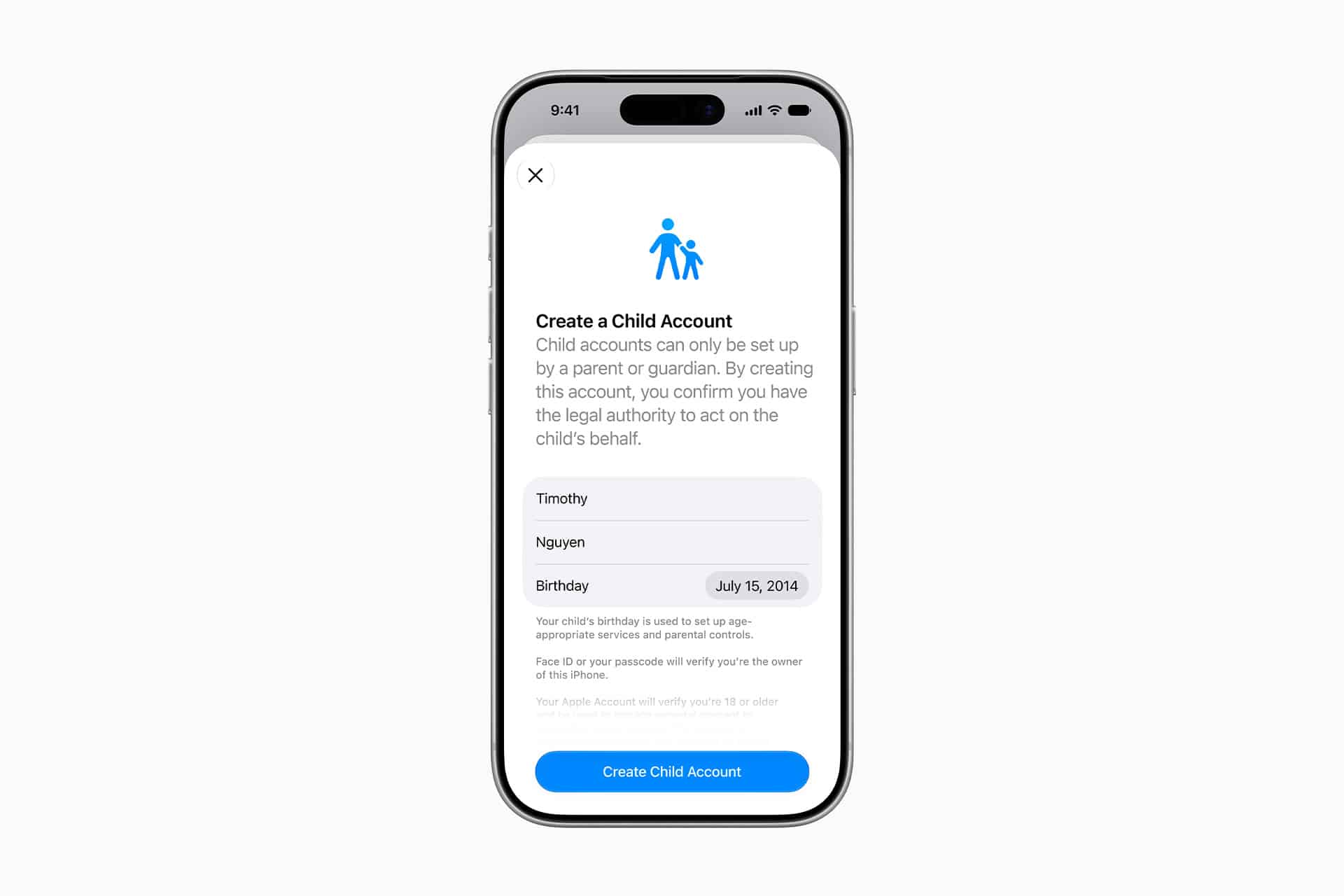
Screen Time has received one of its most substantial parental-control updates with iOS 27, iPadOS 27, and macOS 27, adding new ways for parents to manage how long children use categories of apps, which websites they can visit, and what content reaches them through Messages and FaceTime.
The features were previewed at WWDC in June and are now available as part of Apple’s latest operating-system releases. Rather than relying only on fixed app limits, the redesigned Screen Time gives parents a more flexible set of controls that can change throughout the day and adapt as a child gains access to more apps and services.
Among the additions are Time Allowances, Ask to Browse, a simpler child-device setup process, expanded Communication Safety protections, and faster controls for temporarily pausing or extending access.
Apple is also working with the American Academy of Pediatrics to adapt the organization’s Family Media Plan into guidance parents can reference when setting up devices and Screen Time.
Screen Time introduces Time Allowances by app category
Time Allowances give parents a daily amount of time that can apply across categories including Entertainment, Games, and Social Media.
That differs from managing each application individually. Parents can set time allowances for categories such as Entertainment, Games, and Social Media, then adjust those settings based on the needs of their household.
Apple provides suggested starting points based on a child’s age and guidance informed by clinical and child-development research. Those recommendations are optional, with parents able to change them based on their own household and the individual child.
The updated Screen Time also supports schedules that control which apps remain available at different periods of the day. Parents can therefore create separate access patterns around school, homework, evenings, and weekends rather than relying on one universal daily restriction.
Temporary adjustments have been made easier as well. Parents can quickly limit access to apps and the web during periods such as meals, then restore access without rebuilding their existing restrictions. When a child reaches a limit, they can request additional time from a parent to complete an activity or finish a conversation.
The redesigned interface puts device usage and the most frequently used applications closer to the front, reducing the amount of navigation required to understand how a child is spending time on a device.
Image Credit: Apple Inc.
Ask to Browse extends parental approval into Safari
Ask to Browse brings a permission model already familiar from app downloads to the web.
When the feature is active, a child who attempts to visit a new website in Safari can be required to request permission first. The parent receives the request through Messages and can review it before allowing access.
The feature is available across iPhone, iPad, and Mac and works alongside existing web-content restrictions.
It complements Ask to Buy, which requires children to obtain permission before downloading or purchasing an app or making an in-app purchase. Apple has also expanded the initial setup process so a parent configuring a personal device for a child can choose which apps are available from the beginning.
Setup Assistant offers the option to provide only essential apps, use a recommended group, or manually choose which ones are permitted. More applications can then be introduced later as the parent decides the child is ready for them.
The approach gives parents a way to begin with a comparatively limited device instead of configuring a full standard account and removing unwanted access afterward.
Communication Safety expands beyond detected nudity
Communication Safety now intervenes when it detects gore or violent imagery in shared photos and videos, expanding protections that previously centered on nudity.
Apple says the feature works with content shared through areas including Messages and FaceTime, with the new protection also extending to live FaceTime calls.
Communication Safety is designed to intervene before a child views or shares detected sensitive material. Apple has previously built these protections around on-device analysis, allowing the system to identify content without requiring Apple to receive the underlying images.
Parents can also continue controlling who children communicate with. Contact-management settings can require approval before a child adds someone new and then communicates through Phone, Messages, or FaceTime.
Child Accounts remain the foundation for these controls. Apple generally requires Child Accounts for children under 13, although the applicable age can vary by state, country, or region. Child Accounts remain available for family members up to age 18.
The accounts automatically activate age-based safeguards and connect parental controls through Family Sharing.
Image Credit: Apple Inc.
iOS 27 requires the family’s devices to stay in sync
The new Screen Time controls arrive with one practical requirement: devices participating in the same Family Sharing setup need current software.
Apple says all devices in the Family Sharing group must be updated to the corresponding 27-generation releases — iOS 27, iPadOS 27, macOS 27, watchOS 27, and visionOS 27 — before the updated Screen Time controls can be used consistently across the family.
The family organizer, parent, or guardian must also update the parental-control configuration after the software upgrades.
That requirement is worth checking before troubleshooting a missing setting on one child’s device. If every device in the group cannot be updated, Apple says the family can continue using the previous version of Screen Time and its parental controls, but the new controls will not be available consistently across the group.
The features themselves also vary by platform. Ask to Browse and Time Allowances are available on iPhone, iPad, and Mac, while some Family Sharing and communication features extend to other devices.
Apple has launched a dedicated Child Safety site alongside the software release, collecting setup instructions, explanations of Child Accounts, Screen Time controls, communication protections, App Store age tools, Find My, and Apple Watch options for families.
The updated Screen Time controls are available now with iOS 27, iPadOS 27, and macOS 27, although individual features can vary by region, language, and hardware. For families upgrading several devices at once, checking every device in the Family Sharing group for its corresponding version 27 update is the most useful place to start.
Seasonal changes redistribute enough water around Earth to shift the planet's center of mass back and forth by fractions of an inch relative to its geometric center. NASA scientists are on the case, tracking the oscillations because Earth's center of mass is a crucial reference point for satellite navigation and elevation measurements.
Astronomers have confirmed a world less than a million years old as the youngest known planet, using data from archives. Called Elias 2-24 b, the baby planet is still whirling in its natal disk of dust and gas.
Arctic sea ice moves and spreads in ways that wind alone cannot explain. A new UC Riverside-led study finds that collisions between individual pieces of ice provide a surprisingly simple explanation for these movements, potentially offering scientists a better way to predict where sea ice will travel as the Arctic warms.
Une forêt située à une centaine de kilomètres d’Helsinki cachait depuis près d’un millénaire un ensemble archéologique hors norme. Repéré grâce à un détecteur de métaux, ce trésor pourrait désormais éclairer les échanges commerciaux qui traversaient le nord de l’Europe à la fin du premier...
Right now, your brain is recognizing the shapes of these letters, analyzing their meaning and holding a stream of thought together—all on about 20 watts of power. That's roughly what it takes to run a light bulb.
MIT researchers have created a computing platform that could be used to develop intelligent and adaptive next-generation electronics that can perform multiple functions, like computing and memory, within one extremely compact, energy-efficient device.
Trois centimètres de plus au compteur des océans : cela ressemble à un détail qui n’intéresse que les scientifiques. C’est pourtant la menace invisible qui pèse déjà sur des millions de vies. Elle est confirmée aujourd’hui par plus de quatre décennies de données satellitaires.
Half a year after Iranian drone strikes knocked out multiple Amazon data centers, the US tech company has acknowledged the permanent loss of some customer data that was hosted in Bahrain and the United Arab Emirates.
Amazon Web Services was “unable to restore access to the resources and data” hosted in some of the war-damaged data centers, according to an AWS dashboard update posted on September 15. The development was first reported by Reuters and suggests that the Iranian strikes inflicted catastrophic damage on the data centers.
Customer data was irretrievably lost in one of three AWS availability zones in the United Arab Emirates region, specifically the mec1-az2 availability zone. Each availability zone is serviced by one or more Amazon data centers.
Les banques de semences sont censées préserver une partie de notre patrimoine agricole pendant des décennies, voire bien davantage. Mais combien de temps ces graines peuvent-elles réellement rester capables de germer ? Une vaste analyse menée en Australie apporte une réponse moins rassurante...
AWS is betting that AI agents need a different interface as they move beyond answering prompts and start working autonomously in the background.
The company has open-sourced Pizza Bot, a self-hosted application that gives users an inbox for managing work delegated to AI agents, with separate threads for ongoing tasks and a queue for work that is completed or needs human input, rather than keeping the management of agents restricted inside a conventional chat window.
The rationale, according to AWS, is that background agents do not always need a user’s attention while they work, and an inbox model will let users hand off longer-running tasks, return to them later, and see which jobs are complete or require intervention.
Under the hood
That approach is reflected in how the inbox organizes work with the help of an “All” tab that contains the history of each task or conversation, including the agent’s messages and work performed, the “Unread” tab that flags completed work that users have yet to review, and an “Action” tab that surfaces tasks paused while waiting for user input or approval.
The inbox interface also has a panel named Activity that shows users how an agent handled a particular task along with the transcript, AWS wrote in a blog post introducing Pizza Bot.
AWS’ inbox-oriented rationale also extends to Pizza Bot’s architecture.
It uses LangChain’s Deep Agents as the harness and LangGraph as the stateful runtime, with a combination of the two allowing an agent to checkpoint its progress as it works, preserving its messages, tool activity and current state so a task can be paused and resumed rather than being tied to a live chat session, the hyperscaler wrote.
Pizza Bot’s server sits on top of that stack, connecting the agent runtime with the user interface, skills, MCP servers and the model provider, with developers able to choose from Anthropic, OpenAI, Google Gemini and Amazon Bedrock, as well as local models through Ollama, it added.
As for its out-of-the-box capabilities, the application comes with skills for working with files, browsing the web and delegating tasks to specialist agents. Developers can also add existing Agent Skills and MCP servers to give the agents access to other tools and services, the hyperscaler wrote.
Enterprise integration could remain a hurdle
However, analysts were not too convinced that Pizza Bot’s out-of-the-box skills and support for existing tools will make its implementation easier for enterprises.
While the out-of-the-box capabilities and added support for existing skills saves enterprise teams the time to build the application, it leaves out the integration work required to make it work, said Bhupendra Chopra, chief revenue officer at IT consulting firm Kanerika.
“Integration is where most of the money in an enterprise agent deployment goes. A sales or finance team gets value from an agent when it can read and update CRM, email and ERP, and each of those systems needs a connector someone has to build, secure and maintain,” Chopra pointed out.
Pizza Bot’s integration could be further complicated by the application’s lack of support or any SLA, according to Manoj Chandra Jha, principal analyst at Nord-IQ Research. That means the integration and operational burden ultimately falls on enterprises, who would be responsible for running, securing and maintaining the open source software themselves, Jha said.
Rise in enterprise productivity likely
But for enterprises willing to take on that integration work, the inbox-oriented approach could improve productivity.
“It’s a meaningful shift because it changes the economics of delegating work to agents. A chat interface requires a person’s attention throughout the task, while an inbox brings them in only when their judgment is needed, much like how executives delegate work to their teams,” Chopra said.
“Coding agents have already demonstrated this model, where an engineer assigns an issue and reviews the resulting pull request. Pizza Bot extends that approach to tasks such as meeting preparation and follow-ups,” Chopra added.
Further, the analyst pointed out that the inbox-oriented approach could give enterprise teams a clearer window into how scheduled tasks perform.
“For scheduled tasks, having the results delivered as threads gives users a way to track what happened in the background and spot failures that might otherwise go unnoticed,” Chopra said.
Out of sight, out of mind
There are risks with this approach, however: “The inbox model can make bad work less visible. When somebody is watching an agent in a chat window, they can see it going off the rails,” said Phil Fersht, CEO of HFS Research.
In contrast, when hundreds of tasks are running quietly in the background, users may not see an agent making mistakes until the task is complete or an exception requires their attention, potentially making problems harder to catch early, Fersht said.
That reduced visibility can also create approval fatigue, according to Chopra.
“An agent sending back dozens of threads with multiple approval requests can condition users to approve them without reading them closely,” Chopra said.
There is also a risk in the delay between an agent preparing an action and a user approving it: “Information that was current when the agent paused may no longer be valid hours later, potentially resulting in an outdated CRM update or a meeting invite for a slot that is no longer available,” he said. “An assumption that might be caught in a live chat can go unchallenged as the agent continues building on it and consuming model resources. Scheduled runs can also add costs without anyone watching them in real time.”
Those disadvantages can be countered by designing processes with fewer, better-timed approval points, and verifying that the underlying data is still current before allowing an action to execute, he said.
Adoption likely to start with technical teams
Such tradeoffs are likely to shape where Pizza Bot gains traction.
“Adoption will likely be bottom-up, with individual technologists and small platform teams drawn to Pizza Bot’s control and standards-based design,” Jha said. “Risk-averse industries, especially ones in the regulated sectors, and business users with limited technical expertise, however, are likely to approach the application more cautiously,” he added.
That could leave Pizza Bot occupying a more targeted role in the enterprise, as a way for technical teams to experiment with asynchronous agents and new ways of delegating work, rather than an immediate replacement for the governed interfaces and managed services enterprises typically use for business-critical processes, he said.
Quelque 67 % des Français qui utilisent les réseaux sociaux passent plus de 5 heures par jour devant les écrans, selon le Baromètre du numérique 2025. Derrière ce chiffre, il y a des corps qui souffrent en silence : douleurs, yeux secs, nuits hachées… Votre organisme lance des signaux d'alarme...
Analyst figures showed cellular IoT modules remained resilient in the face of memory component shortages which are hammering the smartphone sector, with shipments of the specialised units up 15% year-on-year in H1.
IoT Analytics estimates module shipments were aided by an acceleration during Q2, though its numbers also indicate the technology involved is a key element and may explain why the market has so-far resisted the broader component problem.
The research specialist believes shipments of LTE Cat 1 bis modules dominated the sector in H1, stating “5G deployment has been relatively gradual” and focused more around “higher-value applications”.
It is reasonable to conclude the lean towards established LTE equipment may have alleviated some of the component woes affecting broader device markets and IoT Analytics acknowledged expectations of increased prices for memory and other apparatus may have led some companies to bring orders forward.
Senior principal analyst Satyajit Sinha said it is unclear if the performance of the IoT module market “reflects underlying demand and how much is being pulled forward by longer lead times and rising component costs”.
Although cautious, Sinha noted the steady demand for LTE Cat 1 bis modules and fresh projects could contribute to continued shipment strength in the back-half of the year. The flip-side to this would be in making predictions for 2027 harder.
Other insights in IoT Analytics’ H1 numbers are RedCap and eRedCap modules remained nascent. The company stated the units are “only beginning to move from roadmap into volume” as devices become available and demand is spurred by rising standalone 5G coverage.
“NB-IoT continues to slip” from a peak in Q1 2024.
The company noted China remained the largest market for IoT module shipments, but stated those in India registered the swiftest growth.

 Login