upgraded to Golden gate. getting this message to login to facetime with an email i’ve not used in years. it’s not the emai for my current apple account.
the window keeps appearing and wont go away. any ideas how to fix this? thanks.
Well, it's different in a number of ways, I've hardly scratched the surface especially in regard to display options, mostly because my display was fine before and it still is.
What I can say is it seems "snappier" on my M1 14" MBP. I'm sure windows and desktops are opening and closing quicker than before.
My menu bar has changed, I have had to turn off Bartender 6 which used to show hidden menu bar items when "clicked" it no longer works as it did and seems to conflict with something new...
Amazon Web Services (AWS) says it is unable to restore access to resources and data in some of its Availability Zones in the Middle East after datacenters were damaged during the US war with Iran. In an update to its AWS Health Dashboard, the cloud giant confirmed that anything hosted exclusively in its Bahrain Region (me-south-1) remains inaccessible. "The damage to our infrastructure spanned multiple Availability Zones and exceeded what our regional and multi-AZ services are designed to withstand," the update says. "After a thorough assessment, we have determined that we are unable to restore access to the resources and data hosted exclusively in this Region." After the first Bahrain Availability Zone was damaged in March, AWS advised customers to migrate their workloads to other Regions. The company said most did so before further attacks disrupted a second Availability Zone in April and rendered the entire Region unavailable. AWS has reached a similar conclusion about one Availability Zone in the United Arab Emirates (UAE), saying it cannot re-establish access to the resources and data hosted there. The affected Zone, mec1-az2, is one of three in AWS's UAE Region. Two AWS facilities in the country were hit by drones back in March as Iran retaliated against US-Israeli strikes on its territory. AWS says it continues to work on recovering resources in the Region, including some hosted in the other affected Availability Zones (mec1-az1 and mec1-az3). It adds that "most customers" have been able to restart operations in other AWS Regions by restoring from backups or copying any data that remained accessible. The company says its support teams remain available to help customers move their applications to alternate Regions. The Register asked AWS to comment, but the company declined to add to the information on its Health Dashboard. In AWS terminology, a Region is a geographic area containing multiple isolated Availability Zones. Each Zone consists of one or more discrete datacenters with independent power, cooling, and network connectivity. AWS recommends distributing applications and resources across multiple Availability Zones to withstand the loss of a single location. That approach cannot protect against a Region-wide failure, however. Workloads that must survive such an event require a disaster recovery plan involving another Region. AWS and several other tech companies advised customers after the first strikes to recover whatever resources they could and replicate them in alternate Regions, ideally in Europe, rather than wait for services in the Middle East to return. That advice appears to have been well-founded. AWS said at the time: "Customers should enact their disaster recovery plans, recover from remote backups stored in other Regions, and update their applications to direct traffic away from the affected Regions." ®
The symptoms: The man went to an emergency department after fainting. He had felt nauseous just before the episode, which lasted about three minutes and was followed by a second fainting episode lasting about two minutes. He also had swelling around one eye.
His family told doctors that he hadn't shown any jerking movements, loss of bladder control or subsequent grogginess, which would have been telltale signs of a seizure.
What happened next: Because the man had fainted twice and had a history of heart disease, doctors first looked for problems affecting his brain and heart. An MRI of his brain, used to look for structural abnormalities that could explain the fainting, and an electroencephalogram (EEG), which records the brain's electrical activity, did not reveal a cause.
The man had persistently low blood pressure, the doctors observed, and this led them to move him to the intensive care unit. There, doctors carried out tests for infections and heart attack, but all came back negative.
Meanwhile, the swelling around one of his eyes spread to both eyes and then across his face, while his blood pressure continued to fall despite treatment with intravenous fluids.
The doctors probed further into the man's medical history and activities before the fainting episodes. They learned that he had applied an artificial hair dye two days before he became ill. Soon afterward, he developed itching on his scalp, neck and face. He self-treated with the allergy medicine cetirizine, an antihistamine, for two days. He also reported spending two to three hours outdoors in the sun each day after he'd applied the hair dye.
The diagnosis: Based on the man's recent use of hair dye, the itching that followed, his rapidly worsening facial swelling and his persistently low blood pressure, doctors concluded that he was experiencing anaphylaxis, a severe allergic reaction that can affect the whole body. The reaction can be life-threatening if left untreated.
Anaphylaxis is a medical emergency and can be life-threatening. (Image credit: SCIENCE PHOTO LIBRARY via Getty Images)
The treatment: Doctors treated the man with epinephrine (also called adrenaline), a hormonal medication that rapidly reverses the effects of anaphylaxis. They also gave him antihistamines and steroids to help bring the allergic reaction under control, along with intravenous fluids to raise his blood pressure.
However, the patient's blood pressure remained dangerously low, so doctors continued giving him epinephrine through an intravenous drip for about 16 hours. Over the next three days of treatment, his blood pressure stabilized and the swelling in his face gradually subsided.
He was transferred to a general ward and treated there for another five days before being discharged. He was advised that he could have a similar reaction in the future and referred to a dermatologist.
What makes the case unique: Most allergic reactions to hair dye remain limited to the skin, causing itching, redness and swelling where the dye has touched it. Severe reactions affecting the whole body are uncommon, the man's doctors wrote in a report of the case.
The itching the man noticed shortly after applying the dye was likely an early, mild allergic reaction, his doctors wrote. That reaction later progressed to a much more severe one, they suggested, raising the possibility of a "biphasic" allergic reaction, an uncommon pattern seen in about 5% of patients with anaphylaxis. However, this remains only a possible explanation.
The doctors also noted that the man's prolonged sun exposure after he applied the dye may have intensified the reaction; they cited previous research that ultraviolet light can enhance the allergy-triggering effects of para-phenylenediamine, a common ingredient in hair dyes. In the report, the doctors did not identify the exact hair dye ingredient that triggered the reaction in this instance.
The case highlights the importance of asking about recent use of products such as hair dye when doctors evaluate patients with otherwise unexplained fainting, facial swelling or shock, the medical team concluded.
It's been awhile since I posted here - such an incredibly helpful and knowledgeable group!
Some background on today's issue:
I have two laptops, one at work and one at home. I keep them synced so I can work from anywhere. Mac OSTahoe running 26.6.2 on both.
Here's my current delimma. On my work laptop when I plug in my iPhone 16 Prom Max (software up to date) the Iphone appears in the finder and I can do what I need to do.
In the announcement, the state health department also confirmed a county coroner's report over the weekend of the death of an unvaccinated 40-year-old woman in Jefferson County. The state had previously reported two deaths in Lancaster County; both were infants—a newborn boy and a 6-week-old girl, both too young to be vaccinated.
According to the Mifflin County coroner, Andrea L. Alcalde, the 18-year-old's cause of death was determined to be acute disseminated encephalomyelitis (ADEM), which is a rare but known severe complication of measles. The condition is characterized by a rapidly progressing autoimmune disorder in which aberrant inflammation from an infection strips away the protective coverings of nerve cells in the brain and spinal cord. Before measles vaccines were widely used, ADEM was commonly associated with measles, though other viral infections can also spur its development.
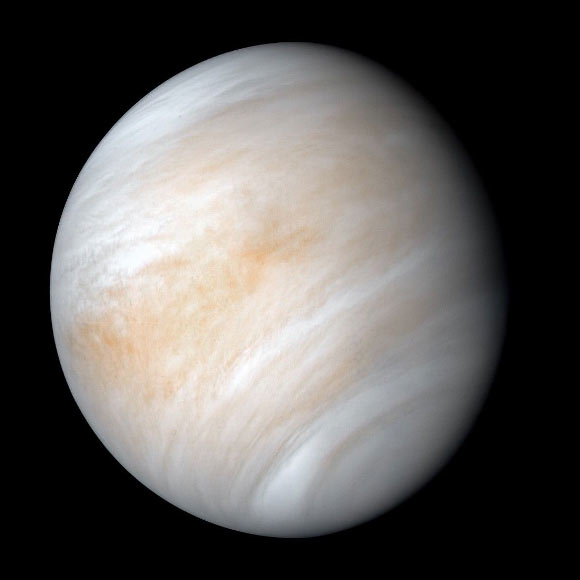
Dr. Stephen Kane from the University of California, Riverside and colleagues offer a tidy explanation for one of the Solar System’s enduring puzzles: why Venus, so similar to Earth in size and mass, has no moon at all.
Chama-se Geração STEM .PT e é um novo programa lançado pelo .PT concebido para apoiar e reconhecer raparigas e mulheres que querem construir o seu percurso académico nas áreas da Ciência, Tecnologia, Engenharia e Matemática (STEM).
iPhone 18 Pro arrives with Apple concentrating its biggest changes in three areas: camera control, sustained performance, and battery life. The new Pro models retain familiar 6.3-inch and 6.9-inch display sizes, but introduce a variable-aperture main camera, the 2-nanometer A20 Pro chip, redesigned thermal hardware, and a smaller Dynamic Island.
The lineup consists of iPhone 18 Pro and iPhone 18 Pro Max, starting at $1,199 and $1,299 in the U.S., respectively. Both begin with 256GB of storage and are available in black, silver, glacier, and a new burgundy finish. Preorders opened September 12, with retail availability beginning September 18 in more than 65 countries and regions.
Rather than treating the Pro models as a cosmetic update, Apple has focused on changes that become more noticeable during demanding use, particularly photography, video work, gaming, AI processing, and long sessions away from a charger.
iPhone 18 Pro brings variable aperture to the main camera
The centerpiece is a new 48MP Fusion Main camera with a physical variable aperture, a first for the iPhone.
Six laser-cut aperture blades can adjust the amount of light reaching the sensor while also changing depth of field. The camera supports four aperture settings: ƒ/1.48, ƒ/1.8, ƒ/2.8, and ƒ/4.0.
At the wider end, the camera can gather more light in darker scenes. A narrower aperture can keep more people or background detail in focus, giving photographers another tool beyond computational depth effects and Portrait mode.
Apple also gives users direct access to those settings through new Pro controls in the Camera app. Aperture, shutter speed, and white balance can be adjusted manually, while a histogram provides a more conventional way to monitor exposure.
The feature is paired with a new main-camera sensor and updated computational imaging pipeline. Apple says the combination improves low-light performance and detail, while Photographic Styles gain texture and grain controls for additional control over an image’s appearance.
Video receives several additions as well. Cinematic effects can now be applied after recording to footage captured at up to 60 frames per second, while Time-lapse can record in 4K with Dolby Vision HDR. Audio Mix has also been updated with improved voice processing and the ability to isolate music.
For photographers who want more evidence of how an image originated, Apple is introducing Apple Reference Image. In Reference mode, the main camera signs sensor data, which Private Cloud Compute uses to create an unalterable reference version that can be compared with an edited image in Photos. Apple is also preparing support for the SynthID standard as another way of identifying AI-generated or altered content.
Image Credit: Apple Inc.
iPhone 18 Pro uses A20 Pro and a redesigned vapor chamber
A20 Pro is built using a 2-nanometer manufacturing process and contains a six-core CPU, seven-core GPU, and dual 16-core Neural Engine.
Apple says memory bandwidth is 50% higher than on A19 Pro, while GPU performance can be up to 40% faster. The Neural Engine provides 32 cores in total, doubling the AI processing capability of the previous Pro chip.
The silicon change is closely tied to a redesigned cooling system. Apple has rearranged the chip package so that the silicon die sits beside the memory rather than beneath it in the thermal path, allowing A20 Pro to connect more directly to a next-generation vapor chamber.
That vapor chamber has three times the surface area of the previous generation and uses new materials to move heat away from the processor more effectively. Apple claims the design can deliver up to a 40% gain in sustained performance compared with iPhone 17 Pro.
That distinction is more relevant than peak benchmark numbers for workloads such as extended gaming sessions, video editing, computational photography, and local AI models, where heat can force a phone to reduce performance over time.
Connectivity has also moved further toward Apple-designed silicon. The N1 wireless chip supports Wi-Fi 7, Bluetooth 6, and Thread, while the new C2 modem succeeds C1X. Apple says C2 uses 15% less energy while offering faster uploads and adds mmWave support in the U.S.
Image Credit: Apple Inc.
iPhone 18 Pro Max reaches 45 hours of video playback
Battery improvements are another major part of the new hardware.
Apple rates eSIM-only versions of iPhone 18 Pro for up to 36 hours of video playback, while iPhone 18 Pro Max reaches as much as 45 hours. Apple says Pro Max receives the largest battery-life increase ever delivered in an iPhone.
Some of that gain comes from using the space previously occupied by a physical SIM tray. In markets receiving eSIM-only models, including the U.S., Canada, Japan, Mexico, Saudi Arabia, and the UAE, the larger internal battery provides an additional two hours of rated video playback.
Charging has accelerated as well. iPhone 18 Pro can reach 50% charge in approximately 15 minutes using a supported wired setup, while wireless charging reaches 50% in around 30 minutes. Apple says five minutes of wired charging on iPhone 18 Pro Max can provide roughly seven hours of video playback.
Both devices use aluminum unibody construction with Ceramic Shield 2 on the front and Ceramic Shield on the back. Storage options run from 256GB through 2TB.
The iPhone 18 Pro weighs 211 grams, while iPhone 18 Pro Max weighs 249 grams. Display sizes remain 6.3 inches and 6.9 inches, respectively.
Image Credit: Apple Inc.
iOS 27 brings Siri AI and new Apple Intelligence tools
The hardware launches alongside iOS 27, which places Apple Intelligence and the new Siri AI more prominently across the system.
Siri AI can use personal context from information stored across apps, respond to onscreen content, perform actions in supported apps, and handle more open-ended questions. A new Siri mode in Camera lets users ask questions and take action based on objects or information visible through the viewfinder.
Photo tools include Spatial Reframing, Extend, and an upgraded Clean Up feature, while Safari can monitor selected webpages for changes such as a product restock or price adjustment.
The Dynamic Island has also been physically reduced and redesigned. It can display up to three Live Activities simultaneously while continuing to support Face ID.
Apple released iOS 27 on September 14, while Siri AI is rolling out initially as a beta in English, with additional language support planned. iPhone 18 Pro and iPhone 18 Pro Max reach stores September 18, giving Apple a Pro lineup whose most substantial additions are less about a new exterior shape and more about physical camera control, heat management, and how long the hardware can sustain demanding workloads.
Financial service biz Moody's says the availability of power is still a major constraint on US datacenter growth as the pace of construction exceeds the speed at which the nation's grid infrastructure can add the requisite capacity. America is the epicenter of the datacenter construction boom, driven by the AI craze and demand for compute capacity to train ever-larger foundation models. The latest report from Moody's estimates the power needed by all those bit barns will reach 426 terawatt-hours (TWh) in 2030, citing data from the International Energy Agency (IEA). That is almost double the 2025 figure. It falls on the power sector to develop new resources to meet this extra demand as traditional power generation is struggling to keep pace. Moody's calculates that building the additional generation capacity will cost about $110 billion, adding an estimated $25 billion to $30 billion a year to electricity system costs. Yet efforts to supply the rapidly growing number of cloud and AI server farms are running up against lengthy permitting processes and long lead times for key equipment and materials, causing delays of up to seven years in some cases. Management consultancy Bain & Company highlighted the problem nearly two years ago when it warned that energy companies needed to significantly boost their generation capacity, reversing years of flat or declining demand. Transmission buildout is a parallel bottleneck, with $80 billion to $115 billion in grid investment through 2030 already approved or under construction across US power markets, Moody's says, with the potential to triple over the next decade. Investment bank Jefferies reported in June that half of the extra US datacenter capacity planned for 2026 is unlikely to come online this year, blaming power availability and grid connection setbacks, along with other issues including zoning and permitting challenges. Regions able to accelerate development, such as Texas, have experienced a wave of datacenter construction. The resulting pressure on local grids has prompted some authorities to clamp down on new connections for compute sheds. Moody's believes most new IT campus operators are still likely to seek grid connections to limit development costs and benefit from service reliability and shared redundancy. Yet many are also seeking alternatives, including on-site behind-the-meter (BTM) power generation to avoid delays in bringing facilities online. The document also notes that the growing energy demands from server farms are inflating power prices and customer bills in some regions of America, as The Register reported earlier this year. This has led to affordability concerns, fueling opposition to datacenters and prompting measures such as stricter approval frameworks and moratoriums on new projects. President Trump even introduced a Ratepayer Protection Pledge, under which tech giants and energy companies committed to shielding consumers from rising energy costs due to the datacenter boom. In the long term, Moody's believes that large-scale infrastructure investment will ultimately strengthen grid reliability and affordability, despite the risks. Extra generation capacity will alleviate longstanding supply constraints, it says, reducing price volatility during periods of extreme weather or high demand, while expanded transmission networks could improve access to lower-cost generation resources, particularly when datacenter developers or their tenants help finance the associated infrastructure. ®
In April, the world watched as four humans circled the Moon for the first time in over 50 years with NASA’s Artemis II mission. On Saturday, Sept. 19, the public is invited to look up again with NASA events across the country, including the International Observe the Moon Night celebration held at NASA’s Goddard Space Flight Center Visitor Center in Greenbelt, Maryland.
This year, NASA will celebrate International Observe the Moon Night with people around the world on Sept. 19.
NASA/Vi Nguyen
International Observe the Moon Night is an annual celebration that brings people together to learn about the Moon and explore our connection to Earth’s nearest celestial neighbor. Since the program began in 2010, people around the world have participated through lunar observations, hands-on activities, artwork, music, and more.
At NASA Goddard, this year’s celebration will highlight the agency’s ongoing exploration of the Moon, including the historic Artemis II mission. Visitors can peer behind the scenes to learn more about what it took to make Artemis II’s journey around the Moon a success and discover how Goddard scientists and engineers are helping advance our understanding of the Moon, solar system, and beyond.
The event will run from 6 p.m. to 9 p.m. EDT.
Throughout the event at NASA Goddard, visitors can take part in interactive hands-on activities, create artwork and crafts, and capture selfies at a photo kiosk. Telescopes will also be set up outside (depending on weather), giving attendees an opportunity to observe the Moon and other astronomical objects up close. Inside the Visitor Center, guests can even see a real Apollo 14 Moon rock on display.
At 6:30 p.m., Dr. Amanda Nahm, planetary scientist at NASA Headquarters, will explore the lunar science and Moon joy from Artemis II.
At 7:30 p.m., Ernie Wright, scientific visualizer at NASA Goddard, will offer a more technical look at how scientists use real data to create videos and visualizations of the Moon.
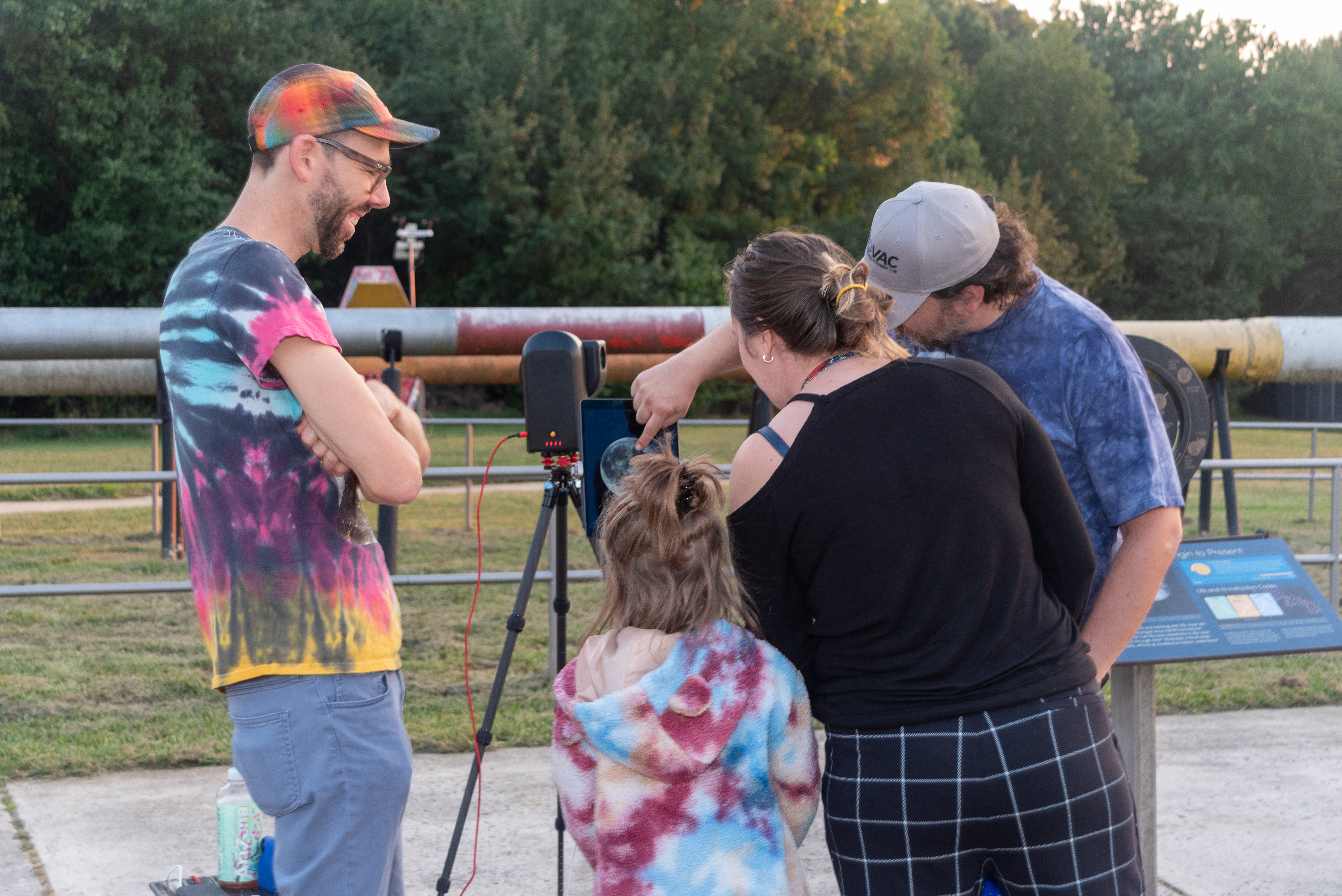
A family observes the Moon through a telescope at NASA’s Goddard Space Flight Center in Greenbelt, Md. during the International Observe the Moon Night celebration on Saturday, Sept. 14, 2024.
NASA/Britt Griswold
The event will also offer a chance to learn more about the groundbreaking research happening at NASA Goddard as scientists work to unlock the secrets of the Moon with missions like the Lunar Reconnaissance Orbiter (LRO) and explore our solar system and the universe beyond.
International Observe the Moon Night at Goddard is free and family friendly. Registration is not required, although registering in advance will help the Visitor Center team plan for the event. The event will take place rain or shine, and free parking is available at the Visitor Center.
For people who cannot travel to Greenbelt, there are opportunities to participate in International Observe the Moon Night from all around the planet. Join lunar observers around the world by observing the Moon with friends and family, attending a virtual event or finding an event in your area. Learn more and register your participation at go.nasa.gov/ObserveTheMoon.
International Observe the Moon Night is sponsored by NASA’s LRO mission and the Solar System Exploration Division of NASA’s Goddard Space Flight Center, with support from many partners. The celebration is a way for people to pause and look up at our future destination, as NASA prepares for deep space missions to the Moon and beyond.
Astronauts could travel back to Earth from Mars using rocket fuel converted directly from the carbon dioxide in the Red Planet's atmosphere, using a technique known as electrochemical reduction, a recent study reports.
It's an old method involving electrolysis, which is the application of an electrical current to drive a chemical reaction, but the new trick produces methane pure enough to be used as liquid propellant. (A number of rocket engines these days burn liquid oxygen and liquid methane — including the Raptors that power Starship, the rocket SpaceX is developing to help humanity get to Mars.)
"The work we're doing is basically taking CO2 and using electricity to convert it into carbon-containing fuels and chemicals," said Carter Racine in a statement. Racine is a Ph.D. student in mechanical engineering at Texas A&M University and a member of the study team, which was led by University of Mississippi chemical engineer Ahmed Badreldin.
"You can't bring up everything you need [on Mars] from Earth, because every additional kilogram adds enormous cost and complexity to launch and escape Earth's gravity," added Badreldin. "So the question becomes, How do we make the fuels and chemicals needed for space exploration from the resources already available at the destination?"
One answer is electrochemical reduction, which takes place in an electrolyzer, with electrons flowing from the negatively charged anode to the positively charged cathode. Water at the anode is oxidized, meaning it loses an electron, which is transferred to the carbon dioxide at the cathode, where one of its atoms gains an electron and becomes what chemists refer to as "reduced" (meaning its oxidation state is lowered). It can then react with the hydrogen and oxygen atoms that have split from the oxidized water molecules.
The anode contains a catalyst, and the choice of material for the catalyst dictates what carbon-based compounds are produced when the reduced carbon reacts with the hydrogen and oxygen. For example, a gold catalyst leads to the production of carbon monoxide (CO), while copper produces more complex compounds including alcohols, ethanol and methane (CH4).
What makes the work of Badreldin's team stand apart from previous experiments is that they have developed a nanometer-scale copper catalyst doped in nitrogen that is able to produce nearly pure methane.
Electrochemical reduction of carbon dioxide has been used to produce methane before, in applications on Earth. The problem is, those methods have produced a lot of byproducts alongside methane. On Earth we have complex equipment that separates the methane from the other unwanted compounds, but astronauts are not going to be able to take such unwieldy devices to Mars when every kilogram counts. That's a problem, because for methane to be used as a liquid propellant in rocket fuel it needs to be pure.
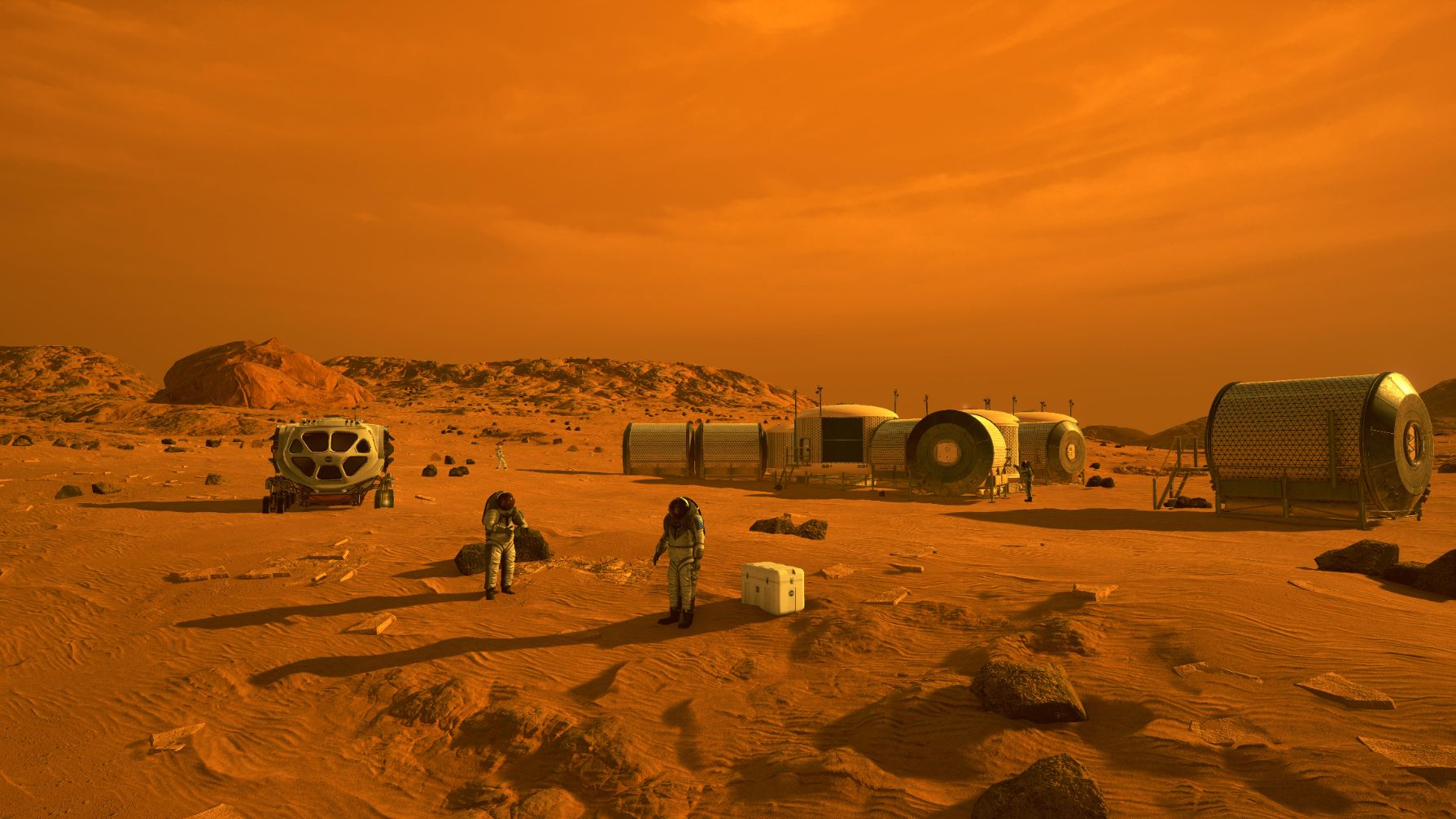
NASA wants to send astronauts to Mars in the late 2030s or early 2040s. (Image credit: NASA)
However, the specific copper catalyst used by Badreldin's team is able to preferentially produce methane over other compounds, thereby creating it pure without having to refine it. And there's plenty of carbon dioxide available on Mars to use: While Mars' atmosphere is thin, it is nonetheless composed of 96% carbon dioxide.
Even if astronauts never go to Mars, the usefulness of this technique on Earth is clear. Rather than drilling for this natural gas, we can create methane from the carbon dioxide already in our atmosphere.
"We want to do that because right now many of these carbon-based products ultimately come from virgin fossil resources," said Racine. "If we can make them using captured CO2 and renewable electricity, it could reduce reliance on virgin fossil carbon and help close the carbon cycle."
Consequently, electrochemical reduction has also been suggested for use on Earth as a carbon sequestration technique, drawing carbon dioxide out of our atmosphere where it acts as an unwanted greenhouse gas.
The problem with that is, converting carbon dioxide into methane to be burned as a fuel simply releases that carbon dioxide straight back into the atmosphere in a net-zero cycle. Ideally, we want to lock that carbon dioxide away from the atmosphere for a long period of time, but Badreldin doesn't think the technology is ready yet.
"What we are ultimately interested in is seeing whether we can move beyond simply recycling CO2 and toward pathways that are net-negative," he said. "That means using CO2 as a carbon source while converting it into products where the carbon is stored or used long enough that it is not immediately released back into the atmosphere."
It should be noted that the best way to alleviate climate change is to cease burning all fossil fuels, including methane. However, using methane created from electrochemical carbon dioxide reduction in a net-zero process rather than drilling for it could help during the transition from fossil fuels to renewable resources.
The study reporting this research was published in April in the journal ACS Catalysis.
A broad pit that looks almost like a "footprint" on Mars is unlike anything researchers have ever seen on the Red Planet. (Image credit: NASA/JPL-Caltech/MSSS)
Is that a footprint on Mars? Sorry to burst your bubble, but no. However, scientists have found a strange feature unlike anything they've seen before on the Red Planet's surface.
What is it?
While NASA's Perseverance rover is the newest addition to the agency's robotic Red Planet fleet, its cousin Curiosity is still going strong and finding strange and unusual things on Mars 14 years after landing.
In new observations captured on Mars' Mount Sharp, the Curiosity team has identified "features unlike quite anything we have seen in the past," Michelle Minitti, deputy principal investigator for Curiosity's Mars Hand Lens Imager (MAHLI), said in a statement.
These mysterious features are a bunch of broad, shallow pits scattered across the Martian bedrock.
Why is it incredible?
While little pits and divots are common to find on the Martian surface, these wide, shallow pits that researchers saw with Curiosity are quite different from surface features that have been seen before.
"The pits of this week were much broader and shallower than past features and were not accompanied by obvious objects that were once in the pits," Minitti said.
The team collected as much data as they could on the strange pits using Curiosity's various instruments, including MAHLI, the Mastcam camera, ChemCam (the Chemistry and Camera complex) and APX (Alpha Particle X-Ray Spectrometer).
They have so far found interesting layers in the pit material that seems chemically different from the main bedrock.
But we will have to wait and see what else researchers might be able to learn about these odd pits. How did they form? How long have they existed? What can they tell us about the history of Mars?
Microsoft has released an out-of-band update for Windows 11 24H2 and 25H2 after September's record-breaking Patch Tuesday addressed almost 1,000 vulnerabilities across the company's products – and introduced several new problems. Those problems are related to USB Audio Class 1.0 devices, Remote Desktop Services, and host folders shared with certain Hyper-V-based Linux virtual machines via Plan9. While the Hyper-V and Remote Desktop Services issues are fixed, there is still work to do on USB audio. The update restores multichannel playback on USB Audio Class 1.0 devices that continued to work in stereo, but other affected devices may remain silent, have unresponsive volume controls, or display "This device cannot start (Code 10)" in Device Manager. Owners of devices still giving them the silent treatment were told: "Microsoft is working on a resolution and will update this documentation when more information is available." The cumulative update also includes protections for CVE-2026-62721, an elevation-of-privilege vulnerability in the Windows User-Mode Power Service. Separate September security updates for Excel also broke that rarely used function, Paste, on some installations. Microsoft has yet to issue a fix. Readers were impressively supportive of Microsoft's efforts to ensure its patches don't disrupt workflows. Paratiritis noted: "The issue with all these versions of Excel is understandable, considering such changes require testing, either manual or automated, which cannot be taken for granted for such cryptic functionality as Paste." Roj Blake suggested that perhaps somebody had tried submitting a bug report, but was unable to paste the data for some reason. ®
The Moon may have emerged largely intact within hours of the colossal impact that shaped its birth. Earth has an unusually large moon for a planet of its size and position in the solar system, yet scientists still do not fully understand how that companion came to exist. Now, researchers from the Southwest Research Institute [...]

 Login